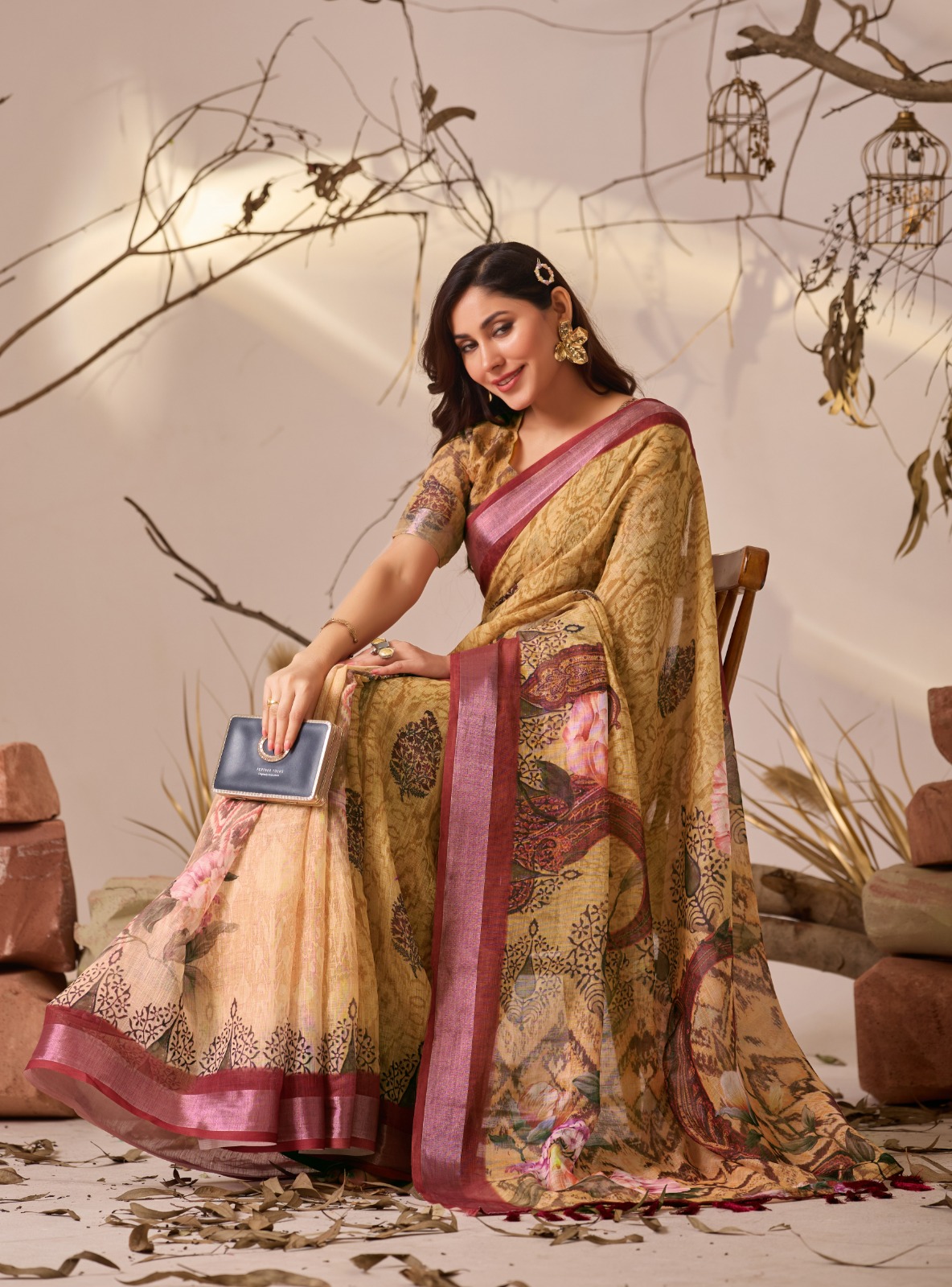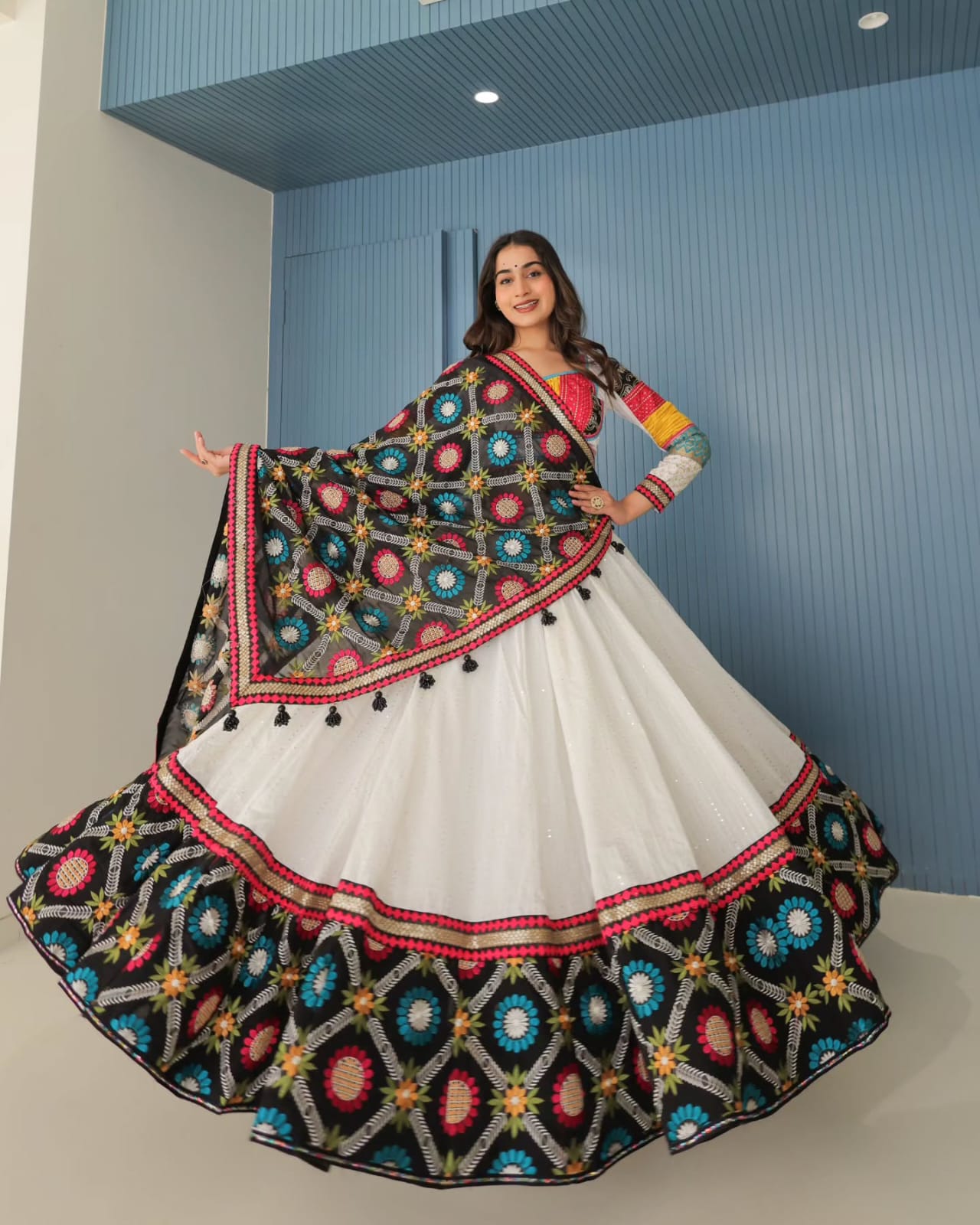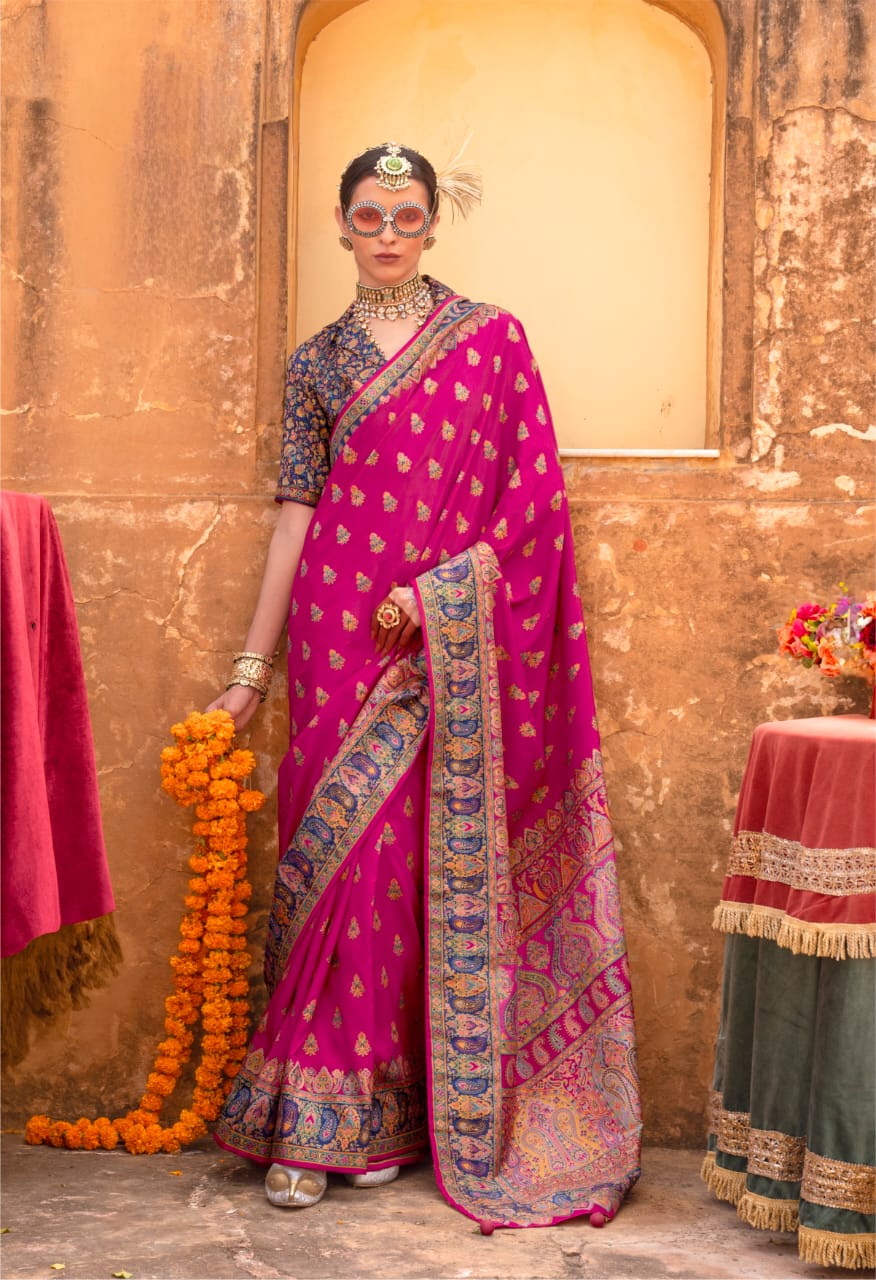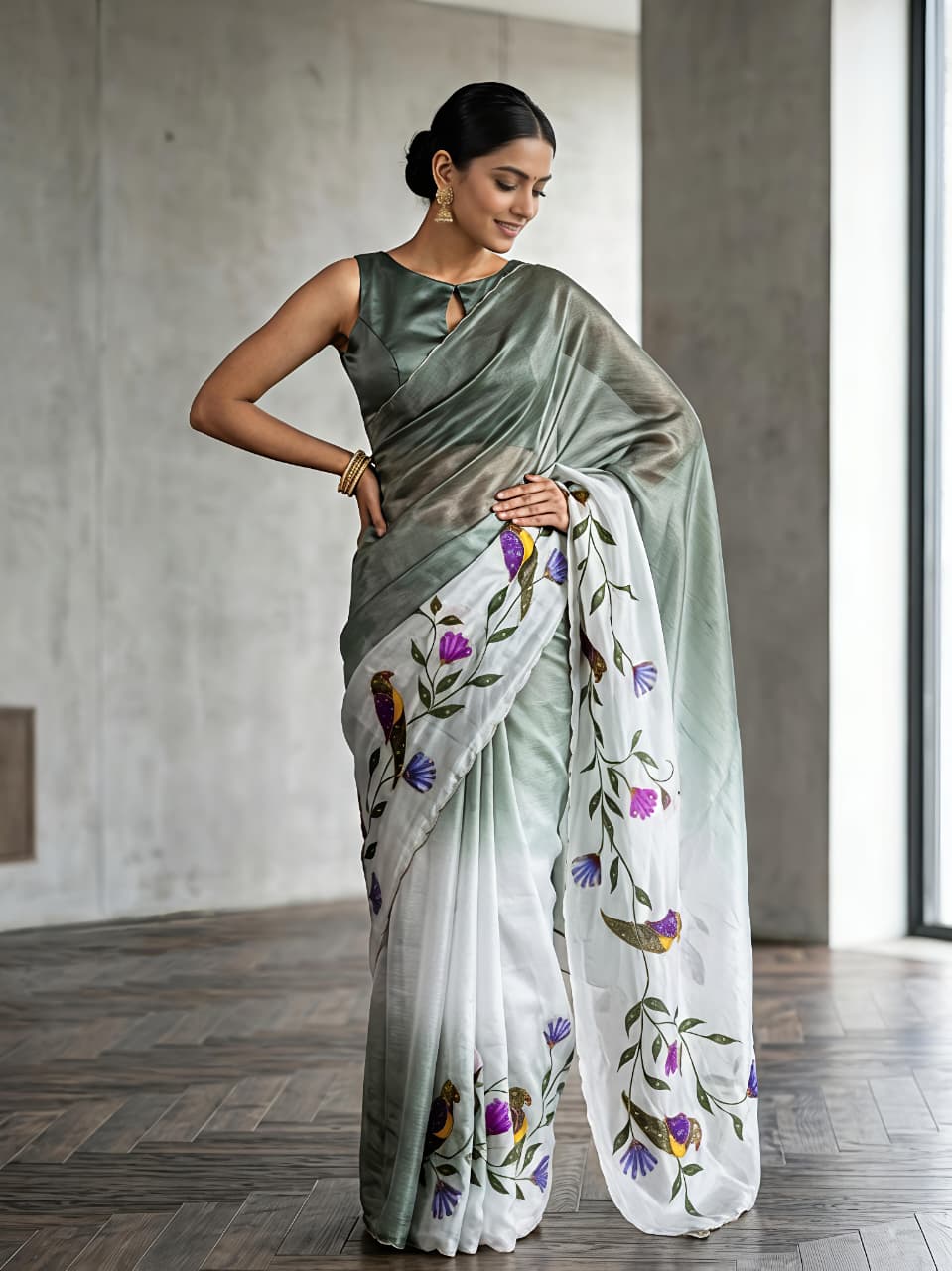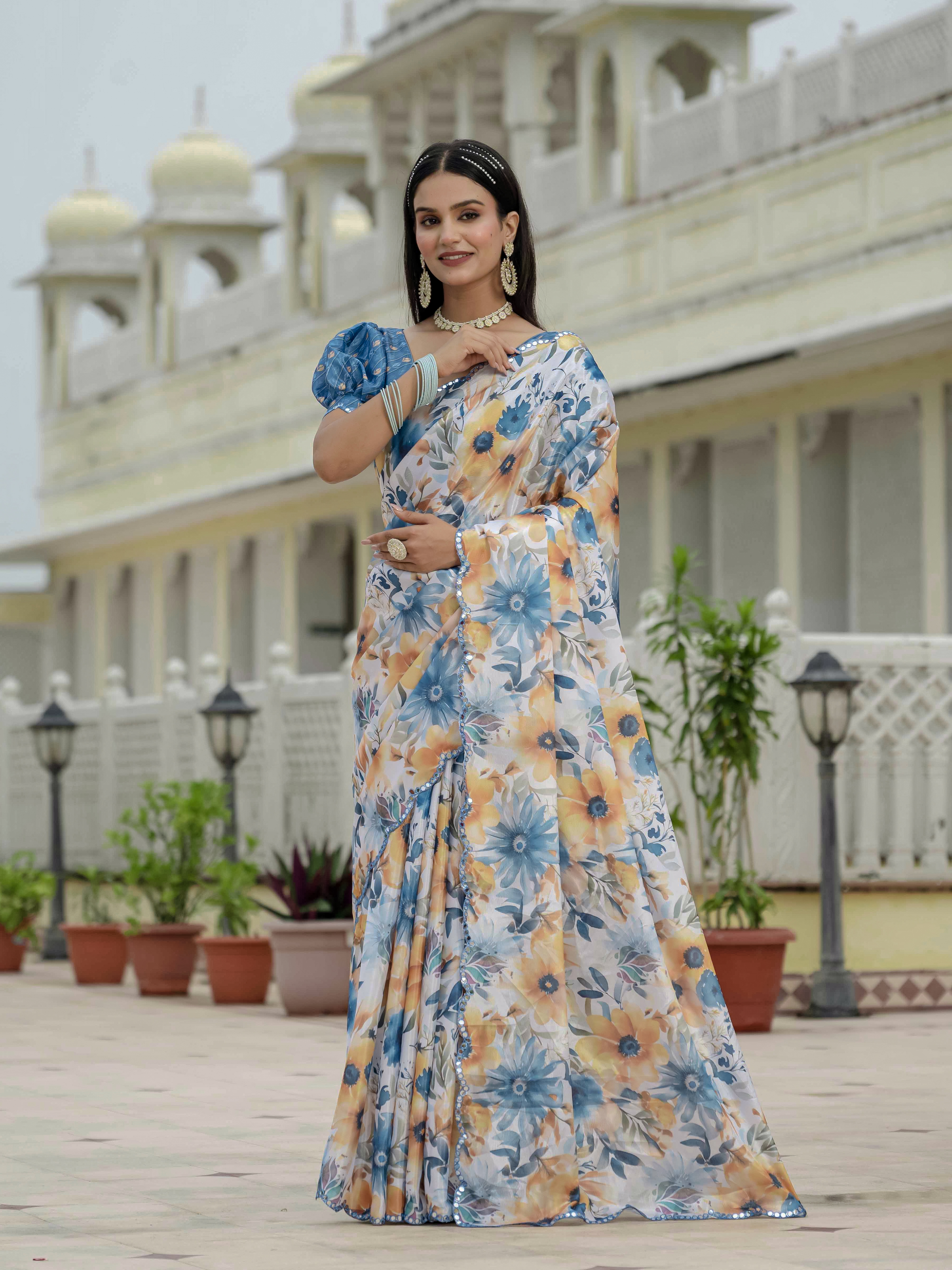
Traditional Tamil Blouse Designs to Pair With Silk Sarees depend on more than a matching colour. Sleeve length, neckline depth, blouse fabric, zari placement and the saree's border width all affect whether the final look feels balanced. A Kanjeevaram saree with a broad temple border usually benefits from a structured blouse, while a lighter silk saree can carry softer cotton-silk tailoring and smaller details.
Tamil blouse traditions also reflect function. Elbow-length sleeves offer coverage during temple visits and family ceremonies, high necklines sit neatly under jewellery, and firm linings help the blouse hold its shape through several hours of sitting, greeting guests and moving through rituals. The best design combines regional character with a fit that allows comfortable movement.
What Defines Traditional Tamil Blouse Designs to Pair With Silk Sarees?
Traditional Tamil Blouse Designs to Pair With Silk Sarees usually feature a fitted bodice, a modest neckline, sleeves between the upper arm and elbow, and details that echo the saree border or zari. The design may be simple, but its proportions are deliberate: a high-waisted saree drape needs a blouse hem that meets the pleats cleanly, and a heavy pallu needs enough structure at the shoulders.
Classic Tamil styling often uses round, square, U-shaped or modest boat necklines. The back may be closed high, shaped into a shallow U, or finished with fabric-covered buttons and dori ties. Deep backs and dramatic cut-outs can be attractive, but they belong more to contemporary reception styling than to the most conservative temple or family ceremony wardrobes.
Traditional detailing includes piping, contrast borders, small fabric buttons, maggam-inspired embroidery, paisley motifs, rudraksha-style patterns and zari edging. Motifs associated with South Indian textiles include mango, peacock, lotus, yali and temple gopuram forms. A blouse doesn't need all of these elements; one clearly executed detail often looks more refined than several competing embellishments.
Why do sleeve lengths matter?
Sleeve length changes both the visual proportion of the saree and the amount of jewellery visible on the arm. Elbow sleeves create a classic, formal line and work especially well with Kanjeevaram silk, while short sleeves show more of the upper arm and can make a heavily bordered saree appear lighter.
A sleeve ending at the mid-upper arm is generally more comfortable than a very short sleeve for long ceremonies. A sleeve ending about 5 to 8 centimetres above the elbow gives room for movement without losing the traditional appearance. Sleeve hems should be finished securely because stiff zari or embroidery can rub against the skin.
Which Neckline and Sleeve Combinations Suit a Silk Saree?
The most versatile combination for a silk saree is a moderate round or U-neckline with an elbow-length sleeve. That pairing supports traditional jewellery, frames the face without competing with a long haram, and maintains a balanced silhouette beneath a broad Kanjeevaram pallu.
A square neckline gives a more architectural appearance and works well with geometric borders, checks or contrast pallus. A boat neckline suits women who prefer more shoulder coverage, although the neckline should not sit so high that it presses against a choker or short necklace. A small keyhole can add detail without exposing a large area of the back or chest.
High necklines are useful when the saree has a strong contrast border or when the wearer plans to use a long necklace and layered chains. A collar neckline can look particularly polished with plain silk sarees, but the collar must be soft enough to avoid rubbing during a full day of wear. Narrow piping in the saree's border colour can visually connect the collar to the drape.
For a broad-shouldered frame, a slightly deeper U-neck and a sleeve ending below the widest part of the upper arm can create a smoother line. For a narrow-shouldered frame, a boat neck, structured shoulder seam or modest puff sleeve can add balance. These are proportion guidelines rather than strict rules; personal comfort and the saree's design should lead the decision.
How Should Blouse Fabric and Construction Match Silk?
A blouse should be stable enough to support the weight of a silk saree without stretching, pulling or collapsing at the neckline. Raw silk, silk blends, brocade, cotton silk and tightly woven cotton can all work, provided the fabric has adequate body and the lining is breathable.
Banarasi silk blouses pair naturally with Banarasi sarees or plain silk sarees that contain a related metallic thread. Kanjeevaram silk often looks strongest with a blouse in matching silk, contrast silk, brocade or a firm cotton-silk blend. Chanderi can be used for a lighter, more translucent effect, but Chanderi needs careful lining because its fine weave may not provide enough opacity or support on its own.
A full lining improves comfort and prevents seam allowances from scratching the skin. Cotton voile or soft cotton lining is practical for humid weather, while a silk-blend lining can create a smoother finish under a fitted bodice. Padded cups are optional; padding can provide shape and coverage, but the padding should be securely enclosed and should not make the blouse feel rigid.
Princess seams can create a close fit over the bust without excessive darts. Side panels are useful when a tailor needs to adjust the waist while keeping the centre front intact. A back opening with hooks and eyes is easier to alter than a fixed side zip, and an additional margin of 2 to 3 centimetres at key seams can extend the blouse's usable life.
Where should zari or embroidery be placed?
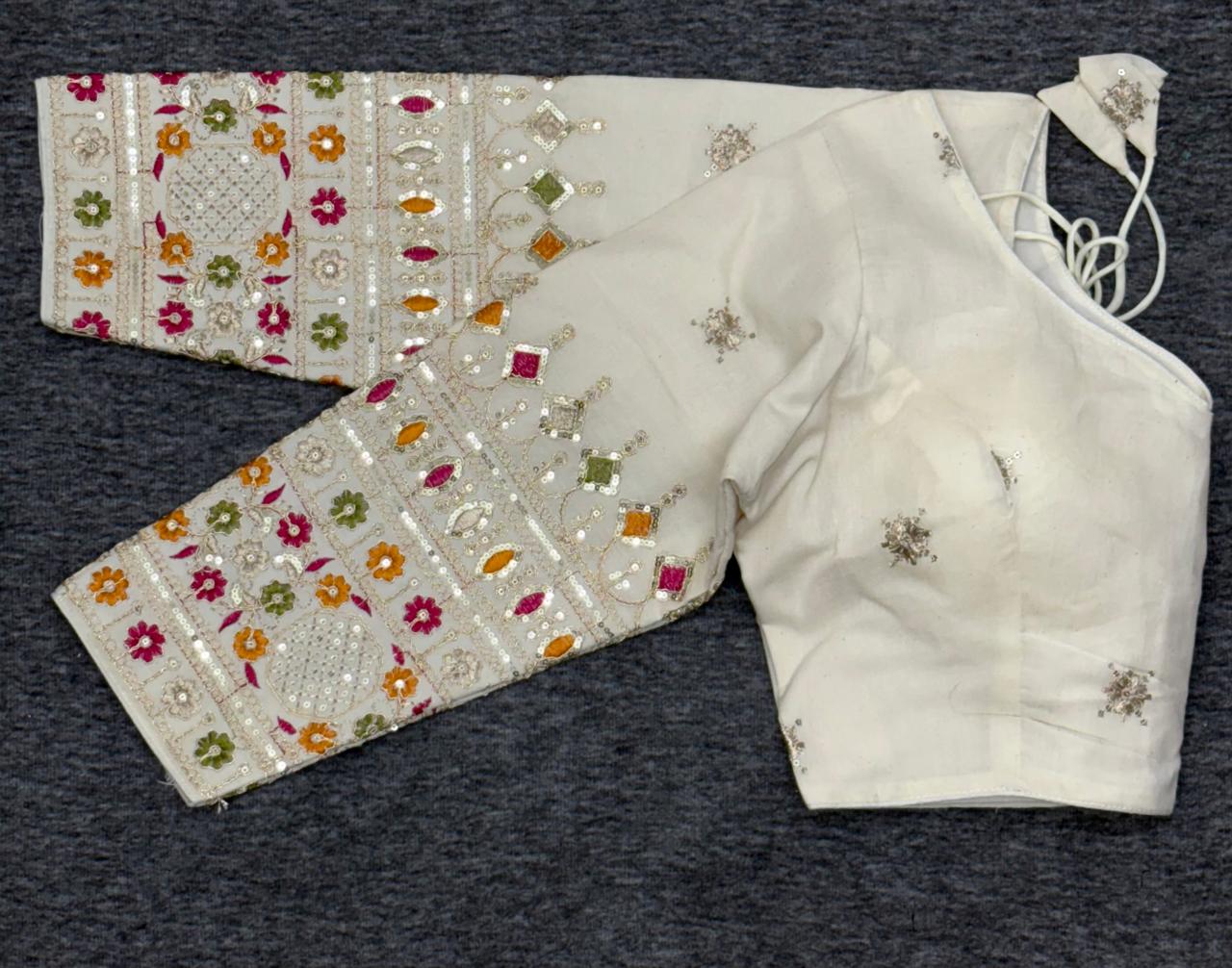
Zari looks most balanced when it appears in one or two deliberate locations, such as the sleeve hem and neckline, rather than covering every surface. A narrow zari line can repeat the saree border, while a larger motif on the sleeve or back can echo a temple, peacock or paisley design.
Heavy zari on both the neckline and sleeve hem may compete with a broad saree border. A plain blouse with a zari sleeve finish is often more flexible than a heavily embroidered blouse because it can be worn with multiple sarees. Metallic zari should also be tested for colour transfer and surface roughness before tailoring.
How Do You Match Blouse Colour With Kanjeevaram Silk?
The safest colour strategy is to repeat one visible colour from the saree border, pallu or zari rather than matching the entire saree body. A maroon blouse with a mustard-and-green Kanjeevaram saree can draw out the border more effectively than a blouse matched to the dominant gold field.
Contrast combinations are central to Tamil silk saree styling. Mustard works with deep purple, parrot green with magenta, rust with teal, and cobalt blue with tomato red when the saree already contains those relationships. Tone-on-tone styling, such as rose pink with a slightly deeper pink border, produces a quieter result and lets jewellery or the pallu become the focal point.
Gold zari generally sits comfortably with warm colours such as maroon, rust, orange, mustard, bottle green and pink. Silver zari can support purple, royal blue, grey, emerald and cooler pinks. Antique-gold zari doesn't need an exact colour match; a muted brown, bronze, olive or deep red blouse can make antique metallic thread look intentional.
A blouse colour should also be tested under the lighting where the saree will be worn. Magenta and purple can look similar under warm indoor lights, while green may appear darker in photographs. Taking a fabric swatch outdoors and under yellow light is a simple way to avoid a disappointing mismatch.
Which Designs Work for Different Tamil Ceremonies?
A temple visit or traditional puja usually calls for a high or moderate neckline, elbow sleeves and minimal surface embellishment. A plain silk blouse with a narrow zari edge keeps the appearance respectful and allows temple jewellery, jasmine flowers and a traditional drape to remain prominent.
A wedding ceremony permits more ornamentation, including embroidered sleeve motifs, contrast piping, a shaped back neckline and fabric-covered buttons. Bridal styling often benefits from a blouse that matches the saree border closely because the overall outfit already contains visual richness through zari, jewellery, flowers and the pallu.
For a Haldi ceremony, cotton or cotton-silk construction is more practical than a heavily embellished silk blouse. Yellow, turmeric, green, orange and pink shades photograph well, while washable or easier-to-clean fabrics reduce stress if the blouse comes into contact with turmeric paste or floral water.
A reception allows more contemporary interpretation. A sleeveless blouse, an asymmetric neckline or a deeper back can work with a lighter silk saree when the rest of the styling remains controlled. The blouse should still support the saree pleats and pallu; a fashionable neckline doesn't compensate for shoulder straps that slip or a hem that rides up.
How Can Contemporary Blouses Keep a Tamil Traditional Feel?
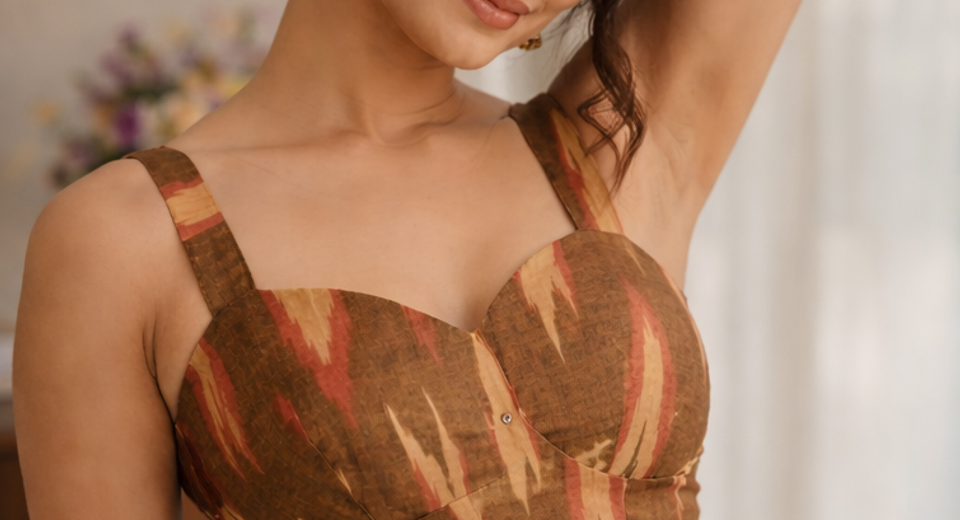
A contemporary blouse retains a Tamil traditional feel when its modern cut is balanced by a regional textile, motif, border or construction detail. A sleeveless shape with an Ikat panel, a collar finished with zari piping or a cropped blouse with a conservative neckline can modernise the outfit without disconnecting it from the saree.
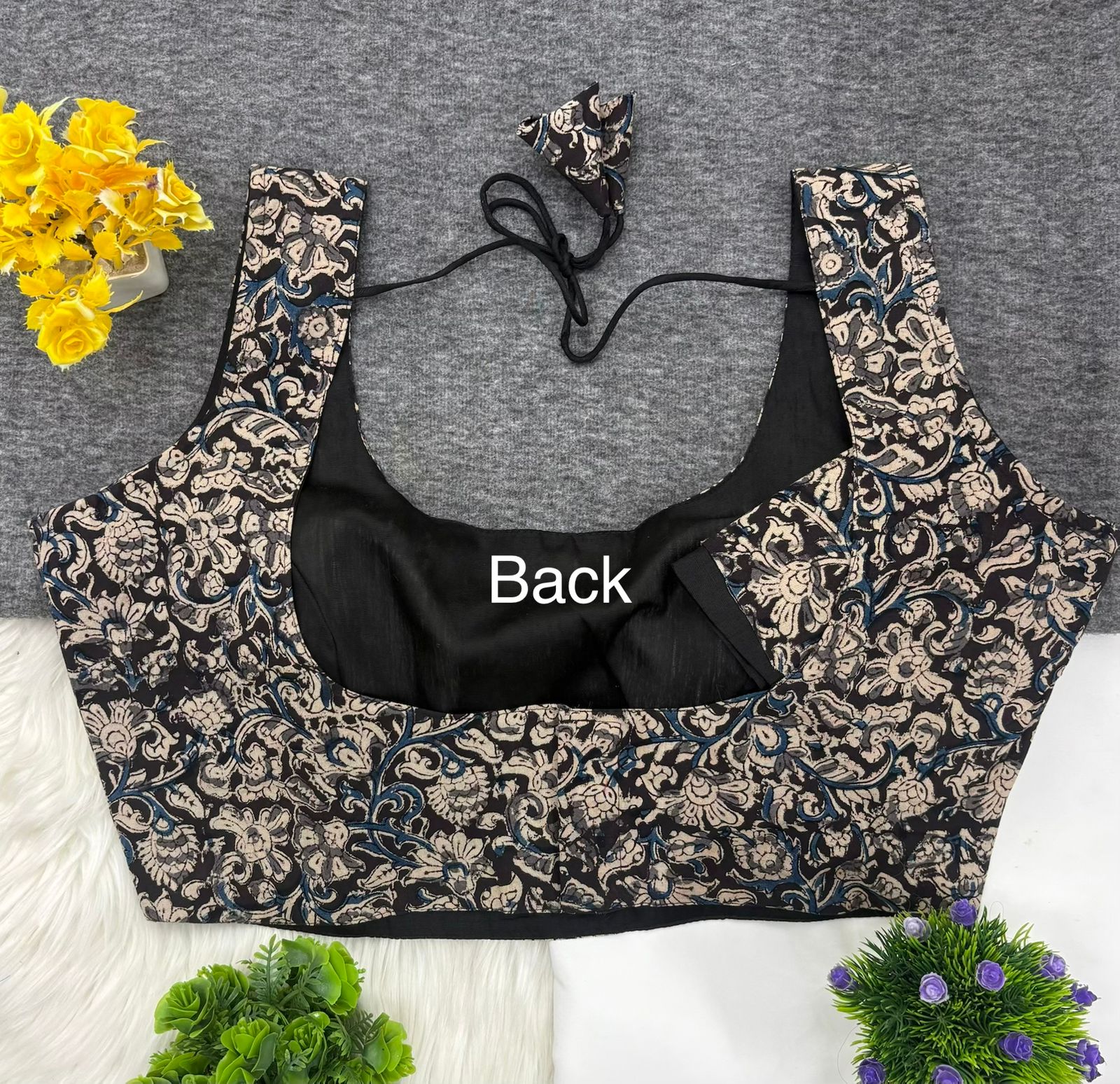
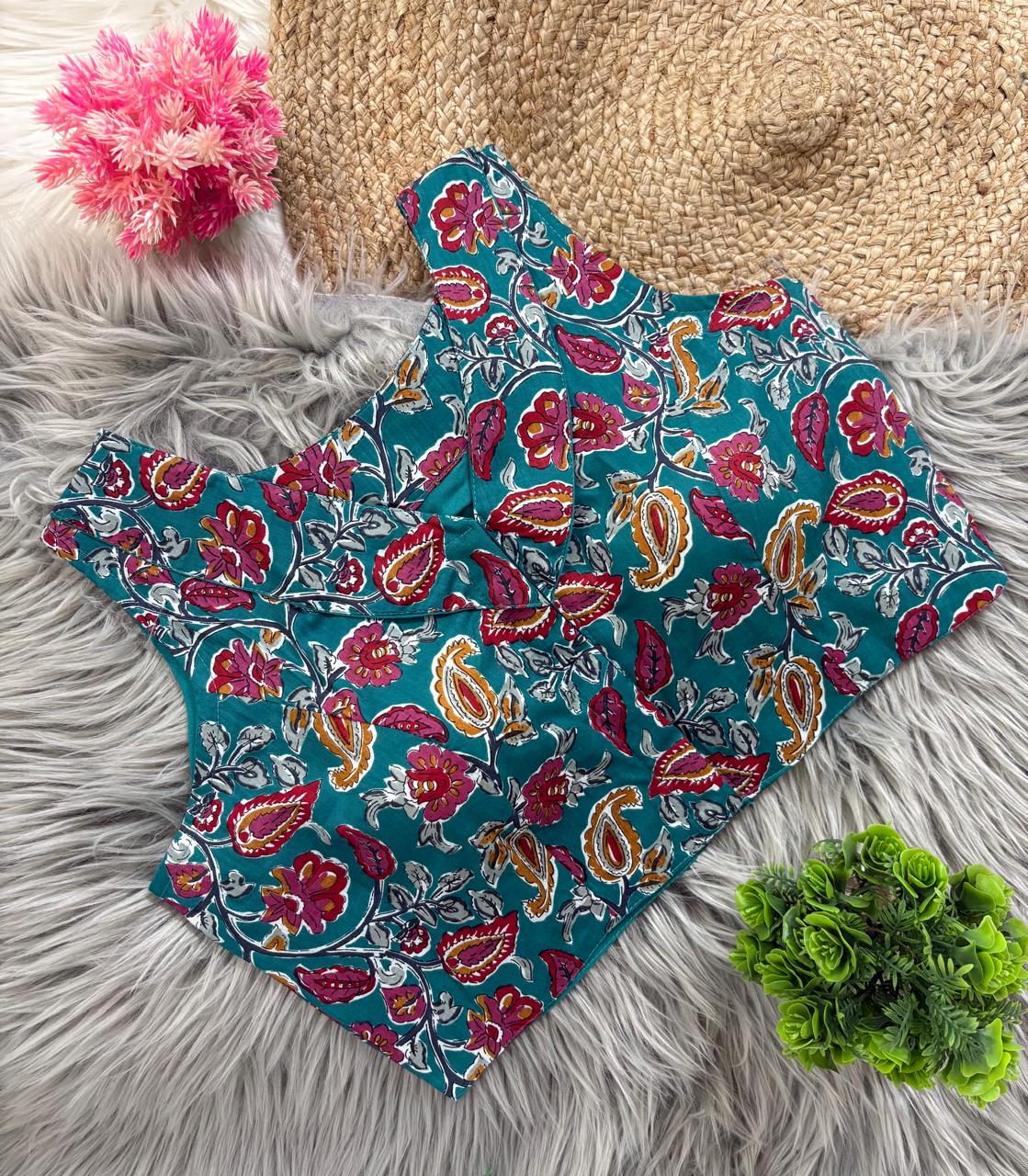
Pure Kalamkari Cotton Padded Blouse for Women demonstrates how a printed textile can introduce narrative motifs without relying on heavy embellishment. Kalamkari pairs especially well with plain silk sarees, muted zari and jewellery that repeats the blouse's earthy colours.
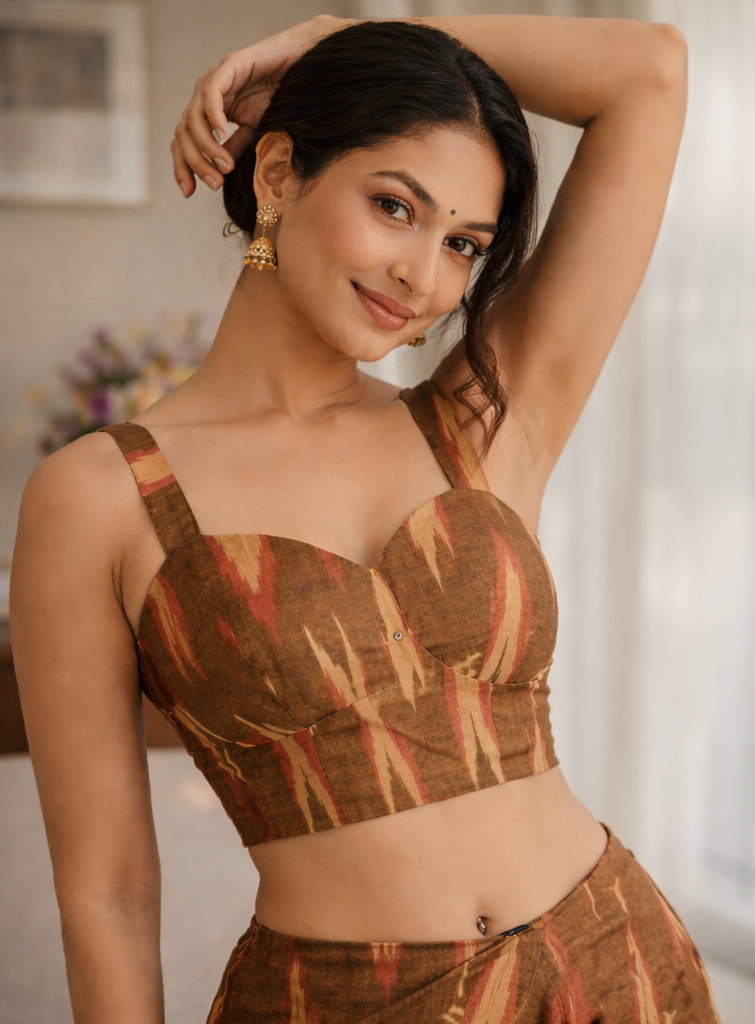
Brown Ikat Cotton Padded Blouse Sleeveless Stylish offers a useful direction for a lighter silk saree or a daytime gathering. Brown can act as a grounding neutral with mustard, rust, cream, green and red, while Ikat provides texture when the saree itself has a relatively simple border.
Classic Festive Wear Blouse for Stylish Saree Look suits situations where a polished festive silhouette matters more than an elaborate motif. A blouse with a clean neckline and controlled sleeve detail can support a rich pallu without making the upper half of the outfit appear crowded.
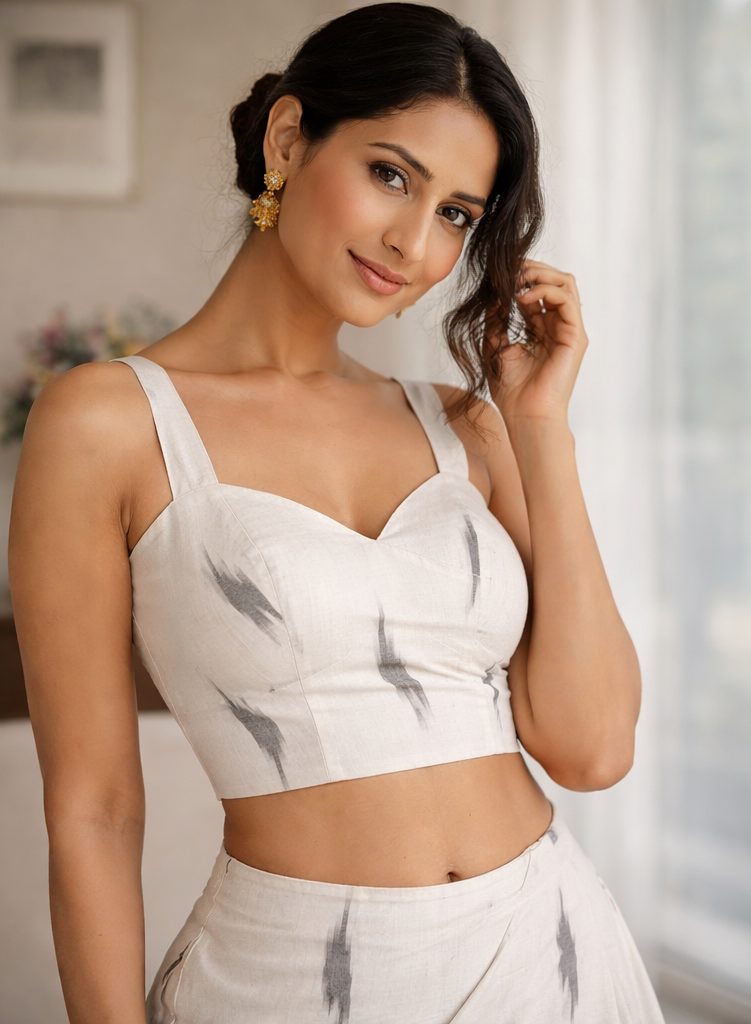
Cream Ikat Cotton Padded Blouse Sleeveless Trendy works with pastel silk, beige-gold zari and sarees containing cream, peach, coral or muted green. Cream is softer than stark white and can make a colourful silk saree suitable for daytime celebrations, although the blouse should be lined carefully to maintain opacity.
Kalamkari Cotton V Neck Collar Blouse for Women combines a shaped neckline with a textile associated with hand-drawn and block-printed storytelling. The V-neck should remain moderate for a traditional setting, while the collar can repeat a narrow saree border or a contrasting piping colour.
What Should You Check During a Blouse Trial?
A blouse trial should check movement, support and alignment rather than appearance alone. Wear the blouse with the intended saree or a similarly heavy drape, sit for 10 minutes, raise both arms, bend slightly and walk before approving the final stitching.
The shoulder seam should sit at the shoulder edge without slipping toward the arm. The bust area should lie smooth without horizontal strain lines, and the armhole should allow movement without cutting into the underarm. A blouse that feels comfortable while standing can become restrictive after the saree is pinned tightly.
The blouse hem should meet the saree waist cleanly without exposing a gap when the wearer raises an arm. Hooks and eyes should be placed close enough to prevent gaping, while the back opening should remain secure under the pallu. A tailor should leave alteration allowance at the side seams and avoid cutting away every extra centimetre.
Before the final fitting, check the blouse with the jewellery, bra or padding, saree belt and hairstyle planned for the ceremony. A high choker may require a lower neckline, while a heavy waist belt may reveal a blouse hem that looked covered during an ordinary trial. Photographing the outfit from the front, side and back can reveal proportion issues that a mirror may hide.
How Should a Silk Saree Blouse Be Stored and Maintained?
A silk saree blouse should be aired after use, folded with the embellished side inward when possible, and stored in a clean cotton cover away from direct sunlight. A breathable cover is preferable to sealed plastic because trapped moisture can encourage mildew and weaken some linings.
Dry cleaning is safer for heavily zari-worked silk, brocade and embroidered blouses than repeated home washing. Cotton or cotton-silk blouses may tolerate gentle hand washing only when the care label permits it, but padding, metallic thread and colour bleeding make a hidden seam test essential.
Never iron zari directly. Place a thin cotton cloth over the blouse, use low heat and press from the reverse side, or use steam at a safe distance after testing the fabric. Perfume and hair spray should be applied before dressing because alcohol and oils can stain silk, zari and Kalamkari prints.
Good fit remains the most important styling detail. When neckline, sleeve, colour, fabric and embellishment are selected in relation to the saree rather than independently, traditional Tamil blouse design feels intentional, comfortable and appropriate for both ceremony and photographs.
Common Questions About Tamil Blouses for Silk Sarees
What blouse design looks best with a Kanjeevaram silk saree?
A fitted blouse with a moderate round or U-neckline and elbow-length sleeves is the most versatile choice for a Kanjeevaram silk saree. Matching the blouse to the saree border or repeating one pallu colour usually creates a more balanced result than copying the dominant saree colour.
Can a sleeveless blouse look traditional with a Tamil silk saree?
A sleeveless blouse can look traditional when its neckline is modest and the textile, colour or border reflects the saree. Sleeveless styling is more suitable for receptions and daytime celebrations than conservative temple ceremonies, where elbow-length sleeves are generally more appropriate.
Which blouse colour goes with a gold-zari silk saree?
Maroon, rust, mustard, bottle green, pink and deep purple commonly complement gold zari. The best choice usually repeats a colour found in the saree border or pallu rather than matching the gold body of the saree.
How much seam allowance should a silk saree blouse have?
Leaving about 2 to 3 centimetres at important side and shoulder seams gives a tailor room to make future adjustments. The exact allowance depends on the pattern, but removing all extra fabric during the first stitching can make later alterations difficult.
Is cotton suitable for a traditional blouse worn with a silk saree?
Firm cotton and cotton-silk blends are suitable for daytime ceremonies, humid weather and lighter silk sarees. Cotton provides structure and breathability, but the blouse should be fully lined when the cotton is printed, textured or not sufficiently opaque.
How should a zari blouse be cared for?
A zari blouse should be stored in a breathable cotton cover, kept away from direct sunlight and ironed only from the reverse side with a protective cloth. Heavy zari and embroidery are safest with professional dry cleaning unless the care label specifically permits washing.