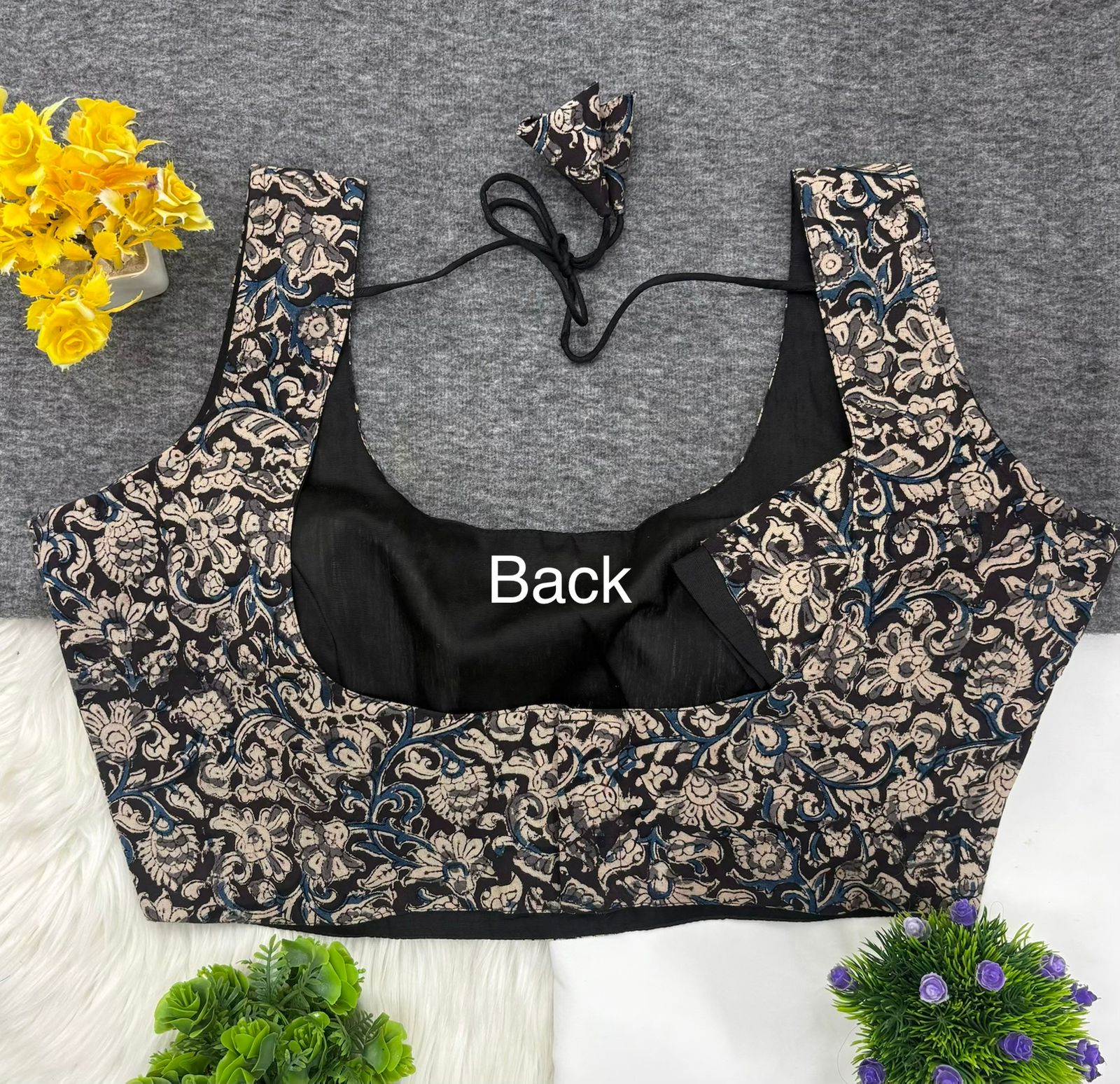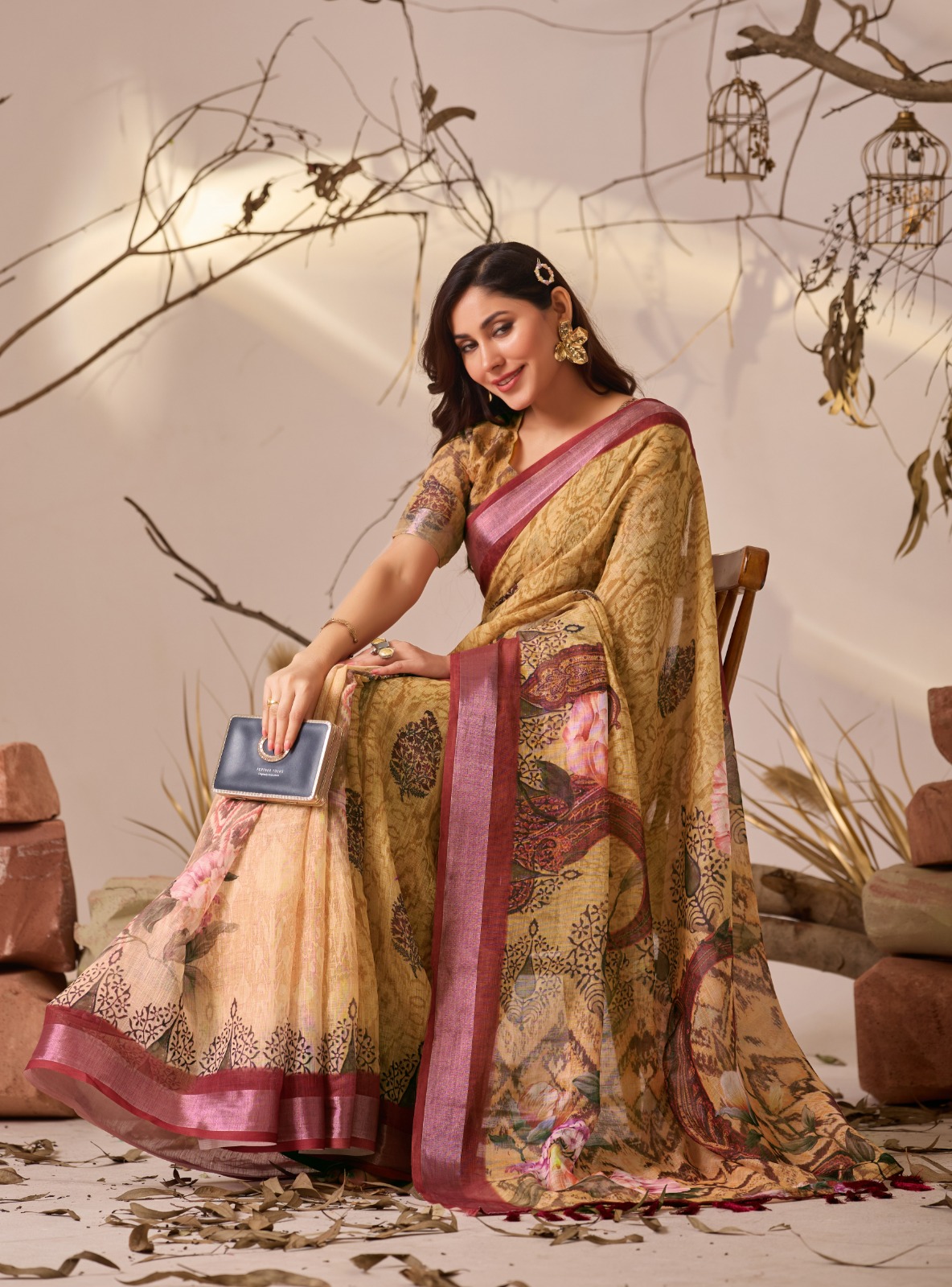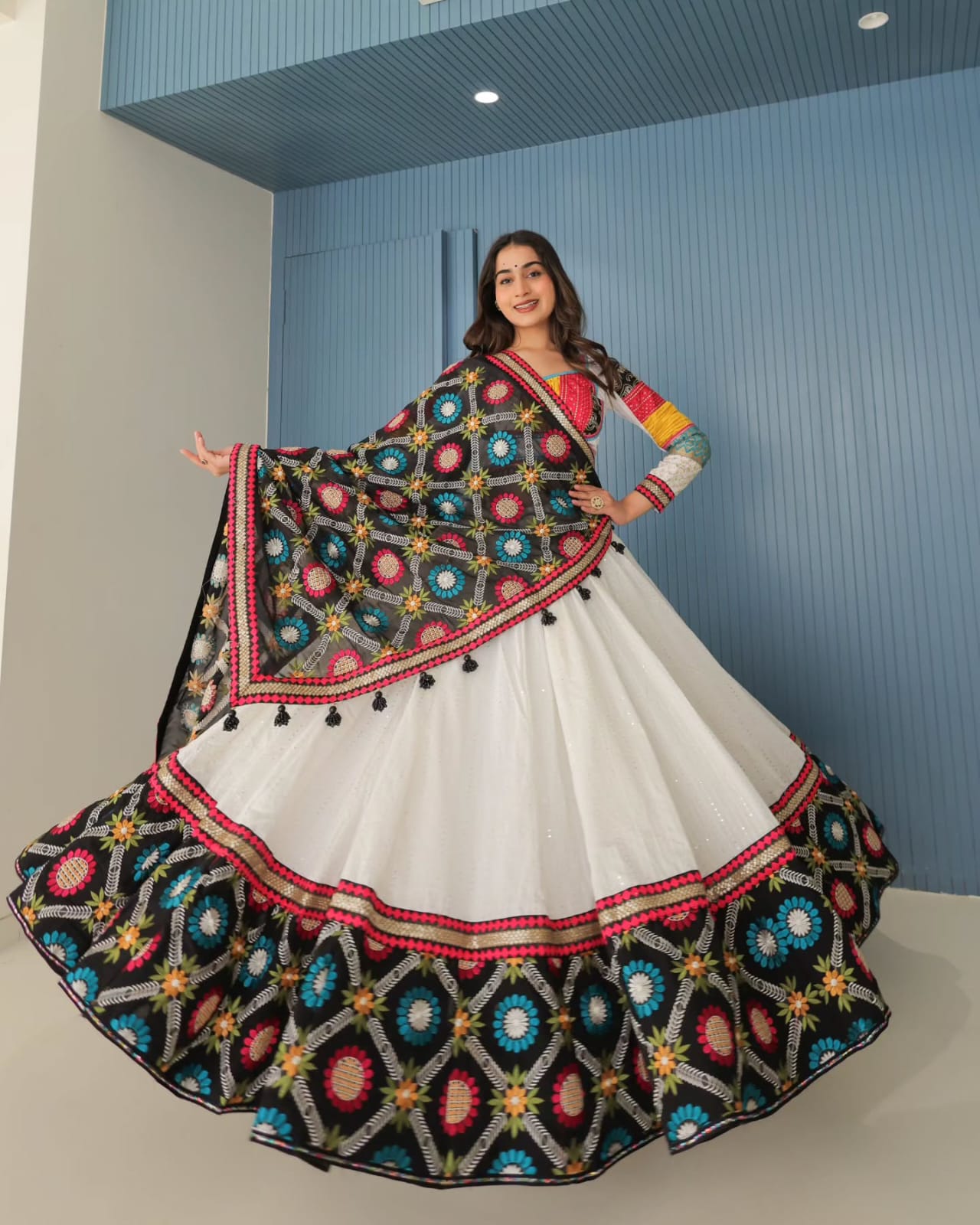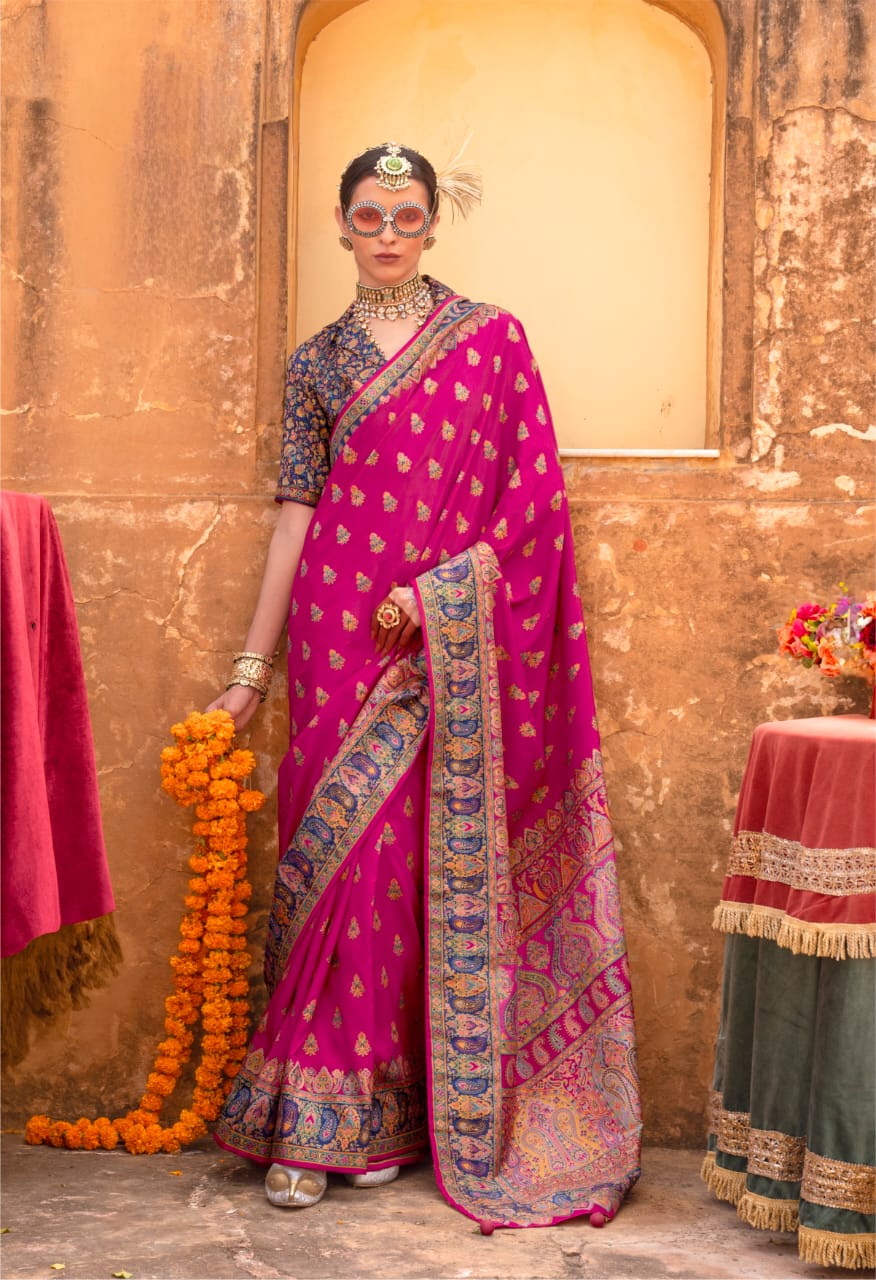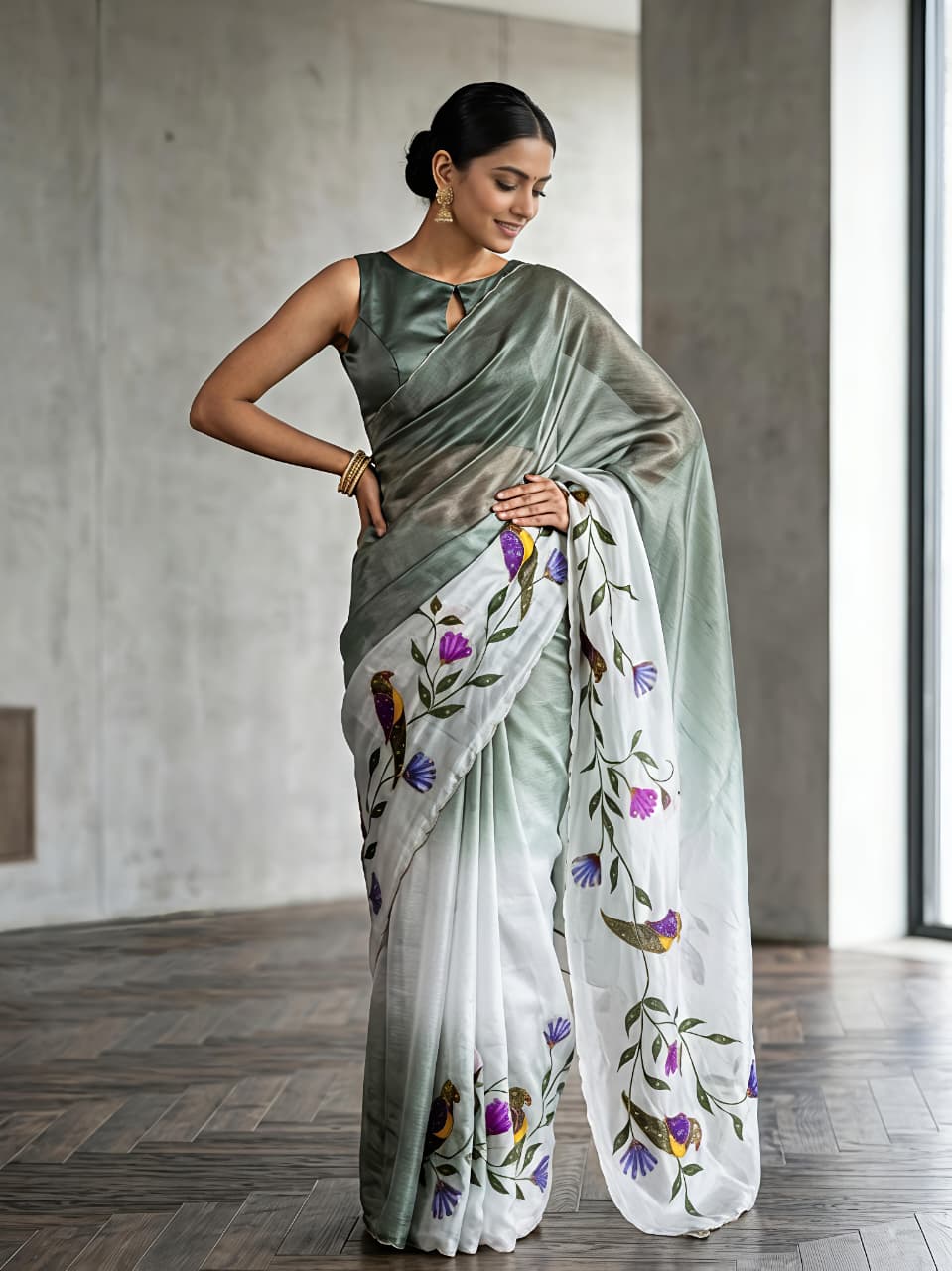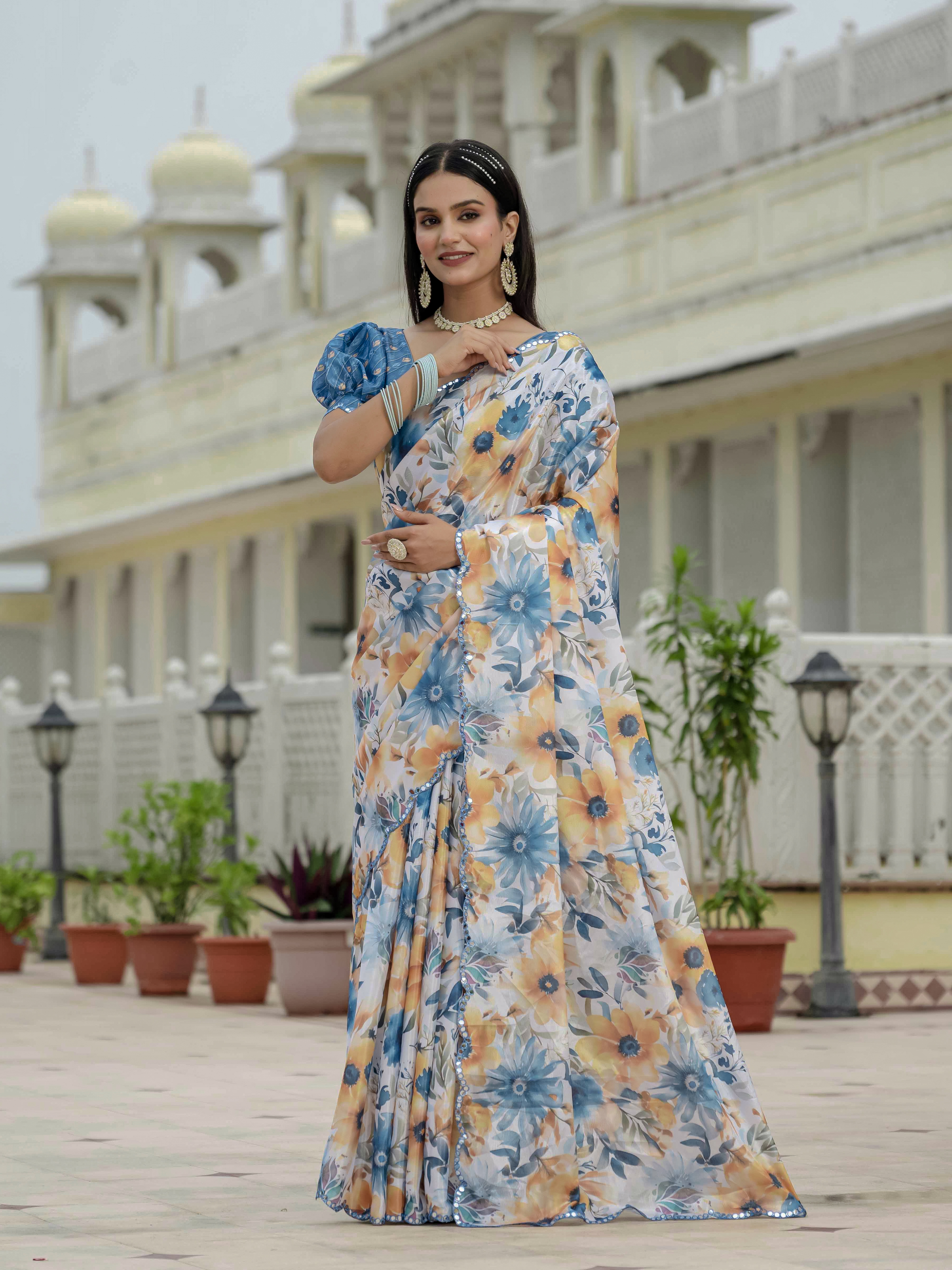
Traditional Sikkim Colours & Textile-Inspired Fashion brings Himalayan colour stories, woven textures and ceremonial dressing into a contemporary ethnic wardrobe. The visual language of Sikkim is shaped by Bhutia, Lepcha and Nepali communities, each with distinctive garments, materials and ways of wearing colour. A thoughtful interpretation doesn't copy a traditional outfit casually; it studies the relationship between deep hues, wrapped silhouettes, striped aprons, geometric borders and practical layers.
That approach makes Sikkim-inspired dressing useful for weddings, cultural events, festive lunches and winter celebrations. A silk saree with a strong border, a woollen stole over a plain kurta, or a jewel-toned blouse with restrained jewellery can carry the mood without turning heritage into costume. The key is to understand which details belong together and which combinations create visual balance.
Traditional Sikkim Colours & Textile-Inspired Fashion: What makes the style distinctive?
Traditional Sikkim Colours & Textile-Inspired Fashion is distinctive because it combines saturated mountain hues with layered forms, woven geometry and textiles chosen for climate and movement. Red, blue, green, yellow, black and white commonly appear in Sikkim-related visual traditions, although colour meanings vary by community, garment and ceremony.
Bhutia clothing is often associated with the bakhu, a wrap-style garment secured around the body and worn with a blouse or honju. Lepcha clothing includes handwoven textiles with recognisable stripes, checks and rhythmic geometric arrangements. Nepali communities in Sikkim have their own clothing traditions, including sari, gunyu cholo and other regional forms. These traditions should not be collapsed into one generic "Sikkim look".
Three design principles can be carried into modern clothing. The first is a high-contrast palette, such as indigo with vermilion or bottle green with mustard. The second is a clear border or stripe that gives a garment structure. The third is layering: a base garment, a contrasting wrap or stole, and jewellery or a belt that defines the silhouette.
Traditional Sikkim Colours & Textile-Inspired Fashion: Which colours belong in the palette?
A Sikkim-inspired palette works best when one deep base colour is paired with one warm accent and one quiet neutral. Royal blue, indigo, bottle green, brick red, mustard yellow, ivory, charcoal and muted pink can create a Himalayan mood without making every element equally bright.
Deep blue and red
Deep blue and red create one of the strongest combinations for evening celebrations. Blue suggests depth and cool mountain light, while red provides warmth and visual energy. Blue Red Ikat Silk Saree Online with Zari | Varnavi uses that contrast in a textile-led way; keep the blouse simple if the ikat pattern and zari are prominent.
A red blouse with a blue saree works particularly well when the red is repeated only once more, perhaps in glass bangles or a small potli. Repeating the accent in four or five accessories can make the outfit look coordinated rather than refined.
Mustard, yellow and green
Mustard yellow and bottle green suit daytime pujas, Haldi ceremony gatherings and autumn or winter events because they bring warmth without the glare of neon colour. Mustard Yellow Patola Print Soft Pashmina Silk Designer Saree demonstrates how a warm ground can support a patterned surface and still look composed.
Traditional Bottle Green Patola Border Silk Saree offers an useful lesson in proportion: a saturated body can remain elegant when the border carries the main contrast. Pair bottle green with antique gold jewellery, a muted maroon blouse or an ivory shawl rather than adding another equally bright colour.
White, black and natural neutrals
Ivory, off-white, charcoal and black are important balancing shades in a Himalayan-inspired wardrobe. These colours give bright ikat, patola or brocade details room to breathe. A black blouse can sharpen a jewel-toned saree, while an ivory dupatta can soften a red-and-blue outfit for a daytime event.
Traditional Sikkim Colours & Textile-Inspired Fashion: How do textiles shape up-to-date clothing?
Sikkim textiles influence contemporary ethnic clothing through pattern rhythm, tactile layering and the visible logic of handwoven surfaces rather than through one fixed fabric. Stripes, checks, repeated diamonds, narrow bands and strong selvedges can all be translated into saree borders, blouse panels, dupattas, jackets and belts.
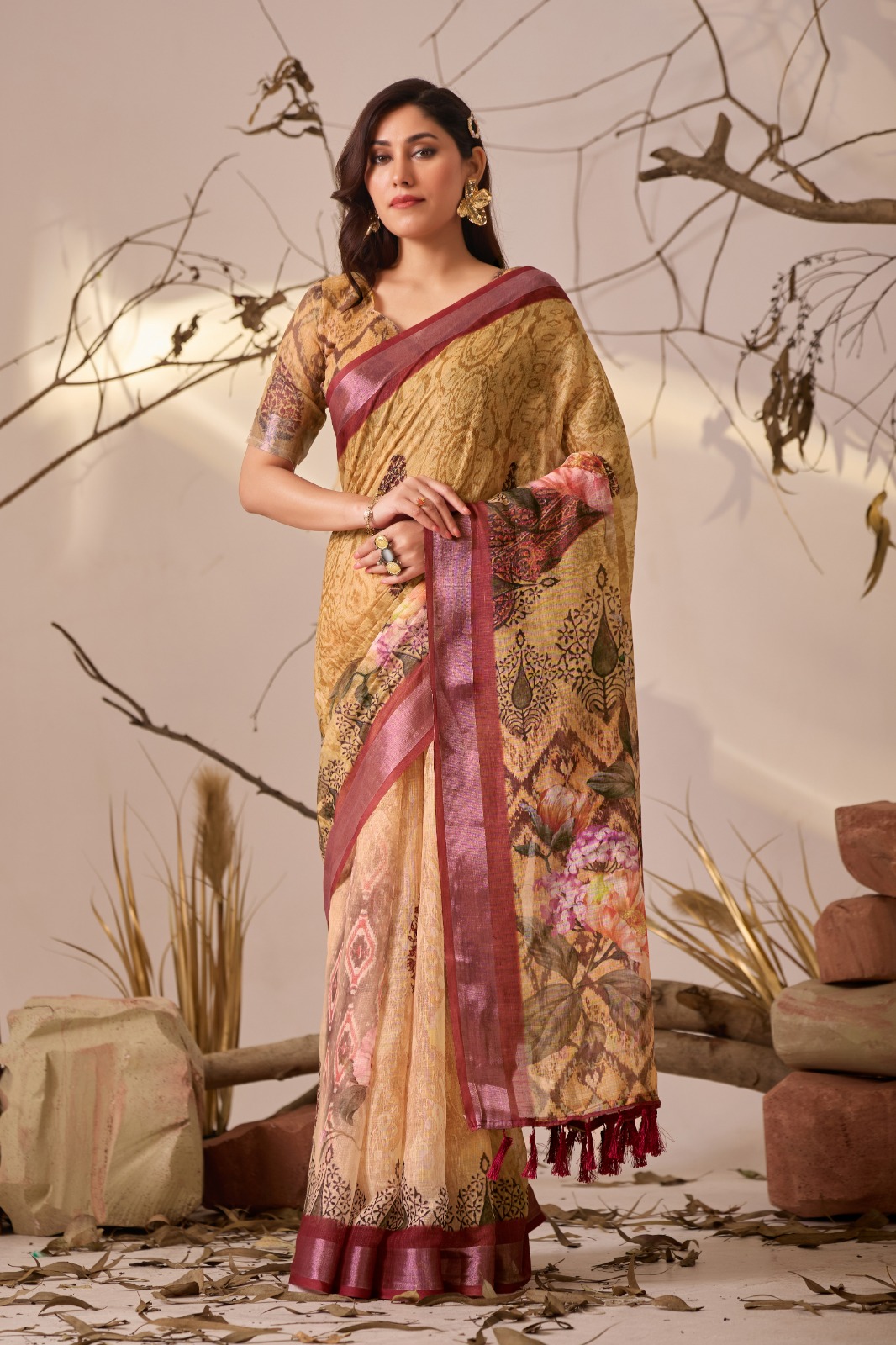
Handwoven wool and cotton have practical value in cooler Himalayan conditions, while silk and brocade bring a formal finish to ceremonial clothing. Current wardrobes can combine these ideas with Banarasi silk, Chanderi, soft pashmina silk, ikat and patola-inspired prints. The result should acknowledge material differences: a printed patola motif isn't the same as a handwoven Patola textile, and a silk saree only borrows a visual language unless its weave is genuinely linked to that tradition.
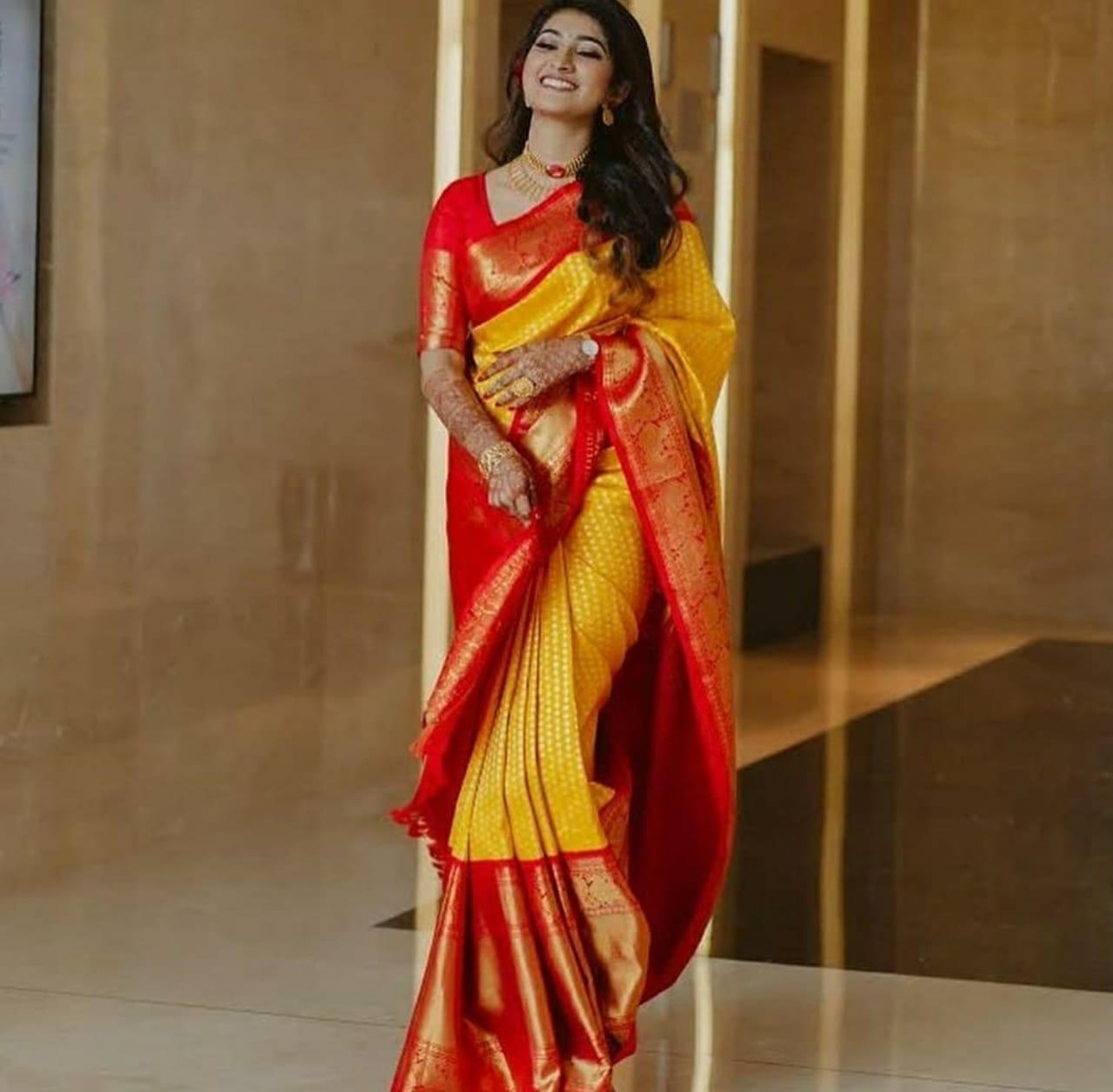
Red Yellow Soft Lichi Silk Saree with Rich Pallu & Jacquard Border shows how a warm colour pairing and a structured border can provide a textile-inspired effect without excessive ornament. A rich pallu can function as the focal area, allowing the pleats and blouse to remain visually quiet.
For a cooler event, a saree can be worn with a wool or pashmina shawl rather than a heavily embellished jacket. The contrast between a smooth silk surface and a slightly brushed wrap creates depth. Keep the shawl in a solid colour if the saree already contains zari, jacquard or a dense print.
Traditional Sikkim Colours & Textile-Inspired Fashion: How can a saree be styled?
A Sikkim-inspired saree should have one clear textile focus, one structured colour contrast and accessories that support the drape. The focus may be an ikat body, a geometric border, a rich pallu, a woven stole or a distinctive blouse sleeve.
Wedding or evening reception
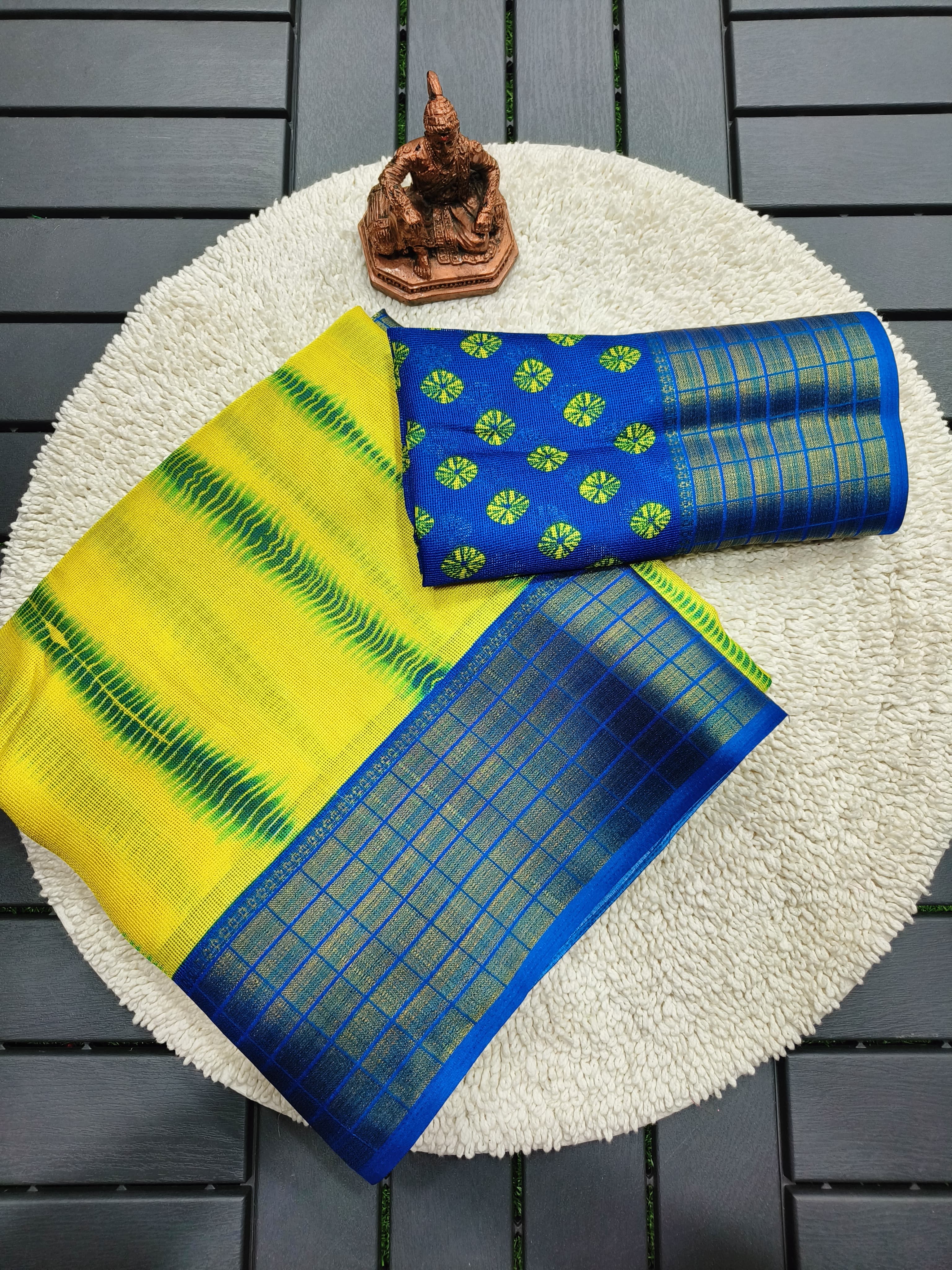
Choose a jewel-toned silk saree with a controlled amount of zari and wear it with a fitted blouse in the saree's secondary colour. Blue Ethnic Saree with Floral Design and Zari Border can be styled with a red, wine or antique-gold blouse, depending on how formal the reception is.
Use a low bun, a narrow maang tikka and medium-sized earrings when the border is elaborate. Heavy necklaces, layered bangles and a large hair accessory can compete with a patterned saree. Metallic footwear in antique gold or muted bronze will echo zari without introducing another dominant colour.
Puja, cultural programme or daytime gathering
Daytime dressing benefits from lighter contrast, breathable movement and fewer reflective details. Royal Blue Printed Silk Saree can work with an ivory blouse and small gold studs, while Festive Wear Blue Silk Saree for Women can be paired with a mustard or rust blouse if the design permits a colour change.
Keep the pallu neatly placed over one shoulder or secure it with a discreet pin near the shoulder seam. A narrow fabric belt at the waist can define the silhouette, but a belt should not cover an important border or zari motif.
Winter celebration
Layer a saree with a short brocade jacket, a high-neck blouse or a solid pashmina wrap for warmth. Colorful Ethnic Chinon Saree for Women can be balanced with a plain black, charcoal or deep green blouse because the colourful surface already supplies movement.
Choose lining carefully when adding a jacket. A slippery silk lining helps the jacket move over a saree, while a rough synthetic lining can catch on zari and pull delicate threads. Leave enough ease at the armhole to accommodate pleats and avoid forcing the saree into an uncomfortable silhouette.
Traditional Sikkim Colours & Textile-Inspired Fashion: Which garments provide useful references?
The bakhu, honju, pangden, Lepcha woven dress and Nepali regional garments provide useful references for Sikkim-inspired styling. Each reference contributes a different idea: the bakhu suggests wrapping, the pangden introduces horizontal colour bands, and Lepcha textiles demonstrate the power of repeated geometry.
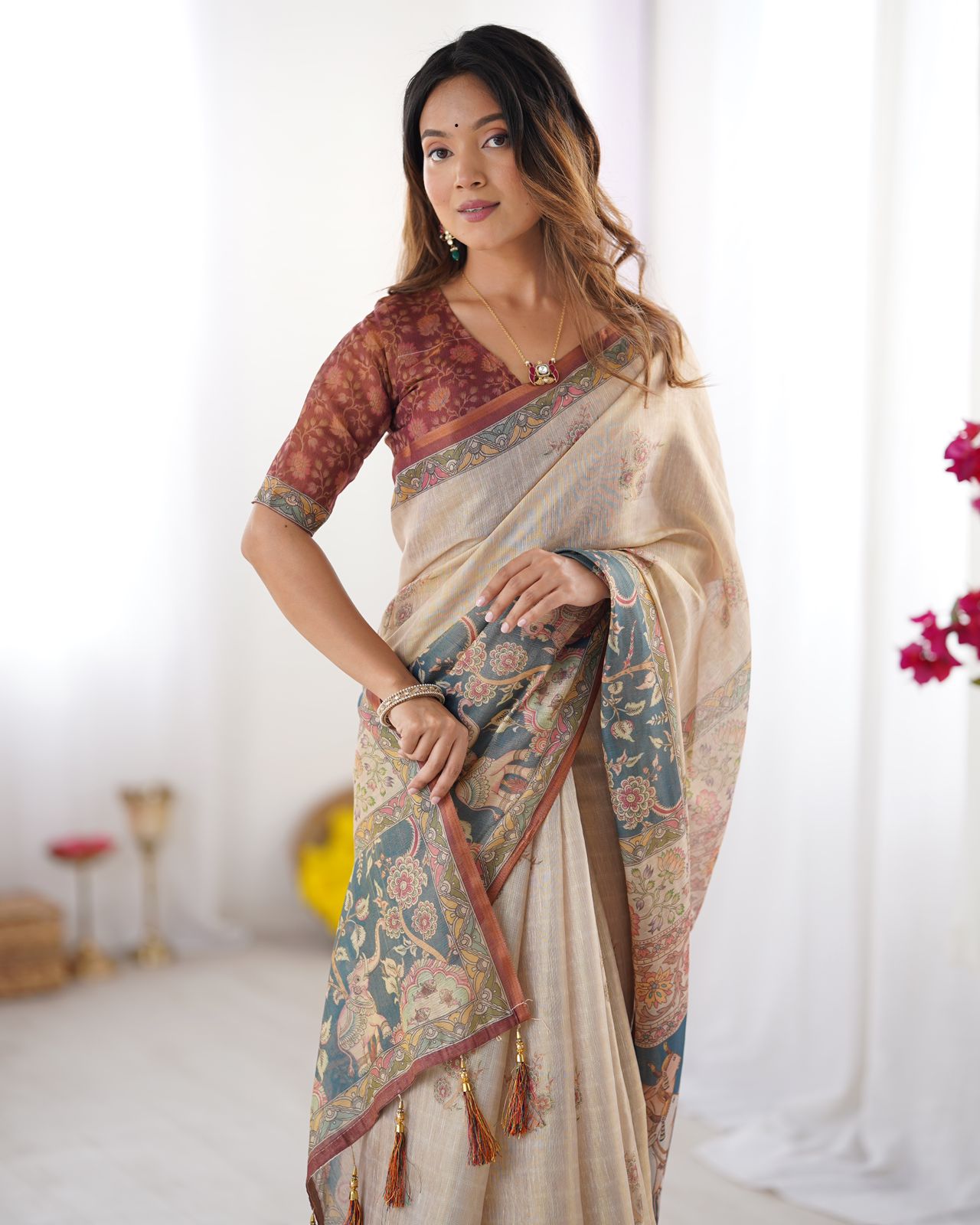
The pangden is commonly recognised as a striped apron associated with Tibetan and Bhutia women's dress, particularly for married women. Its stripes can inspire a multicoloured dupatta, a panelled skirt or a blouse with horizontal bands, but the original garment's cultural context should be respected. A fashion interpretation is more responsible when it credits the source rather than presenting the motif as an anonymous "tribal print".
Sikkim Traditional Women's Dress Collection is an useful reference point for observing how regional clothing is presented as a complete visual system rather than as isolated colours. Traditional Northeast Indian Dress Occasion Collection broadens that study by reminding us that Northeast India contains many distinct textile cultures, not one interchangeable style.
Comparisons with Traditional Uttarakhand Dress for Women and Traditional Himachal Dress for Women can clarify the role of climate, layering and wool in mountain clothing. Traditional Goa Dress for Women brings a contrasting coastal example, showing why fabric weight, drape and colour intensity change with geography. These comparisons prevent a designer or shopper from treating all regional ethnic wear as the same.
Traditional Sikkim Colours & Textile-Inspired Fashion: How should accessories complete the look?
Accessories should repeat one colour from the textile and introduce no more than one new metallic or accent shade. This rule keeps an ikat, zari border or multicoloured print visually dominant instead of allowing jewellery to compete with the fabric.
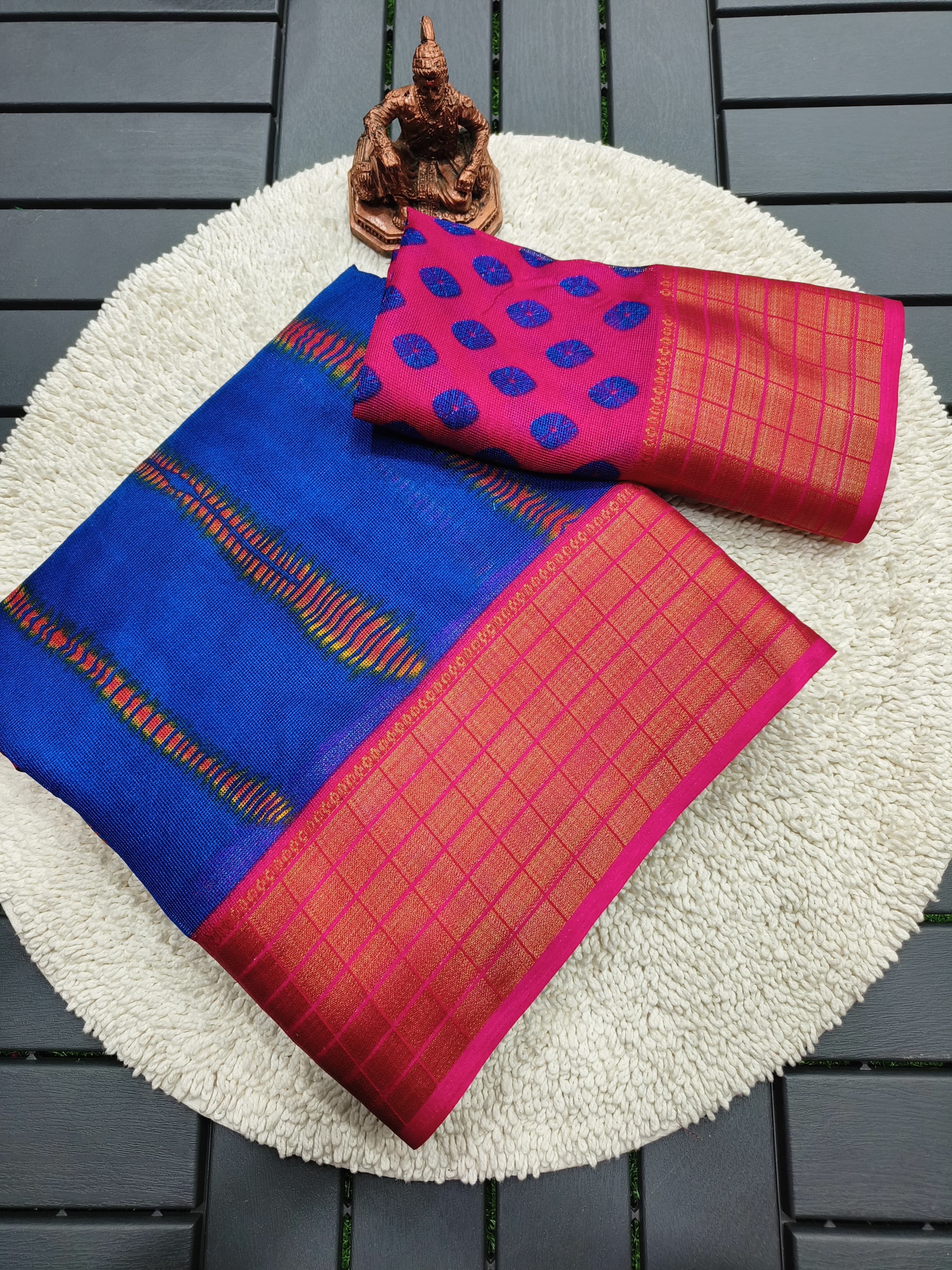
Silver-toned earrings can suit blue, charcoal and green outfits, while antique gold works naturally with mustard, red and warm brown. Oxidised silver is especially useful with handloom-inspired cottons and matte fabrics because its surface has less reflective intensity than polished gold. Gold jewellery generally feels more formal with silk, zari and brocade.
A woven belt, fabric potli or narrow striped stole can echo Sikkim's layered clothing references without reproducing a sacred or community-specific garment. Choose one such detail rather than combining a belt, a heavily patterned shawl and a large embroidered bag.
Makeup can follow the same principle. A warm red lip suits a blue-and-red outfit, while terracotta or muted rose works with mustard and bottle green. Keep the eye makeup defined but not glitter-heavy when the saree contains zari. A clean centre parting, low bun or braid often complements wrapped and layered silhouettes better than an elaborate hairstyle.
Traditional Sikkim Colours & Textile-Inspired Fashion: How can shoppers judge quality and care?
Shoppers can judge a textile-inspired garment by checking fibre content, surface construction, border alignment, lining, seam finishing and care instructions before purchase. A striking colour story can't compensate for a weak hem, uneven border or fabric that's unsuitable for the intended weather.
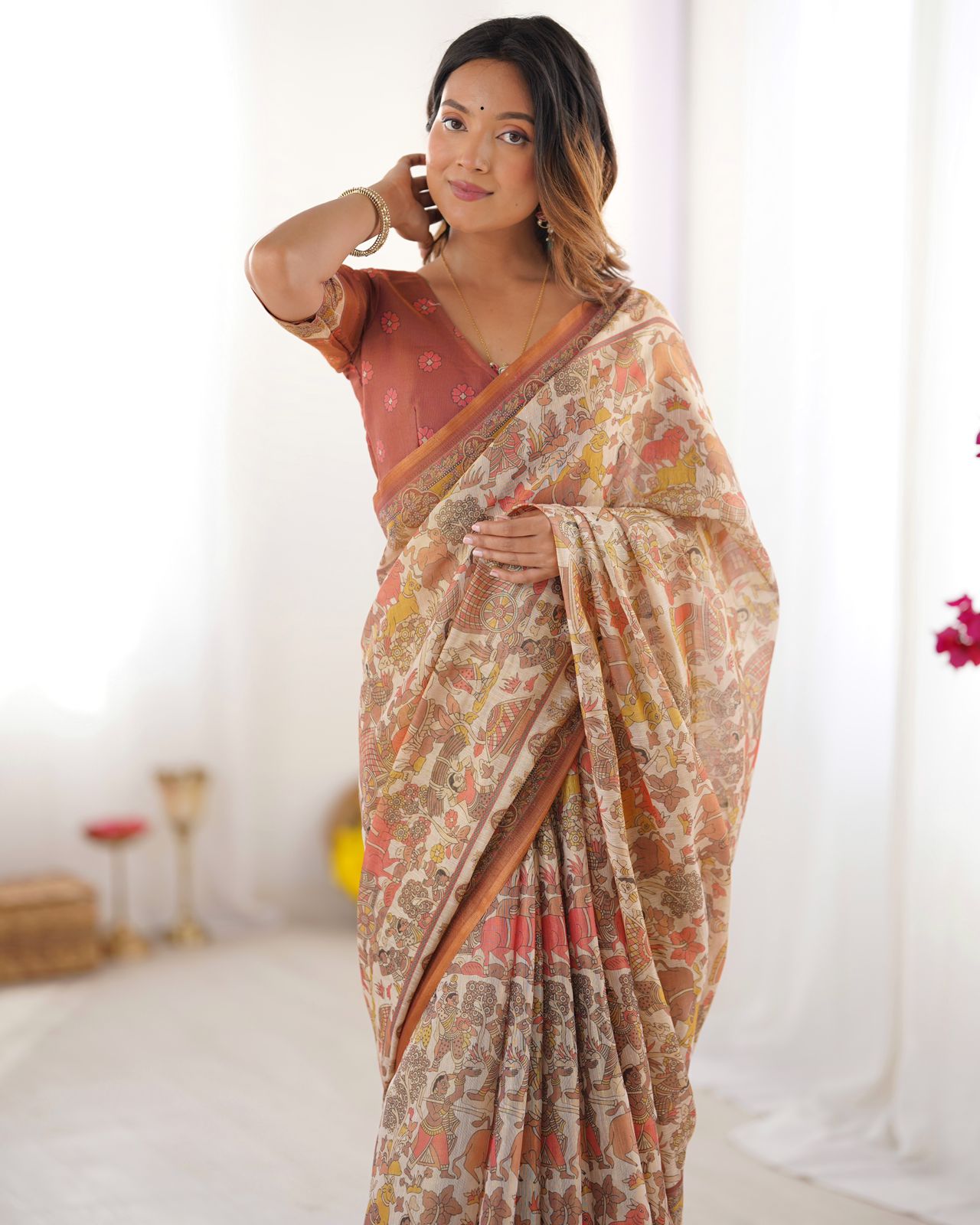
For silk sarees, inspect whether the fabric has a consistent sheen and whether zari threads sit securely in the border. A jacquard border should not show frequent loose loops, while printed designs should remain reasonably aligned across the pallu and body. Patola-inspired prints should be described accurately rather than being presented as handwoven Patola without evidence.
Soft pashmina silk requires protection from friction, moisture and high heat. Fold the saree with acid-free tissue or clean cotton between layers, refold it every few months to prevent permanent crease stress, and store it away from direct sunlight. Dry-clean embellished silk according to the care label instead of soaking it at home.
Chinon and lightweight synthetic blends should be stored on a wide hanger only when the garment isn't heavily weighted by zari or embroidery. Heavy sarees are safer when folded flat because prolonged hanging can stretch the shoulder area. Air garments in shade after wearing, and never iron directly over zari, printed surfaces or delicate jacquard.
Traditional Sikkim Colours & Textile-Inspired Fashion becomes most successful when colour, textile, silhouette and cultural reference are considered together. Select one dominant woven idea, balance it with a neutral, and let the garment's construction remain visible. That method creates occasion wear that feels rooted, respectful and practical rather than decorative for its own sake.
Common Questions About Traditional Sikkim Colours & Textile-Inspired Fashion
What colours are commonly associated with Sikkim traditional dress?
Deep red, royal blue, bottle green, mustard yellow, black, white and earthy neutrals are commonly associated with Sikkim-related clothing and textile palettes. Exact colours and meanings vary among Bhutia, Lepcha and Nepali communities, so no single palette represents every Sikkim tradition.
What is the traditional dress of women in Sikkim?
Women's traditional dress in Sikkim varies by community. Bhutia clothing is associated with the bakhu and honju, Lepcha clothing uses distinctive handwoven textiles, and Nepali communities wear regional forms such as sari and gunyu cholo.
How can I wear a saree inspired by Sikkim textiles without looking costume-like?
Choose one defining feature, such as an ikat pattern, a striped stole, a geometric border or a wrapped silhouette, and keep the rest of the outfit restrained. A solid blouse, limited jewellery and one coordinating accent colour make the cultural reference feel considered rather than theatrical.
Which fabrics work well for Sikkim-inspired festive clothing?
Silk, Banarasi silk, soft pashmina silk, wool, cotton, Chanderi and jacquard can all support Sikkim-inspired styling. Select lighter silk or cotton for daytime events and add a pashmina or wool layer for winter celebrations.
How should I care for a silk saree with zari or a jacquard border?
Store the saree folded in a cool, dry place with clean cotton or acid-free tissue between folds, and refold it every few months. Avoid direct sunlight, perfume on the fabric and direct ironing over zari; follow the care label for dry-cleaning instructions.
What accessories suit a blue, red, mustard or bottle-green saree?
Antique gold suits mustard, red and bottle green, while silver or oxidised silver complements blue, charcoal and cooler jewel tones. Repeat one saree colour in the jewellery or bag, then keep the remaining accessories simple so the textile remains the focal point.