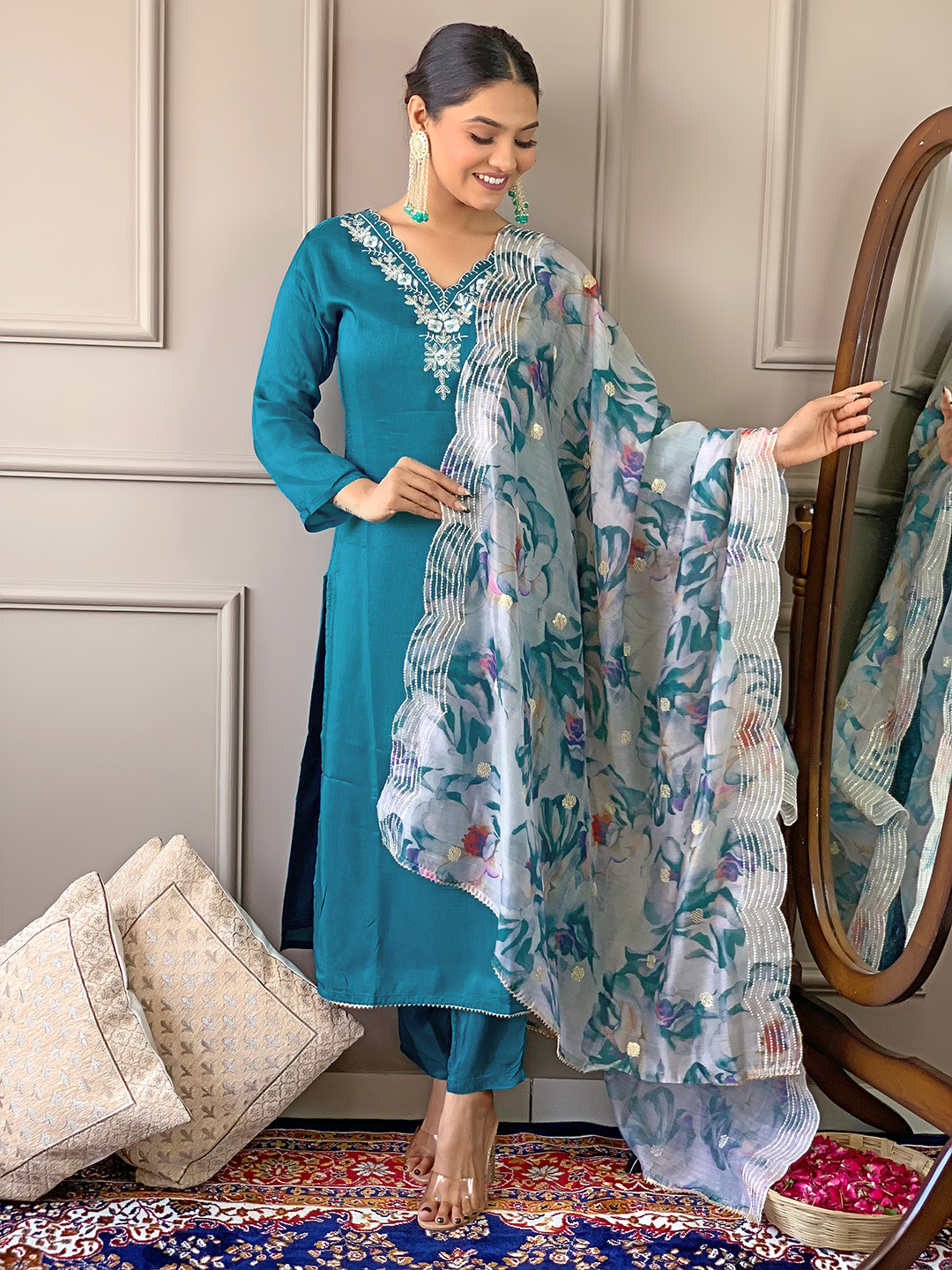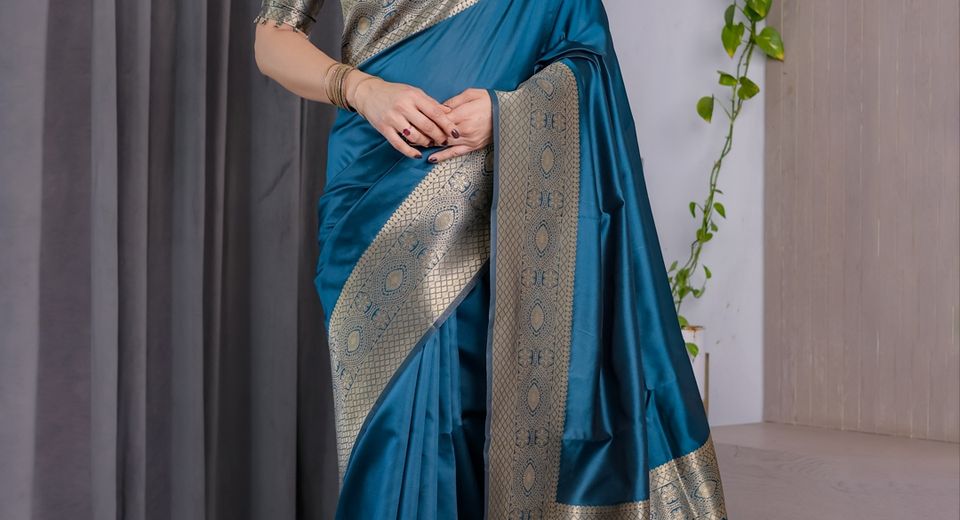
Traditional sarees of Varanasi are recognised for their luminous silk, patterned zari and strong connection to the weaving culture of Banaras, now widely known as Varanasi. A good purchase begins with more than colour or a low price. You need to understand the difference between Banarasi silk and a Banarasi-inspired design, know what zari contributes, assess the occasion, and check whether an online product description clearly states its materials and construction.
Banarasi sarees can be richly traditional without looking old-fashioned. A red silk saree with a gold floral border suits a wedding ritual, while a teal or purple saree with a restrained jacquard border can work for a reception, festival or formal family gathering. The right choice depends on weave, weight, shine, motif scale, blouse design and how much movement you need during the event.
What makes Traditional sarees of Varanasi distinctive?
Traditional sarees of Varanasi are distinctive because Banarasi weaving combines a silk ground with supplementary patterned threads, especially zari, to create detailed borders, pallus and motifs. Zari is the metallic thread that produces the familiar gold or silver gleam; its exact composition and finish can vary, so a product description should not be assumed to mean precious-metal zari unless it says so.
Varanasi has a long textile history shaped by Hindu, Muslim and Persian design influences. Floral butis, bel or creeper borders, jaal patterns and geometric details are common visual references. Kalga, bel and paisley-inspired forms may appear alongside contemporary floral layouts. The result is a textile language that can be immediately festive while still allowing considerable variation in colour, density and finish.
Banarasi silk should also be separated from the word "Banarasi" used only to describe a look. A saree may carry a Banarasi-inspired jacquard or printed design without being a handwoven Banarasi silk saree made in Varanasi. Neither category is automatically right or wrong. The important point is to match your expectations and budget to the stated fabric, technique and finish.
Is every Banarasi saree pure silk?
Not every Banarasi saree is pure silk. Some are made from silk, some from soft silk or blended yarns, and some use other fabrics with Banarasi-style motifs or jacquard surfaces.
"Pure Banarasi silk traditional" usually signals a preference for a silk-rich or pure silk textile, but the phrase alone isn't enough proof of composition. Look for a specific fibre description, care instructions, weave information and, where relevant, a recognised certification such as a Silk Mark label. A digital floral print or jacquard border may create a traditional appearance without confirming handloom construction.
How should you read silk, jacquard, zari and print descriptions?
You should read a Banarasi saree description as a list of separate facts: base fabric, surface technique, border or pallu treatment, and embellishment. These details tell you much more than the single word "Banarasi."
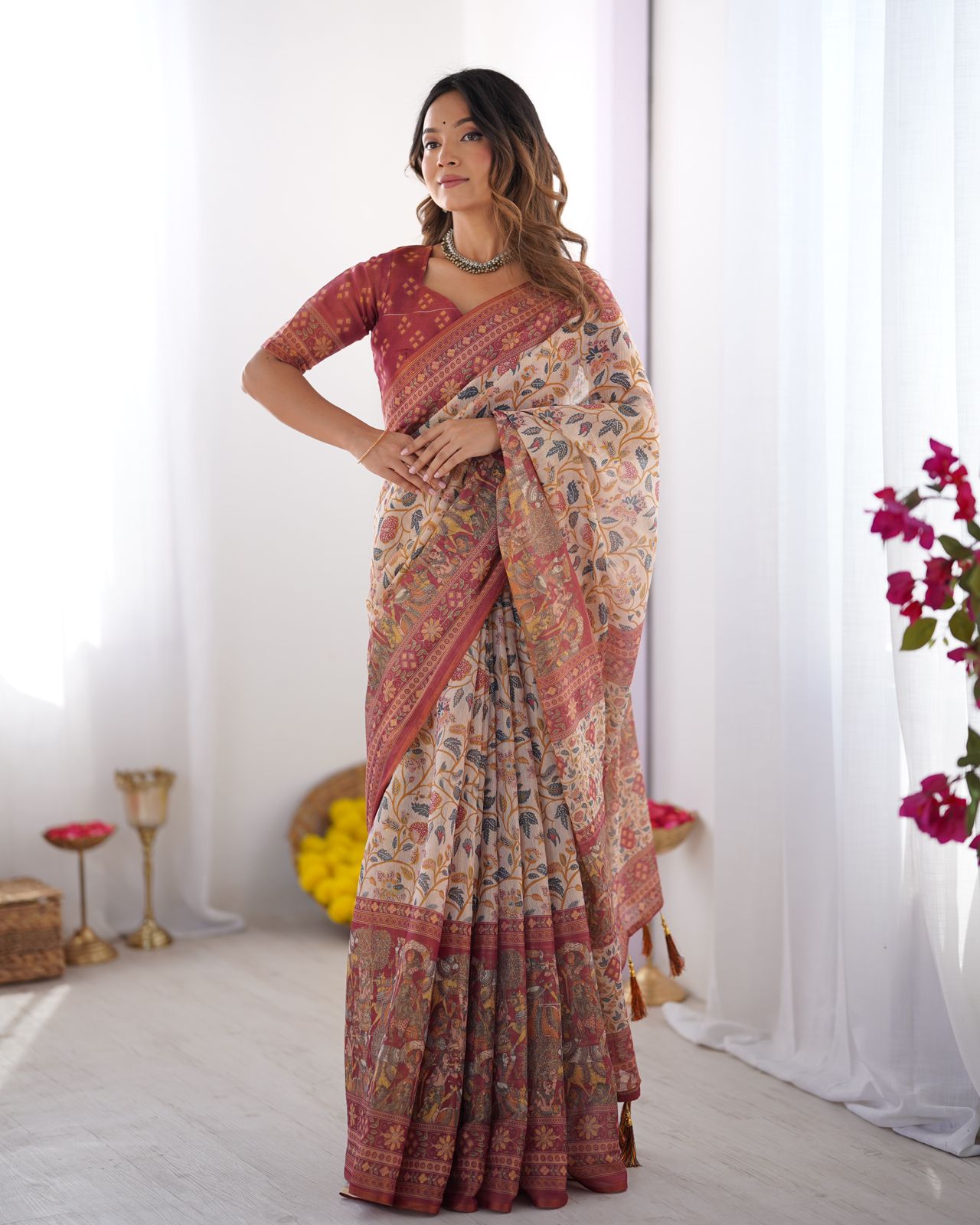
- Banarasi silk: This identifies the principal textile category, but the listing should still clarify whether the saree is pure silk, soft silk, a blend or a silk-like fabric.
- Soft silk: This generally indicates a softer, more pliable silk construction and can be comfortable for longer wear. It doesn't by itself prove handloom origin or pure silk content.
- Jacquard: Jacquard is a weaving method that builds a raised or patterned design into the fabric. A jacquard zari border can look dimensional without being handwoven in Varanasi.
- Zari: Zari is metallic thread used for borders, pallus and motifs. Dense zari can increase visual richness and may add weight, while a narrow border offers a lighter, quieter finish.
- Digital print: A digital print places imagery on the fabric surface through printing rather than creating every motif through supplementary weaving. Printed designs can be attractive, but they should not be described as evidence of a traditional handwoven technique.
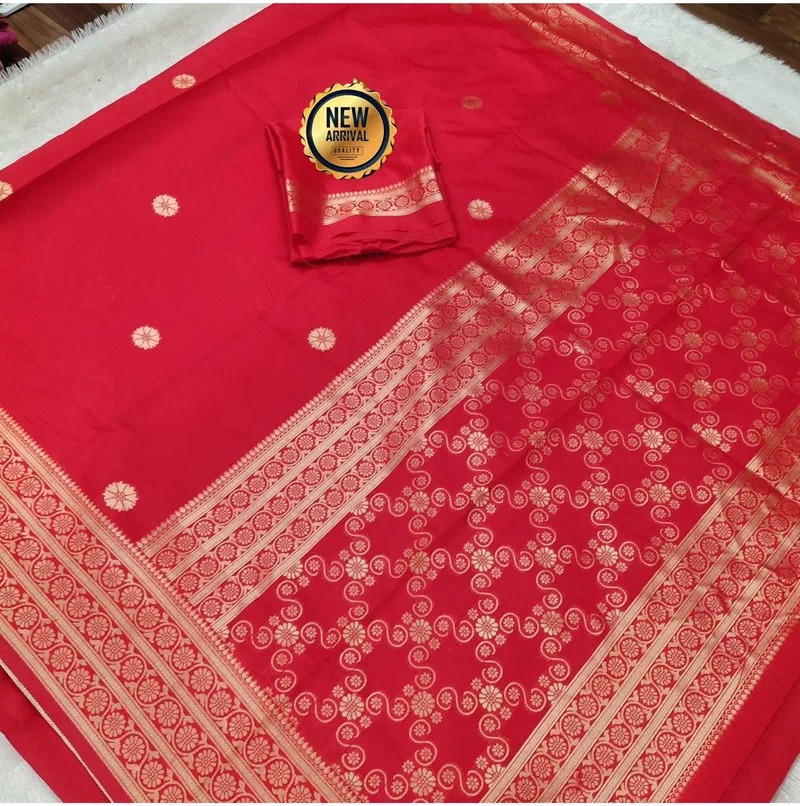
For example, Red Banarasi Silk Saree With Rich Golden Zari Floral Border communicates a strong festive direction through colour, silk naming, gold zari and floral border placement. Royal Banarasi Silk Saree with Digital Floral Print should be assessed differently because "digital floral print" describes the surface technique. Blue Banarasi Silk Saree with Digital Ethnic Design similarly gives a traditional visual vocabulary, but its printed design should not be confused with a woven motif.
How can you judge whether an online Banarasi saree is a sensible purchase?
You can judge an online Banarasi saree by checking six practical details: fibre, measurements, technique, zari description, blouse information and return or quality-assurance terms.
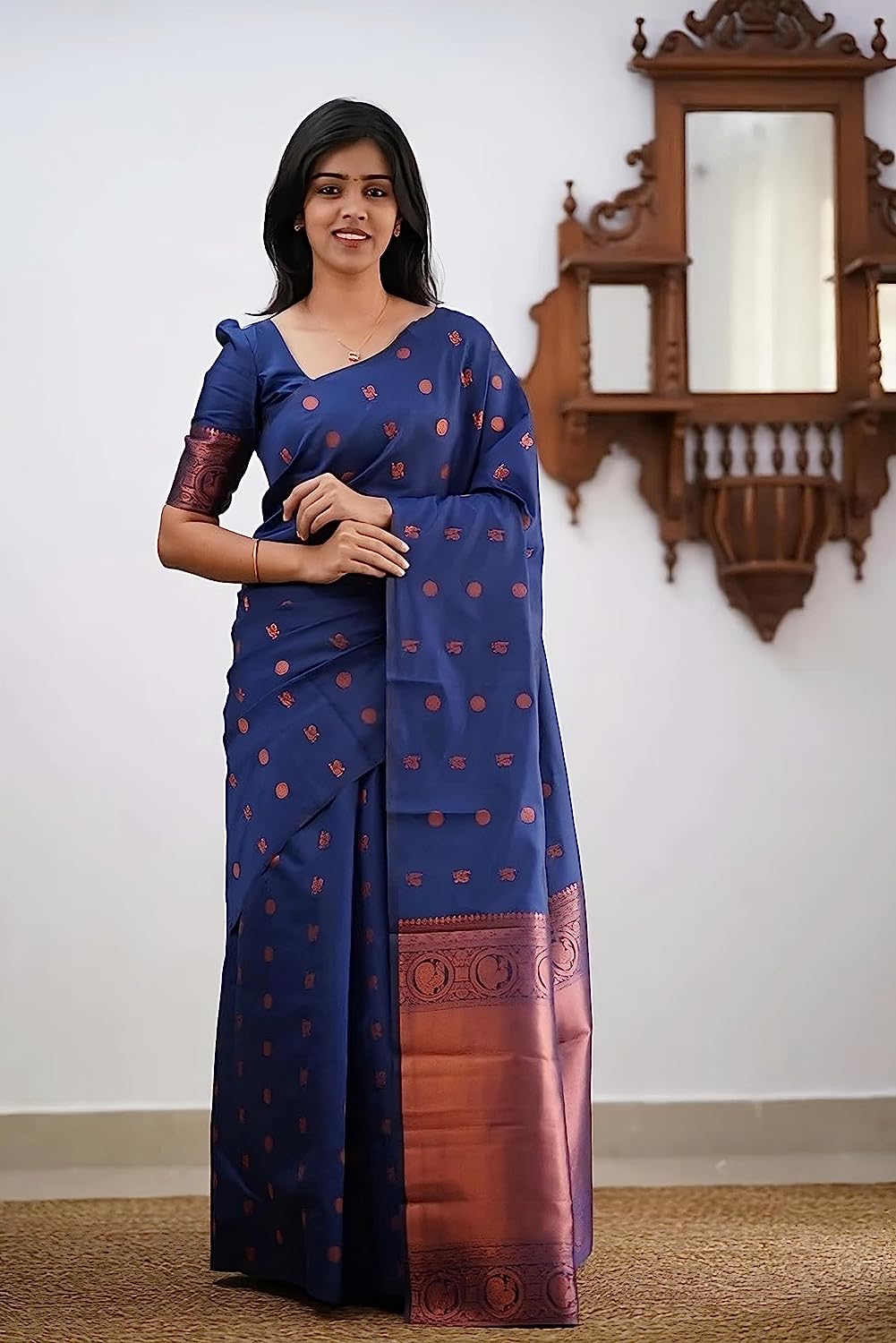
- Confirm the fabric: Check whether the listing says Banarasi silk, soft silk, a blend or another material. Do not infer "pure" from a product title alone.
- Check dimensions: A saree commonly measures around 5.3 to 5.5 metres, with an additional blouse piece often measuring about 0.8 to 1 metre, but exact measurements vary. Confirm the listing before ordering.
- Study close-up images: Look for photographs of the border, pallu, reverse side and blouse fabric. Close-ups reveal whether a pattern is woven, printed, embroidered or jacquard.
- Ask about colour variation: Silk sheen and screen settings can alter how red, maroon, teal or purple appears. A small colour difference may be normal, but major variation should be covered by the seller's terms.
- Check the fall and finishing: A saree with finished edges, an usable blouse piece and clear finishing information is easier to prepare for an event.
- Compare value, not just discount: A low price can reflect soft silk, a blend, printed work, lighter zari or machine production. A higher price can reflect silk quality and labour, but price alone can't authenticate a saree.
Maroon Banarasi Soft Silk Saree with Zari Border Online illustrates why product wording matters: "soft silk" and "zari border" describe useful buying clues, while the word "online" simply identifies the shopping channel. Purple Banarasi Soft Silk Saree with Elegant Zari & Jacquard also gives you two construction details to investigate rather than treating "traditional" as a technical guarantee.
What should you ask when looking for an Original Banarasi?
You should ask for the fibre composition, weaving or printing method, saree and blouse measurements, zari description, care instructions and any available certification. These questions are more reliable than asking only whether a saree is "original."
For a high-value wedding purchase, request a clear reverse-side photograph and a close-up of the border. A genuine handwoven product may show small variations in motifs or selvedge alignment, whereas a perfectly repeated printed design may indicate a different technique. Variation isn't conclusive proof by itself, so use it alongside documentation and seller transparency.
Which colours and borders work for traditional occasions?
Red, maroon, gold, cream, ivory, purple and deep blue are dependable traditional saree colours because they photograph well and coordinate easily with gold jewellery. Border width and contrast determine whether the saree feels ceremonial, understated or contemporary.
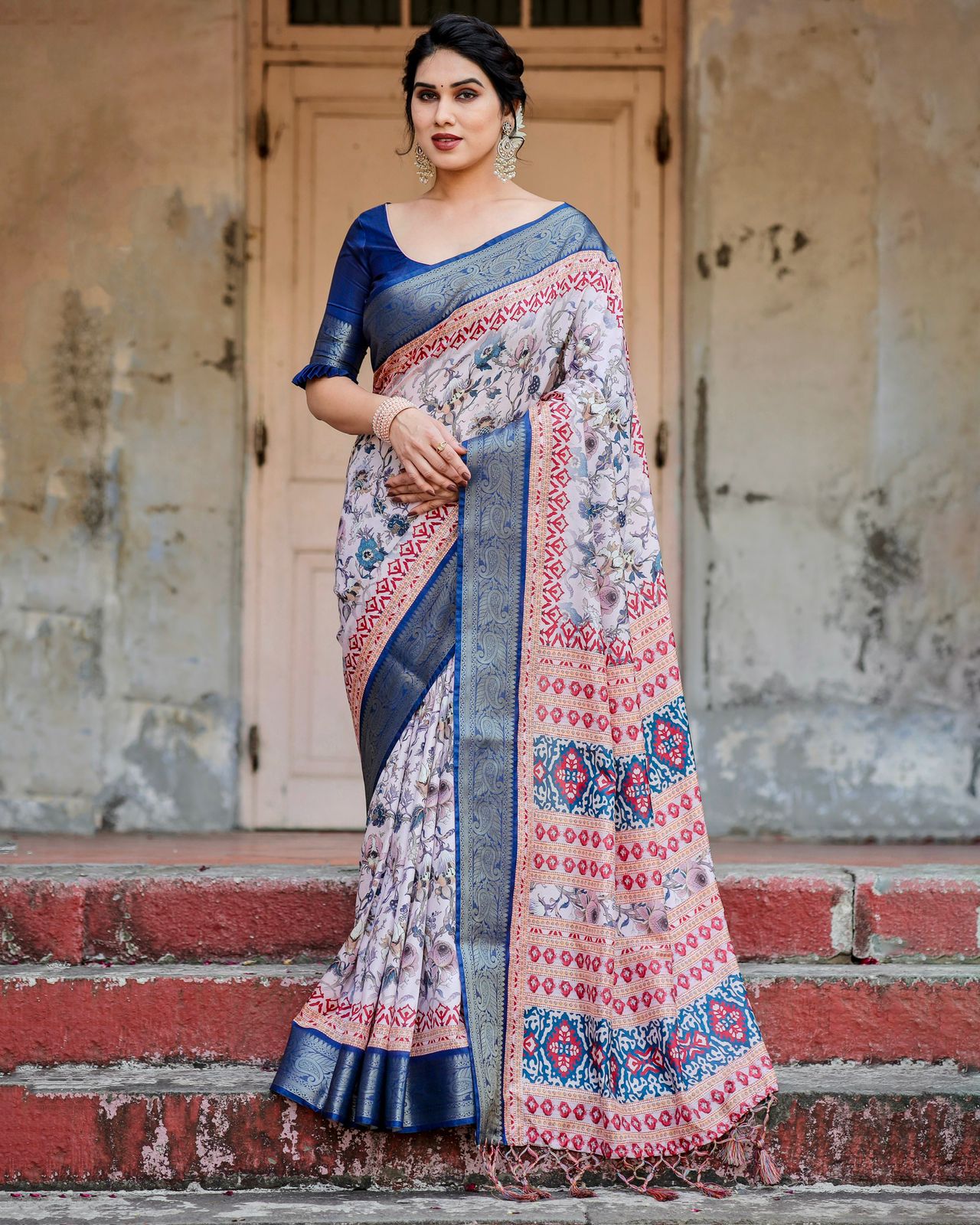
Red Banarasi Silk Saree With Rich Golden Zari Floral Border is a natural choice for bridal-adjacent ceremonies, family weddings and festive rituals where red and gold carry cultural weight. Maroon Silk Sarees with Up to 74% Off can help you explore a deeper palette, but compare the fabric and zari details of each saree rather than choosing solely by the collection name.
White Silk Sarees in Cream Ivory and Off White can suit puja ceremonies, daytime receptions and elegant formal gatherings. Cream or ivory often softens heavy zari, especially when paired with antique-gold jewellery or a blouse in muted beige. A bright white saree creates a sharper, more modern contrast with a red, green or gold blouse.
Teal Blue Banarasi Soft Silk Saree With Golden Zari Border balances a jewel-toned base with a classic metallic border. Blue Banarasi Silk Saree with Floral Design brings another route for traditional dressing: floral motifs keep the saree culturally familiar, while blue makes the overall look less expected than red or maroon. Eal Blue Banarasi Silk Saree with Jacquard Zari Border should be considered for its jacquard texture and border treatment, particularly when you want detail that remains visible without a heavily patterned pallu.
How do you style a Banarasi saree without overwhelming it?
You can style a Banarasi saree successfully by allowing one element to lead: the zari, the blouse, the jewellery or the colour contrast. A heavily worked saree usually benefits from a cleaner blouse and fewer competing accessories.
- For a wedding: Pair a red or maroon saree with a structured blouse, a low bun, a small gajra and one prominent necklace. Keep the blouse neckline simple if the pallu has dense zari.
- For a Haldi ceremony: Choose a lighter soft-silk saree or a bright yellow, teal or purple accent. Secure the pleats carefully and avoid jewellery that can snag the zari during movement.
- For a reception: A royal blue or teal saree with a jacquard border works with a contemporary blouse, sleek earrings and a compact clutch. A digital ethnic design can look polished when the styling remains minimal.
- For a religious function: Cream, ivory, gold, red or maroon creates a respectful traditional palette. Choose comfortable draping and avoid excessive trailing fabric near lamps or crowded spaces.
Party Wear Sarees can be an useful reference when you want a festive silhouette but don't need the visual weight of a bridal saree. Red and Yellow Sarees from Rs 799 with Up to 75 Percent Off may suit pre-wedding events, although a stated price range should never replace checking fabric, measurements and finishing. Styling should follow the saree's actual construction, not just its colour label.
How should you care for Banarasi silk and zari?
You should protect Banarasi silk from moisture, friction, direct sunlight, perfume and careless folding. Professional dry cleaning is generally the safer choice for silk with zari, particularly when the saree has dense metallic work or uncertain colour fastness.
Air the saree in shade after wearing it, then take jewellery and accessories before folding. Refold the saree every few months so permanent crease lines don't make in one place. Fold the saree with the zari side inward or wrap it in soft, unbleached cotton or muslin. Avoid plastic storage for long periods because trapped moisture can encourage odour and damage.
Never spray perfume directly on silk or zari. Do not scrub a spot with detergent, even if the fabric appears colourfast. For a small spill, gently blot with a clean, dry cloth and take the saree to a professional cleaner as soon as practical. Store the blouse separately if its hooks, sequins or embroidery could catch the saree.
Silk responds poorly to prolonged sunlight, so display or air Banarasi sarees briefly rather than leaving them near a bright window. A breathable storage box, low humidity and protection from insects provide better long-term conditions than an airtight plastic bag.
How should you choose between a traditional and a contemporary Banarasi look?
Choose a traditional Banarasi look when you want woven-looking motifs, a structured border, classic colours and visible zari; choose a contemporary interpretation when you prefer digital prints, lighter detailing, unusual colour combinations or easier day-to-evening styling.
Blue Banarasi Silk Saree with Floral Design sits comfortably between the two approaches because floral imagery is traditional while blue gives the styling a contemporary direction. Royal Banarasi Silk Saree with Digital Floral Print and Blue Banarasi Silk Saree with Digital Ethnic Design are better evaluated as contemporary surface-design options, especially for buyers who value pattern and colour over handloom provenance.
Traditional sarees of Varanasi don't need to be limited to one strict appearance. The meaningful distinction is whether the saree's material and technique are honestly understood. Once you know whether the design is woven, jacquard or printed, you can choose confidently for a wedding, festival, formal dinner or family ceremony.
A considered purchase balances four things: the textile you're actually receiving, the amount of zari you can comfortably wear, the occasion's dress code and the care you can provide afterwards. That balance is more useful than chasing a vague idea of an "original" saree or assuming that the highest price always represents the best choice.
Questions to Ask Before Buying a Banarasi Saree
What is the best online website to buy a Banarasi saree?
The best website is one that gives clear information about fibre composition, measurements, zari, technique, blouse piece, care and returns. Compare close-up photographs and customer support quality rather than choosing only by discount or search ranking.
What is the price of an original Banarasi silk saree?
There is no single price for an original Banarasi silk saree because cost depends on silk quality, handloom or machine construction, zari, motif density and finishing. A low-priced saree may be soft silk, blended, printed or jacquard, while a handwoven pure-silk saree generally requires a higher budget.
Where can I buy authentic Banarasi sarees in Varanasi?
Authentic Banarasi sarees can be found through established weavers, recognised handloom outlets, verified cooperatives and sellers who provide transparent fibre and technique information. Ask for a receipt, product details and relevant certification rather than relying only on a location claim.
How can I identify an original Banarasi saree?
Check the stated fibre, weave technique, reverse side, selvedge, motif construction and available certification. A product title alone cannot prove that a saree is pure silk or handwoven in Varanasi, and small weave variations are useful clues but not conclusive evidence.
Is Banarasi silk suitable for a wedding saree?
Banarasi silk is suitable for weddings because its sheen, zari and structured drape create a formal appearance. Choose heavier zari and richer colours for the main ceremony, or select soft silk and a narrower border if you need comfort for several hours.
How should a Banarasi silk saree be stored?
Store a Banarasi silk saree clean and completely dry, folded in breathable cotton or muslin away from direct sunlight and plastic. Refold it periodically, keep jewellery from touching the fabric, and use professional dry cleaning for stains or dense zari work.