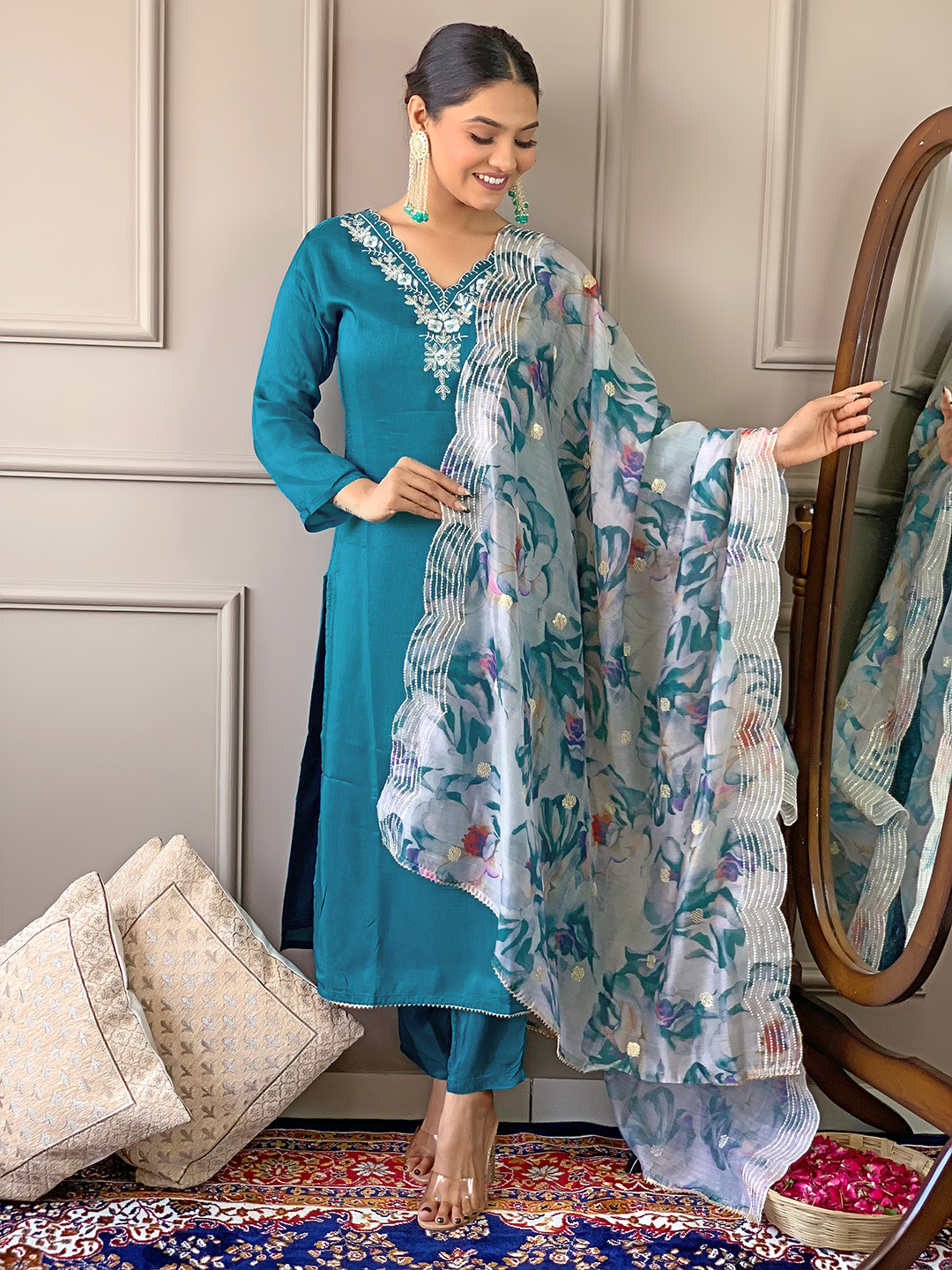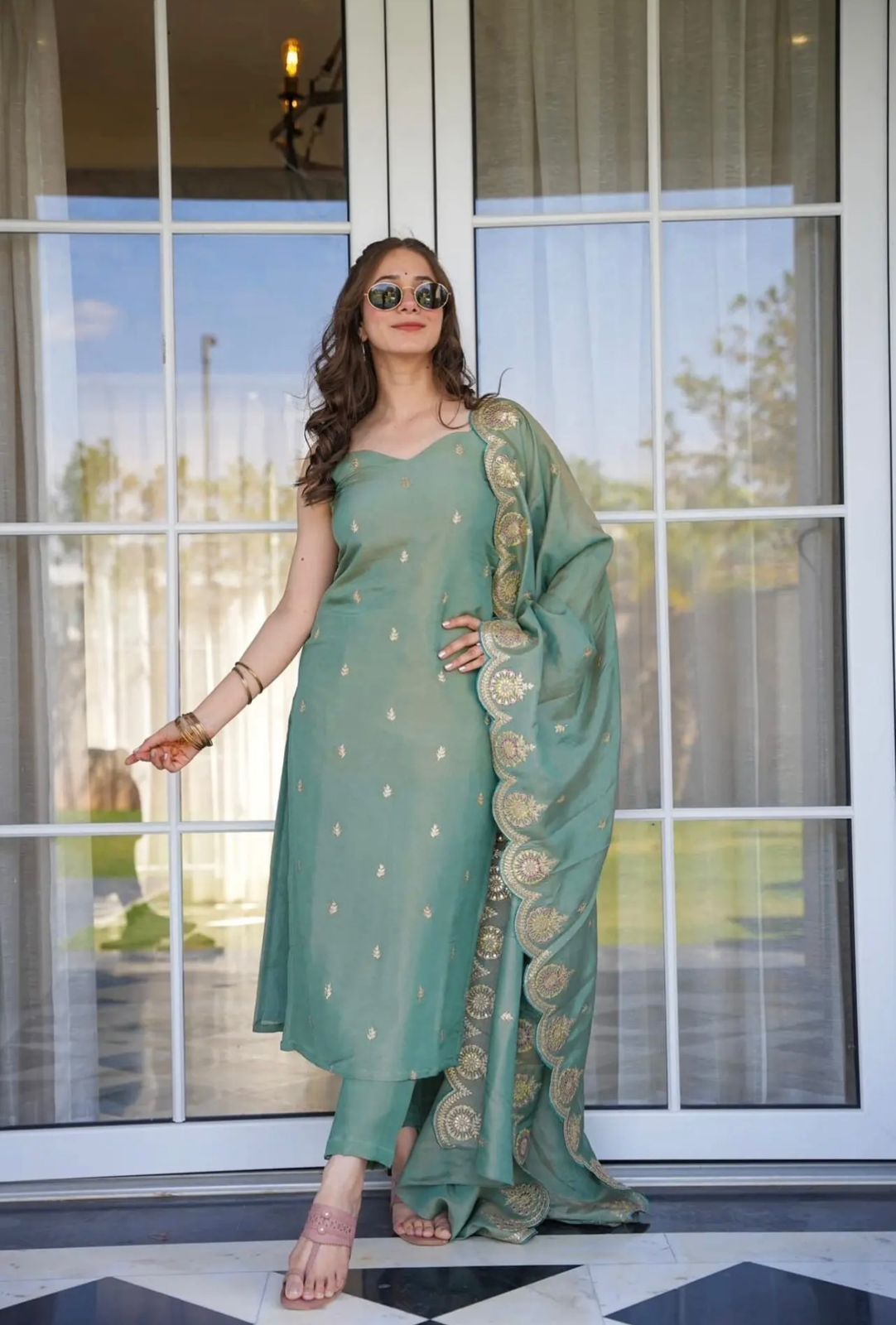
Traditional sarees of Kochi are best understood as a meeting point between Kerala's restrained elegance and the wider textile culture of South India. The look may involve an ivory or cream ground, a gold zari edge, a cotton weave, a silk body or a regional Kalamkari story. Kochi doesn't have one single saree that every woman must wear; instead, the city's traditional wardrobe is shaped by temple visits, weddings, festivals, family ceremonies and everyday comfort.
That distinction matters when buying online. A saree can look traditionally South Indian without being a Kerala handloom, while a lightweight printed saree may suit a Kochi lunch better than a heavy bridal silk. The useful question isn't simply whether a saree looks traditional, but whether its fabric, border, blouse, drape and care requirements fit the event.
What makes Traditional sarees of Kochi distinctive?
Traditional sarees of Kochi are distinctive because they balance a clean silhouette with culturally recognisable details such as cream-and-gold colour combinations, zari borders, handloom cotton textures and graceful regional drapes.
Kerala's most familiar visual reference is the kasavu saree, usually associated with an off-white, cream or ivory body and a gold-toned border. The simplicity is intentional: the border supplies definition while the plain body keeps the overall appearance calm. Traditional Kerala dressing also includes the mundum neriyathum, a two-piece garment whose lower and upper sections create a related sense of proportion and movement.
Kochi's position as a historic port city has also made its clothing culture visually open. Traditional dressing can include Kerala-inspired cotton, Kanjeevaram silk for weddings, Banarasi silk for formal celebrations, Chanderi for a lighter festive look and Kalamkari for an art-led interpretation. These textiles don't all originate in Kochi, but they can all belong to a Kochi wardrobe when selected and styled appropriately.
The key design signals are usually more important than a label. Look for a controlled border width, a body that drapes without excessive bulk, a colour palette suited to the event and a blouse that supports rather than competes with the saree. Zari may be gold-toned, antique-looking or woven into a narrow edge; it doesn't automatically mean that the saree is heavy or bridal.
Which fabrics suit a traditional Kochi wardrobe?
Cotton suits daytime Kochi dressing, silk suits formal ceremonies, and linen-cotton or tissue handloom blends sit between the two in weight and occasion value.

Cotton for heat and movement
Handloom cotton is a practical choice for Kerala's warm, humid conditions because it generally feels breathable and doesn't create the weight of a dense silk weave. A cotton saree with a zari border can still look ceremonial without becoming difficult to wear for several hours. Pastel Floral Tissue Handloom Cotton Saree with Zari Weaves demonstrates how a traditional border idea can be paired with a softer, contemporary colour direction.
Cotton needs correct finishing to look polished. Press the saree before pleating, secure the pallu with discreet pins and choose a blouse with enough structure at the shoulder. A very loose blouse can make a lightweight cotton saree appear untidy, especially when the border is narrow.
Silk for weddings and evening rituals
Silk traditional sarees work best when the event calls for richer texture, stronger colour or a more formal fall. Banarasi silk is recognised for woven brocade and zari traditions, while Kanjeevaram is associated with a more substantial South Indian silk presence and pronounced borders. A Kalamkari-printed silk offers a different kind of richness: the visual focus comes from the narrative print rather than only from metallic weaving.
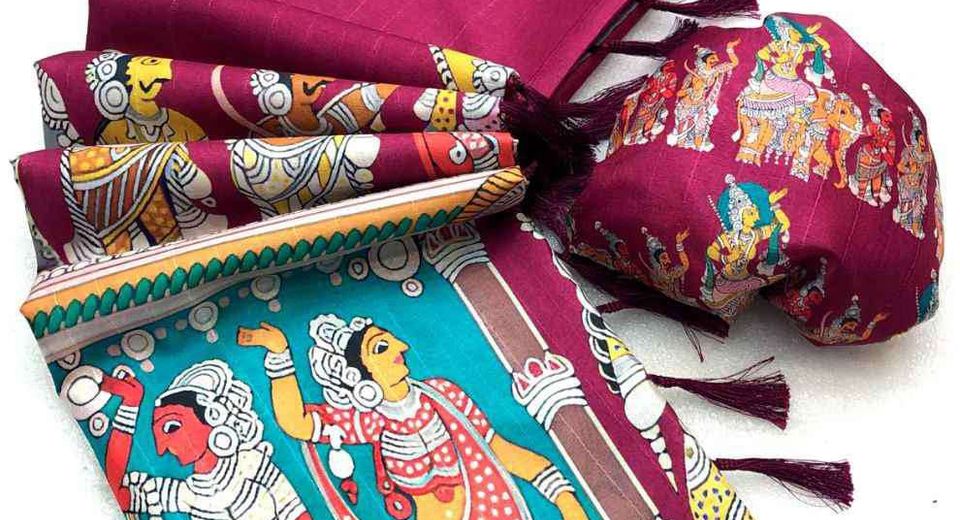
Tussar silk has a naturally textured appearance and usually looks less glossy than highly polished silk. Tussar Silk Kalamkari Printed Saree with Blouse is therefore useful for a traditional event where an artistic print is preferred over a fully ornate surface. Black Traditional Kalamkari Print Silk Saree creates a more dramatic evening direction, while Magenta Traditional Kalamkari Art Saree with Blouse brings stronger colour to a festive wardrobe.
Linen-cotton and tissue for lighter festive dressing
Linen-cotton can offer an airy hand feel with a slightly relaxed texture, making it suitable for daytime celebrations and intimate gatherings. Pastel Linen Cotton Floral Print Saree with Designer Blouse has the kind of lighter visual quality that works for a family lunch, cultural programme or pre-wedding event.
Tissue adds a subtle sheen and can make a pale saree look more dressed up without requiring dense embellishment. Cream Pink Tissue Handloom Cotton Saree with Zari combines a gentle colour contrast with a border-led traditional effect. The saree is especially easy to style when the blouse repeats either the cream base or the pink accent.
How should you choose a saree for a Kochi occasion?
Choose the saree by matching fabric weight, colour formality and blouse structure to the duration and setting of the event.
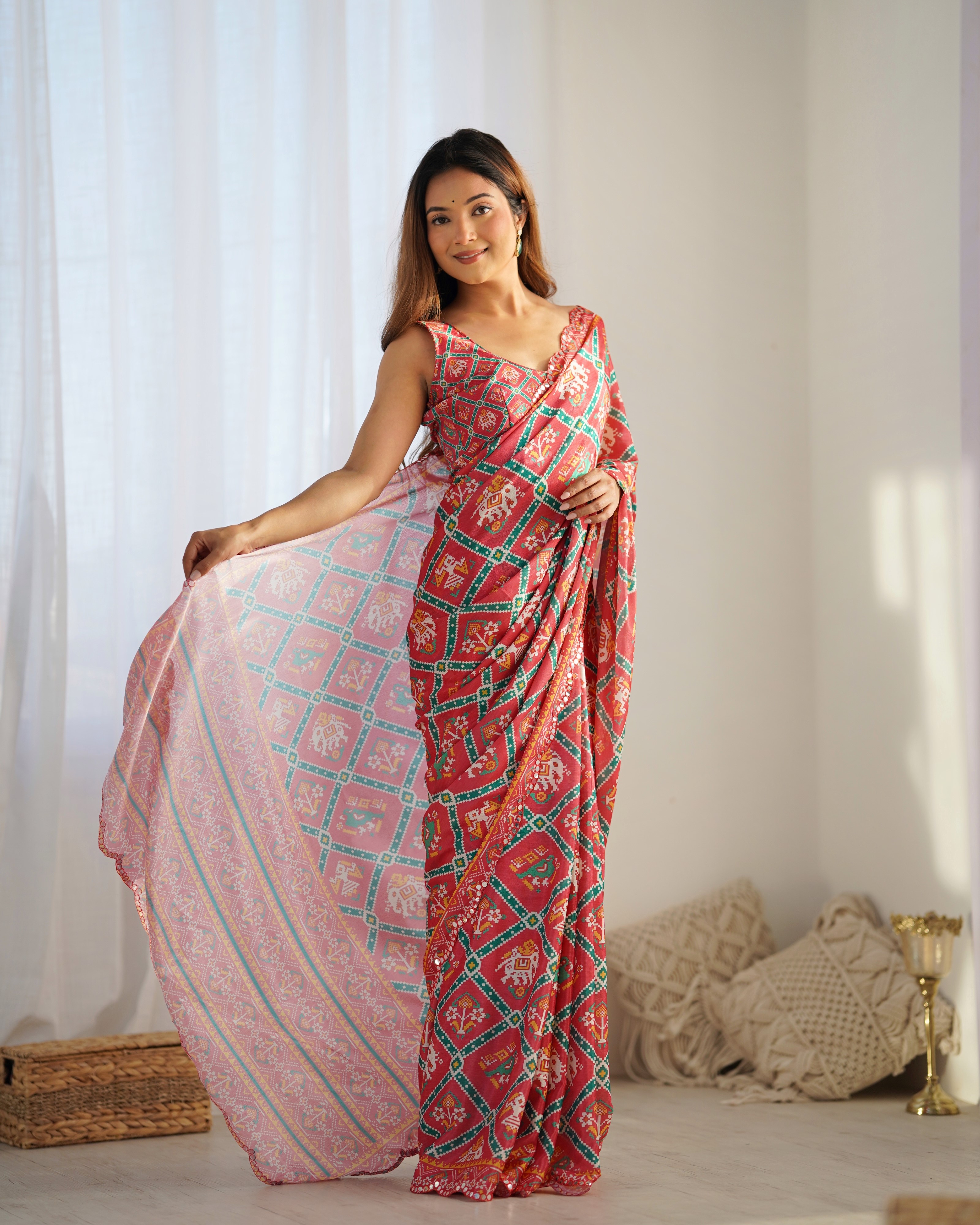
- For a temple visit or daytime cultural programme: Choose breathable cotton, linen-cotton or a light handloom saree in cream, ivory, pastel or muted colour. Keep jewellery measured and prioritise comfortable pleats.
- For a family celebration: A tissue cotton, Tussar silk or printed silk saree provides more visual interest while remaining easier to wear than a very heavy wedding silk.
- For a traditional wedding: Consider silk, a richer zari border or a stronger jewel colour. Red, magenta, maroon, deep green and gold can look ceremonially appropriate, but the final choice should reflect the wedding's dress code.
- For an evening reception: A darker silk, metallic border or high-contrast Kalamkari print gives definition under indoor lighting. Black Traditional Kalamkari Print Silk Saree is an example of a traditional vocabulary interpreted through a contemporary dark base.
- For a simple traditional look: Use a restrained saree with one clear focal point, such as a zari border or a printed pallu. Avoid combining a busy print, heavy necklace, elaborate blouse and oversized earrings all at once.
Traditional wedding dressing doesn't always require the heaviest possible saree. A lighter saree can be the better decision when the ceremony involves travel, standing, repeated movement or warm weather. Comfort affects posture, and good posture improves the appearance of every drape.
How can you style Traditional sarees of Kochi without losing their character?
Style Traditional sarees of Kochi with a neat drape, a proportionate blouse and accessories that repeat one element from the saree rather than competing with every detail.
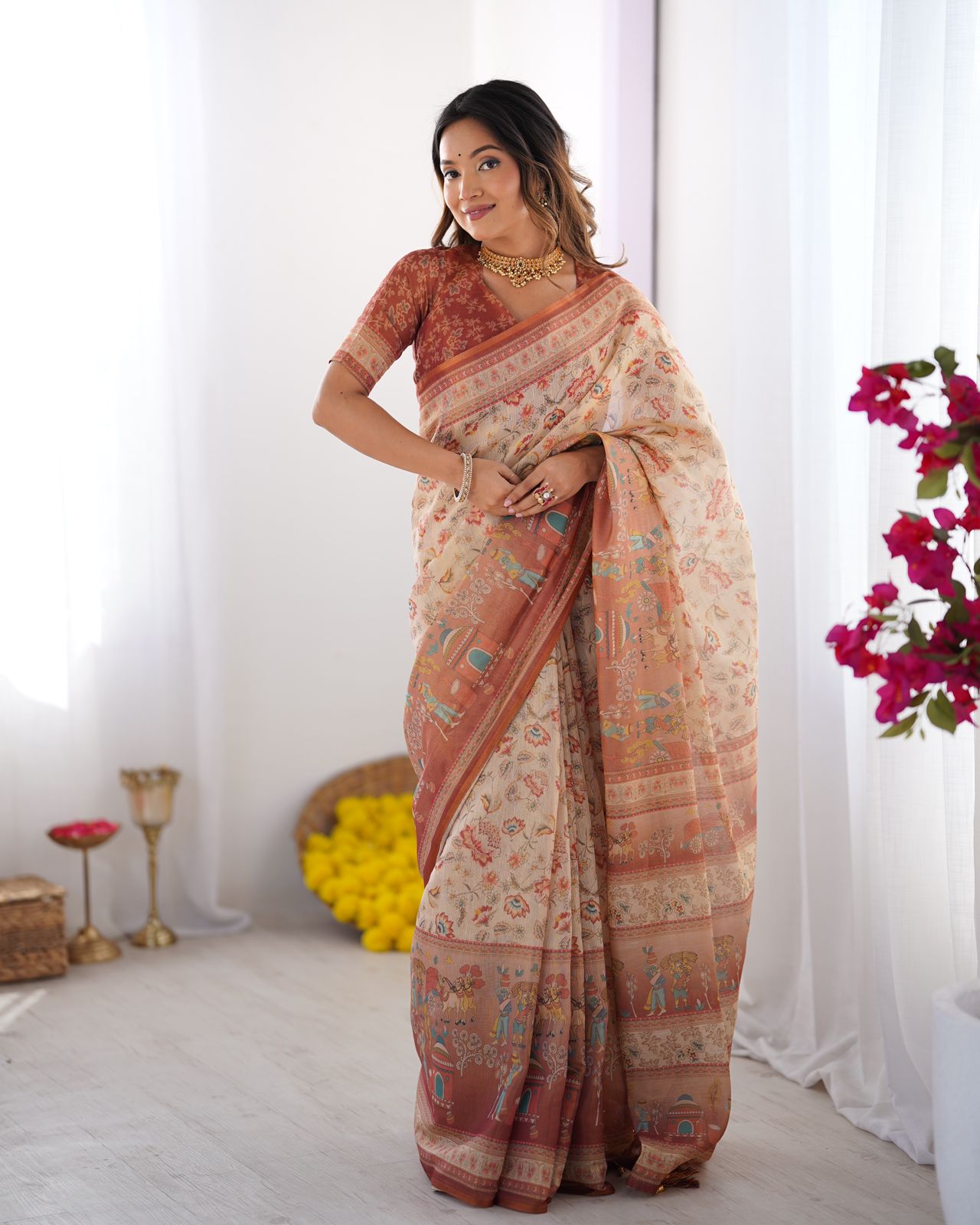
The Nivi drape, with front pleats and the pallu over the shoulder, is a dependable choice for most sarees. For a more Kerala-associated impression, keep the pallu orderly and let the border remain visible. A narrow, sharply pressed pleat stack can make a lightweight saree look more formal; wider, softer pleats create a relaxed daytime effect.
Blouse colour is an important decision. An ivory saree with gold zari can be paired with cream for a quiet result, gold for a coordinated festive finish, or a contrasting maroon, red or green blouse for greater definition. With a Kalamkari saree, select one colour from the print instead of introducing a completely unrelated shade.
Jewellery should follow the saree's visual weight. Temple-style earrings, a short gold-toned necklace and bangles work well with silk and zari. For cotton or linen-cotton, small jhumkas, a single chain or traditional studs can maintain the mood without making the outfit feel overdressed. Jasmine flowers can complement a Kerala-inspired look, although flowers are optional rather than essential.
Hair and footwear also influence authenticity. A low bun or braid keeps the shoulder line clean and supports a visible pallu. Comfortable sandals or low block heels are safer than unstable footwear when the saree will be worn for several hours. Pin the pallu at the shoulder and, if necessary, anchor the pleats inside the waistband rather than using many visible pins.
What should you check when buying a traditional saree online?
Check the fabric description, included blouse information, measurements, border photographs, transparency and care instructions before buying a traditional saree online.
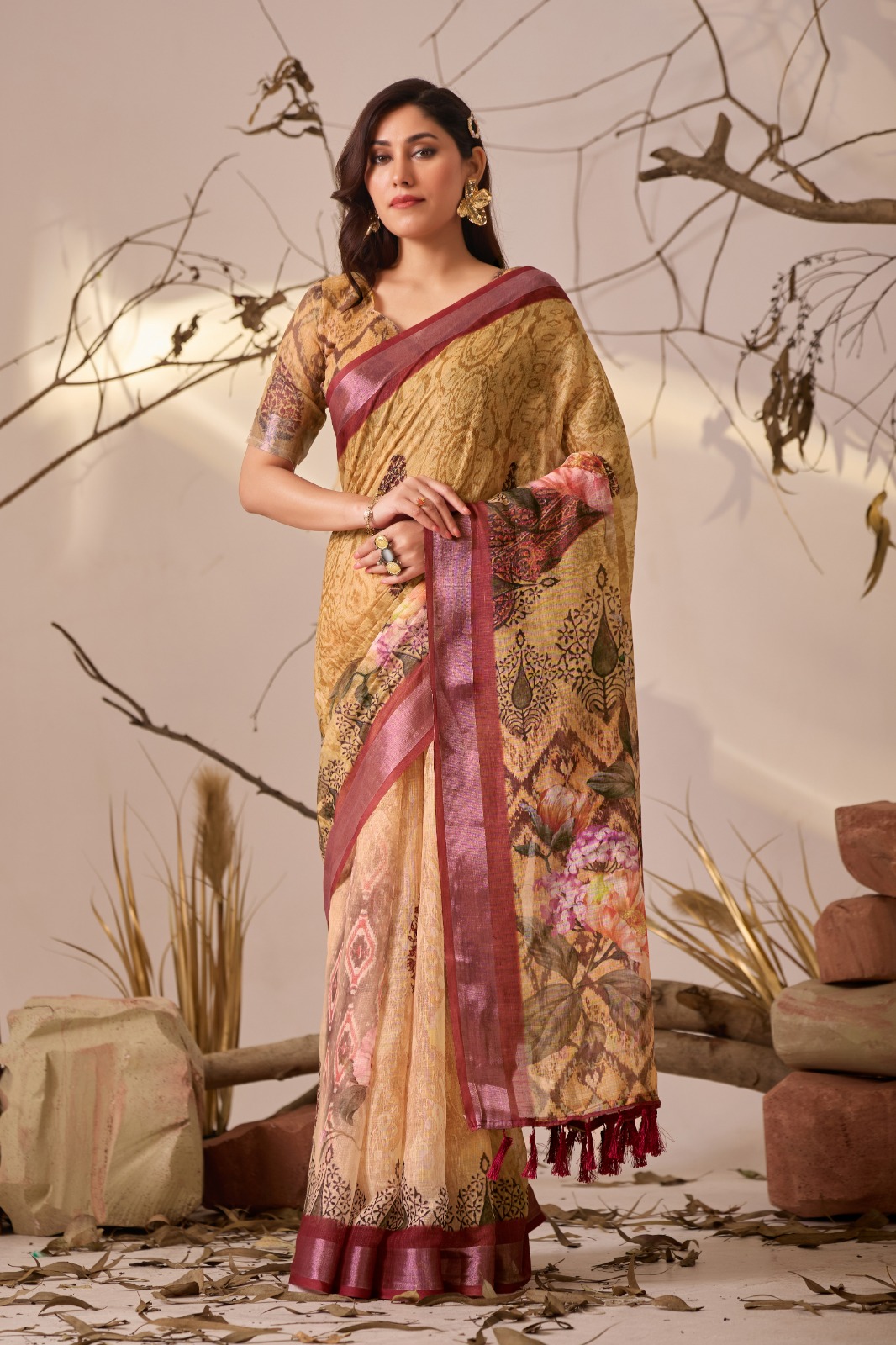
- Read the fibre content: "Cotton," "linen cotton," "Tussar silk" and "silk" describe different handling, texture and price expectations. Do not assume that a traditional appearance means a saree is pure silk or handwoven.
- Confirm the blouse: Some sarees include a blouse piece or stitched blouse, while others are sold without a blouse. Tussar Silk Kalamkari Printed Saree with Blouse and Off White Kalamkari Tussar Silk Saree with Blouse clearly signal blouse inclusion in their names. A product described without "with blouse" should be checked carefully before ordering.
- Inspect the border: Ask whether zari appears on the border, pallu or both. A close product image is useful for judging weave density, but screen settings can alter colour.
- Check the total length: A saree commonly needs enough length for the tuck, pleats and pallu, while taller wearers may prefer additional room. Confirm the listed length and blouse-piece measurement instead of relying on a model's drape.
- Consider transparency: Pale cotton, tissue and lightweight linen-cotton may need a matching or neutral petticoat. A nude, cream or white base can prevent the petticoat from changing the colour of the saree.
- Compare care requirements: Silk, zari, printed surfaces and delicate tissue should not automatically be treated like robust everyday cotton. Follow the product's stated washing and storage guidance.
Online saree websites are most useful when they show front, back, pallu, border and blouse details instead of relying only on styled photographs. Product names can help narrow the search, but fibre content and construction details should make the final decision. A product page that clearly states whether the saree is supplied with a blouse is especially valuable for shoppers searching for traditional sarees without blouse confusion.
How do regional collections help you compare styles?
Collections help shoppers compare occasion, colour and fabric direction, but a collection name should be treated as a starting point rather than proof of a saree's weave origin.
Party Wear Sarees can be useful when the requirement is a more polished evening look, while White Silk Sarees in Cream Ivory and Off White is a logical place to compare pale traditional palettes. Maroon Silk Sarees with Up to 74% Off may suit shoppers looking for a deeper wedding or reception colour, but discount language should never replace checking fabric and blouse details.
Red and Yellow Sarees from Rs 799 with Up to 75 Percent Off gives a way to explore warmer festive colours at a lower listed price range. Gray Color Sarees Under 1000 can be relevant for a modern, understated interpretation of traditional dressing. Price filters are helpful, but the lowest price should be evaluated against fibre, finishing, included components and care needs.
Designer Off White Tussar Silk Saree with Kalamkari Print shows how a traditional base colour can work with an art-inspired surface. Off White Kalamkari Tussar Silk Saree with Blouse brings another example of combining a pale palette with a clearly stated blouse component. These choices demonstrate that traditional dressing can be quiet, printed, colourful or silk-led without losing its cultural character.
How should you care for a traditional saree?
Care for a traditional saree by following its fibre-specific instructions, keeping zari away from moisture and storing the saree clean, dry and folded with periodic refolding.
Air a worn saree in the shade before folding it; direct sun can affect dyes and weaken delicate surfaces over time. Do not spray perfume directly on silk, zari or printed Kalamkari areas. Apply fragrance to the skin before dressing and allow it to dry.
Store silk and zari sarees in a breathable cotton or muslin cover rather than sealed plastic for long periods. Refold valuable or infrequently worn sarees every few months so that one crease doesn't remain permanently in the same place. Keep heavy jewellery away from the folded saree because hooks and sharp edges can pull threads.
Light cotton may be easier to maintain, but printed surfaces still need care. Wash only when the instructions permit it, use a mild detergent when appropriate and avoid wringing. When the label recommends dry cleaning, especially for silk, zari or complex prints, professional cleaning is the safer option.
The most successful Traditional sarees of Kochi are not defined by one compulsory colour or weave. They are defined by thoughtful proportion: a fabric suited to the weather, a border that gives structure, a drape that allows movement and styling that respects the saree's strongest feature. That approach makes a Kerala-inspired wardrobe useful for ordinary cultural gatherings as well as traditional weddings.
Questions to Ask Before Choosing a Kochi-Style Traditional Saree
What are the most traditional sarees associated with Kochi?
Kerala kasavu sarees, cream or ivory sarees with gold-toned zari, handloom cotton sarees and the mundum neriyathum tradition are the strongest visual references. Kochi wardrobes can also include Kanjeevaram silk, Banarasi silk, Tussar silk and Kalamkari sarees for weddings and other formal events.
Where can I buy authentic South Indian sarees online?
Choose a saree website that provides fibre content, saree length, blouse information, close border photographs and care instructions. Product descriptions should distinguish cotton, linen-cotton, Tussar silk and silk rather than using "traditional" as the only quality claim.
What are some trending traditional sarees for weddings?
Silk sarees with zari, Kalamkari-printed silk, Tussar silk and rich maroon, magenta, red or cream colour palettes remain versatile wedding choices. A lighter tissue cotton or linen-cotton saree can be more practical for daytime pre-wedding functions.
Can I wear a traditional saree without a blouse piece?
Yes, but the saree must be paired with a separately purchased or existing blouse that matches its colour and fabric weight. Check the product name and description carefully because some sarees include a blouse while others do not.
Which fabric is best for a simple traditional saree in Kochi weather?
Handloom cotton is usually the most practical choice for warm, humid daytime conditions, while linen-cotton offers another lightweight option. Tussar silk or lightweight silk is better when the event is formal and a richer texture is needed.
How should I style a traditional saree for a Kerala-inspired look?
Use a neat Nivi-style drape or an orderly pallu, pair the saree with a proportionate blouse and choose restrained gold-toned jewellery. A braid or low bun, comfortable footwear and a visible zari border help preserve the traditional character without making the outfit look costume-like.