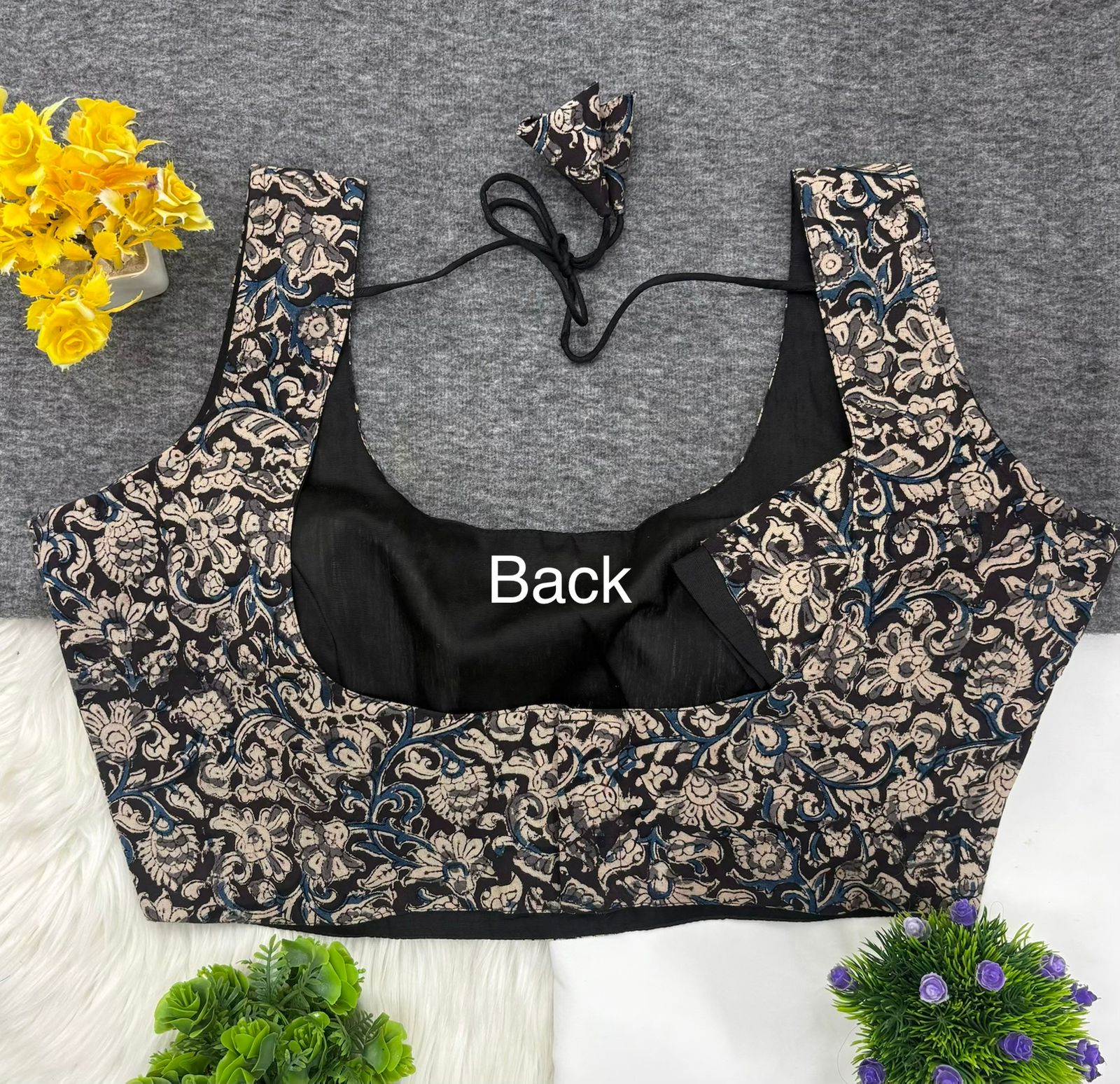
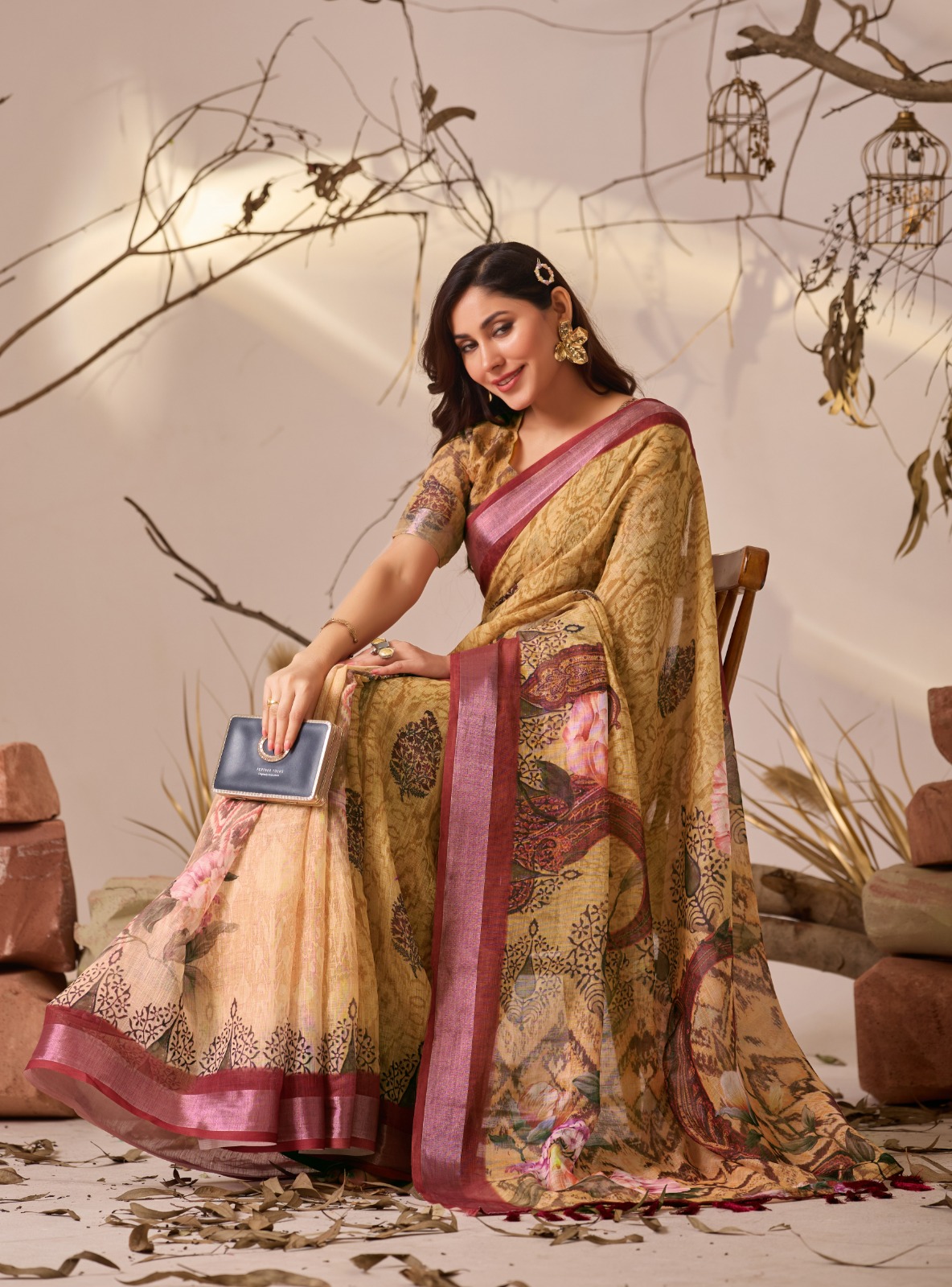
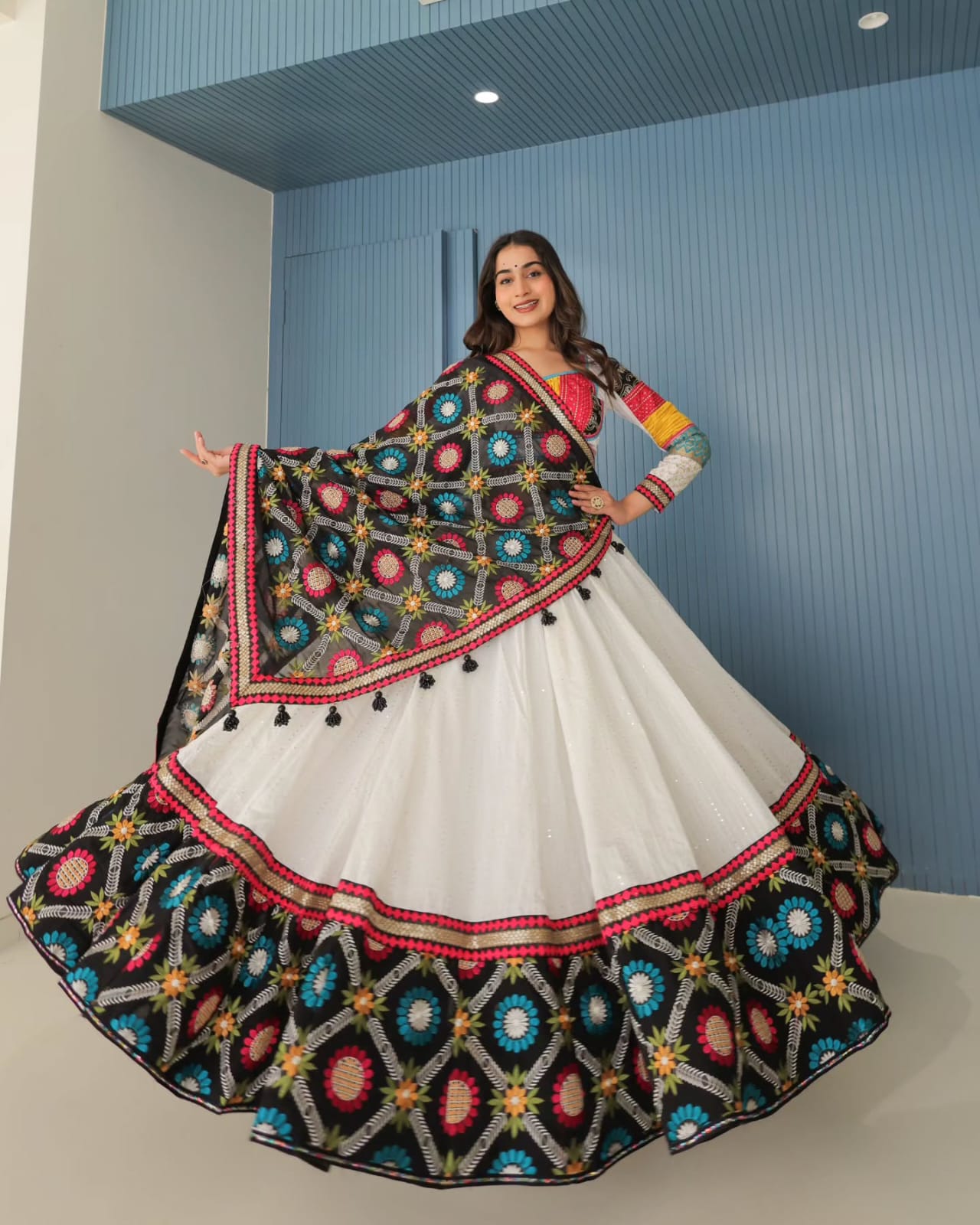
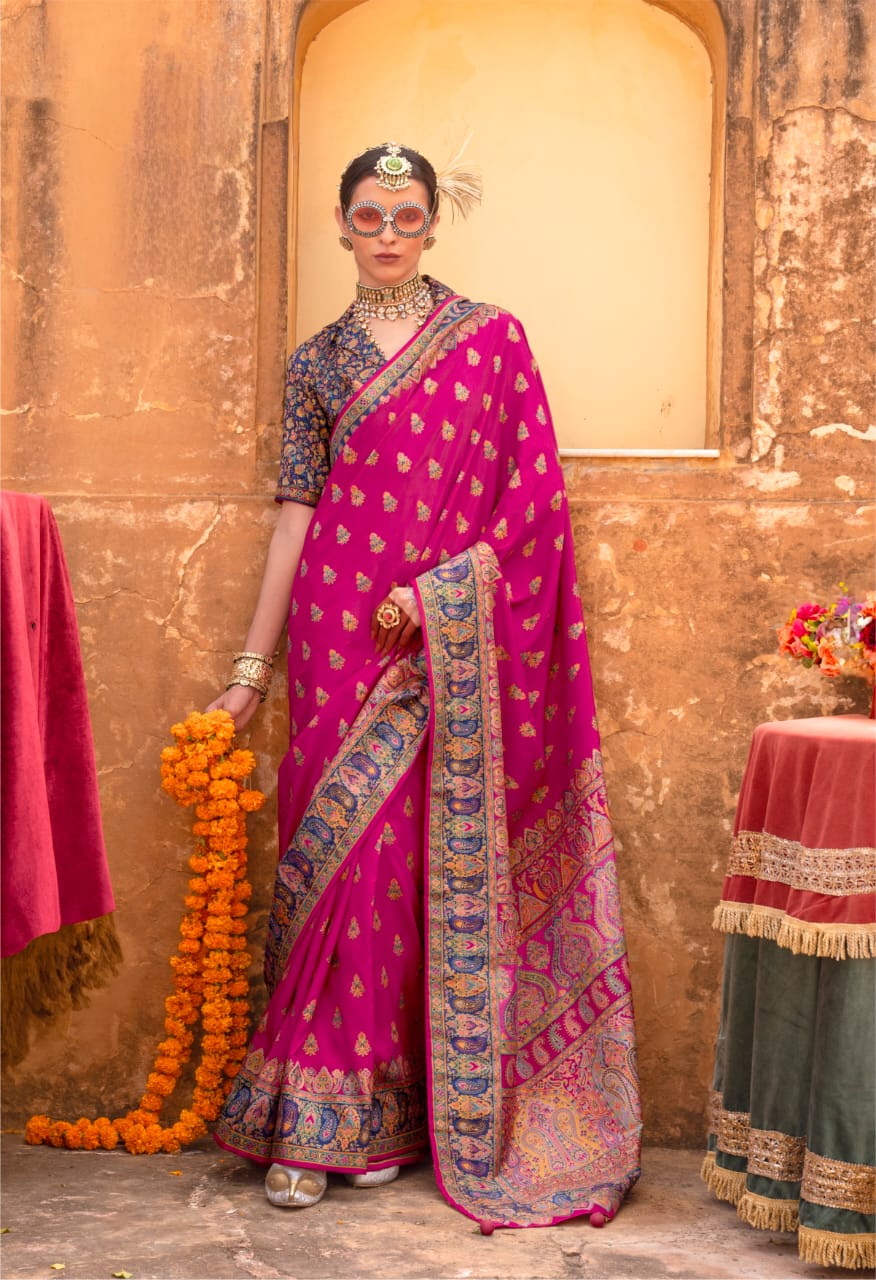
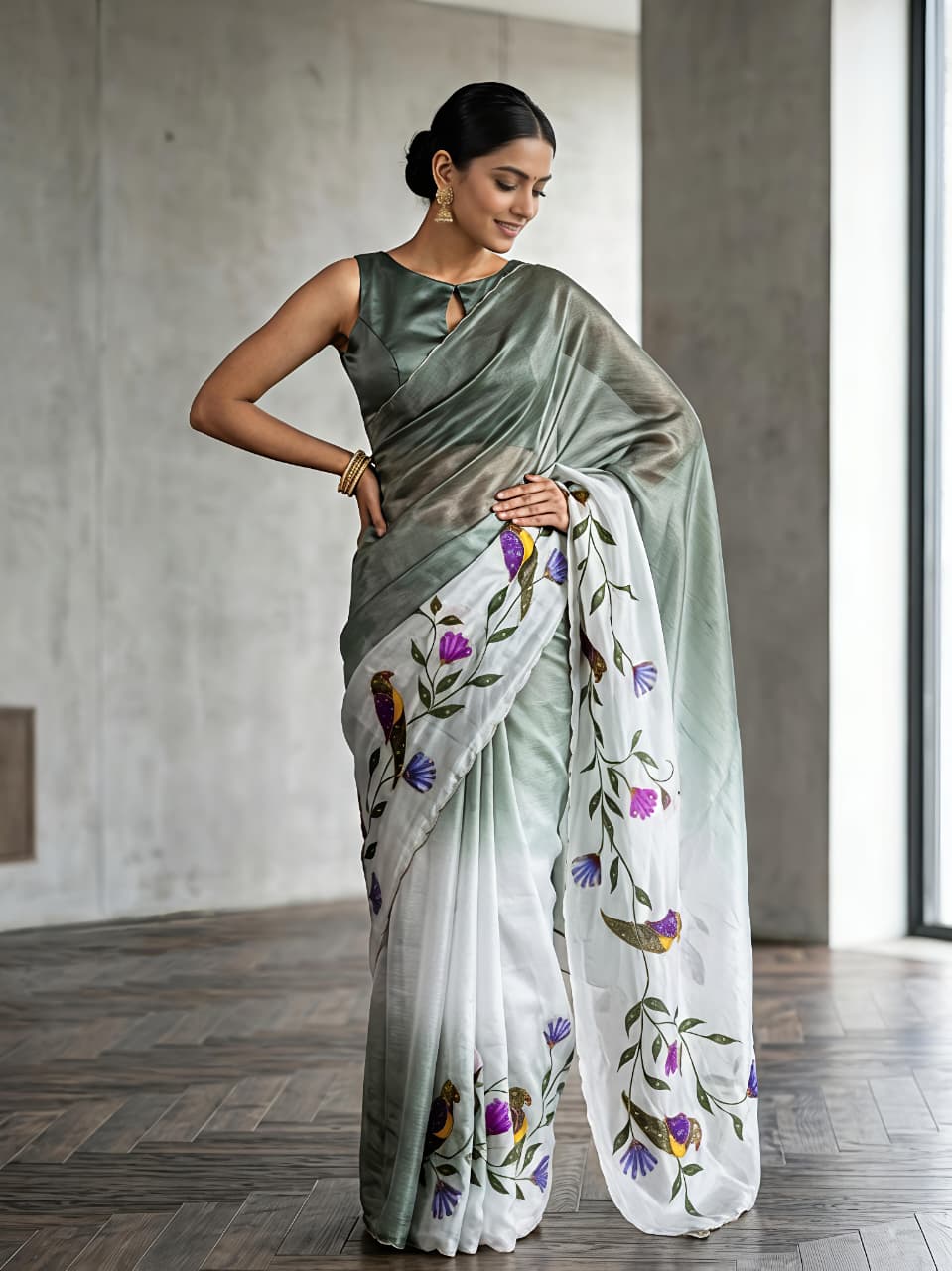
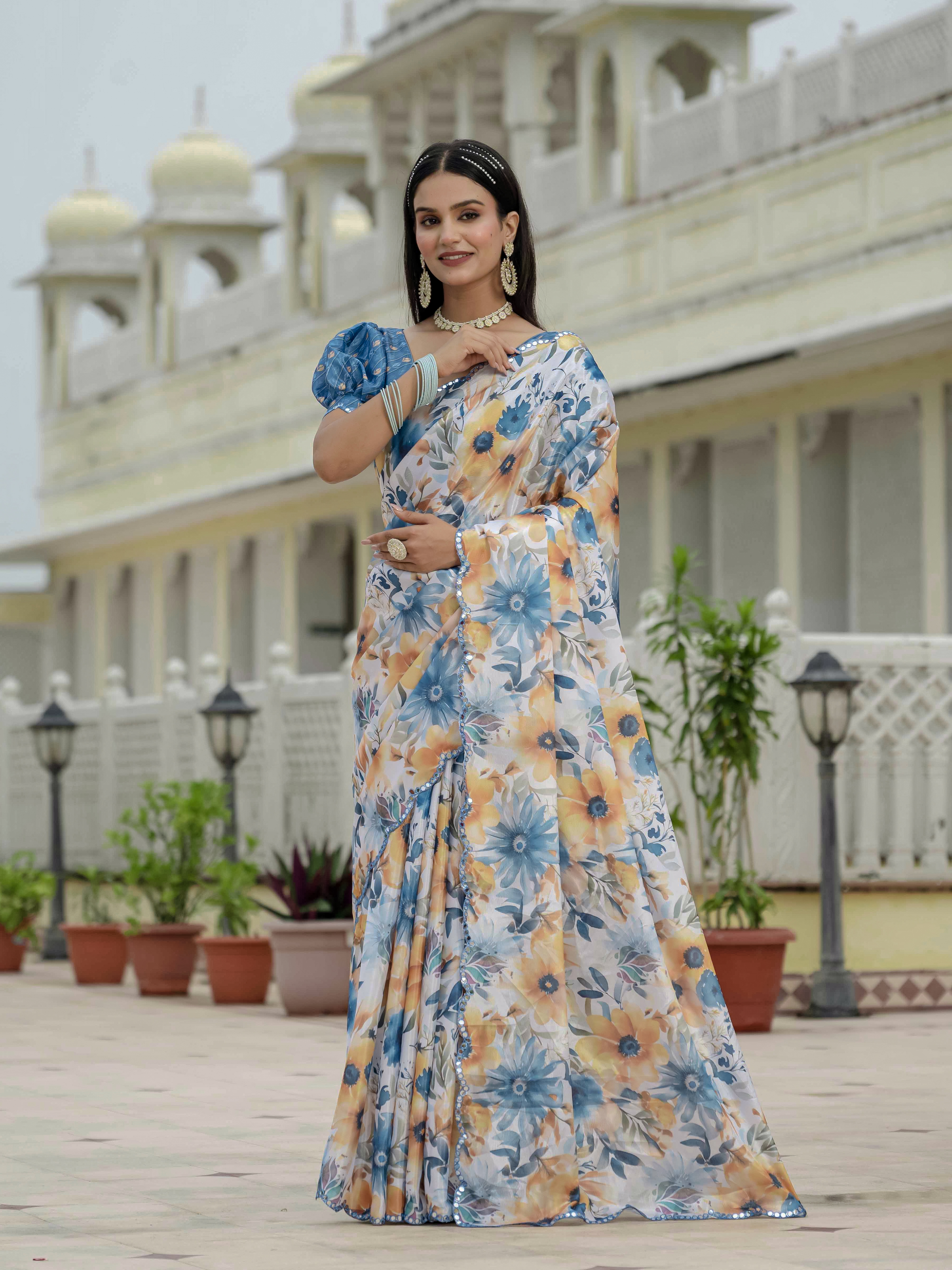
Traditional North Indian Saree Blouse Designs for Haryana-Inspired Looks become convincing when colour, comfort and regional textile references work together. Haryana-inspired styling can include saturated red, mustard, green, magenta and indigo; modest necklines; elbow-length sleeves; phulkari-influenced florals; gota patti; mirror accents; and neatly finished piping. A blouse doesn't need to reproduce one historical garment exactly. It needs to create a coherent visual relationship between the saree, the blouse, the drape and the occasion.
The first practical decision is whether the saree or blouse should carry the strongest detail. A plain cotton saree can support an embroidered or brocade blouse, while a Banarasi silk saree with dense zari usually looks more balanced with a solid raw silk blouse. Repeating one feature twice, such as gold zari on the saree and gold gota on the sleeve edge, generally looks more polished than combining several unrelated embellishments.
Traditional North Indian Saree Blouse Designs for Haryana-Inspired Looks: What defines the style?
Traditional North Indian Saree Blouse Designs for Haryana-Inspired Looks usually combine vivid colour, useful coverage, a structured silhouette and folk-influenced surface decoration. The strongest references are visual rather than prescriptive: floral threadwork, contrast borders, metallic trims, small mirrors, fabric-covered buttons and practical sleeve lengths.
Haryana has varied dress traditions shaped by community, locality, season and the difference between daily and formal clothing. A blouse inspired by Haryana should therefore be treated as a corporate interpretation rather than a rigid uniform. Phulkari belongs especially strongly to Punjab and adjoining North Indian regions, but phulkari-inspired florals can contribute to a Haryana-inspired outfit when the influence is described accurately.
A traditional silhouette generally has a defined shoulder, a stable armhole, a blouse hem close to the natural waist and enough coverage to keep the pallu secure. A high back and concealed hooks create a neat finish beneath the drape. A very cropped blouse, a plunging neckline or a strapless shape can be attractive, but those choices usually shift the outfit towards contemporary eveningwear.
Traditional North Indian Saree Blouse Designs for Haryana-Inspired Looks: Which fabrics work best?
Cotton, raw silk, Banarasi silk, Chanderi, brocade and velvet are useful blouse fabrics, and the right choice depends on weather, saree weight and the length of the event.
Cotton for daytime celebrations
Handloom cotton and polished cotton suit summer pujas, daytime family gatherings and cultural functions because cotton allows air movement and holds a clean sleeve shape. Cotton can crease around the waist after several hours, so a good cut and a light cotton lining matter more than excessive stiffness.
A mustard cotton blouse with a red saree, a bottle-green blouse with an ivory saree, or a rust blouse with an off-white saree creates a strong North Indian colour story. Contrast piping around the neckline and sleeve edge adds definition without making a daytime garment look overworked.
Silk and brocade for formal occasions
Raw silk and brocade provide a matte, structured base for zari, gota and embroidery. Banarasi silk adds sheen and works naturally with gold zari borders, while Chanderi offers a lighter festive surface when a wearer wants subtle translucence and elegance rather than a heavy blouse.
The Banarasi Silk Saree is an useful reference for proportion: a richly woven saree generally benefits from a solid blouse that repeats one colour from the zari or border. The Kanjeevaram Silk Saree carries a distinct South Indian identity, but a maroon, mustard or bottle-green blouse can make it part of a cross-regional wardrobe when the border colours are repeated deliberately.
Velvet is suitable for winter weddings and evening events, but velvet sleeves need sufficient ease because the fabric can feel warm and restrictive. A velvet blouse should have a breathable lining, a smooth armhole finish and enough room for the wearer to raise both arms comfortably.
How much lining should a blouse have?
A blouse should have a breathable lining when the outer fabric contains zari, sequins, metallic thread or coarse embroidery. Cotton lining suits warm-weather cotton and silk blends, while a smooth silk or satin lining can work for formal blouses if it doesn't trap heat or slide against the body.
The lining should follow the outer garment's seams instead of hanging below the hem. A lining that finishes approximately 5 to 8 millimetres above the outer edge usually prevents a visible strip. Embroidered blouses benefit from a soft backing behind the work because metallic threads can scratch the skin during prolonged wear.
Traditional North Indian Saree Blouse Designs for Haryana-Inspired Looks: Which necklines and sleeves suit them?
Rounded, square, shallow V-shaped and banded necklines are the most versatile choices, while elbow-length and three-quarter sleeves provide the clearest traditional impression. These proportions work with cotton, silk, brocade and most structured saree drapes.
Neckline proportions
A rounded neckline pairs easily with necklaces and suits most saree drapes. A square neckline creates a more architectural effect on raw silk or brocade. A shallow V-neck lengthens the upper body without making the garment look like modern partywear. A narrow high neck or band collar can look elegant with a plain saree, but the collar should not press against the throat when the wearer bends or turns.
Contrast edging can bring folk character to a simple neckline. Red piping on a mustard blouse, orange edging on a green blouse, or antique-gold trim on a magenta blouse creates a deliberate colour relationship. One narrow border often looks more refined than several overlapping trims.
Sleeve length and movement
Elbow-length sleeves are the safest traditional option because they provide coverage, frame bangles and suit both cotton and silk sarees. Three-quarter sleeves look formal, but the elbow area needs enough ease to prevent the sleeve from pulling the blouse upward during movement.
Short puff sleeves can add a restrained nostalgic reference when the puff is small and the cuff is neatly finished. Puff sleeves should be paired with a relatively simple saree border so the upper body doesn't become crowded. Sleeveless and cap-sleeve blouses are wearable, but they create a more contemporary result.
Traditional North Indian Saree Blouse Designs for Haryana-Inspired Looks: How should embroidery be used?
Floral embroidery, gota patti, resham thread, zari, mirror work and small tassels can express North Indian festive character when each detail has a clear place.
Phulkari-inspired floral motifs work especially well on a yoke, sleeve border or small back panel. Two or three thread colours that already appear in the saree are usually enough. Dense multicolour embroidery on both the saree and blouse can make the ensemble look crowded and can increase cleaning and drying difficulty.
Gota patti gives a crisp metallic outline to necklines, sleeve hems and geometric panels. Gold zari complements red, green, maroon, navy and mustard, while silver zari works well with ivory, lavender, charcoal and cool pink. Antique gold is useful when bright yellow gold feels too shiny or formal.
Small mirrors should be firmly backed and spaced so they don't catch on the saree or press into the body. Mirror work on a sleeve border is generally more comfortable than mirror work across the bust or underarm. Heavy dabka and dense metallic embroidery are best reserved for shorter events unless the blouse has a soft backing and generous movement ease.
Traditional North Indian Saree Blouse Designs for Haryana-Inspired Looks: How do you match them to occasions?
A blouse should match a saree through one dominant colour, one secondary accent and one shared finish such as zari, threadwork or matte texture. This three-part approach keeps the outfit coordinated without requiring identical fabrics.
For a Haldi ceremony and daytime puja
Cotton, Chanderi and light silk blends are practical for a Haldi ceremony, puja or daytime family gathering. A yellow saree with a green blouse, an ivory saree with a red blouse, or a printed cotton saree with a solid mustard blouse can look festive without becoming heavy.
Keep metallic work narrow for daytime wear. Thread embroidery, fabric-covered buttons and contrast piping provide detail while remaining easier to sit, move and travel in. A breathable lining becomes especially important in warm weather or crowded indoor spaces.
For weddings and festivals
Weddings and evening festivals allow richer fabrics and stronger embellishment. A Banarasi silk saree can take a raw silk blouse with zari edging, while a plain silk saree can support a brocade blouse or an embroidered velvet blouse in winter.
The Chanderi Saree brings a lighter alternative for a daytime wedding event, especially when paired with a blouse in maroon, rust, emerald or mustard. A wide saree border generally looks best with a blouse that has restrained sleeve decoration. Excessive volume at the sleeve can compete with a heavy pallu.
For cultural and community functions
Cultural functions benefit from clear colour stories and recognisable craft details rather than maximum sparkle. A cotton saree, solid blouse, floral yoke and neatly braided hair can communicate a regional mood more effectively than a heavily sequinned blouse that resembles generic partywear.
Traditional North Indian Saree Blouse Designs for Haryana-Inspired Looks: What fitting details matter?
A comfortable blouse needs accurate bust, underbust, shoulder, armhole and sleeve measurements, with approximately 2.5 to 5 centimetres of ease depending on the fabric and preferred fit. A beautiful neckline can't compensate for an armhole that cuts into the underarm.
Measure the bust while wearing the bra intended for the saree, and measure the underbust separately. The shoulder seam should end at the natural shoulder point. The sleeve circumference should allow both arms to rise without pulling the blouse upward. A blouse worn for a wedding should be tried with the actual saree and petticoat or shapewear because waist height changes the visual proportion.
Back openings with hooks are practical for structured blouses, while side zips can provide a smooth front but require careful placement. Fabric-covered buttons add a traditional detail, but buttons should be securely stitched and backed if the blouse will be worn frequently.
Request a test fitting before final finishing when the blouse includes heavy embroidery or a firm lining. A tailor can adjust the shoulder, armhole and neckline more easily before piping, hooks and embellishment are permanently attached. A final trial should include sitting, raising both arms, walking and securing the pallu.
Traditional North Indian Saree Blouse Designs for Haryana-Inspired Looks: How should the blouse be cared for?
Dry cleaning or gentle professional cleaning is safest for zari, velvet, mirror work, heavy embroidery and unstable dyes, while lightly embellished cotton blouses can often be hand-washed in cool water after testing colourfastness.
don't soak a zari blouse for long periods because metallic threads can tarnish and dye can bleed into the lining. Use a clean white cloth to test an inner seam before washing a red, magenta, indigo or dark green blouse. Never wring embroidered fabric; press out moisture between towels and dry the garment in shade.
Store the blouse folded with soft cotton or muslin between embellished surfaces. Avoid hanging heavy blouses on thin wire hangers because the shoulder can stretch. Keep zari, mirrors and metallic trims away from direct humidity, and air the garment fully before storage after a long event.
Repair loose hooks, broken piping and lifted mirror edges promptly. Small repairs prevent the saree from catching on exposed thread or metal during a later occasion. A carefully maintained blouse can support several sarees, making a well-fitted solid blouse more useful than a single highly specific design.
Traditional North Indian Saree Blouse Designs for Haryana-Inspired Looks: Which styling mistakes should you avoid?
The most common mistakes are combining too many regional references, ignoring the saree's weight, choosing an unsuitable lining and selecting a sleeve that restricts movement.
Using phulkari-inspired florals, mirror work, gota, zari, tassels and sequins simultaneously can obscure the main idea of the outfit. Select one primary craft reference and one supporting detail. A floral yoke with a narrow gota border is usually easier to wear than a blouse covered in five different embellishment types.
Another mistake is matching the blouse to the saree by colour alone. Texture and scale matter equally. A heavily woven silk saree and a heavily woven brocade blouse may create too much visual weight, even when both pieces are the same colour. A matte raw silk blouse can provide better contrast.
Finally, don't copy a neckline or sleeve without considering the wearer's movement and the event's duration. A blouse for a two-hour ceremony can be more embellished than a blouse worn for an all-day wedding. Comfort, accurate tailoring and a restrained colour plan make regional inspiration look intentional rather than theatrical.
Common Questions About Haryana-Inspired Traditional Saree Blouses
What colours work best for a Haryana-inspired saree blouse?
Red, mustard, bottle green, rust, magenta, indigo and ivory work especially well for a Haryana-inspired blouse. Choose one dominant colour and repeat a secondary saree accent through piping, embroidery or zari.
Which blouse sleeve length looks most traditional with a North Indian saree?
Elbow-length sleeves usually create the most versatile traditional appearance. Three-quarter sleeves offer more coverage, while small puff sleeves add a folk-influenced detail when the saree border is relatively simple.
Can phulkari-inspired embroidery be used for a Haryana-inspired saree outfit?
Yes, phulkari-inspired floral embroidery can be used as a North Indian regional influence in a Haryana-inspired outfit. Describe the detail accurately because phulkari is particularly associated with Punjab and adjoining regions.
Which fabric is best for a saree blouse in summer?
Cotton is usually the most comfortable summer blouse fabric because it allows air circulation and absorbs moisture. Chanderi and lightweight silk blends are useful alternatives for festive occasions when a little sheen is preferred.
How much ease should a fitted saree blouse have?
A fitted blouse generally needs about 2.5 to 5 centimetres of ease, depending on the fabric, construction and desired silhouette. The final measurement should allow the wearer to raise both arms, sit comfortably and secure the pallu without pulling.
How should a zari or mirror-work blouse be stored?
Store a zari or mirror-work blouse folded in soft cotton or muslin, with embellished surfaces separated. Keep the garment dry, away from direct humidity, and avoid thin wire hangers that can stretch the shoulders.