Traditional Naga Colours & Textile-Inspired Fashion offers a striking way to understand how colour, geometry and cloth can carry memory. Naga communities in Nagaland and neighbouring parts of Northeast India use shawls, wrap garments, skirts, ornaments and woven accessories to express community identity, age, status and ceremonial meaning. Modern ethnic clothing can take inspiration from that visual language, but good styling begins with knowledge rather than simply placing bold stripes on a garment.
Naga textiles are not one single design system. The Naga people include many communities, including Ao, Angami, Chakhesang, Konyak, Lotha, Phom, Rengma, Sangtam, Sumi and Yimkhiung groups, each with charming histories and weaving traditions. Colour meanings and motifs can therefore change by community, garment and context. That variation matters when a modern saree or lehenga borrows a Naga-inspired palette.
What makes Traditional Naga Colours & Textile-Inspired Fashion distinctive?
Traditional Naga Colours & Textile-Inspired Fashion stands out because it combines high-contrast colour, symbolic patterning and strong visual structure. Black, red and white appear frequently in Naga textiles, while yellow, blue, green and orange may add emphasis depending on the community and textile design.
Black often forms a powerful ground colour in shawls and wrap garments, allowing narrow bands and motifs to read clearly from a distance. Red can suggest vitality, courage, celebration or social importance in particular textile contexts, although no single meaning applies to every Naga community. White creates contrast and can bring clarity to repeated geometric bands. Yellow, blue and green are frequently used as accent shades in contemporary interpretations because they echo the richness of dyed yarn and regional landscapes without requiring a literal copy of a ceremonial textile.
Strong borders are another important visual feature. Narrow stripes, stepped diamonds, triangles, zigzags and bands create rhythm across a shawl or wrap. A saree with a defined pallu or border can therefore communicate a similar sense of visual order, even when the garment uses silk, linen or cotton rather than a traditionally woven Naga textile.
How do colour and motifs function in Naga textiles?
Colour and motifs in Naga textiles function as visual markers of community, occasion and social identity, but their meanings change across communities and historical periods. A design should never be assigned one universal interpretation without identifying its source.
Traditional Naga shawls may use horizontal bands, contrasting fields and repeated geometric forms rather than dense all-over ornament. Some textiles historically communicated distinctions connected with achievement, age, social standing or ceremonial life. Certain patterns were associated with particular communities or statuses, which is why copying a specific shawl design without context can be insensitive.
Motifs can also reflect the relationship between Naga societies and the natural world. Animal forms, plants, birds, weapons, baskets and geometric abstractions appear in different regional traditions, but the visual meaning depends on the textile and community. A contemporary designer may borrow the principles of repetition, proportion and contrast instead of reproducing a culturally specific emblem.
An useful design test is to ask three questions before using a motif: Is the source known? Is the motif being presented as inspiration or falsely labelled as authentic? Does the garment preserve the motif's dignity rather than turning it into a costume effect? Those questions are more valuable than treating every zigzag or stripe as interchangeable tribal decoration.
Which fabrics work for a Naga-inspired Indian wardrobe?
Cotton, linen, silk and handwoven blends work well for Naga-inspired Indian clothing because they can carry crisp borders, repeated stripes and saturated colour without making the outfit visually confusing.
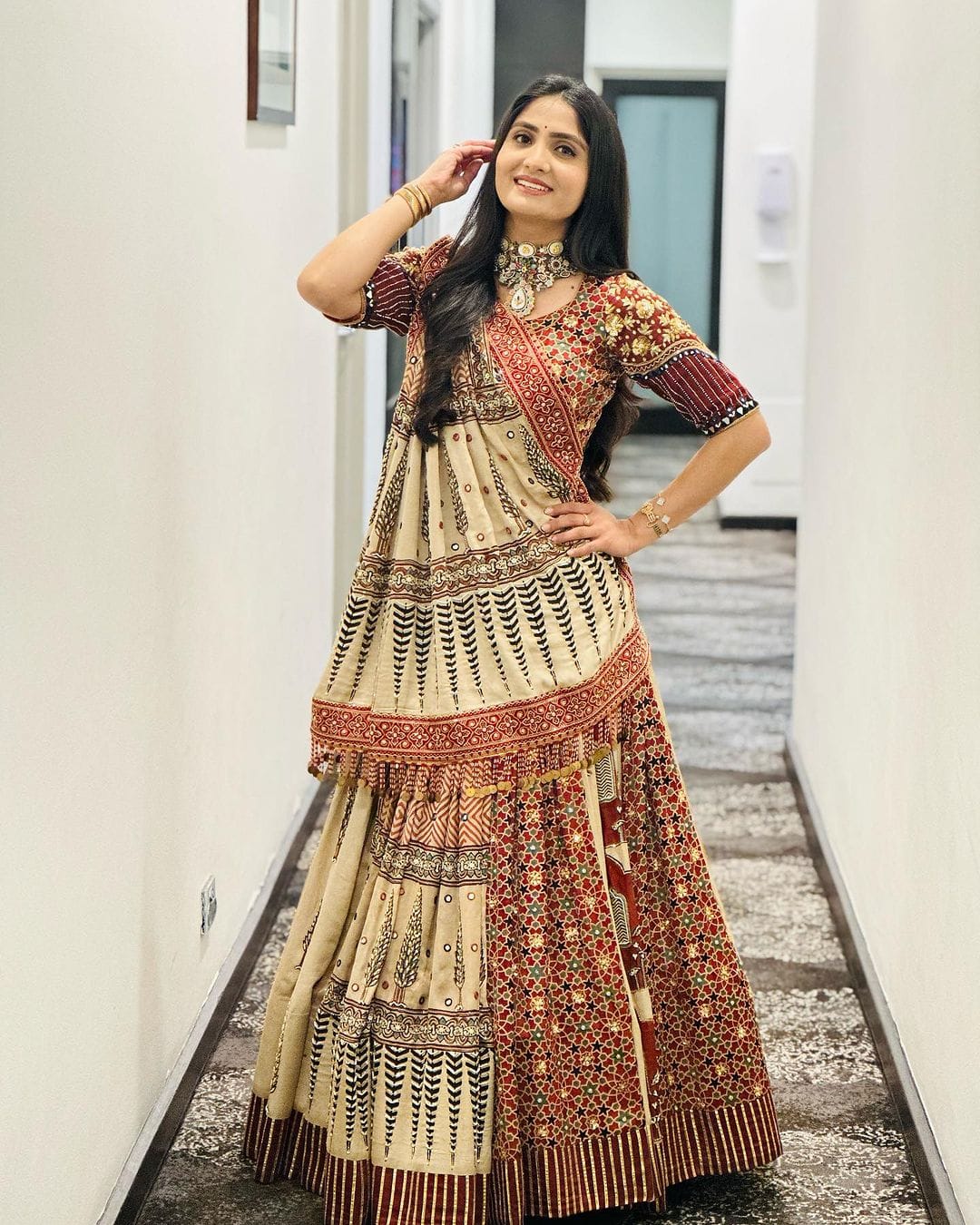
Cotton and linen for daytime dressing
Cotton and linen suit workwear, daytime celebrations and warm-weather gatherings because their texture keeps a high-contrast palette grounded. The Navy Blue Mal Cotton Floral Saree With Blouse - VARNAVI demonstrates how a dark base can make floral and border details more visible. A cotton-linen saree with a blue border can similarly use one dominant shade and one structured accent rather than competing with multiple heavy embellishments.
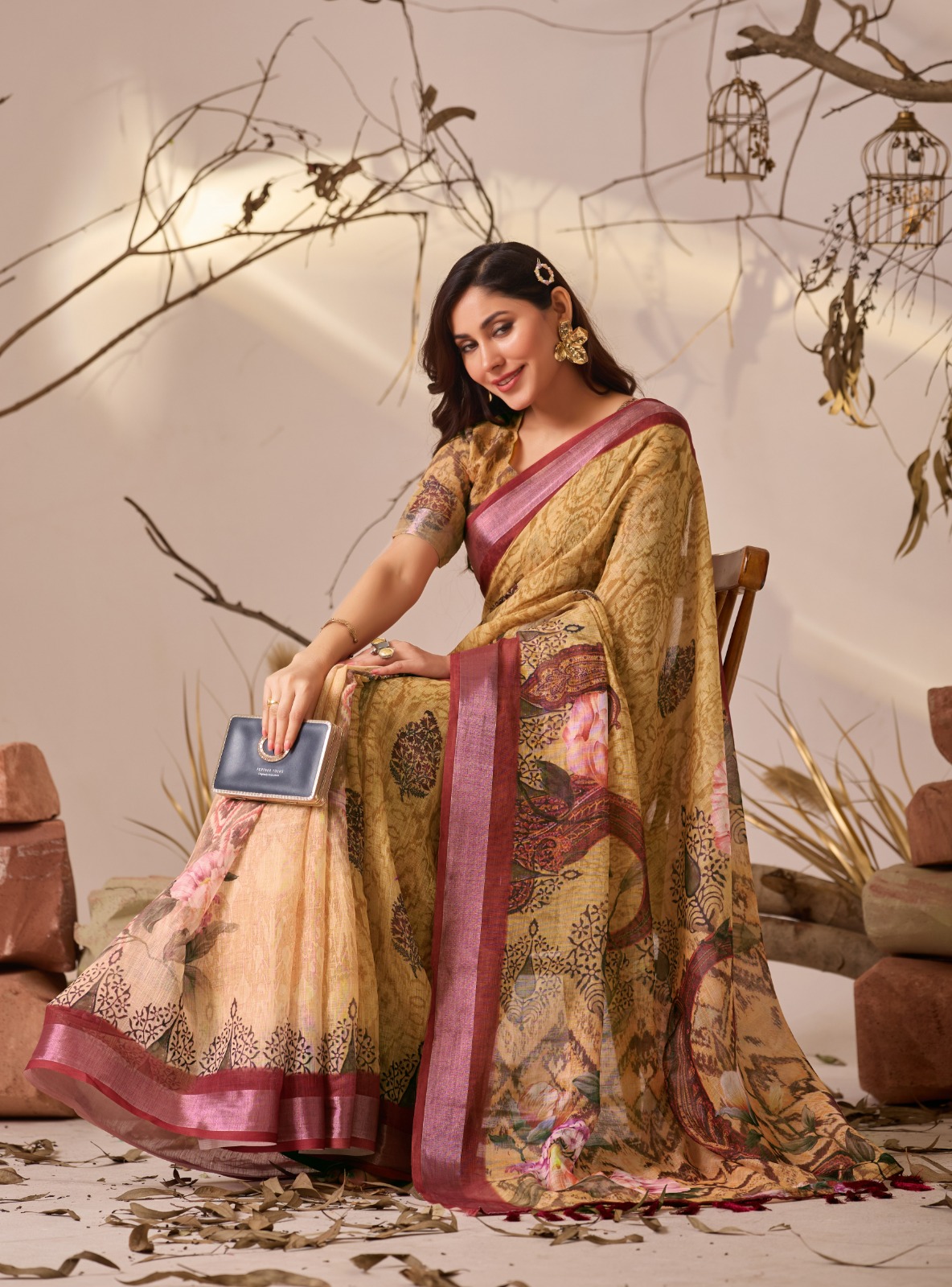
The Multicolour Floral Linen Cotton Saree with Blue Border Look gives another practical direction. Its multicolour surface can be balanced with a plain blouse in navy, black, ivory or muted red. Linen cotton also benefits from a slightly relaxed drape, which suits a contemporary interpretation of wrap-based textile dressing.
Silk for evening and ceremonial styling
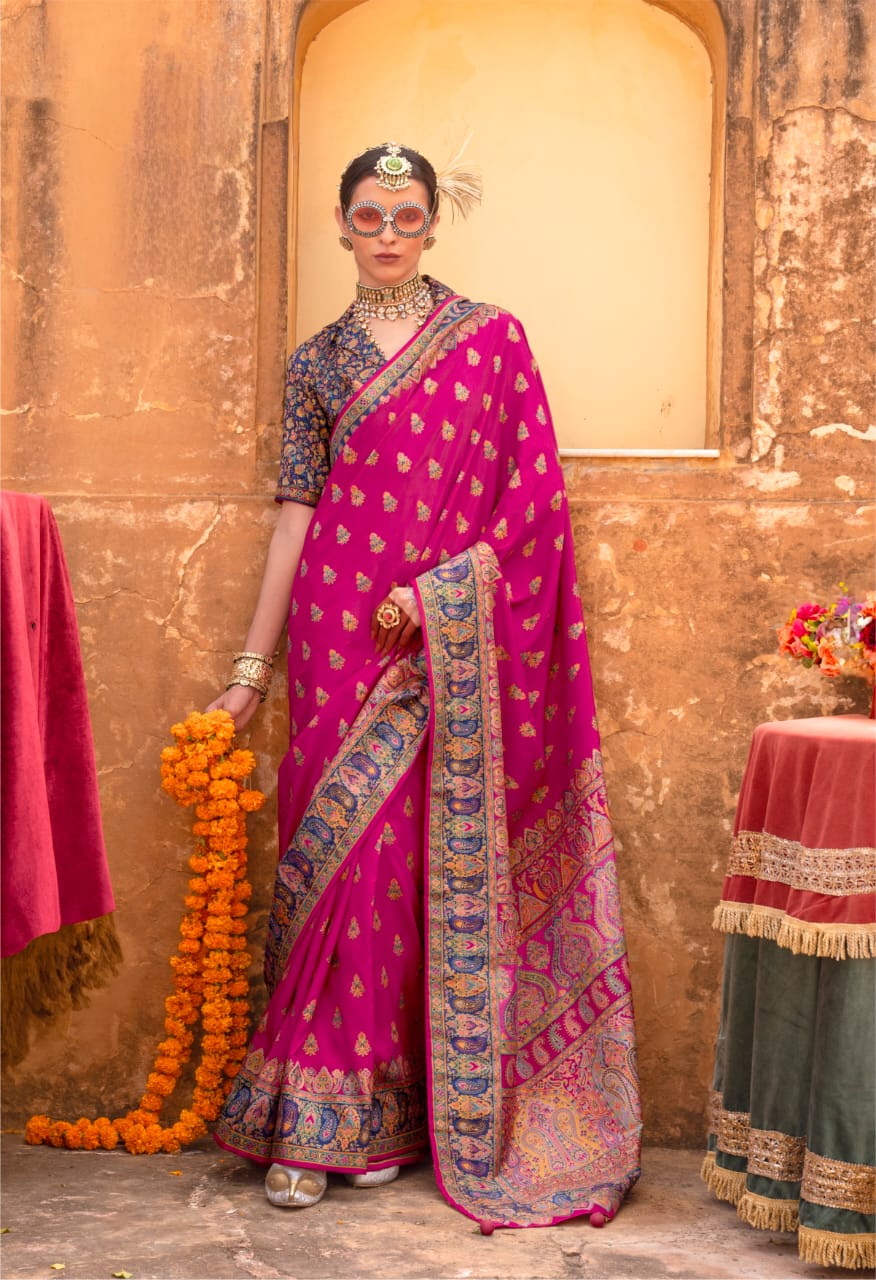
Silk is appropriate for evening gatherings when a Naga-inspired palette needs more depth and sheen. The Blue Red Ikat Silk Saree Online with Zari shows how blue and red can create a decisive contrast, while zari adds light-catching detail for a festive setting. The Red Yellow Soft Lichi Silk Saree with Rich Pallu & Jacquard Border uses red and yellow in a richer direction, making it suitable for a wedding guest wardrobe when paired with restrained jewellery.
Silk should not be described as a traditional Naga textile simply because its colours resemble a Naga shawl. A silk saree with a geometric or striped vocabulary is better described as Naga-inspired or textile-inspired unless its actual weave and provenance are documented.
How can you style Naga-inspired colours without making an outfit look costume-like?
You can style Naga-inspired colours naturally by choosing one dominant shade, one supporting shade and one small accent instead of combining every vivid colour in the same outfit.
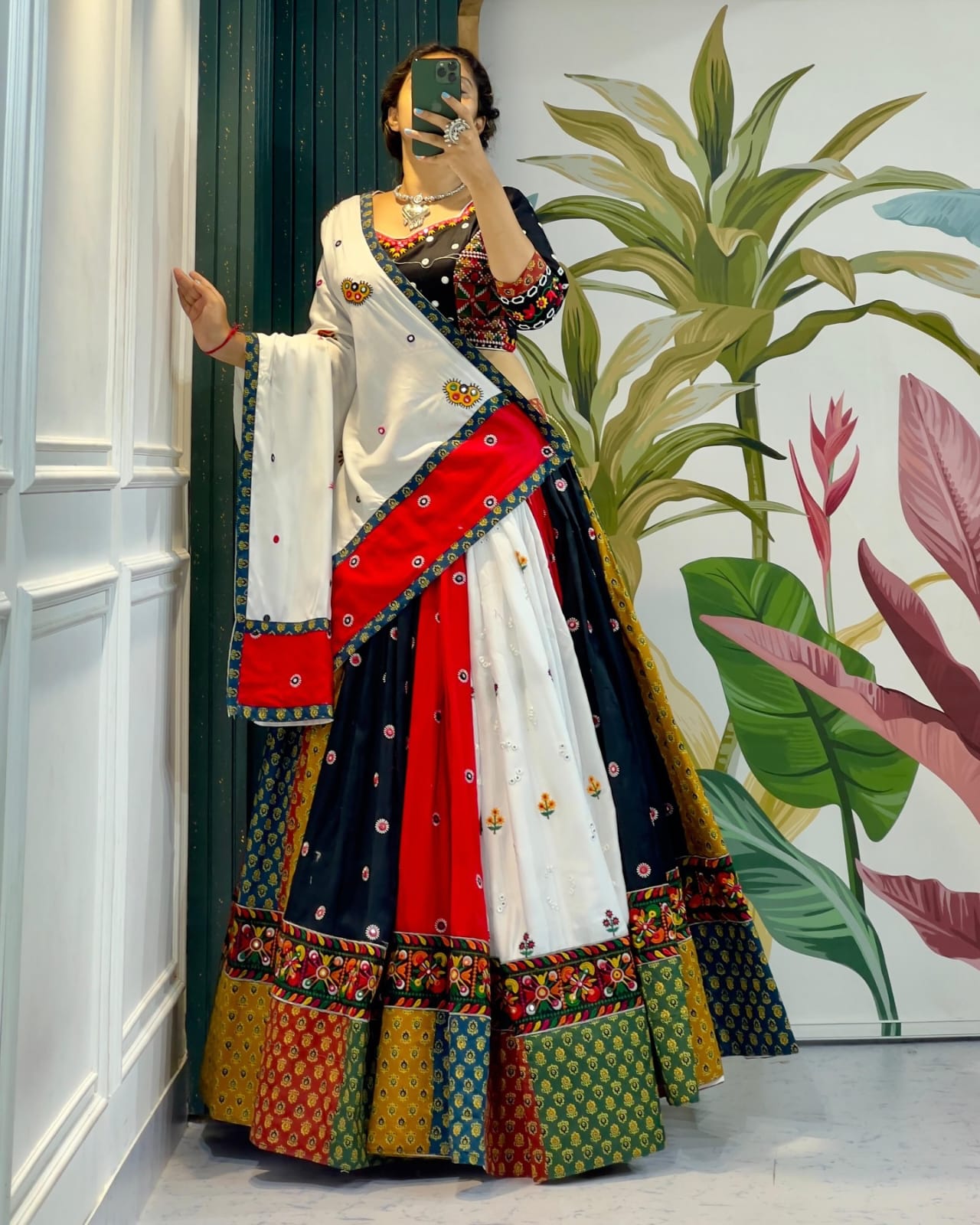
Use the 60-30-10 colour rule
A practical ratio is 60 percent dominant colour, 30 percent secondary colour and 10 percent accent. A navy saree can form the dominant field, red can appear in the blouse or border, and yellow can be reserved for earrings, bangles or a small clutch. The ratio preserves the energy of Traditional Naga Colours & Textile-Inspired Fashion while keeping the complete look wearable.
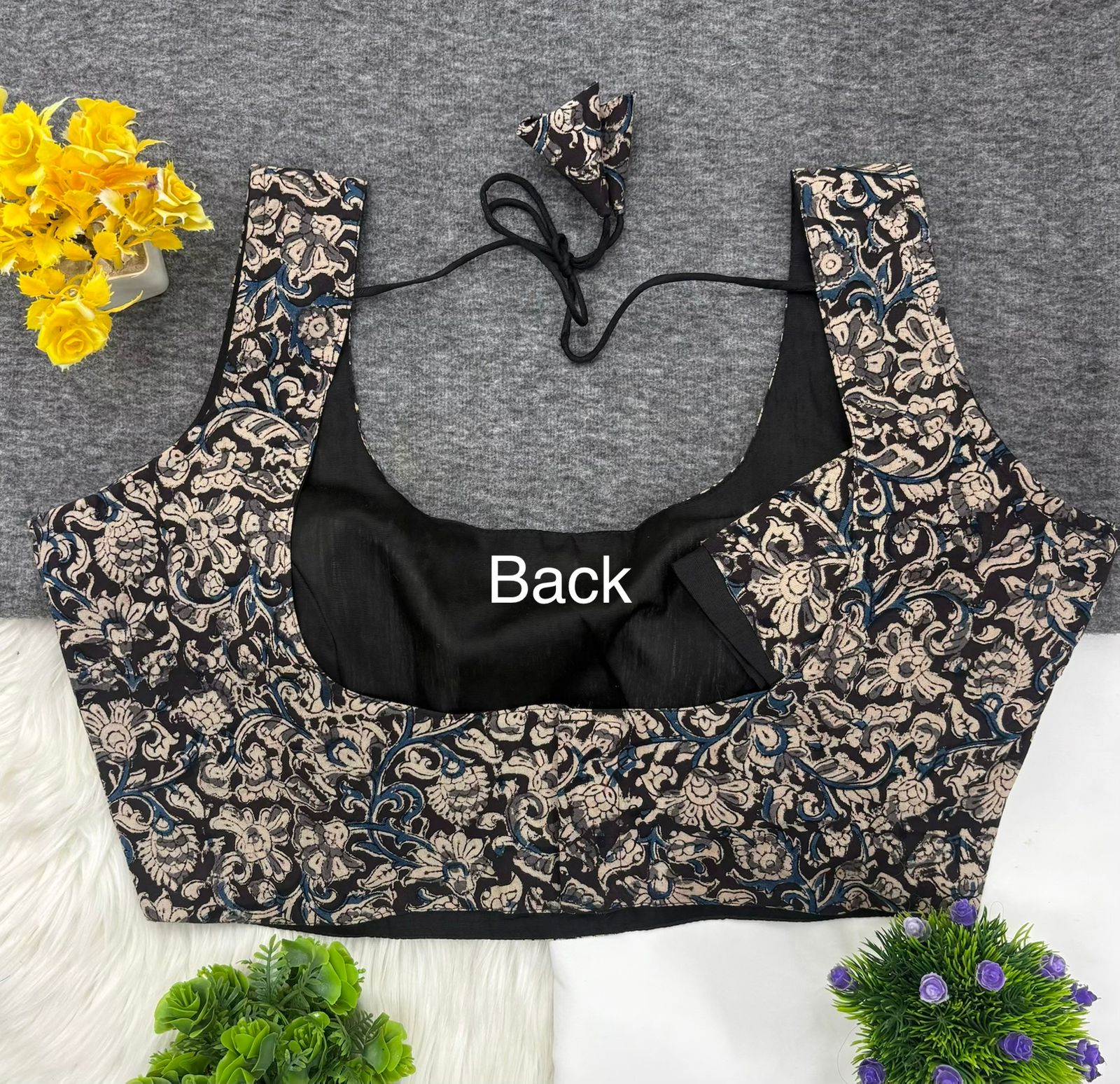
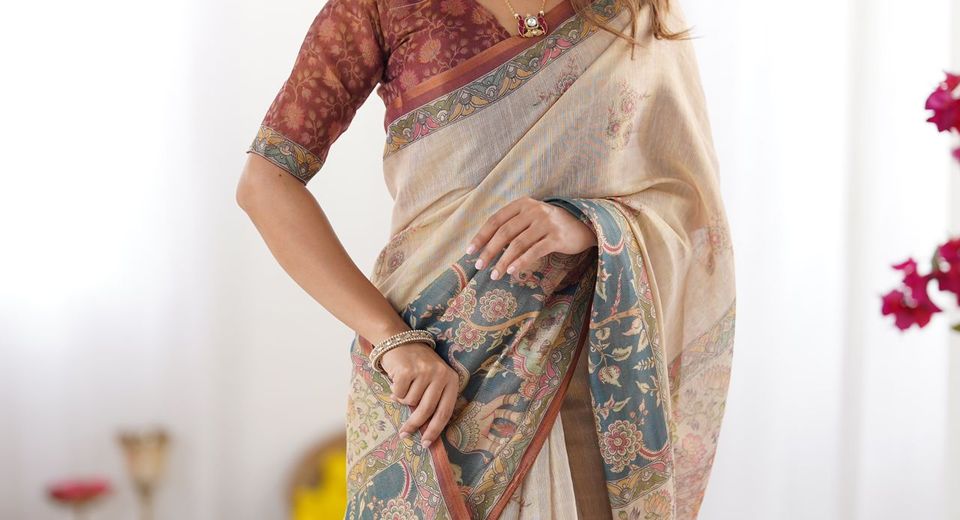
A beige or ivory base is especially useful when the print is multicoloured. The Traditional Beige Multicolor Printed Saree can be styled with a black, rust, indigo or muted red blouse depending on the strongest shade in its print. Neutral footwear and a simple metal bangle prevent the outfit from becoming visually crowded.
Let one textile detail lead
One strong detail should lead the styling: a broad border, an ikat-inspired print, a striped blouse, a geometric stole or a textured pallu. Adding large earrings, a heavily embroidered blouse and a competing printed bag can hide the textile idea under ornament.
The Vibrant Multicolor Linen Saree with Ikat Inspired Prints already supplies movement through its print, so a solid blouse is the more effective choice. A black blouse creates graphic contrast, while a deep red blouse gives the outfit a warmer festive direction. A narrow belt can define the waist for a contemporary event, but the belt should remain plain if the saree print is dense.
How can sarees and lehengas translate Naga textile ideas?
Sarees and lehengas translate Naga textile ideas most successfully through colour blocking, border placement, repeated geometry and controlled styling rather than through literal costume reconstruction.
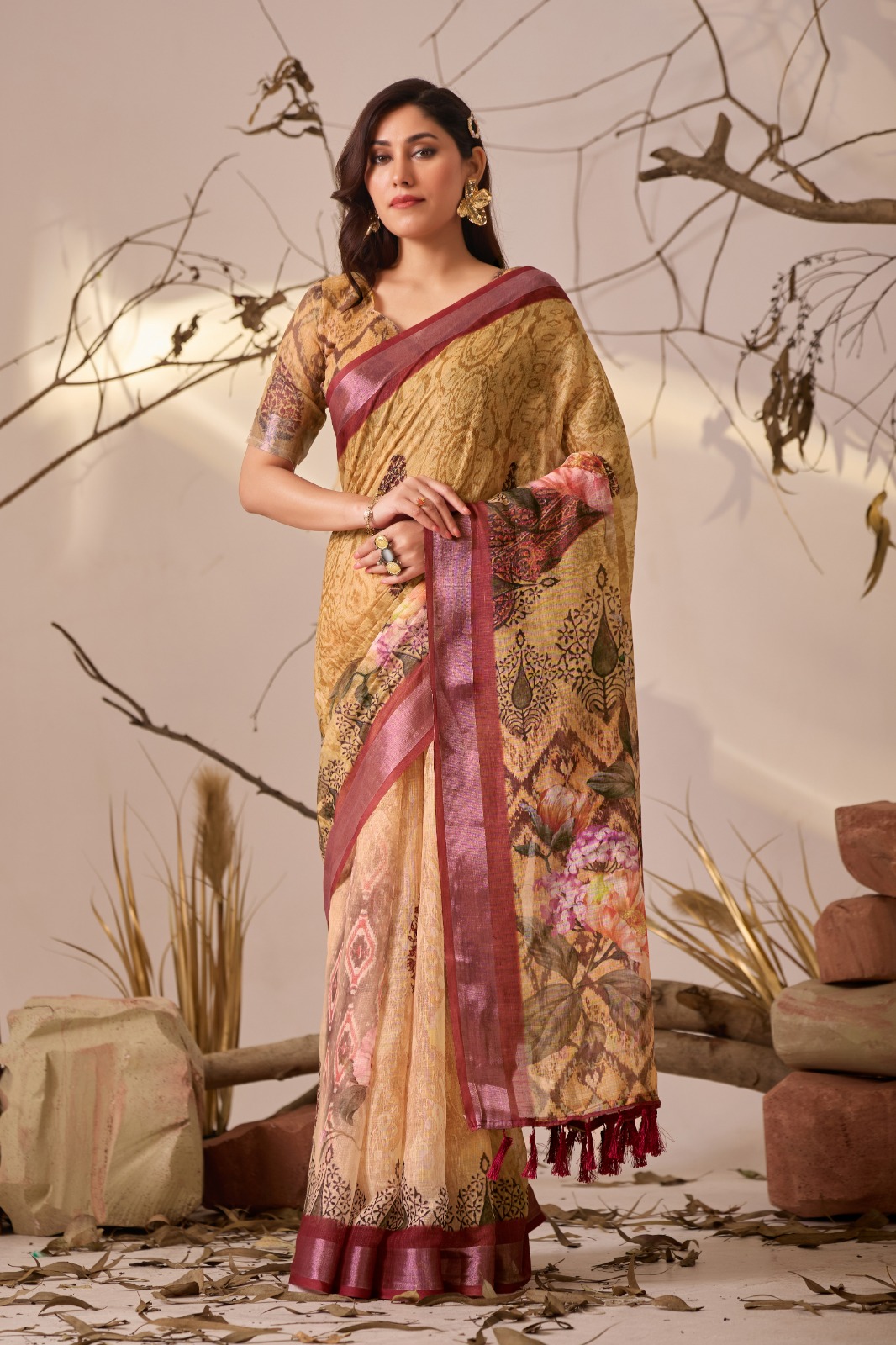
A saree pallu can act like a statement shawl panel. A wide pallu with red, black, white or yellow contrast draws attention to the shoulder and back, much as a boldly arranged woven wrap creates a focal field. A blouse with clean lines keeps the focus on the textile surface. Sleeves ending just above the elbow, a square neckline or a high round neck can reinforce a structured, graphic look.
The Red Floral Linen Cotton Saree with Beautiful Printed Border illustrates the value of border-led styling. A red blouse would create a tonal look, while an ivory blouse would make the border more prominent. Avoid adding a second floral print because a repeated geometric or botanical idea is easier to read when the surrounding pieces are quiet.
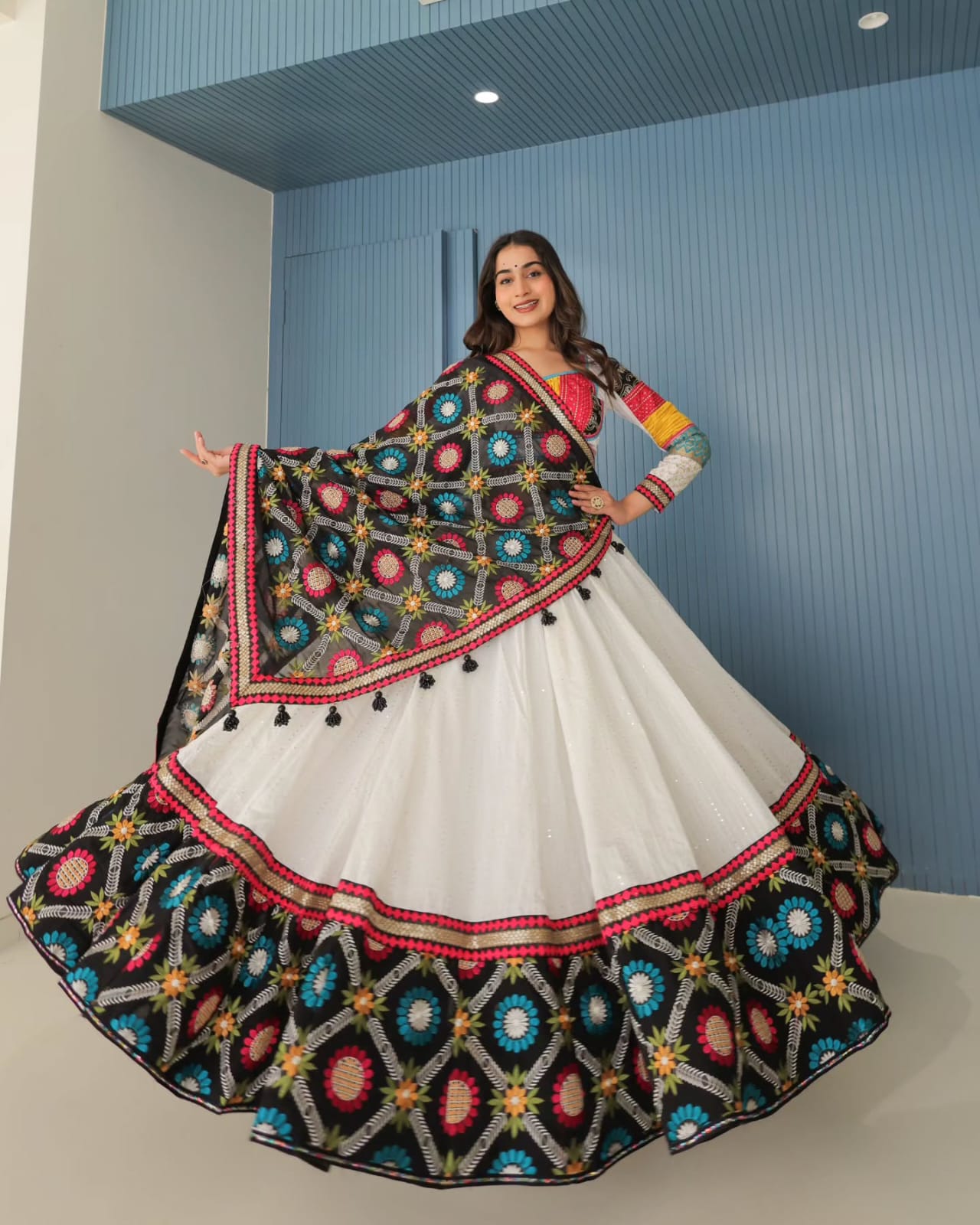
Lehengas offer a different route because panels can divide colour vertically. The Vibrant Multicolor Navratri Lehenga Choli Set can be styled with one dominant dupatta drape and minimal additional layering. For a more refined result, choose jewellery in one metal, keep the footwear neutral and allow the skirt's colour arrangement to remain the central feature.
Current styling should also respect the difference between an Indian festive garment and an actual Naga traditional garment. A lehenga inspired by Naga colour contrast isn't a replacement for a community-specific shawl, wrap or ceremonial dress. Clear language preserves cultural accuracy while still allowing creative fashion.
What jewellery, makeup and accessories complement these colours?
Matte metal jewellery, natural textures and restrained makeup complement Naga-inspired colours better than excessive sparkle. Oxidised silver, brushed brass, wood, cane and woven fibres can echo the tactile quality of handwoven cloth.
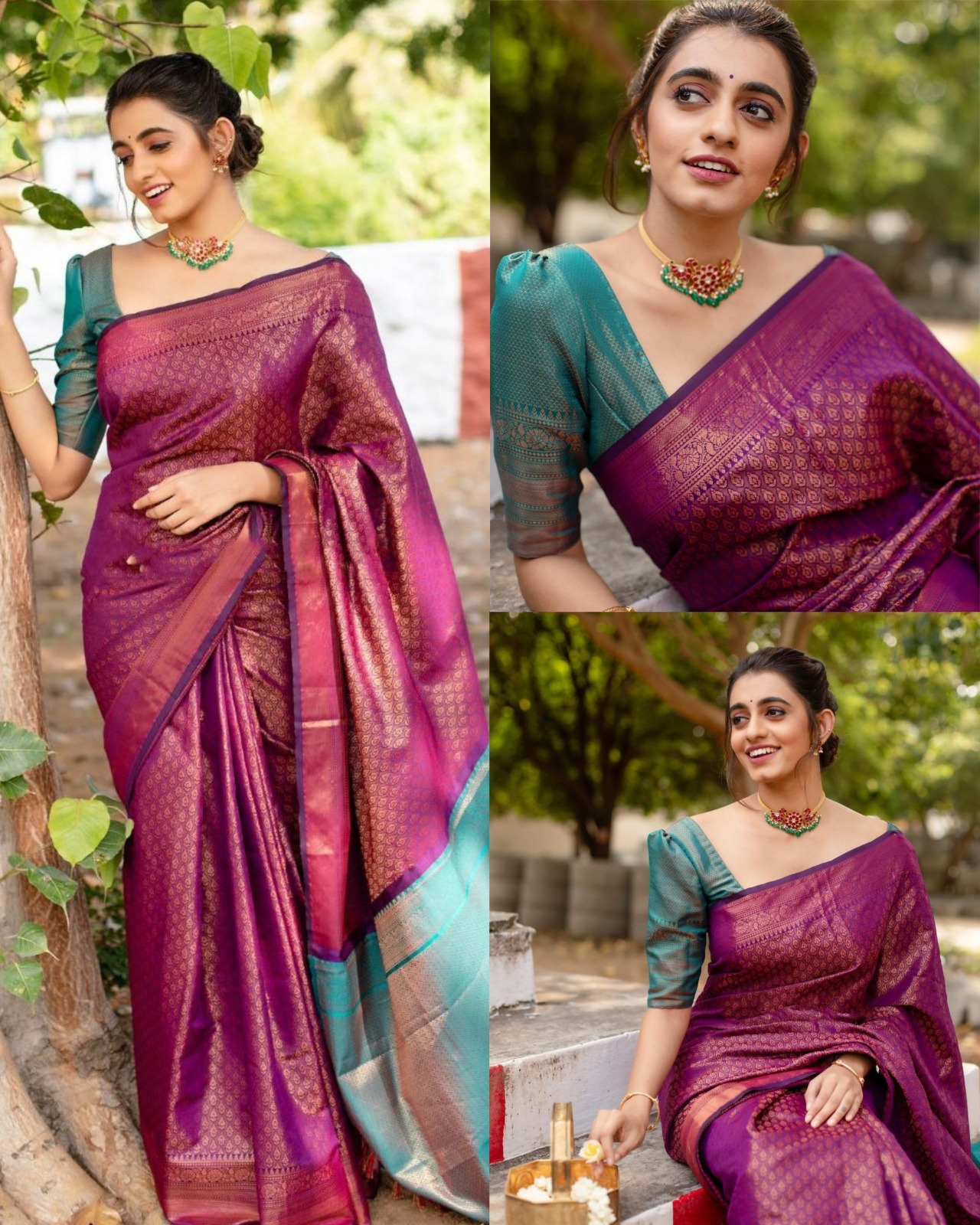
For a black, red and white palette, silver earrings or a broad silver cuff can sharpen the contrast. A navy and yellow combination works with brass or antique gold because warm metal prevents the colours from appearing too cool. Red and yellow silk already has visual intensity, so one pair of earrings and a slim bangle may be enough.
Hair styling can remain clean and practical. A low bun, a single braid or loose hair with a small textile accessory lets the saree border remain visible. Makeup can use one defined element, such as terracotta lipstick, a soft red lip or a narrow black liner. Matching lipstick exactly to a red border is unnecessary and can make the outfit look overly coordinated.
Accessories should also be chosen for proportion. A broad printed pallu pairs well with a compact clutch, while a minimal saree can support a larger woven bag. A patterned bag should not repeat the exact same motif unless the outfit is intentionally editorial rather than intended for everyday wear.
How should you buy and care for textile-inspired ethnic wear?
Buying textile-inspired ethnic wear requires checking fibre content, print or weave technique, border construction, lining and care instructions before judging colour alone.
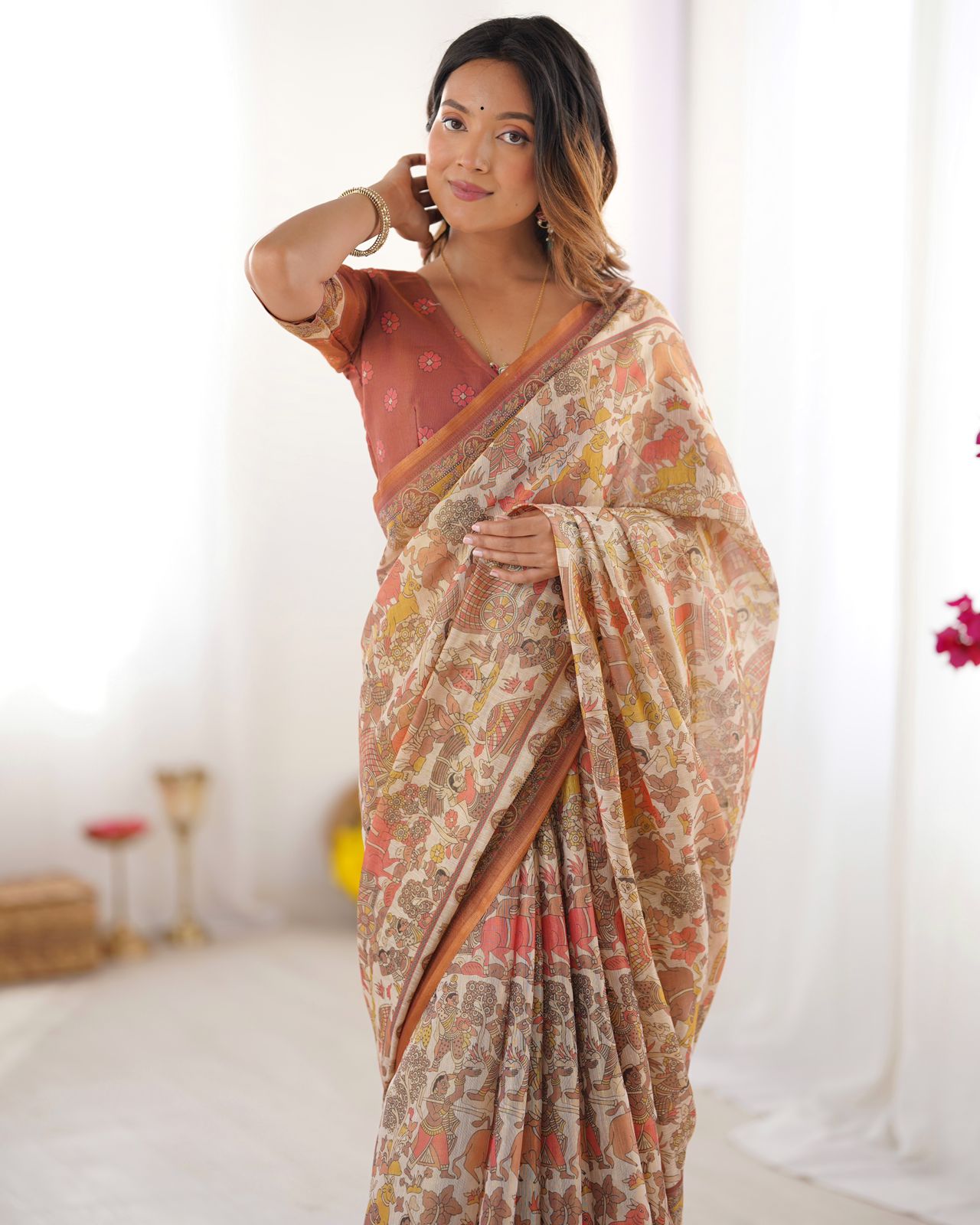
An ikat-inspired print isn't the same as handwoven ikat. In woven ikat, yarns are resist-dyed before weaving, creating characteristic alignment effects in the design. A printed fabric may reproduce the appearance at a lower price and with easier maintenance. Neither option is automatically better, but accurate product descriptions help buyers understand what they're purchasing.
Printed linen cotton, mal cotton and silk each respond differently to washing and storage. Follow the garment's stated care label, but use these conservative practices when no detailed instruction is available:
- Dry-clean zari silk, jacquard silk and heavily embellished garments to reduce the risk of colour bleeding and metallic damage.
- Keep dark cotton and linen away from direct midday sun during drying because strong light can fade navy, black and red.
- Wash printed cotton separately in cool water only when the care label permits machine or hand washing.
- Store silk in breathable cotton fabric rather than plastic, and refold silk every few months to prevent permanent crease lines.
- don't iron directly over zari, printed borders or raised jacquard; place a thin cotton cloth between the iron and the garment.
Price also depends on construction. Handloom weaving, natural dyes, silk grade, zari content, jacquard work and finishing can raise the cost beyond that of a printed version. A lower-priced printed saree can be a sensible choice for frequent wear, while a documented handwoven textile deserves slower, more considered purchasing.
What does respectful inspiration look like in contemporary fashion?
Respectful inspiration names the source, avoids false claims of authenticity and doesn't use sacred or status-specific motifs as casual decoration.
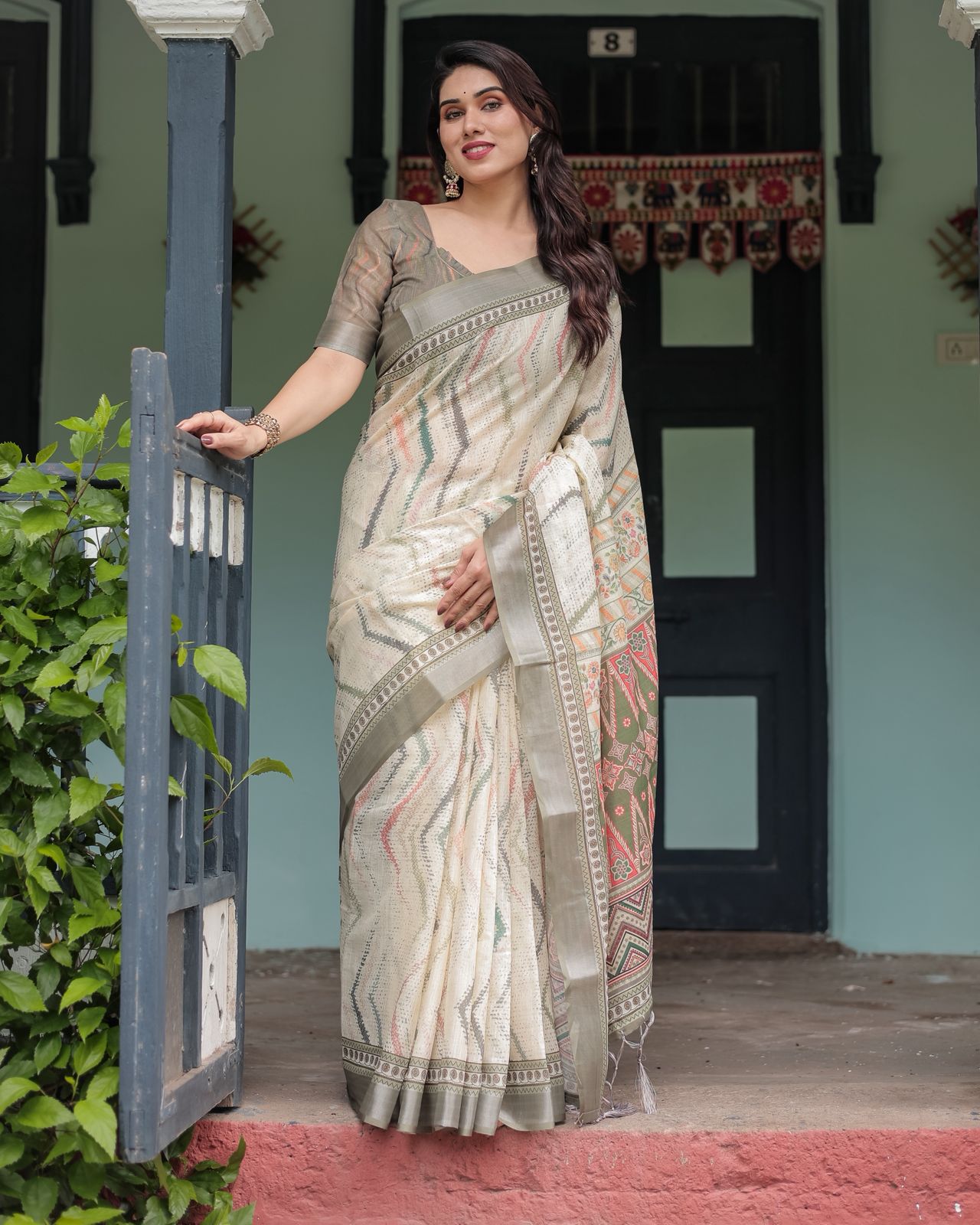
Designers and shoppers can begin with colour relationships, border rhythm and textile texture instead of copying a community-specific ceremonial shawl. Product descriptions should say "Naga-inspired" only when the visual reference is deliberate and explain the difference between a print, a weave and an authentic regional textile. Vague labels such as "tribal" erase the communities that created the visual language.
Traditional Naga Colours & Textile-Inspired Fashion becomes more meaningful when the wearer understands that a powerful palette is connected to living communities, not just an aesthetic trend. Reading about Naga weaving traditions, supporting documented artisans and crediting cultural sources are small but important steps. A contemporary saree can celebrate contrast and craft without pretending to be a ceremonial garment.
The most responsible contemporary interpretation keeps the design principle visible while keeping the original community, textile process and cultural context accurately named.
Common questions about Naga-inspired colours and ethnic wear
Traditional Naga Colours & Textile-Inspired Fashion can be adapted to everyday Indian dressing when the styling distinguishes inspiration from authentic community-specific clothing.

Practical Questions About Naga Colours, Motifs and Modern Ethnic Wear
What colours are commonly associated with Naga textiles?
Black, red and white are widely recognised in many Naga textile traditions, while yellow, blue, green and orange may appear as accents. Colour combinations and meanings vary among Naga communities, so no single palette represents every Naga group.
What is the difference between a Naga shawl and a Naga-inspired saree?
A Naga shawl is a community-specific woven garment with its own history, technique and possible social meaning. A Naga-inspired saree borrows visual elements such as contrast, stripes or geometric rhythm but is usually made and constructed as an Indian saree.
Can I wear Naga-inspired colours to a wedding?
Yes, Naga-inspired colours work well for weddings when the outfit uses polished fabrics such as silk, linen silk or jacquard and keeps accessories controlled. A red-yellow silk saree or a structured multicolour lehenga can look festive without copying ceremonial Naga dress.
Is an ikat-inspired print the same as an ikat weave?
No, an ikat-inspired print reproduces the appearance of ikat on the surface of the fabric, while woven ikat is created by resist-dyeing yarns before weaving. Product descriptions and care labels should identify whether the design is printed or woven.
How can I style a multicolour saree without looking overdone?
Pair a multicolour saree with a solid blouse in one shade already present in the print and keep jewellery to one metal. Neutral footwear, a plain clutch and simple hair styling allow the saree's border or pallu to remain the focal point.
How should I care for a silk saree with zari or a jacquard border?
Dry-clean silk sarees with zari or jacquard borders unless the care label specifically permits another method. Store the saree in breathable cotton, refold it periodically and iron it from the reverse through a thin cotton cloth.