Traditional Mizo Patterns & Modern Ethnic Fashion Ideas meet at an interesting point: heritage motifs can enter a contemporary wardrobe without becoming a costume or losing their cultural meaning. Mizo textiles are recognised for strong colour contrasts, disciplined stripes, geometric forms and carefully arranged bands. Those visual principles can guide sarees, blouses, dupattas and accessories for weddings, cultural gatherings and everyday festive dressing.
An useful approach begins with context. Mizo weaving traditions are associated with handloom practice, community identity and garments such as puan, a wrapped or draped textile traditionally worn in Mizoram. Modern styling can borrow the language of colour, rhythm and border placement while avoiding claims that every geometric print is specifically Mizo. The difference between respectful inspiration and careless imitation lies in research, accurate naming and thoughtful styling.
Traditional Mizo Patterns & Modern Ethnic Fashion Ideas: What Makes Mizo Textiles Distinctive?
Mizo textile patterns are visually distinctive because they combine horizontal bands, repeated geometric units, strong colour relationships and controlled pattern density. The result is often bold without looking random, since each stripe, border or repeated form contributes to the overall rhythm of the cloth.
Traditional Mizo textiles are commonly discussed in relation to puan patterns and the weaving traditions of different Mizo communities. Motifs and colour arrangements may vary by locality, garment, generation and social context, so no single design represents every Mizo group. Some designs use narrow stripes stacked in bands, while others create more complex arrangements with diamonds, stepped forms, triangles or contrasting blocks.
The visual effect depends as much on placement as on the motif itself. A narrow geometric band near the lower edge creates a quiet finish. A wide panel across the body becomes the main focal point. Repetition gives the eye a path to follow, which is why Mizo-inspired design can work particularly well on saree borders, blouse sleeves and dupattas.
Colour also carries much of the character. Black, red, white, green and yellow may appear in striking relationships, although contemporary textiles use many additional shades. A deep ground colour with a bright border gives definition to a garment, while closely related colours create a softer interpretation suitable for daytime wear.
Traditional Mizo Patterns & Modern Ethnic Fashion Ideas for Contemporary Styling
Traditional Mizo patterns can inform modern ethnic fashion by translating their principles of rhythm, contrast and border design rather than copying a community-specific motif without context.
That translation can take several forms. A saree may use a geometric border instead of an all-over print. A blouse may carry one striped panel on the sleeve while the rest remains plain. A solid kurta can be paired with a patterned dupatta that introduces a Mizo-inspired visual cadence without overwhelming the outfit.
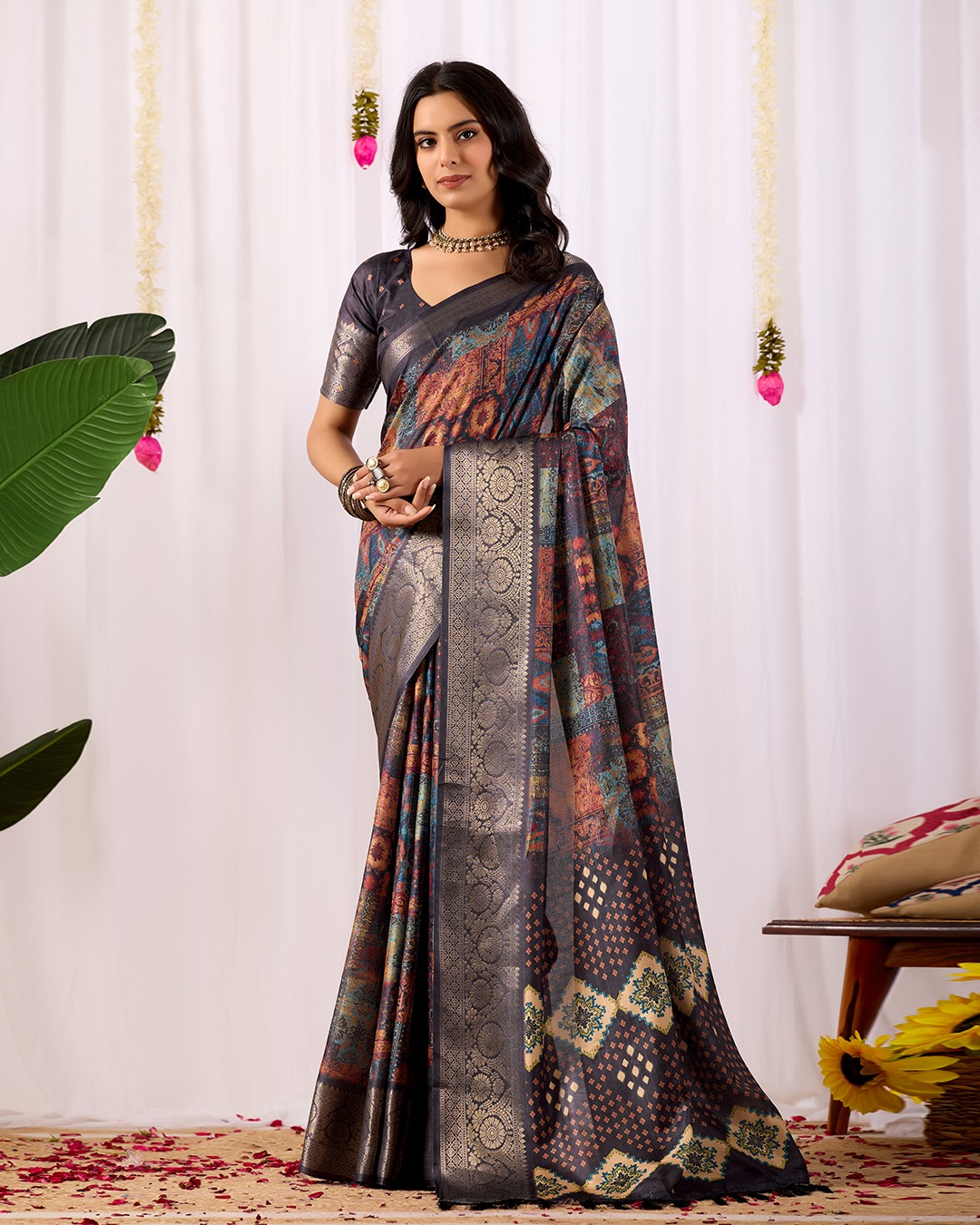
The Black Printed Lichi Silk Saree with Ethnic Digital Design illustrates how a dark base can make printed details more legible. For a contemporary look, pair the saree with a plain black or rust blouse, compact silver earrings and a low bun. Keep the accessories restrained when the print contains several competing shapes.
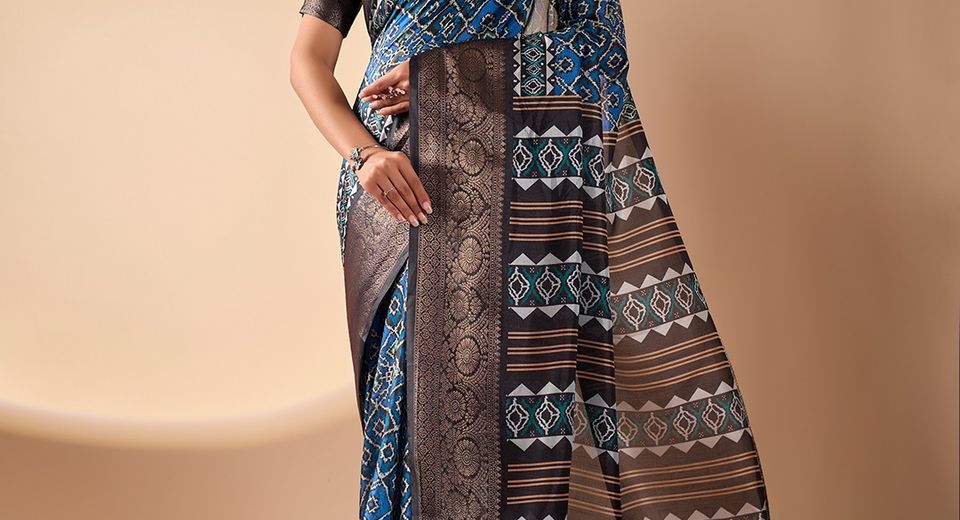
A different balance appears in the Blue Geometric Lichi Silk Saree with Digital Print and Copper Zari Border. Blue gives the outfit a cooler foundation, while copper zari adds warmth without the high contrast of bright gold. A copper-toned blouse, bronze bangles and neutral footwear can connect the border to the rest of the look.
Modern design should also consider scale. Large motifs work best when the rest of the outfit has visual breathing room. Small repeated motifs can support a busier blouse or layered jewellery. A practical rule is to choose one dominant patterned surface and let the other garments frame it.
Traditional Mizo Patterns & Modern Ethnic Fashion Ideas Through Colour
Deep red, black, white, indigo, teal, green, yellow and earthy neutrals work well for a Mizo-inspired saree wardrobe because they create the contrast and clarity associated with many Northeast Indian textile palettes.
Red and black offer the strongest traditional-looking contrast, but they need proportion. A red blouse with a black patterned saree can look formal and dramatic, whereas a black blouse with a red border feels more restrained. White or ivory can separate the two colours and prevent the outfit from appearing visually heavy.
Blue and teal provide a quieter modern route. The Teal Printed Moss Georgette Saree With Zari Border can be styled with an ivory blouse when the aim is to soften the overall palette. For an evening function, a deep teal blouse and antique-finish earrings can make the border feel more integrated without adding another bright colour.
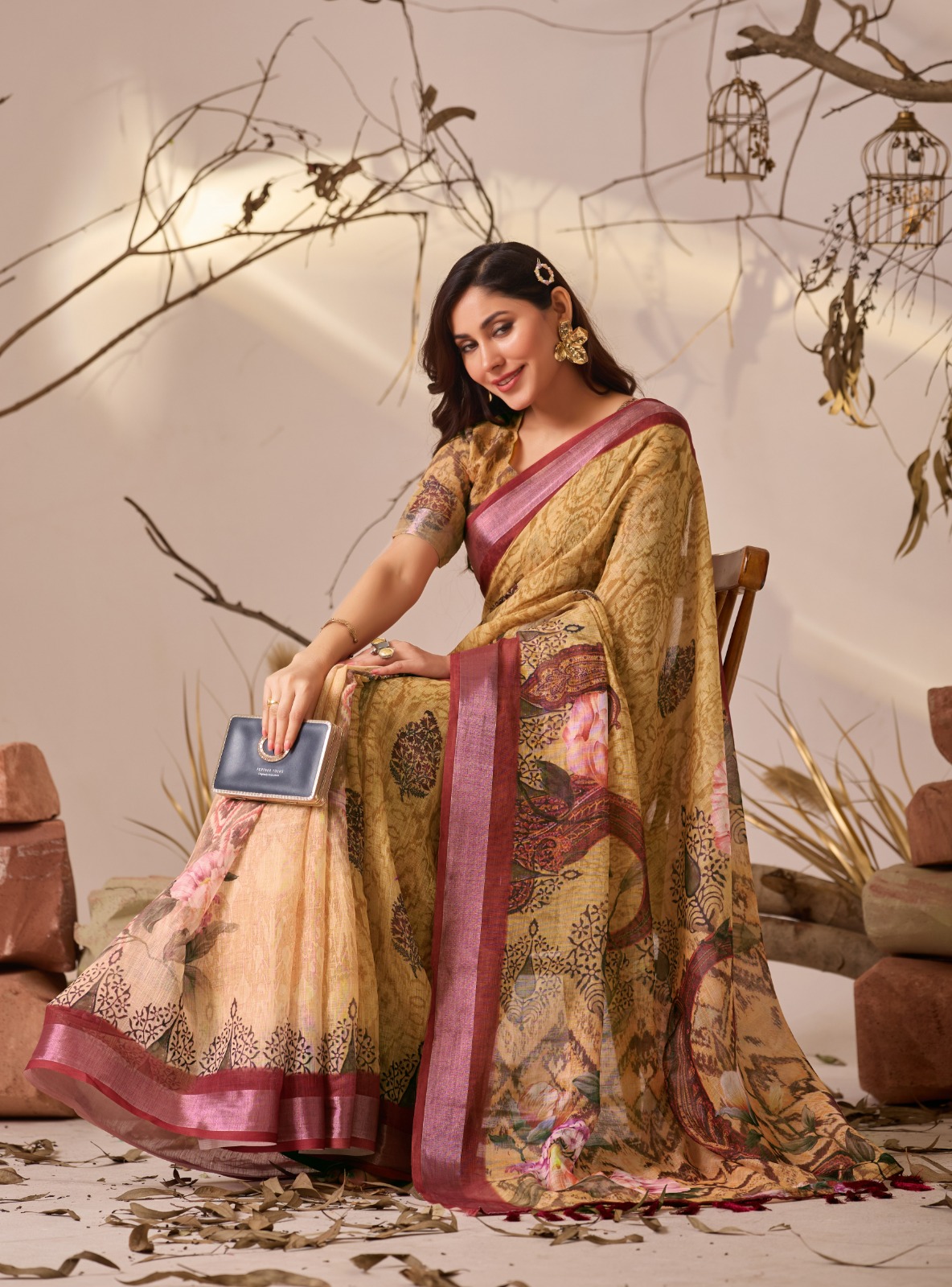
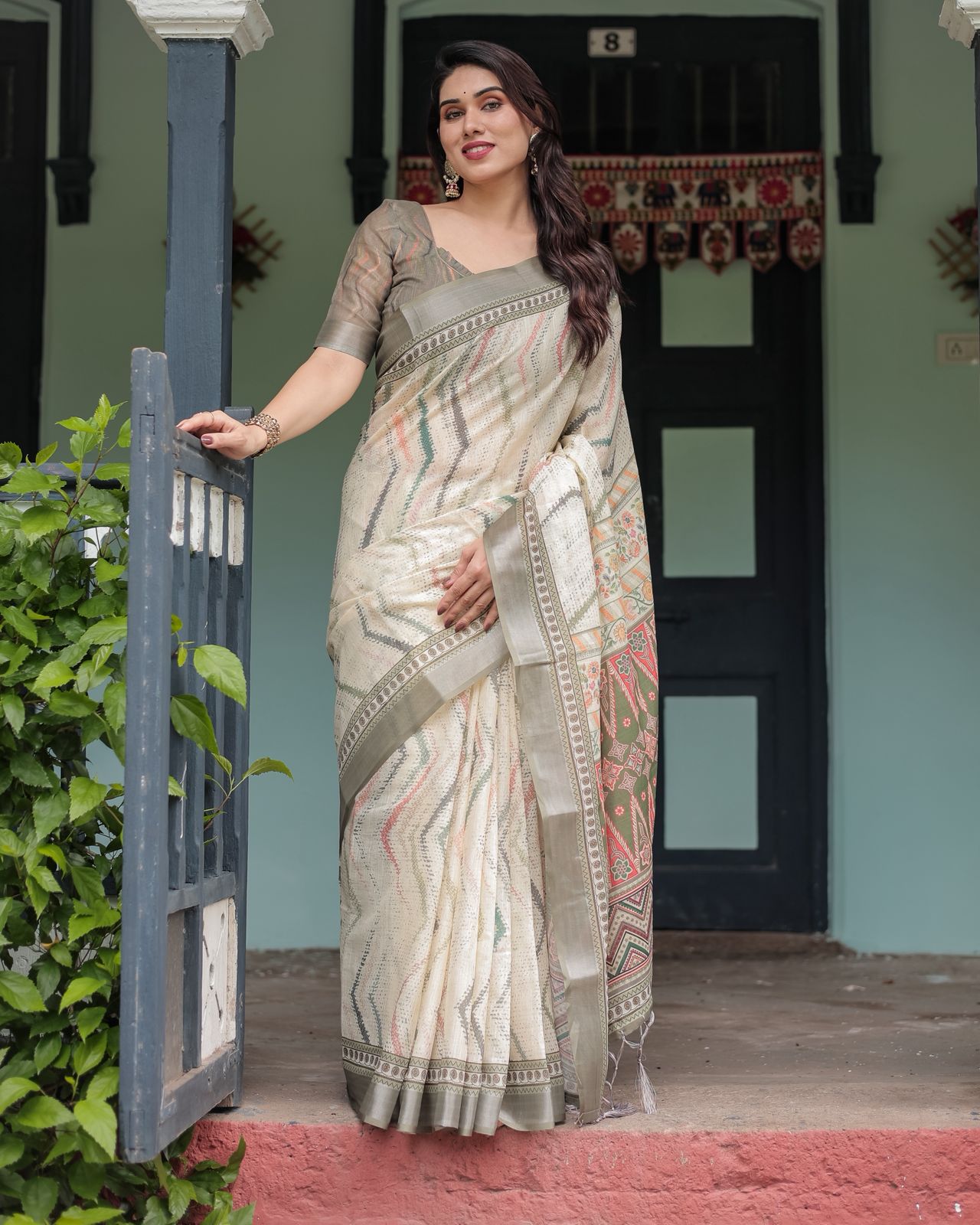
Green and beige are useful for daytime events because they combine a natural impression with enough contrast for photographs. The Elegant Pastel Green & Beige Linen Saree with Tribal Design suits a pared-back styling approach: a beige blouse, wooden or matte-metal accessories and a structured potli can keep the design grounded.
Colour balance can be measured by the 60-30-10 principle. Use one dominant colour across roughly 60 percent of the outfit, a secondary shade across 30 percent, and a strong accent across the remaining 10 percent. The ratio isn't a rule of Mizo dress, but it's a useful modern styling tool for preventing a multi-coloured look from becoming disconnected.
Traditional Mizo Patterns & Modern Ethnic Fashion Ideas and Cultural Respect
Geometric and tribal-style prints should be styled respectfully by identifying their actual source, avoiding unsupported cultural labels and treating community-linked motifs as more than decorative graphics.
The word "tribal" is often used broadly in fashion, even though India contains many distinct communities with separate histories, techniques and visual vocabularies. A generic geometric print should not automatically be called Mizo. Product descriptions should be checked, and a design should be described as Mizo-inspired only when its provenance or design reference supports that statement.
Respectful styling also means avoiding costume-like combinations. Wearing several conspicuously ethnic elements at once can flatten different traditions into one visual category. A better outfit might combine a patterned saree with a contemporary blouse, simple sandals and one carefully chosen textile accessory.
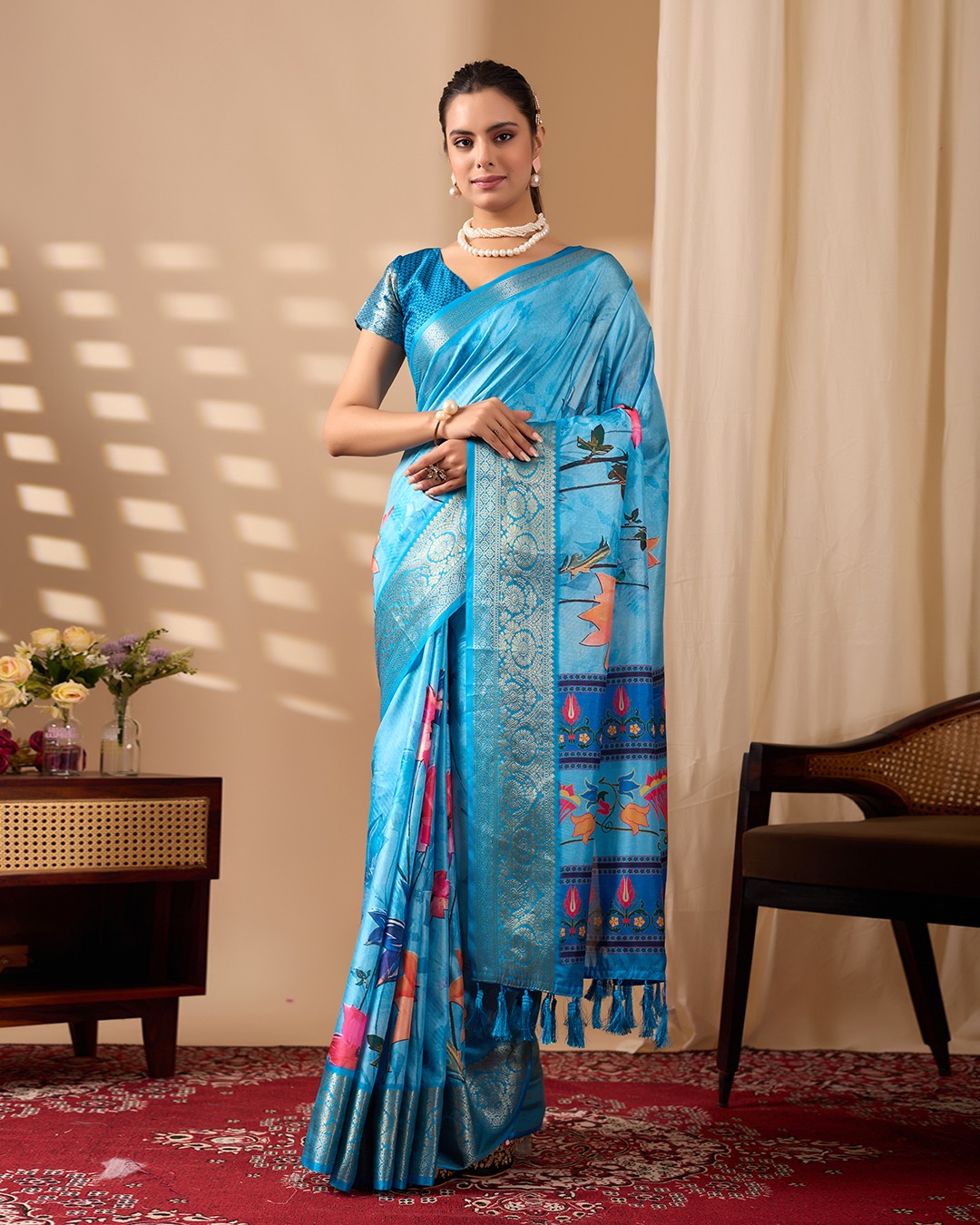
The Blue Ethnic Saree with Floral Design and Zari Border demonstrates an useful styling principle, although floral imagery isn't the same as a geometric Mizo pattern. Its defined border can carry the ethnic detail while the rest of the outfit remains calm. A solid cobalt, ivory or muted red blouse can make the saree feel intentional rather than overloaded.
Respect extends to language. If a garment uses a digital print inspired by Northeast Indian textiles, describe the visible features accurately instead of claiming that the saree reproduces a traditional puan. Clear wording helps readers appreciate the design without confusing a commercial adaptation with an original handwoven community textile.
Traditional Mizo Patterns & Modern Ethnic Fashion Ideas for Saree Draping
A neat Nivi drape, a slim pleat arrangement and a blouse with controlled detail suit Mizo-inspired patterns because they keep borders and repeated bands visible.
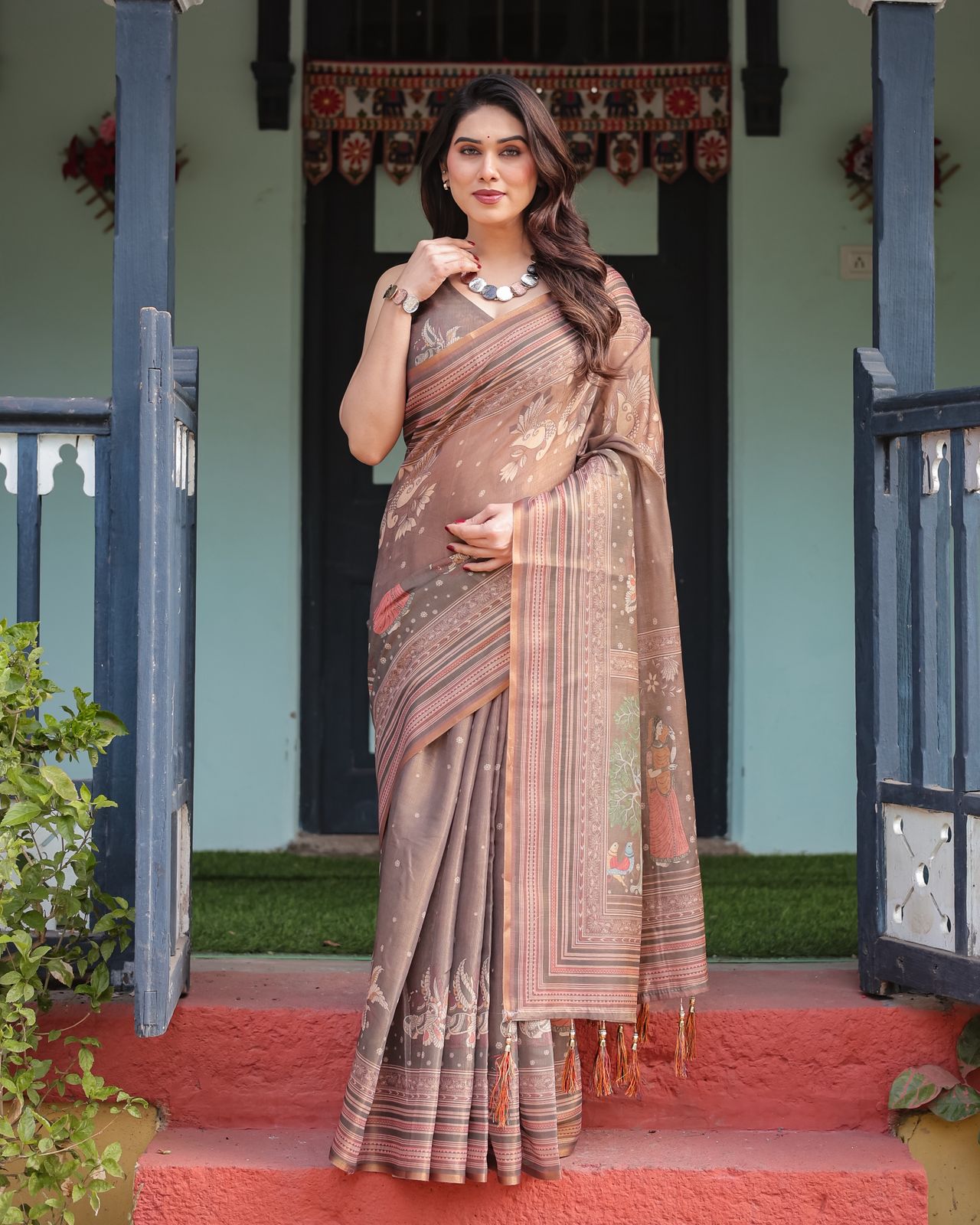
For a saree with an important lower border, make five to seven front pleats of similar width and place the pallu so that the border remains readable. Excessively loose pleats can break the visual rhythm of a geometric print. A standard Nivi drape also works well for office celebrations because it's secure, familiar and easy to adjust.
A contrast blouse can echo one minor colour from the print. For example, a copper border may be matched with a muted bronze blouse, while a red-and-blue pattern can be paired with a deep red blouse rather than a third unrelated shade. Elbow-length sleeves, a square neckline and a clean back panel provide structure when the saree already contains strong pattern.
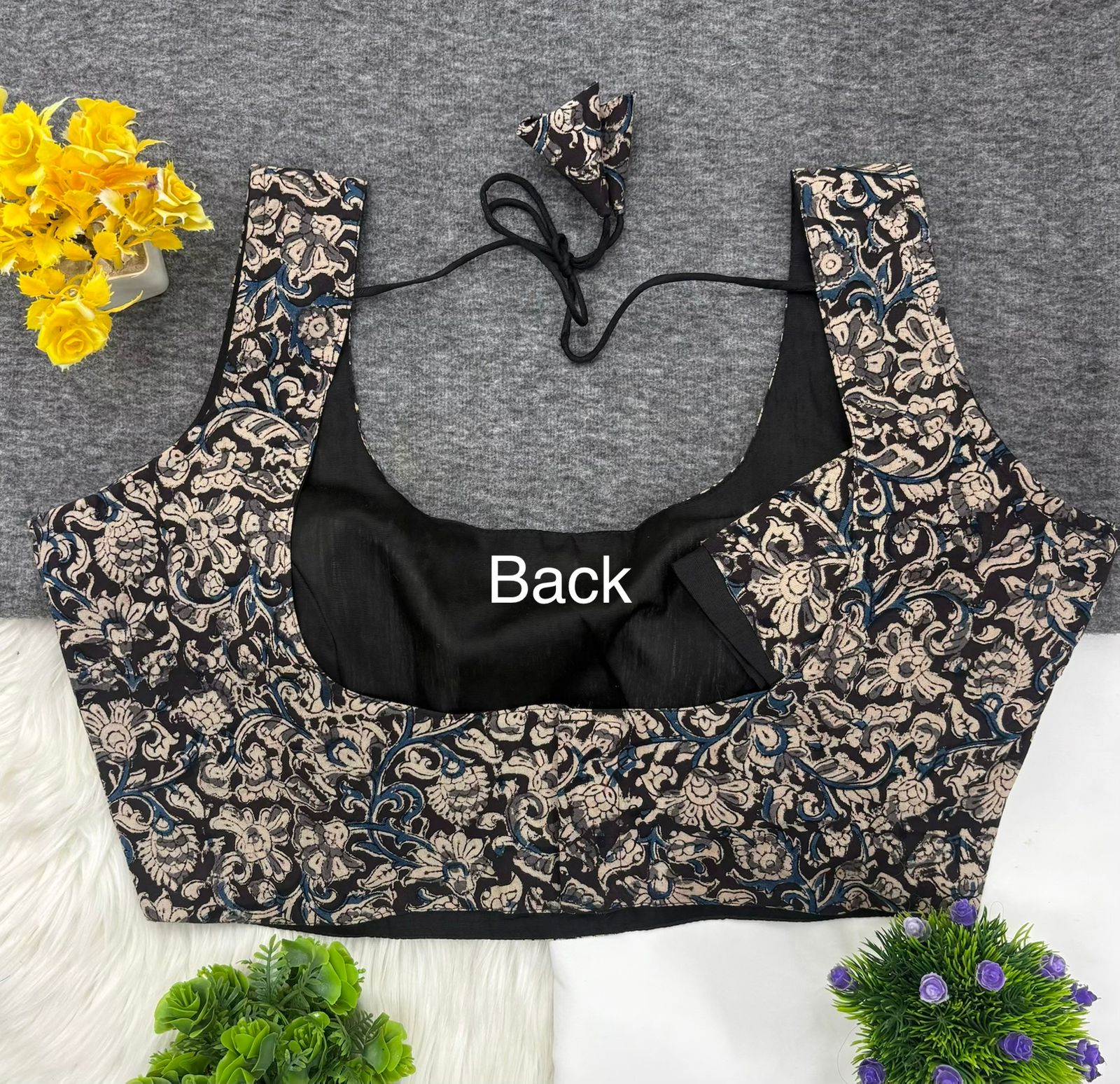
The Maroon Mal Cotton Ethnic Saree With Blouse from VARNAVI offers a practical cotton direction. Cotton allows the wearer to emphasise texture and drape rather than relying only on shine. For a daytime cultural programme, add a woven-looking belt or a small pair of silver studs; for a more formal setting, use a sharper blouse fit and a zari or metal cuff.
The Colorful Ethnic Chinon Saree for Women calls for a different treatment because a fluid, colourful fabric already creates movement. Avoid a heavily embroidered blouse with such a saree. A single-colour blouse, defined pleats and minimal layered jewellery will make the colours appear deliberate.
Traditional Mizo Patterns & Modern Ethnic Fashion Ideas with Accessories
Accessories support a Mizo-inspired ethnic look when they reinforce texture or one accent colour without competing with the textile pattern.
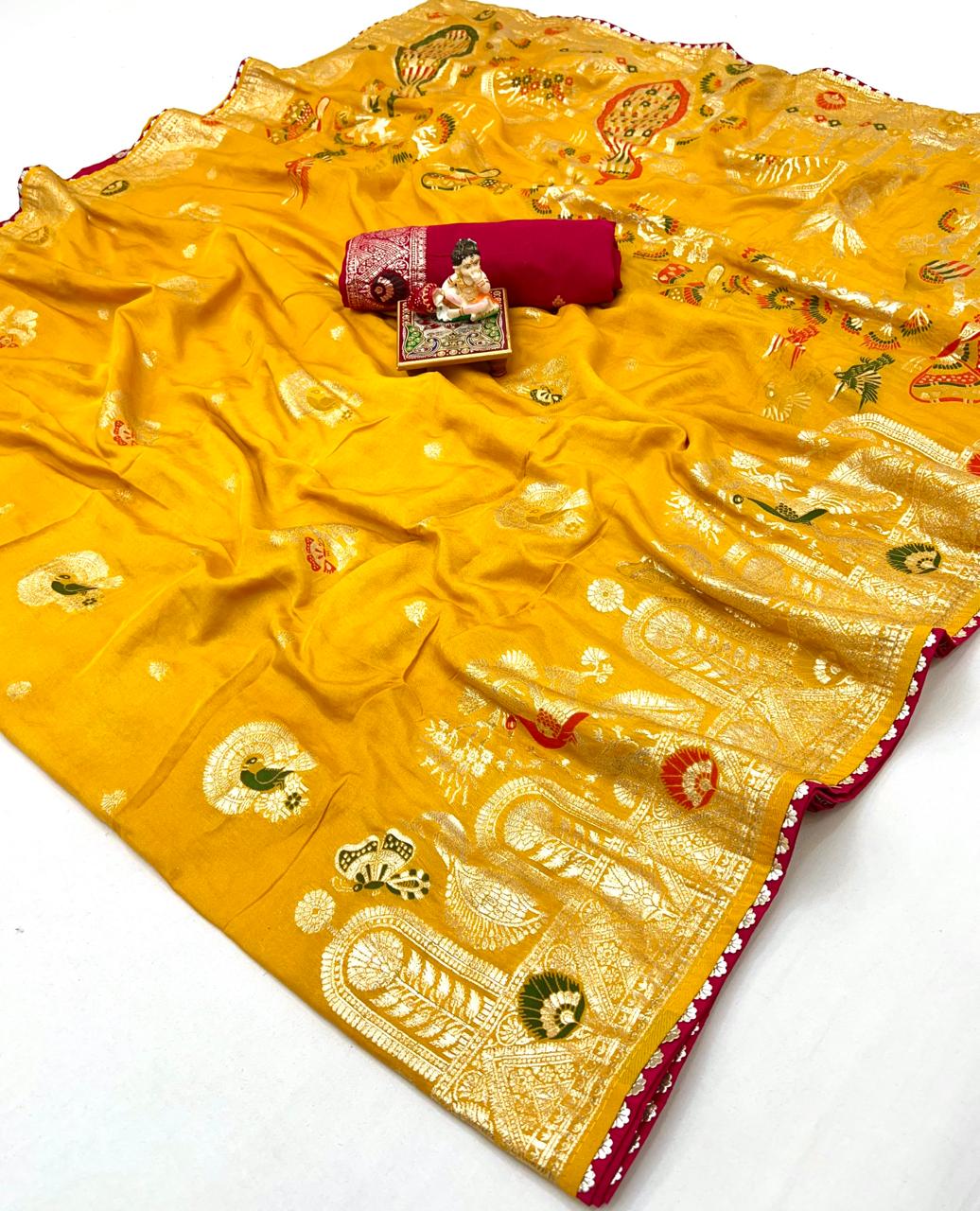
Silver jewellery is a dependable choice for black, red, blue and teal palettes. Oxidised silver jhumkas, a narrow cuff or a short necklace can echo the graphic quality of stripes and geometric forms. Antique gold or copper is more suitable when the saree contains warm zari, rust, maroon or beige.
Handcrafted accessories can add texture, but the material should be identified correctly. A cane bag, woven clutch or textile-covered potli may complement a handloom-inspired look, yet a commercially made accessory should not be presented as a traditional Mizo craft unless its origin is documented.
Hair and makeup should provide visual balance. A low bun, centre parting or simple braid keeps attention on the saree border. A terracotta, berry or brick lip can echo a warm accent in the textile, while a soft brown eye look is easier to wear during daytime functions than heavy metallic makeup.
Footwear should also support the outfit. Flat kolhapuri-style sandals, low block heels or plain juttis are suitable for cotton and linen sarees. A four to six centimetre block heel can help a fluid georgette or chinon saree fall cleanly without making movement difficult at a cultural event.
Traditional Mizo Patterns & Modern Ethnic Fashion Ideas for Different Occasions
Daytime gatherings favour breathable fabrics and controlled colour, while evening celebrations can accommodate richer silk, zari and stronger contrast within a Mizo-inspired styling direction.
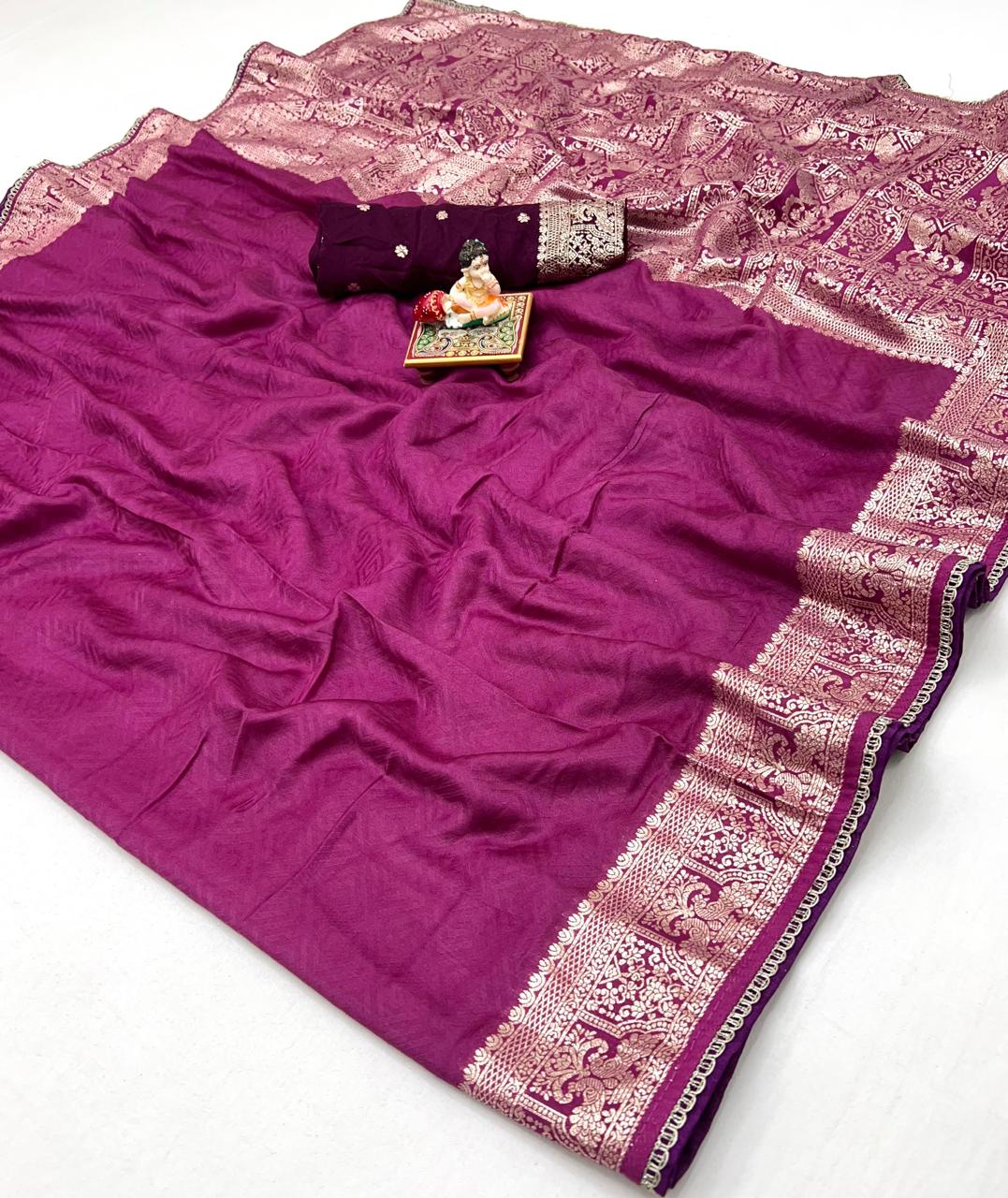
For a Haldi ceremony, choose cotton, linen or a light georgette saree in teal, yellow, green or red, and avoid trailing embellishments that can catch on seating or movement. A short-sleeved blouse and secure pallu pin make the outfit practical for an event involving turmeric, flowers and frequent photographs.
For a wedding reception, Banarasi silk, Kanjeevaram or a polished digital-print silk can provide the necessary formality, but the weave should be named accurately. A Mizo-inspired border can coexist with zari without pretending to be a traditional Mizo weave. Keep one major element dominant: either an ornate border, a heavily worked blouse or statement jewellery.
For a cultural programme, a restrained saree with a clearly described ethnic print can be more appropriate than an outfit assembled from unrelated regional symbols. A crisp blouse, a handloom-textured bag and minimal jewellery communicate interest in textile traditions without turning the wearer into a visual display of multiple cultures.
For work celebrations, the Blue Red Ikat Silk Saree Online with Zari | Varnavi can be balanced with a plain navy, red or ivory blouse. Ikat is a distinct resist-dyeing and weaving tradition, so it should not be labelled Mizo merely because its geometric appearance suits the same styling principles. Accurate textile language makes the outfit more informed.
For relaxed festive dressing, a printed saree can be paired with a contemporary crop-length blouse or a high-neck blouse, provided the silhouette remains comfortable and the print receives enough space. The aim is to carry forward colour rhythm and border logic, not to reproduce a community garment without understanding its context.
Traditional Mizo Patterns & Modern Ethnic Fashion Ideas: Care and Buying Checks
Choosing a Mizo-inspired ethnic garment requires checking the fabric, print method, border construction, colour fastness and cultural description before purchase.
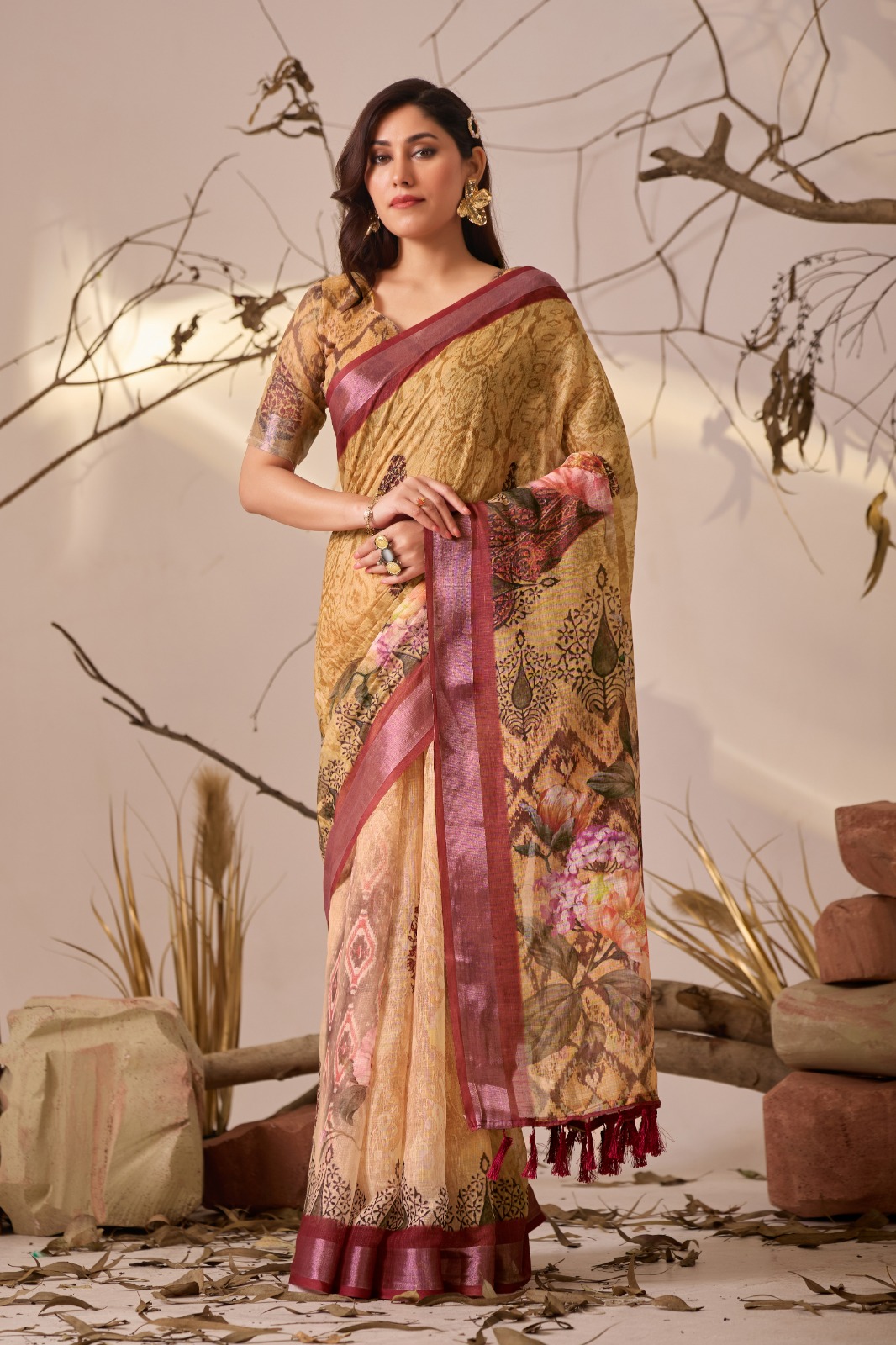
Fabric affects both appearance and care. Lichi silk and chinon generally need gentler handling than cotton, while linen can crease visibly and may benefit from careful steaming before wear. Moss georgette should be folded loosely rather than compressed under heavy garments, because sharp pressure can distort its fall.
Ask whether a pattern is handwoven, printed, embroidered or digitally applied. A digital print can reproduce crisp geometric detail at a lower cost and with greater repeat consistency than hand weaving, but it doesn't have the same construction or provenance as a woven puan. The distinction matters when comparing price, durability and cultural value.
Check the border from both sides before buying. A well-finished zari border should lie flat without excessive puckering. Repeated geometric motifs should align reasonably across the visible pallu and pleat area, although a printed design may still show minor variation from cutting and stitching.
Test colour fastness on an inconspicuous section with a white cotton cloth if the care label permits. Store silk and synthetic sarees in breathable cotton covers, refold them every few months to reduce permanent creases, and keep zari away from direct moisture and perfume. Dry-clean embellished or zari sarees when the care label recommends it.
Finally, read the product description critically. "Ethnic," "tribal" and "Northeast-inspired" are broad commercial terms, while Mizo, puan and community-specific references carry more precise cultural meaning. Informed buying respects both the garment and the people whose textile traditions inspire contemporary fashion.
Common Questions About Mizo-Inspired Saree Styling
What are the main features of traditional Mizo textile patterns?
Traditional Mizo textile patterns often use horizontal bands, repeated geometric shapes, strong colour contrast and carefully controlled pattern placement. Puan traditions vary among Mizo communities, so no single motif or colour combination represents every Mizo textile.
Can I wear a Mizo-inspired saree to a wedding?
Yes, a Mizo-inspired saree can suit a wedding when the pattern is styled with a well-fitted blouse, appropriate jewellery and a neat drape. Describe a commercial print accurately and avoid claiming that a digitally printed saree is an original handwoven puan.
Which colours work best with Mizo-inspired ethnic wear?
Black, red, white, indigo, teal, green, yellow and earthy neutrals work especially well because they create clear contrast. Use one dominant shade, one supporting shade and one small accent so a multi-coloured textile remains balanced.
How should I style a geometric saree border?
Keep the pleats even and pair the saree with a plain blouse that repeats one colour from the border. Choose either statement jewellery or a heavily detailed blouse, rather than using both with an already prominent geometric design.
Is every tribal print a Mizo pattern?
No, every tribal print is not a Mizo pattern. India has many distinct textile communities, and a generic geometric or ethnic print should only be identified as Mizo-inspired when its design reference or provenance supports that description.
How should I care for a silk or zari saree with an ethnic print?
Follow the care label and use professional dry cleaning when recommended for silk, zari or embellished sarees. Store the garment in a breathable cotton cover, refold it periodically, and keep perfume, moisture and direct sunlight away from the fabric.