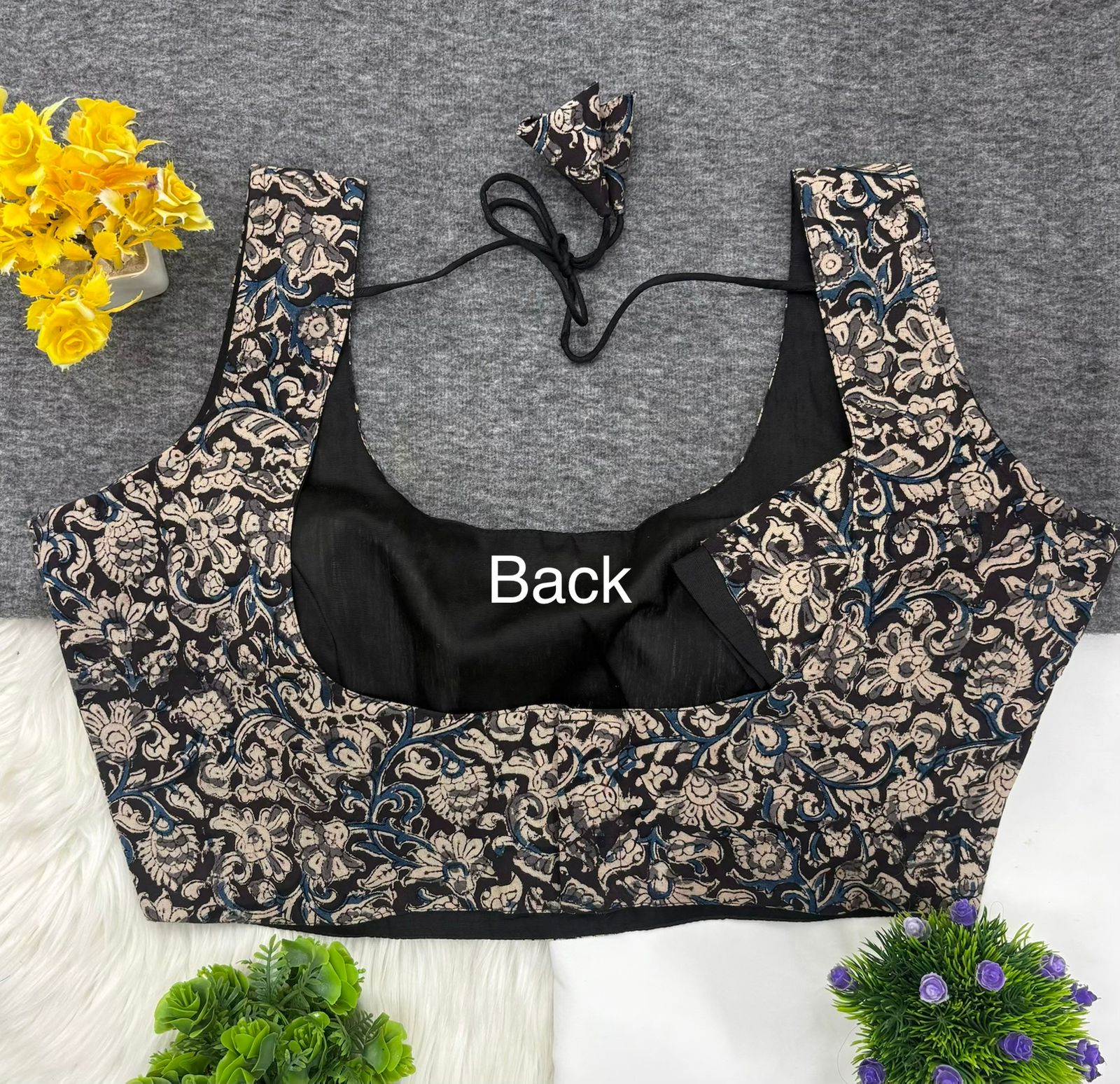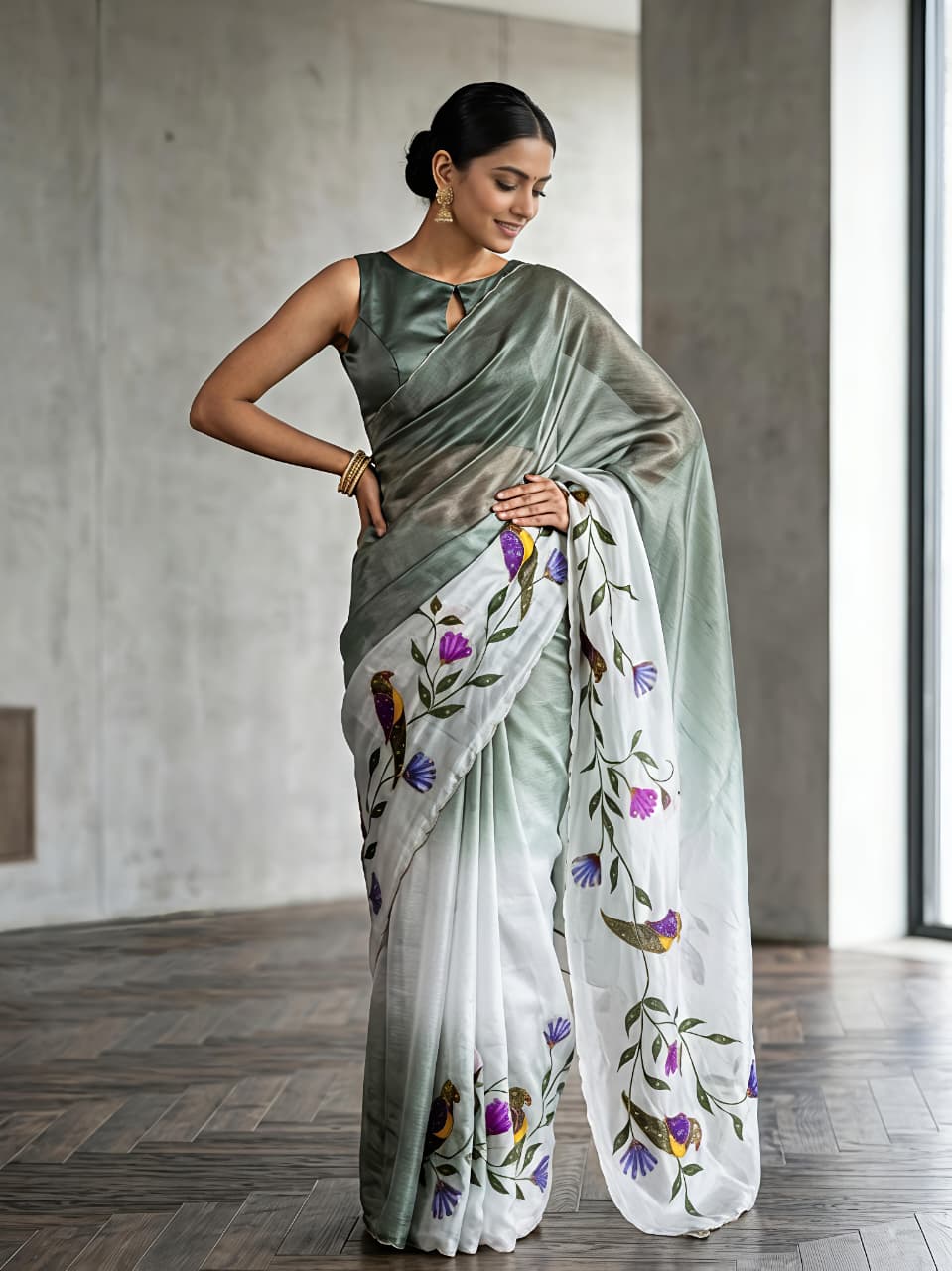
Traditional Manipuri Colours & Textile-Inspired Fashion offers a thoughtful way to bring Northeast Indian textile traditions into modern ethnic dressing. The visual language of Manipur comes from handwoven phanek skirts, elegant inaphi shawls, cotton and silk textures, geometric bands, floral references and colours that feel both ceremonial and grounded. Understanding those details helps you choose a saree, lehenga or dupatta with cultural sensitivity rather than treating Manipuri design as a surface pattern.
Manipuri clothing changes according to community, occasion and garment type, so no single outfit represents the entire state. Meitei women's phanek and inaphi are among the best-known forms, while Naga, Kuki, Hmar, Tangkhul and other communities have distinct woven structures and colour preferences. The most useful styling lesson is to appreciate the textile logic behind the clothing: proportion, border placement, restrained ornamentation and the relationship between colour and movement.
What defines Traditional Manipuri Colours & Textile-Inspired Fashion?
Traditional Manipuri Colours & Textile-Inspired Fashion is defined by handloom texture, balanced colour blocks, meaningful borders and silhouettes that allow the fabric to move naturally. The strongest references come from phanek, inaphi, sarong-like wraps, shawl drapes and woven bands rather than from heavy surface embellishment alone.
A traditional phanek is generally a wrapped lower garment, often woven with horizontal bands, checks, stripes or a carefully placed pattern. An inaphi is a light upper drape that can be worn over the shoulders or torso. Together, the garments create a long, fluid shape with a clear visual division between the lower wrap and the upper layer.
Manipuri handloom traditions also show how a narrow border can transform a simple ground. A purple, red, green or blue edge gives definition without covering the full textile in decoration. That principle translates easily to contemporary sarees: a plain body with a confident border often looks more authentic and versatile than an overcrowded print.
Which colours carry the strongest Manipuri textile influence?
Deep red, purple, black, white, green, blue and earthy beige form an useful starting palette for Manipuri-inspired dressing, although colour use varies across communities and textiles. These shades can appear as solid grounds, narrow stripes, contrasting borders or repeated geometric motifs.
Red and purple
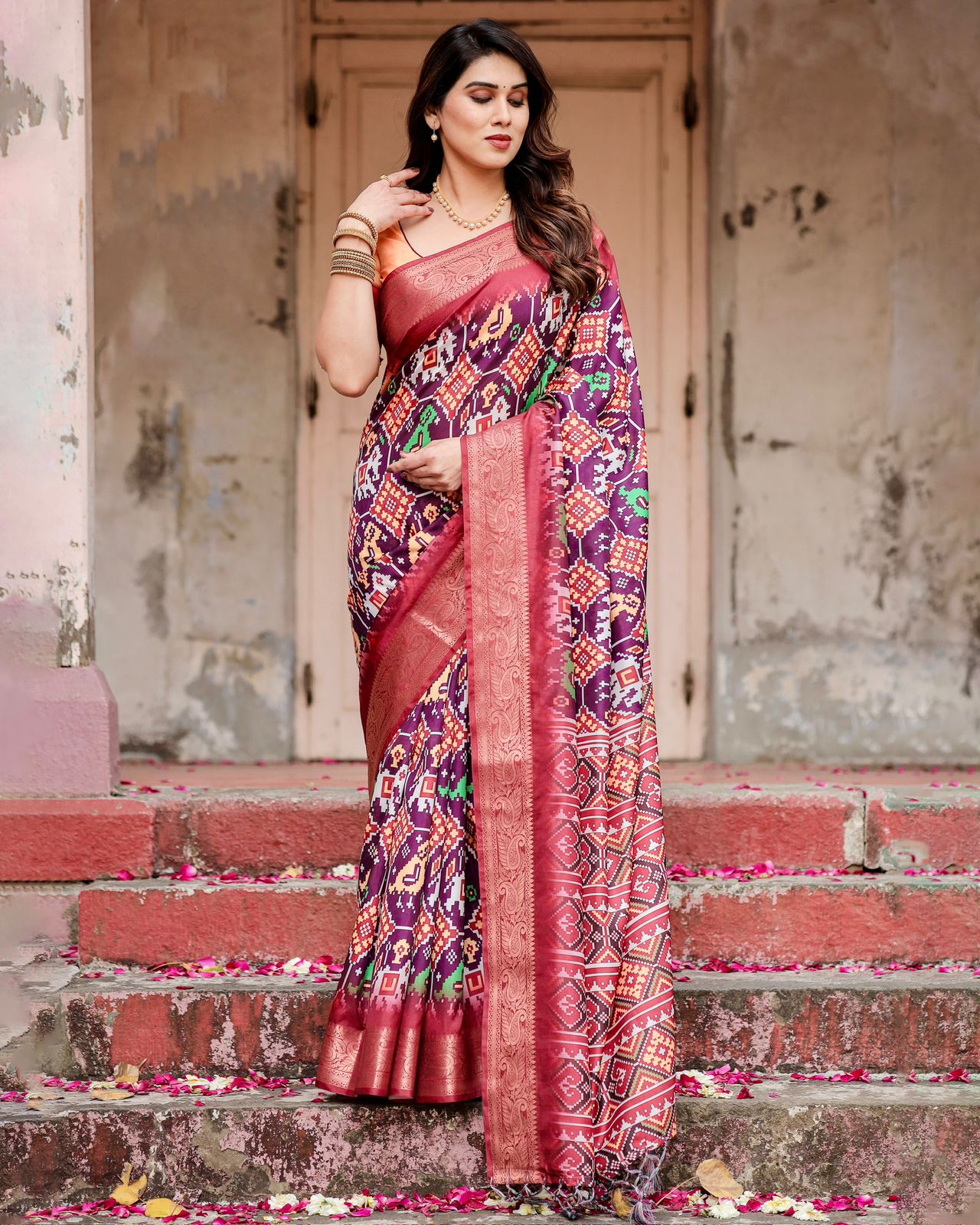
Red contributes warmth, ceremony and visual energy to a traditional palette. Purple adds depth and can make a woven border appear especially rich against beige, ivory or muted gold. A red and purple combination works well for evening celebrations when the fabric remains matte or lightly textured rather than overly glossy.
Blue and green
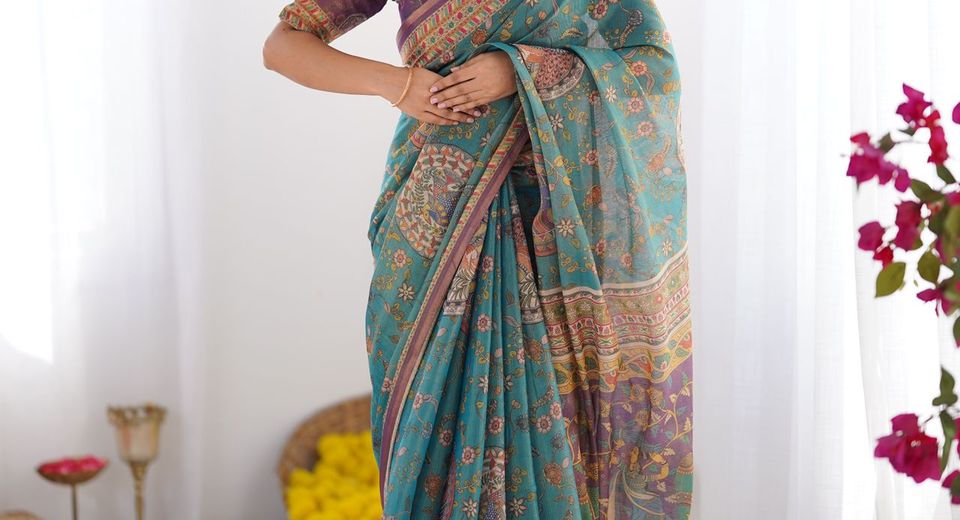
Blue and green bring a quieter connection to water, vegetation and the landscape of the Northeast. Teal, indigo and deep leaf green are particularly practical for day ceremonies because they provide colour without looking excessively bright. A teal body with a purple border, such as the Teal Blue Handloom Cotton Saree with Purple Border & Heritage Pallu, demonstrates how two saturated colours can remain balanced when the border is controlled.
White, beige and black
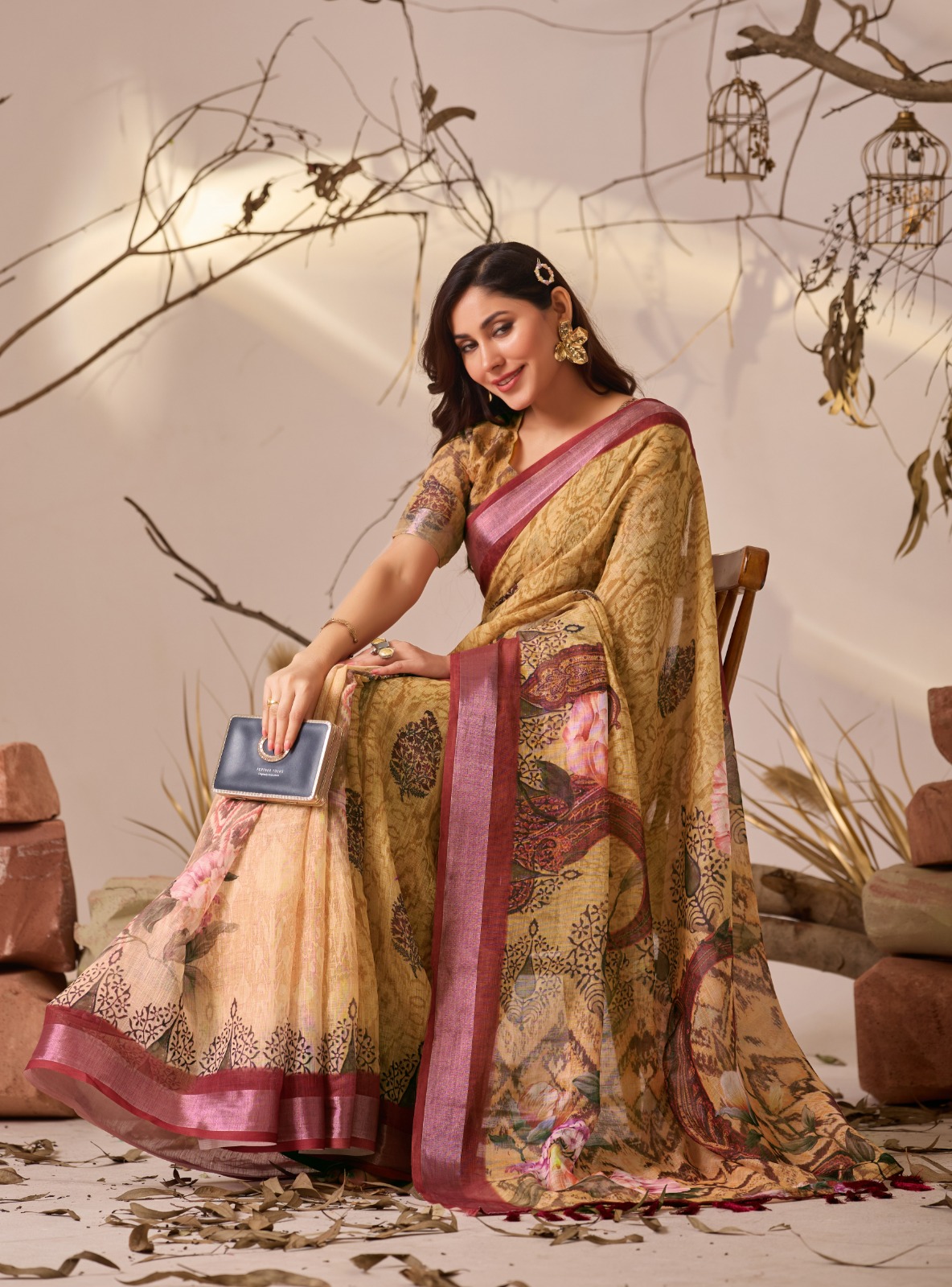
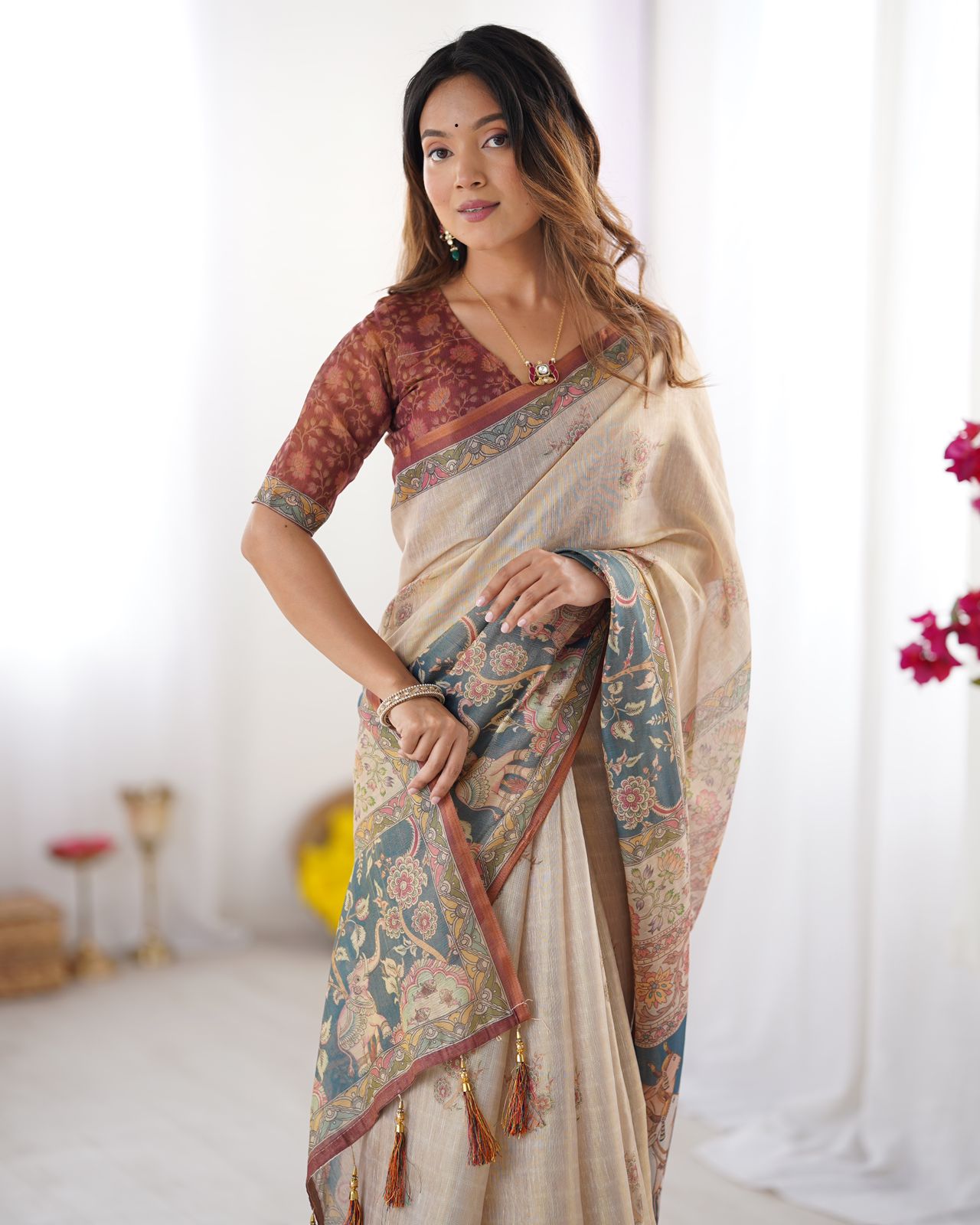
White and beige create breathing room around stronger tones, while black supplies contrast and definition. Neutral grounds are valuable when you want the border, pallu or jewellery to carry the cultural reference. The Traditional Beige Multicolor Printed Saree uses a soft base to make several colours readable without making the entire outfit visually dense.
How do phanek and inaphi influence up-to-date silhouettes?
Phanek and inaphi influence contemporary silhouettes through layered proportions, wrap-like lines and a clear distinction between the base garment and the shoulder drape. A contemporary outfit doesn't need to copy a traditional garment to acknowledge its construction principles.
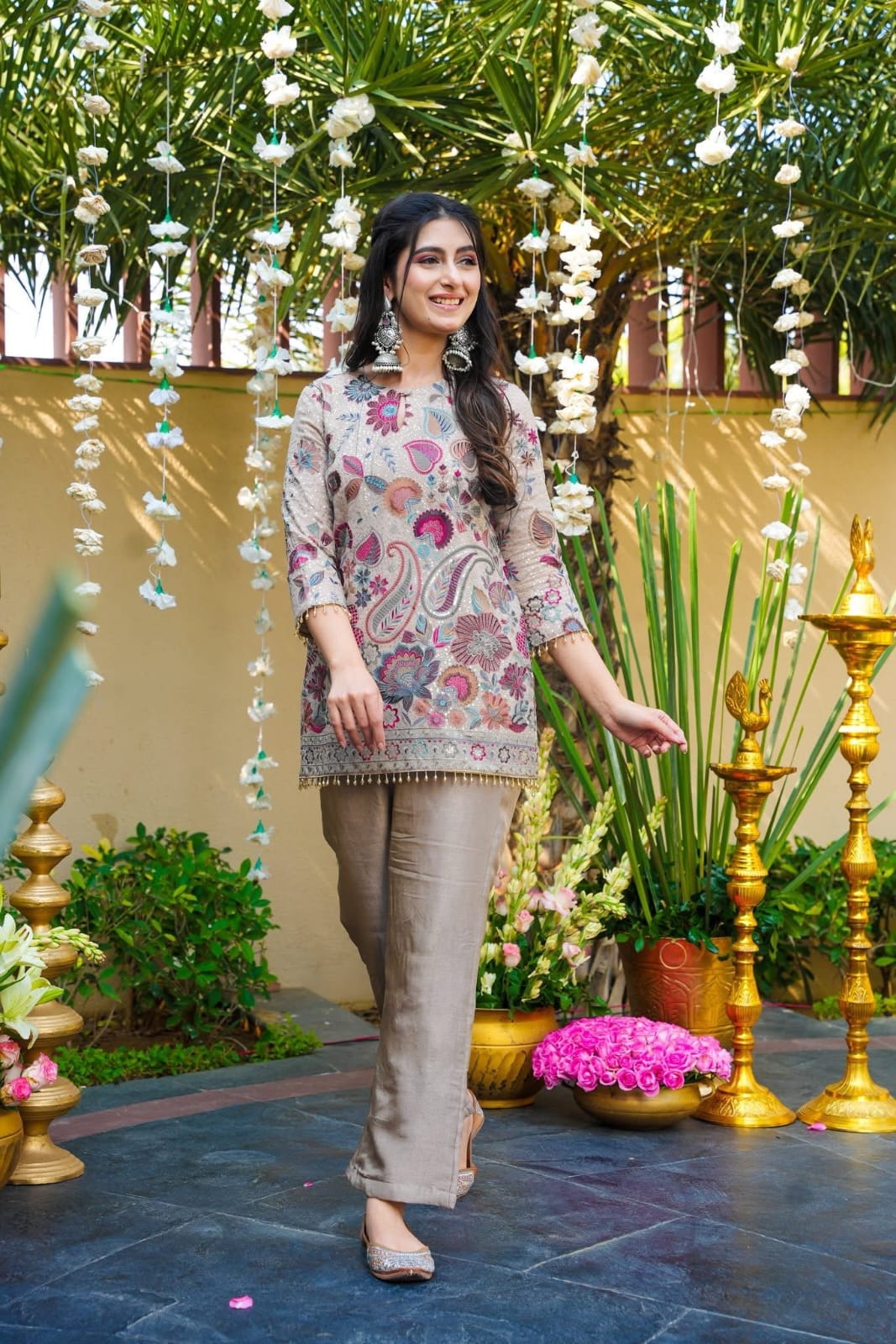
A saree can echo the phanek through a firm horizontal border, an uncomplicated body and a pallu that's arranged in clean, deliberate folds. A blouse with a slightly longer line can suggest the coverage of an upper wrap, especially when paired with a narrow waist belt or a restrained shawl. Avoid combining multiple heavy borders with a heavily embellished blouse, because the original visual strength of Manipuri dress often comes from proportion rather than accumulation.
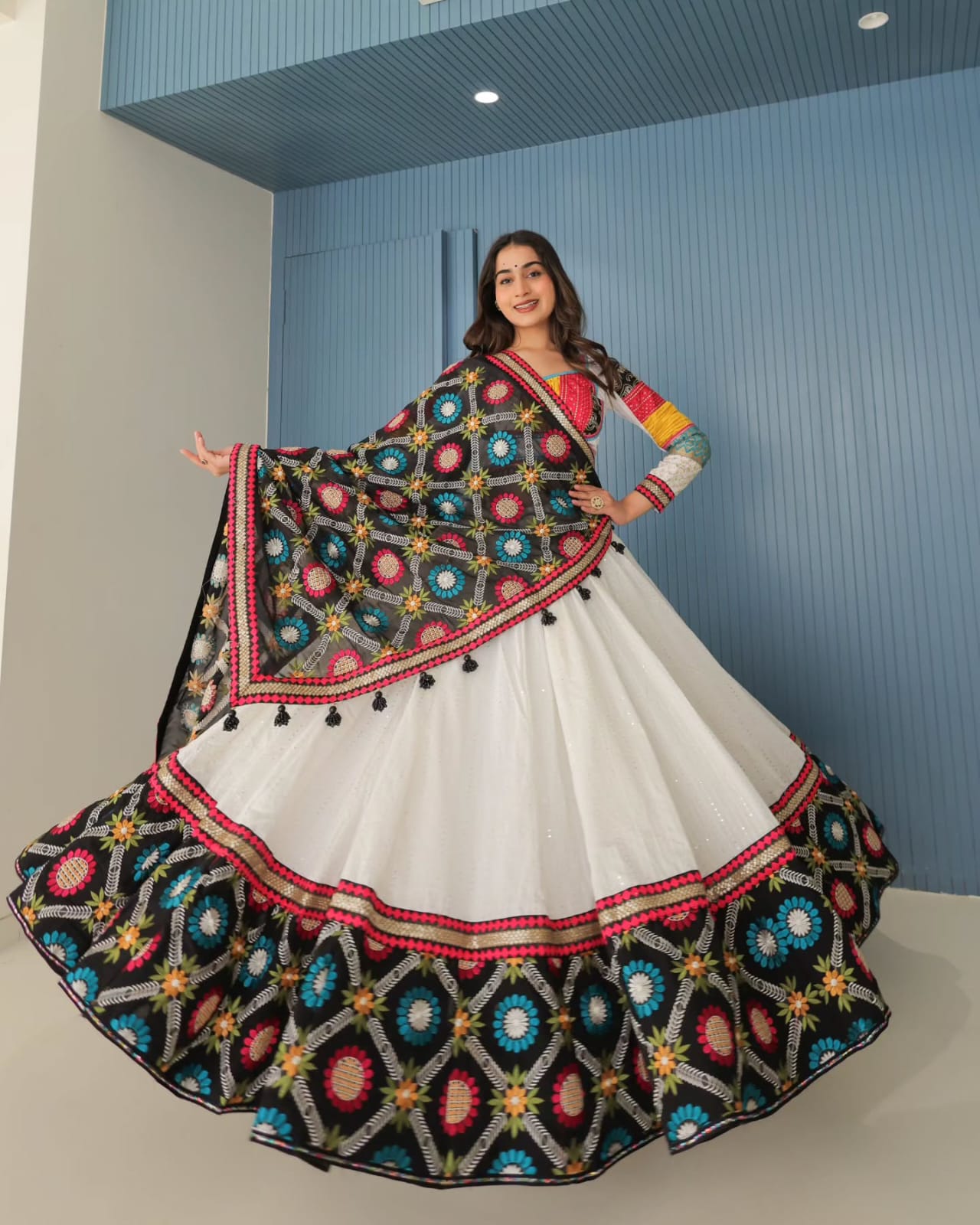
A lehenga can borrow from the same idea by pairing a solid or finely patterned skirt with a contrasting dupatta placed across one shoulder. The Designer Blue Muslin Cotton Lehenga Choli with Mirror Work can be styled with a simple drape and minimal jewellery so that the blue base and reflective details don't compete with one another.
For a less formal interpretation, a cotton saree with a structured pallu can be worn with a high-neck blouse, a three-quarter sleeve or a plain sleeveless blouse layered under a light shawl. The aim isn't costume imitation; the aim is to preserve the visual relationship between wrap, border and upper layer.
Which textiles work best for Manipuri-inspired festive dressing?
Handloom cotton, linen cotton, muslin cotton, silk and tussar silk work especially well because each fabric allows colour and weave structure to remain visible. Fabric choice should follow the event, climate and amount of movement required.
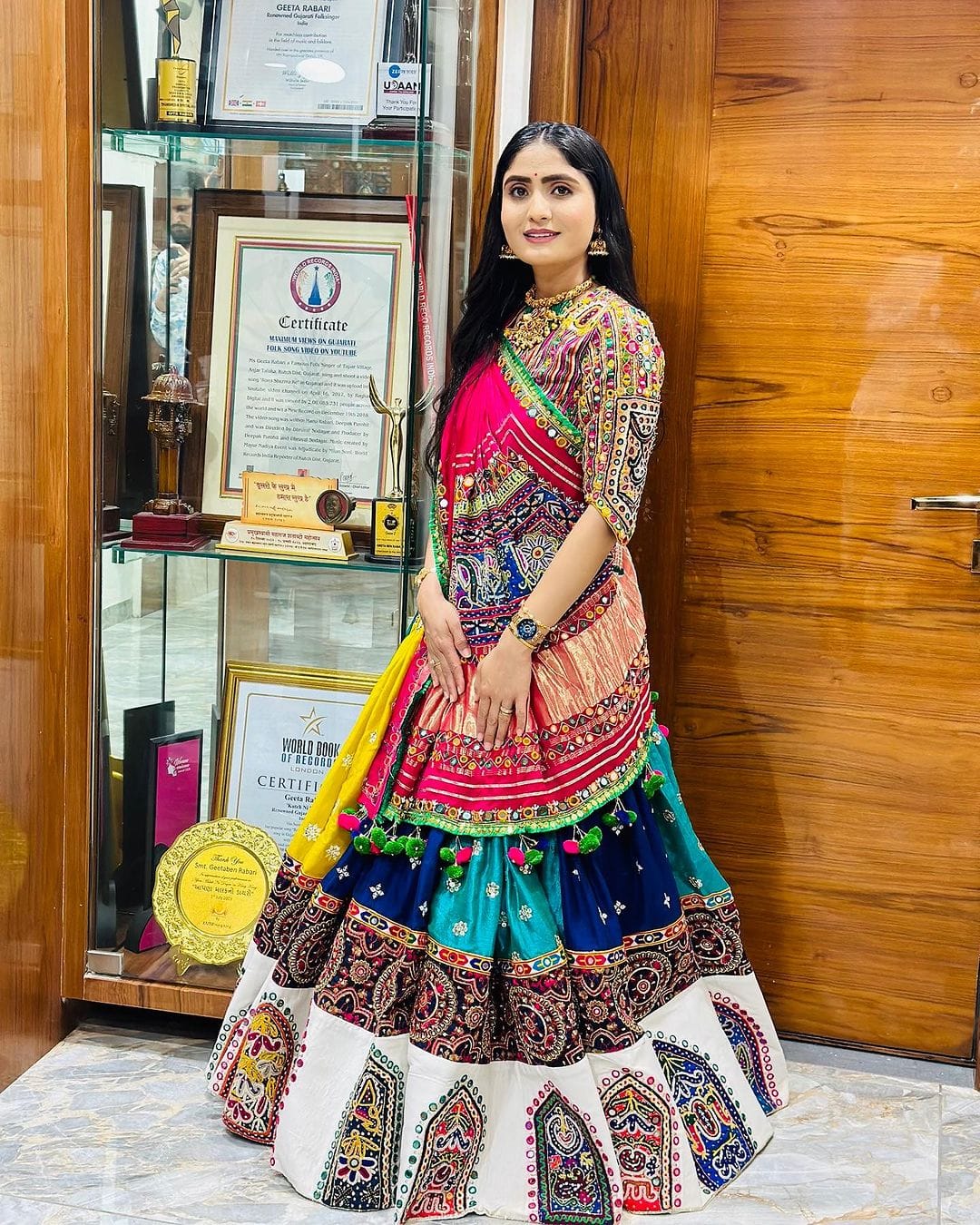
Cotton and linen cotton
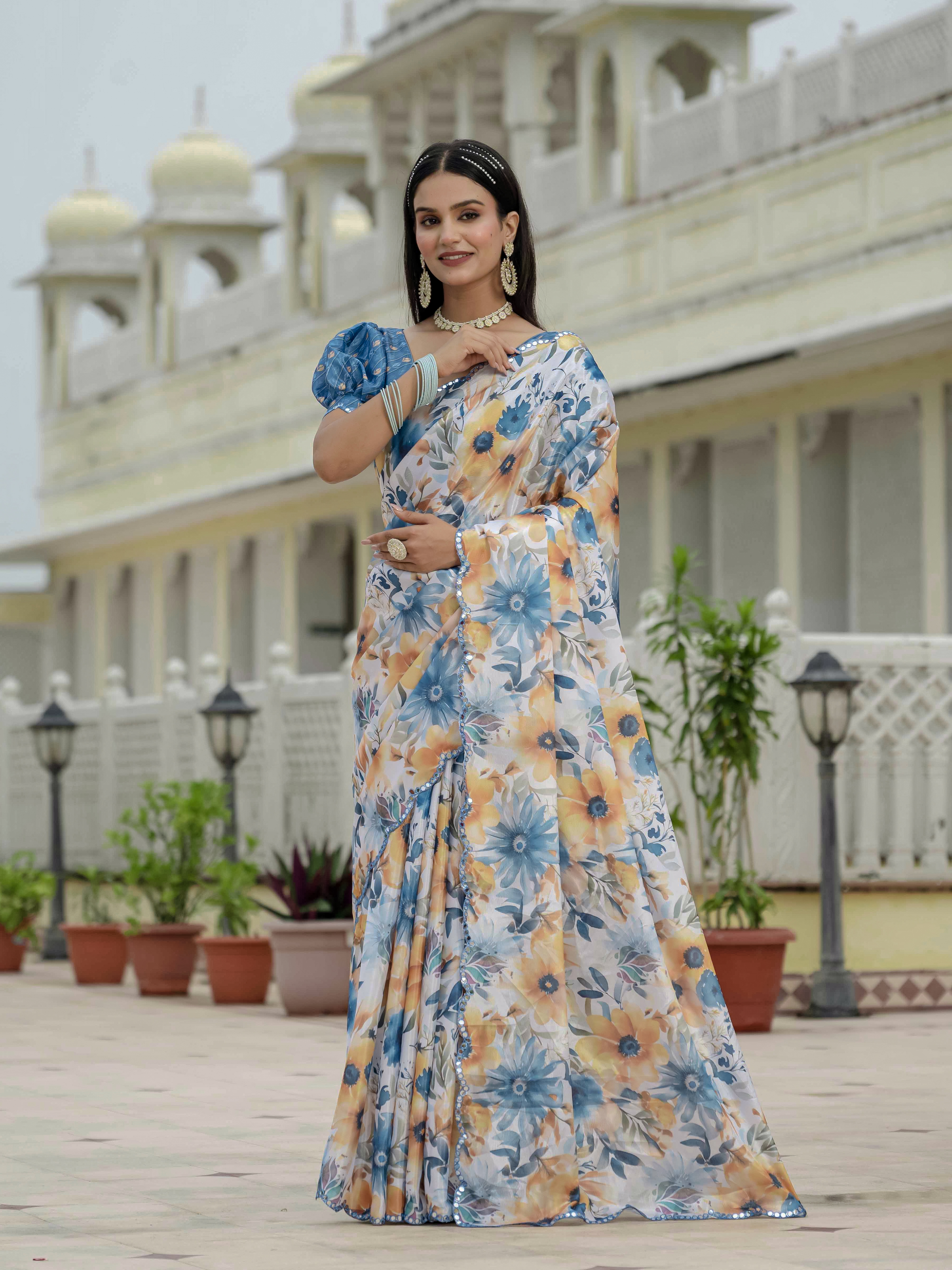
Cotton is suitable for daytime rituals, cultural gatherings and warm-weather celebrations because it absorbs moisture and holds a border neatly. Linen cotton adds a slightly crisp surface and a natural slub that makes a plain colour look dimensional. The Multicolour Floral Linen Cotton Saree with Blue Border Look shows how a floral body can remain composed when a blue border supplies the stronger graphic line.
Handloom cotton is also useful when you want the garment to feel connected to weaving rather than only to printed decoration. The Teal Blue Handloom Cotton Saree with Purple Border & Heritage Pallu is a practical example for a puja, cultural programme or daytime family function.
Muslin and silk
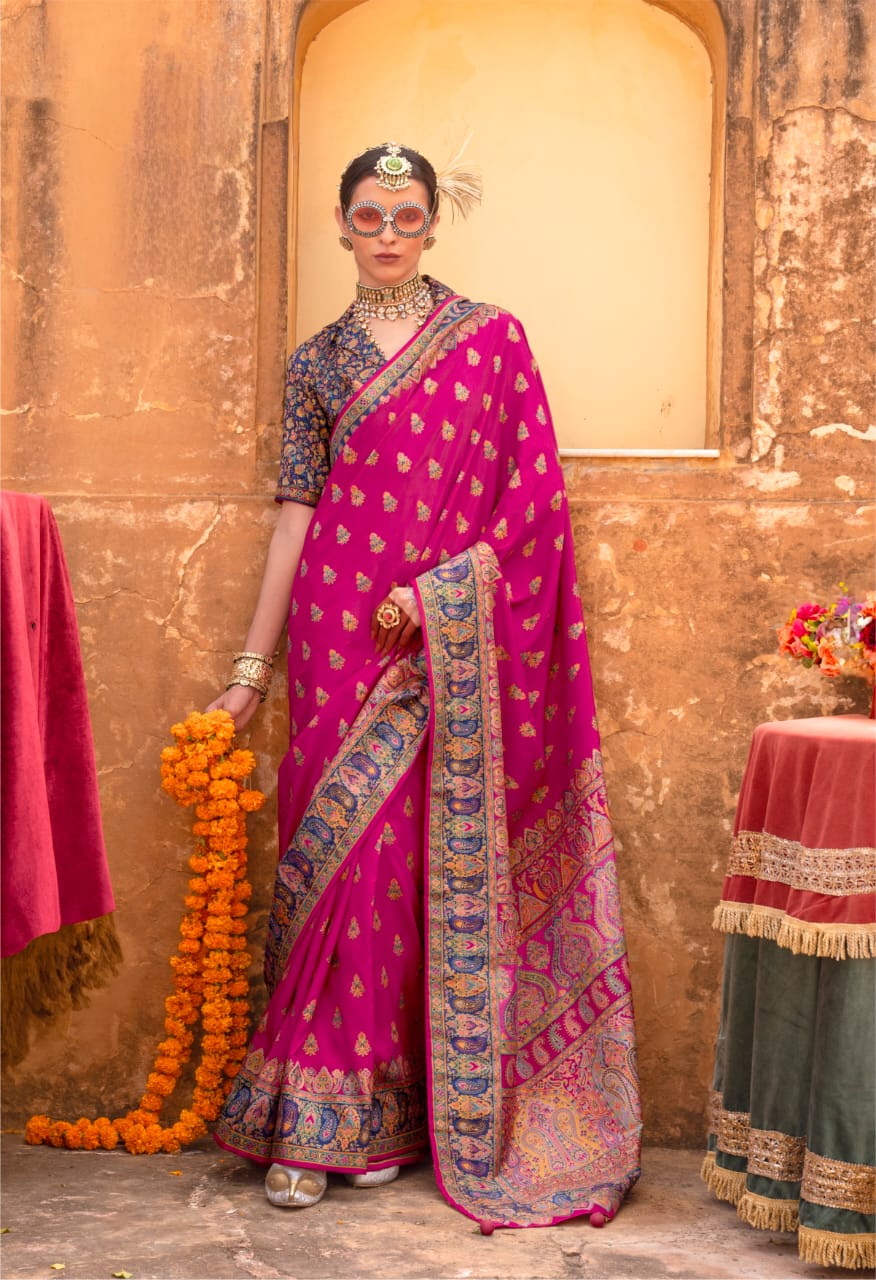
Muslin cotton creates a softer fall and suits layered styling, especially when the pallu needs to sit lightly over the shoulder. Silk brings greater sheen and ceremony, but silk should be selected with attention to motif scale and zari density. A Royal Purple Tussar Silk Saree with Traditional Ikat Print can support an evening look when paired with antique-finish jewellery and a blouse in a quieter shade.
Ikat deserves particular attention because its pattern is formed through resist-dyeing yarns before weaving, which gives the motif a characteristic feathered edge. Ikat isn't identical to a printed geometric design, and that slight irregularity is part of its appeal. A Blue Red Ikat Silk Saree with Zari can therefore provide a stronger textile story than a perfectly uniform digital print.
How can you style Manipuri-inspired colours without making an outfit look theatrical?
You can style Manipuri-inspired colours successfully by choosing one primary textile reference and keeping the remaining elements restrained. A border, an ikat motif, a woven shawl or a colour pairing can provide the reference without requiring every accessory to match it.
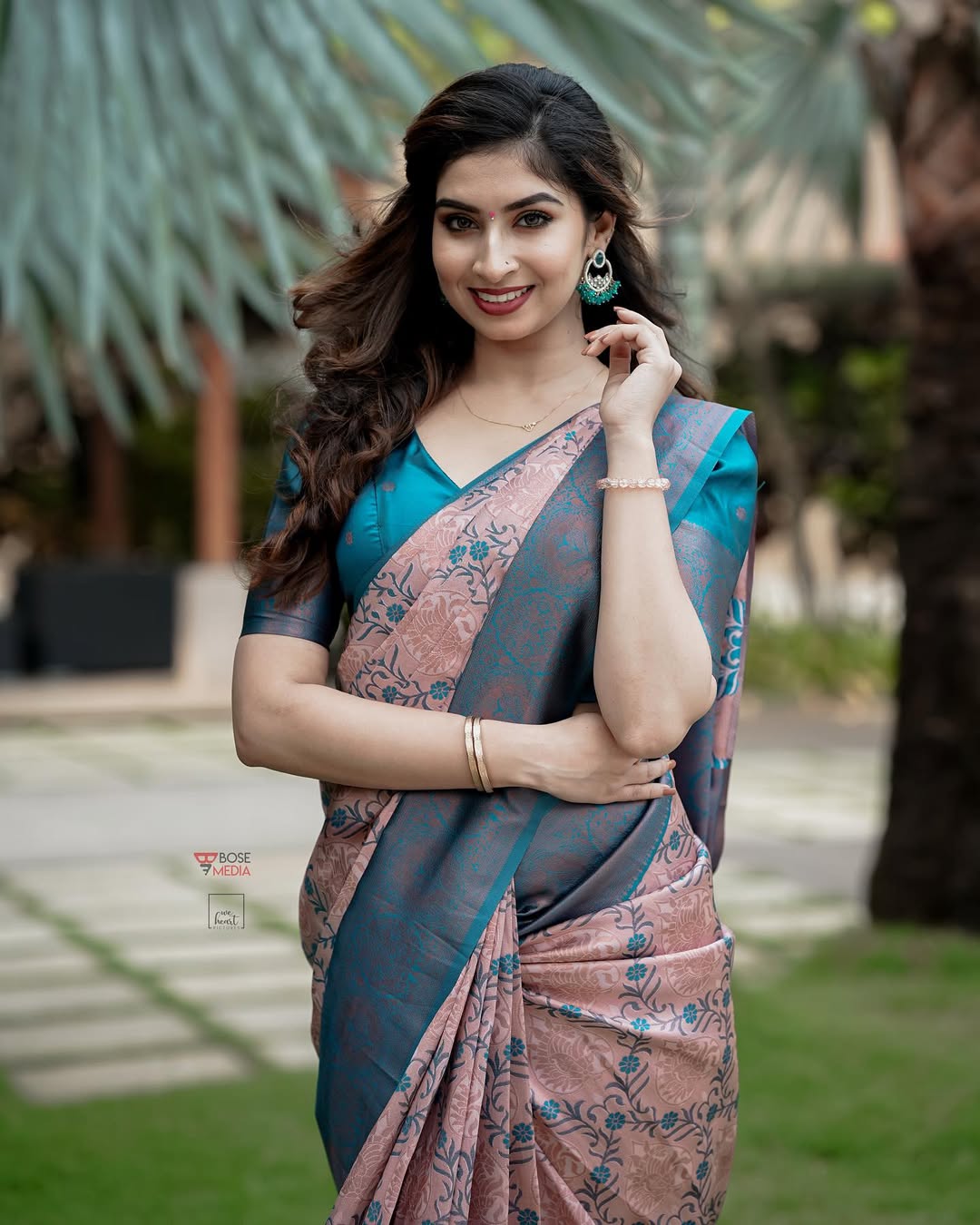
For a daytime Haldi ceremony, try a teal, blue, green or turmeric-yellow accent with cotton or linen cotton. Keep the blouse silhouette clean, choose small metal earrings and use a low bun or braid so the border remains visible. A multicolour saree works particularly well when the blouse repeats only one minor shade from the print rather than every colour at once.
For a wedding reception, purple, wine, deep red or indigo can be combined with antique gold rather than bright yellow gold. A silk saree with an ikat or woven motif needs very little additional pattern. A plain blouse, a compact potli and one broad bangle can look more considered than a necklace, layered bangles, waist belt and elaborate hair ornament worn together.
For a traditional cultural event, a shawl-like drape can provide the clearest reference. Place a light stole over one shoulder, allow the pallu to remain structured and avoid pinning every fold flat. Movement matters because many Northeast Indian garments are designed around wrapping, crossing and overlapping rather than rigid tailoring.
Jewellery should support the textile. Silver, oxidised metal, beads, wooden elements and matte gold can all work, depending on the fabric. Large mirror work, sequins and high-shine stones are best used selectively because reflective surfaces can overpower the quiet authority of handloom texture.
What cultural details should shoppers understand before choosing a look?
Shoppers should understand that Manipuri clothing isn't a single interchangeable "Northeast" style, and regional references should be named accurately wherever possible. Manipur contains many communities with separate dress traditions, weaving practices and ceremonial meanings.
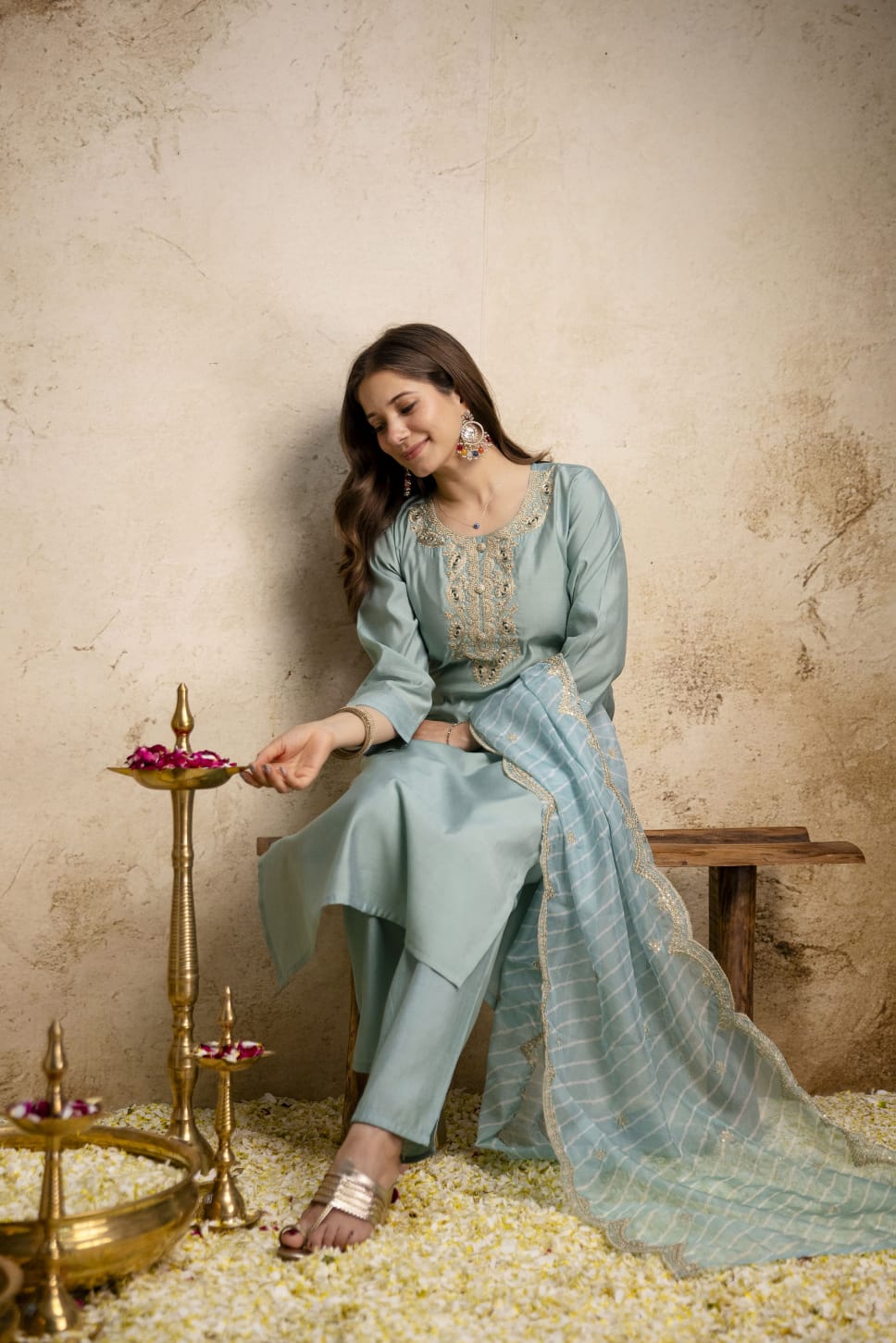
Calling a garment Manipuri because it has bright stripes isn't enough. Ask whether the visual reference comes from phanek, inaphi, Meitei handloom, an ikat technique or a broader Northeast Indian colour palette. Responsible fashion writing also avoids presenting a runway adaptation as an exact traditional garment when the design has been substantially altered.
Collections with wider regional themes can help place the reference in context. The Traditional Northeast Indian Dress Occasion Collection is useful when comparing textile influences across neighbouring states. The Sikkim Traditional Women's Dress Collection and Traditional Uttarakhand Dress for Women can also clarify that different mountain and Northeast regions use distinct silhouettes, layers and textile vocabularies.
Traditional Goa Dress for Women and Traditional Himachal Dress for Women are not Manipuri references, but they demonstrate why regional naming matters. A Himachali woollen layer, a Goan festive silhouette and a Manipuri phanek-inspired wrap should not be collapsed into one generic category of ethnic wear. Accurate language makes styling more respectful and helps readers make better buying decisions.
How should you care for handloom and textile-inspired garments?
Handloom and silk garments should be cared for according to fibre, dye and embellishment, with gentle washing and protected storage as the safest general approach. A care label should always take priority over a generic method.
Air cotton and linen cotton garments in shade after wearing, then fold them only when completely dry. Hand washing in cool water with a mild detergent is often safer than hot water, vigorous rubbing or prolonged soaking. Dark red, purple, indigo and teal dyes may release excess colour during early washes, so wash each garment separately until the water runs clear.
Silk and tussar silk should usually be dry-cleaned, particularly when zari, mirror work or a complex resist-dyed pattern is present. Store silk in breathable cotton or muslin rather than plastic, refold it every few months to prevent permanent crease lines and keep it away from direct sunlight. Zari can tarnish when exposed to moisture, perfume and chemical sprays.
Iron cotton on the reverse side using a moderate temperature and place a thin cloth between the iron and printed or embellished areas. Steam silk from a safe distance instead of pressing directly over zari. These small steps protect the colour contrast and surface irregularity that give textile-inspired clothing its character.
How can you build a flexible wardrobe from this colour story?
An adaptable wardrobe can be built from three textile weights, three accent colours and two dependable silhouettes. Cotton or linen cotton covers daytime wear, muslin handles soft layering and silk or tussar silk provides formal depth.
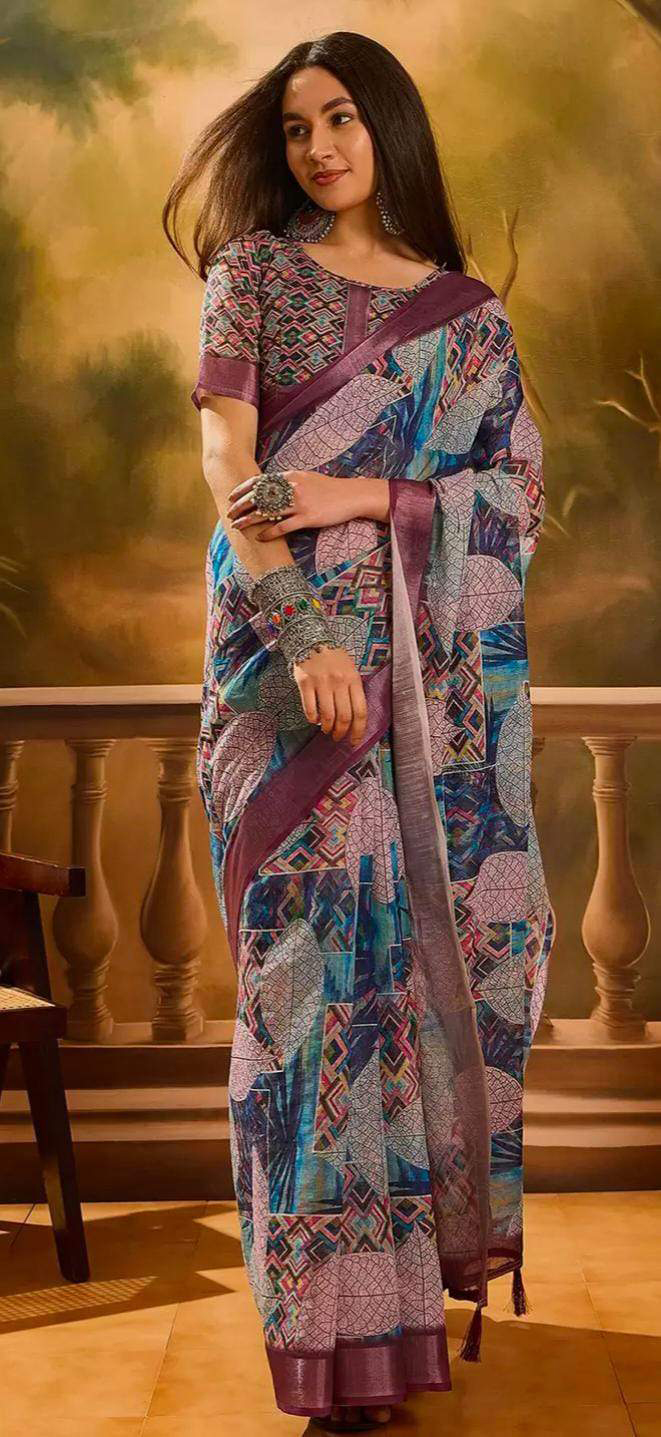
Choose one neutral base such as beige, ivory, charcoal or black; add one cool accent such as teal, indigo or green; then introduce one ceremonial shade such as red, purple or antique gold. This formula allows several combinations without making every garment look like a duplicate. A beige saree can take a purple blouse, a teal dupatta or a red woven belt on different occasions.
Keep at least one garment with a defined border, one with an ikat or geometric pattern and one with a quiet solid surface. The three pieces will cover a family puja, a Haldi ceremony, a cultural programme and an evening wedding with different blouse and accessory choices. Traditional Manipuri Colours & Textile-Inspired Fashion becomes most useful when the textile reference can be worn repeatedly rather than reserved for a single themed event.
The best final check is visual balance. Ask whether the border can be seen, whether the fabric can move, whether the colours have one clear hierarchy and whether the outfit acknowledges a real textile idea. When those questions have sensible answers, the result feels considered, comfortable and culturally aware.
Questions About Manipuri Colours, Weaves and Modern Ethnic Styling
What colours are commonly associated with Manipuri traditional dress?
Red, purple, black, white, blue, green and earthy beige are commonly seen in Manipuri textile palettes, although colour use differs between communities and garments. Borders and woven bands often provide contrast instead of covering the entire fabric in bright colour.
What are phanek and inaphi?
A phanek is a wrapped lower garment traditionally worn by many Meitei women, while an inaphi is a light upper drape or shawl-like layer. Contemporary sarees and lehengas can reference their layered proportions and border placement without copying the garments exactly.
How can I wear Manipuri-inspired clothing for a wedding?
Choose silk, tussar silk or a finely woven saree in purple, deep red, indigo, teal or blue, and keep the blouse relatively simple. Antique gold or silver jewellery, a controlled pallu and one strong textile motif usually create a more balanced result than multiple competing embellishments.
Is ikat the same as a printed geometric pattern?
Ikat is created by resist-dyeing yarns before weaving, so its motifs often have softly feathered or slightly irregular edges. A printed geometric pattern is applied after the fabric has been made and generally has sharper, more uniform outlines.
How do I care for a handloom cotton saree in dark colours?
Wash a dark handloom cotton saree separately in cool water with mild detergent, avoid prolonged soaking and dry it in shade. Red, purple, indigo and teal dyes can release excess colour during the first few washes, so direct sunlight and harsh chemicals should be avoided.
Can Manipuri textile influences work in everyday ethnic wear?
Yes, Manipuri textile influences work well in everyday wear when expressed through a structured border, a cotton base, a restrained colour pairing or a light wrap. A simple handloom saree with a contrasting pallu can carry the reference more naturally than an outfit covered in multiple regional motifs.