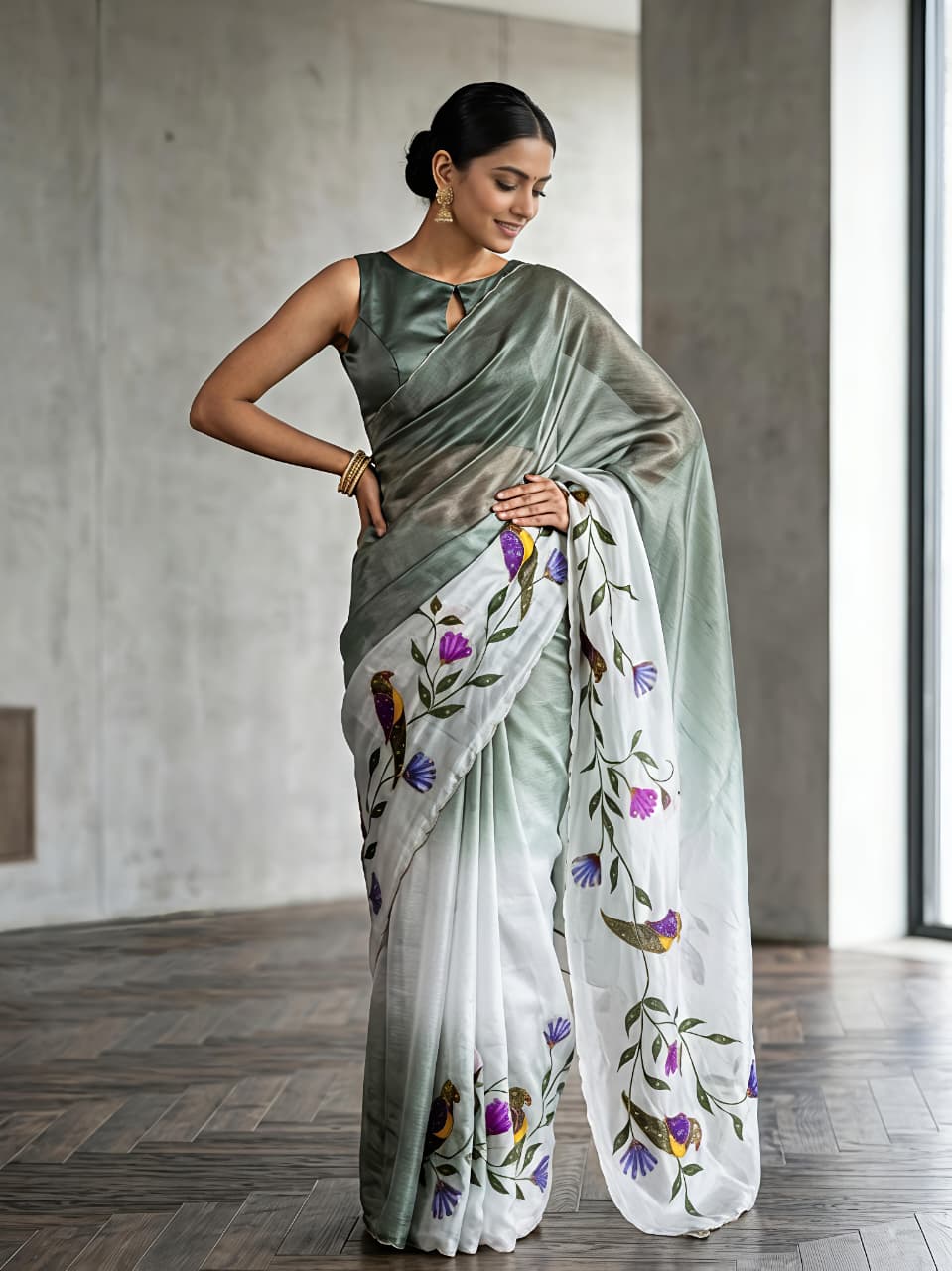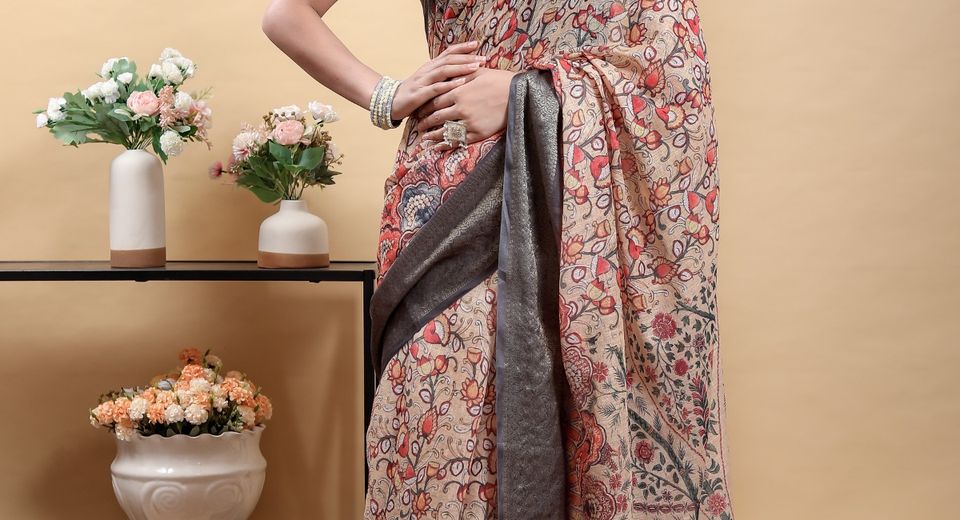
Traditional Kerala Sarees carry a distinct visual language: an ivory or cream ground, a restrained gold border and a drape that looks ceremonial without feeling heavily decorated. Traditional Kerala Sarees are closely associated with Kerala cotton, kasavu borders, Onam celebrations, Vishu, temple visits and wedding rituals, but the category includes more than one garment. The right choice depends on whether you want a single Kerala saree, a two-piece set mundu, a lightweight handloom drape or a richer silk interpretation.
Fabric, border width, zari finish and blouse design change the character of the outfit more than surface embellishment does. A fine cotton kasavu saree can suit a humid afternoon, while a silk or tussar saree works better for an evening reception. This guide explains the main types, how to identify useful differences while shopping, and how to style a Kerala-inspired saree without losing its regional character.
Traditional Kerala Sarees: What makes a Kerala saree recognisable?
A Kerala saree is recognisable by its light-coloured body, contrasting kasavu border and uncluttered composition. Traditional Kerala handloom sarees commonly use off-white, cream or unbleached cotton with a gold-coloured zari strip called kasavu, although contemporary versions may add coloured borders, prints or silk textures.
The classic border is often called kara. A narrow kara creates a quiet, everyday look, while a broader kara gives greater visual weight to the lower edge and pallu. Some sarees have matching zari lines on both sides; others keep the pallu more prominent. Border proportion matters because a very wide kara can shorten the visual length of a petite wearer, whereas a slim border creates a longer uninterrupted line.
Kerala sarees are usually worn in the standard Nivi drape, with the pleats positioned at the centre front and the pallu crossing from the left shoulder. The pleats are generally kept neat rather than voluminous. A firmly pressed front, an even pallu edge and a blouse that echoes the border create the recognisable Kerala festive silhouette.
Traditional Kerala Sarees: Which types should you know?
The main types are the Kerala kasavu saree, the set mundu or mundum neriyathum, Kerala cotton sarees with coloured borders, and richer silk or silk-cotton interpretations. Each type serves a different purpose and has a different amount of fabric, structure and ornamentation.
Kasavu saree
A kasavu saree is a single six-yard saree with an ivory or cream body and a gold-toned border. The classic version is usually made from cotton and is associated with Onam, Vishu and other Kerala festivals. Kasavu can refer to the zari-style border itself, so a saree may be described as kasavu even when its body is silk-cotton or another blended textile.
Choose a narrow kasavu border for daytime puja, office celebrations or a simple family gathering. Choose a wider border with a stronger metallic finish for a wedding ceremony or formal reception. A red, green, maroon or black blouse can introduce contrast while preserving the traditional cream-and-gold foundation.
Set mundu and mundum neriyathum
A set mundu is a two-piece Kerala garment consisting of a lower mundu and an upper neriyathu, while a single saree is one continuous six-yard length. The two-piece format creates a visibly layered front and is especially associated with traditional Kerala dressing. The mundum neriyathum can be pinned in a way that resembles a saree but has a different construction and fall.
A set mundu is useful when you want a more region-specific appearance than a standard saree drape. The separate upper piece can be arranged over the left shoulder or across the torso, and the lower piece often has a pronounced gold border. Correct pleat alignment is important because uneven placement can make the two-piece garment look bulky around the waist.
Printed and coloured-border Kerala sarees
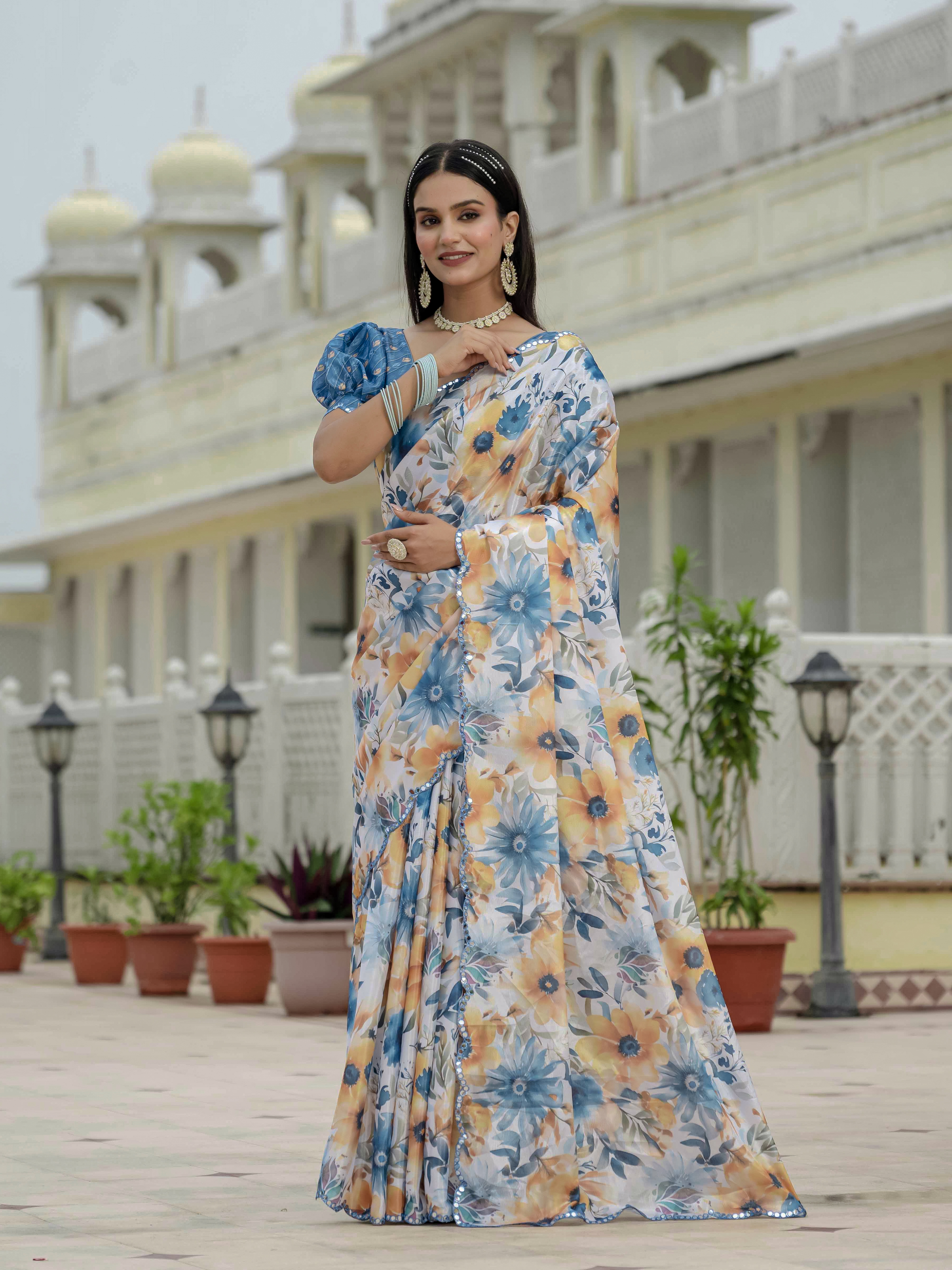
Printed and coloured-border Kerala sarees retain the light base and easy drape of the traditional style while making the outfit less formal. Floral motifs, Kalamkari panels and pastel borders work well when a pure gold-and-ivory combination feels too ceremonial. A print should support the clean drape rather than become so dense that the border loses definition.
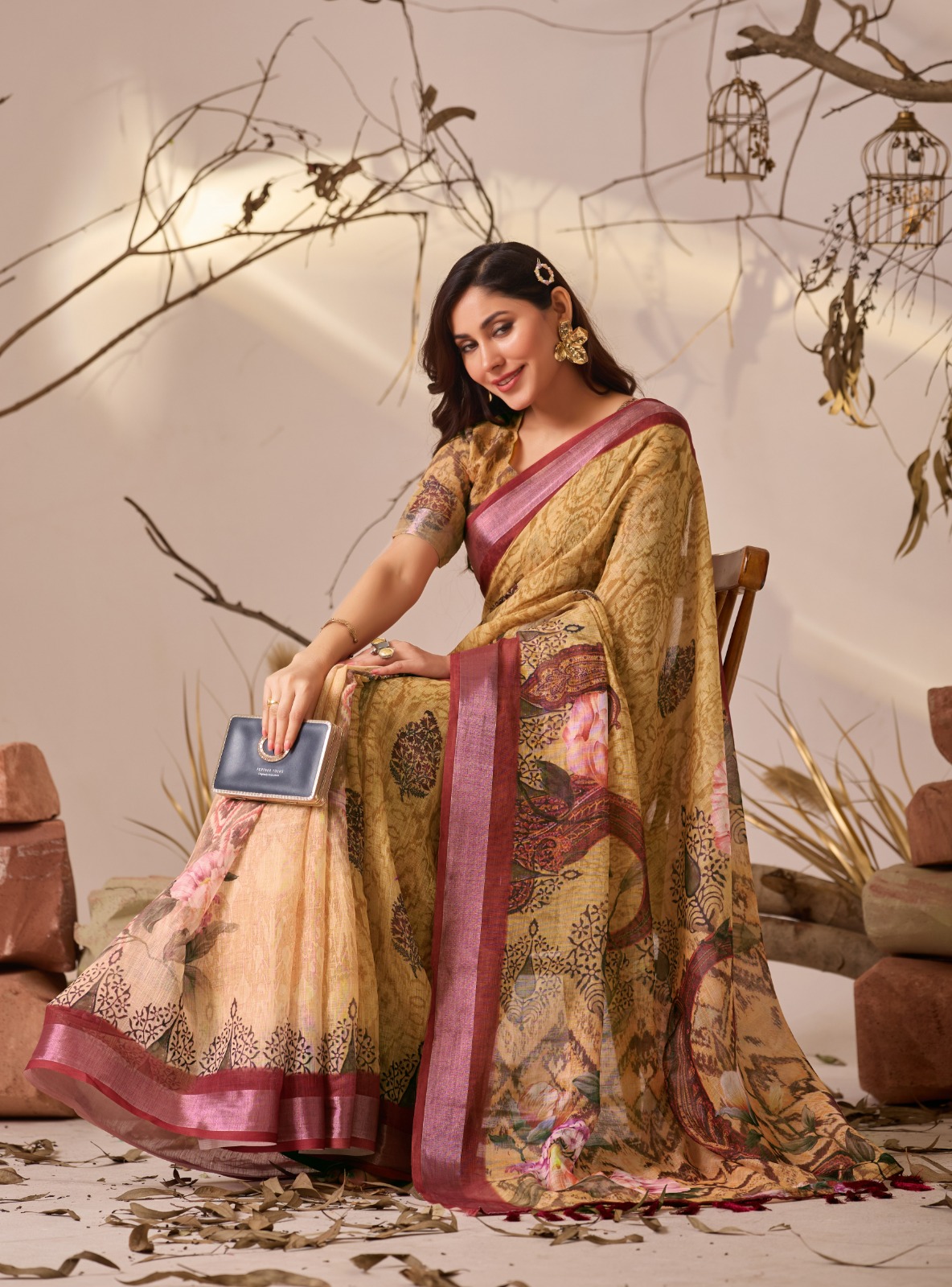
Pastel Linen Cotton Floral Print Saree with Designer Blouse offers a softer interpretation for daytime gatherings, while Peach Linen Cotton Floral Print Saree with Blouse for Women keeps the palette light but introduces more visible colour. These choices suit brunches, cultural events and small festive lunches where a full kasavu look may feel overdressed.
Traditional Kerala Sarees: Which fabrics work best?
Cotton works best for hot, humid daytime occasions, while silk, tussar silk and tissue fabrics offer more body, sheen and formality. Fabric weight, weave density and finishing determine comfort more reliably than the label alone.
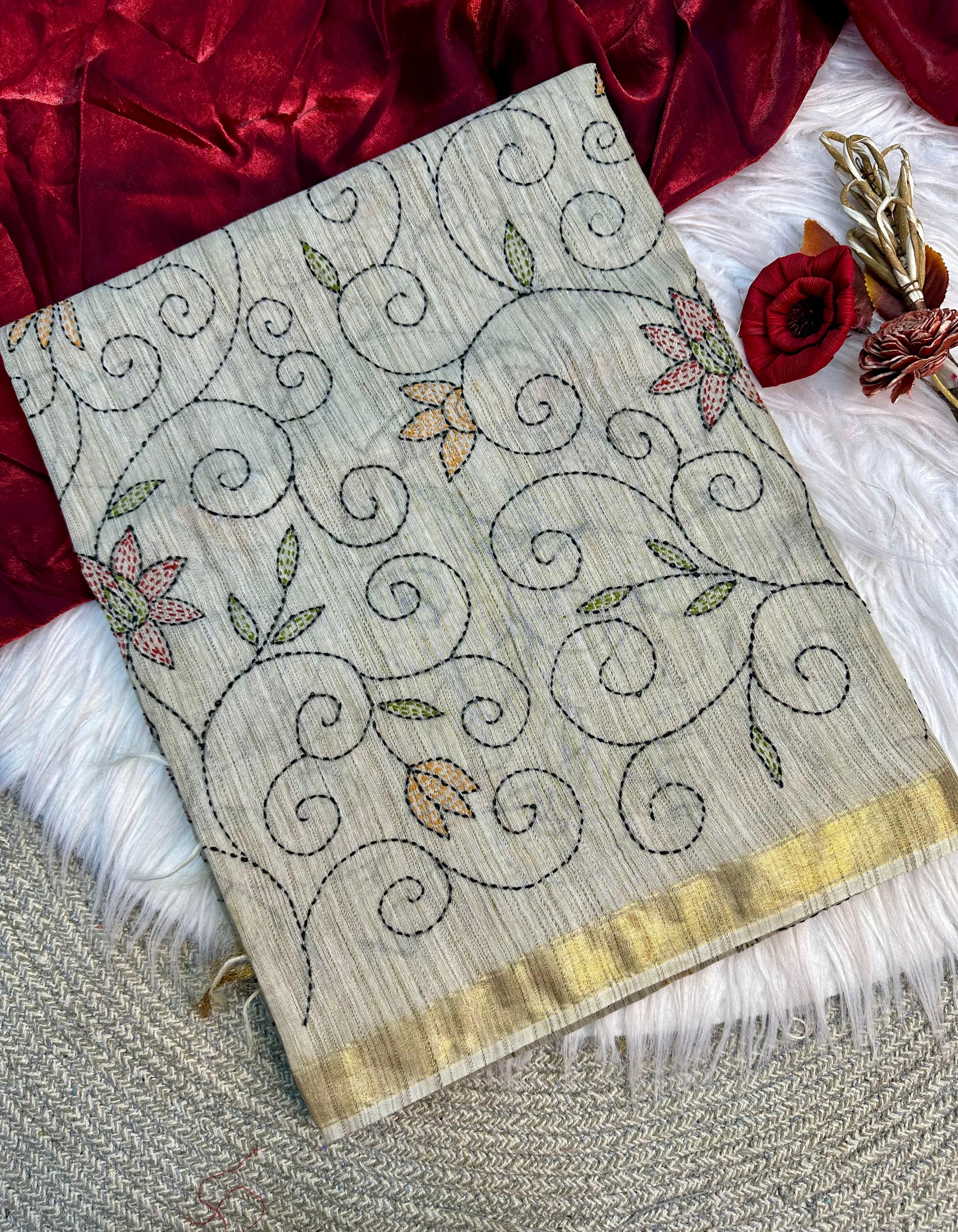
Kerala cotton and handloom cotton
Kerala cotton is breathable, absorbent and generally comfortable for long hours in warm weather. Handloom cotton may have small variations in weave or border alignment, which are normal characteristics of a woven textile rather than immediate signs of poor quality. Cotton also creases more quickly than silk, so a light starch or careful pressing can help retain a crisp front pleat.
Pastel Floral Tissue Handloom Cotton Saree with Zari Weaves demonstrates how cotton can look festive without becoming heavy. The combination of a handloom texture and zari detail is useful for Onam lunches, daytime weddings and cultural programmes. Check whether the zari is woven into the border or added as a surface element, because woven zari generally integrates more naturally with repeated pressing and wear.
Linen-cotton blends
Linen-cotton blends combine some of linen's airy texture with cotton's familiar softness and easier maintenance. The fabric may show a natural slub or gentle irregularity, so the finished saree tends to look relaxed rather than mirror-smooth. Linen-cotton is a practical choice for summer celebrations, travel and daytime events where a stiff silk drape would be uncomfortable.
Allow extra attention to pleating because linen blends can resist sharp folds when they're new. Folding the saree along the intended pleat lines before wearing and using a medium-temperature iron with a pressing cloth can produce a cleaner result.
Tussar silk, silk and tissue
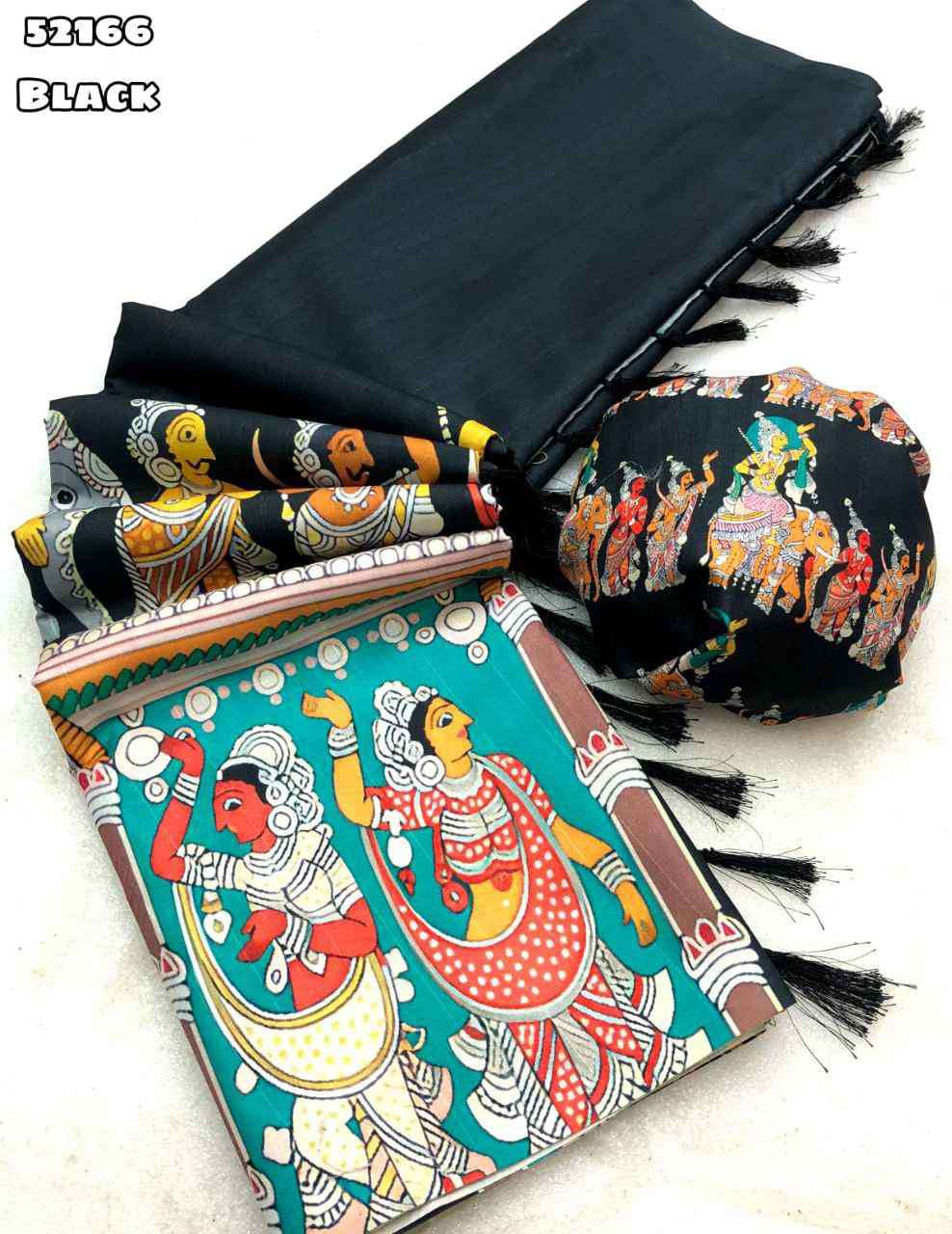
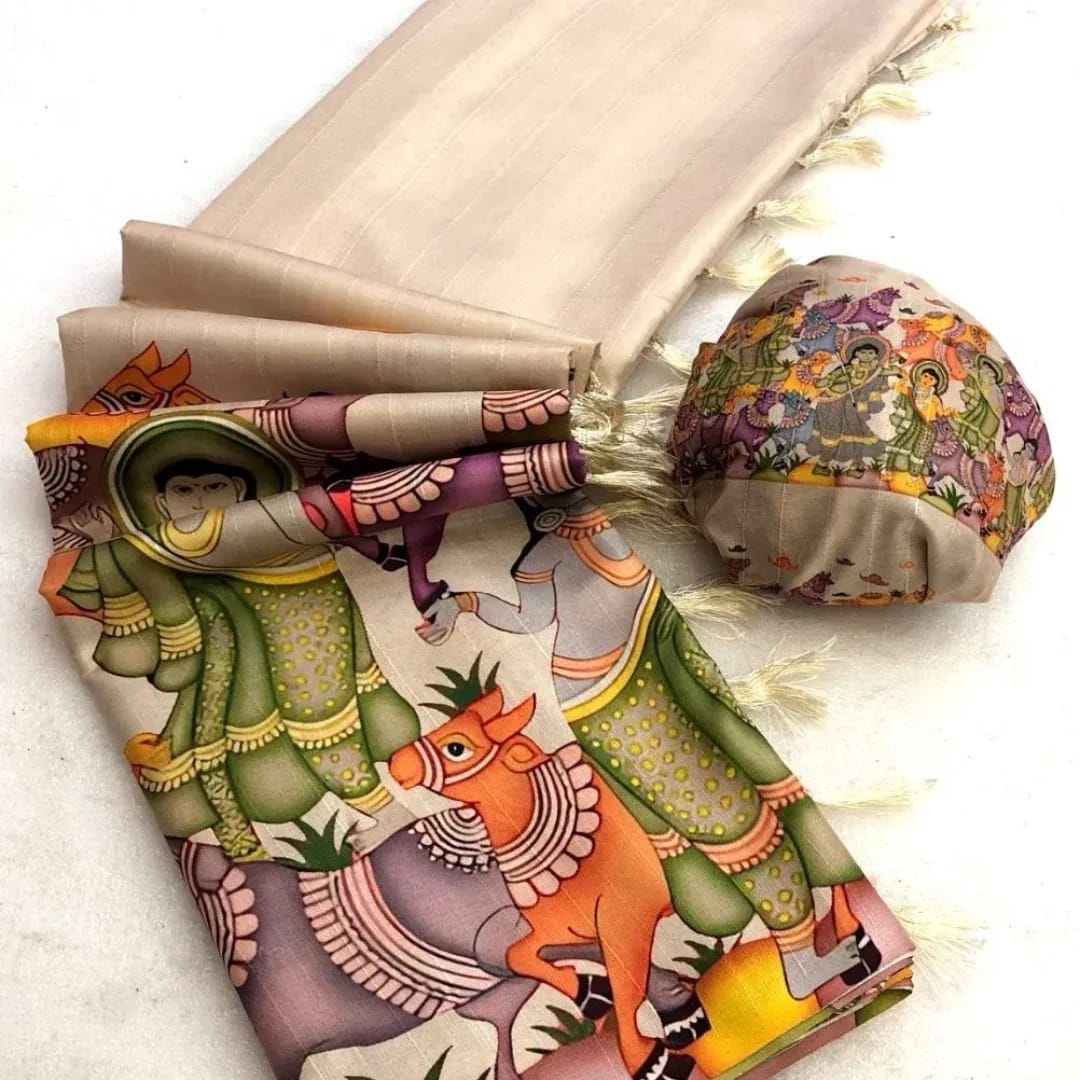
Tussar silk provides a textured surface and moderate structure, making it appropriate for evening celebrations and dressier festive dressing. Traditional Kerala Sarees interpreted in tussar silk may use Kalamkari or other prints instead of a plain kasavu body, so the styling becomes regionally inspired rather than strictly ceremonial.
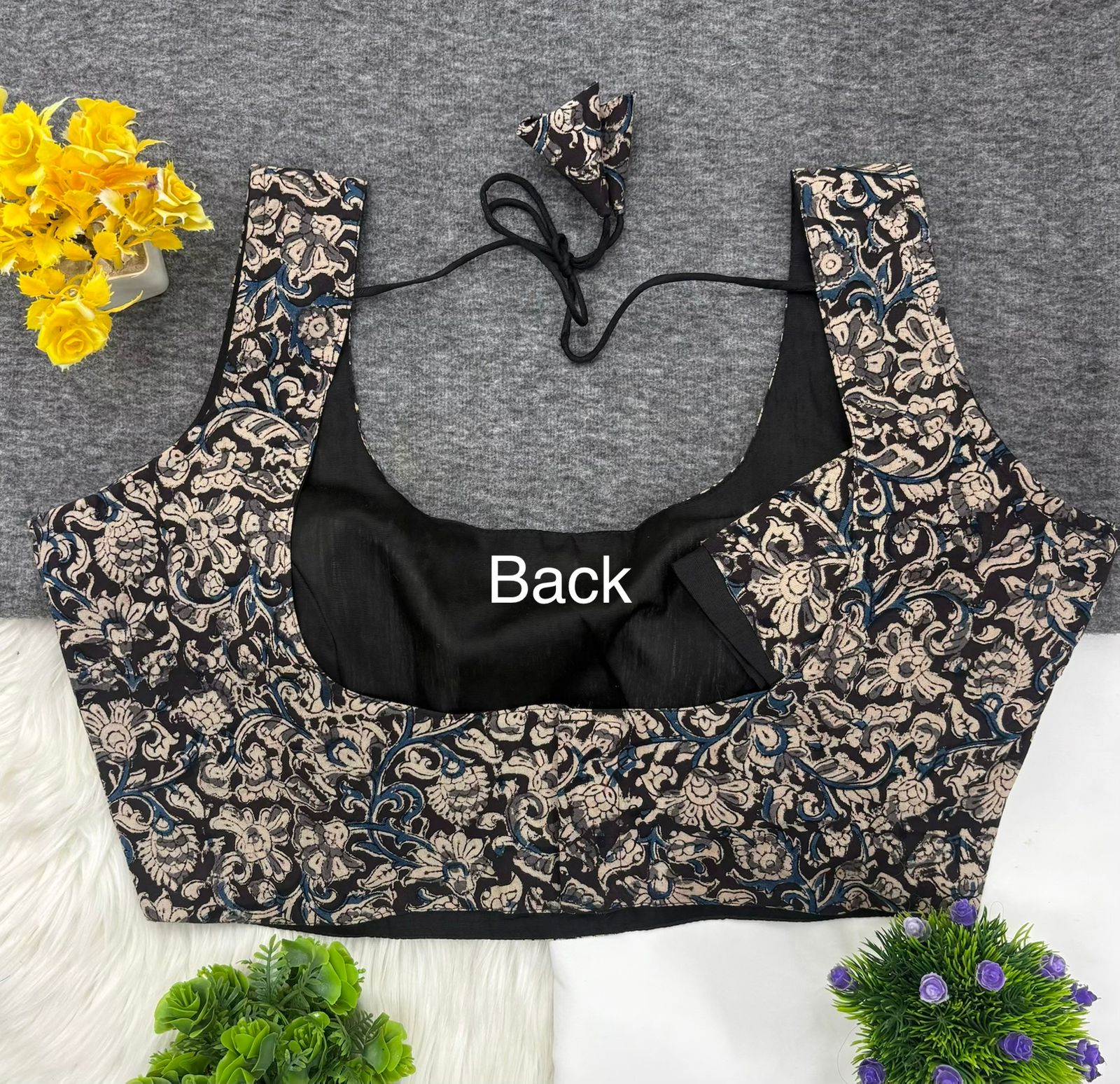
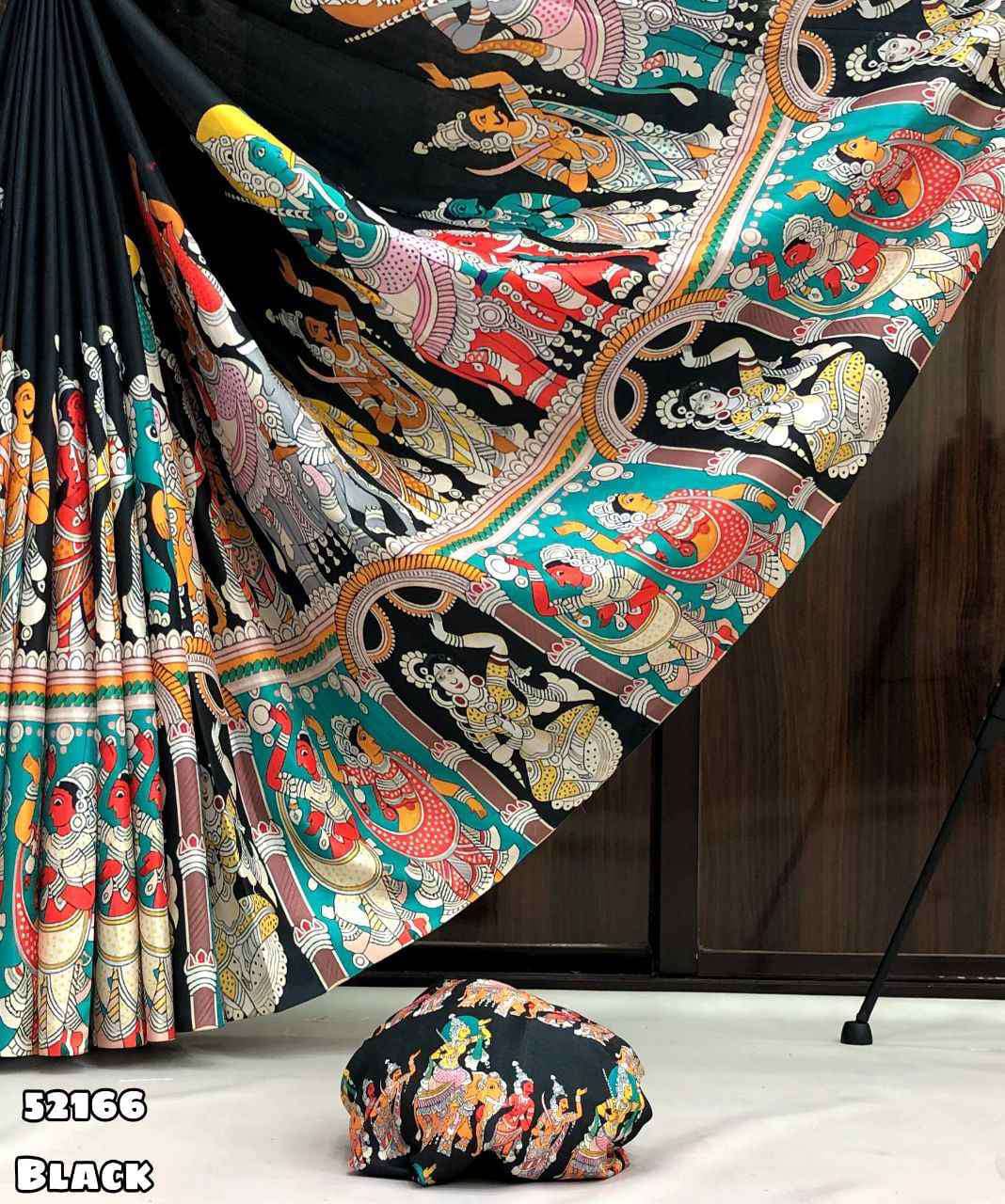
Tussar Silk Kalamkari Printed Saree with Blouse and Purple Kalamkari Tussar Silk Saree with Printed Blouse show how textured silk can carry a strong print while retaining an Indian hand-crafted feel. Black Traditional Kalamkari Print Silk Saree creates a more dramatic evening option, especially when paired with antique-gold jewellery rather than bright yellow gold.
Tissue cotton and tissue silk have a subtle translucence and reflective surface that catch light at receptions. Tissue can be less forgiving of rough jewellery, sharp handbag hardware and untrimmed nails, so careful handling matters. A lining or well-fitted blouse also helps prevent the pallu from shifting as easily.
Traditional Kerala Sarees: How should you choose one for the occasion?
Choose a breathable cotton saree for daytime heat, a crisp kasavu for cultural festivals, and a structured silk or tussar saree for evening ceremonies. Occasion, venue, weather and the expected duration of wear should guide the purchase more than trend alone.
- Onam or Vishu: An ivory Kerala cotton saree with a gold kara, a white, red or green blouse and jasmine flowers creates a recognisable festive combination.
- Daytime wedding: Choose cotton with a broader zari border or a silk-cotton weave, then add a blouse with elbow-length sleeves and restrained gold embroidery.
- Evening reception: Tussar silk, silk or tissue gives enough surface interest under artificial lighting. Maroon Cotton Saree with Zari Work for Wedding adds colour while keeping the border-led structure of a traditional festive drape.
- Temple visit: Select a non-sheer cotton or cotton-silk saree with a secure pallu and modest blouse neckline. Avoid loose metallic accessories that may snag during movement.
- Work or cultural programme: A pastel linen-cotton saree with a narrow border and a solid blouse is polished without looking overly bridal.
Colour temperature also affects formality. Ivory with antique gold appears softer and more traditional, while bright yellow gold looks more festive. Maroon, bottle green, rust and black produce stronger contrast; blush, peach and lavender create a contemporary interpretation that remains compatible with a simple border.
Budget can narrow the search without determining quality by itself. Sarees from Rs 1000 to Rs 1500 may include practical cottons, printed blends and lighter festive options, while a more elaborate weave or silk body generally needs a larger budget. Sale collections such as Sarees Under 20% Off, Sarees Under 10% Off, Sarees Flat 60% Off and Sarees Flat 50% Off can be useful starting points, but fabric composition, measurements and care instructions should still be checked before purchase.
Traditional Kerala Sarees: How can you style them without losing their character?
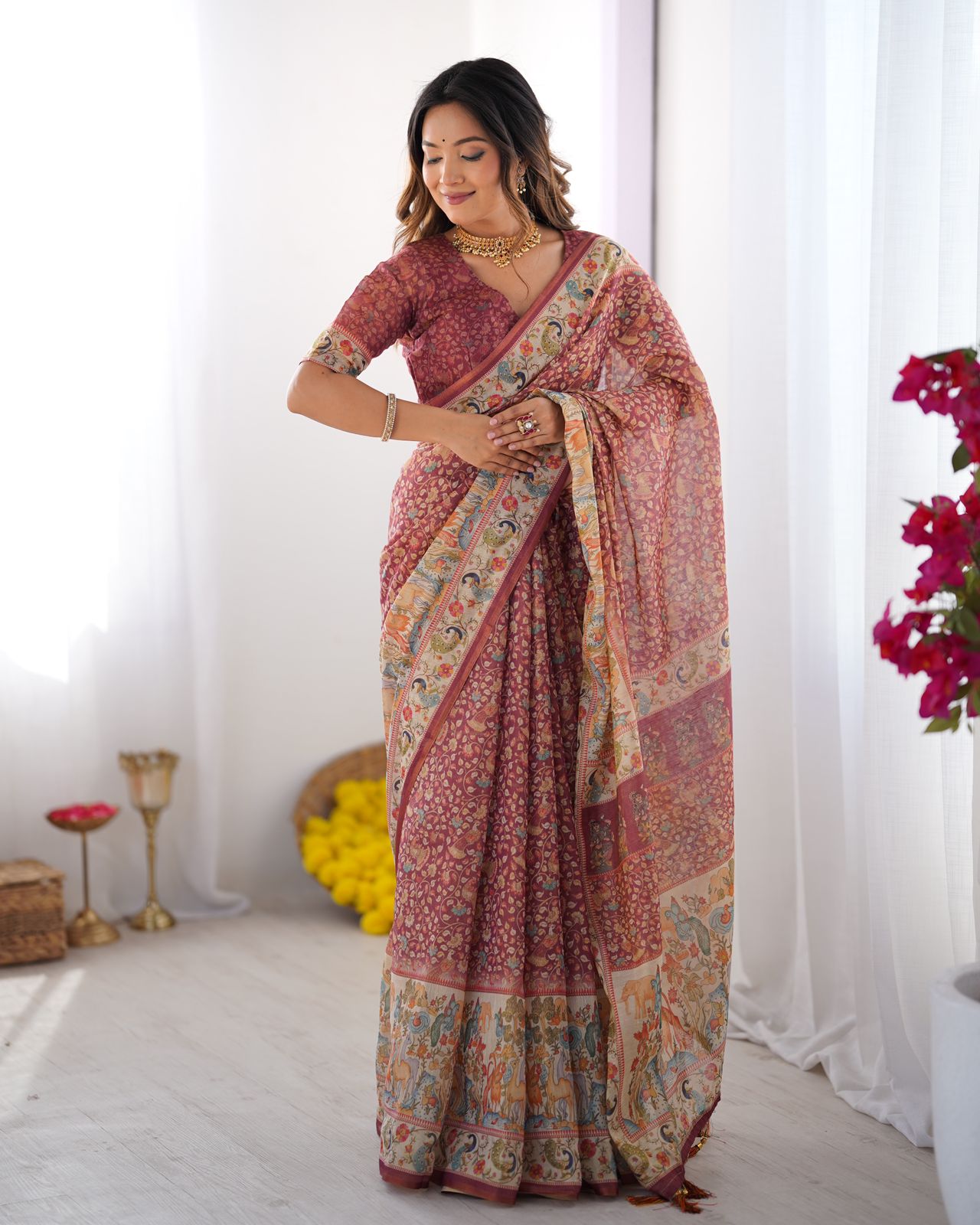
A Kerala saree looks most balanced when the blouse, jewellery, hair and border repeat one or two elements instead of competing with every detail. A simple saree can carry statement jewellery, but a printed or heavily textured saree usually benefits from quieter accessories.
Blouse choices
A plain blouse in red, maroon, green, black, ivory or deep purple is the most reliable pairing for a cream-and-gold saree. A gold-bordered blouse creates continuity, while a contrasting matte blouse prevents the outfit from becoming too reflective. Elbow-length sleeves feel traditional; short sleeves, square necklines and high necks make the look more contemporary without changing the drape.
Match the blouse fabric to the saree's weight. A very stiff brocade blouse can pull against a soft cotton saree, while a thin blouse may look under-structured beside a substantial silk. For printed Kalamkari sarees, select one colour from the motif for the blouse rather than introducing a completely unrelated shade.
Jewellery and hair
Gold-toned jewellery, temple jewellery, kasu malas and small jhumkas complement a traditional Kerala palette. For daytime, choose one prominent necklace or a pair of medium-sized earrings rather than layering every available piece. Antique gold works particularly well with Tussar Silk Kalamkari Printed Saree with Blouse and Black Traditional Kalamkari Print Silk Saree because the aged finish matches the depth of the prints.
Jasmine flowers arranged around a bun create a strongly recognisable festive look. A low bun keeps the pallu and blouse visible, while a loose braid gives a softer daytime effect. Hair accessories should be secured before pinning the pallu so the shoulder drape doesn't loosen during movement.
Drape and finishing details
Press the saree before pleating, place five to seven front pleats depending on the fabric width, and use discreet pins at the shoulder and waist. Keep the pallu long enough to show the border but short enough to avoid dragging near the floor. A fall stitched to the lower edge can protect the saree and help the pleats hang evenly.
For a Kerala-inspired finish, keep the pleats vertical, align the lower border and avoid excessive puffing at the shoulder. A narrow belt can modernise a plain saree, but a belt is less suitable when the border or pallu already contains elaborate zari work.
Traditional Kerala Sarees: How should you care for and store them?
Care depends on fibre and zari, but gentle cleaning, limited sunlight and breathable storage protect most Kerala sarees. Cotton can usually tolerate more regular washing than silk, while zari and printed surfaces need more cautious handling.
- Cotton: Follow the garment label, use mild detergent and avoid harsh wringing. Dry the saree in shade to reduce colour fading and press it while slightly damp if the fabric permits.
- Linen-cotton: Smooth the saree after washing and fold it along the border. High heat can flatten the natural texture or create a shiny press mark.
- Tussar silk and silk: Prefer professional dry cleaning unless the care label specifically allows another method. Keep perfume, deodorant and hair oil away from the fabric because residue can stain silk.
- Zari: Fold zari sarees with a soft muslin layer and refold them every few months to reduce permanent creases. Do not store metallic borders in plastic for long periods because trapped moisture can tarnish the surface.
Store each saree in a clean cotton or muslin cover in a dry cupboard. Avoid stacking heavy garments on top of delicate tissue or silk, and inspect the saree before wearing it for loose threads, dampness or tarnish. These small habits preserve the crisp border and make occasional festive sarees easier to wear over many seasons.
The most useful Kerala saree is the one that suits the weather, the event and the amount of care you can realistically provide. A breathable cotton kasavu remains the practical choice for Onam and daytime rituals, while tussar silk, tissue and Kalamkari prints extend the Kerala-inspired aesthetic into weddings and evening dressing. Understanding the fibre and border first makes every later decision-from blouse colour to jewellery-more coherent.
Common Questions About Choosing and Styling Traditional Kerala Sarees
What is the difference between a Kerala kasavu saree and a set mundu?
A Kerala kasavu saree is usually one continuous six-yard garment with an ivory or cream body and gold-toned border. A set mundu, or mundum neriyathum, is made from separate lower and upper pieces and creates a more specifically regional two-piece drape.
Which fabric is best for a Kerala saree in summer?
Kerala cotton and lightweight handloom cotton are generally the best choices for summer because they are breathable and absorbent. Linen-cotton blends can also work well, although they may crease more visibly during extended wear.
How should I style a kasavu saree for Onam?
Pair an ivory-and-gold kasavu saree with a white, red, green or maroon blouse, simple gold jewellery and jasmine flowers. Keep the pleats crisp and the pallu securely pinned for a comfortable festive look.
Can Kalamkari or tussar silk be used for a Kerala-inspired look?
Yes, Kalamkari and tussar silk create a regional-inspired interpretation rather than the most traditional plain kasavu look. Choose antique-gold jewellery and a blouse colour taken from the print so the outfit remains visually balanced.
What blouse colours work with a traditional Kerala saree?
Red, maroon, green, black, ivory and deep purple are reliable blouse colours for a cream-and-gold Kerala saree. Select a colour from the border or print when possible, and match the blouse weight to the saree fabric.
How should a zari Kerala saree be stored?
Store a zari saree folded in a clean cotton or muslin cover in a dry cupboard, away from direct sunlight and trapped plastic. Refold the saree every few months to reduce permanent creases and check it for moisture or tarnish before wearing.