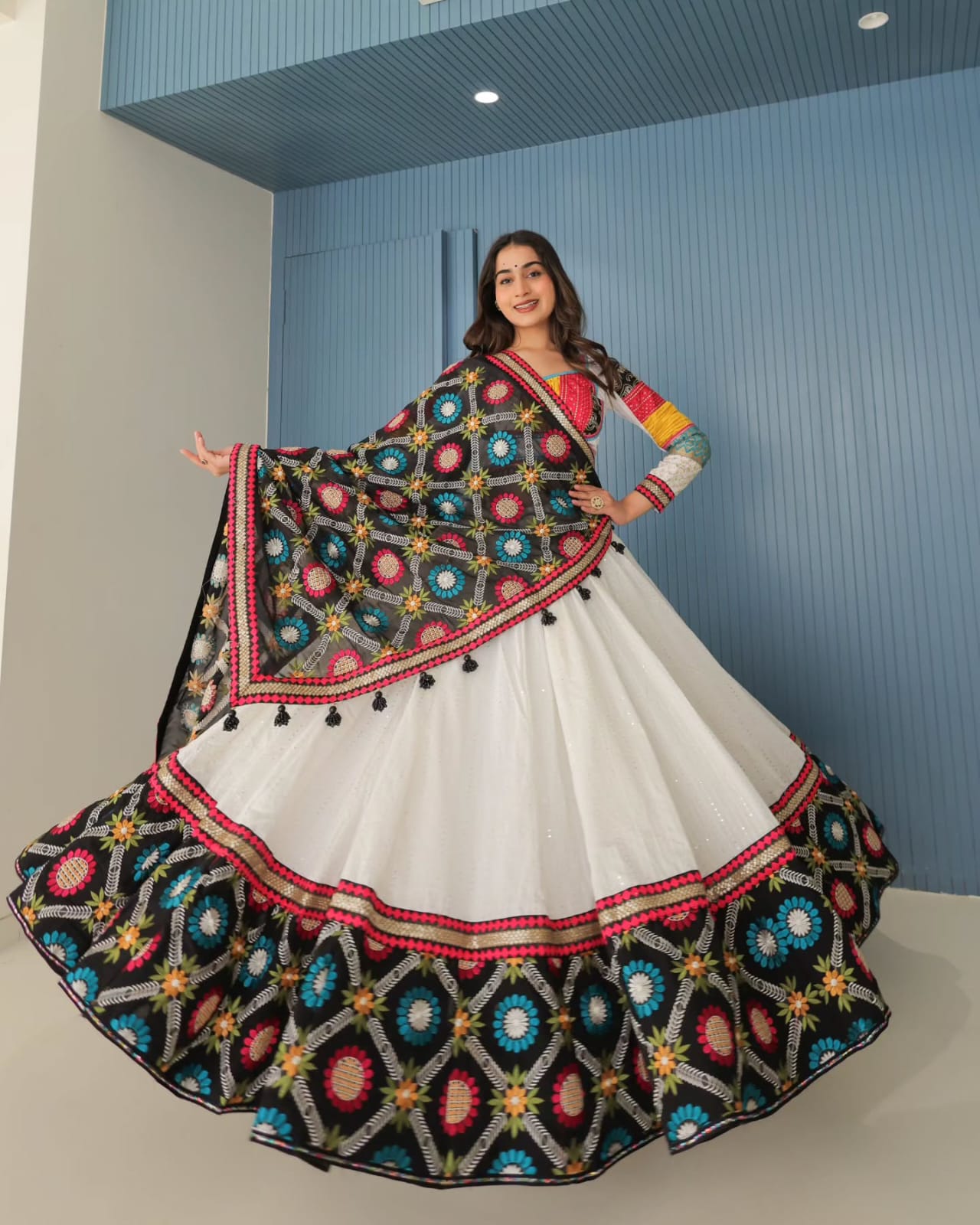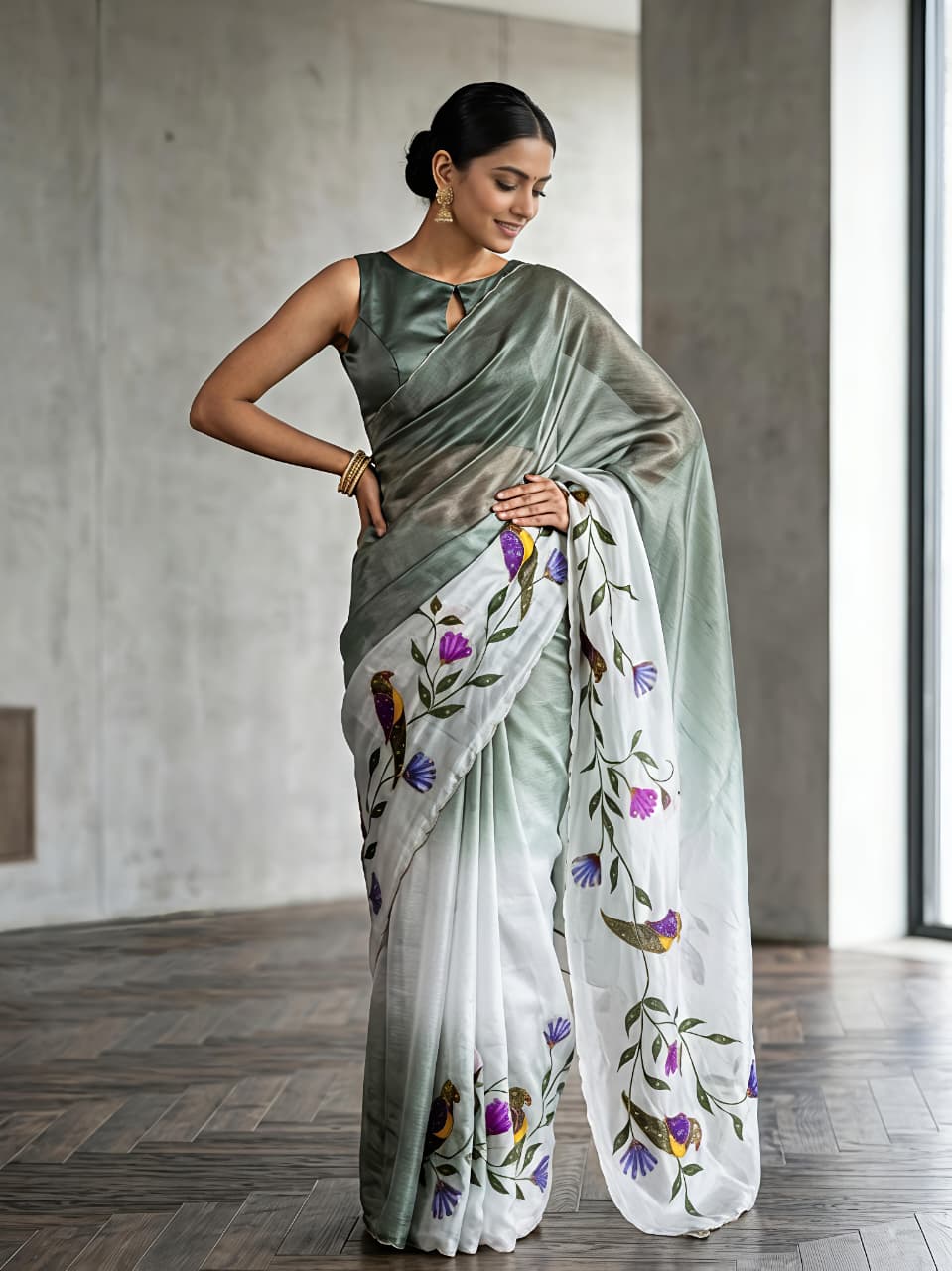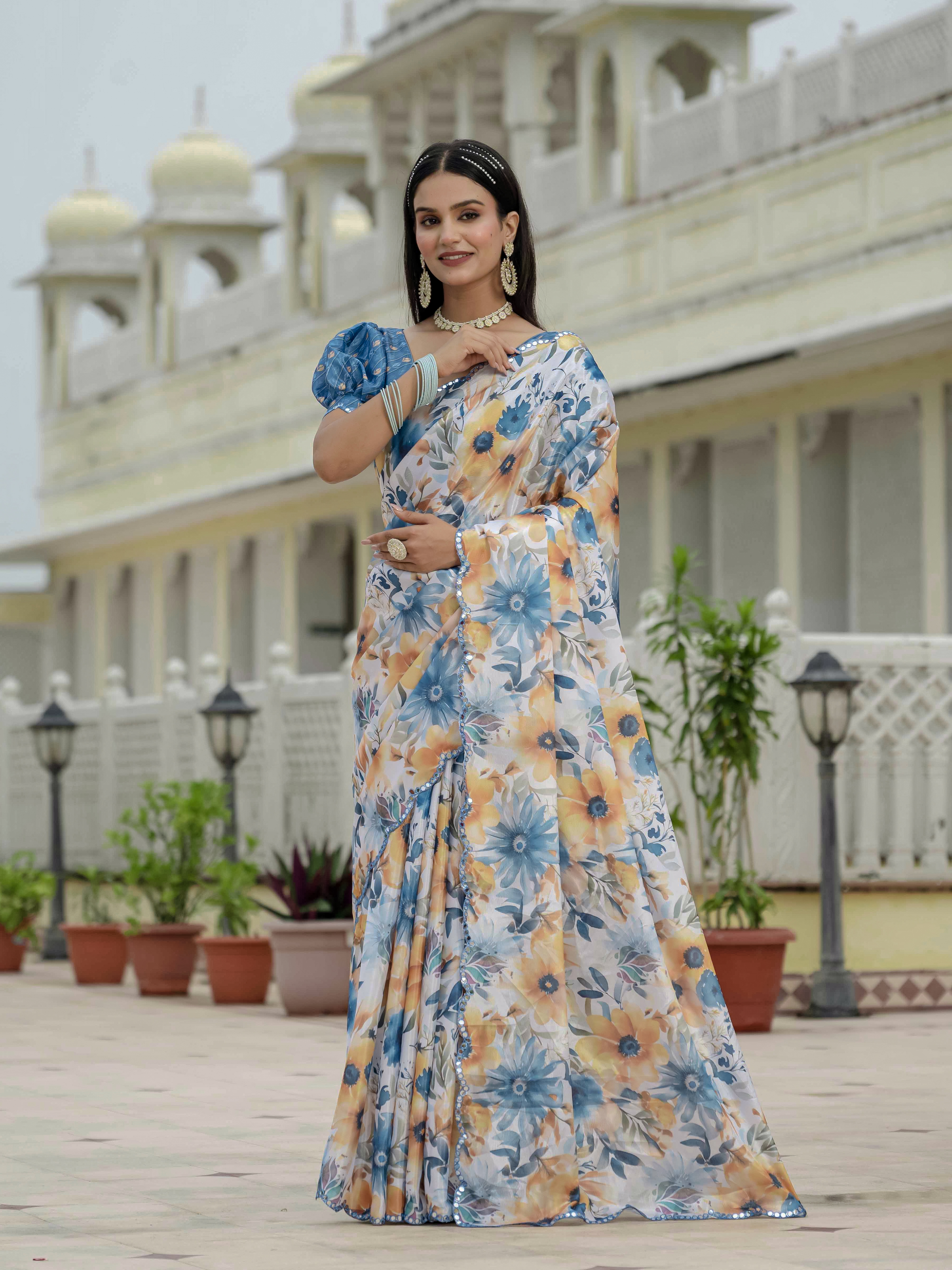
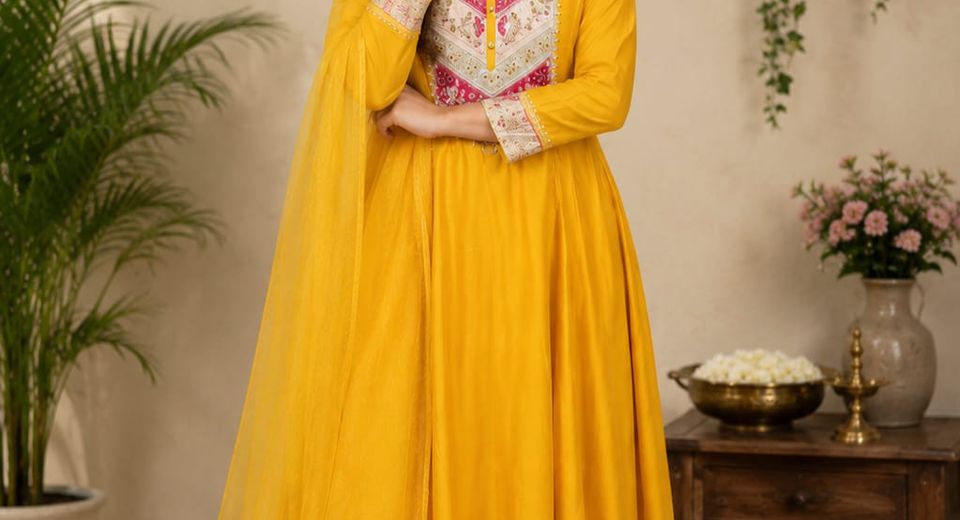
Traditional Indian Suit Styles for Navratri and Dandiya need to balance celebration, movement and cultural character. A beautiful salwar suit may photograph well, but a practical Garba outfit must also let you lift your arms, turn comfortably, manage a dupatta and stay presentable after several hours of dancing. The right choice depends on silhouette, fabric weight, sleeve construction, colour, footwear and how securely the outfit is finished.
Navratri dressing changes according to the event. A community Garba night may call for lively colour and easy movement, while a family puja may suit a more covered Anarkali or embroidered kurta set. Understanding the structure of each salwar style helps you choose festive clothing that feels intentional rather than merely decorative.
Traditional Indian Suit Styles for Navratri and Dandiya: Why silhouette matters
A dance-ready salwar suit needs controlled volume, comfortable armholes and trousers that don't catch around the ankles. Garba involves repeated turns and lateral steps, while Dandiya adds forward arm movement and the possibility of accidental contact with nearby dancers. A silhouette that hangs neatly but has room through the hips, shoulders and elbows is usually more useful than a heavily layered outfit.
Traditional Indian Suit Styles for Navratri and Dandiya: Anarkali movement
Anarkali suits work well for Navratri when the flare begins below the waist and the hem has enough clearance from the floor. A knee-length or mid-calf Anarkali is easier to manage than a floor-skimming version in a crowded dance circle. Pairing an Anarkali with churidar pants or narrow trousers keeps the lower half orderly while the kurta creates movement during turns.
The Ladies Dress Anarkali Salwar Suits collection is useful when you want a recognisably festive shape without committing to a lehenga. Check the flare before buying by measuring the hem circumference and comparing it with your normal walking stride. A very wide hem can look dramatic, but a crowded venue rewards a moderate flare that doesn't brush against other dancers.
Traditional Indian Suit Styles for Navratri and Dandiya: Patiala and straight kurta combinations
Patiala salwar suits provide generous leg movement because the trousers are gathered into multiple folds and taper at the ankle. Midnight Blue Natural Crepe Patiala Kurta Set with Embroidery demonstrates how a Patiala-based outfit can retain a traditional Punjabi identity while using a deeper colour suited to evening events. A fitted or semi-fitted kurta balances the volume of the salwar.
Straight kurta sets are dependable for long dance sessions because the clean vertical line creates less fabric around the legs. Straight trousers, cigarette pants or a moderately loose salwar can all work, provided the hem doesn't drag. A straight kurta also gives you more flexibility to add colourful bangles, a waist belt or a printed dupatta without making the overall outfit excessively busy.
Traditional Indian Suit Styles for Navratri and Dandiya: Which fabrics work?
Chanderi, viscose, crepe and silk blends can all work for Navratri, but the most practical choice depends on venue temperature, event duration and the amount of embellishment. Lightweight Chanderi suits feel airy and festive, while crepe drapes close to the body and usually resists bulky folds. Silk and Vichitra silk create a richer appearance but need careful attention to lining, ventilation and weight.
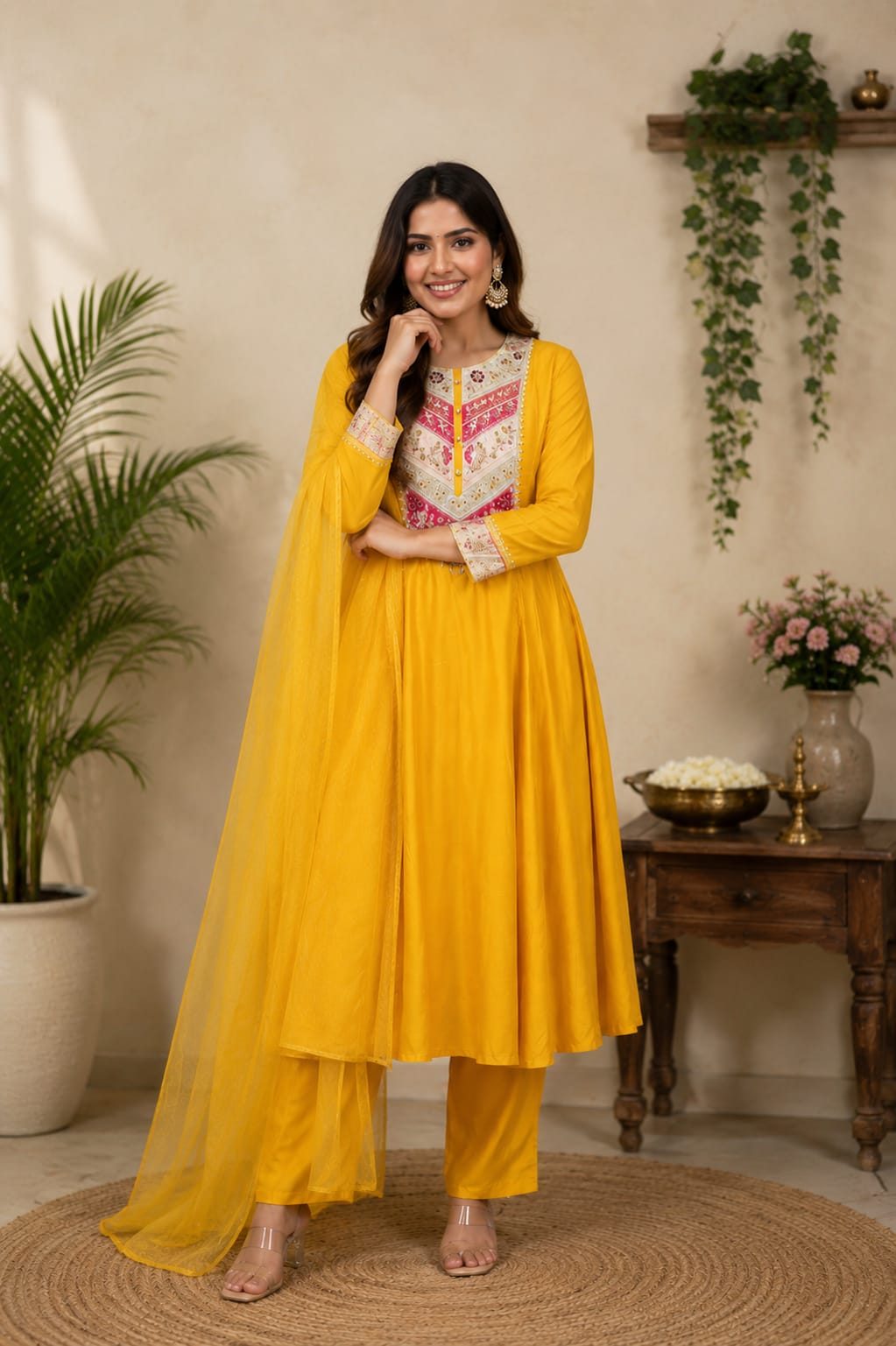
Mustard Viscose Chanderi Kurta Set with Sequence Embroidery combines a bright Navratri-friendly shade with a fabric category that can feel lighter than dense brocade. Chanderi may be delicate, so inspect sequence attachment and avoid carrying rough bags that can snag the surface. Pastel Blue Embroidered Chanderi Kurta Set with Dupatta offers a softer colour direction for daytime Garba, puja visits or a venue with strong lighting.
Natural crepe is useful when you want fluid drape without a stiff skirt-like structure. Midnight Blue Natural Crepe Patiala Kurta Set with Embroidery is particularly relevant for evening dressing because midnight blue reads richly under warm lights while the Patiala shape leaves room for movement. Crepe can show oil marks, so keep food and makeup away from the garment during preparation.
Vichitra silk and heavy silk crepe create a dressier finish for Navratri dinners, ticketed events and family celebrations. Elegant Beige Vichitra Silk Embroidered Kurta Set for Women provides a neutral base for colourful jewellery, whereas Wine Pure Vichitra Silk Kurta Set with Sequin Work & Dupatta creates a deeper, more formal effect. Heavy embellishment should be concentrated where it won't rub repeatedly against the underarm or waist.
Shoppers comparing fabric options can also browse the Dress Materials collection when they want to evaluate colour, surface texture or tailoring possibilities before selecting a finished suit. Fabric choice should be judged by the full evening plan, not by appearance in a single product photograph.
Traditional Indian Suit Styles for Navratri and Dandiya: How to choose colour
You should choose a Navratri colour by considering the event lighting, your preferred contrast level and the comfort of wearing the shade for several hours. Many communities follow a day-wise colour tradition, but the exact sequence varies by year, region and organiser. Checking the local Garba group or temple schedule is more reliable than assuming one universal colour chart.
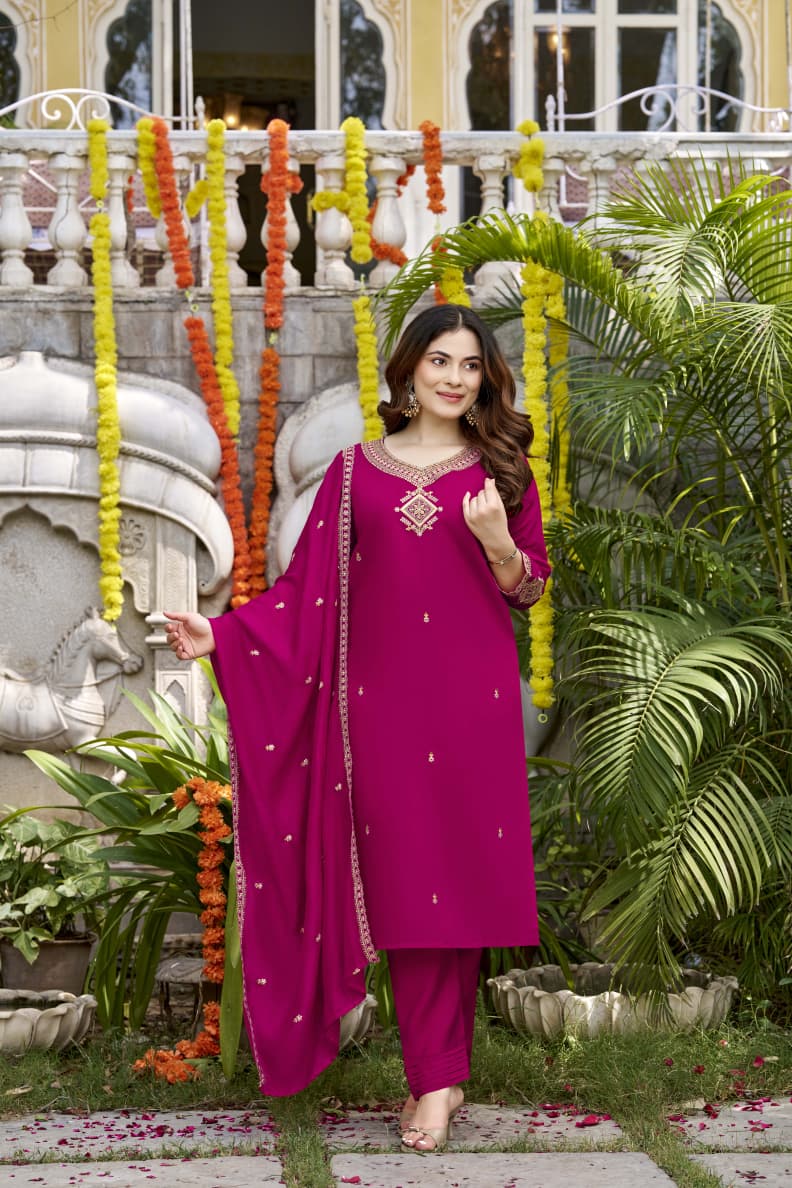
Yellow, mustard, red, wine, royal blue and black can all create strong festive outfits, although each behaves differently in photographs. Mustard and yellow stand out in low evening light, while wine and midnight blue offer a more subdued richness. Beige and pastel blue are effective for daytime events because they reflect light softly and allow embroidery or jewellery to supply the contrast.
Maroon Vichitra Silk Kurta Set with Elegant Embroidery Work suits people who want a traditional deep tone without choosing bright red. Black can look especially striking with silver, mirror-style or multicoloured accessories, but a black outfit benefits from visible texture so that the details don't disappear in photographs. Black Heavy Silk Crepe Kurta Set with Sequence Embroidery uses surface sparkle to prevent a dark base from appearing flat.
Colour becomes easier to style when you build the outfit around one dominant shade, one metallic note and one small accent colour. For example, a wine suit can take antique gold earrings and green glass bangles, while a pastel blue suit can take silver-toned jewellery and a pink or yellow accent in the dupatta. Limiting the palette keeps embroidery, bangles and footwear from competing with each other.
Discount-led browsing can be useful when you already know your required colour and size. Salwar Suits with 30% Off and Salwar Suits Flat 40% Off may provide useful comparison points, but check fabric composition, measurements and embellishment before treating a reduced price as the deciding factor.
Traditional Indian Suit Styles for Navratri and Dandiya: What makes a dupatta practical?
A Dandiya-friendly dupatta stays secure at the shoulders, leaves both hands free and doesn't trail near the feet. Pin the dupatta at one shoulder and, when the fabric allows, add a discreet second pin near the waist or opposite side. A cross-body drape can be more secure than a single-shoulder drape, especially when the outfit will be worn for energetic dancing.
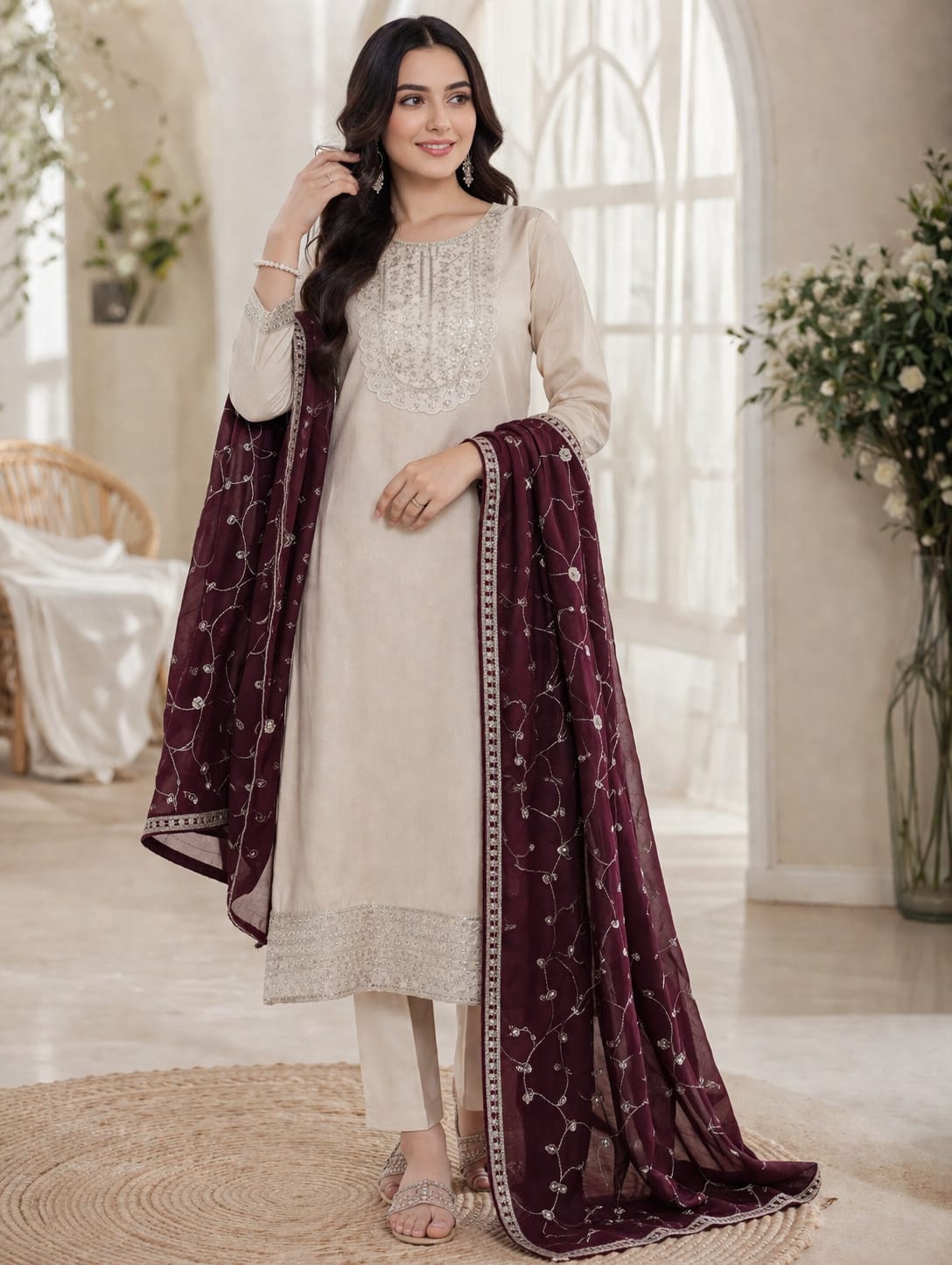
Dupatta width and surface decoration affect comfort. A heavily sequinned border can catch on bangles, wooden sticks or another dancer's clothing, while a very slippery fabric can slide off the shoulder. Test the complete drape at home by raising both arms, rotating your torso and walking up stairs before wearing it to the event.
Wine Pure Vichitra Silk Kurta Set with Sequin Work & Dupatta illustrates why the dupatta should be treated as part of the movement plan, not just a finishing layer. If the dupatta has a dense border, use fewer bangles on the pinned side and keep the free side clear. Smaller earrings and a secure hairstyle also reduce the chance of catching embellishments during fast turns.
A dupatta can also be folded lengthwise to reduce width without losing its decorative border. Avoid tying the fabric tightly around the neck because a tight loop restricts head and shoulder movement. Safety pins should be placed through the lining or seam allowance when possible, rather than directly through delicate embroidery or visible zari work.
Traditional Indian Suit Styles for Navratri and Dandiya: How to style them
You can retain a traditional appearance by keeping the basic relationship between kurta, salwar or trousers and dupatta visible, then adding accessories that support the outfit rather than replacing it. Jhumkas, glass bangles, a small bindi, embroidered juttis and a compact potli can supply festive detail without making the garment difficult to wear.
Traditional Indian Suit Styles for Navratri and Dandiya: Jewellery and hair
Choose jewellery according to the neckline and embroidery placement. A round-neck kurta can take a choker or short necklace, while a decorated neckline usually needs only earrings and bangles. Secure long hair in a braid, low bun or pinned half-up style if the venue is crowded; loose hair can catch on sequins and becomes uncomfortable with repeated movement.
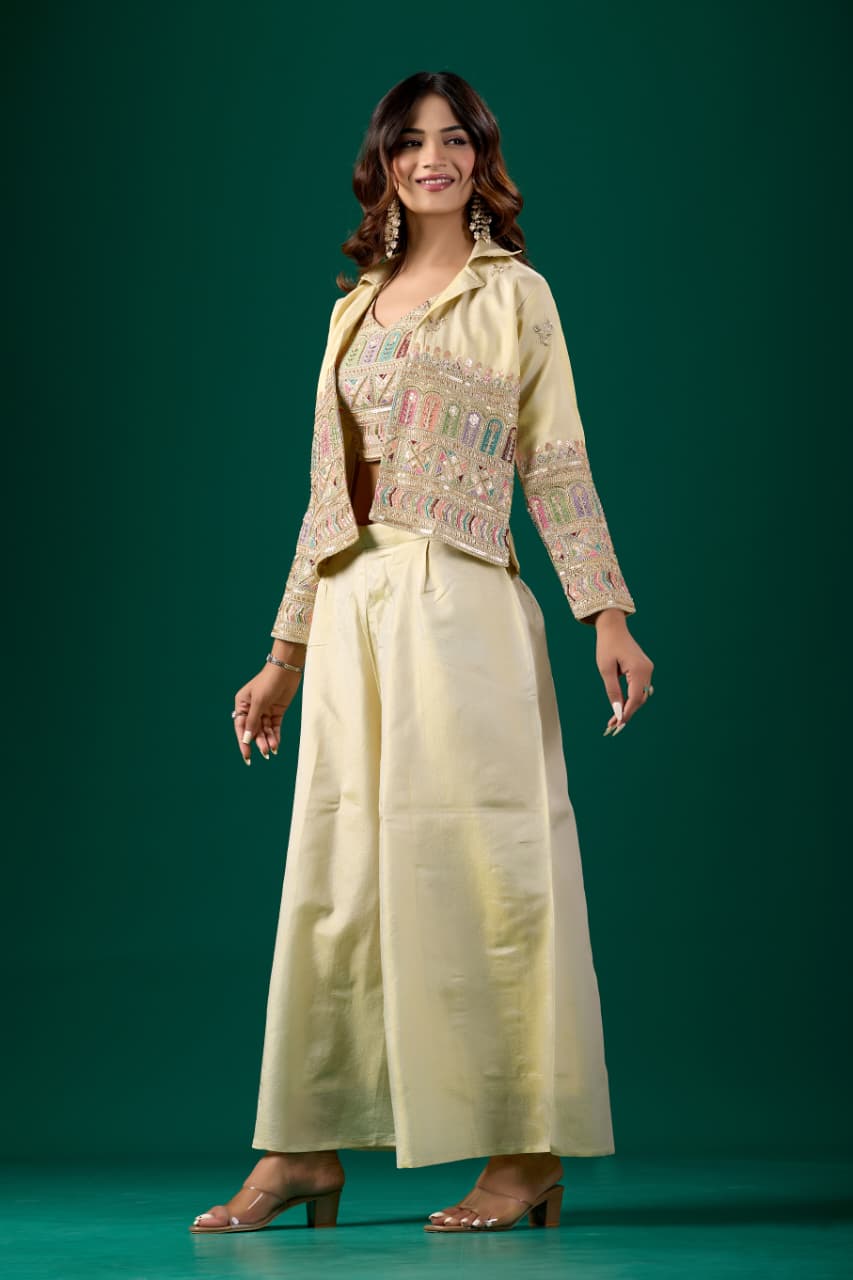
Modern Taupe Vichitra Silk Embroidered Co-Ord Set for Women can be styled with oxidised silver for a contemporary contrast or with gold accessories for a warmer festive finish. A co-ordinated set benefits from restrained jewellery because matching separates already create visual order. Add colour through bangles, a small shoulder bag or a contrasting dupatta rather than layering several necklaces.
Traditional Indian Suit Styles for Navratri and Dandiya: Footwear and accessories
Low wedges, cushioned juttis or flat embroidered shoes are safer choices than narrow high heels for Garba grounds and uneven outdoor flooring. Break in new footwear for at least two short walks before the event, and carry blister patches in your bag. A small cross-body pouch or wristlet keeps essentials secure without requiring you to hold a handbag while dancing.
Makeup should account for heat and duration. Use a thin base, waterproof eye makeup and a setting product rather than several heavy layers. Carry blotting paper, safety pins, a small comb and a spare hair tie; these items solve more Navratri outfit problems than extra decorative accessories.
Traditional Indian Suit Styles for Navratri and Dandiya: How to check fit
You should measure the bust, waist, hip and preferred garment length against the seller's size chart rather than relying only on your usual label. Salwar suits need enough ease for sitting, raising the arms and taking a full step. A garment that fits closely at the bust but has restrictive armholes will become uncomfortable quickly, even if the waist measurement is correct.
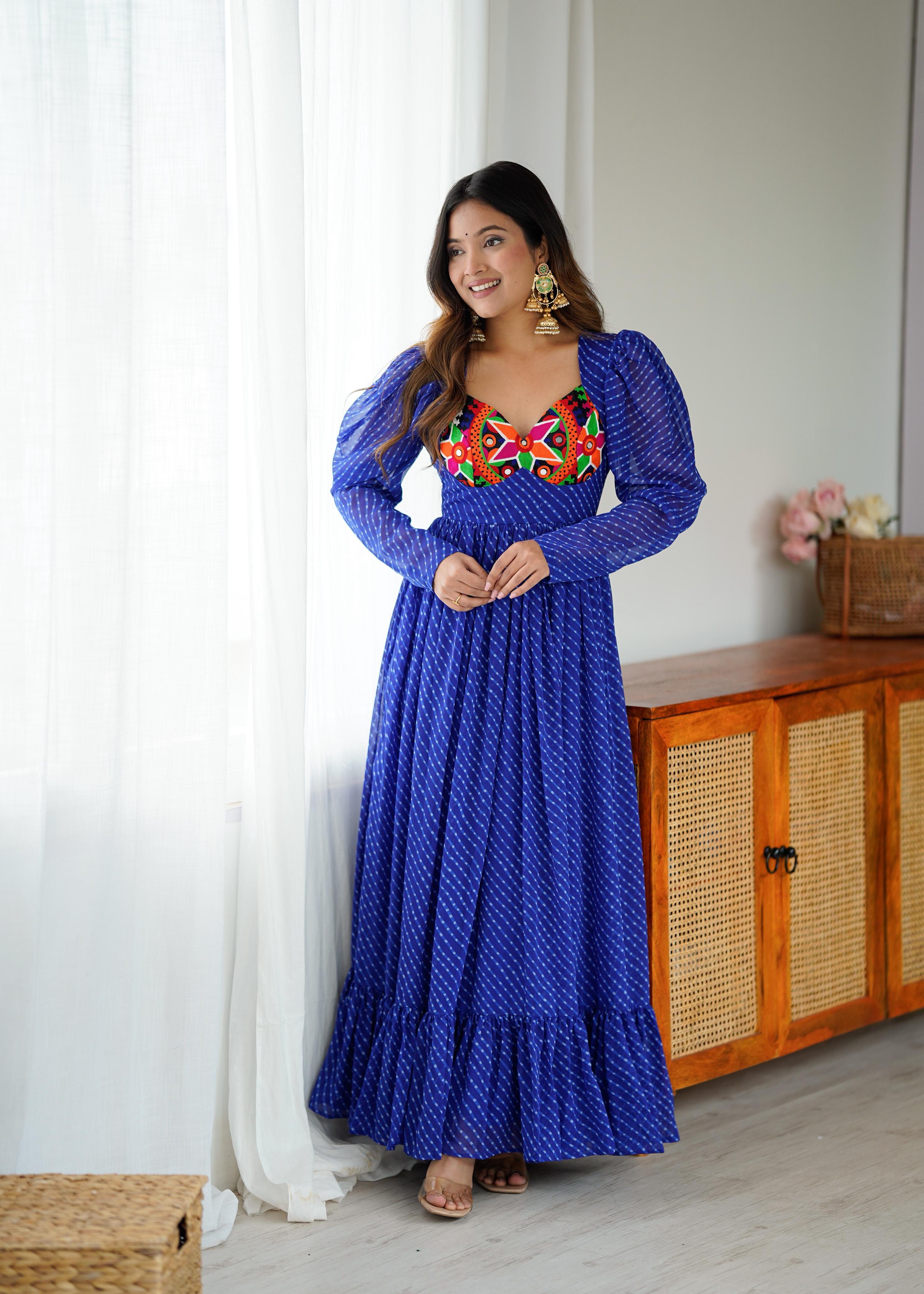
Check the kurta length with the intended bottom. A long Anarkali or straight kurta should not catch under the heel, and Patiala trousers should taper securely without pressing into the ankle. If alterations are possible, prioritise shoulder width, armhole comfort and trouser length before making small waist adjustments.
Inspect photographs for lining, sleeve finish, neckline depth and the placement of embroidery. Sequence embroidery can add weight, particularly across the front panel or dupatta border. A useful test is to lift both arms for ten seconds and rotate the upper body; pulling across the chest or shoulders indicates that the size or cut needs reconsideration.
Plan delivery and tailoring with a buffer of at least one week before Navratri. A last-minute alteration may change the balance between the kurta and trousers, while a rushed steam treatment can damage delicate Chanderi or attached embellishment. Collections such as Red Dress Materials Under 2000 can help with budget planning, but a lower price should never replace accurate measurements and a clear care plan.
Traditional Indian Suit Styles for Navratri and Dandiya: Care after the celebration
Dry cleaning or gentle professional cleaning is usually safer for heavily embroidered silk, sequinned crepe and embellished Vichitra silk suits. Do not scrub sequence work, soak zari-like trims overnight or wring a lined kurta at home. Follow the care label, and ask the cleaner to protect loose embellishments before processing the garment.
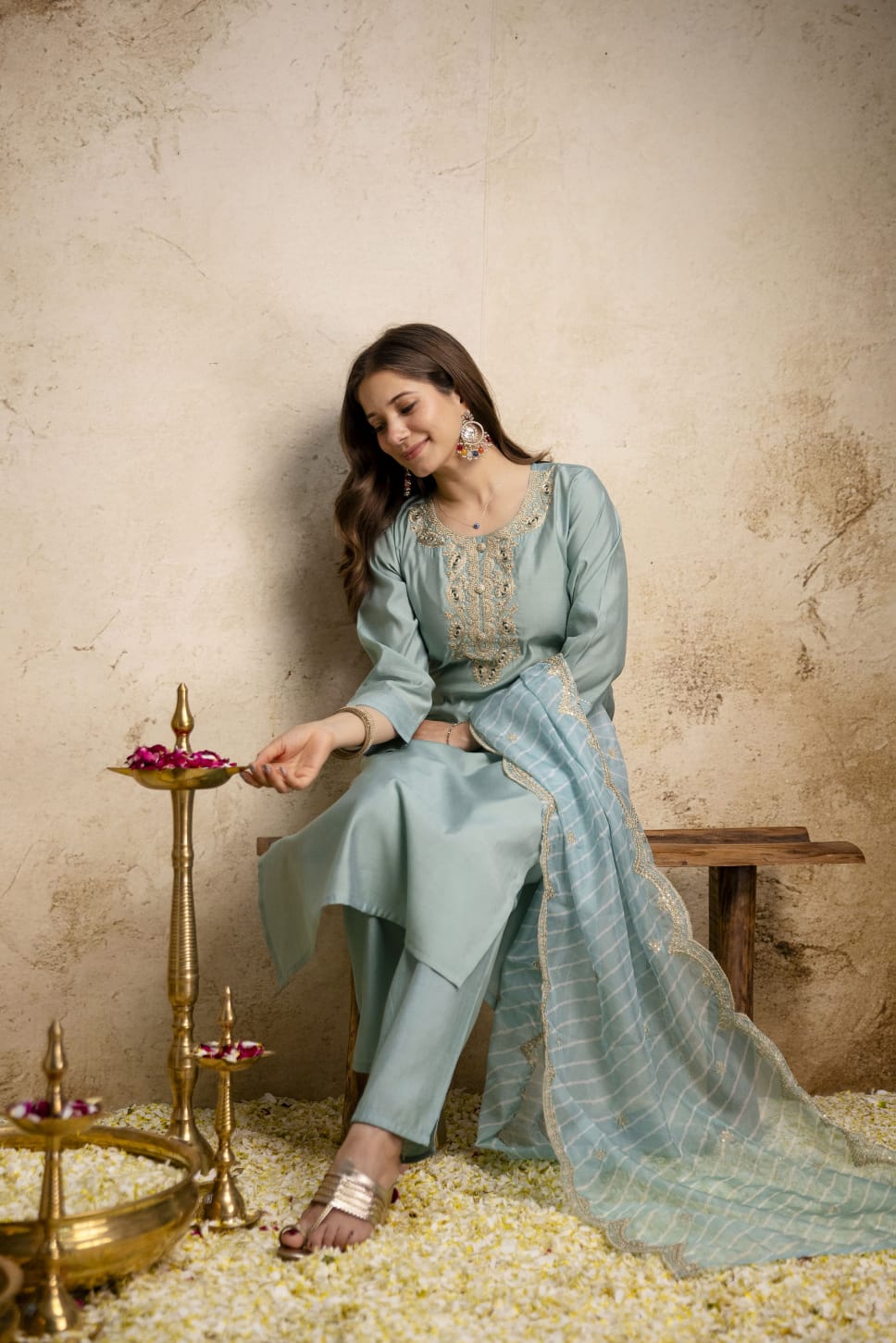
Air a worn suit in shade before storing it, particularly if it has been exposed to sweat, perfume or outdoor dust. Store Chanderi and silk garments folded with clean, acid-free tissue between embellished layers so that embroidery doesn't press into the fabric. Avoid hanging heavy suits for many months because the shoulder area can stretch.
Small marks should be treated quickly with a clean, dry cloth rather than aggressive spot removers. Keep sequinned garments away from Velcro, rough jewellery boxes and unfinished wooden surfaces. Proper storage allows a Navratri suit to return for family functions, weddings and regional festivals without losing its shape or surface finish.
Questions About Traditional Indian Suit Styles for Navratri and Dandiya
Which salwar suit style is best for Garba and Dandiya?
A Patiala set, moderate-flare Anarkali or straight kurta with comfortable trousers is generally practical for Garba and Dandiya. Choose a silhouette that leaves room at the shoulders, hips and knees while keeping the hem away from the floor.
Which fabric is most comfortable for a Navratri salwar suit?
Lightweight Chanderi, viscose Chanderi and natural crepe are often comfortable for extended wear because they avoid excessive bulk. Vichitra silk and heavy silk crepe suit dressier events, but lining, embellishment weight and venue temperature should be checked before choosing them.
How can I stop my dupatta from slipping during Dandiya?
Pin the dupatta at the shoulder and add a second discreet pin near the waist or opposite side. Test the completed drape by raising both arms, turning and walking before the event, and avoid slippery or excessively long fabric that can reach the feet.
What should I wear to a daytime Navratri event?
A pastel, beige, mustard or other light-toned embroidered kurta set in Chanderi or a similar lightweight fabric works well for daytime Navratri. Moderate embellishment and breathable construction are more comfortable in sunlight than a heavily layered silk outfit.
Can I wear a black salwar suit for Navratri?
Yes, a black salwar suit can look festive when it includes visible embroidery, sequins or textured fabric and is styled with colourful or metallic accessories. Black Heavy Silk Crepe Kurta Set with Sequence Embroidery is an example of using surface detail to keep a dark outfit celebratory.
How early should I order a Navratri suit?
Order at least one week before the event when possible, and allow additional time if tailoring or alterations are needed. Measuring against the size chart, checking the garment length and testing the dupatta before Navratri prevents avoidable last-minute problems.