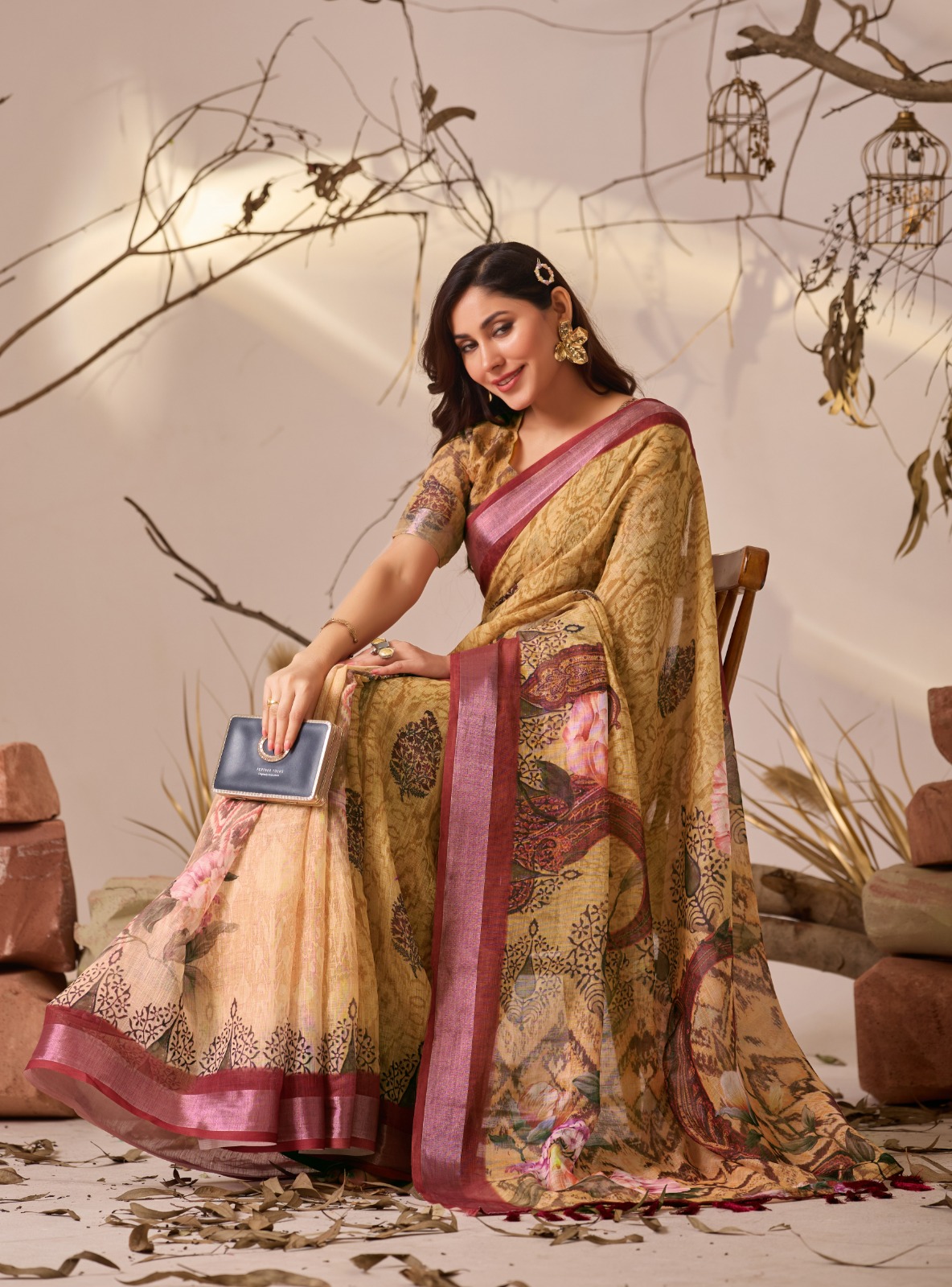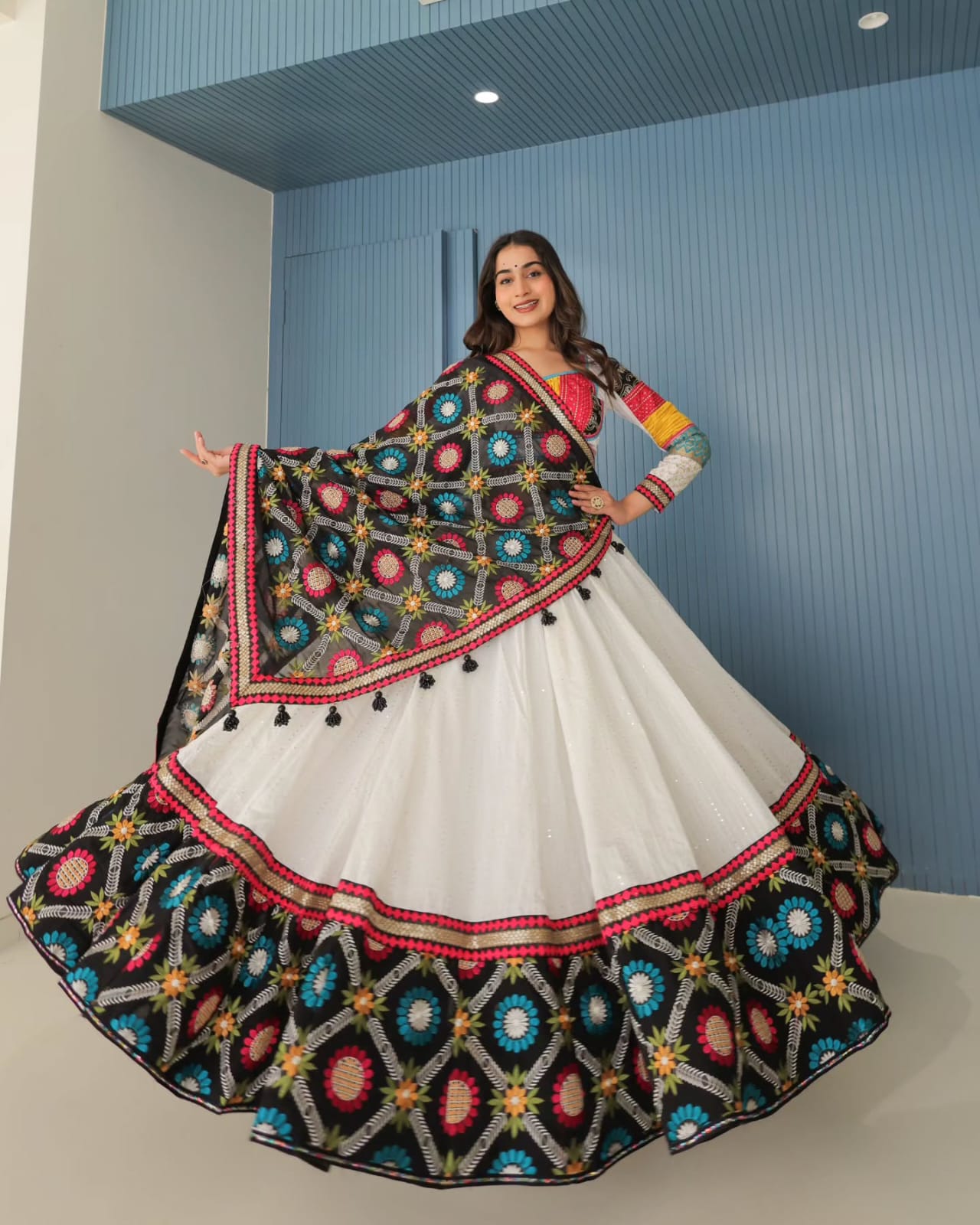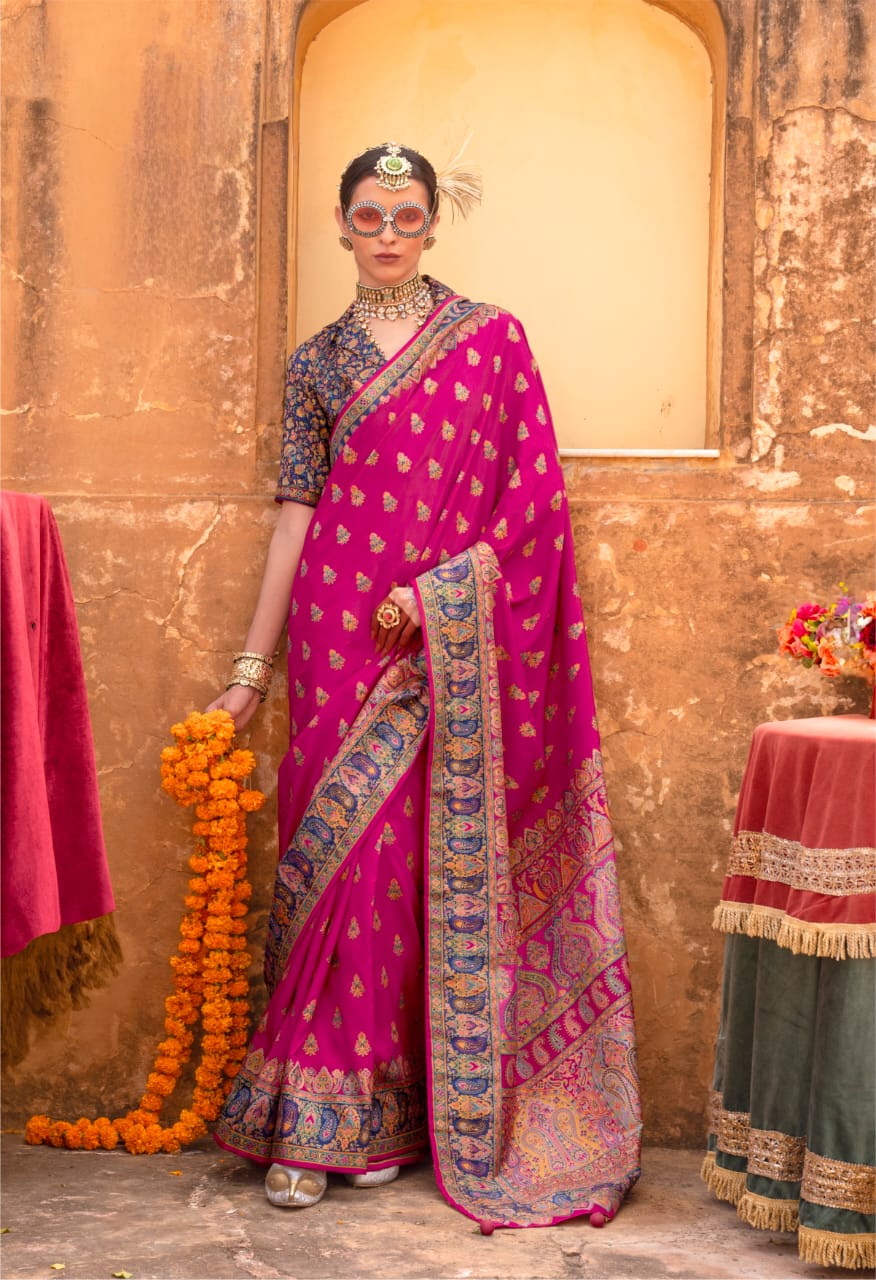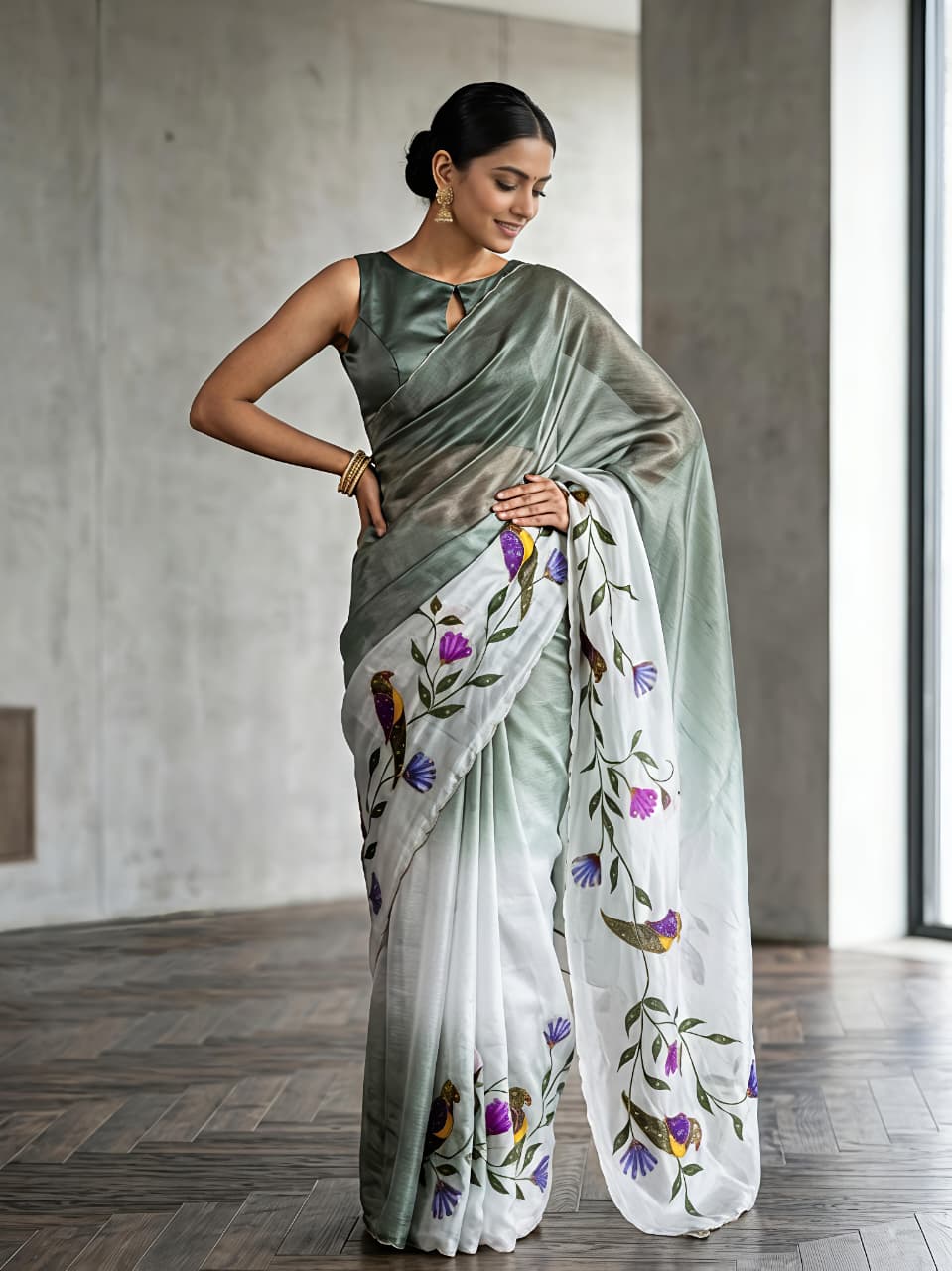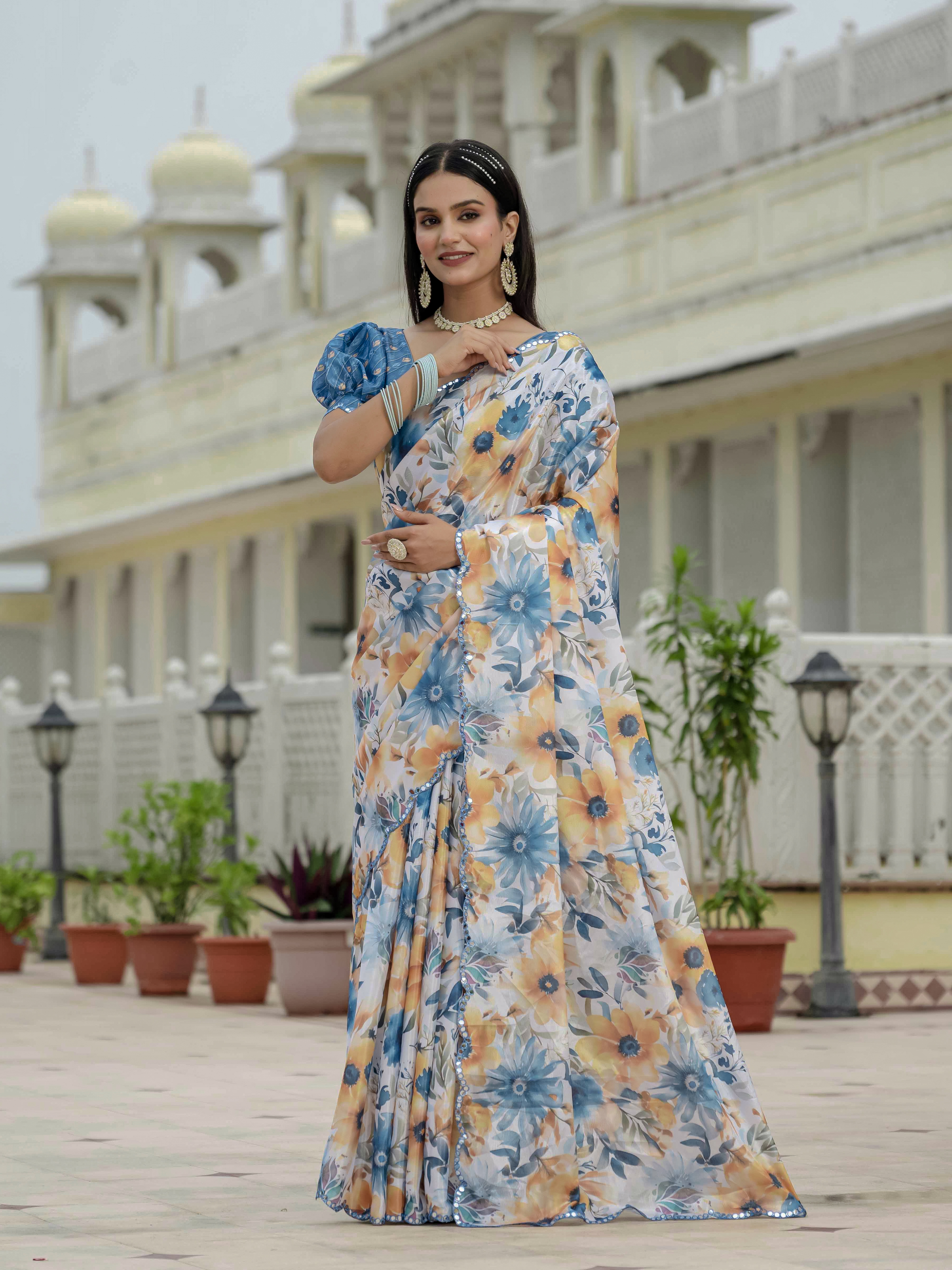
Traditional Bengali Dress for Women: Sarees, Blouses & Ethnic Styling begins with understanding the textile, the drape and the setting in which each garment is worn. A crisp Tant saree suits a warm afternoon, a Jamdani brings delicate texture to a formal gathering, and a red-bordered white saree carries unmistakable ceremonial meaning. The blouse, jewellery, hair and footwear complete the visual language. Bengali style can feel richly traditional without looking costume-like because the strongest looks depend on proportion, fabric behaviour and cultural context.
Traditional Bengali Dress for Women: Sarees That Define the Look
Bengali saree dressing is distinctive because it combines handloom textiles, a broad pallu, a recognisable red-and-white colour tradition and a relaxed yet graceful drape. The classic Atpoure style allows the pallu to travel over the left shoulder, come around the back and return over the right shoulder, often with the end tucked or held for movement.
The Atpoure drape is associated with older Bengali domestic and ceremonial dress, while the modern pleated Nivi drape is practical for office wear, travel and long events. Neither style is the only correct option. A saree should remain secure at the waist, allow comfortable walking and suit the fabric's weight.
Bengali sarees also communicate occasion. Garad and Korial sarees, usually recognised by pale grounds and red borders, are connected with puja and festive dressing. Baluchari sarees use narrative motifs woven into the pallu and are suited to occasions where the textile itself deserves attention. Tant cotton is lighter and breathable, making it valuable for summer celebrations and everyday ethnic wear.
Traditional Bengali Dress for Women and Handloom Fabrics
Tant is a handloom cotton tradition associated strongly with Bengal and Bangladesh. Tant sarees are generally airy, absorbent and comparatively easy to wear for several hours. Starched Tant creates a crisp silhouette, while a softer finish gives easier movement. Dhakai Jamdani is recognised for supplementary-weft motifs, often floral or geometric, that appear to float across the ground.
A Tant saree usually pairs well with a structured cotton blouse, small gold earrings and a neatly pinned pallu. A Jamdani already contains visual detail, so a solid blouse in a border colour prevents the outfit from appearing crowded. Handwashing in cool water or using a specialist cleaner is safer than frequent machine washing for delicate Jamdani work.
Traditional Bengali Dress for Women in Red, White and Gold
Garad and Korial sarees are traditional choices for puja, Bengali New Year celebrations and many family rituals. Their off-white or cream body with a red border creates a strong graphic contrast, particularly when worn with a red blouse and a low bun decorated with flowers.
White-and-red styling should be treated as a cultural visual language rather than a compulsory uniform. A muted maroon, rust or deep green blouse can preserve the traditional mood while offering a more contemporary result. Red zari work can add ceremony, but heavy embellishment isn't necessary when the border already carries definition.
Traditional Bengali Dress for Women: Choosing the Right Blouse
The blouse should balance the saree's border, motif scale, fabric weight and neckline rather than compete with all four elements. A plain saree can support a printed or textured blouse, while a Jamdani, Baluchari or heavily bordered saree usually looks more composed with a quieter blouse.
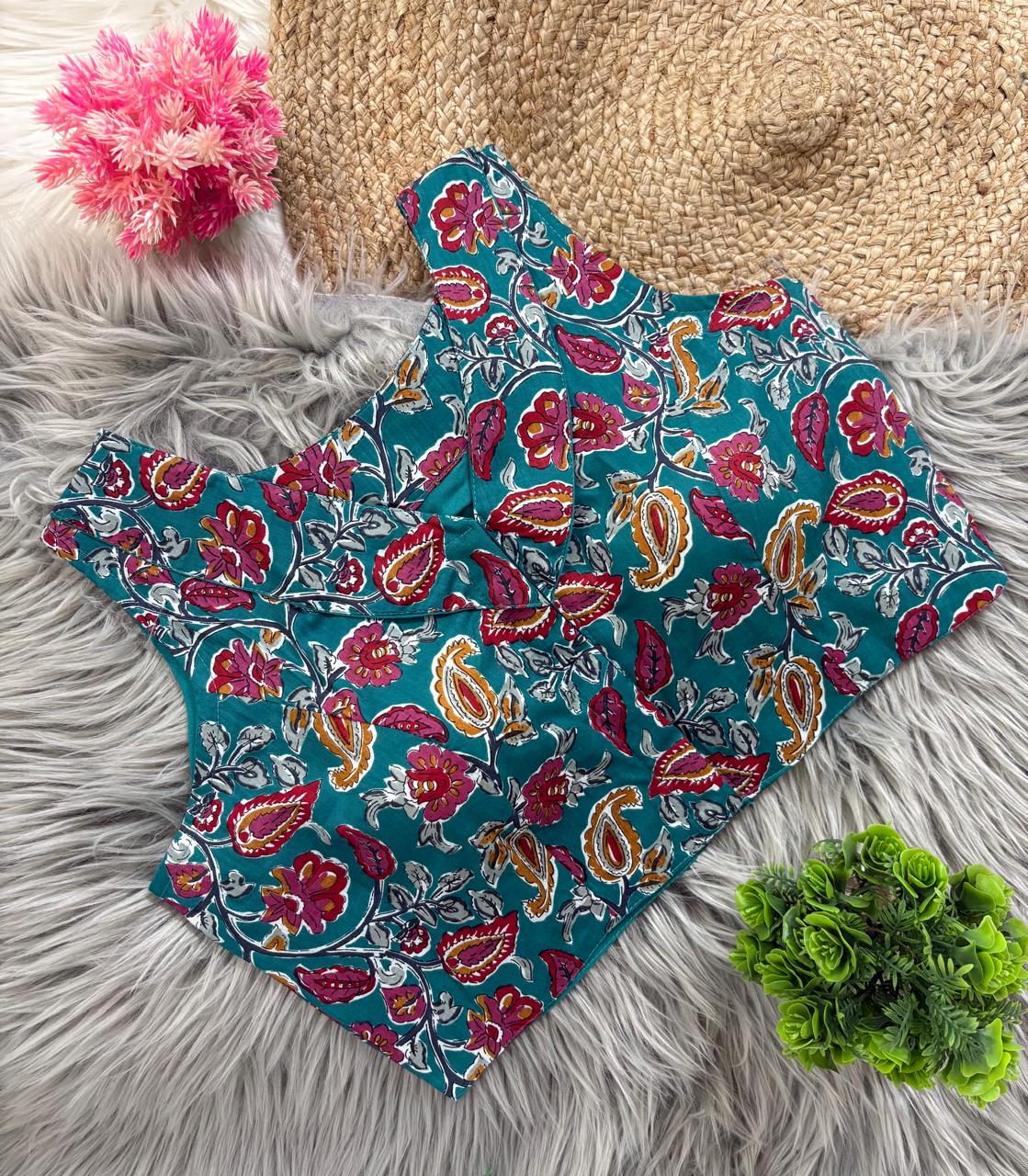
Neckline depth affects both comfort and proportion. A boat neck broadens the shoulder line and works well with a broad pallu. A V-neck lengthens the upper body and suits layered necklaces. A high round neck gives a clean traditional appearance with statement earrings. A collar neckline can bring a tailored, current edge to a handloom cotton saree.
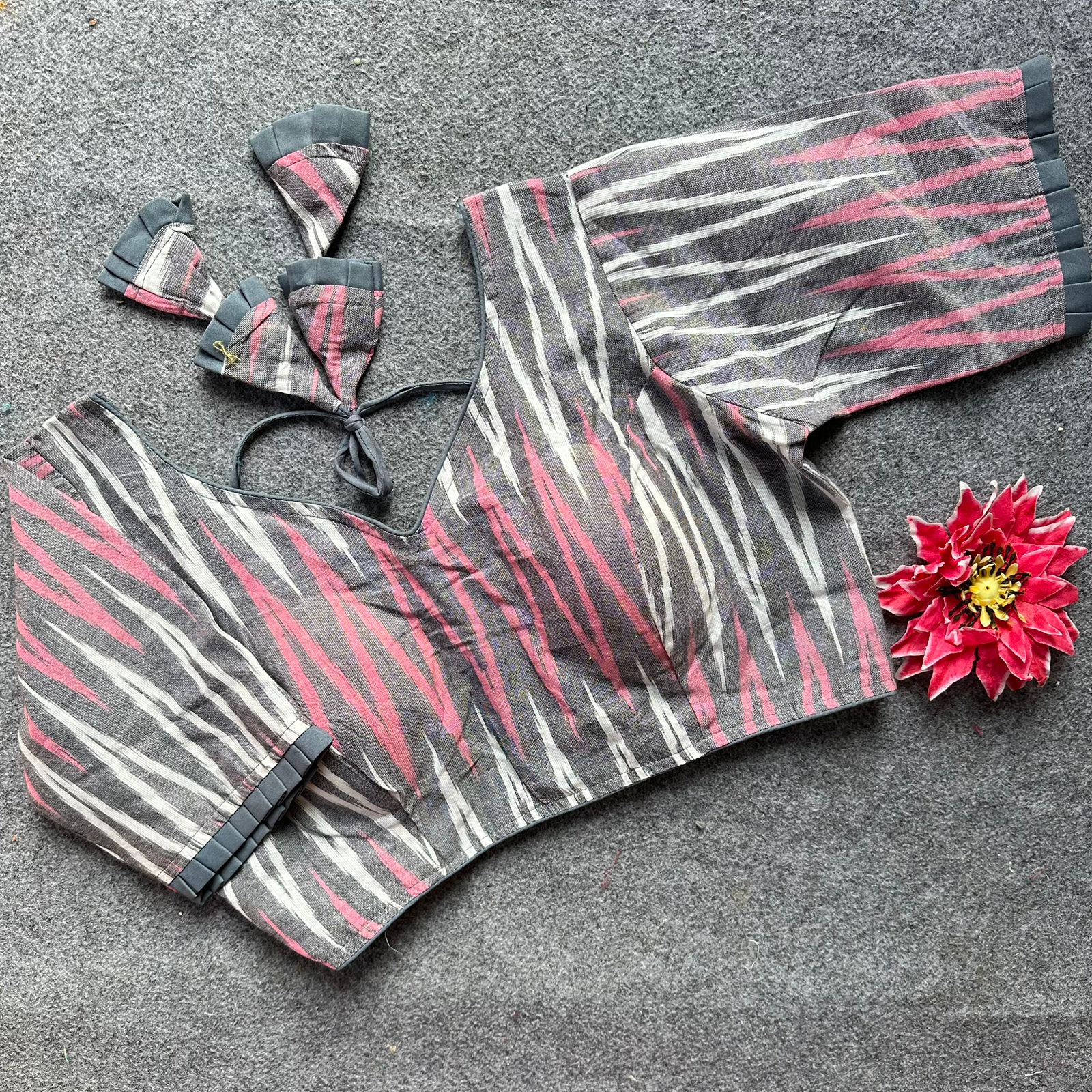
Sleeve length also changes the character of the outfit. Elbow-length sleeves look formal and provide a balanced frame for a wide border. Short sleeves feel lighter for summer. Three-quarter sleeves are useful for modesty and work particularly well with cotton sarees, provided the sleeve isn't so tight that it restricts arm movement during draping.
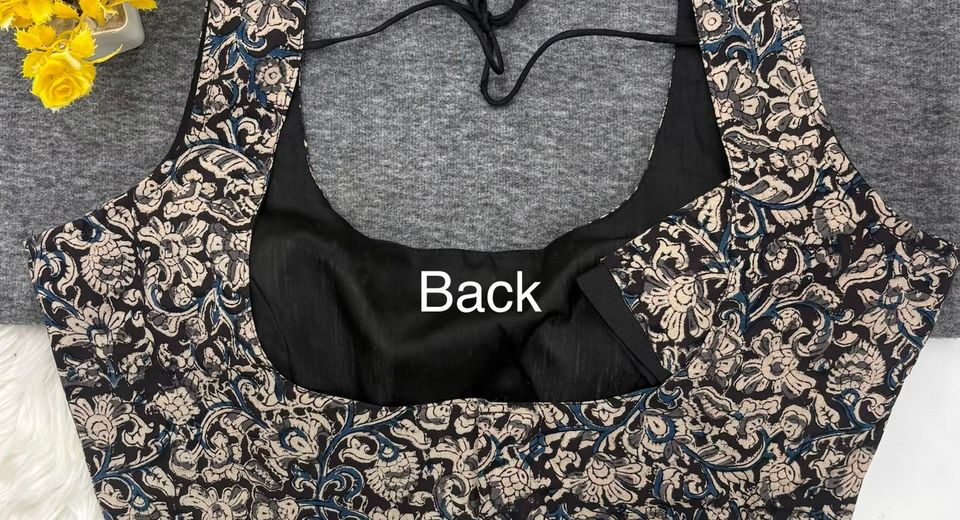
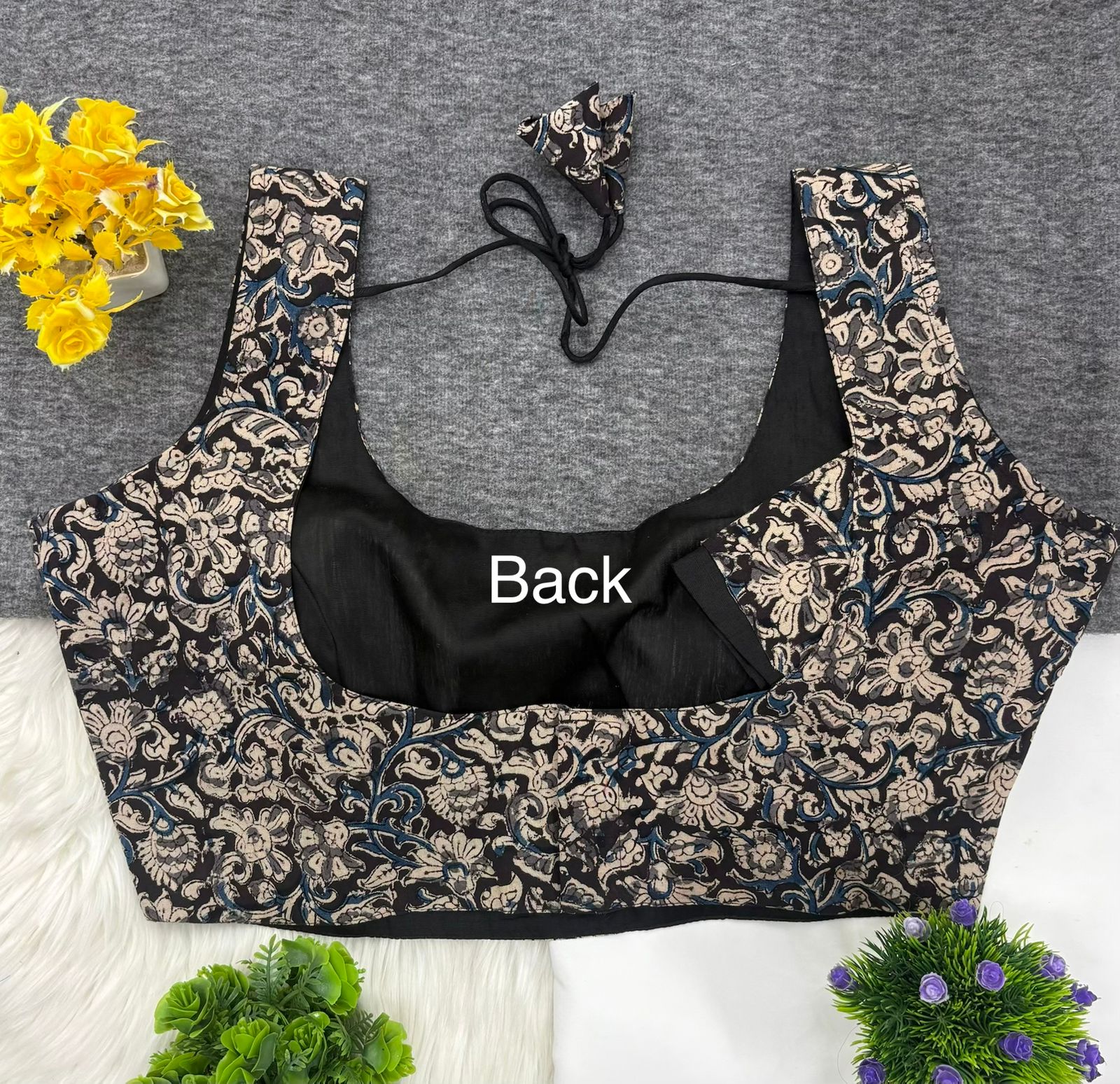
A padded blouse can improve structure under a thin cotton or lightweight silk saree, especially when the blouse has a broad neckline. Pure Kalamkari Cotton Padded Blouse for Women illustrates how a printed cotton surface can introduce craft detail while built-in structure keeps the upper silhouette neat.
A collar blouse changes the visual rhythm of a saree by introducing a sharper neckline and a more defined shoulder. Kalamkari Cotton V Neck Collar Blouse for Women can be used with a plain Tant saree when the wearer wants the blouse to act as the focal point. Kalamkari prints are especially effective with indigo, rust, mustard, cream and muted green sarees.
Blouse fit should be checked through movement rather than by standing still. Raise both arms, sit down and take the hands forward before approving the final fit. A blouse that pulls across the bust or cuts into the armhole will become upper during rituals, meals and photographs. A two- to three-centimetre seam allowance is functional when later alterations may be needed.
Traditional Bengali Dress for Women: Draping for Comfort and Authenticity
A comfortable Bengali drape requires a secure waist tuck, evenly distributed pleats and a pallu that's pinned without being pulled too tightly. Authenticity comes from understanding the chosen drape, not from allowing the saree to slip or adding decorative elements that don't suit the textile.
Wear a well-fitted petticoat or underskirt with a firm but comfortable waistband. A flared underskirt helps heavier sarees move, while a slimmer one works better under lightweight cotton.
Tuck the saree at the waist with the lower edge parallel to the floor. Uneven height at the first tuck will make the hem look irregular after pleating.
Create five to seven front pleats of similar width, depending on the saree and the wearer's height. Cotton sarees often hold six or seven pleats well; bulky silk may need fewer.
Secure the pleats just below the navel or at the wearer's preferred waist position. A concealed safety pin can prevent loosening while preserving a natural fall.
Bring the remaining fabric around the body and place the pallu over the left shoulder for a familiar Bengali arrangement. Pin near the shoulder seam rather than at the outermost edge to avoid visible pulling.
For an Atpoure-inspired finish, bring the pallu back around the body and over the right shoulder. Keep enough length for movement and avoid dragging the border on the floor.
A belt can modernise the drape, but a belt should sit over the saree without crushing zari or delicate Jamdani motifs. For long ceremonies, two small concealed pins at the shoulder and waist are usually more reliable than one large pin carrying the full weight of the pallu.
Saree length also affects the final result. A wearer around 160 centimetres tall will often find a five-and-a-half-metre saree manageable, while a taller wearer or someone choosing a more elaborate pallu arrangement may prefer six metres. The correct length depends on the border width, pleat depth and whether the saree includes a separate blouse piece.
Traditional Bengali Dress for Women: Jewellery, Hair and Colour
Red, white, ivory, vermilion, gold, indigo and green are dependable colours for Bengali ethnic styling, but the best combination depends on the saree's undertone and border. Warm red complements cream and antique gold, while indigo looks refined with silver, dull gold or a contrasting rust blouse.
Traditional Bengali jewellery often includes a broad gold necklace, jhumka earrings, bangles, a nose pin and a distinctive hair ornament. A wearer doesn't need every piece at once. One statement necklace with small earrings may be more elegant than a heavy necklace, large earrings and a prominent nose ring competing together.
Shakha and pola, the white conch-shell and red coral bangles associated with Bengali married women, carry cultural meaning and should not be treated merely as costume accessories. Their use depends on family custom, marital status and personal comfort. Gold-toned metal bangles provide a visually similar festive effect for those who don't follow that tradition.
A low bun with white flowers is one of the clearest ways to reinforce a Bengali festive look. A centre parting with sindoor may hold religious and marital significance, so it should be worn according to personal identity and custom rather than copied as a decorative trend.
Jewellery scale should respond to the saree border. A wide zari border can support antique-gold earrings and a substantial necklace, whereas a fine Tant border may look better with a delicate chain, small jhumkas and two or three bangles. Matching every accessory to the blouse is less important than repeating one colour or metal finish across the outfit.
Traditional Bengali Dress for Women: Styling by Occasion
Traditional Bengali dress can be adapted to the occasion by changing the textile weight, blouse structure, jewellery scale and drape security. The same red-bordered saree can feel ceremonial with gold jewellery or understated with a cotton blouse and small earrings.
Traditional Bengali Dress for Women at Puja and Cultural Celebrations
For Durga Puja, Saraswati Puja or Poila Boishakh, a Tant, Garad or Korial saree brings breathable comfort and cultural clarity. Pair an ivory saree with a red blouse, a compact bun and medium-sized gold earrings when moving between pandals or family gatherings. Comfortable sandals are usually more practical than narrow heels on crowded routes.
Traditional Bengali Dress for Women at Weddings
For a Bengali wedding guest outfit, choose silk, Baluchari, Banarasi silk or cotton with zari according to the event time and venue. A formal reception allows a more embellished blouse, while a daytime ceremony usually benefits from lighter fabric and jewellery that won't feel heavy in warm weather.
Blue Zari Work Cotton Saree for Wedding demonstrates how a cooler base colour and metallic detail can create wedding formality without relying on the usual red palette. Cotton with zari is particularly useful for daytime weddings because it's lighter than many pure silk alternatives. Pair a blue saree with an antique-gold blouse, a rust blouse or a cream blouse depending on the zari tone.
Traditional Bengali Dress for Women for Everyday Ethnic Wear
For office wear, family lunches and cultural programmes, a soft Tant or cotton saree with a fitted blouse offers a practical balance of polish and comfort. Keep the pallu pinned, choose low-profile jewellery and use a handbag that doesn't catch on the zari border. A printed Kalamkari blouse can make a plain saree more distinctive without requiring heavy accessories.
Traditional Bengali Dress for Women: Care and Practical Buying Advice
Traditional Bengali sarees last longer when fabric care matches the weave, dye and embellishment. Read the care label before washing, especially when a saree contains zari, Jamdani motifs, vegetable dyes or a silk blend.
Wash cotton Tant separately in cool water during the first few washes because excess dye may release from a deep red or indigo border.
Use a mild detergent and avoid chlorine bleach, which can weaken cotton fibres and alter ivory, red and cream shades.
Dry handloom sarees in indirect sunlight rather than harsh midday sun, which can fade natural and reactive dyes.
Store silk, Baluchari and zari sarees folded with the pallu and border repositioned every few months to reduce permanent crease lines.
Wrap delicate sarees in clean muslin instead of airtight plastic, because trapped moisture can encourage mildew and tarnish metallic thread.
Buying decisions should begin with the event calendar. Choose breathable cotton when the saree will be worn for six or more hours in warm weather. Choose silk or a richer weave when the venue is formal and climate control makes heavier fabric comfortable. Check the blouse length, fall, lining and return-alteration options before assuming that the listed saree measurements will suit every wearer.
Traditional Bengali Dress for Women becomes more personal when heritage details are selected with intention. A red border can carry ritual associations, a Jamdani can showcase handloom skill, and a well-cut blouse can make the entire drape easier to wear. The most convincing ensemble respects the fabric, allows movement and gives each cultural detail enough room to be seen.
Common Questions About Traditional Bengali Sarees and Blouse Styling
What saree is traditionally worn by Bengali women?
Tant, Garad, Korial, Jamdani and Baluchari sarees are strongly associated with Bengali dress. Garad and Korial sarees are especially recognisable for pale bodies with red borders, while Tant is valued for breathable cotton and Baluchari for detailed woven pallus.
How do you style a Bengali saree for Durga Puja?
Wear a Tant, Garad or Korial saree with a red, cream or deep-coloured blouse, gold-toned jewellery and a low bun with flowers. Pin the pallu securely and choose comfortable footwear because Durga Puja often involves walking between several venues.
Which blouse neckline suits a Bengali saree?
A boat neck, high round neck or V-neck suits a Bengali saree depending on the border and jewellery. A boat neck balances a broad pallu, a V-neck works well with layered necklaces and a high round neck lets statement earrings take focus.
Can a Bengali saree be worn with a printed blouse?
A printed blouse works best with a plain Tant, cotton or lightly bordered saree. Kalamkari prints pair effectively with indigo, rust, mustard, cream and muted green, while a heavily patterned Jamdani or Baluchari usually needs a quieter blouse.
What is the difference between the Atpoure and Nivi saree drapes?
The Atpoure drape places the pallu over the left shoulder and brings it around to the right shoulder, creating a recognisably Bengali arrangement. The Nivi drape uses front pleats and a single pallu over the left shoulder, making it practical for everyday movement.
How should a Bengali silk or Jamdani saree be stored?
Store a Bengali silk or Jamdani saree clean and completely dry, folded in muslin rather than plastic. Refold delicate sarees every few months, keep them away from direct sunlight and use professional cleaning when zari, fragile motifs or colour bleeding is a concern.