A Three Piece Suit That Looks Good Even Without Its Dupatta can give you the polish of coordinated ethnic wear with the ease of a two-piece outfit. The key isn't simply leaving one layer behind; the kurta and bottom must already have enough structure, colour, texture or embroidery to look complete together. A well-cut neckline, a defined hem, a balanced trouser or salwar shape and carefully chosen accessories can make the outfit feel intentional for work, travel, festive lunches and smaller family gatherings.
Many three-piece sets are designed so the dupatta adds colour or volume, but some kurta-and-bottom combinations carry the visual interest independently. Silk blends, Chanderi, Vichitra silk and embroidered fabrics are particularly useful because surface detail remains visible when the dupatta is removed. The result is lighter to wear, easier to move in and often more practical in warm Indian weather.
What makes a Three Piece Suit That Looks Good Even Without Its Dupatta work?
A Three Piece Suit That Looks Good Even Without Its Dupatta needs a deliberate relationship between the kurta and bottom, plus enough detail on the kurta to anchor the outfit. Strong construction, visible finishing and proportion matter more than heavy decoration.
Start by examining the outfit as a pair. A plain kurta with plain trousers may look unfinished if the dupatta supplies the only contrast. A floral print, embroidered neckline, textured weave, contrast border or distinctive sleeve can provide a clear focal point instead. The bottom should support that focal point rather than compete with it.
Check the kurta before checking the accessories
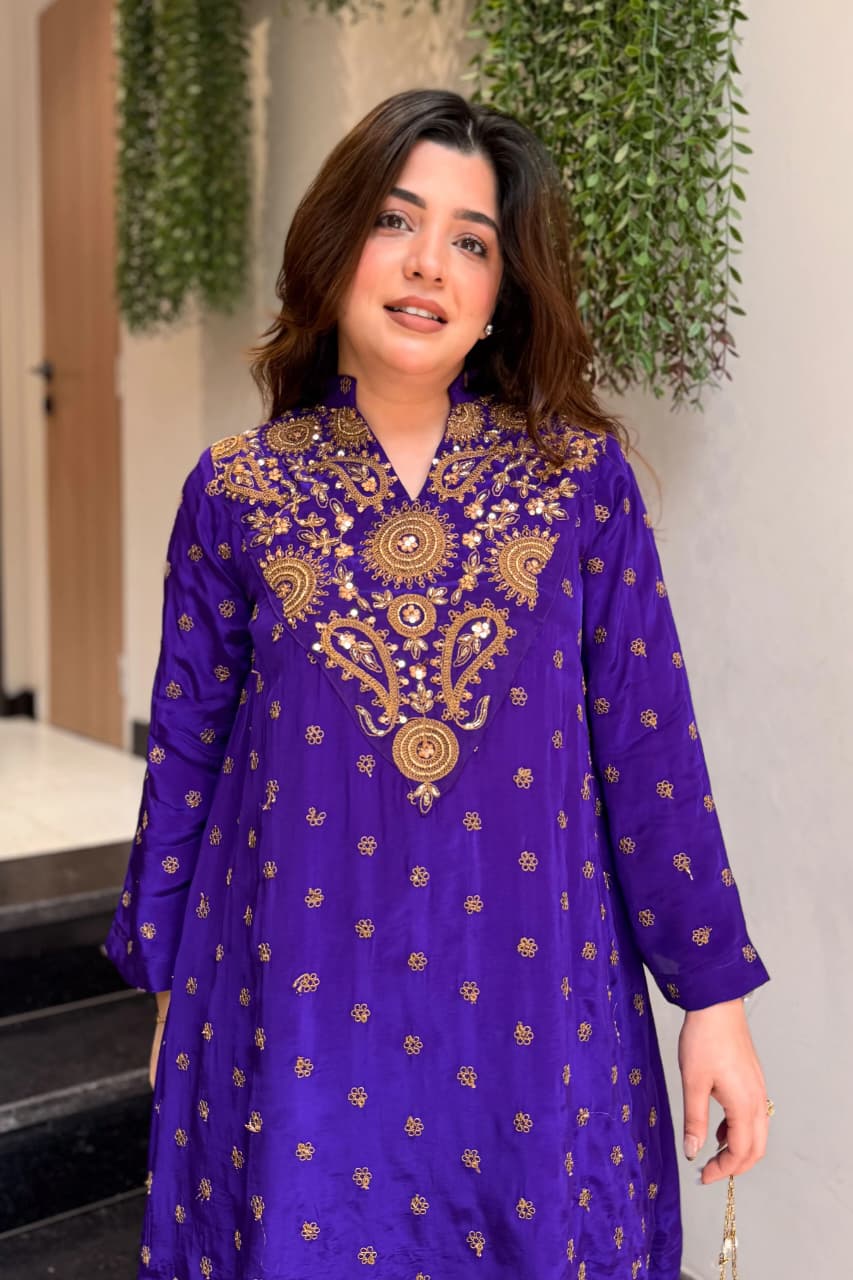
A kurta can stand alone when its neckline, front panel, sleeves or hemline include at least one recognisable design feature. Embroidery around the yoke, a printed body, tonal threadwork, a shaped hem or a contrasting cuff gives the eye something to read.
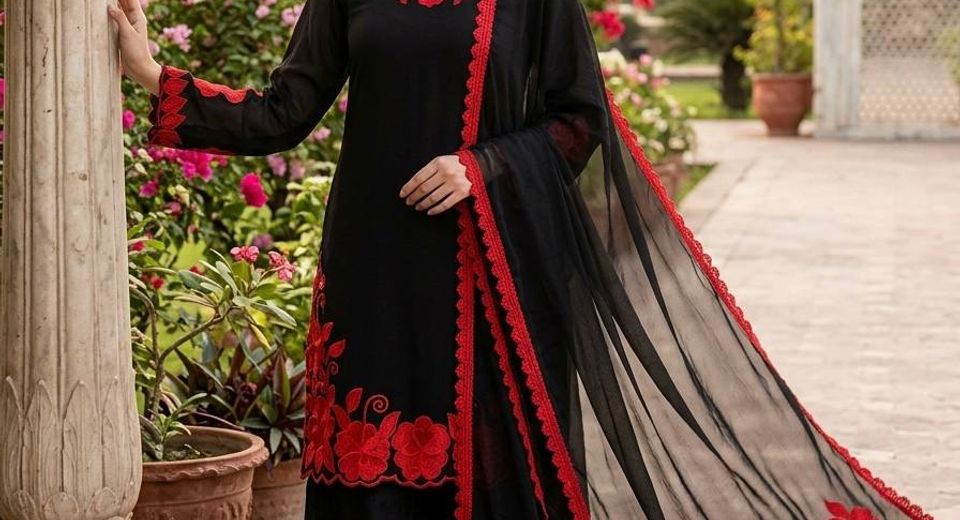
Black and white create enough contrast for the Black White Floral Embroidered Readymade Salwar Suit to remain visually connected even without a dupatta. Floral embroidery prevents the outfit from looking like an ordinary plain set. A small black handbag and low-profile footwear can finish the look without adding another competing print.
The Mustard Viscose Chanderi Kurta Set with Sequence Embroidery takes a different route. Mustard supplies colour, Viscose Chanderi contributes a light woven character and sequin embroidery adds evening interest. Such a set can be worn without the dupatta when accessories are restrained and the bottom remains in the same colour family.
Which fabrics help a Three Piece Suit That Looks Good Even Without Its Dupatta?
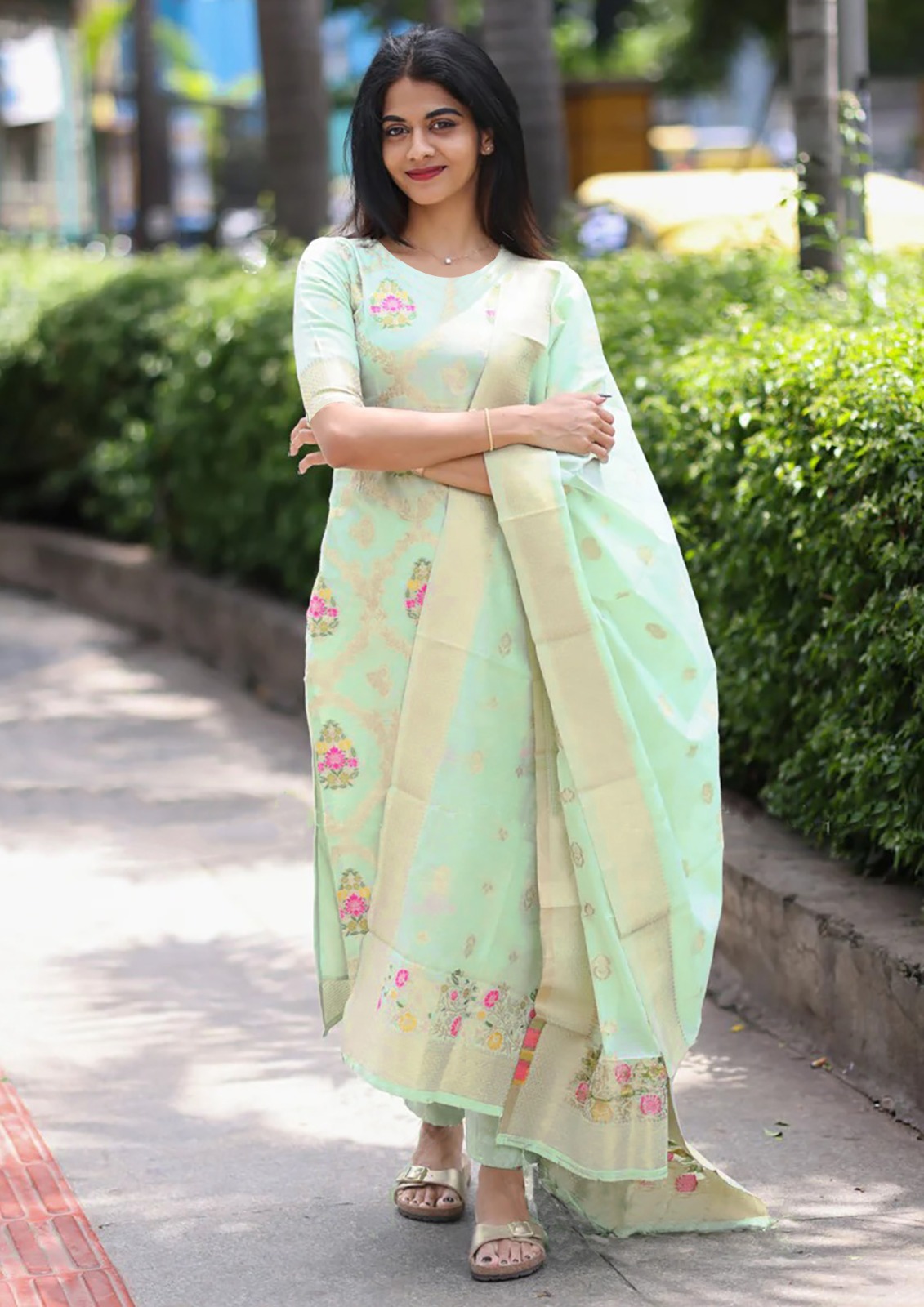
Chanderi, Vichitra silk, Banarasi silk and selected viscose fabrics suit dupatta-free styling because their weave, sheen or embroidery gives the outfit enough visual substance. Breathable cotton and cotton-silk blends can also work when the kurta has a strong print or border.
Fabric affects how complete an outfit looks because fabric controls drape, light reflection and body. A limp, unstructured kurta can appear casual when separated from its dupatta, while a fabric with moderate body keeps the shoulder, sleeve and hemline defined.
- Chanderi: Chanderi has a light, slightly crisp character that helps a kurta retain shape. Chanderi silk embroidered sets work well for daytime celebrations, festive lunches and warm-weather dressing.
- Vichitra silk: Vichitra silk offers a smoother, richer fall than many everyday fabrics. Embroidery or a carefully placed border can make a Vichitra silk kurta feel finished without an additional layer.
- Viscose Chanderi: Viscose Chanderi combines a fluid hand with a subtle dressed-up surface. Sequence embroidery can provide enough sparkle for an evening meal or intimate celebration.
- Banarasi silk: Banarasi silk is recognised for its rich woven surface and zari traditions. A Banarasi-inspired kurta may not need a dupatta if the weave is visible and the bottom is kept clean.
- Cotton and printed blends: These fabrics are practical for daily wear, but they benefit from a defined neckline, a well-finished sleeve and a bottom with a neat fall.
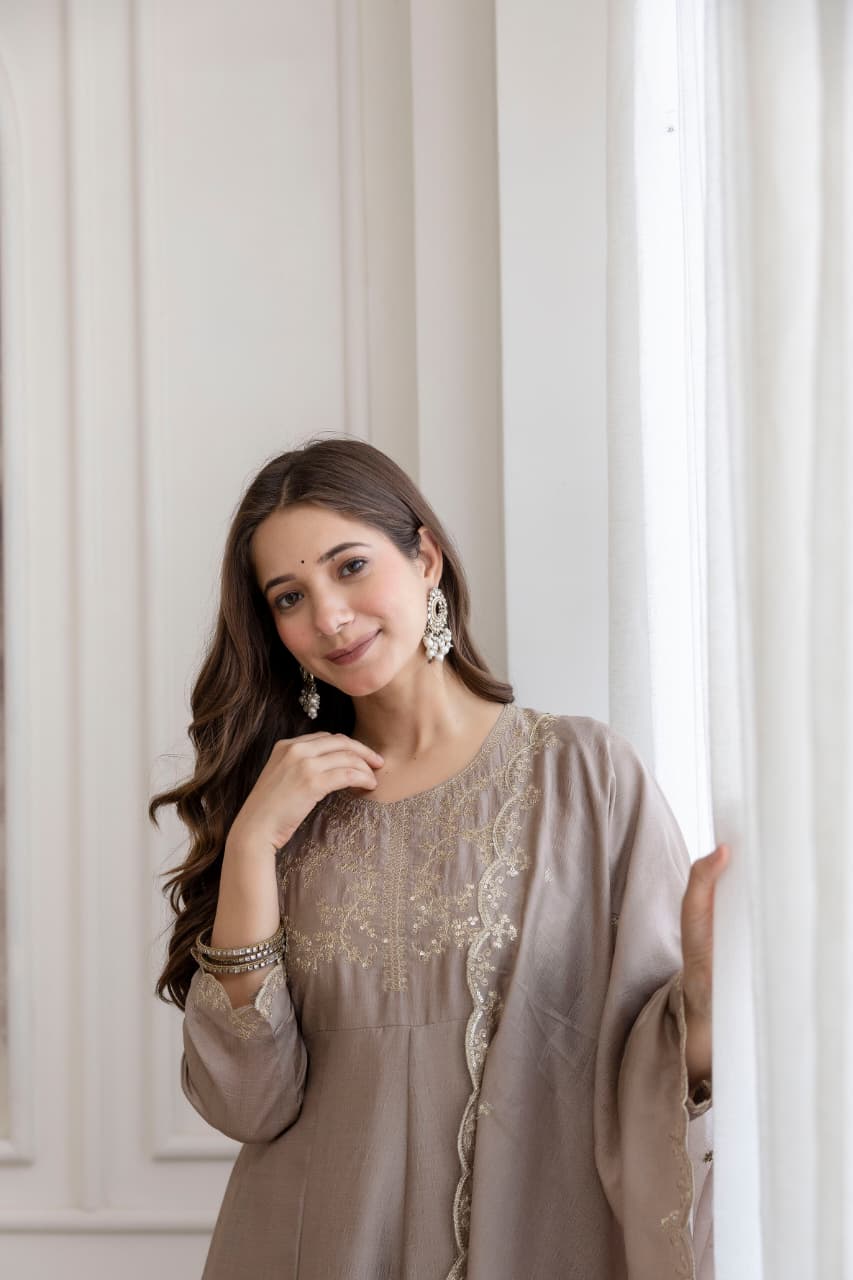
The Taupe Beige Embroidered Vichitra Silk Kurta Set Online demonstrates why neutral silk tones can work independently. Taupe and beige create a quiet base, while embroidery supplies the detail. Gold-toned earrings or a muted metallic sandal can connect the outfit to an evening setting without making it look overworked.
A fabric label should not be the only buying consideration. Check opacity in daylight, the amount of ironing required, whether the bottom is lined and how the fabric behaves at the knees after sitting. A beautiful weave is less useful if the outfit loses its shape after a short commute.
How should you balance a Three Piece Suit That Looks Good Even Without Its Dupatta?
The kurta and bottom should balance each other through proportion, not identical decoration. A detailed kurta usually looks best with a cleaner bottom, while a wide-leg, flared or printed bottom needs a simpler upper half.
Length changes the visual relationship. A straight kurta ending around the knee often works with straight pants, cigarette trousers or a narrow salwar. A longer kurta can be paired with a slim bottom to keep the silhouette vertical. A shorter kurta can accommodate a palazzo or a fuller Patiala-inspired bottom when the outfit is meant to feel relaxed.
Colour balance matters just as much. A black kurta with a red accent can look purposeful without its dupatta when red appears in embroidery, piping or the bottom. The Black Red Fendy Silk 3 Piece Readymade Salwar Suit Set brings an useful example: a dark base creates definition, while the red element gives the pairing energy and prevents a flat monochrome effect.
The Elegant Teal Embroidered Kurta Pant Dupatta Set shows how a saturated jewel tone can do most of the styling work. Teal remains noticeable without requiring a contrasting stole. Choose neutral footwear, or repeat the teal in a small accessory, rather than introducing a third bright colour.
Choose the bottom according to the setting
Straight pants create the neatest office-friendly silhouette, cigarette pants look polished with medium-length kurtas and palazzos bring ease to daytime festive dressing. Patiala-style bottoms add volume and cultural character but need a kurta that's not excessively flared.
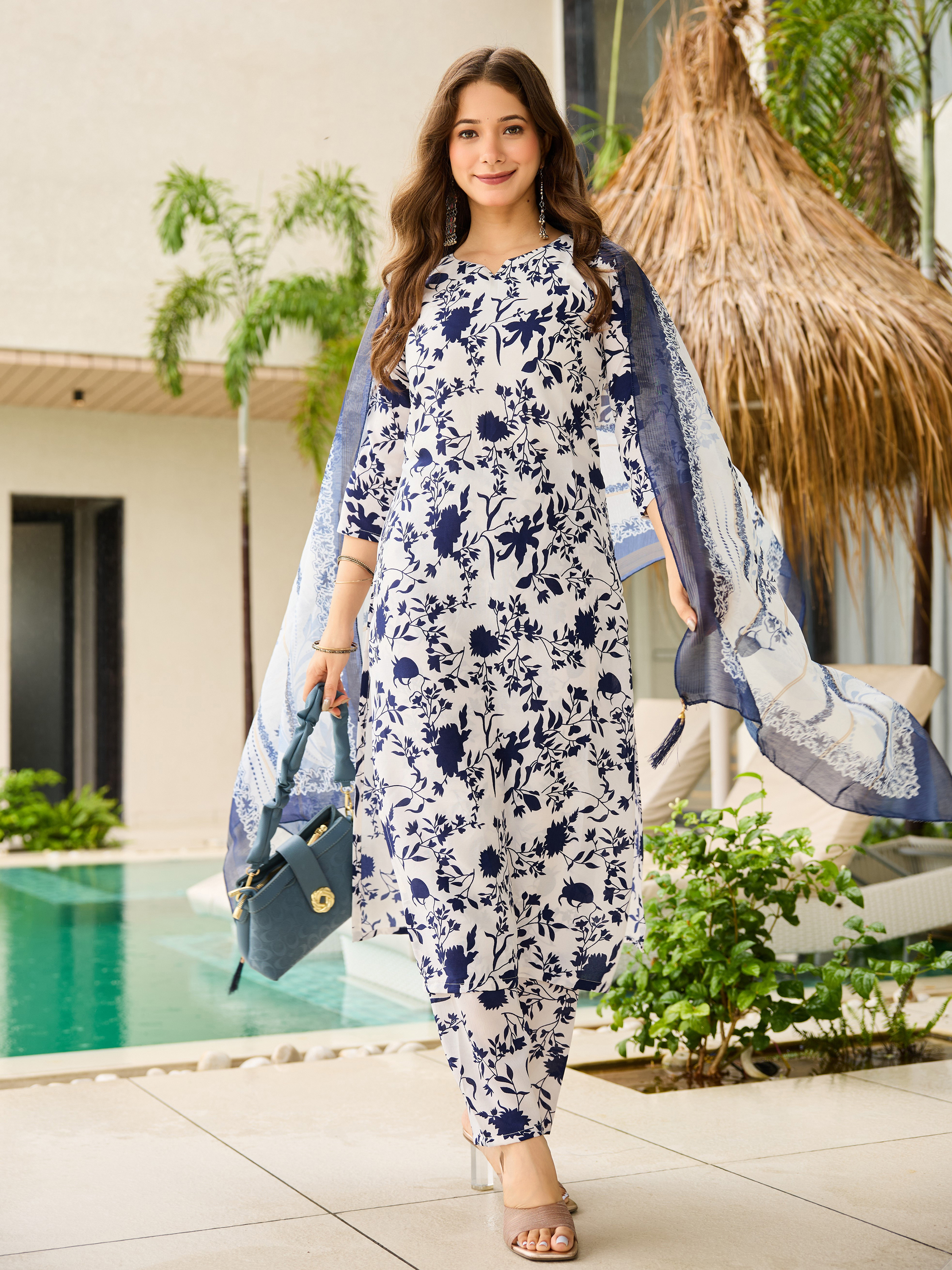
The Stylish Navy Floral Silk Kurta Pant Dupatta Set can be treated as a coordinated kurta-and-pant combination for dinners or semi-formal gatherings. Navy gives the floral surface a grounded base, and a clean pant keeps the outfit modern when the dupatta is omitted.
The Madhuri 2 Black Chanderi Silk Embroidered Kurta Set suits a more refined, tonal interpretation. Black Chanderi silk and embroidery provide enough depth for a complete two-piece appearance, particularly with pointed flats, a structured clutch and a low bun.
Which colours make a Three Piece Suit That Looks Good Even Without Its Dupatta feel complete?
Colours with clear contrast, rich jewel tones and coordinated tonal shades usually remain complete without a dupatta. Prints work best when the kurta and bottom repeat at least one colour or when the print is concentrated on the kurta and the bottom is plain.
Black, navy, teal, rust, mustard and deep red are reliable because they have visual presence. Neutrals such as taupe, beige, ivory and charcoal can also work, but embroidery, texture or a contrast border becomes more important. A pale solid set with no surface detail may need earrings, a belt or a printed shoe to avoid looking unfinished.
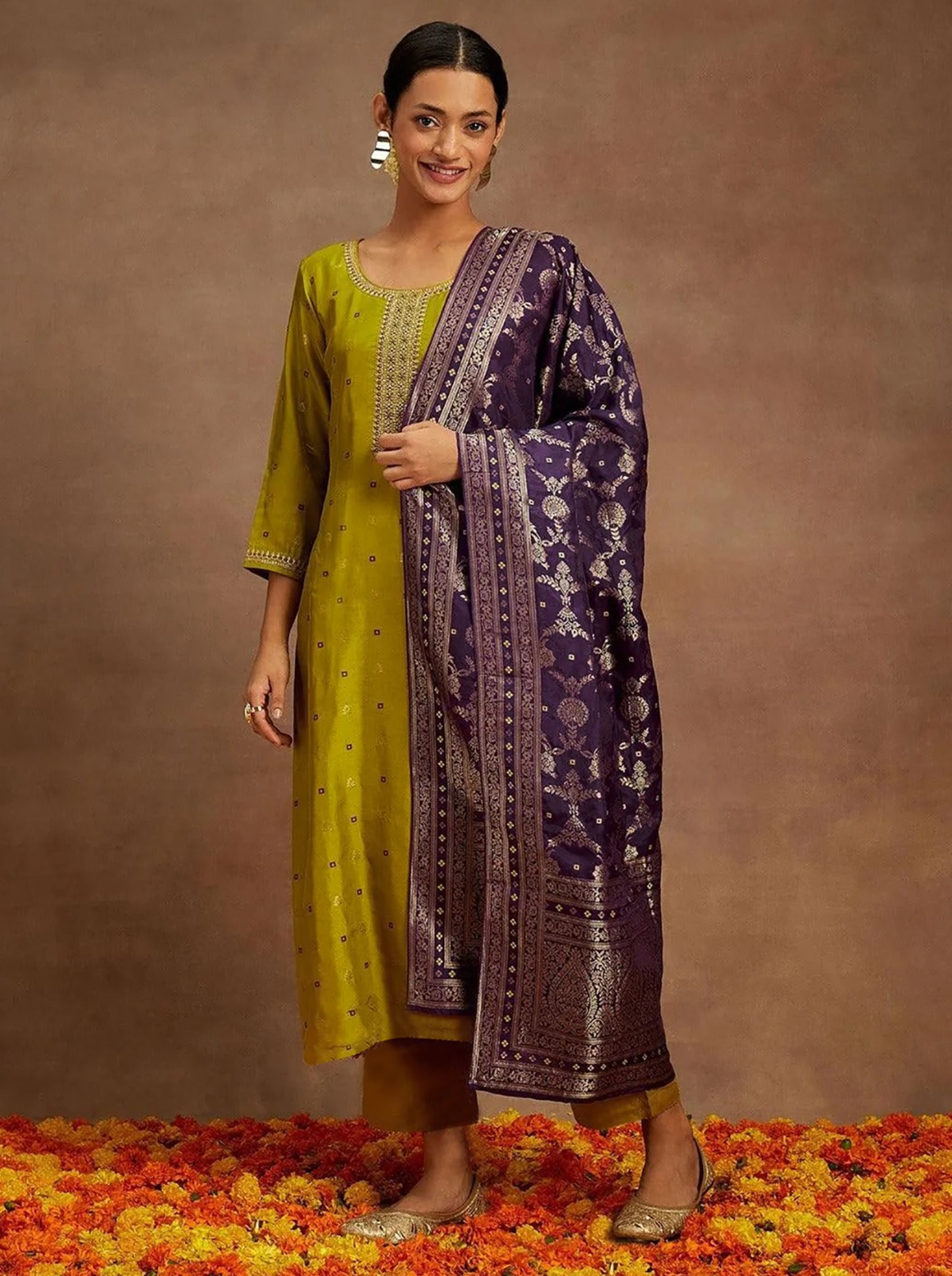
The Rust Orange Embroidered Vichitra Silk Kurta Set Online is a strong example of a warm colour carrying an outfit. Rust orange has enough depth for daytime and evening wear, while Vichitra silk and embroidery prevent the colour from feeling basic. Antique-gold jewellery complements rust without making the styling too formal.
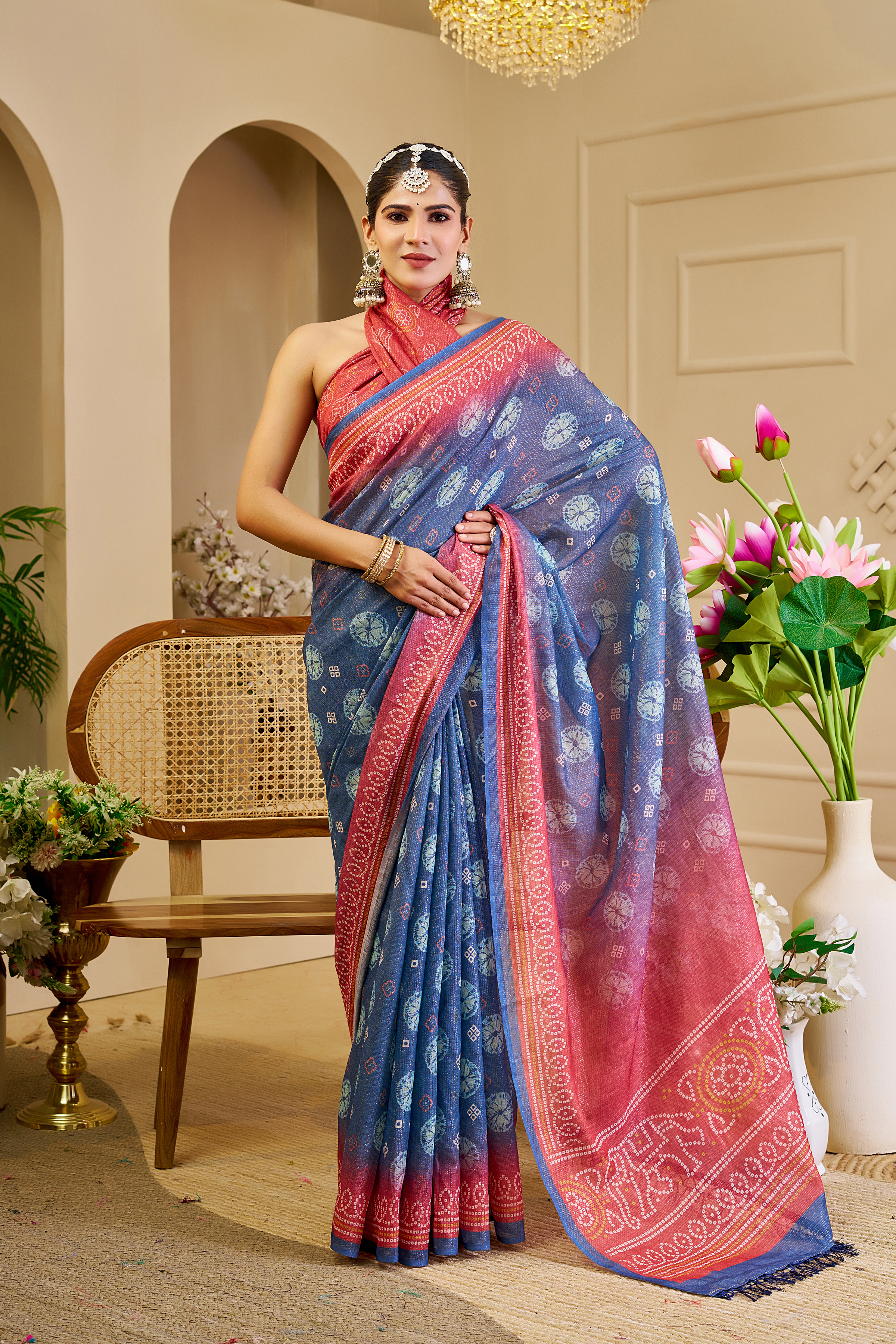
Regional textile traditions offer useful ideas for choosing visual interest. Kalamkari Print Salwar Suits (Copy) can inspire a print-led outfit in which the kurta remains the focal point. Maharashtra Paithani Inspired Salwar Suits suggest the value of a rich border or jewel-toned accent. Gujarat Bandhej Salwar Suits show how repeated dots and colour variation can create movement, while Odisha Sambalpuri Salwar Suits demonstrate how a distinctive woven or geometric vocabulary can make a simple silhouette memorable.
Punjab Patiala Salwar Suits offer another useful styling reference because the fuller bottom creates volume and movement. When adapting a Patiala-inspired silhouette for dupatta-free wear, keep the kurta relatively clean and let the pleated bottom provide the outfit's main shape.
How should you accessorise a Three Piece Suit That Looks Good Even Without Its Dupatta?
Accessorise a dupatta-free salwar suit by strengthening one visual line: the neckline, the waist, the earrings or the footwear. One clear accent usually looks more sophisticated than several unrelated additions.
Statement earrings are particularly effective because they occupy the space that a dupatta might otherwise frame. Jhumkas, sculptural metal earrings or coloured stones can draw attention upward. If the kurta has heavy embroidery, choose earrings with a simpler outline. If the neckline is plain, a short necklace or pendant can provide definition without crowding the face.
Footwear should match the formality and width of the bottom. Pointed flats or low block heels complement straight pants, metallic sandals work with festive silk and juttis suit printed or relaxed sets. A very heavy shoe can make a narrow trouser look visually unbalanced, while an overly delicate sandal may disappear under a wide palazzo.
A belt can work with a straight kurta when the fabric isn't too fluid and the embroidery doesn't already dominate the waist. Use a narrow belt in black, tan, antique gold or a colour repeated in the print. Avoid cinching heavily flared Anarkali silhouettes, because the gathered fabric may lose its intended fall.
Handbags provide a practical finishing detail. A structured tote works for office dressing, a small shoulder bag suits travel and a clutch fits evening occasions. Match the bag to one secondary colour in the outfit rather than automatically choosing the exact shade of the kurta.
When should you wear a Three Piece Suit That Looks Good Even Without Its Dupatta?
A dupatta-free three-piece suit is most practical for work, commuting, travel, casual celebrations and indoor events where ease of movement matters. The same styling can suit festive occasions when the kurta has silk, zari, embroidery or a richly developed print.
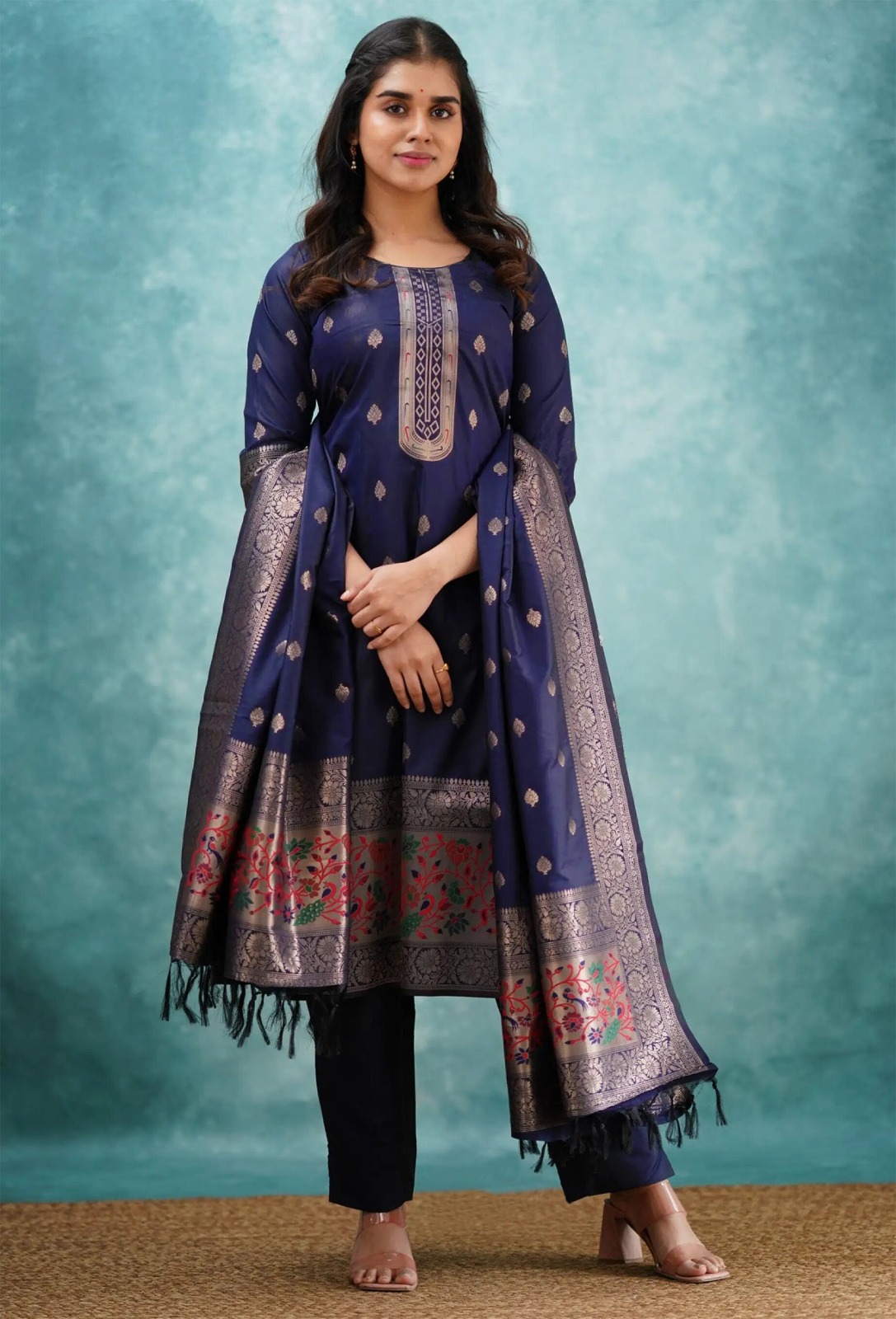
For office wear, choose a straight kurta, a narrow trouser and restrained embroidery in navy, black, taupe, beige or muted teal. Avoid excessive sequins and very wide sleeves if the outfit needs to move between meetings. A structured tote and closed flats keep the appearance professional.
For a Haldi ceremony, mustard, turmeric yellow, rust orange and bright floral prints create an appropriate colour story. Viscose Chanderi, cotton blends and lightweight silk can remain comfortable during movement and photographs. Choose washable or easily maintained fabrics if turmeric, flower petals or outdoor seating are likely.
For a family dinner or festive lunch, Chanderi silk, Vichitra silk and embroidered kurta sets provide enough occasion detail without the dupatta. Gold or antique-gold earrings, a compact clutch and a low heel can elevate the outfit while preserving its lighter feel.
For travel, prioritise fabrics that resist crushing, bottoms with a comfortable waistband and sleeves that don't require constant adjustment. A coordinated set in navy, black or a small-scale print can be mixed with neutral footwear and a lightweight jacket. Pack the dupatta separately so the same set can be restyled for a more traditional appearance later.
For a wedding ceremony or a highly formal reception, the dupatta may still add useful volume, colour and modesty. A dupatta-free look is appropriate when the kurta and bottom have substantial embellishment and the dress code permits a more streamlined silhouette. Check the invitation, venue and time of day before choosing the lighter version.
What should you check before buying a Three Piece Suit That Looks Good Even Without Its Dupatta?
Check the kurta's independent detail, the bottom's fit, fabric opacity, colour continuity and care requirements before buying. These five checks reveal whether the set will remain convincing as a two-piece outfit.
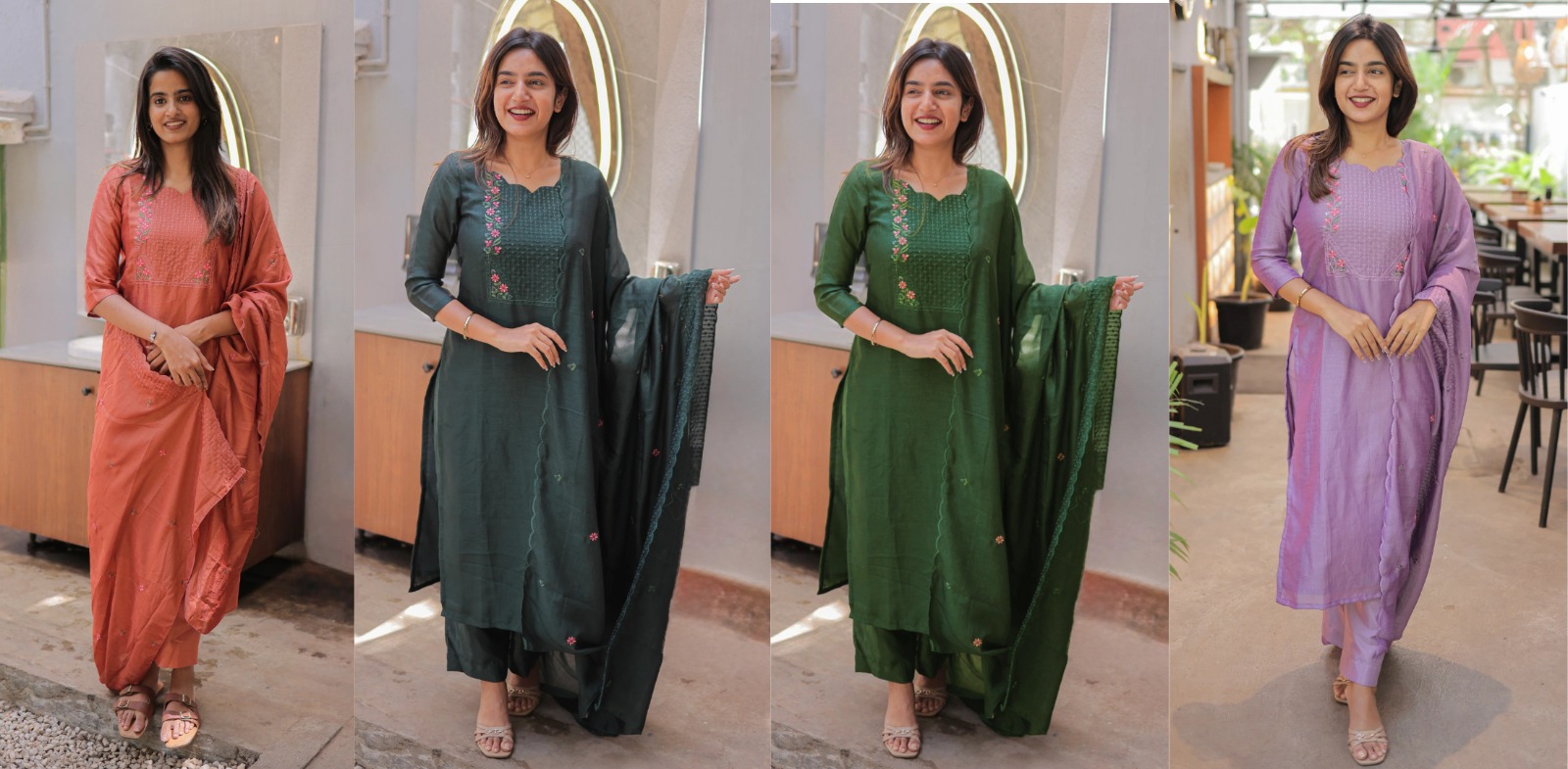
- Inspect the front and back: A kurta that's detailed only on the front may still work, but visible sleeve or hem finishing makes the outfit look more considered from different angles.
- Compare the colour in natural light: Artificial lighting can make beige, mustard, teal and rust appear different from their daytime tones. Check whether the bottom genuinely belongs to the kurta's colour family.
- Measure the bottom carefully: Waist, hip, rise and full length affect comfort more than a nominal size. A striking kurta can't rescue trousers that pull, twist or sit awkwardly.
- Look at embroidery placement: Dense threadwork or sequins should not scratch the underarm, catch on a handbag or make sitting uncomfortable. Embroidery around the neckline is useful when the dupatta is removed, but comfort remains essential.
- Read the care instructions: Viscose, Chanderi, silk and embellished garments may require gentle washing, low-temperature ironing or professional cleaning. Follow the care label to protect zari, sequins and colour.
Consider versatility over the number of included pieces. A set is a stronger wardrobe purchase when the kurta can be paired with plain trousers, the bottom can work with another top and the dupatta can be worn with a contrasting outfit. Dupatta-free styling becomes easier when every component has independent value.
The most dependable choice has a clear silhouette, at least one visible design feature and a bottom that fits without constant adjustment. Those practical details allow the dupatta to become an optional styling layer rather than a structural necessity.
Common Questions About Wearing a Three-Piece Suit Without Its Dupatta
Can I wear a three-piece salwar suit without the dupatta?
Yes, you can wear a three-piece salwar suit without the dupatta when the kurta and bottom have coordinated colour, good proportions and enough surface detail. Embroidery, a strong print, a textured fabric or a defined border helps the two-piece combination look intentional.
Which fabric is best for a salwar suit without a dupatta?
Chanderi, Vichitra silk, Banarasi silk and selected viscose fabrics work well because their texture, sheen or embroidery gives the outfit visual substance. Cotton and cotton-silk blends are also suitable for everyday wear when the kurta has a clear print, border or neckline detail.
How do I style a kurta pant set without its dupatta for work?
Pair a straight kurta and narrow pant with small earrings, closed flats or low block heels and a structured tote. Navy, black, taupe, beige and muted teal are practical work colours, while restrained embroidery keeps the outfit polished rather than overly festive.
Can I wear a dupatta-free salwar suit to a wedding or festive event?
You can wear a dupatta-free salwar suit to a festive event when the kurta and bottom include silk, zari, embroidery or a rich print and the dress code allows a streamlined look. A dupatta remains useful for highly formal ceremonies where extra coverage, colour or traditional layering is expected.
What accessories make a salwar suit look complete without a dupatta?
Statement earrings, a compact clutch, coordinated footwear and a carefully chosen bracelet or watch can complete a salwar suit without a dupatta. Use one main accent and keep other accessories quiet when the kurta already has heavy embroidery or sequins.
How can I tell whether a readymade salwar suit will work without its dupatta?
Check whether the kurta has independent detailing, whether the bottom repeats or complements its main colour and whether both pieces retain their shape. Also inspect fit, opacity, embroidery comfort and care instructions before buying.