The Ethnic Midi Dress as an Alternative to a Daytime Saree gives Indian dressing a practical new direction: familiar prints, borders and colours in a silhouette that's easier to walk, sit and travel in. A daytime saree remains unmatched for drape and ceremony, but a midi dress can be more useful for office lunches, museum visits, casual festive gatherings and long family days. The right choice depends on fabric weight, hemline, sleeve shape, footwear and the level of traditional detail you want to retain.
The Ethnic Midi Dress as an Alternative to a Daytime Saree for Everyday Comfort
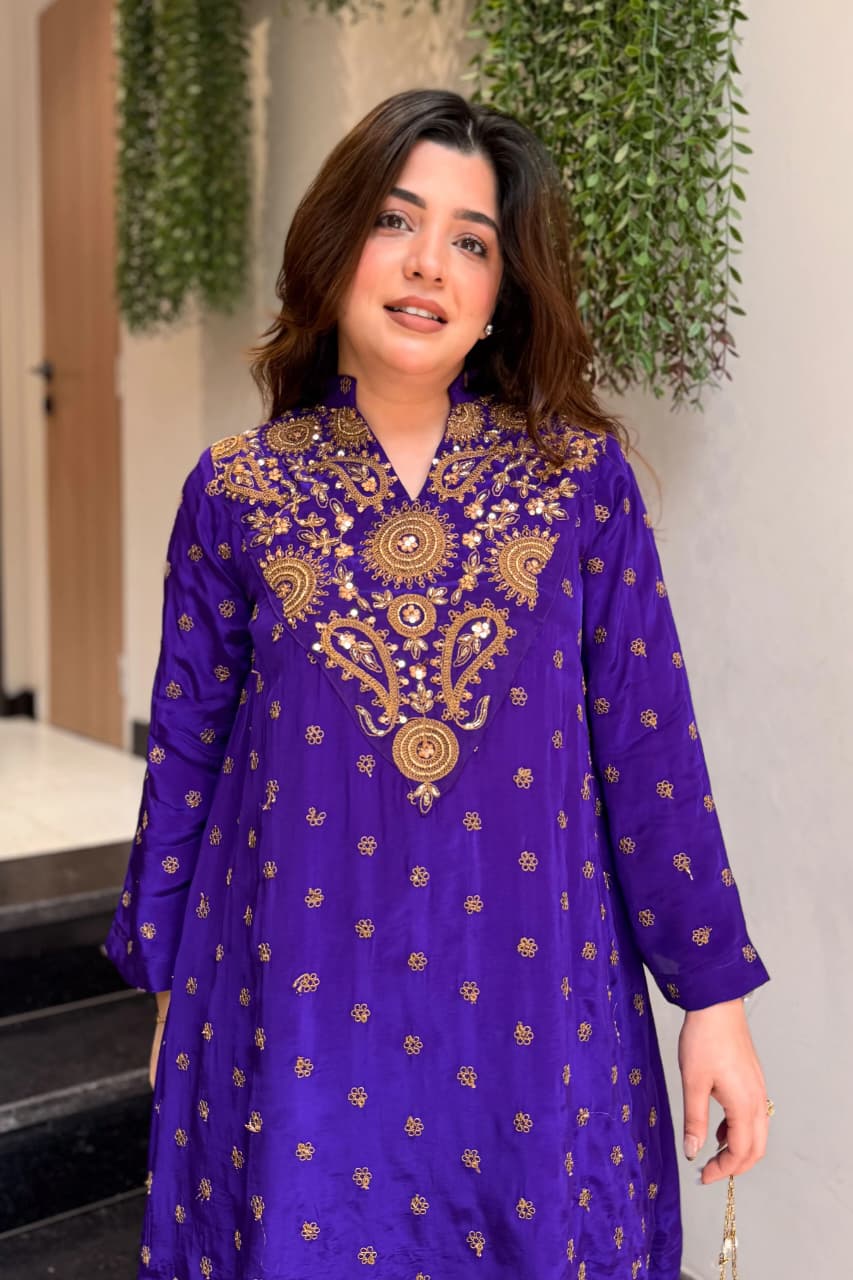
An ethnic midi dress is often the more comfortable daytime choice when movement, quick dressing and easy maintenance matter more than the formal impact of a saree. A well-cut dress removes the need to manage pleats, a pallu and a tucked-in edge while still allowing Indian visual details such as block prints, zari accents, floral motifs and contrast borders.
Daytime clothing has different practical demands from evening clothing. You may be commuting, carrying a child, sitting on the floor, shopping in a crowded market or moving between indoor and outdoor spaces. An ethnic midi dress generally stays in place during these activities. A saree can perform equally well when pre-pleated and pinned, but preparation usually takes longer and the styling depends more heavily on the blouse, petticoat and drape.
A midi length usually falls around the mid-calf, although the exact position changes with height. For a person who is 160 centimetres tall, a hem 75 to 85 centimetres from the shoulder often falls near the lower calf, while a taller person may need additional length for the same visual proportion. Checking the finished garment measurement rather than relying on the word midi prevents an unexpectedly short or long result.
The best daytime dress also allows a full sitting position without pulling across the hips or riding upward at the waist. Woven fabrics need wearing ease because they don't stretch around the body. Approximately 5 to 8 centimetres of ease at the hip is an useful starting point for a non-stretch dress, although the required amount depends on the cut and personal preference.
The Ethnic Midi Dress as an Alternative to a Daytime Saree: Practical Comparison
An ethnic midi dress offers easier movement and faster dressing, while a daytime saree provides greater drape, adjustability and classic presence. Neither option is universally better; the useful choice depends on the setting and the amount of styling time available.

- Comfort: A dress distributes fabric around the body without a waist tuck or shoulder drape. A linen cotton saree can also feel cool, but the pallu may need repositioning during a busy day.
- Movement: A midi dress supports walking and sitting when the skirt has enough ease. A saree allows long strides only when the lower pleats and petticoat are secured correctly.
- Formality: A saree usually reads as more formal because its drape creates vertical lines and visible occasion dressing. An ethnic dress can reach a similar level with a structured neckline, woven border, jacquard panel or refined accessories.
- Adjustability: A saree can be draped higher or lower and paired with different blouses. A stitched dress has less flexibility, so bust, waist, hip and shoulder measurements deserve careful attention.
- Maintenance: Cotton and linen cotton sarees can often be aired and folded after use, whereas a dress with lining, gathers or embellishment may need more careful washing and ironing.
The difference is especially visible in warm weather. Linen cotton blends absorb moisture better than many synthetic fabrics and allow air to circulate. A midi dress made from cotton, linen cotton or lightweight Chanderi can provide similar breathability. Polyester satin may look attractive but can feel warmer against the skin in direct sunlight, making satin better suited to shorter outings or air-conditioned venues.
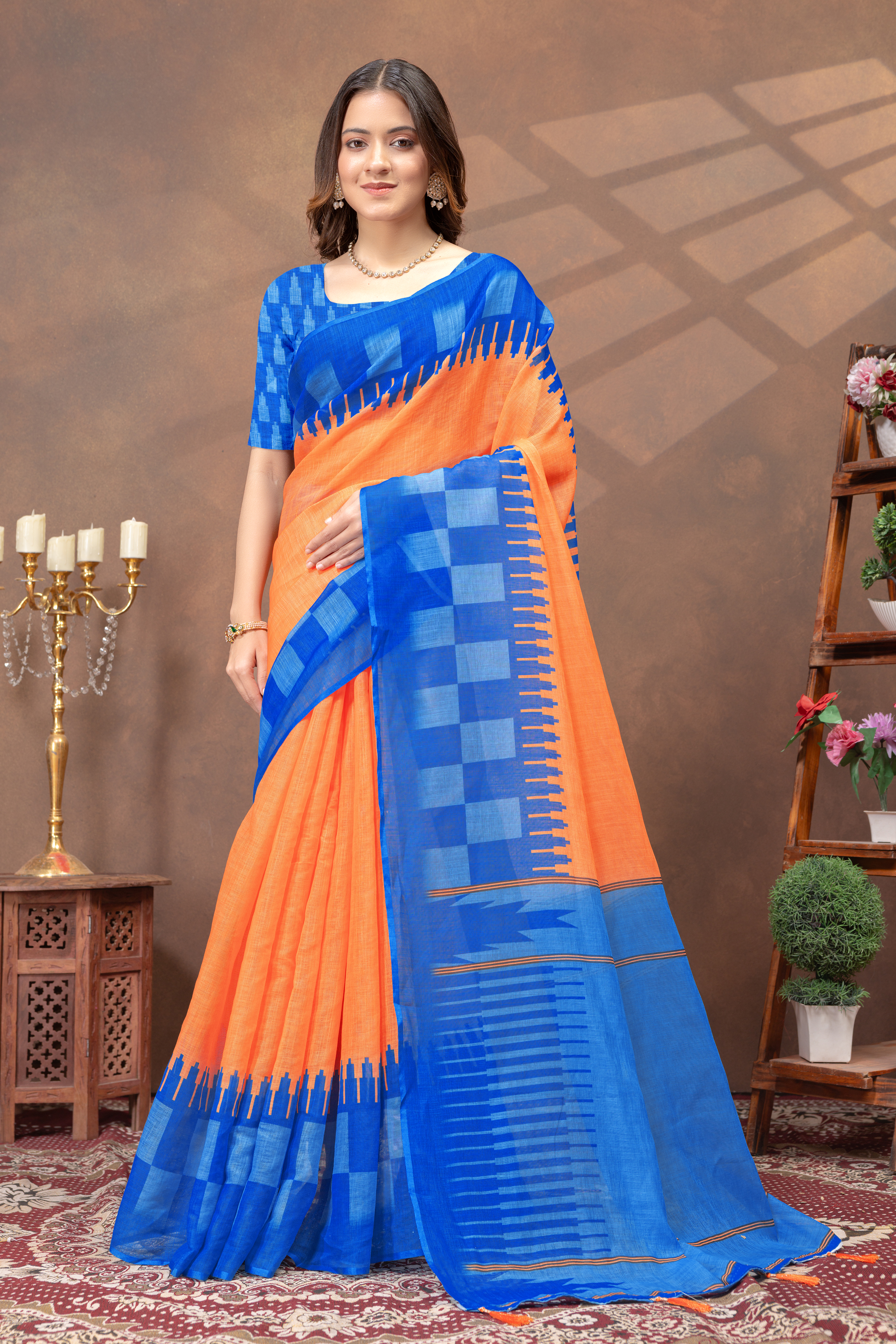
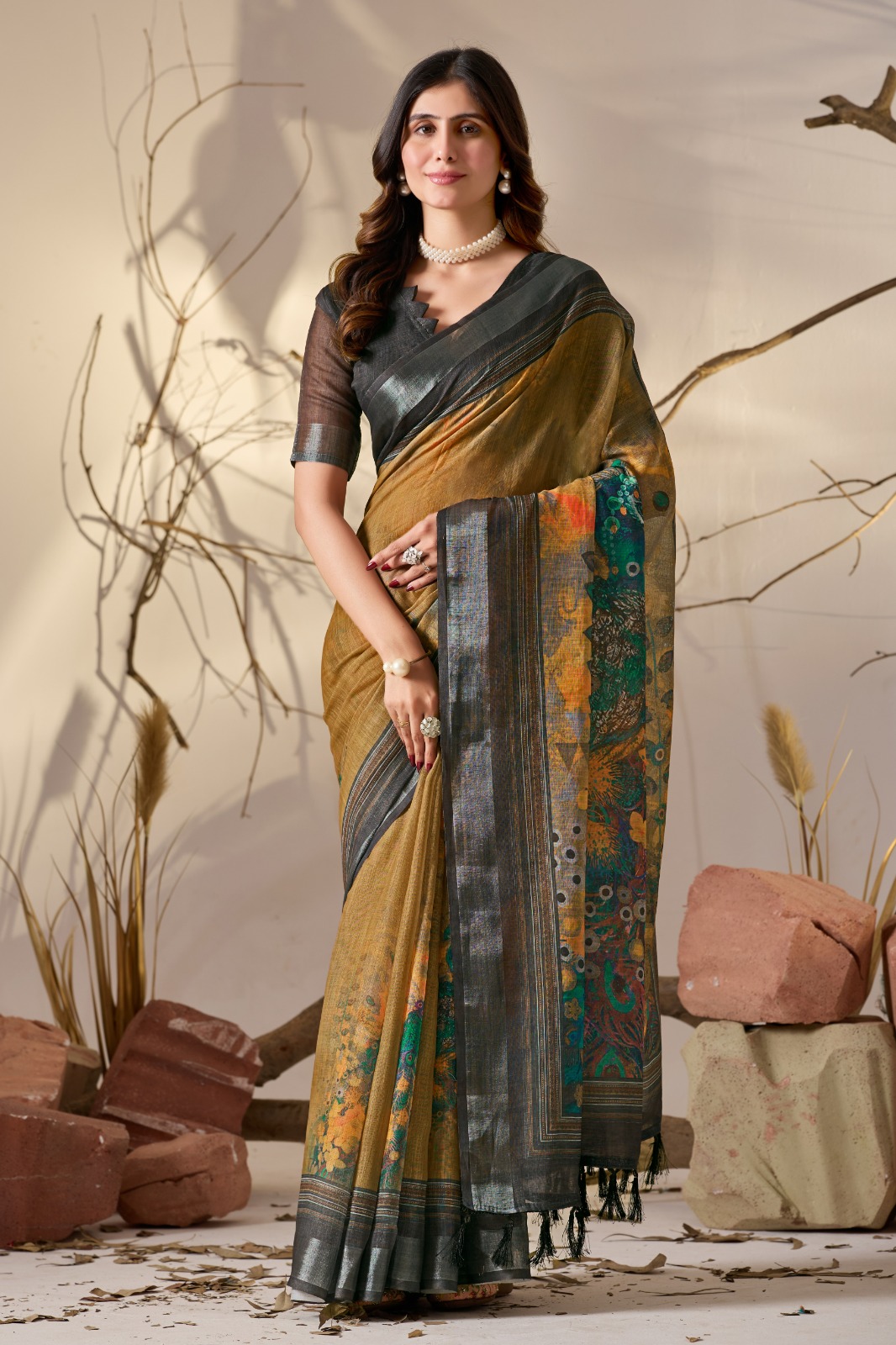
The Mustard Blue Ikat Print Linen Cotton Saree with Borders shows how a strong ethnic print can remain contemporary without sequins. The same principle can guide an ethnic midi dress: use a geometric panel, a contrast yoke or a bordered hem instead of adding heavy ornament everywhere.
The Ethnic Midi Dress as an Alternative to a Daytime Saree Through Fabric and Print
Printed borders, regional motifs, contrast pallus, floral repeats and restrained zari details translate most successfully from sarees into ethnic midi dresses. These elements preserve the visual language of Indian textiles without requiring a full drape.
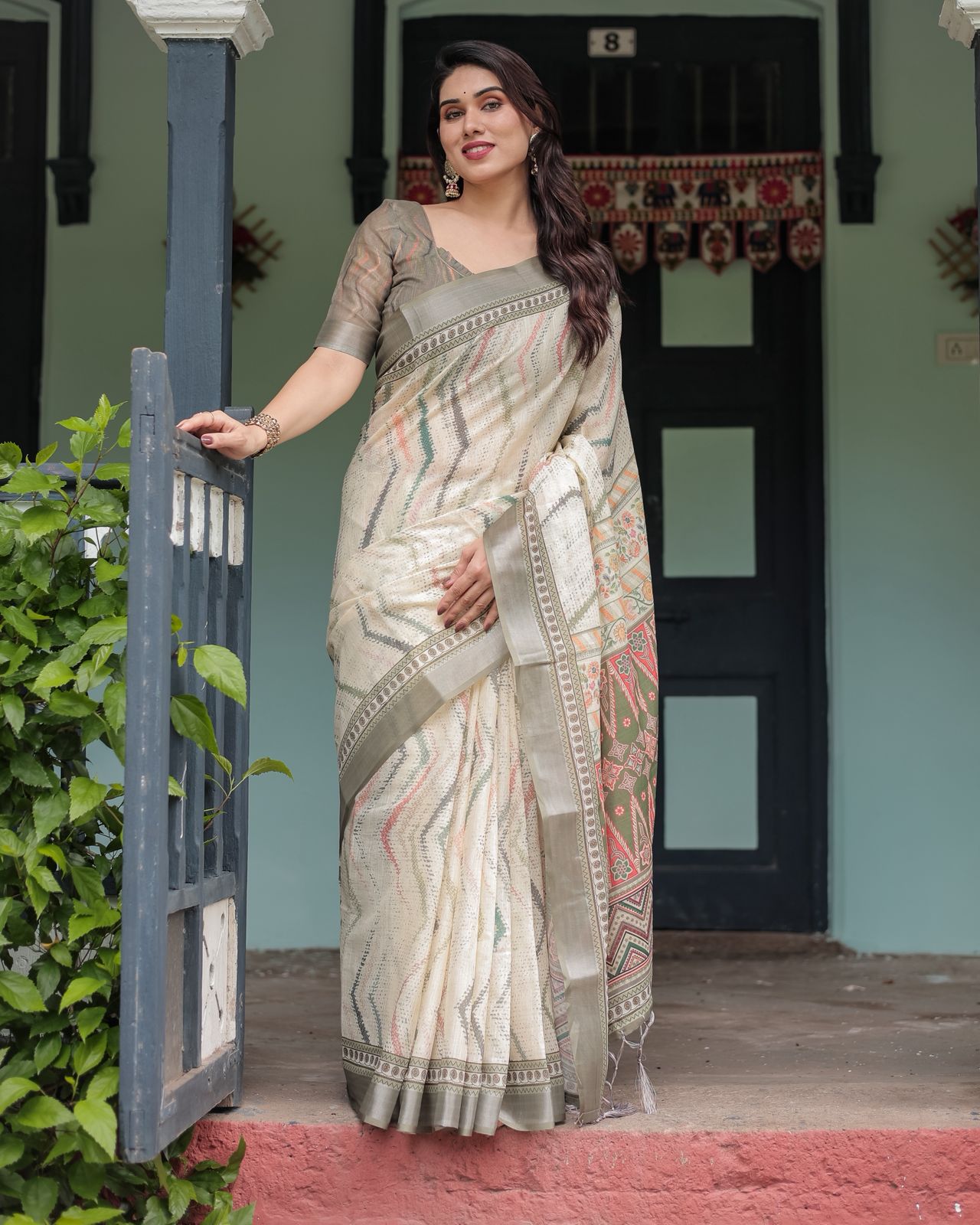
Border placement matters. A narrow border at the hem creates a clean finish and visually anchors the skirt, much as a saree border frames the lower edge. A wider border can make a midi dress look more festive, but a border wider than 10 to 12 centimetres may shorten the appearance of the legs on a petite frame. A second narrow border at the sleeve or neckline can connect the garment without making the outfit look busy.
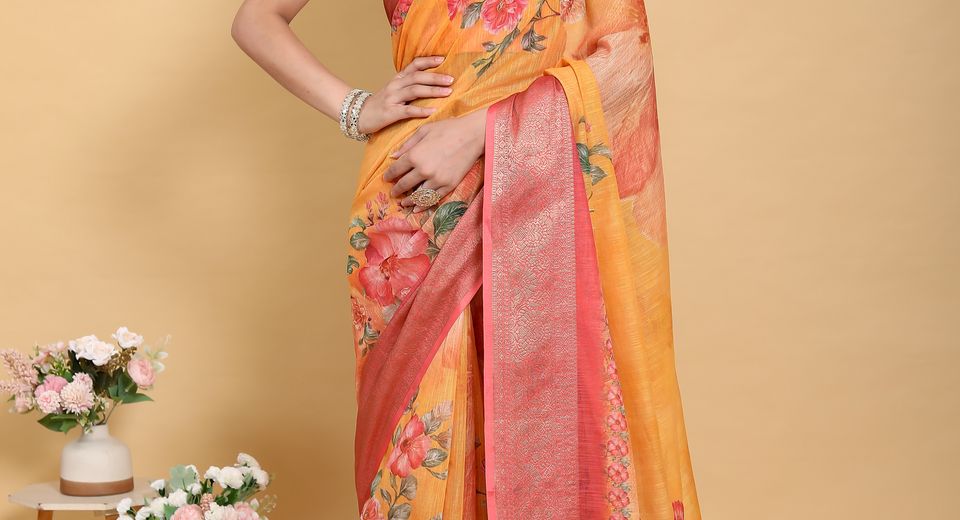
Floral saree prints are particularly easy to adapt because they already have a repeating rhythm. The Mustard Floral Linen Cotton Saree with Unstitched Blouse and the Mint Green Floral Linen Cotton Saree with Pink Border Style demonstrate two useful approaches. Mustard works well with tan, brown and muted green accessories, while mint green benefits from pink, ivory or silver details.
Contrast borders can guide accessories without dictating every detail. The Mustard Yellow Linen Cotton Saree with Green Stripe Borders suggests pairing warm yellow with green glass bangles, a green fabric bag or a small enamel earring. Repeating one secondary colour once or twice is usually enough; matching every accessory to the border can make a daytime outfit look overly coordinated.
A floral print with a jacquard edge gives more texture than a flat printed fabric. The Mustard Floral Linen Cotton Saree with Jacquard Pink Border demonstrates how mustard, pink and a woven border can work together. On a midi dress, the pink may appear only at the hem or sleeve cuff, allowing one pink accessory to complete the look while the bag remains neutral.
Colour intensity should also match the light. Bright mustard, coral, turquoise and leaf green hold their character in sunlight, while softer pastels are useful when the setting is quiet or semi-formal. Pastel Linen Cotton Floral Print Saree with Designer Blouse shows how a pale floral palette can look polished without relying on metallic embellishment.
The Ethnic Midi Dress as an Alternative to a Daytime Saree: Fit and Fabric Choices
Cotton, linen cotton and lightweight handloom fabrics are the safest starting points for an ethnic midi dress intended for daytime use. These materials are breathable, visually relaxed and compatible with the informal brightness associated with daylight.
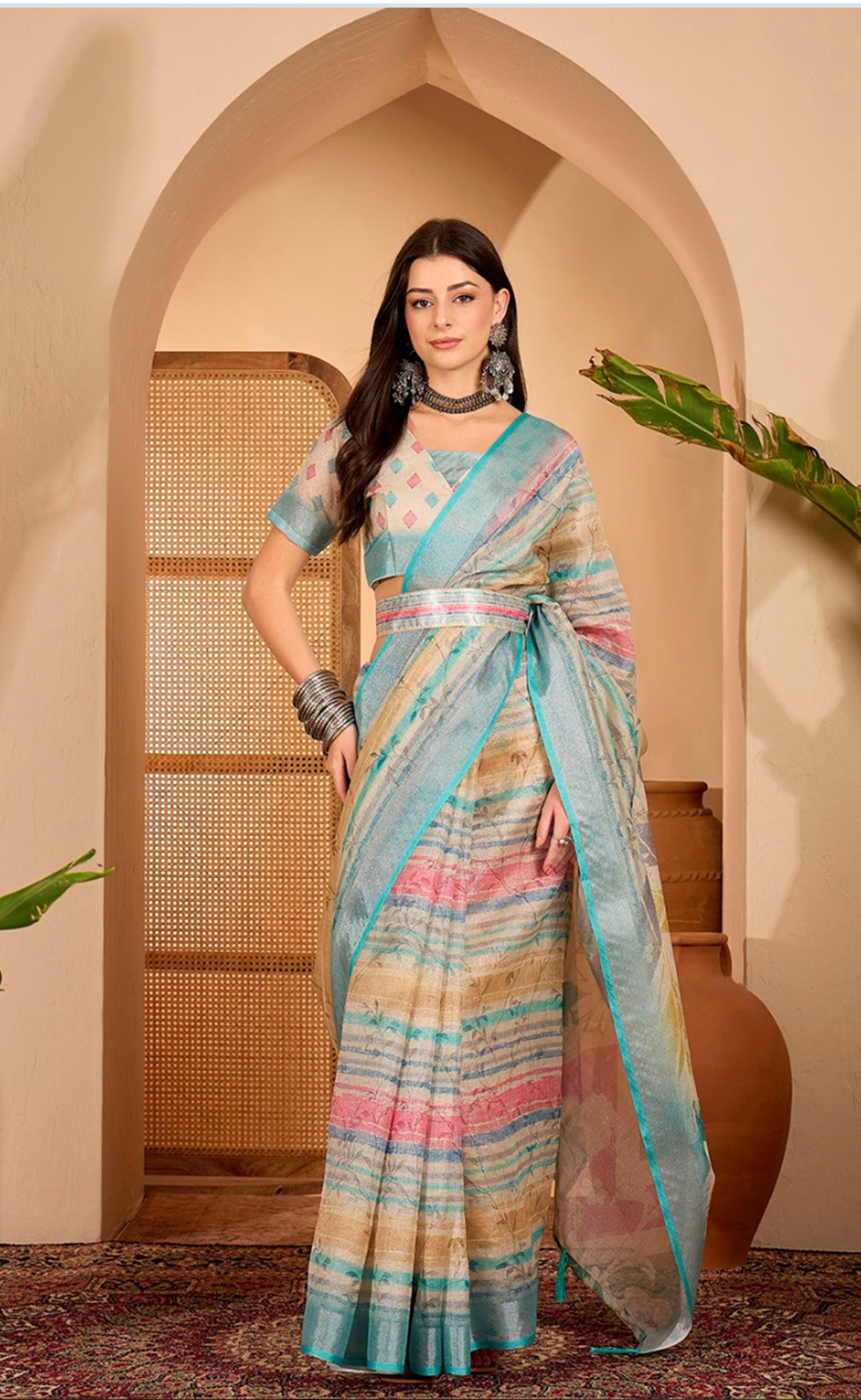
Fabric weight and lining
A medium-weight fabric with partial lining usually gives the best balance between coverage and airflow. Very thin cotton may need a full lining, which can reduce ventilation, while a heavy brocade can feel excessive for a daytime lunch. Chanderi has a light, slightly crisp character and works well for a dress with a defined waist, but Chanderi may require a slip or lining because the weave can be translucent.
Linen cotton has a natural texture and can crease during wear, but those creases are part of its daytime character. Linen cotton should be steamed or ironed on the reverse side at a moderate temperature. Direct high heat can flatten texture or create shine, especially where darker printed sections meet the iron.
Shape and ease
An A-line or softly flared silhouette is the most forgiving choice because the shape allows sitting and walking without clinging at the hips. A straight midi dress works for office settings when the back vent or side slits provide sufficient ease. A fit-and-flare shape can look festive, but excessive gathers add volume and may become uncomfortable in hot weather.
Useful measurements include bust circumference, natural waist, hip circumference, shoulder width and finished length. A tight woven midi dress restricts walking and can pull across the print, while excessive ease can make a border fall unevenly. A defined waist isn't essential; a princess seam, vertical panel or placement print can create shape without a close fit.
Sleeves between the elbow and three-quarter length are practical for daytime Indian styling. Cap sleeves feel cooler but expose more of the upper arm, while full sleeves add coverage and can make a lightweight dress suitable for a formal workplace. A modest V-neck, square neck or band collar gives more definition than a high round neck when the print is dense.
Shoppers comparing saree price points can use collections such as Silk Sarees Under 3000 With Discount and Gray Color Sarees Under 1000 to understand how fibre, weave, embellishment and finishing affect cost. A lower price doesn't automatically mean poor quality, but the garment should still be assessed for seam finishing, print alignment, lining, colourfastness and accurate measurements.
The Ethnic Midi Dress as an Alternative to a Daytime Saree with Indian Accessories
Use one clearly Indian element, such as jhumka earrings, a woven dupatta, block-printed footwear or a regional textile bag, and keep the remaining accessories controlled. An outfit doesn't need multiple time-honoured details to read as ethnic.
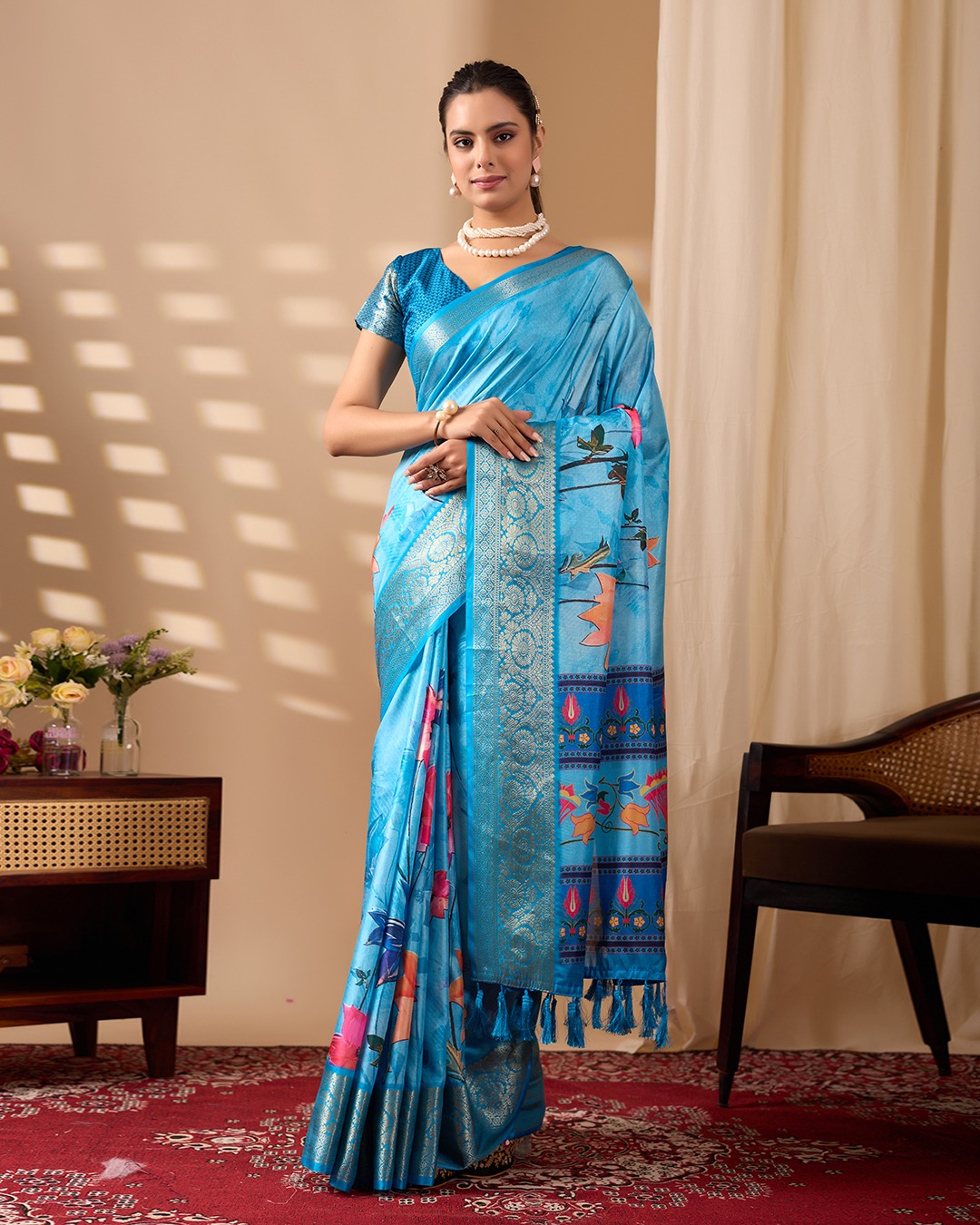
A narrow dupatta worn over one shoulder can make a midi dress feel closer to a salwar suit while retaining the ease of an one-piece garment. Choose a lightweight cotton, Kota Doria or Chanderi dupatta for daytime. A heavy embellished dupatta can pull at the neckline and make a casual dress uncomfortable. Pinning the dupatta near the shoulder and allowing it to fall to the hip keeps the hands free.
Footwear changes the proportion of a midi dress. Flat kolhapuri sandals, juttis and low block heels work well when the hem falls near the lower calf. A pointed flat or a low heel can lengthen the line of the leg if the dress ends at the widest part of the calf. Avoid footwear with a strap that cuts across the ankle when the hem is already low, unless the shorter midi length is a deliberate styling choice.
Jewellery should respond to the fabric rather than compete with it. Oxidised silver suits blue, green and indigo prints. Gold-tone jhumkas suit mustard, rust and marigold shades. A single bangle stack or a medium pendant is usually enough for a printed cotton dress. Zari details call for restraint in daylight because too much metallic shine can shift the outfit toward evening wear.
A structured handbag gives a simple dress more polish for a workplace or daytime event. A jute, cotton or woven bag feels more relaxed for a market visit or garden gathering. Olive Green Linen Cotton Saree with Black Yellow Pallu shows how olive, black and yellow can create a grounded palette; a midi dress in similar colours can be balanced with a black sandal and one yellow accent.
Collections such as Party Wear Sarees and Pink Georgette Sarees can provide useful accessory colour references even when the final outfit is a casual midi dress. Pink georgette styling often benefits from delicate jewellery and soft footwear, while party wear styling may use a more structured bag or a stronger earring. The important distinction is to borrow a colour relationship rather than copy an evening level of embellishment.
When the Ethnic Midi Dress as an Alternative to a Daytime Saree Works Best
An ethnic midi dress works best for office lunches, cultural events without a strict dress code, daytime shopping, travel, casual family gatherings and garden celebrations. A saree remains the better daytime choice when the event carries strong ceremonial meaning, when photographs are central or when a formal heritage dress code is stated.
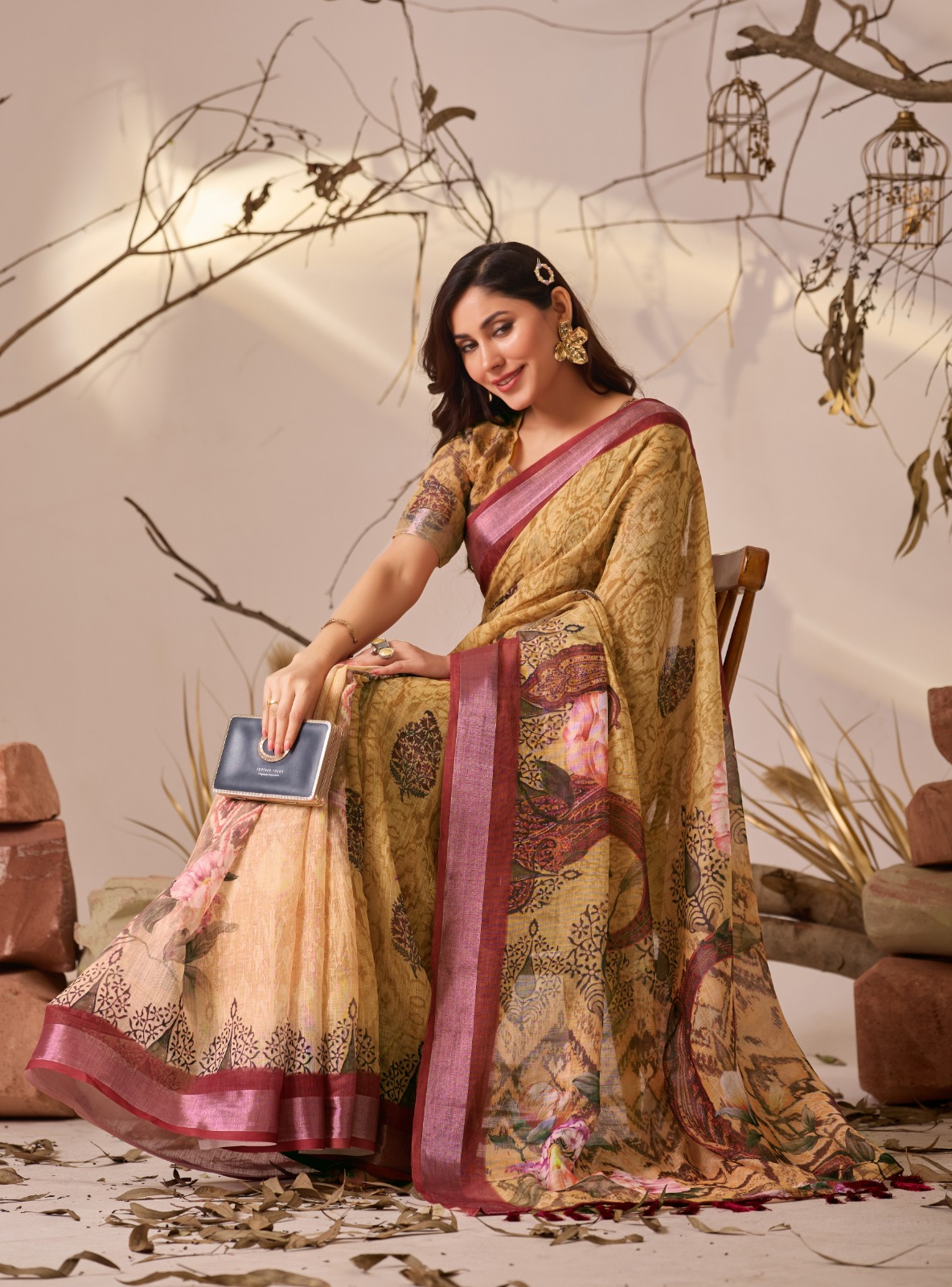
A Haldi ceremony, temple visit, wedding lunch and family milestone may call for the recognisable drape and visual dignity of a saree. A lightweight saree such as the Mustard Satin Saree with Printed Pink Pallu & Blouse may be more appropriate when a daytime event includes formal portraits or a defined festive dress code. Satin reflects light more strongly than linen cotton, so the styling should be balanced with simple jewellery and breathable footwear.
The Red Banarasi Silk Sarees for Weddings Under 1100 collection signals a different level of occasion from a printed midi dress. Banarasi silk, zari and a wedding setting naturally create a more ceremonial effect. Kanjeevaram and richly woven Banarasi silk are better reserved for celebrations where their structure and surface detail can be appreciated rather than worn through a long, informal day.
A saree is also useful when body proportions change during the day or when one garment must accommodate several styling preferences. A saree can be draped in a more relaxed manner, worn with a jacket or paired with a different blouse. An ethnic midi dress brings less adjustment, so buying the right size and checking the finished length are particularly important.
The most practical wardrobe can include both options. A linen cotton saree brings the cultural familiarity and flexibility of a drape, while an ethnic midi dress handles days when speed, movement and easy maintenance matter more. Choosing between them becomes simpler when the decision starts with the schedule rather than with a rule about what Indian clothing should look like.
Care Steps for the Ethnic Midi Dress as an Alternative to a Daytime Saree
Wash a daytime ethnic midi dress according to its fibre, print and lining, and test colourfastness before the first full wash. Cotton and linen cotton garments commonly benefit from a gentle cold-water wash, mild detergent and shade drying, while embellished, lined or delicate garments may require professional cleaning.
don't leave a damp printed dress in direct sunlight for several hours because strong ultraviolet exposure can fade darker dyes. Turn the garment inside out before washing, avoid harsh bleaching agents and separate deep mustard, red, navy and black garments from pale fabrics during the first few washes.
Dry the dress on a broad hanger or lay it flat when the fabric is heavy. Thin wire hangers can distort the shoulder line, while hanging a wet, lined dress can stretch the neckline. Iron linen cotton and cotton on the reverse side using moderate heat, and place a pressing cloth between the iron and any zari, foil or printed metallic section.
Saree alternatives deserve the same attention to storage as sarees. Fold the midi dress along seams where possible, avoid compressing it under heavy garments and leave space for air circulation. If the dress has a jacquard border or delicate embellishment, tissue paper between folds can reduce friction and preserve the surface.
For a second saree reference, the Mustard Floral Linen Cotton Saree with Unstitched Blouse highlights why unstitched fabric needs separate care from a finished dress. A dress has permanent seam and lining stress points, so inspect the armholes, side seams, zipper and hem after several wears. Early repairs are easier and prevent a small seam problem from becoming a full alteration.
The Ethnic Midi Dress as an Alternative to a Daytime Saree succeeds when comfort and cultural detail support each other. Choose breathable fabric, enough ease, a proportionate hemline and one or two intentional Indian accents. Choose a saree when drape, ceremony and adaptable styling are the central requirements of the day.
Common Questions About Choosing an Ethnic Midi Dress for Daytime Indian Wear
Is an ethnic midi dress more comfortable than a saree for daytime wear?
An ethnic midi dress is usually more comfortable when the day involves commuting, walking, sitting frequently or managing children because the garment stays in place. A breathable linen cotton saree can also be comfortable, but the pallu and pleats may require occasional adjustment.
What fabric is best for an ethnic midi dress in hot Indian weather?
Cotton and linen cotton are strong choices because they allow airflow and absorb moisture better than many synthetic fabrics. Lightweight Chanderi can work for a polished look, but Chanderi may need a lining or slip because the weave can be translucent.
How long should a midi dress be for an Indian ethnic look?
A midi dress usually falls around the mid-calf, but the correct finished length depends on height, footwear and personal preference. Measure from the shoulder to the hem rather than relying only on the label, and check that the dress allows comfortable walking and sitting.
Can an ethnic midi dress be worn to a Haldi ceremony?
An ethnic midi dress can suit a casual Haldi ceremony when the invitation does not require sarees or traditional formalwear. Choose breathable cotton or linen cotton, cheerful yellow or green details and comfortable footwear; choose a saree when the family has specified a formal dress code or photography is central.
How can I make a midi dress look more traditionally Indian?
Add one or two deliberate details such as jhumkas, a lightweight dupatta, juttis, kolhapuri sandals, a woven bag or a printed border. Repeating a colour from the print in one accessory usually looks more polished than matching every item.
Is linen cotton easier to care for than satin or Banarasi silk?
Linen cotton is generally practical for daytime use, although natural creasing is normal and the fabric should be washed gently and ironed on the reverse side. Satin and Banarasi silk can require more careful handling because surface shine, zari and woven details may be damaged by heat, friction or unsuitable washing.