

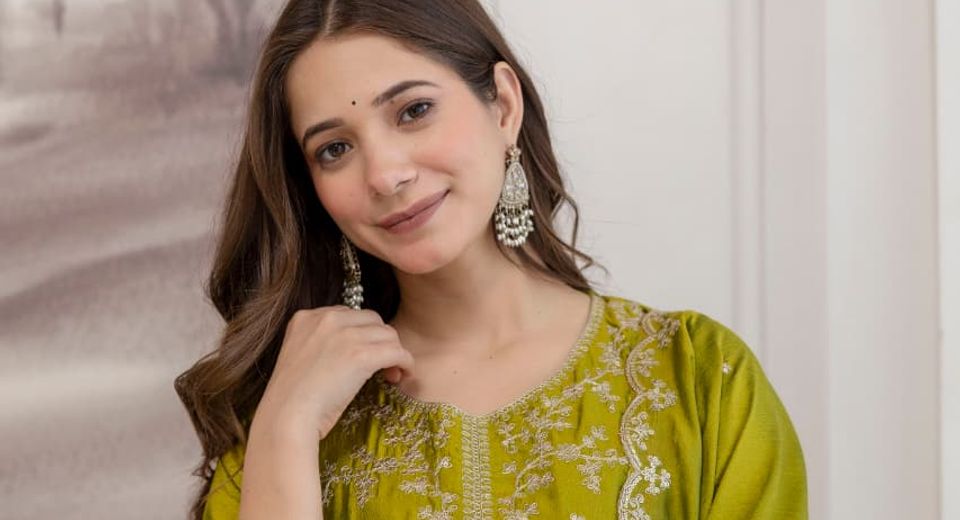
Choosing between a kurta dress and a regular long kurti can change the entire balance of an outfit. The Difference Between a Kurta Dress and a Regular Long Kurti becomes clear when you compare construction, intended layering, hem shape and styling requirements. Both garments can look polished, but they solve different wardrobe needs.
A kurta dress usually functions as a complete outfit on its own, while a long kurti is generally one part of a coordinated look. A long kurti may need cigarette pants, palazzos, leggings, a salwar or a dupatta to look finished. Understanding that distinction helps you choose appropriately for office dressing, festive gatherings, travel and everyday wear.
What is the difference between a kurta dress and a regular long kurti?
A kurta dress is designed to be worn as a standalone dress, whereas a regular long kurti is designed to be paired with a separate bottom layer. A kurta dress may have an A-line, fit-and-flare or gathered skirt portion, while a regular long kurti commonly has a straighter cut, side slits and proportions intended to sit over trousers.
Length alone doesn't decide the category. A knee-length garment can be a kurta dress if the silhouette looks complete without pants, while an ankle-length straight kurti can still be a kurti if the cut accommodates a separate bottom. The more useful clues are the flare, waist or yoke construction, side openings, lining, hem finishing and whether the garment appears visually complete without a lower layer.
A straight kurta set with matching pants and a dupatta clearly signals a three-piece salwar suit. A flared, lined garment with a broad hem and no visual dependence on trousers behaves more like a kurta dress. Online product descriptions sometimes use the terms loosely, so photographs, garment measurements and styling images deserve careful attention.
How does the silhouette change the way each garment is worn?
The silhouette determines whether the garment reads as a complete dress or as the upper half of a salwar suit. A kurta dress normally creates one uninterrupted vertical line from shoulder to hem, while a long kurti creates a layered line completed by a bottom garment.
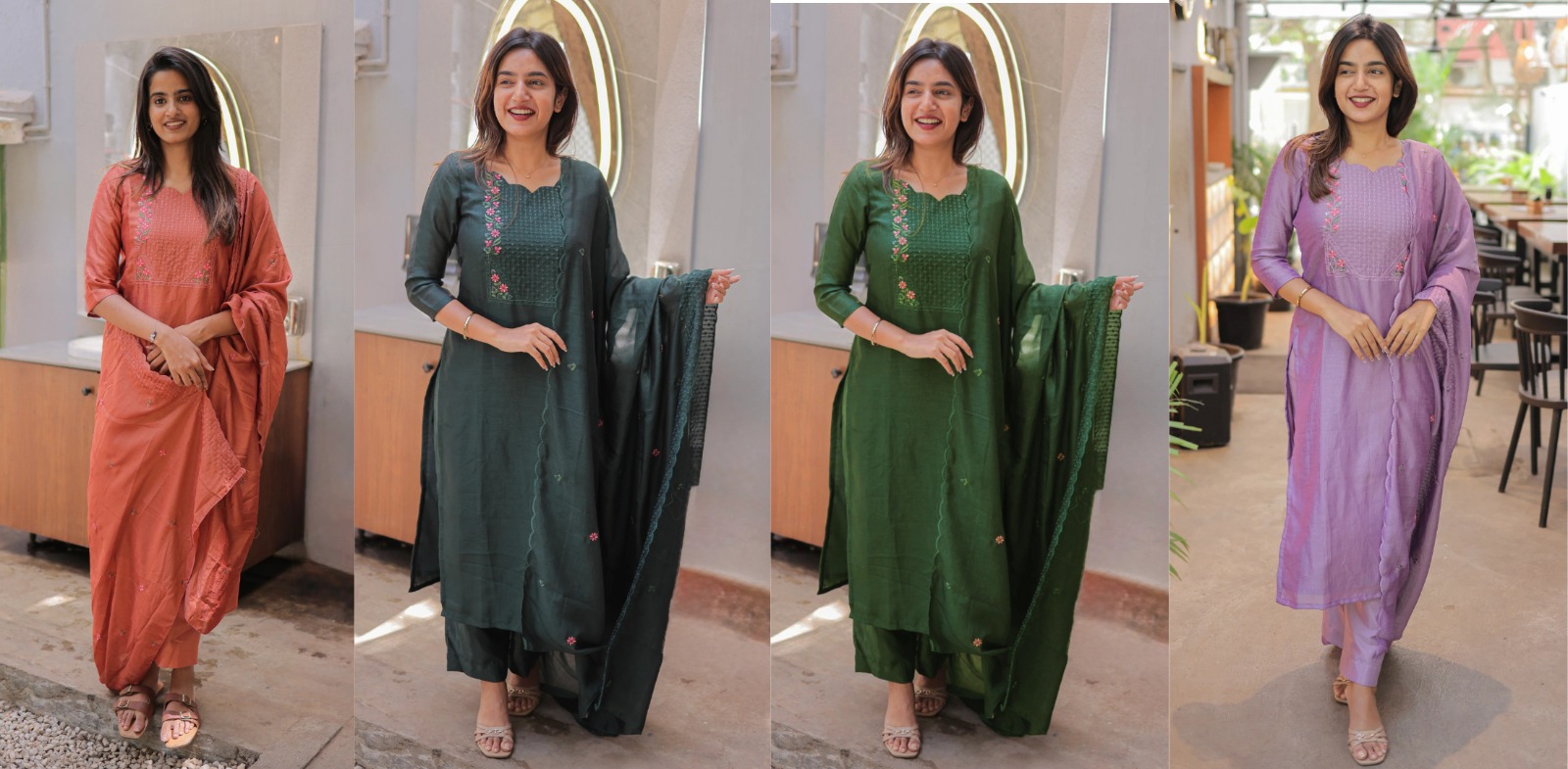
Kurta dress shape and movement
A kurta dress commonly uses an A-line, fit-and-flare, umbrella or gently gathered shape. Extra volume may begin at the yoke, waist or under-bust seam. This construction gives the garment movement while walking and makes the hem visually important. A kurta dress may also include a belt, shaped waist seam, pockets or a heavier border because the garment has to carry the outfit without a separate lower layer.
Fabric weight matters strongly in a dress silhouette. Chanderi silk can hold a controlled flare and create a formal sheen, while viscose Chanderi silk can offer a softer fall. Cotton versions feel more casual, but a wide flare requires sufficient fabric and careful finishing so the hem doesn't collapse unevenly.
Regular long kurti shape and layering
A regular long kurti is commonly straight, lightly A-line or panelled, with side slits that allow walking and sitting over trousers. The cut generally keeps the front and back relatively narrow so the garment works with cigarette pants, palazzos, churidars or Patiala salwars. A long kurti can therefore be repeated with several bottoms, making it more modular than a standalone kurta dress.
The Cream Khadi Cotton Straight Kurta Set with Dupatta illustrates the layered logic of a coordinated salwar suit because the straight kurta, bottom and dupatta each contribute to the finished appearance. A long kurti in a similar straight cut can be dressed up or down, but it won't automatically provide the same visual finish without a suitable bottom.
Do kurta dresses need bottoms or dupattas?
Kurta dresses don't normally require a separate bottom, while long kurtis generally look more intentional with a coordinated bottom and may be styled with a dupatta. A dupatta remains optional for both garments depending on modesty, temperature, personal preference and the formality of the event.
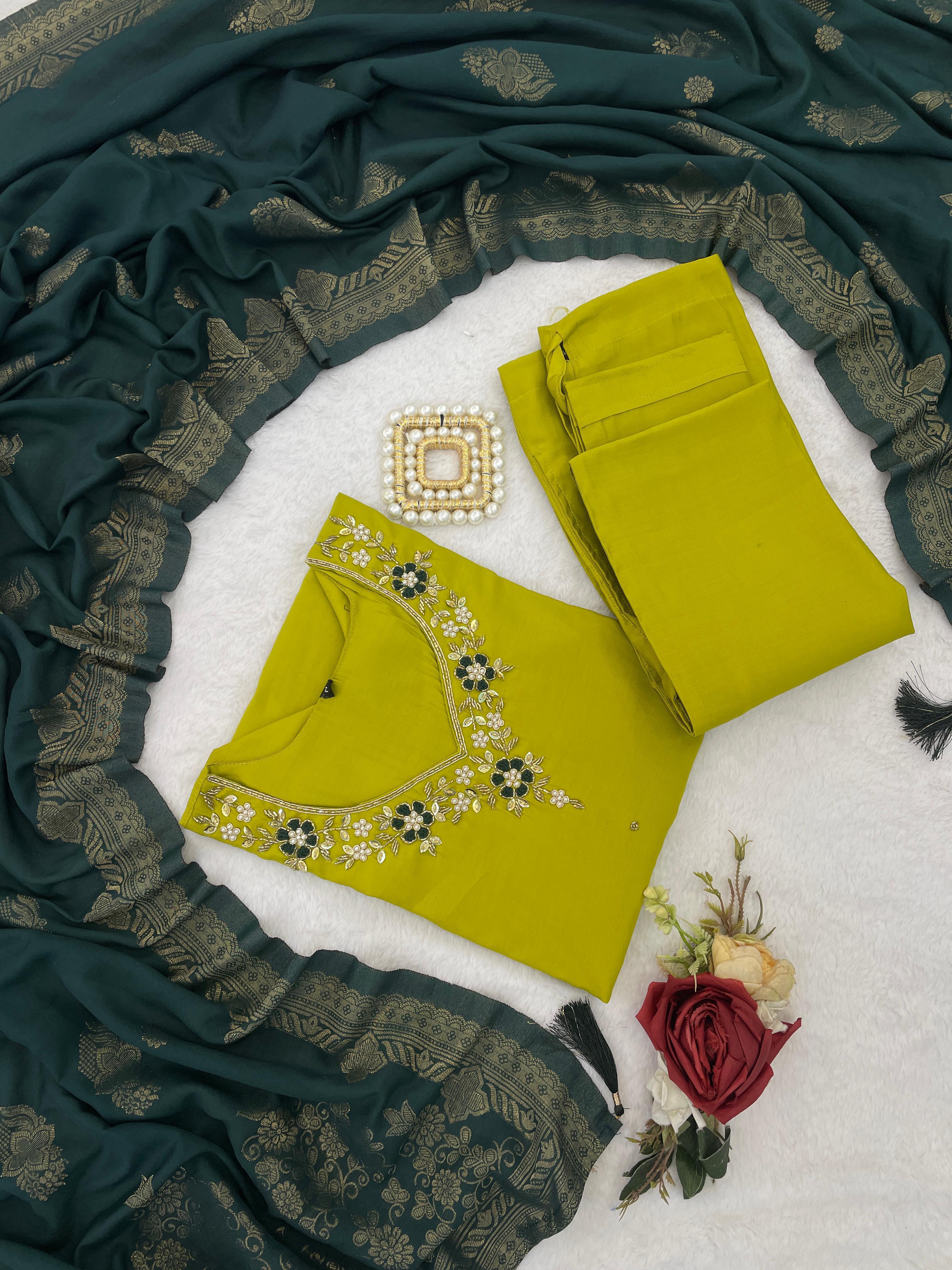
A kurta dress can be worn with flat juttis, sandals, kolhapuris or low heels because the hem already completes the outfit. Adding cigarette pants underneath may be useful for movement, privacy or weather, but the pants are a practical choice rather than a structural requirement. A lightweight stole can replace a dupatta when the outfit needs a less traditional finish.
A regular long kurti has more styling dependencies. The bottom should relate to the kurti's volume: slim cigarette pants balance a broad or embroidered kurti, while palazzos work best when the upper garment has enough length and structure to prevent the outfit from appearing visually heavy. A dupatta introduces another colour, texture and line, so its border and drape deserve as much attention as the kurti itself.
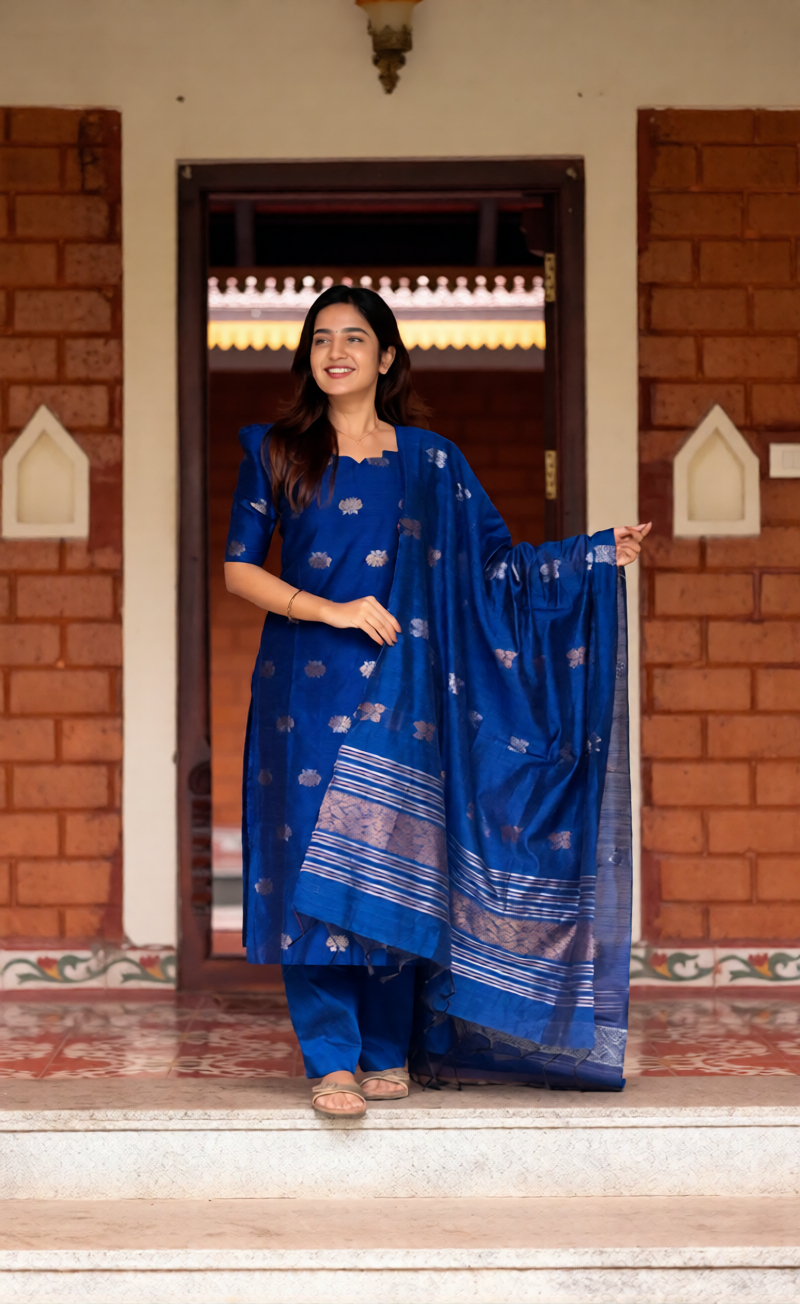
The Stylish Royal Blue Kurta Pant Set with Dupatta demonstrates why a matching pant and dupatta can make a long kurta feel occasion-ready. The Lavender Chanderi Silk Embroidered Kurta Set for Women also shows how a coordinated fabric story can create a refined look without requiring a separate dress silhouette.
Which fabrics work better for a kurta dress or long kurti?
Kurta dresses benefit from fabrics that drape or hold flare consistently, while long kurtis can accommodate a broader range of fabrics because the bottom garment helps establish the outfit's shape. Fabric choice should match the silhouette, climate, occasion and amount of embroidery.
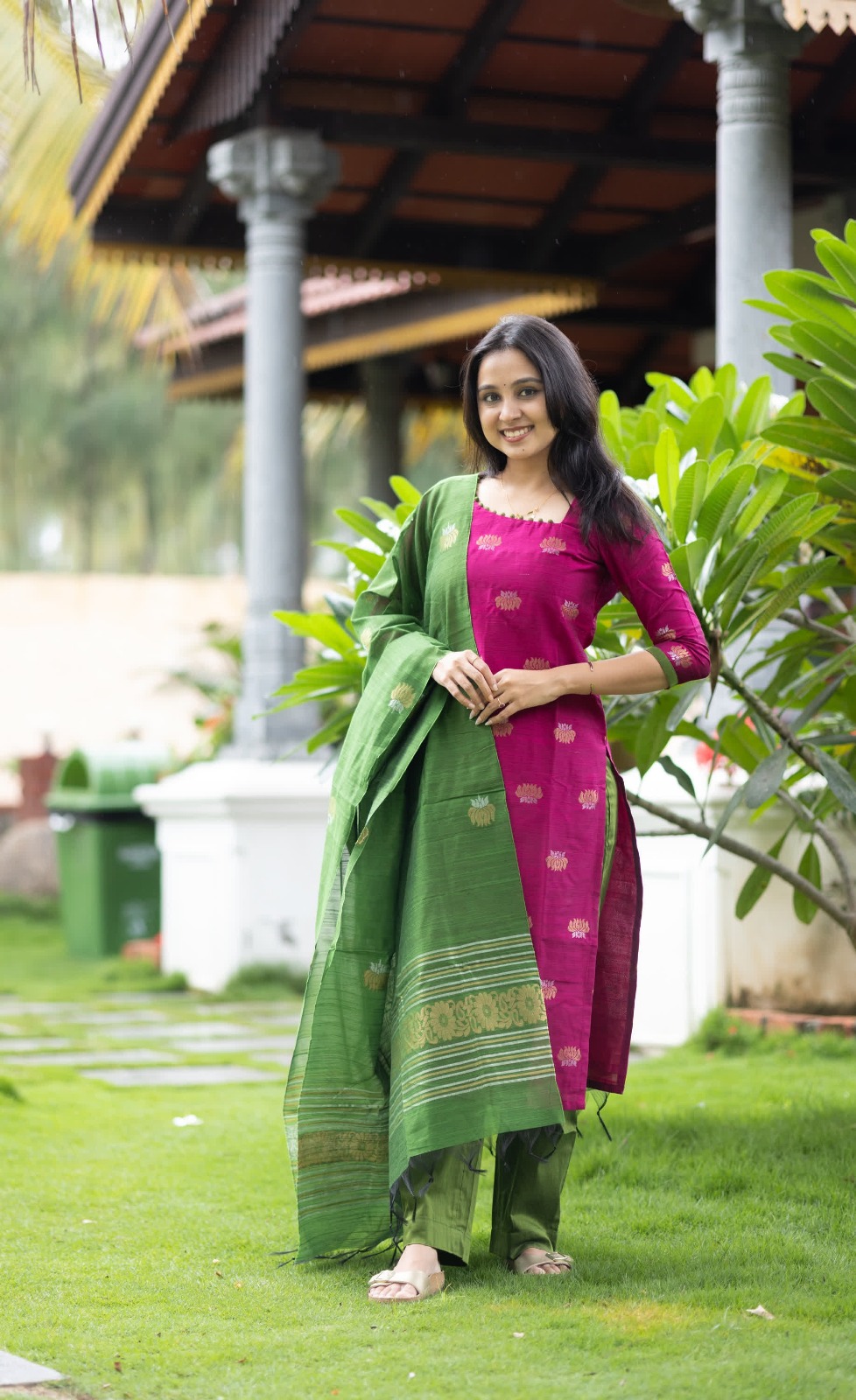
Fabrics for structured festive dressing
Chanderi silk and Vichitra silk are useful for elevated kurta sets because both can support a polished surface and decorative embroidery. A flared Chanderi silk kurta dress can look graceful with minimal jewellery, while a straight Chanderi silk kurta can be paired with tailored pants for a sharper appearance. Zari, resham, sequins and embroidered borders become more noticeable when the fabric has enough body to hold their weight.
The Taupe Beige Embroidered Vichitra Silk Kurta Set Online offers a neutral direction for daytime celebrations, family dinners and occasions where very bright colours may feel too formal. The Elegant Beige Vichitra Silk Embroidered Kurta Set for Women can be styled with pearl earrings and muted footwear for daytime or with metallic accessories for an evening gathering.
Fabrics for breathable everyday wear
Khadi cotton, cotton blends and lighter viscose fabrics are practical for warm weather and repeated wear. Khadi cotton may show natural slubs, which are part of its character rather than a manufacturing defect. Viscose can feel fluid and comfortable, but it may need more careful washing and pressing than cotton.
A long kurti made from breathable cotton can be worn with several bottoms through the week, while a cotton kurta dress can simplify dressing for errands or casual lunches. Fabric transparency should be checked in strong light, especially with white, cream, pastel and lightweight Chanderi garments. A lining or slip may be necessary even when the outer fabric appears opaque indoors.
How should you choose the right style for your body proportions?
The right choice depends on where you want visual volume, how much movement you need and whether you prefer a continuous or layered silhouette. Neither garment type suits one body shape exclusively; proportion, seam placement and styling produce the larger effect.
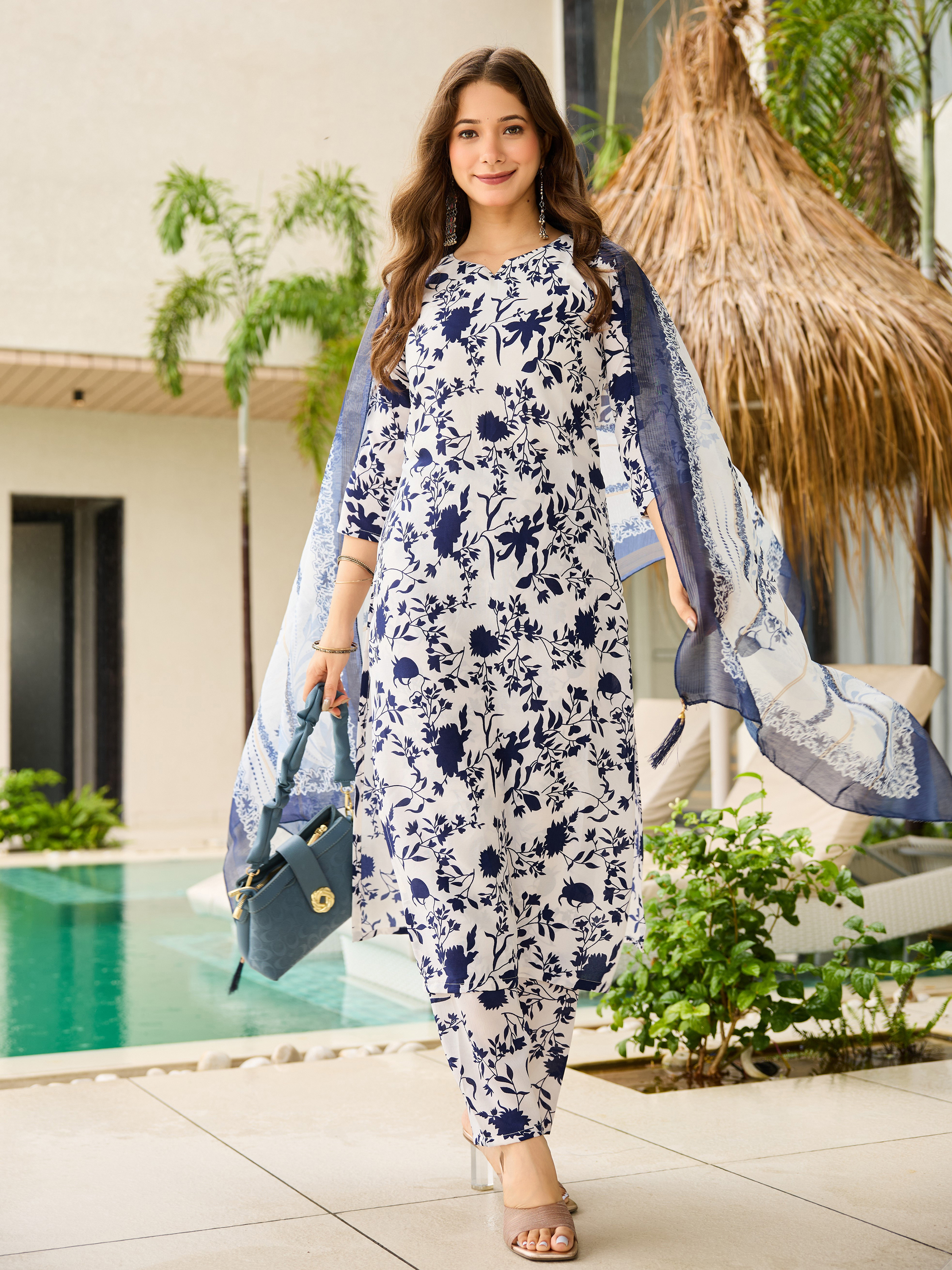
A straight long kurti can create a clean vertical line and work well with similarly narrow cigarette pants. Side slits beginning several inches above the knee improve movement and prevent the lower half from looking boxed in. A calf-length kurti with slim bottoms can appear more elongated than an ankle-length kurti worn with a wide, heavy palazzo.
A kurta dress with an empire seam can create length below the bust, while a fit-and-flare version can define the waist without clinging around the hips. A wide flare adds movement but also adds fabric volume, so the garment should be checked while walking and sitting. Pockets are especially valuable in a dress-style silhouette because they preserve the hands-free convenience often expected from western dresses.
Neckline and sleeve proportion also matter. A deeper V-neck can lengthen the upper body visually, while a round or boat neckline may create a broader, more balanced frame. Three-quarter sleeves work with both styles, but very wide sleeves can compete with a voluminous skirt. A narrow dupatta drape keeps a flared kurta dress from becoming crowded.
Which occasions suit a kurta dress and which suit a long kurti?
A kurta dress suits occasions that reward a self-contained, easy-to-wear outfit, while a long kurti suits occasions where changing the bottom, dupatta or jewellery is useful. The expected dress code should guide the choice more than a trend label.
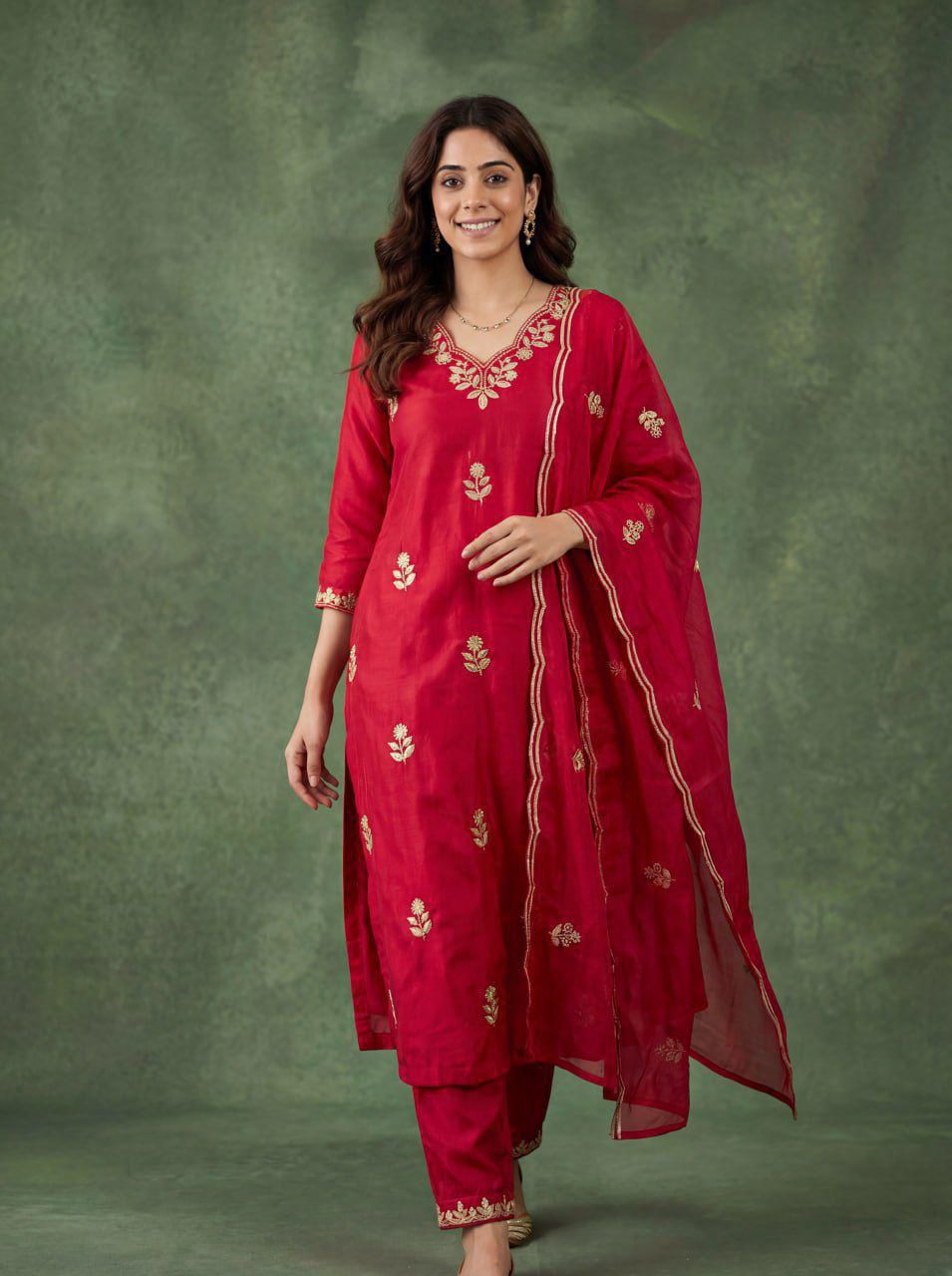
For office wear, a straight long kurti in Chanderi, cotton or a restrained viscose weave is usually practical with cigarette pants and minimal jewellery. The Maroon Viscose Chanderi Silk Embroidered Kurta Set for Women can move from a daytime meeting to a family gathering when styled with small earrings and low heels. Heavy shine, dramatic flare or a long trailing hem may be inconvenient in a formal workplace.
For a Haldi ceremony, colour, movement and ease of cleaning deserve attention. Yellow, green, pink and light orange cotton or silk-blend outfits can feel festive without the weight of bridal wear. A kurta dress is convenient when guests move between seating, photographs and outdoor areas, while a long kurti with a sharara or palazzo creates more time-honoured volume.
Regional collections can also influence the styling direction. Kalamkari Print Salwar Suits work well for an artsy day look with simple earrings and neutral sandals. Maharashtra Paithani Inspired Salwar Suits bring a more ceremonial colour and border vocabulary. Gujarat Bandhej Salwar Suits suit festive gatherings where tie-dye patterns and bright contrast are welcome. Odisha Sambalpuri Salwar Suits offer a woven, pattern-led alternative to an embroidered kurta dress.
What should you check before buying either garment online?
Check the garment measurements, lining, fabric composition, side slits, bottom inclusion and care instructions before deciding between a kurta dress and a long kurti. The product title alone may not reveal how the garment is intended to fit.
- Compare garment and body measurements. A flared kurta dress needs room at the hip and hem, while a straight long kurti should allow comfortable movement across the chest and arms. Do not rely only on a standard small, medium or large label.
- Check the full set contents. A kurta set may include pants and a dupatta, while a kurta dress may include only one garment. Confirm whether the photographed bottom is included before calculating the outfit cost.
- Inspect the hem and side openings. A dress-style hem should look finished without trousers. A long kurti generally needs slits or enough side ease for walking and sitting.
- Read the fabric and care information. Chanderi silk, Vichitra silk, khadi cotton and viscose require different washing and ironing methods. Embroidery and zari may need reverse-side ironing or professional cleaning.
- Check transparency and lining. Cream, white, lavender and pastel garments should be viewed in daylight. A separate slip can affect comfort, especially with a standalone kurta dress.
- Measure the finished length. A garment that reaches the ankle on one person may fall at mid-calf on another. Finished length is more useful than the phrase long or maxi.
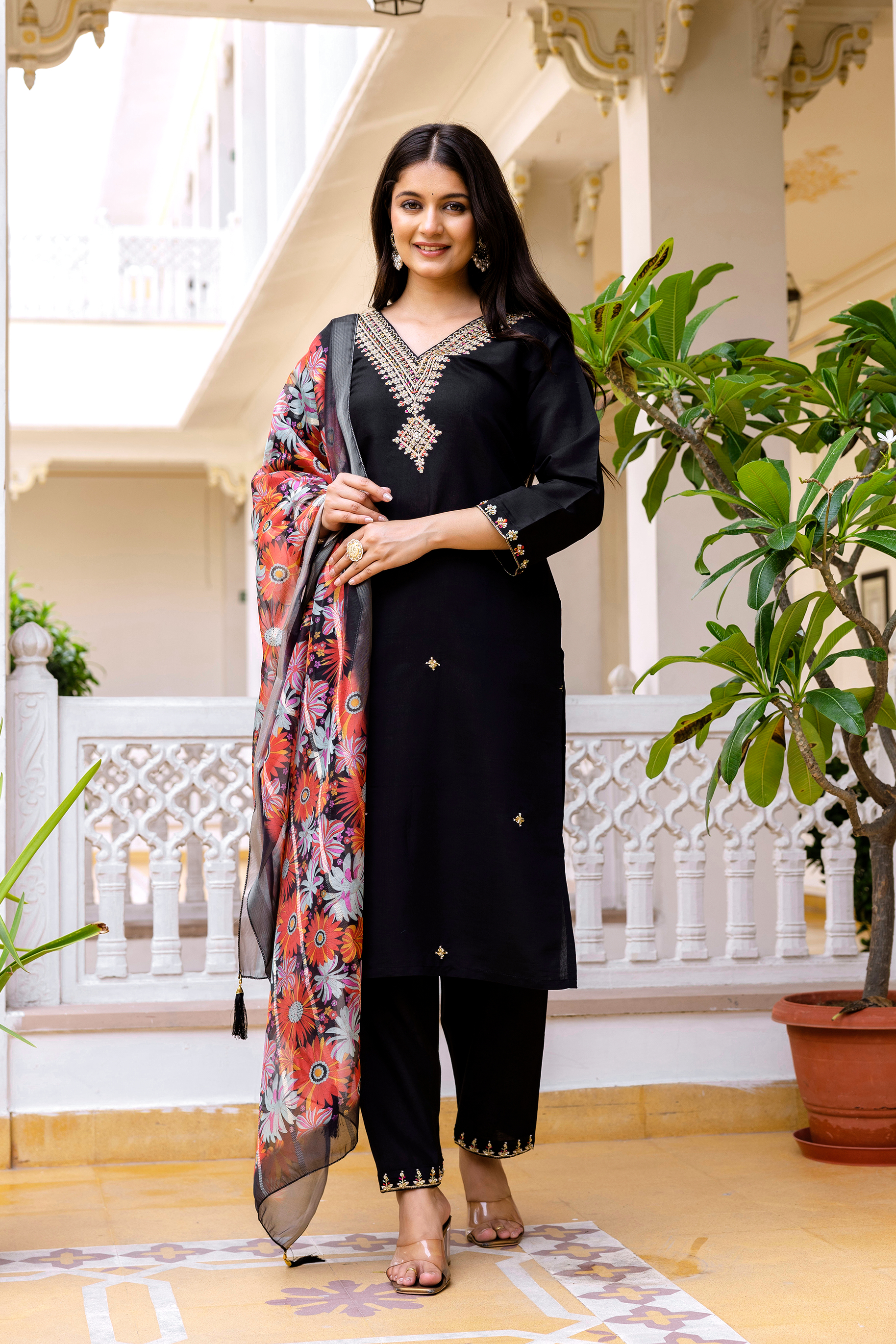
The Madhuri 2 Black Chanderi Silk Embroidered Kurta Set is an example of why colour, fabric and embroidery should be evaluated together rather than judging a garment only by whether it's called a dress or kurti. A coordinated set can provide greater styling flexibility, while a well-cut kurta dress can reduce the number of pieces needed for a complete outfit.
How can one garment be styled in more than one way?
A long kurti brings more repeat styling because its bottom and dupatta can be changed, while a kurta dress gives faster outfit assembly through accessories and layering. The best choice depends on whether variety or convenience matters more in your wardrobe.
Style a straight long kurti with cigarette pants and pointed flats for work, then change to embroidered palazzos and metallic sandals for a festive dinner. A printed dupatta can introduce colour without changing the kurti. A short waistcoat or cropped jacket can add structure, provided the jacket hem doesn't cut awkwardly across the widest part of the kurti.
Style a kurta dress with a narrow belt for a defined waist, a long open shrug for travel or a contrasting dupatta for a more classic appearance. Gold jhumkas, a potli bag and embellished juttis can make a plain silk dress festive. For daytime, replace ornate accessories with a cotton stole, a structured tote and flat sandals.
Punjab Patiala Salwar Suits demonstrate a different styling direction because the voluminous Patiala bottom creates a deliberately layered and relaxed silhouette. A long kurti should be shorter and have enough side ease when worn with a Patiala salwar. A very long or heavily flared kurta dress generally competes with the gathers, so the two silhouettes need careful proportion.
Which one should you choose for your wardrobe?
Choose a kurta dress for quick dressing and a complete one-piece silhouette, or choose a regular long kurti when you want more combinations from separate bottoms and dupattas. A small wardrobe can benefit from owning both because the garments serve different practical purposes.
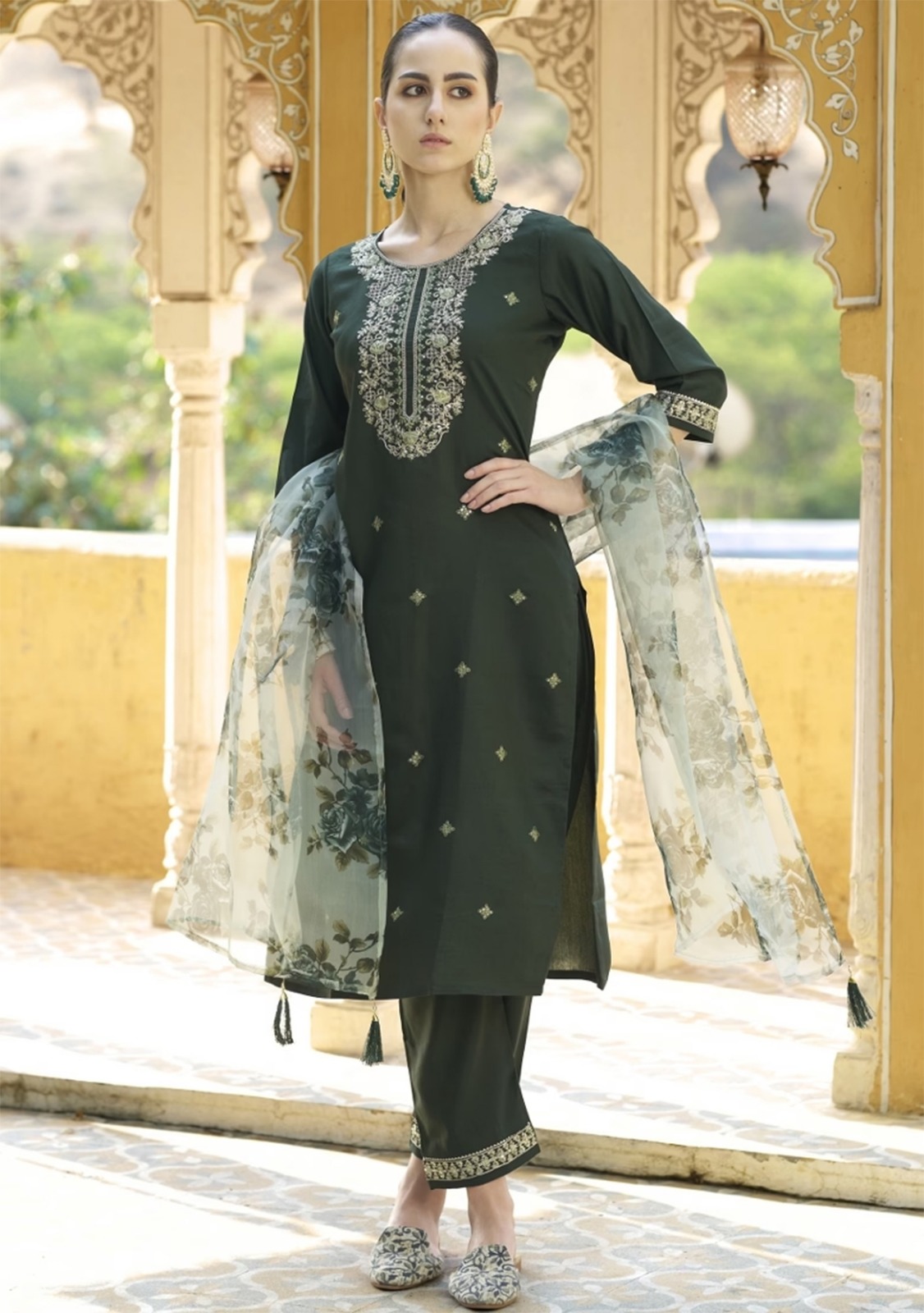
Choose a kurta dress when you prefer minimal coordination, need easy movement at social events or want a dress-like outfit with Indian details. Choose a long kurti when you already own cigarette pants, palazzos or salwars and want to reuse those pieces across several outfits. Climate, commute, workplace rules and laundry habits should influence the decision as much as appearance.
The most reliable buying test is simple: imagine the garment without the styling shown in the photograph. If the outfit still looks complete without pants, it's functioning as a kurta dress. If the garment clearly expects a bottom, a dupatta or both, it's functioning as a regular long kurti or a salwar-suit component.
Common Questions About Kurta Dresses and Long Kurtis
Can a long kurti be worn as a dress?
A long kurti can be worn as a dress only when its cut, opacity, side construction and hem look complete without a separate bottom. A straight kurti with high side slits may require pants for coverage and movement, even if the length reaches the ankles.
Is a kurta dress the same as an Anarkali?
A kurta dress and an Anarkali are not exactly the same. An Anarkali is usually identified by its fitted upper section and pronounced flare from the waist or below the bust, while a kurta dress is a broader category that can include straight, A-line and flared silhouettes.
Do I need to wear pants under a kurta dress?
Pants are not structurally required under a kurta dress, but they can provide extra coverage, comfort and ease of movement. Cigarette pants or leggings are useful when the dress has a shorter hem, a high slit or a lightweight fabric.
What bottom should I wear with a long kurti?
Cigarette pants suit straight or embroidered long kurtis, while palazzos work with longer kurtis that have enough structure and length. Patiala salwars create a fuller traditional silhouette and usually work better with a shorter, less voluminous kurti.
Which fabric is best for a kurta dress in summer?
Khadi cotton and breathable cotton blends are practical summer choices because they allow airflow and are suitable for frequent wear. Lightweight Chanderi can also work for festive daytime dressing, but transparency and lining should be checked before purchase.
How can I tell whether an online product is a kurta dress or a kurta set?
Check whether the product description lists separate pants and a dupatta, then inspect the photographs for side slits and the garment's hem shape. A standalone, lined, flared garment is more likely to function as a kurta dress, while a straight top photographed with coordinated bottoms is generally a kurta set.




