

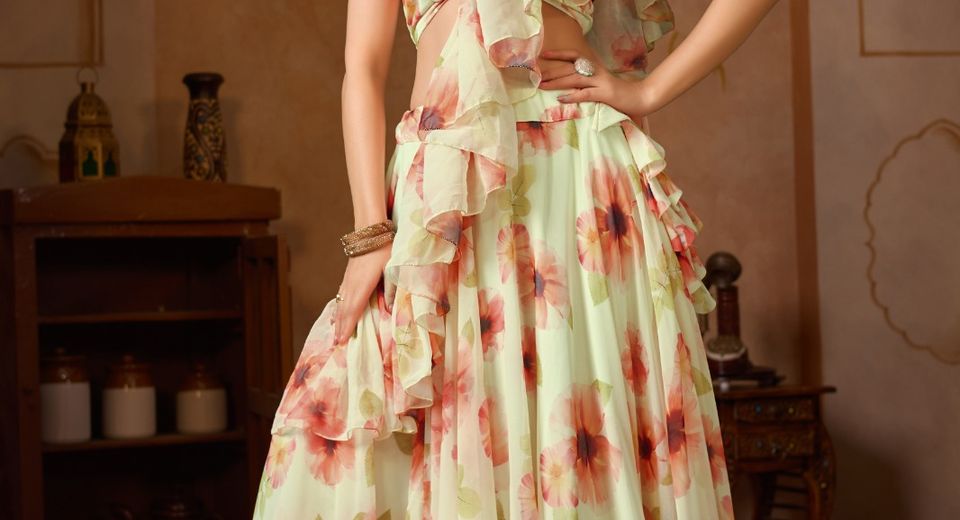
Teej Outfit Ideas become easier to choose when the celebration, weather and amount of movement are considered together. A woman attending a puja may need a graceful saree or salwar suit, while a family gathering with swings and photographs may call for a lighter lehenga or a statement blouse with a draped skirt. Colour, fabric, blouse support, footwear and jewellery all affect whether a festive look remains comfortable through several hours of monsoon celebration.
Teej traditions vary across Rajasthan, Haryana, Punjab, Uttar Pradesh, Bihar and other parts of North India, but dressing for the festival commonly brings together bright colours, auspicious symbolism and feminine festive details. Green, red, pink, yellow and orange appear often, although a softer palette can look equally celebratory when balanced with zari, gota patti, threadwork or colourful prints.
Teej Outfit Ideas: how should you choose the right look?
Choose a Teej outfit by matching the garment structure to the event, the weather and the movement your day requires. A saree suits a formal puja or family gathering, a salwar suit offers dependable comfort for travel and long rituals, and a lehenga creates a more festive silhouette for photographs and social celebrations.
Start by identifying the setting. A temple visit or daytime vrat gathering usually benefits from breathable cotton, Chanderi, georgette or lightweight silk blends. An evening celebration can support richer Banarasi silk, tissue, velvet accents or denser embroidery, provided the garment doesn't become uncomfortable in humid weather.
Next, assess how much walking, sitting and bending is involved. A lehenga with a very wide flare may look dramatic but can catch on chairs and steps. A six-yard saree with a firmly secured pallu gives elegance but needs careful pleating. A straight or lightly flared salwar suit often gives the greatest ease when the schedule includes errands, puja preparation and visiting relatives.
Take measurements with the undergarments and footwear intended for the outfit. Waist placement, blouse length and lehenga hem change when the wearer switches from flat juttis to a two-inch heel. A measurement taken over a bulky garment can result in a loose waist, while a measurement taken without accounting for a blouse can make the final fit restrictive.
Teej Outfit Ideas for sarees, blouses and salwar suits
Sarees and salwar suits are adaptable Teej choices because both garments can be dressed up without sacrificing movement. A saree gives a traditional drape, while a salwar suit simplifies sitting, walking and managing a dupatta during rituals.
Which sarees work well for a Teej puja?
Lightweight sarees with stable borders work well for a Teej puja because manageable drapes stay neat during sitting, standing and offering prayers. Chanderi, cotton silk, organza, lightweight Banarasi silk and soft georgette suit daytime celebrations. A narrow zari border adds ceremony without creating the weight of a heavily embroidered pallu.
Green silk with a pink border references monsoon foliage and festive colour traditions, while a pink saree with a green blouse creates a softer contrast. Yellow, orange and red are also effective for Teej, especially when the saree includes floral motifs, paisley, resham or zari. If the saree is heavily patterned, choose a blouse with a clean neckline and restrained sleeve detail.
Pre-pleat the saree before leaving home when the schedule includes travel. Use three to five safety pins inside the pleats and one discreet pin at the shoulder, placing each pin horizontally so the pins don't pull the fabric downward. A cotton or satin petticoat with a secure drawstring helps the saree remain stable in humid weather.
What blouse details improve comfort?
A supportive blouse with a correctly placed bust seam improves comfort more than extra embellishment. Princess seams, a broad shoulder strap and a firm but flexible lining can provide support, while a back closure with sufficient overlap prevents gaping when the wearer lifts an arm or adjusts the pallu.
For a festive blouse, consider elbow-length sleeves, a square neckline, a round neckline with gota edging or a modest keyhole back. Elbow-length sleeves protect the underarm area from direct friction and pair well with both sarees and lehengas. Cotton lining is useful in humid conditions because cotton absorbs moisture better than a completely synthetic lining.
When is a salwar suit the practical choice?
A salwar suit is the practical choice for a Teej celebration that involves extended standing, visiting several homes or helping with food and decorations. Cotton silk, Chanderi, muslin cotton and lightweight rayon offer different levels of structure, while a straight kurta with cigarette pants creates a clean silhouette without the bulk of a heavily gathered salwar.
Keep the dupatta between 2.25 and 2.5 metres long so it can be worn over one shoulder or crossed securely across the torso. A small border, scattered embroidery or a printed dupatta adds interest without requiring repeated adjustment. For an active day, use two hidden pins near the shoulder and one near the waist rather than relying only on a brooch.
Teej Outfit Ideas for choosing a festive lehenga
A lehenga is a strong Teej choice for an evening gathering, family photographs, a swing ceremony or a festive event where a fuller silhouette feels appropriate. Select a lighter skirt, breathable lining and a blouse that permits arm movement so the outfit remains wearable beyond the first photograph.
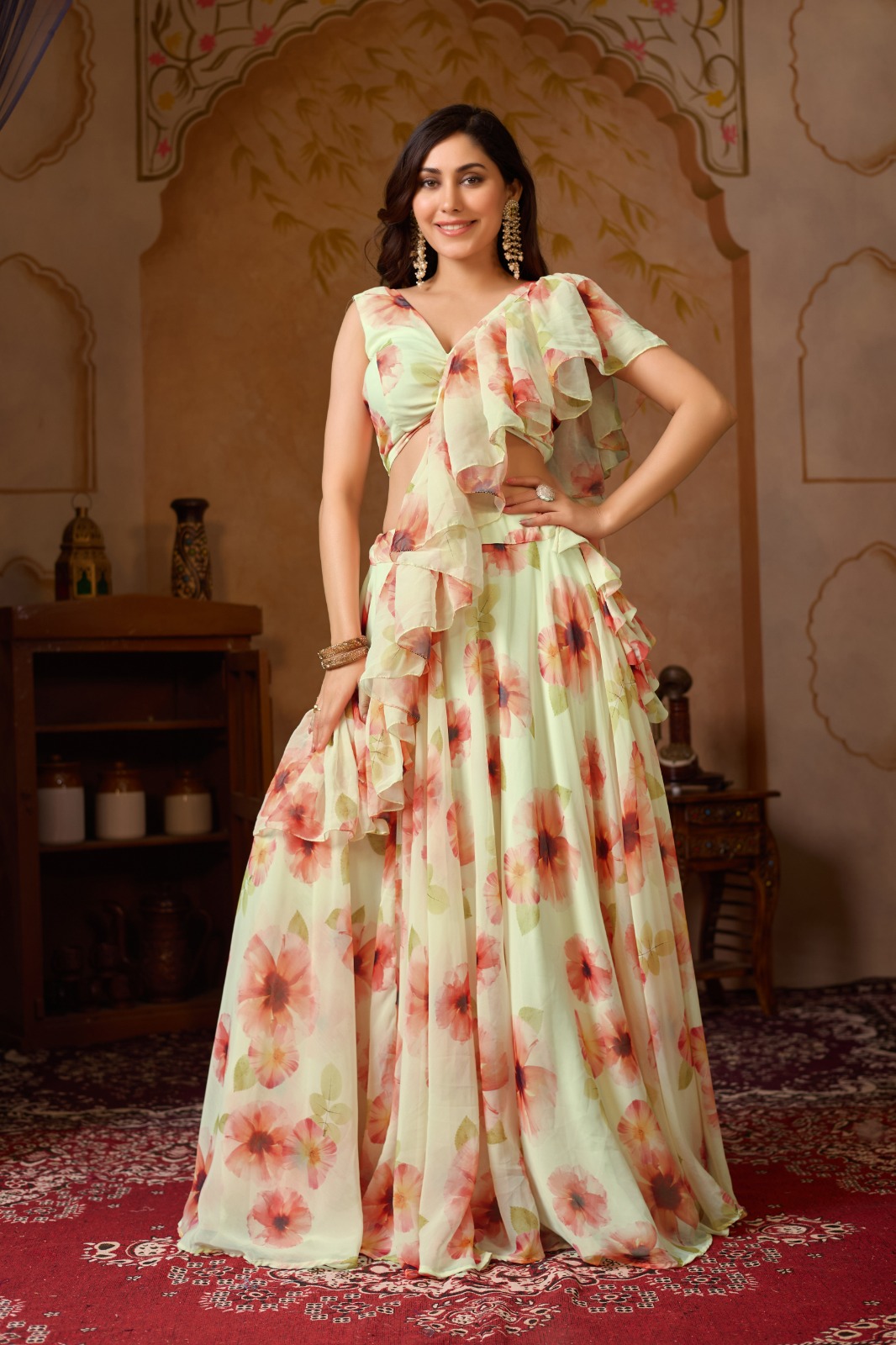
Pastel Floral Georgette Lehenga Set with Ruffle Blouse demonstrates how a soft colour palette can still look festive when the print and ruffle create movement. Georgette is generally lighter than densely layered net, making a pastel set useful for a daytime or indoor Teej gathering.
For brighter celebrations, Stylish Multicolor Butter Silk Lehenga Choli Set and Colorful Patch Print Butter Silk Lehenga Choli Set show two ways to use colour without adding heavy embroidery everywhere. Butter silk has a smooth, festive surface and photographs well, but check the lining and waistband because synthetic silk blends may feel warm in humid weather.
A printed white base can also work for Teej when paired with green, pink or red accessories. White Digital Print Festive Lehenga Choli Set provides a clean background for colourful jewellery, a contrasting dupatta or floral hair accessories. White requires more care around food, wet floors and vermilion, so it's better suited to a controlled indoor gathering than a crowded outdoor event.
Festive Multicolor Muslin Cotton Lehenga Choli Set shows how a cotton-based fabric can bring lehenga volume to a celebration without the density of multiple synthetic layers. Muslin cotton feels useful for daytime events, although the wearer should check whether the skirt has enough lining to prevent transparency and preserve its shape.
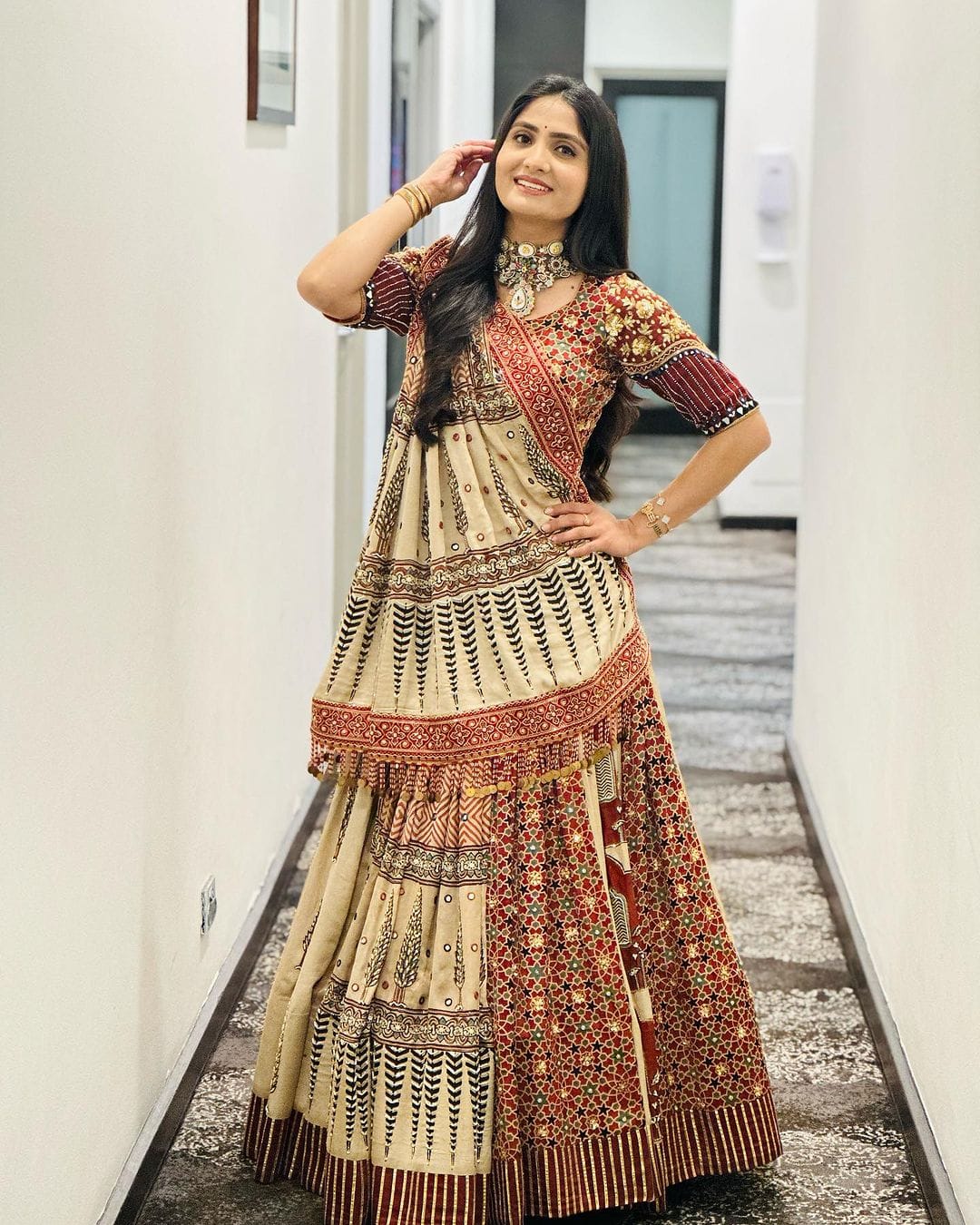
Designer Threadwork Silk Lehenga Choli Set with Dupatta introduces surface texture through threadwork, making it suitable for a more formal evening. Royal Patola Printed Designer Gown with Elegant Dupatta brings another route for guests who prefer a gown-like silhouette over a heritage waist-and-skirt lehenga construction.
Teej Outfit Ideas for monsoon-friendly fabrics and colours
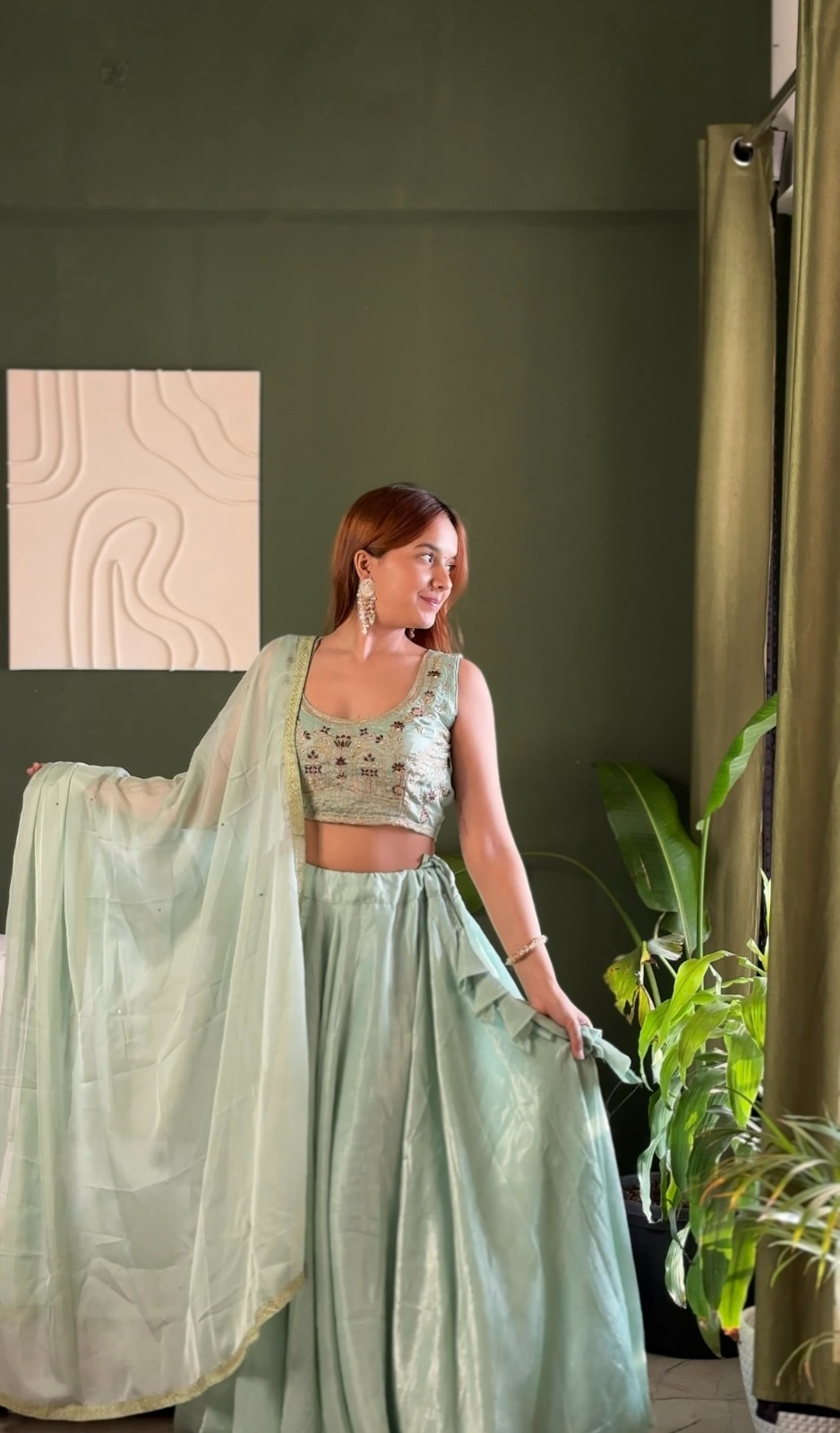
Lightweight georgette, muslin cotton, Chanderi, cotton silk and soft rayon generally work best in monsoon weather because they dry more quickly and create less bulk than heavily layered fabrics. Fabric choice should also account for lining, embroidery and the time the garment will remain packed during travel.
Muslin cotton allows useful airflow for daytime wear, while georgette falls close to the body and creates a fluid drape. Chanderi brings a crisp, translucent finish but may need careful handling around rough jewellery. Silk, including Banarasi silk and Kanjeevaram, brings rich colour and cultural formality, although heavier silk sarees can feel warm when worn for many hours.
Green is strongly associated with vegetation, renewal and the monsoon season, which explains its popularity in many Teej wardrobes. Red and pink bring bridal and celebratory associations, while yellow and orange suit daytime festivities. A single dominant colour with one contrasting accent often looks more polished than combining four equally strong shades.
Inspect the garment for colour bleeding before wearing it outside. Dab a hidden seam with a white cotton cloth dampened with cool water; visible transfer indicates that the garment should be kept away from rain and damp surfaces. Never iron a printed or embellished outfit at high heat without checking the care label, because digital prints, zari and synthetic blends can distort or scorch.
Teej Outfit Ideas for styling a lehenga comfortably
Style a Teej lehenga comfortably by controlling the waistband, hem, blouse fit, dupatta placement and jewellery weight. Five small adjustments can prevent the most common problems: slipping, tripping, shoulder strain, overheating and restricted arm movement.
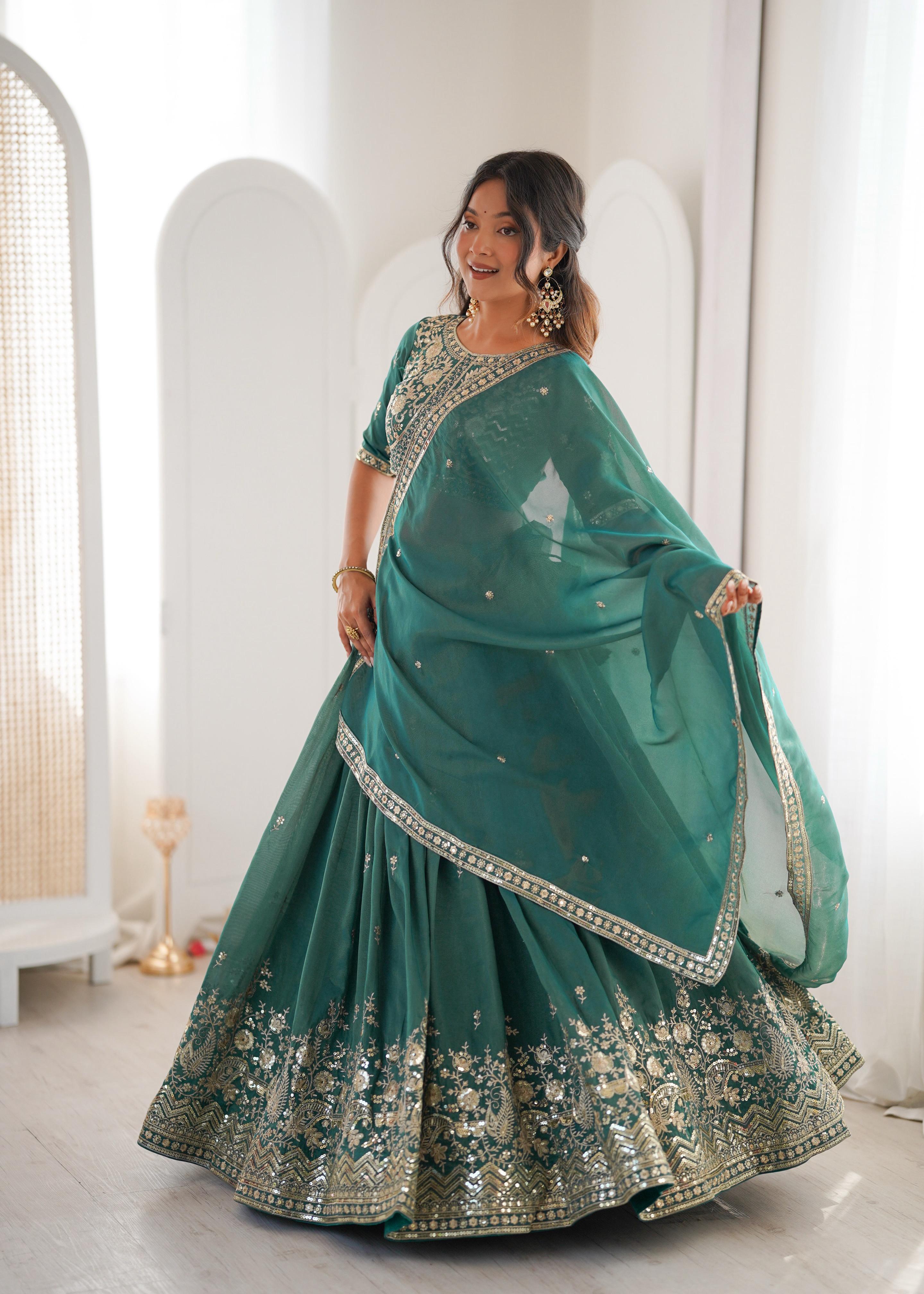
- Set the hem correctly: the skirt should clear the floor by approximately 1 to 1.5 centimetres when worn with the planned footwear. A dragging hem collects water and dirt during monsoon travel.
- Secure the waistband: a broad waistband with a hook-and-eye closure distributes pressure more evenly than a thin elastic band. Test the closure while sitting before removing the garment tag.
- Keep the dupatta functional: drape the dupatta over one shoulder and anchor it near the waist, or use a cross-body drape when moving between rooms. A very long trailing edge is difficult to manage around swings and steps.
- Balance jewellery: choose one dominant element, such as chandbali earrings, a rani haar or a stack of bangles. Heavy earrings should have a supporting chain or a lightweight design to reduce earlobe strain.
- Wear tested footwear: block heels, embellished juttis and cushioned sandals are safer than new narrow heels. Walk, sit and climb two steps in the footwear before the celebration.
Coordinate the accessories with the outfit rather than matching every colour exactly. Green glass bangles can connect a pink saree to the monsoon theme, while oxidised silver can calm a multicoloured printed lehenga. Gold-toned jewellery works naturally with zari, silk and warm shades such as mustard, orange and red.
Hair and makeup should also account for humidity. A low bun, braid or half-up style is less likely to lose shape than loose curls during a long outdoor event. Waterproof kajal, a lightweight base and blotting paper are more practical than multiple layers of heavy cream products.
Teej Outfit Ideas for shopping, packing and garment care
Buy a Teej outfit at least seven to ten days before the celebration so there's time for alterations, blouse adjustments and a full movement test. A last-minute purchase leaves little room to correct a tight armhole, dragging hem, uncomfortable lining or missing hook.
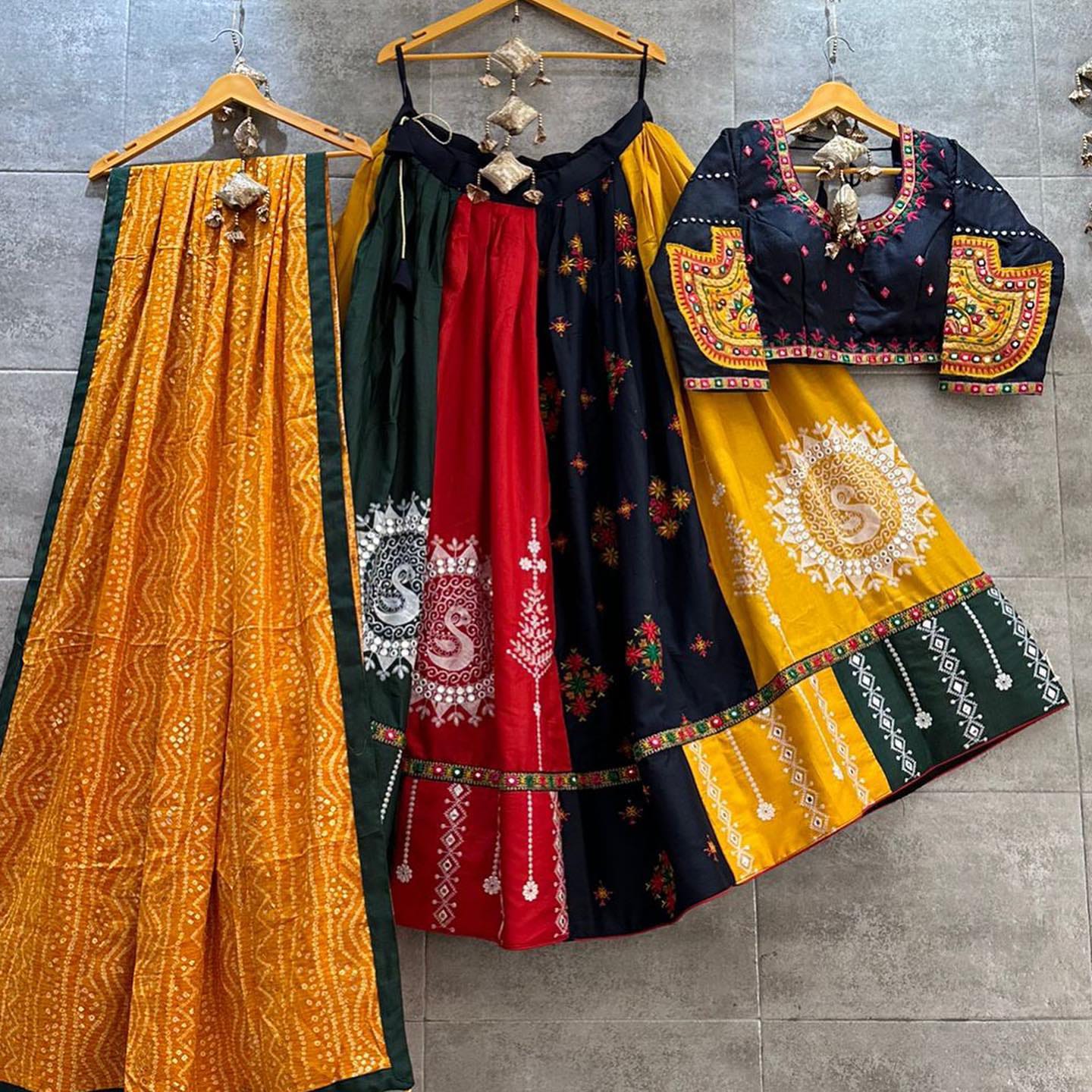
Compare the total outfit rather than the garment price alone. A lehenga that needs a separate can-can, lining alteration, blouse pad or custom dupatta may cost more to prepare than a lightly structured set. Collections such as Pink Lehengas Under 4000 with 50% Discount and Silk Lehengas Under 3000 can help shoppers set a budget, but fabric composition and finishing should still be checked before purchase.
For a coordinated family or bridal-party celebration, Bridesmaid Lehengas Under 5500 and Net Lehengas Under 4500 with 51% Discount provide useful starting points for comparing silhouettes and price bands. Haldi Lehengas Under 5500 may also contain bright yellow, green and pink options that suit Teej colour preferences, even though the collection is named for another festive ceremony.
Pack a saree or lehenga in a clean cotton garment bag rather than compressed plastic for several days. Fold embellished areas inward with acid-free tissue or soft muslin between layers, and avoid placing heavy jewellery directly on sequins, zari or delicate digital prints. Allow a damp garment to dry completely in shade before storing it; direct sunlight can fade dyed silk and printed surfaces.
After Teej, follow the care label instead of assuming that every festive garment needs dry cleaning. Spot-cleaning is safer for small marks on many synthetic blends, while silk, zari, threadwork and structured lehengas should usually go to a professional cleaner. Store heavy lehengas flat or on a broad padded hanger, and refold stored garments every few months to reduce permanent fold lines.
Teej Outfit Ideas: frequently asked styling decisions
The best final choice depends on comfort, ceremony and personal style rather than a single prescribed colour or garment. A well-fitted cotton-silk saree can look as festive as an embroidered lehenga when the blouse, jewellery and drape are thoughtfully coordinated.
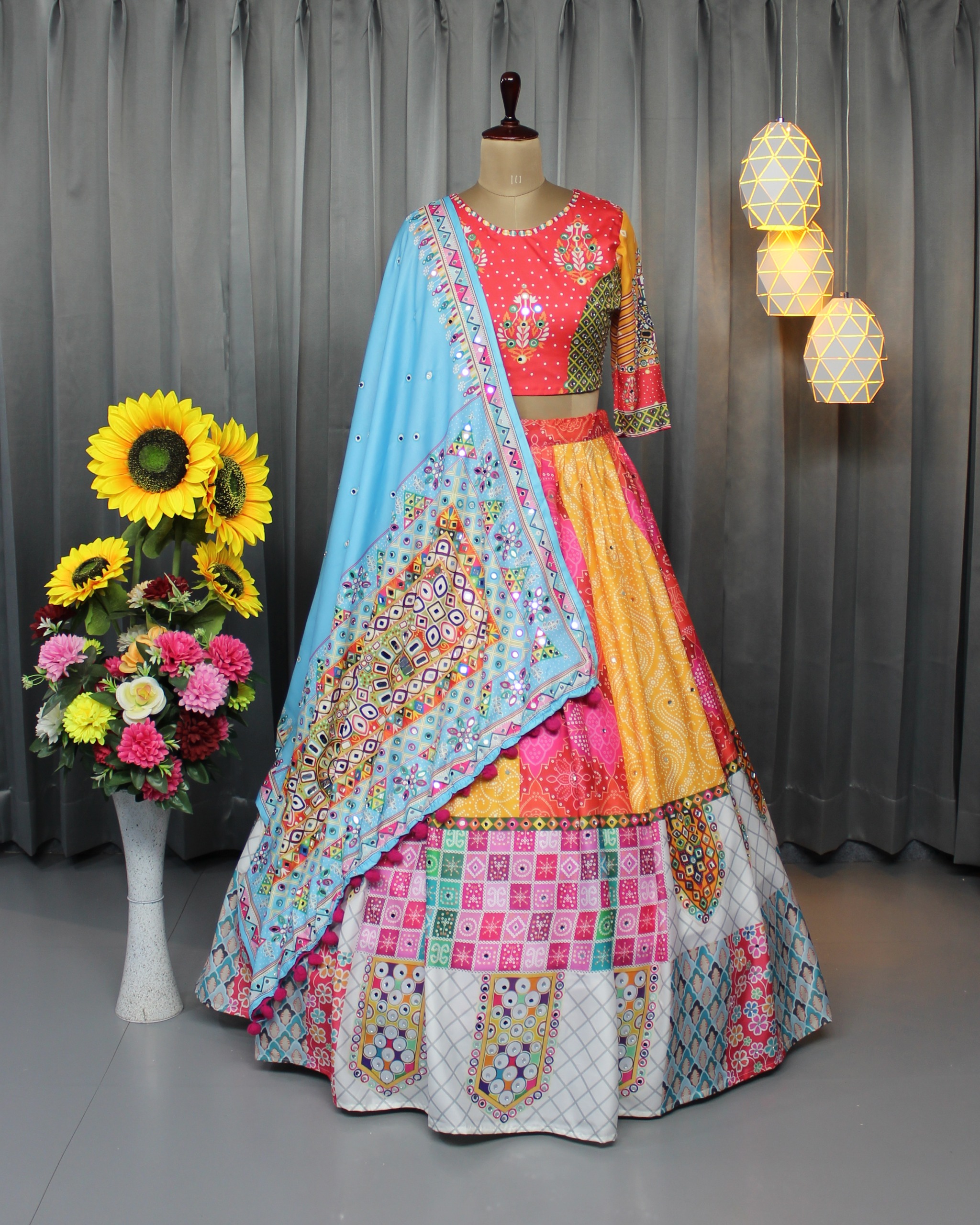
For a daytime Haldi ceremony-style gathering, choose yellow, green, pink or orange in georgette, muslin cotton, Chanderi or cotton silk. For an evening family celebration, silk, threadwork, zari and richer jewel tones can create greater visual depth. For travel-heavy schedules, prioritise a salwar suit or a lightly flared lehenga with secure closures.
Most importantly, test the complete outfit before the event. Sit on the floor, walk up stairs, raise both arms, check the dupatta and wear the intended footwear for at least fifteen minutes. A garment that passes these practical tests is more likely to remain polished through puja, photographs, meals and conversations.
Common Questions About Choosing Teej Outfits
Which colour is best for a Teej outfit?
Green is a popular Teej colour because it reflects monsoon foliage and renewal, while red, pink, yellow and orange are also festive choices. Choose one main colour and one contrasting accent for a balanced look.
Can I wear a lehenga for Teej during the daytime?
Yes, a lightweight lehenga works well for daytime Teej celebrations when it uses georgette, muslin cotton, Chanderi or a light silk blend. Avoid very heavy lining and dense embroidery if the event is outdoors or humid.
Which saree fabric is comfortable for Teej?
Chanderi, cotton silk, soft georgette, organza and lightweight Banarasi silk are comfortable choices for many Teej events. A breathable lining and a secure petticoat matter as much as the saree fabric itself.
How can I stop my Teej dupatta from slipping?
Secure the dupatta with two discreet pins near the shoulder and one near the waist, or use a cross-body drape for more movement. Choose a dupatta length of about 2.25 to 2.5 metres for flexible styling.
What should I wear to a long Teej puja?
A salwar suit or a lightweight saree is usually the most practical choice for a long Teej puja because both garments allow comfortable sitting and walking. Choose breathable fabric, a supportive blouse or kurta, and footwear that has already been tested.
How should I store a Teej lehenga after the festival?
Dry the lehenga completely in shade, follow the care label and store it in a breathable cotton garment bag. Keep tissue or soft muslin between embellished layers, and avoid compressing zari, sequins or delicate prints under heavy clothing.





