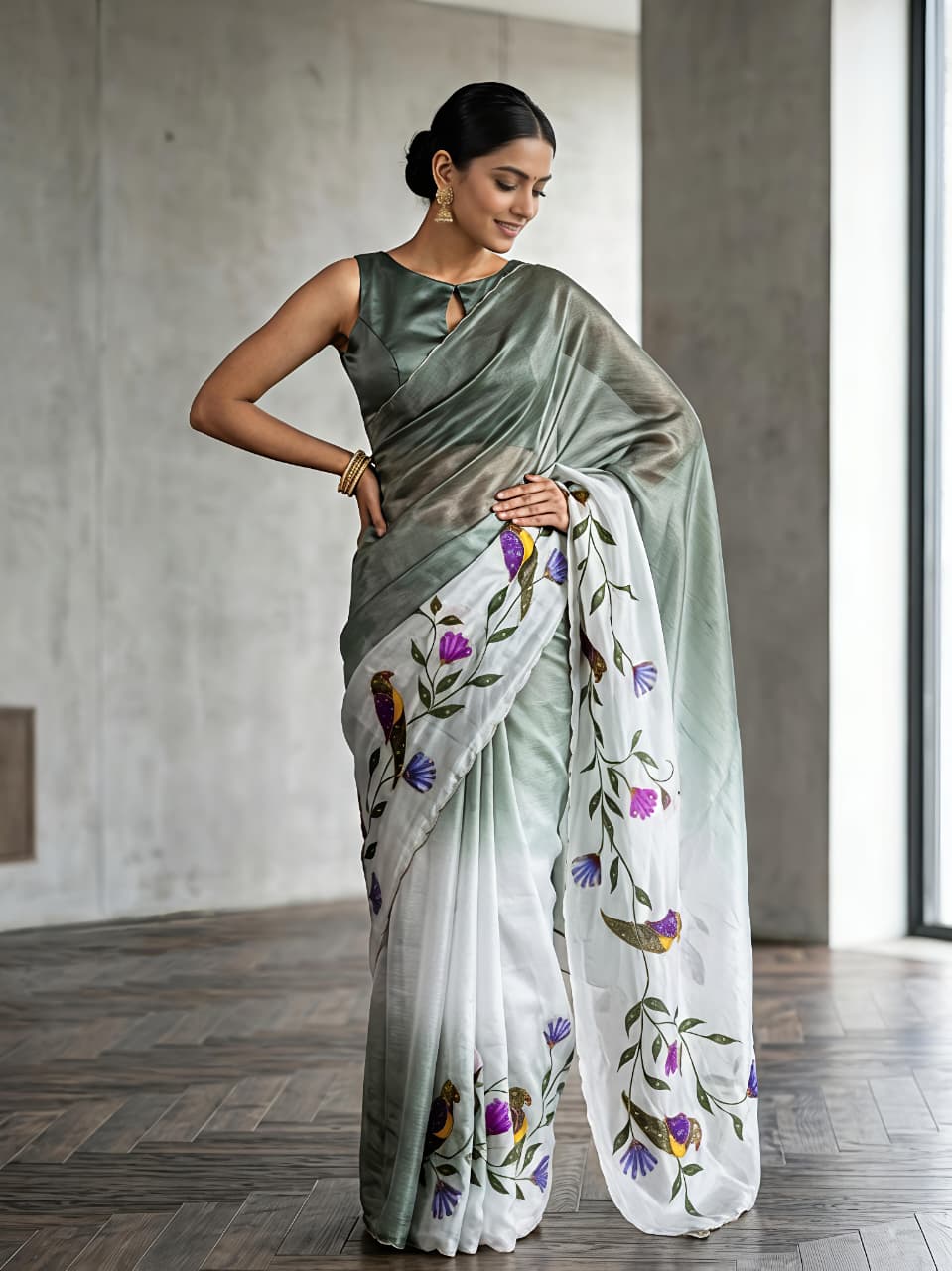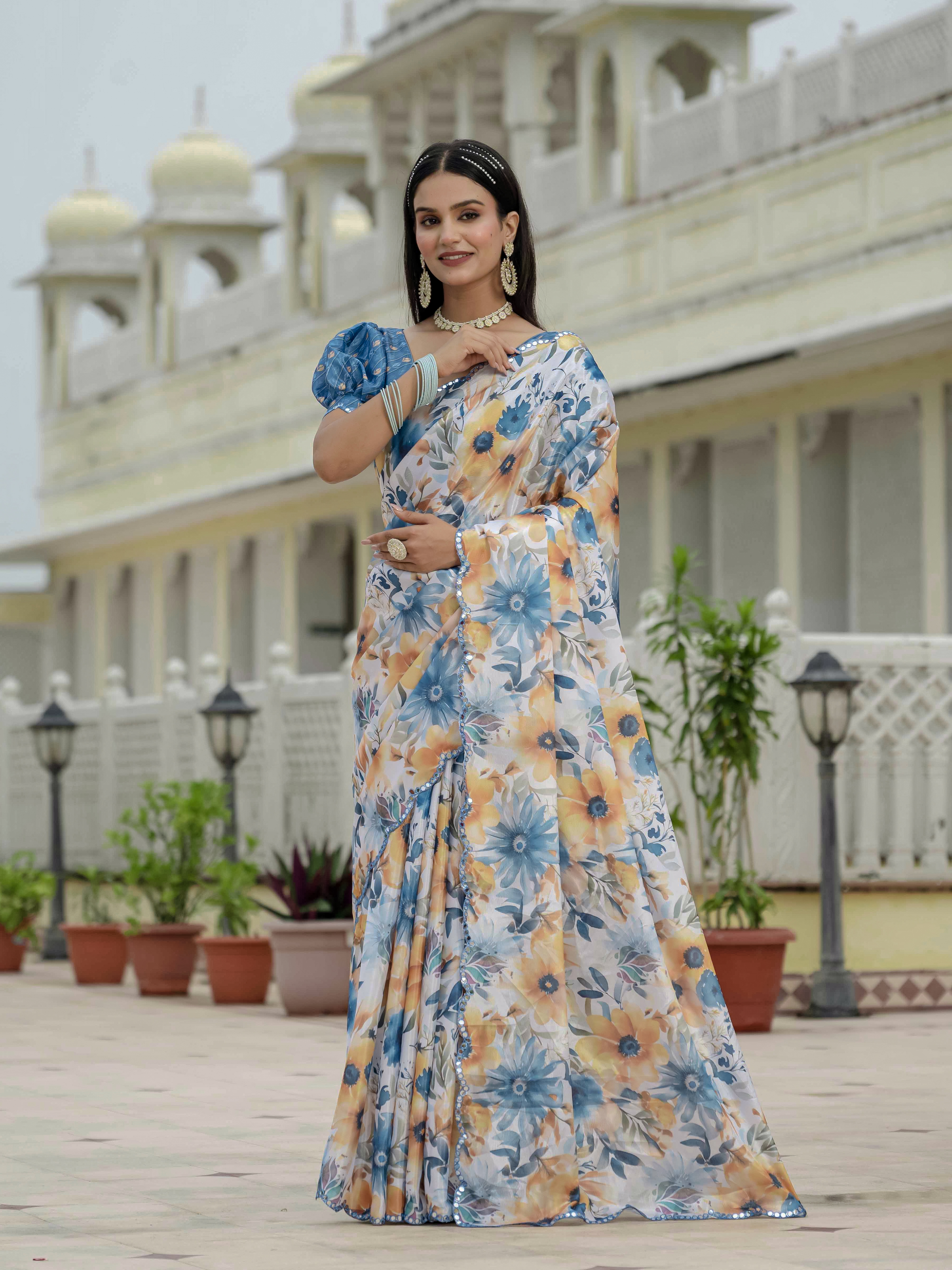
Teej Fashion for Women: Traditional Haryanvi Sarees & Lehenga Looks becomes more useful when clothing reflects the festival's colours, rituals and monsoon setting. A Teej outfit needs festive presence, but it also needs to remain comfortable through swings, family visits, puja and several hours of movement. Haryanvi sarees, bright lehengas, gota details, glass bangles and carefully chosen dupattas offer a practical way to dress traditionally without looking costume-like.
Haryanvi Teej dressing commonly draws from vivid green, red, pink and yellow, with embroidery, zari, gota patti and colourful borders supplying visual richness. The most suitable choice depends on whether the wearer is attending a home puja, a community celebration, a college event or a larger family gathering. Fabric weight, blouse support, footwear and dupatta placement matter as much as colour.
Teej Fashion for Women: Traditional Haryanvi Sarees & Lehenga Looks and their cultural details
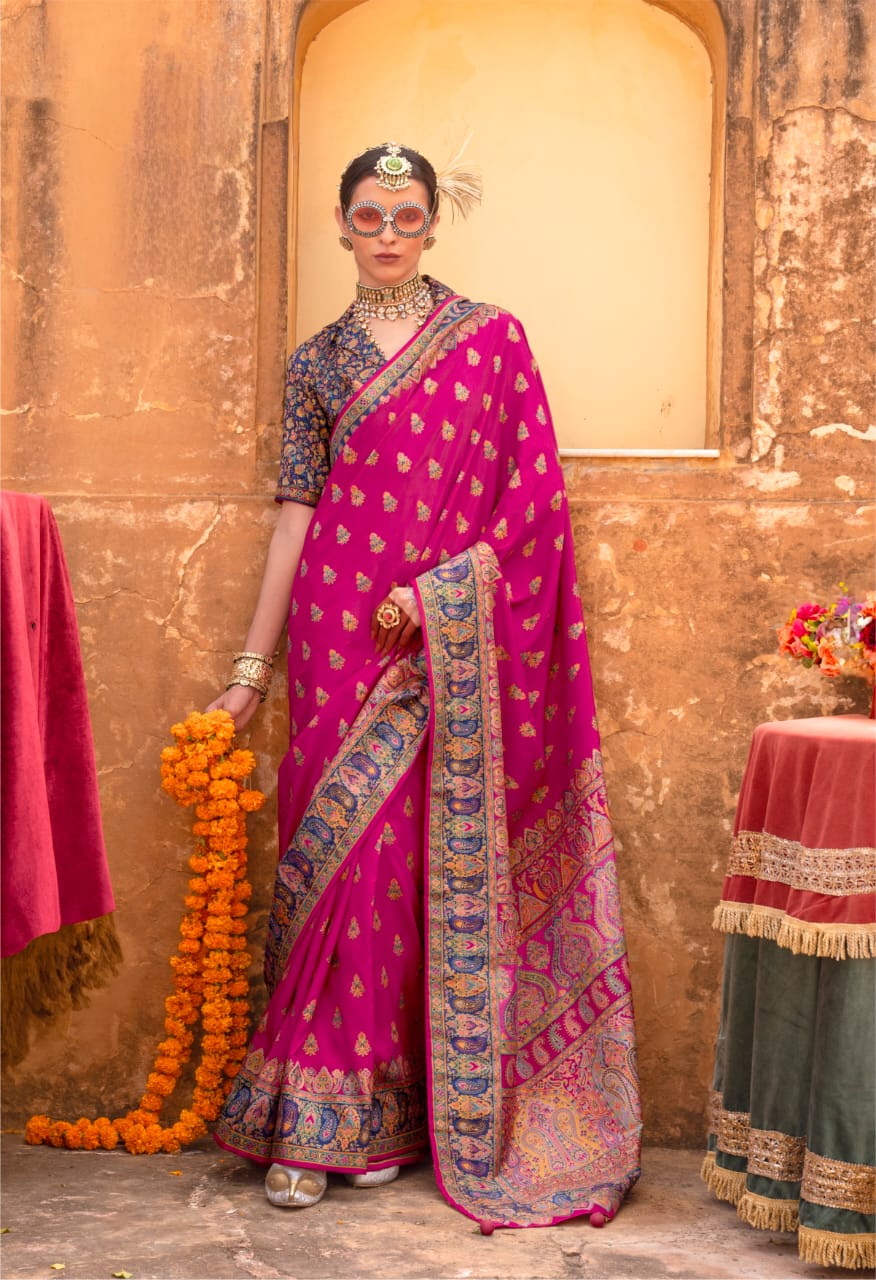
Traditional Haryanvi Teej clothing is recognised through bright colours, regional embroidery influences, practical draping and celebratory jewellery rather than one mandatory outfit. A Haryanvi saree may feature a strong border, a contrasting blouse and a pallu arranged for secure movement, while a lehenga look often combines a flared skirt, fitted choli and dupatta with folk-inspired embellishment.
Teej celebrates the arrival of the monsoon and is associated with women's gatherings, swings, songs, mehendi and prayers connected with marital happiness and family wellbeing. Clothing therefore needs to look joyous and visible from a distance. Green is especially applicable because it echoes new vegetation after the rains, while red and pink bring bridal and festive associations.
Regional authenticity doesn't require copying one rigid silhouette. A cotton saree with a printed blouse can look appropriately rooted for a daytime gathering, while a silk lehenga with restrained zari can suit an evening celebration. The strongest outfits preserve recognisable cues-colour, border, drape and jewellery-while fitting the wearer's age, climate and personal style.
Teej Fashion for Women: Traditional Haryanvi Sarees & Lehenga Looks for different celebrations
The right Teej outfit depends on the scale, timing and physical demands of the celebration. Daytime pujas usually benefit from breathable sarees or light lehengas, whereas evening events allow silk, net overlays, mirror work and more elaborate jewellery.
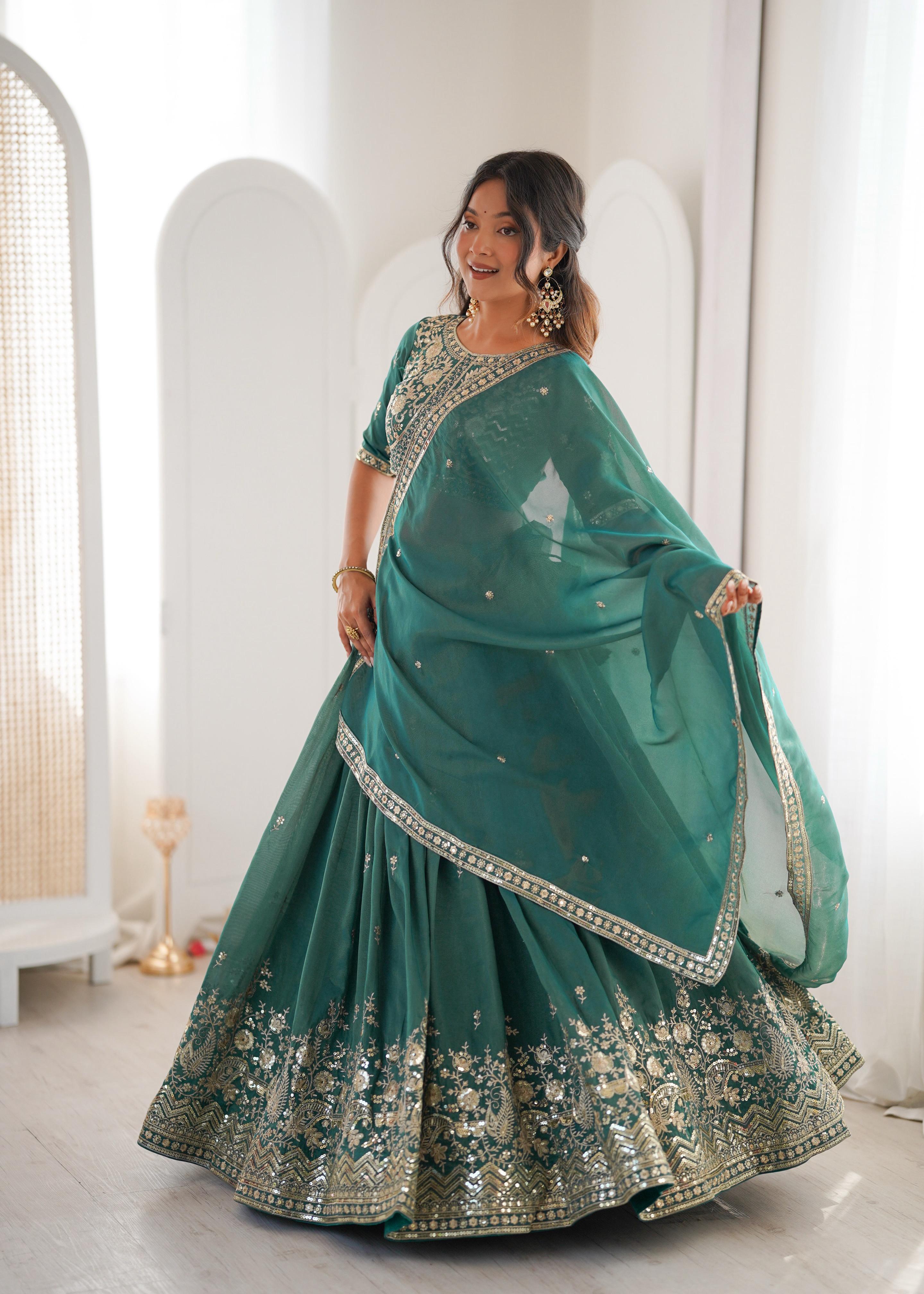
What works for a daytime Teej puja?
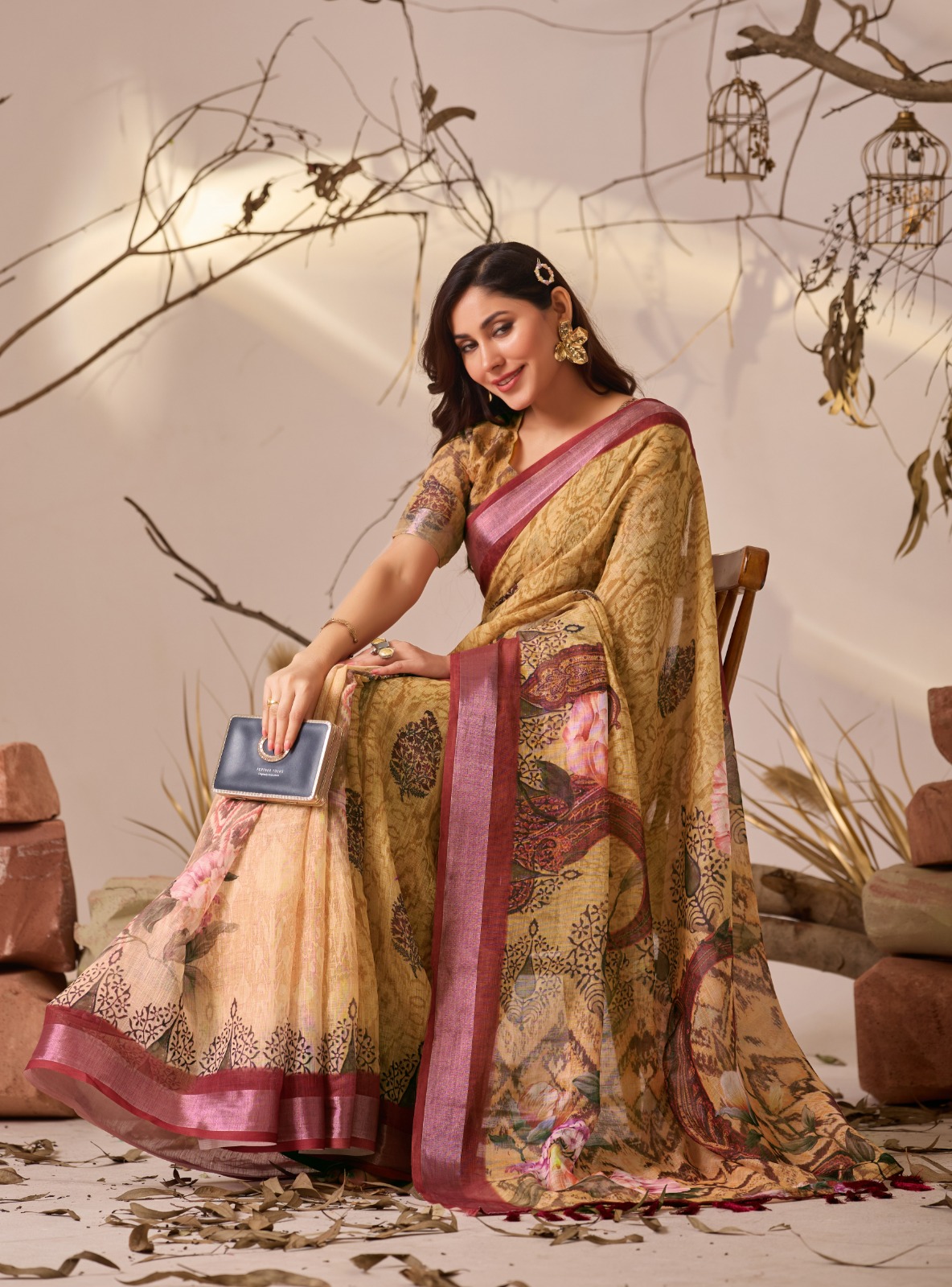
A lightweight cotton, Chanderi or georgette outfit works best for a daytime Teej puja because each fabric allows more airflow than heavily layered velvet or dense brocade. Choose a green, mustard, rose or coral base and keep the embellishment concentrated on the border, neckline or dupatta. A three-quarter sleeve blouse and a securely pinned pallu make sitting, walking and offering prayers easier.
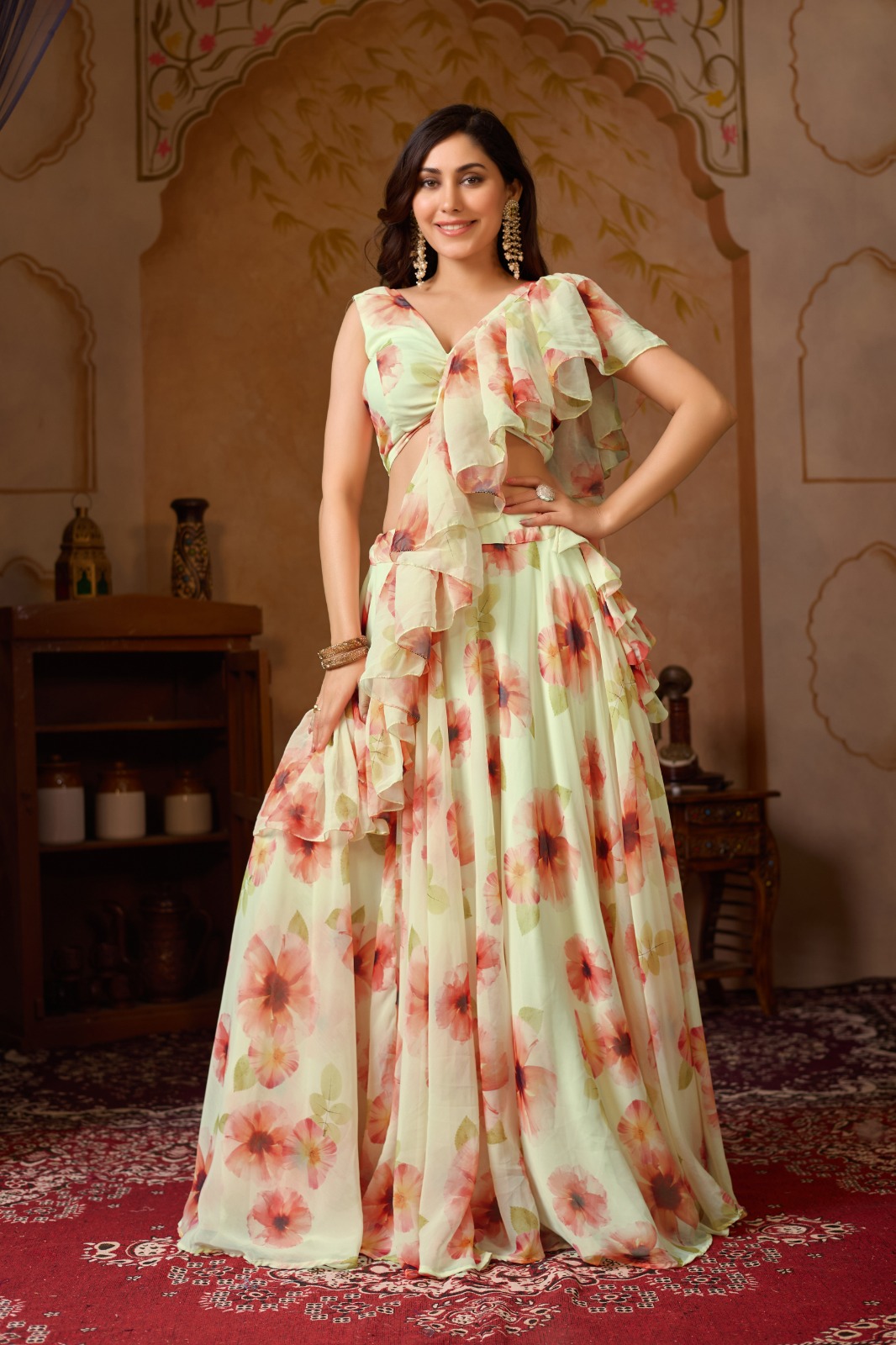
Pastel Floral Georgette Lehenga Set with Ruffle Blouse offers a softer interpretation of Teej dressing for women who prefer floral colour over highly saturated red or green. Pair the set with green glass bangles and a small bindi to add a festival cue without making the outfit excessively ornate.
What suits a Teej community gathering?
A community Teej event calls for a colour and silhouette that remain visible in photographs and crowded spaces. A flared lehenga with a contrast dupatta, medium-sized earrings and a defined blouse neckline creates enough structure without requiring a long train or fragile surface work.
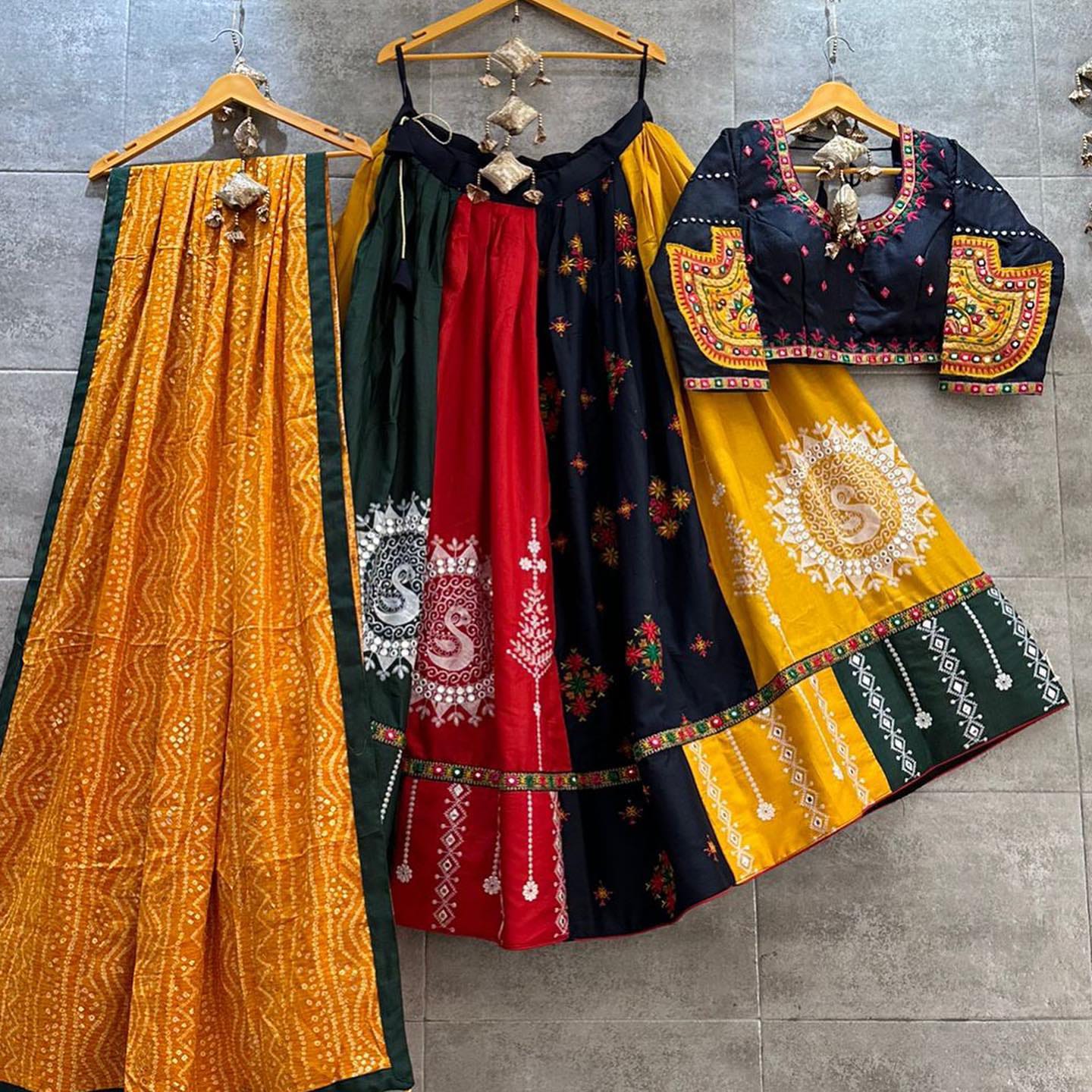
Stylish Multicolor Butter Silk Lehenga Choli Set gives a multicoloured base that can be styled with one dominant accessory shade. Select green bangles if the outfit has green detailing, or use pink and gold accessories when the skirt includes warmer tones. A low block heel is safer than a narrow stiletto on grass, uneven courtyards or temporary event flooring.
What works for an evening family celebration?
An evening Teej celebration can carry richer textiles and stronger reflective detail because indoor and artificial lighting brings out silk, zari and mirror work. Wine, emerald, ivory, fuchsia and antique gold create a more formal palette than pale daytime pastels.
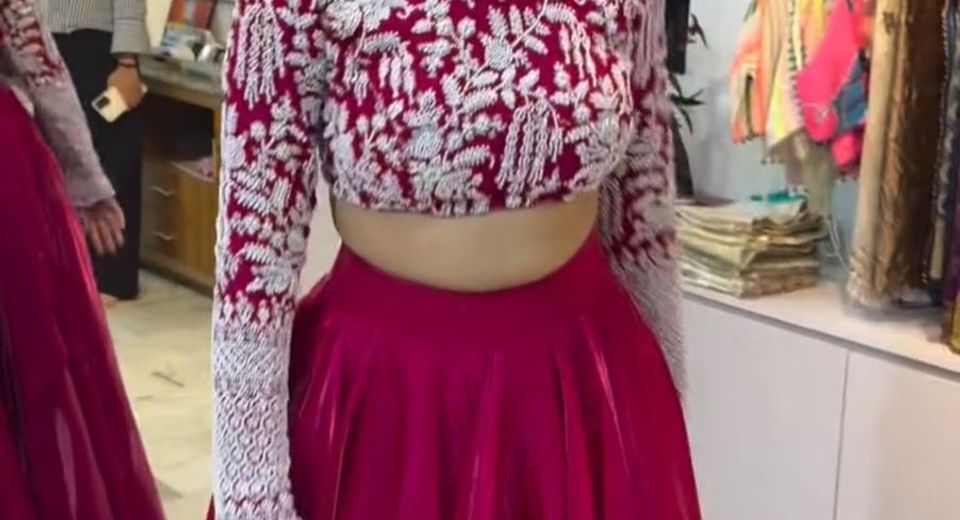
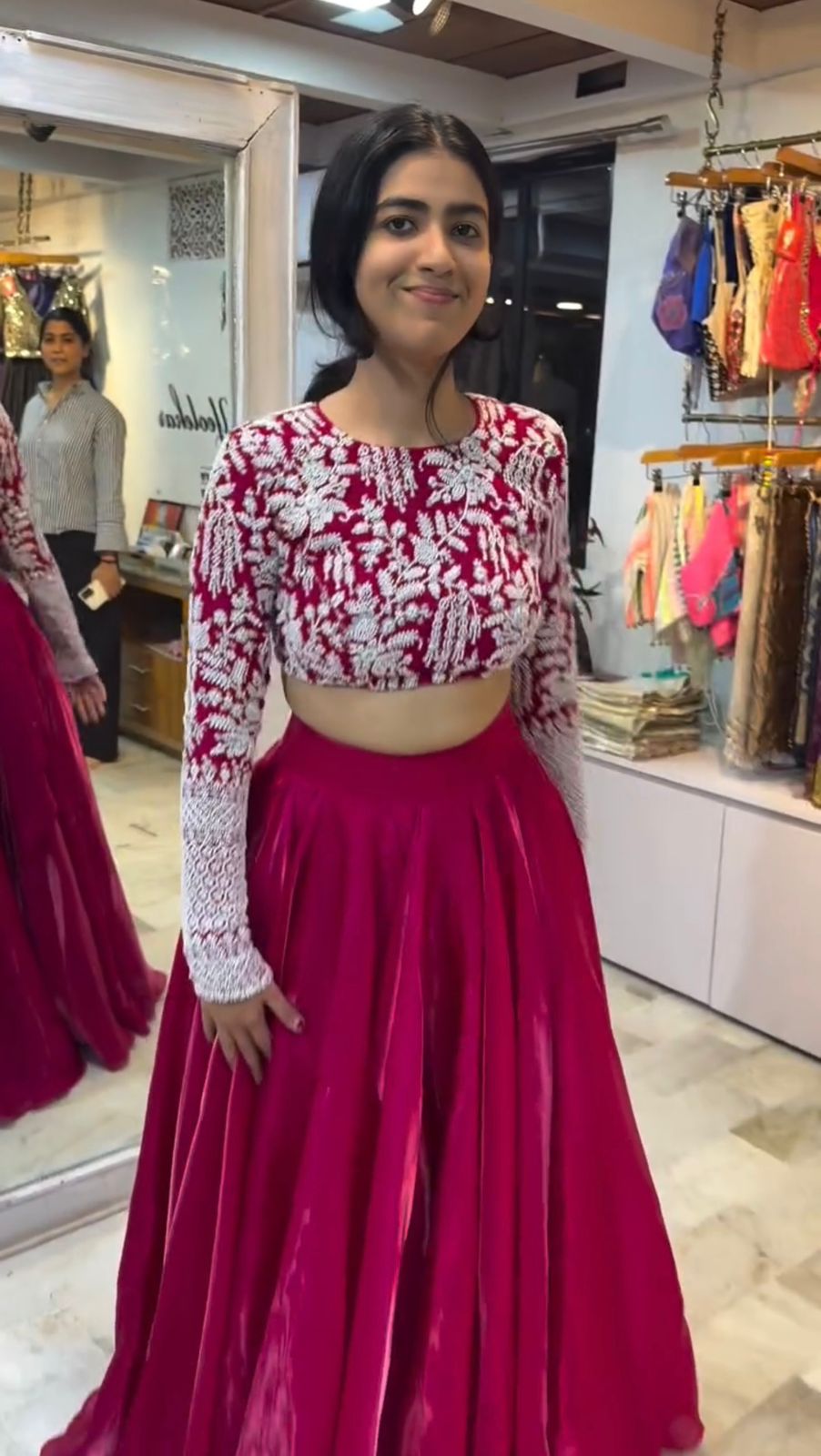
Wine Pink Embroidered Silk Lehenga Set Online demonstrates why silk works well after sunset: the surface catches light while the deeper pink remains festive without copying a bridal red. Keep the jewellery focused on one statement element, such as chandbali earrings or a broad kundan necklace, so embroidery remains visible.
Teej Fashion for Women: Traditional Haryanvi Sarees & Lehenga Looks with a secure saree drape
A Haryanvi Teej saree should be draped with a secure waist tuck, comfortable pleats and a pallu that stays anchored at the shoulder. The exact regional drape can vary by family and locality, so comfort and respectful styling are more important than claiming one universal method.
- Prepare the base: Wear a well-fitted petticoat or saree shapewear that doesn't roll at the waist. A cotton petticoat gives better grip for lightweight sarees, while a matching shapewear skirt creates a smoother outline under silk.
- Set the length: Put on footwear before finalising the hem. The saree should sit close to the floor without covering the entire front of the shoe; approximately one centimetre of clearance reduces the chance of catching the toe while walking.
- Make even pleats: Create five to seven front pleats of approximately 12 to 15 centimetres each. Keep the pleats aligned and pin them discreetly inside the waistband if the saree fabric is slippery.
- Secure the pallu: Bring the pallu over the left shoulder and use one hidden safety pin near the shoulder seam and another near the waist if movement will be vigorous. A shorter pallu is more practical for swings, cooking and crowded rituals.
- Add regional character: Use a contrast blouse, a gota-edged pallu or a traditional waist belt instead of adding excessive accessories everywhere. The finished outfit should allow the border to remain visible when seated.
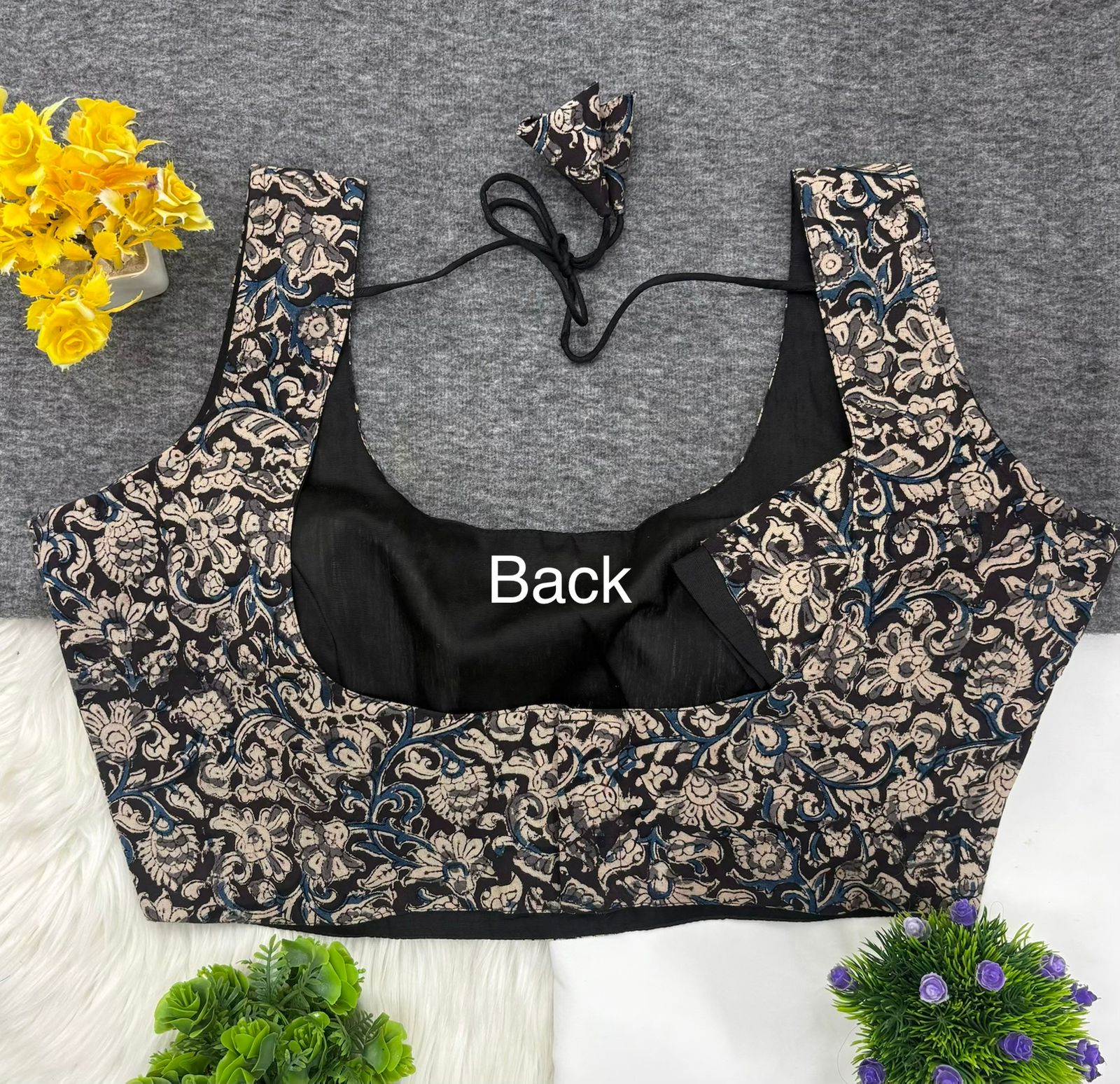
A Haryanvi saree can be made more contemporary with a high-neck blouse, a sleeveless brocade blouse or a neatly tailored elbow-length sleeve. Traditional styling remains convincing when the saree border, jewellery and colour story work together rather than when every element is heavily embellished.
Teej Fashion for Women: Traditional Haryanvi Sarees & Lehenga Looks for monsoon fabrics
Chanderi, cotton, georgette, butter silk and lightweight silk generally work best for Teej because they balance festive appearance with movement and seasonal comfort. Net, velvet and densely embroidered silk can look striking, but they require more careful layering and are better suited to shorter evening functions.
- Chanderi: Chanderi has a light, slightly crisp hand and a subtle sheen that suits daytime sarees and dupattas. Chanderi can snag, so store it folded in a muslin cover and avoid rough jewellery edges.
- Georgette: Georgette drapes close to the body and works well for ruffled or softly flared lehengas. Georgette is comfortable in humid weather, but a properly finished lining is essential for modesty and shape.
- Banarasi silk: Banarasi silk brings visible woven motifs and a formal finish for evening Teej celebrations. Banarasi silk can be heavier than georgette, so a lighter blouse lining and a manageable dupatta reduce fatigue.
- Butter silk: Butter silk has a smooth, fluid surface and can produce vivid colour without the weight of a dense brocade. Butter silk may show creasing, so use a padded hanger or fold along existing seams rather than compressing it randomly.
- Net: Net creates volume and a transparent outer layer, especially in lehenga dupattas. A cotton or satin lining prevents scratchiness and makes the garment more comfortable for prolonged wear.
Check the lining, seam finishing and closure before buying any festive garment. A lehenga with a breathable lining, a firm waistband and a side zip that lies flat will usually be easier to wear than a more decorated garment with poor construction.
Teej Fashion for Women: Traditional Haryanvi Sarees & Lehenga Looks with jewellery and colour
A balanced Teej palette uses one dominant festive colour, one supporting colour and metallic accents rather than combining every traditional shade at equal intensity. Green with pink, yellow with red, and ivory with emerald are dependable combinations for Haryanvi-inspired dressing.
Green bangles are an easy way to reference monsoon renewal, while red lac bangles, gold kadas and multicoloured glass bangles create a more ceremonial effect. For a heavily embroidered lehenga, choose either a necklace or large earrings as the main jewellery focus. A maang tikka works especially well with a centre-parted bun or braid, but the maang tikka should be light enough not to pull at the hairline.
Mehendi, a small bindi and kajal provide strong cultural styling cues without requiring elaborate makeup. Use waterproof or humidity-resistant products during the monsoon, and apply setting spray only after allowing cream products to settle. A berry, rose or brick lip colour generally complements Teej palettes more naturally than a very pale nude.
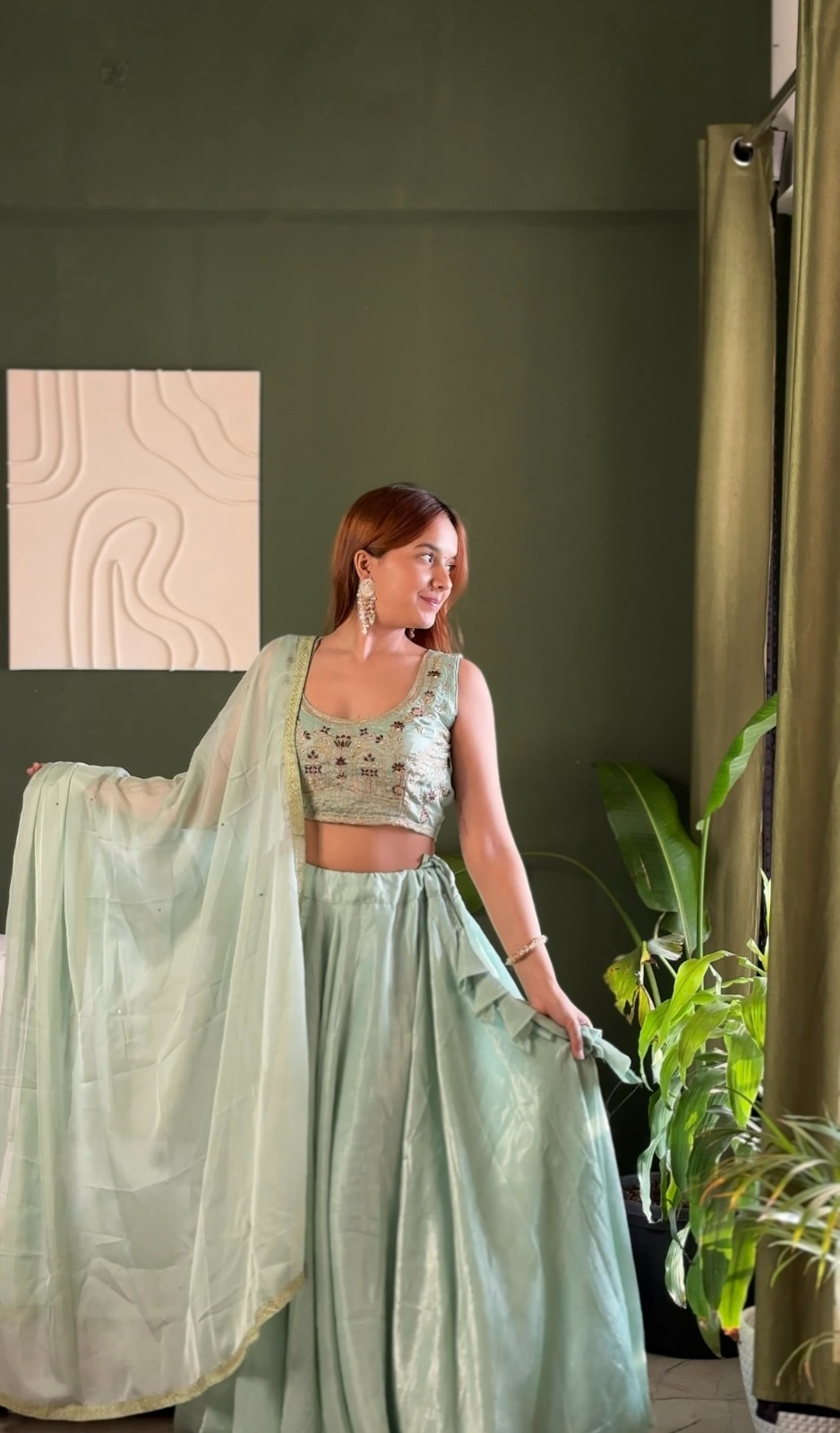
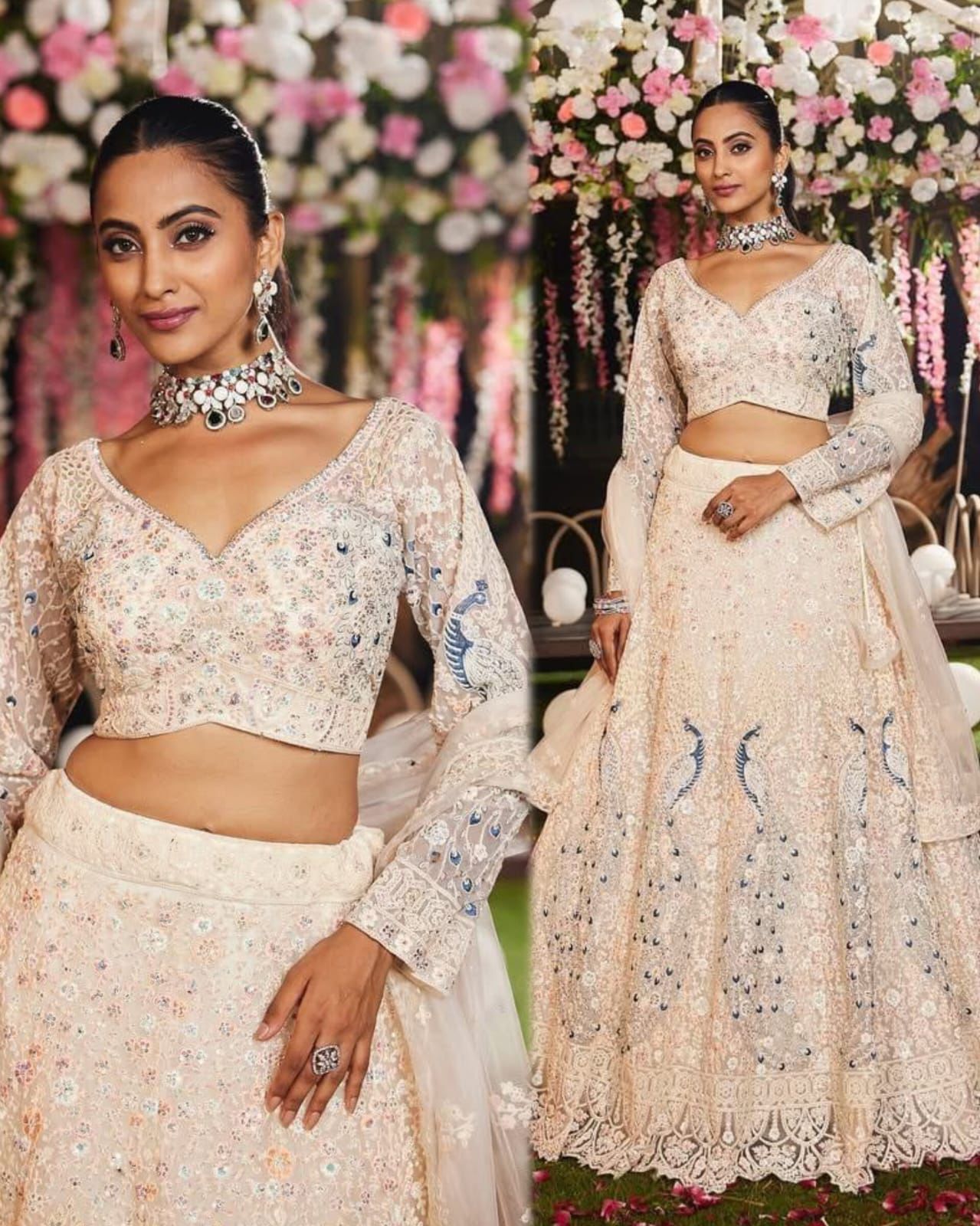
Mint Embroidered Lehenga Set with Net Dupatta for Women can be styled with antique gold jewellery to prevent the cool mint shade from appearing too casual. Cream Peacock Embroidered Net Lehenga Set for Women pairs well with green or peacock-blue accents, especially in earrings, bangles or embroidered footwear.
Teej Fashion for Women: Traditional Haryanvi Sarees & Lehenga Looks for thoughtful buying
A good Teej purchase combines a suitable fabric, reliable construction, an appropriate level of embellishment and a realistic budget. Measure the bust, waist and preferred skirt length before ordering, then compare those measurements with the garment chart rather than relying only on a familiar clothing size.
Budget collections can help narrow the search when the outfit is intended for one festival or a daytime gathering. Pink Lehengas Under 4000 with 50% Discount may suit shoppers looking for a bright, affordable colour story, while Silk Lehengas Under 3000 can offer a more traditional surface at a controlled price. A lower price should not mean ignoring lining, stitching or closure quality.
Net Lehengas Under 4500 with 51% Discount can be useful for women who want volume and a lightweight outer layer. Women attending a pre-wedding Teej gathering may also compare Bridesmaid Lehengas Under 5500, particularly when coordinated colours matter more than strictly regional silhouettes. Haldi Lehengas Under 5500 includes bright options that can overlap naturally with Teej palettes, especially yellow, green and pink.
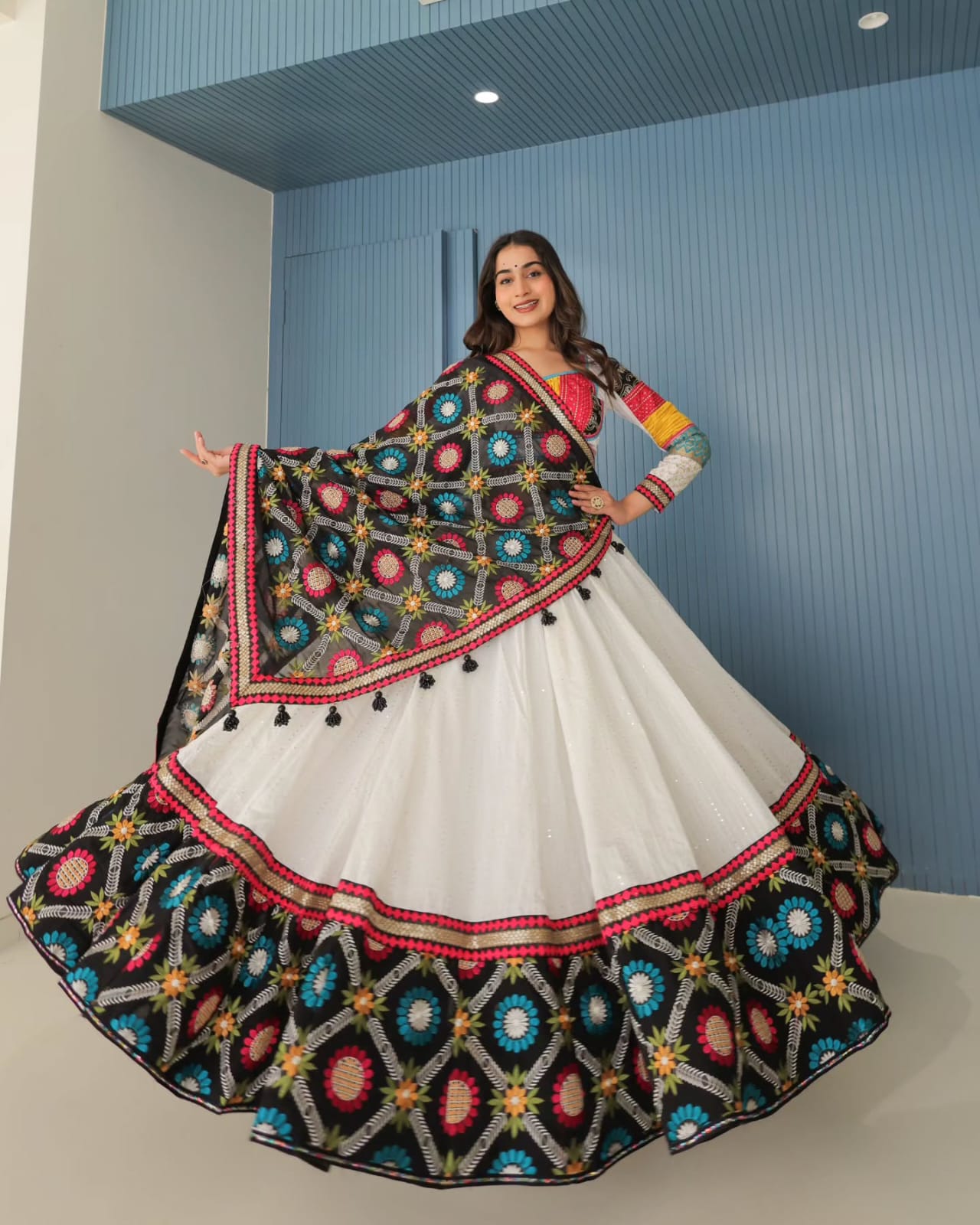
Designer Threadwork Silk Lehenga Choli Set with Dupatta suits a more formal evening mood because threadwork creates texture without depending entirely on reflective mirror surfaces. Stylish White Mirror Work Lehenga for Festive Wear and Festive White Lehenga Choli with Mirror Work Design can be adapted for Teej when paired with green, pink or red accessories; white should be balanced with colour so the outfit feels celebratory rather than bridal.
Before wearing any new outfit, test the waistband, blouse armholes and dupatta pins at home for at least 15 minutes. Sit on the floor, walk up stairs and raise both arms. Those simple checks reveal tight seams, slipping shoulders and excessive skirt weight before the festival begins.
Teej Fashion for Women: Traditional Haryanvi Sarees & Lehenga Looks and care after the festival
Festive sarees and lehengas last longer when they're aired, cleaned according to fibre needs and stored away from direct sunlight. Do not leave a damp garment sealed in a plastic bag after a monsoon celebration, because trapped moisture can encourage mildew and dull metallic embroidery.
Air the garment in shade for several hours before folding it. Use professional dry cleaning for Banarasi silk, zari-heavy garments, mirror work and structured lehengas, while a care label should guide decisions for georgette, net and synthetic blends. Place acid-free tissue or soft muslin between embroidered layers to reduce rubbing.
Store lehenga skirts flat or on a wide padded hanger, and avoid placing heavy boxes on top of the waistband. Fold sarees along the border and refold them every few months if they remain stored for a long period. These steps protect colour, shape and zari so the outfit remains useful for future Teej celebrations and other ethnic occasions.
Traditional Haryanvi styling becomes more convincing when the wearer can move easily, participate fully and feel connected to the celebration. A thoughtful colour palette, secure drape, breathable fabric and a few deliberate accessories can create a richer Teej appearance than excessive decoration.
Common Questions About Haryanvi Teej Sarees and Lehenga Styling
What colours are traditionally worn for Teej?
Green, red, pink, yellow and orange are commonly associated with Teej dressing because they suggest monsoon growth, celebration and auspiciousness. Green is especially popular, but the best shade also depends on the wearer's complexion, the time of day and the event setting.
Should I wear a saree or lehenga for a Teej celebration?
Choose a saree for a more traditional, lightweight and easily adjustable outfit, and choose a lehenga for greater volume, coordinated embroidery and easier styling through a ready-made set. A georgette or Chanderi saree suits daytime puja, while a silk or net lehenga works well for an evening gathering.
Which fabric is comfortable for Teej during the monsoon?
Cotton, Chanderi, georgette, butter silk and lightweight silk are generally comfortable for humid monsoon weather. Heavy velvet, dense brocade and unlined net can feel warm or restrictive during long celebrations.
How can I keep a Teej saree pallu from slipping?
Use a well-fitted blouse, make a firm waist tuck and place one concealed safety pin at the shoulder seam. A second pin near the waist is helpful when the wearer expects to walk frequently, sit on the floor or participate in active celebrations.
Can a white lehenga be worn for Teej?
A white lehenga can work for Teej when it includes festive embroidery or mirror work and is paired with colourful accessories such as green, pink or red. White should be balanced with bright jewellery, bangles or a contrasting dupatta so the outfit retains a celebratory character.
How should I store a Teej lehenga after wearing it?
Air the lehenga in shade, follow the care label and use professional cleaning for silk, zari, mirrors or dense embroidery. Store the garment in a breathable muslin cover with tissue between embellished layers, away from direct sunlight and moisture.