

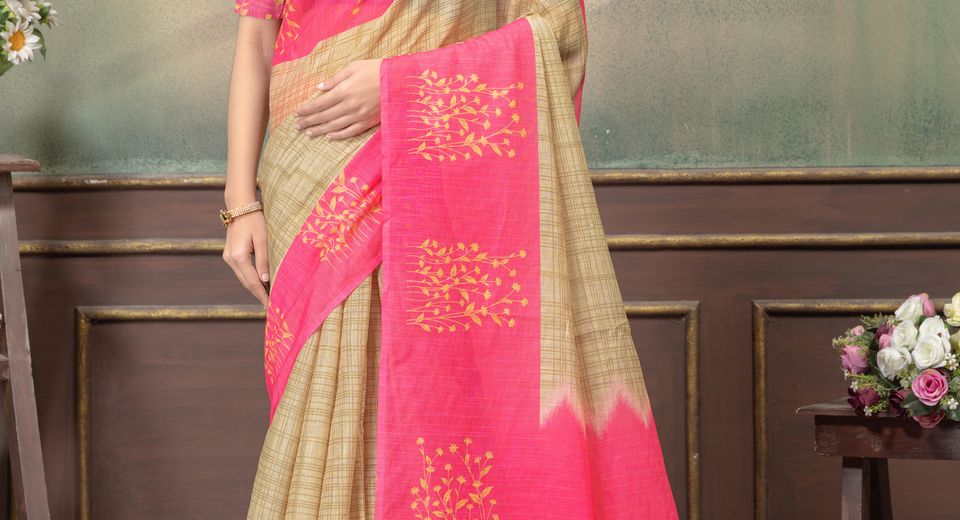
Tamil Pavadai Sattai and the Difference From a Half Saree can be understood by looking at three details: the number of garments, the way the upper cloth is worn, and the cultural stage each outfit traditionally represents. Pavadai sattai pairs a long skirt with a fitted blouse, while a half saree adds a separate draped cloth called a dhavani or davani. The two outfits can share silk, zari and bright festive colours, but they're not interchangeable.
The distinction matters when choosing clothing for a puberty ceremony, Tamil wedding, Pongal celebration, temple visit or school cultural programme. Pavadai sattai usually gives a child or young girl a two-piece silhouette. A half saree creates a transitional look between the skirt-and-blouse ensemble and the full saree, with the dhavani crossing the torso and falling over the shoulder.
What is Tamil pavadai sattai?
Tamil pavadai sattai is a traditional two-piece outfit made from a long, flared skirt called a pavadai and a matching or coordinated blouse called a sattai. The skirt generally sits at the natural waist or slightly above it, while the blouse ends around the waistline. A long dupatta isn't structurally required for Tamil pavadai sattai.
The pavadai may be made from silk, silk blends, cotton, satin or other occasion fabrics. Time-honoured festive versions often feature Kanjeevaram-inspired borders, zari motifs, temple designs, checks, florals or contrasting panels. The sattai can have short sleeves, elbow-length sleeves, a round neck, a square neck or a modest high neckline depending on age, regional preference and the ceremony.
Volume is one of the visible characteristics of a pavadai. Multiple gathers, panels or a stiffened hem can help the skirt hold a bell-like shape. A drawstring, elastic waist or hook-and-eye closure controls the fit. Children's versions commonly include extra seam allowance or adjustable waist features because the outfit may be purchased for a ceremony months in advance.
When is pavadai sattai traditionally worn?
Pavadai sattai is traditionally worn by young girls for festivals, family ceremonies, temple visits, Bharatanatyam performances and formal South Indian celebrations. The outfit is especially associated with childhood and early adolescence, although adults can wear contemporary versions for cultural events.
Colour symbolism varies by family and ceremony, so no single colour rule applies across all Tamil households. Red, mustard, green, pink, orange, purple and blue are common festive choices. A contrasting blouse or border can make a simple skirt appear more ceremonial without adding heavy embroidery throughout the garment.
What is a half saree or pavadai dhavani?
A half saree is a three-piece ensemble consisting of a long skirt, a blouse and a separate long cloth called a dhavani, davani or voni. The dhavani is draped diagonally across the front of the body, usually from one shoulder towards the opposite side of the waist, then arranged around the skirt. The outfit resembles a saree in its upper-body drape but doesn't wrap continuously around the body like a full saree.

The half saree has several regional names and styling variations across South India. In Tamil contexts, pavadai dhavani is a widely used term. The blouse and skirt may match, while the dhavani is intentionally contrasted through colour, border or textile. A silk skirt with a zari border and a lighter dhavani is a common festive combination, but cotton and blended fabrics are practical for daytime events.
A half saree requires more arrangement than pavadai sattai because the dhavani needs a secure shoulder placement and controlled pleats. Safety pins, hidden hooks or a pre-stitched shoulder loop can make the drape more stable for dancing, walking and sitting. The dhavani usually measures several metres, although the exact length depends on the wearer's height, desired coverage and draping method.
Does a half saree mean a saree cut in half?
A half saree isn't a full saree cut into two pieces. A half saree is a coordinated outfit designed with a skirt, blouse and separate dhavani, whereas a full saree is one long drape worn over a blouse and petticoat or an equivalent base.
The phrase "half saree" describes the visual relationship to saree dressing rather than a literal manufacturing process. The dhavani creates a saree-like diagonal line, but the wearer doesn't pleat and tuck the complete length around the waist in the same way as a saree.
Tamil Pavadai Sattai and the Difference From a Half Saree
The clearest difference is that Tamil pavadai sattai has two essential pieces, while a half saree has three essential pieces. Pavadai sattai consists of the skirt and blouse; a half saree consists of the skirt, blouse and dhavani.

- Upper-body coverage: Pavadai sattai leaves the blouse as the main upper-body garment. A half saree adds diagonal coverage through the dhavani.
- Draping: Pavadai sattai doesn't require a drape. A half saree requires the dhavani to be pleated, crossed or arranged over the shoulder.
- Silhouette: Pavadai sattai creates a clean two-piece skirt-and-blouse shape. A half saree adds vertical and diagonal lines similar to saree styling.
- Movement: Pavadai sattai is generally easier for children to wear during play or informal movement. A half saree needs more careful pinning, especially during dancing or outdoor ceremonies.
- Cultural association: Pavadai sattai is strongly linked with childhood and young-girl festive dressing. A half saree often signals adolescence or a ceremonial transition, although modern families use both outfits more flexibly.
- Accessory planning: Pavadai sattai may need only jewellery, flowers and footwear. A half saree also needs attention to dhavani pins, shoulder placement and the way the border falls.
Age isn't a fixed dividing line between the two outfits. Family custom, regional practice, personal comfort and the formality of the event are equally important. A teenager may choose pavadai sattai for Pongal, while an adult may wear a half saree for a dance performance or a heritage photoshoot.
How do fabrics and borders change the look?
Fabric weight and border placement determine whether a classic skirt ensemble looks structured, soft, formal or easy to move in. Silk and silk blends provide body for a wide pavadai, while cotton and lightweight blends reduce heat and make long wear more comfortable.
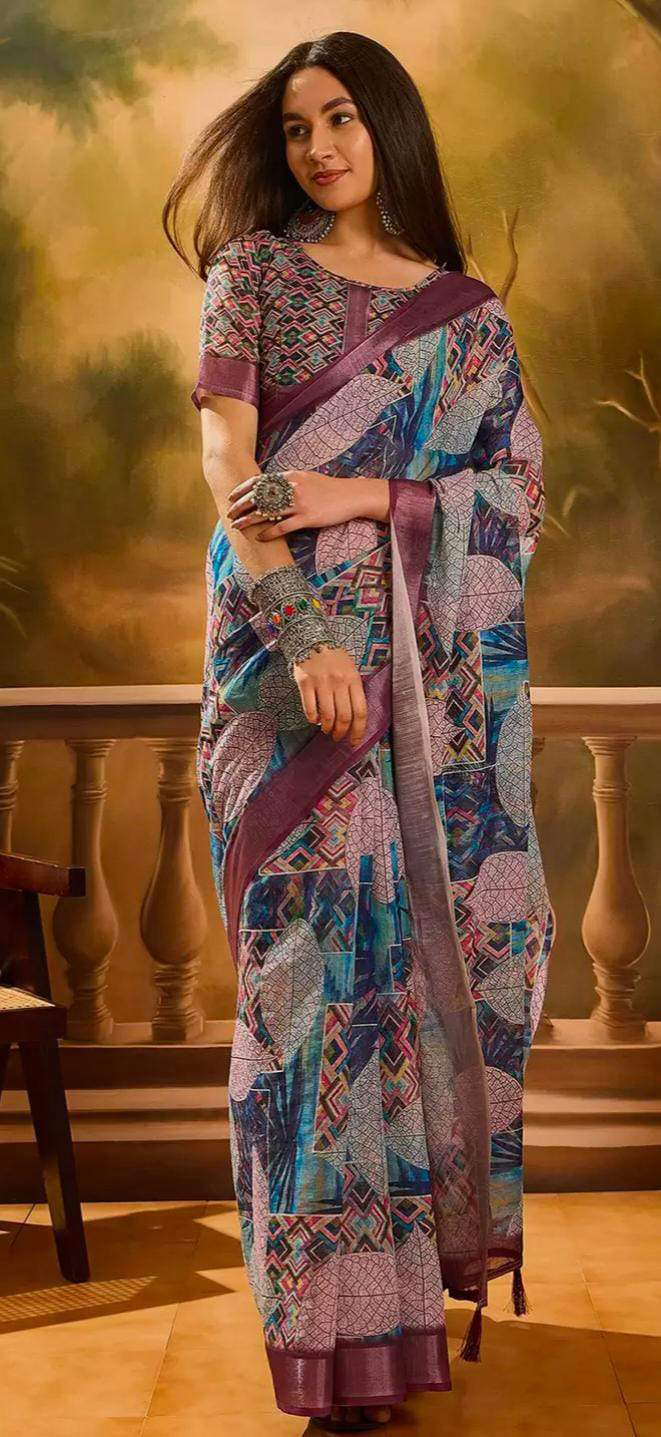
Banarasi silk can introduce brocade texture and a pronounced metallic border, while Kanjeevaram-inspired silk styling often uses temple motifs, contrast borders and zari highlights. Chanderi offers a lighter, more translucent visual effect, although the skirt may need an appropriate lining for opacity and volume. Satin creates shine and drape, so satin sarees can provide useful colour inspiration even when the final outfit is a separate pavadai set.
Indigo Peach Satin Saree with Striped Pallu and Border Work demonstrates how a dark indigo base can be balanced with a warmer peach accent. That colour relationship can be adapted to a pavadai sattai through an indigo skirt, peach blouse and a narrow striped border. Orange Purple Satin Saree with Woven Zigzag Pallu for Women shows a bolder approach, where orange and purple create a high-contrast festive palette suitable for dhavani-inspired styling.
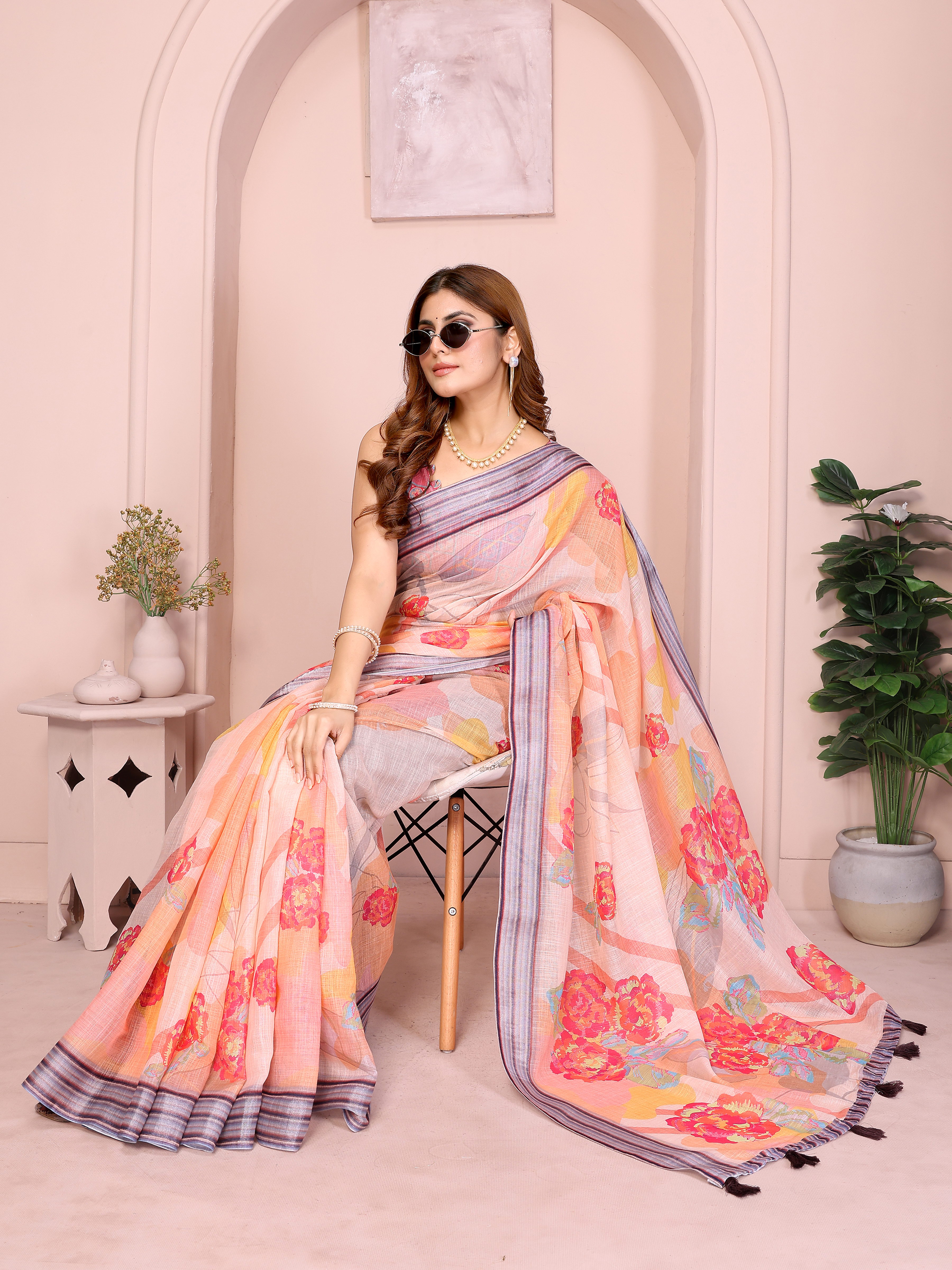
Floral prints are more contemporary than zari-heavy silk, but floral prints can work well for daytime celebrations. Pastel Pink Satin Floral Print Saree with Unstitched Blouse suggests a softer palette for a young wearer, while Pastel Blue Satin Floral Print Saree with Unstitched Blouse brings a cooler option for a summer event. These examples are sarees rather than pavadai sets, but their blouse colours, border scale and print density can guide an outfit brief.
How should you choose between pavadai sattai and a half saree?
Choose pavadai sattai when ease, age-appropriate comfort and unrestricted movement matter more than a draped silhouette. Choose a half saree when the wearer wants a more formal, saree-inspired appearance and can manage a dhavani securely.
For children and active ceremonies
Pavadai sattai is usually the more practical choice for children because the outfit has no long shoulder drape to catch on chairs, jewellery or other people. A lined skirt, soft waist finish and breathable blouse are more valuable than heavy embellishment for a ceremony lasting four or more hours.
Check the skirt length while the wearer is barefoot and in flat footwear. The hem should remain approximately 2 to 4 centimetres above the floor to reduce tripping, especially when the skirt has a wide flare. A blouse should allow the wearer to lift both arms comfortably without pulling across the chest or shoulders.
For teenage and adult festive dressing
A half saree can suit a teenage or adult wearer who wants the visual drama of a saree without managing full saree pleats. A pre-stitched dhavani, stitched waist panel or concealed shoulder loop can make the ensemble easier to wear for a wedding reception or cultural programme.
Measure the wearer's height, bust, waist and preferred blouse length before ordering. Assess dhavani length with the intended footwear because even a small heel changes the point at which the border falls. A blouse that's too short can expose the midriff unevenly once the dhavani is crossed, while a blouse that's too long can interrupt the skirt's border.
How can saree colours inspire a contemporary time-honoured outfit?
Saree colour combinations can be translated into pavadai sattai or half saree styling by assigning one colour to the skirt, one to the blouse and one to the border or dhavani. A three-colour plan prevents printed or embellished clothing from looking visually crowded.

Pink Beige Satin Saree with Floral Print & Contrast Pallu brings an useful example of balancing a muted base with a clearly contrasting accent. The same principle can produce a beige pavadai, pink blouse and darker floral-edged dhavani. White Satin Floral Print Saree with Unstitched Blouse provides a neutral starting point for a festive outfit with a stronger blouse colour, such as emerald, magenta or royal blue.
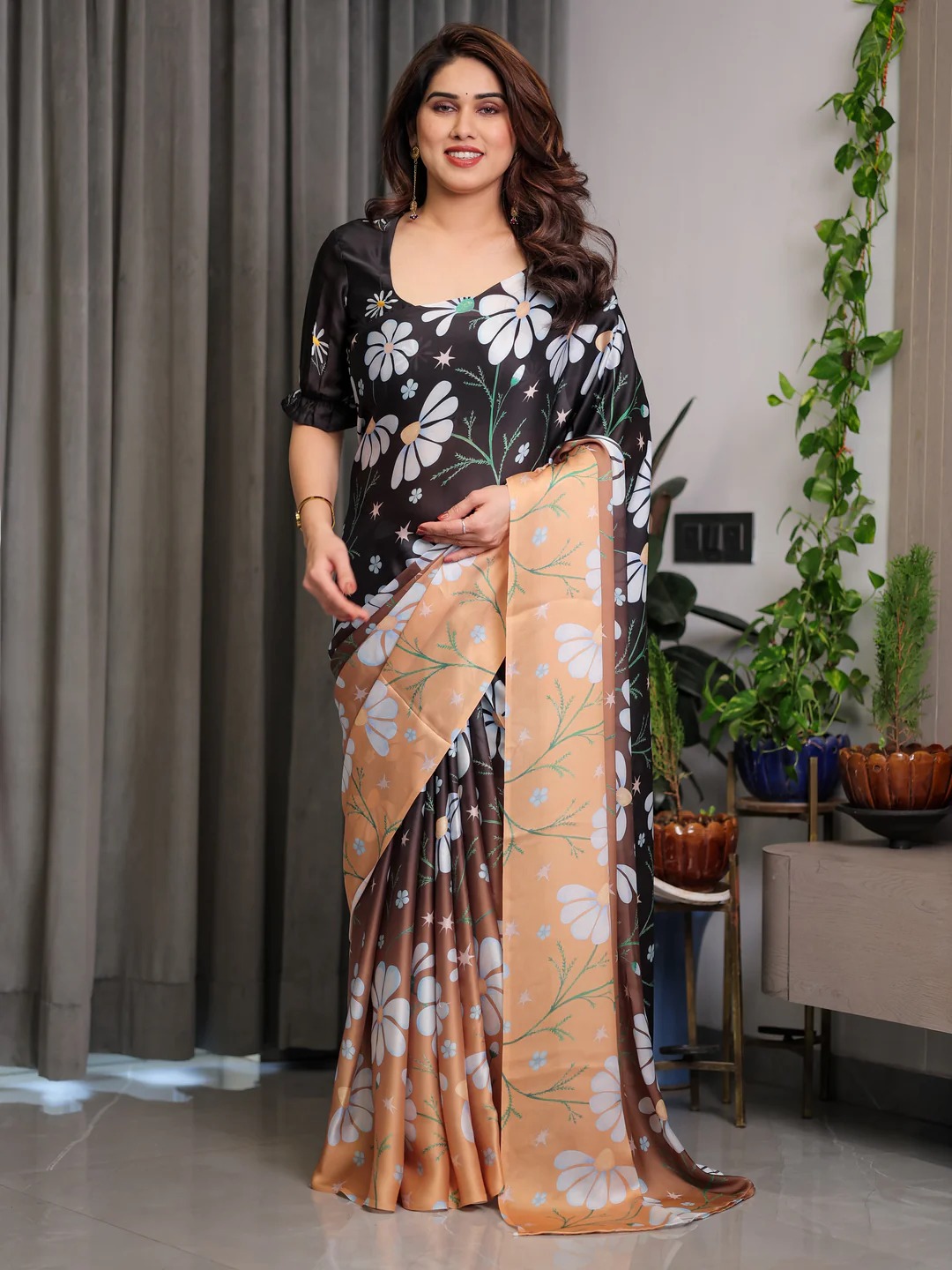
Black Peach Floral Satin Saree with Blouse | Varnavi demonstrates how black can anchor a softer peach floral palette. For a half saree, black can be reserved for the skirt or border, while peach can appear in the blouse and dhavani. A dark base needs careful consideration for daytime temple events because some families prefer brighter colours for ceremonial dressing.
Shopping budgets can also shape fabric and construction choices. Sarees from Rs 1000 to Rs 1500 may provide accessible colour references for blouse-and-border coordination. Sarees Under 20% Off and Sarees Under 10% Off can be useful places to compare current prints, pallu contrasts and satin finishes before finalising a custom outfit brief. Discounted saree pricing should not be treated as the price of a pavadai set, because stitching, lining, embellishment and tailoring can add separate costs.
What should you check before buying or stitching the outfit?
Check the complete garment measurements, lining, fastening method, fabric care and delivery timeline before purchasing or commissioning either outfit. A striking colour combination can't compensate for a skirt that twists, a blouse that restricts the arms or a dhavani that repeatedly slips.
- Measure the wearer: Record bust, waist, shoulder width, armhole, blouse length and desired skirt length. Recheck measurements if the ceremony is more than six weeks away.
- Inspect the inside finish: Look for a smooth lining, secure seams and covered edges. Rough zari, exposed hooks or stiff seams can irritate the skin during long ceremonies.
- Confirm the waist construction: Elastic is convenient for children, while a side zip, hooks or adjustable inner panel can provide a more precise fit for teenagers and adults.
- Plan the drape: For a half saree, test the dhavani with the chosen blouse and footwear at least once before the event. Pinning points should be hidden but easy to release.
- Ask about care: Many zari-rich, silk and satin garments need gentle handling, low-friction storage and professional cleaning. Do not iron metallic zari directly at high heat.
Sarees Flat 60% Off and Sarees Flat 50% Off may be suitable for browsing colour ideas, but a sale label doesn't confirm that a garment is appropriate for a child, a temple ceremony or a specific family tradition. Check the fabric composition, blouse status, return measurements and care instructions before ordering.
How should each outfit be accessorised?
Pavadai sattai usually works well with a waist belt, small jhumkas, bangles, anklets, jasmine flowers and footwear that allows easy movement. A half saree can support more layered accessories, including a longer necklace, vanki-style armlet, waist chain and a stronger hair arrangement, provided the jewellery doesn't catch on the dhavani.
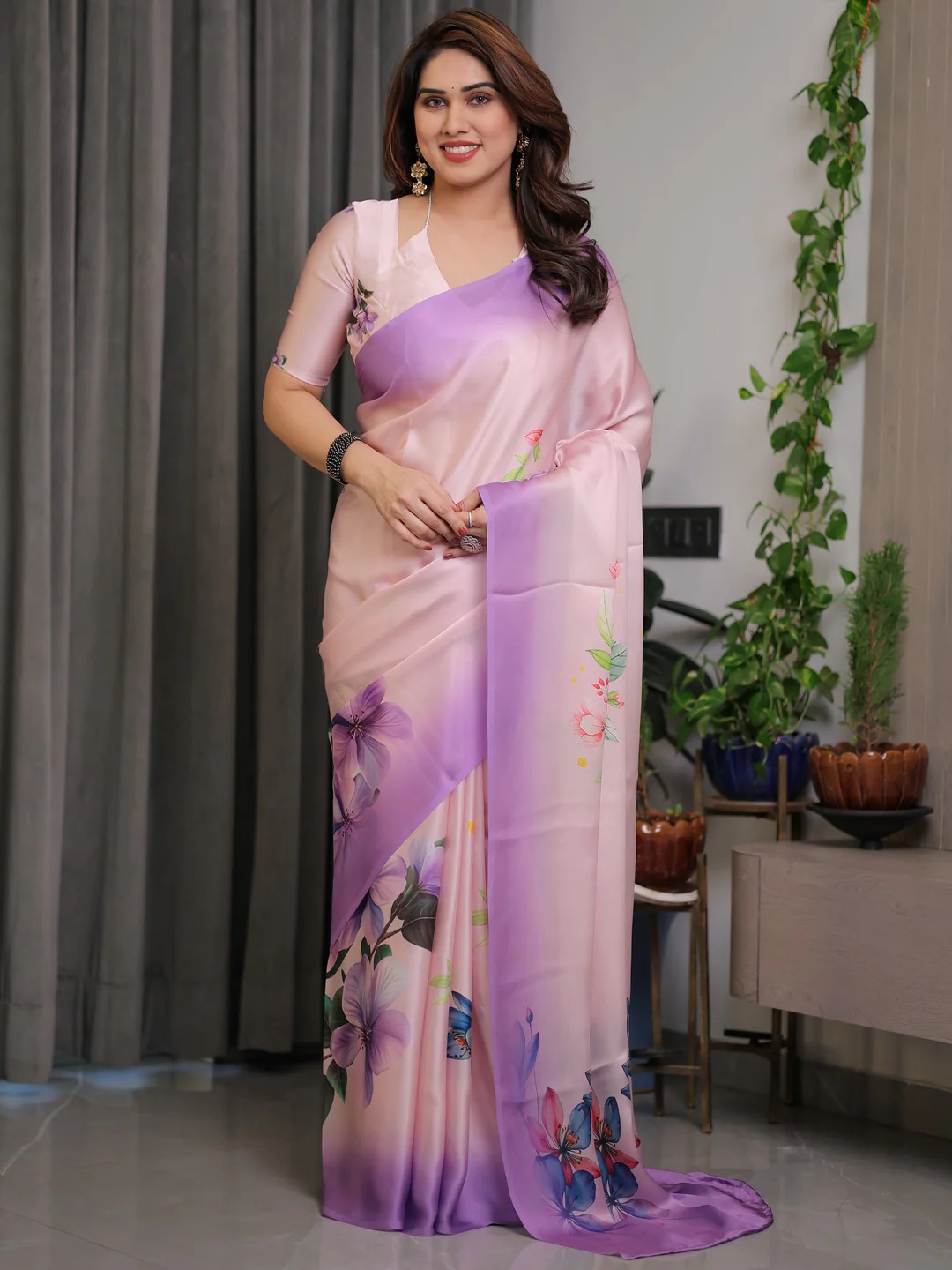
Accessories should repeat one detail from the garment rather than compete with every colour. Gold-toned jewellery complements zari, while oxidised silver can suit indigo, black or cooler printed palettes. Flowers placed in a braid or bun reinforce the South Indian festive character without requiring heavy embroidery.
The most dependable choice depends on the wearer, the event and the expected movement. Pavadai sattai gives a secure two-piece outfit with no drape to handle. A half saree gives a more fancy, saree-like appearance through its third garment, the dhavani. Understanding that construction difference makes sizing, styling and occasion planning much easier.
Common Questions About Pavadai Sattai and Half Sarees
What is the main difference between pavadai sattai and a half saree?
Pavadai sattai has two pieces: a long skirt and blouse. A half saree has three pieces: a skirt, blouse and separate dhavani that is draped over the shoulder and across the torso.
Is pavadai sattai suitable for a Tamil wedding?
Yes, pavadai sattai is suitable for children attending Tamil weddings and other family ceremonies. Silk, zari borders, coordinated jewellery and flowers can make the outfit formal while preserving comfort.
At what age is a half saree usually worn?
A half saree is traditionally associated with adolescence and ceremonial transitions, but no universal age rule applies. Family custom, regional practice, personal preference and the formality of the event should guide the choice.
Can a half saree be worn without pins?
A half saree is more secure with concealed pins, hooks or a pre-stitched shoulder loop. A carefully fitted dhavani may stay in place briefly without pins, but active movement, dancing and long ceremonies usually require additional support.
Which fabric is comfortable for a pavadai sattai in warm weather?
Cotton, cotton blends and lightweight fabrics are generally more comfortable in warm weather because they allow easier movement and reduce heat. Silk blends and satin can be chosen for evening events, but a breathable lining and comfortable blouse are important.
How do I prevent a pavadai or half saree from becoming too long?
Measure skirt length with the intended footwear and keep the hem approximately 2 to 4 centimetres above the floor. Test a half saree with the complete blouse, dhavani and shoes before the event so that the borders do not drag or catch.




