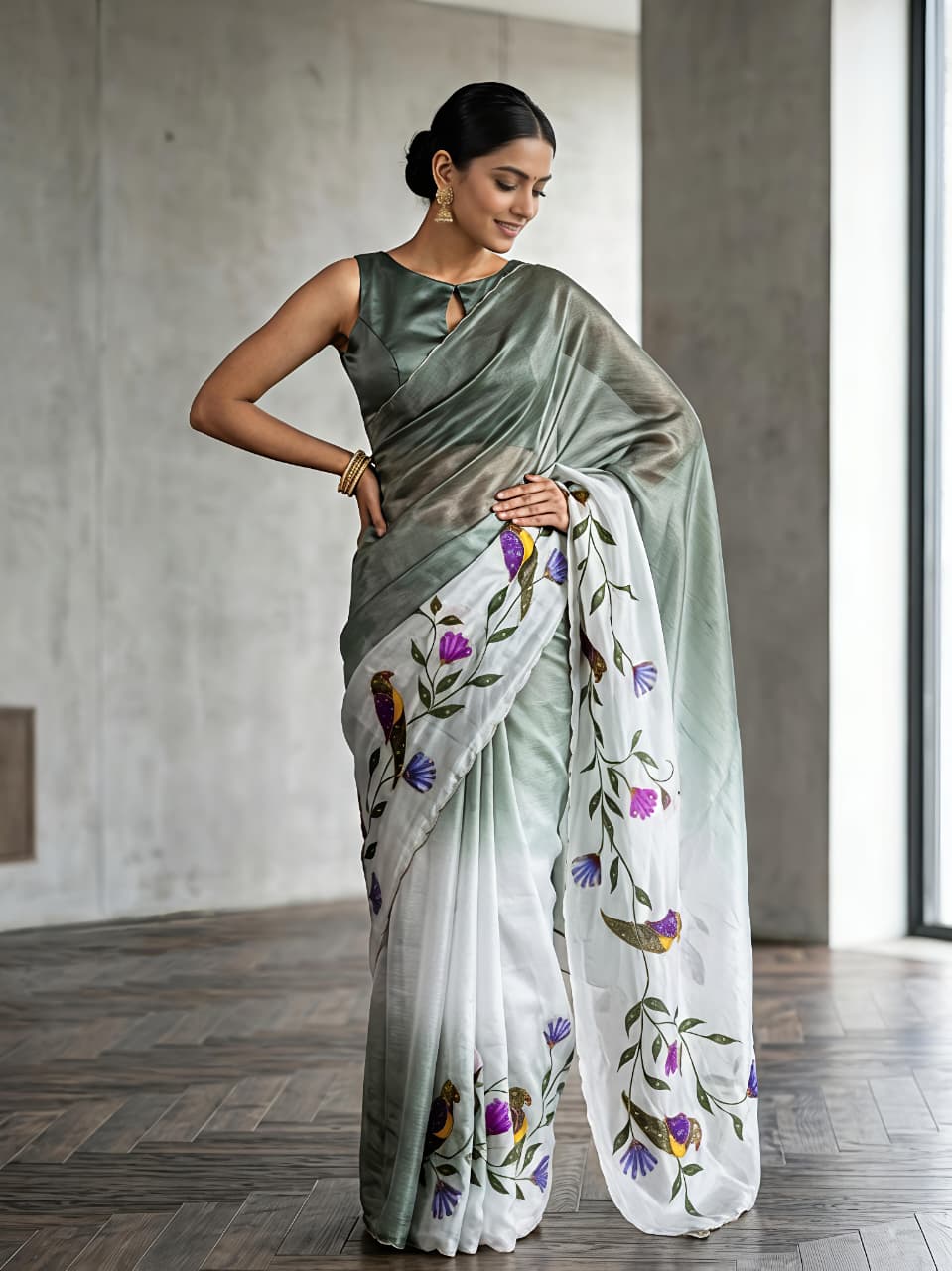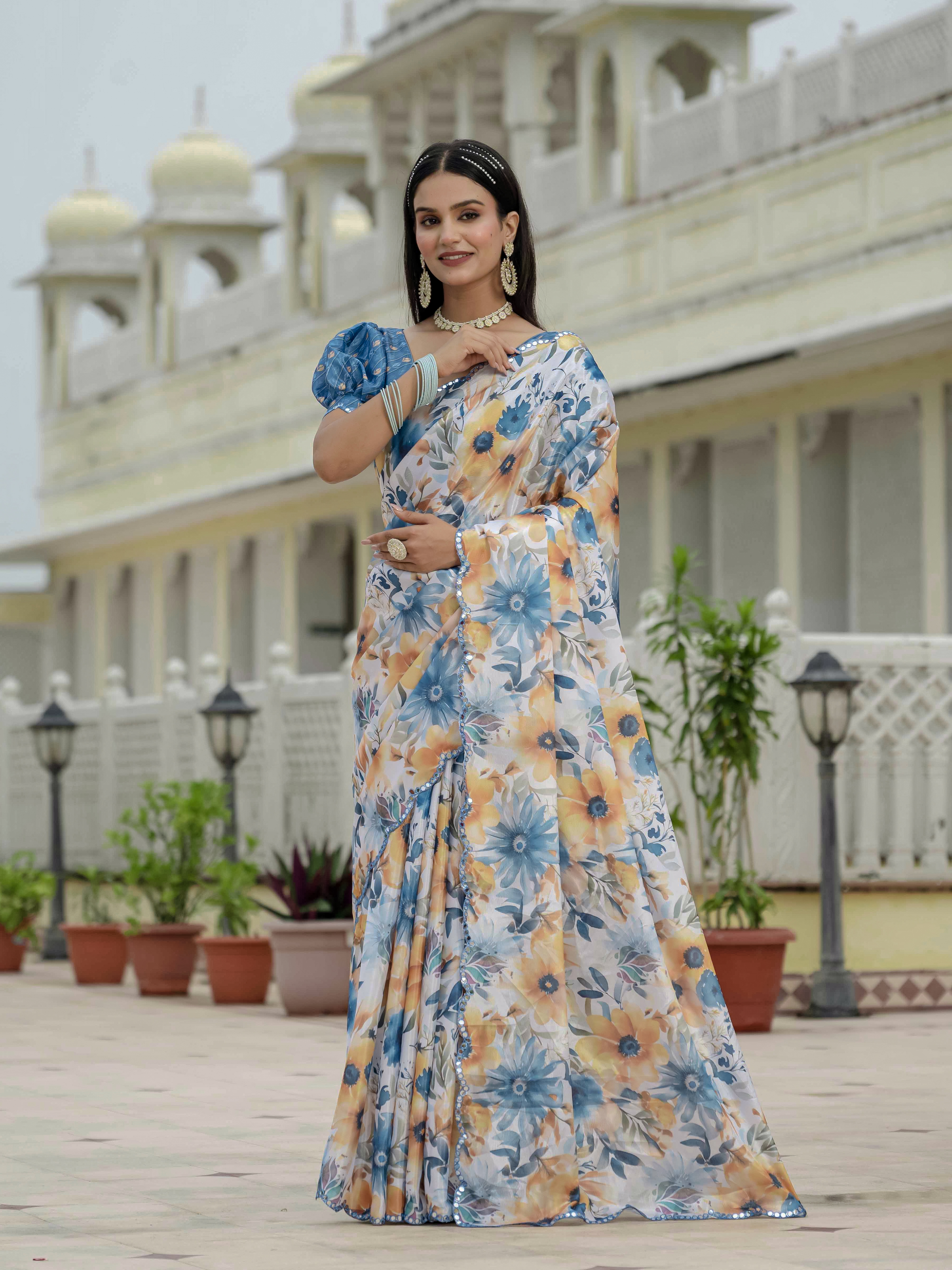
Tamil Nadu Wedding Guest Outfits: Sarees, Blouses and Salwar Suits need to work across several moments, from an early-morning muhurtham to a lively evening reception. The right choice balances respect for a temple or family setting with practical concerns such as heat, walking, sitting on the floor and carrying a dupatta. Fabric weight, colour placement, sleeve coverage and footwear often matter more than following a single trend.
Tamil weddings are not all styled alike. A traditional Kanjeevaram saree may suit a formal muhurtham, while a silk-blend salwar suit can be more comfortable for guests attending several ceremonies. A cotton kurta set may suit a daytime nalangu, and a sharper embroidered outfit can transition into a reception. The guide below explains how to make each decision with purpose.
Tamil Nadu Wedding Guest Outfits: Sarees, Blouses and Salwar Suits for Each Ceremony
Guests should choose an outfit according to the ceremony time, venue, expected formality and amount of movement required. A temple wedding usually rewards covered shoulders and a secure drape, while a hotel reception allows more flexibility in blouse cuts, embellishment and silhouettes.
Start by identifying the main event on the invitation. A morning muhurtham often begins before the day becomes hot, but the gathering can continue for hours. An evening reception may call for richer colours, reflective zari or more structured tailoring. A Haldi ceremony is usually more relaxed and may involve turmeric, water or outdoor activity, so washable cotton or a less precious silk blend is sensible.
Next, consider the venue. A temple setting calls for clothing that stays secure when walking, standing and sitting, including a saree pallu pinned near the shoulder. A wedding hall with air conditioning permits heavier fabrics, but a crowded mandapam or open courtyard can become uncomfortable in velvet, thick brocade or several layers of lining.
Guests should also separate visual richness from physical weight. Banarasi silk and Kanjeevaram can look magnificent, but a lightweight silk blend, Chanderi or cotton-silk option may be easier for a non-family guest who doesn't need a highly ceremonial look. A restrained outfit with one strong detail, such as a zari border or embroidered dupatta, often looks more considered than many competing embellishments.
Tamil Nadu Wedding Guest Outfits: Sarees for Fabric, Colour and Drape
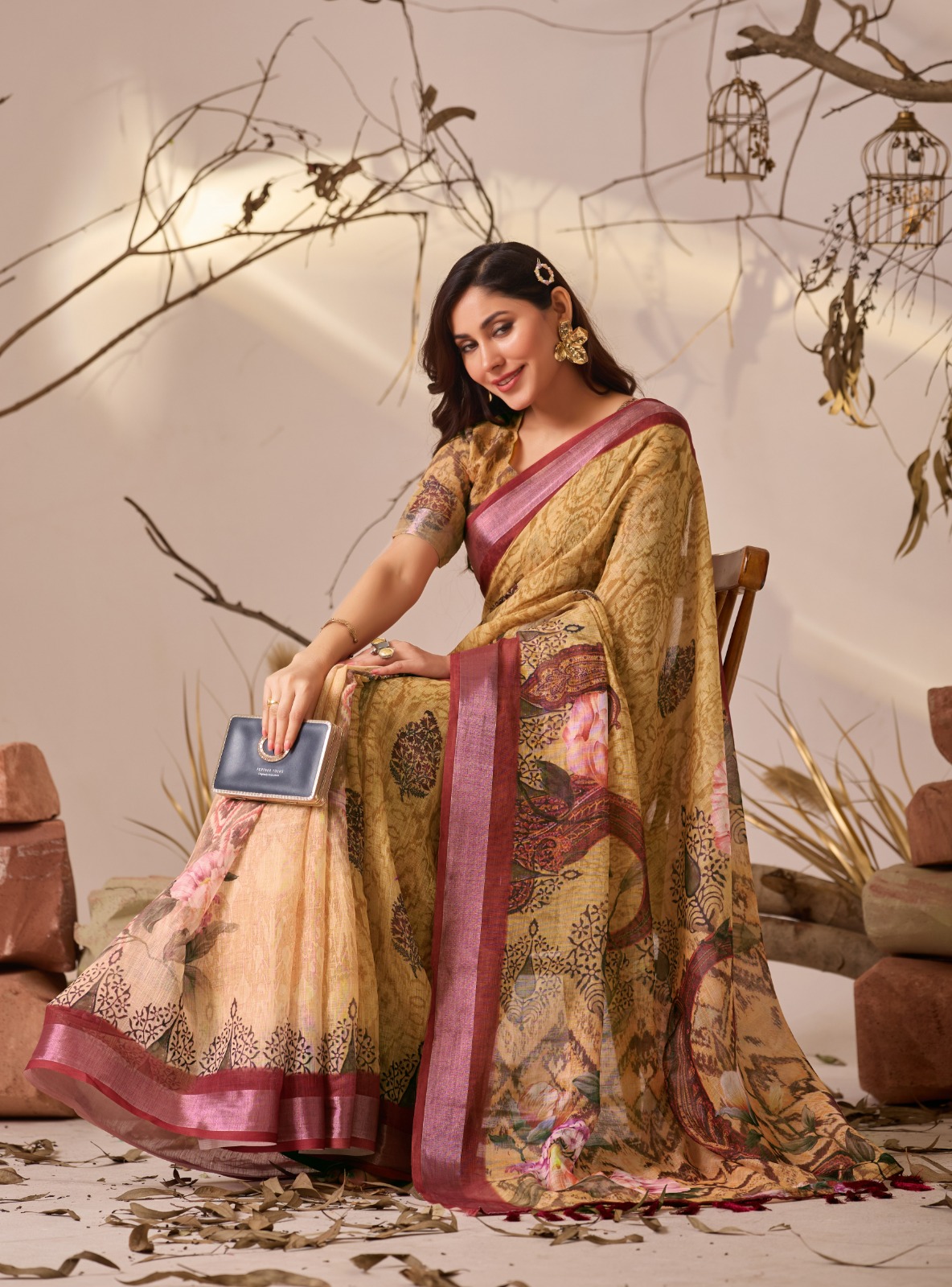
A saree is a dependable choice for a Tamil wedding guest when the fabric, border and drape match the ceremony. Kanjeevaram silk works best for a formal classic event, while lightweight silk, Chanderi, cotton-silk and soft georgette are practical for long daytime functions.
Choosing the saree fabric
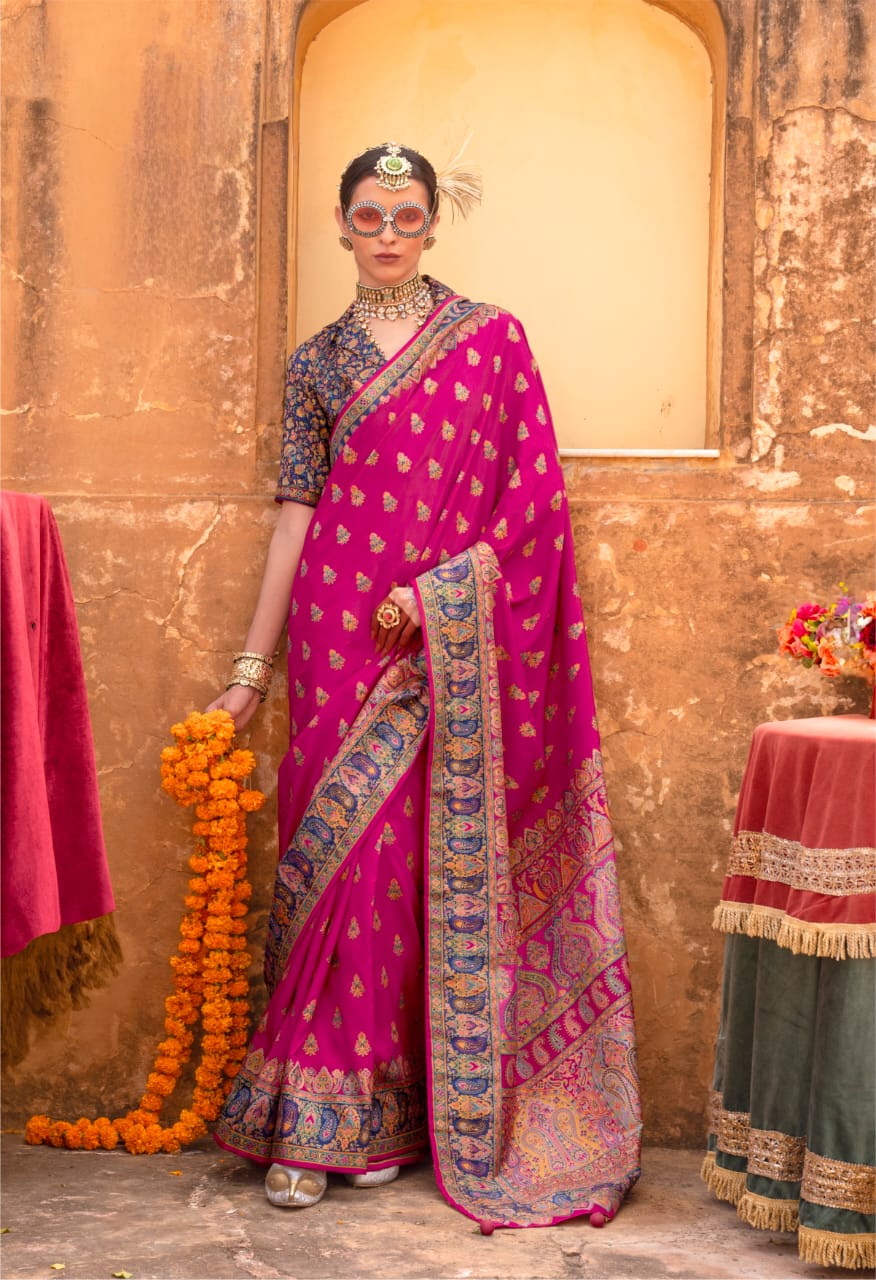
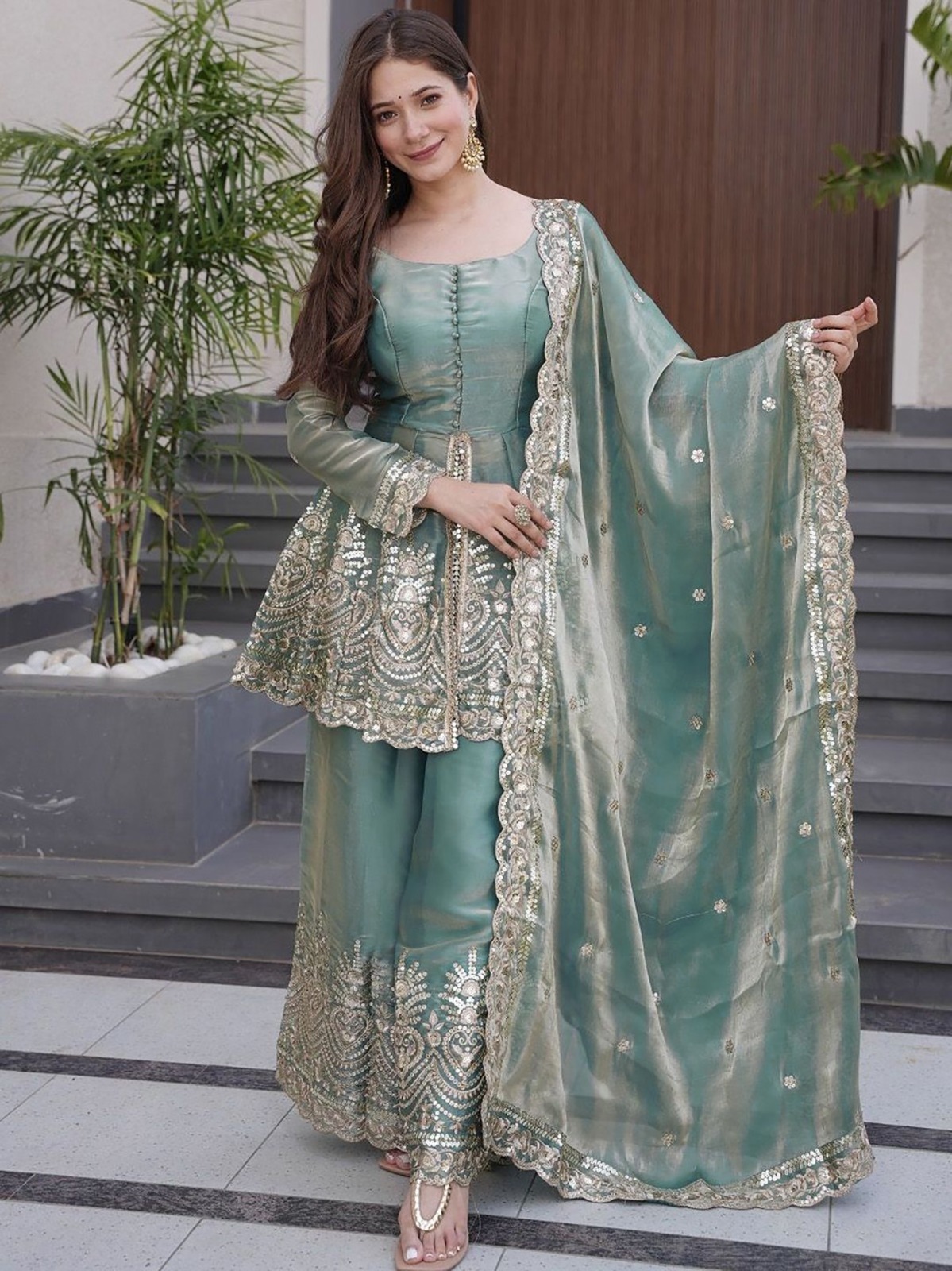
Kanjeevaram sarees are recognised for their lustrous silk body, contrasting borders and woven zari details. A genuine silk saree can be substantial, so check whether the event involves travel or several hours of standing. Banarasi silk offers a different visual language, with ornate woven patterns and a fluid fall that can work especially well for an evening reception.
Chanderi provides a lighter option with a delicate surface and some transparency, so a well-fitted blouse and suitable lining are important. Cotton-silk and Kanchi cotton can handle warm weather better than heavily layered synthetics. A saree with a 5.5 to 6 metre length is generally manageable for a standard drape, although taller guests or those using a more elaborate style may need additional fabric.
Using colour with cultural awareness
Deep maroon, peacock blue, emerald, mustard, magenta and temple red are reliable wedding colours, but no colour is compulsory for a guest. Avoid wearing an outfit so close to the bridal palette that it appears deliberately bridal, particularly heavily embellished red or a complete head-to-toe gold look.
Gold zari pairs naturally with maroon, green, purple and red, while silver zari complements teal, navy, lilac and grey. A monochrome saree can look elegant when the blouse introduces contrast, such as a purple blouse with a mustard saree or a deep green blouse with a muted pink body. Guests can use the invitation, venue and family guidance as better references than general internet rules.
Making the drape stay secure
A secure saree drape requires a correctly fitted petticoat, a blouse with firm shoulder seams and discreet pins placed at the waist and shoulder. Pin the pleats from the inside, use a safety pin with a protective cover, and test the finished drape by sitting down before leaving home.
For a temple ceremony, keep the pallu broad enough to cover the upper torso without constant adjustment. A belt can support a heavy silk saree, but it should sit comfortably at the natural waist rather than compressing the abdomen. Low block heels, padded sandals or embellished flats are usually safer than narrow stilettos on polished floors.
Tamil Nadu Wedding Guest Outfits: Blouses That Modernise Heritage Sarees
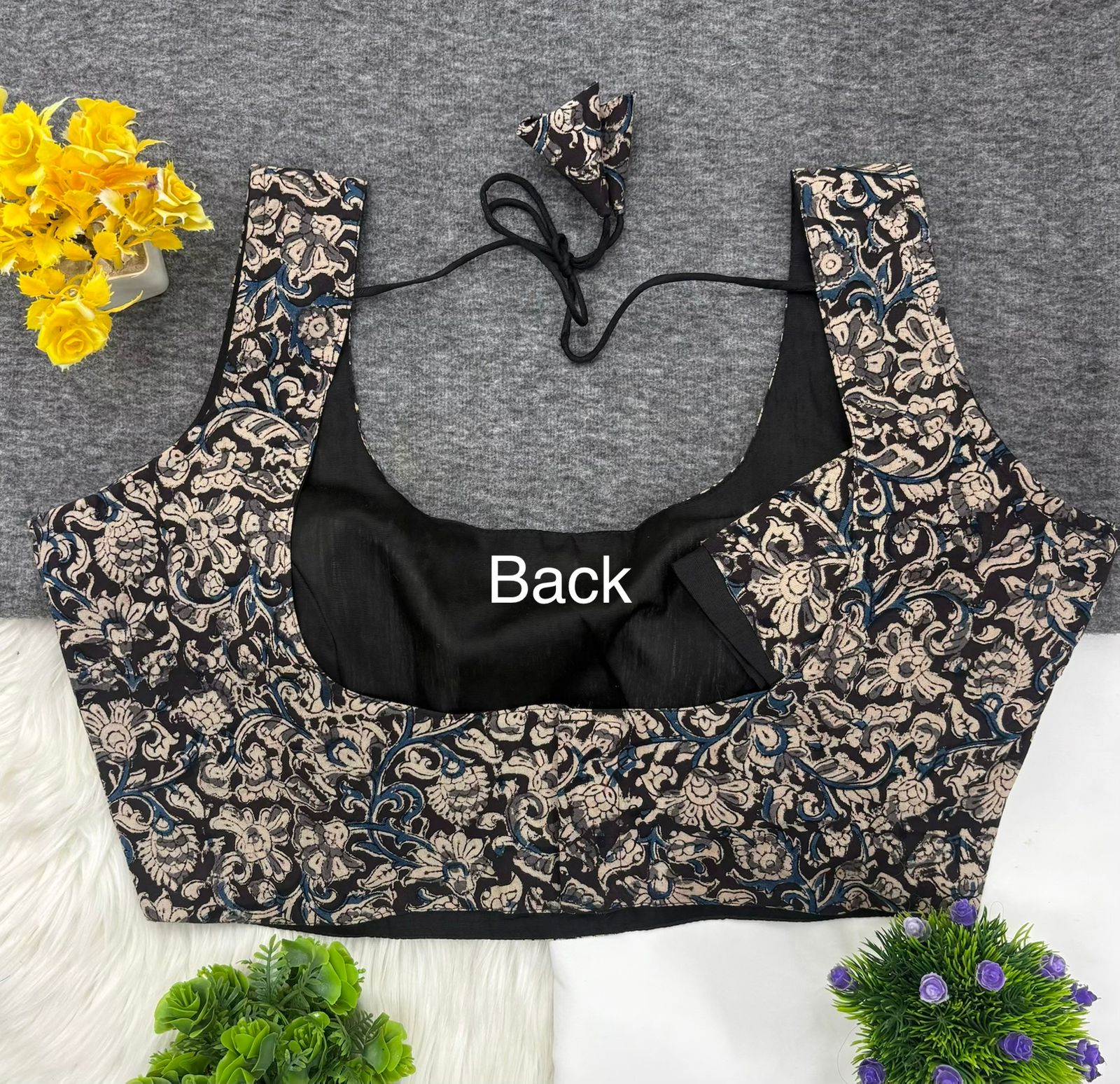
The best wedding guest blouse combines secure construction with a neckline and sleeve length suited to the venue. A high round neck, boat neck, elbow sleeve or modest square neck can look contemporary without making a temple or family ceremony feel underdressed.
Blouse fit deserves more attention than decorative detail. The bust seam should lie flat, the armhole should allow movement, and the hooks or zip should not pull when the arms rise. Ask for an extra margin of approximately 1 to 1.5 inches at the side seams if the blouse is being stitched well before the wedding. A test fitting with the actual saree prevents problems caused by a blouse that looks good alone but changes the saree's fall.
Contrast blouses extend the use of one saree. A raw-silk blouse can add structure to a fluid georgette saree, while a matte cotton blouse can reduce the shine of a zari-heavy silk. Embroidery should be placed where it will remain visible after draping; a densely worked back may disappear beneath the pallu.
Guests who prefer more coverage can choose elbow-length sleeves, a lined neckline and a high-back blouse. Guests attending an evening reception may choose a sculpted sleeve, metallic piping or a modest back detail, provided the design remains comfortable while sitting. Jewellery should not compete with a heavily worked blouse: choose either a strong neckline ornament or prominent earrings, not both at maximum scale.
Tamil Nadu Wedding Guest Outfits: Salwar Suits for Comfort and Formality
A salwar suit is often the smartest choice when the guest needs easy movement, moderate coverage and comfort across a long wedding day. A well-cut kurta with straight pants, palazzos, a sharara or a churidar can look ceremonial while making stairs, travel and seated rituals easier than a saree.
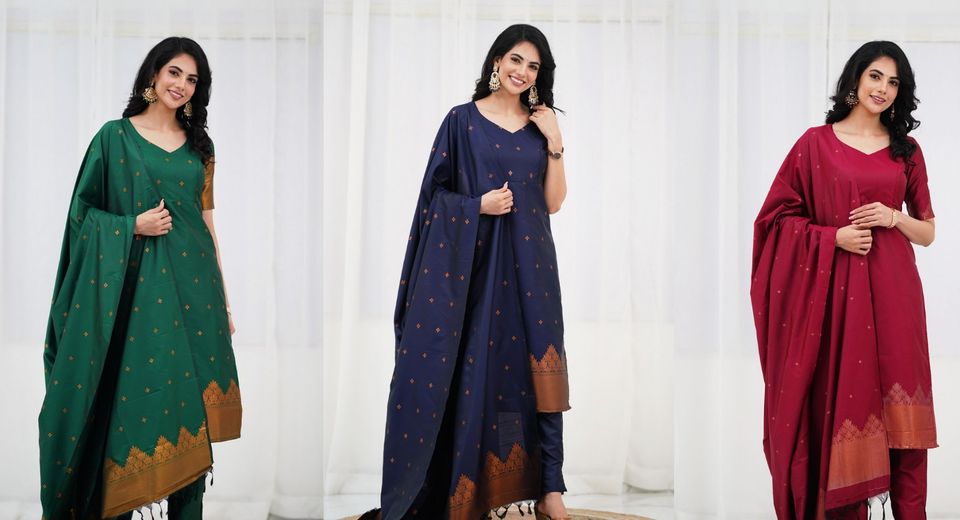
The Kanchi Cotton Woven Kurta Pant Dupatta Set illustrates why cotton works for daytime functions: the woven surface has visual interest without the heat and weight of dense embellishment. It can suit a nalangu, a daytime gathering or a warm venue when styled with jhumkas, a neat bun and metallic flats.
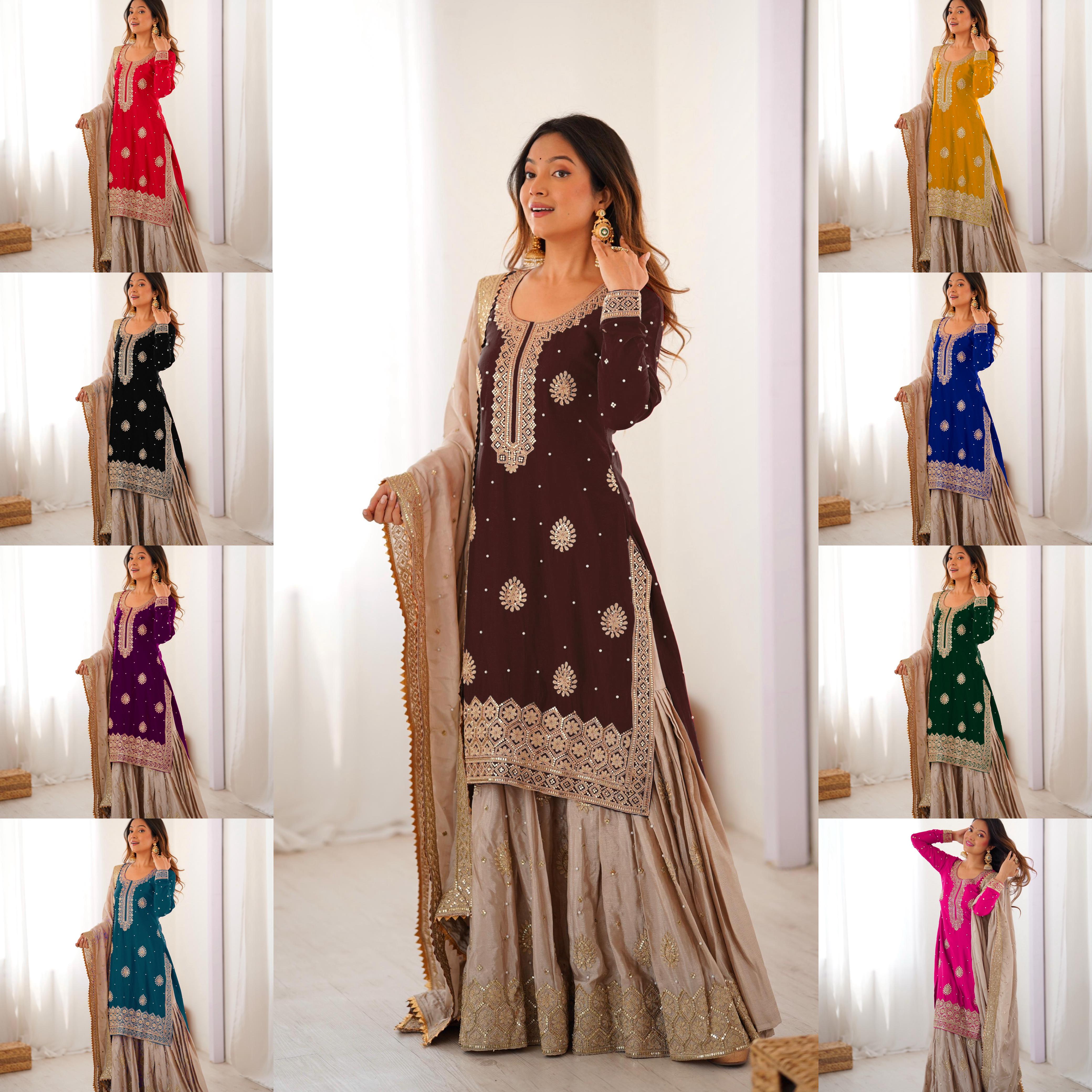
For an evening reception, the Brown Chinon Silk Sharara Suit Set for Women brings a dressier silhouette through its fluid fabric and wide-leg volume. A sharara needs careful length adjustment because excess fabric can catch under footwear. Choose a heel height before hemming, and keep the dupatta secured at one shoulder if the outfit will be worn while greeting guests or dancing.
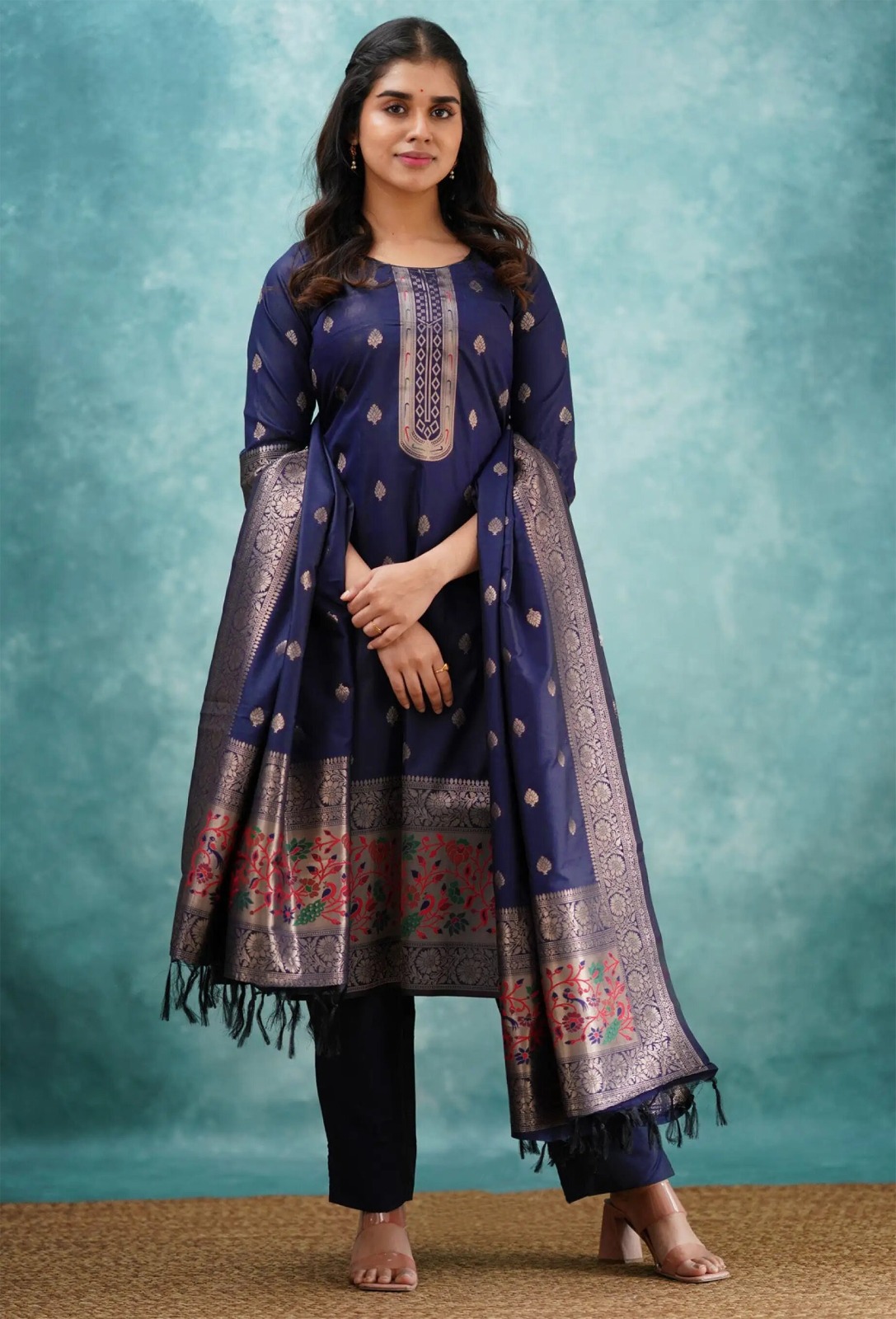
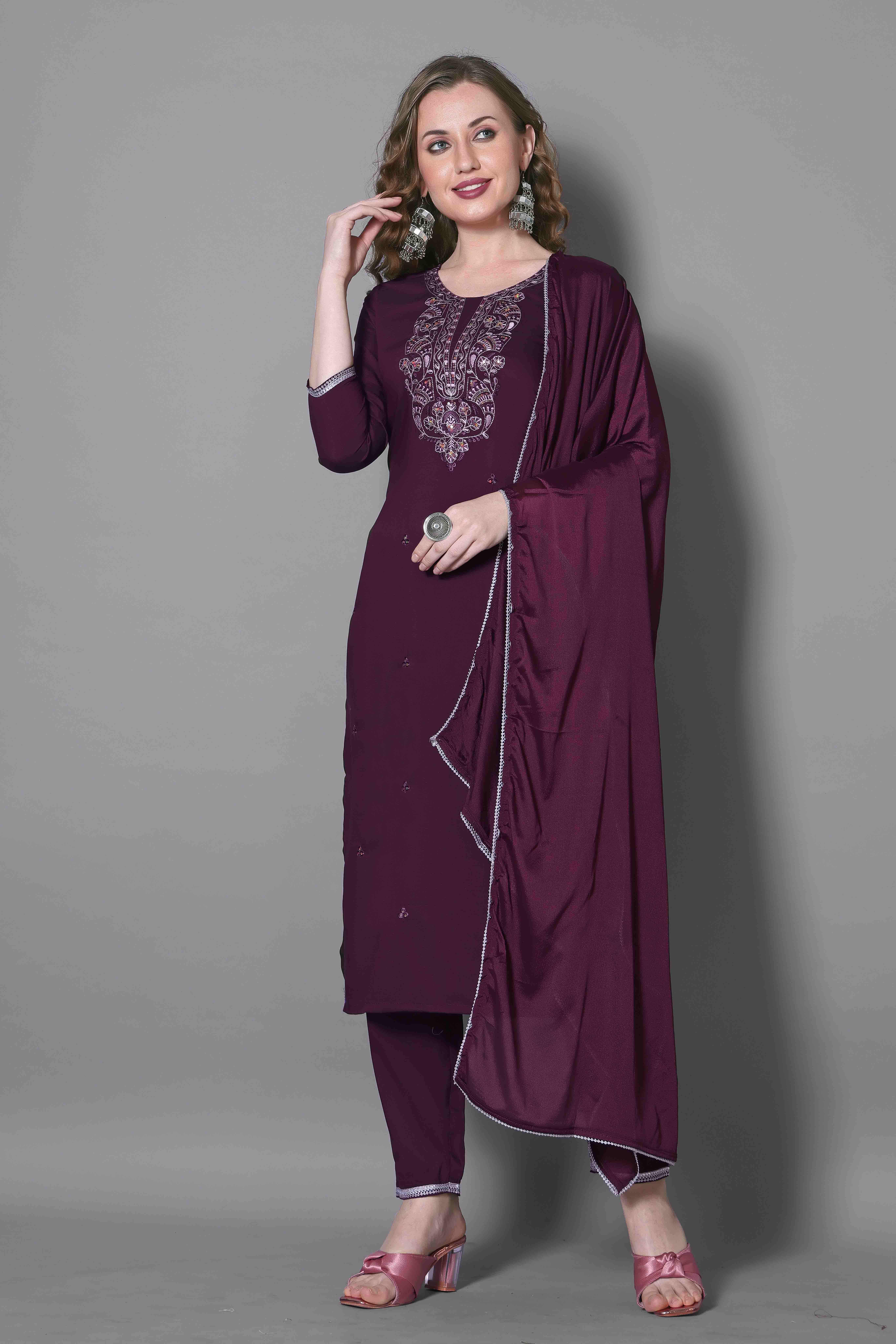
A deeper palette can create formality without a saree. The Navy Blended Silk Zari Kurti Pant Dupatta Set uses navy and zari to provide evening polish, while the Wine Embroidered Silk Blend Kurta Dupatta Set Women suits guests who prefer a rich, time-honoured colour with a simpler trouser silhouette. Both styles benefit from restrained accessories because silk-blend surfaces already reflect light.
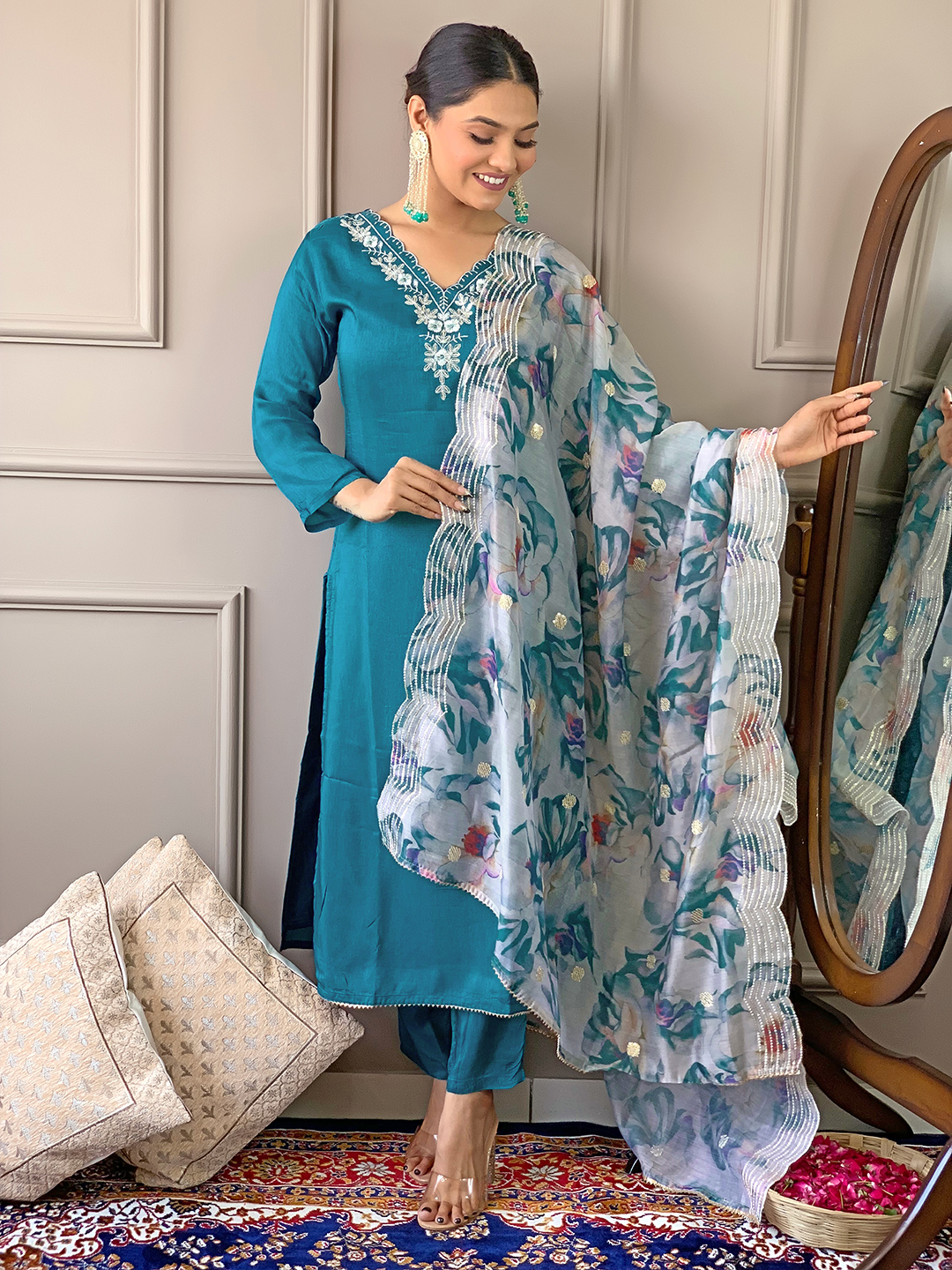
Guests seeking a more fluid, statement-led look can consider the Teal Blue Silk Embroidered Gown Set with Dupatta. A gown set is practical when the wearer wants one long uninterrupted line rather than the separate visual breaks of a kurta and pants. The dupatta should be pinned at the shoulder and, if needed, lightly secured at the wrist so it doesn't trail near food or lamps.
Tamil Nadu Wedding Guest Outfits: Styling Salwar Suits for Rituals
Salwar suits should be styled with the ritual, climate and silhouette in mind rather than treated as interchangeable partywear. Straight pants and medium-length kurtas suit formal daytime functions, palazzos create ease for movement, and shararas or gown sets generally feel more festive for evening gatherings.
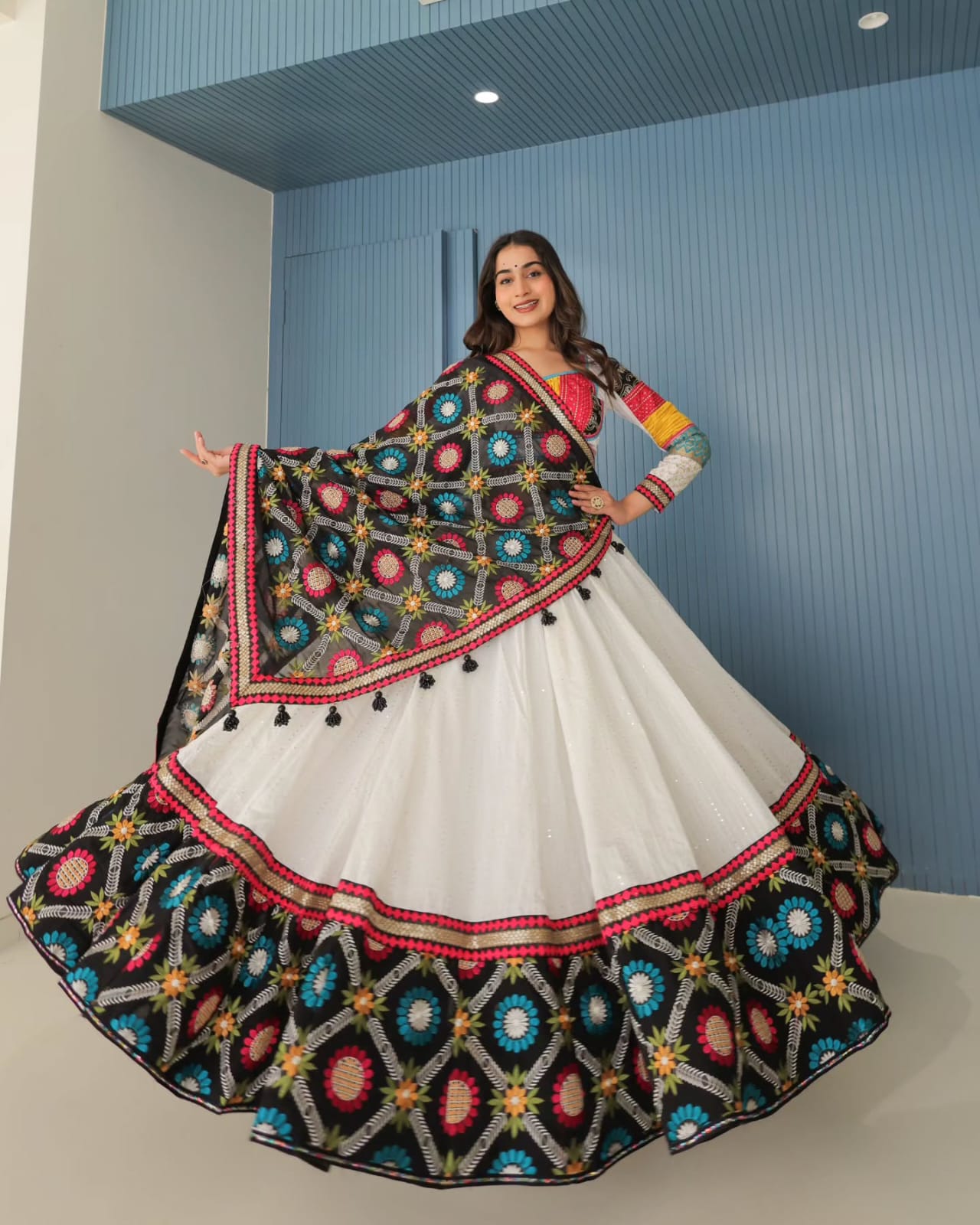
A dupatta is especially useful in a temple or family setting because it adds coverage and can be arranged neatly over one shoulder. For a narrow dupatta, make a single broad pleat and pin it at the shoulder. For a wide dupatta, place one end over the opposite shoulder and secure the waist-side edge discreetly so it doesn't slide when sitting.
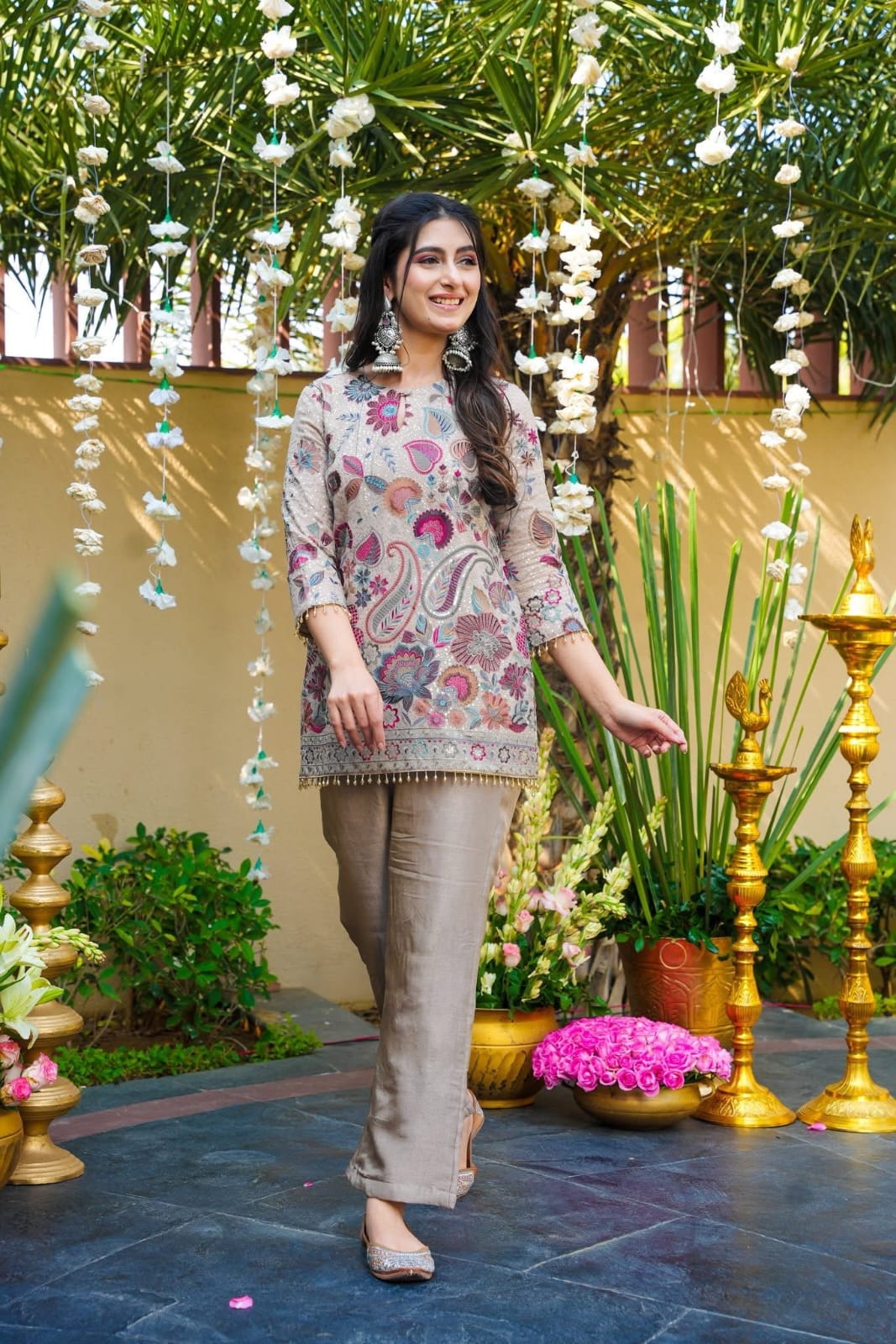
The Modern Taupe Vichitra Silk Embroidered Co-Ord Set for Women demonstrates how a neutral can remain wedding-appropriate when embroidery, texture and jewellery supply the occasion dressing. Taupe works well with antique gold, pearl and champagne accessories. Avoid adding too many similar beige tones, or the outfit may lose definition in photographs.
A salwar suit can also carry regional textile references without copying a bridal outfit. Karnataka Silk Salwar Suits can inspire a silk-and-border approach, while Maharashtra Paithani Inspired Salwar Suits may suggest jewel-toned colour blocking and a distinctive pallu-like dupatta treatment. Kalamkari Print Salwar Suits (Copy) offer a more illustrative, daytime direction that pairs well with oxidised silver jewellery and a simple braided hairstyle.
Accessories should follow the outfit's visual density. Choose kundan, temple jewellery or antique-gold pieces for zari and silk, while oxidised silver or pearls can balance printed cotton and muted neutrals. A small structured potli or shoulder bag is more practical than a large tote when the guest needs to keep both hands free during greetings and rituals.
Tamil Nadu Wedding Guest Outfits: Footwear, Jewellery and Weather Planning
Comfortable footwear, breathable layers and secure jewellery make a wedding outfit successful across a full day. Guests should prioritise shoes that can handle polished floors, outdoor paths, stairs and periods of standing without damaging a saree or catching on a salwar hem.
Block heels between 1.5 and 2.5 inches provide height with more stability than narrow heels. Embellished flats are suitable for daytime ceremonies, especially when the guest expects to remove footwear at a temple. Wear the selected shoes during the final outfit fitting so the trouser or saree length can be checked accurately.
For warm weather, choose cotton, cotton-silk, Chanderi or breathable silk blends, and avoid excessive lining in the kurta or blouse. Carry a small handkerchief, safety pins, fashion tape and a compact comb. Guests travelling from another city should pack the outfit in a breathable garment bag and avoid sealing damp clothing after the event.
Jewellery should remain secure during movement. Use earring backs, check necklace clasps before leaving and select bangles that don't catch on zari or embroidery. A low bun, braid or secured half-up style is generally more practical than loose hair when the ceremony involves heat, flowers, incense or outdoor photography.
Tamil Nadu Wedding Guest Outfits: A Practical Final Checklist
A successful outfit should pass a movement, weather, coverage and care check before the wedding day. Trying on the complete look at least three days in advance allows time for alterations, blouse adjustments and footwear changes.
- Check the ceremony: confirm whether the event is a muhurtham, reception, nalangu, Haldi ceremony or another gathering.
- Check the fabric: choose Kanjeevaram or heavier silk for high formality, and Chanderi, cotton-silk or a light silk blend for long warm functions.
- Check the fit: sit, walk, climb stairs and raise both arms while wearing the complete outfit.
- Check the drape: pin the saree pallu or dupatta in advance and carry two spare safety pins.
- Check the footwear: confirm that the hem clears the floor and that the shoes remain comfortable after at least 30 minutes of wear.
- Check the care plan: air the outfit after use, remove jewellery before storing it, and follow the fabric's cleaning instructions rather than washing silk casually.
Guests don't need to imitate the bridal party to dress appropriately for a Tamil wedding. A well-fitted saree, thoughtful blouse or comfortable salwar suit can show respect for the ceremony while still reflecting personal style. The strongest choice is the one that remains polished after the photographs, rituals, meals and journey home.
Common Questions About Tamil Nadu Wedding Guest Outfits
What should a guest wear to a Tamil Nadu wedding?
A guest can wear a Kanjeevaram or lightweight silk saree, a cotton-silk saree, or a formal salwar suit depending on the ceremony and venue. Choose secure draping, comfortable footwear and colours that do not closely imitate the bridal outfit.
Is a salwar suit appropriate for a Tamil wedding?
Yes, a salwar suit is appropriate for a Tamil wedding, especially for guests who need comfort, coverage and freedom of movement. Silk-blend, embroidered, sharara and well-tailored kurta sets can look suitably festive for a muhurtham, reception or daytime function.
What type of blouse should I wear with a wedding saree?
A well-fitted blouse with a secure shoulder, comfortable armhole and suitable neckline is the best choice for a wedding saree. Elbow sleeves, a high round neck, a boat neck or a modest square neck can provide coverage while still looking current.
Which saree fabric is comfortable for a Tamil wedding in hot weather?
Cotton-silk, Kanchi cotton, Chanderi and lightweight silk blends are generally more comfortable in hot weather than heavily layered fabrics. Choose a breathable lining and avoid excessive embroidery or thick underskirts when the event is outdoors.
Can guests wear black to a Tamil wedding?
Guests can wear black when the family, invitation and venue do not suggest a restriction, but colour customs vary between families and communities. Combining black with jewel tones, zari or a brighter dupatta can make the outfit feel more celebratory.
How can I keep a saree or dupatta secure during wedding rituals?
Use a correctly fitted petticoat, concealed safety pins and a shoulder pin for the saree pallu or dupatta. Sit, walk and raise your arms during a trial fitting so the outfit remains secure before the ceremony begins.