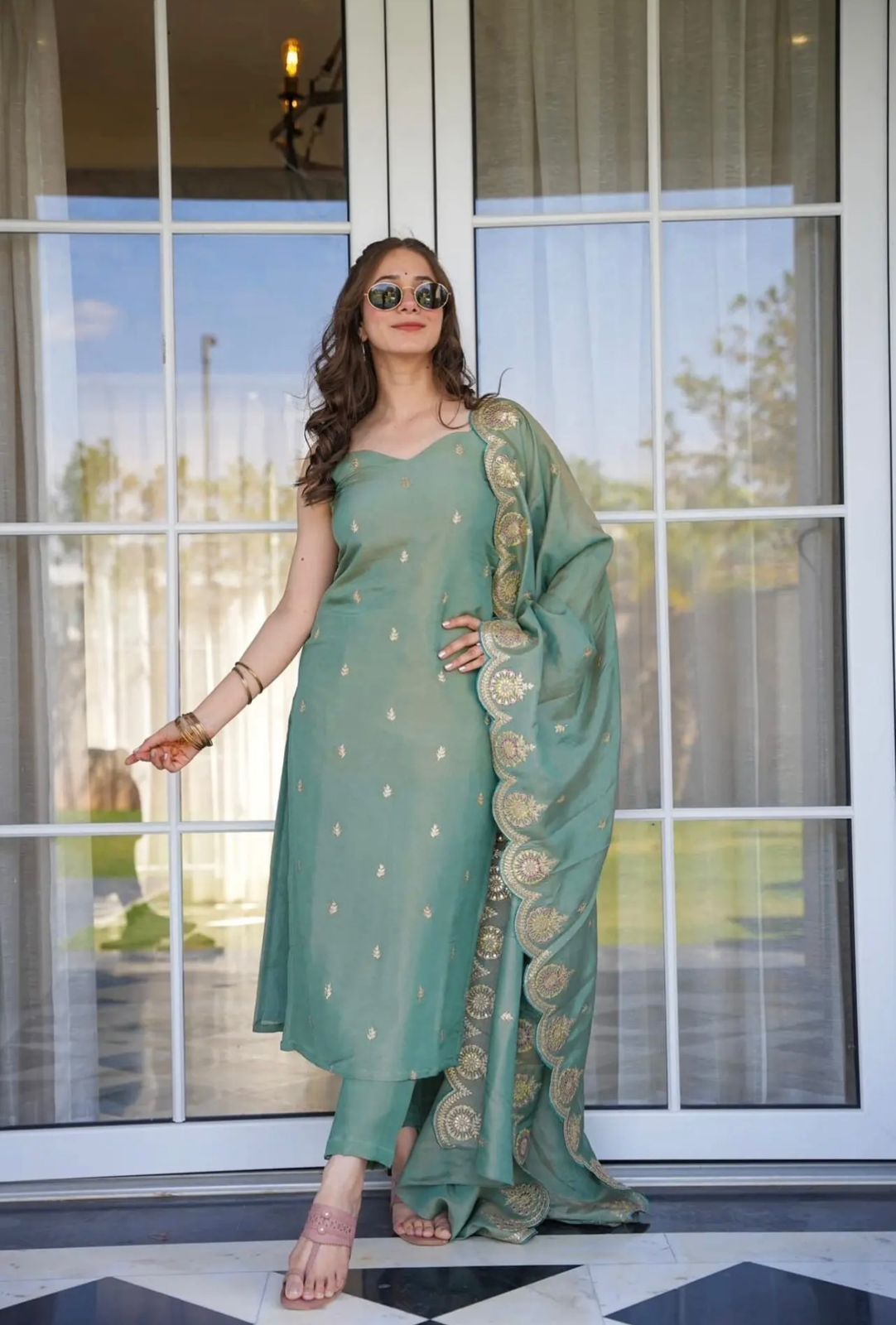
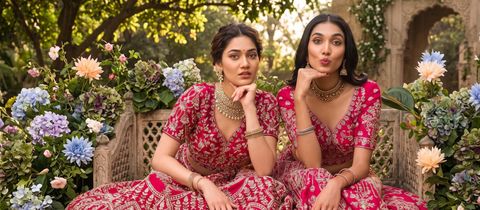
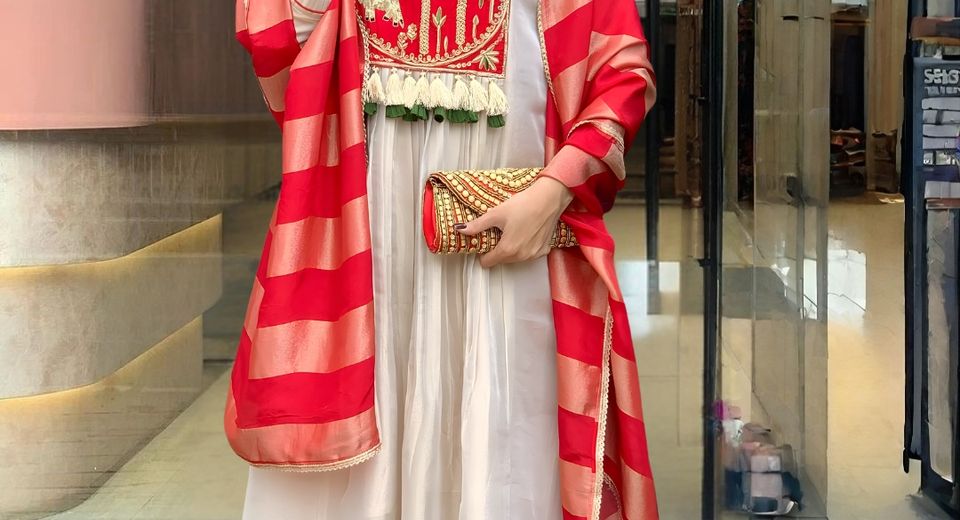
Stylish Salwar Suits for Festive Occasions should make three things easier: dressing appropriately, moving comfortably and looking polished in photographs. The most effective choice depends on more than sparkle. Fabric weight, silhouette, sleeve length, dupatta handling, colour and the formality of the celebration all affect how a suit feels after several hours.
A family puja, Diwali gathering, Eid lunch, Navratri event and wedding reception don't demand the same outfit. A fluid silk Anarkali can suit an evening celebration, while a lighter cotton or Chanderi set may work better for daytime rituals. The guide below explains how to match the garment to the event instead of choosing embroidery alone.
How to Choose Stylish Salwar Suits for Festive Occasions
Choose a festive salwar suit by matching its fabric and silhouette to the event's time, setting and expected movement. A three-hour indoor dinner can accommodate a more elaborate dupatta and heavier surface work, whereas a daytime ceremony usually rewards breathable fabric and manageable volume.
Start with four practical questions. Is the event indoors or outdoors? Will you sit on the floor, move between guests or dance? Is the dress code traditional, semi-formal or party-oriented? Will you wear the outfit for one celebration or several occasions? The answers narrow the choice more effectively than a colour trend.
- For pujas and daytime family functions: Select cotton, Chanderi, lighter silk blends or a straight kurta with a comfortable pant. Soft gold, coral, maroon, orange, ivory and green offer festive presence without looking overly formal.
- For evening dinners: Silk, jacquard, Chinon silk and richer Anarkali silhouettes create more visual depth under warm lighting. Deep red, black, wine, rust, violet and jewel tones photograph particularly well.
- For wedding-related events: Choose a flared Anarkali, sharara suit or embellished kurta set when the event is dressier. Check the lining and hem weight before committing to a wide silhouette.
- For office celebrations: A straight-cut kurta pant set with a controlled dupatta is more practical than a heavily flared style. Small zari details, woven texture or a refined border can provide festive character without appearing costume-like.
Which Salwar Suit Silhouette Works for Each Festive Setting?
A straight kurta works for polished daytime dressing, an Anarkali creates movement for formal celebrations, and a sharara adds volume for party-focused occasions. Silhouette determines comfort, visual proportion and how much styling effort the outfit requires.
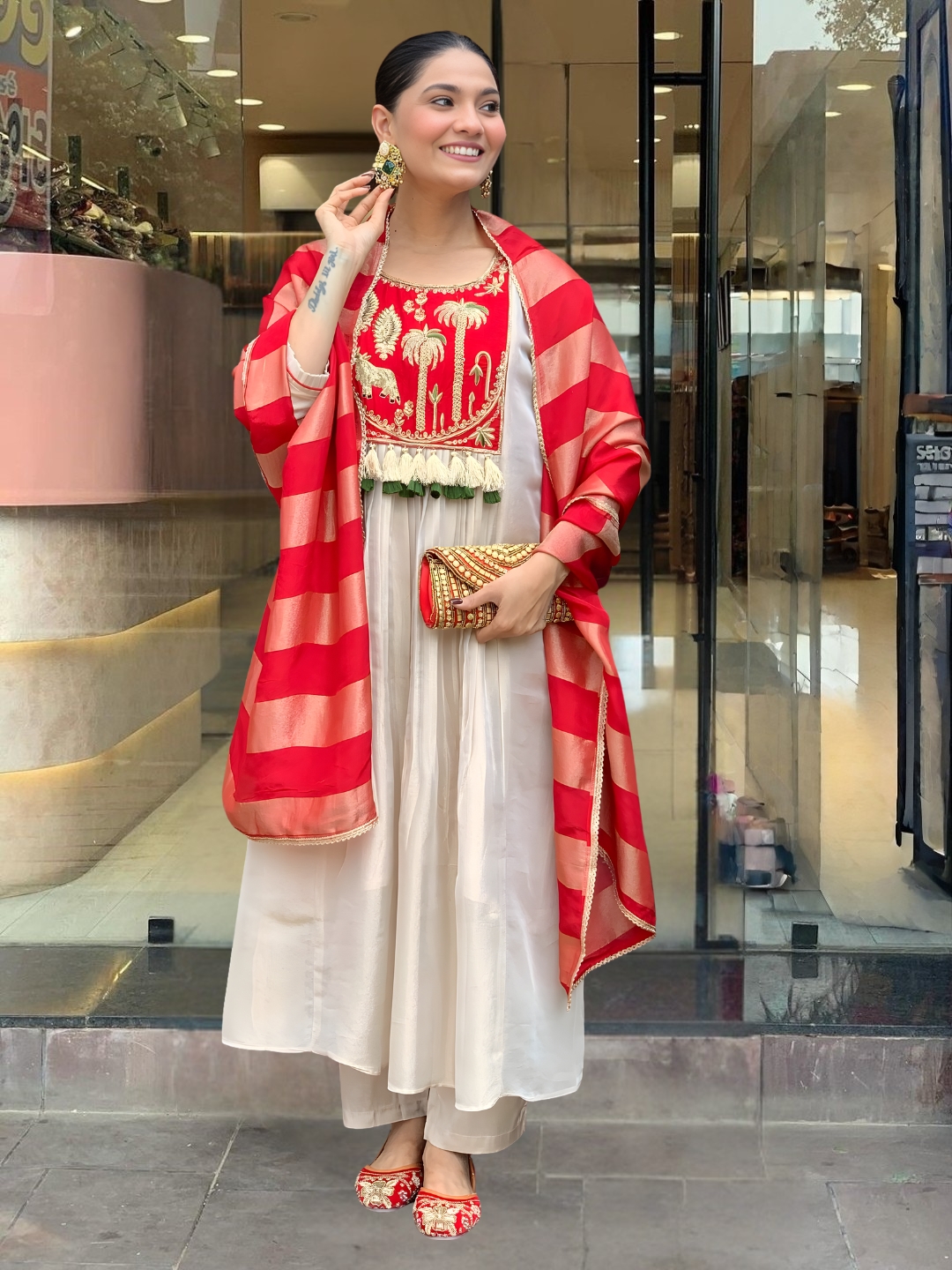
Straight kurta and pant sets
Straight kurta pant sets are dependable for pujas, lunches and semi-formal gatherings because they allow easy walking and sitting. A kurta that ends around the knee or mid-calf generally pairs neatly with cigarette pants or wider trousers. The silhouette also gives a dupatta enough space to become the main decorative element.
The Silk Festive Kurta Pant Set with Zari Jacquard Dupatta demonstrates why a coordinated set can look complete without multiple layers of accessories. A zari jacquard dupatta supplies pattern and sheen, while the pant-set format keeps the base outfit visually clean.
Anarkali suits
Anarkali suits are suited to dressier festive events because their flare creates movement and a longer vertical line. A lightly flared Anarkali is easier to manage in crowded rooms than an extremely wide kalidar design. Check whether the flare begins at the waist or below the hip, since a lower flare usually feels less bulky when seated.
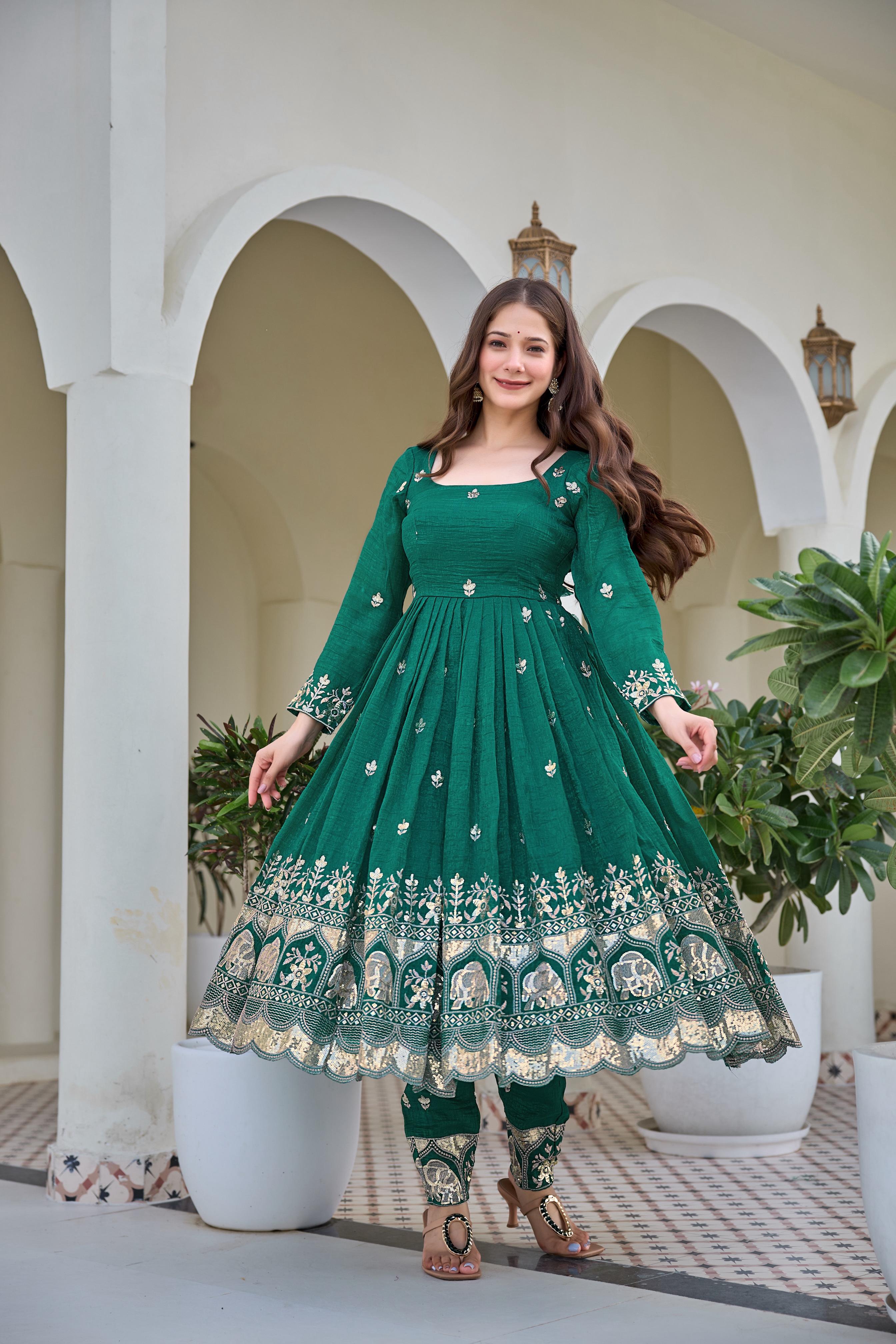
The Festive Wear Maroon Silk Anarkali Suit Set for Women offers an useful reference for evening styling: a deeper colour and silk-like surface can carry the outfit with minimal jewellery. The Ladies Dress Anarkali Salwar Suits collection is also relevant when comparing different lengths, flare levels and neckline treatments.
Sharara and co-ord styles
Sharara suits create a celebratory shape through wide-legged trousers, while co-ord sets offer a contemporary appearance with less draping complexity. Sharara trousers work especially well for receptions and festive parties, but the hem should be high enough to avoid catching on footwear or uneven flooring.
The Brown Chinon Silk Sharara Suit Set for Women shows how a fluid fabric can support a festive silhouette without relying only on a stiff skirt-like structure. A co-ord such as the Stylish Rust Orange Ethnic Co-Ord Set for Women can suit a modern festive gathering when you want a coordinated look with fewer styling decisions.
Which Fabrics Are Practical for Festive Salwar Suits?
Silk, jacquard, Chinon silk and Chanderi suit formal celebrations, while cotton is often the more comfortable choice for warm daytime functions. Fabric selection should account for temperature, lining, weave density, crease behaviour and the amount of time you'll spend wearing the garment.
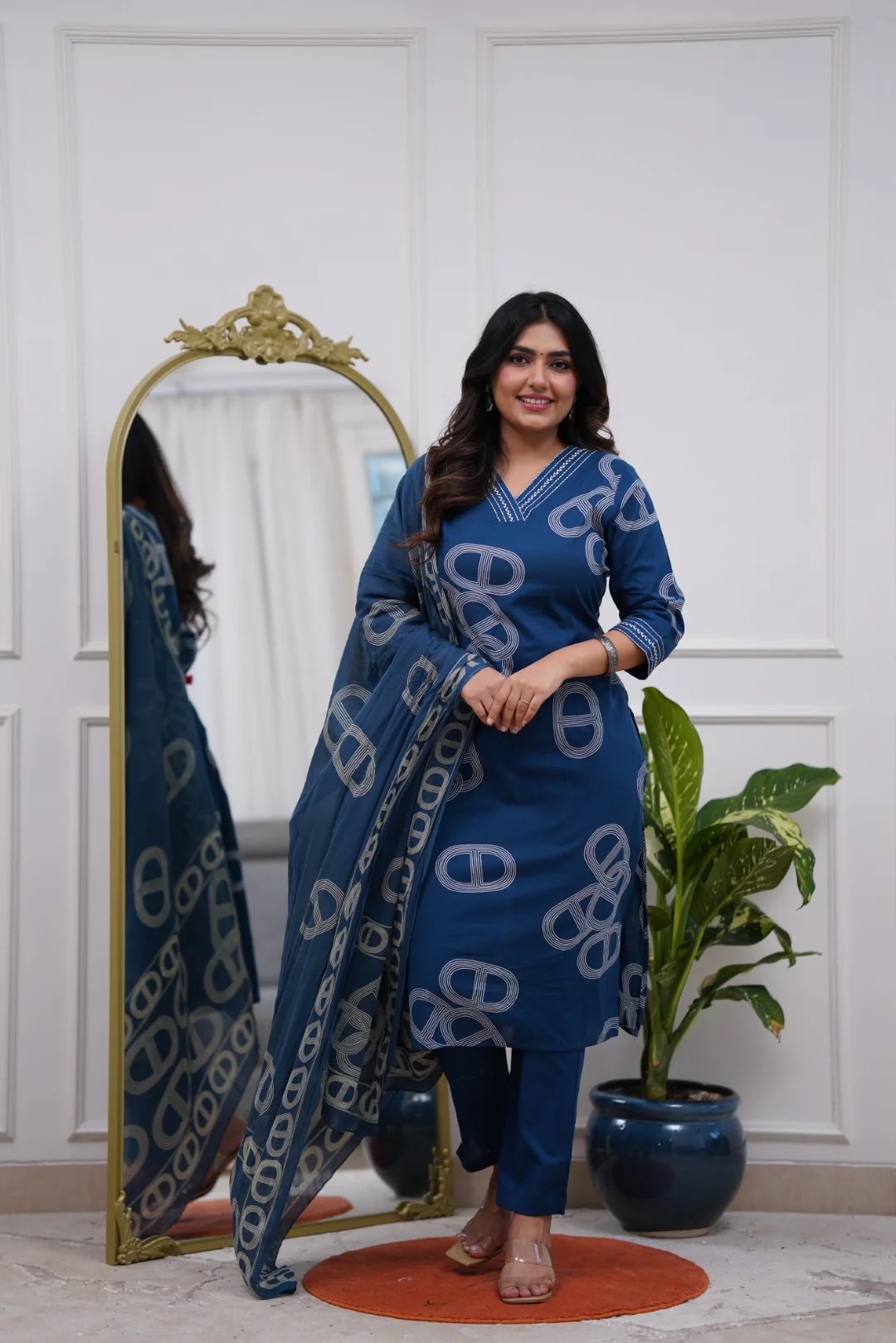
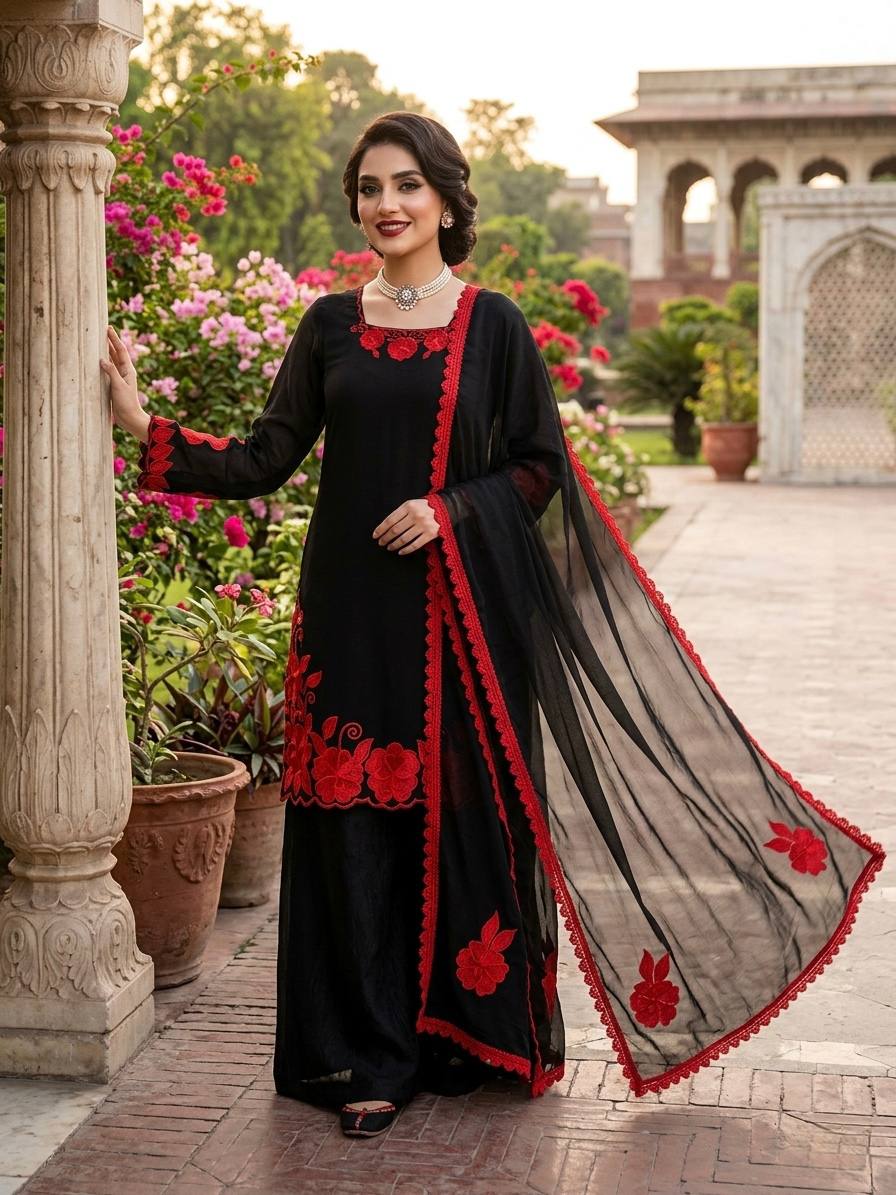
Silk and silk-look fabrics: Silk gives colour depth and a naturally dressy finish, making it useful for evening events. Silk can feel warm under dense lining, so look for breathable construction and avoid excessively tight sleeves. The Black Red Fendy Silk 3 Piece Readymade Salwar Suit Set can inspire a high-contrast evening approach, particularly when black and red accessories are balanced rather than repeated everywhere.
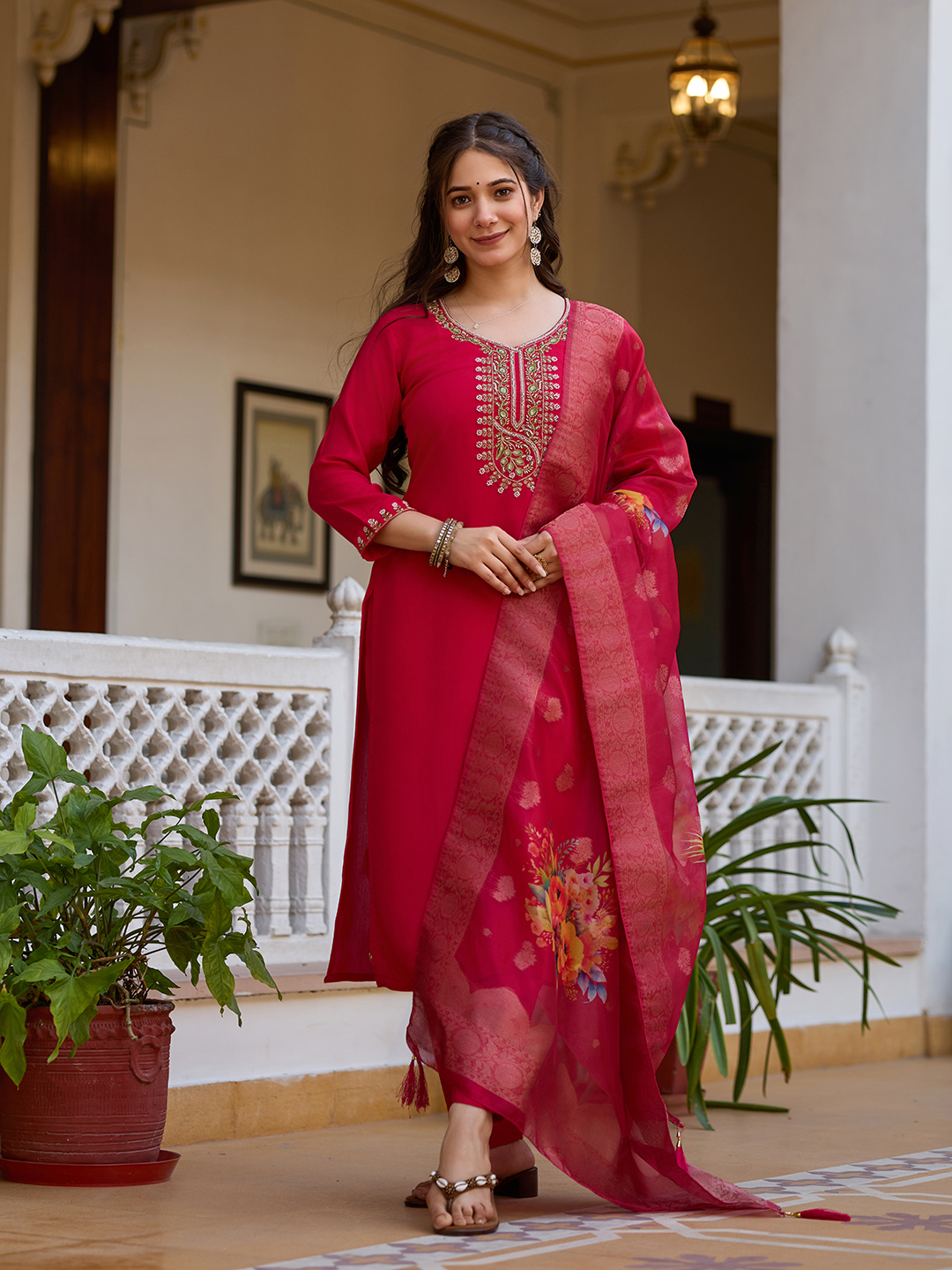
Chanderi: Chanderi is lightweight, subtly sheer in some weaves and known for a delicate, dressed-up texture. A lining may be necessary depending on the garment's construction. The Festive Red Chanderi Kurta Pant Dupatta Set Women is a good example of how a lighter fabric can still look celebration-ready through colour and coordinated layers.
Jacquard: Jacquard fabric incorporates a woven pattern rather than relying entirely on printed or surface decoration. Woven motifs can remain elegant after repeated wear, but dense jacquard may feel heavier than plain fabric. The Orange Jacquard Embroidered Kurta Set with Organza Dupatta combines two visually noticeable elements, so keep jewellery and footwear relatively restrained.
Cotton: Cotton salwar suits are practical for daytime festivals, warm climates and ceremonies involving extended sitting. Cotton may crease more readily than synthetic blends, but that trade-off can be worthwhile for airflow. Choose a festive border, woven dupatta or small embroidery detail when you want cotton to look more ceremonial than everyday.
How Should You Select a Festive Salwar Suit Colour?
Select colour according to the event lighting, time of day and your existing accessories. Dark jewel tones create depth for evening photographs, while brighter orange, red, pink and yellow shades bring energy to daytime celebrations.
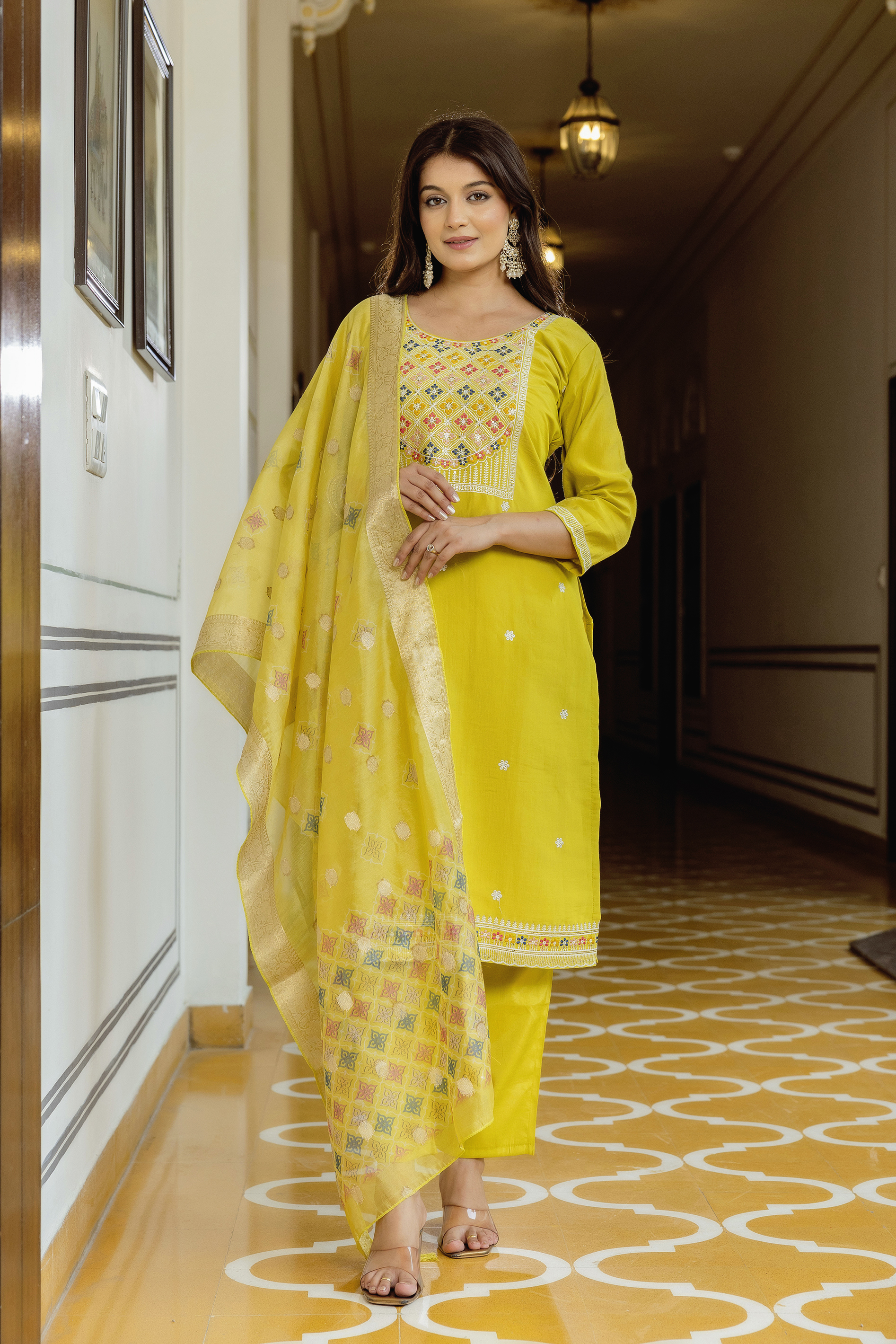
Maroon, wine and deep red work well when you want a time-honoured, rich impression. Orange and rust feel warmer and more contemporary, particularly with antique-gold jewellery. Violet and blue can look refined under indoor lighting, while black benefits from a contrasting accent such as red, gold or emerald.
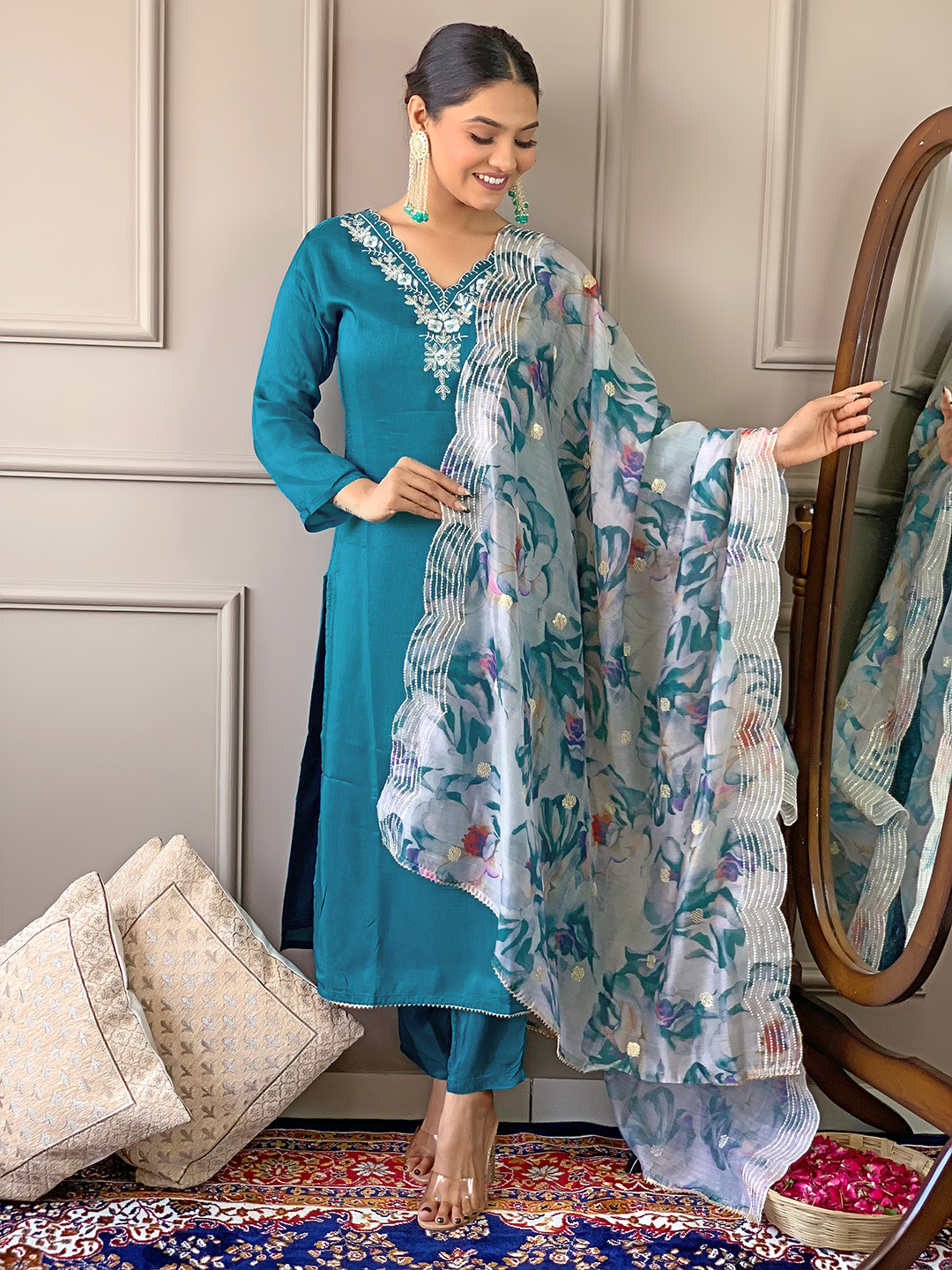
The Stylish Violet Ethnic Kurta Dupatta Set for Festive Wear shows how one strong colour can become the outfit's central idea. Avoid matching every accessory to the garment exactly. A violet suit can be paired with silver, pewter, champagne or soft gold depending on the embroidery and the event's formality.
Colour also affects repeat wear. A red suit may feel strongly associated with weddings or specific festivals, while rust, maroon, brown, violet and deep green can transition between family celebrations, dinners and cultural events. If you're building a compact festive wardrobe, choose one versatile deep shade and one brighter statement shade.
What Makes a Readymade Salwar Suit Easy to Wear?
A readymade salwar suit is easy to wear when the size, length, lining and dupatta construction are checked before styling. Readymade convenience doesn't remove the need to inspect measurements, because a well-finished neckline can't compensate for sleeves that restrict movement or trousers that sit incorrectly.
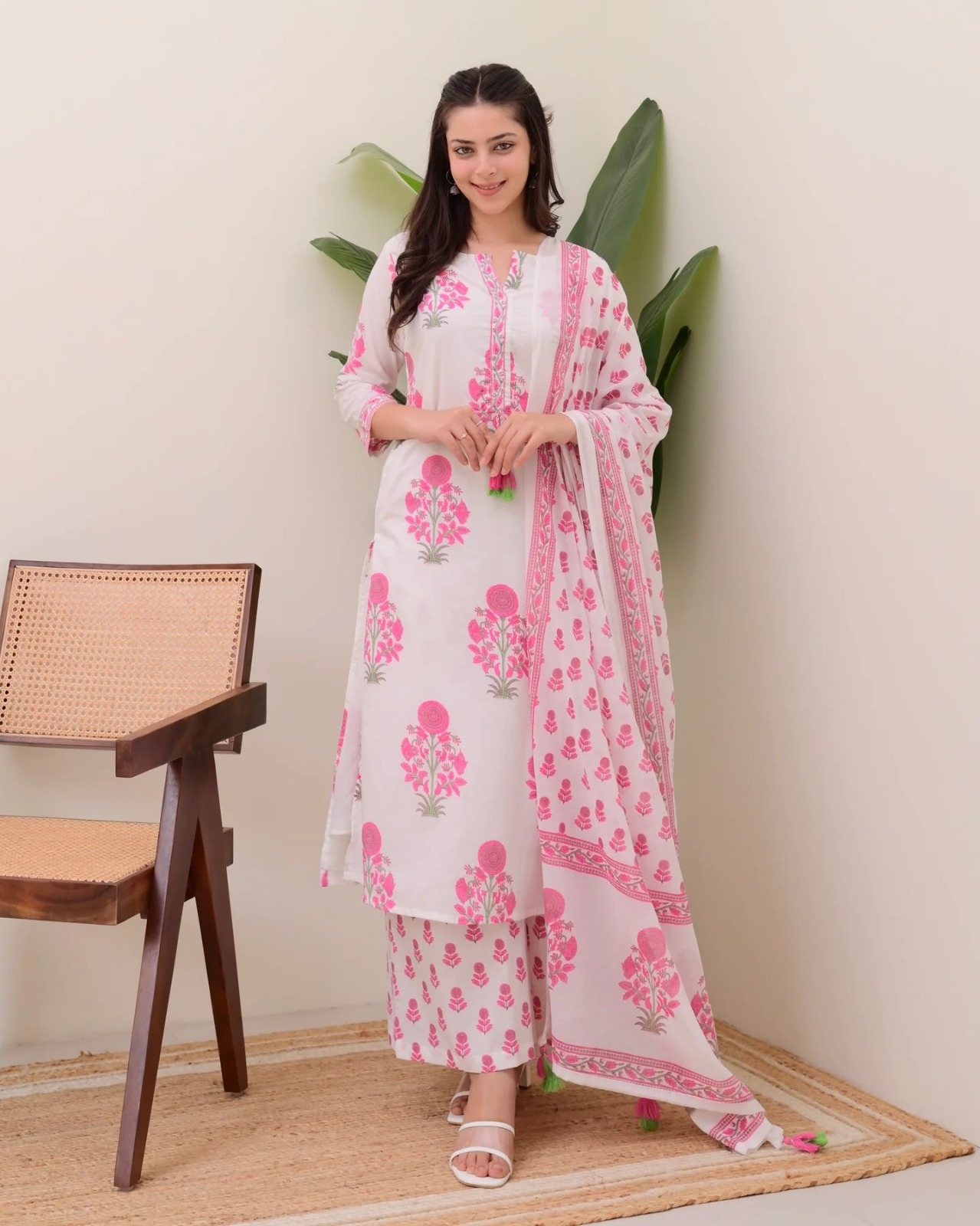
Measure your bust, waist, hip and preferred garment length while wearing the undergarments you expect to use. Compare those measurements with the size chart rather than relying only on small, medium or large labels. For an Anarkali, check the bust and armhole first; for a straight suit, check the hip and trouser rise; for a sharara, check the waistband and total hem length.
A Readymade salwar Suit Dupatta may be pre-coordinated, but the drape still changes the outfit's proportions. A narrow shoulder drape creates a longer vertical line, while a front-pinned drape looks more structured. If the dupatta is ornate, use fewer necklaces and allow the border to remain visible.
The Festive Red Chanderi Kurta Pant Dupatta Set Women and Stylish Violet Ethnic Kurta Dupatta Set for Festive Wear illustrate two useful readymade approaches: a coordinated three-piece structure and a simpler kurta-with-dupatta format. A coordinated set is particularly useful when you need a finished outfit quickly for a festival or invitation.
How Can You Style a Salwar Suit Without Overcrowding the Look?
Style a festive salwar suit by selecting one dominant detail and supporting it with quieter accessories. If the dupatta contains zari or embroidery, choose simpler earrings; if the suit is plain, let jewellery, footwear or a textured bag provide the emphasis.
Jewellery and footwear
Gold jhumkas, pearl drops, kundan-style earrings and delicate bangles can all work, but the scale should match the neckline and sleeve detail. A high-neck kurta often looks cleaner with earrings rather than a heavy necklace. Juttis suit daytime functions, while low block heels provide height without making a long Anarkali difficult to walk in.
Hair, makeup and bags
Low buns, soft waves and half-up hairstyles keep the neckline visible and reduce conflict with a dupatta. A small potli, envelope clutch or compact shoulder bag is more practical than a large everyday tote at a festive gathering. Choose makeup that accounts for the event's duration: setting products and transfer-resistant lip colour are useful when meals and photographs are involved.
For a maroon silk Anarkali, antique-gold earrings and neutral footwear may be enough. For an orange jacquard set with an organza dupatta, plain metallic sandals and a small clutch prevent the woven pattern from competing with multiple accessories. For a black-and-red suit, repeat only one accent colour in the jewellery or footwear.
How Do You Build a Festive Salwar Suit Wardrobe on a Budget?
Build an useful festive wardrobe by buying complementary silhouettes rather than several nearly identical embellished suits. One adaptable straight set, one evening Anarkali and one lighter cotton or Chanderi option can cover more events than three heavy outfits.
The Salwar Suits with 30% Off and Salwar Suits Flat 40% Off collections can be useful starting points when comparing value, but discount percentage should not be the only measure. Check whether the garment includes the dupatta, whether the fabric requires special care and whether the colour can work with jewellery you already own.
Dress Materials can offer more control over fit and customisation if you've access to a reliable tailor. A dress material may take longer to turn into an outfit, so allow at least one fitting and several days for alterations before a major celebration. Red Dress Materials Under 2000 can be considered when you specifically want a red base and already know which kurta, trouser and sleeve proportions suit you.
For women planning several festive events, separate purchases by function. A formal salwar suit for ladies can be richly textured for an evening reception, while a breathable cotton suit can handle daytime rituals. Party wear suits for women should also allow sitting, eating and walking comfortably; visual drama has limited value if the waistband or sleeves become uncomfortable after an hour.
How Should You Care for Festive Salwar Suits?
Care for a festive salwar suit by following its garment label, limiting unnecessary washing and storing embellished or delicate pieces in a dry, breathable space. Different fibres respond differently to water, heat and friction, so a single washing routine is unsafe for every suit.
Air the garment after wearing it before returning it to storage. Remove surface dust with a soft brush, and treat a small mark promptly according to the care label instead of rubbing aggressively. Silk, jacquard, organza and heavily embellished pieces commonly benefit from professional dry cleaning, while some cotton garments may be suitable for gentle hand washing.
Store dupattas folded along their borders so zari or embroidery doesn't become crushed. Keep dark and light garments separated when moisture is present, and avoid sealing a slightly damp garment in plastic. A cotton garment bag or breathable cover helps protect festive clothing from dust while reducing trapped humidity.
With the right silhouette, fabric and care routine, Stylish Salwar Suits for Festive Occasions become repeatable wardrobe investments rather than single-event purchases. The best outfit is the one that fits the celebration, stays comfortable through the full schedule and gives you more than one way to style it.
Questions to Ask Before Choosing a Festive Salwar Suit
Which salwar suit is best for a daytime festive function?
A cotton, Chanderi or lightly lined straight kurta set is usually best for a daytime festive function because it offers airflow and easy movement. Choose a bright or warm colour with a coordinated dupatta, rather than relying on heavy embellishment for formality.
Are Anarkali suits suitable for weddings and festive parties?
Anarkali suits are suitable for weddings and festive parties when the flare, lining and length allow comfortable movement. Silk, jacquard and richer evening colours create a formal appearance, while a moderate flare is easier to manage than an extremely wide kalidar style.
What should I wear with a readymade salwar suit dupatta?
Wear a readymade salwar suit dupatta according to its border and ornamentation. Use a shoulder drape or front pin for a structured look, and choose simpler jewellery when the dupatta contains zari, embroidery or a strong woven pattern.
Which colours look best in festive salwar suits?
Maroon, red, rust, orange, violet, deep green, wine and black with a contrasting accent all work well for festive salwar suits. Select deeper shades for evening lighting and brighter colours for daytime events, while considering which jewellery and footwear you already own.
Are cotton salwar suits suitable for festive occasions?
Cotton salwar suits are suitable for daytime festive occasions, outdoor gatherings and warm climates. A festive border, woven dupatta, tasteful embroidery or a saturated colour can make cotton feel celebratory without the heat and weight of heavily layered fabrics.
How can I choose the correct size for a readymade salwar suit?
Choose the correct size by comparing your bust, waist, hip, sleeve and garment-length measurements with the seller's size chart. Check the bust and armhole for Anarkalis, the hip and trouser rise for straight sets, and the waistband and hem length for shararas.