

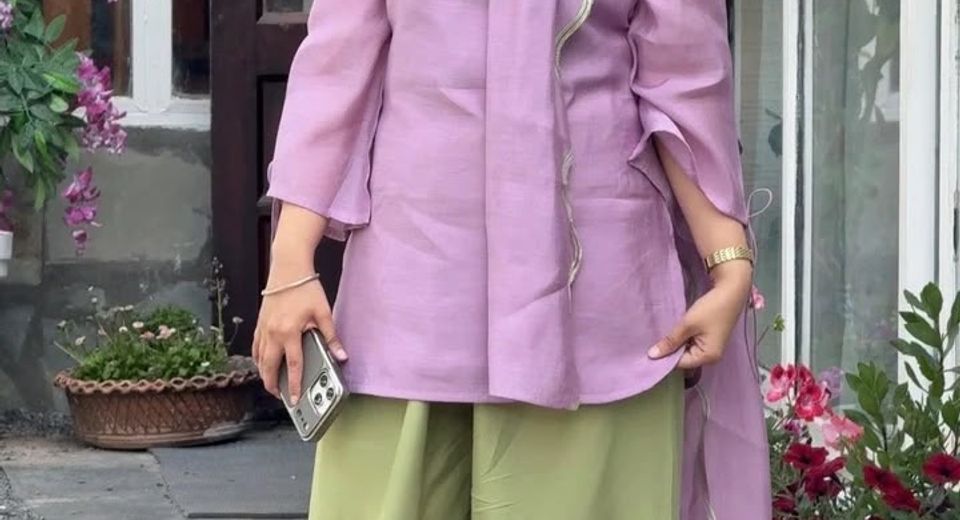
Stylish Salwar Suits for Engagements should feel celebratory without competing with the bride or groom. The most successful outfit usually combines a flattering silhouette, an event-appropriate fabric, controlled embroidery and accessories that leave room for movement. A family lunch, evening ring ceremony and formal hotel celebration each call for a different level of shine, so choosing by venue and timing is more useful than choosing by trend alone.
A salwar suit also photographs differently from a saree or lehenga. The neckline, dupatta border and sleeve shape sit close to the face, while the trousers determine how the outfit moves in full-length photographs. Small decisions about lining, hem length and jewellery can therefore make a kalidar set look considered rather than simply convenient.
Stylish Salwar Suits for Engagements Begin with the Setting
The venue, time and role of the wearer should determine how formal an engagement salwar suit needs to be. A daytime home ceremony generally suits lighter fabrics and restrained embellishment, while an evening banquet can support silk, richer colours and more reflective details.
Family members and guests can wear colour and embroidery freely. But a bride-to-be may want a more distinctive silhouette, a custom dupatta or heirloom jewellery. Guests should avoid copying the exact colour palette or heavily embellished style announced for the bride if the family has shared one. For men attending as the groom, a coordinated kurta, achkan or bandh-gala colour can complement the women's outfits without making the clothing look identical.
- Daytime engagement: Chanderi, cotton-silk blends and light Vichitra silk in lavender, beige, peach, ivory or muted green work well under natural light.
- Evening engagement: Maroon, wine, emerald, navy and deep pink support zari, sequins or tonal embroidery without requiring a heavily layered lehenga.
- Home ceremony: Straight-cut suits, palazzos and soft dupattas provide comfort when sitting on the floor or moving between rooms.
- Hotel or banquet ceremony: Anarkali shapes, structured shoulders, embellished borders and dressier footwear create a more formal finish.
Women salwar suits for engagement celebrations don't need to be overloaded with decoration. A clean neckline, a well-placed embroidered panel and a dupatta with a defined border can look more refined than several unrelated embellishment techniques.
Stylish Salwar Suits for Engagements Need the Right Fabric
Chanderi, Vichitra silk and selected viscose Chanderi silk are strong choices because they offer festive texture while remaining easier to wear than very heavy brocade or layered velvet.
Chanderi for light, luminous dressing
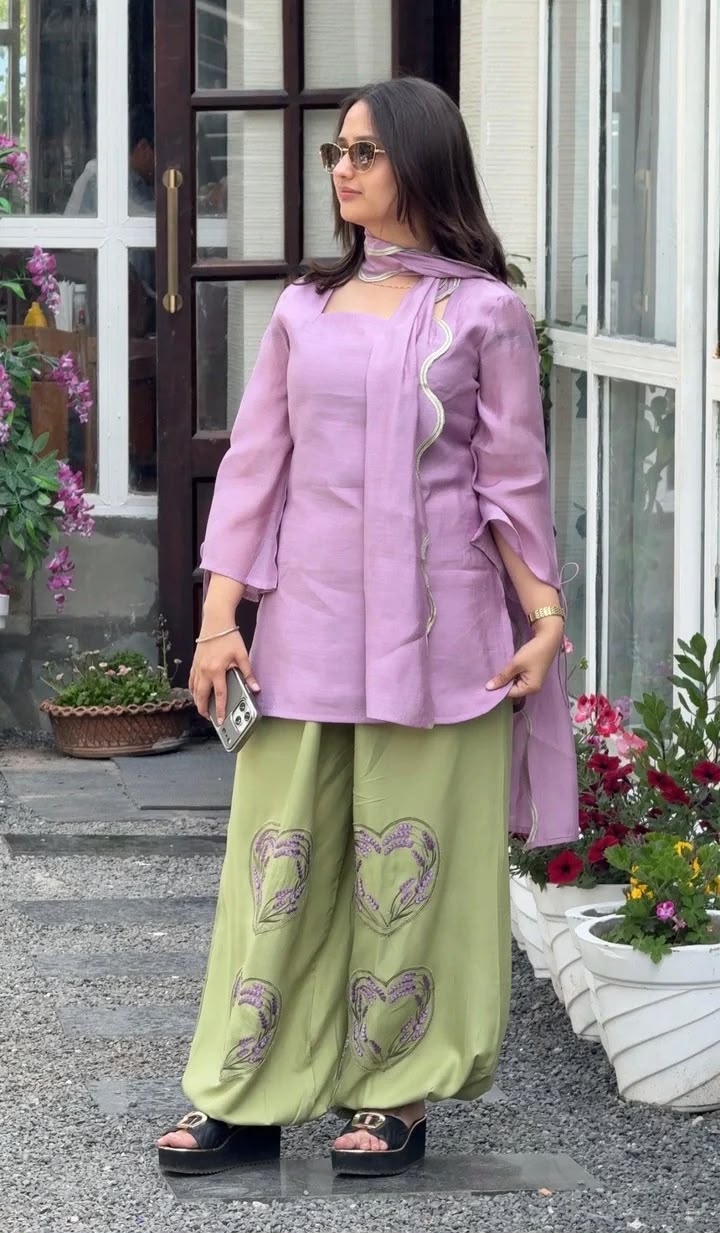
Chanderi has a lightweight hand and a subtle sheen that suits daytime engagement photography. The fabric responds well to embroidery because its surface doesn't visually overwhelm delicate threadwork. Lavender Chanderi Kurta with Olive Embroidered Palazzo Suit demonstrates how a soft base colour and an unexpected olive accent can create interest without relying on intense sparkle.
Chanderi can be slightly sheer depending on its construction, so inspect the kurta lining, sleeve coverage and trouser opacity before wearing it to a formal event. A lined kurta generally hangs more smoothly, while an unlined dupatta may provide the airy drape that makes the outfit feel light.
Vichitra silk for a richer evening surface
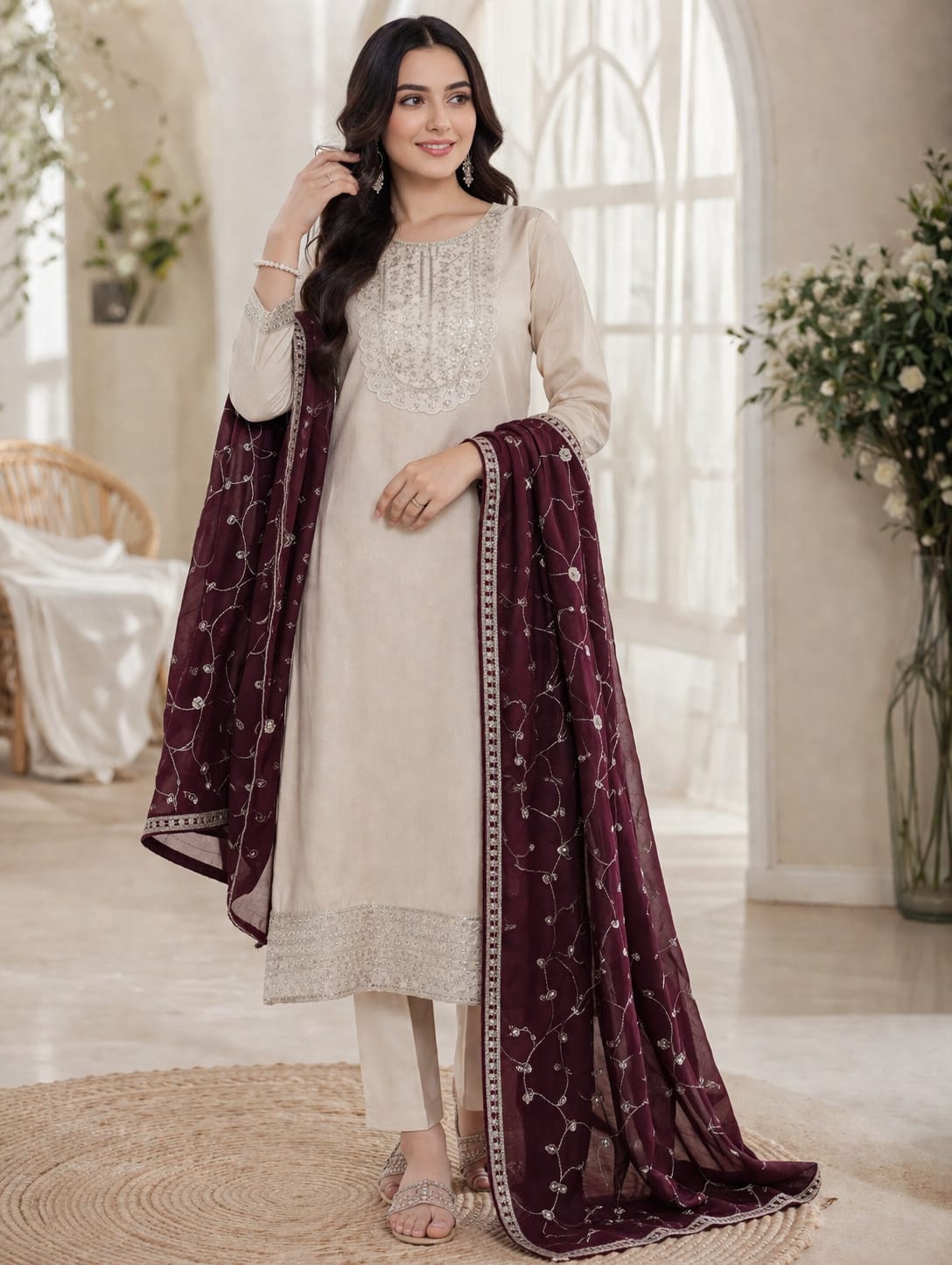
Vichitra silk gives an engagement outfit a more substantial fall and a dressier sheen than many lightweight daytime fabrics. Elegant Beige Vichitra Silk Embroidered Kurta Set for Women is a useful example of how beige can look formal when the fabric and embroidery provide enough depth. Beige, champagne and warm ivory also pair effectively with kundan, pearl or antique-gold jewellery.
Viscose Chanderi silk for colour and movement
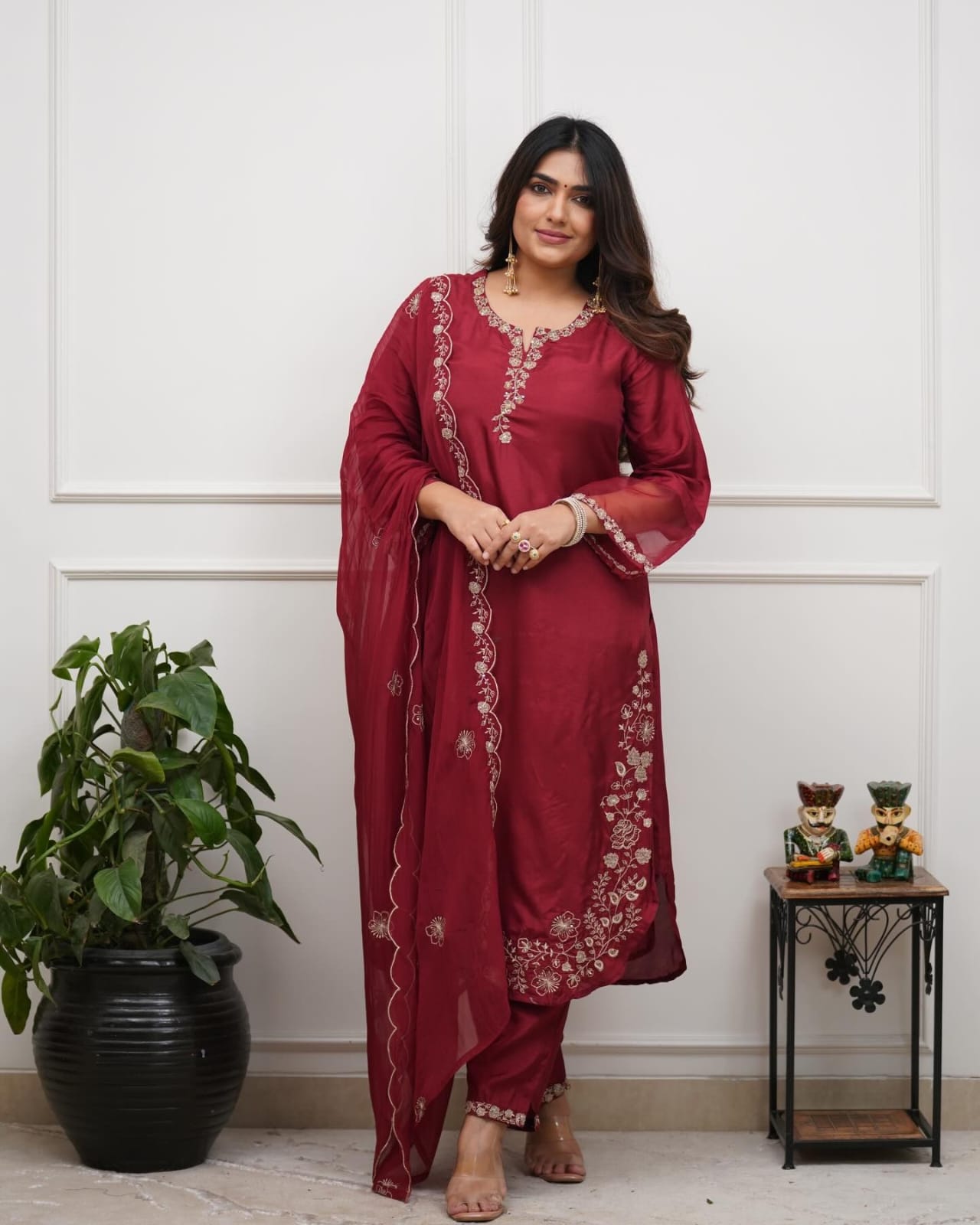
Viscose Chanderi silk can offer a fluid drape with a polished surface, making it practical for a long ceremony that includes standing, greeting guests and photographs. Maroon Viscose Chanderi Silk Embroidered Kurta Set for Women shows why deep maroon remains effective for evening engagement wear: the colour has presence, while the fabric can soften the visual weight of darker embroidery.
Cotton salwar suits for engagement events are most suitable for daytime functions, outdoor ceremonies and warm-weather celebrations when the design includes festive details. Choose cotton with embroidery, a refined print, a textured dupatta or a dressy border rather than plain daily-wear cotton if the invitation calls for formal clothing.
Stylish Salwar Suits for Engagements Need a Balanced Silhouette
The best engagement silhouette allows comfortable movement while creating a clean vertical line from shoulder to hem. Fit should be checked at the bust, upper arm, waist, hip and trouser seat rather than judged only by the kurta length.
A straight kurta with cigarette pants gives a neat, contemporary outline and works well for petite or medium-height frames when the hem finishes around the knee or slightly below. An Anarkali creates movement through flare and suits a formal evening setting, but the waist seam should sit at the natural waist or a deliberately raised empire position. A palazzo suit balances a fitted or lightly shaped kurta with wider trousers and is particularly useful when you want ease around the legs.
Readymade salwar suits for engagement celebrations save alteration time, but measurements still matter. Compare the garment's bust measurement with your body measurement and allow roughly 2 to 3 inches of ease for a structured kurta, depending on the fabric and desired fit. Sleeves should allow the arm to bend without pulling across the upper arm, and the trouser waistband should sit securely when you sit down.
- For a shorter frame: Use a smaller print, a defined waist seam and a dupatta worn in a long vertical line. Avoid a very wide palazzo with a long, loose kurta unless the proportions are tailored.
- For a taller frame: Longer kurtas, broad dupatta borders and fuller palazzos can look balanced. Three-quarter sleeves and statement earrings also help distribute visual weight.
- For fuller hips: A gently flared kurta or palazzo with a smooth waistband offers comfort without clinging. Keep heavy embroidery above the hip or around the neckline if you prefer a quieter lower half.
- For a fuller bust: A V-neck, open square neck or modest scoop neck can lengthen the upper body. Ensure that embroidery doesn't pull at the bust seam and that the dupatta can be pinned securely.
Stylish Salwar Suits for Engagements Depend on Colour and Embroidery
A polished engagement outfit usually combines one dominant colour, one supporting shade and one metallic or neutral accent.
Lavender with olive creates a contemporary contrast, especially when the olive appears in embroidery, trousers or border details. Beige with antique gold, champagne or muted rose looks quietly formal and gives jewellery room to stand out. Maroon works with antique gold, copper and kundan, while silver accessories can make the colour feel more modern.
Embroidery should relate to the scale of the event and the distance from which guests will be seen. Threadwork and small motifs look refined in daylight and close family photographs. Zari, sequins and beadwork become more visible in evening lighting. But concentrated embellishment around the neckline and sleeve cuffs is often enough.
Use the dupatta to control the final level of grandeur. A plain or lightly edged dupatta calms a heavily embroidered kurta. A bordered or embellished dupatta can elevate a simple suit, especially when the kurta has a clean silhouette. Do not allow a heavy border to bunch at the shoulder; place one controlled pleat near the collarbone and pin the fabric beneath the shoulder seam.
Collections such as Ladies Dress Anarkali Salwar Suits are useful when you want flare and movement, while Dress Materials suit shoppers who prefer to select a fabric, neckline and trouser shape through tailoring. Discount-led categories such as Salwar Suits with 30% Off and Salwar Suits Flat 40% Off can also be practical starting points, provided the garment measurements and fabric composition are checked before purchase.
Stylish Salwar Suits for Engagements Need Practical Accessories
Jewellery should repeat one visual detail from the salwar suit rather than introduce several competing metals. Antique-gold embroidery pairs naturally with jhumkas, chandbalis or a short layered necklace, while silver-toned threadwork can work with pearls, polki-style pieces or crystal earrings.
A statement earring is often sufficient when the kurta has a detailed neckline. Add a maang tikka or delicate hair accessory only when the hairstyle and dupatta placement leave enough space around the face. A slim bangle stack is practical for greeting guests, whereas very long bracelets can catch on embroidery and dupatta edges.
Footwear should provide stable support for at least three hours. Block heels between 1.5 and 2.5 inches give height without the instability of narrow stilettos, and embellished juttis work well for daytime or home ceremonies. Match the shoe's metallic detail to the embroidery, but don't treat footwear as a requirement to add another bright colour.
Choose a small potli, envelope clutch or structured shoulder bag that fits a phone, compact, tissues and safety pins. A hidden safety pin, fashion tape and a small stain-removal wipe are particularly useful during ring ceremonies involving food, flowers and crowded photographs.
Red Dress Materials Under 2000 may appeal to shoppers planning a coordinated family wardrobe or a tailored red outfit on a controlled budget. Red can be striking for an engagement, but check whether the bride has reserved red or a related shade before finalising the colour.
Stylish Salwar Suits for Engagements Photograph Better with Planning
Photographs look more balanced when the dupatta, neckline and hands remain deliberately arranged. Before leaving home, take front, side and seated photographs in lighting similar to the venue.
For a long vertical effect, pleat the dupatta narrowly and place it over one shoulder, allowing the opposite side to remain clear. For a more traditional appearance, drape the dupatta across both shoulders and secure the corners at the waist. A palazzo suit benefits from a shorter, controlled dupatta arrangement because excess fabric can obscure the wide trouser shape.
Keep the kurta hem free from the floor and check that the trouser length doesn't gather heavily over the footwear. A trouser hem that ends approximately 1 to 2 centimetres above the floor generally photographs more cleanly than a dragging hem. Sitting photographs also reveal whether the waistband, lining and side seams remain comfortable.
Makeup and hair should support the colour of the suit rather than duplicate every detail. Warm bronze, rose or neutral eyeshadow can complement beige and maroon, while lavender and olive pair well with soft mauve, taupe or understated gold. Secure the dupatta before applying final lipstick so that adjusting the fabric doesn't disturb the face.
Stylish Salwar Suits for Engagements Become Better Buys with Care
A salwar suit is a better purchase when the fabric, measurements, delivery time and care instructions are confirmed before payment.
Ask whether the garment is lined, whether the dupatta is included, and whether the trousers have an elasticated or fixed waistband. Check the size chart against a well-fitting garment rather than relying on small, medium or large labels. For an engagement scheduled within two weeks, allow time for delivery, trial, minor alterations and a complete outfit test.
Embroidered garments should generally be stored folded with a soft cotton layer between embellished surfaces. Keep zari and sequins away from rough accessories that can snag the threadwork. If a care label recommends dry cleaning, follow that instruction instead of soaking the suit at home.
For minor wrinkles, use a steamer from a safe distance or place a thin cotton cloth between the iron and the garment. Avoid pressing directly over sequins, metallic thread or raised embroidery because heat can flatten, discolour or loosen decorative elements. Air the suit after the event before folding it into a breathable garment bag.
The most useful engagement outfit is one that remains comfortable after the first photographs, the ring exchange, a meal and several conversations. A thoughtful combination of breathable fabric, secure fit, manageable embellishment and stable footwear will usually look more polished than a heavier outfit that requires constant adjustment.
Common Questions About Choosing an Engagement Salwar Suit
Which salwar suit is best for an engagement ceremony?
A Chanderi, Vichitra silk or viscose Chanderi silk suit works well because each fabric can look festive without the weight of a heavily layered outfit. Choose the silhouette and embroidery level according to the time, venue and whether you are the bride, groom or guest.
Can I wear a cotton salwar suit to an engagement?
Yes, a cotton salwar suit can suit a daytime, outdoor or warm-weather engagement when it includes polished details such as embroidery, a refined print, a textured dupatta or a dressy border. Plain everyday cotton may look too casual for an evening banquet.
Are readymade salwar suits suitable for engagement wear?
Readymade salwar suits are suitable when the bust, shoulder, sleeve, trouser and kurta-length measurements are checked carefully. Leave time for minor alterations and confirm whether the kurta is lined and whether the dupatta is included.
What colour salwar suit should women wear to an engagement?
Lavender, beige, maroon, muted green, wine, navy and deep pink can all work for engagement wear. Check the family's colour guidance first, especially if the bride has announced a specific palette or is wearing a recognisable shade.
How can I style a salwar suit for engagement photographs?
Use a controlled dupatta drape, keep the neckline visible and choose footwear that allows stable standing for several hours. Take front, side and seated test photographs before the event to check the hem, trouser length and jewellery balance.
Can the groom wear a salwar suit to an engagement?
A groom would more commonly wear a kurta set, achkan or bandh-gala, while salwar suits are traditionally associated with women's wardrobes. Coordinating the groom's outfit colour with a partner's salwar suit can create visual harmony without making both outfits identical.





