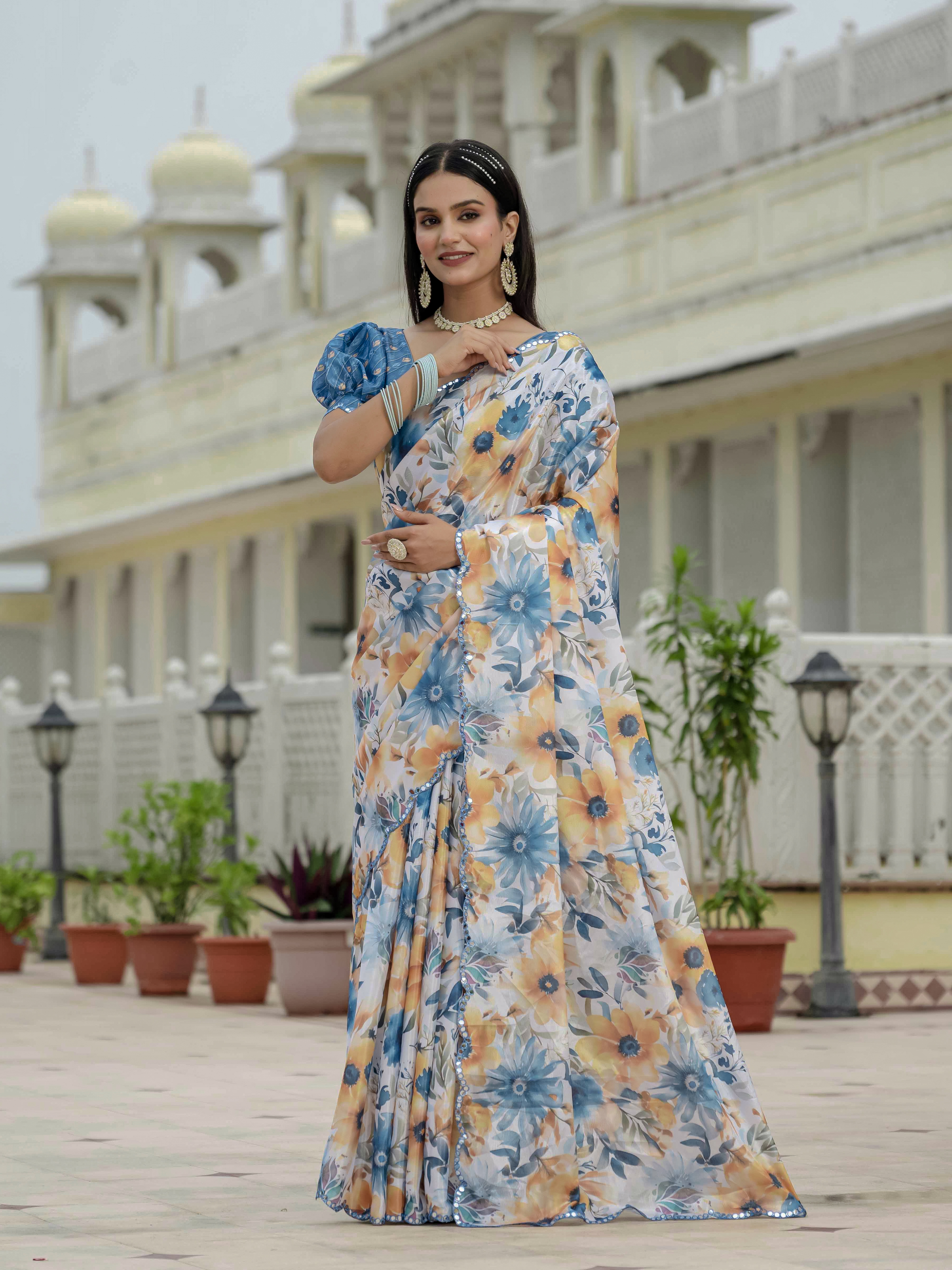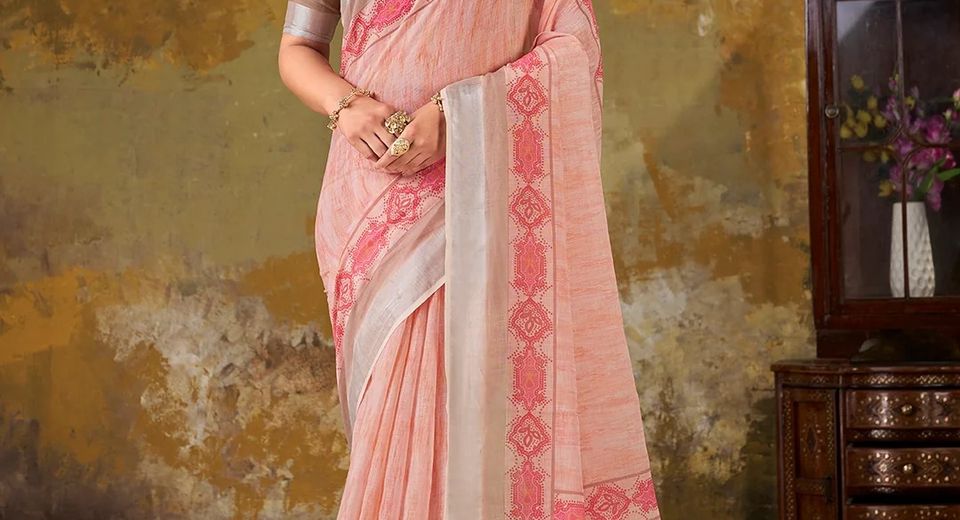
South Indian Traditional Wear for Women: Complete Style Guide begins with one practical question: where will the outfit be worn, and for how long? A Kanjeevaram silk saree suits a temple wedding but may feel unnecessarily heavy for a daytime family lunch, while a cotton saree can look refined at a summer celebration with the right blouse, jewellery and drape. The strongest outfits combine regional identity with comfort, climate and the actual schedule of the day.
South Indian dressing includes more than one traditional look. Kanjeevaram silk, Mysore silk, Chettinad cotton, Ilkal sarees, Kerala Kasavu, Chanderi and linen-cotton weaves each carry different visual and practical qualities. Blouse construction, border width, pleat placement, flowers, jewellery and footwear complete the language of the outfit. This guide explains how to make those choices deliberately instead of treating every South Indian saree as interchangeable.
South Indian Traditional Wear for Women: What belongs in the category?
South Indian traditional wear for women includes sarees, half-sarees, pavada davani, salwar suits, kurta sets and regional draped garments styled with local textiles, borders, jewellery or motifs. The category covers formal Kanjeevaram silk as well as everyday cotton sarees, festive Kerala Kasavu and contemporary separates inspired by South Indian craft.
Regional distinction matters because the same colour can communicate differently across textiles. A broad gold zari border on a Kanjeevaram saree creates a wedding-ready silhouette, whereas a narrow zari edge on Kanchi cotton can look appropriate for office festivities or a puja. Kerala Kasavu traditionally uses an off-white or cream ground with a metallic kasavu border. Tamil Nadu is strongly associated with Kanjeevaram silk and temple-inspired motifs, while Karnataka is known for Mysore silk and Ilkal weaving traditions.
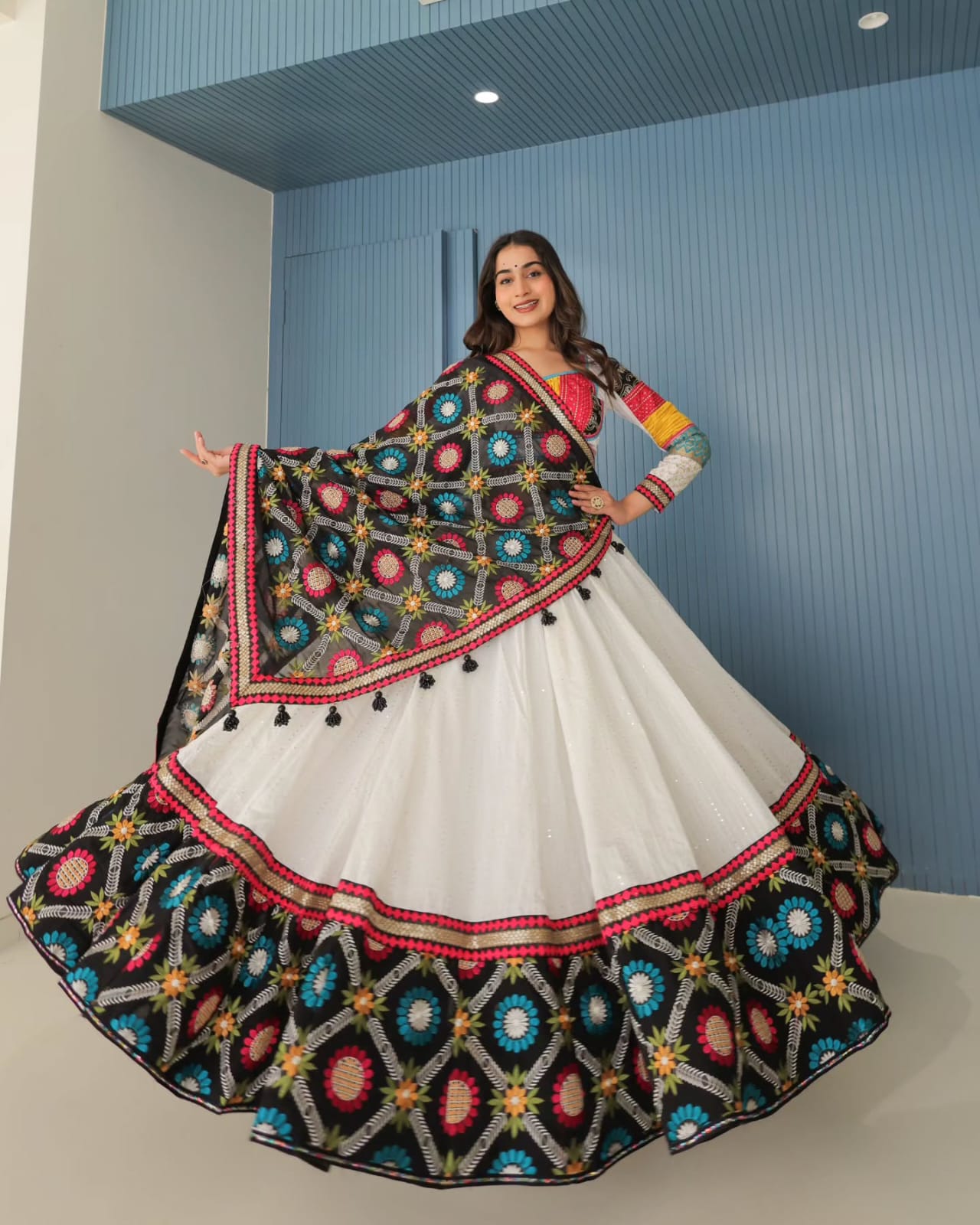
Half-saree dressing, also called pavada davani or langa voni, pairs a skirt, blouse and draped dupatta. The outfit is especially relevant for younger festive dressing, coming-of-age ceremonies and regional celebrations. A salwar suit or kurta set becomes more traditionally grounded when it uses a woven dupatta, zari detail, handloom cotton or a colour palette associated with a local festival.
The South Indian Collection - VARNAVI brings several of these ideas together through sarees, woven textures and occasion-ready separates. The collection is useful as a visual reference when comparing a formal silk-inspired outfit with a lighter printed or cotton-based choice.
South Indian Traditional Wear for Women: Which fabrics suit each occasion?
Kanjeevaram silk works best for weddings, bridal trousseaus, major temple ceremonies and formal evening receptions because its dense silk body and zari borders hold a sculpted drape. Banarasi silk can provide similar formal richness, although Banarasi silk comes from North Indian weaving traditions and should not be described as a Kanjeevaram substitute in terms of heritage.
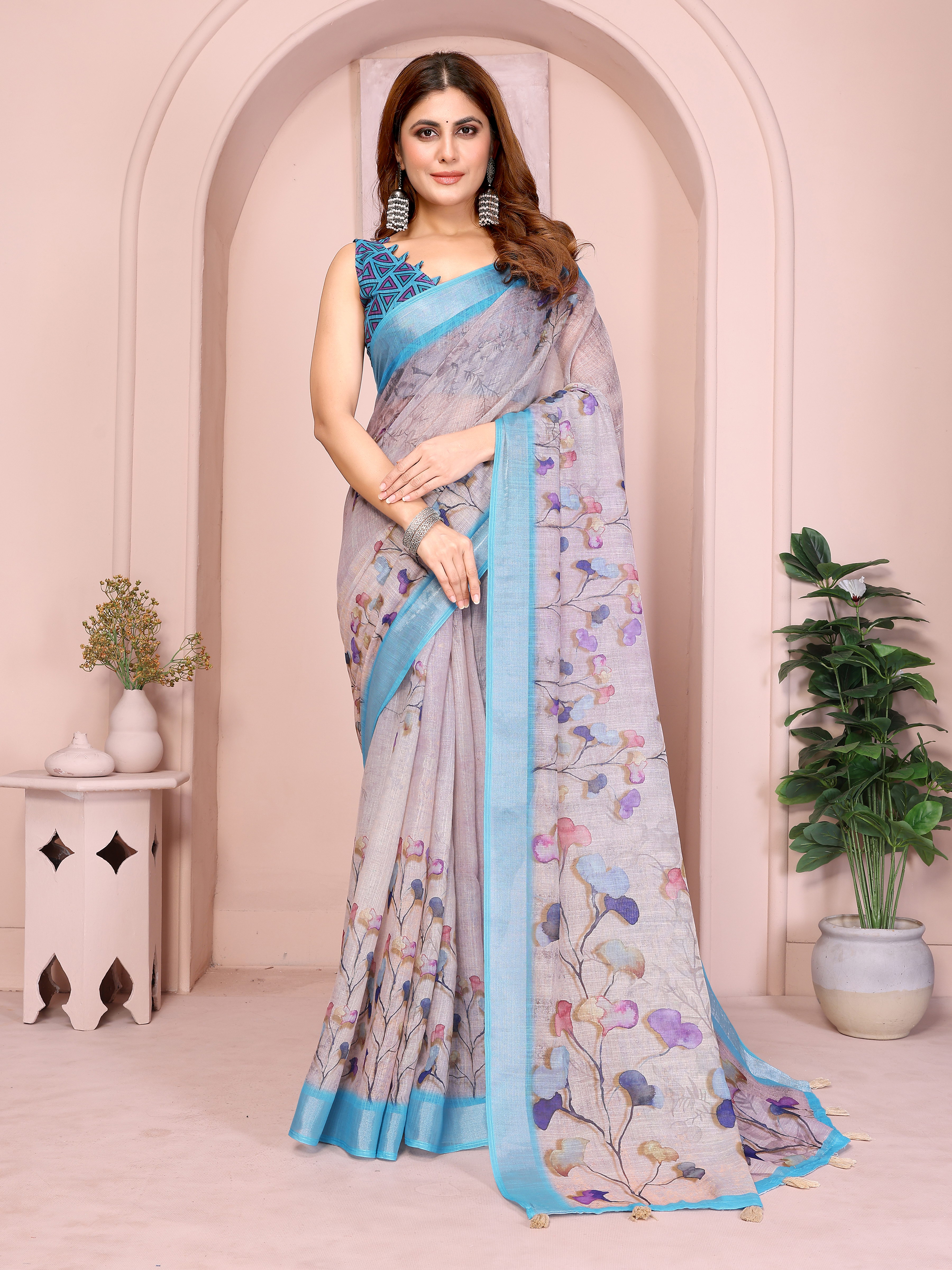
Silk for weddings and milestone ceremonies
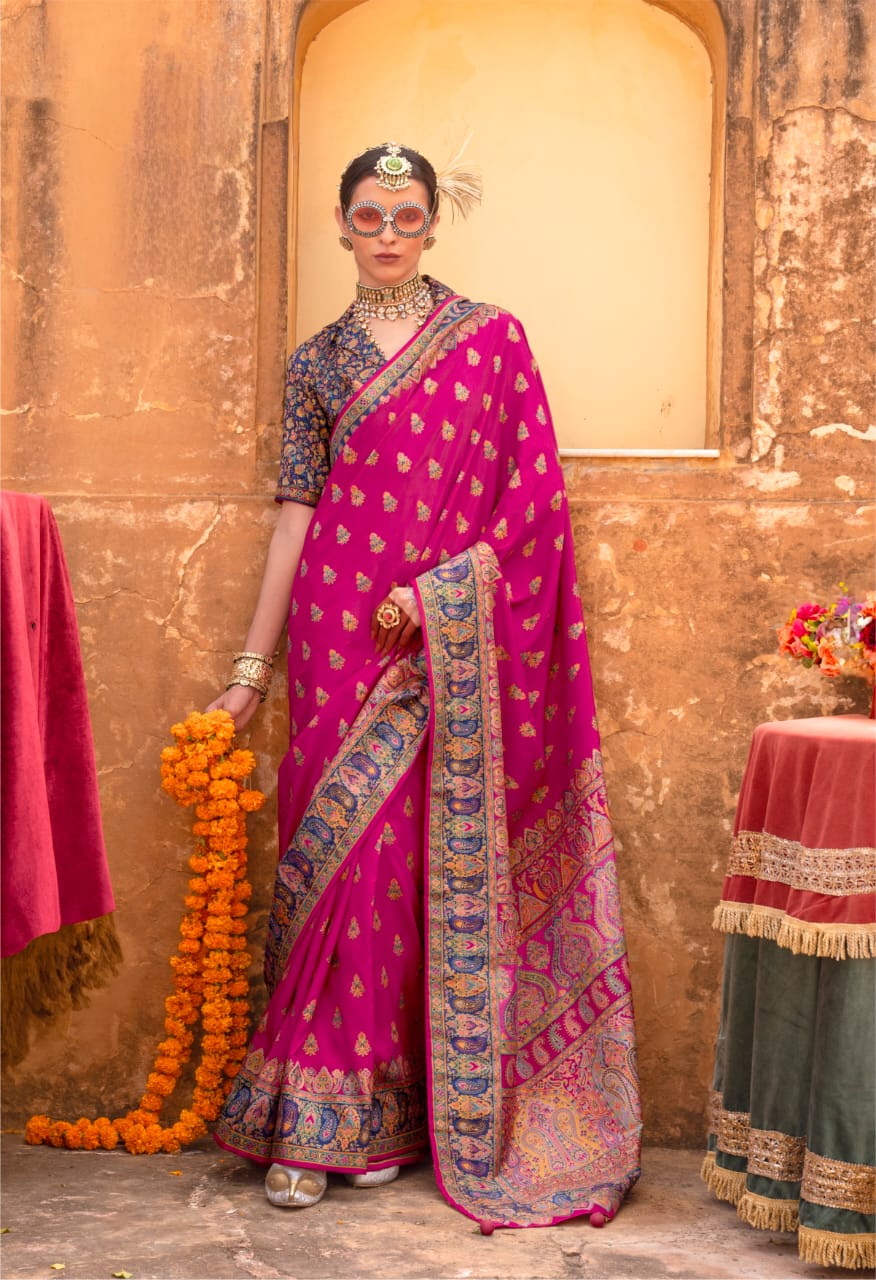
Kanjeevaram silk is usually the most ceremonial choice for a South Indian wedding guest or bride. The fabric has body, so pleats remain defined and the pallu creates visual volume over the shoulder. Zari may be made with gold-toned or silver-toned metallic wrapping, and the amount of zari significantly changes the weight and price of the saree.
Mysore silk offers a smoother, lighter fall than many heavy Kanjeevaram sarees and works well for receptions, engagement ceremonies and formal pujas. Vichitra silk, used in contemporary kurta sets and co-ord sets, has a more structured, polished appearance than soft cotton and can suit guests who want traditional texture without wearing a saree.
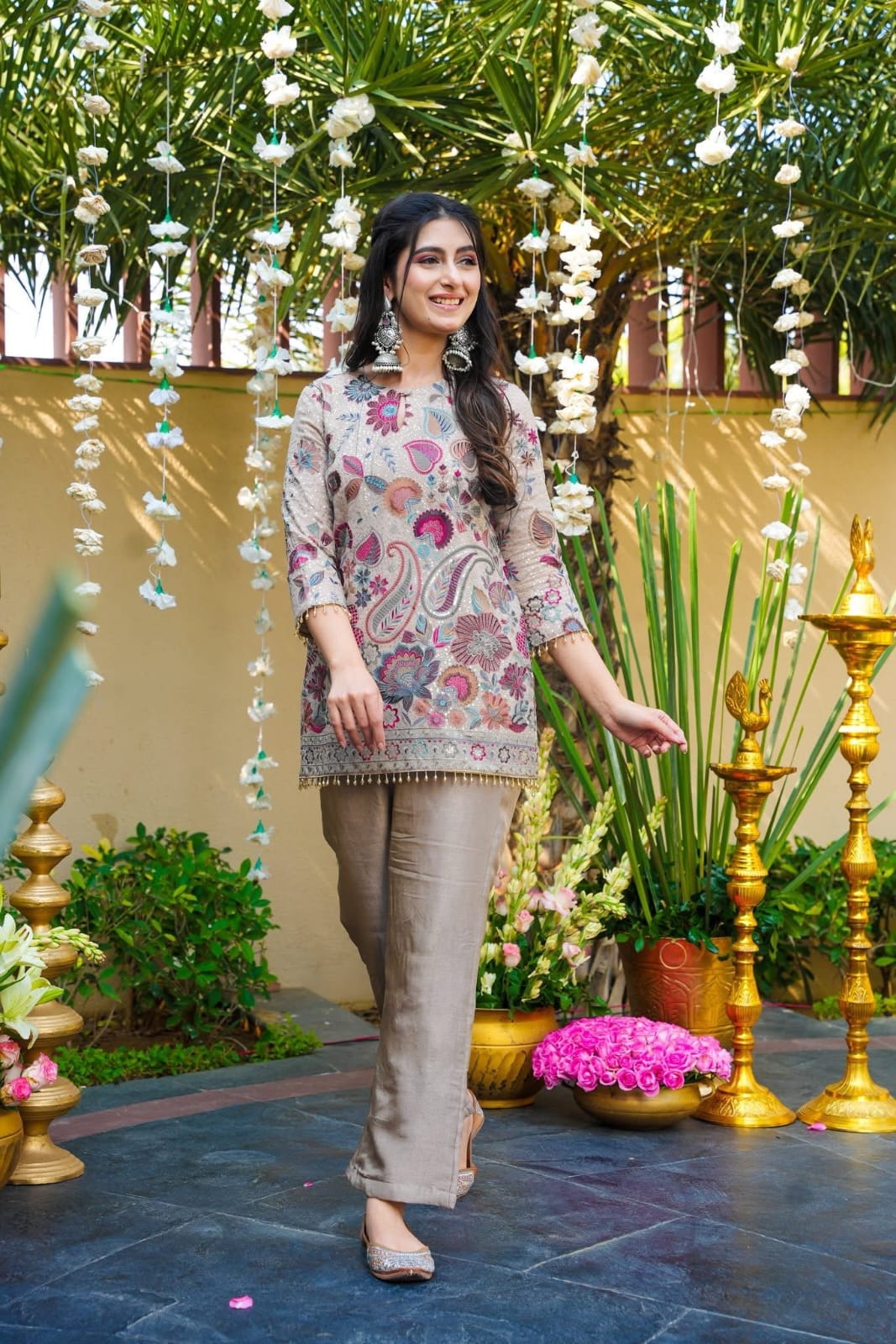
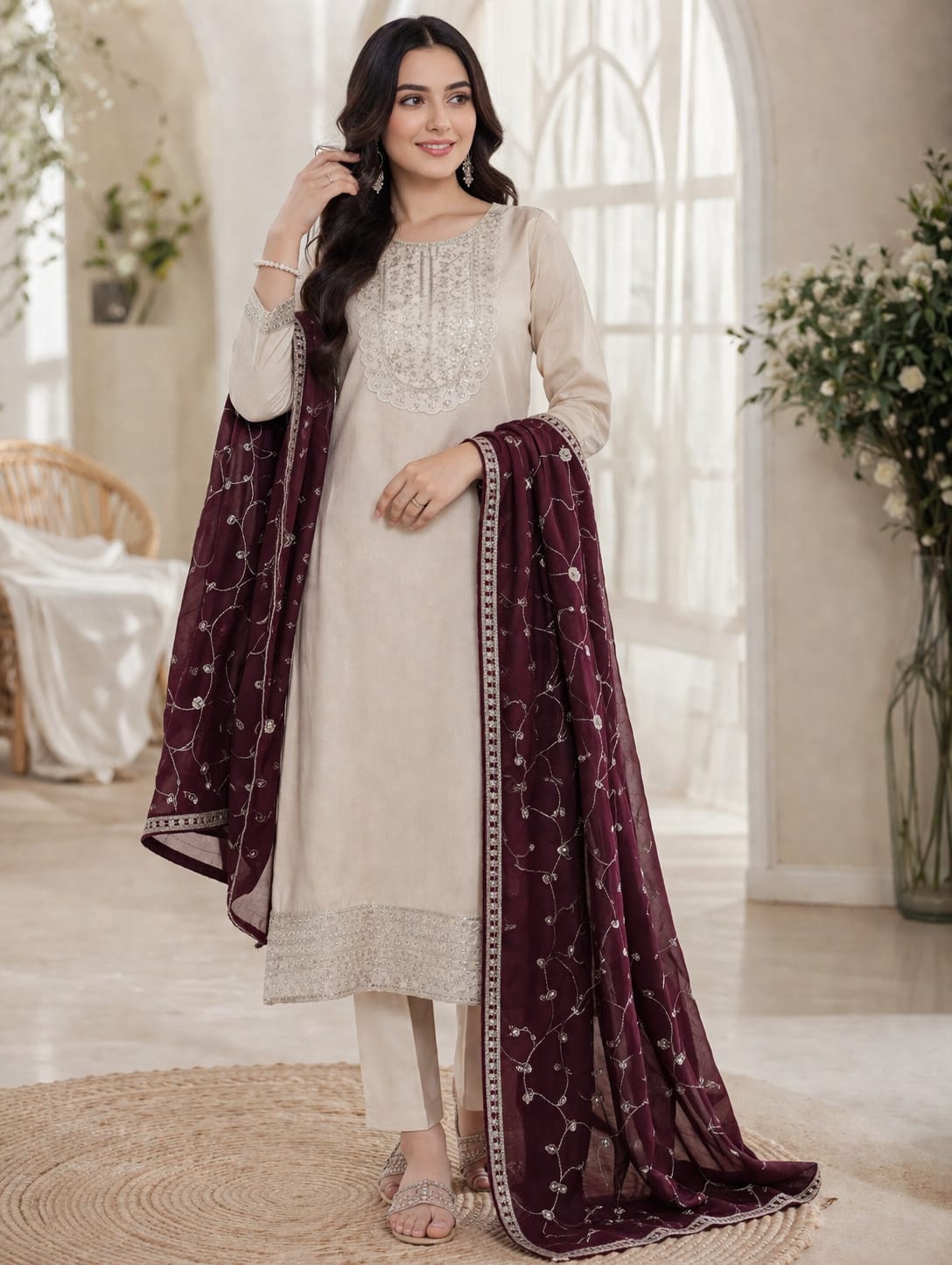
Elegant Beige Vichitra Silk Embroidered Kurta Set for Women demonstrates how a neutral colour can retain a festive character through embroidery and fabric sheen. Modern Taupe Vichitra Silk Embroidered Co-Ord Set for Women gives a similar approach for someone who prefers coordinated separates over a draped garment. Both types of outfit can be paired with jhumkas, a compact clutch and embellished sandals without requiring heavy bridal jewellery.
Cotton and linen for heat and daytime events
Cotton is the most practical choice for hot, humid daytime functions because it absorbs moisture and allows air movement. Kanchi cotton with zari gives a traditional appearance without the weight of silk. Linen cotton gives a crisp, breathable surface, although linen can crease more visibly than silk and should be steamed or ironed before wearing.
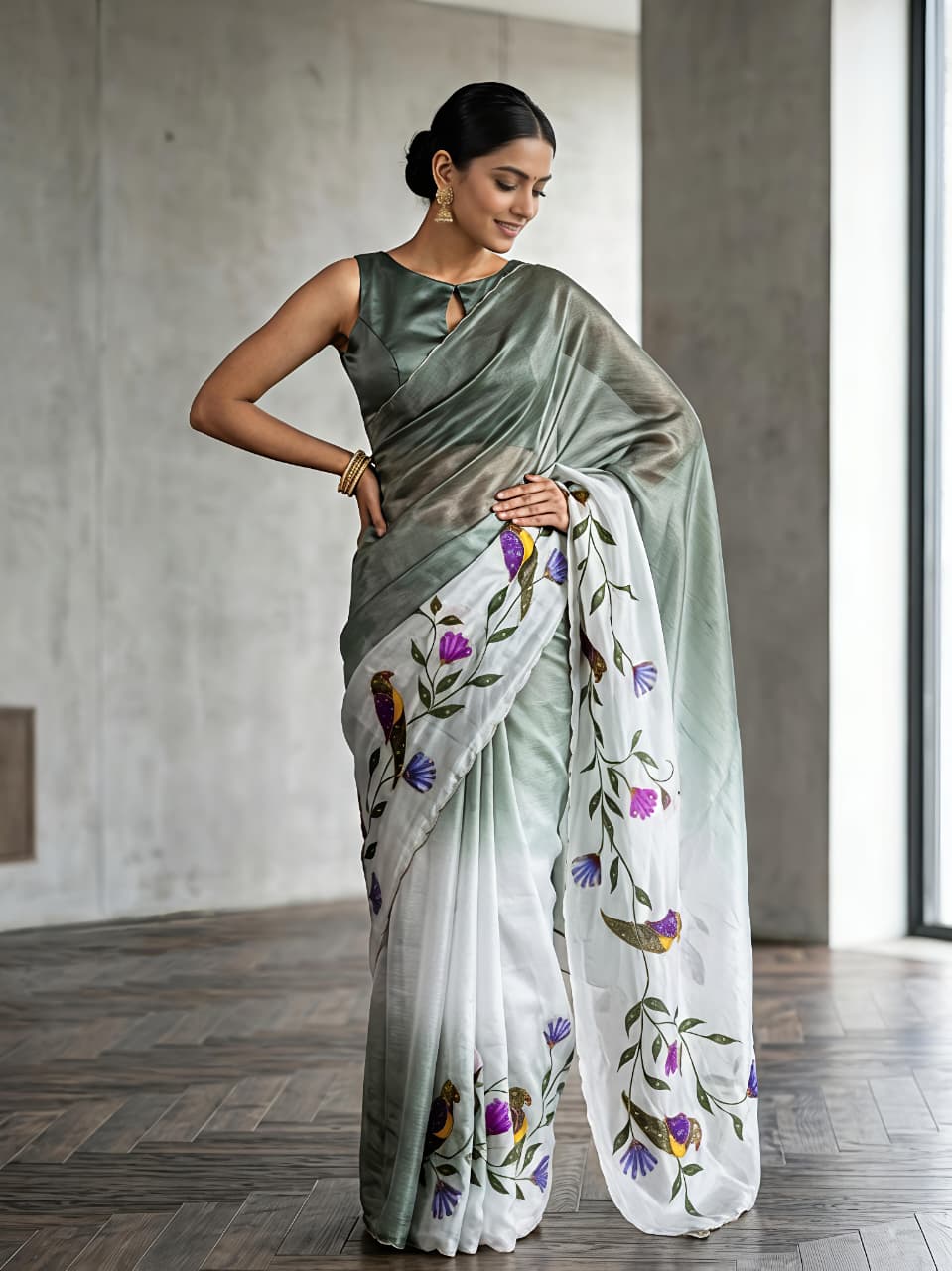
Chanderi is a lightweight option with a subtle sheen and delicate transparency, making it suitable for daytime celebrations and festive lunches. Chanderi may need a well-fitted lining or a carefully chosen petticoat because its lighter body can reveal uneven pleats. A cotton-blend saree with a printed border can offer easier maintenance for travel, office celebrations and smaller family gatherings.
Kanchi Cotton Zari Woven Kurti Set with Traditional Dupatta demonstrates how woven texture and zari can bring South Indian visual references into a two-piece outfit. The set is useful when the schedule involves walking, sitting on the floor or travelling between venues, since a kurta set generally requires less adjustment than a long saree pallu.
South Indian Traditional Wear for Women: How should a saree be chosen?
A South Indian saree should be chosen by matching fabric weight, border scale, colour intensity and maintenance needs to the venue and duration. A five-hour summer wedding, a two-hour temple visit and a formal evening reception require different combinations even when all three are called traditional occasions.
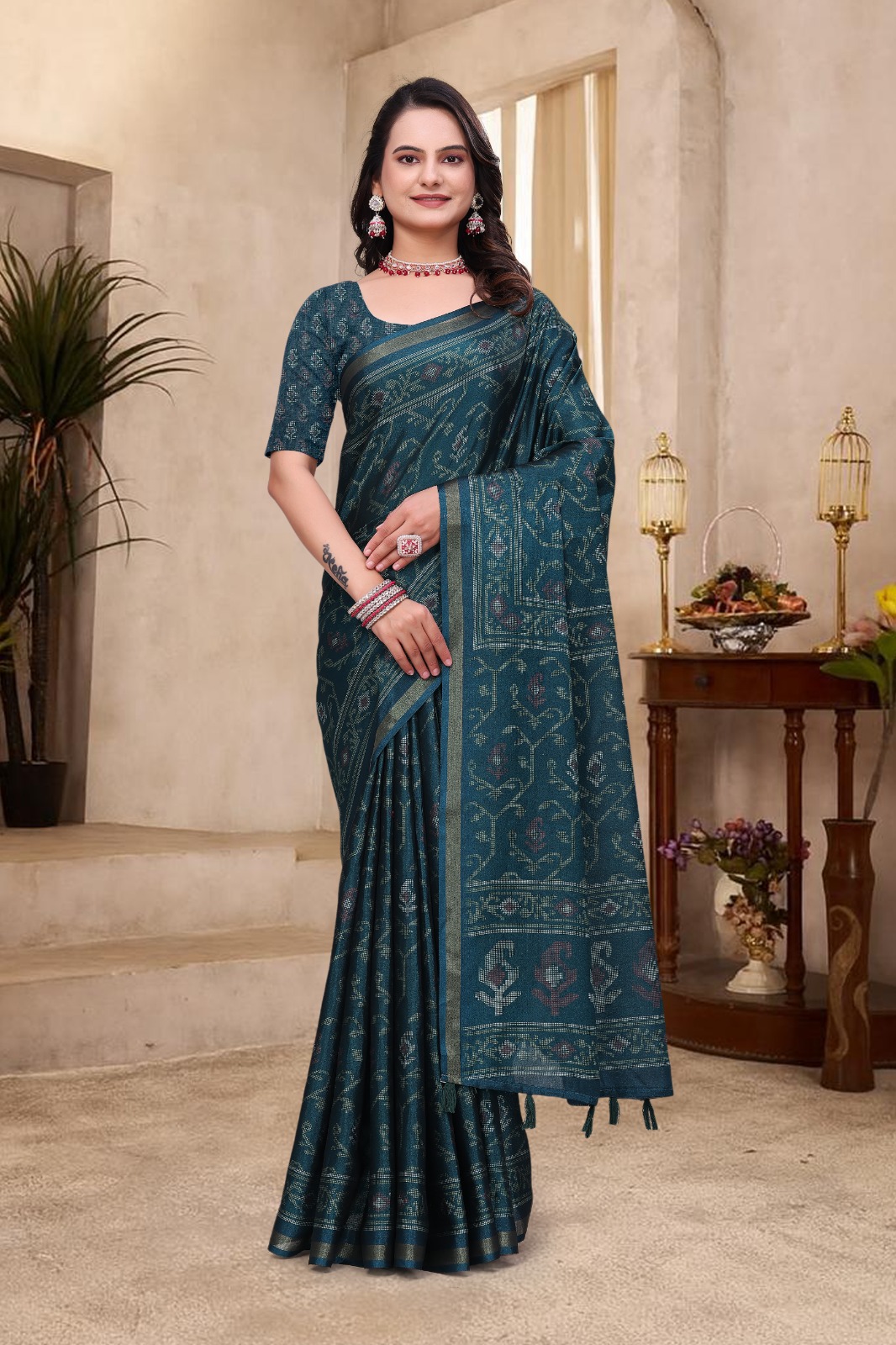
- For a wedding ceremony: Choose Kanjeevaram silk, Mysore silk or a rich silk blend with a defined zari border. Jewel tones such as maroon, emerald, magenta and deep teal create formality, while a gold, antique-gold or contrasting border gives the saree structure.
- For a Haldi ceremony: Choose washable cotton, linen cotton or a lightweight silk blend in turmeric yellow, ivory, leaf green, coral or pink. Avoid very delicate metallic work if turmeric paste, water and frequent movement are expected.
- For a temple visit: Choose a modestly draped cotton, Kanchi cotton, Chanderi or silk saree with a blouse that brings secure coverage. Comfortable sandals, a pinned pallu and restrained jewellery are more functional than a very long trailing pallu.
- For a reception: Choose silk, satin-finish silk blends or a saree with a statement border and a tailored blouse. A pre-pleated or lightly structured drape can preserve the formal line while making movement easier.
- For office or daytime festivities: Choose a printed linen cotton or cotton saree with a compact border. A three-quarter sleeve blouse, low-profile earrings and a neat bun keep the outfit professional without removing its cultural character.
Teal Mal Cotton Woven Print Saree With Blouse - VARNAVI illustrates why colour and textile should be considered together. Teal has enough depth for festive dressing, while a mal cotton weave can remain more comfortable than a heavy silk during a long daytime event.
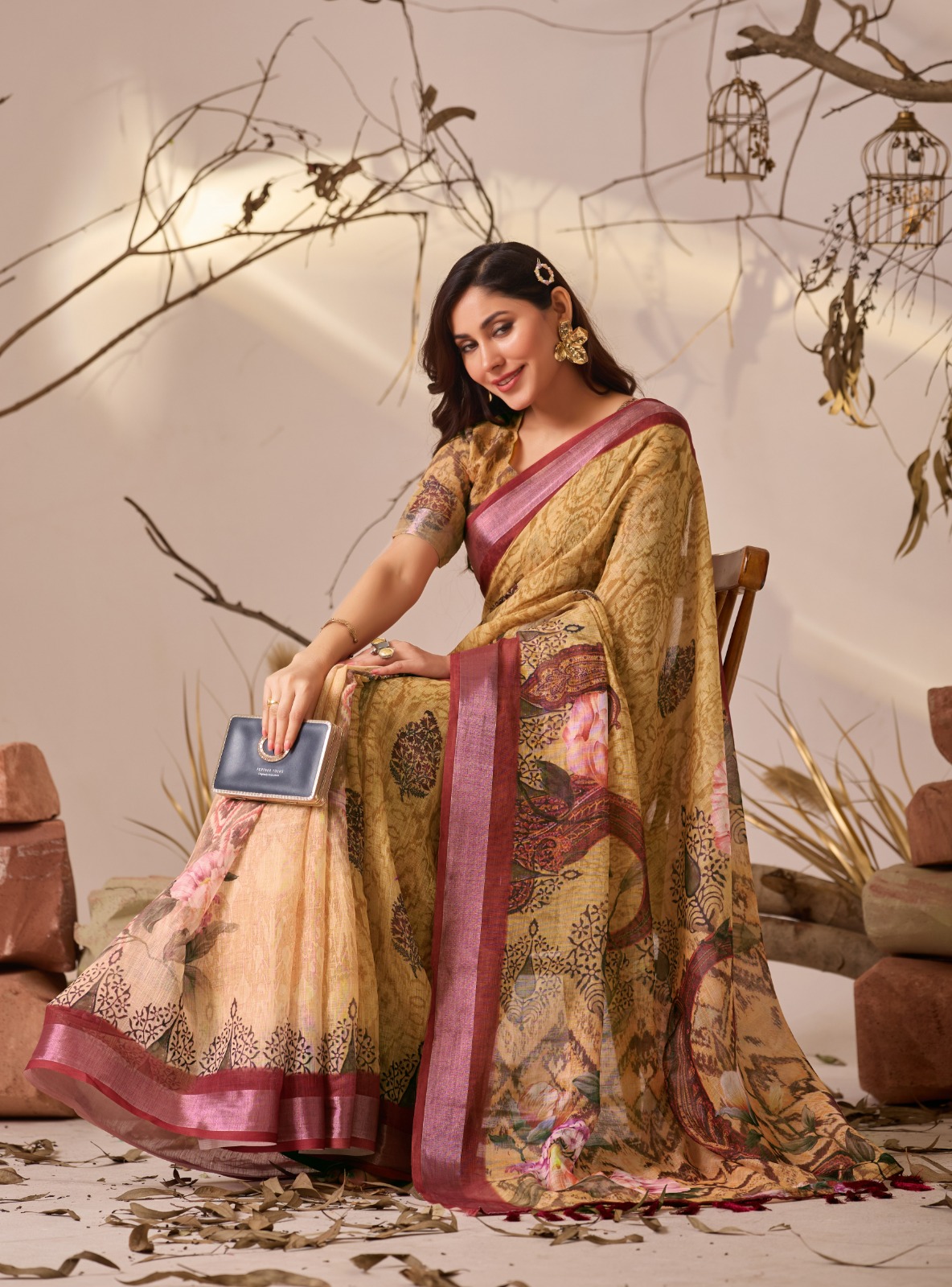
Teal Floral Printed Linen Cotton Saree With Matching Blouse suits a daytime puja, family lunch or summer celebration because the floral print softens the formality of the saree. A matching blouse produces a continuous line, while a plain blouse in teal, ivory or deep green can create more contrast.
Mustard Linen Cotton Floral Printed Saree brings another useful colour direction. Mustard works with antique gold, terracotta, maroon and dark green accessories, and linen cotton keeps the outfit more breathable than a heavily woven silk saree.
South Indian Traditional Wear for Women: Which blouse and drape details matter?
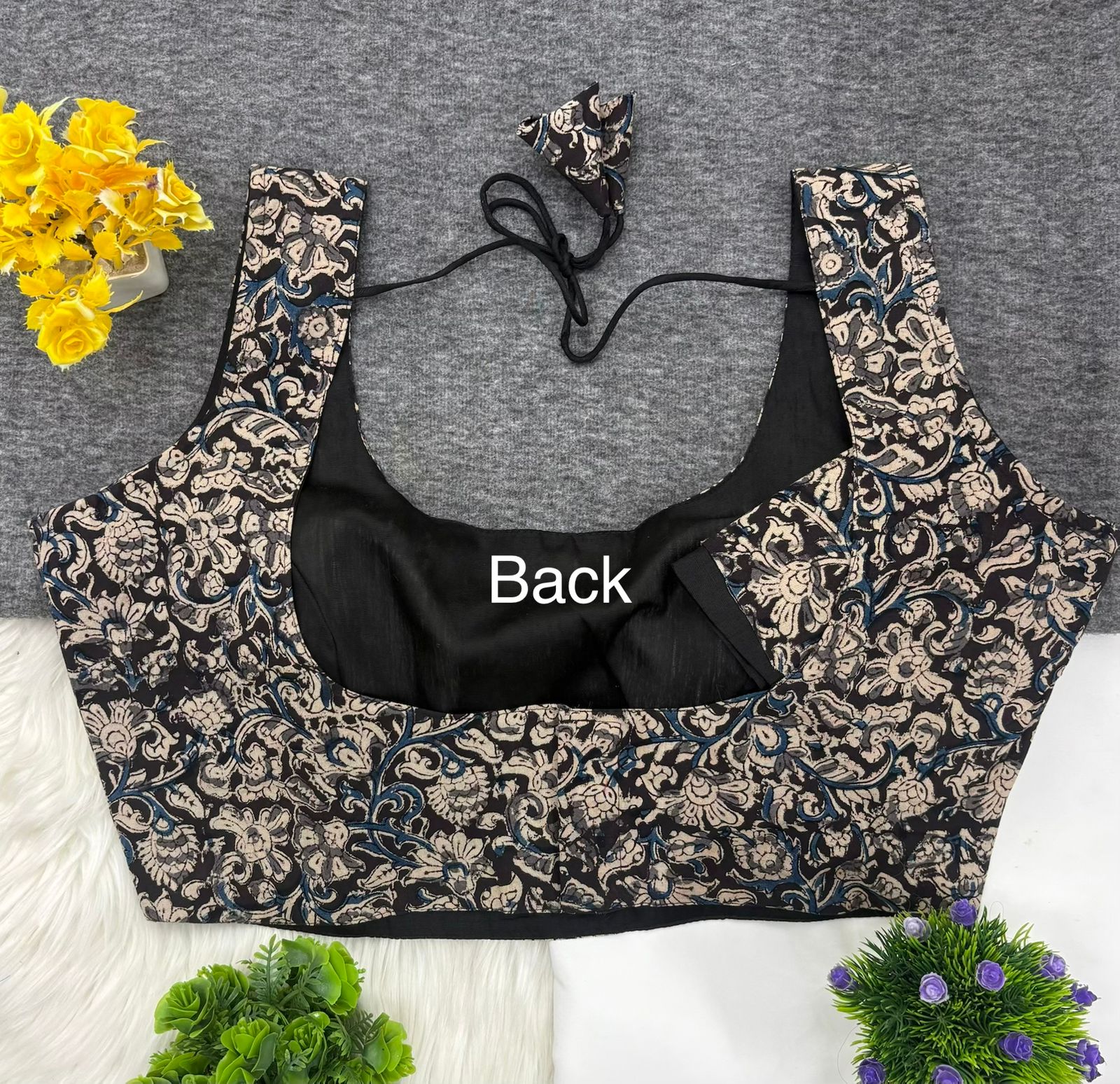
A balanced South Indian saree silhouette comes from coordinating blouse length, sleeve shape, border scale and pallu placement rather than matching every element exactly. A broad saree border usually benefits from a simpler blouse, while a plain saree can support embroidery, piping or a textured sleeve.
Blouse decisions that change the outfit
A high-neck blouse gives a formal, composed appearance and works particularly well with temple jewellery or a long haram. A round-neck or square-neck blouse feels lighter for cotton sarees and daytime events. Elbow-length sleeves echo classic South Indian styling and provide more coverage than short sleeves without looking heavy.
A blouse should not be judged only by bust fit. Armhole depth, shoulder width and sleeve tightness determine whether the blouse remains comfortable for several hours. A blouse that pulls across the back can disturb pleats and create lines beneath the pallu. For a custom blouse, allow roughly 1 to 1.5 centimetres of ease at the bust beyond the body measurement, with additional ease if the fabric has no stretch.
Pastel Linen Cotton Floral Print Saree with Designer Blouse shows how a more detailed blouse can work with a soft printed saree. When the blouse includes a decorative neckline or sleeve, jewellery can be reduced to earrings and a slim bangle stack so the upper body doesn't look crowded.
Drape and pallu placement
The Nivi drape, with front pleats and the pallu over the left shoulder, remains the most versatile saree arrangement. Pleats between 12 and 15 centimetres wide usually create a clean front line, although the ideal width depends on the saree length and the wearer's height. Pinning the pleats at the waist and securing the pallu near the shoulder improves stability for ceremonies involving standing, walking or dancing.
A seedha pallu, in which the pallu comes from the back toward the front, creates a more dramatic display of zari and print. The drape can suit Gujarati-influenced festive styling, but the extra fabric across the torso may feel warm in humid weather. A shorter pallu is often more practical for temple visits and crowded family functions than a floor-skimming arrangement.
South Indian Traditional Wear for Women: How do jewellery, hair and footwear complete it?
Jewellery should repeat one visual language from the saree, such as temple motifs, gold zari, pearls or coloured stones, without competing with every detail. A formal silk saree can carry layered jewellery, while a printed cotton saree usually looks more polished with one substantial necklace or a pair of statement earrings.
Temple jewellery commonly features Lakshmi, peacock, mango and floral motifs, often in gold-toned metal. A long haram lengthens the torso and suits a high-neck blouse, while a short mango mala frames a round neckline. Jhumkas, kasu mala, vanki armlets and waist belts can be added for a wedding, but wearing all of them together may overwhelm a small-print saree or a delicate Chanderi weave.
Fresh jasmine flowers, known as gajra or mogra, are strongly associated with South Indian festive styling. A low bun decorated with jasmine is secure and traditional, while a braid with flowers creates a more elongated silhouette. Hair accessories should be fixed with U-pins rather than relying only on decorative clips if the outfit will be worn for more than three hours.
Gold-toned sandals, embroidered juttis and low block heels are practical footwear choices. A heel between 2 and 5 centimetres can improve the fall of a saree without making walking difficult. Test the footwear with the hem before the event, because a saree worn with flats may pool at the ankle when paired with heels.
Red Floral Linen Cotton Saree with Beautiful Printed Border can be styled with antique-gold earrings, a low bun and brown or tan sandals. Red already provides visual intensity, so a simpler blouse and limited jewellery can make the final outfit look intentional rather than overloaded.
The South Indian Collection - VARNAVI can also be considered when building a small occasion wardrobe: one formal-looking saree, one breathable cotton or linen-cotton saree and one coordinated kurta set cover different levels of ceremony without repeating the same silhouette.
South Indian Traditional Wear for Women: How should each fabric be cared for?
Silk sarees should be dry-cleaned when the care label recommends it, aired in shade after use and folded with soft cotton or muslin rather than stored in plastic. Refolding a silk saree every few months prevents a permanent crease from forming in one place, and direct sunlight should be avoided because it can weaken dyes and fade zari.

Cotton sarees can usually be hand-washed or gently machine-washed only when the care instructions permit it. Use cold water, mild detergent and short soaking times for printed cotton and linen cotton. Do not wring linen cotton aggressively, because twisting can distort the weave and create permanent ripples.
Zari needs separate attention from the fabric body. Perfume, sweat and moisture can tarnish metallic threads, so jewellery and fragrance should be applied before the saree is draped but allowed to dry fully. Store zari sarees in breathable cloth, away from damp cupboards, and avoid ironing directly over metallic borders.
Printed sarees should be washed inside out when permitted, with dark and light garments separated. A colour-transfer test on an inner edge can prevent damage before the first wash. Professional cleaning is safer for heavily embroidered kurta sets, silk-blend co-ords and garments with glued embellishment.
South Indian Traditional Wear for Women: What is the final styling checklist?
A successful outfit should be checked for comfort, cultural fit, movement and care requirements before it's worn publicly. Visual coordination matters, but a garment that needs constant adjustment won't serve well at a long ceremony.
- Check the fabric against the weather and the expected time outdoors.
- Match the border scale with the blouse detail and jewellery size.
- Steam or iron the saree according to the fibre, keeping direct heat away from zari.
- Secure pleats and pallu with discreet pins before adding jewellery.
- Try sitting, walking and raising both arms to test the blouse and drape.
- Carry safety pins, a small sewing kit, tissues and a spare hairpin for long events.
- Store the garment clean and completely dry after wearing it.
South Indian traditional dressing becomes easier when the decision is made in layers: first choose the regional textile or silhouette, then consider climate and occasion, and finally add blouse details, jewellery and flowers. Kanjeevaram silk remains an important ceremonial choice, but cotton, linen cotton, Chanderi, woven kurta sets and printed sarees can express the same cultural connection in more practical settings.
Common Questions About South Indian Traditional Wear for Women
What is the most traditional saree for a South Indian wedding?
Kanjeevaram silk is the most traditional saree choice for many South Indian weddings, especially in Tamil Nadu. Its substantial silk body, contrasting borders and zari motifs create a formal silhouette suited to long ceremonies and bridal dressing.
Which South Indian saree is best for hot weather?
Cotton, Kanchi cotton and linen cotton are practical choices for hot weather because they are lighter and more breathable than dense silk. A pinned pallu and a cotton lining can make the outfit more comfortable during outdoor ceremonies.
What jewellery goes with a Kanjeevaram silk saree?
Temple jewellery, jhumkas, kasu mala, a vanki armlet and a short or long haram traditionally pair well with Kanjeevaram silk. Wearing one statement necklace and substantial earrings is often more balanced than adding every available jewellery piece.
Can a kurta set look like South Indian traditional wear?
A kurta set can look distinctly South Indian when it uses Kanchi cotton, zari, a woven dupatta, regional motifs or a colour palette associated with festive dressing. A neatly tailored kurta set is also practical for temple visits, travel and ceremonies involving a lot of walking.
How should a South Indian saree be stored?
A South Indian saree should be cleaned according to its fibre, dried completely and stored in breathable cotton or muslin away from direct sunlight. Silk and zari sarees should be refolded periodically, while linen cotton should not be stored tightly compressed because creases can become difficult to remove.
What should women wear to a Haldi ceremony in South India?
A washable cotton, linen cotton or lightweight silk-blend outfit in yellow, ivory, pink, green or coral is suitable for a Haldi ceremony. Avoid fragile embellishment and very delicate zari because turmeric paste, water and frequent movement can stain or damage them.