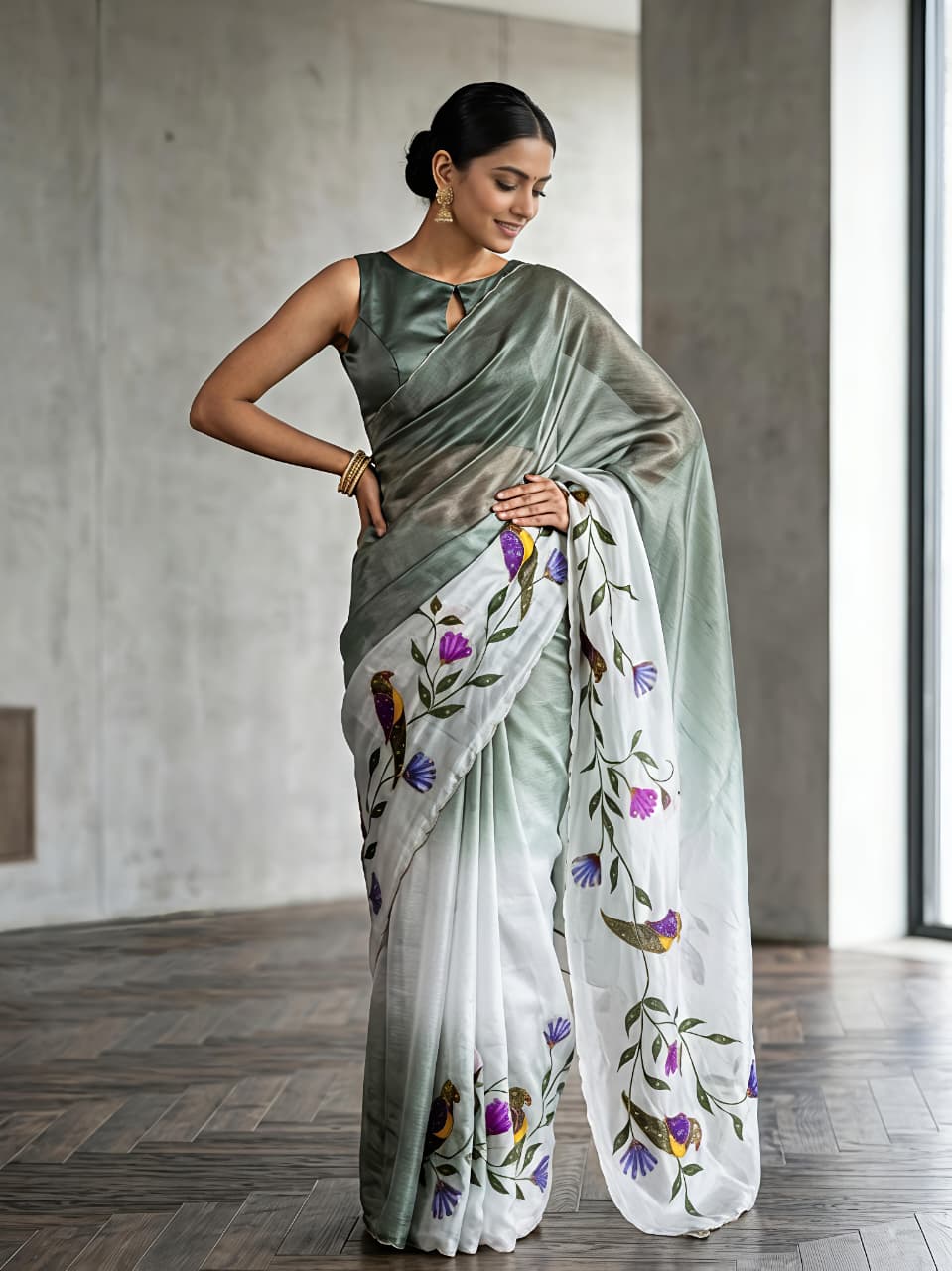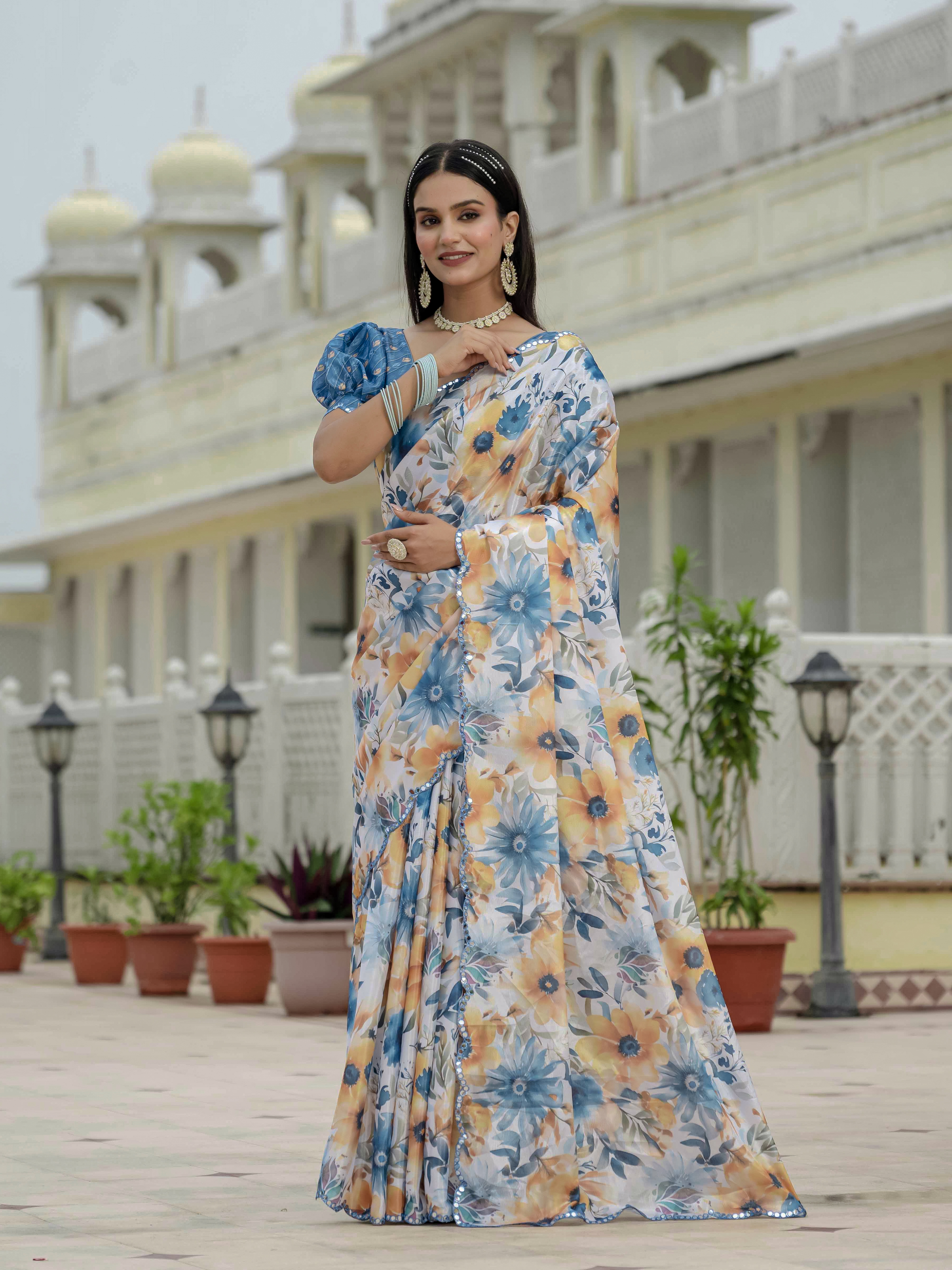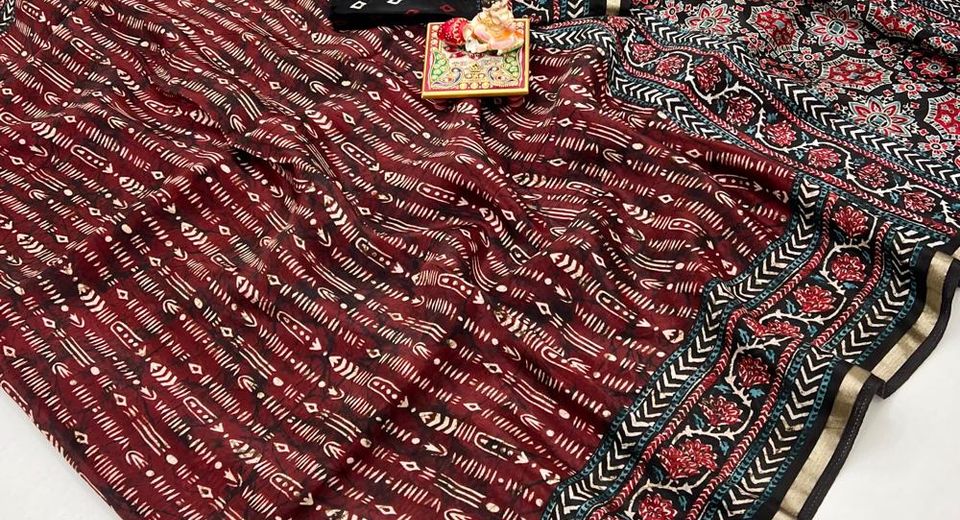
South Indian Saree Types: Kanjivaram, Kasavu, Mysore Silk, Uppada, Gadwal and More each provide a different textile experience, regional identity and level of formality. A Kanjeevaram saree is known for its substantial silk body and zari borders, while a Kasavu saree is recognised by Kerala's ivory-and-gold palette. Mysore Silk has a sleek, lighter drape, Uppada silk often feels soft and fluid, and Gadwal sarees are valued for their striking border-and-pallu contrast. Understanding these differences helps you choose a saree for a wedding, festival, office celebration or summer gathering without judging only by colour.
The most practical comparison involves five details: region, fibre, weaving or surface technique, border construction and drape weight. A saree named after a weaving centre may be available in traditional handloom, powerloom, blended or digitally printed versions, so the regional name alone doesn't establish fibre content. Product descriptions, close-up photographs and care instructions are essential when you're buying online.
What makes South Indian sarees distinct?
South Indian sarees are distinct because regional weaving traditions combine local motifs, climate, fibres, loom methods and ceremonial customs. Tamil Nadu, Kerala, Karnataka, Andhra Pradesh and Telangana each developed recognisable saree traditions, but modern collections also reinterpret those traditions through lighter fabrics, printed surfaces and contemporary colours.
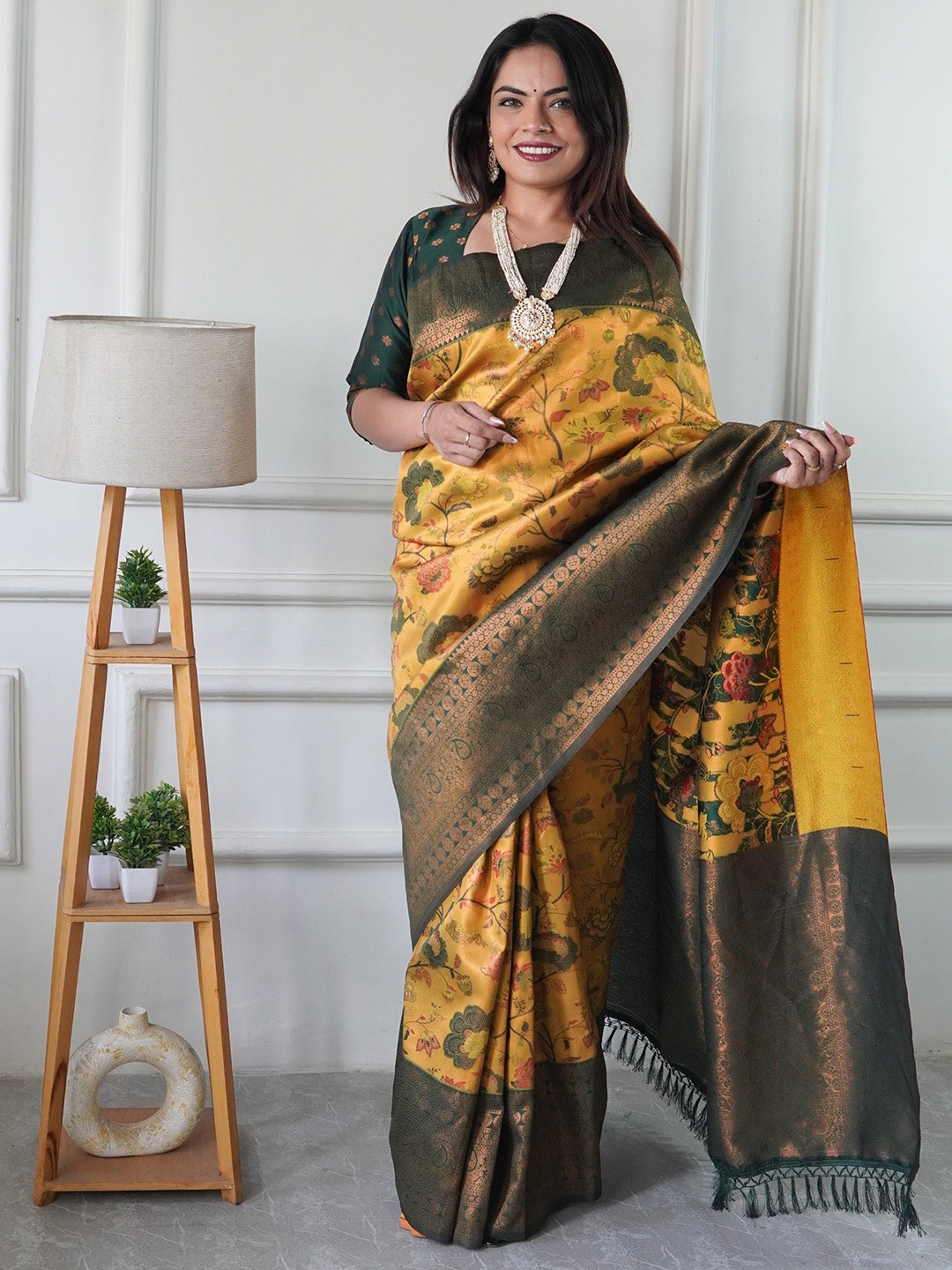
Kanjeevaram, also written Kanjivaram or Kanjeevaram, is associated with Kanchipuram in Tamil Nadu. Classic Kanjeevaram sarees are made with silk and are recognised for contrasting borders, rich pallus and zari motifs such as temple forms, peacocks, checks and stripes. The saree generally has a firm body and a defined fall, making it suitable for bridal ceremonies, major festivals and formal family events.
Kasavu is associated with Kerala and commonly refers to an ivory, cream or off-white saree with a gold-toned border. Cotton Kasavu sarees are breathable, crisp and appropriate for warm-weather celebrations, while silk Kasavu versions provide greater body and formality. Kasavu is strongly connected with Onam and Vishu, but its restrained appearance also works for daytime pujas, cultural programmes and intimate weddings.
Mysore Silk comes from Karnataka and is known for a smooth surface, polished sheen and relatively light drape. Heritage Mysore silk sarees often use a narrow zari border and a plain or minimally patterned field. The understated design makes Mysore Silk useful for long ceremonies, work-related festivities and formal occasions where comfort matters as much as visual richness.
Uppada silk is associated with Uppada in Andhra Pradesh. Time-honoured Uppada Jamdani weaving is known for delicate motifs and a light, elegant hand, although modern sarees sold under the Uppada category may include silk blends, viscose bases or digital prints. A buyer should therefore distinguish between a traditional woven Uppada saree and a printed saree with an Uppada-style drape or fabric reference.
Gadwal sarees come from Gadwal in Telangana and are traditionally admired for the relationship between a relatively light body and a contrasting silk border and pallu. Time-honoured construction may combine cotton or silk-cotton body sections with silk borders, while current versions may use entirely different fibre combinations. Bright colour contrasts and a clearly framed pallu remain important visual features.
South Indian Saree Types: Kanjivaram, Kasavu, Mysore Silk, Uppada, Gadwal and More
Kanjeevaram, Kasavu, Mysore Silk, Uppada and Gadwal sarees differ most clearly in weight, surface, border treatment and intended setting. The following guide provides a quick way to match each type with a practical wardrobe need.
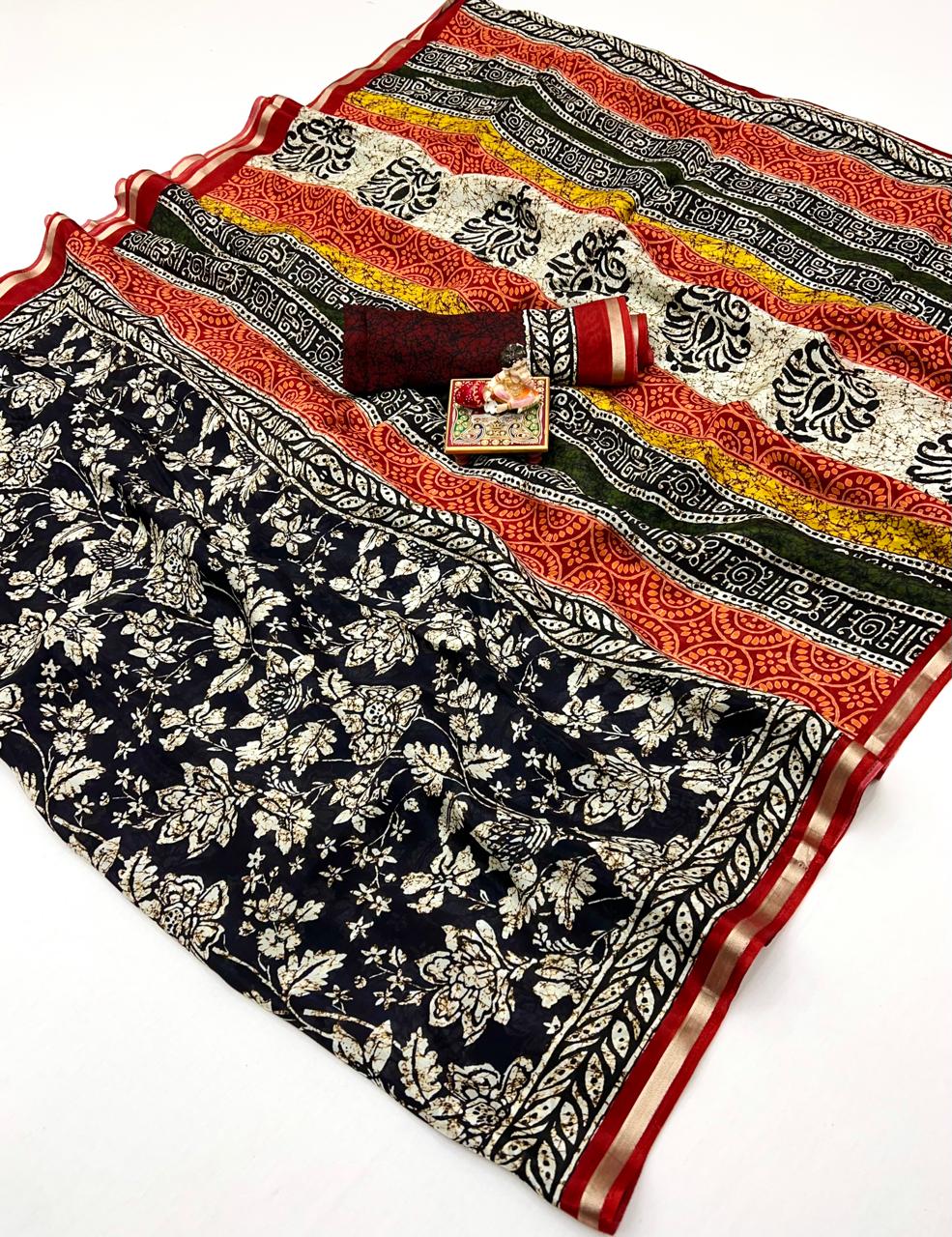
- Kanjeevaram: Choose Kanjeevaram for weddings, bridal rituals, temple ceremonies and major festivals when you want a structured drape, broad zari border and unmistakably heritage presence. Heavy zari and dense silk can make some versions tiring during extended wear.
- Kasavu: Choose Kasavu for Onam, Vishu, daytime pujas and warm-weather events. Cotton Kasavu prioritises breathability, while silk Kasavu creates a more formal look for weddings and evening celebrations.
- Mysore Silk: Choose Mysore Silk for a smooth, lustrous saree that's easier to carry for several hours. Its restrained ornamentation pairs well with pearls, delicate gold jewellery and tailored blouses.
- Uppada: Choose Uppada silk for a soft, graceful drape and a versatile base for floral, geometric or contemporary designs. Printed Uppada sarees can suit receptions, festive lunches and semi-formal parties.
- Gadwal: Choose Gadwal when you want a defined border-and-pallu contrast rather than an all-over decorative field. Gadwal sarees work particularly well for weddings and religious ceremonies.
- Other regional styles: Chettinad cotton, Ilkal and Narayanpet sarees extend the South Indian textile vocabulary through checks, stripes, cotton textures and distinctive pallus. Their fibre and construction should be verified individually because contemporary versions vary.
Which saree suits a wedding, festival or party?
Kanjeevaram and Gadwal are strong choices for formal weddings, Kasavu and Mysore Silk work well for daytime celebrations, and printed Uppada sarees offer an adaptable party option. The event duration, climate and dress code should guide the final decision.
Wedding ceremonies and bridal functions
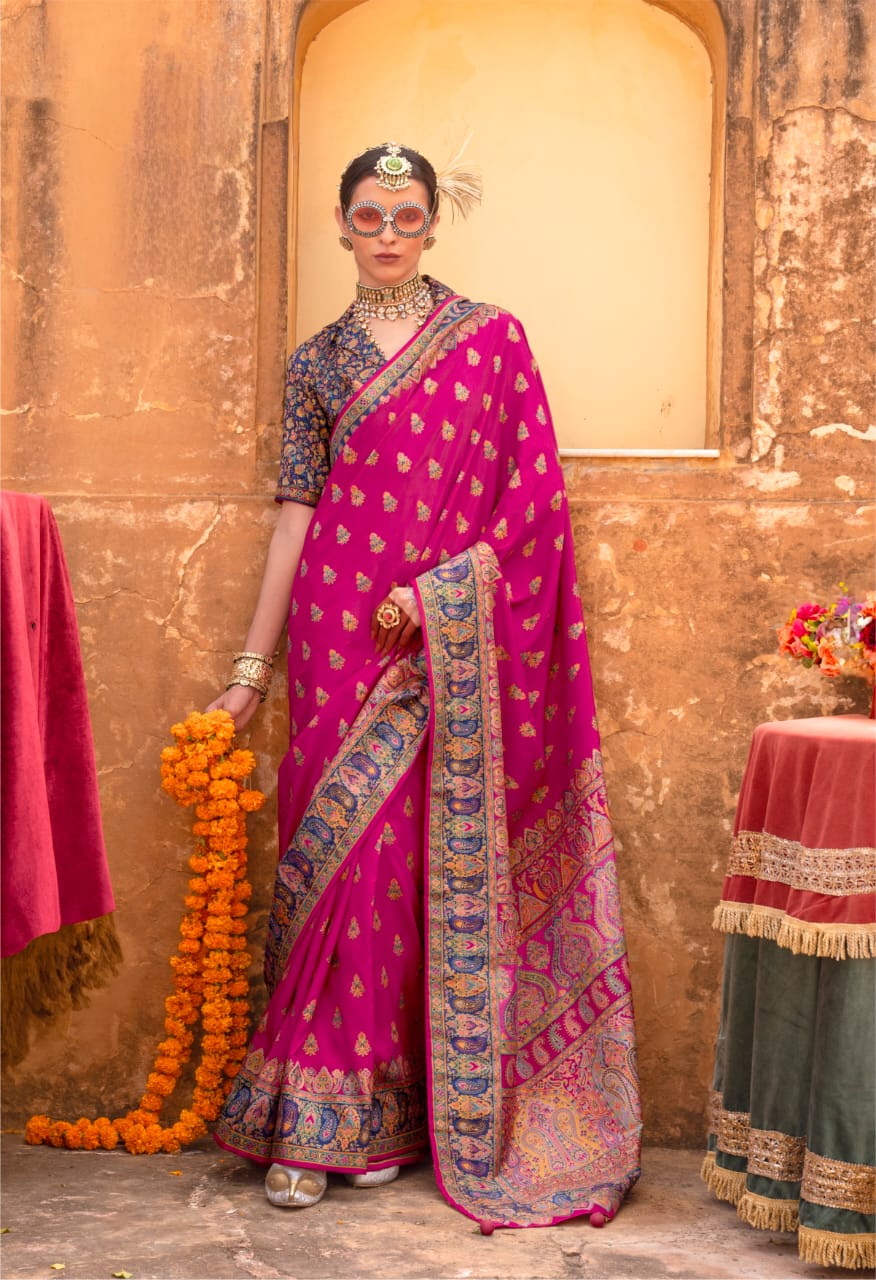
Kanjeevaram and Gadwal sarees suit weddings because their borders and pallus create definition in photographs and hold a clear pleated shape. A broad zari border can provide bridal grandeur, while a vivid Gadwal border creates contrast without requiring dense embroidery across the entire saree. Wedding guests may prefer medium-weight silk because it offers formality without the management demands of a very heavy bridal drape.
Colour can also indicate the level of formality. Deep red, maroon, magenta, emerald, royal blue and purple create a ceremonial impression, while muted pastels and ivory feel lighter and more contemporary. A contrasting blouse should repeat one shade from the border or pallu rather than introduce several unrelated colours.
Festivals and daytime events
Kasavu, Mysore Silk and lightweight Uppada sarees are comfortable choices for festivals and daytime celebrations because each can look polished without heavy surface decoration. Cotton Kasavu is particularly practical in humid weather, while Mysore Silk gives a smooth finish when a more formal appearance is required. Floral Uppada designs bring colour to festive lunches without the weight of dense zari.
The collection titled Sarees from Rs 1000 to Rs 1500 can be useful for comparing accessible saree options, but price should not be treated as proof of a particular weave. Check fibre composition, blouse-piece details, border finish and washing instructions before deciding whether a saree suits a regular festive wardrobe.
Parties and semi-formal gatherings
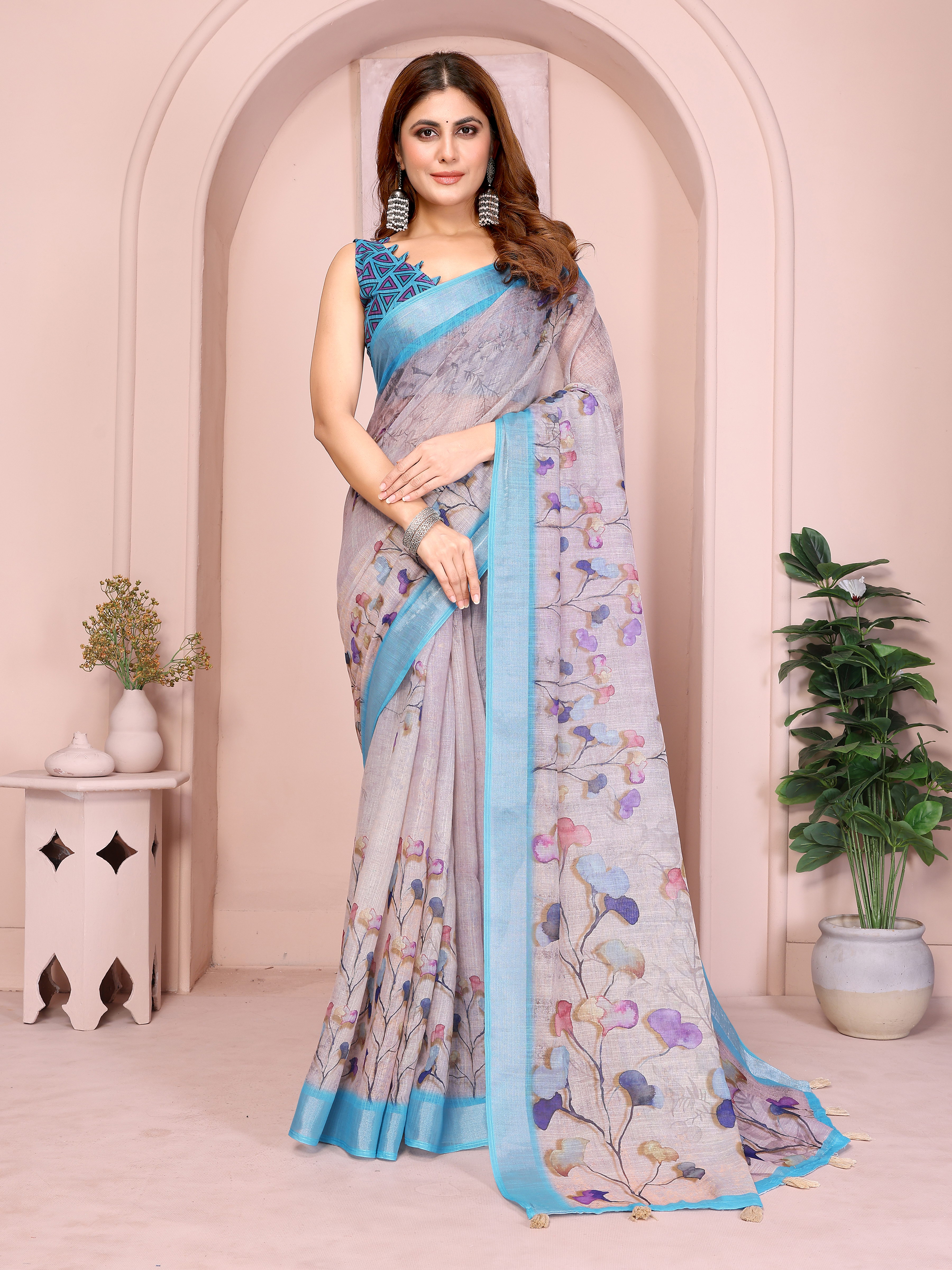
Digitally printed Uppada sarees bridge classic dressing and contemporary party styling. Navy Floral Digital Print Viscose Uppada Silk Saree can be styled with a plain navy, ivory or silver-grey blouse so the floral surface remains the focal point. Premium Navy Blue Floral Uppada Silk Party Wear Saree brings a similar evening direction with a sleek blouse, metallic earrings and a compact clutch.
Maroon Digital Print Viscose Uppada Silk Saree Online illustrates why colour and fibre should be assessed together. Maroon creates a rich evening impression, while viscose can provide a fluid fall that differs from a heavier pure silk saree. The distinction matters when you're choosing jewellery, petticoat support and storage methods.
How should you check fabric, weave and finishing?
You should check fibre composition, surface technique, blouse-piece information, border construction and care instructions before buying a South Indian saree online. A regional name tells you the tradition being referenced, but it doesn't always tell you whether the item is handwoven, digitally printed, blended or made from pure silk.
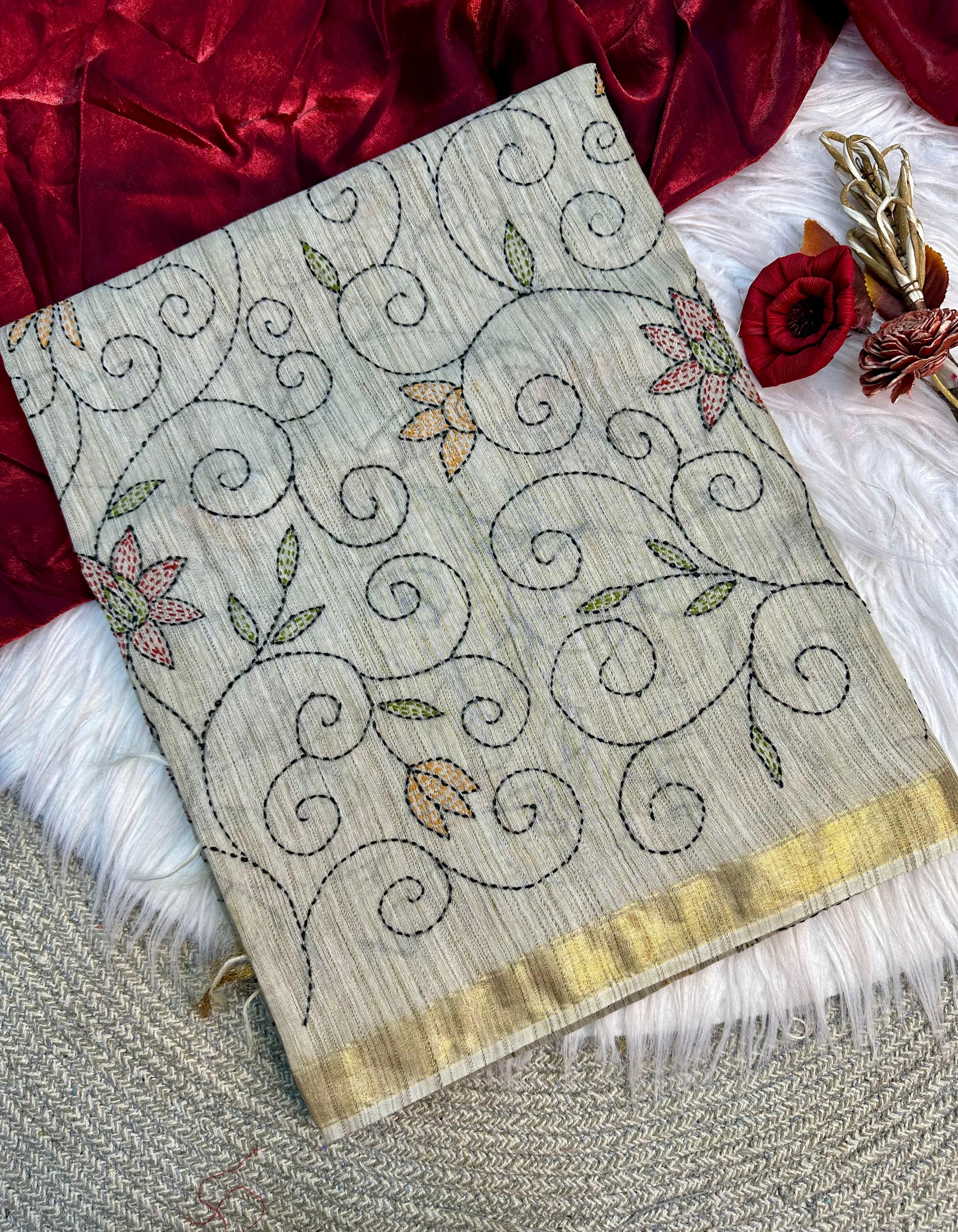
Pure silk, silk blend, viscose and polyester have different behaviour under heat, moisture and friction. Silk generally develops a distinctive lustre and requires careful cleaning, while viscose can provide softness and fluidity but may be more sensitive to prolonged dampness. A listing should state the material clearly enough for you to assess comfort, maintenance and value.
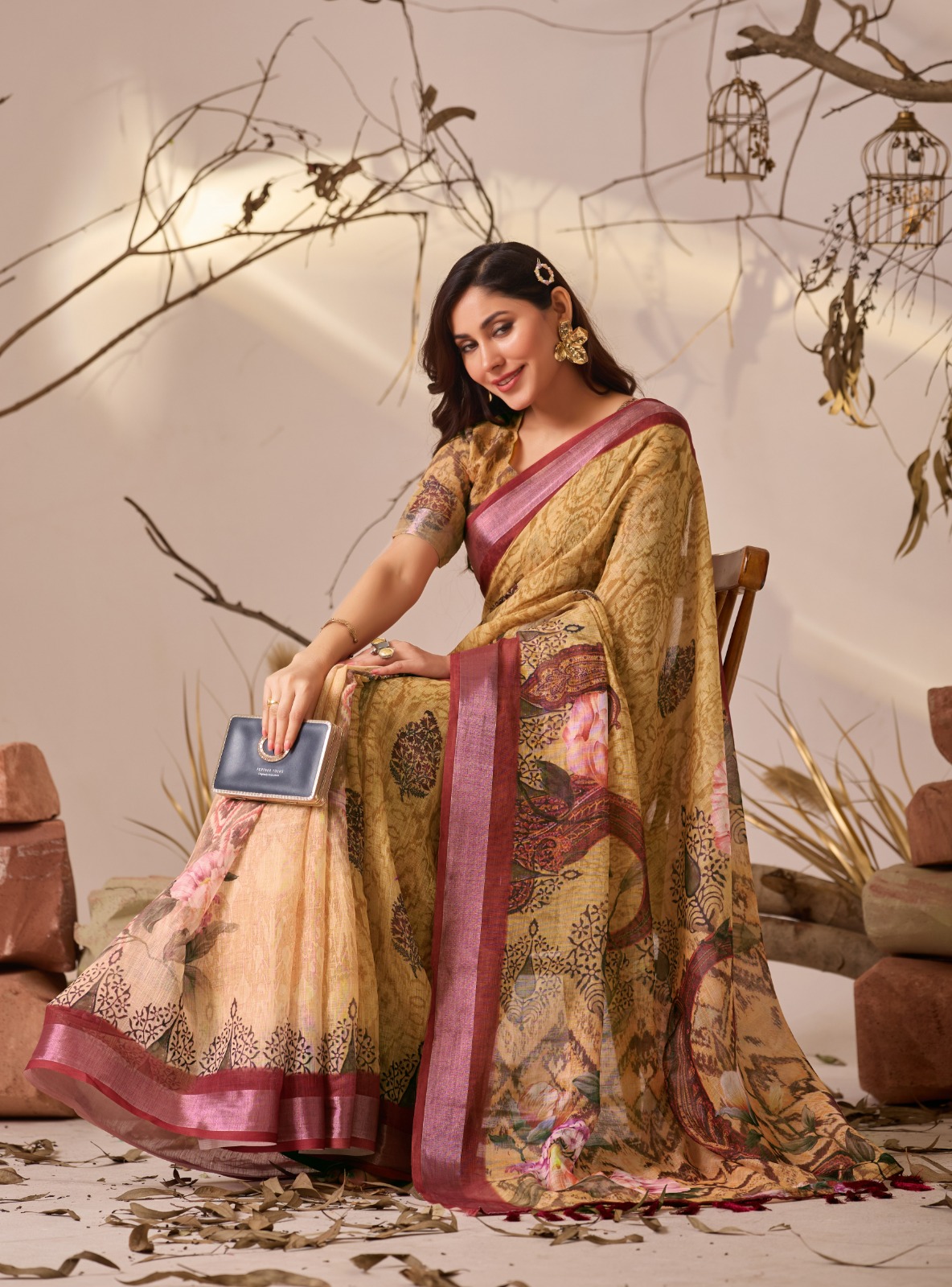
Print and weave also produce different visual results. Digital printing places a motif on the surface and allows precise florals, gradients and detailed repeats. Woven motifs are formed during fabric construction and usually show a corresponding change or pattern on the reverse. Brown Floral Digital Print Uppada Silk Saree With Blouse and Teal Blue Floral Digital Uppada Silk Saree With Blouse demonstrate how printed designs can transform the same broad saree category through colour and motif placement.
The border and pallu deserve close inspection because they determine much of the saree's visual structure. Look for a straight selvedge, clean edge finishing and a pallu that doesn't twist sharply away from the body. A woven blouse piece can simplify colour coordination, while an unstitched blouse fabric gives more freedom to create contrast sleeves, piping or a longer back.
Royal Blue Ajrakh Digital Uppada Silk Saree With Blouse combines a strong colour field with a recognisable printed design direction. The product name signals a digital surface treatment, so the saree should not automatically be evaluated using the standards of a handwoven Ajrakh textile. Reading the description prevents confusion between a heritage technique and a contemporary printed interpretation.
How can you style each South Indian saree tradition?
The most balanced styling repeats one visual idea from the saree instead of adding several competing decorative elements. A zari border can be echoed through gold jewellery, while an intricate floral or heritage print usually benefits from a solid blouse and simpler accessories.
Kanjeevaram pairs naturally with temple jewellery, gold-toned jhumkas, a structured bun and a blouse that repeats the border colour. Kasavu looks refined with red, green, black or gold blouses, jasmine flowers and restrained gold jewellery. Mysore Silk works with pearls, small studs, a sleek choker or a minimalist waist belt that allows the saree's sheen to remain visible.
Uppada sarees allow more experimentation because a soft drape can support both heritage and contemporary styling. A plain blouse in navy, rust, black or ivory can calm a vivid floral print. A sleeveless or elbow-length blouse suits a party setting, while a high-neck blouse creates a more formal silhouette for an evening reception.
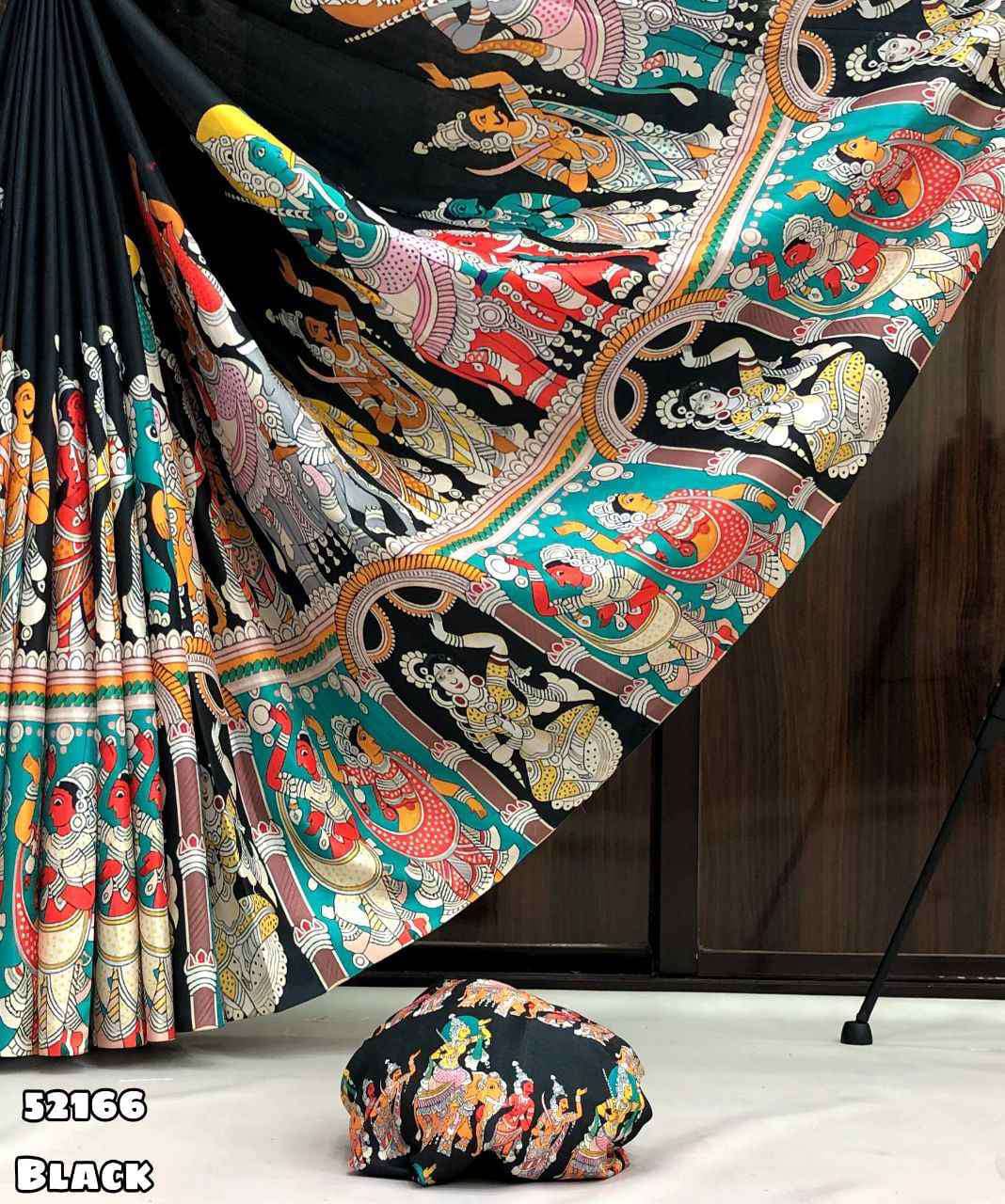
Black Heritage Peacock Digital Silk Saree can take statement earrings because its heritage-inspired motif supplies visual interest across the body. A Maroon Digital Print Uppada Silk Saree With Woven Blouse already includes a coordinated blouse solution, which reduces the risk of mismatched undertones. The blouse can remain relatively simple when the pallu contains a strong motif.
Accessories should also reflect the event's duration. Heavy layered necklaces may look appropriate for a short wedding ritual but become uncomfortable during a long reception. Lightweight jhumkas, a single bangle stack and secure footwear often create a more practical result for events involving walking, greeting guests or standing for photographs.
How should South Indian sarees be stored and cared for?
South Indian sarees should be aired after wearing, folded along different lines during long-term storage and protected from direct sunlight, perfume and dampness. Care should follow the listed fibre and finish rather than the regional name alone.

Dry the saree completely before folding it away, particularly after wearing it in humid weather. Store silk and silk-blend sarees in breathable cotton or muslin rather than sealed plastic, which can trap moisture and encourage odour or mildew. Refold rarely worn sarees every few months to reduce permanent creases along the same fold.
Keep zari away from direct sunlight and harsh chemicals because excessive exposure can dull metallic surfaces. Perfume, deodorant and hair spray should be applied before draping and allowed to dry. Do not iron directly over zari, prints or delicate woven motifs; use low heat with a pressing cloth only when the care label permits ironing.
Professional dry cleaning is usually the safer option for silk sarees, especially when the saree has zari, deep dyes or an elaborate finish. Cotton Kasavu may have different washing instructions, but strong detergents and vigorous wringing can still distort the border or cause colour transfer. Test colourfastness only when the care instructions allow it, and never leave a damp saree folded overnight.
Collections such as Sarees Under 20% Off and Sarees Under 10% Off can help you compare price reductions, but discounted pricing doesn't change the care requirements of silk, viscose or zari. Sarees Flat 50% Off and Sarees Flat 60% Off may be useful for budget planning, while the fabric description remains the more important guide to long-term use.
A simple buying checklist for South Indian sarees
A reliable purchase decision can be made by checking six details before placing an order: fibre, surface technique, dimensions, blouse-piece status, care instructions and return or exchange terms. These checks are more useful than relying on broad labels such as traditional, designer or premium.
- Confirm the fibre: Check whether the saree is pure silk, silk blend, viscose, cotton, silk-cotton or another material.
- Identify the surface: Determine whether motifs are woven, embroidered, printed or digitally printed.
- Check measurements: Confirm saree length, width and blouse-piece length, particularly if you're tall or plan a large number of pleats.
- Inspect the border: Look for clear information about zari, woven borders, printed borders and edge finishing.
- Plan the blouse: Decide whether the supplied blouse fabric matches your preferred neckline, sleeve length and level of structure.
- Read care instructions: Note whether the saree requires dry cleaning, gentle washing, low-heat pressing or special storage.
South Indian Saree Types become much easier to navigate when you separate heritage identity from up-to-date product construction. Kanjeevaram, Kasavu, Mysore Silk, Uppada and Gadwal each offer a meaningful starting point, but the final choice should be based on fibre, weight, finish, occasion and your willingness to care for the garment. That approach leads to a saree that looks appropriate on the day and remains useful in your wardrobe afterwards.
Common Questions About South Indian Saree Types
Which South Indian saree is best for a wedding?
Kanjeevaram and Gadwal sarees are strong wedding choices because their borders and pallus create a structured, ceremonial appearance. Choose the weight according to how long you will wear the saree and whether you need to move comfortably.
What is the difference between Kanjeevaram and Mysore Silk sarees?
Kanjeevaram sarees usually have a heavier silk body, broader zari borders and more elaborate traditional motifs. Mysore Silk sarees generally have a smoother, lighter drape with restrained borders and a simpler surface.
Is Kasavu saree suitable for summer?
Cotton Kasavu sarees are suitable for summer because the cotton body is breathable and relatively lightweight. Silk Kasavu is more formal but may feel warmer during long outdoor events.
How can I tell whether an Uppada saree is woven or digitally printed?
Read the product description and inspect close-up images of the motif and reverse side. A digitally printed Uppada saree has a surface-applied design, while a woven motif is created within the fabric structure and may show corresponding detail on the reverse.
Are all Gadwal sarees made from pure silk?
No, not all Gadwal sarees are made from pure silk. Traditional and contemporary versions can use silk, cotton-silk or other fibre combinations, so the composition should be checked in the individual product description.
How should I store a silk South Indian saree?
Air the saree fully after wearing, fold it along changing lines and store it in breathable muslin or cotton away from sunlight and moisture. Professional dry cleaning is usually safer for silk sarees with zari or deep dyes.