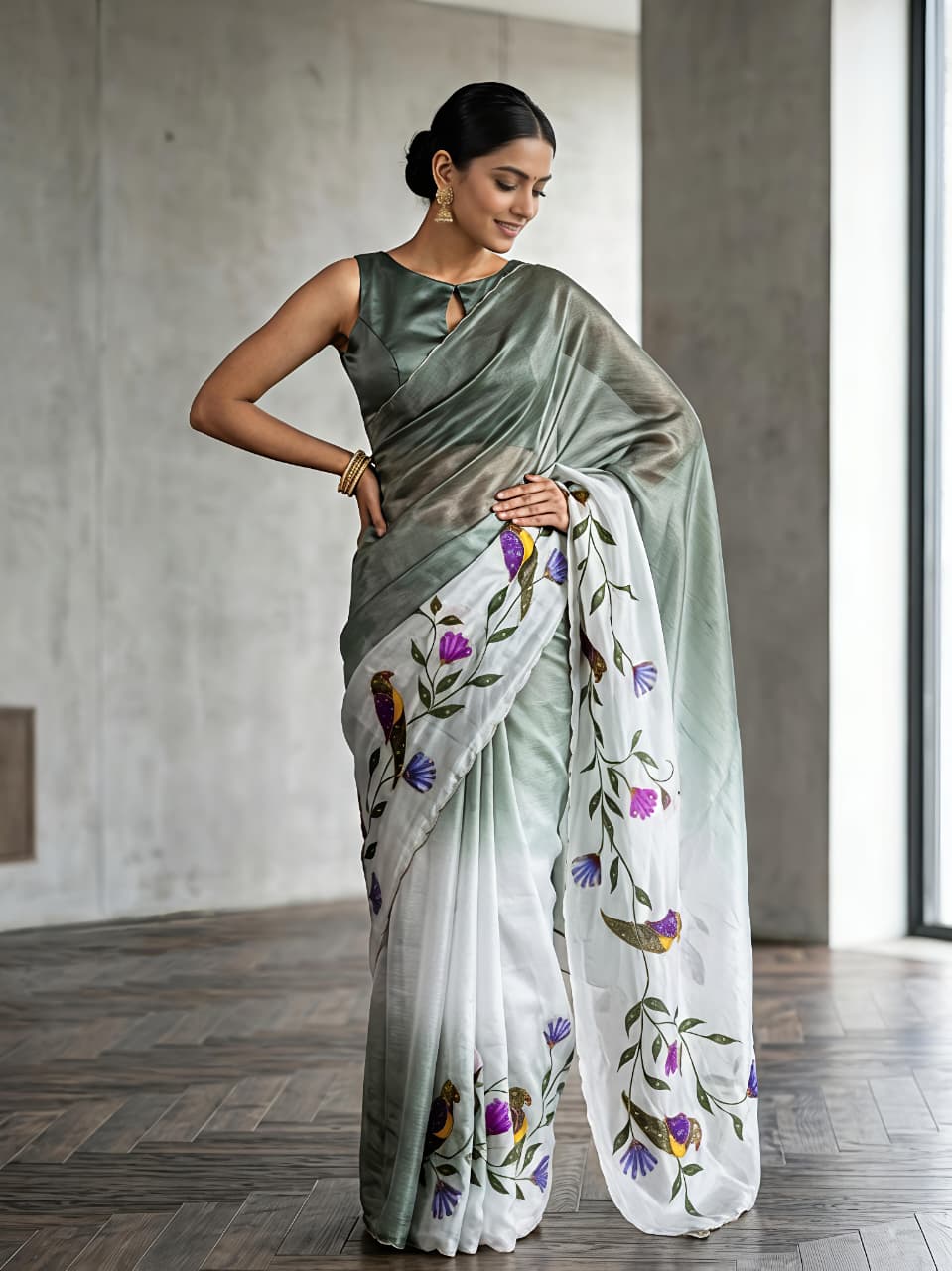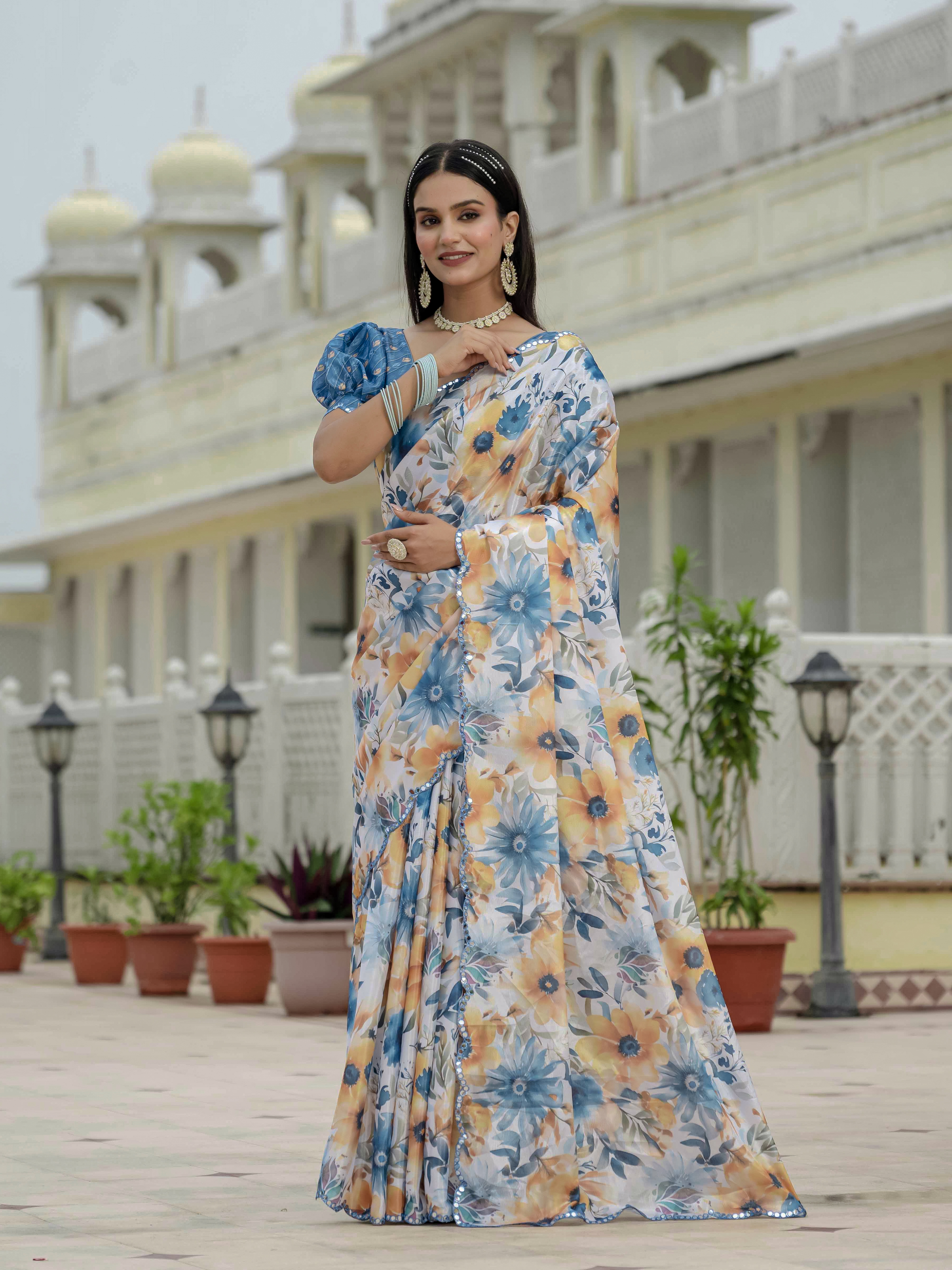
Sohrai Festival Fashion brings the visual language of Jharkhand's harvest-time art into festive dressing through earthy colour, animal motifs, foliage and hand-painted-looking pattern. A saree inspired by traditional art can feel celebratory without relying only on heavy embroidery or metallic shine. The most successful outfit balances the story in the print with the fabric, blouse, drape and accessories.
Sohrai painting is associated with the harvest season and is traditionally made on walls by women artists in parts of Jharkhand. Motifs can include cattle, birds, trees, vines and geometric marks, while natural colours often draw from earth, charcoal, clay and plant sources. A contemporary saree may interpret that vocabulary through a printed border, a repeating motif or an art-inspired panel, so the garment should be described honestly as inspired by the tradition rather than automatically presented as a hand-painted Sohrai textile.
Sohrai Festival Fashion: What makes the style distinctive?
Sohrai Festival Fashion is distinctive because it combines a harvest-linked folk-art vocabulary with wearable festive silhouettes and grounded colour palettes. The look usually feels more connected to landscape and community than to a single luxury weave or ornate embellishment technique.
Traditional Sohrai imagery is recognised for its close relationship with rural life and the natural world. Cows, deer, birds, leaves, flowers, branches and rhythmic lines may appear in different regional styles, although no single motif list represents every Sohrai artist or village. The visual effect is lively but not necessarily loud: terracotta, rust, cream, charcoal, mustard, leaf green and muted red can sit together with remarkable warmth.
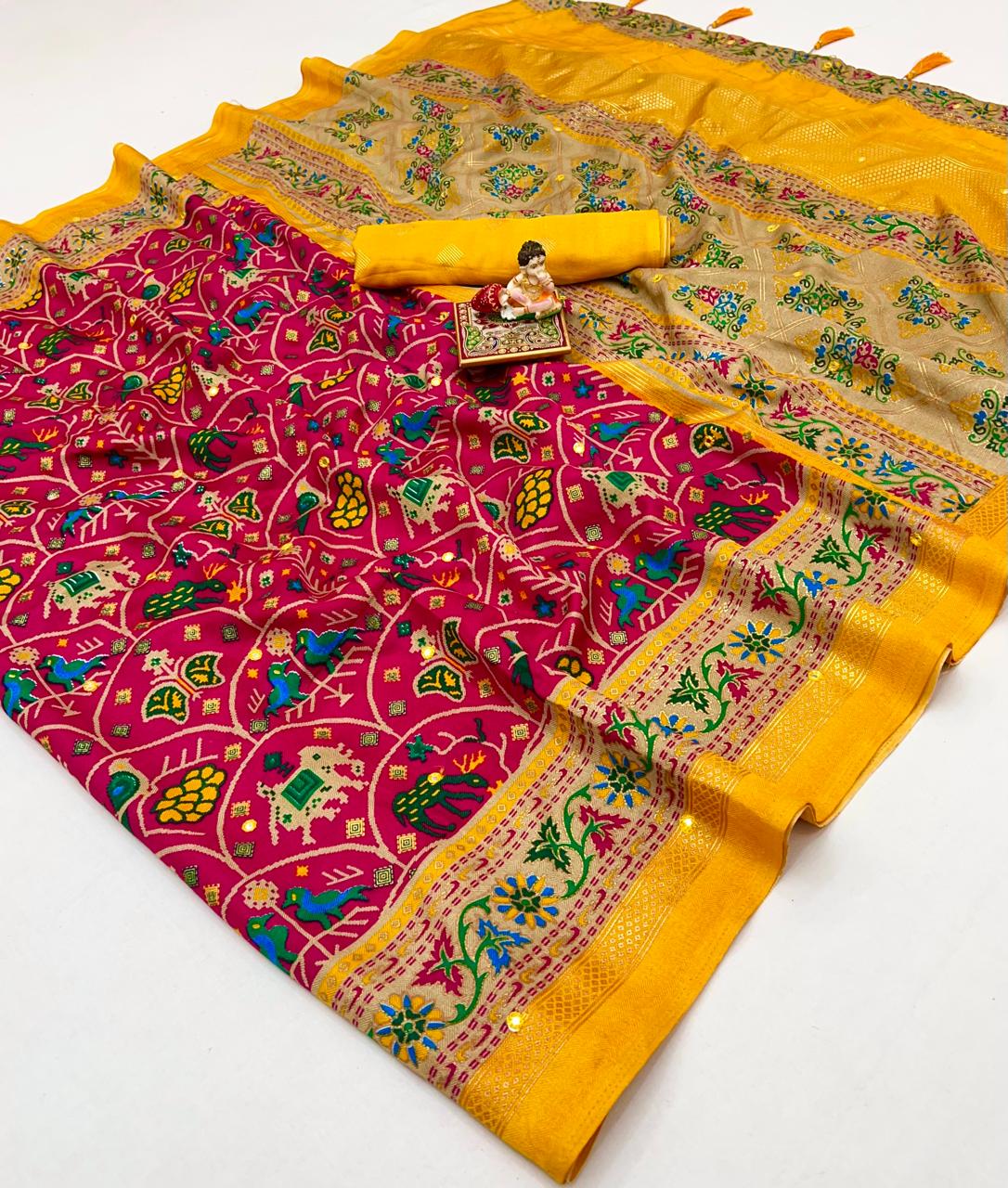
That palette explains why an art-inspired saree works especially well for daytime puja, a harvest celebration, a cultural event or a family gathering. Cotton, linen and soft silk allow the print or border to remain visible without making the wearer feel overdressed. For evening functions, zari, tissue, Patola-inspired pattern or a richer silk base can add light while retaining the folk-art reference.
How should Sohrai inspiration be represented respectfully?
Sohrai inspiration should be represented through clear attribution, careful wording and appreciation of the source tradition. A printed saree with village-art or animal imagery is an art-inspired fashion choice; it should not be called an original Sohrai mural or artisan-made Sohrai textile unless that specific provenance is documented.
Choose designs that acknowledge the influence without treating sacred or community imagery as a disposable trend. Learning a little about Sohrai painting, crediting the tradition when discussing the outfit and avoiding exaggerated claims make the styling more culturally thoughtful.
Sohrai Festival Fashion: Which saree fabrics work best?
Cotton linen, handloom cotton, tussar silk, pashmina silk and lightweight tissue are strong fabric choices because each supports a different kind of festive comfort and visual finish.
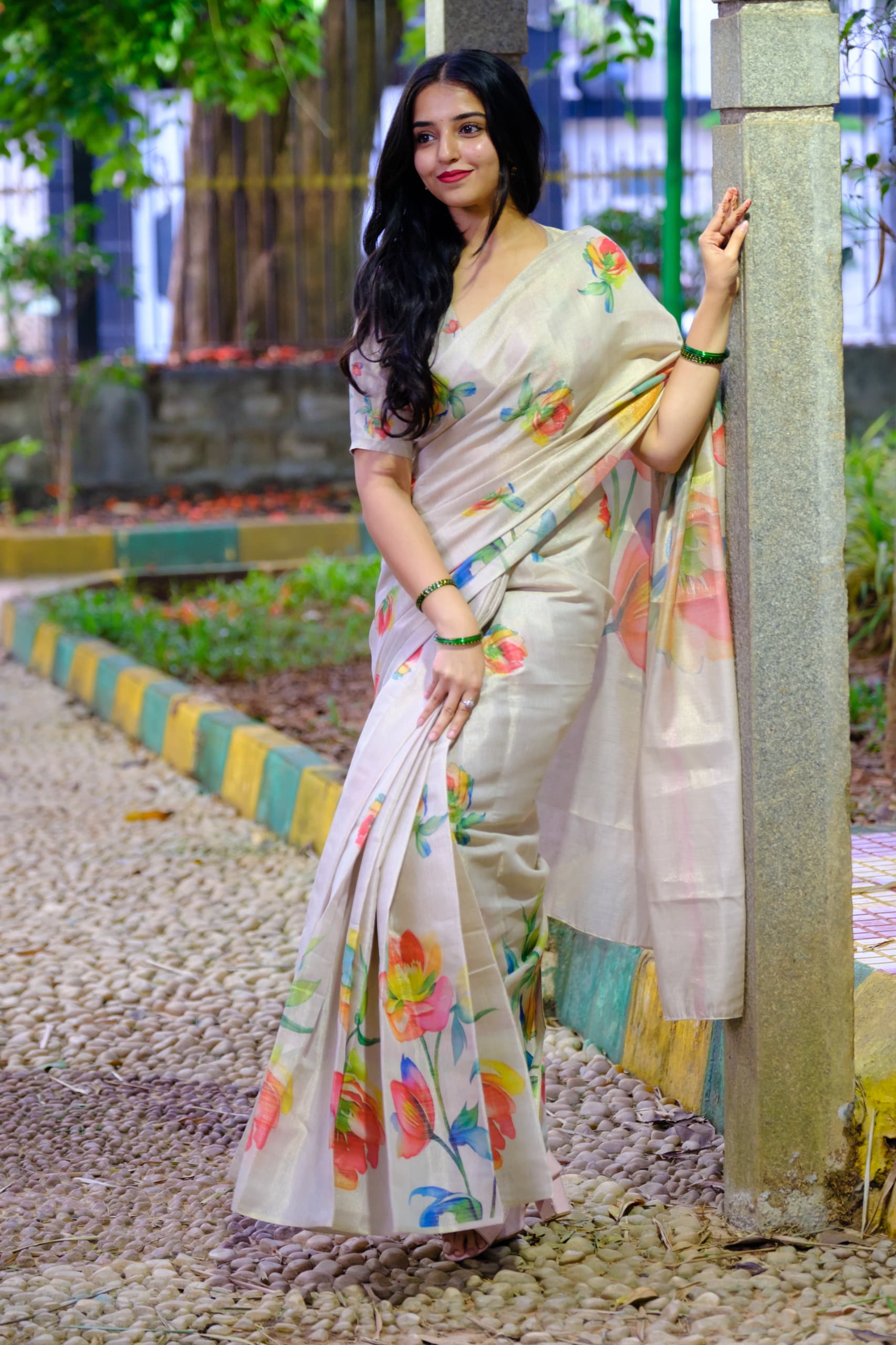
- Cotton linen: Cotton linen has a softly textured surface that makes village-inspired motifs look organic rather than overly glossy. Cotton linen is practical for daytime celebrations and usually holds a neat pleat when lightly starched.
- Handloom cotton: Handloom cotton offers breathability and a visible weave, which complements floral or geometric art prints. A tissue-blend handloom saree can provide a little more festive illumination without becoming difficult to wear.
- Tussar silk: Tussar silk has a naturally textured, slightly irregular surface and a warm fall. Floral or nature-led motifs look sophisticated on tussar, particularly for a puja followed by dinner.
- Pashmina silk: Pashmina silk gives a smoother, richer base for Patola-inspired prints. Pashmina silk suits cooler evenings and formal festive settings, but the blouse and pleats should be secured carefully because fluid silk can shift while draping.
- Tissue: Tissue catches light and works well when a subtle zari weave is the main embellishment. Keep the jewellery restrained if the saree already has shine.
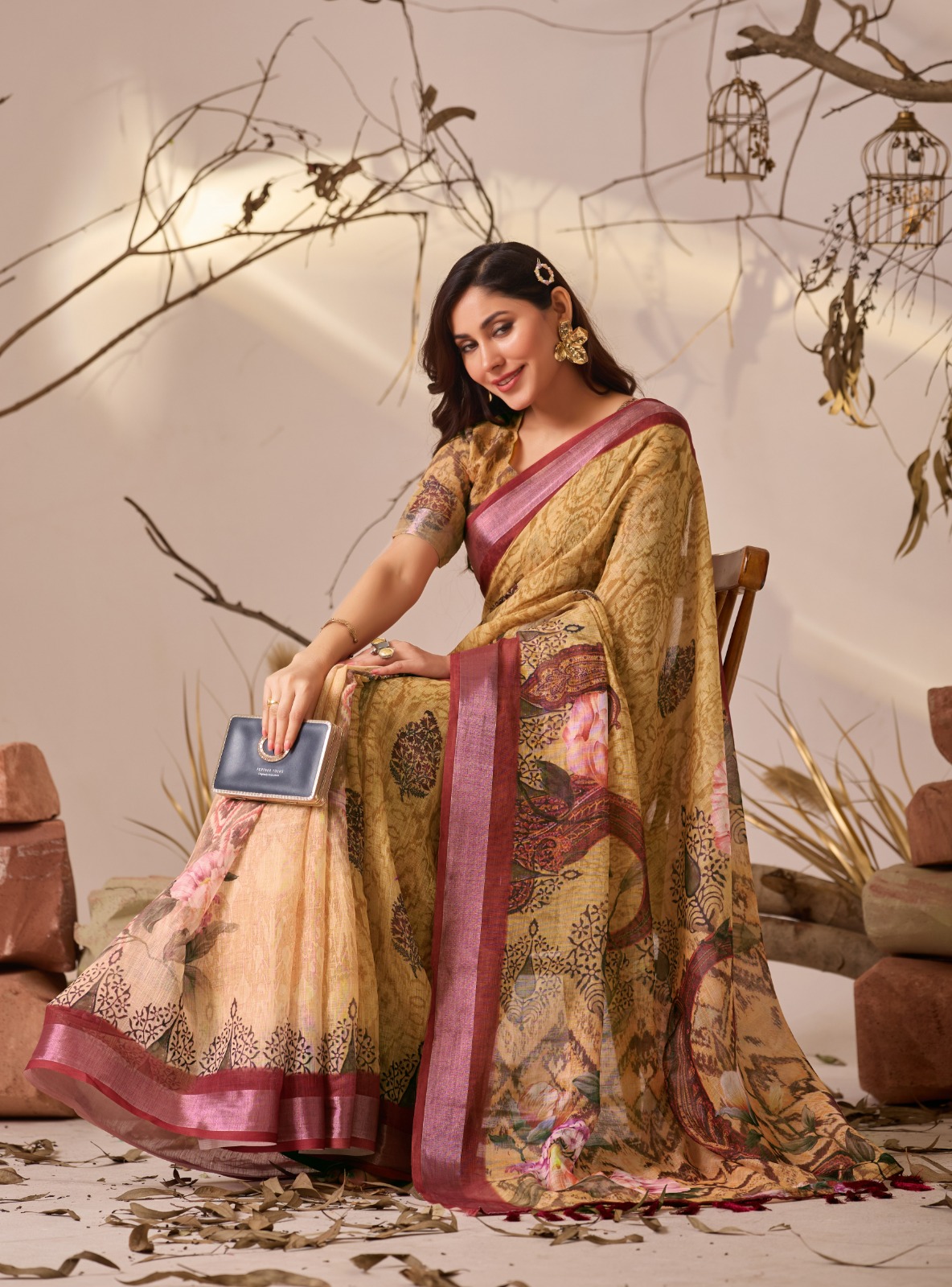
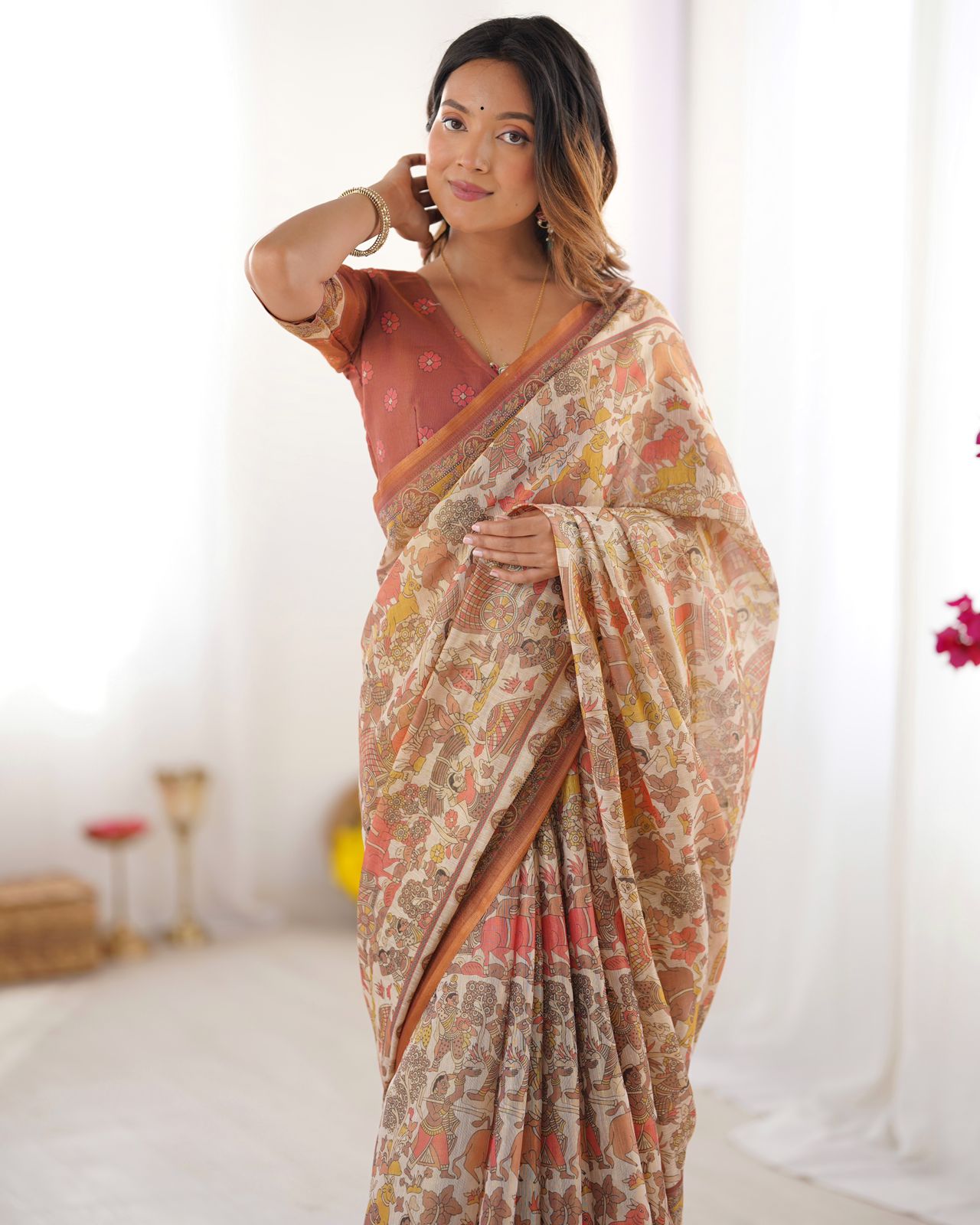
Ethnic Beige Cotton Linen Saree with Village Art Design is an useful reference for a daytime art-inspired look because beige gives the motifs room to breathe. Pastel Floral Tissue Handloom Cotton Saree with Zari Weaves brings a gentler alternative when the wearer wants handloom texture and festive light rather than strong contrast. Soft Tussar Silk Floral Saree For Festive Wear suits a polished family celebration where texture matters more than a dense border.
Budget planning can also guide fabric selection. Silk Sarees Under 3000 With Discount may be useful for shoppers who want a silk-like festive finish within a defined budget, while Party Wear Sarees can help compare dressier surfaces and evening-ready details. Price alone doesn't establish authenticity, so check the listed fibre, weave, finish and care instructions before buying.
Sohrai Festival Fashion: Which colours and motifs create the look?
Earth red, off-white, beige, charcoal, mustard, ochre, leaf green and muted pink create the most convincing Sohrai-inspired colour direction because they echo soil, vegetation, mineral pigment and seasonal warmth.
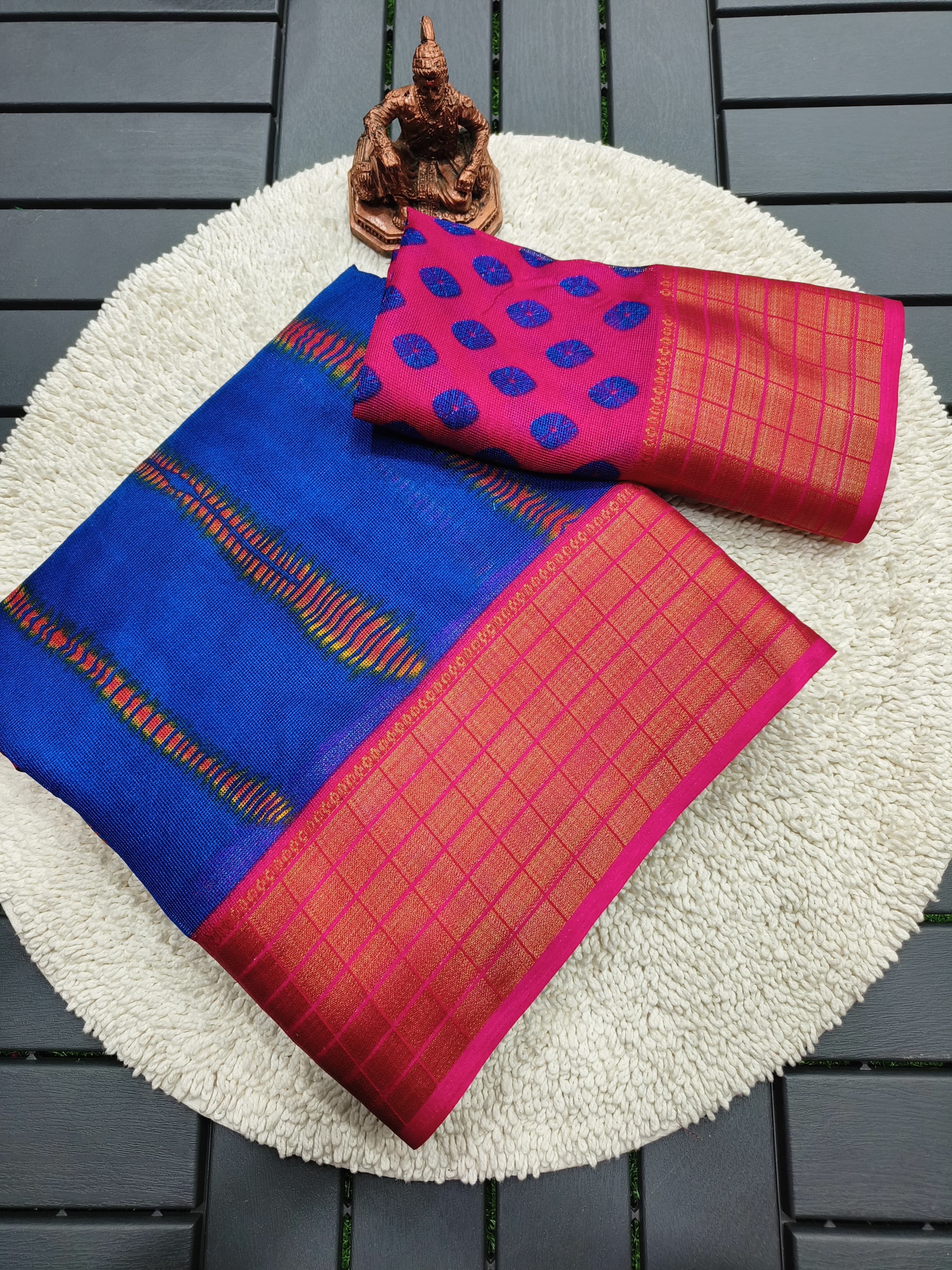
A beige saree with rust or black motifs creates a quiet, museum-like effect and allows a red or green blouse to become the focal point. Terracotta with cream feels more rooted and dramatic, while pastel pink, peach or powder blue softens the folk-art reference for a daytime family event. Deep red and black can look striking at night, especially when the border remains narrow and the blouse is plain.
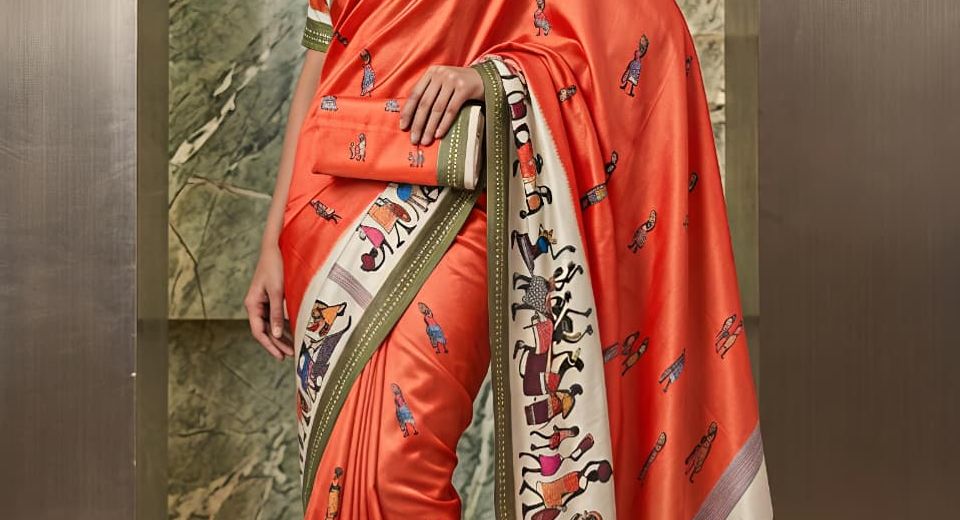
Traditional Touch Warli Art Orange Saree demonstrates how a strong orange base can carry an art-led story without additional heavy decoration. Warli art and Sohrai art are distinct traditions, so the saree should be described as a related folk-art-inspired styling option rather than as a Sohrai textile. Beige Multicolor Art Print Pure Linen Saree with Border shows another useful approach: a neutral ground can hold several colours while keeping the overall outfit composed.
Motif scale changes the mood of the saree. Small repeated leaves and animals appear more understated and are easier to wear with a patterned blouse. Large cattle, bird or tree forms become a statement and need a simpler blouse, fewer accessories and a cleaner drape. Border width matters too: a 2 to 4 inch border brings definition for everyday festive wear, while a wider 5 to 8 inch border creates a more formal silhouette.
Sohrai Festival Fashion: How should you style the blouse and drape?
An art-inspired saree looks most balanced with a blouse that repeats one colour from the print, a secure pleated drape and accessories that add craft without competing with the motif.
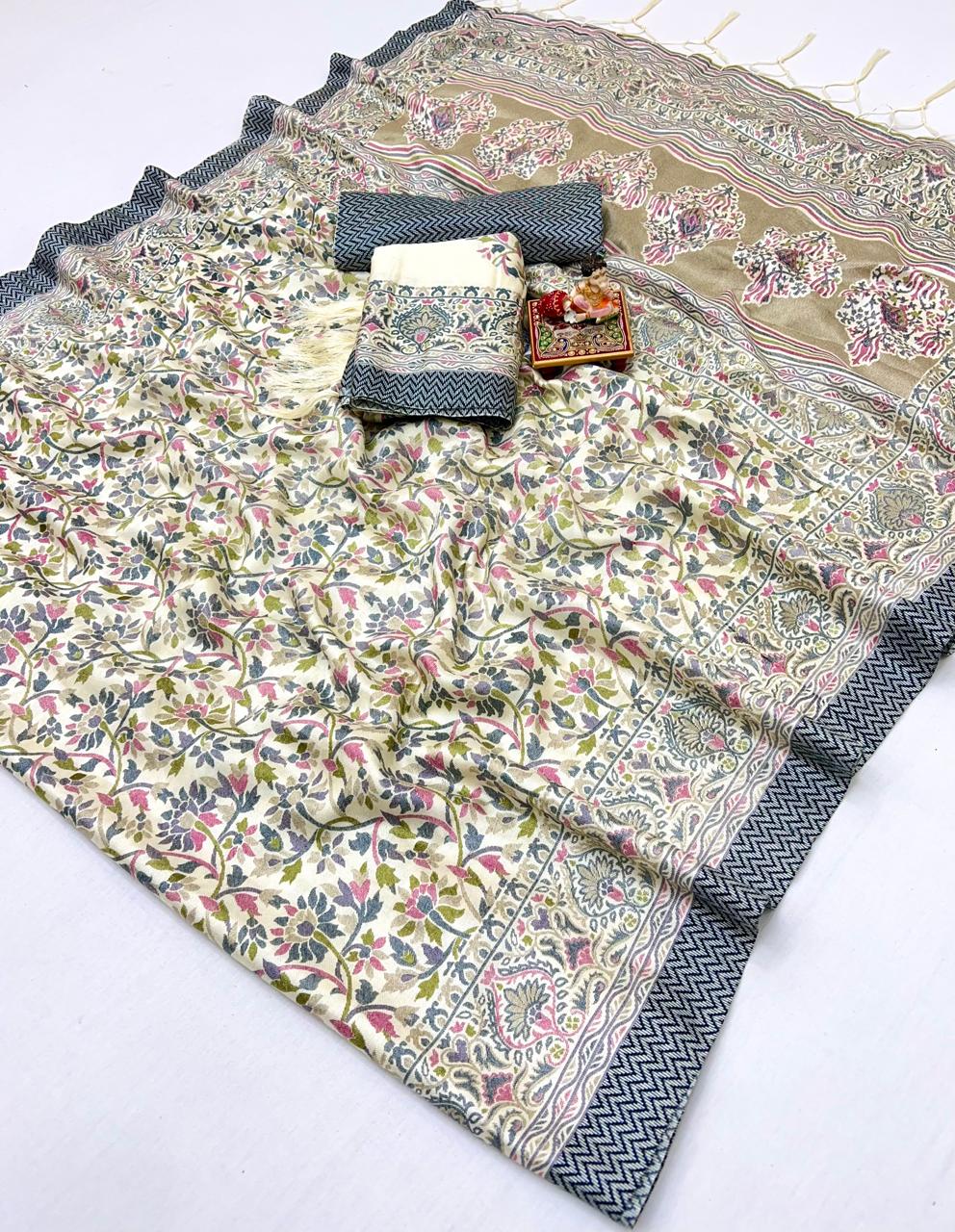
Blouse combinations
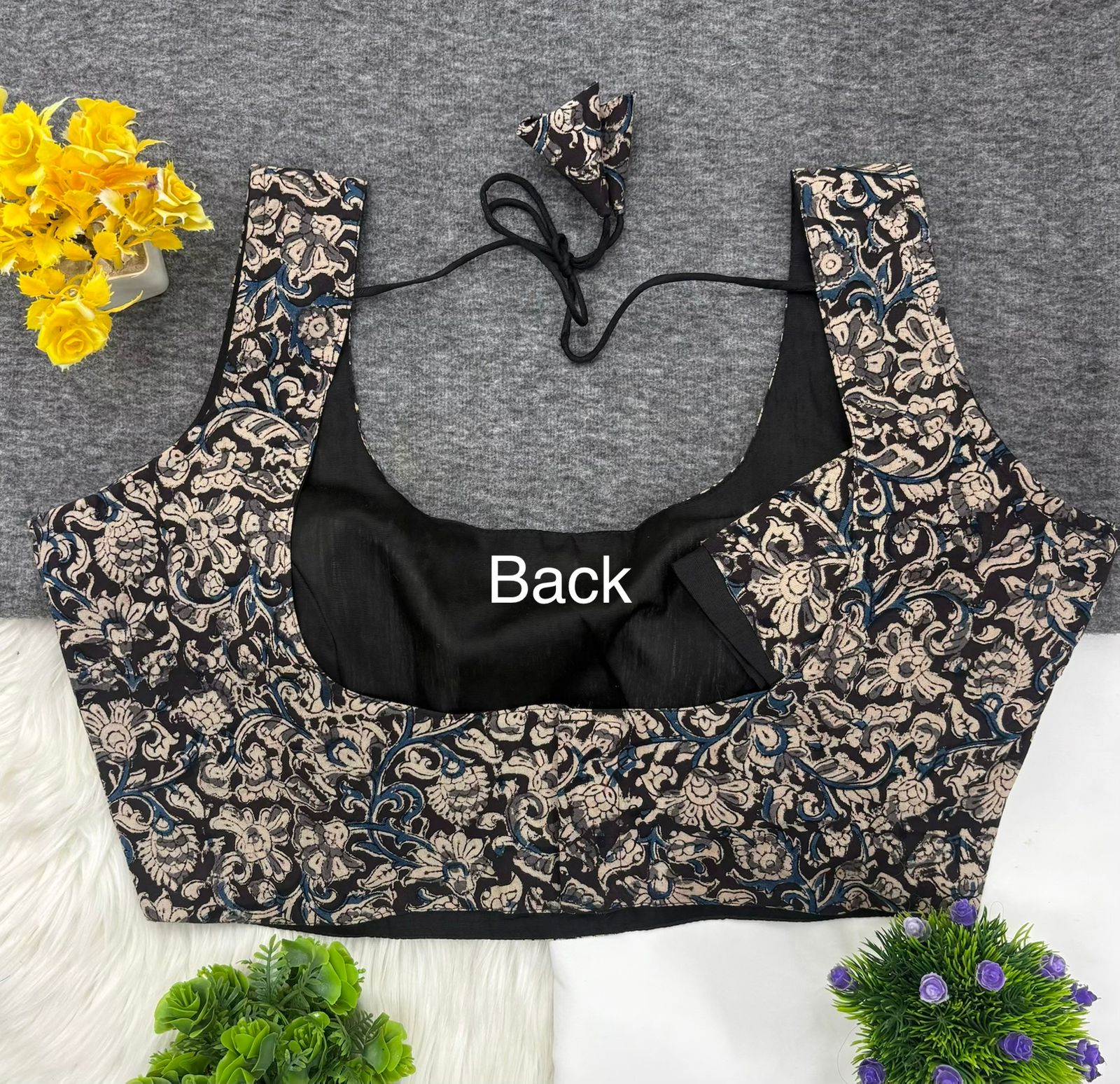
A plain rust, charcoal, cream, mustard or forest-green blouse is the safest choice for a saree with dense motifs. For a multicolour print, select the least dominant shade rather than matching the brightest colour; the result looks coordinated without becoming overly literal. A high-neck blouse gives a graphic print a contemporary finish, while a short-sleeved round-neck blouse feels more traditional and comfortable for daytime.
A woven blouse can add depth when the saree is printed. Handloom cotton with a narrow zari edge works with linen, and raw silk can support a silk saree for an evening event. Avoid adding a second large print unless the saree has a very plain body and the blouse print is visibly smaller.
Drape decisions
The classic Nivi drape with five to seven front pleats is the most versatile option because it keeps the art panel visible and works for walking, sitting and photographs. Pin the shoulder pleats from the inside and secure the pallu near the waist if the fabric is slippery. A shorter pallu can make cotton linen look crisp, while a fuller pallu gives tussar or silk a more ceremonial fall.
For a particularly graphic saree, keep the pallu open rather than heavily pleated so the border and motif remain readable. A belt can sharpen a linen saree for a modern gathering, but a simple fabric tie or traditional waist chain is less visually forceful when the print already tells the story.
Sohrai Festival Fashion: Which jewellery and beauty details complete it?
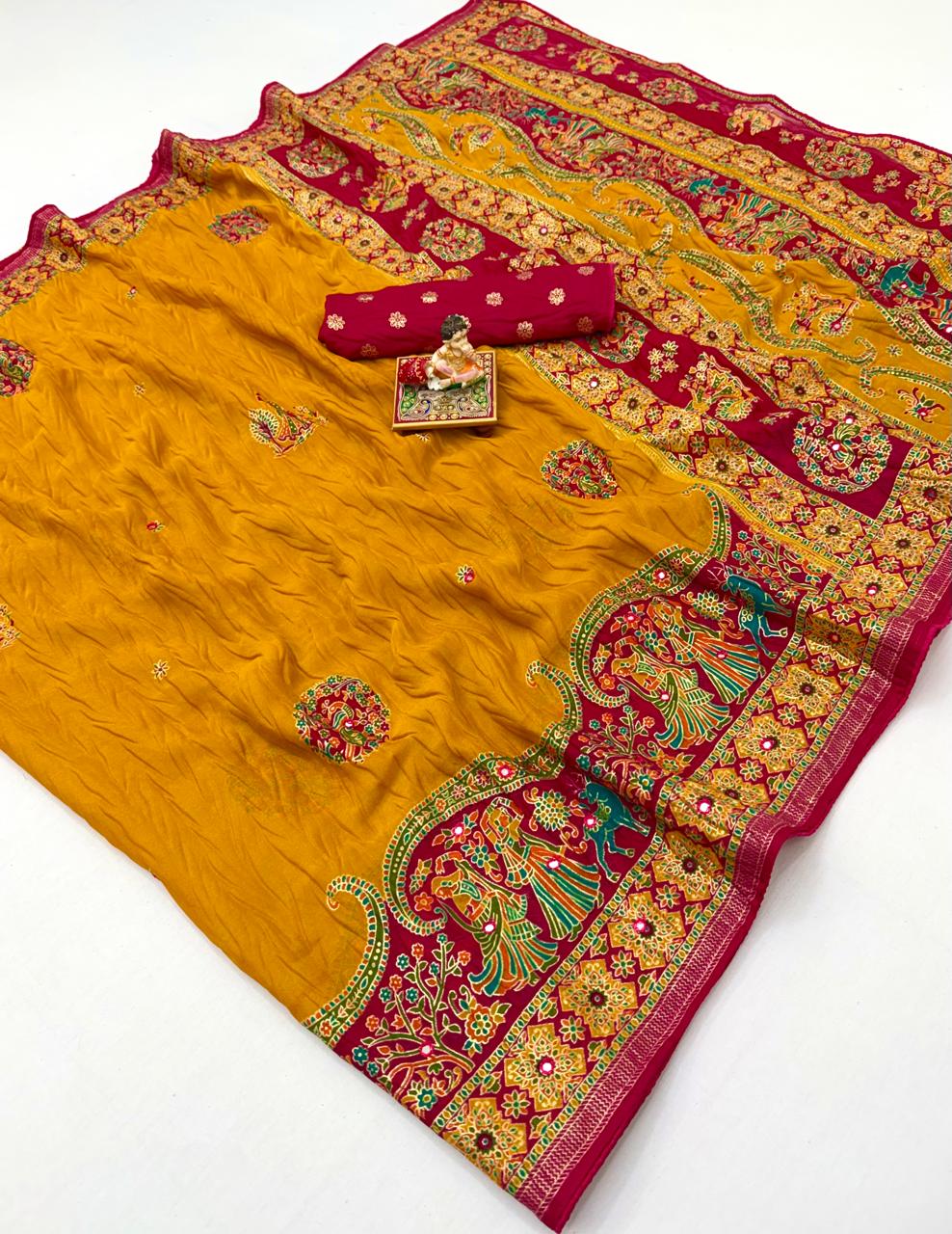
Terracotta earrings, oxidised silver, carved wood, brass, beaded necklaces and glass bangles pair naturally with an earth-led art-inspired palette. Gold jewellery works best when the saree includes zari or a warm silk base; choose one substantial element, such as jhumkas or a collar necklace, instead of layering every festive accessory together.
A low bun with jasmine, a braided hairstyle or loose waves can all work, depending on the formality of the event. A small bindi in rust, black or deep red ties the face to the saree without adding another competing pattern. Comfortable sandals with a 1.5 to 2 inch heel are practical for ceremonies where standing and walking are unavoidable.
Makeup can follow the warmth of the textile rather than compete with it. A terracotta blush, brown eyeliner and brick or berry lip suit an earthy saree, while a softer rose lip works with pastel tissue or a muted floral print. Keep highlighter controlled when the saree contains zari, because excessive shine can obscure the texture and motif.
Sohrai Festival Fashion: How can you adapt it for different occasions?
The same art-inspired saree can suit several festive settings when the fabric, contrast level and accessories change according to time, venue and movement.
- Daytime puja or harvest celebration: Select cotton linen, handloom cotton or a light tussar saree in beige, orange, cream or muted yellow. Wear a short-sleeved blouse, small jhumkas and flat sandals so the outfit remains comfortable through rituals.
- Family lunch: Use a floral or multicolour print with a solid blouse and a compact shoulder bag. A soft pleated pallu and minimal bangles keep the outfit festive without making it restrictive.
- Cultural programme: Choose a saree with a clearly visible art panel or border and pair it with oxidised silver. Pin the pallu securely and carry a small sling bag so the outfit remains practical during movement.
- Evening gathering: Select pashmina silk, tussar silk, tissue or a deeper Patola-inspired print. Add one gold or antique-finish jewellery piece, a defined blouse neckline and a slightly fuller pallu.
- Festive office event: Keep the saree in linen, cotton or a restrained silk blend, and select a three-quarter-sleeved blouse. A neat bun, small studs and a structured handbag make the folk-art reference look polished rather than costume-like.
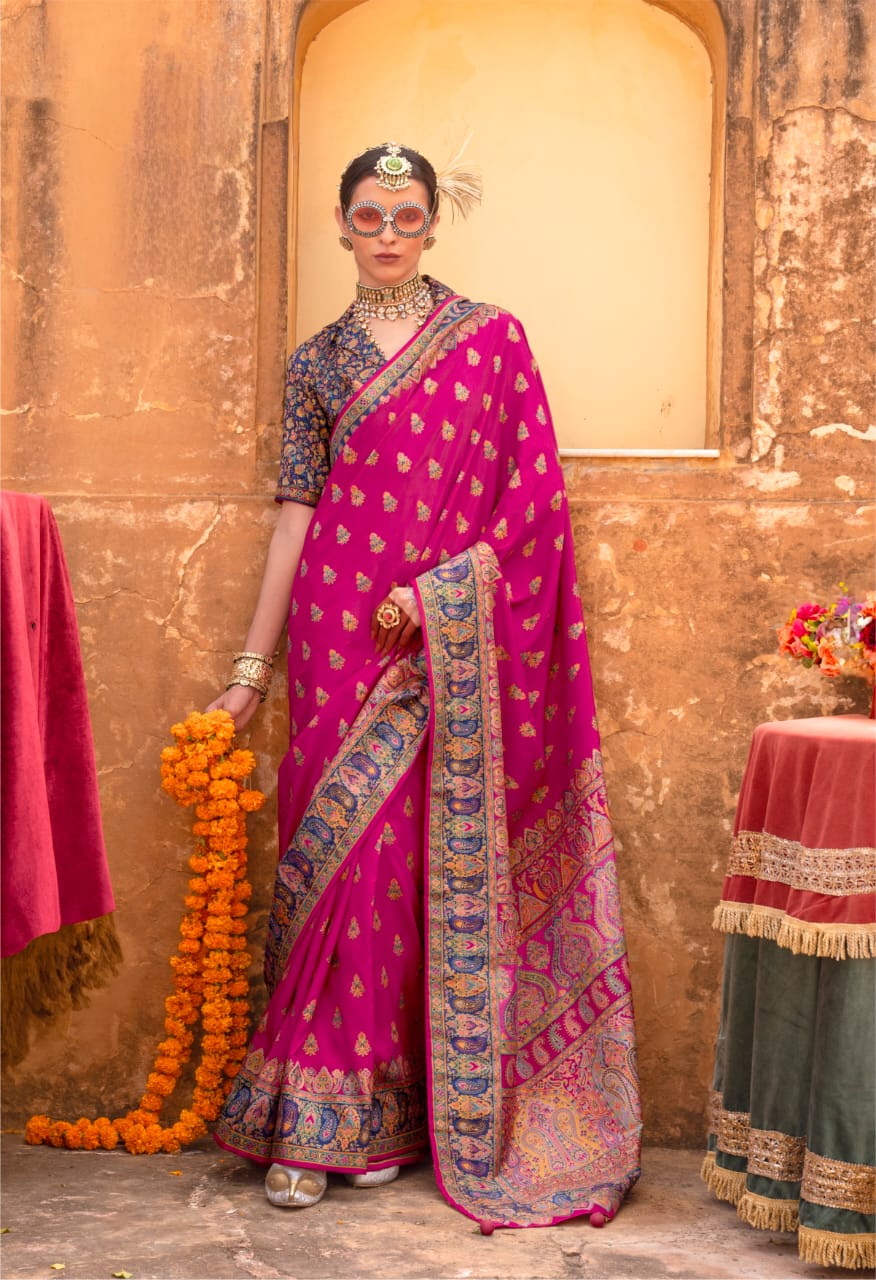
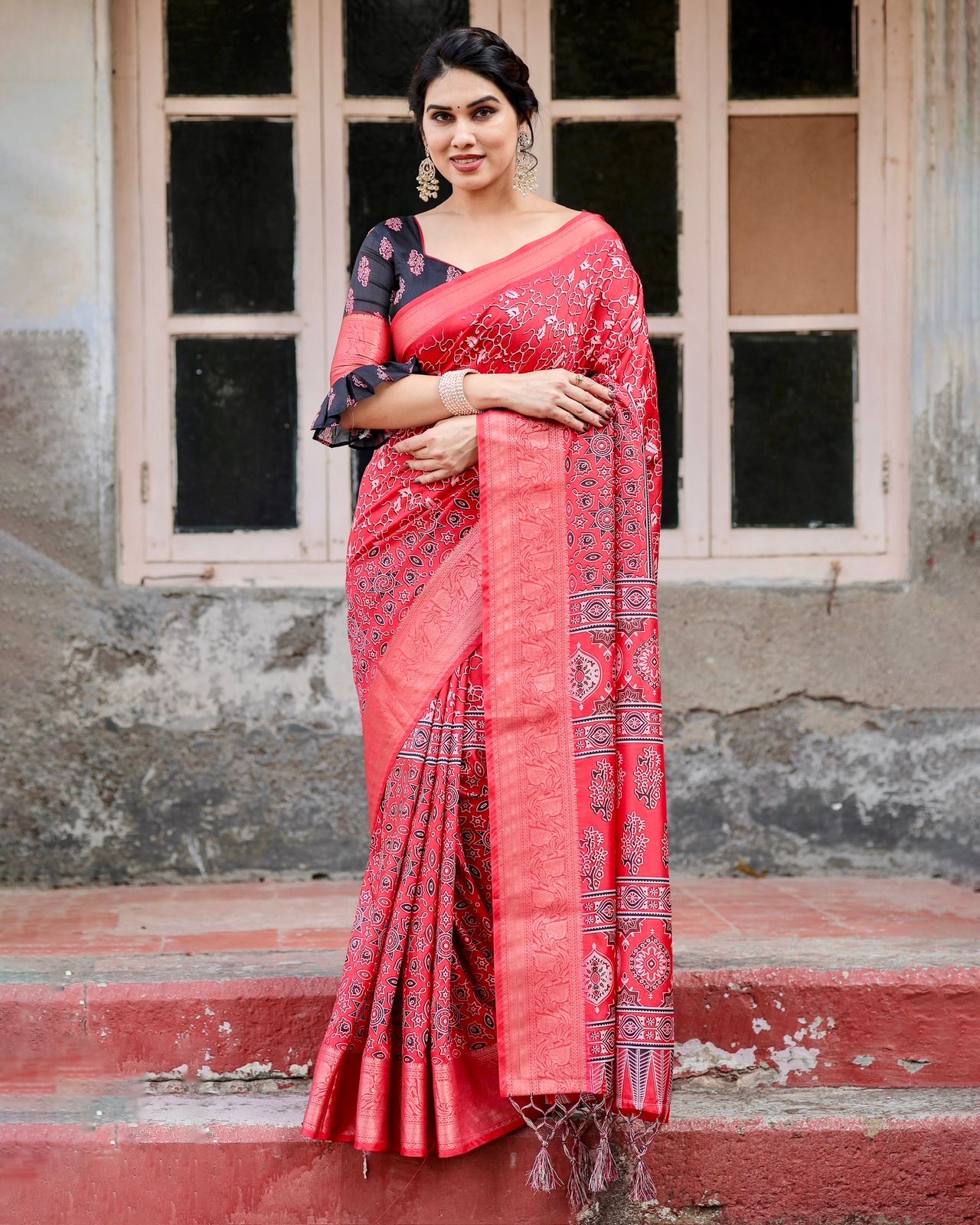
Designer Rani Pink Patola Print Pashmina Silk Festive Saree and Designer Red Patola Print Pashmina Silk Festive Saree show how richer colour and silk-like sheen can shift folk-inspired dressing towards an evening format. Bold Ajrakh Banarasi Saree for Elegant Festive Styling gives another route through patterned Banarasi structure and Ajrakh-inspired visual density; Ajrakh, like Warli, is a distinct textile and printing tradition rather than Sohrai art.
Pink Georgette Sarees can be considered when movement and a lighter fall matter more than a textured handloom surface. Red Banarasi Silk Sarees for Weddings Under 1100 brings a separate colour and price reference for shoppers comparing festive red options, while Gray Color Sarees Under 1000 can inspire a charcoal-and-metal styling direction. These collections are useful comparison points, but the listed fibre, print technique and care label should determine the final purchase.
Sohrai Festival Fashion: How should you care for an art-inspired saree?
Care depends on the fibre and finish, but gentle dry cleaning for silk, cool hand washing for suitable cotton and careful storage away from direct sunlight are reliable starting points.
Read the care label before washing a printed saree because pigment, zari and blended fibres respond differently to water. Do not soak a printed cotton or linen saree for long periods, and avoid strong detergent, bleach and vigorous brushing. Test colour fastness on an inside edge with a damp white cloth if the label permits home washing.
Silk sarees such as tussar, Banarasi silk or pashmina silk should generally be dry-cleaned when the care label recommends it. Fold silk with the zari or embellished side inward, refold it every few months to reduce permanent creases and store it in breathable cotton rather than airtight plastic. Keep neem leaves or a fabric-safe moth deterrent nearby without allowing oils or powders to touch the textile.
Press cotton and linen on the reverse side using moderate heat, and place a thin cotton cloth between an iron and any zari. Hang a saree only briefly before wearing because long-term hanger storage can stress the shoulder fold. A clean, dry cupboard with low humidity and no direct sunlight helps preserve both colour and print definition.
Sohrai Festival Fashion: What should you check before buying?
Check the fibre composition, motif description, measurements, blouse-piece details, transparency, return conditions and care instructions before buying an art-inspired festive saree.
- Fibre: Confirm whether the saree is cotton, cotton linen, silk, pashmina silk, tissue or a blend.
- Print or weave: Determine whether the design is printed, woven, embroidered, hand-painted or digitally reproduced.
- Blouse piece: Check whether a blouse piece is included and note its length, since 0.8 to 1 metre may not provide enough fabric for every blouse style.
- Transparency: Lightweight linen, georgette and tissue may need a matching or nude-toned petticoat.
- Fall and pleats: Very fluid silk may require extra pins, while crisp cotton may need light ironing before draping.
- Colour accuracy: Product photography and screen settings can change how beige, orange, red and pink appear.
A thoughtful purchase doesn't need the heaviest border or the most expensive fabric. A clearly described art reference, comfortable fibre, suitable colour contrast and care routine will usually create a more wearable festive wardrobe than a garment selected only for surface decoration.
Common Questions About Sohrai-Inspired Festive Saree Styling
What is Sohrai Festival Fashion?
Sohrai Festival Fashion describes festive clothing influenced by the colours, nature motifs and rural imagery associated with Sohrai painting from Jharkhand. A contemporary saree may be inspired by that visual tradition without being an original hand-painted Sohrai textile.
Which saree colours suit a Sohrai-inspired outfit?
Earth red, terracotta, beige, cream, charcoal, mustard, ochre, muted green and warm pink suit a Sohrai-inspired outfit. Neutral sarees make large motifs quieter, while orange or red bases create a stronger festive statement.
Can Warli art and Sohrai art be treated as the same design tradition?
Warli art and Sohrai art are distinct Indian folk-art traditions and should not be described as interchangeable. Both can inspire nature-led festive styling, but product descriptions should identify the specific art reference accurately.
Which blouse should be worn with a folk-art printed saree?
A solid blouse in rust, cream, charcoal, mustard, forest green or a colour taken from the saree usually works best. A patterned blouse can be used only when its motif is smaller and the saree body is relatively restrained.
Is cotton linen suitable for a daytime Sohrai-inspired celebration?
Cotton linen is suitable for a daytime Sohrai-inspired celebration because it is breathable, lightly textured and comfortable for extended wear. A cotton petticoat, secure shoulder pins and low-heel sandals can make the outfit easier to manage.
How should a silk saree with folk-art-inspired prints be stored?
A silk saree with folk-art-inspired prints should be stored clean and completely dry in breathable cotton, away from direct sunlight and moisture. Fold the saree with the zari side inward, refold it periodically and follow the care label for dry cleaning.