A Simple Suit for a Small Nikkah Ceremony Without Bridal Styling should look intentional, comfortable and respectful of the ceremony's intimate scale. A well-cut salwar suit can provide colour, coverage and occasion-appropriate detail without a heavy bridal dupatta, dense embellishment or elaborate hair and makeup. The most useful decisions are fabric weight, silhouette, colour depth, sleeve coverage and the number of accessories you add.
A small nikkah may take place at home, in a family hall, at a mosque or in a compact venue where movement and conversation matter as much as photographs. That setting changes the way a suit should be chosen. The best outfit usually has one visible point of interest, such as embroidery at the neckline, a textured dupatta or a distinctive trouser shape, rather than several competing decorative elements.
Why a simple suit works for an intimate nikkah
A simple salwar suit works for a small nikkah because it gives ceremony-appropriate polish without making the wearer look overdressed for a close family gathering. A clean silhouette also makes sitting, greeting guests and moving between indoor spaces easier than a very wide lehenga or heavily layered outfit.
Nikkah styling often benefits from restraint because the ceremony itself carries cultural and emotional significance. A straight kurta with trousers, a softly flared Anarkali or a sharara with controlled volume can all look formal when the colour and finishing are considered carefully. The aim isn't to make the outfit plain; the aim is to make each detail visible.
Readymade salwar suits for wedding events are useful when the time between selection and the ceremony is short. Check garment measurements rather than relying only on a nominal size, and allow at least 7 to 10 days for basic alterations if the sleeves, trouser length or hem needs adjustment.
How much embellishment is enough?
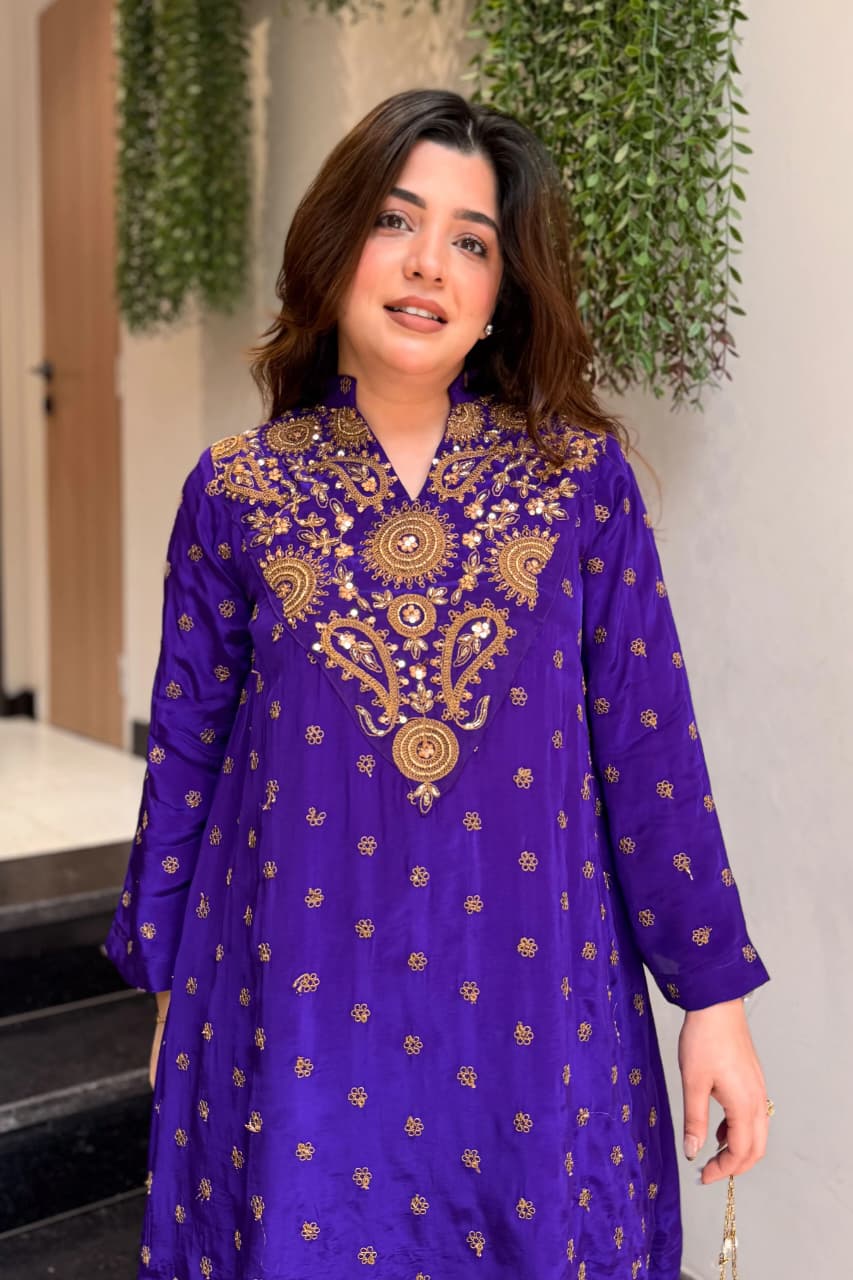
One concentrated embellishment zone is usually enough for a low-key nikkah outfit. Embroidery around the neckline, a narrow zari border, scattered sequins on the kurta or a delicate lace edge on the dupatta can create occasion presence without producing a bridal effect.
A heavy salwar suit for a wedding is appropriate when the ceremony includes a large reception or when the family dress code is explicitly festive. For a small nikkah, dense work across the bodice, sleeves, hem and dupatta can feel visually heavier than the setting requires. Stand several feet away from a mirror as a practical test: if every surface catches attention, remove or simplify one accessory.
Simple Suit for a Small Nikkah Ceremony Without Bridal Styling: choosing the silhouette
The most versatile silhouette for a Simple Suit for a Small Nikkah Ceremony Without Bridal Styling is a straight or gently flared kurta paired with trousers, palazzos or a modest sharara. The right shape depends on how much movement you need, the venue and whether you want the dupatta or the kurta to be the main visual focus.
Straight suits for a composed, modern look
A straight kurta with cigarette pants or relaxed trousers gives the cleanest appearance and works well for a home ceremony or a daytime nikkah. The vertical line creates structure without requiring a large skirt, while a side slit makes sitting more comfortable. A narrow trouser hem also keeps the outfit practical when walking indoors.
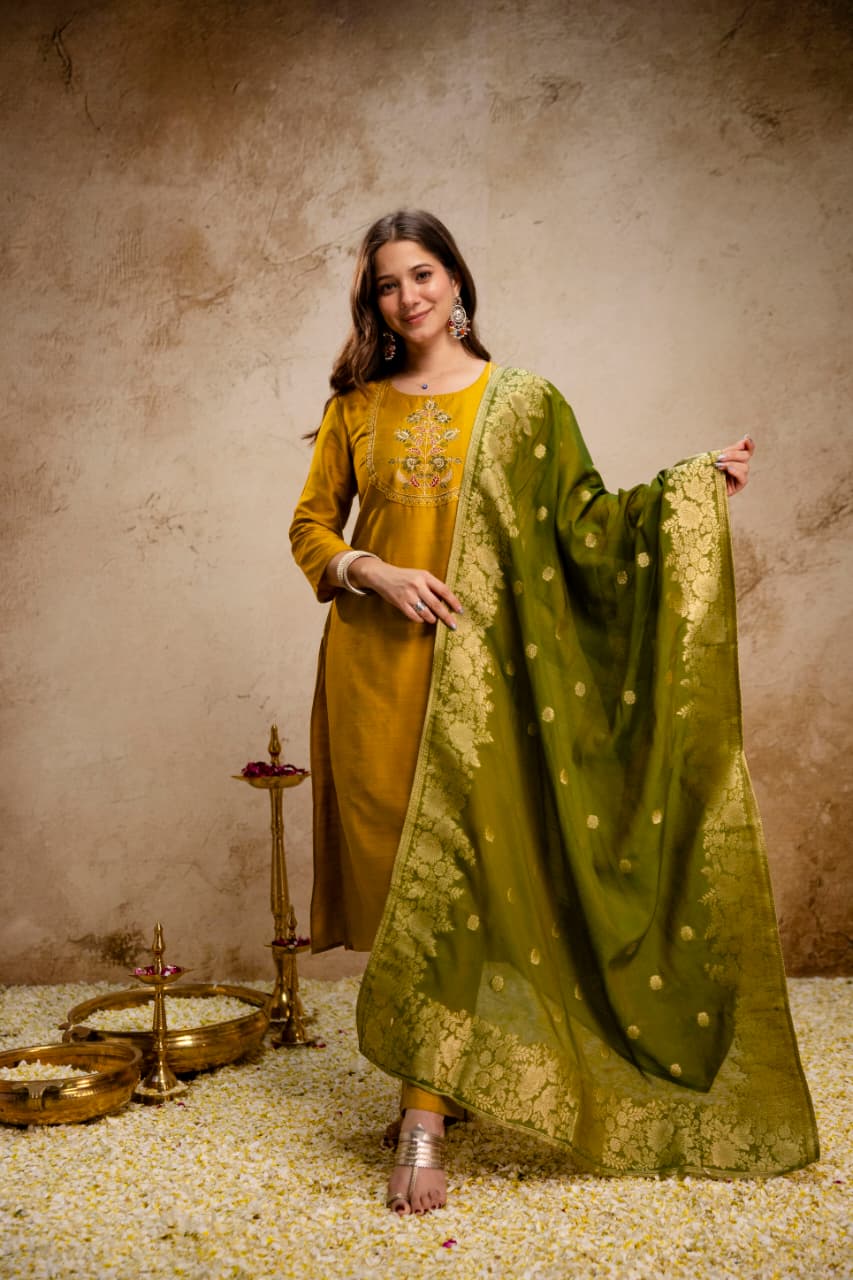
Mustard Yellow Embroidered Kurta Set for Women Online demonstrates how a single warm colour can carry an outfit when the cut remains uncluttered. Mustard yellow suits a daylight setting particularly well, but balance the shade with ivory, beige or muted gold accessories if the colour feels too bright near the face.
Anarkali suits for graceful movement
An Anarkali suit is a strong choice when you want more movement and a traditional outline without wearing bridal lehenga styling. A knee-length or mid-calf flare is easier to manage in a small room than a floor-skimming, multi-layered Anarkali, especially when the gathering includes floor seating.
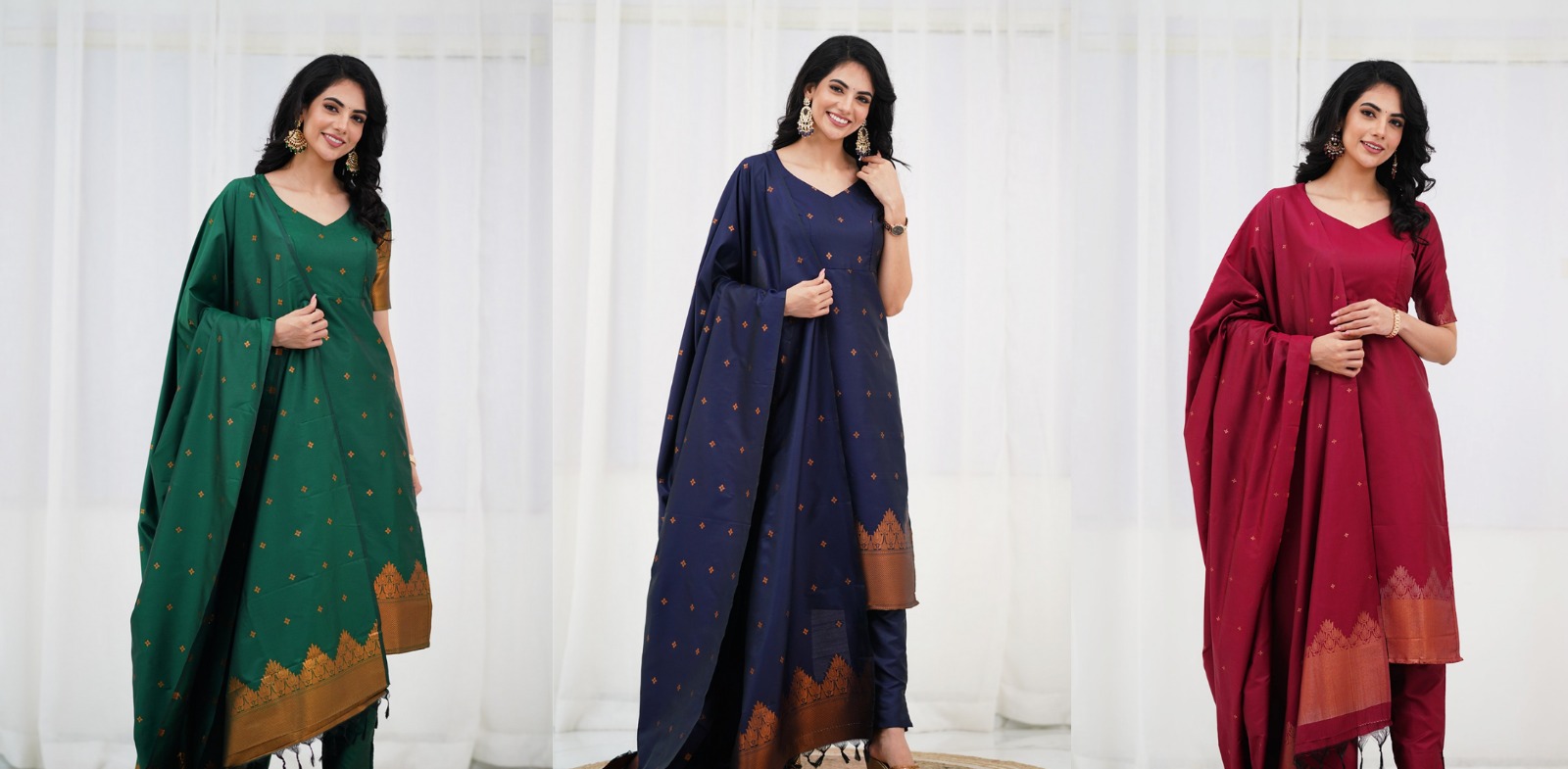
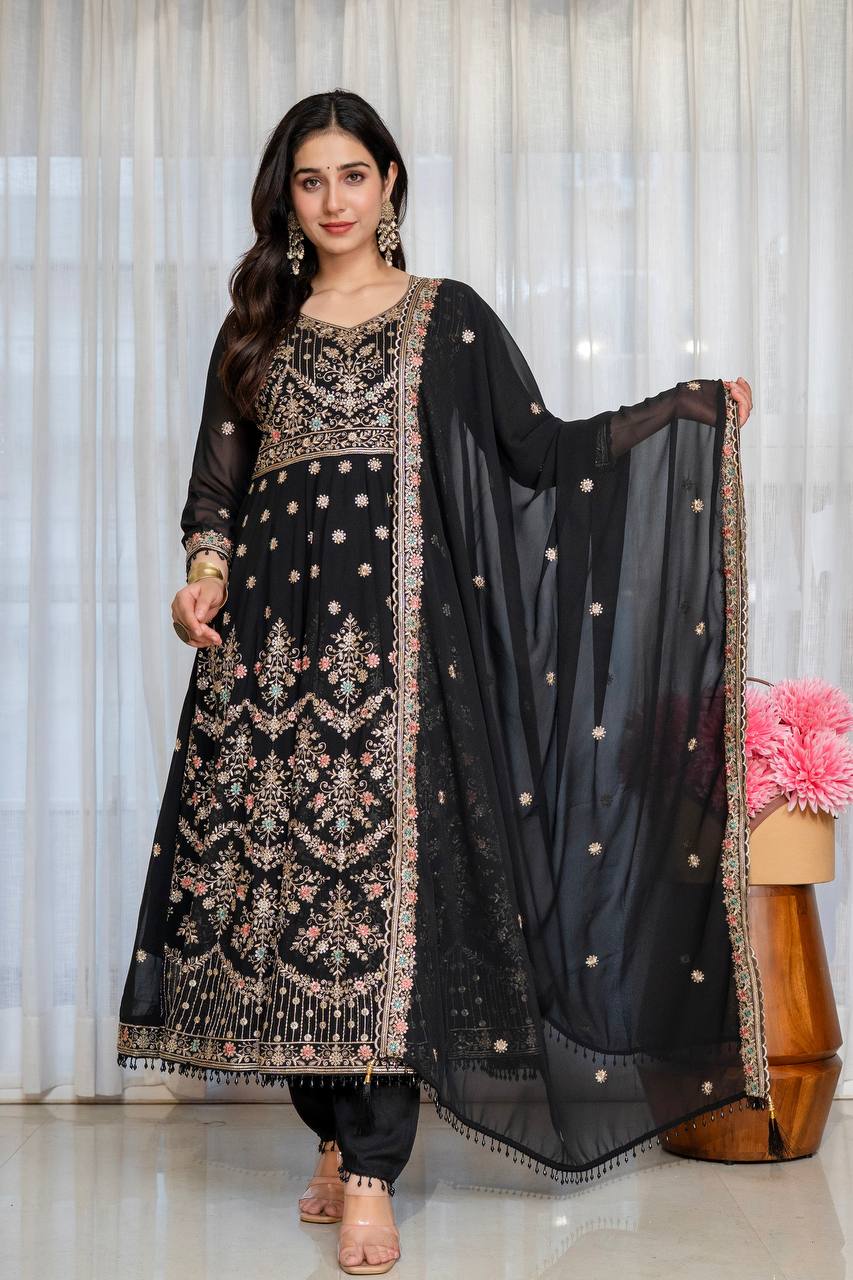
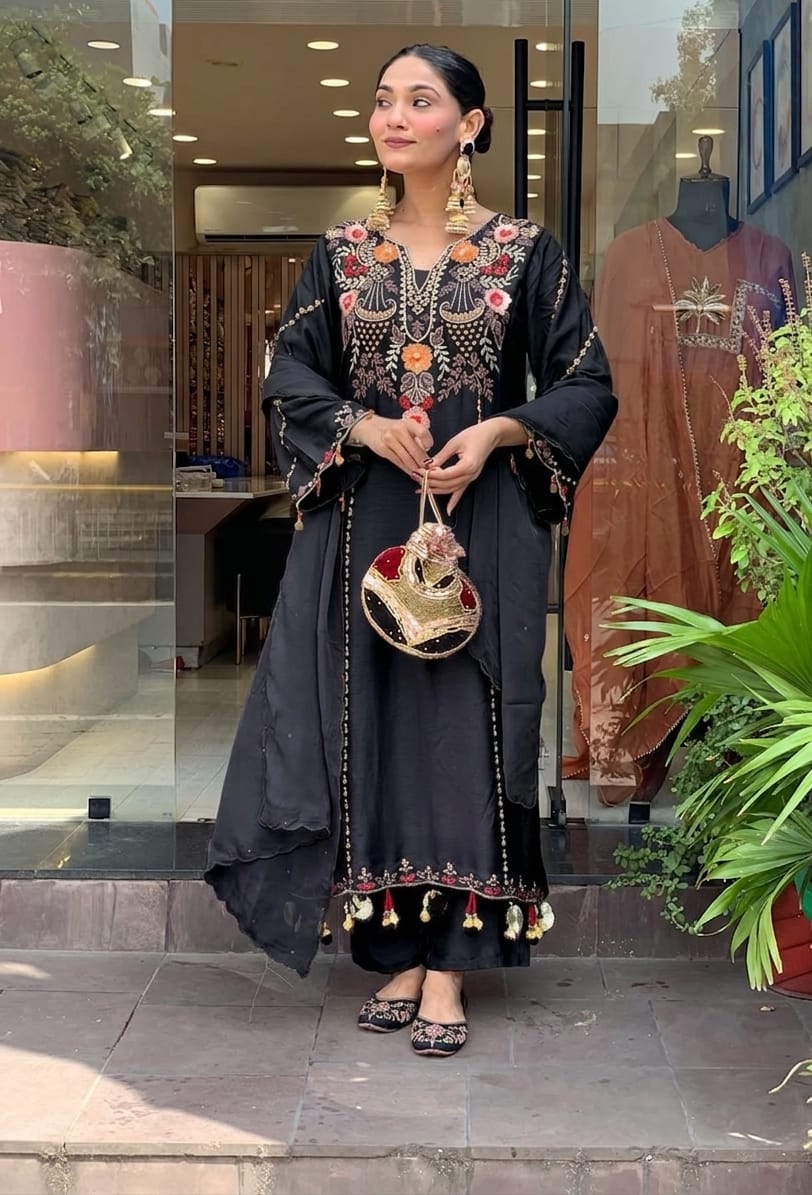
Green Embroidered Anarkali Suit Set for Women offers a balanced direction: green supplies ceremonial depth, while the Anarkali shape provides movement without needing a dramatic veil. Black Anarkali Suit with Zari, Sequins & Moti Lace Work and Black Anarkali Suit Set with Sequin Zari and Moti Lace Work show how black can become occasion wear when zari, sequins and moti lace are used as controlled highlights.
Sharara and palazzo suits for a softer festive effect
Sharara and palazzo suits create a festive outline through the trousers rather than through heavy surface decoration. Choose a moderate flare when the nikkah is held in a compact venue, because excessive volume can bunch under a dupatta and make seated movement awkward.
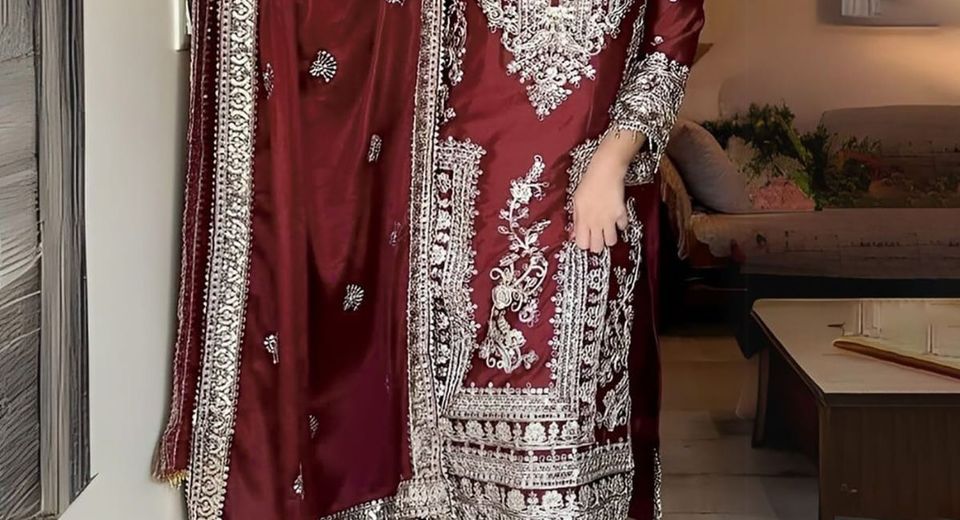
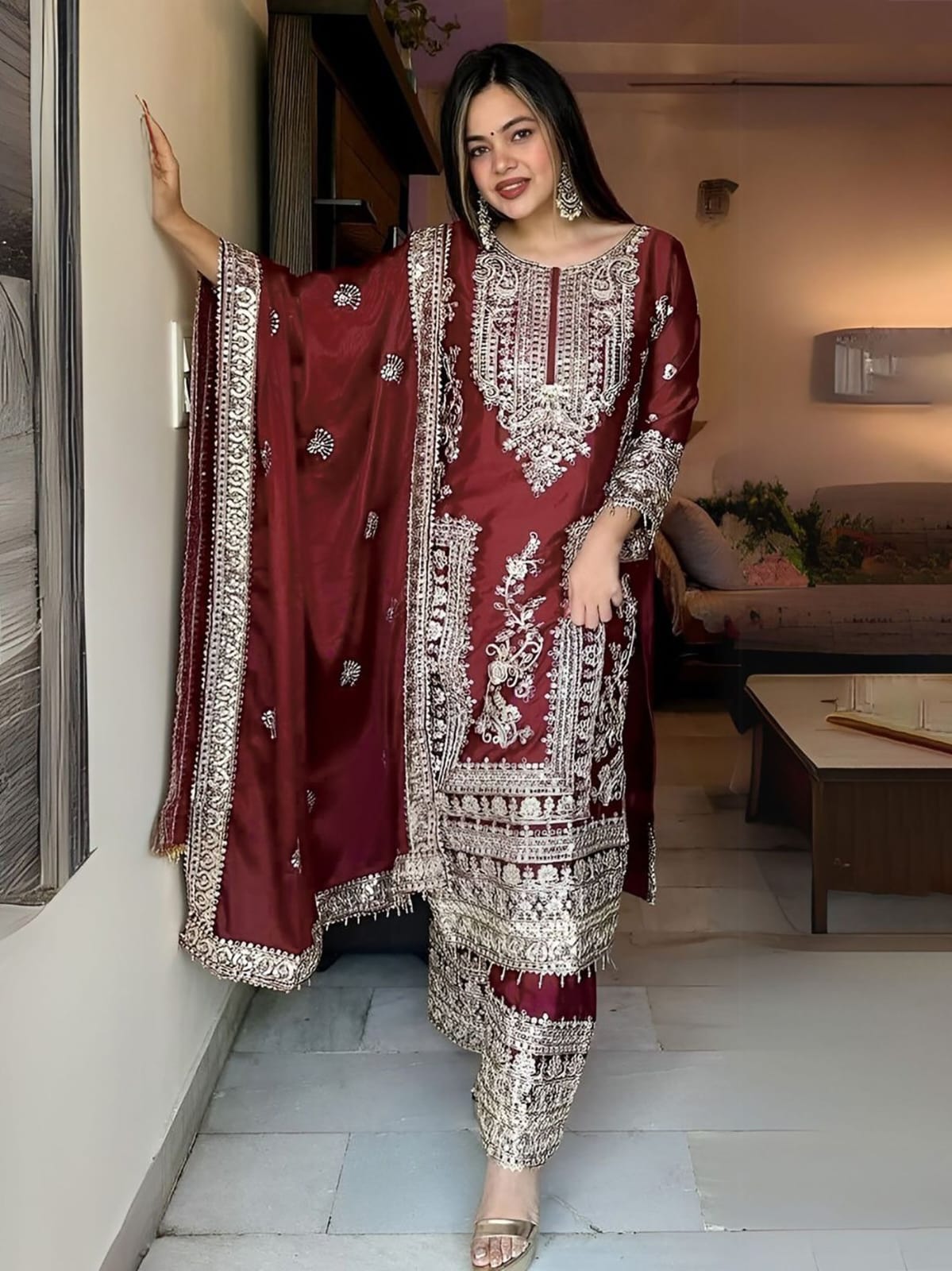
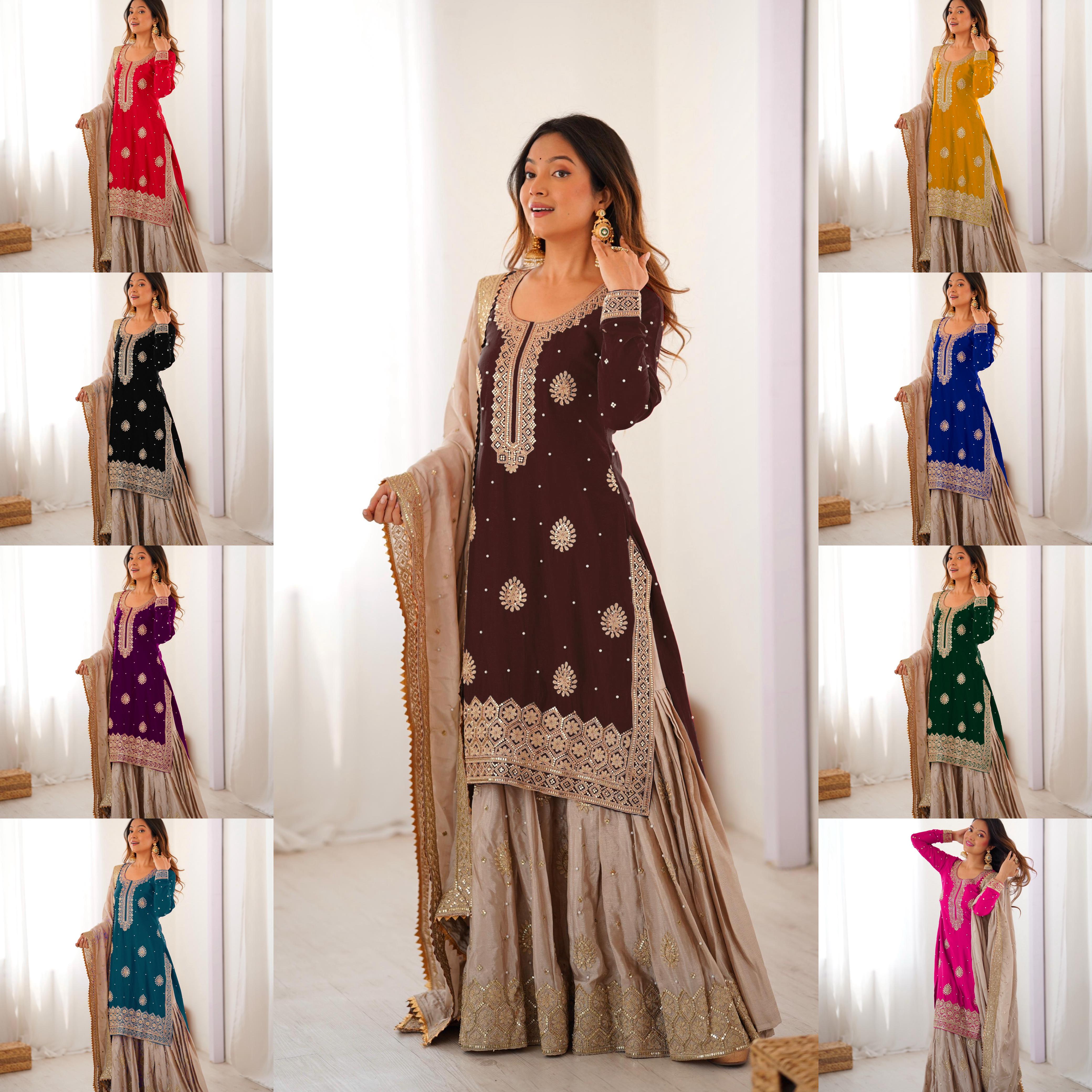
Brown Chinon Silk Sharara Suit Set for Women gives an useful direction for someone who wants warmth and texture without choosing conventional bridal red. Maroon Wedding Wear Embroidered Palazzo Suit Set gives a deeper colour option, but its styling can remain understated when paired with small earrings and a neatly arranged dupatta instead of a layered necklace and ornate headpiece.
How fabric and colour set the ceremony's mood
Fabric and colour determine whether a simple suit reads as daytime, evening, festive or formal more strongly than embellishment alone. Lightweight cotton, crepe and Chanderi generally feel easier for daytime or warm-weather gatherings, while Chinon silk, Banarasi silk and other silk blends create more evening presence through their fall and surface sheen.
Cotton salwar suits for wedding events can work when the ceremony is daytime, informal or held outdoors, but choose a polished weave, clean tailoring and an occasion-appropriate dupatta. Very thin cotton may look too casual beside formal family clothing. A cotton-silk blend, crisp printed cotton or lightly embroidered cotton can bridge the gap more successfully.
Colour choices beyond bridal red
Deep green, maroon, rust, brown, black, mustard and muted jewel tones all suit a small nikkah when the fabric has enough depth. Ivory, champagne and dusty rose can look elegant too, but they need contrast in the border or accessories so the outfit doesn't appear washed out in photographs.
Rust Orange Vichitra Silk Embroidered Kurta Pant Set shows how a warm colour can feel celebratory without imitating heritage bridal red. Rust orange works especially well with antique gold, bronze or pearl accessories. A black suit can be equally formal when paired with zari and one metallic accent, rather than several bright colours.
Regional references can add personality without turning the outfit into a costume. Delhi Wedding Salwar Suits suggest polished urban occasion dressing, while Maharashtra Paithani Inspired Salwar Suits can introduce jewel tones and border-inspired detail. Karnataka Silk Salwar Suits are an useful direction when you want silk texture and a more heritage visual language.
Punjab Phulkari Embroidered Salwar Suits can be considered when threadwork and colour are more important to you than metallic shine. Kalamkari Print Salwar Suits (Copy) offer another route for a daytime gathering, particularly when the venue is informal and the rest of the styling is kept neat.
How to style the dupatta without a bridal drape
A simple dupatta arrangement should frame the face and leave both hands reasonably free. Place one end over the opposite shoulder, secure the shoulder section with a discreet pin and let the remaining length fall beside the body rather than creating multiple heavy layers across the torso.
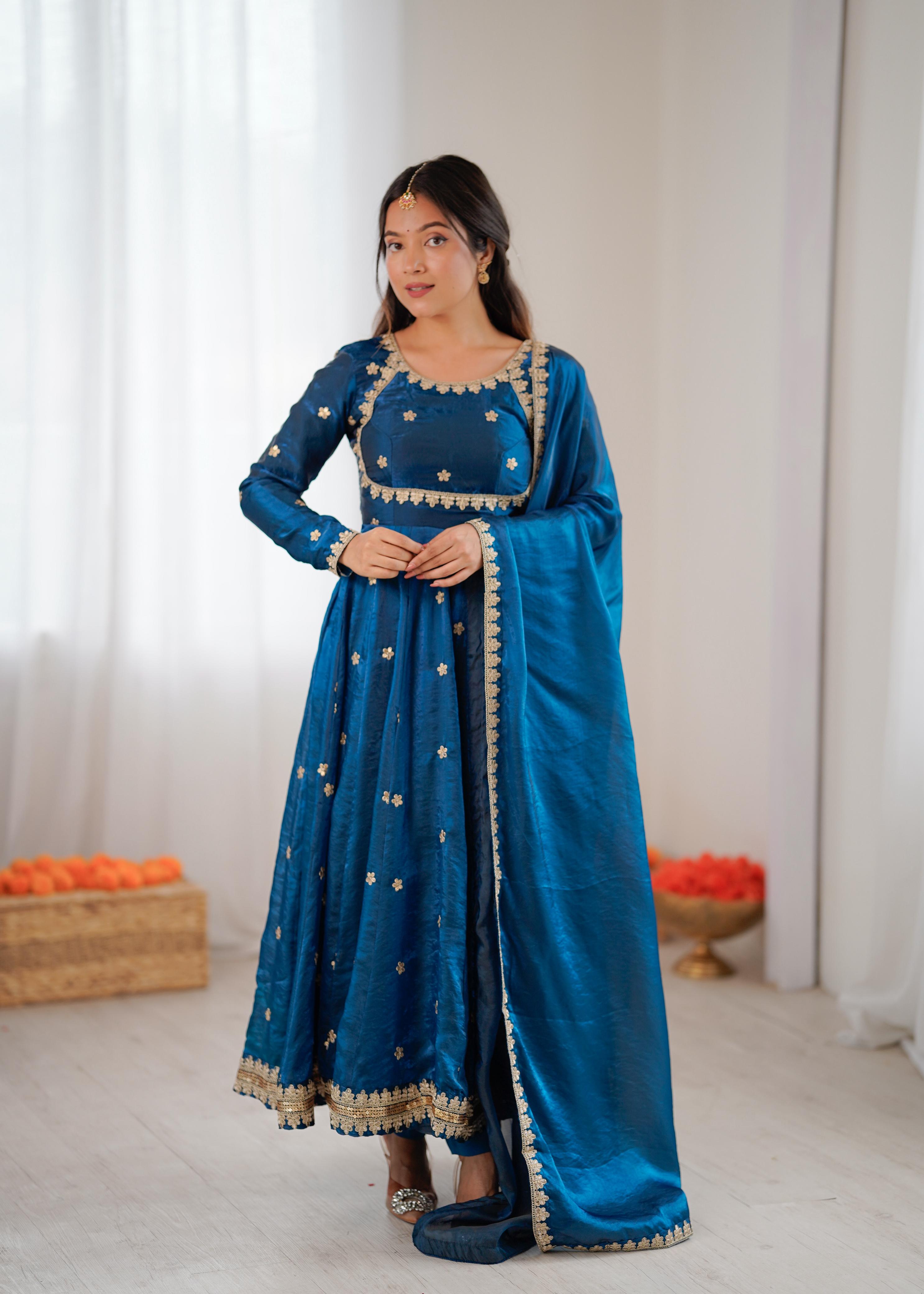
A ready-made salwar suit dupatta may be lightweight, lined, embroidered or bordered, so its treatment should match its construction. A narrow border can be displayed by pleating the dupatta once or twice at the shoulder. A densely decorated edge is better left visible along one side instead of folded into a thick bundle.
For modest coverage, bring the dupatta across the upper chest and pin it near the shoulder seam. Use a small safety pin from the reverse side so the fabric doesn't pull visibly. Avoid placing a brooch through delicate Chinon silk, crepe or fine zari work because repeated punctures can weaken the weave.
Bridal suits with heavy dupattas are designed to make the drape a major part of the outfit. A small nikkah doesn't require that level of layering. If the dupatta is already ornate, keep the jewellery and hairstyle simple; if the dupatta is plain, let the neckline or earrings provide the one additional point of interest.
Jewellery, footwear and beauty that keep the outfit personal
The simplest way to avoid bridal styling is to choose one jewellery category as the lead: earrings, a necklace or bangles. Pearl studs or medium jhumkas work with embroidered suits, while a slim pendant can suit a high-neck kurta that already has visible work.
Match metal thoughtfully rather than matching every detail exactly. Zari may be gold-toned, antique or silver-toned, so accessories don't need to be the same shade as every thread. One metal family usually photographs more coherently than a mixture of bright gold, oxidised silver and coloured stones.
Footwear should provide stable support for standing and greeting guests. A low block heel, embellished jutti or padded flat is more practical than a narrow high heel when the ceremony includes walking on rugs, removing shoes or sitting on a low platform. Test the footwear with the trouser hem before the event so the fabric doesn't catch under the heel.
Makeup can remain fresh and defined rather than fully bridal. Even skin, softly shaped brows, a defined lash line and a lip colour that complements the suit are enough for most intimate ceremonies. A low bun, soft braid or controlled open hairstyle keeps the neckline and dupatta visible without requiring a tiara, matha patti or elaborate hair extensions.
Practical checks before buying a nikkah suit
Check the measurement chart, lining, sleeve length, trouser rise, dupatta dimensions and alteration allowance before purchasing a readymade suit. A garment that looks simple can still feel uncomfortable if the armhole is tight, the lining clings or the trouser hem is too short for the chosen footwear.
For a ceremony lasting three to five hours, breathable lining and a non-restrictive armhole matter more than an extra layer of decoration. Sit in the outfit for at least 10 minutes during a fitting. Check whether the kurta rides up, whether the dupatta stays secure and whether the trouser waistband presses when seated.
Fabric care also affects whether the outfit remains presentable during the event. Follow the care label, keep zari and sequins away from rough surfaces, and avoid spraying perfume directly onto silk, embroidery or metallic thread. Store the suit on a padded hanger after it has fully dried, and fold the dupatta with acid-free tissue if it has dense embellishment.
Putting together the final low-key nikkah look
A polished small-ceremony outfit usually needs one strong garment feature, one coordinated accessory group and one practical dupatta arrangement. For example, a rust silk kurta set can pair with pearl earrings and a pinned shoulder drape, while a green Anarkali can work with antique-gold jhumkas, neutral footwear and a simple low bun.
Designer salwar suits for a wedding party don't have to look heavily embellished to appear considered. Fit, colour depth, fabric fall and clean finishing communicate occasion dressing even when the embroidery is limited. A simple suit also leaves room for personal details, such as a family heirloom ring, a meaningful colour or a dupatta style that feels culturally comfortable.
Choose the outfit in relation to the complete day rather than a single photograph. A suit that lets you sit comfortably, greet relatives, move through the venue and remain composed after several hours will serve the nikkah better than a more dramatic garment that needs constant adjustment. That balance creates elegance without forcing bridal styling onto an intimate celebration.
Common questions about choosing a simple nikkah suit
Which salwar suit is trending now for a small wedding ceremony?
Softly tailored Anarkalis, straight kurta sets, moderate shararas and embroidered palazzo suits are currently flexible choices for small wedding ceremonies. Deep green, rust, maroon, mustard and black with controlled zari work offer a festive appearance without requiring full bridal styling.
What are good salwar suits for a wedding party without looking bridal?
Good options include a silk kurta-pant set, a modest Anarkali, a straight embroidered suit or a sharara with moderate flare. Choose one decorative focus, such as a detailed neckline or bordered dupatta, and keep the jewellery and hair uncomplicated.
Can cotton salwar suits work for a nikkah?
Cotton salwar suits can work for a daytime or informal nikkah when the weave, tailoring and dupatta look polished. Crisp cotton, cotton-silk blends and lightly embroidered cotton are more suitable than very thin everyday cotton.
How should a ready-made salwar suit dupatta be pinned?
Place one end over the opposite shoulder and secure the shoulder area from the reverse side with a small safety pin. For additional coverage, bring the dupatta across the upper chest and pin it near the shoulder seam without piercing delicate zari or fine silk repeatedly.
Where can I buy wedding suits online?
Wedding suits are available through established ethnic-wear websites and verified online collections that provide garment measurements, fabric information, delivery estimates and return terms. Compare the size chart with a well-fitting garment you already own before ordering a readymade suit.
How can I make a simple nikkah suit look formal?
Use a rich or well-defined colour, choose a fabric with graceful fall, press the garment carefully and coordinate one refined jewellery piece with the dupatta. Clean tailoring and secure draping often make a greater difference than adding more sequins or layers.
Common Questions About Choosing a Simple Nikkah Suit
Which salwar suit is trending now for a small wedding ceremony?
Softly tailored Anarkalis, straight kurta sets, moderate shararas and embroidered palazzo suits are versatile choices for small wedding ceremonies. Deep green, rust, maroon, mustard and black with controlled zari work offer a festive appearance without requiring full bridal styling.
What are good salwar suits for a wedding party without looking bridal?
Good options include a silk kurta-pant set, a modest Anarkali, a straight embroidered suit or a sharara with moderate flare. Choose one decorative focus, such as a detailed neckline or bordered dupatta, and keep the jewellery and hair uncomplicated.
Can cotton salwar suits work for a nikkah?
Cotton salwar suits can work for a daytime or informal nikkah when the weave, tailoring and dupatta look polished. Crisp cotton, cotton-silk blends and lightly embroidered cotton are more suitable than very thin everyday cotton.
How should a ready-made salwar suit dupatta be pinned?
Place one end over the opposite shoulder and secure the shoulder area from the reverse side with a small safety pin. For additional coverage, bring the dupatta across the upper chest and pin it near the shoulder seam without piercing delicate zari or fine silk repeatedly.
Where can I buy wedding suits online?
Wedding suits are available through established ethnic-wear websites and verified online collections that provide garment measurements, fabric information, delivery estimates and return terms. Compare the size chart with a well-fitting garment you already own before ordering a readymade suit.
How can I make a simple nikkah suit look formal?
Use a rich or well-defined colour, choose a fabric with graceful fall, press the garment carefully and coordinate one refined jewellery piece with the dupatta. Clean tailoring and secure draping often make a greater difference than adding more sequins or layers.