Simple Bhai Dooj Outfit Ideas for Women Who Love Ethnic Wear begin with one practical question: how long will you be wearing the outfit? A home puja, tilak ceremony, family lunch and photographs can easily stretch across four to six hours, so breathable fabric, a secure drape and comfortable footwear matter as much as colour. A graceful saree, a well-fitted kurta set or a lightly embellished suit can look festive without making a family celebration feel overdressed.
Bhai Dooj usually brings close relatives together in a familiar setting rather than a large formal venue. That makes the festival ideal for outfits with small details: a woven pallu, a contrasting border, pearl earrings, a neat blouse sleeve or a fresh flower in the hair. The strongest look often comes from combining one statement element with quiet accessories instead of wearing heavy embroidery from head to toe.
Simple Bhai Dooj Outfit Ideas for Women Who Love Ethnic Wear and want daytime comfort
The most comfortable Bhai Dooj outfits use breathable fabric, a manageable drape and accessories that don't interfere with family rituals. Linen cotton, handloom cotton and light printed satin are useful choices for daytime celebrations because they offer distinct textures without requiring heavy embellishment.
Fabric determines how an outfit behaves through the day. Linen cotton has a slightly structured fall and generally feels more breathable than dense synthetic fabric. Cotton offers comfort during warm gatherings, while satin provides a smoother drape and a little more sheen. Banarasi soft silk creates a richer festive impression, but its weight and warmth make it more suitable for shorter celebrations or cooler weather.
Colour also affects how formal an outfit appears. Mustard, maroon and teal feel celebratory without requiring extensive embroidery. Ivory, olive beige and sunshine yellow create a softer daytime mood. Navy, grey and woven gold details can anchor brighter shades and prevent the outfit from looking overly sweet or costume-like.
An useful styling formula is one focal colour, one supporting neutral and one metallic accent. Mustard can be paired with navy and antique gold; ivory can be paired with grey and silver; maroon can be paired with muted gold. This three-part approach keeps the outfit coordinated while leaving room for personal jewellery and makeup.
Simple Bhai Dooj Outfit Ideas for Women Who Love Ethnic Wear with bright saree colours
Bright saree colours work best for Bhai Dooj when a solid blouse and restrained jewellery keep the overall look balanced. Sunshine yellow, teal blue and mustard brown are especially effective because each shade feels festive while remaining suitable for a daytime family gathering.
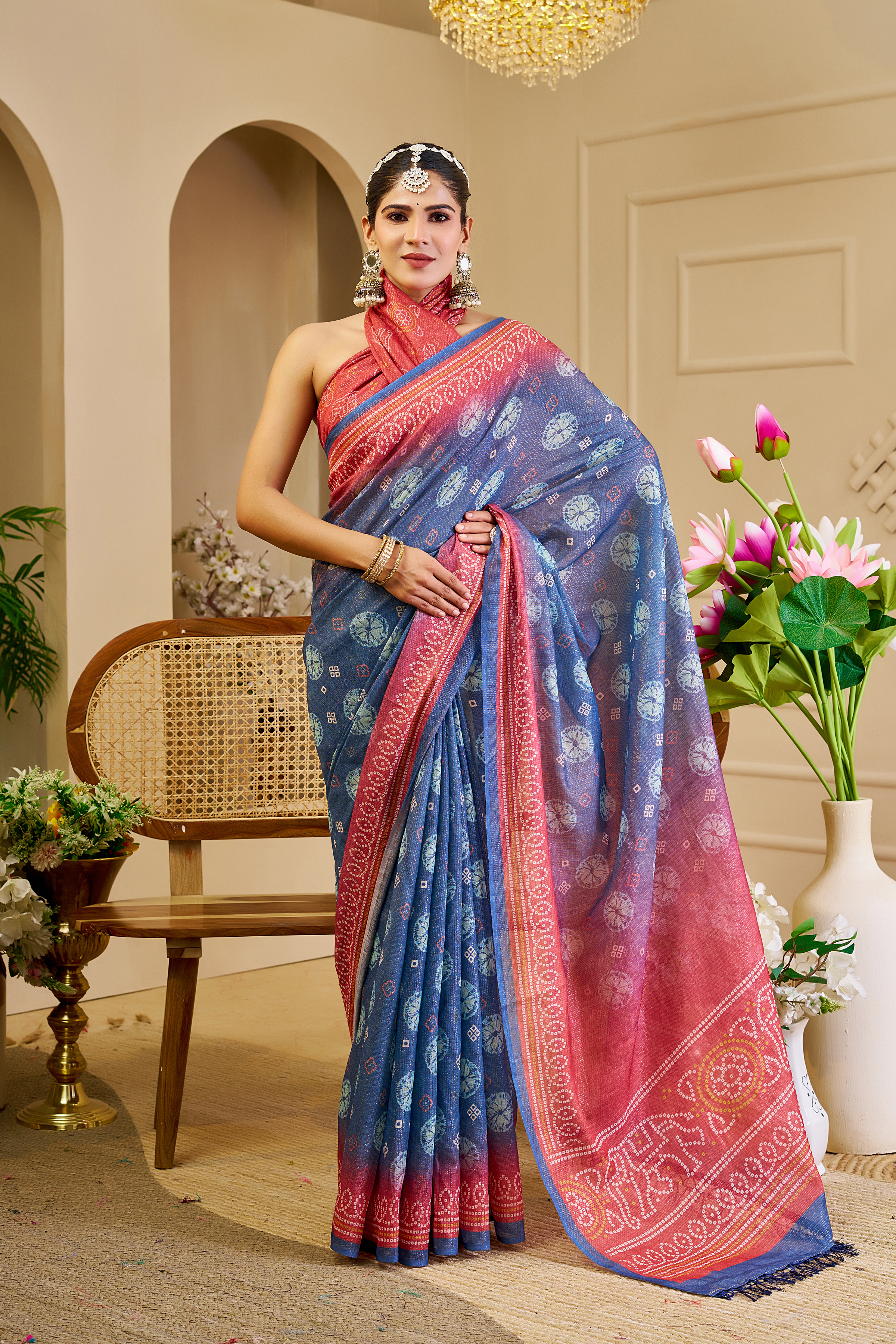
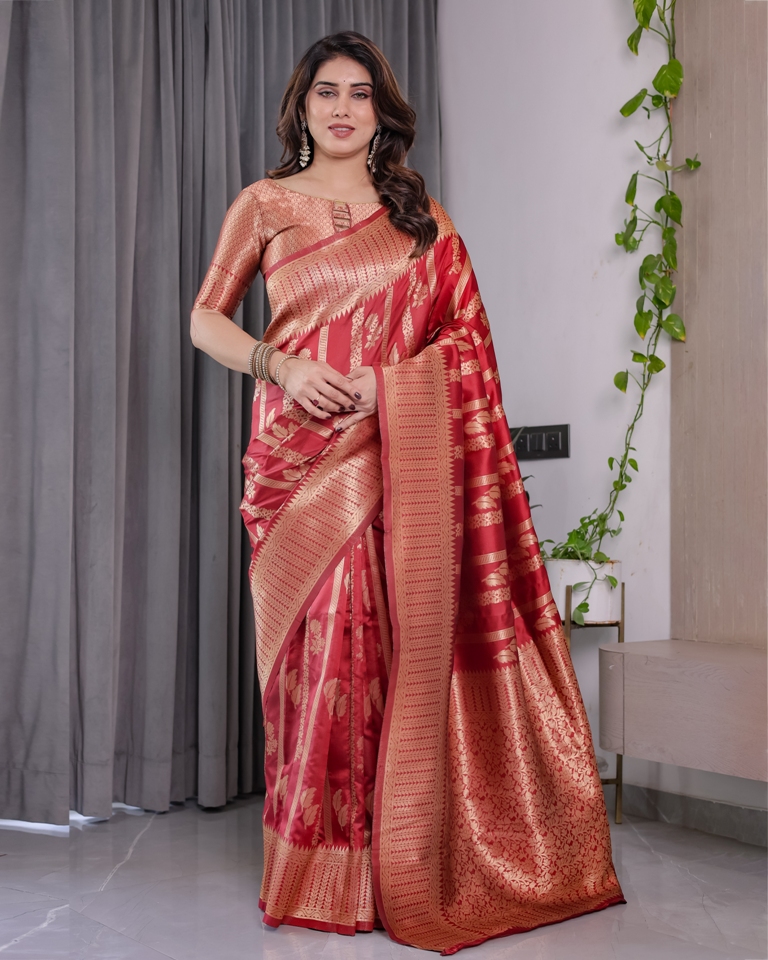 Coral Red Banarasi Soft Silk Saree With Golden Zari Borders
Why does sunshine yellow work for Bhai Dooj?
Sunshine yellow works for Bhai Dooj because it looks cheerful in photographs and needs very little additional decoration. Sunshine Yellow Linen Cotton Saree with Navy Striped Pallu pairs a lively yellow body with a defined navy pallu, giving the saree a contemporary edge.
A navy, ivory or matching yellow blouse will keep the colour combination focused. Gold jhumkas, a slim bangle stack and tan or navy footwear work naturally with yellow and navy. Warm but light makeup, such as peach blush, brown eyeliner and a muted terracotta lip, supports the colour without competing with it.
A low bun or half-up hairstyle is practical when the pallu must stay in place during the tilak ritual. Linen cotton can crease attractively, but the pleats should be pressed before wearing and secured with two hidden pins if the celebration includes frequent movement.
How can teal blue and mustard create an easy festive look?
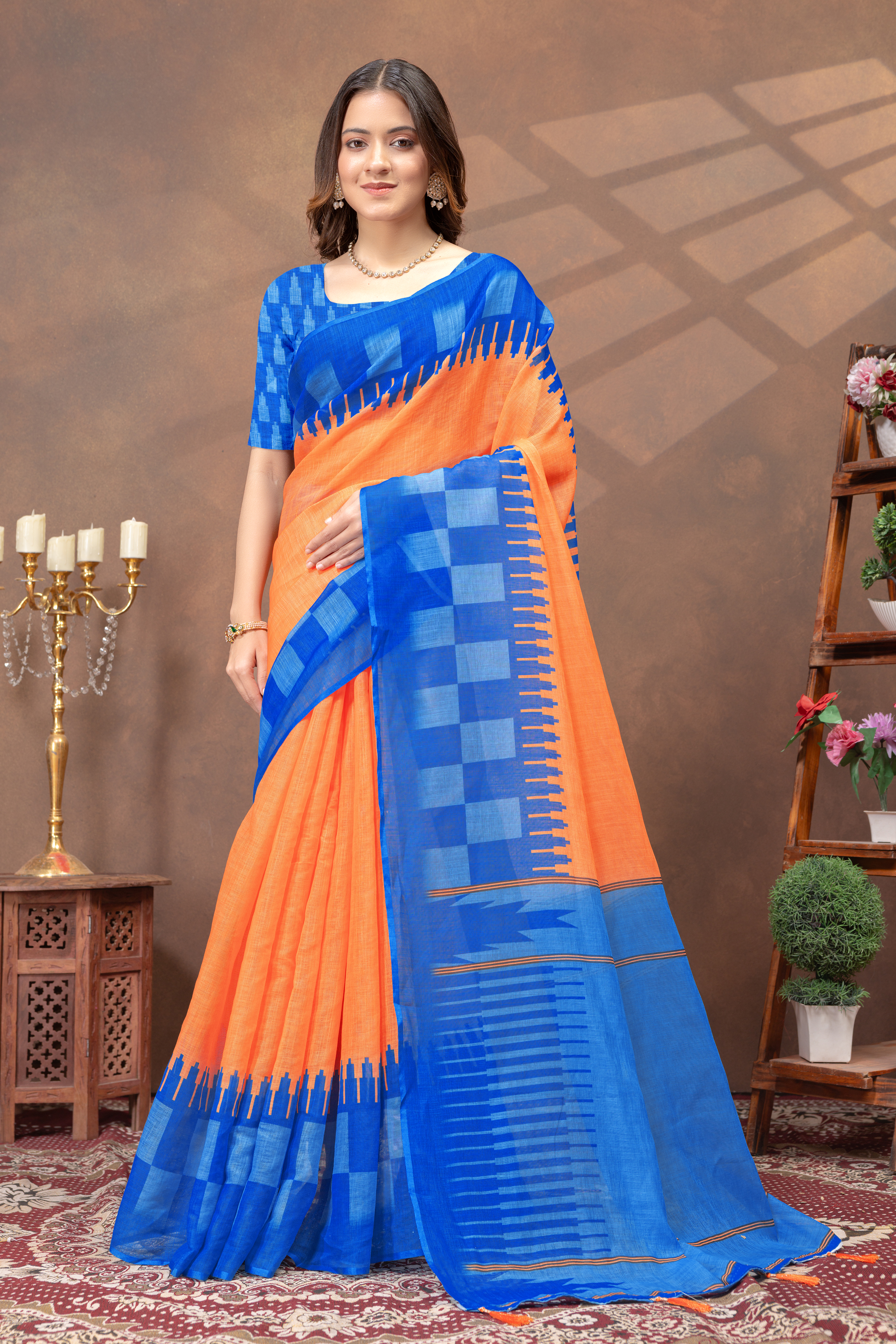
Teal blue and mustard create an easy festive look because the two colours provide contrast without needing sequins or dense embroidery. Teal Blue Floral Printed Satin Saree with Mustard Border suits an afternoon or early-evening Bhai Dooj gathering because the satin surface catches light while the floral print keeps the mood relaxed.
A mustard blouse creates a clear contrast, while a teal blouse produces a more seamless, elongated appearance. Satin can slide more easily than cotton, so use a well-fitted petticoat or saree shapewear option with a secure waistband. Pin the pleats from the inside and anchor the pallu near the shoulder without creating a stiff line.
Small gold hoops, a mustard potli and low block heels are enough to finish the outfit. A blouse with a modest neckline and elbow-length sleeves can make satin feel more appropriate for a family gathering than a heavily embellished or very low-cut design.
Simple Bhai Dooj Outfit Ideas for Women Who Love Ethnic Wear in floral and neutral palettes
Floral and neutral sarees look festive when accessories repeat one colour from the print or border. Repeating a colour twice creates coordination without requiring a matching blouse, bag, shoes and jewellery set.
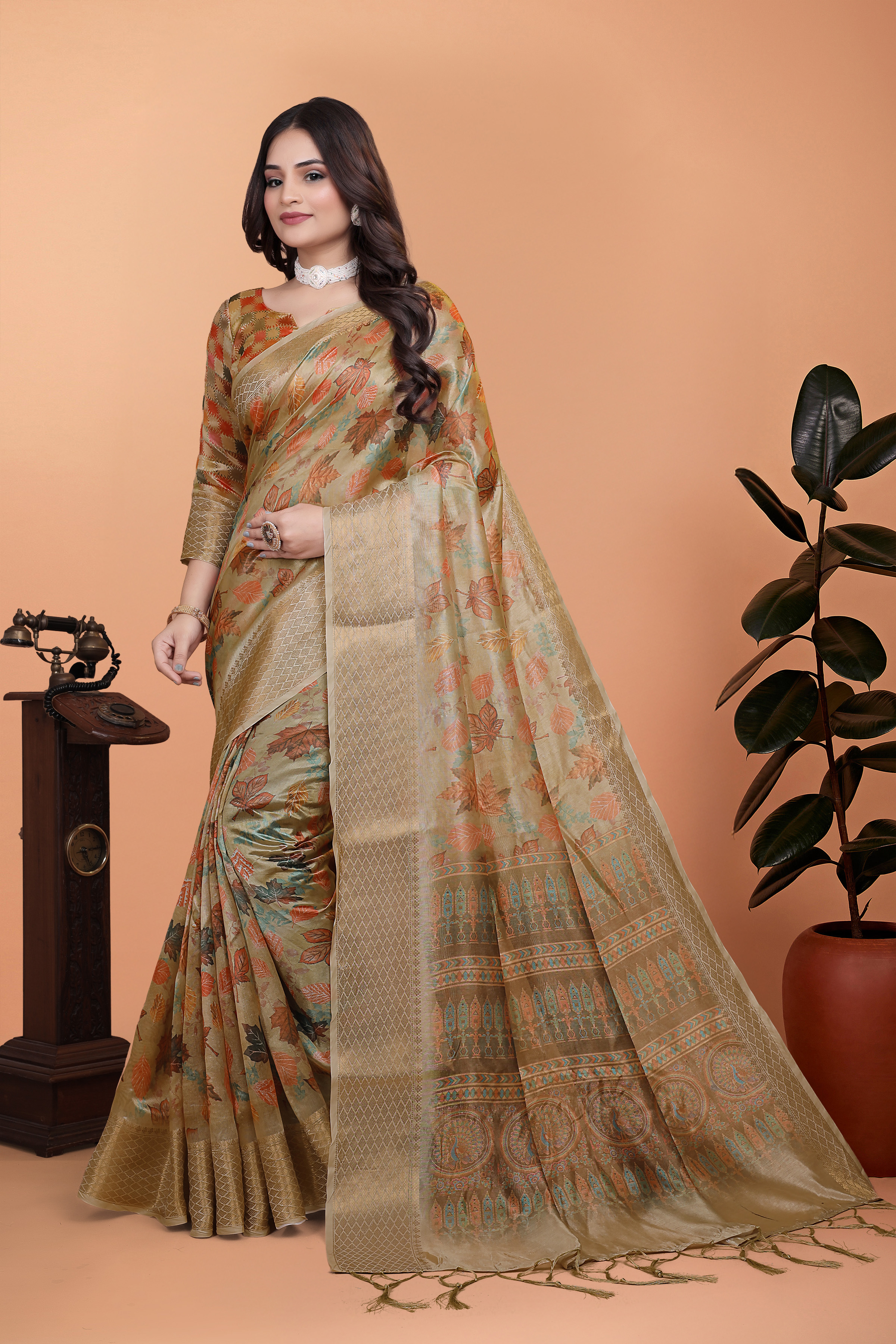 Olive Beige Floral Cotton Saree with Woven Pallu Border
 works particularly well for a relaxed daytime ceremony. Olive beige is quieter than bright yellow or maroon, so the woven pallu can become the visual focus. A rust, olive, cream or muted pink blouse will bring out different parts of the floral design.
For a contemporary result, wear the saree with a sleeveless or elbow-length blouse in a solid colour and add a compact belt only if the saree is securely pinned. For a heritage result, choose a cream blouse, gold jhumkas and a narrow bangle stack. Cotton texture already contributes visual interest, so avoid pairing the saree with a heavily embroidered blouse.
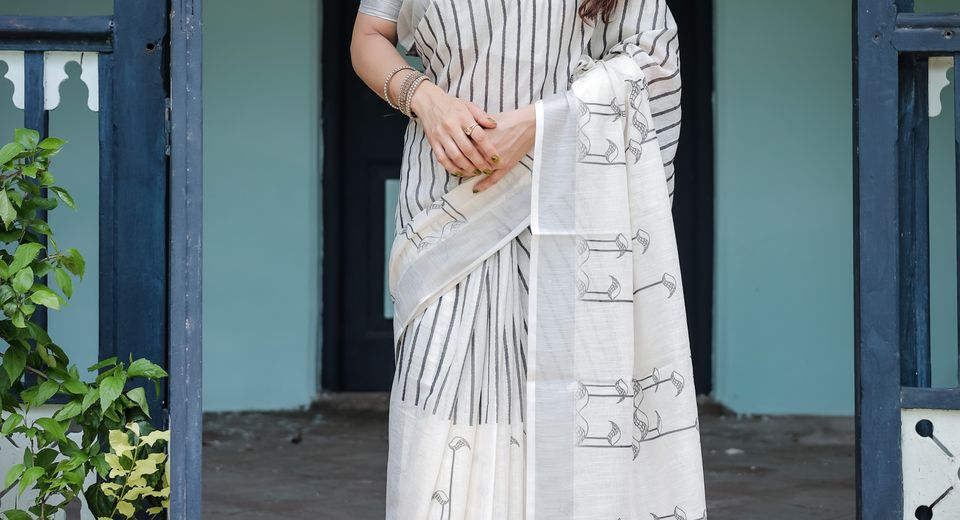
Ivory Linen Cotton Saree with Grey Rose Floral Print creates a softer option for women who prefer pale colours. Grey rose motifs prevent ivory from looking plain, while linen cotton gives the drape enough structure for neat pleats. A grey, dusty rose or silver blouse will preserve the gentle palette.
Silver jhumkas, a rose-toned bindi and a small metallic clutch can make an ivory saree feel occasion-ready. Ivory fabric deserves extra care around turmeric, kumkum, oil and coloured sweets because stains can become noticeable quickly. A discreet underskirt and two hidden pins can also prevent the pale pallu from shifting while serving food or greeting relatives.
Simple Bhai Dooj Outfit Ideas for Women Who Love Ethnic Wear with a subtle festive sheen
A subtle festive sheen adds occasion value without making a simple Bhai Dooj outfit look too formal. Mustard brown shimmer linen cotton, handloom cotton with zari and lightly reflective satin provide different levels of shine for different celebrations.
 Sunshine Yellow Linen Cotton Saree with Navy Striped Pallu
Mustard Brown Shimmer Linen Cotton Floral Saree with Border brings festive texture without the visual weight of dense sequins. The shimmer catches light gently, while the floral design keeps the saree suitable for a home-based celebration. Pair the saree with a chocolate brown, deep green or antique-gold blouse for a richer autumnal palette.
Choose oxidised gold or antique-finish jewellery instead of bright yellow gold if the saree has a muted surface. A single long necklace, medium jhumkas and two bangles can create proportion without hiding the floral pattern. A small bindi in maroon or brown will connect the accessories to the outfit.
Blue Tissue Handloom Cotton Saree With Zari | Varnavi's gives another route to festive dressing: the lightness of handloom cotton with zari detail that catches the eye. Blue pairs well with silver jewellery for a cooler palette or gold jewellery for a warmer, traditional effect. A simple blouse in blue, ivory or soft gold will allow the zari to remain visible.
A tissue or zari-accented cotton saree is useful when the wearer wants a festive look that remains manageable during a long family visit. Choose a structured blouse and avoid a very slippery lining so the pleats stay aligned. Low wedges or cushioned sandals will make walking and standing more comfortable than narrow high heels.
Simple Bhai Dooj Outfit Ideas for Women Who Love Ethnic Wear with Banarasi and zari
Banarasi and zari sarees suit Bhai Dooj when the celebration is formal, the weather is cool or the wearer wants one rich classic element. The saree should carry most of the visual interest, allowing the blouse and jewellery to remain controlled.
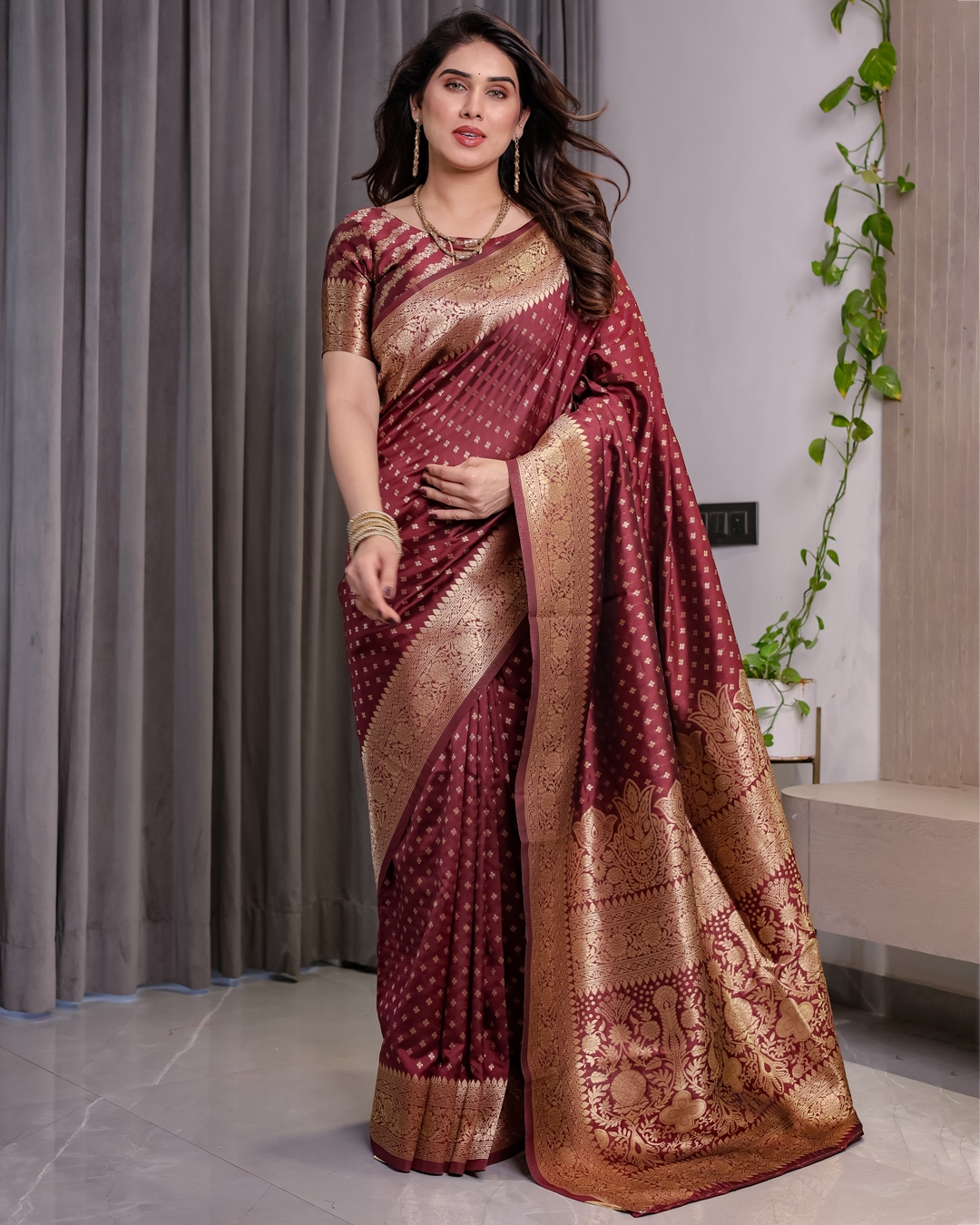 Maroon Banarasi Soft Silk Saree with Golden Zari Border
 gives immediate festive depth through its colour, silk texture and zari edge. The saree can carry the entire outfit, so the blouse should remain clean and well-fitted. A maroon blouse creates a classic monochromatic appearance, while a muted gold blouse makes the zari border more prominent.
Banarasi soft silk is usually heavier than linen cotton or ordinary cotton, so pleat fewer layers if the weave is substantial and use a supportive petticoat. Store the saree folded in breathable cotton or muslin rather than plastic. After wearing, air the saree away from direct sunlight before folding it again.
Keep zari away from perfume, hairspray and moisture because chemical exposure can dull metallic threads over time. Do not iron zari directly at high heat; place a thin cotton cloth between the iron and the saree, and use a low or medium setting according to the care label.
Buy Multicolor Satin Floral Saree with Woven Border Varnavi can suit women who prefer a colourful outfit with a more fluid drape. Because a multicolour floral saree already contains several shades, choose one blouse colour from the print and repeat that colour in the bindi or handbag rather than adding another contrasting shade.
Simple Bhai Dooj Outfit Ideas for Women Who Love Ethnic Wear and need practical styling
Practical styling depends on blouse fit, secure pleats, suitable footwear and accessories that remain comfortable for at least four hours. Small construction decisions often make a bigger difference than adding more decoration.
 Mustard Brown Shimmer Linen Cotton Floral Saree with Border
The shoulder seam should sit on the shoulder bone, the armhole should allow comfortable movement and the bust area should not pull when the arms are raised. Elbow-length sleeves offer coverage and make a simple saree appear more polished, while short sleeves suit lighter cotton and linen-cotton drapes.
Jewellery can follow the scale of the border. A narrow border works with small hoops or delicate jhumkas. A broad zari border can support heritage jhumkas, a short necklace or a pair of bangles. Avoid wearing a large necklace, oversized earrings, stacked bangles and a statement ring together if the saree already has a strong print or shimmer.
Footwear should be selected before the final saree length is pinned. Flat embellished sandals suit a home gathering, low block heels work for longer standing periods and cushioned wedges offer height without putting as much pressure on the front of the foot. The hem should sit just above the floor when the wearer is wearing the chosen footwear.
Secure the saree before applying perfume or hair spray. Fragrance and alcohol-based styling products can affect zari, silk and some synthetic fibres, particularly when sprayed close to the pallu or blouse. Apply personal care products first, wait until they dry, and then dress in the saree.
Simple Bhai Dooj Outfit Ideas for Women Who Love Ethnic Wear with easy alternatives
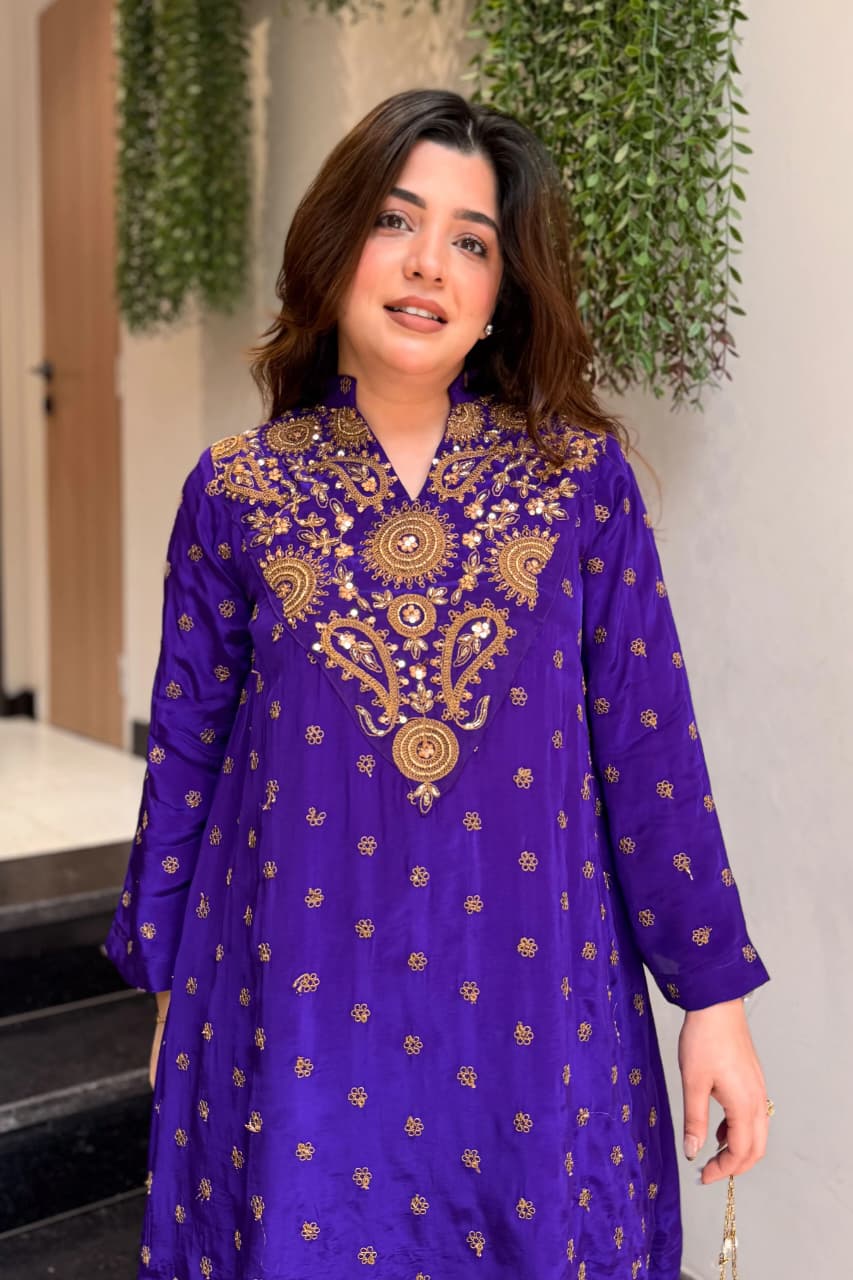
Women who don't want a saree can choose a straight kurta set, a palazzo suit, a sharara with a lightweight dupatta or a long printed anarkali. The same principles still apply: select one festive detail, maintain movement comfort and coordinate the outfit around two or three colours.
 Teal Blue Floral Printed Satin Saree with Mustard Border
A straight kurta in mustard, teal, maroon or ivory can be paired with cigarette trousers for a neat family-lunch outfit. A palazzo suit brings more ease for sitting on the floor, while a sharara creates festive volume without requiring a heavy lehenga. Choose cotton, rayon, chanderi or light silk blends according to the weather and the length of the celebration.
Dupatta placement deserves attention during Bhai Dooj rituals. A lightweight dupatta can be pleated over one shoulder and secured near the collarbone, or worn across both shoulders when the wearer expects to move between rooms. Avoid a very long, loose dupatta if children, lamps or food trays will be nearby.
Makeup should support the outfit rather than turn a simple look into a formal reception look. A clean base, kajal or brown liner, a small bindi, soft blush and a comfortable lip colour are usually sufficient. Jasmine, a low bun, a braid or a simple hair clip can add a heritage note without requiring an elaborate hairstyle.
Simple Bhai Dooj Outfit Ideas for Women Who Love Ethnic Wear: care after the celebration
Care after Bhai Dooj should begin with airing, stain assessment and correct folding rather than immediate machine washing. Different fabrics require different handling, especially when sarees include zari, silk, satin or pale colours.
 Ivory Linen Cotton Saree with Grey Rose Floral Print
Air cotton, linen cotton and handloom cotton sarees in shade for several hours after wearing. Do not leave coloured sarees in direct sunlight for extended periods because strong light can fade dyes. Fold the saree with the pallu inside and refold it every few months to reduce permanent crease lines.
Banarasi soft silk and zari sarees should usually be dry-cleaned according to the care label. Wrap them in unbleached muslin or breathable cotton and store them away from damp walls, cedar products and direct contact with rough wood. Avoid plastic garment covers for long-term storage because trapped moisture can affect the fabric and metallic threads.
For a small fresh-food mark, blot gently with a clean, dry cloth instead of rubbing. Turmeric, kumkum, oil and sweet syrup can spread when scrubbed. If a stain remains visible, professional cleaning is safer than experimenting with detergent on silk, zari or satin.
Simple Bhai Dooj dressing becomes more enjoyable when the outfit supports the celebration instead of demanding attention throughout it. A breathable saree, a secure drape, a well-fitted blouse and two carefully selected accessories can create a look that feels time-honoured, personal and comfortable from the first tilak to the final family photograph.
Common Questions About Simple Bhai Dooj Outfit Ideas for Women Who Love Ethnic Wear
What is the simplest saree outfit for Bhai Dooj?
A lightweight cotton or linen-cotton saree with a solid blouse is the simplest saree outfit for Bhai Dooj. Add medium jhumkas, a small bindi and flat or low-heeled footwear for a polished look that remains comfortable during a long family gathering.
Which saree colours are suitable for a daytime Bhai Dooj celebration?
Sunshine yellow, teal, mustard, olive beige, ivory and maroon are suitable for a daytime Bhai Dooj celebration. Bright shades look cheerful, while neutral shades create a quieter appearance; a contrasting border or woven pallu can make either palette feel festive.
Can I wear a Banarasi saree for Bhai Dooj at home?
You can wear a Banarasi saree for Bhai Dooj at home when you want a richer traditional look or the weather is cool. Choose a clean blouse, minimal jewellery and secure pleats so the soft silk's weight does not make movement uncomfortable.
How can I keep a satin saree from slipping during Bhai Dooj rituals?
A fitted petticoat or saree shapewear waistband helps keep a satin saree from slipping. Secure the pleats from the inside, pin the pallu near the shoulder and avoid overly smooth blouse fabrics that allow the drape to slide.
What jewellery goes best with a simple Bhai Dooj saree?
Medium jhumkas, small hoops, a short necklace or two bangles work well with a simple Bhai Dooj saree. Match jewellery scale to the saree border: delicate pieces suit narrow borders, while zari borders can support antique gold or heritage-style earrings.
What should I wear for Bhai Dooj if I do not want a saree?
A straight kurta set, palazzo suit, sharara or long anarkali is a comfortable alternative to a saree for Bhai Dooj. Choose one festive colour, a manageable dupatta and breathable fabric so the outfit remains easy for sitting, serving food and greeting relatives.