A Sikkim Cultural Festival Fashion Guide for Women needs to account for two things at once: Sikkim's remarkable cultural diversity and its changing mountain weather. A silk saree, kurta set or layered ethnic outfit can look festive without copying a community garment carelessly. The most successful outfit combines a breathable base layer, a warm outer layer, comfortable footwear and colours that suit the celebration.
Sikkim's festivals bring together Lepcha, Bhutia and Nepali traditions, along with Buddhist, Hindu and local seasonal observances. Losar, Pang Lhabsol, Tendong Lho Rum Faat, Saga Dawa, Dasain and Tihar don't all have the same dress expectations. Visitors and guests should therefore treat traditional clothing as cultural knowledge rather than a costume prompt.
Sikkim Cultural Festival Fashion Guide for Women: Start with the setting
Women should choose modest, comfortable festive clothing with a warm layer and avoid imitating ceremonial dress without understanding its meaning. A coordinated kurta set, saree with a full-sleeved blouse or elegant salwar suit usually works well for guests.
Festival clothing in Sikkim must perform in real conditions. Gangtok can feel cool and damp even when the daytime sun is bright, while higher destinations may become sharply cold after sunset. Monsoon showers, uneven roads, temple visits and long periods of standing also influence what will feel practical.
For an indoor cultural programme, a silk saree or embroidered kurta set can provide enough polish. For an outdoor procession or monastery visit, add a shawl, woollen stole, thermal camisole or tailored jacket. Clothing should allow easy movement and should not trail on wet paths.
Respectful dressing doesn't require muted clothing. Jewel tones, ivory, saffron, maroon, emerald, teal and soft pastels can all look appropriate when the silhouette remains neat and the outfit isn't overloaded with unrelated symbolic motifs. A high neckline, secure dupatta and hemline that stays clear of the ground are useful choices for active festival days.
Sikkim Cultural Festival Fashion Guide for Women: Understand regional dress
Sikkim has no single universal heritage dress, so women should identify the community and festival context before selecting cultural references. Bhutia clothing, Lepcha clothing and Nepali festive dress each carry different histories, forms and styling details.
Bhutia influences and the Bakhu
The Bakhu, also called kho in related Himalayan contexts, is a wrapped robe associated with Bhutia dress. Women may wear it with a blouse, belt and apron-like layer, while the exact construction and styling can vary. Guests should not treat a Bakhu as a generic "Sikkim costume" or alter ceremonial elements merely for visual effect.
A contemporary guest can acknowledge the wrapped shape through a belted long jacket, a draped stole or a structured kurta without claiming to wear heritage Bhutia attire. A solid silk or wool-blend layer creates a respectful visual connection while remaining clearly modern.
Lepcha and Nepali textile references
Lepcha clothing has its own woven forms and distinctive cultural history, while Nepali communities in Sikkim wear sarees, gunyu-cholo influences, kurta sets and other South Asian festive garments. Regional identity isn't represented by one colour, one embroidery style or one accessory.
Pangden, a striped apron associated particularly with married Tibetan women, is a meaningful garment rather than a decorative sash. Visitors should not wear Pangden simply as a prop unless a knowledgeable host has explained that context. A plain shawl or dupatta is a safer styling choice for guests who want a layered appearance.
At a monastery or Buddhist religious site, remove sunglasses and hats when appropriate, keep shoulders and knees reasonably covered, and follow local instructions about photography. A neatly draped dupatta can be useful for modesty, but clothing should never be presented as an imitation of monastic robes.
Sikkim Cultural Festival Fashion Guide for Women: Choose weather-ready fabrics
Layerable natural or breathable fabrics work best because Sikkim's temperature can change considerably between morning, afternoon and evening. Silk, cotton, linen-cotton blends, Chanderi and medium-weight viscose can all work when combined with a warm outer layer.
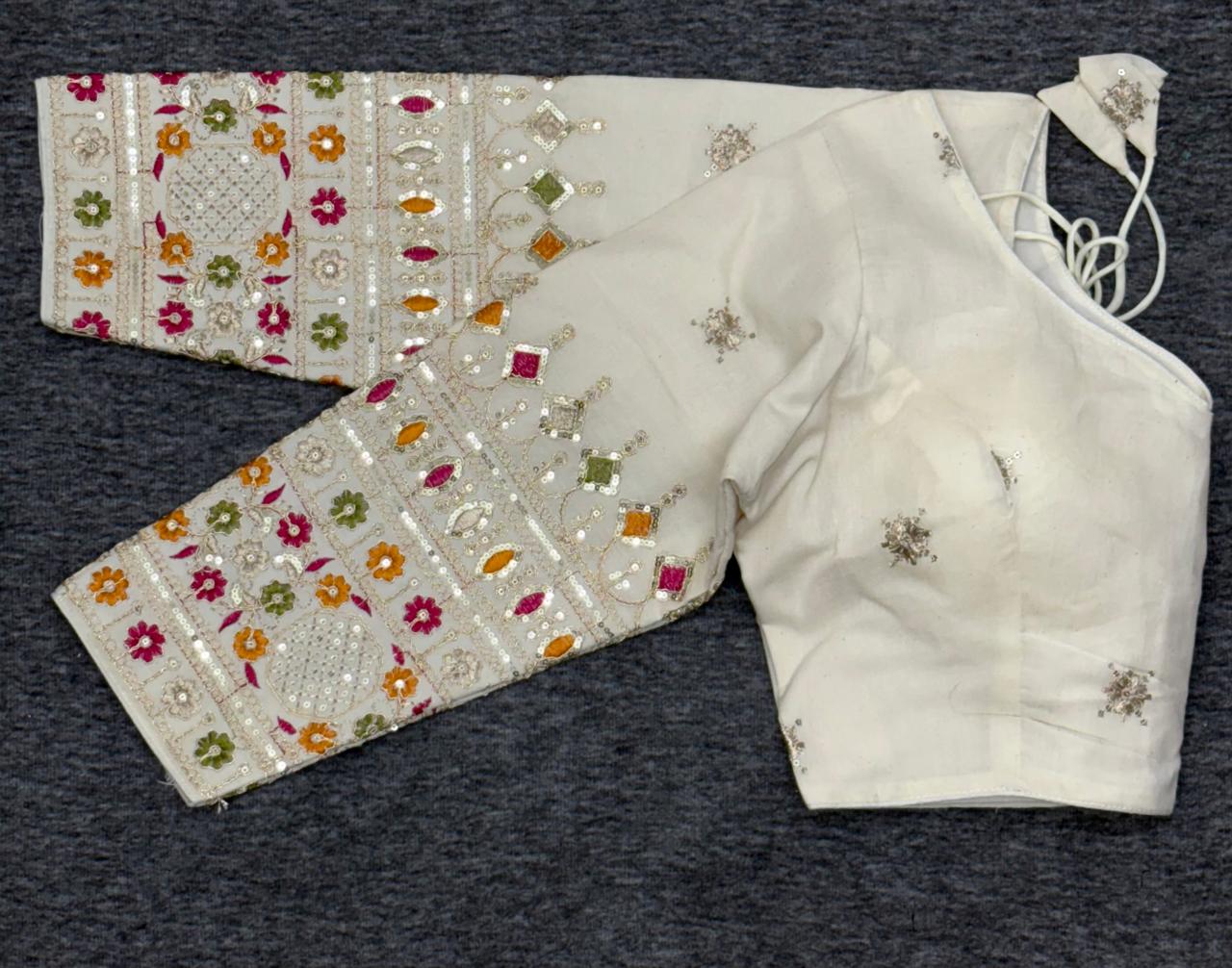
Banarasi silk and heavier silk sarees are suitable for evening receptions or indoor celebrations, but they may feel cumbersome during a long outdoor programme. Lightweight silk, cotton silk and Chanderi offer festive sheen with better movement. Chanderi can be delicate, so protect the fabric from rough stone walls, jewellery snags and persistent rain.
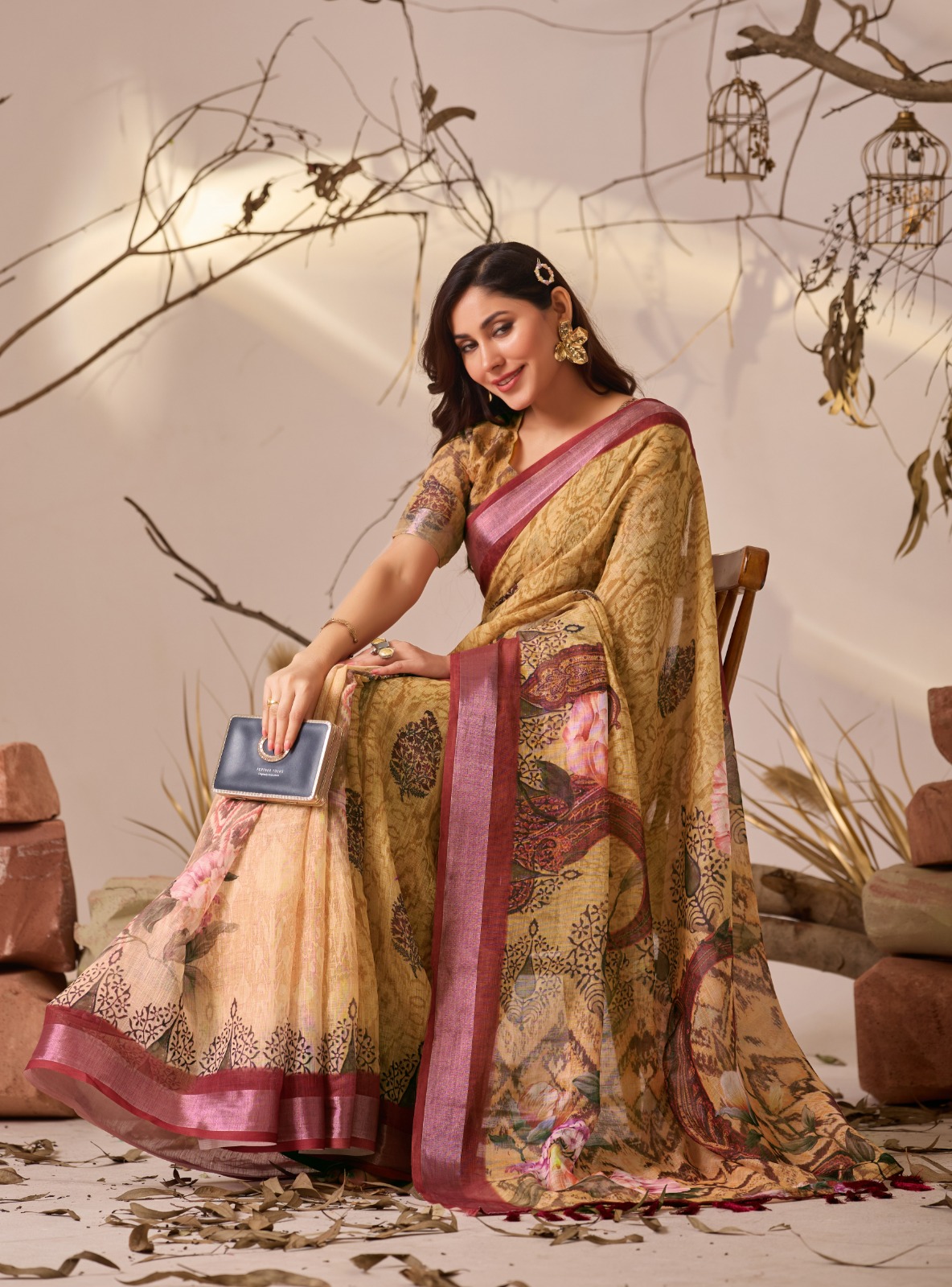
Cotton is comfortable in mild daytime weather, although a very thin cotton outfit may not be sufficient in a chilly hill town. A linen-cotton saree or kurta set can be paired with a woollen stole. Pastel Linen Cotton Floral Print Saree with Designer Blouse demonstrates how a lighter daytime silhouette can remain celebratory without relying on heavy embellishment.
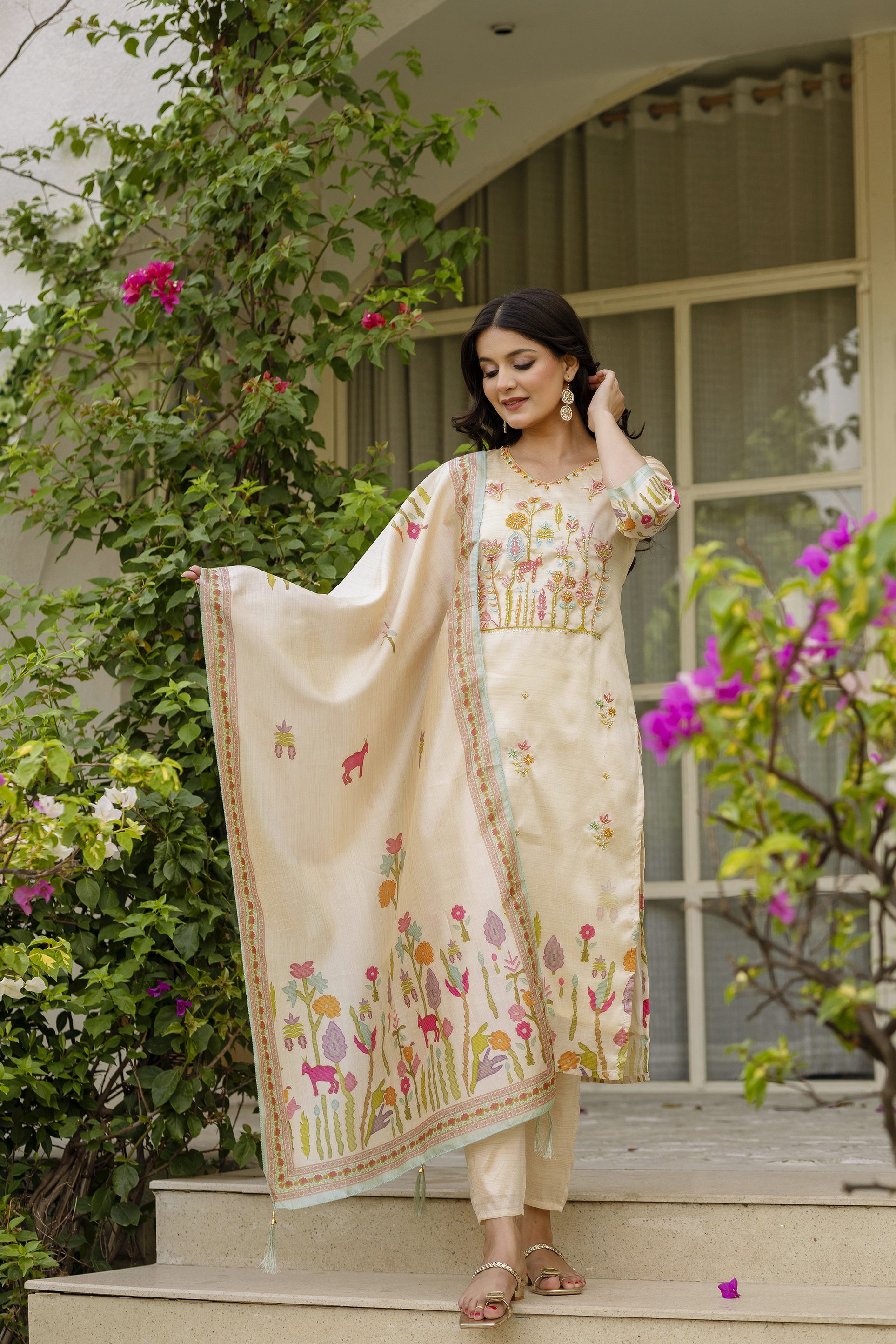
Silk blends and embroidered fabrics are useful for evening events because they retain warmth better than extremely sheer textiles. Beige Embroidered Silk Kurti Pant Dupatta Set Women offers a three-piece format that can be adapted with a thermal inner layer and closed shoes. The dupatta also provides extra coverage during travel.
Rain requires a little planning. Pack a compact umbrella, a breathable waterproof layer and a separate cloth bag for damp footwear or a wet dupatta. Avoid untreated velvet, fragile tissue or heavily trailing hems when the forecast predicts prolonged rain.
Sikkim Cultural Festival Fashion Guide for Women: Match outfits to occasions
The right outfit formula depends on the festival schedule, location, weather and amount of walking rather than on a single definition of ethnic wear. Three-piece sets and controlled drapes are especially practical because they provide coverage without restricting movement.
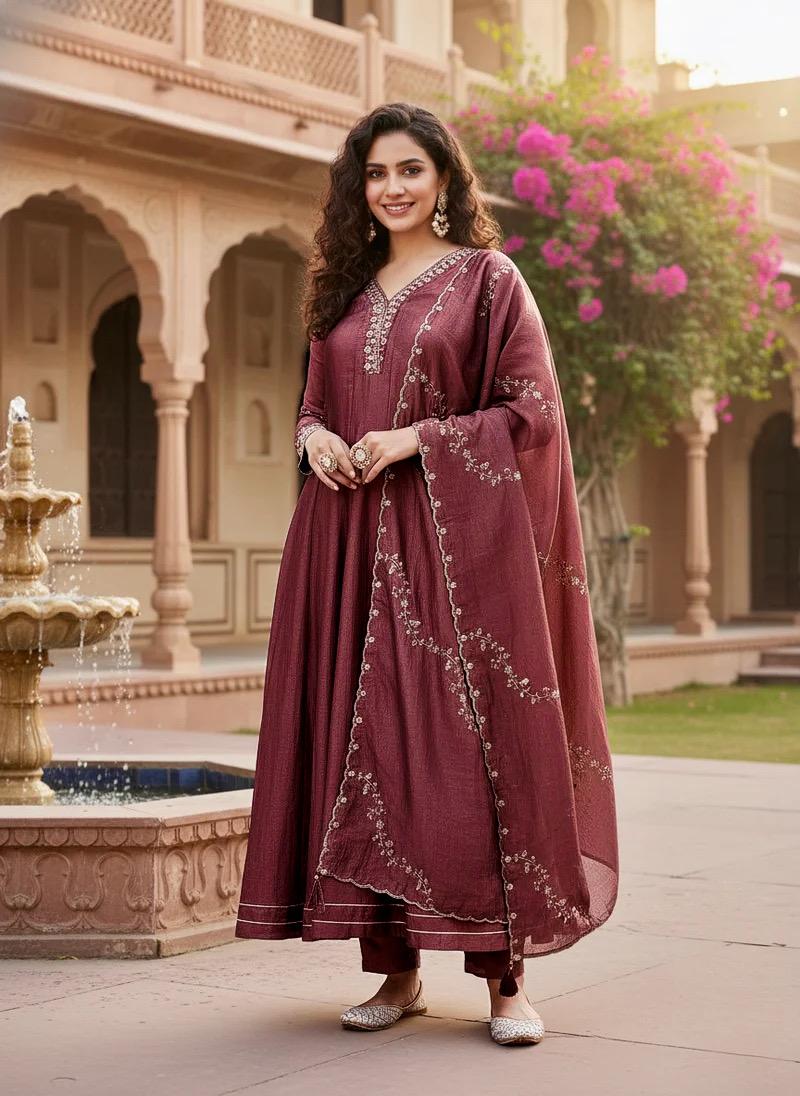
For daytime cultural programmes
A breathable kurta set with straight pants, a light dupatta and low-profile footwear is a reliable daytime choice. Pastel Blue Embroidered Chanderi Kurta Set with Dupatta brings colour and surface detail while keeping the outfit lighter than a heavily layered lehenga.
Choose a dupatta that can be pinned at one shoulder and carried across the front when entering a prayer space. Small earrings, a watch and a compact crossbody bag are more practical than long necklaces or wide bangles if the programme includes walking and crowd movement.
For evening performances and formal dinners
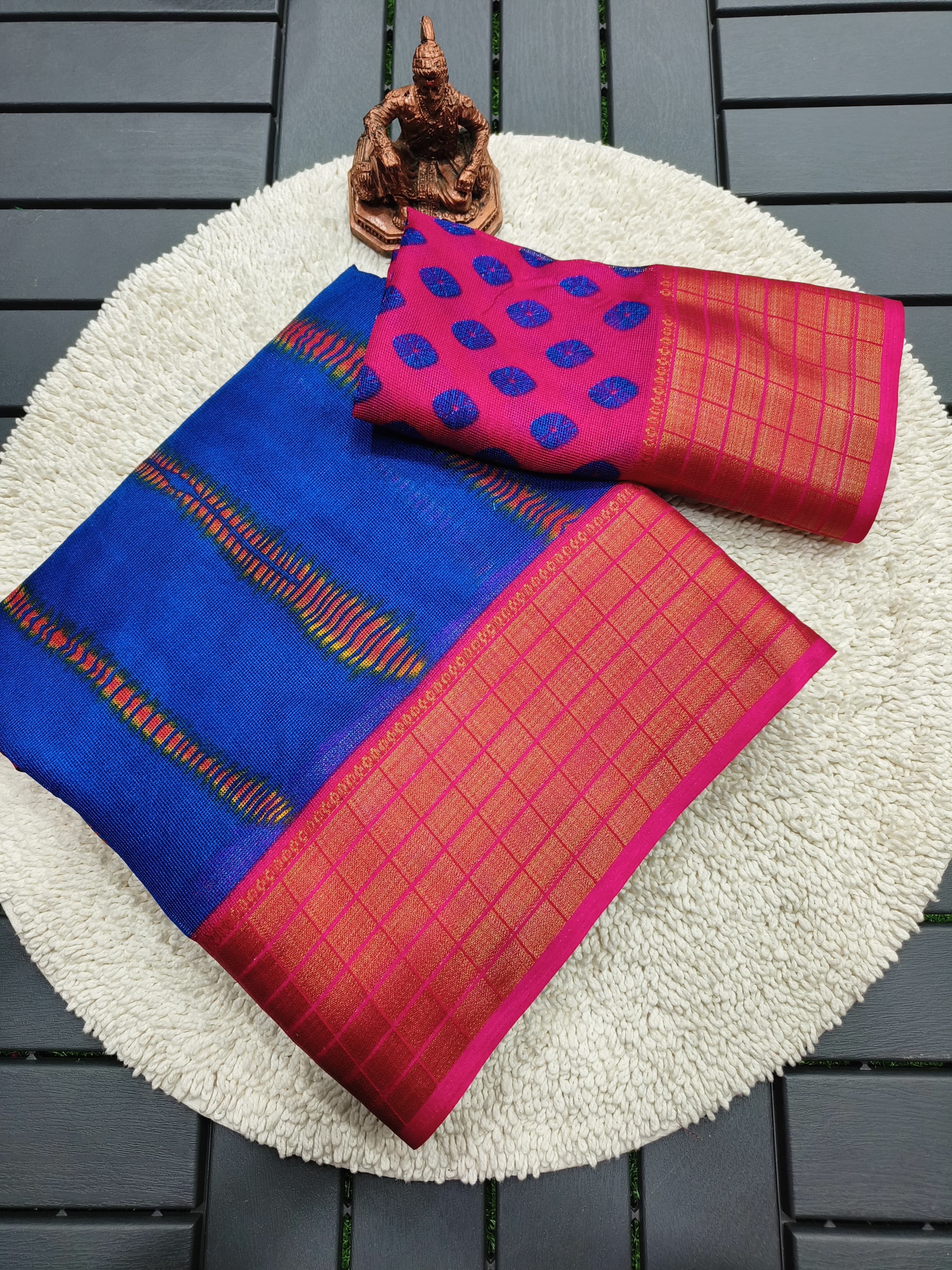
A silk saree or embroidered kurta set suits a formal evening programme because the fabric catches low light and photographs well. Festive Wear Blue Silk Saree for Women can be styled with a full-sleeved blouse, a warm shawl and closed-toe footwear for a polished mountain-evening look.
Keep the pallu secure with two concealed pins placed at the shoulder and waist. A slim thermal camisole beneath the blouse can add warmth without changing the saree's outline. Avoid very high heels on steep or wet roads; a block heel of approximately 2 to 3 centimetres is more stable.
For temple or monastery visits
Modest layering, secure draping and easy-to-remove footwear are appropriate for religious spaces. A full-length kurta set or saree with covered shoulders is generally more practical than a short blouse, deep neckline or voluminous skirt.
Kanchi Cotton Zari Woven Kurti Set with Classic Dupatta gives a structured option for a daytime visit because cotton improves comfort and zari supplies a restrained festive accent. Keep metallic embellishment moderate and follow the specific site's rules rather than assuming every religious space has identical customs.
Sikkim Cultural Festival Fashion Guide for Women: Use colour and accessories carefully
Colour should support the setting, season and personal comfort rather than pretend to represent an entire Sikkimese community. Deep red, rust, mustard, navy, forest green and turquoise suit the mountain landscape, while blush, pista, cream and powder blue create a softer daytime look.
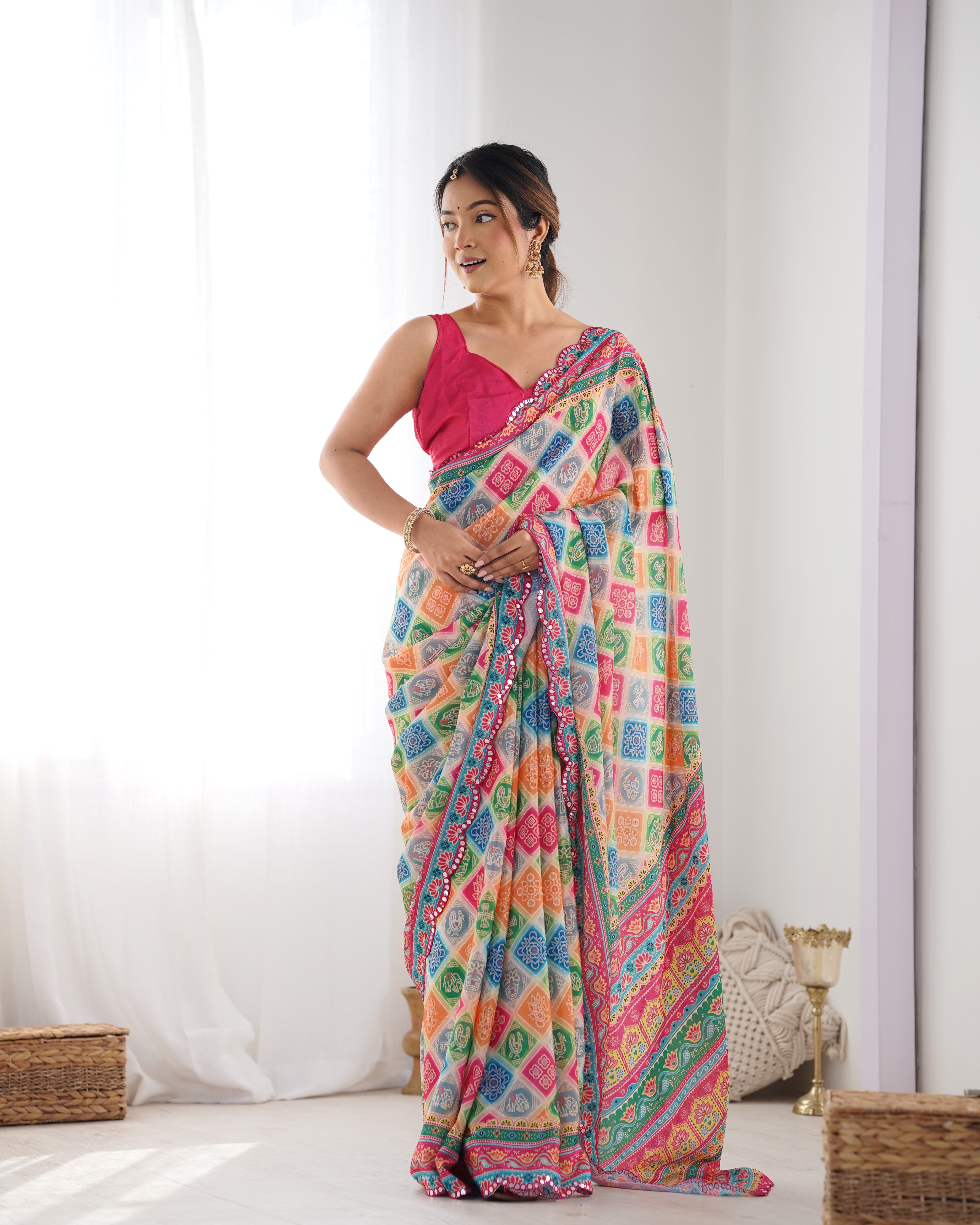
Gold zari, silver-toned threadwork and small woven borders can add occasion value without making the outfit look theatrical. Graceful Pista Festive Wear Kurta Pant Set uses a pale colour direction that works well for a daytime celebration, especially when paired with a darker shawl for contrast.
Accessories should be selected for movement and weather. Studs, medium hoops, a small pendant, a fabric hair tie and a compact crossbody bag are dependable choices. Glass bangles can become uncomfortable under a jacket, while oversized earrings may catch on a shawl or dupatta.
One distinctive accessory is usually enough. If the outfit already includes zari, embroidery and a printed border, choose plain footwear and a simple bag. If the outfit is solid-coloured, a woven stole or handcrafted earrings can add texture without competing with the clothing.
Colorful Ethnic Chinon Saree for Women can suit a festive indoor event when paired with a warm solid-coloured shawl and a restrained blouse design. Chinon has a fluid fall, so use safety pins at the shoulder and waist if the programme includes dancing, walking or sitting on low seating.
Sikkim Cultural Festival Fashion Guide for Women: Style contemporary outfits respectfully
A respectful contemporary outfit takes inspiration from practical shapes, layering and regional craft rather than copying a ceremonial garment for decoration. Wrapped silhouettes, woven borders, jewel tones and handloom textures can communicate a Himalayan mood without falsely labelling a commercial outfit as time-honoured Sikkimese dress.
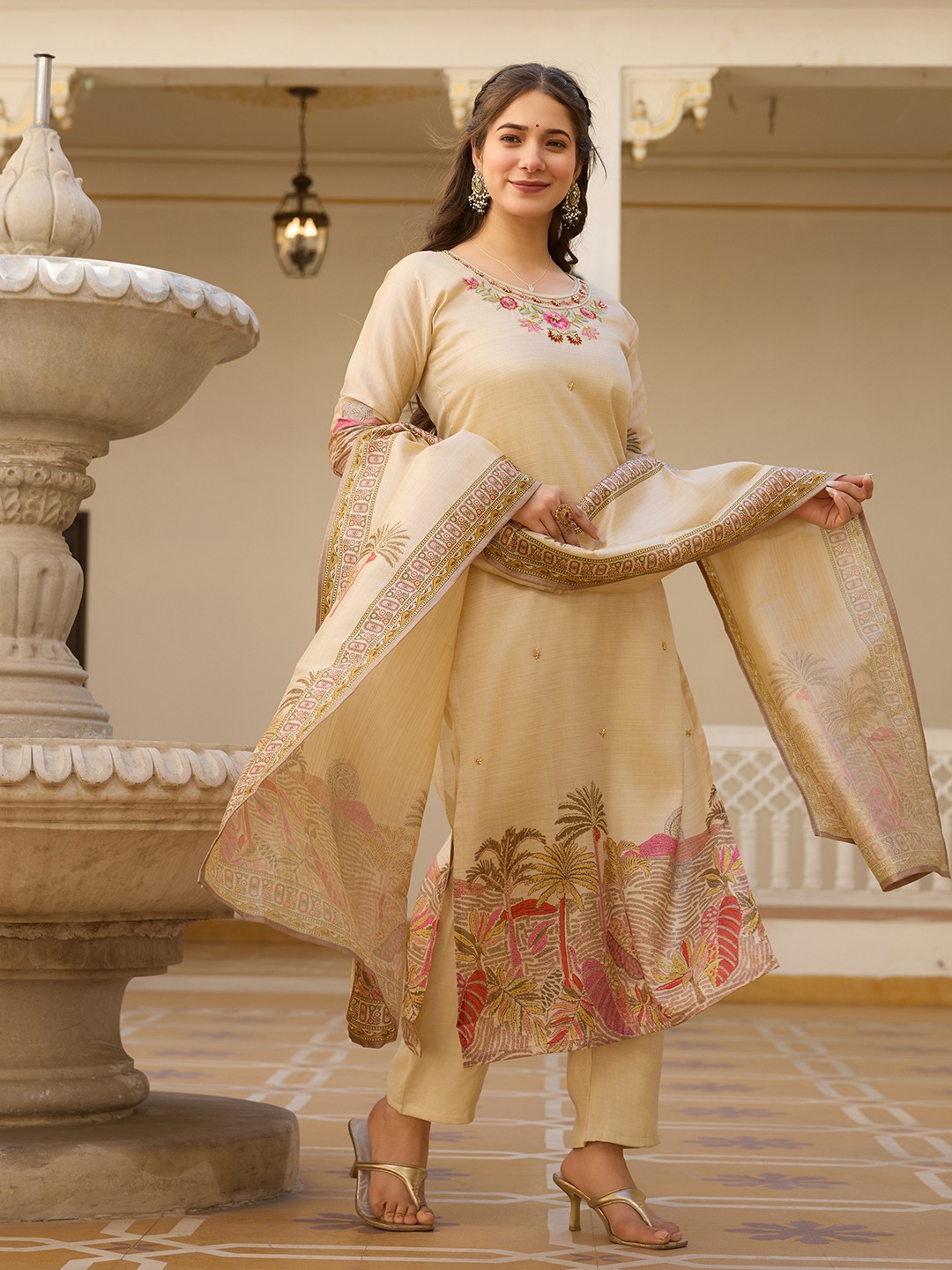
A plain silk kurta with a belted long jacket is one useful approach. Another is a saree with a tailored full-sleeved blouse and a woollen stole. Understated Beige Vichitra Silk Embroidered Kurta Set for Women can work in this direction when styled with minimal jewellery and a solid outer layer rather than multiple competing accessories.
Prints should also be considered carefully. A generic mountain-inspired motif isn't automatically a Lepcha, Bhutia or Nepali design. Avoid describing mass-produced motifs as authentic Sikkimese craft unless the textile's maker, technique and provenance are documented.
Footwear deserves equal attention. Cushioned loafers, closed-toe juttis, ankle boots with a grippy sole and low block heels are safer than slippery fashion sandals on wet or sloped surfaces. Carry a second pair of comfortable shoes if a formal saree look requires a different style for photographs.
Before packing, check the forecast three days before departure and again on the morning of the event. A practical five-piece festival kit includes one festive outfit, one warm layer, one rain-resistant layer, stable footwear and a small fabric-care pouch with safety pins, stain wipes and a spare hair tie.
Sikkim Cultural Festival Fashion Guide for Women: Care for garments after travel
Festival garments should be aired fully after use and stored only when completely dry. Mountain humidity, perspiration and rainwater can leave odours or marks in silk, Chanderi and zari if clothing remains folded in a suitcase.
Blot a fresh spill with a clean, dry cloth instead of rubbing the fabric. Do not apply perfume directly to silk, zari or embroidery. Follow the garment label for dry-cleaning instructions, and keep heavily embellished pieces away from rough surfaces that can pull threads.
Fold sarees along existing crease lines and place acid-free tissue or clean cotton between embroidered sections. Store zari garments in a breathable cotton cover rather than airtight plastic. These steps reduce tarnishing, snagging and moisture damage during long-term storage.
Respectful festival dressing leaves room for local knowledge: wear festive clothing confidently, but let community members define the meaning of their traditional garments.
Common Questions About Women’s Festival Dressing in Sikkim
What should women wear to a cultural festival in Sikkim?
Women can wear a modest saree, kurta set or salwar suit with a warm shawl and comfortable closed footwear. Choose breathable fabrics for daytime and add a thermal layer or jacket for cool evenings.
Can women wear a Bakhu to a Sikkim festival?
Women should wear a Bakhu only when they understand its cultural context or are invited to do so by a knowledgeable host. Guests can instead choose a contemporary wrapped jacket, belted kurta or draped stole without presenting the outfit as traditional Bhutia dress.
What should women wear to a monastery in Sikkim?
Women should wear clothing that covers the shoulders and knees and should carry a secure dupatta or shawl. Visitors should remove footwear where required, follow photography rules and avoid using monastic robes or religious garments as fashion accessories.
Is a saree practical for travelling to Sikkim during a festival?
A saree is practical when the fabric is manageable, the pallu is pinned securely and the wearer chooses stable footwear. Lightweight silk, cotton silk, Chanderi and linen-cotton are easier for travel than very heavy or trailing fabrics.
Which colours work well for Sikkim festival outfits?
Jewel tones such as maroon, emerald, navy and turquoise work well for evening celebrations, while pista, cream, blush and powder blue suit daytime events. Colour should express personal style rather than claim to represent a particular Sikkimese community.
How can women stay warm while wearing ethnic clothing in Sikkim?
Women can wear a thin thermal camisole, full-sleeved inner layer, woollen stole or tailored jacket beneath or over festive clothing. Closed shoes, moisture-resistant outerwear and a compact umbrella are especially useful for outdoor programmes.