

A Shirt Dress With Indian Prints for Women Avoiding Dupattas solves a practical wardrobe problem: how to wear colour, craft references and festive detail without managing an extra layer. The right dress can combine the structure of a collared shirt with the ease of a kurta or maxi dress, making it suitable for office celebrations, travel, casual lunches and smaller family functions. Fabric weight, neckline, sleeve shape, hemline, waist placement and motif scale determine whether the outfit looks polished or simply like casual holiday wear.
Shirt Dress With Indian Prints for Women Avoiding Dupattas: Why choose one?
A printed shirt dress creates a complete outfit in one garment, so the visual interest comes from the print, cut and accessories rather than from layering. A dupatta can add colour and movement, but a dupatta can also slip from the shoulder, catch on bags, become uncomfortable in warm weather and require repeated adjustment.
The shirt collar gives the dress a Western outline, while Indian prints bring warmth and cultural character. Paisley, floral, Ajrakh-inspired geometry, block-print effects and Patola-style patterns can all make a shirt dress feel connected to Indian dressing without copying the construction of a salwar suit. A button placket also allows practical control over modesty and ventilation. Wearing the top two buttons open creates a relaxed neckline for daytime, while closing the placket higher gives a more covered look for work or family gatherings.
Printed one-piece dressing is useful for commuters, frequent travellers and anyone who prefers low-maintenance styling. A rayon or cotton shirt dress can be folded into a suitcase, worn with flat sandals and restyled with earrings for dinner. A midi length usually feels more versatile than a floor-length gown because a midi hem works with everyday footwear as well as occasion accessories.
Shirt Dress With Indian Prints for Women Avoiding Dupattas: Which fabric works?
Rayon, cotton and lightweight blends are usually the most practical fabrics because they balance breathability, movement and ease of care. Fabric choice should match the weather, the amount of walking involved and the level of formality required.
Rayon for fluid movement
Rayon gives a shirt dress a soft, flowing fall and works particularly well for tiered maxis, relaxed midi dresses and holiday outfits. Rayon can feel cool against the skin, but rayon may crease or lose shape when soaked. Wash rayon in cool water with a mild detergent, avoid aggressive wringing and dry the garment away from harsh midday sunlight.
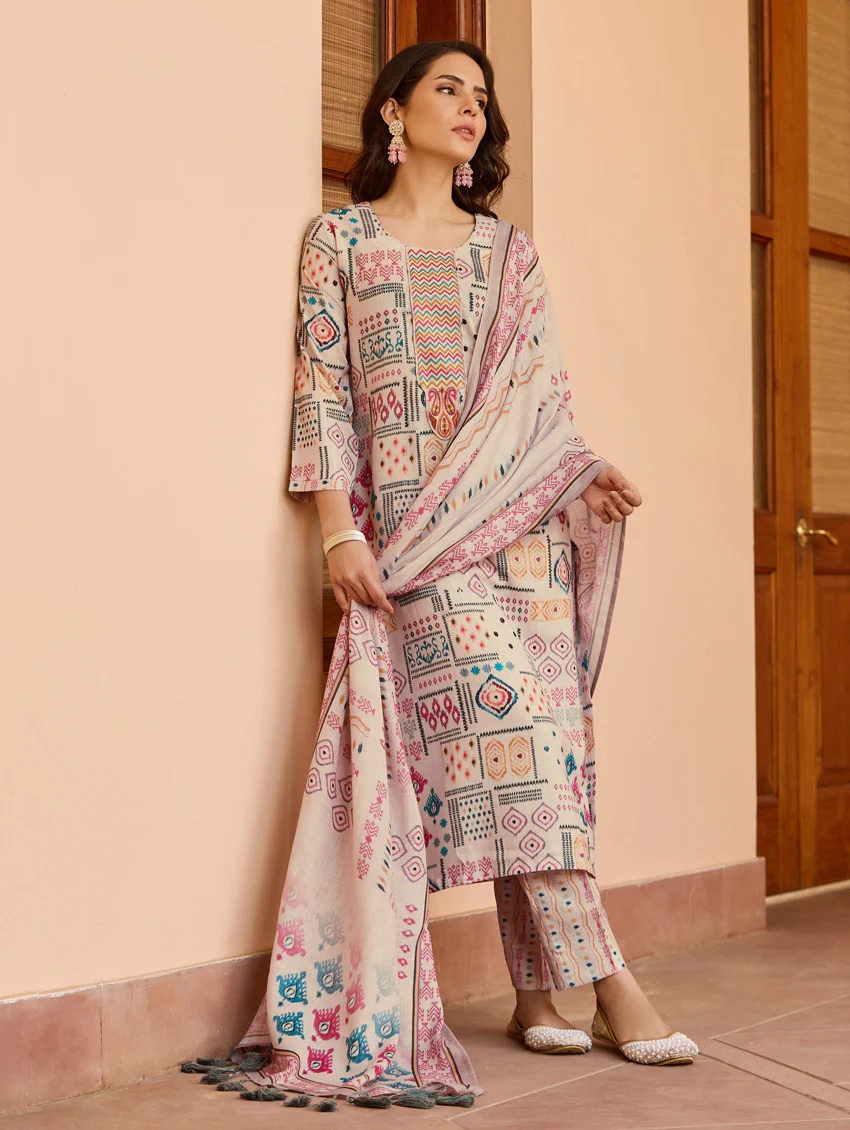
Printed Rayon Co Ord Set for Women Online | Varnavi demonstrates the appeal of fluid printed rayon for coordinated dressing, although an one-piece shirt dress is simpler when avoiding separate layers. A rayon shirt dress with a moderate print scale can move from daytime sightseeing to dinner with only a change of jewellery.
Cotton for warm daytime wear
Cotton is a dependable choice for hot, humid daytime conditions because cotton allows airflow and absorbs moisture. Cotton poplin creates a crisper shirt-like structure, while cotton voile and mulmul feel softer and lighter. Cotton may need ironing more often than rayon, but cotton is practical for shopping, travel and daytime ceremonies.
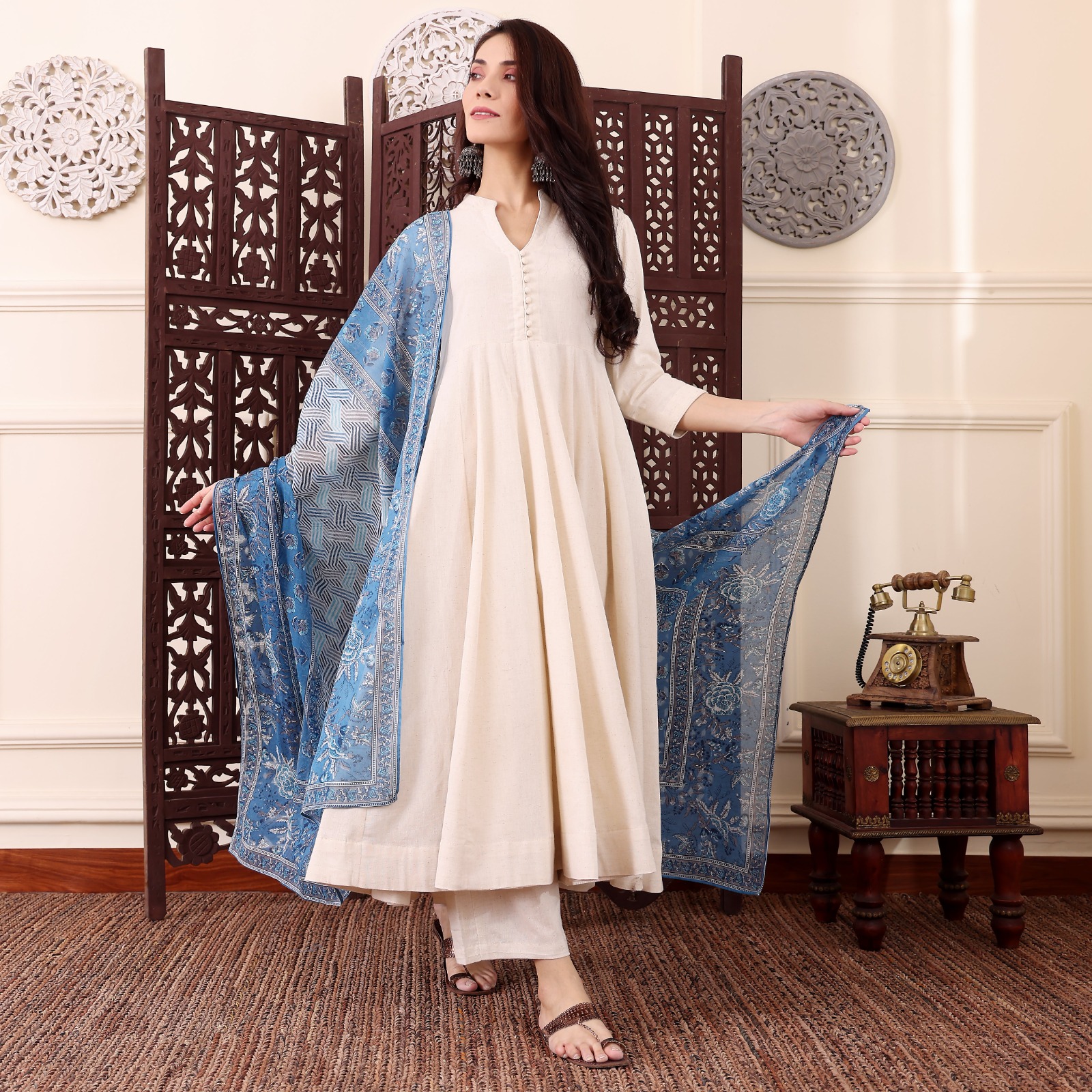
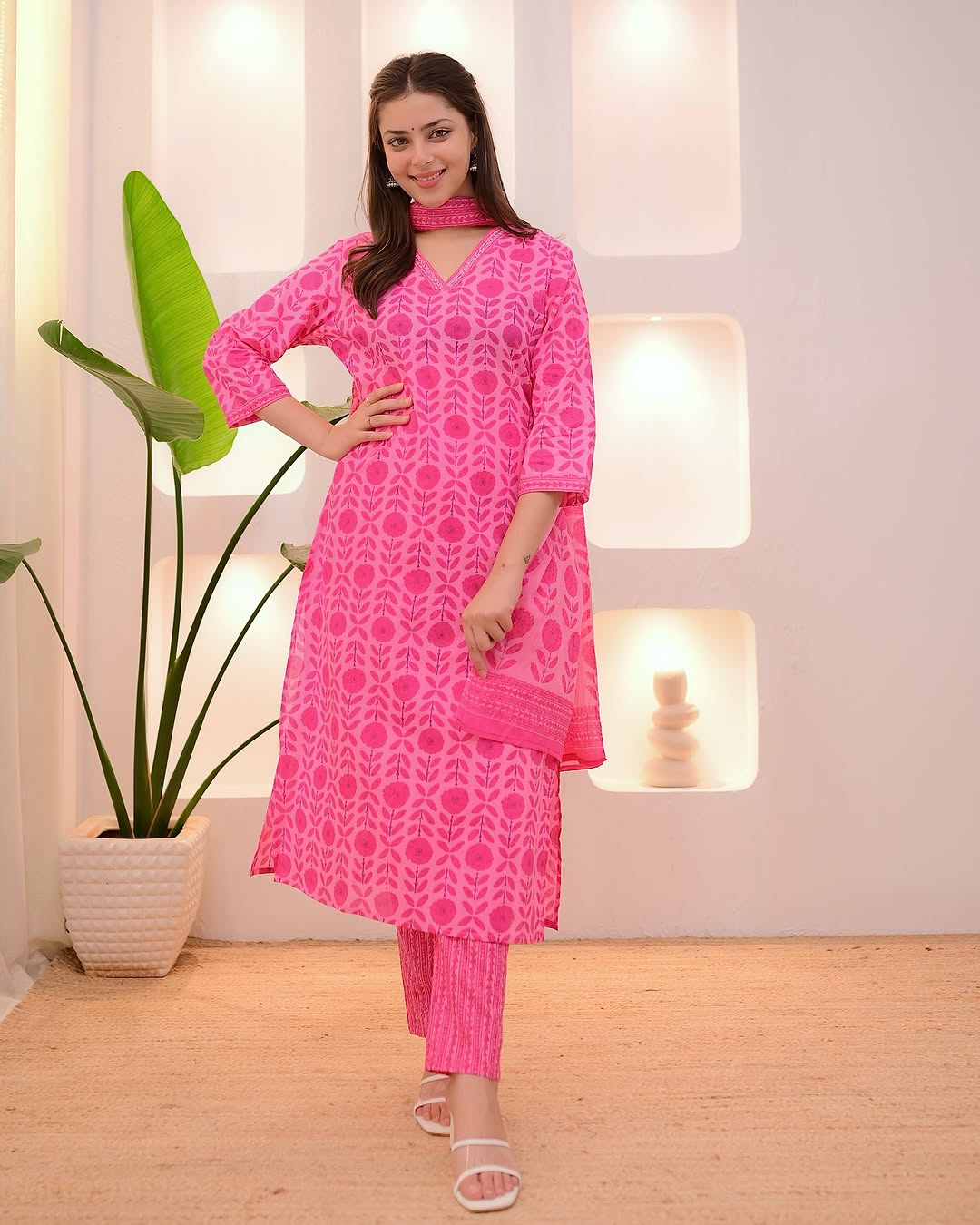
Cream Printed Cotton Kurta Pant Dupatta Set for Women shows how cotton prints can carry a traditional palette. A cotton shirt dress can deliver a similar visual effect with fewer pieces and no shoulder layer. Check whether the dress is lined, especially when the base colour is cream, white or pale yellow.
Chinon and blended fabrics for evening polish
Chinon and other synthetic blends often offer a smoother surface, brighter colour and more formal appearance. These fabrics can work for evening functions when the dress has lining, controlled gathers and a substantial collar or cuff. Synthetic material can feel warm in summer, so chinon is better suited to air-conditioned venues, late-evening events or shorter periods of wear.
Fabric density matters as much as fibre content. Hold a pale dress up to natural light before buying when possible, and look for a lining that ends below the widest part of the body rather than stopping awkwardly at the hips. A well-placed lining prevents transparency without making the skirt stiff.
Shirt Dress With Indian Prints for Women Avoiding Dupattas: Which prints suit it?
Medium-scale floral, paisley, geometric and border-inspired prints usually work well on shirt dresses because the motifs remain visible without overwhelming the vertical silhouette. Print placement matters as much as motif choice: a continuous pattern looks relaxed, while a border at the hem, sleeve or button placket creates definition.
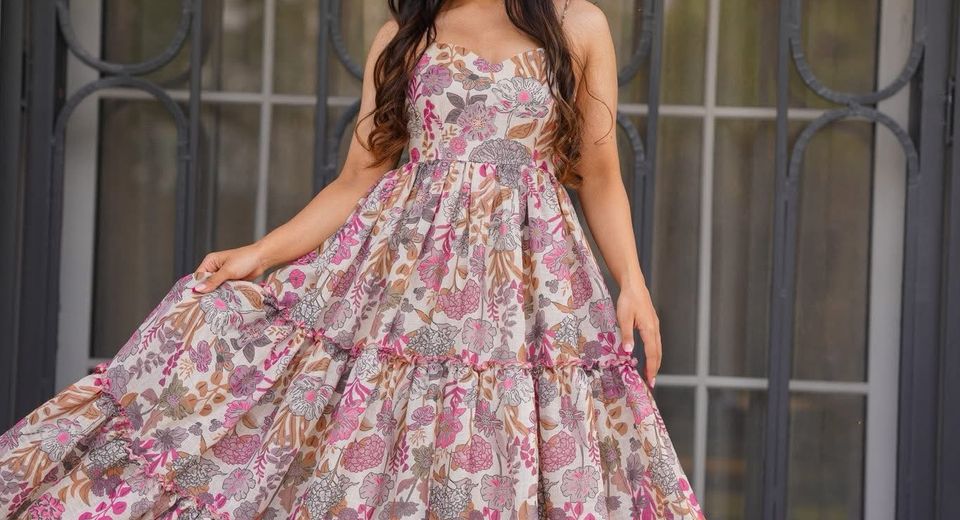
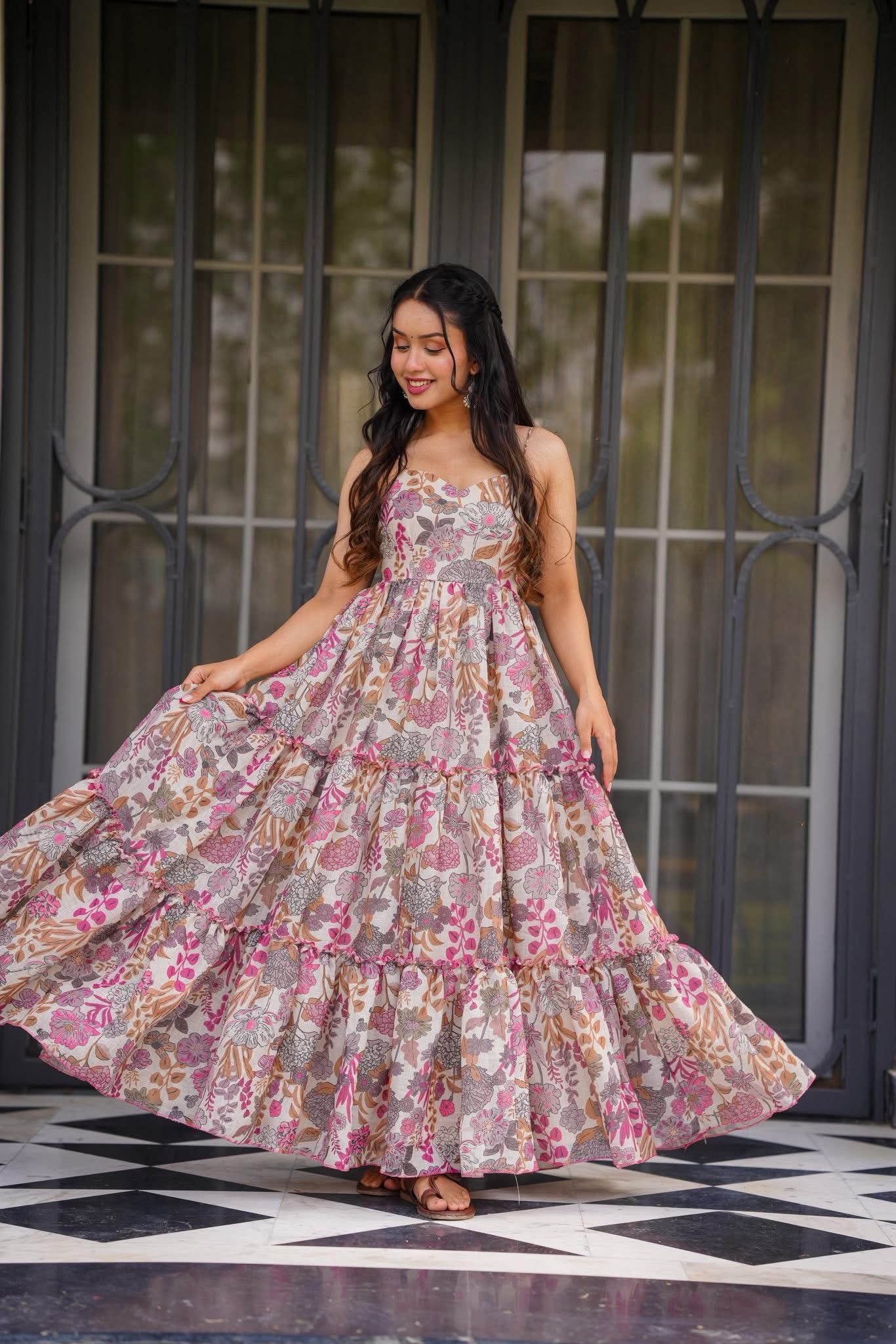
Floral prints are easy to style because floral motifs can look casual with sandals or elevated with metallic jewellery. Floral Printed Maxi Dress for Women Sleeveless Tiered uses a tiered construction to add movement, but women who prefer more arm coverage can look for a shirt dress with elbow-length sleeves and a similar floral scale.
Teal Floral Printed Maxi Dress for Women Summer Wear offers an useful colour lesson. Teal provides more depth than a pastel while remaining fresher than black or burgundy. Teal Indian prints pair naturally with tan sandals, antique-gold jewellery and cream bags.
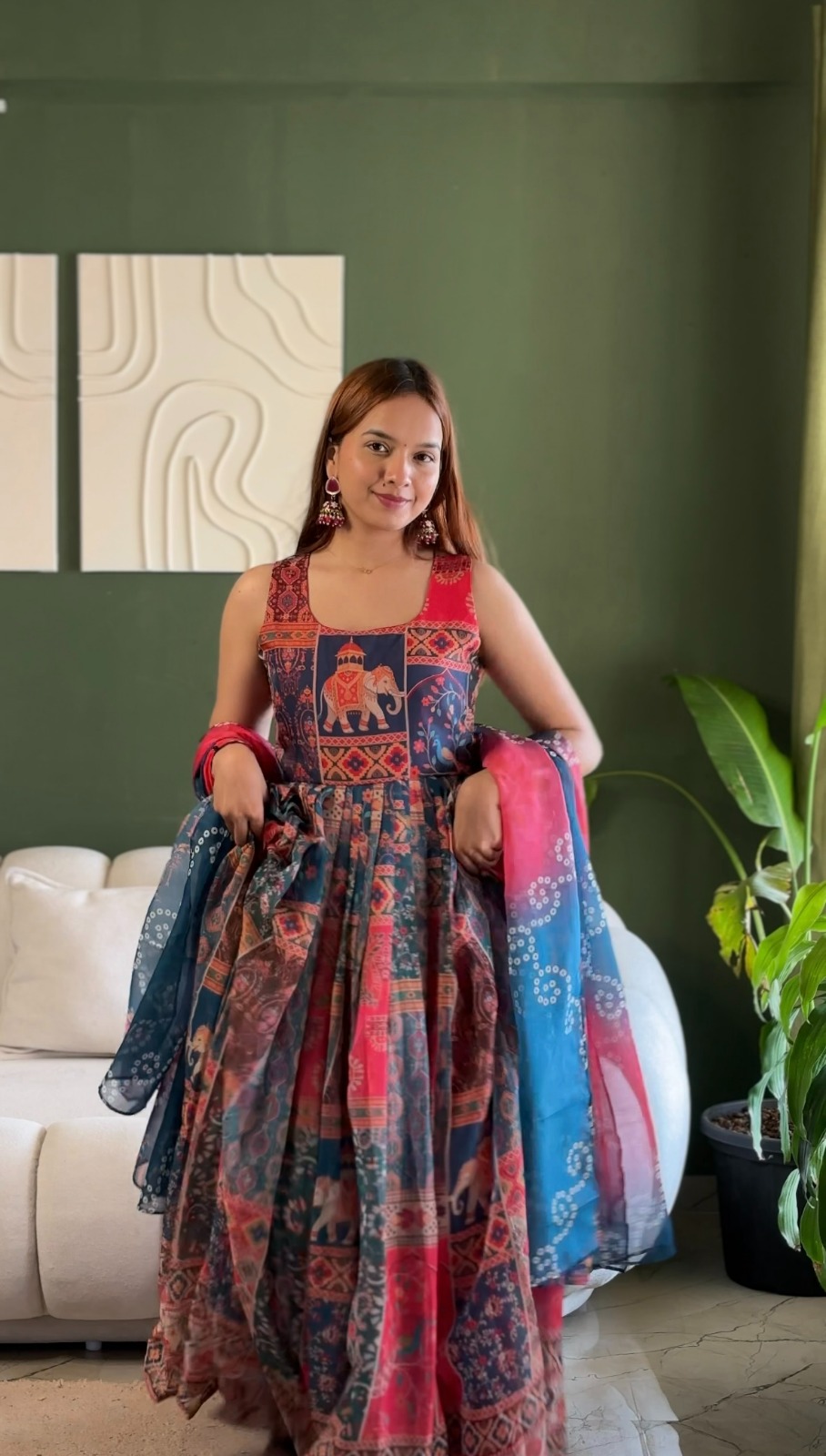
Patola-inspired patterns and strong geometric motifs create a more visibly Indian impression. Bold designs usually need fewer accessories because the print already supplies contrast. Royal Patola Printed Designer Gown with Elegant Dupatta shows how a strong Patola vocabulary can carry occasion drama. A shirt dress using a similar pattern should have a simpler cut so that the print remains the focus without requiring a dupatta.
Small repeating motifs can be flattering on fuller silhouettes because small patterns don't create one large visual block. Larger motifs can look striking on taller frames or on a straight, column-shaped dress. A dark base with lighter motifs tends to look more formal, while cream, yellow, coral and turquoise bases feel more summery.
Inspect the print at the bust and hip rather than only on a product image. Motifs can appear larger or more stretched when fabric is pulled across the body. Also check whether stripes, borders or large flowers line up across the button placket; uneven pattern matching is more noticeable on a structured shirt dress than on a gathered maxi.
Shirt Dress With Indian Prints for Women Avoiding Dupattas: Which silhouette flatters?
An A-line or softly flared shirt dress is the most adaptable silhouette because the shape skims the upper body and creates room from the waist downward. A straight midi suits women who prefer a clean, tailored line, while a tiered maxi allows relaxed movement and vacation ease. The best shape depends on desired comfort and proportion rather than on a fixed body-type rule.
For a defined waist
A shirt dress with a tie belt, waist seam or princess panels creates definition without requiring a fitted bodice. Positioning the waist slightly above the natural waist can lengthen the legs, while natural waist placement gives a more classic proportion. A belt should sit smoothly over the dress; a narrow belt placed over bulky gathers can dig into the body and make the waistline look uneven.
For a relaxed fit
An oversized shirt dress looks intentional when it includes details such as dropped shoulders, deep side slits, a curved hem or structured cuffs. Without those details, an oversized cut can resemble an unaltered long shirt. Approximately 8 to 12 centimetres of ease around the bust usually allows movement without creating excessive underarm volume.
For petite proportions
A petite wearer often benefits from a midi hem that ends below the knee but above the widest part of the calf, a smaller collar and a print with moderate spacing. Vertical button lines, front pleats and a slightly raised waist can create a longer visual line. A floor-length maxi can also work when the fabric is light and the hem doesn't pool around the feet.
For fuller busts
A fuller bust usually benefits from a V-shaped shirt collar, a concealed placket or buttons spaced closely enough to prevent gaping. Look for a bust measurement that gives at least 8 centimetres of wearing ease, then check the armhole for comfort. A dress that fits the waist but pulls across the bust won't become more comfortable through accessorising.
Shirt Dress With Indian Prints for Women Avoiding Dupattas: How do accessories help?
Accessories replace a dupatta most effectively when one strong element adds colour or shine and the remaining pieces stay restrained. Statement earrings, a structured handbag, a waist belt, a cuff bracelet or metallic sandals can provide the finishing contrast that a dupatta would normally create.
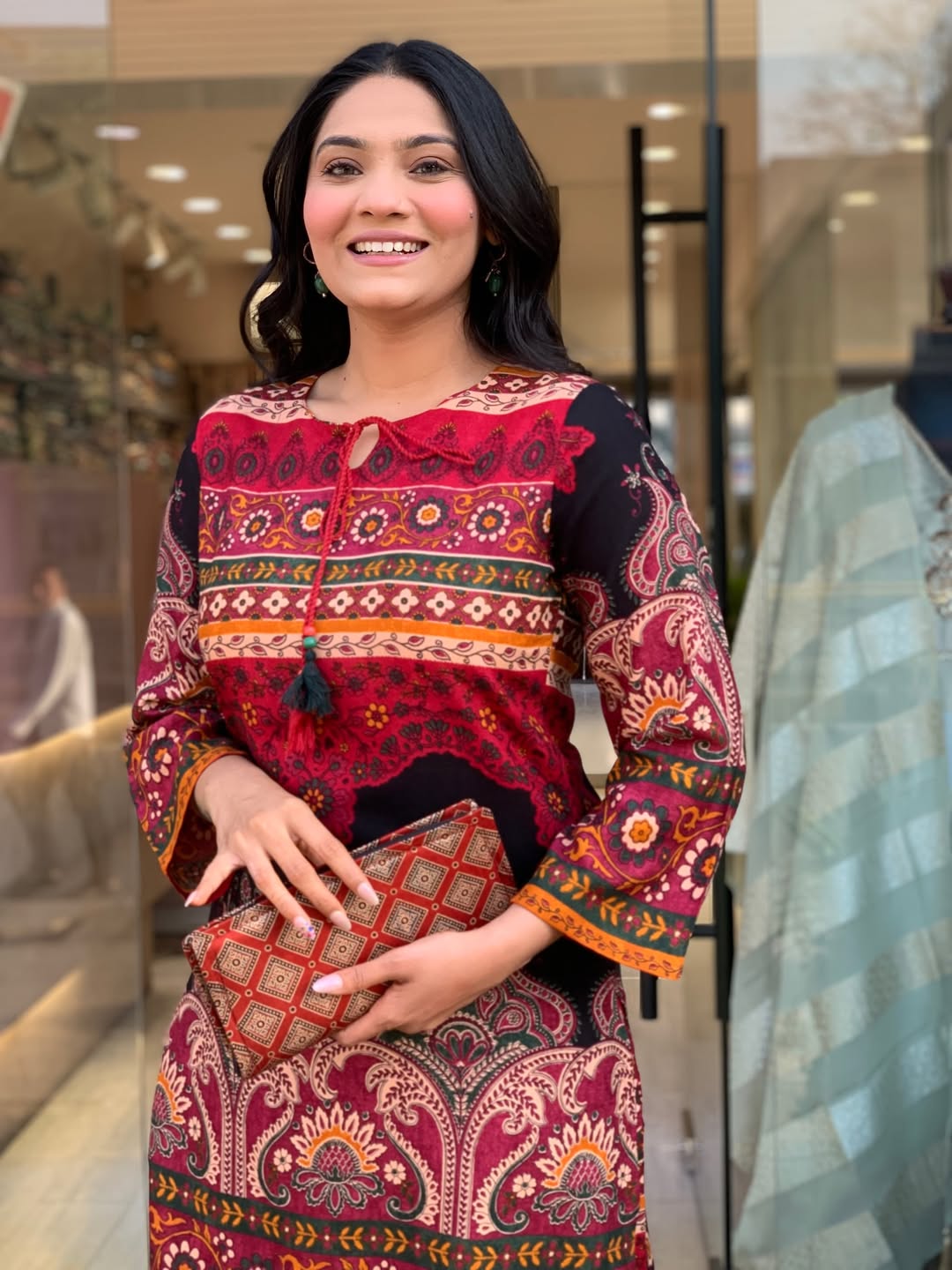
Gold-toned jewellery suits marigold, rust, olive, cream and red prints, while silver or oxidised metal works well with teal, blue, charcoal and purple. Jhumkas and chandbalis bring an Indian reference without adding fabric around the shoulders. A narrow leather or fabric belt can define a plain waist, but a belt is unnecessary when the dress already has a strong border or heavily gathered tier.
Footwear changes the message of the outfit. Kolhapuri sandals, embroidered juttis and flat metallic sandals keep a printed dress connected to ethnic styling. White sneakers make a floral shirt dress practical for travel, while block heels raise a midi dress for a dinner or festive lunch. Choose footwear in one of the print's secondary colours for a coordinated result, or choose tan or metallic footwear when the print is already busy.
A compact sling bag or small potli can work for an event, while a medium structured tote is more useful for work and daytime travel. Avoid adding a long scarf merely to make the outfit feel more heritage. A clear shoulder line is one of the practical advantages of dressing without a dupatta.
Shirt Dress With Indian Prints for Women Avoiding Dupattas: How can it become festive?
A printed shirt dress becomes festive through fabric finish, accessories and grooming rather than through extra layers. Start with a dress in rayon, satin-finish blend or lined cotton, then add one deliberate accessory such as chandelier earrings, a metallic clutch or embellished footwear.
For a daytime Haldi ceremony, yellow, green, coral or turquoise floral prints pair well with flat sandals and lightweight gold jewellery. Avoid very delicate fabrics at a Haldi ceremony because turmeric, flower petals and outdoor seating can cause visible marks. A washable cotton or rayon dress with a darker border is more practical than pale unlined fabric.
For a house puja or family lunch, a cream, blue or muted pink print with three-quarter sleeves gives coverage without feeling heavy. Black Chinon Embroidered Kurta Set with Floral Dupatta illustrates how embroidery and floral detail can create a dressy effect. A printed shirt dress can achieve comparable richness through embroidered cuffs, a textured collar or a small amount of zari-inspired print rather than through a separate dupatta.
For a dinner reception, choose a darker base, a longer hem and a cleaner silhouette. Blue Floral Printed Maxi Dress for Women Beach Wear is a reminder that blue florals can feel relaxed in one setting, but blue can look more formal when paired with a structured clutch, sleek hair and metallic heels. The styling context matters as much as the base colour.
Avoid combining a highly ornate print with large earrings, a decorated belt, embellished shoes and a heavy bag. Choose two focal points at most. For example, a bold Patola-style print can be paired with plain gold hoops and metallic sandals, while a small floral print can support more prominent chandbalis.
Shirt Dress With Indian Prints for Women Avoiding Dupattas: What should buyers check?
Buyers should check measurements, transparency, construction, care instructions and return-period requirements before choosing a printed shirt dress. A good product image can't show whether a collar sits comfortably or whether a hem is practical for walking.
- Measure the body first: Compare bust, waist and hip measurements with the garment chart rather than relying only on small, medium or large labels. Choose the largest required measurement when the dress has no stretch, then consider alteration at the waist.
- Check the length: Measure from the shoulder to the intended hem using a tape. A midi dress that's 115 centimetres long on one person may fall close to the ankle on someone shorter.
- Inspect the placket: Buttons should lie flat when standing and sitting. Gaping usually means the bust needs more ease or the button spacing is too wide.
- Look at sleeve construction: A set-in sleeve brings a neater appearance, while a raglan or dropped sleeve allows more movement. Check the upper-arm measurement if the sleeve is fitted.
- Confirm lining and opacity: Pale cotton, rayon and chinon may require a lining. A separate slip can help, but a built-in lining is usually more convenient for everyday wear.
- Read the care label: Cotton may tolerate a gentle machine wash, while rayon and embellished fabrics often last longer with hand washing. Do not assume that a printed fabric is colourfast; test a hidden seam with a damp white cloth if the care label allows.
Print quality also deserves attention. Neatly finished seams, a flat collar, secure buttons and consistent stitching make a noticeable difference in a shirt dress. A slightly imperfect hand-block effect can be part of the charm of Indian-inspired printing, but loose threads, misaligned seams and weak button attachments are construction problems rather than signs of craftsmanship.
Shirt Dress With Indian Prints for Women Avoiding Dupattas: How should it be cared for?
A printed shirt dress lasts longer when it's washed according to its fibre, dried in shade and stored without crushing the collar. Turn the garment inside out before washing, use cold or lukewarm water and separate dark colours from pale garments for the first few washes.
Rayon should not be twisted or wrung because wet rayon fibres can weaken and the fabric may lose its shape. Lay rayon flat or hang it on a broad hanger while damp, depending on the care label. Cotton can usually be ironed on medium heat, while synthetic blends need low heat and a pressing cloth to prevent shine.
Hang a shirt dress by the shoulders on a padded or broad hanger so that the collar and shoulder seams retain their shape. Fold heavily embroidered or embellished dresses instead of leaving them on a thin hanger. Store garments fully dry, because moisture trapped in a wardrobe can encourage odour and mildew.
A simple buying rule is to choose the least complicated dress that already brings enough print, colour and structure for the setting. A well-cut shirt dress doesn't need a dupatta to look complete.
Women avoiding dupattas don't need to give up Indian colour or festive expression. The strongest choices combine a breathable fabric, a controlled print scale, enough movement at the bust and hips, and accessories that support rather than compete with the garment. Those details turn an one-piece dress into a reliable part of an Indian-inspired wardrobe.
Common Questions About Shirt Dress With Indian Prints for Women Avoiding Dupattas
Can a shirt dress with Indian prints look traditional without a dupatta?
Yes, a shirt dress can look distinctly Indian through paisley, floral, block-print, Patola-inspired or geometric motifs, along with jhumkas, juttis and metallic accessories. A border, zari-inspired detail or embroidered cuff can add festive character without placing fabric over the shoulders.
Which fabric is best for a printed shirt dress in summer?
Cotton is usually the most breathable choice for hot daytime weather, while rayon offers a softer, more fluid fall. Cotton poplin feels structured, and lightweight cotton voile feels airy; check the lining because pale fabrics can become transparent in strong sunlight.
What footwear goes with an Indian-print shirt dress?
Kolhapuri sandals, embroidered juttis and metallic flats create an ethnic look, while white sneakers make the dress practical for travel. Block heels or metallic heels suit dinner and festive settings. Match footwear to a secondary colour in the print when a coordinated finish is wanted.
How can a printed shirt dress be worn to a Haldi ceremony?
Choose a washable cotton or rayon dress in yellow, green, coral or turquoise, preferably with a darker border or medium-scale print. Flat sandals and lightweight gold jewellery are practical, while very pale unlined fabrics and delicate materials are risky around turmeric, flowers and outdoor seating.
How much ease should a shirt dress have around the bust?
A non-stretch shirt dress usually needs about 8 to 12 centimetres of ease around the bust for comfortable movement, although personal preference and fabric weight also matter. The buttons should lie flat while sitting and standing; gaping indicates that a larger size or tailoring adjustment may be needed.
How should a rayon Indian-print shirt dress be washed?
Follow the garment care label, but rayon generally benefits from cool water, mild detergent and gentle handling. Avoid vigorous wringing, dry the garment away from harsh sunlight and reshape it while damp because wet rayon can lose strength and change shape.




