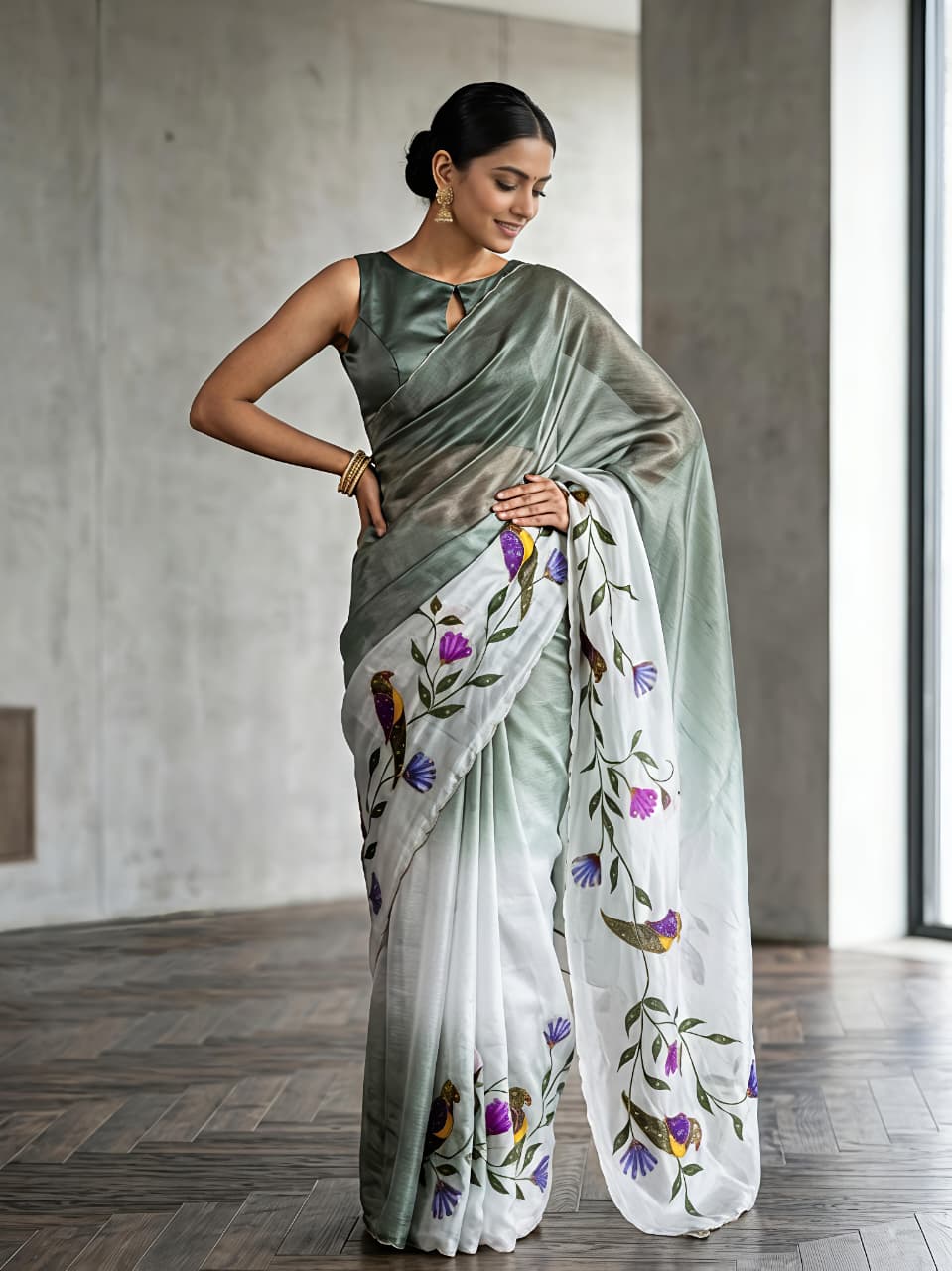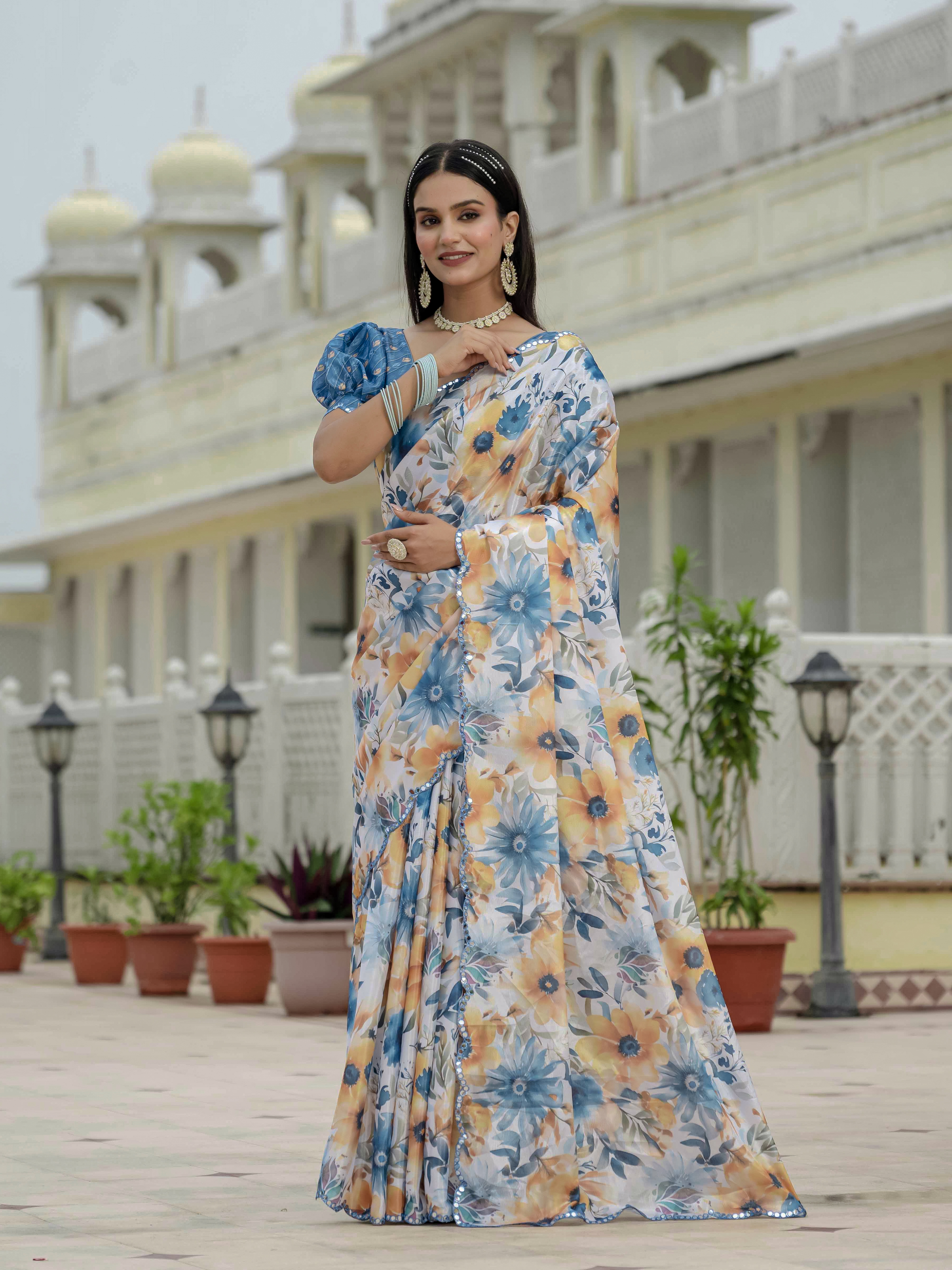
Shigmo Saree Colours & Styling Inspiration for Women begins with a simple observation: Shigmo celebrations invite colour, movement and community into festive dressing. The spring festival of Goa is associated with processions, music, dance and gulal, so a saree for Shigmo can be brighter and more expressive than a formal event drape. The most successful look still needs balance between the saree, blouse, jewellery, footwear and the practical demands of walking or dancing.
A Shigmo-ready saree doesn't have to be heavily embellished. A strong colour combination, breathable fabric, secure pleats and one memorable accent can create a polished festive outfit. The ideas below explain how to select colours, match blouses, choose fabrics, coordinate accessories and adapt one saree for a daytime procession or an evening gathering.
Shigmo Saree Colours & Styling Inspiration for Women: Which colours work best?
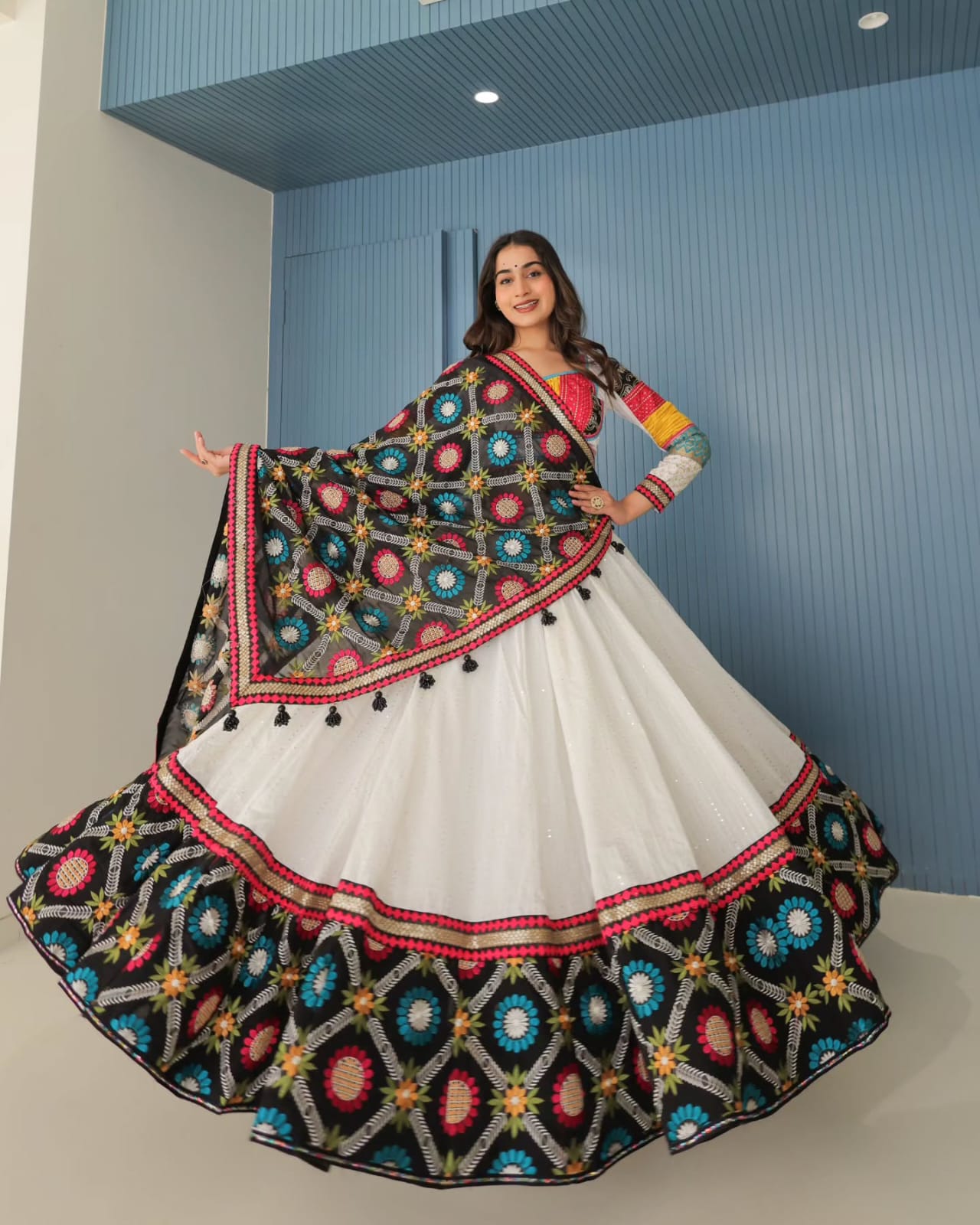
Bright pink, turmeric yellow, vermilion red, leaf green, peacock blue, teal and orange work especially well for Shigmo because they echo the festival's lively visual character. White, ivory and black can also work when they're paired with a vivid border, contrasting pallu or colourful jewellery.
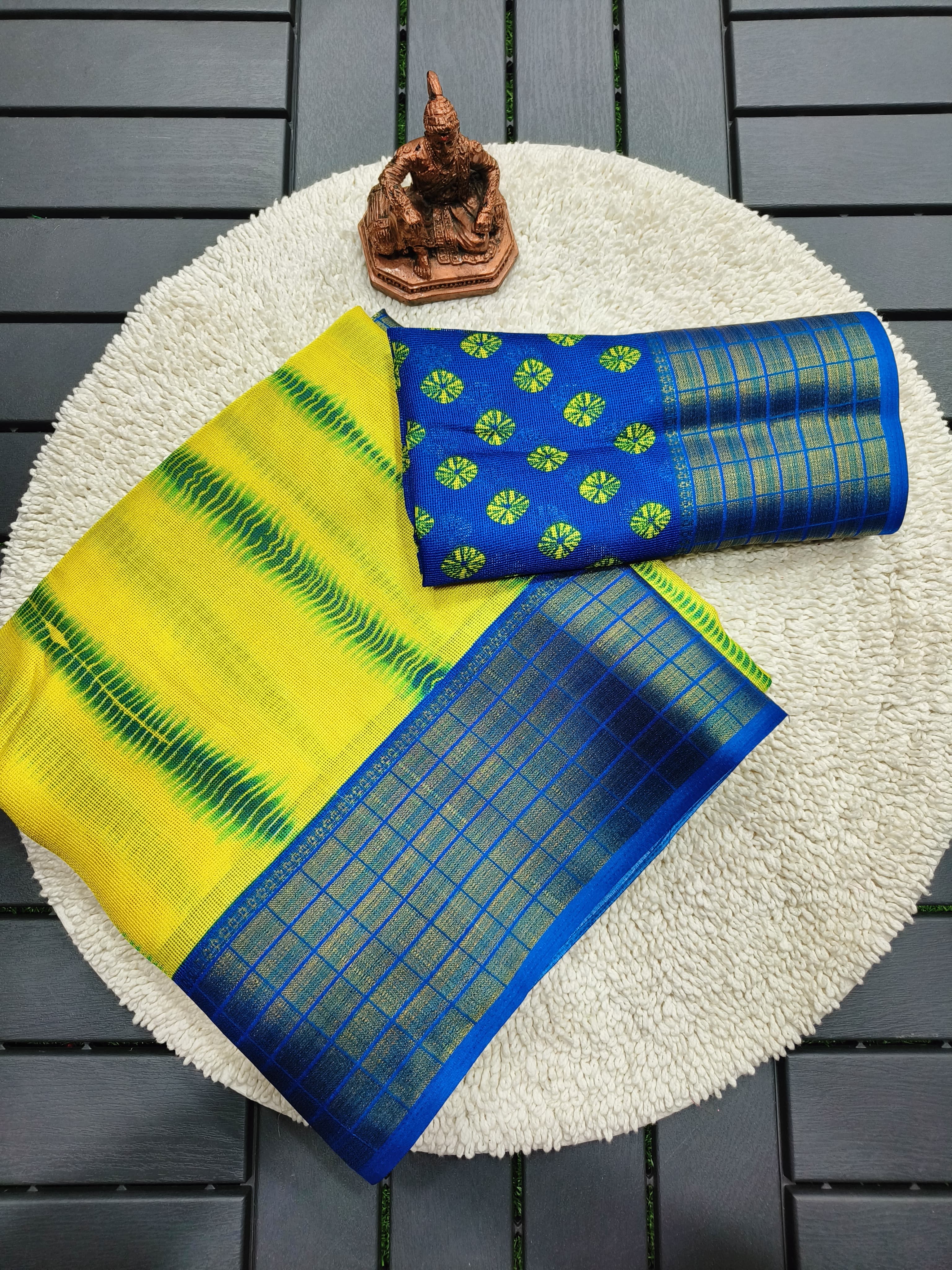
Colour choice becomes easier when the saree is divided into three visual areas: the base, the border and the pallu. A yellow base with a green border feels sunny and traditional, while a grey base with pink zari looks more contemporary. A blue body with a gold or green pallu creates contrast without requiring a printed blouse or oversized jewellery.
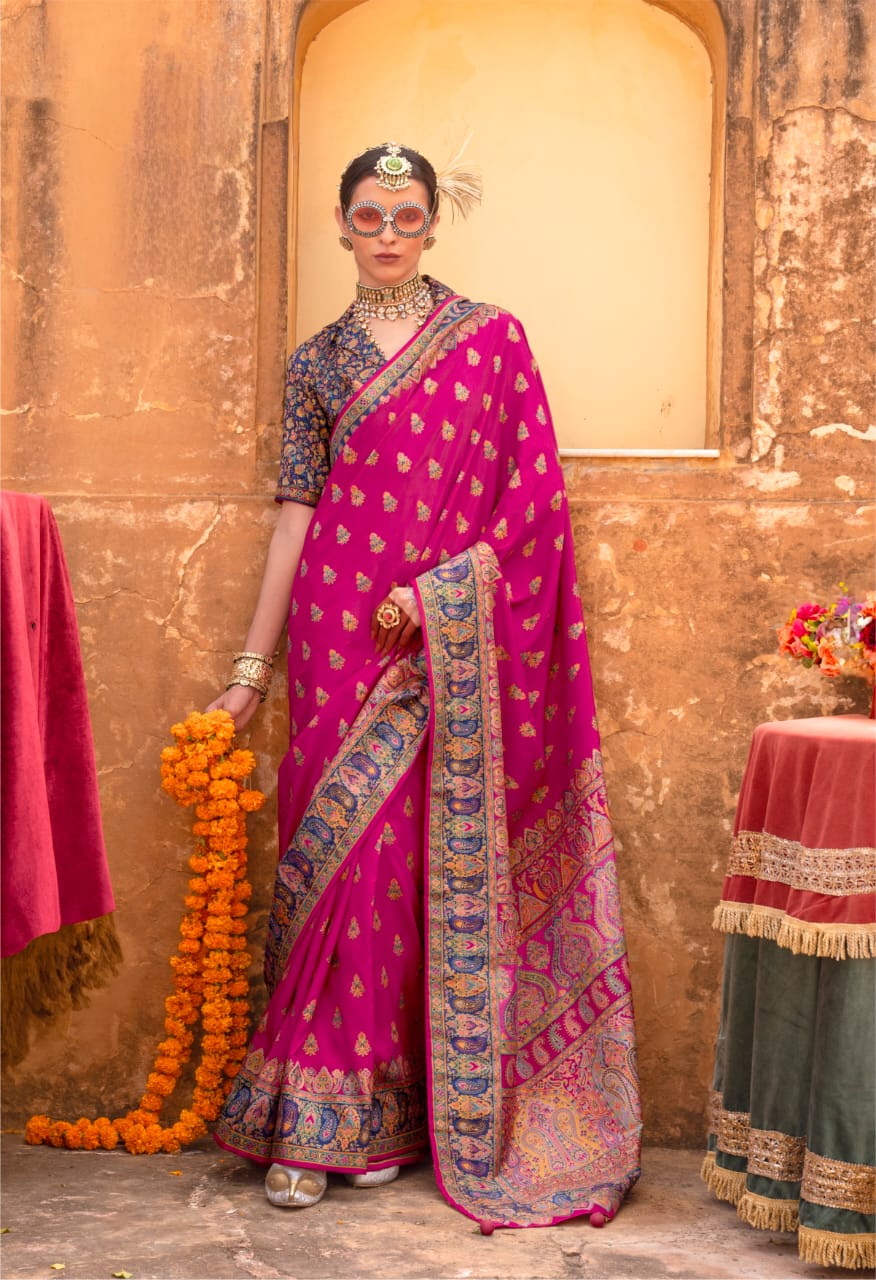
- Pink and green: Choose a soft pink body with a rich green pallu, or reverse the proportions for a stronger look. Gold earrings and green glass bangles reinforce the pairing.
- Blue and orange: A festive blue saree gains warmth from an orange blouse, coral beads or a rust-toned potli bag.
- Yellow and magenta: Mustard or turmeric yellow looks grounded with magenta, wine or deep pink accents. This palette is particularly effective for daytime celebrations.
- Teal and gold: Teal green offers a jewel-toned alternative to standard emerald. Antique gold jewellery and a restrained blouse keep the combination elegant.
- Black and maroon: Black becomes festive when maroon, zari, foil work or bright metal jewellery breaks up the depth of the base colour.
The safest styling rule is to repeat one accent colour twice beyond the saree. A pink zari detail can reappear in blouse piping and earrings, while a blue border can be echoed through bangles or a small handbag. Repeating every colour in the saree usually makes the outfit look busy.
Shigmo Saree Colours & Styling Inspiration for Women: How should you choose fabric?
Choose a lightweight silk, cotton, linen-cotton, Chanderi or georgette silk saree when the celebration involves extended outdoor wear, walking or warm weather. Fabric affects appearance, pleat stability, comfort, movement and the amount of support needed from the blouse.
For daytime processions and outdoor events
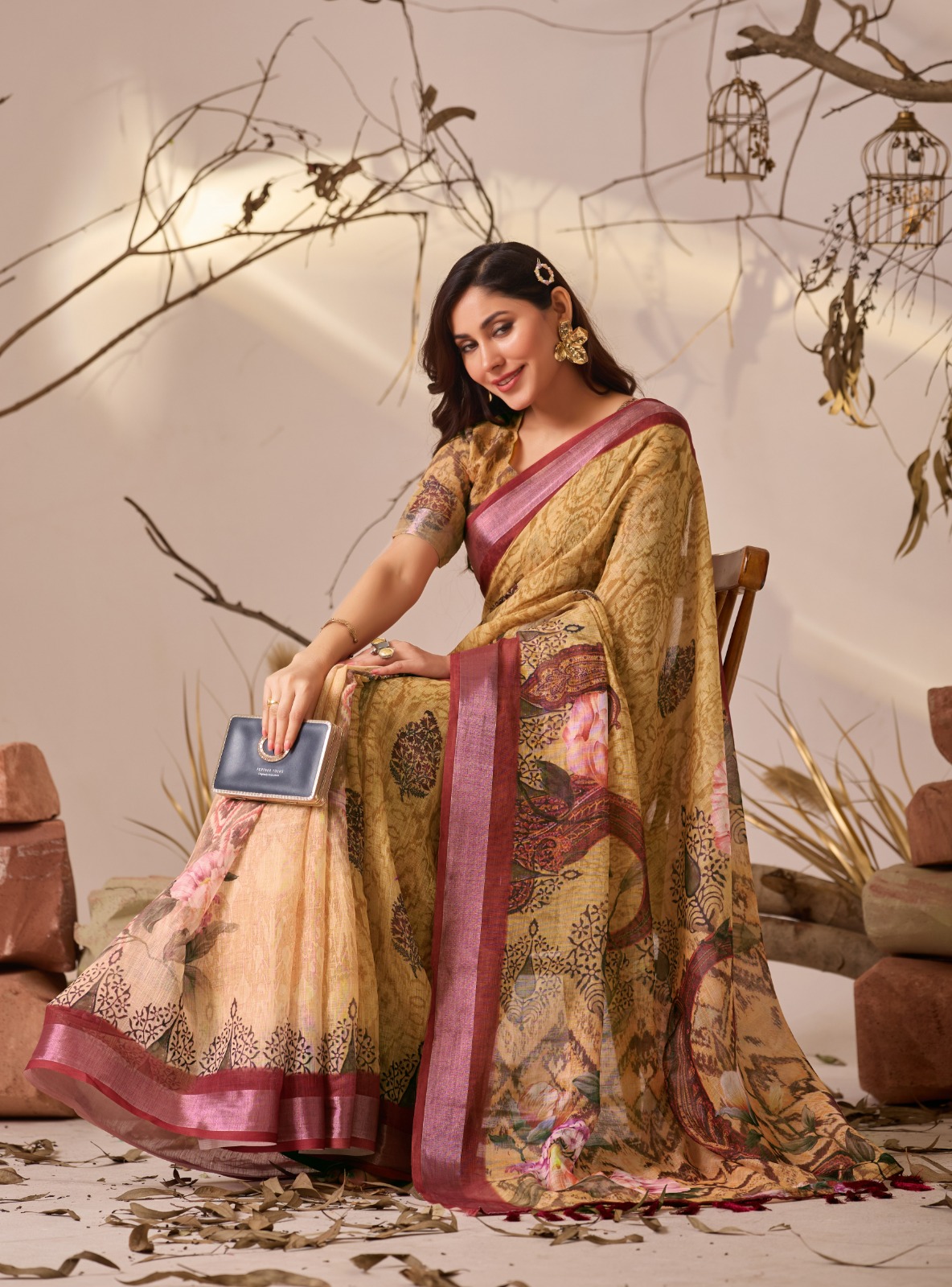
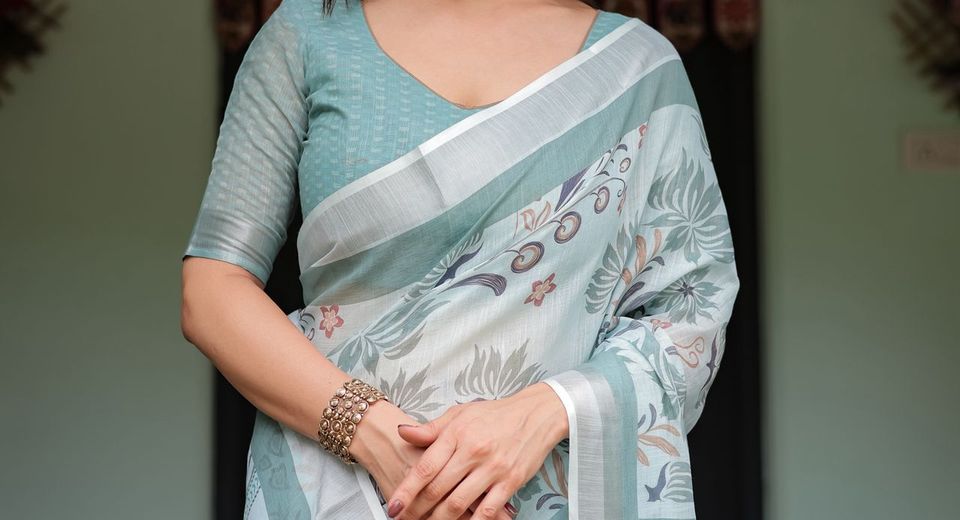
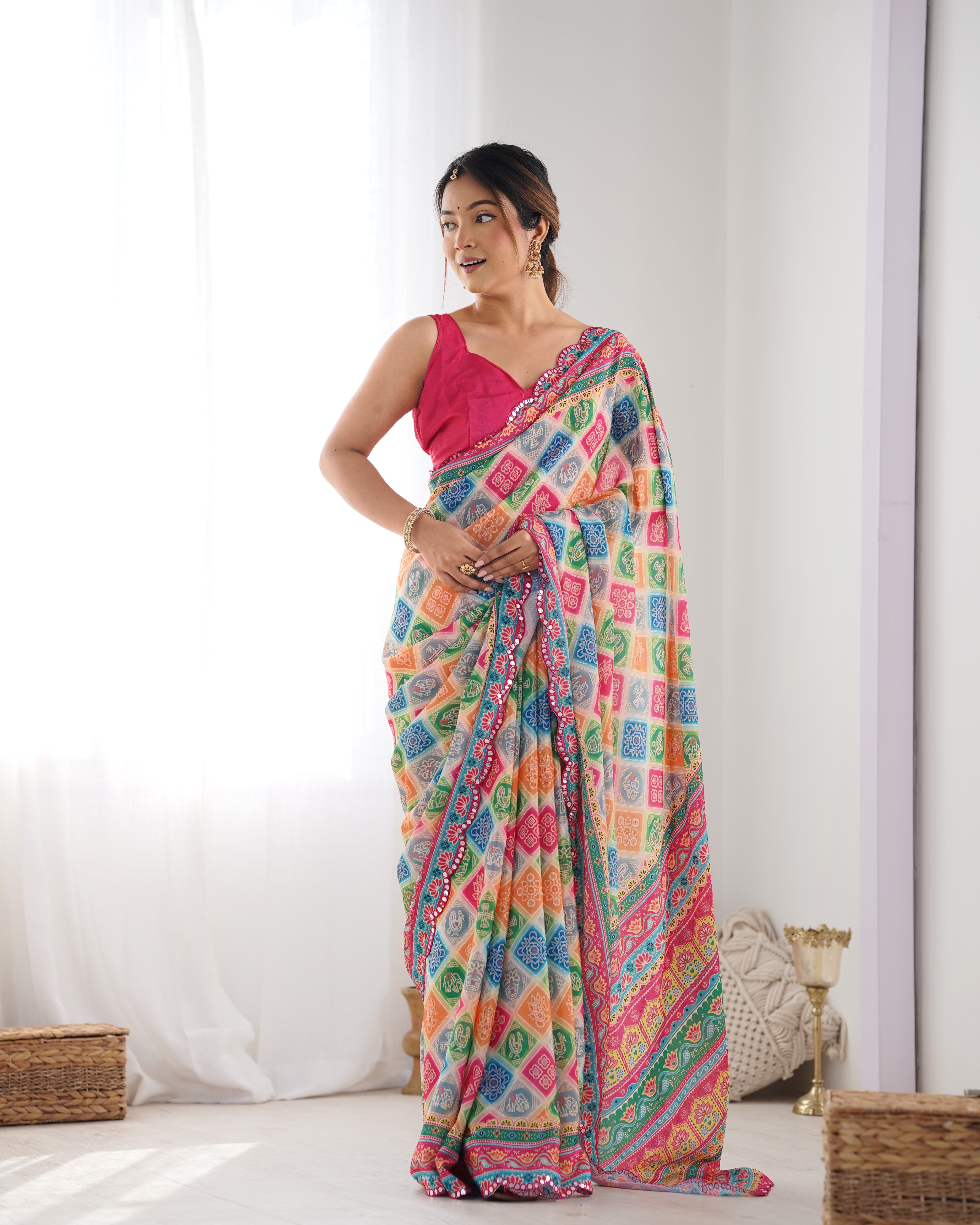
Cotton and linen-cotton are practical choices for a hot afternoon because they allow more airflow than dense silk. The Multicolour Floral Linen Cotton Saree with Blue Border Look demonstrates how a breathable base can still appear festive through a strong border and multicolour print. A cotton saree such as the Teal Green Cotton Saree for Women Online India can be paired with a contrasting short-sleeved blouse and flat sandals for easier movement.
Starch should be used lightly on cotton sarees intended for active wear. Excessive starch can make pleats feel rigid and may create visible crease lines after sitting. A firm but flexible tuck, a safety pin concealed beneath the pallu and comfortable footwear are more useful than a very stiff drape.
For family gatherings and evening celebrations
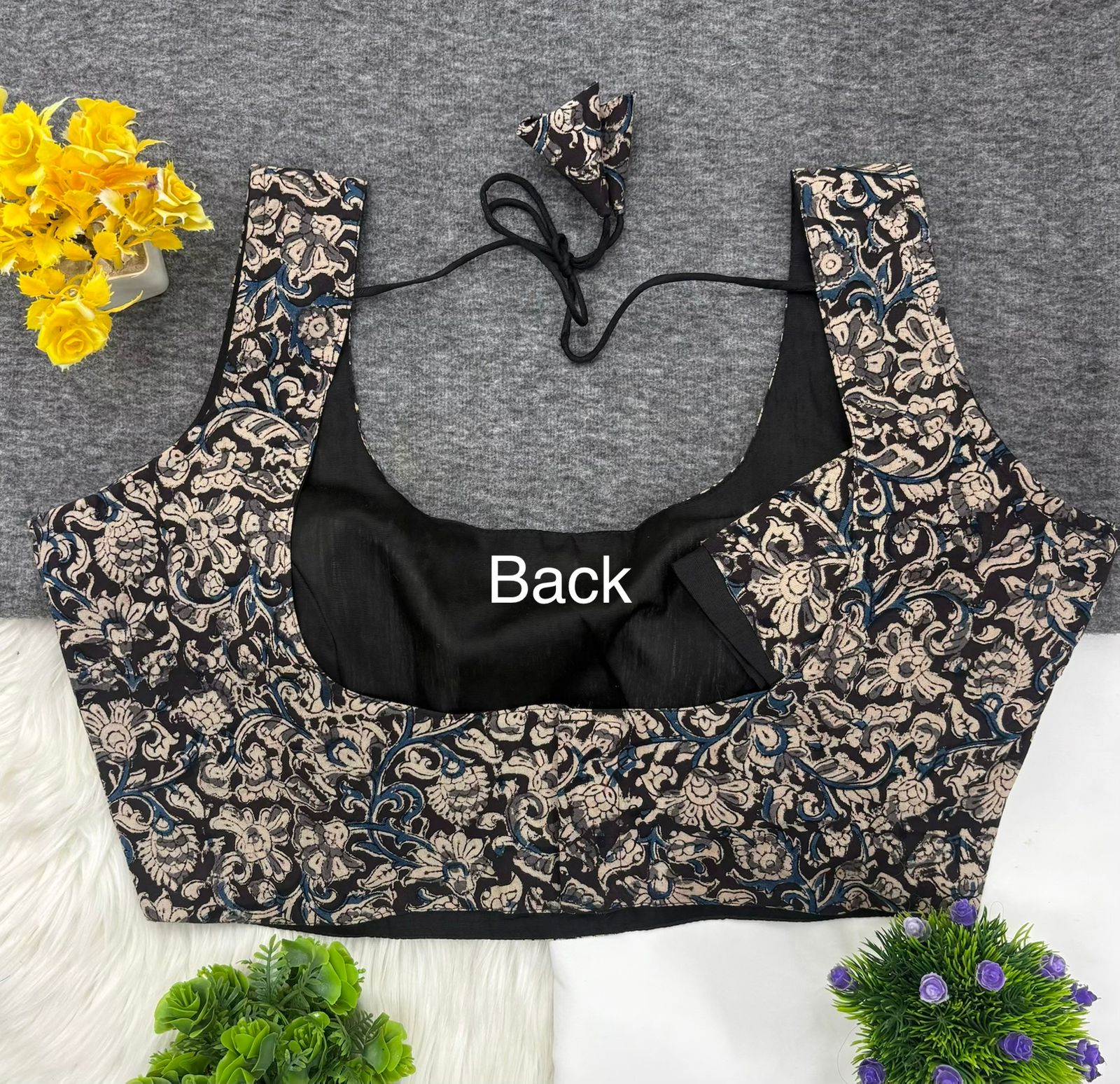
Silk, Chanderi and georgette silk provide more sheen and structure for indoor festivities or evening photographs. Banarasi silk and Kanjeevaram can suit a more classic family celebration, while a printed Chanderi or silk saree feels lighter and more contemporary. The Black Maroon Chanderi Printed Saree for Women shows how print can add interest without depending entirely on sequins.
Georgette silk drapes close to the body and photographs well, but slippery fabric needs extra securing at the shoulder and waist. A cotton underskirt or a well-fitted petticoat gives the pleats a dependable anchor. The Mustard Moss Georgette Silk Saree With Foil Work can be styled with a plain blouse because foil work already supplies a reflective accent.
Shoppers comparing budgets can also review Sarees from Rs 1000 to Rs 1500 when looking for a practical festival wardrobe addition. Price should be considered alongside fabric composition, lining, blouse-piece availability, finishing and the expected frequency of wear.
Shigmo Saree Colours & Styling Inspiration for Women: Which blouse colours and necklines suit best?
The best blouse colour is usually one strong shade taken from the saree border, pallu or print, rather than an attempt to match the entire saree exactly. A contrasting blouse creates a clear waistline and makes a colourful saree look deliberately styled.
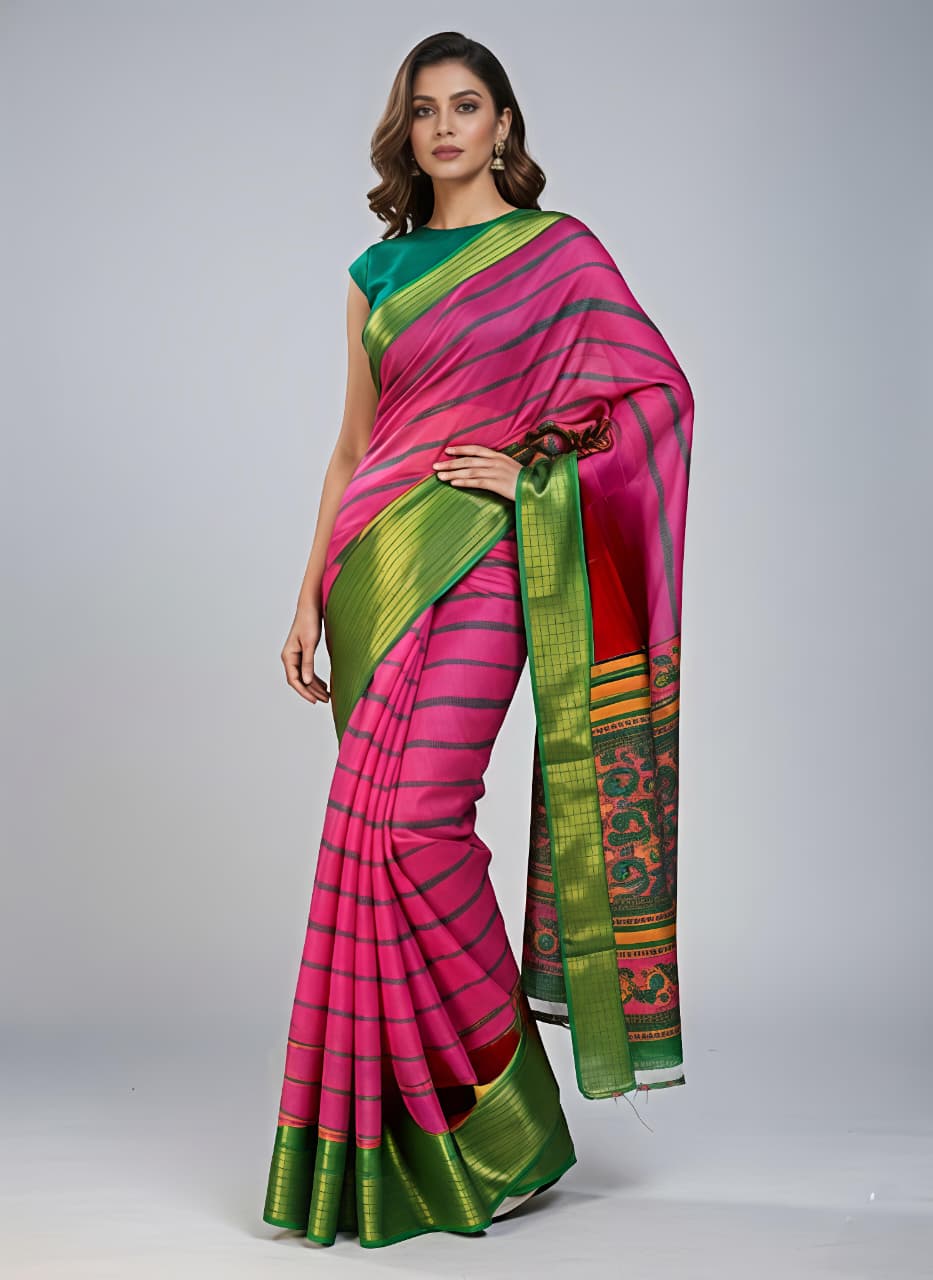
Use a green blouse with a pink saree, a magenta blouse with mustard, an orange blouse with blue, or a wine blouse with teal. For a saree with several colours, select the least dominant shade and use it for the blouse; this prevents the outfit from competing with the print.
- Square neck: A square neckline suits broad borders and gives a clean, structured finish. Moderate depth is practical for a saree worn with repeated movement.
- Boat neck: A boat neck balances a long pallu and works well with statement earrings. Keep the neckline simple when the saree has heavy zari.
- Round neck: A round neck brings a versatile, time-honoured shape and allows a choker or short necklace to sit neatly.
- High neck: A high-neck blouse gives a modern editorial feel, especially with a plain silk saree and minimal jewellery.
- Elbow-length sleeves: Elbow-length sleeves are useful for daytime modesty and provide enough surface for narrow piping or a contrast cuff.
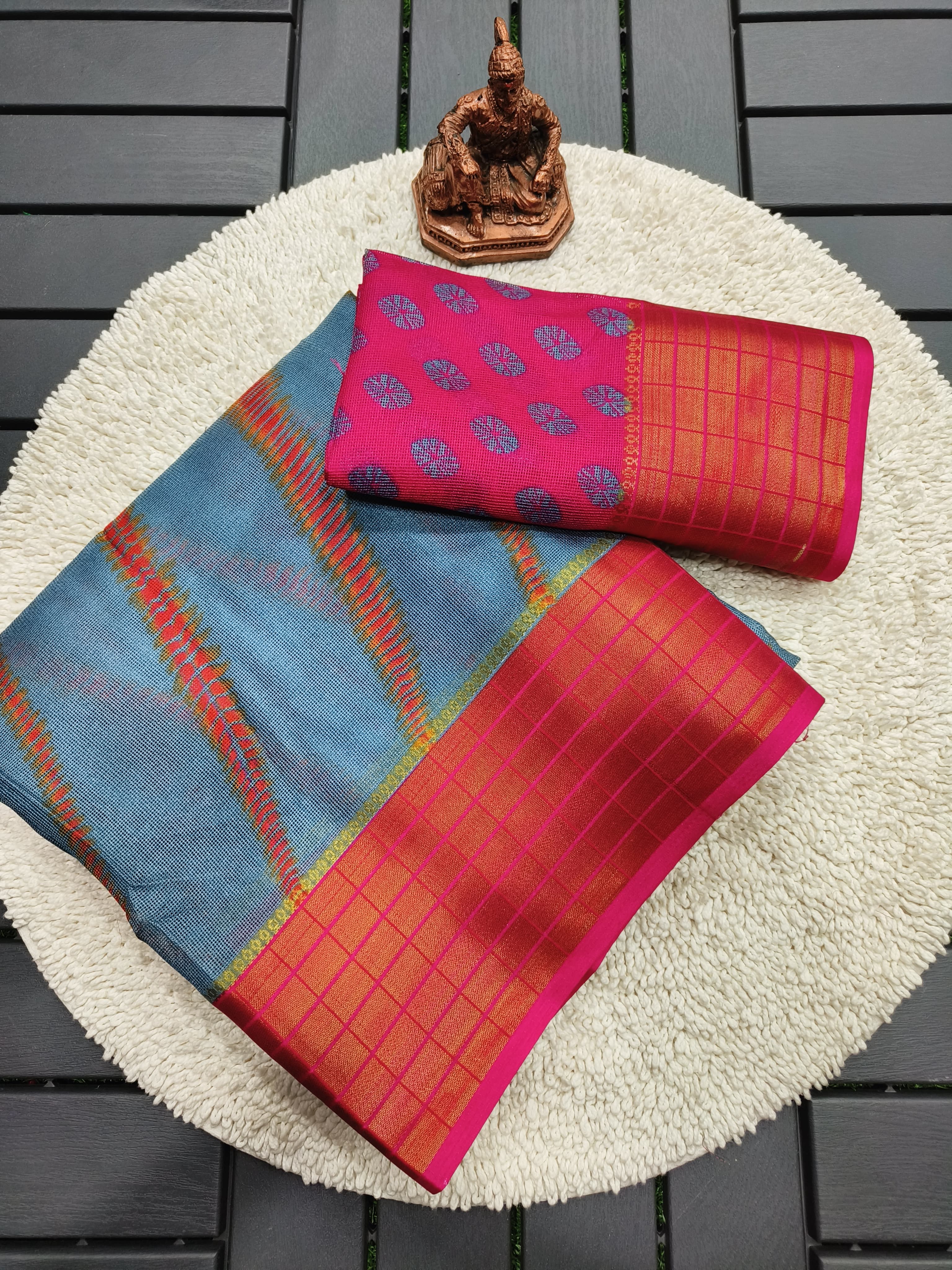
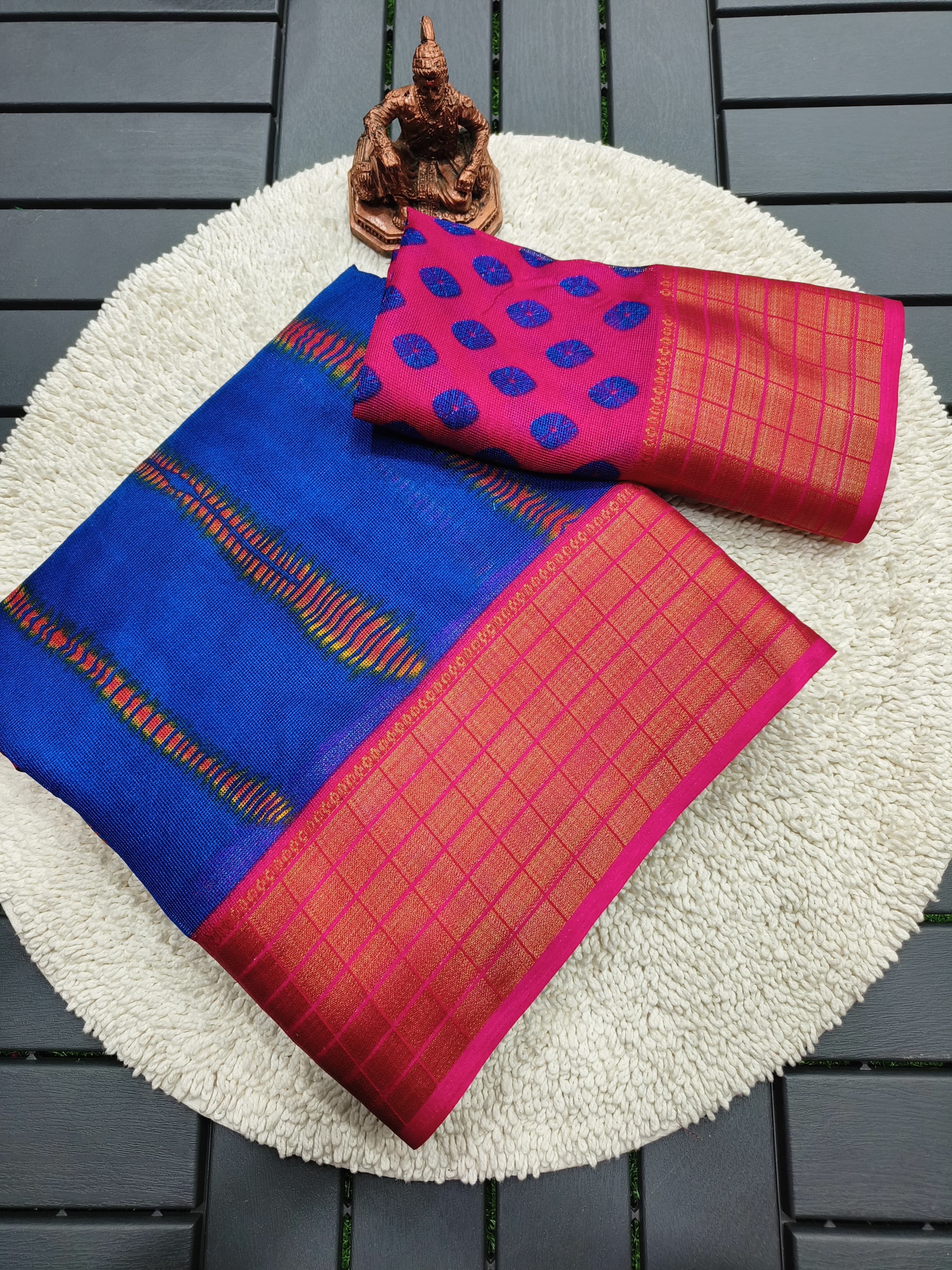
The Premium Grey Silk Saree with Pink Zari & Shibori Print illustrates why a blouse doesn't need to repeat the base colour. A pink blouse highlights the zari, while a charcoal or deep plum blouse makes the shibori pattern feel more understated. The Festive Wear Blue Silk Saree for Women can take a coral, mustard or antique-gold blouse depending on whether the desired result is youthful, warm or heritage-inspired.
Shigmo Saree Colours & Styling Inspiration for Women: How can jewellery and accessories complete the look?
Jewellery completes a Shigmo saree most effectively when one category leads and the remaining accessories stay quieter. Choose statement earrings, a necklace, bangles or a waist belt as the focal point, rather than wearing equally large pieces in every area.
For a printed cotton or linen-cotton saree, oxidised silver jhumkas, colourful glass bangles and a fabric potli create a relaxed festive look. For silk, Chanderi or zari, temple-inspired gold earrings, a short necklace and a simple bangle stack provide more formal polish. Zari borders pair naturally with gold-toned metal, while silver jewellery can sharpen teal, grey, black and blue palettes.
Hair accessories can add a cultural note without overwhelming the saree. A low bun with fresh jasmine works for a classic gathering, while a braided ponytail or controlled low ponytail is more practical for outdoor movement. Secure the hairstyle with pins that match the hair colour because visible loose pins can distract from a carefully arranged pallu.
Footwear should be selected before finalising the pleat length. Flat kolhapuri-style sandals or low block heels are sensible for processions, uneven paths and long periods of standing. A heel between 1.5 and 2.5 inches can improve posture without making the saree difficult to manage. Avoid brand-new footwear at a festival because untested straps can cause discomfort within an hour.
The Stylish Pink Silk Saree with Rich Green Pallu Design already contains a high-contrast colour story, so antique gold earrings and a plain green blouse can be enough. Sarees Under 20% Off and Sarees Under 10% Off may be useful for shoppers building a multi-colour festive wardrobe without buying several heavily embellished pieces.
Shigmo Saree Colours & Styling Inspiration for Women: Which looks suit different occasions?
A daytime Shigmo look should prioritise breathable fabric, secure draping and clear colour contrast, while an evening look can add sheen, deeper tones and more jewellery. Matching the outfit to the setting makes bright clothing feel intentional rather than excessive.
For a daytime procession
Choose cotton or linen-cotton, a short-sleeved blouse, flat footwear and a compact crossbody or potli bag. The Multicolour Floral Linen Cotton Saree with Blue Border Look works with a blue blouse, silver earrings and a single stack of bangles. Keep the pallu pinned at the shoulder and leave enough length for comfortable arm movement.
For a family lunch or home celebration
Choose a floral, printed or medium-weight silk saree with a contrasting blouse and low jewellery. The Green Floral Designer Saree can be paired with a pink, ivory or antique-gold blouse, depending on the intensity of the floral print. A three-quarter sleeve, small studs and a low bun create a polished outfit that remains comfortable while sitting and serving food.
For an evening cultural programme
Choose silk, georgette silk or Chanderi with a defined border, a deeper blouse and one reflective accessory. The Festive Wear Blue Silk Saree for Women suits a coral blouse for warmth, a mustard blouse for contrast or an antique-gold blouse for a heritage effect. Sarees Flat 60% Off and Sarees Flat 50% Off can be checked when a special-event saree is needed for a single upcoming celebration, but fabric quality and return conditions should still be verified before purchase.
Shigmo Saree Colours & Styling Inspiration for Women: How do you drape a saree so it stays secure?
A secure Shigmo saree drape needs a correctly fitted petticoat, even pleats, hidden pins and a pallu that doesn't drag. Comfort and stability matter more than achieving an extremely narrow or elaborate drape.
- Wear the blouse, petticoat and footwear before beginning the drape so the final hem falls correctly.
- Tuck the saree firmly at the waist, keeping the lower edge parallel to the floor instead of allowing it to slope.
- Create five to seven front pleats of similar width, depending on the saree fabric and the volume required for walking.
- Secure the pleats inside the waistband with one safety pin placed horizontally, rather than using several visible pins.
- Bring the pallu over the left shoulder and check that the border falls straight from shoulder to ankle.
- Pin the pallu near the shoulder and once near the waist if the fabric is slippery or the event includes dancing.
- Walk, sit and raise both arms gently before leaving home. Adjust any pulling at the waist or shoulder before adding jewellery.
Printed cotton and linen-cotton sarees generally need fewer pins than smooth georgette silk. Chanderi may hold a crisp pleat but can crease sharply, so pleats should be folded carefully rather than pressed repeatedly. Silk sarees benefit from a slightly wider pleat because very narrow folds can bunch at the waist.
A saree worn outdoors should be kept away from freshly applied gulal, coloured water and rough walls whenever possible. If powder lands on the garment, shake it off gently after returning home instead of rubbing the surface. Follow the care label, and arrange professional cleaning for zari, foil work, delicate silk or persistent colour stains.
Shigmo styling can be vivid without being complicated. Select one dominant colour, one supporting contrast and one metallic or neutral accent; then let the fabric and drape provide the rest of the character. That approach keeps a festive saree wearable for processions, family gatherings and cultural evenings long after the festival has ended.
Common Questions About Shigmo Saree Colours and Festive Styling
Which colours are traditionally suitable for a Shigmo saree?
Pink, yellow, red, green, blue, teal and orange are suitable because Shigmo is associated with spring colour, gulal, processions and celebration. Black, grey, ivory and white also work when they are balanced with a bright border, pallu, blouse or jewellery.
What fabric is most comfortable for a Shigmo festival saree?
Cotton and linen-cotton are usually the most comfortable for hot outdoor processions because they offer airflow and easier movement. Lightweight silk, Chanderi and georgette silk are better suited to indoor gatherings or evening programmes where sheen and drape are more important.
How can I style a colourful Shigmo saree without looking overdressed?
Choose one focal element, such as statement earrings, a contrasting blouse or a bold border, and keep the remaining accessories restrained. Repeating one saree accent colour in two small details creates coordination without matching every shade.
Which blouse colour goes with a multicolour saree?
Select the least dominant or most attractive secondary shade from the saree print, border or pallu. A plain blouse in blue, pink, green, mustard or orange usually looks more balanced than a blouse carrying another elaborate print.
How do I keep a saree secure during a Shigmo procession?
Wear a fitted petticoat, create five to seven even pleats, pin the pleats inside the waistband and secure the pallu at the shoulder and waist. Test the drape by walking, sitting and raising the arms before leaving home.
Can I wear a silk saree for an outdoor Shigmo celebration?
You can wear a lightweight silk saree outdoors if the weather, event duration and movement requirements are suitable. Use a secure petticoat, concealed pins, comfortable footwear and a blouse with enough support; cotton or linen-cotton remains a better choice for prolonged heat.