

Saree or Suit? What to Wear This Bhai Dooj depends on more than whether you prefer a traditional or contemporary look. The right choice should suit the puja, the amount of movement involved, the weather, the fabric, and the time available for getting dressed. A carefully chosen saree can feel ceremonial and graceful, while a well-cut suit can make visiting relatives, serving food and travelling considerably easier.
Bhai Dooj usually combines a tilak ceremony, family photographs, meals and several hours of conversation. Your outfit therefore needs to look festive at close range while remaining comfortable after the first hour. Use the comparison below to decide with intention instead of choosing only by colour or sparkle.
Saree or Suit? What to Wear This Bhai Dooj
A saree is the stronger choice when you want a more traditional, photograph-ready appearance and don't mind spending a little time on draping. A suit is the more practical choice when you expect frequent movement, travel, staircases, cooking or a long day away from home.
A saree creates a continuous line from shoulder to hem and gives woven details such as zari, butti motifs and jacquard borders room to show. A salwar suit, straight suit or palazzo suit distributes the fabric around the body and normally requires fewer adjustments during the day. Neither option is automatically more festive; fabric, finishing, fit and styling determine that.
Choose a saree if your Bhai Dooj includes a formal family puja, a celebration at home where you'll sit for photographs, or an evening gathering with a dressier mood. Choose a suit if you're visiting several homes, travelling by car or public transport, or helping with arrangements before and after the tilak.
When does a saree make more sense?
A saree makes more sense when the occasion calls for visible craftsmanship, a traditional silhouette or a polished look with minimal additional layering. Banarasi silk, Dola silk and silk-blend sarees can provide festive structure without requiring a heavily embellished blouse or many accessories.
When is a suit the better choice?
A suit is better when sitting on the floor, carrying gifts, serving food or walking repeatedly will form a large part of the day. A straight kurta with trousers or a palazzo suit also works well when you want festive colour and earrings without managing a pallu.
How Should You Match the Outfit to Bhai Dooj Plans?
Match the outfit to the day's physical demands before matching it to your jewellery. A quiet home puja, a restaurant lunch and a full day of visiting relatives each call for a different balance of structure, ease and formality.
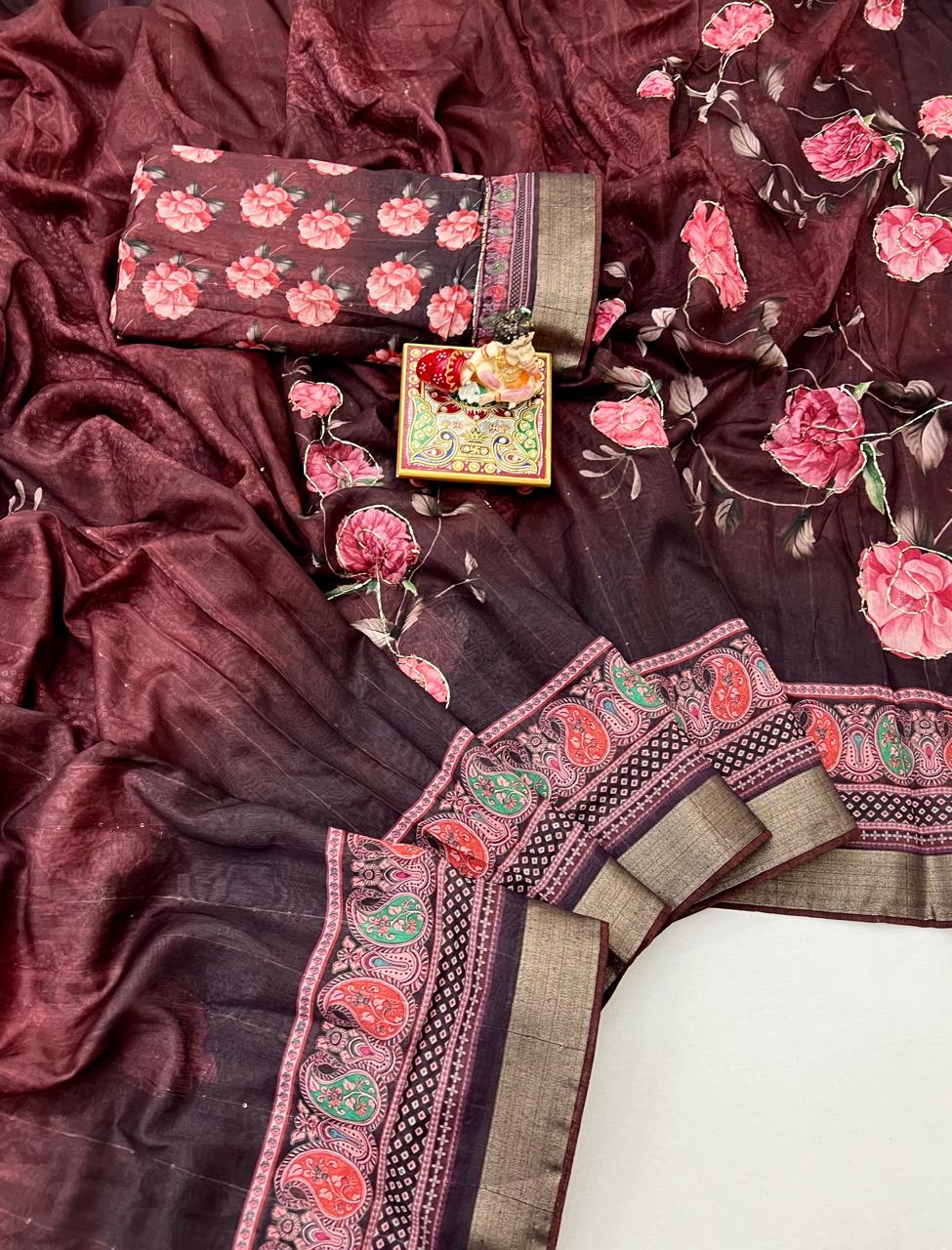 Party Wear Maroon Cotton Saree With Designer Blouse
- For a home puja: Choose a saree with a secure pallu or a comfortable straight suit. A silk saree with a defined border photographs well during the tilak and doesn't need excessive embellishment.
- For travelling between homes: Choose a suit, a lighter saree or a saree pre-pleated in advance. Keep the dupatta pinned at one shoulder so both hands remain free for bags and gifts.
- For a restaurant celebration: Select a refined saree or a suit with one statement element, such as a brocade blouse, embroidered neckline or prominent earrings. Avoid combining a heavily worked outfit with equally elaborate jewellery.
- For helping with food and arrangements: Select a suit with a shorter, manageable dupatta or a saree made from a stable fabric. A pallu that repeatedly slips can become inconvenient around serving dishes and open flames.
Think about seating as well. A saree with a stiff border can bunch under the knees when you sit on the floor, while a very wide palazzo can catch under a chair. A medium-weight fabric and a planned hem length solve many of these problems before the celebration begins.
Which Saree Fabrics Work Best for Bhai Dooj?
Medium-weight silk, silk blends and structured Dola silk are practical saree choices for Bhai Dooj because they hold pleats, show festive texture and remain easier to manage than very slippery fabrics.
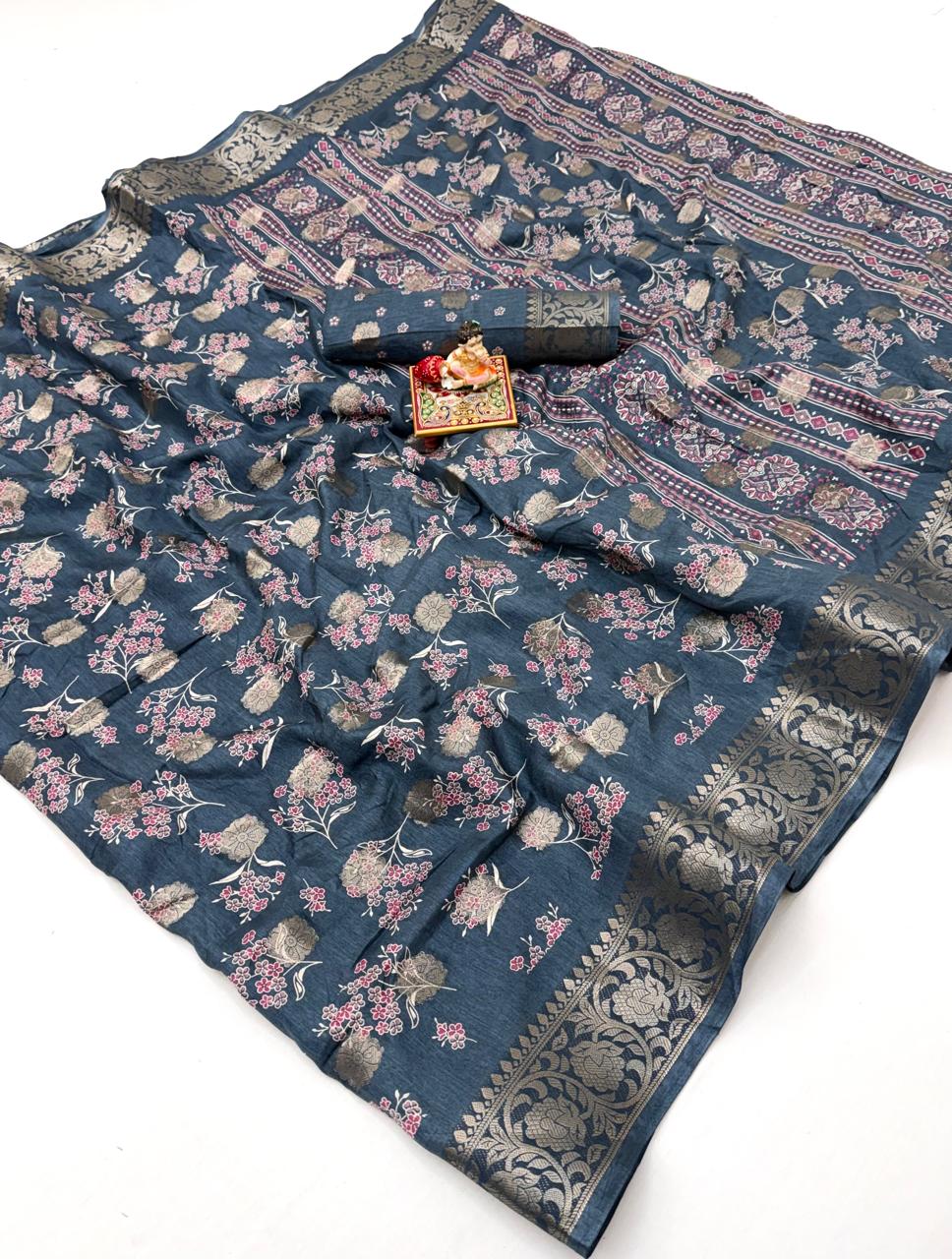 Blue Lehariya Print Dola Silk Saree With Rich Jacquard Border
An Elegant Mustard Dola Butti Silk Saree With Blouse demonstrates why a warm mustard palette works well for a daytime family celebration. Mustard sits comfortably with gold-toned jewellery, maroon accents and earthy makeup. The included blouse also reduces the need to coordinate a separate top, although the blouse fit should still be checked before the event.
A Red Woven Zari Silk Blend Saree With Brocade Blouse suits a more ceremonial Bhai Dooj gathering. Red has strong festive associations, while woven zari and a brocade blouse provide visual richness without requiring a separate embroidered jacket. Balance the saree with a simpler bangle stack if the blouse already has a pronounced texture.
The Teal Ethnic Dola Silk Saree With Elegant Jacquard Border offers an useful alternative to the usual red and yellow palette. Teal pairs effectively with antique gold, copper and pearl accessories. A jacquard border also gives the lower edge definition, which helps the saree look composed in photographs.
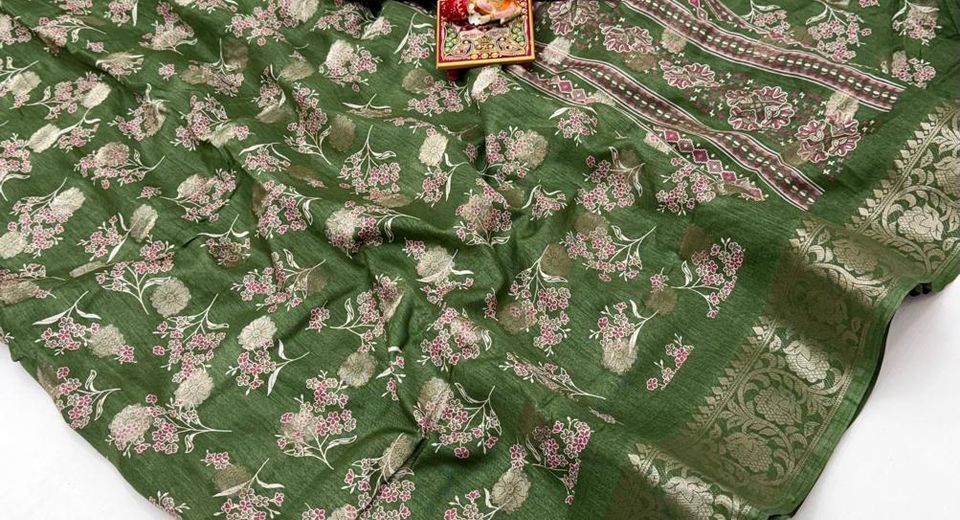
For a deeper, quieter colour story, the Festive Olive Green Dola Butti Silk Saree With Blouse works with antique gold jewellery and rust or wine-coloured accents. Olive green is particularly useful for a daytime celebration because it feels festive without appearing overly bright under natural light.
The Traditional Teal Banarasi Saree for Festive Wear is appropriate when you want a recognisably traditional textile expression. Banarasi silk usually rewards a clean drape because the weave and border already provide detail. Keep the blouse neckline and jewellery proportionate so the saree remains the focal point.
If you prefer movement and a visibly decorative border, consider the Red Dola Silk Butti Saree With Jacquard Border. Red butti details and a jacquard border can create a festive appearance without a fully sequinned surface, making the saree easier to repeat for other family occasions.
How Can You Style a Saree Without Losing Comfort?
You can make a Bhai Dooj saree comfortable by securing the pleats, choosing supportive footwear and testing the complete outfit before the celebration.
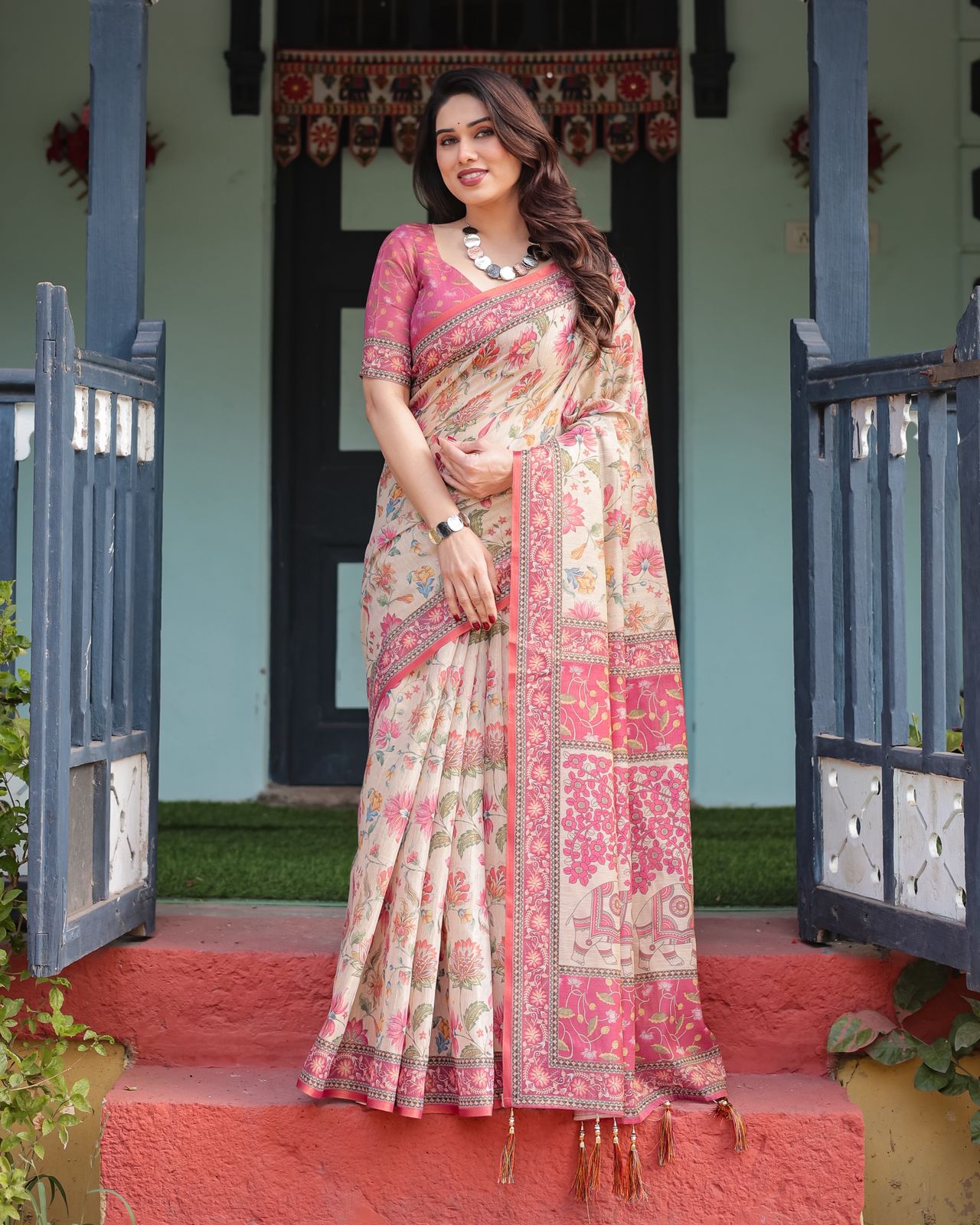 Lightweight Cream Saree with Designer Floral Pattern
- Set the petticoat correctly: A well-fitting underskirt should sit securely at the waist without digging in. A loose tie causes the saree to drop, while an overly tight tie restricts sitting and walking.
- Use a stable drape: Pin the top of the pleats discreetly and secure the pallu at the shoulder. Two small safety pins placed from the inside are usually less visible than one large pin pulling at the fabric.
- Check the hem: The saree should clear the floor while you walk in the footwear planned for the day. Do not test the length barefoot if you'll wear sandals or heels.
- Plan the blouse: A blouse should allow the arms to lift comfortably for blessings, photographs and serving. Try sitting, raising both arms and turning before removing the garment tags.
- Choose practical footwear: Low block heels, embellished flats or cushioned sandals are safer for extended family gatherings than unfamiliar high heels.
A Blue Lehariya Print Dola Silk Saree With Rich Jacquard Border can be styled with a plain blouse in a matching or contrast shade, allowing the print and border to provide enough interest. Keep the pallu folded neatly rather than adding a large brooch if you expect to move frequently.
A saree doesn't need a full set of traditional jewellery to look complete. One pair of jhumkas, a bangle stack and a small bindi can establish the festive mood. If the saree contains zari, warm metal jewellery usually creates greater visual harmony than mixing several unrelated finishes.
How Do You Choose Between Bright and Subtle Bhai Dooj Colours?
Choose bright red, mustard or pink when you want a high-energy traditional look, and choose teal, olive, blue or grey when you prefer a quieter festive palette.
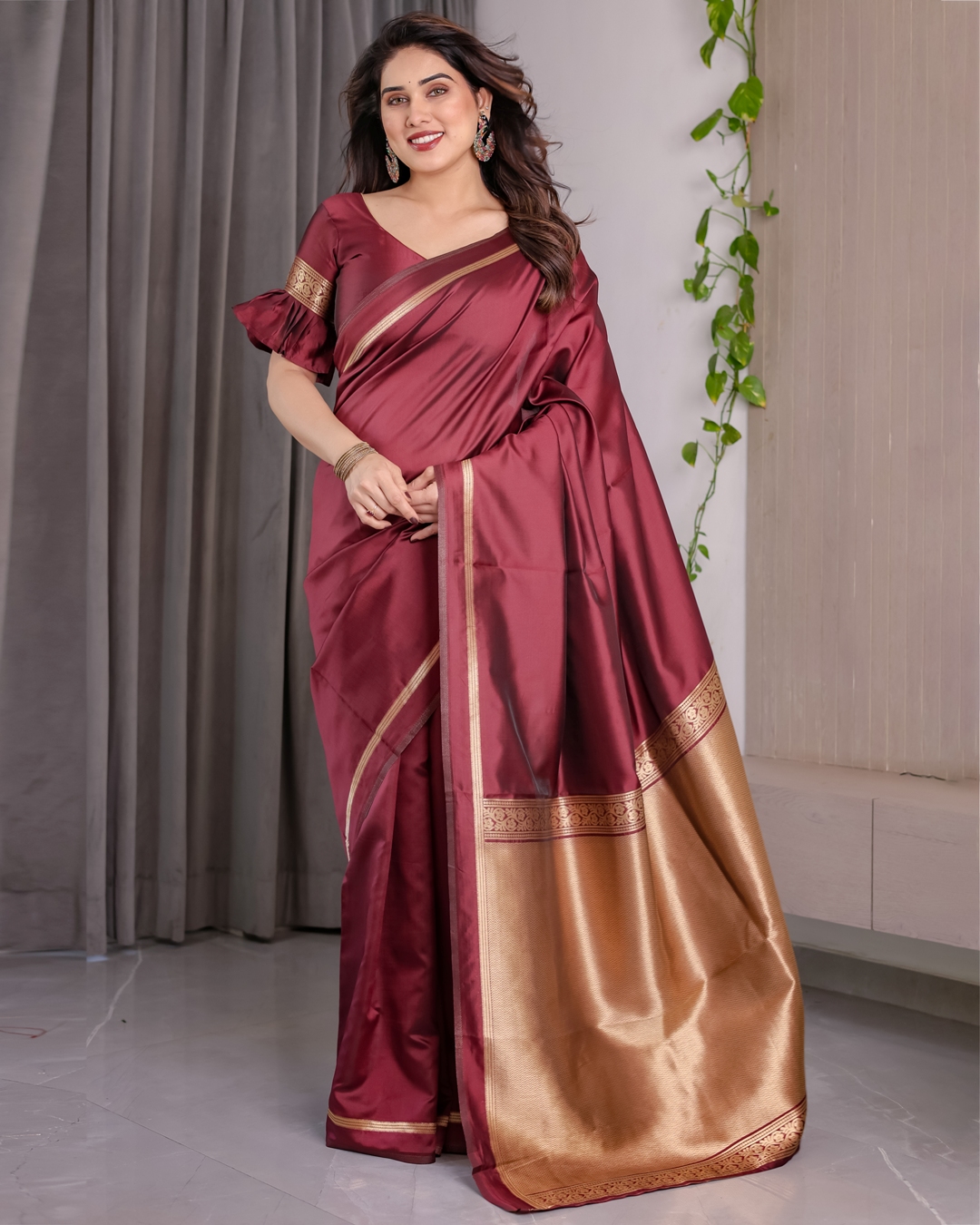 Maroon Banarasi Soft Silk Saree with Golden Zari Border
Red works especially well for family photographs because it remains visible against neutral interiors and festive decorations. Mustard and olive green complement marigold-inspired décor without copying it exactly. Teal and blue provide contrast against warm lighting, while pink creates a softer look that suits daytime gatherings.
The Pink Georgette Sarees collection is worth considering when you want a lighter, more fluid appearance than silk provides. Georgette can be easier to carry during travel, but its drape may require more careful pinning because a fluid fabric doesn't hold pleats in the same way as a structured silk blend.
For a classic red look, Red Banarasi Silk Sarees for Weddings Under 1100 can also inform your colour and textile search. Check the product specifications, blouse details, weave description and measurements before buying; a collection title alone can't confirm the weight or finish of an individual saree.
What Should You Consider If You Choose a Suit?
Choose a suit with a comfortable neckline, a manageable dupatta and a lower half that permits sitting, walking and eating without constant adjustment.
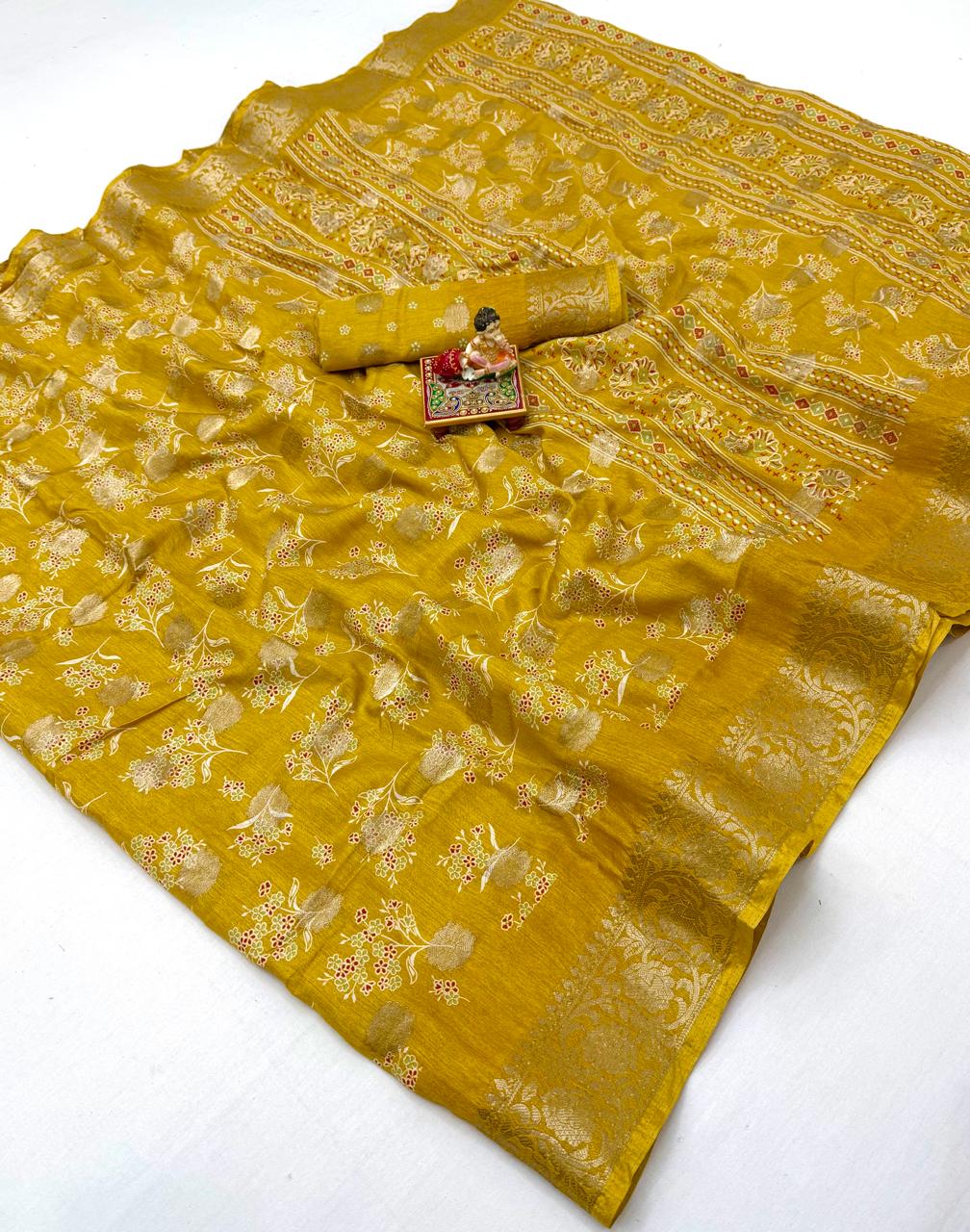 Elegant Mustard Dola Butti Silk Saree With Blouse
A straight kurta with tapered trousers gives a clean shape and is easy to accessorise with jhumkas or a short necklace. A palazzo suit brings more air and movement, although a very wide hem can be inconvenient on stairs. A salwar suit gives a more traditional silhouette and can work especially well for a morning puja.
Use fabric weight to control the level of formality. Silk blends, brocade details and textured weaves look festive without requiring heavy surface work. Lighter fabrics may be more comfortable in warm weather, while a lined kurta can feel more polished for an evening gathering.
Keep the dupatta functional. Pin one end near the shoulder and let the other end fall at a length that doesn't drag near food or footwear. If the suit already has a decorated neckline, select smaller earrings and avoid adding multiple competing borders.
The Party Wear Sarees collection can still be useful to a suit shopper because it shows how colour, border scale and fabric shine create formality. Apply the same principle to a suit: one strong festive feature is often more refined than embellishment on every surface.
How Much Festive Detail Is Appropriate for Bhai Dooj?
Moderate festive detail is usually the most versatile choice for Bhai Dooj because the outfit must work for rituals, photographs, meals and conversation.
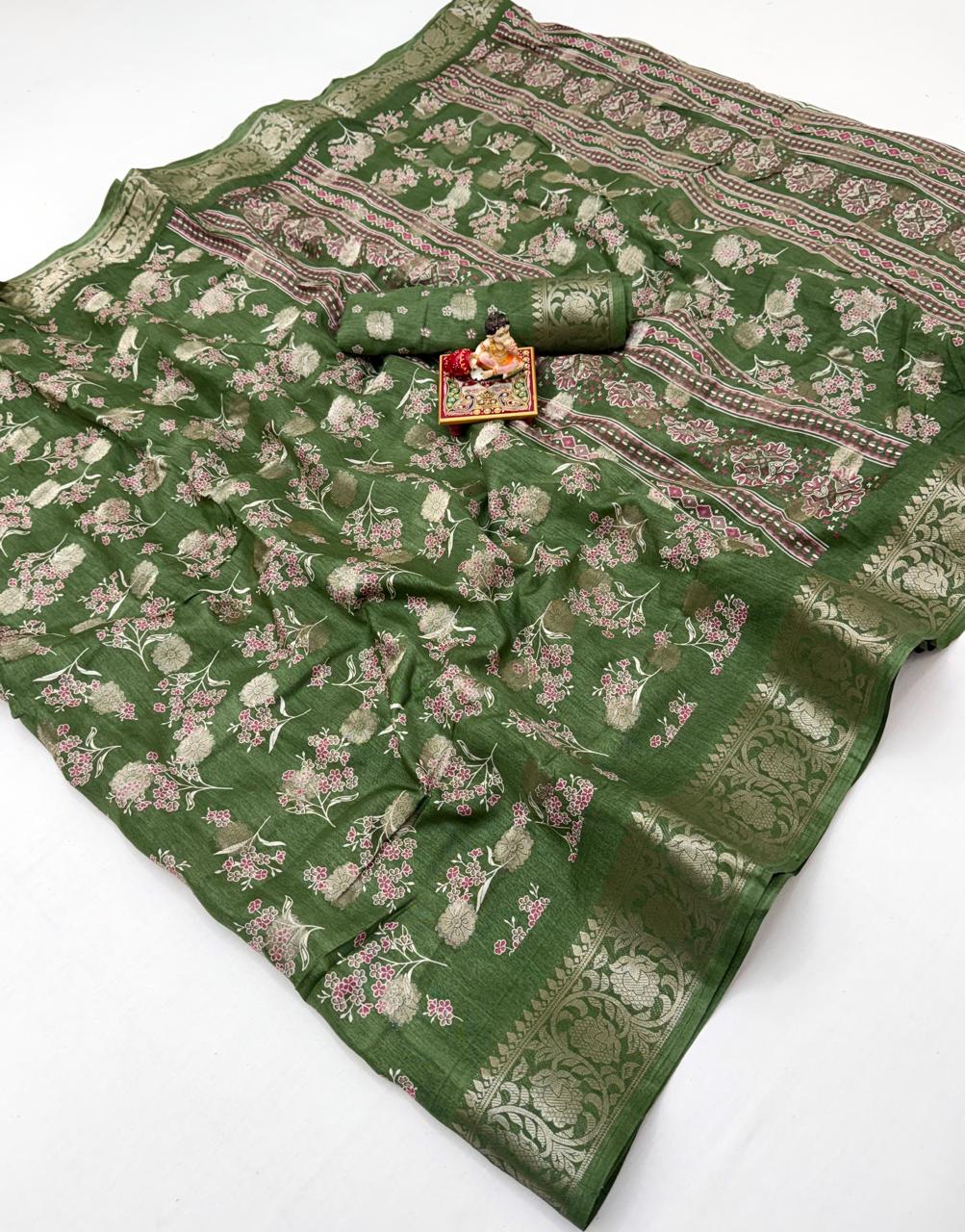 Festive Olive Green Dola Butti Silk Saree With Blouse
Butti motifs, a zari border, jacquard texture or a brocade blouse can make an outfit celebratory without making it difficult to wear. Heavy sequins may catch on jewellery, chairs and handbags, while dense embroidery can feel warm during a crowded daytime gathering. Consider how the garment will behave after several hours, not only how it looks in a product photograph.
Budget doesn't determine whether an outfit looks appropriate. The Silk Sarees Under 3000 With Discount collection can be a practical starting point for comparing silk textures, borders and included blouse options within a controlled spend. A saree with a neat finish and a good fit often looks more polished than a more expensive garment requiring constant adjustment.
Neutral accessories can also extend the life of a festive outfit. Gold-toned studs, a compact potli, a small bindi and comfortable sandals will work with mustard, red, teal and olive. For a cooler palette, pearl accents or silver-toned earrings can provide contrast without changing the entire look.
If you prefer understated dressing, Gray Color Sarees Under 1000 can inspire a restrained palette for a Bhai Dooj gathering. Add colour through a magenta blouse, red bangles or a bright potli rather than abandoning a shade you genuinely enjoy wearing.
How Should You Prepare and Care for the Outfit?
Prepare the Bhai Dooj outfit at least one day ahead by checking fit, pressing instructions, pins, footwear and the condition of the blouse or dupatta.
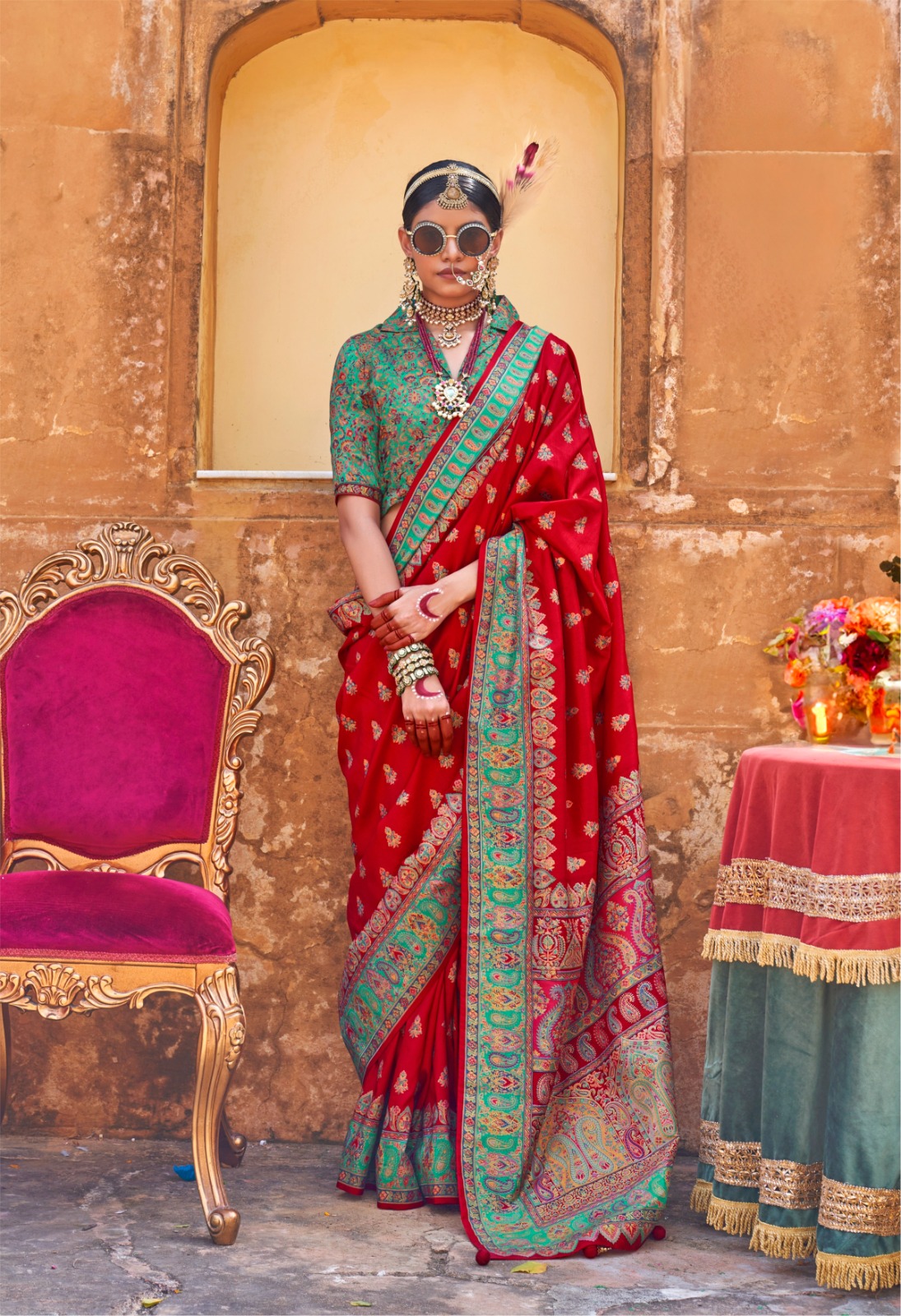 Red Woven Zari Silk Blend Saree With Brocade Blouse
Read the care label before ironing. Banarasi silk, Dola silk and silk blends may respond differently to direct heat, so use a low-temperature setting or a pressing cloth when the label permits ironing. Do not spray perfume directly onto zari or delicate woven areas; apply fragrance to the skin and allow it to dry before dressing.
After wearing a saree or suit, air the garment in shade before folding it. Store silk and zari pieces in a clean cotton or muslin cover rather than sealed plastic, and refold them periodically to reduce permanent creases along the same fold line. Keep jewellery, pins and makeup products away from the stored fabric.
Before the ceremony, carry two spare safety pins, a small stain-removal cloth, a compact comb and a few blister patches. These small preparations are particularly useful when a saree pallu loosens or a shoe begins to rub during family visits.
The best Bhai Dooj outfit is the one that lets you take part fully in the celebration. A saree gives heritage, drape and visual presence; a suit gives mobility, speed and reliable comfort. Decide based on your plans, select one deliberate festive detail, and test the complete outfit before the tilak day.
Practical Questions About Choosing a Bhai Dooj Outfit
Is a saree or suit better for Bhai Dooj?
A saree is better for a more traditional, ceremonial look, while a suit is better for travel, movement and long family visits. Choose the garment that matches the amount of sitting, walking, serving and commuting planned for the day.
Which saree fabric is most comfortable for Bhai Dooj?
Medium-weight Dola silk, silk blends and structured Banarasi silk are comfortable options when the saree is properly pinned and fitted. Very slippery or heavily embellished fabrics may require more frequent adjustment during a long celebration.
What colour saree should I wear for Bhai Dooj?
Red, mustard, pink, teal, olive green and blue all work well for Bhai Dooj. Select red or mustard for a brighter traditional appearance, or choose teal, blue or olive green for a more understated festive look.
How can I keep my Bhai Dooj saree comfortable all day?
Wear a secure petticoat, pin the pleats and pallu, check the hem with your actual footwear and choose supportive sandals or low block heels. Test sitting, walking and raising your arms before the event.
Can I wear a palazzo suit for Bhai Dooj?
Yes, a palazzo suit is suitable for Bhai Dooj when the fabric and styling feel festive. Choose a manageable dupatta and check that the wide trouser hem will not catch on stairs or drag near footwear.
How should I care for a silk saree after Bhai Dooj?
Air the silk saree in shade, avoid direct perfume and follow the care label for pressing. Store the saree in a breathable cotton or muslin cover and refold it periodically to protect the fabric and zari.




