

Saraswati Puja Fashion brings together the yellow associated with Basant Panchami, the graceful character of Bengali sarees and the practical ease of salwar suits. A good outfit must also handle real puja conditions: sitting on the floor, walking between rituals, carrying books or offerings, and spending several hours with friends and family. The most successful look balances cultural respect, comfort and a personal sense of style.
Young women don't need a heavily embellished wardrobe to dress meaningfully for Saraswati Puja. A cotton saree with a red border, a softly coloured kurta set or a coordinated yellow dupatta can create an occasion-appropriate outfit with far less effort. Fabric weight, blouse fit, drape security and footwear often matter more than the amount of embroidery.
Saraswati Puja Fashion: What Makes an Outfit Appropriate?
Saraswati Puja Fashion works best when the outfit is festive, comfortable and suitable for a devotional setting. Bright or warm colours, modest silhouettes, breathable fabrics and restrained accessories create a look that feels celebratory without becoming impractical.
Saraswati Puja, also called Basant Panchami in many parts of India, honours Goddess Saraswati, the deity associated with knowledge, music, learning and the arts. Yellow is traditionally prominent because the festival marks the arrival of spring and yellow mustard flowers are closely associated with the season. Regional clothing choices vary, so a Bengali saree, a salwar suit, a kurta with palazzo trousers or a simple anarkali can all work.
For a college or school puja, clothing should allow easy movement and respectful coverage. A saree with secure pleats, a straight kurta with cigarette pants or a three-piece salwar suit is generally more functional than a long trailing hem. Avoid very slippery fabrics when you expect to sit cross-legged, climb stairs or participate in outdoor group photographs.
Saraswati Puja Fashion with Bengali Sarees
A Bengali saree with a defined border, manageable fabric and a secure pallu is a strong choice for Saraswati Puja. Traditional white-and-red combinations are recognisable, while yellow, cream, green and jewel tones offer softer contemporary interpretations.
The classic Bengali drape is known for a broad pallu placed over the shoulder and often styled with decorative keys or a statement brooch. The pallu should be pinned at the shoulder and near the blouse if you'll be moving frequently. Five to seven discreet safety pins can prevent repeated adjustments during a long puja.
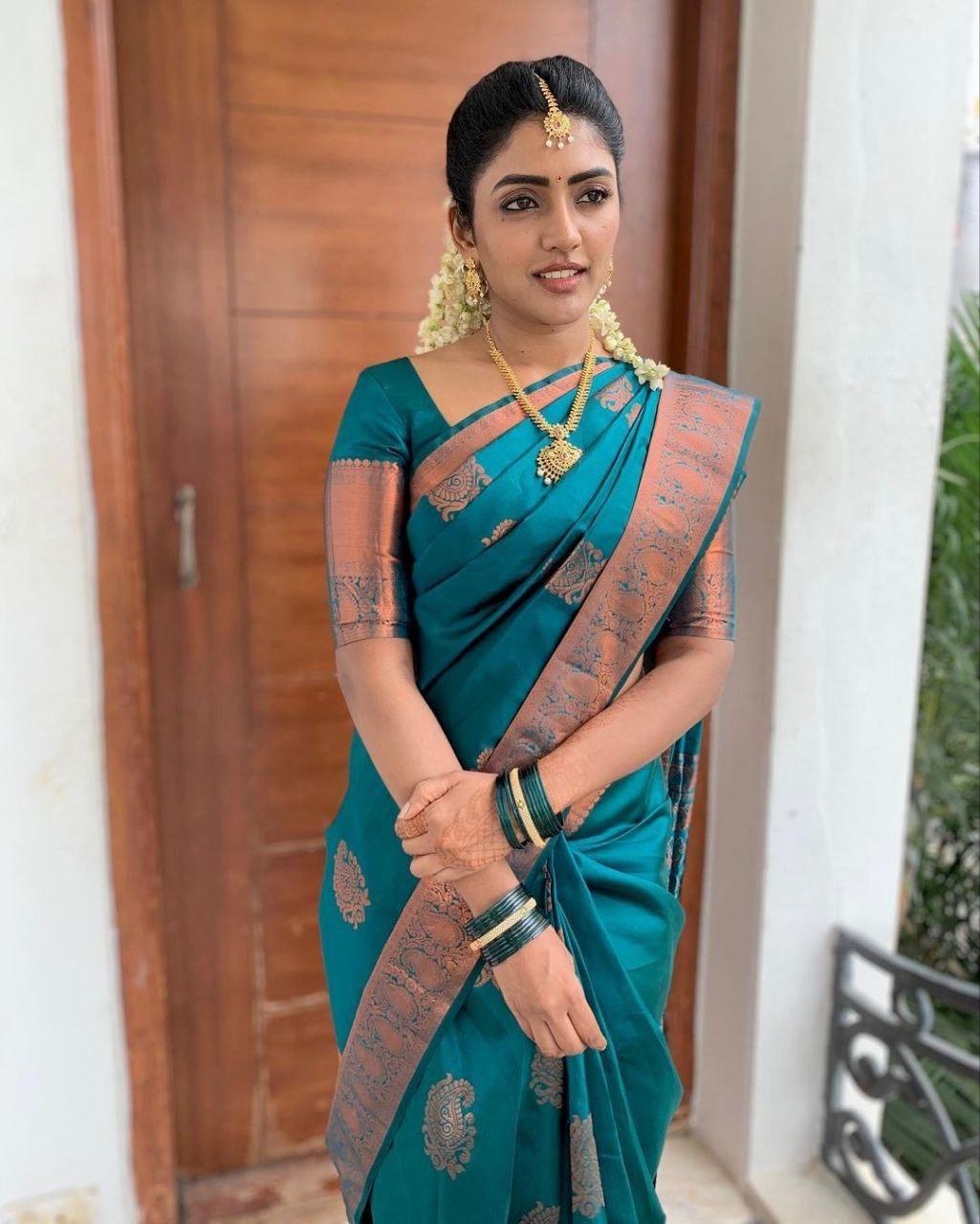
A Banarasi silk saree brings visible zari and a structured fall, making it suitable for a family gathering or a more formal celebration. Festive Teal Banarasi Saree with Traditional Motifs shows how teal can retain festive richness without relying on the usual yellow palette. Pair a richly woven saree with a plain blouse so the border and motifs remain the visual focus.
Which colours suit a Bengali saree for Saraswati Puja?
Yellow suits the spring symbolism of Saraswati Puja, white and red create a traditional Bengali mood, and teal, green and cream offer a less predictable youthful palette. The best colour is also one that complements the blouse, jewellery and lighting at the puja venue.
Mustard yellow works particularly well with antique gold jewellery and maroon accents. Pale yellow and cream create a quieter daytime look, especially when paired with a red, green or rust blouse. Teal and emerald green suit gold borders, while purple and magenta create a contemporary appearance when the saree has restrained patterning.
Colour symbolism should not become a rigid rule. Saraswati Puja clothing differs between Bengal, Odisha, Assam, Bihar and other regions, and many families follow their own preferences. A thoughtful outfit can honour the occasion through neatness, comfort and festive colour even when it's not a conventional yellow saree.
Saraswati Puja Fashion in Comfortable Salwar Suits
Salwar suits are among the most practical Saraswati Puja outfits because they combine festive detail with easy movement and reliable coverage. A straight kurta with pants, a palazzo suit or a lightly flared set can work well for campus pujas, family rituals and long visits.
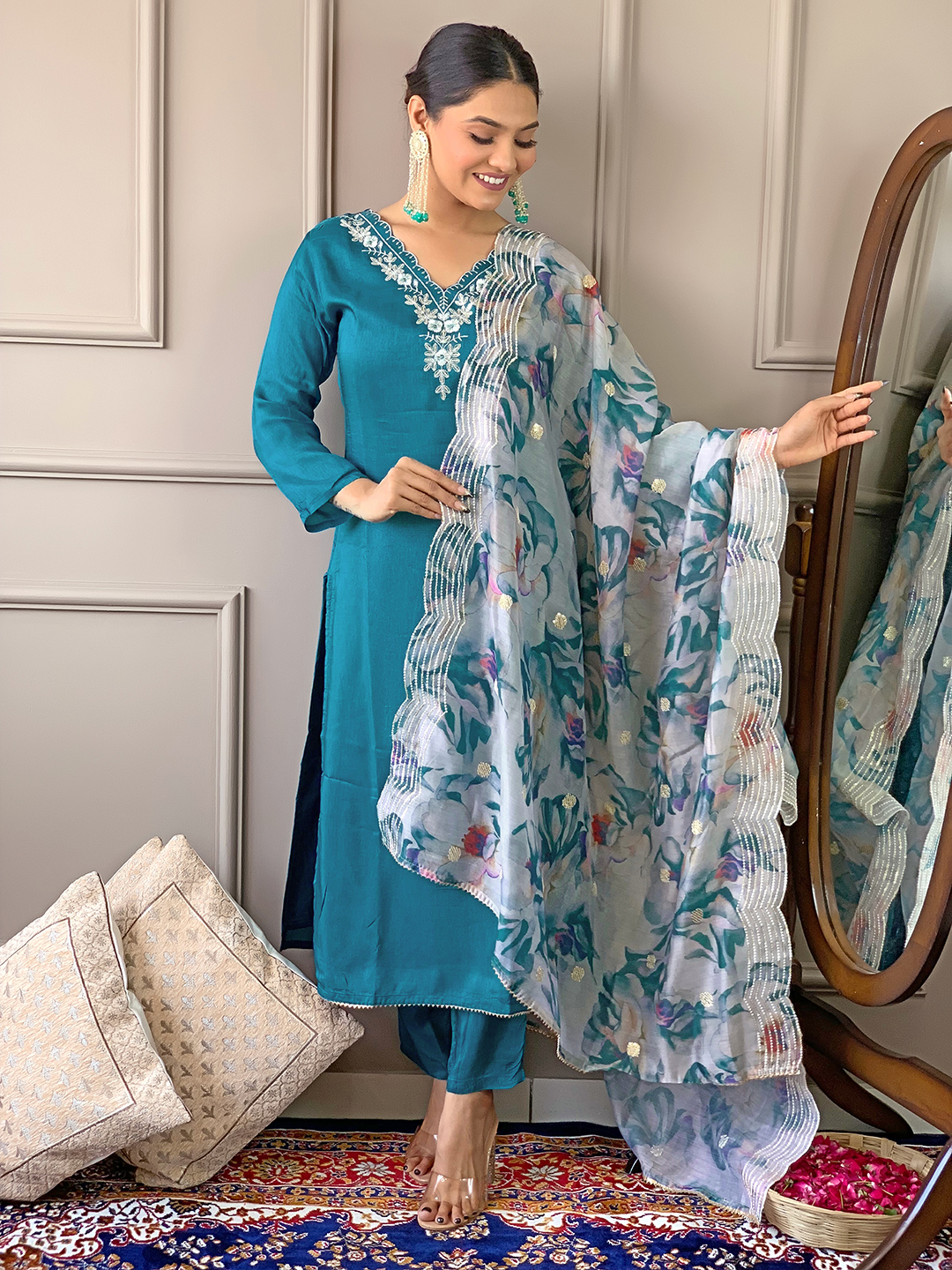
Choose a salwar suit according to the amount of movement your day requires. Straight pants create a clean silhouette and make walking easier, while palazzo trousers provide extra airflow and a relaxed shape. A dupatta adds occasion detail, but a cotton or modal dupatta is easier to manage than a very slippery embellished layer.
Mustard Yellow Kurti Pant Dupatta Set for Women offers a direct way to wear the festival colour through a coordinated three-piece outfit. A mustard set can be balanced with small gold earrings, neutral sandals and a low bun rather than additional bright accessories.
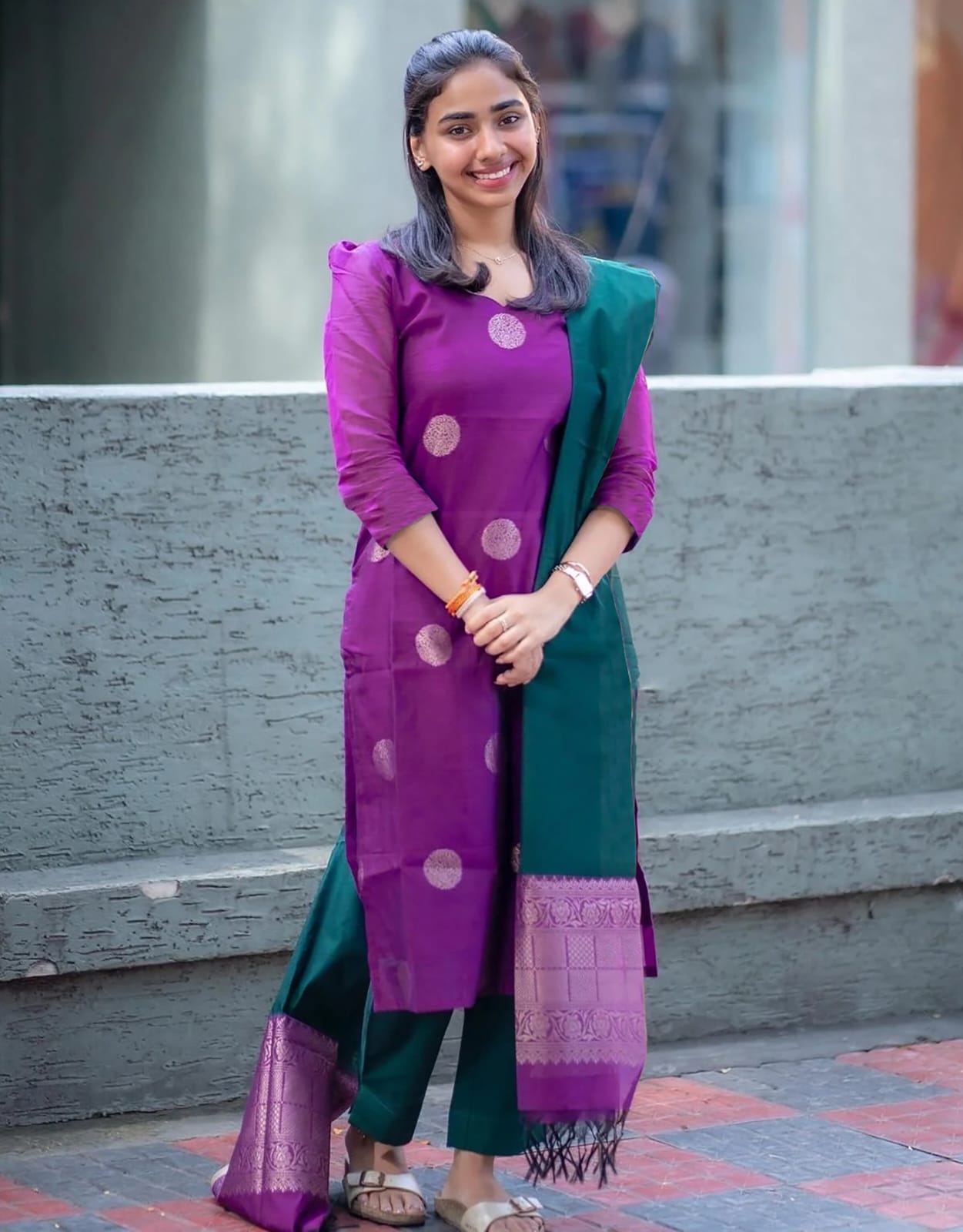
For a deeper colour story, Purple Jacquard Weave Kurta Set with Green Dupatta combines two saturated shades without requiring complicated styling. Keep the jewellery simple when the jacquard texture and contrasting dupatta already provide visual interest.
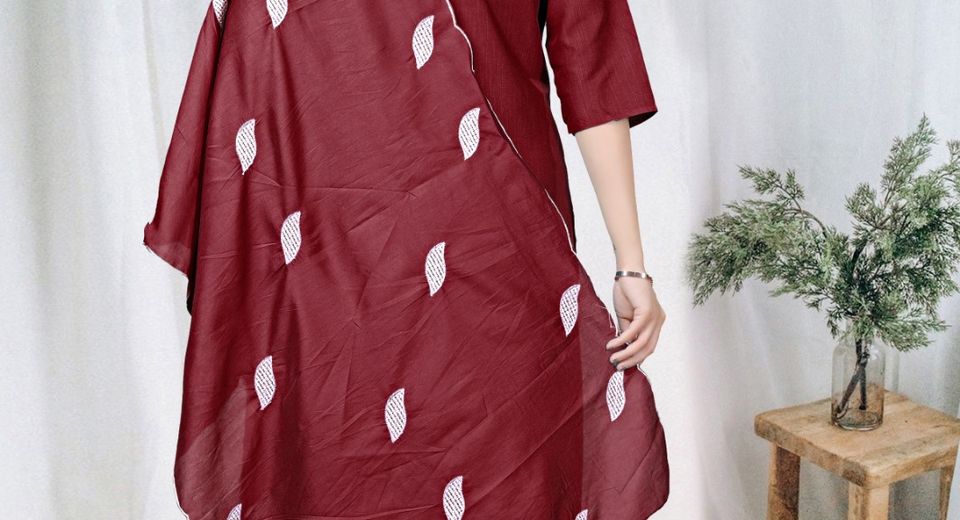
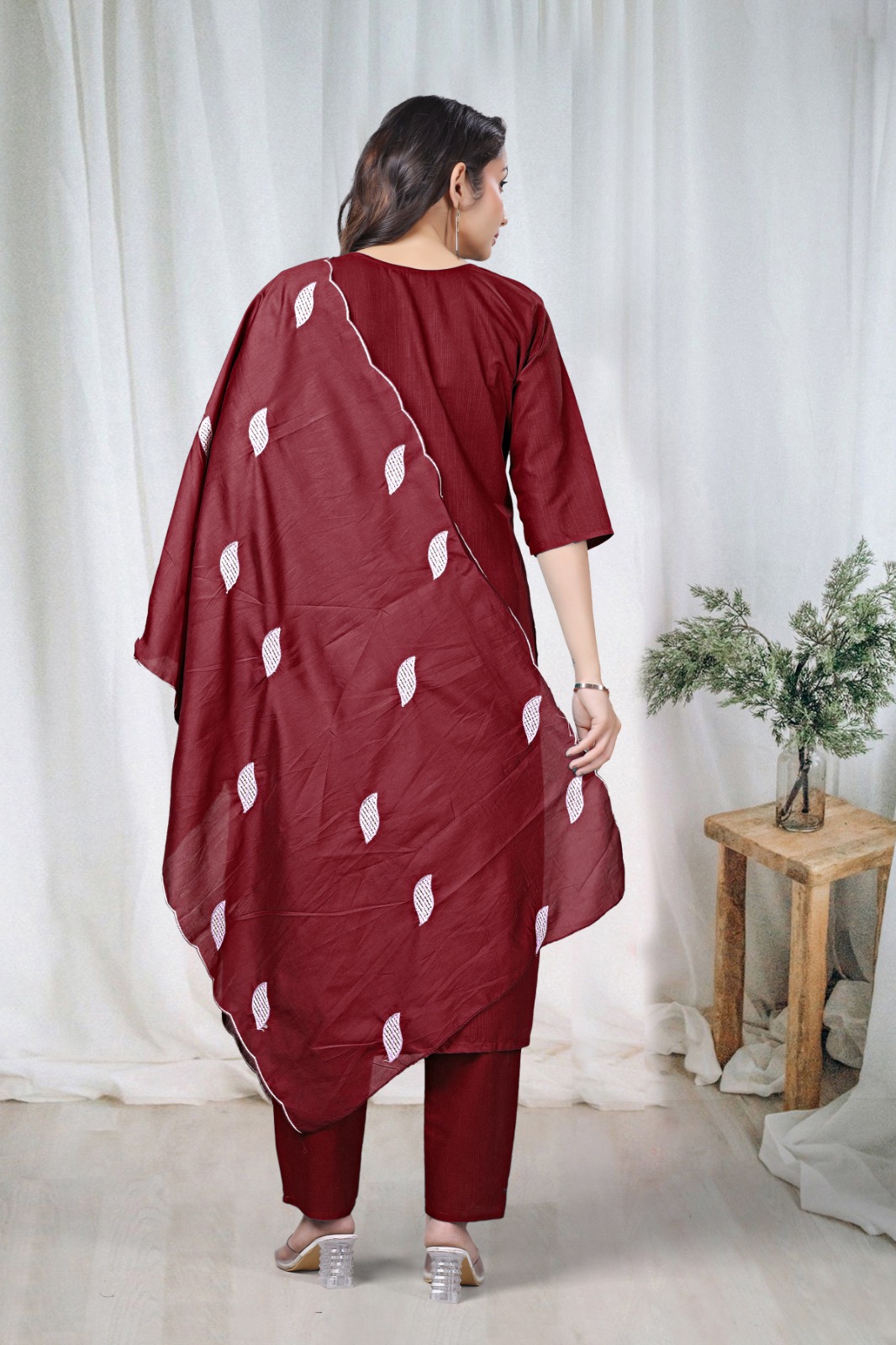
Maroon Embroidered Cotton Kurta Pant Set Online demonstrates why cotton remains useful for daytime pujas. Cotton absorbs moisture, feels comfortable during extended sitting and usually photographs well in natural light. A cotton set can be dressed up with jhumkas, embroidered footwear or a small potli bag.
Which fabrics are comfortable for a long Saraswati Puja?
Cotton, cotton silk, Chanderi and light silk blends are comfortable choices for a long puja because they provide airflow or structure without excessive weight. Heavy velvet, dense synthetic lining and very stiff brocade can feel uncomfortable when worn for several hours.
Chanderi gives a saree or dupatta a light, slightly crisp finish and suits daytime events. Cotton gives the greatest practicality for warm venues. Banarasi silk and Kanjeevaram are more ceremonial choices, but their weight and stiffness should be considered if you'll travel by public transport or sit on the floor.
Embroidery also affects comfort. Fine threadwork or small zari details usually remain manageable, while dense sequin work can catch on bags and seating. Check the inside of the kurta and blouse for rough seams before wearing the garment to a full-day celebration.
Saraswati Puja Fashion for a Youthful Appearance
Youthful Saraswati Puja styling comes from proportion, colour coordination and fresh accessories rather than from removing every traditional detail. A clean silhouette, one statement element and comfortable hair and footwear can make ethnic wear feel current.
For a saree, try a sleeveless or short-sleeved blouse with a modest neckline, provided it suits the venue and family expectations. A compact blouse with elbow-length sleeves creates a more classic Bengali appearance. A belt over the saree can define the waist, but choose a narrow fabric or metallic belt so the drape remains the main feature.
For a salwar suit, a neat side part, half-up hairstyle or low ponytail can look youthful while remaining practical. A small bindi, oxidised silver jhumkas or gold hoops can add personality without overwhelming the outfit. Keep one accessory dominant: a statement earring, a textured dupatta, a brooch or a colourful bag.
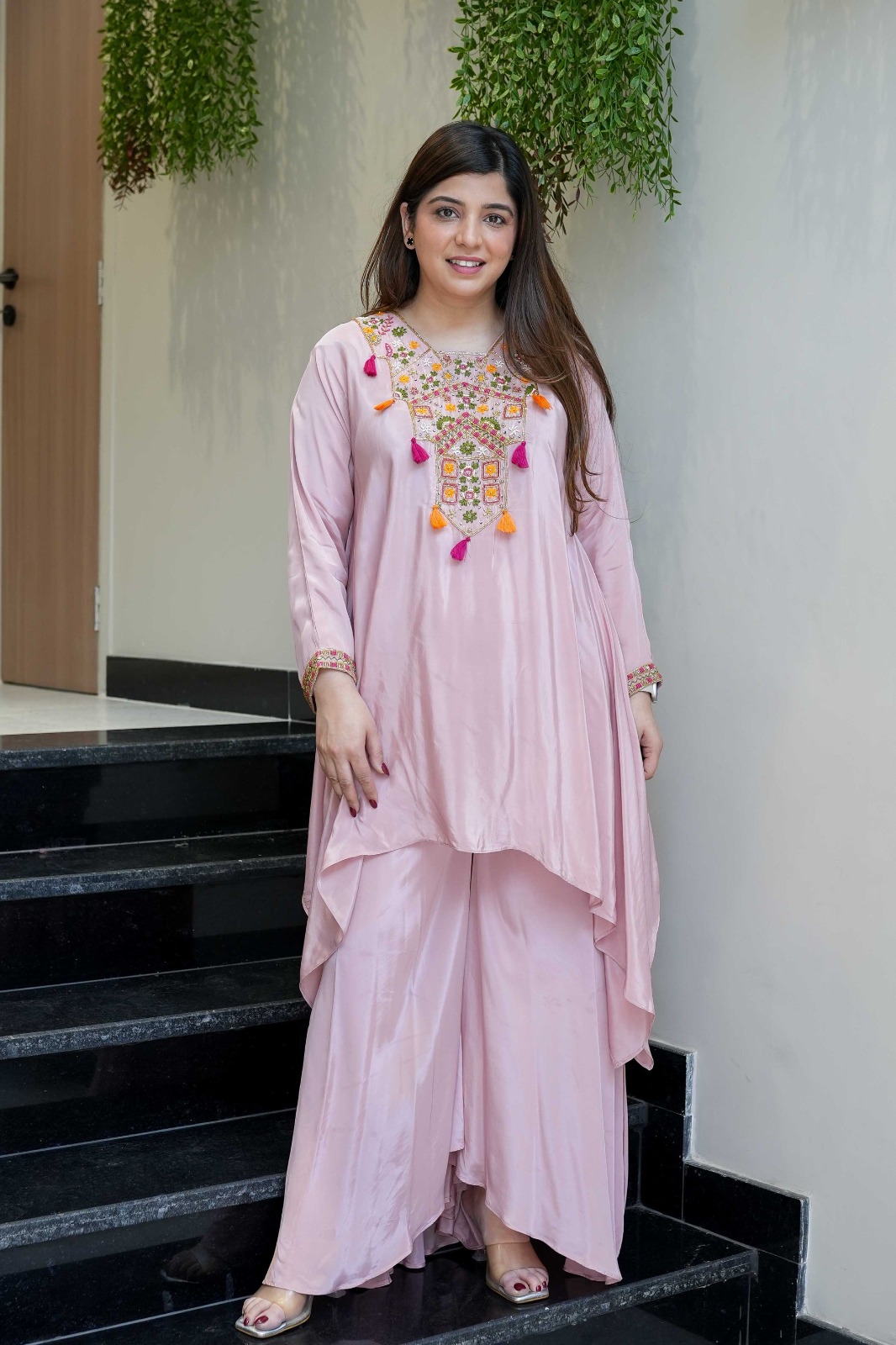
Pink Embroidered Kurta Pant Set in French Crepe is useful when you want a softer alternative to yellow. French crepe usually falls smoothly, so the outfit benefits from structured earrings or a contrasting dupatta to prevent the look from appearing too plain.
Sea Green Embroidered Silk Kurta Set with Dupatta brings a polished option for someone who prefers cool colours. Sea green pairs naturally with pearl, silver or muted gold accessories and works particularly well for an afternoon puja followed by photographs.
Saraswati Puja Fashion with Regional Textile Details
A Bengali-inspired look can be created through the saree drape, border, blouse and accessories even when the garment isn't a traditional Bengali weave. Regional references should be used thoughtfully, with one or two recognisable details rather than an assortment of unrelated motifs.
Red-and-white bangles, a red bindi, a gold-toned brooch and a neatly pleated pallu can establish a Bengali visual language. A conch-shell style bangle or a simple shankha-pola-inspired combination may be meaningful for some wearers, but jewellery should not imitate marital symbols casually without understanding their significance.
Kalamkari Print Salwar Suits bring hand-painted or block-printed storytelling to a puja wardrobe. Punjab Phulkari Embroidered Salwar Suits use colourful floral embroidery and suit someone who wants a cheerful, textured alternative to a saree.
Maharashtra Paithani Inspired Salwar Suits offer peacock, floral or woven-border references in a convenient silhouette. Karnataka Silk Salwar Suits are appropriate when you want a silk-led festive look without wearing a full saree. Kashmir Embroidered Salwar Suits can add delicate threadwork and a graceful, cooler-toned finish.
Mixing regional inspiration is acceptable for contemporary festive dressing, but the outfit should still look coordinated. If the kurta carries strong Phulkari or Kalamkari detail, use quieter jewellery and footwear. If the suit is plain, a regional textile-inspired dupatta can supply the visual interest.
Saraswati Puja Fashion: Accessories, Hair and Footwear
Comfortable footwear, secure hair and lightweight accessories make a Saraswati Puja outfit practical for a full day. These details also determine whether a carefully chosen saree or suit remains polished after several hours.
Juttis, flat kolhapuris and low block heels are more useful than very high heels when a puja involves walking, stairs or outdoor photographs. Choose footwear that has already been worn once or twice, because new shoes can cause blisters during a long celebration. A small crossbody bag or compact potli keeps your hands free for offerings and books.
Hair should remain secure without requiring constant attention. A low bun decorated with a small gajra, a braided ponytail or a half-up style works with both Bengali sarees and salwar suits. Use two or three pins near the crown and a light setting spray if the venue is windy.
Jewellery should match the visual weight of the outfit. Gold-toned jhumkas complement Banarasi silk and mustard yellow, while silver earrings suit sea green, purple and printed cotton. Avoid wearing a large necklace, oversized earrings, stacked bangles and a statement brooch together; one or two focal points are enough.
Saraswati Puja Fashion Checklist Before You Leave
A five-minute outfit check can prevent most common problems during Saraswati Puja. Confirm that the pallu or dupatta is secure, the hem clears the ground, the blouse or kurta allows arm movement, and the footwear is comfortable enough for several hours.
- Steam or press the garment the night before rather than dressing in a hurriedly ironed outfit.
- Carry two safety pins, a small hair tie, tissues and a compact stain-removal wipe.
- Test sitting, walking and climbing stairs before leaving home.
- Check whether zari, sequins or rough embroidery catch on the seat or bag.
- Match the bindi, earrings and footwear before adding extra accessories.
- Carry a light shawl or inner layer if the puja venue has strong air-conditioning.
Care also matters after the celebration. Air silk, Banarasi silk and embroidered garments before storing them, then fold them with clean cotton or muslin layers. Keep heavy zari sarees folded in a different direction every few months to reduce permanent creasing. Cotton outfits should be completely dry before storage, especially after a warm outdoor event.
The right Saraswati Puja outfit isn't defined by a single colour or silhouette. A secure Bengali saree, breathable salwar suit, thoughtful regional detail and practical accessories can all express the spirit of the celebration while allowing you to study, pray, socialise and move comfortably.
Common Questions About Saraswati Puja Sarees and Salwar Suits
What should I wear for Saraswati Puja?
Wear a Bengali saree, cotton saree, salwar suit or coordinated kurta set in a festive and comfortable fabric. Yellow, white, red, cream, green and teal are suitable colour choices, but comfort and the customs of your family or institution should guide the final decision.
Can I wear a salwar suit to Saraswati Puja?
Yes, a salwar suit is an appropriate and practical Saraswati Puja outfit. Choose cotton, Chanderi, cotton silk or a light silk blend, and select a straight pant or palazzo silhouette according to how much walking and sitting the day involves.
Why is yellow worn during Saraswati Puja?
Yellow is worn during Saraswati Puja because the festival is associated with spring, mustard flowers and the brightness of Basant Panchami. Yellow is traditional rather than compulsory, so cream, white, red, green and other festive colours can also be worn.
How can I style a Bengali saree for a college Saraswati Puja?
Style a Bengali saree with secure pleats, a pinned pallu, a comfortable blouse, small jhumkas and flat footwear. A red bindi, a narrow belt or a simple brooch can add a youthful detail without making the outfit difficult to manage.
Which fabric is best for a long Saraswati Puja celebration?
Cotton is usually the most comfortable fabric for a long Saraswati Puja celebration because it allows airflow and handles extended sitting well. Chanderi and light silk blends offer a more dressed-up finish, while Banarasi silk is better suited to wearers who are comfortable with a heavier saree.
How can I make a Saraswati Puja outfit look youthful?
Create a youthful look with a clean silhouette, one statement accessory, coordinated colours and practical footwear. A low bun, half-up hairstyle, small bindi, contemporary earrings or a contrasting dupatta can update traditional ethnic wear without removing its festive character.





