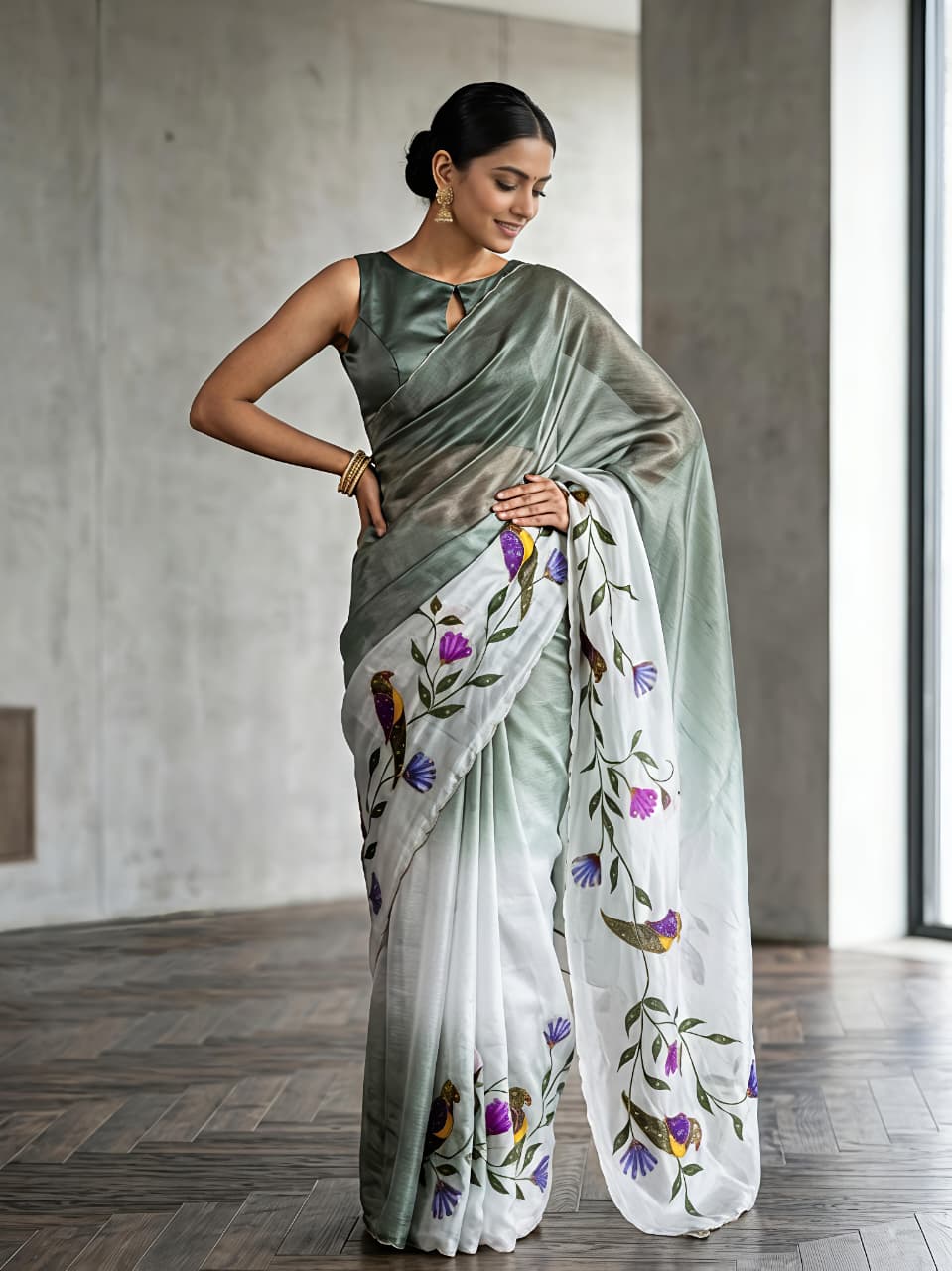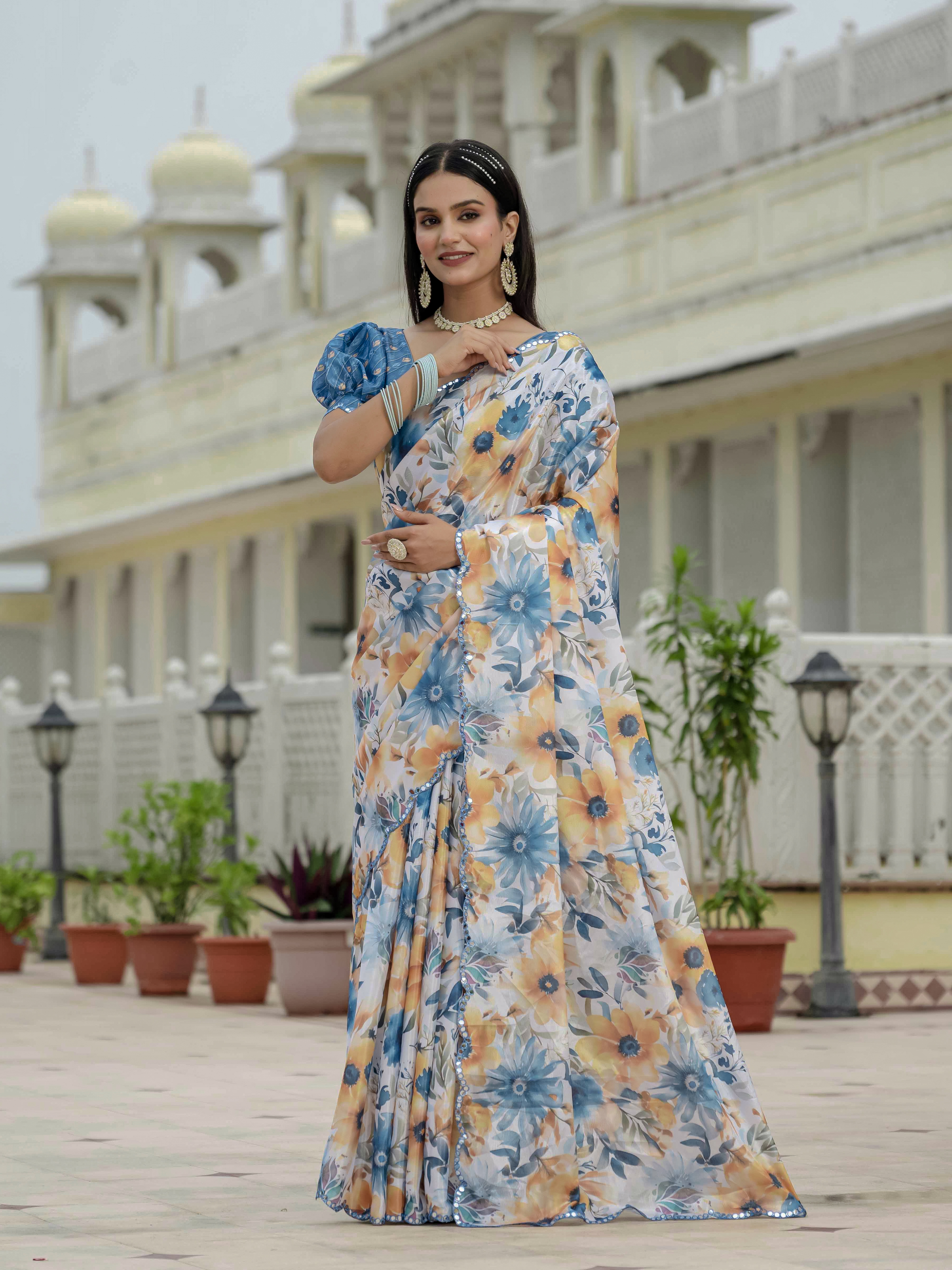
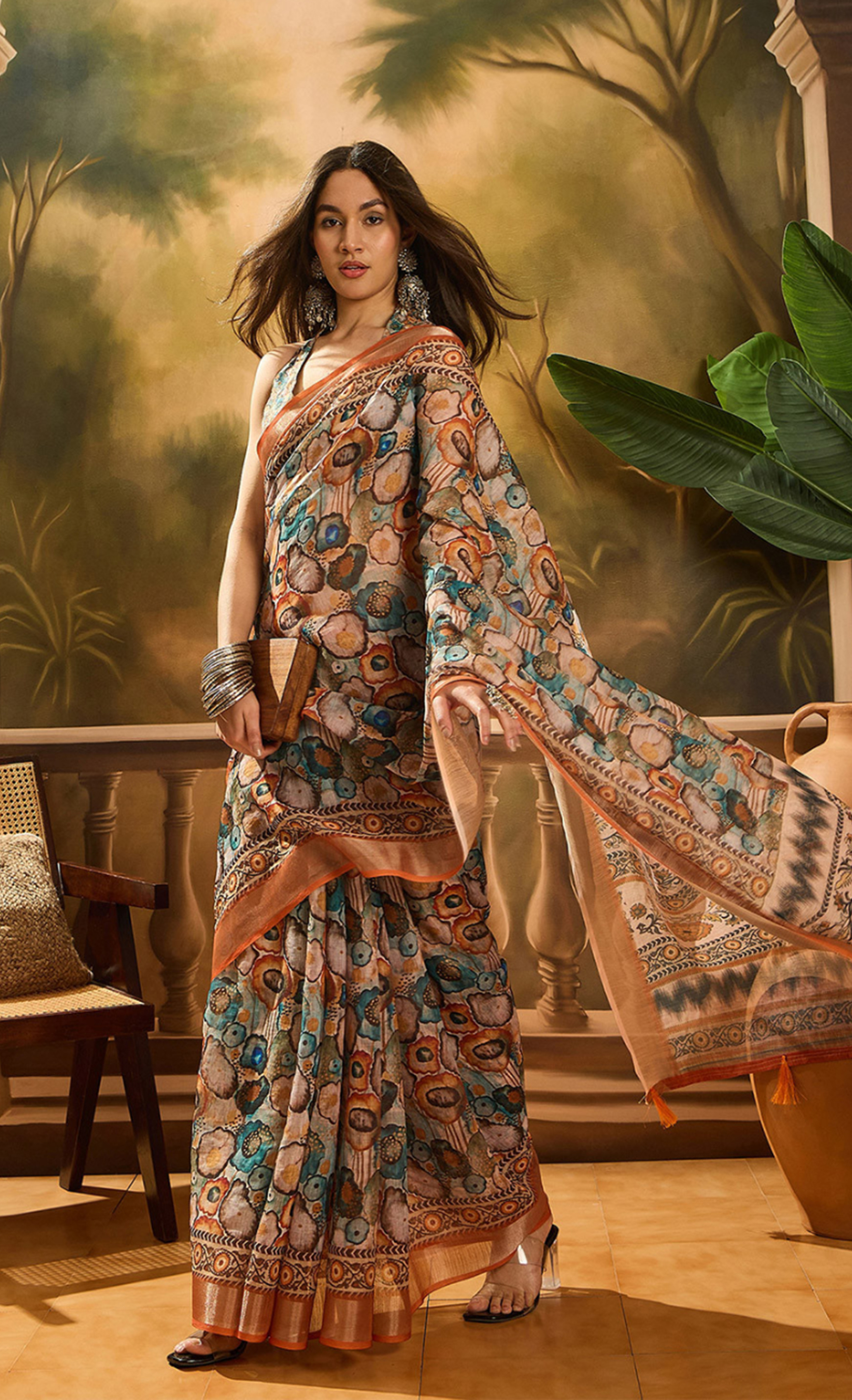
Sama Chakeva Festival Fashion can honour Mithila culture through a saree that feels comfortable for outdoor rituals, expressive in colour and finished with details drawn from regional craft traditions. Clay birds, evening songs and the bond between brothers and sisters give Sama Chakeva its distinctive place in Mithila's festival calendar. A breathable cotton handloom, a modest blouse and a carefully chosen border often feel more appropriate than an overloaded party look.
Sama Chakeva is associated with the Mithila region of Bihar and parts of Nepal, and celebrations traditionally continue through the month of Kartik before concluding around Kartik Purnima. Women and girls gather with handmade bird figures, sing traditional songs and take part in rituals connected with sibling affection and protection. Clothing therefore needs to support movement, sitting on the ground, carrying minor ritual objects and spending time with family after sunset.
Sama Chakeva Festival Fashion and the meaning of practical festive dressing
Practical festive dressing is important for Sama Chakeva because celebrations may involve walking, sitting in groups, arranging clay figures and joining songs for several hours. A saree for Sama Chakeva should stay manageable during repeated draping instead of relying only on shine or heavy embellishment.
Many festival sarees are designed for weddings, stage events or indoor parties, where sequins and dense embroidery may be comfortable for a short period. Sama Chakeva gatherings often involve moving between homes, sitting at floor level and helping younger family members. A six-yard saree in cotton, linen-cotton, Chanderi or a light silk blend is usually easier to wear than a stiff brocade.
The visual language of Mithila also rewards colour and pattern. Madhubani painting traditions use strong outlines, plants, birds, fish and geometric forms, although a Sama Chakeva outfit doesn't need to copy a painting literally. A floral border, a bird-inspired brooch or a red-and-yellow colour combination can suggest regional character without making the outfit look like a costume.
Sama Chakeva Festival Fashion fabric choices for long celebrations
Cotton is the most dependable saree fabric for a long Sama Chakeva celebration because cotton absorbs moisture, feels stable when tucked and becomes easier to handle with regular pleats. Handloom cotton with zari provides a time-honoured festive effect without the weight of heavy silk.

Pastel Floral Tissue Handloom Cotton Saree with Zari Weaves shows how a subtle metallic line can lift a breathable base. A cotton handloom saree also works well for daytime preparation, especially when the wearer expects to sit on the floor, help with decorations or move between nearby homes.
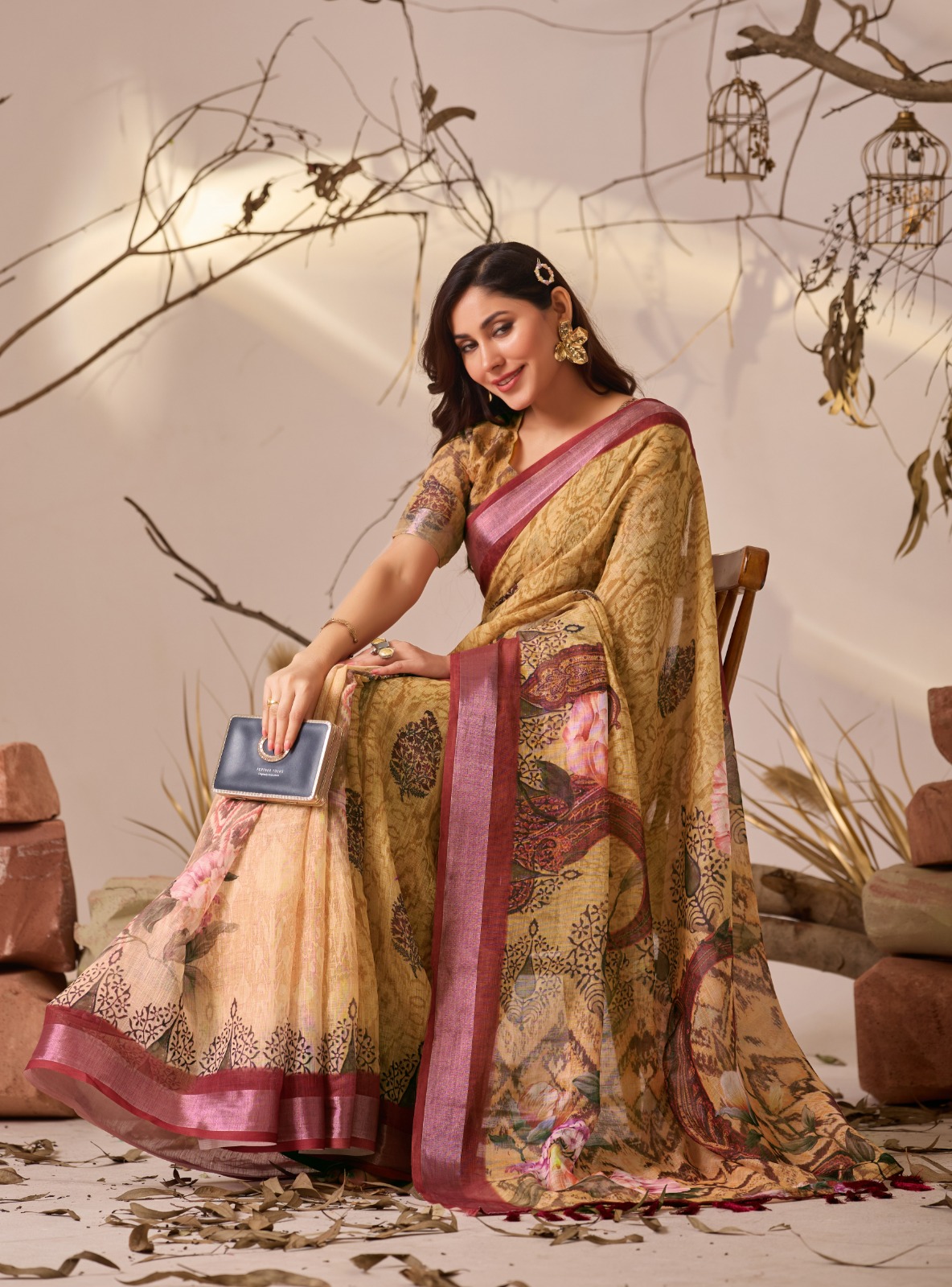
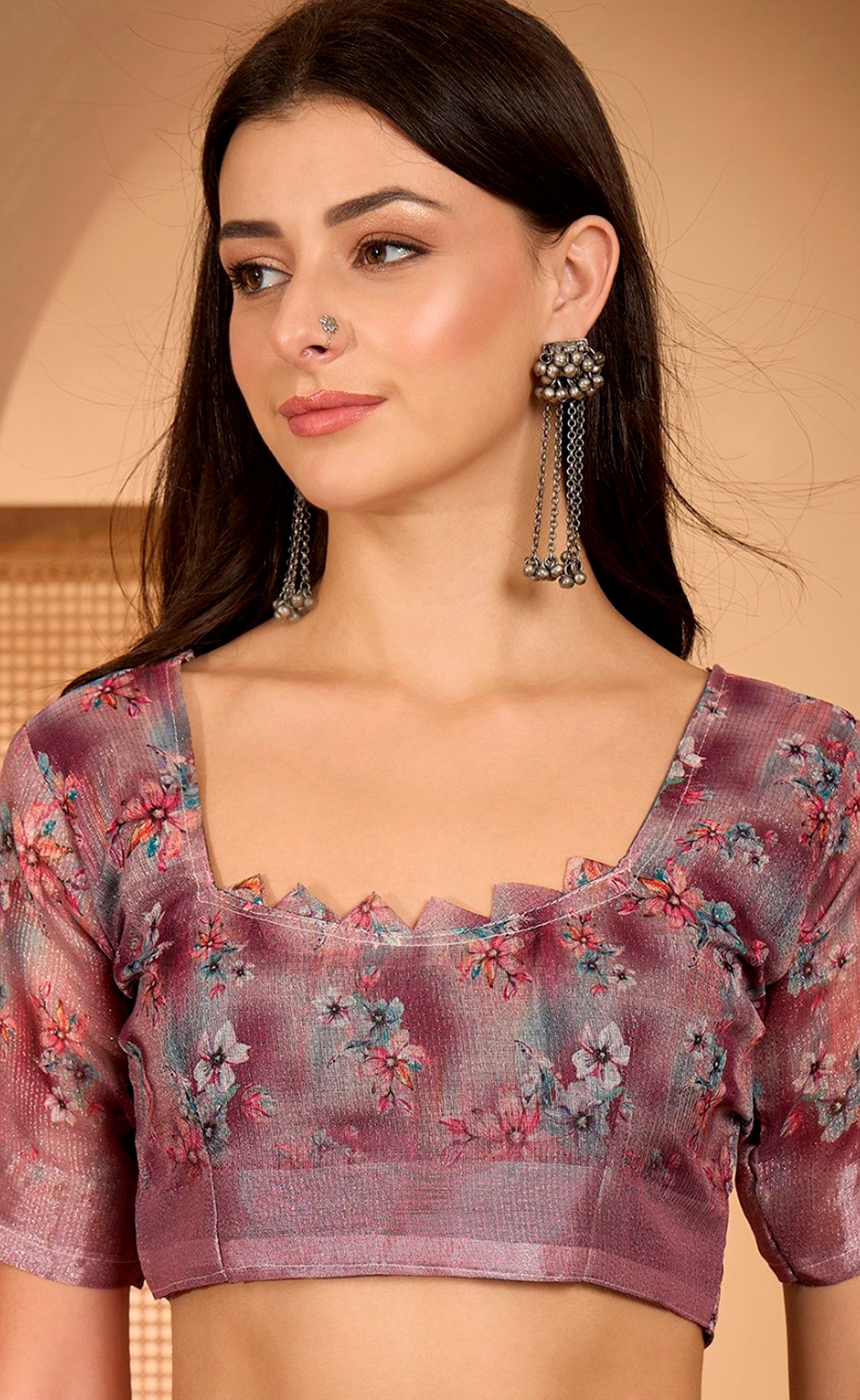
Linen-cotton suits people who prefer a crisp drape with less cling. Mauve Floral Print Linen Cotton Saree with Blouse | VARNAVI combines a printed surface with a fabric direction that can work for daytime preparation and evening celebrations. Linen-cotton may crease, but natural creasing is part of its character; steaming the saree before wearing it's more useful than trying to make the fabric rigid.
Chanderi and light silk are suitable when the celebration includes a more formal family gathering. Banarasi silk and Kanjeevaram have strong ceremonial associations, but heavier versions may feel excessive for an event involving walking or sitting on the floor. A silk festival celebration look is most comfortable when the silk is light, the zari isn't overly dense and the blouse allows the shoulders to move freely.
People comparing festive fabrics can also browse Silk Sarees Under 3000 With Discount for lighter silk options and Party Wear Sarees for ideas involving dressier borders. A lower price doesn't automatically indicate poor quality, but shoppers should still check the saree length, blouse-piece details, fabric composition and return measurements before ordering.
Sama Chakeva Festival Fashion colours and Mithila-inspired motifs
Red, yellow, pink, green and vermilion-inspired shades suit Sama Chakeva because they connect naturally with celebratory Indian dressing. The most effective colour choice depends on the time of day, the setting and the amount of existing pattern on the saree.

Red can be used as the main saree colour, a blouse colour or a narrow border. Red Satin Floral Print Saree with Unstitched Blouse Textile creates a more luminous evening look, but satin requires careful pinning because its smooth surface can shift. Pairing the saree with a matte blouse, low-profile earrings and a secure waist tuck prevents the outfit from looking overly glossy.
Pink works well for a softer family gathering, especially when balanced with cream, green or muted gold. Cream Pink Tissue Handloom Cotton Saree with Zari offers a gentle festive palette in which the zari supplies definition. This combination is useful when the wearer wants a silk look festival outfit without choosing a heavy silk saree. Pink Georgette Sarees can also provide colour inspiration, although georgette should be pinned carefully because its fluid surface can loosen during movement.
Teal, mauve and maroon provide alternatives to the familiar red-and-yellow palette. Maroon Mal Cotton Ethnic Saree With Blouse from VARNAVI can be styled with an antique-gold blouse, while Teal Fandy Solid Saree With Blouse for Women by VARNAVI can be paired with marigold, rust or copper accessories. Colour contrast should be deliberate: a patterned saree usually needs a calmer blouse, and a plain saree can carry a more detailed neckline.
Birds, vines, fish, lotus forms and geometric borders can reference Mithila's visual vocabulary. The reference works best through one or two details, such as a bird-shaped pendant, a hand-painted-looking bangle set or a printed blouse border. Wearing several unrelated motifs at once can make the outfit look themed rather than naturally rooted in regional style.
Red Banarasi Silk Sarees for Weddings Under 1100 can offer useful inspiration for red-and-gold combinations, even when a lighter cotton saree is ultimately more comfortable for Sama Chakeva. Gray Color Sarees Under 1000 may also suit someone who prefers a restrained base with a bright red, pink or yellow blouse.
Sama Chakeva Festival Fashion blouse, drape and jewellery combinations
A practical Sama Chakeva blouse has a secure neckline, comfortable armholes and enough ease for lifting the arms, arranging the pallu and sitting comfortably. Elbow-length sleeves are useful for an evening festival because they provide coverage without making the outfit feel restrictive.
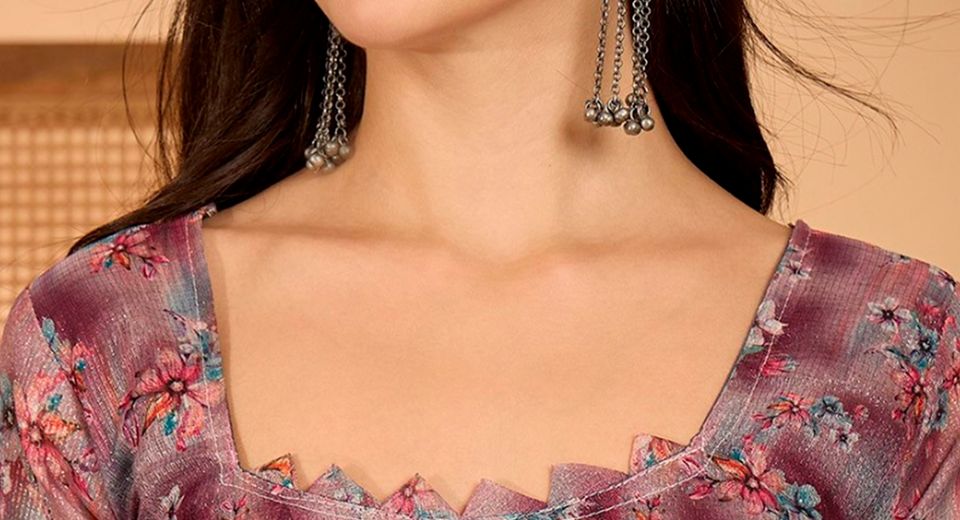
Blouse details for a heritage Mithila outfit
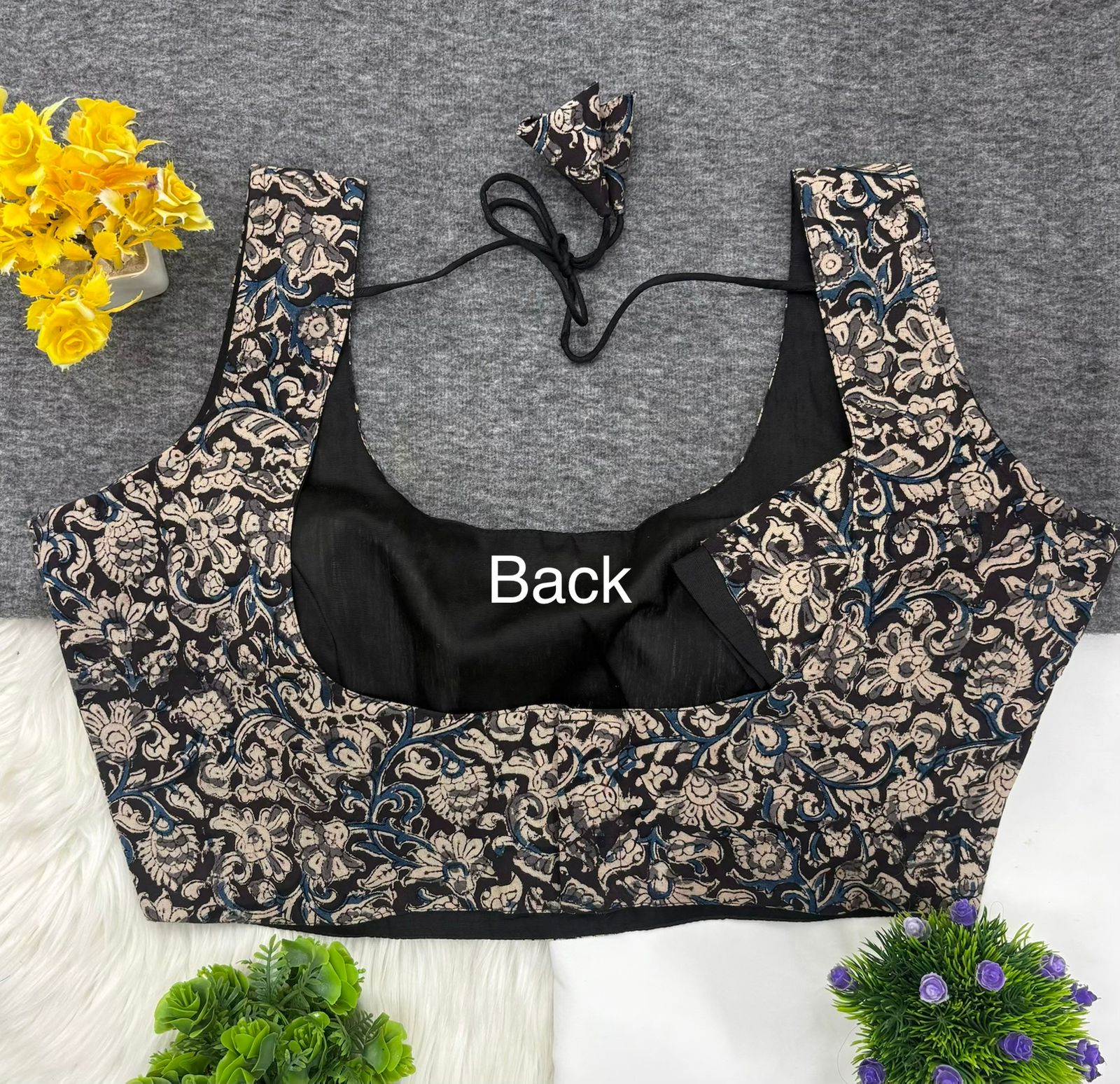
A square, round or modest V-neckline works with most cotton and handloom sarees. A contrast blouse in marigold, red, bottle green or antique gold can bring out a small border detail. For a printed saree, choose one colour from the print instead of introducing a completely new shade.
Unstitched blouse fabric allows a better fit when the wearer has specific requirements around sleeve length or neckline depth. Measure the bust, shoulder, armhole and sleeve length before sending the fabric to a tailor. A blouse that's too tight across the upper back can make the pallu uncomfortable throughout a long evening.
Jewellery and footwear for movement
Light jhumkas, small hoops, glass bangles and a compact bindi set provide enough ornament for a festival celebration without creating excessive weight during group activities. Silver-toned jewellery suits teal, mauve and indigo, while antique gold works naturally with maroon, red, cream and mustard.
Choose flat juttis, kolhapuris or low-block sandals with a secure strap when the gathering involves walking outdoors. New footwear should be tested at home for at least 30 minutes before the festival. A small cloth pouch for pins, safety pins, compact powder and a spare bindi is more useful than carrying a large handbag.
Sama Chakeva Festival Fashion outfit formulas for different settings
Different family settings call for different levels of polish, so one formula should not be treated as the only correct Sama Chakeva outfit. Fabric, colour and accessories can be adjusted without losing the classic mood.

Daytime preparation and clay-bird making
A pastel cotton saree with a short-sleeved blouse, flat footwear and minimal jewellery is the most comfortable choice for daytime preparation. Pastel Floral Tissue Handloom Cotton Saree with Zari Weaves can be paired with a plain rose, cream or soft green blouse, a fabric tote and a low bun secured away from the face.
Keep the pallu in a neat front or shoulder drape if you'll be bending, arranging clay figures or helping younger participants. Avoid long tassels near wet clay, oil lamps or food preparation areas. A cotton petticoat with a firm waistband also gives the saree better stability during movement.
Evening song gatherings
An evening gathering allows a richer colour and a little more zari, but the saree should remain light enough for sitting and walking. Cream Pink Tissue Handloom Cotton Saree with Zari works with a rose-gold blouse, small gold earrings and a cluster of fresh or fabric flowers in the hair.
Pin the pallu at the shoulder and once near the waist if the gathering is outdoors. A concealed waist pin can prevent the upper pleats from opening when you sit cross-legged. Keep the makeup long-wearing but light, since outdoor air, lamps and repeated conversation can make a heavy base uncomfortable.
Family celebrations and photographs
A deeper shade such as maroon, red or teal creates stronger contrast in evening photographs. Maroon Mal Cotton Ethnic Saree With Blouse from VARNAVI can be worn with antique-gold earrings, a small red bindi and a blouse with a modest high back.
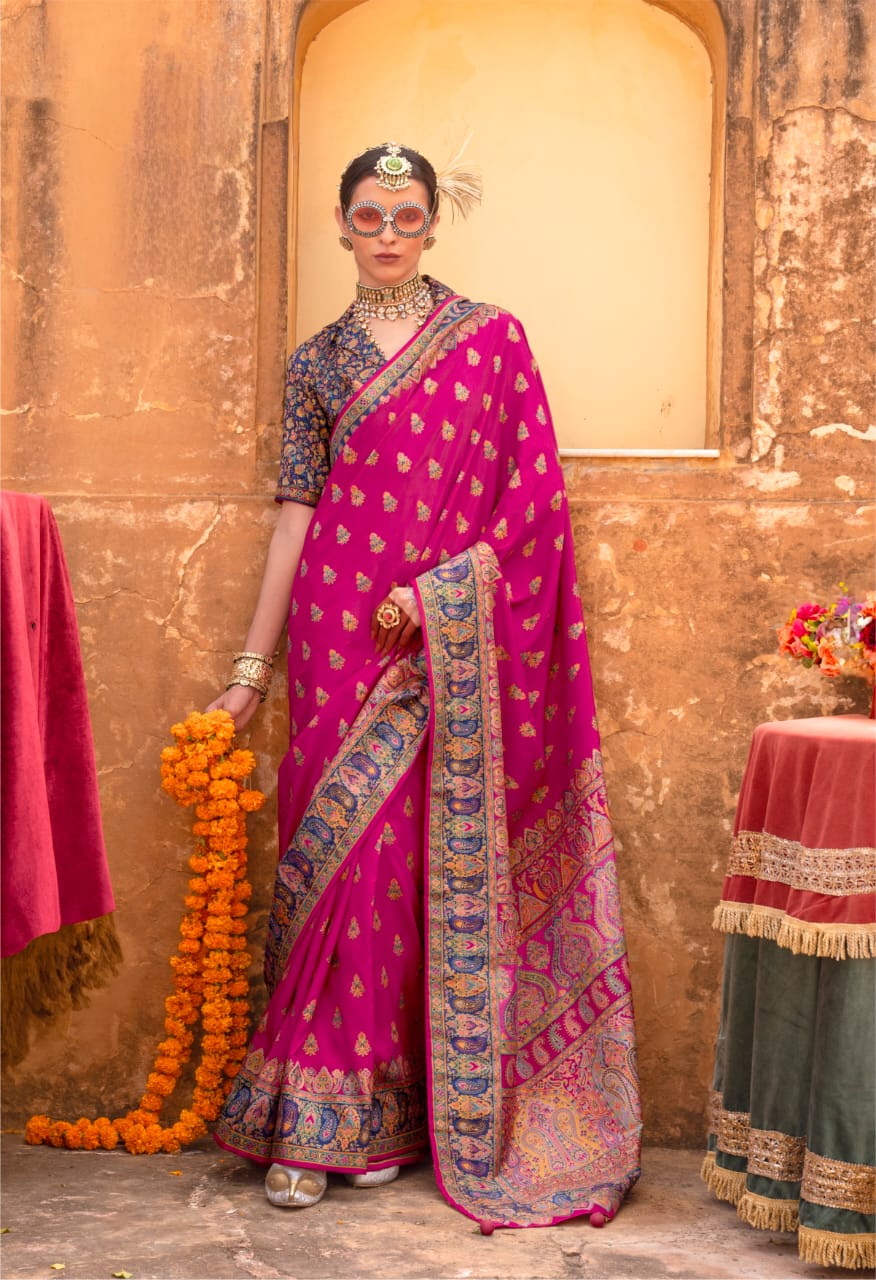
For a more polished silk festival celebration, choose a light Banarasi silk rather than an extremely heavy weave. Keep the jewellery focused on one statement element, such as a broad bangle stack or a classic pendant, so the saree border remains visible in photographs.
Ready-to-wear convenience
A ready-to-wear saree can be useful for someone unfamiliar with saree pleating or managing children during a festival. Peach Blue Floral Chinnon Ready To Wear Saree | Varnavi gives a quicker route to a complete outfit, but the wearer should test the waistband and pallu placement before the event.
Ready-to-wear construction is most successful when the waist fits securely without restricting breathing. Carry two safety pins even when the pleats are pre-stitched, because the pallu may need adjustment after sitting or walking.
Sama Chakeva Festival Fashion care and ordering checklist
Proper preparation prevents most saree problems during Sama Chakeva. Iron or steam the saree one day before wearing it, test the blouse with the chosen petticoat and keep pins attached to a small fabric pouch rather than inserting them randomly into the weave.
Check fabric-specific care before washing. Cotton and linen-cotton sarees may tolerate gentle hand washing depending on the care label, while zari, tissue, satin and delicate Chinnon usually benefit from careful spot cleaning or professional dry cleaning. Store zari sarees folded with soft, clean cotton fabric between the folds, and refold them every few months to reduce permanent crease lines.
Order at least 10 to 14 days before the festival if tailoring is required. Allow additional time for blouse alterations, fall and edging, especially during the busy festive season. Confirm whether the product includes a blouse piece, whether the blouse is stitched, the saree length, delivery date and care instructions.
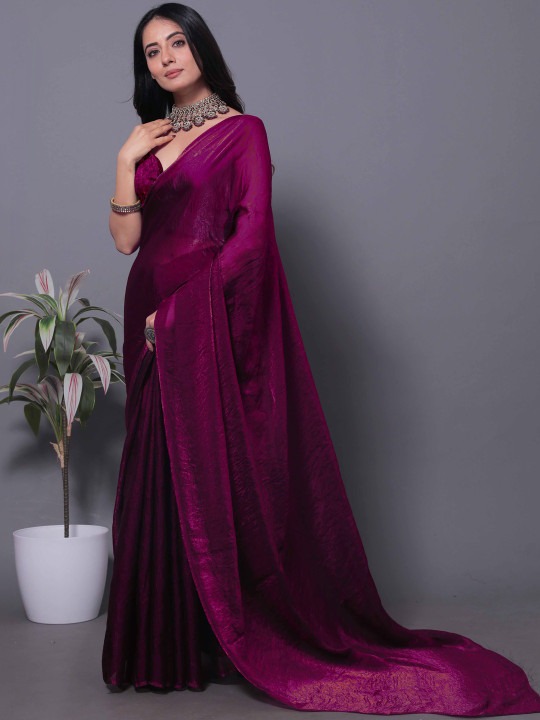
Magenta Fandy Solid Shimmer Saree With Blouse - VARNAVI and Teal Fandy Solid Saree With Blouse for Women by VARNAVI may suit people who prefer solid colours with a little surface interest. Solid sarees are particularly easy to accessorise because the blouse, jewellery or flowers can provide the main contrast.
The most meaningful Sama Chakeva outfit is one that allows participation rather than making the wearer constantly adjust clothing. A breathable fabric, secure pleats, a comfortable blouse and one or two Mithila-inspired details can create a festive look that feels respectful, personal and practical.
Sama Chakeva Festival Fashion questions shoppers often ask
Most shoppers should prioritise breathable fabric, a secure drape and colours that feel festive without becoming difficult to wear. Cotton, handloom cotton, linen-cotton and lightweight silk are useful starting points for different levels of formality.
Questions About Sama Chakeva Sarees and Mithila Styling
Which saree fabric is most comfortable for Sama Chakeva?
Cotton is usually the most comfortable choice for Sama Chakeva because it is breathable, stable in pleats and suitable for long gatherings. Linen-cotton and lightweight silk can work when you want a crisper or more formal appearance.
Which colours are suitable for a Sama Chakeva saree?
Red, yellow, pink, green, maroon and teal are suitable choices for a Sama Chakeva saree. Cream, pastel pink or mauve can create a softer look, while a bright blouse or zari border adds definition.
How can I create a Mithila-inspired saree outfit without looking costume-like?
Use one or two regional references rather than combining many motifs. A bird-shaped pendant, floral border, red bindi, traditional earrings or a colour pairing inspired by Madhubani art can suggest Mithila style in a natural way.
Is a Banarasi silk saree suitable for Sama Chakeva?
A lightweight Banarasi silk saree can suit a formal Sama Chakeva family gathering, but a heavy Banarasi weave may be uncomfortable for walking or sitting on the floor. Choose a manageable zari density and secure the pallu with pins.
What blouse design works best with a festival saree?
A blouse with comfortable armholes, a secure neckline and elbow-length sleeves works well for a festival saree. Select a blouse colour from the saree's border or print, and check the fit across the shoulders before the event.
How early should I order a Sama Chakeva saree?
Order a Sama Chakeva saree 10 to 14 days before the festival when tailoring, fall or edging is needed. Add more time if the blouse requires multiple alterations or if delivery dates become longer during the festive season.