

Readymade Salwar Suits vs Unstitched: Which Is Better? The answer depends on how closely you need a garment to fit, how quickly you need it, and whether you want freedom to customise the kameez, salwar and dupatta. A readymade salwar suit offers a coordinated outfit with predictable finishing, while an unstitched suit gives a tailor more fabric and you more control. The better choice changes with body proportions, fabric, budget and occasion.
Many shoppers compare only the displayed purchase price. A more useful comparison includes tailoring, lining, fitting corrections, fabric wastage, delivery time and the number of times you expect to wear the outfit. An unstitched dress material that appears inexpensive may cost more after stitching, while a ready-to-wear suit may need only a small alteration.
What is the practical difference between a readymade and an unstitched salwar suit?
A readymade salwar suit arrives as a finished garment, whereas an unstitched salwar suit consists of fabric that must be cut and sewn before wear. The difference affects fit, convenience, customisation, timing and the final cost.
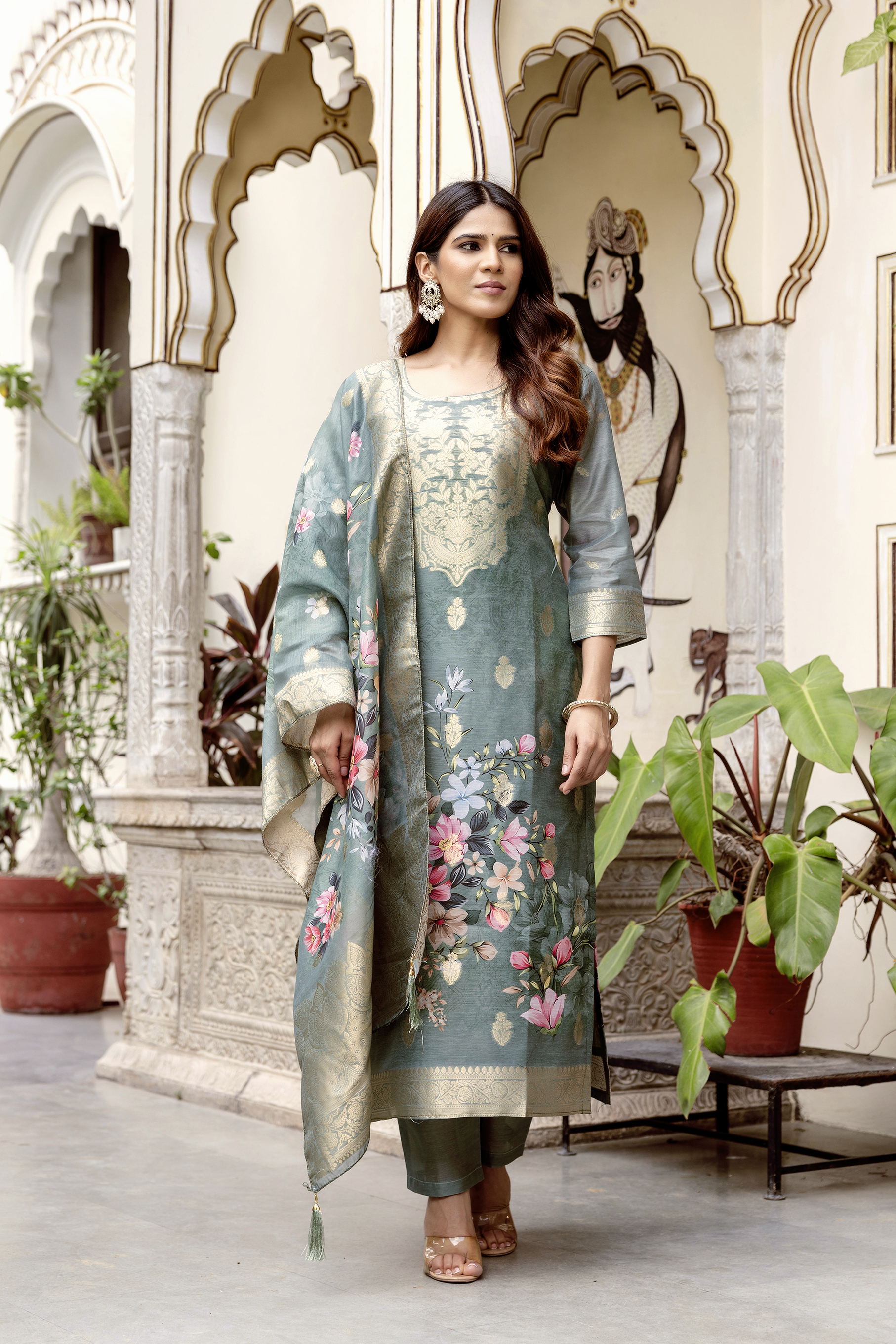
A typical readymade set may include a stitched kameez, matching bottom and dupatta. Depending on the design, the bottom may be straight pants, palazzos, churidar trousers or a salwar. Necklines, sleeves, side seams, hems and decorative details have already been completed. The buyer mainly see measurements and decides whether minor alterations are needed.
An unstitched set usually includes a length of kameez fabric, separate bottom fabric and a dupatta. The fabric may include enough extra material for sleeve length, body length or a different silhouette, but the available quantity varies. A tailor must interpret the design, account for seam allowances and decide how to place prints, borders or embroidery.
The distinction matters with fabrics such as Chanderi, rayon, cotton and brocade. Chanderi can require careful handling around seams, rayon may need pattern planning because of its drape, and brocade borders can influence the width and shape of the finished garment.
When are readymade salwar suits the better choice?
Readymade salwar suits are usually better when you need a coordinated outfit quickly, have fairly standard measurements or prefer predictable construction over extensive customisation.
Speed and convenience
A finished suit removes several steps from the buying process. You don't need to find a tailor, choose a neckline, explain sleeve proportions or return for a trial fitting. A readymade suit can be useful for a festival, office event or family visit scheduled within a short timeframe, provided the garment measurements are checked before purchase.
A useful planning rule is to allow at least seven to fourteen days for unstitched tailoring when the design is simple. Heavier embroidery, lining, piping, unusual sleeves or a fitted Anarkali can take longer. A readymade suit reduces that uncertainty, although delivery and alteration time still need to be considered.
Consistent finishing
Finished seams generally provide consistent hems, matching components and a repeatable silhouette. Woven Chanderi Cotton Readymade Salwar Suit demonstrates why a coordinated finished set can be easier to style: the woven surface, kameez shape and accompanying pieces are already planned as one outfit.
Readymade construction also helps when you're unsure how a fabric will behave after stitching. A completed neckline, sleeve and hem let you assess the garment as a whole rather than imagining the result from a fabric cut.
Practical wardrobe rotation
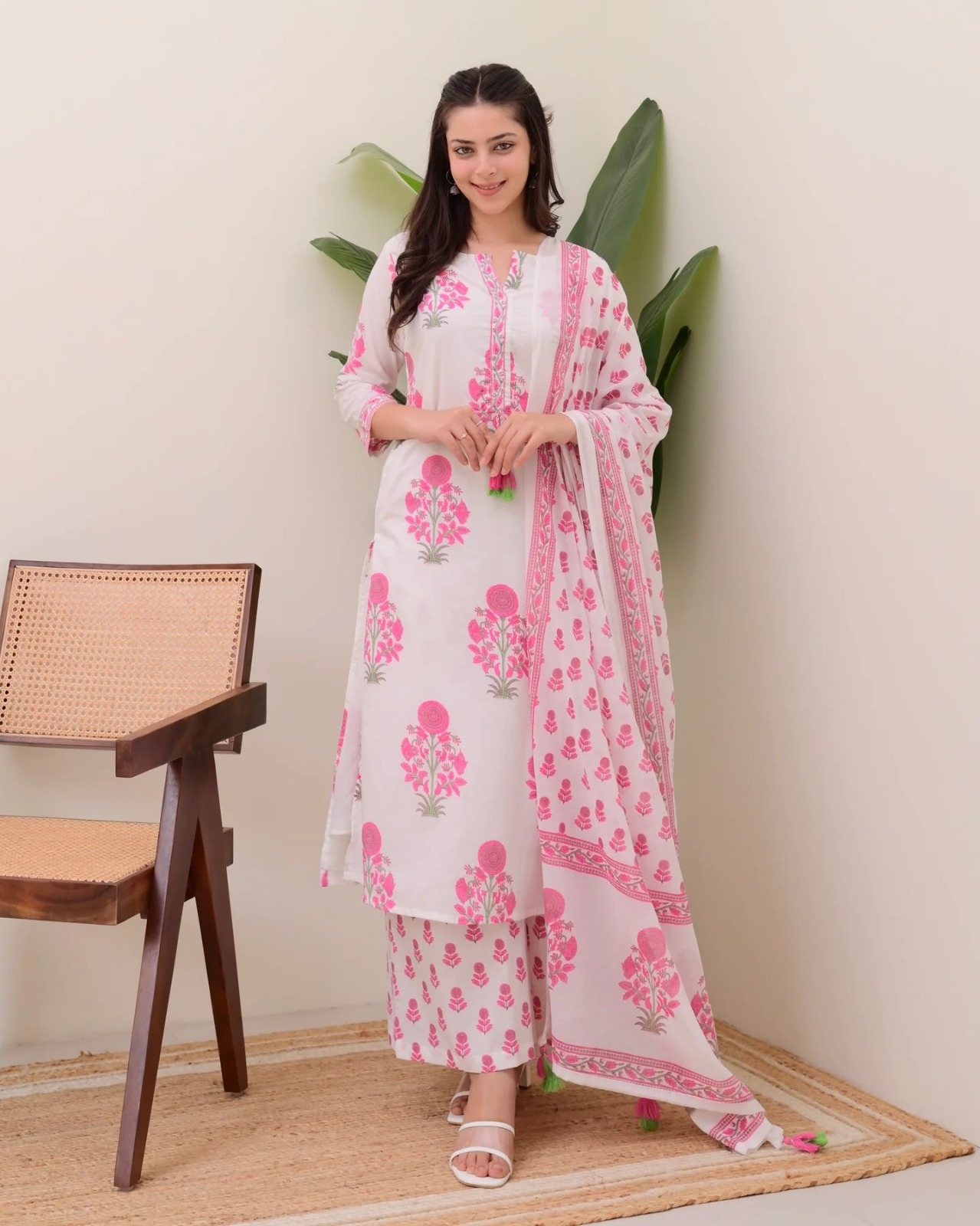
Readymade suits work well for wardrobes that need practical rotation. Cream Pink Printed Rayon Readymade Salwar Suit can serve as a lighter daytime option, while Cream Threadwork Printed Readymade Salwar Suit may suit a lunch, small gathering or work-related celebration. The value comes from wearability, not only from the initial price.
When does an unstitched salwar suit make more sense?
An unstitched salwar suit is usually better when your proportions differ significantly from standard size charts, when you want a particular silhouette or when a trusted tailor can create a superior fit.
More control over measurements
Unstitched fabric allows you to set the kameez length, bust ease, waist placement, sleeve circumference and bottom style. A petite wearer can avoid excess length, while a taller wearer can request a longer kameez and sleeves if the fabric provides enough yardage. A person with a fuller upper arm or narrow shoulders can also specify proportions that may not align with a standard size.
Customisation doesn't mean unlimited fabric. A tailor can't add length that's not present, and a narrow fabric width may restrict a wide flare or large palazzo. Ask for the fabric length and width before committing to a design. Ask whether the dupatta is a fixed size, because a dupatta usually can't be enlarged after purchase.
Control over design details
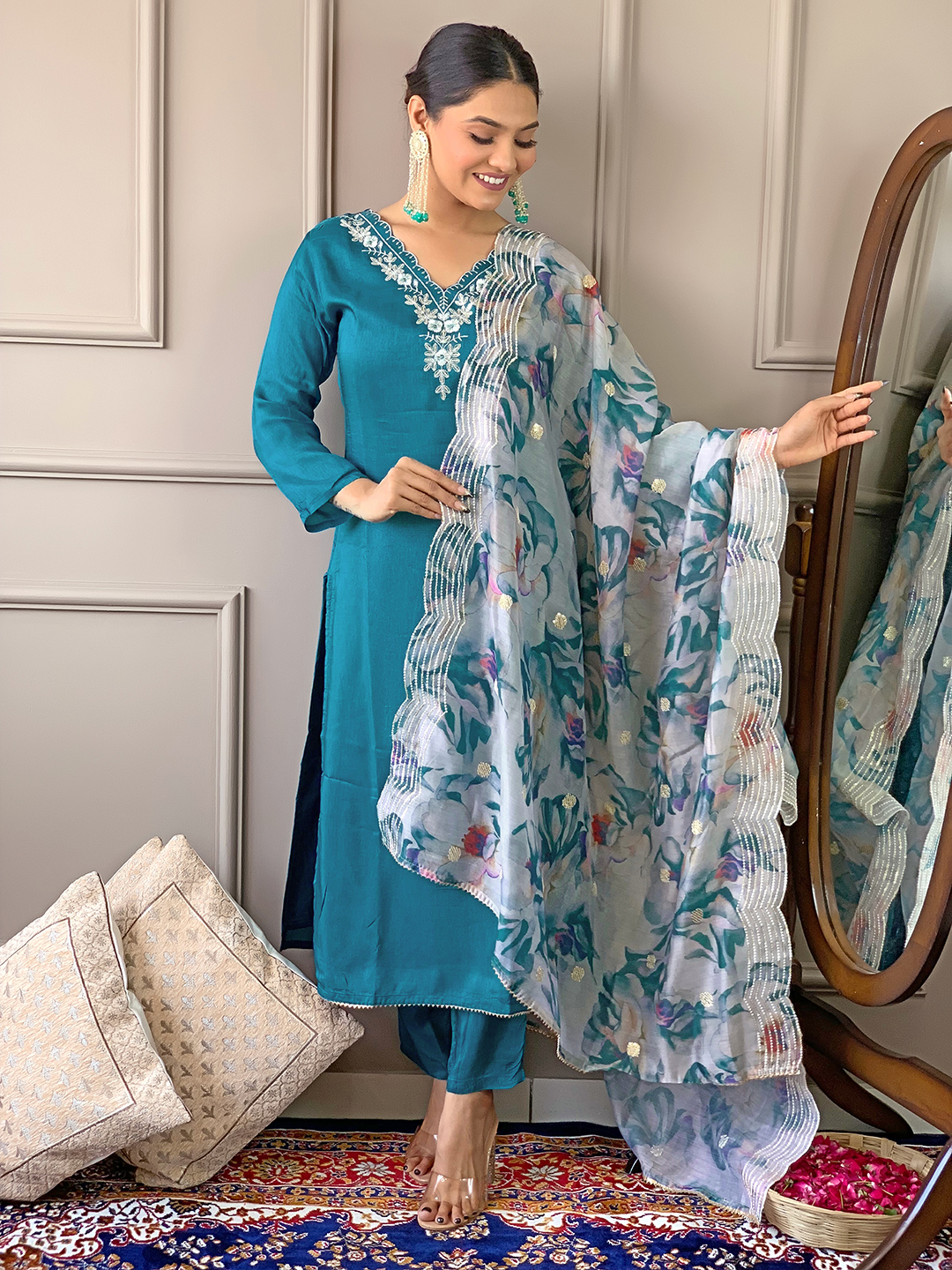
Unstitched Dress Materials are useful when you want to select a round neck, V-neck, collar, panelled kameez, straight pants or traditional salwar. You can also decide whether the garment needs lining, pockets, cuffs or a particular hem finish. A tailor can position a border at the sleeve, neckline or hem instead of following a pre-decided placement.
Customisation is most valuable when it solves a real requirement. Adding pockets, adjusting armhole depth or choosing a breathable lining often improves comfort more than adding decorative details. A highly fitted design deserves a trial fitting before final hemming.
Distinctive occasion dressing
An unstitched fabric can be a strong choice for a wedding-related event or family ceremony when you already have a reliable tailor. Zari borders, brocade panels and embroidered sections need careful placement. A tailor can balance the design around your height and preferred hemline, but poor cutting can waste valuable fabric.
How should you compare fit and measurements?
Compare the garment's finished measurements with a similar outfit that fits you well, rather than relying only on your usual size label. Size labels vary between sellers, while bust, waist, hip, shoulder, sleeve and garment length measurements provide a more useful basis for purchase.
Measure a well-fitting kameez laid flat and double the relevant width measurement if the listing uses a flat-lay format. Check whether the listed bust measurement represents the body measurement or the finished garment measurement. The difference is ease, and ease determines whether the outfit feels relaxed or close-fitting.
- Bust: Measure around the fullest part of the chest without pulling the tape tight.
- Shoulder: Measure from one shoulder seam position to the other across the back.
- Kameez length: Measure from the highest shoulder point to the desired hem.
- Sleeve: Record both sleeve length and upper-arm circumference.
- Bottom: Check waist, hip, rise, inseam and leg opening for trousers or palazzos.
- Dupatta: Confirm length and width if you prefer generous draping or a full shoulder wrap.
A readymade garment isn't automatically less comfortable. A straight suit with moderate ease can be more wearable than a badly tailored custom garment. Conversely, an unstitched suit isn't automatically a better fit; the final result depends on accurate measurements, fabric handling and tailoring skill.
How do fabric and construction change the decision?
Fabric behaviour should guide the choice because different materials respond differently to cutting, washing, lining and repeated wear.
Cotton and Chanderi
Cotton is often practical for warm weather because it's breathable and relatively straightforward to tailor. Cotton may shrink if it has not been pre-washed, so ask whether shrinkage has been accounted for before stitching an unstitched set. A readymade cotton suit avoids some uncertainty, but washing instructions still matter.
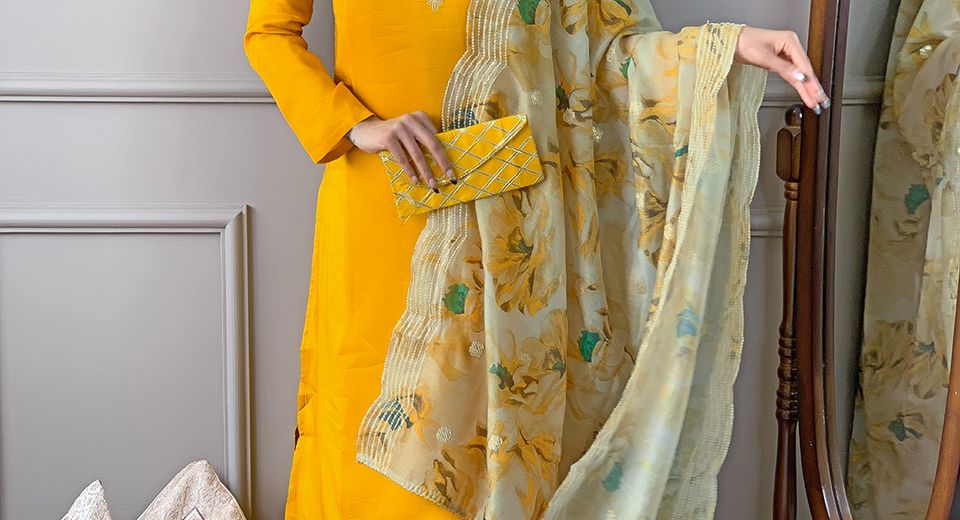
Chanderi has a light, elegant hand and may include silk or cotton characteristics depending on the weave. Yellow Readymade Chanderi Embroidered Salwar Suit shows the convenience of purchasing a completed Chanderi-based look. Chanderi garments benefit from gentle washing, low agitation and careful ironing on the reverse side.
Rayon and printed fabrics
Rayon drapes fluidly but can change shape when wet or when hung while heavy with water. Rayon also needs careful pressing because high heat can damage the surface. A ready-made rayon suit lets you inspect how the drape falls on the body before buying, which is helpful when you want a flowing straight silhouette.
Print direction matters in unstitched fabric. A border, repeated motif or large floral arrangement may require additional fabric for matching. Printed rayon examples such as Cream Pink Printed Rayon Readymade Salwar Suit remove the need to plan motif placement during tailoring.
Brocade and zari
Brocade and zari add visual richness but can be heavier, less forgiving and more sensitive to rough handling than plain cotton. Orange Zariwork Brocade Readymade Salwar Suit is the kind of finished garment where placement, lining and balance have already been resolved. If buying brocade unstitched fabric, confirm whether the zari is on the kameez, bottom, dupatta or border and ask the tailor to protect embellished areas during stitching.
What is the real cost of each option?
The real cost equals the purchase price plus tailoring, lining, trims, alterations, travel and the value of your time. An unstitched suit may need ₹500 to ₹2,000 or more for stitching depending on the city, design complexity, lining and embellishment. Express tailoring, extra panels, pockets or a heavily flared silhouette can increase the amount.
Readymade suits can also require alteration charges. Shortening a kameez, adjusting side seams or changing a sleeve is generally simpler than rebuilding a garment, but very large size corrections may not be possible without affecting the design. Check the alteration scope before buying a close-fitting suit.
Discount collections such as Salwar Suits with 30% Off, Salwar Suits Flat 40% Off and Salwar Suits On Sale can make ready-to-wear sets attractive, but the percentage discount should not replace a fit and fabric check. Compare the final payable price, not only the marked price, and consider whether the garment needs paid alterations.
A simple comparison can clarify the decision. If an unstitched set costs ₹1,500, tailoring costs ₹900, lining costs ₹250 and one fitting correction costs ₹200, the practical total is ₹2,850. A readymade suit priced at ₹2,400 that needs a ₹150 sleeve alteration may be the less expensive option, even if its original ticket price looks higher.
Which option suits different occasions and wardrobes?
Readymade suits generally suit urgent dressing, office rotation, travel and uncomplicated gifting, while unstitched suits suit custom occasion dressing and people who already use a dependable tailor.
For everyday wear, cotton or rayon readymade suits offer quick rotation and straightforward care. For a Haldi ceremony, a bright finished option such as Yellow Threadwork Readymade Salwar Suit or Yellow Readymade Chanderi Embroidered Salwar Suit can reduce last-minute styling work. For a formal evening, a brocade or detailed threadwork design may provide enough visual interest without additional customisation.
For workwear, check whether the kameez allows comfortable arm movement, whether the bottom stays secure while sitting and whether the dupatta is manageable during commuting. Navy Blue Threadwork Readymade Salwar Suit can illustrate the usefulness of a darker, coordinated palette for office dinners or semi-formal gatherings.
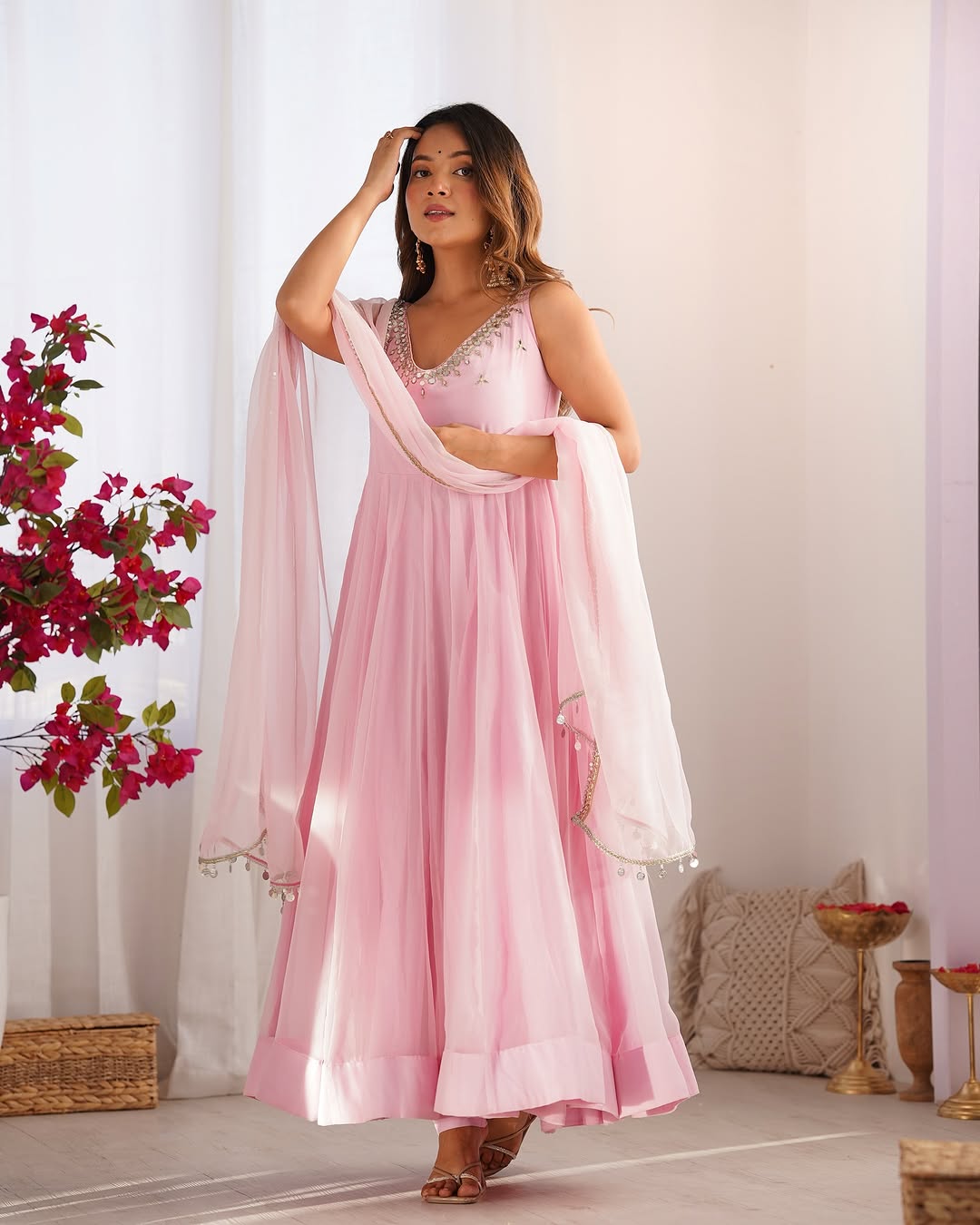
For a special outfit with unusual proportions, unstitched fabric remains valuable. A tailor can create a longer kameez, a deeper flare or a specific sleeve shape. The extra control is worthwhile only when the tailoring quality is dependable and the fabric quantity supports the design.
How can you make the final choice?
Choose a readymade salwar suit when speed, predictable finishing and low tailoring effort matter most; choose an unstitched suit when measurement control and design customisation matter more.
- Start with the deadline: Choose readymade if you need the outfit within a few days and alterations are minor.
- Compare finished measurements: Do not buy by size label alone; check bust, shoulder, length, sleeve and bottom measurements.
- Calculate the complete cost: Add stitching, lining, alterations and travel to the unstitched fabric price.
- Assess the fabric: Consider shrinkage in cotton, drape in rayon, delicacy in Chanderi and weight in brocade.
- Check tailoring support: Choose unstitched fabric only when a tailor understands the desired construction.
- Match the choice to use: Pick a durable, easy-care finished suit for frequent wear and reserve custom tailoring for proportion or occasion needs.
Neither format wins for every shopper. Readymade suits provide speed and reliable coordination, while unstitched suits provide a wider route to personal fit. Measuring carefully and calculating the complete cost will produce a better decision than choosing based on discount, colour or size label alone.
Common Questions About Choosing Readymade or Unstitched Salwar Suits
Are readymade salwar suits better than unstitched suits for online shopping?
Readymade salwar suits are usually easier to buy online because the garment is already constructed and the buyer can compare finished measurements. Unstitched suits offer more customisation but require a reliable tailor, additional time and a separate assessment of fabric length and width.
Is an unstitched salwar suit cheaper after tailoring?
An unstitched salwar suit is not always cheaper after tailoring. Add stitching, lining, trims, alterations and delivery or travel costs before comparing it with a finished suit.
How do I choose the right readymade salwar suit size?
Choose the size by comparing your body measurements with the seller's finished garment measurements, especially bust, shoulder, kameez length, sleeve and hip. Check whether the listed measurement is a body measurement or the garment measurement because the difference determines wearing ease.
Which fabric is easiest to customise in an unstitched salwar suit?
Cotton is generally straightforward to customise because it is stable and easy to cut, although possible shrinkage should be considered. Chanderi, rayon and brocade can also be tailored successfully, but each requires attention to drape, surface finish, borders and lining.
Can a readymade salwar suit be altered for a better fit?
A readymade salwar suit can often be altered at the side seams, sleeve hems, kameez hem or waistband when sufficient seam allowance is available. Major changes to shoulder width, armhole depth or flare may not be possible without disturbing the original construction.
Which is better for a wedding or Haldi ceremony?
A readymade salwar suit is better when the event is close and you want coordinated finishing without tailoring delays. An unstitched suit is better when you need a specific length, flare, sleeve design or proportion and have enough time for a trusted tailor to complete it.





