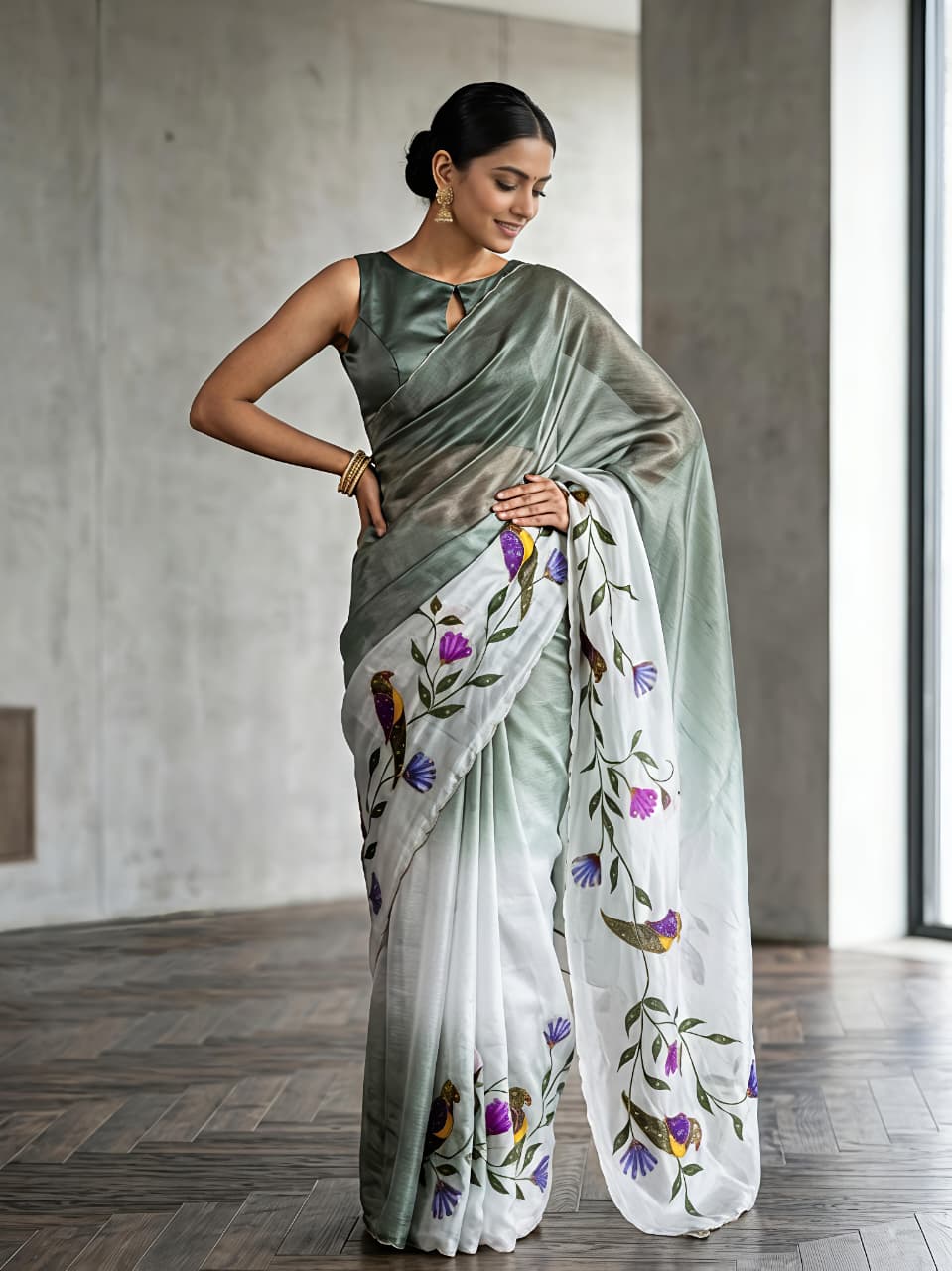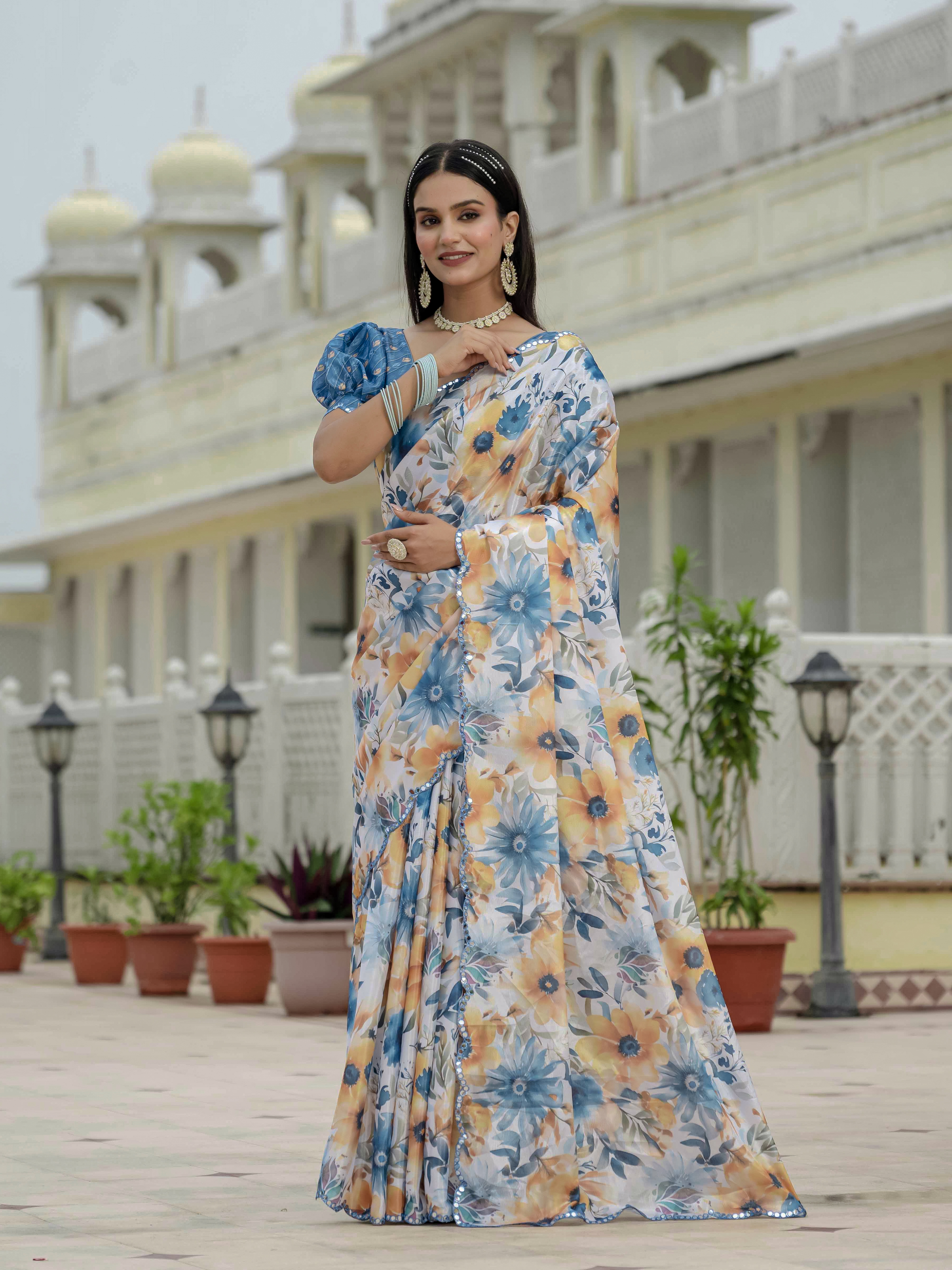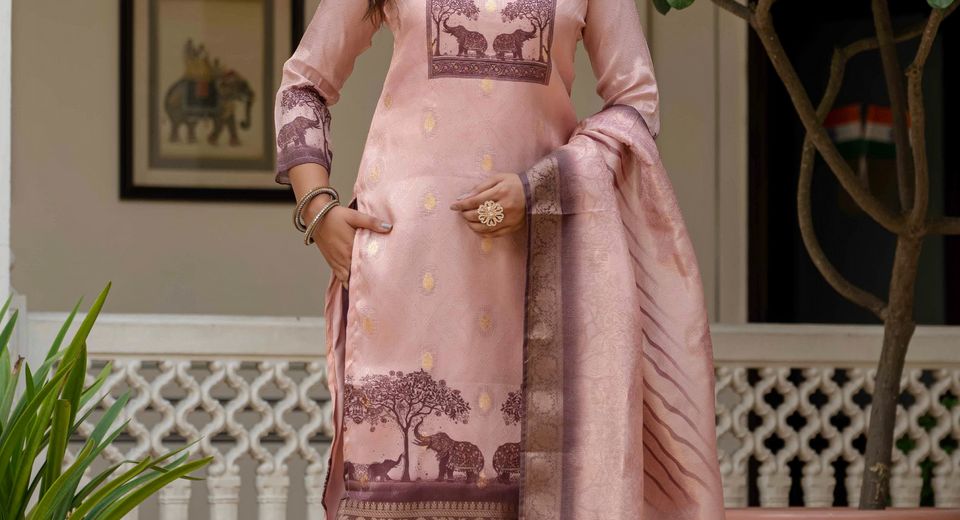
Rajasthani Printed Salwar Suits bring the colours and craft vocabulary of Rajasthan into an easy, wearable silhouette. A floral buti, bold paisley, Dabu resist pattern and Sanganeri jaal are not interchangeable decorations: each pattern points to a different printing tradition, visual rhythm and level of formality. Knowing those differences helps you choose a salwar suit for a Haldi ceremony, office day or festive gathering with greater confidence.
Rajasthan's printed textiles developed around practical clothing, hot weather and highly skilled regional craftspeople. Contemporary salwar suits may use rayon, crepe, muslin, cotton or jacquard silk rather than only handwoven cotton. The result can still feel distinctly Rajasthani when the motif, colour arrangement and printing method retain links to Bagru, Sanganer or Dabu traditions.
Rajasthani Printed Salwar Suits and the visual language of Rajasthan
Rajasthani Printed Salwar Suits look distinctive because they combine repeated motifs, strong colour contrast and deliberate surface rhythm. Small butis may sit evenly across a kurta, while a border, dupatta panel or neckline introduces a larger floral or geometric arrangement.
Rajasthani printing traditions commonly use earthy reds, indigo, mustard, black, cream, rust and leaf green. These colours often appear against an unbleached or cream ground, creating a warm and grounded appearance. Contemporary designs may add pink, royal blue or brighter yellow while preserving the familiar contrast between base fabric and motif.
Print scale also matters. A fine all-over print creates a quieter appearance and works well for daytime dressing. Large flowers, dense jaals and contrasting borders appear more dramatic and suit festive styling. A salwar suit with one dominant motif usually looks more balanced when the dupatta has either a smaller version of the same print or a plain edge.
Rajasthani Printed Salwar Suits and the traditional patterns to recognise
The key traditional patterns include Bagru prints, Sanganeri florals, Dabu resist prints, paisley motifs, butis, jaals and regional geometric arrangements. These names describe both craft heritage and the visual effect a shopper can expect.
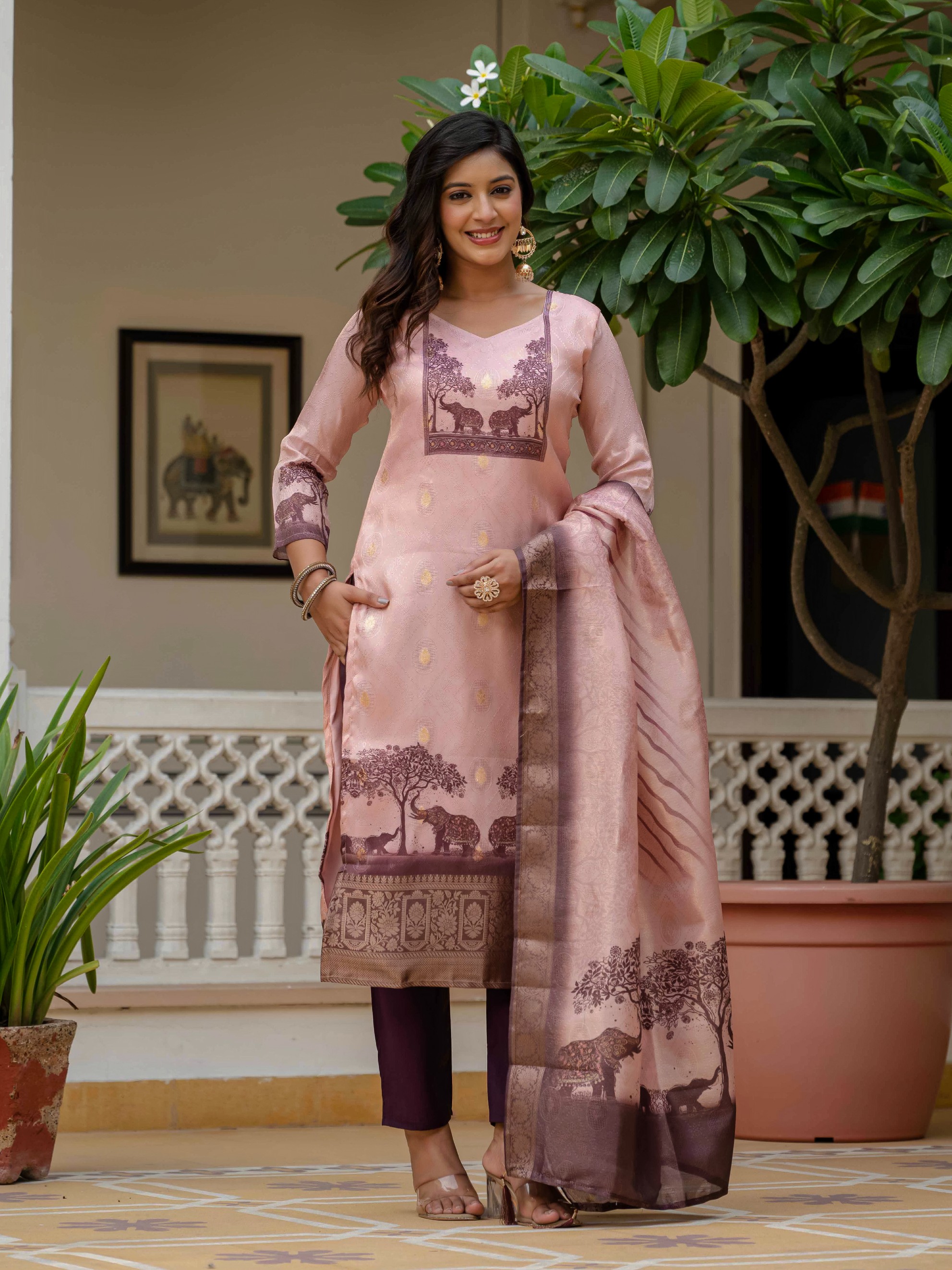
Bagru prints
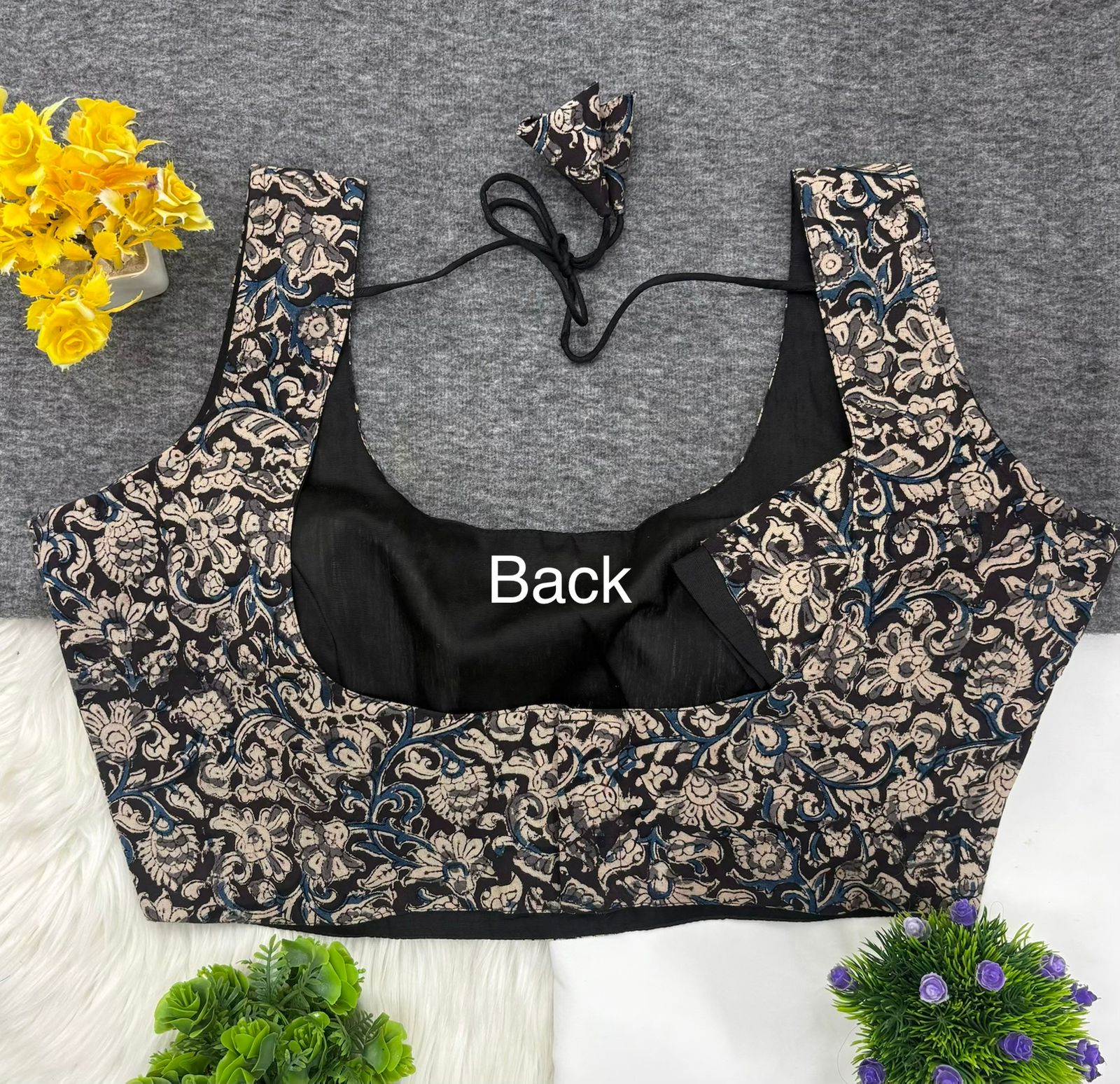
Bagru prints are traditionally associated with hand-block printing and naturally inspired colours such as indigo, black, rust and red. Bagru designs often use floral sprays, small butis, leaves and repeating geometric details. A Bagru-inspired salwar suit usually has an earthy, artisanal character rather than a glossy or highly formal appearance.
Traditional Bagru printing involves carved wooden blocks, careful alignment and repeated stamping across the cloth. Small variations in spacing or ink density can occur in hand printing. Those variations indicate a manual process, although a garment labelled Bagru-inspired may also be produced with modern techniques.
Sanganeri florals
Sanganeri prints are recognised for delicate floral motifs, fine outlines and lighter grounds, especially white or cream backgrounds. Flowers, vines, leaves and jaal arrangements are common, and the overall effect tends to be more refined and airy than a dense resist print.
Sanganeri-inspired salwar suits work particularly well for daytime celebrations, summer wardrobes and semi-formal gatherings. Cream Printed Anarkali Gown with Ethnic Motif Design shows how a cream base and ethnic motifs can create visual interest without relying on heavy embellishment.
Dabu and resist patterns
Dabu prints are created through a resist-printing process in which selected areas are protected before dyeing. Mud resist, traditionally made with a mixture that can include clay and natural materials, helps produce layered patterns with indigo, black, brown or earthy red tones.
Dabu patterns often appear slightly irregular and richly textured because the resist and dye interact with the fabric. The finished design may include flowers, leaves, dots and broken geometric shapes. Dabu-inspired prints are a strong choice when you want a salwar suit that looks craft-led rather than perfectly uniform.
Butis, paisleys and jaals
A buti is a small isolated motif repeated across a textile, while a jaal is a connected all-over network of flowers, vines or foliage. A paisley is a curved, teardrop-shaped motif that may be called a buta when rendered in a larger format. These terms help you describe what you see when comparing printed salwar suits.
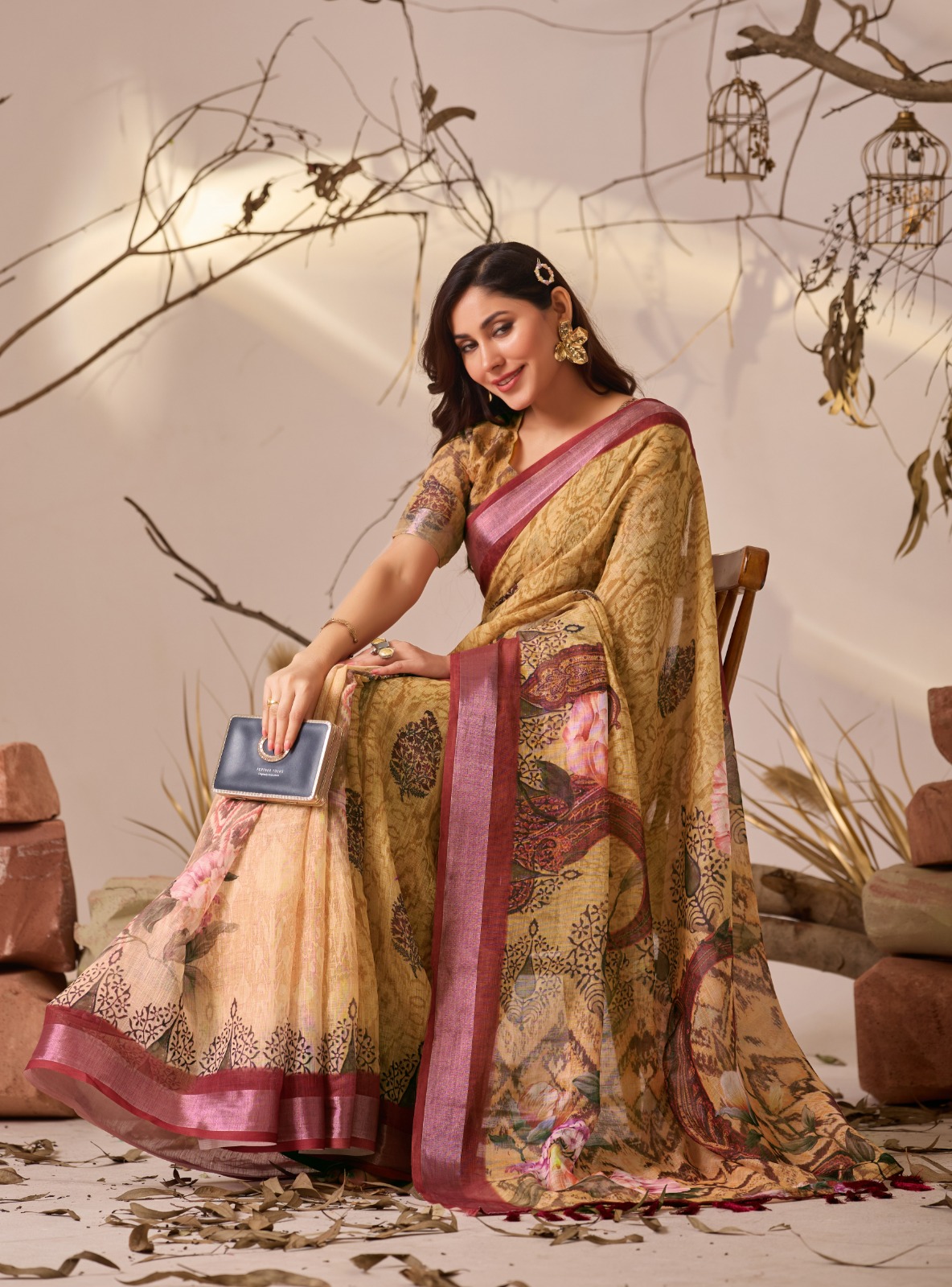
Small butis create a neat, versatile surface and can be easier to accessorise. Large butas and paisleys make a stronger statement on an Anarkali or straight kurta. Jaal patterns add density, so a plain dupatta, restrained jewellery and an uncluttered trouser silhouette can prevent the outfit from looking visually crowded.
Rajasthani Printed Salwar Suits: block printing versus current printing
Block printing transfers colour from a carved wooden block, whereas up-to-date surface printing applies a design through mechanised or digital processes. Block printing usually produces small variations in registration, colour deposit and motif edges; machine printing generally creates sharper and more uniform repetition.
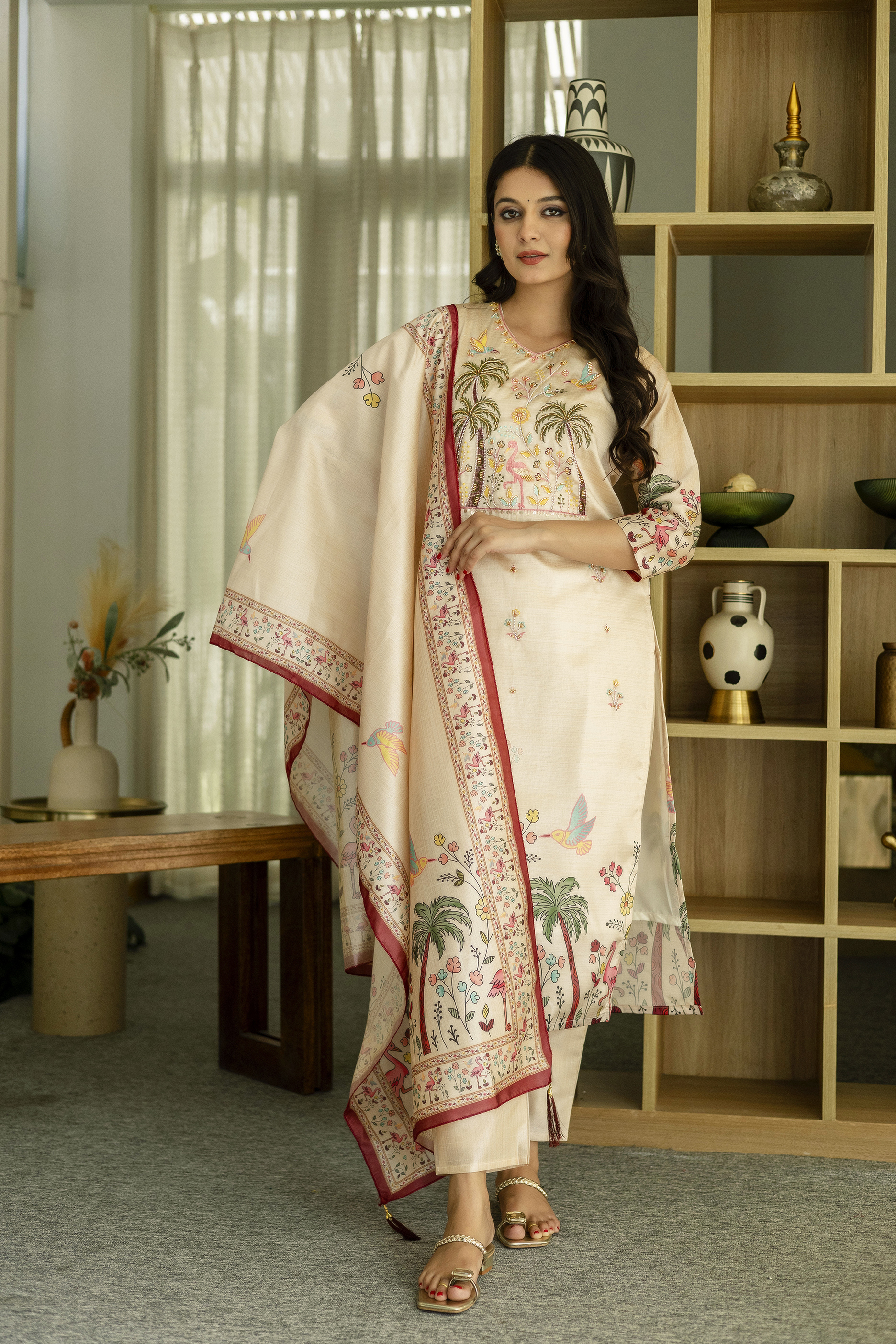
Traditional block printing begins with preparing the fabric, placing the cloth on a printing table and stamping separate blocks for outlines, fills and borders. The printer must align each impression carefully because even a small shift can alter the pattern across several metres of fabric. Multiple colours require separate blocks and drying or fixing stages.
Not every uneven edge proves that a garment is handmade, and not every sharp edge proves that a garment is machine-made. Buyers should read the product description, ask whether the fabric is hand-block printed and look for specific information about the printing process. A garment can carry Rajasthani motifs without being a traditional hand-block textile.
The Rajasthan Printed Salwar Suits collection is useful for comparing the broader visual language of the region. Jaipur Block Print Salwar Suits in Crepe focuses on the relationship between a Rajasthan-inspired print and a smoother, drapier fabric. Fabric choice changes the way the same motif moves and reflects light.
Rajasthani Printed Salwar Suits and the fabrics that shape their appearance
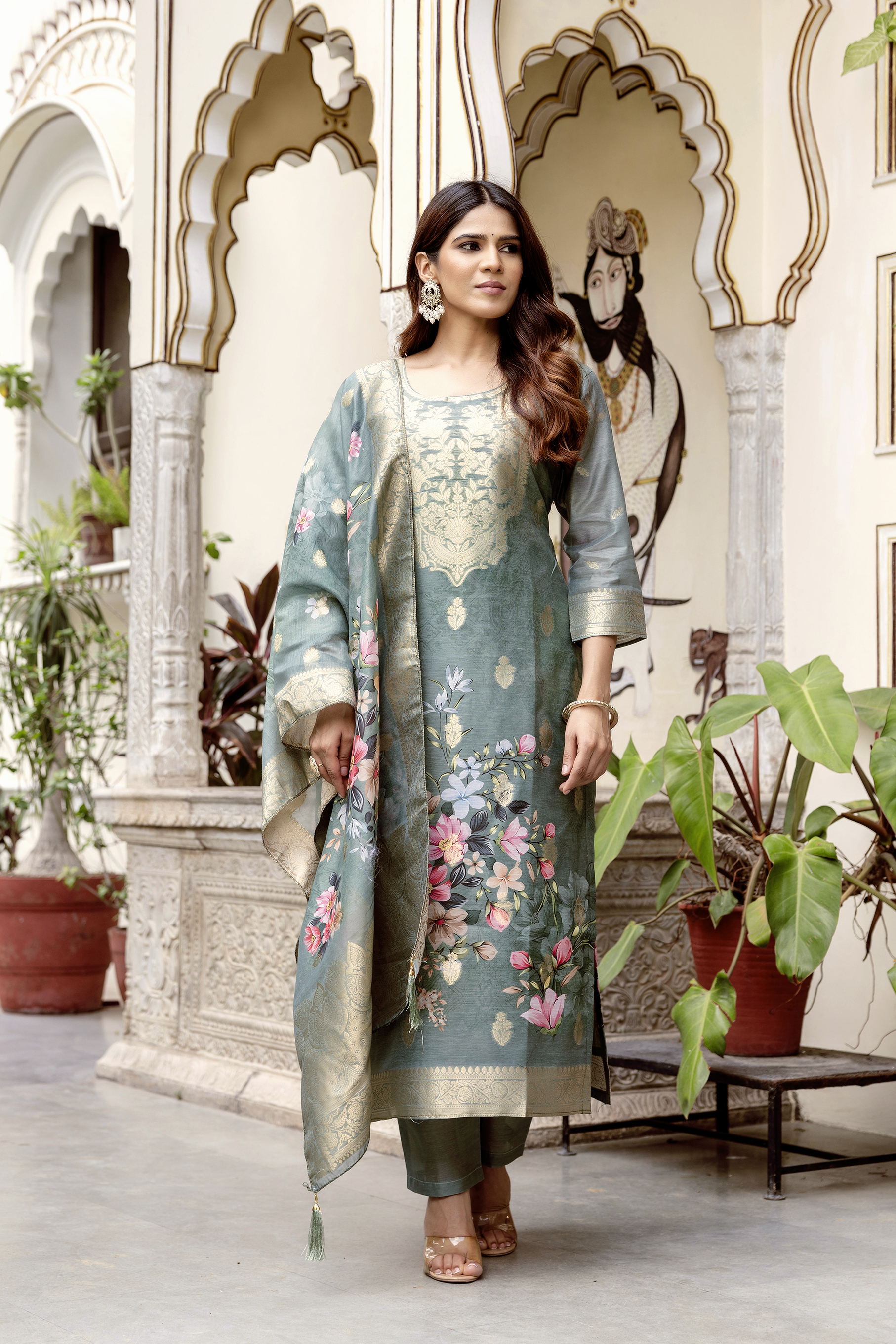
Cotton and muslin suit warm-weather wear, crepe creates fluid drape, rayon feels soft and falls close to the body, and jacquard silk gives a more structured festive finish. The correct fabric depends on climate, event formality and the amount of movement required from the outfit.
Cotton and muslin
Cotton absorbs moisture and allows air circulation, making it practical for daytime use and hot weather. Muslin is lightweight and soft, although very fine muslin may need lining or a slip depending on its opacity. Hand Block Printed Salwar Suits in Crepe and Muslin show how the same printed aesthetic can be interpreted through different weights and drapes.
Crepe and rayon
Crepe has a fluid fall and can make an Anarkali, palazzo or straight kurta look polished. Rayon is soft and comfortable, but rayon garments should be handled gently because repeated high-heat washing can affect shape and surface feel. Cream Pink Printed Rayon Readymade Salwar Suit demonstrates why pink and cream prints often work well in a soft, flowing material.
Jacquard silk
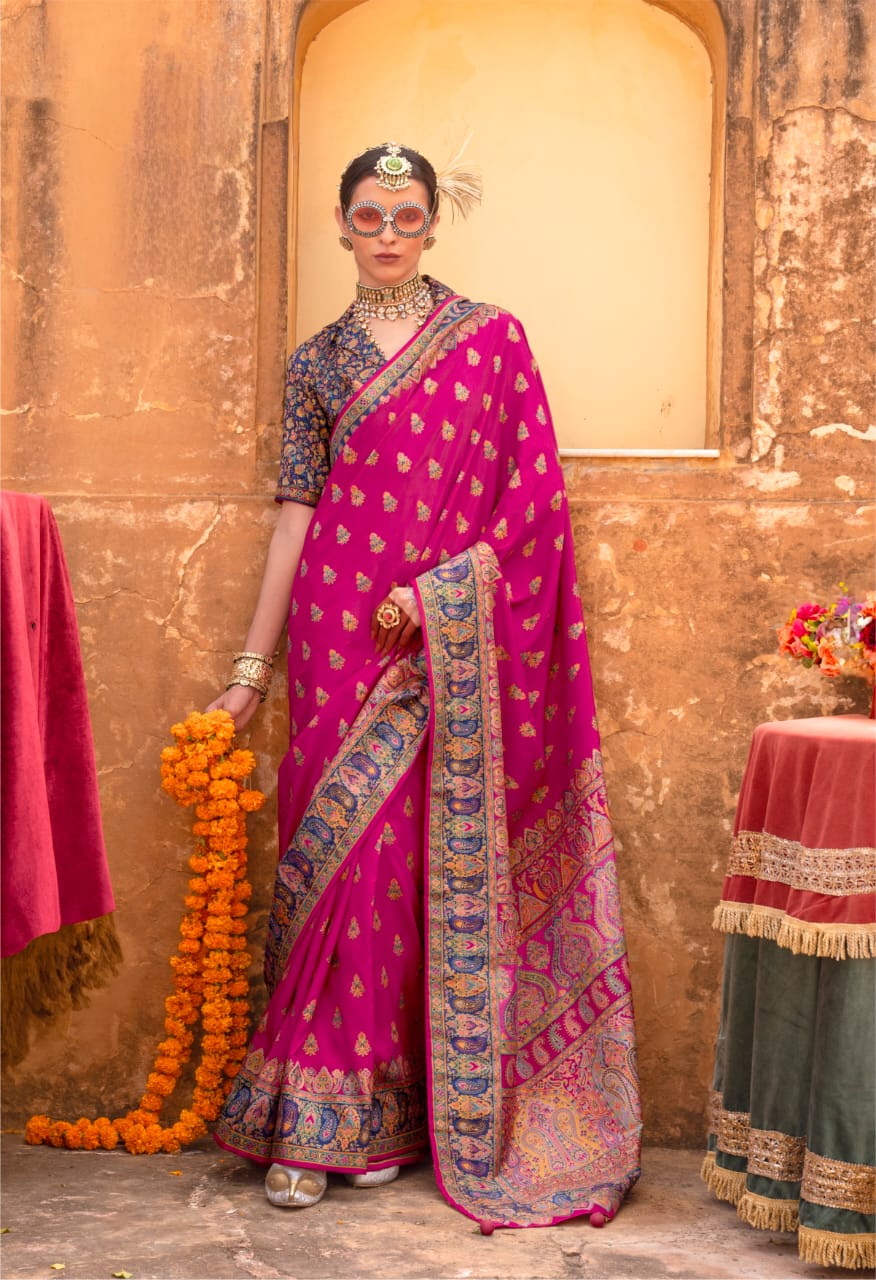
Jacquard silk has a woven surface rather than a purely flat printed appearance, so it brings more structure and occasion value to a suit set. Royal Pink JacquardSilk Classic Printed Suit Set and Royal Blue JacquardSilk Heritage Printed Suit Set show how deeper colour and a richer surface can shift a traditional print towards evening dressing.
Block Print Salwar Suits in Crepe and Muslin offers another useful comparison because crepe and muslin respond differently to the same type of motif. Kalamkari Print Salwar Suits belong to a related printed-textile conversation, although Kalamkari has its own regional history, painting methods and motif vocabulary rather than being identical to a Rajasthani block print.
Rajasthani Printed Salwar Suits for daytime, festive and ceremony dressing
Choose lighter grounds and smaller motifs for daytime events, richer colours and denser patterns for evening gatherings, and bright yellow, pink or orange accents for celebratory functions such as a Haldi ceremony. Colour doesn't determine formality alone, but colour strongly affects the first impression of a printed salwar suit.
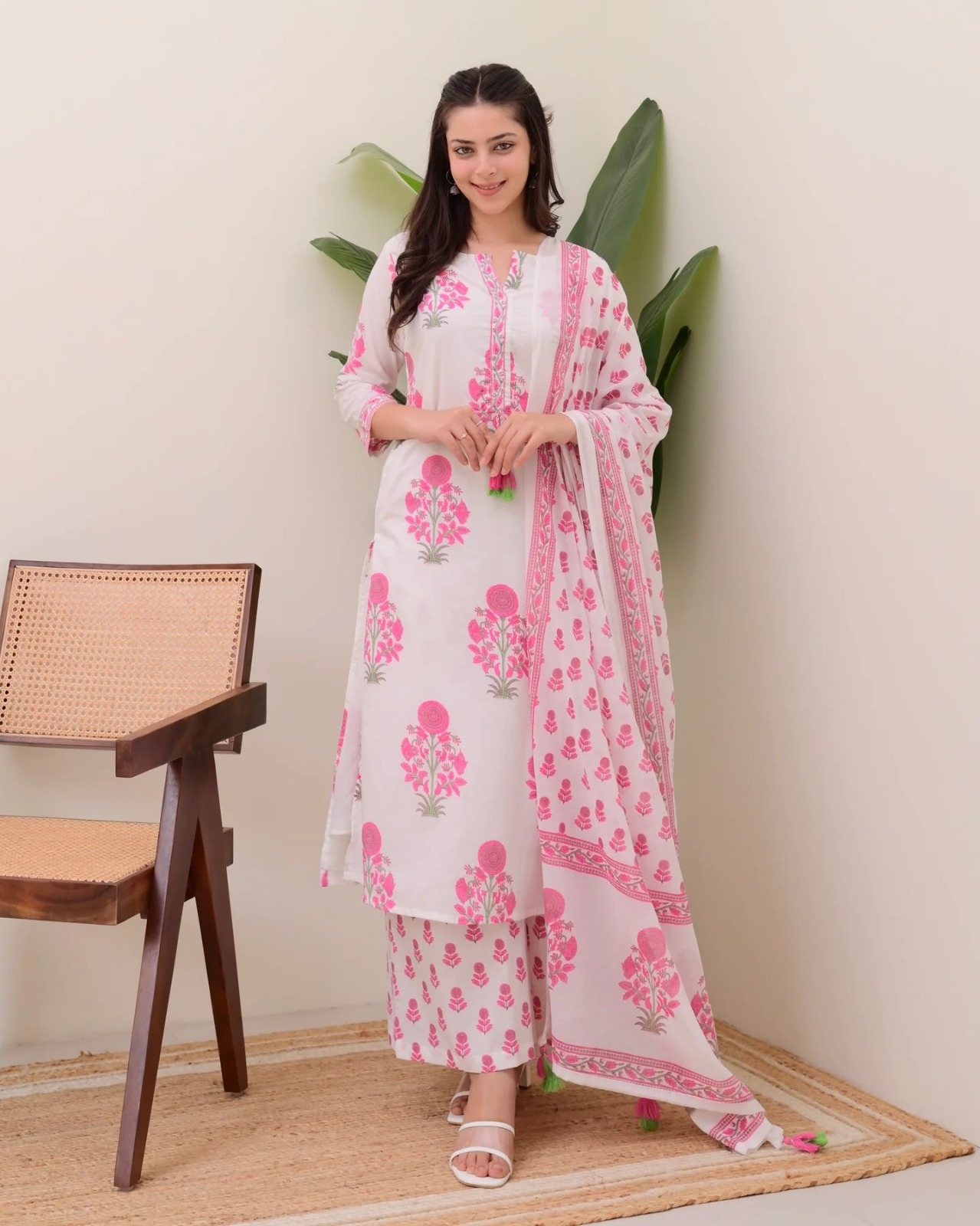
Cream, ivory and soft pink prints are easy to wear for daytime lunches, pujas and family visits. Pink Flower Printed Salwar Suit uses the familiar appeal of floral motifs in a colour family that can be styled with pearl, silver or gold-toned accessories. Cream Threadwork Printed Readymade Salwar Suit adds surface interest through the contrast between printed design and threadwork detail.
Yellow Flower Printed Salwar Suit is naturally suited to a Haldi ceremony, where yellow echoes turmeric and photographs well in outdoor light. Keep the rest of the styling uncomplicated: lightweight earrings, comfortable footwear and a dupatta that can be pinned securely are more practical than heavy layers during a ceremony involving movement.
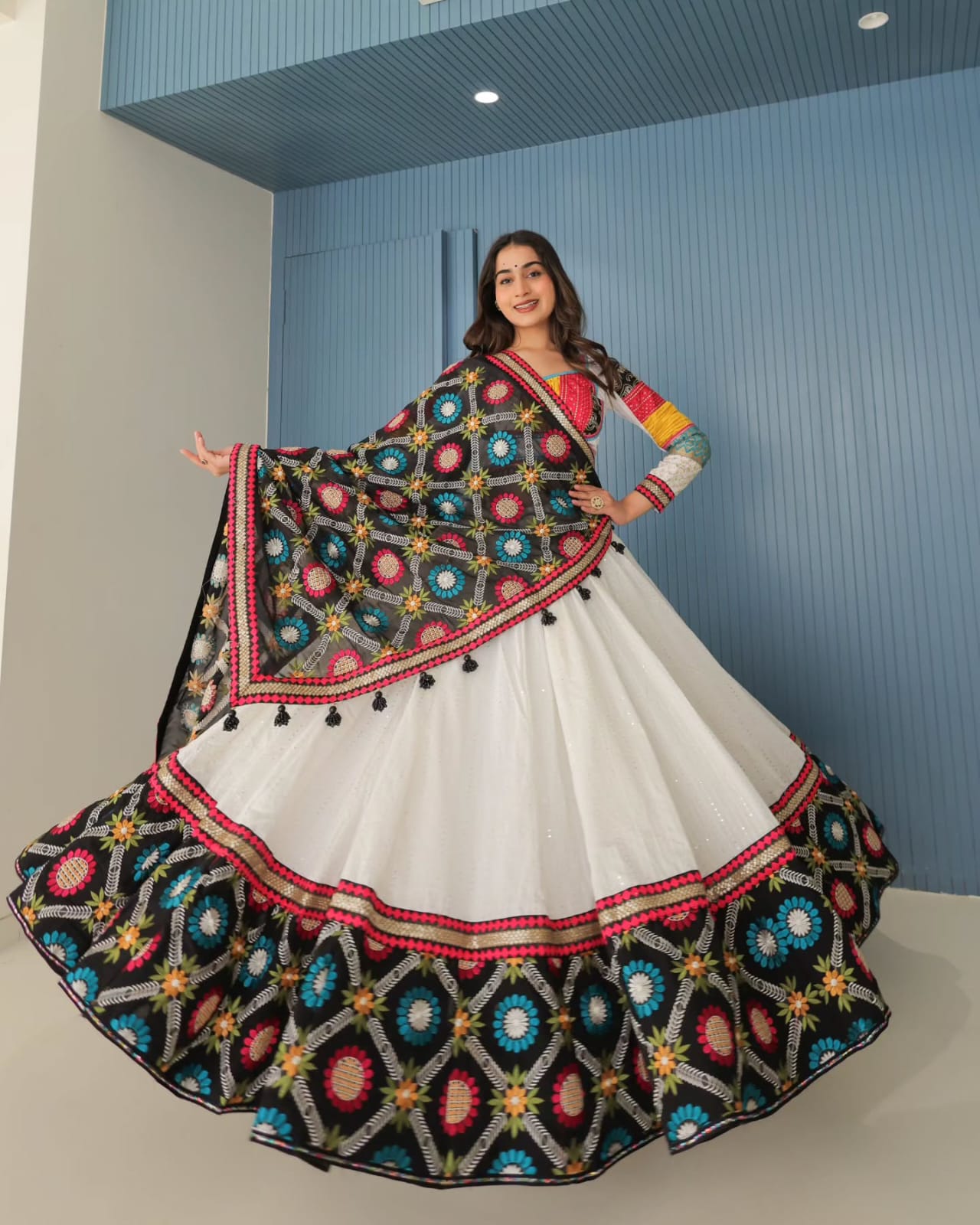
For an evening event, royal blue, deep pink, burgundy, indigo and black-ground prints can create greater depth. Zari accents, gotapatti or metallic jewellery can make a printed suit feel festive, but metallic detail should support the print rather than compete with a dense jaal. Pink Salt Gotapatti Salwar Suit Set shows how gotapatti can add occasion character to a patterned ensemble.
Rajasthani Printed Salwar Suits: practical styling and buying checks
Style a traditional printed salwar suit by balancing one dominant visual element with quieter accessories, a comfortable silhouette and a dupatta that complements rather than duplicates the entire print. A dense printed kurta usually benefits from simpler trousers and jewellery.
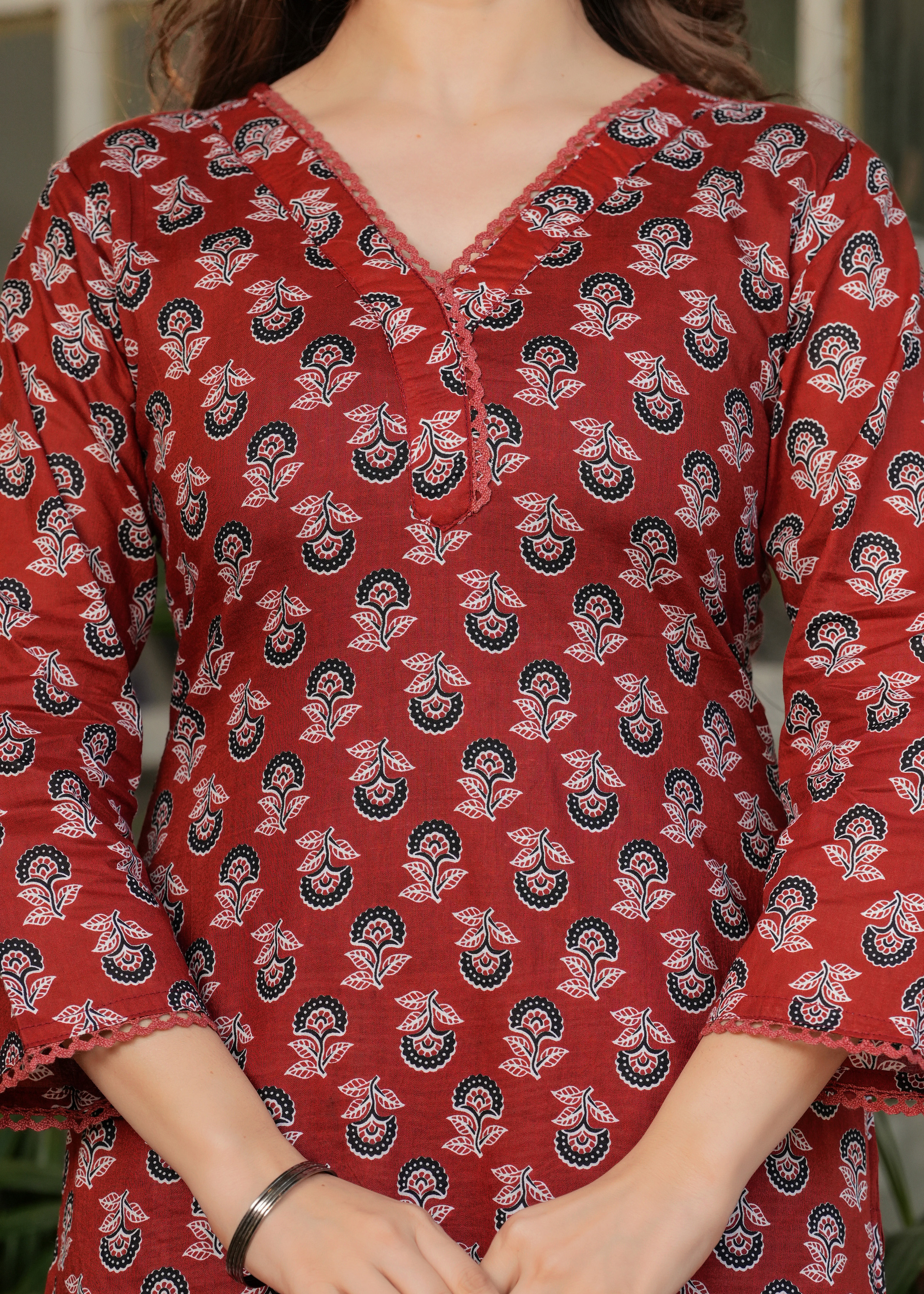
For a small floral print, try pearl studs, silver jhumkas or a narrow bangle stack. For a large paisley or jaal, choose one noticeable accessory such as a statement earring or embroidered potli. Mojaris, kolhapuris and low block heels suit the craft character of Rajasthani prints, while a neutral sandal can make a colourful suit more adaptable.
Check the fabric composition, lining, transparency, wash instructions and garment measurements before buying. Readymade sizing can vary between shoulder, bust, waist and hip measurements, so comparing the garment chart with a well-fitting kurta is more reliable than choosing only by a usual size label.
Inspect print alignment at the side seams, neckline and sleeve joins when possible. Slight variation can be natural in hand-block printing, but major misalignment may affect the finished appearance. Check whether embellishment such as gotapatti or threadwork is secured, especially around areas that receive repeated friction.
Care instructions protect both fabric and print. Wash cotton and rayon in cool or lukewarm water with a mild detergent unless the care label states otherwise. Turn printed garments inside out, avoid prolonged soaking, dry them away from harsh direct sunlight and iron them on the reverse at the temperature recommended for the fabric. Dry cleaning may be more suitable for jacquard silk, metallic trims or elaborate threadwork.
Rajasthani Printed Salwar Suits: a simple pattern-selection method
Select a print by matching motif scale, colour depth, fabric movement and event requirements rather than choosing a pattern name alone. This four-part method makes online and in-store comparisons more practical.
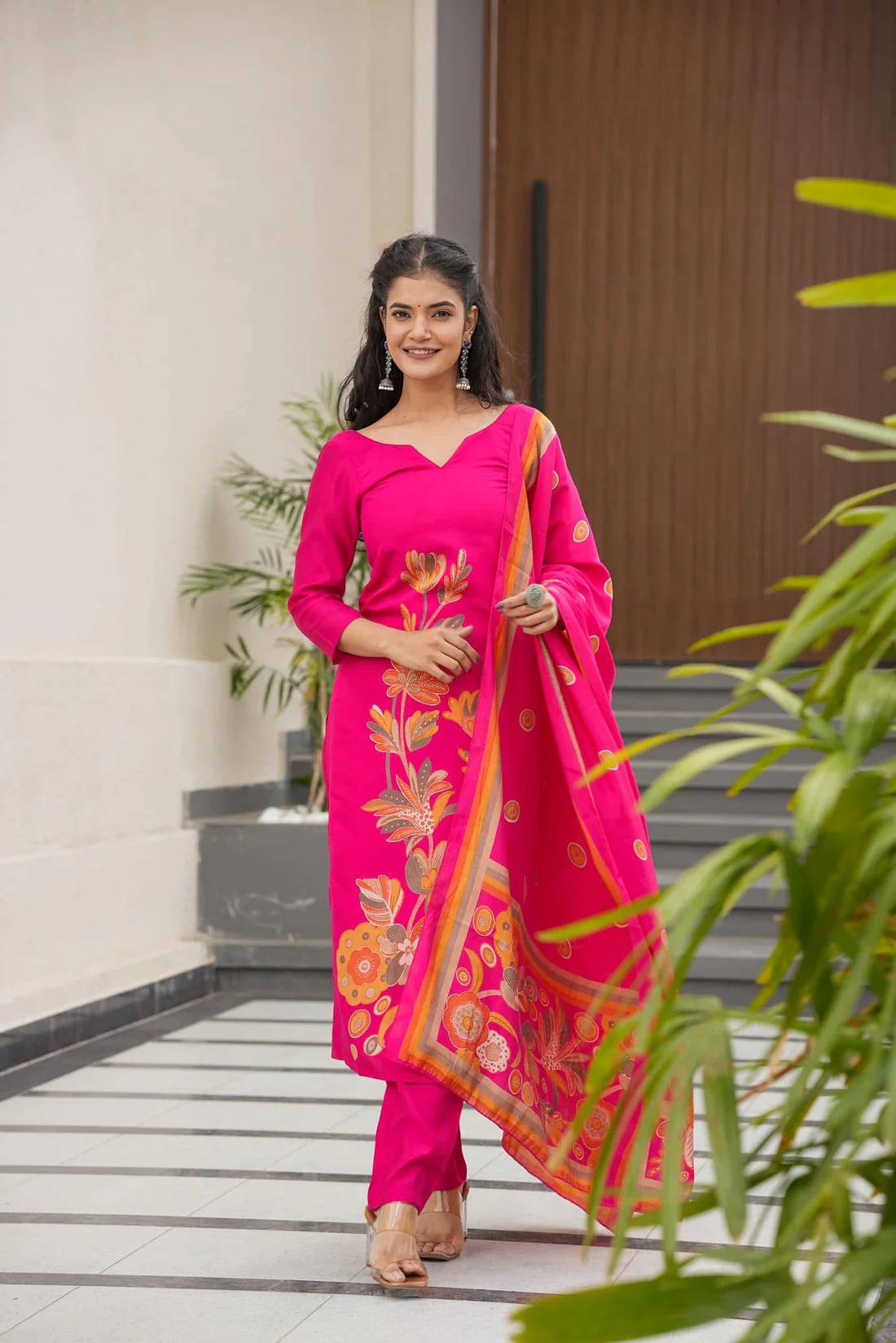
- Start with motif scale. Choose small butis for a restrained, flexible outfit and large butas or jaals when you want the print to lead the look.
- Consider the ground colour. Cream and white grounds feel lighter, while indigo, royal blue, rust and deep pink create more visual depth.
- Match fabric to movement. Choose muslin or cotton for breathable daytime comfort, rayon or crepe for fluid silhouettes and jacquard silk for a structured festive finish.
- Check the amount of detail. Printed motifs, zari, gotapatti and threadwork should form a coherent combination rather than competing across the kurta, dupatta and trousers.
Understanding these choices turns a printed salwar suit from a purely attractive purchase into a more informed textile decision. Bagru, Sanganeri and Dabu references each suggest a different relationship between colour, repetition and handmade character. With the right fabric and proportion, Rajasthani prints can work across everyday dressing, workwear, festive gatherings and family ceremonies.
Common Questions About Rajasthani Printed Salwar Suits
What are the main traditional patterns used in Rajasthani printed salwar suits?
The main patterns include Bagru florals and butis, Sanganeri floral jaals, Dabu resist motifs, paisleys, geometric repeats and larger butas. Each pattern creates a different effect, from the earthy irregularity of Dabu to the delicate, light-ground appearance of Sanganeri prints.
How can I tell whether a Rajasthani salwar suit is hand-block printed?
Look for product information that explicitly states hand-block printing and expect small variations in alignment, ink density or motif edges. Uneven printing alone does not prove handmade production, so the technique should be confirmed through the seller's description or garment documentation.
Which fabric is best for a Rajasthani printed salwar suit in summer?
Cotton and lightweight muslin are generally the most breathable choices for summer. Rayon can also feel comfortable and soft, while crepe is better when you prefer fluid drape but may not provide the same airflow as cotton.
Can I wear a Rajasthani printed salwar suit to a Haldi ceremony?
Yes, yellow, pink, orange and bright floral prints are especially suitable for a Haldi ceremony. Choose a breathable fabric, secure the dupatta with discreet pins and avoid delicate embellishment if the outfit may come into contact with turmeric or water.
How should I wash a printed salwar suit?
Follow the care label, but cool water, mild detergent, inside-out washing and shade drying are generally safer for printed cotton and rayon. Jacquard silk, zari, gotapatti and heavy threadwork may require gentler handling or professional cleaning.
What jewellery works with a Rajasthani printed salwar suit?
Choose jewellery according to print density: small earrings or pearls suit delicate florals, while oxidised silver jhumkas or one statement piece work well with earthy Bagru and Dabu designs. Avoid adding several competing statement accessories to a dense jaal or heavily embellished suit.