

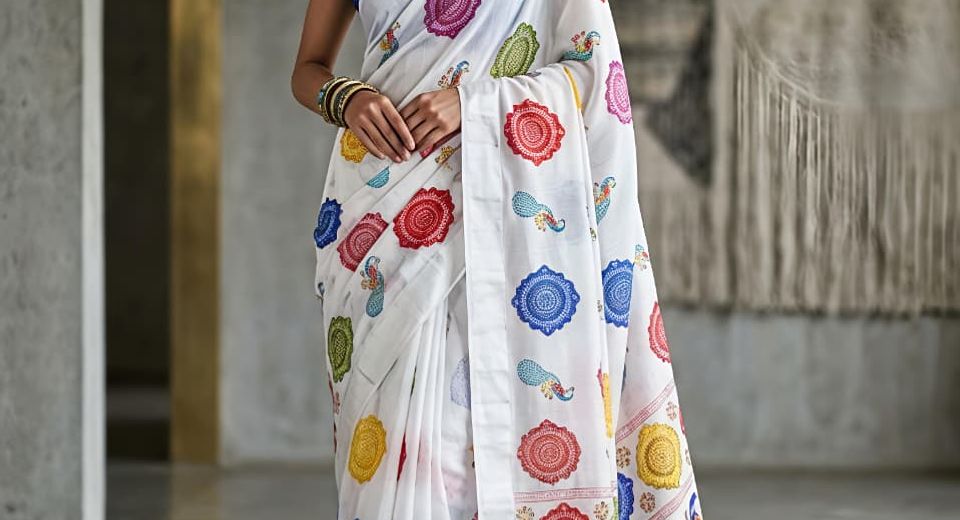
Rajasthani Odhni Terms Worth Knowing Before Buying a Poshak can prevent an expensive mismatch between the outfit pictured online and the outfit you actually need. In a traditional Rajasthani poshak, the odhni isn't a random finishing accessory; the odhni balances the ghagra, kurti or kanchli and often carries the strongest colour, border and surface detail. Knowing words such as bandhej, leheriya, gota patti, kinari and pallu makes product descriptions easier to judge.
A poshak commonly includes a flowing ghagra or skirt, a fitted kurti or kanchli, and an odhni worn over the head or shoulders. Regional styling varies across Jaipur, Jodhpur, Udaipur, Bikaner and other parts of Rajasthan, so one seller's use of "chunari" may describe a lightweight veil while another seller uses "odhni" for the complete drape. The terminology below focuses on details that affect appearance, comfort, care, durability and price.
Rajasthani Odhni Terms Worth Knowing Before Buying a Poshak: What does odhni mean?
An odhni is the long decorative veil or drape that completes a Rajasthani poshak. An odhni may be worn over the head, brought across the torso or arranged over one shoulder, depending on the ceremony, community and wearer's preference.
Odhni, chunari, chunri and dupatta are related words, but they don't always describe identical garments. Dupatta is the broadest modern term for a two-sided drape used with salwar suits, lehengas and other outfits. Chunari often suggests a lightweight printed or tie-dyed veil, while odhni carries a stronger regional and ceremonial association in Rajasthan.
Measurements matter more than a model's styling photograph. A narrow drape may be comfortable with a lehenga, but a formal poshak usually benefits from generous coverage across the head and shoulder. A length of approximately 2.25 to 2.75 metres can create an useful head-and-shoulder drape, although the ideal size depends on height, preferred pleat depth and whether pins or a brooch will be used.
Classic poshak terminology also includes kanchli, the close-fitting upper garment, and ghagra, the flared skirt. A complete poshak looks coordinated when the odhni repeats one important colour from the kanchli or ghagra without copying every motif. A teal border on a white ground, for example, can connect a plain blouse with a patterned skirt more elegantly than three competing prints.
Rajasthani Odhni Terms Worth Knowing Before Buying a Poshak: Which names describe prints?
Bandhej, leheriya and mothra describe different resist-dyeing traditions, while "printed" describes a design applied to fabric rather than a specific hand-dyeing method.
Bandhej, bandhni and chundari
Bandhej, also called bandhni, is made by tying tiny sections of fabric before dyeing so that the tied areas resist the colour. The result may contain dots, rings, clustered forms or other small patterns. Chundari is commonly associated with a finely dotted tie-dye effect, although commercial usage can differ between sellers.
Hand-tied bandhej often shows small irregularities because individual points are tied by hand. Even spacing and perfectly identical dots generally indicate a printed interpretation or a highly controlled production method. Neither option is automatically inferior; the important distinction is whether the description promises hand craft, printed fabric or a blend of both.
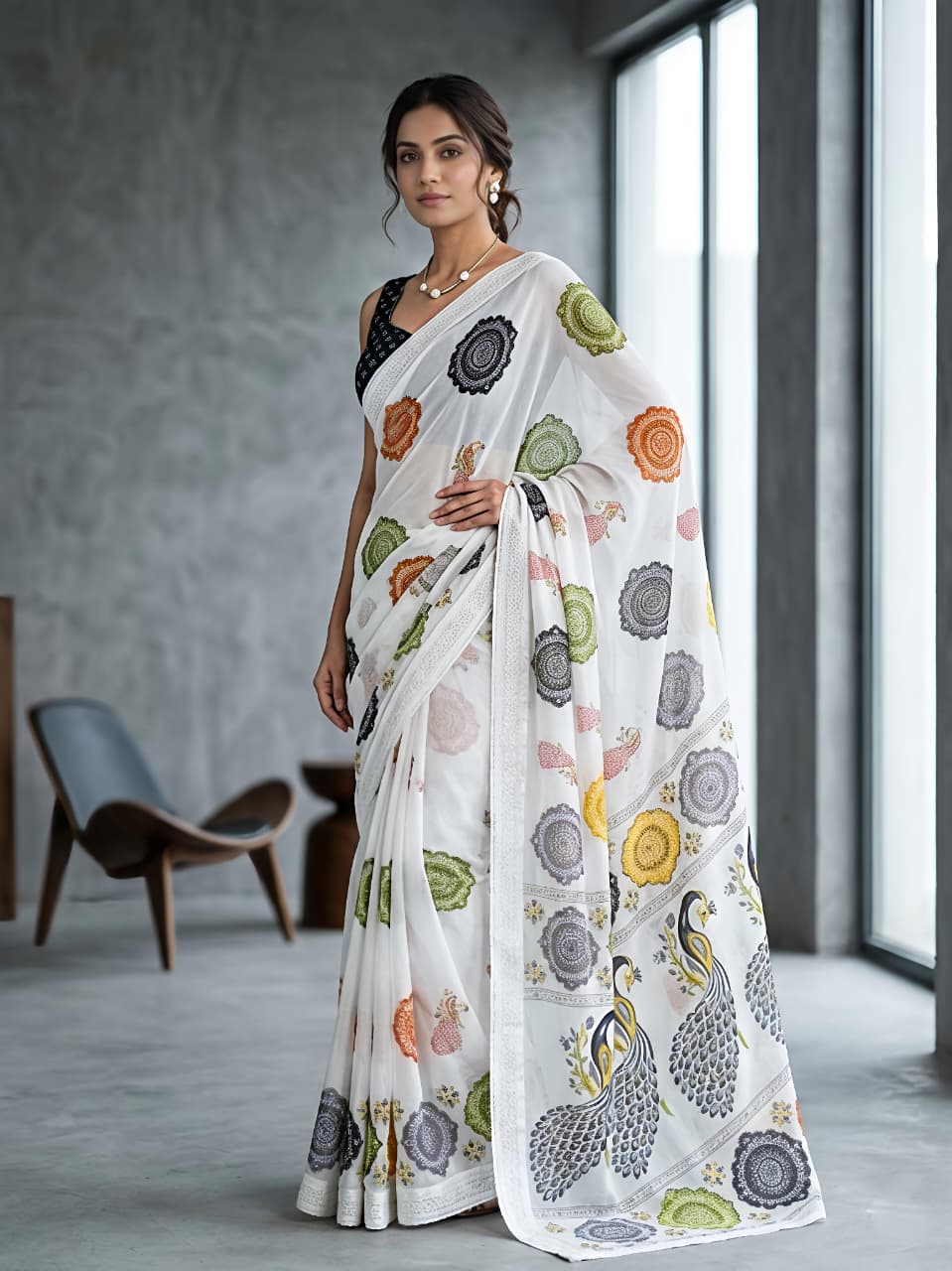
Rajwadi Mor White Saree Bandhej Print Georgette Style demonstrates why the word "print" deserves careful attention. A bandhej-inspired print can provide the familiar Rajasthani visual language at a lighter price and with consistent colour placement. A listing that says "bandhej print" should not be treated as hand-tied bandhej unless the construction is clearly stated.
Leheriya and mothra
Leheriya means a wave-like stripe pattern produced through a resist-dyeing process traditionally associated with Rajasthan. Diagonal stripes are the most recognisable form, and several colour stages can create flowing movement across an odhni.
Mothra is a more complex crossed or checked wave effect created by folding and tying fabric again after an initial dyeing stage. Mothra can look like a fine criss-cross pattern rather than simple diagonal waves. These terms are useful when you want movement in the drape instead of evenly distributed floral printing.
Printed motifs and Rajwadi styling
"Rajwadi" usually signals a royal-inspired design direction rather than one standard textile process. Peacock motifs, ornate borders, jewel tones and decorative butis may all be described as Rajwadi. Rajwadi Mor Premium Printed Georgette Saree and White Rajwadi Mor Saree with Teal Peacock Border show how peacock imagery can connect a saree, blouse and odhni visually.
Motif scale changes the final effect of a draped garment. Small butis remain visible through pleats and are easy to style for daytime events. Large peacocks, paisleys and medallions create a statement pallu, but the main motif may disappear when the odhni is folded narrowly over the head. Buyers should check where the central motif and border are positioned when the fabric is shown fully spread.
Rajasthani Odhni Terms Worth Knowing Before Buying a Poshak: How do fabrics affect drape?
Fabric determines an odhni's weight, transparency, crease behaviour, warmth, fall and suitability for a particular ceremony.
Georgette is a lightweight, slightly grainy fabric with a soft fall that works well for gathered pleats. Georgette odhnis are usually comfortable during long functions, but very light versions may be more transparent and may need careful pinning outdoors. Rajwadi Style White Georgette Saree with Peacock Border demonstrates how a translucent base can make a decorative border look more prominent.
Tussar silk has a naturally textured surface and a more structured fall than georgette. Tussar silk can work especially well with zari because the uneven silk texture gives metallic detail visual depth. Orange Rajasthani Print Tussar Silk Saree with Zari shows the contrast between a warm base colour, textured silk ground and formal metallic accent.
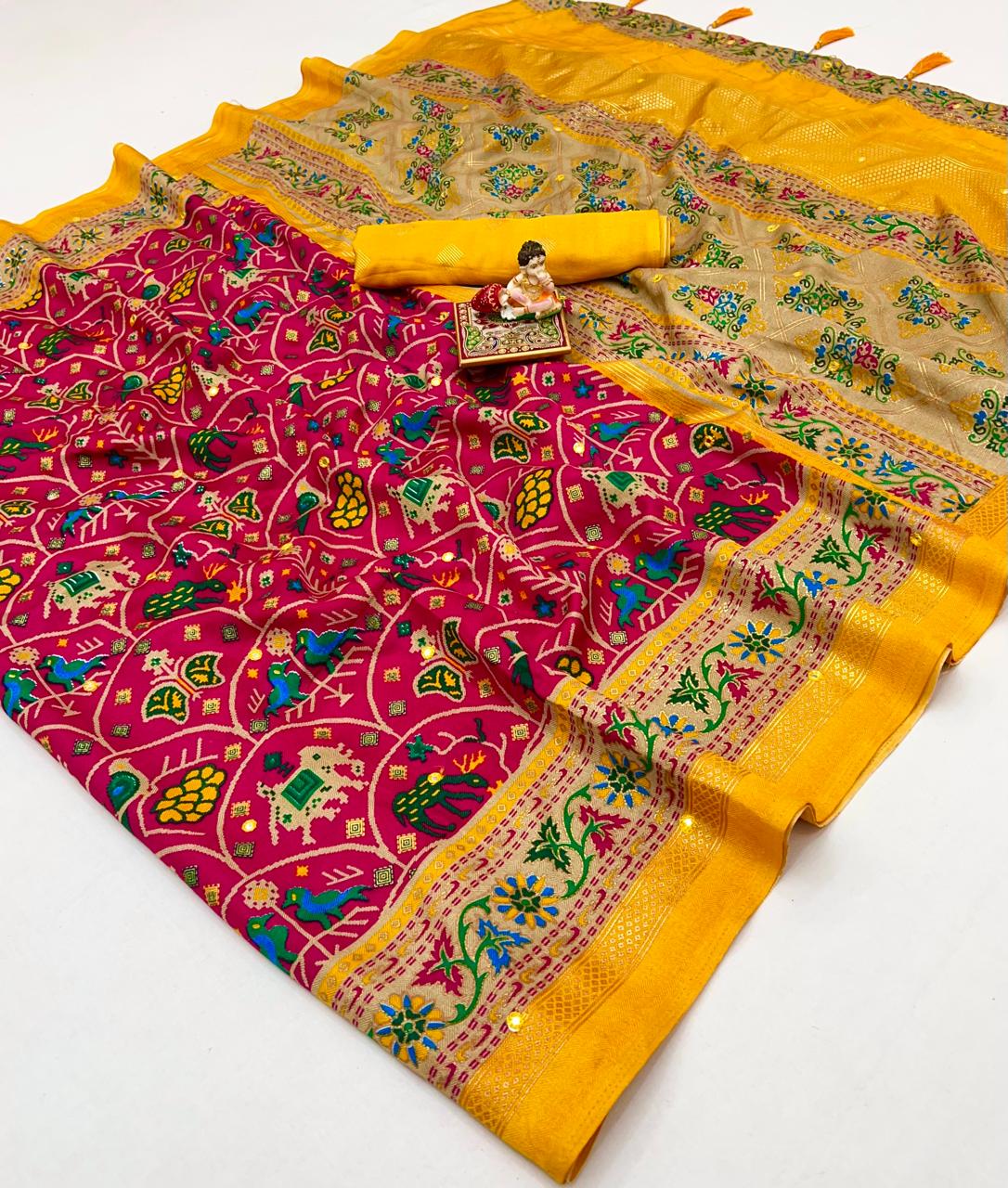
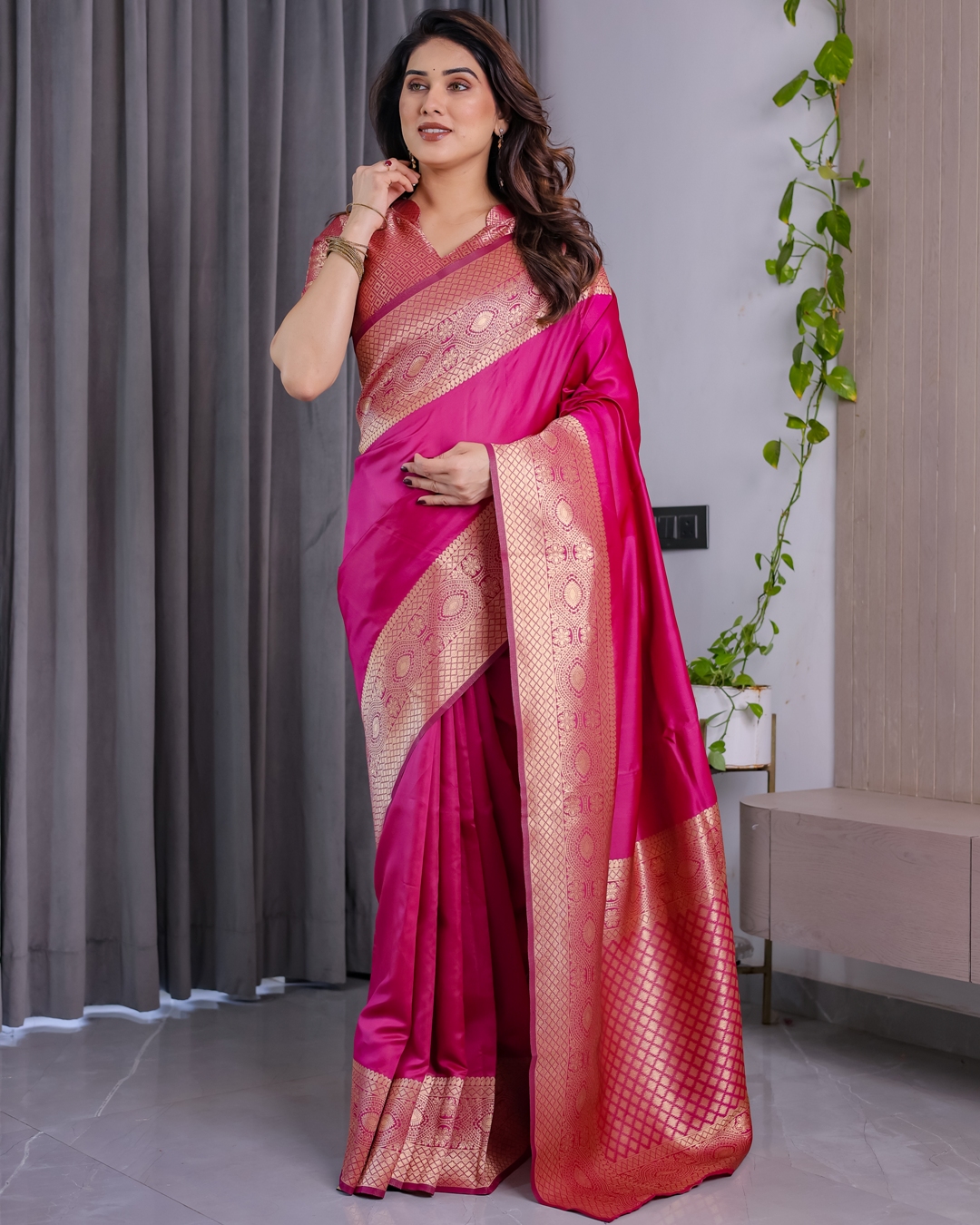
Pashmina silk is a soft silk blend or silk-marketed fabric category used in festive Indian clothing, but the exact fibre composition should be checked in the product specification. The phrase "pashmina silk" doesn't automatically guarantee pure pashmina fibre. Designer Rani Pink Patola Print Pashmina Silk Festive Saree illustrates why buyers should distinguish between a fibre description, a weave reference and a print name.
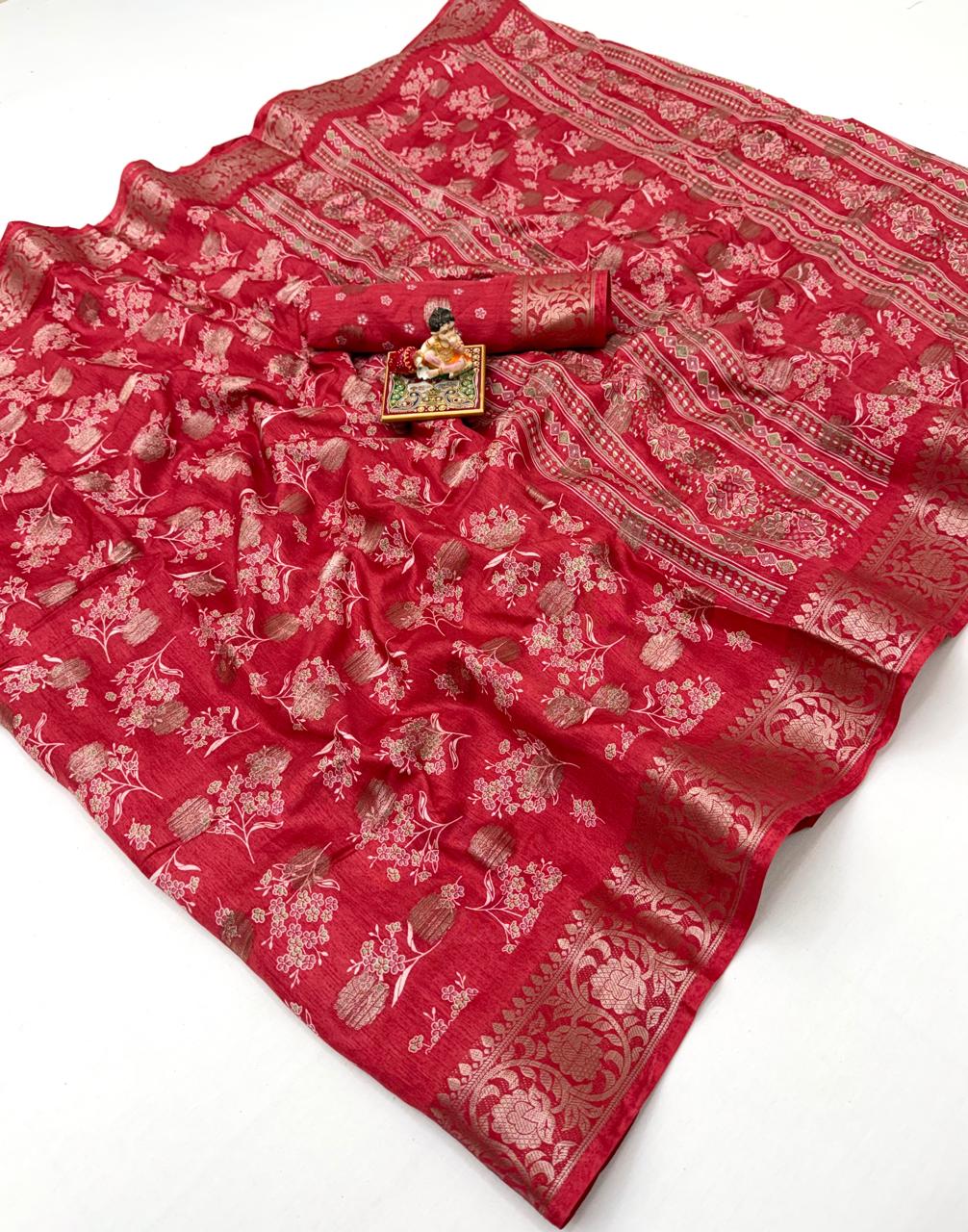
Banarasi silk is associated with richly woven patterns and zari work from the Banaras weaving tradition. Banarasi silk is generally more substantial than georgette and can hold a crisp pleat, making it suitable for a ceremonial drape. Buy Rani Pink Banarasi Silk Saree with Jacquard Zari Border may pair effectively with a simpler odhni because the zari border already supplies considerable visual richness.
Chanderi and Kanjeevaram also appear frequently in Indian occasion-wear searches, but Chanderi and Kanjeevaram should not be treated as interchangeable with Rajasthani odhni fabrics. Chanderi is known for a light, sheer hand and subtle woven surface, while Kanjeevaram is a heavier South Indian silk tradition with a distinctive structure and contrast borders. Naming the actual fabric helps buyers compare drape and care instead of relying on the broad word "silk."
The collection Rajasthani Ethnic Wear in Silk Cotton and Georgette is useful for comparing how silk-cotton and georgette change the visual weight of regional designs. The collection Rajasthani Ethnic Wear in Silk Cotton and Georgette also reinforces an important buying principle: fabric names should be read alongside measurements, lining information and care instructions.
Rajasthani Odhni Terms Worth Knowing Before Buying a Poshak: Which border terms matter?
Border terminology identifies where decoration sits and how much weight or stiffness the edge may add to the drape.
Kinari means an ornamental edging or trim along a border. Kinari may be woven, embroidered, scalloped or finished with small metallic elements. A narrow kinari creates a restrained outline, while a broad kinari may become the most visible feature when the odhni is pleated over the shoulder.
Gota patti is an embellishment technique using ribbon-like metallic gota applied in geometric, floral or leaf shapes. Gota patti can suit a Haldi ceremony when used sparingly, but dense metallic application is more appropriate for an evening celebration. Loose gota can catch on jewellery, bangles and rough surfaces, so the attachment should be inspected before purchase.
Zari is metallic thread used in weaving or embroidery. Zari may be made with real metal in heritage textiles, but contemporary garments commonly use metallic-coated synthetic or imitation threads. A description that says "zari border" identifies the look and placement, not necessarily the fibre, purity or precious-metal content.
"Jacquard" describes a woven pattern produced through a loom mechanism rather than a separate embellishment placed on top. A jacquard zari border can therefore be more integrated into the fabric than a surface-applied trim. Woven borders generally resist lifting better than glued decorations, although woven borders may add stiffness and should be folded rather than tightly rolled.
White Printed Saree with Rajwadi Bandhej & Blue Work shows how a secondary colour can guide the rest of an outfit. Blue work can be repeated in earrings, blouse piping or footwear, while the white ground leaves room for a brighter ghagra. A border should coordinate with the complete poshak rather than only with the odhni's centre field.
Rajasthani Odhni Terms Worth Knowing Before Buying a Poshak: How should you match an odhni to an event?
The right odhni matches the ceremony's formality, movement requirements, weather and expected wearing time.
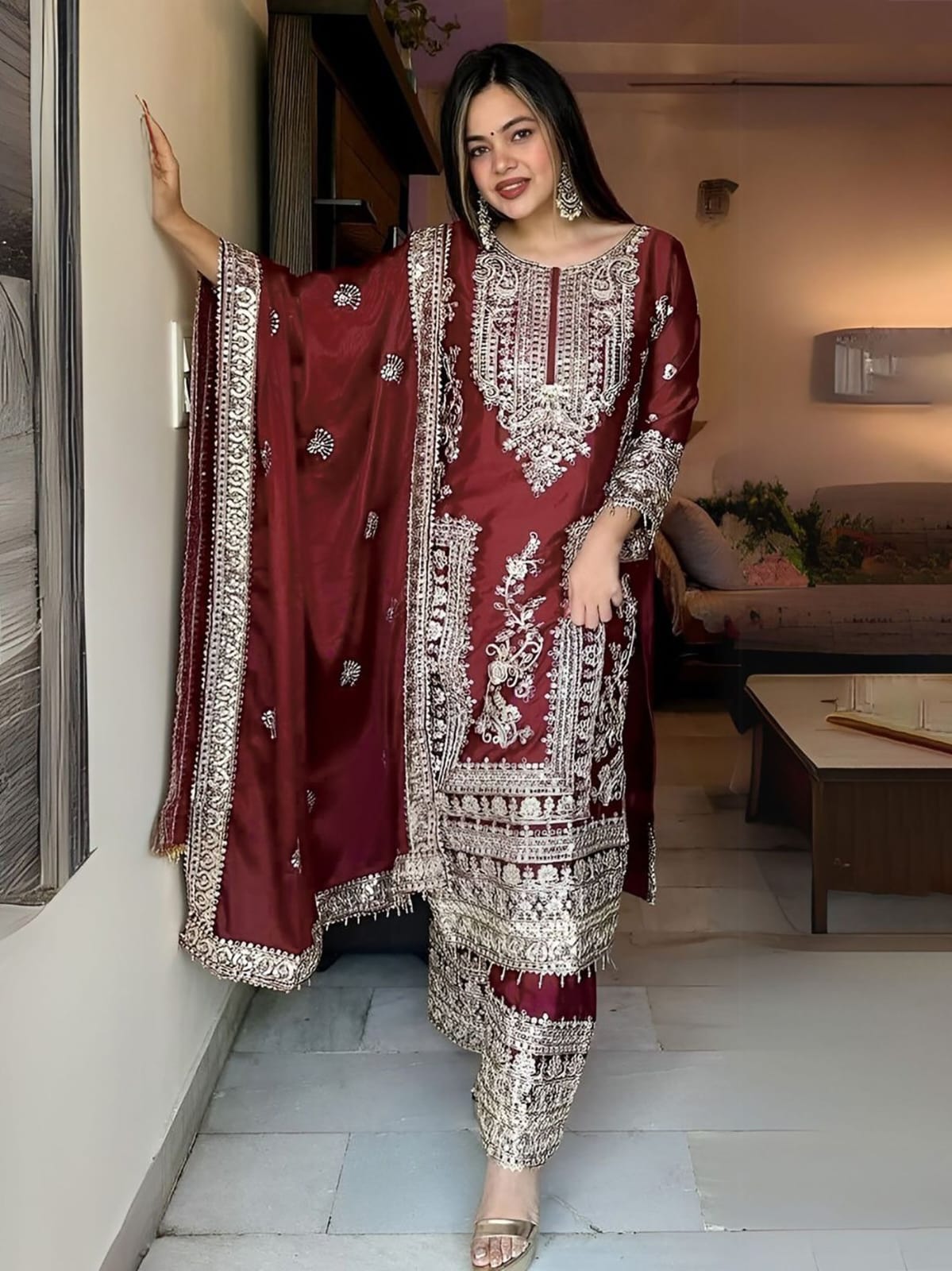
For a Haldi ceremony, a breathable and manageable fabric such as lightweight georgette, cotton silk or a soft printed blend is practical, especially when turmeric, water and outdoor movement are likely. Yellow, orange, pink and green are common festive choices, but a washable printed odhni is safer than heavily embellished fabric when staining is a concern.
For a wedding ceremony or reception, Banarasi silk, Tussar silk, substantial silk blends and zari borders provide more structure and visual formality. A heavily decorated odhni can support a relatively simple ghagra, while a richly embroidered ghagra usually looks more polished with a quieter odhni. Matching every surface with metallic work can make pleats look bulky and obscure the silhouette.
For daytime family gatherings, printed georgette, silk cotton and lighter bandhej-inspired styles offer comfort without losing regional character. A white or pastel base with one strong border can also be restyled with different blouses. Rajwadi Style White Georgette Saree with Peacock Border and White Rajwadi Mor Saree with Teal Peacock Border demonstrate how border colour can make a light ground suitable for both daytime and festive styling.
Movement should influence the decision as much as decoration. A very long odhni with a heavy zari or gota edge may drag, while a sheer lightweight odhni may shift repeatedly during dancing or outdoor rituals. Buyers should consider whether the drape will be pinned, tucked into the waistband or carried freely.
Rajasthani Odhni Terms Worth Knowing Before Buying a Poshak: What should you verify before ordering?
Before ordering, verify the fabric composition, finished measurements, border placement, transparency, included pieces and care instructions.
- Read the fibre description. Confirm whether the listing says georgette, silk cotton, Tussar silk, Banarasi silk, a blend or a digitally printed synthetic fabric. "Silk look" and "silk" don't communicate the same fibre content.
- Check the actual dimensions. Look for the odhni's length and width in centimetres. Compare those figures with a dupatta or saree you already own to understand the likely head and shoulder coverage.
- Separate print from craft. Bandhej print, Patola print and digitally printed motifs may reproduce a time-honoured appearance without using the original resist-dyeing or weaving process. A printed textile can still be attractive and useful, but the distinction affects price and expectations.
- Inspect the border description. Identify whether the border is woven, embroidered, printed, zari-based or finished with gota patti. A heavy border may require stronger pins and a more deliberate pleat arrangement.
- Ask about transparency and lining. Georgette and fine Chanderi can be sheer, especially in white, ivory and pastel shades. A blouse, skirt or inner layer may need to provide adequate coverage.
- Confirm what is included. A saree with an odhni-inspired styling photograph may not include a ghagra, blouse or matching accessories. Product photographs are not a substitute for the included-items list.
- Check colour representation. Monitor settings can shift pink, orange, teal and white. Product descriptions and customer photographs can provide a more reliable reference than a single studio image.
Care instructions should match the fabric and embellishment. Dry cleaning is generally safer for zari, dense gota patti, Banarasi silk and delicate handwork. Printed georgette may require gentle hand washing only when the care label permits it. Store silk and embellished odhnis folded in clean muslin, away from direct sunlight and damp cupboards; refold them every few months to reduce permanent crease lines.
A thoughtful purchase doesn't depend on recognising every regional term. A buyer needs enough vocabulary to distinguish a hand technique from a print, a woven border from an applied trim, and a lightweight drape from a structured silk. Those distinctions make online comparison clearer and help a Rajasthani poshak look graceful, comfortable and appropriate after it arrives.
Common Questions About Choosing a Rajasthani Odhni for a Poshak
What is the difference between an odhni, chunari and dupatta?
An odhni is a traditional veil or drape associated strongly with Rajasthani poshak styling. Chunari or chunri often refers to a lightweight printed or tie-dyed veil, while dupatta is the broad modern term used for many Indian outfits. Sellers may use the words differently, so measurements and fabric details are more reliable than the name alone.
Is bandhej the same as bandhej print?
Bandhej is a resist-dyeing technique in which small sections of fabric are tied before dyeing. Bandhej print reproduces the dotted or tied pattern through printing and does not necessarily involve hand tying. A product description should state whether the design is hand-dyed, printed or made using another process.
Which fabric is most comfortable for a Rajasthani odhni?
Lightweight georgette, silk cotton and soft blended fabrics are usually comfortable for long functions because they are easier to carry and pleat. Tussar silk and Banarasi silk provide more structure but can feel heavier. Weather, event duration and the amount of border embellishment should guide the final choice.
How long should an odhni be for a complete poshak?
An odhni measuring approximately 2.25 to 2.75 metres can provide useful head-and-shoulder coverage for many adults. The required length depends on height, pleat depth, styling method and whether the drape is pinned. Buyers should always compare the listed finished measurements with a garment already owned.
Can a printed odhni be used for a wedding?
A printed odhni can suit a wedding when its fabric, colours and border match the formality of the outfit. Georgette with a refined border works for many daytime celebrations, while Banarasi silk, Tussar silk, zari or dense gota patti creates a more ceremonial effect. A printed design should not be described as hand-dyed bandhej unless its construction confirms that process.
How should a zari or gota patti odhni be stored?
A zari or gota patti odhni should be folded in clean muslin and stored away from moisture, direct sunlight and rough surfaces. Avoid tight rolling because metallic borders can crease or distort. Dry cleaning is often safer for dense embellishment, but the garment's care label should take priority.




