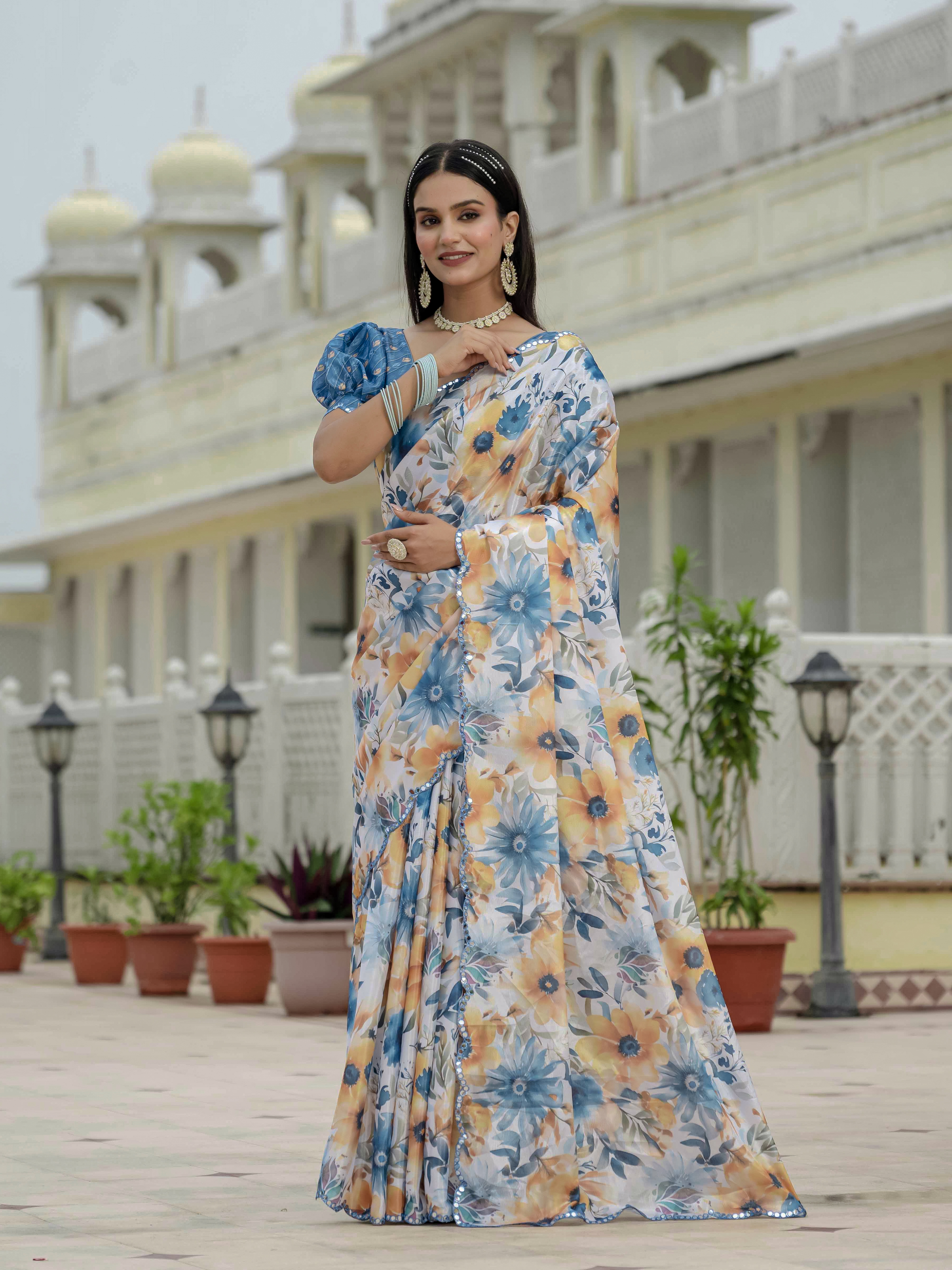
Rajasthani Fashion Guide: 20 Traditional Saree and Lehenga Styles begins with a practical fact: Rajasthan has no several uniform costume. Regional textiles, resist-dyeing methods, silhouettes, embroidery, jewellery and drapes make several distinct forms of traditional dress. A bandhej odhni from Jodhpur, a Kota Doria saree from Kota and a bridal ghagra from Jaipur can all look Rajasthani while serving various purposes. This guide identifies 20 style families and explains how to choose them for weddings, festivals, Haldi ceremonies and everyday celebrations.
Rajasthani Fashion Guide: 20 Traditional Saree and Lehenga Styles and their defining features
Rajasthani dress becomes easier to identify when an outfit is separated into four parts: the lower garment, the blouse, the head or shoulder covering, and the surface technique. A traditional ghagra is a flared skirt, while a choli or kanchali covers the upper body and an odhni completes the look. A saree uses one continuous length of cloth, but bandhej, leheriya, gota patti and regional prints can still give it a strongly Rajasthani identity.
Colour also communicates mood and use. Red, maroon, saffron, fuchsia and green are common choices for festive and bridal dressing, while white, ivory, indigo and soft pink create a lighter contemporary effect. Mirror work, gota, zari, thread embroidery and metallic borders add different amounts of weight. A heavily decorated ghagra is generally more suitable for a wedding than a breathable printed saree for a daytime function.
1. Traditional ghagra choli
The traditional ghagra choli pairs a voluminous skirt with a fitted choli and an odhni. Multiple panels, a broad hem and a contrasting veil create the recognisable festive silhouette. Choose a structured ghagra for bridal photographs and a lighter skirt for dancing or long ceremonies.
2. Bandhej ghagra
A bandhej ghagra uses tied-and-dyed dots that form clusters, rings or wave-like motifs after the fabric is opened. Bandhej works especially well in red, yellow, green and pink. Check that the dot pattern is even, the dyeing is colourfast and the lining prevents the skirt from clinging.
3. Leheriya saree
A leheriya saree is recognised by diagonal wave stripes created through resist tying and dyeing. The diagonal movement gives a narrow, lively visual line, making the saree effective with a plain blouse and minimal jewellery. A leheriya saree is a practical choice for Teej, Gangaur-inspired dressing and daytime festive events.
4. Mothra pattern
Mothra is a tie-dye variation that creates intersecting wave or checked effects. The pattern is more graphic than a simple bandhej dot and can look striking on an odhni, saree or skirt. Pair a mothra textile with restrained accessories because the surface pattern already supplies visual detail.
5. Gota patti lehenga
A gota patti lehenga uses narrow metallic ribbon, often arranged as leaves, flowers, borders or geometric motifs. Gota patti catches light without the dense weight of all-over stonework, which makes it useful for mehendi functions and festive evenings. Inspect the stitching at motif edges because loose metallic ribbon can snag during wear.
6. Mirror-work lehenga
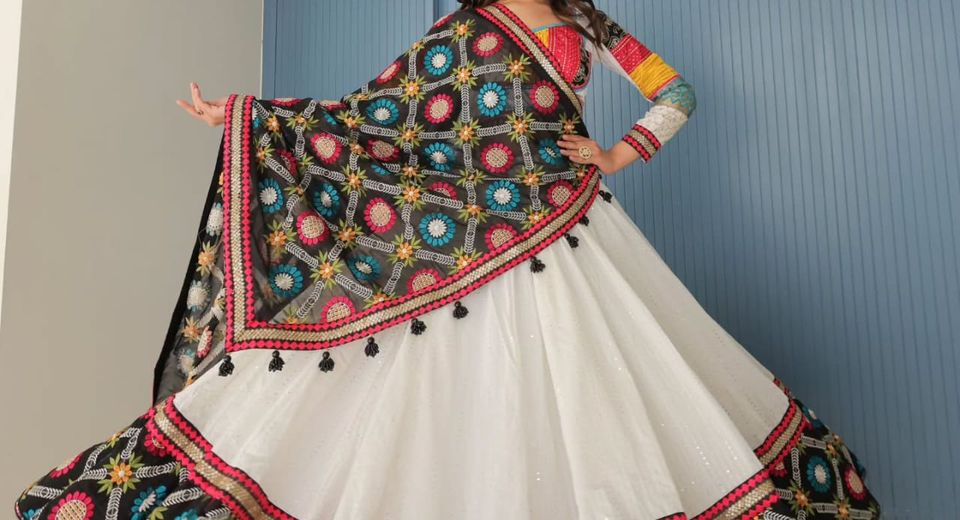
A mirror-work lehenga comes with small reflective pieces secured with embroidery, traditionally associated with colourful western Indian festive craft. Mirror work suits Navratri, sangeet and garba because the surface moves visibly under lights. Stylish White Mirror Work Lehenga for Festive Wear shows how a neutral base can make colourful accessories look sharper.
7. Zari-bordered ghagra
A zari-bordered ghagra uses metallic thread or metallic woven trim mainly along the hem, waistband or dupatta border. The placement creates polish without making every panel heavy. A wide zari border is best balanced with a relatively quiet choli, especially when the skirt has a strong print.
8. Kanchali and ghagra set
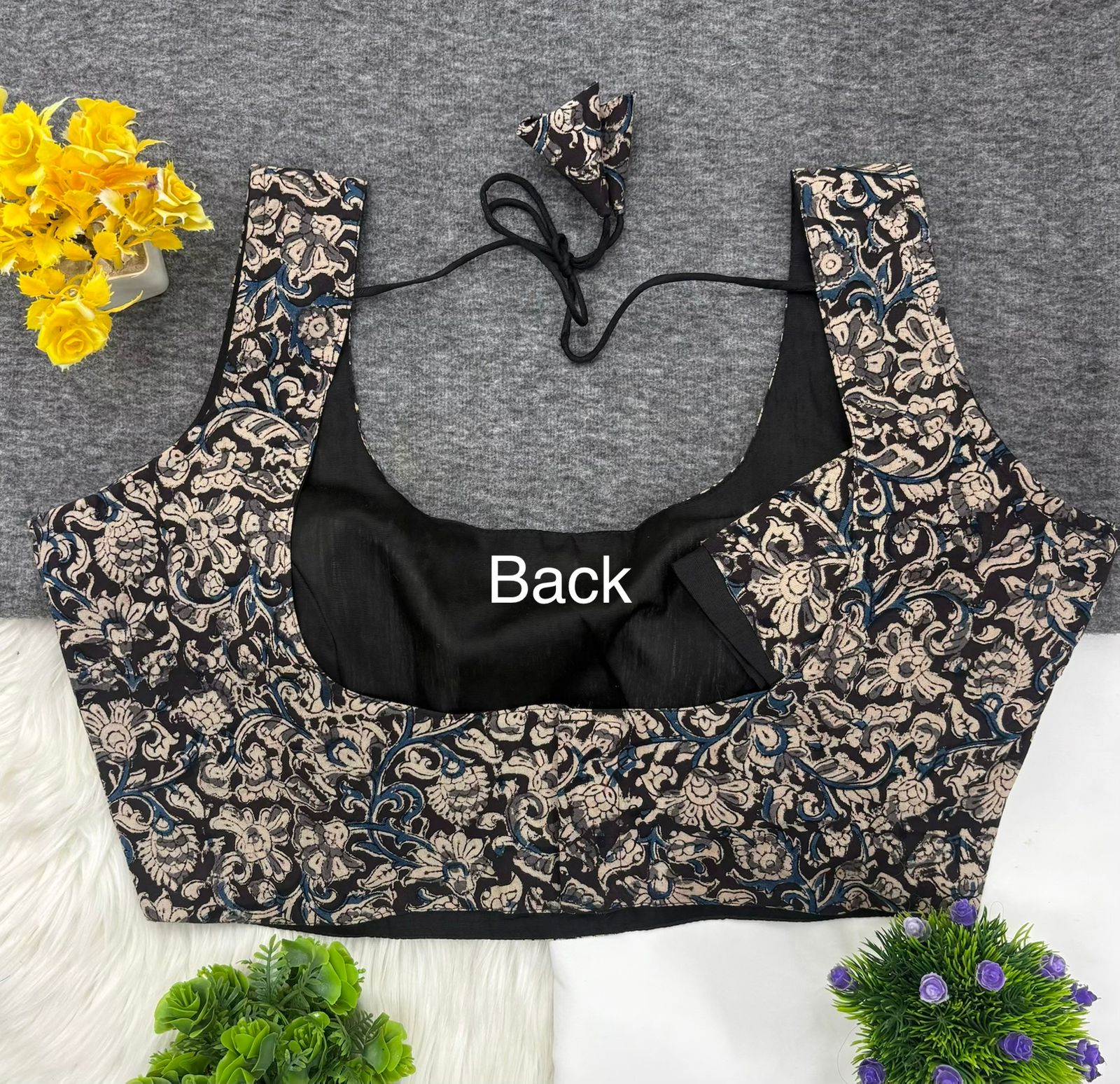
A kanchali and ghagra set combines a close-fitting traditional blouse with a full skirt and odhni. The blouse may include ties, embroidery, patchwork or a modest back opening, depending on the regional interpretation. For modern wear, check armhole depth, bust measurements and the adjustment range before ordering a fully stitched choli.
9. Printed Rajasthani lehenga
A printed Rajasthani lehenga relies on colour and motif rather than heavy embellishment. Bagru-inspired florals, paisleys, dots and block-print effects work well for daytime weddings and family gatherings. Red Ethnic Lehenga Choli with Digital Print Design illustrates the current version of this approach, where a digital pattern provides detail with less embroidery weight.
10. Multicolour festive lehenga
A multicolour festive lehenga combines several saturated shades across the skirt, blouse, dupatta or trims. Such a palette reflects the exuberance associated with Rajasthan while allowing you to repeat one colour in bangles or footwear. Stylish Multicolor Butter Silk Lehenga Choli Set and Vibrant Multicolor Navratri Lehenga Choli Set are useful references for planning a high-energy festival outfit.
11. Pastel floral lehenga
A pastel floral lehenga softens the traditional silhouette through mint, blush, powder blue, peach or pale yellow tones. Floral prints and a flared skirt retain the celebratory shape without the visual density of bridal red. Pastel Floral Georgette Lehenga Set with Ruffle Blouse suits a daytime engagement, garden event or lighter reception look.
12. Patola-inspired designer skirt
A Patola-inspired skirt uses strong geometric repeats, jewel tones and an orderly woven-looking pattern. Patola itself is associated with double-ikat weaving from Gujarat, so a printed or digitally rendered Patola-inspired garment should not be described as handwoven Patola without verification. Royal Patola Printed Designer Gown with Elegant Dupatta demonstrates how the pattern language can move into a gown silhouette.
13. Navratri chaniya choli
A Navratri chaniya choli is designed for movement, pairing a flared skirt with a choli and dupatta or odhni. Mirror work, contrasting borders and bright colours are common styling directions. Select a skirt with a comfortable waistband and secure embellishment if you expect several hours of dancing.
14. Bridal red ghagra
A bridal red ghagra uses red, crimson, wine or vermilion as the dominant colour and usually combines embroidery, metallic work and a substantial dupatta. Red Ethnic Lehenga Choli with Digital Print Design is a lighter printed interpretation, while a truly bridal version requires attention to lining, hem support, blouse structure and dupatta weight.
15. Yellow Haldi lehenga
A yellow Haldi lehenga uses turmeric yellow, marigold, mustard or lemon shades for a bright pre-wedding outfit. Yellow Lehengas are easier to style when embroidery is washable or limited, because turmeric, flowers and outdoor seating can expose clothing to stains. Choose a removable tassel or a dupatta that can be safely dry-cleaned.
16. Green festive lehenga
A green festive lehenga ranges from parrot and emerald to sage and bottle green. Green Lehengas coordinate naturally with gold jewellery, pink accents and floral accessories, making them useful for mehendi functions and evening celebrations. A deeper green generally looks richer under warm indoor lighting, while sage and mint suit daylight.
17. Odhni-led saree drape
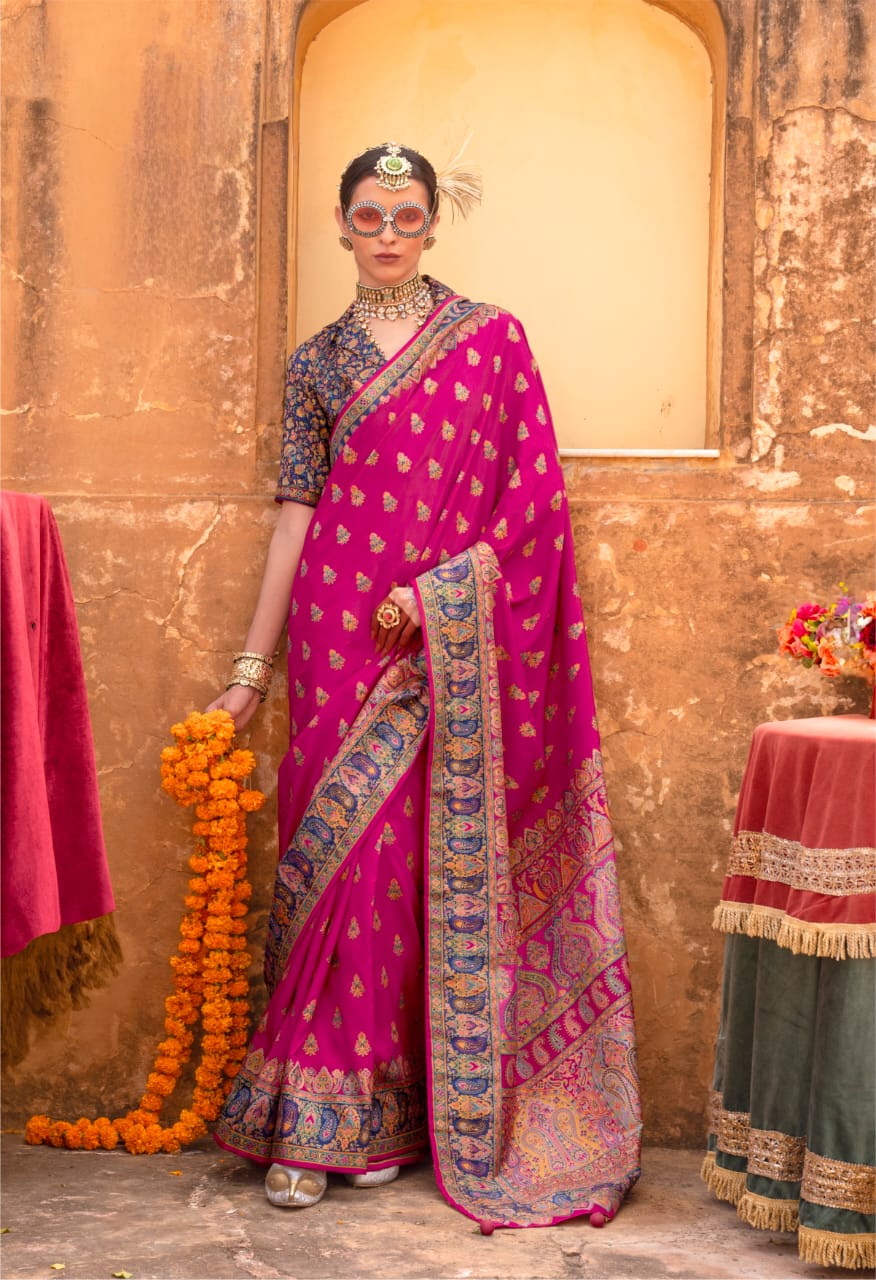
An odhni-led saree look places emphasis on a decorated veil or shoulder covering, even when the main saree is comparatively simple. Pin the odhni at the shoulder and secure the head section with discreet pins if stable coverage is needed during a ceremony. A narrow waist belt can prevent slipping without hiding the saree pleats.
18. Kota Doria-inspired saree
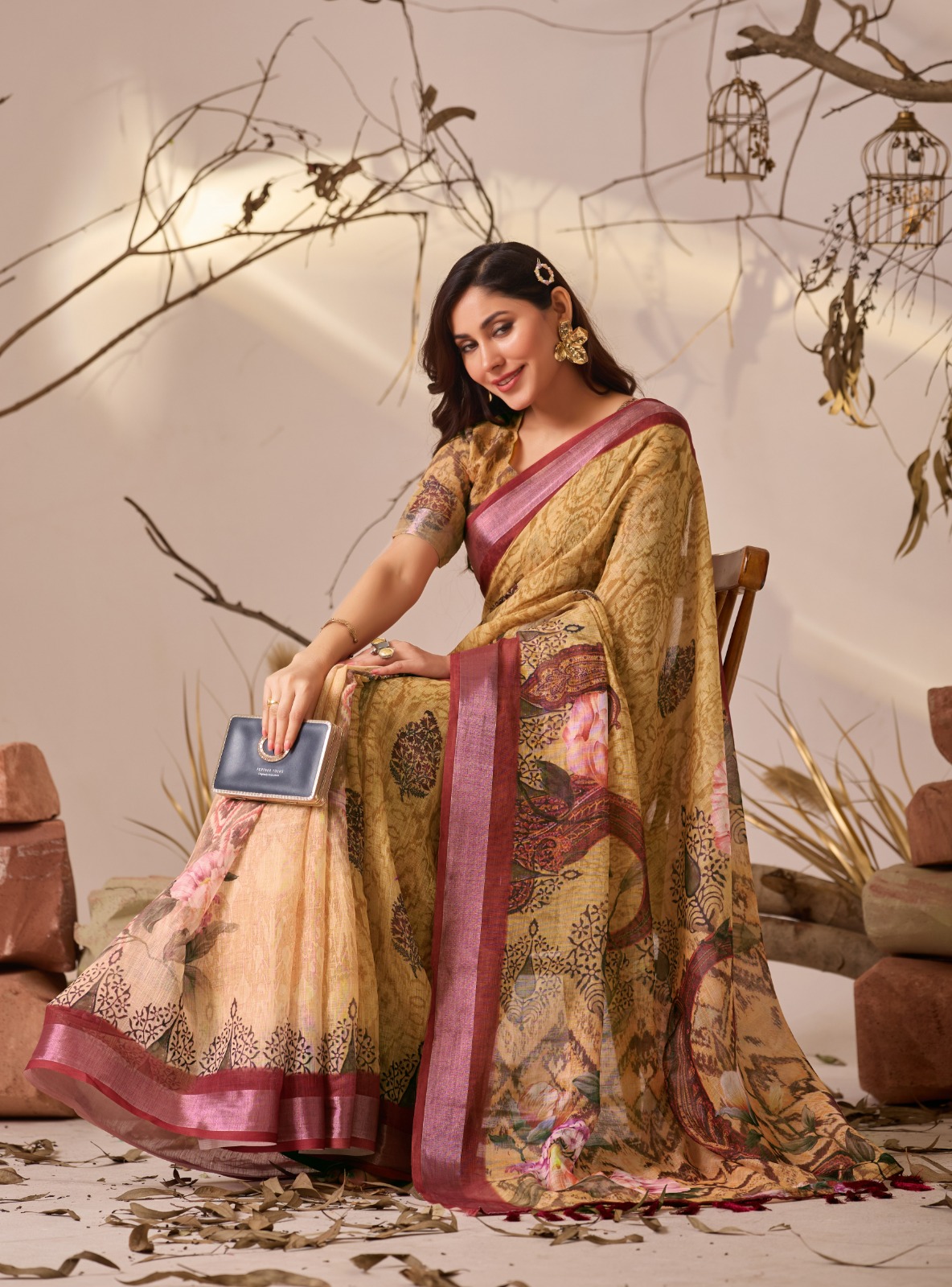
A Kota Doria-inspired saree uses a light, airy texture and a small checked appearance associated with Kota's textile tradition. The fabric is suitable for summer functions because it feels less dense than silk or heavily embroidered textiles. Pair the saree with a structured blouse so the delicate drape doesn't make the outfit look unfinished.
19. Contemporary silk lehenga
A contemporary silk lehenga keeps the traditional flare but uses a smoother, more formal surface and cleaner blouse construction. Designer Threadwork Silk Lehenga Choli Set with Dupatta shows how threadwork can provide detail without relying entirely on reflective embellishment. Silk blends are often easier to wear for long periods than very heavy pure-silk ensembles, but the fibre content should be checked on the product label.
20. Ready-made and semi-stitched lehenga
A ready-made lehenga arrives with the main measurements completed, whereas a semi-stitched lehenga leaves selected seams or panels open for custom alteration. Ready Made Lehenga options are useful when the event is close and measurements are stable. Semi Stitched Lehengas Collection offers more fitting flexibility, but tailoring time, alteration charges and final hem length must be included in the purchase plan.
Rajasthani Fashion Guide: 20 Traditional Saree and Lehenga Styles for each occasion
A daytime family function usually benefits from a printed lehenga, leheriya saree, Kota Doria-inspired saree or light bandhej set. These options use colour and pattern without the heat and weight of dense metallic embroidery. A yellow or green outfit works particularly well for a Haldi ceremony or mehendi gathering.
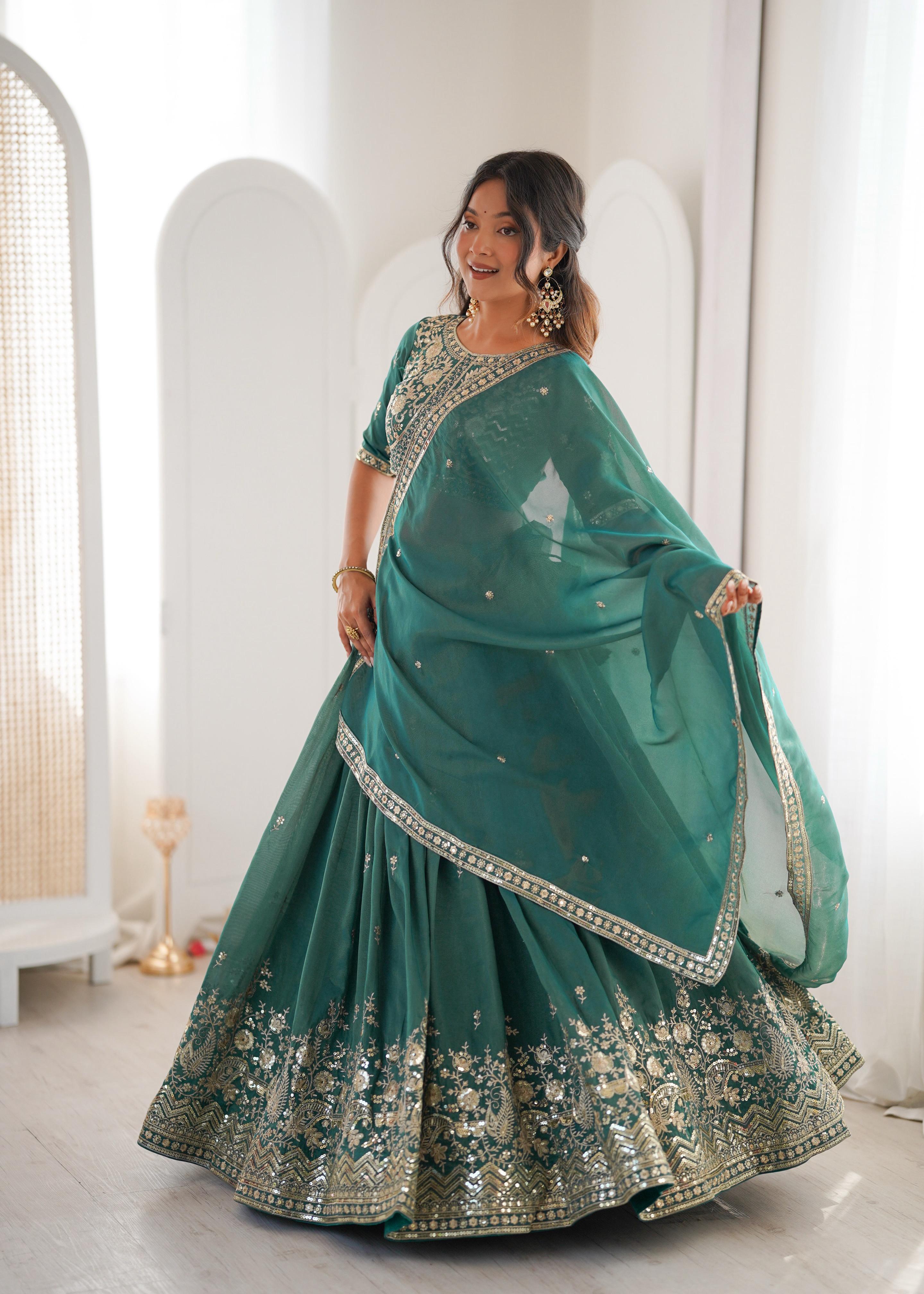
A sangeet or Navratri event calls for movement, secure construction and visible surface detail. A mirror-work lehenga, multicolour chaniya choli or gota patti skirt can meet those requirements. Check the waist fastening, inner lining and hem before wearing the outfit for several hours of dancing.
A wedding ceremony generally calls for a more formal fabric, a substantial dupatta and a controlled colour story. Banarasi silk, silk blends, zari borders, threadwork and carefully placed embroidery can create formality, although not every Rajasthani outfit uses Banarasi silk. A red bridal ghagra or contemporary silk lehenga is more appropriate for the main ceremony than a very casual cotton print.
Bridal dressing deserves a separate fitting schedule. Order or begin tailoring at least three to four weeks before the wedding when possible, and allow additional time if the choli needs cup insertion, sleeve changes, neckline alterations or a major waist adjustment. A young girls' lehenga should also be checked for scratchy sequins, loose cords and a length that doesn't create a tripping hazard.
Rajasthani Fashion Guide: 20 Traditional Saree and Lehenga Styles and fabric choices
Fabric determines comfort, fall, durability and the amount of structure a lehenga can make. Georgette drapes softly and suits flowing dupattas, but a georgette skirt may require a lining to prevent transparency. Silk and silk blends create a formal sheen and support threadwork, zari and structured pleats. Butter silk can provide a sleek, fluid finish, while cotton and cotton blends are useful for lighter daytime garments.
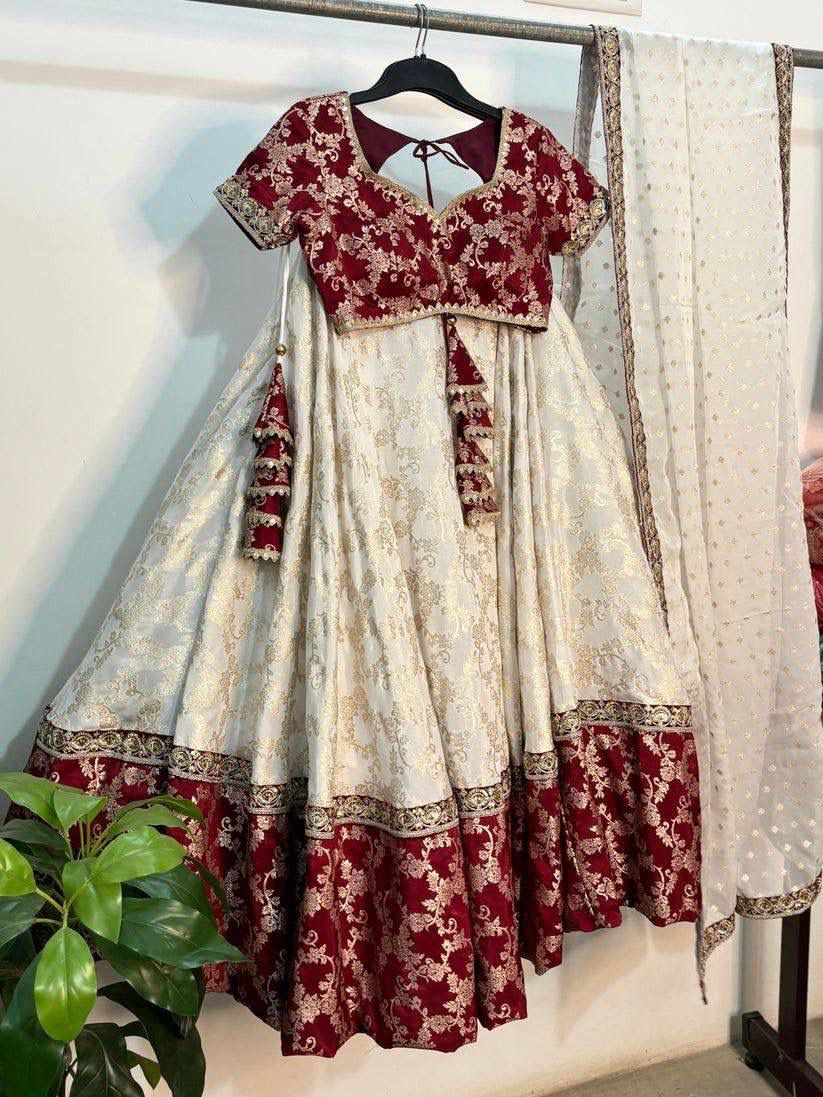
Chanderi has a light, slightly sheer character and works well when an outfit needs elegance without bulk. Kanjeevaram is a South Indian silk tradition rather than a Rajasthani textile, so it should not be presented as a native Rajasthani fabric. Clear textile descriptions matter when shopping for designer or bridal clothing because terms such as silk, silk blend, Patola-inspired and Banarasi silk can describe different construction methods.
Embroidery weight should be measured against the event duration. A lehenga with dense zari, sequins or mirror work may look excellent in photographs but become tiring after four hours. A practical compromise is heavier work on the hem and blouse with a lighter skirt body, or a richly decorated dupatta over a simpler lehenga.
Rajasthani Fashion Guide: 20 Traditional Saree and Lehenga Styles for online shopping
Online lehenga shopping becomes safer when the buyer checks garment measurements instead of relying only on a general size label. Compare bust, waist, hip and skirt length with a well-fitting garment. A fully stitched choli requires more accurate bust and shoulder measurements than a semi-stitched blouse, while a drawstring or elastic waistband can provide limited flexibility in a ready-made skirt.
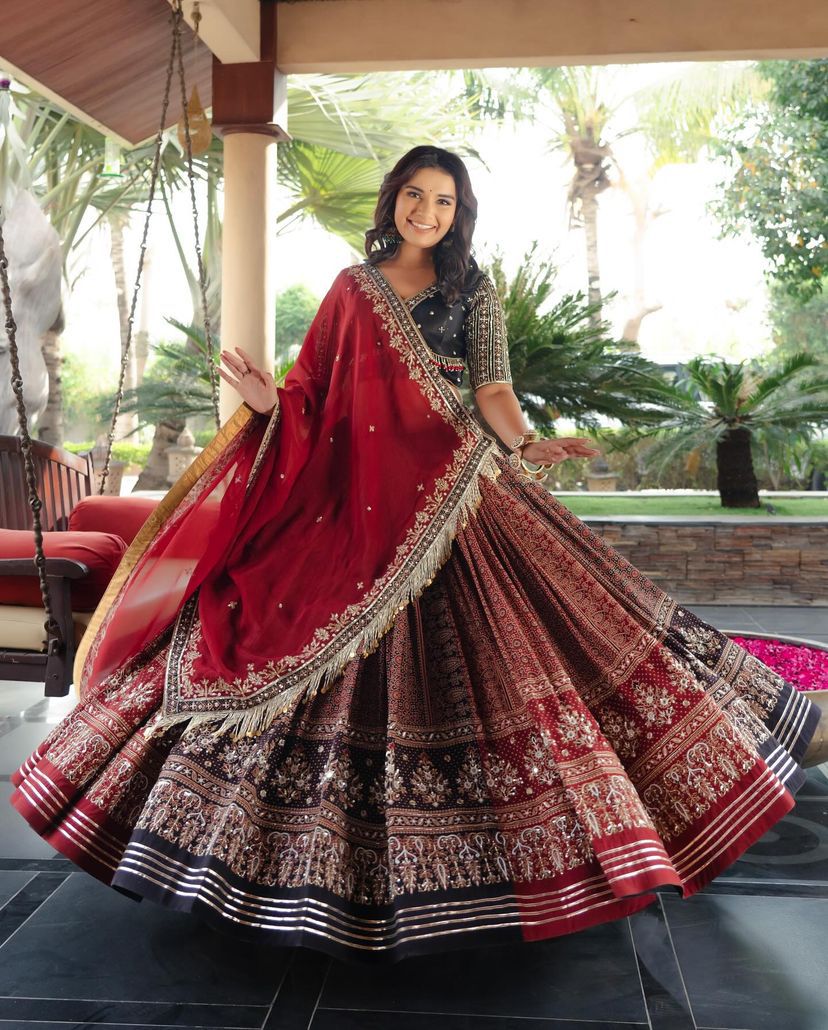
Fully stitched choli shopping is convenient when the event is soon, but convenience doesn't replace measurement accuracy. Read the product information for lining, closure type, padding, sleeve length, fabric composition, dupatta size and washing instructions. Ask whether the stated waist measurement is the garment measurement or the body measurement, because the difference can be several centimetres.
Readymade clothing is the faster choice for a fixed event date, while semi-stitched clothing is better when a tailor is available and the body measurements are between standard sizes. A designer lehenga may also require specialist alterations if the waist, flare, border or embroidery placement needs to be preserved. Keep the original hem allowance until the footwear height has been finalised.
Price should be compared through construction rather than appearance alone. A lower-priced printed lehenga may be more practical for a Haldi ceremony, while a higher-priced bridal outfit may reflect lining, hand finishing, heavier trims or a more complex blouse. Confirm what is included: some listings contain the choli and dupatta, while others price the skirt separately.
Rajasthani Fashion Guide: 20 Traditional Saree and Lehenga Styles and styling details
Jewellery should repeat one element of the outfit instead of competing with every colour. Kundan, polki, silver oxidised jewellery, lac bangles and meenakari pieces can all work, but the right choice depends on the textile and occasion. Mirror work often pairs well with silver-toned accessories, while zari and gota patti can support gold or antique-finish jewellery.
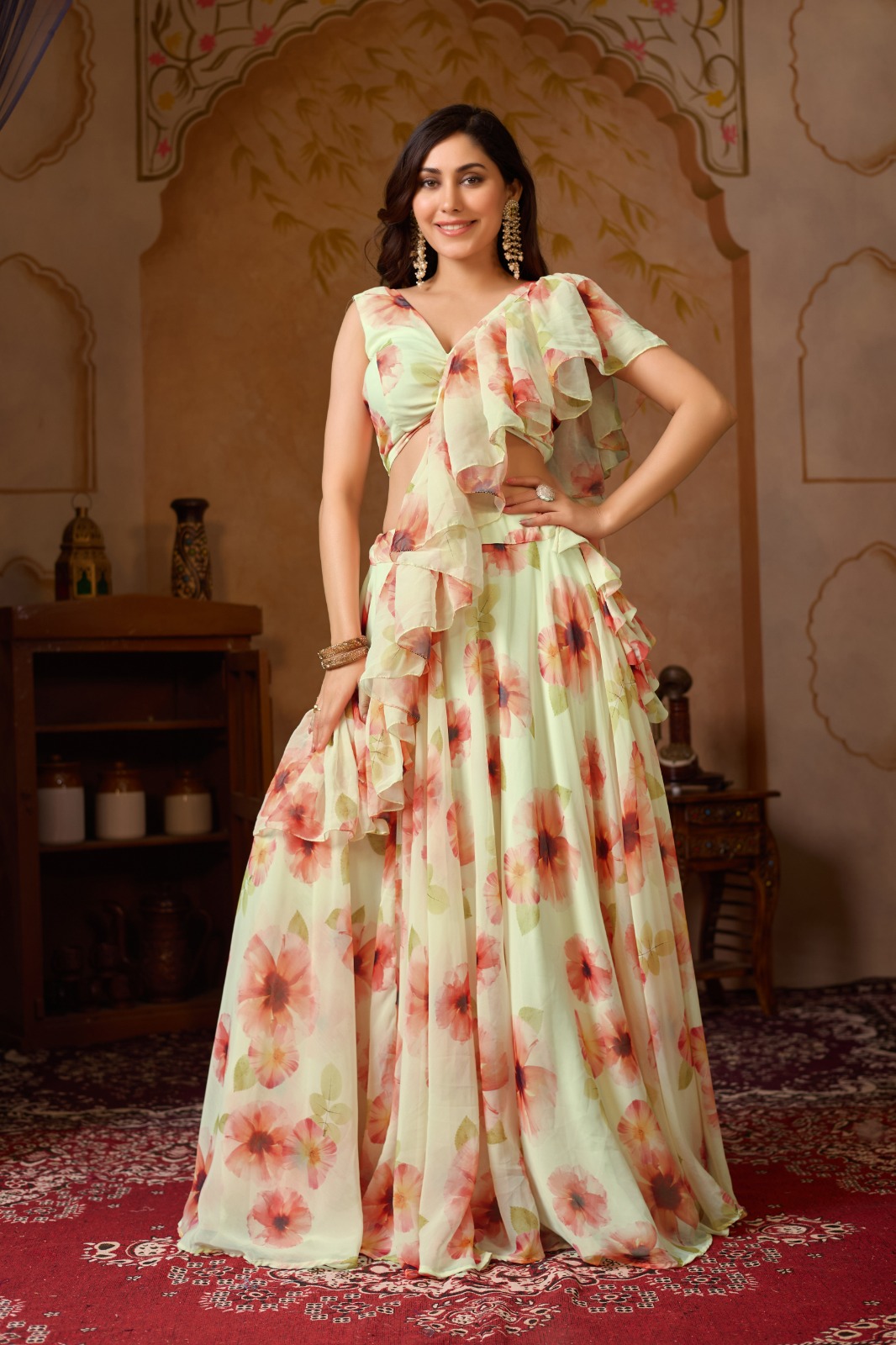
Footwear changes the final length of a lehenga. Measure the skirt with the sandals or heels intended for the event and leave enough clearance for walking. A lehenga hem that brushes the floor may collect dirt, catch on stairs and become difficult to manage during dancing.
Dupatta placement can change the perceived shape of the outfit. A shoulder drape creates a longer vertical line, a front drape displays the border, and a head covering creates a more traditional bridal impression. Use small safety pins beneath the border and avoid pinning directly through delicate zari or mirror work.
Hair and makeup can also balance a colourful Rajasthani outfit. A low bun, braid or pinned-up style keeps an odhni secure, while a simple hairstyle allows an ornate blouse or dupatta to remain visible. For a bright multicolour lehenga, choose one dominant makeup accent rather than matching every shade in the skirt.
Rajasthani Fashion Guide: 20 Traditional Saree and Lehenga Styles and care advice
Care depends on the fibre and embellishment, so the safest first step is to follow the garment label. Dry-clean heavily embroidered silk, zari or mirror-work garments unless the maker specifically permits another method. Fold the lehenga with acid-free tissue or a clean cotton cloth between embellished layers to prevent metallic surfaces from rubbing.
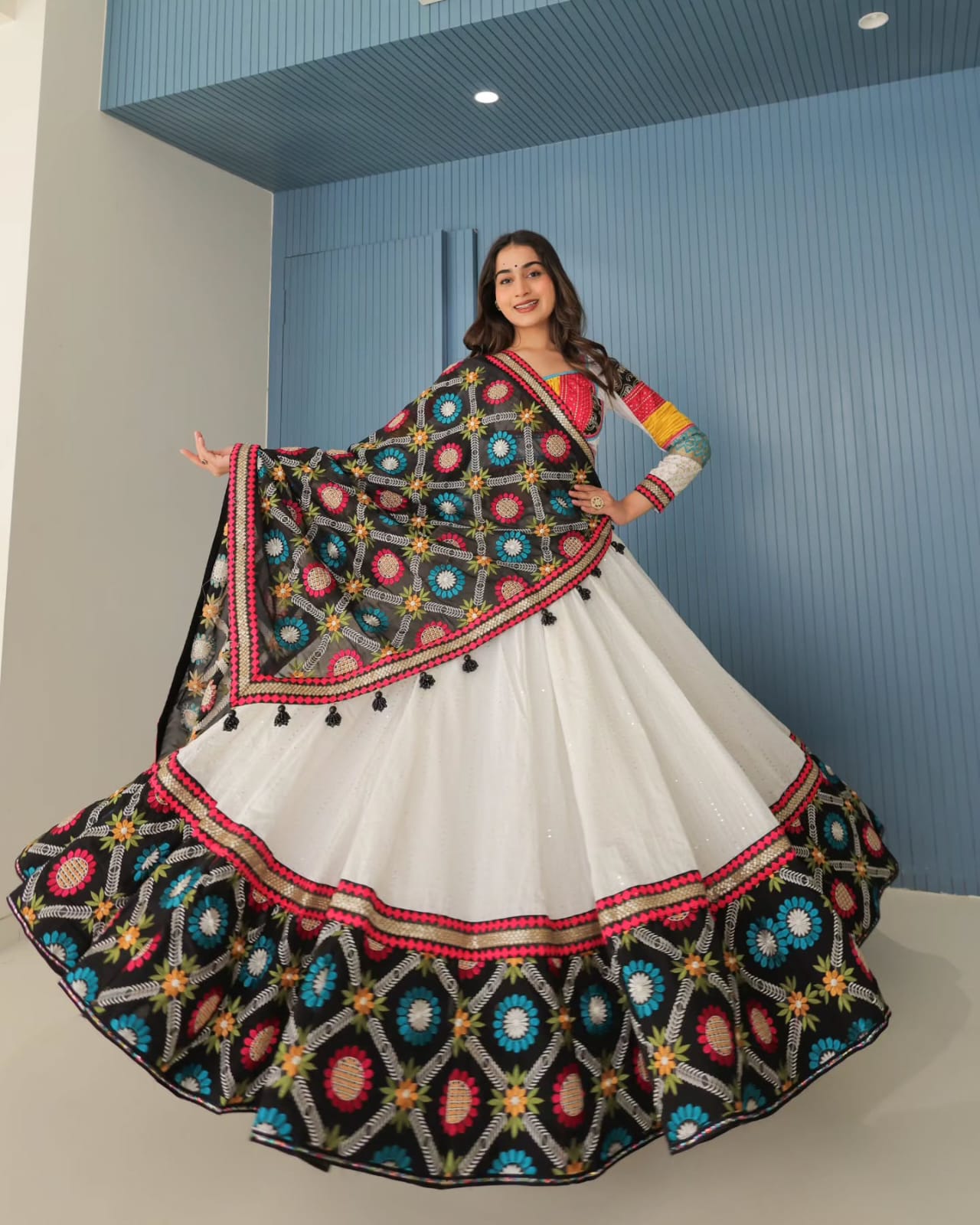
Store a completely dry outfit away from direct sunlight and damp wardrobes. Do not leave a sweat-damp blouse or dupatta sealed in plastic after a wedding. Air the pieces in shade, remove surface dust gently and use breathable fabric storage for longer periods.
Minor repairs should be handled before the next event. Loose hooks, missing mirrors, open seams and detached gota become more expensive to repair if they're ignored. Keep spare tassels, hooks and a small matching thread kit with the outfit when travelling.
A thoughtful wardrobe can include one heavily embellished bridal or evening lehenga, one printed daytime style, one comfortable festive outfit and one versatile saree or odhni-led set. That combination covers wedding, shopping, festival and family-event needs without treating every occasion as a reason to buy the same silhouette.
Common Questions About Rajasthani Saree and Lehenga Styles
What is the traditional Rajasthani lehenga called?
The traditional Rajasthani skirt is commonly called a ghagra, and it is worn with a choli or kanchali and an odhni. The exact silhouette, fabric and decoration vary by region and occasion.
Which Rajasthani outfit is suitable for a Haldi ceremony?
A yellow, mustard or marigold lehenga with light embroidery or printed detail is suitable for a Haldi ceremony. Choose a washable or easy-care fabric and avoid delicate heavy zari if turmeric and outdoor activities are expected.
What is the difference between bandhej and leheriya?
Bandhej creates dotted or clustered patterns through tied resist dyeing, while leheriya creates diagonal wave stripes through a different tying arrangement. Both are associated with colourful western Indian textiles and can appear on sarees, odhnis and lehengas.
Should I buy a ready-made or semi-stitched lehenga?
Buy a ready-made lehenga when the event is close and your measurements fit the listed garment dimensions. Choose a semi-stitched lehenga when you have a reliable tailor and need more control over the waist, blouse or skirt length.
How can I choose a Rajasthani lehenga for a wedding?
Choose the fabric, embellishment weight and colour according to your role and ceremony duration. Bridal or main-ceremony outfits can use silk, zari, threadwork or a substantial dupatta, while guests may prefer a lighter printed, gota patti or mirror-work design.
How should a mirror-work or zari lehenga be stored?
Store the completely dry lehenga in breathable fabric with clean tissue or cotton separating embellished layers. Keep mirror work and zari away from friction, moisture and direct sunlight, and use professional dry-cleaning when the care label recommends it.