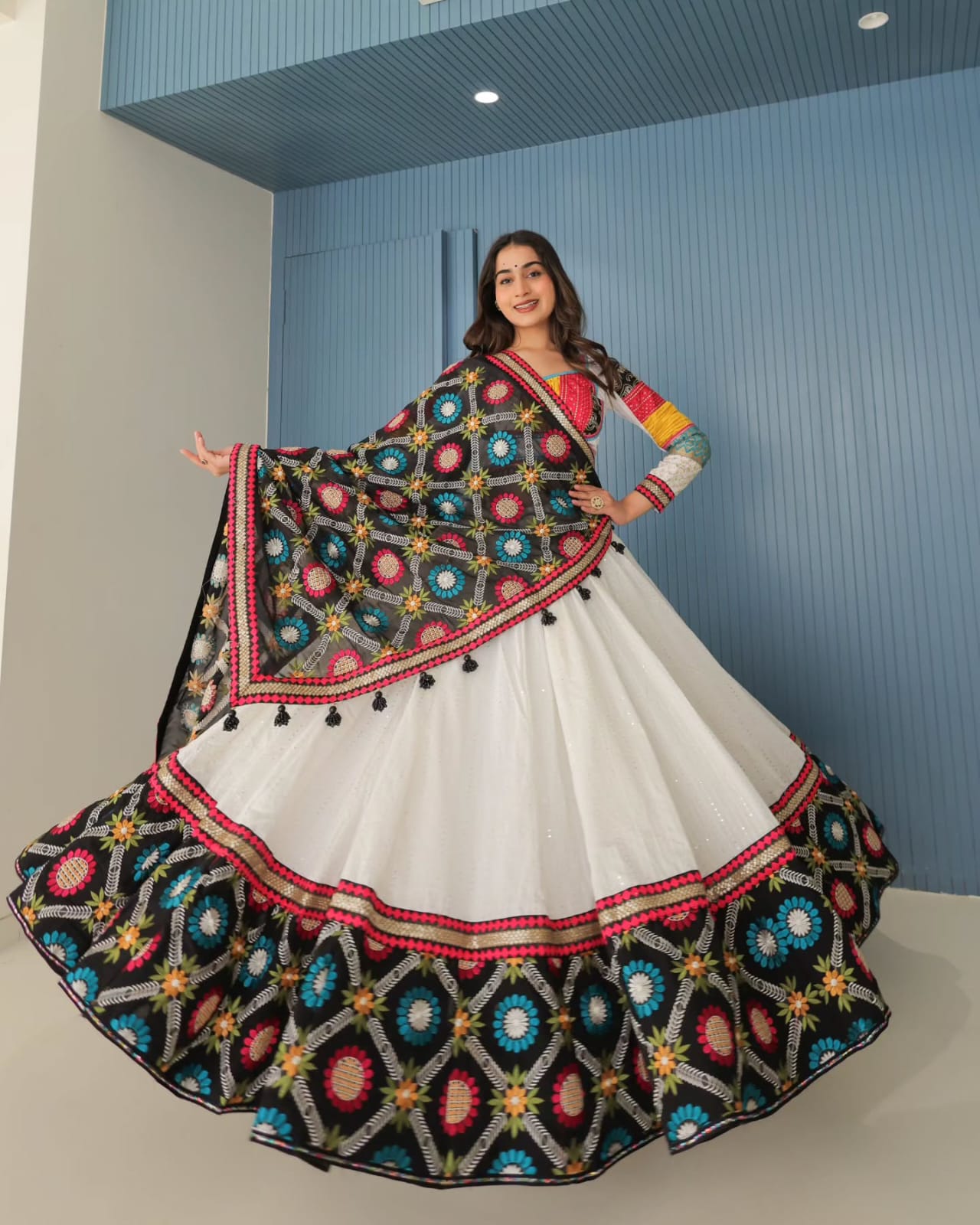
Rajasthan Traditional Dress for Women brings together the visual language of desert life, regional craft and ceremonial dressing. The familiar ghagra-choli with an odhni remains the strongest traditional reference, while sarees and salwar suits offer practical choices for modern wardrobes. The right outfit depends on the event, the weight of the fabric, the amount of movement required and how closely you want to follow regional styling.
An useful distinction comes first: a Rajasthani ghagra is a flared skirt, a choli is the fitted or semi-fitted blouse, and an odhni is the long veil or dupatta worn over the head or shoulders. A salwar suit keeps the kurta-and-bottom structure but can borrow Rajasthani colours, prints, embroidery and dupatta drapes. A saree can also feel Rajasthan-inspired when its palette, border, jewellery and drape are chosen with care.
What does Rajasthan Traditional Dress for Women include?
Rajasthan Traditional Dress for Women includes the ghagra, choli and odhni as its most recognisable traditional combination, along with regional sarees and contemporary adaptations such as salwar suits. The garments vary across communities, districts, age groups, occupations and ceremonies, so there's no single outfit that represents every woman in Rajasthan.
The ghagra provides a broad, flowing silhouette, while the choli shapes the upper body. The odhni adds coverage, colour and movement, and may be draped over the head, across both shoulders or over one shoulder. Decorative details can include gota-style borders, mirror accents, tie-dye patterns, embroidery and woven trims.
Rajasthani clothing is also shaped by climate and daily activity. Lightweight fabrics and loose silhouettes are useful in hot weather, whereas heavier textiles and dense embellishment are more appropriate for winter evenings or short-duration celebrations. Contemporary ready-to-wear pieces interpret these traditions rather than reproducing every detail of historic dress.
Which garments form the traditional foundation?
The traditional foundation is the ghagra, choli and odhni, worn together in a coordinated layered look. The ghagra supplies volume, the choli creates definition and the odhni connects the outfit through colour and pattern.
A ghagra's flare creates strong movement in a wedding procession or dance setting, but the same volume can become inconvenient when travelling, sitting for long periods or using public transport. A salwar suit or palazzo suit can provide related colour and craft references with less fabric around the legs. That practical difference matters when selecting clothing for a full-day celebration.
How does Rajasthan Traditional Dress for Women differ between a saree, lehenga and salwar suit?
A lehenga offers the most traditional volume, a saree creates an elegant draped line, and a salwar suit gives the easiest movement and repeat wear. The best option depends on formality, venue, weather, personal comfort and the amount of time spent sitting or walking.
- Lehenga or ghagra-choli: Choose a flared skirt and choli for a wedding, sangeet, folk celebration or cultural event where a visibly festive silhouette is appropriate. Check the waistband, lining and hem because a heavily layered skirt can become uncomfortable after several hours.
- Saree: Choose a saree when you want an adjustable drape and a long vertical line. A lightweight Chanderi saree, silk blend saree or printed cotton saree can be easier to manage than a heavily embroidered bridal saree.
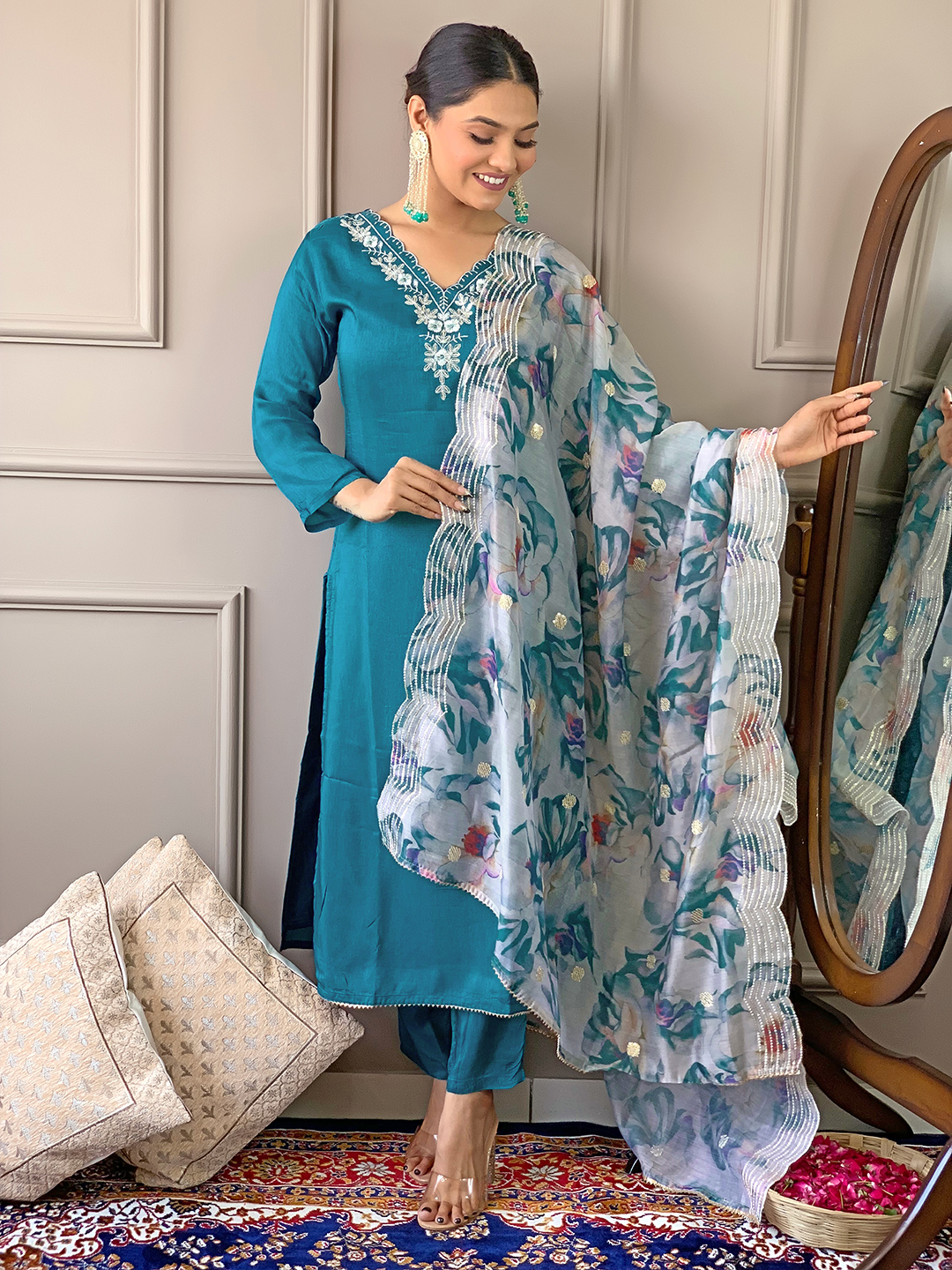
- Salwar suit: Choose a salwar suit when sitting, walking and travelling are priorities. A straight kurta with pants gives a clean everyday line, an Anarkali creates movement and a palazzo suit gives greater ease around the legs.
The three silhouettes also photograph differently. A lehenga creates a strong circular shape in full-length images, while a saree shows the fall of the pallu and border. A salwar suit photographs well when the kurta length, dupatta placement and bottom width are balanced rather than hidden beneath excessive fabric.
Which fabrics suit Rajasthan Traditional Dress for Women?
Lightweight cotton, Chanderi, silk blends and breathable woven fabrics suit Rajasthan-inspired dressing because they balance colour, movement and warm-weather comfort. Heavier brocade, velvet or dense embroidery is better reserved for cooler evenings and shorter functions.
Fabrics for daytime and everyday wear
Cotton and cotton blends are practical for daily wear, daytime gatherings and travel. These fabrics allow air circulation and generally need less careful handling than delicate embellished textiles. Printed cotton can bring a regional mood through motif and colour without making the garment appear ceremonial.
Chanderi has a light hand and subtle sheen, which makes it useful for festive daytime dressing. Rani Pink Chanderi Embroidered Kurta Set Dupatta demonstrates how vivid colour and controlled surface work can create occasion presence without the weight of a bridal ensemble. Rani Pink Floral Woven Chanderi Kurti Set Women brings another lighter coordinated option for lunch, a puja or a family visit.
Fabrics for evening celebrations
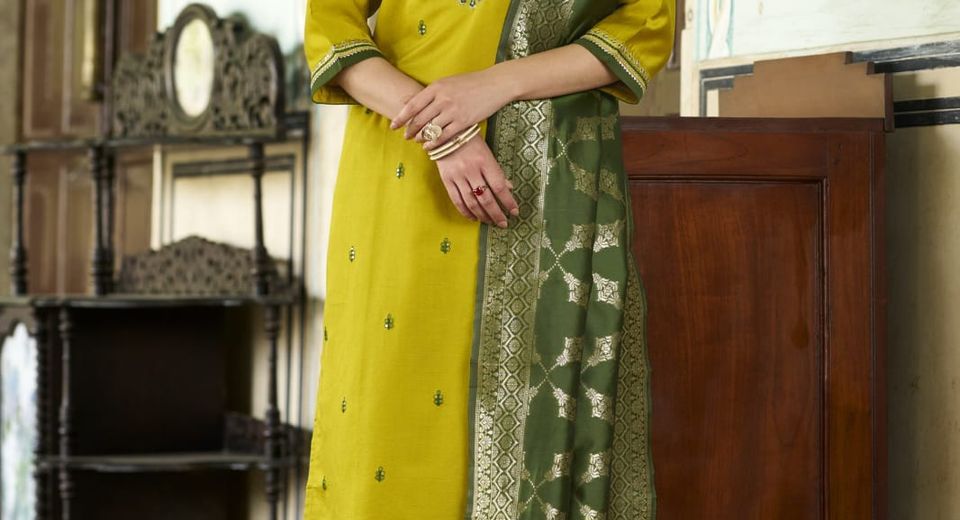
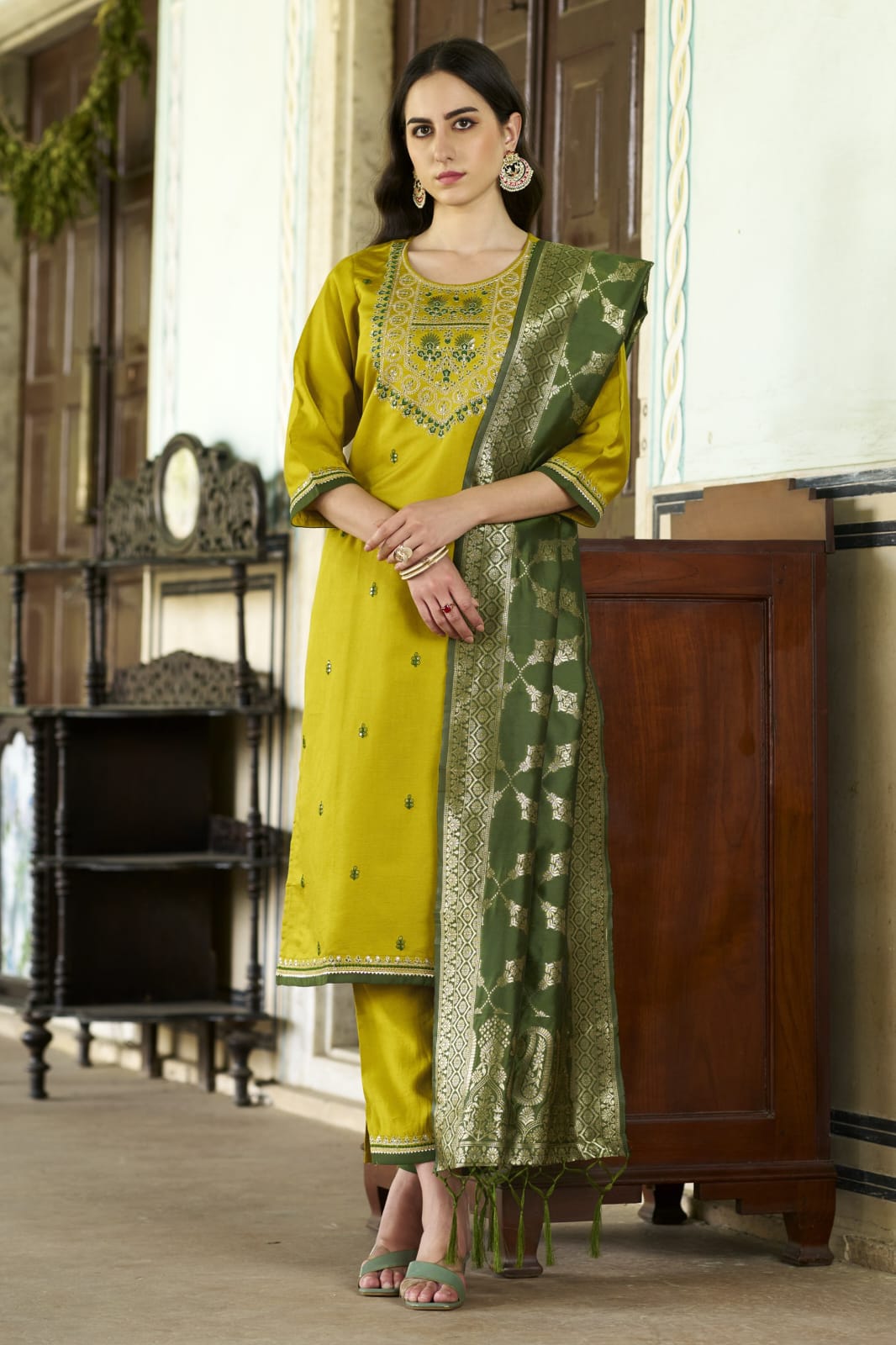
Silk blends add lustre and structure, making them suitable for evening dinners, receptions and festive ceremonies. Women's Mustard Silk Blend Kurta Set with Dupatta uses mustard as a warm focal colour that can be paired with antique gold, maroon or deep green accessories.
Embroidery should be assessed by placement as well as quantity. Threadwork around the neckline and sleeve can frame the face, while a decorated hem adds interest when the dupatta is worn over one shoulder. Red Chanderi Threadwork Suit Set for Women shows how red and delicate threadwork can provide ceremonial impact while retaining a comparatively light fabric impression.
How do colours and prints shape Rajasthan Traditional Dress for Women?
Colour contrast, lively pattern and one or two recognisable craft references create a Rajasthani mood more effectively than wearing every traditional motif at once. A saturated base colour, a contrasting dupatta and controlled jewellery usually look more polished than multiple competing embellishments.
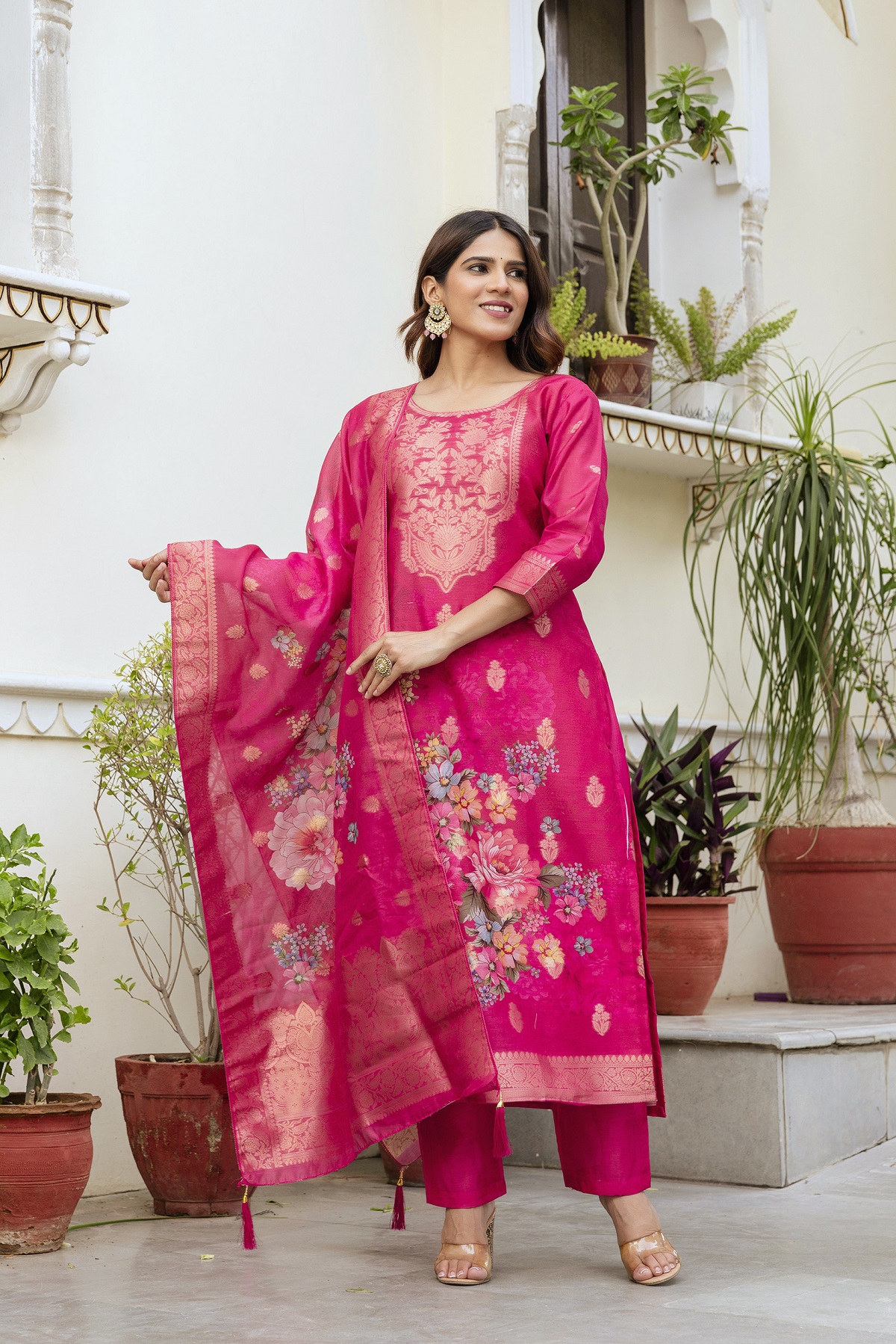
Fuchsia, rani pink, kesariya orange, mustard, red, emerald and royal blue are strongly associated with Rajasthan's vivid visual identity. Earthy brown, indigo, ivory and muted green are also useful when you want a quieter interpretation. The strongest combinations often place a bright shade beside a neutral or a darker contrasting tone.
Bandhej, also called bandhani in many contexts, is associated with resist-tied dot patterns. Leheriya uses flowing wave-like stripes and is recognised for its rippling visual effect. Kalamkari is a painted or printed textile tradition with its own regional history, so Kalamkari should not be labelled Rajasthani simply because its colours suit a Rajasthani palette.
For an easy colour formula, begin with one saturated shade such as rani pink, mustard, red or orange. Add a neutral, antique gold or deep green through the dupatta, footwear or jewellery. Women's Mustard Printed Anarkali Suit with Dupatta shows how a single warm base can carry a print while keeping the overall outfit coherent.
Regional references should also be named accurately. Gujarat Bandhej Salwar Suits are useful when you want tied-dot colour movement, while Kalamkari Print Salwar Suits (Copy) bring a more narrative printed surface. Maharashtra Paithani Inspired Salwar Suits and Odisha Sambalpuri Salwar Suits offer different textile references and should be styled as those traditions rather than presented as Rajasthani garments.
How can Rajasthan Traditional Dress for Women be adapted into salwar suits?
A salwar suit can look Rajasthan-inspired through its palette, dupatta, jewellery and finishing details even when its cut is contemporary. Keeping the silhouette comfortable and using accessories to establish the regional mood is usually more effective than adding heavy decoration to every garment.
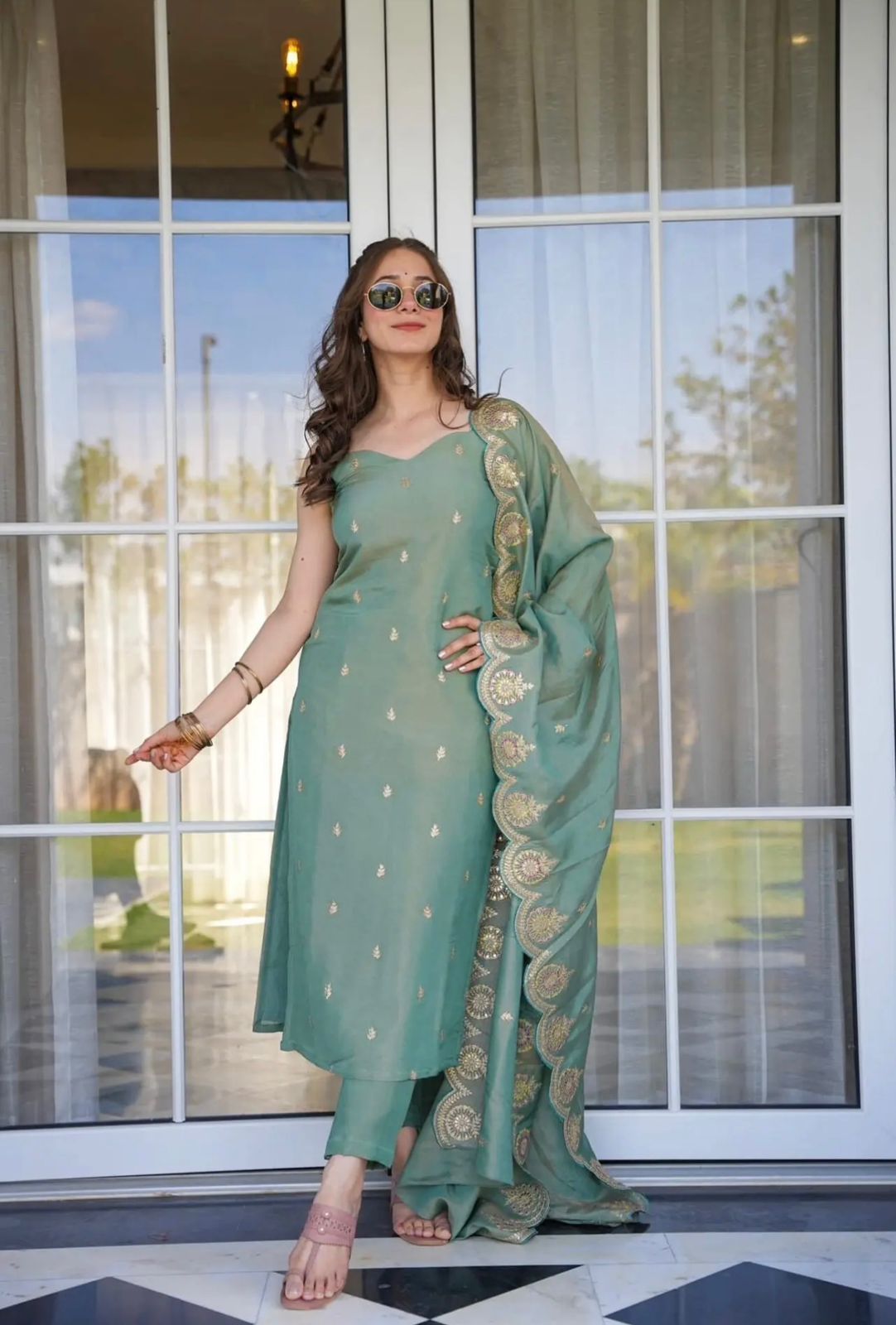
A straight kurta with cigarette pants suits office-friendly festive dressing and smaller family events. An Anarkali adds swing and works well for evening functions, but the hem should clear the floor enough to prevent catching under footwear. A palazzo suit creates a softer, wider lower silhouette that echoes the visual generosity of a ghagra without duplicating it.
Embroidered Salwar Suit Set for Women illustrates a more formal three-piece direction. The dupatta can be worn across both shoulders for a traditional frame, gathered over one shoulder for photographs or loosely draped around the elbows for a relaxed gathering.
Gajri Embroidered Kurti Pant Dupatta Set Women gives a softer colour route for a daytime celebration. Pair a muted or dusty tone with oxidised silver jewellery, tan sandals and a small potli-inspired bag. The styling remains festive while avoiding the visual weight of a full lehenga.
For a contemporary event, a cropped top and jacket with palazzo trousers can replace the conventional kurta. Women's Embroidered Crop Top & Jacket Palazzo Set | Varnavi uses the jacket as a second vertical layer and the palazzo as a comfortable option for walking and dancing. Jhumkas, a bindi and a contrasting dupatta can make the outfit more traditionally legible.
Punjab Patiala Salwar Suits offer another useful comparison. Patiala trousers have a gathered, pleated volume associated with Punjabi styling, whereas Rajasthani-inspired salwar suits may use a straighter pant, palazzo or Anarkali bottom. Both can be worn in vibrant colours, but their silhouettes should not be described as interchangeable.
Which dupatta drapes and accessories complete Rajasthan Traditional Dress for Women?
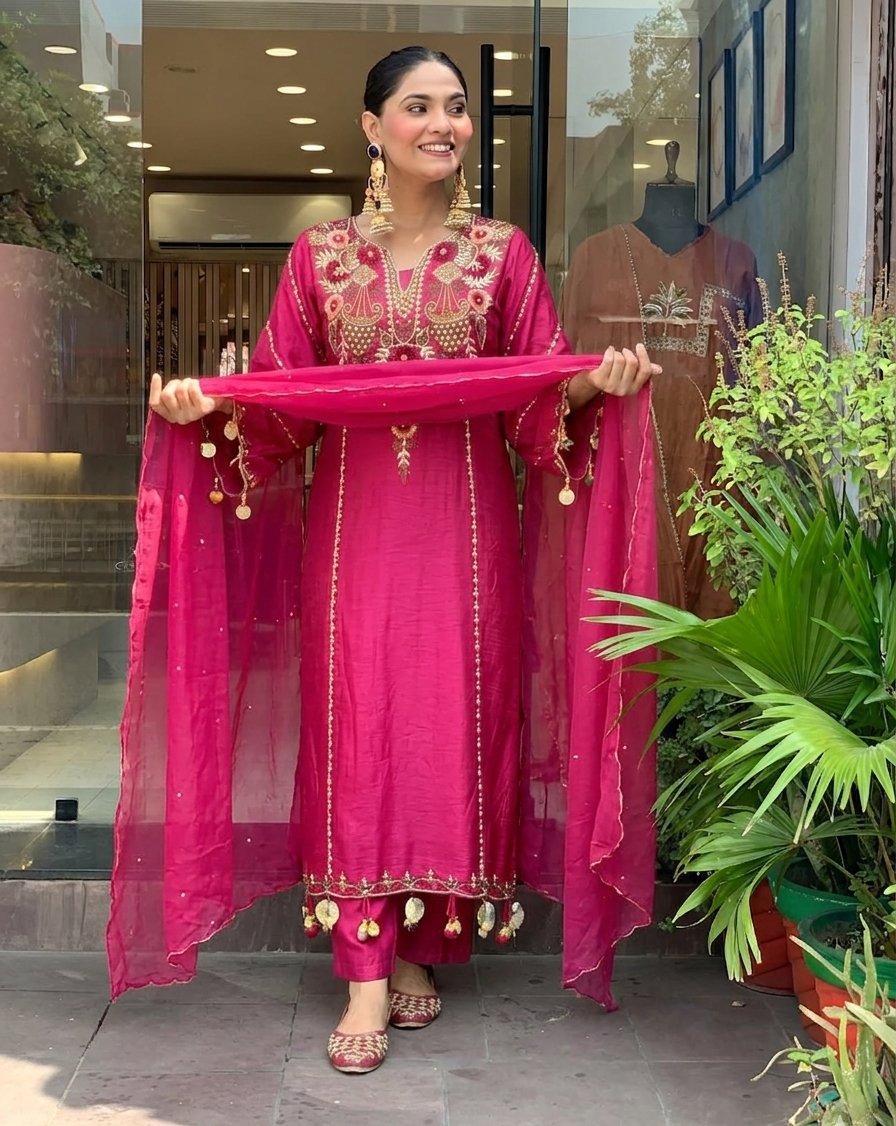
The most useful dupatta drapes are the two-shoulder frame, the single-shoulder pallu and the head-covering drape, selected according to comfort and formality. A secure drape is more important than a complicated one, especially during ceremonies involving standing, greeting guests or moving between indoor and outdoor spaces.
Practical dupatta placement
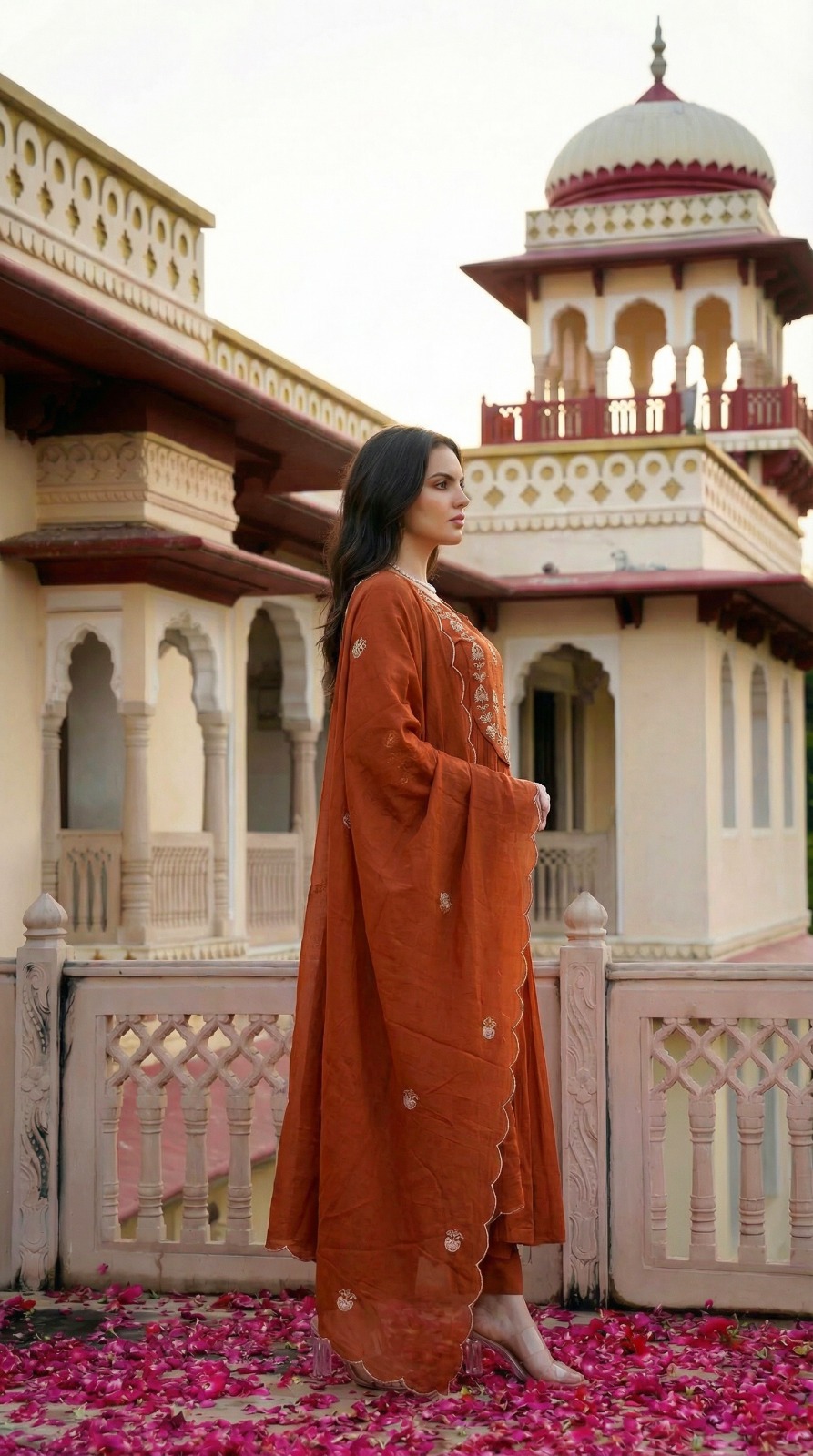
The two-shoulder drape frames the kurta and works well for formal photographs. Secure the dupatta at both shoulders with discreet pins, keeping enough looseness around the elbows to allow natural movement. The single-shoulder drape creates a longer vertical line and lets embroidery on the kurta remain visible.
A head-covering drape is appropriate when personal, family or religious customs call for it. Choose a lighter dupatta for this purpose because dense embellishment can create pressure around the hairline and become warm over several hours. A narrow border can remain visible without requiring the entire fabric to sit tightly on the head.
Jewellery, footwear and bags
Oxidised silver jewellery creates a strong folk-inspired effect, while antique gold works well with mustard, red, rust and deep green. Jhumkas, chandbalis, layered necklaces, lac bangles and a single statement ring can establish the mood without overwhelming embroidered clothing.
Choose jewellery according to the neckline and embroidery placement. A high or decorated neckline usually needs smaller earrings and no large necklace, while a simple neckline can support a longer pendant or layered necklace. Match the scale of the jewellery to the event rather than wearing every accessory at once.
Juttis, mojaris and low block heels are practical footwear choices for lehengas and salwar suits. A block heel of 2 to 3 inches can add height without the instability of a narrow stiletto. Tan, gold, maroon and embroidered footwear are easier to repeat than a shoe matched to only one outfit.
A potli bag suits a wedding or festive ceremony, but a small crossbody or structured clutch is more practical when you need a phone, cards and keys. Keep the bag's embellishment quieter when the dupatta or kurta already contains dense embroidery.
How should Rajasthan Traditional Dress for Women be chosen for each occasion?
Choose a lightweight salwar suit or printed saree for daytime events, a silk blend or embroidered suit for evening gatherings, and a lehenga or heavily embellished outfit for major wedding ceremonies. Occasion, duration and weather should guide the decision more than trend alone.
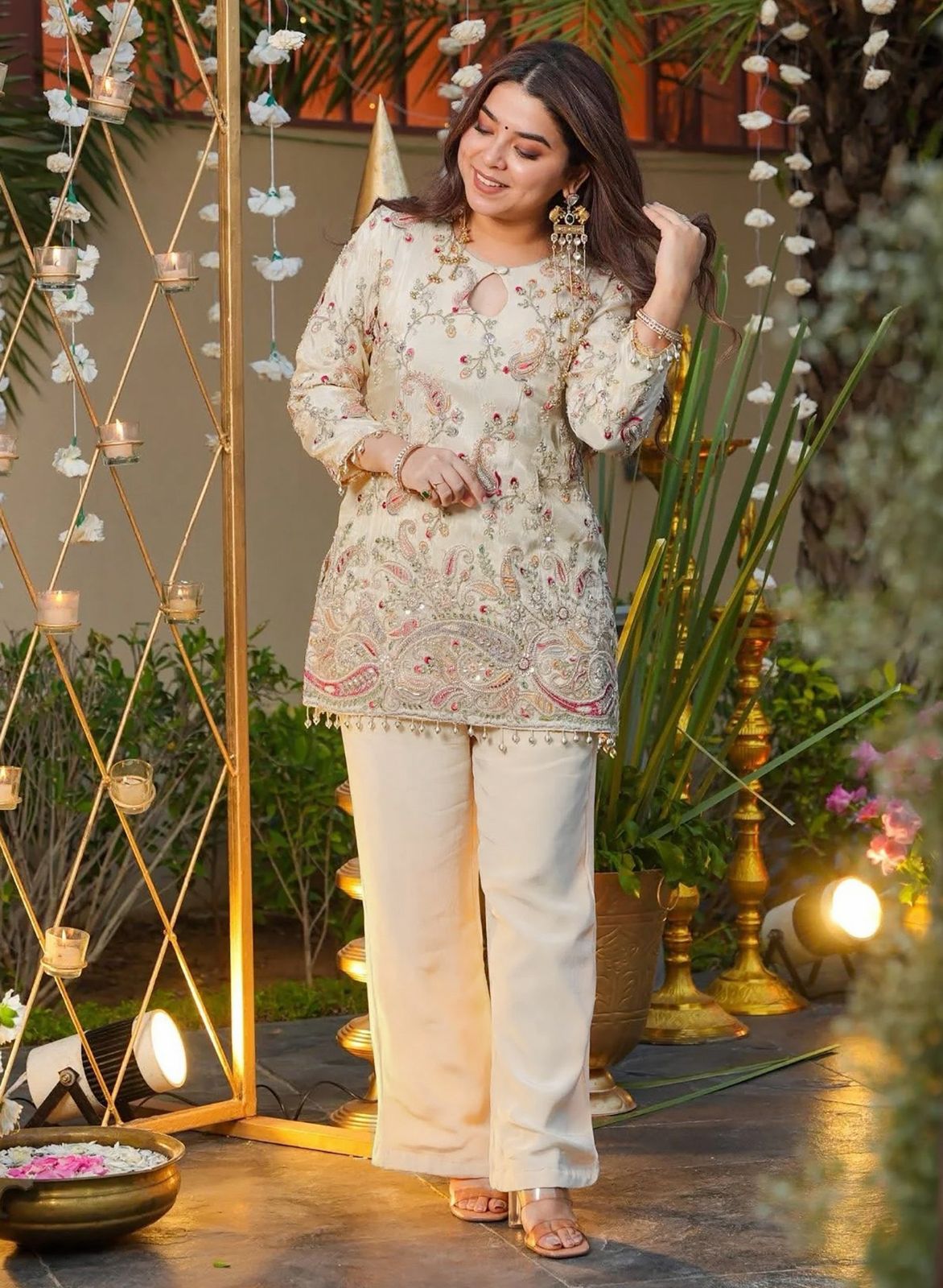
- Haldi ceremony: Choose yellow, mustard, marigold, green or pink in cotton, Chanderi or a light blend. Avoid floor-length hems that can drag through turmeric and water. A washable or easily spot-cleaned dupatta is a practical advantage.
- Mehendi or sangeet: Choose an Anarkali, palazzo suit or lighter lehenga that permits sitting and dancing. Keep sleeves and dupatta placement secure so they don't interfere with movement.
- Wedding ceremony: Choose a more structured lehenga, silk blend suit or richly bordered saree. Add one focal jewellery piece instead of combining a large necklace, oversized earrings and a heavily embroidered dupatta.
- Family lunch or puja: Choose Chanderi, cotton, a printed suit or a light saree in a clear but comfortable colour palette. Flat footwear and a compact dupatta drape make the outfit easier to wear for several hours.
- Office festive day: Choose a straight kurta set with pants, restrained embroidery and a dupatta that stays securely on one shoulder. Avoid very wide hems, trailing fabric and noisy embellishment in a professional setting.
Fit should be checked before colour. Measure the bust, waist, hip and preferred kurta length, then compare those measurements with the garment's size chart. Allow enough ease to sit comfortably, especially in silk blends and lined garments. A garment that looks beautiful but restricts the shoulders or pulls across the hips won't serve the occasion well.
How should Rajasthan Traditional Dress for Women be cared for?
Rajasthan Traditional Dress for Women should be cared for according to fibre, dye and embellishment, with cool storage and minimal exposure to moisture. Care labels should take priority, particularly for Chanderi, silk blends, embroidery and garments with metallic trims.
Air a worn garment in shade before storing it, and don't leave perspiration or perfume residue on silk blends for long periods. Fold Chanderi and embroidered suits with soft cotton or acid-free tissue between embellished layers so threadwork doesn't catch on another panel. Store garments away from direct sunlight because strong light can fade saturated pink, red, orange and mustard dyes.
Use a cool iron on the reverse side when the care label allows ironing. Place a thin cotton cloth between the iron and delicate embroidery. Avoid pressing directly over sequins, metallic trims, raised threadwork or printed surfaces.
For travel, fold the dupatta separately and place heavier garments at the bottom of the suitcase. Remove clothing soon after arrival and hang structured pieces on broad padded hangers. Professional dry cleaning is generally safer for heavily embroidered or silk-blend garments, while washable cotton pieces should still be tested for colour bleeding before a full wash.
The most successful Rajasthani-inspired wardrobe isn't built from one dramatic outfit. It combines one statement lehenga or saree with several reusable salwar suits, contrasting dupattas and accessories that can change the mood. That approach preserves the colour and craft character of Rajasthan while making traditional dressing practical for real wardrobes.
Common Questions About Rajasthan Traditional Dress for Women
What is the traditional dress of women in Rajasthan?
The traditional dress of women in Rajasthan is commonly associated with a ghagra, choli and odhni. Colours, patterns and embellishment vary by community, region, ceremony and climate, so the outfit does not look identical across the state.
Can a salwar suit be worn as Rajasthan-inspired traditional dress?
Yes, a salwar suit can be Rajasthan-inspired through vivid colour combinations, bandhej-style references, embroidery, a contrasting dupatta and folk-influenced jewellery. A salwar suit is often more practical than a ghagra for travel, long ceremonies and everyday wear.
Which fabric is best for a Rajasthani outfit in summer?
Lightweight cotton and Chanderi are strong summer choices because they are relatively breathable and less heavy than dense velvet or brocade. Silk blends can work for evening events, but they may feel warmer in direct sunlight.
What colours are commonly associated with Rajasthani women's clothing?
Rani pink, red, mustard, kesariya orange, emerald and royal blue are commonly associated with Rajasthan's vivid clothing palette. Pairing one saturated colour with a neutral, antique gold or a contrasting dark shade usually creates a balanced outfit.
How should a dupatta be draped with a Rajasthani-style salwar suit?
A dupatta can be worn across both shoulders, over one shoulder or over the head when personal or religious customs call for head coverage. Pin the fabric securely and choose a lighter dupatta for long ceremonies or warm weather.
What jewellery goes well with Rajasthan traditional clothing?
Oxidised silver jewellery, jhumkas, chandbalis, lac bangles and antique gold accessories work well with Rajasthan-inspired clothing. Select jewellery according to the neckline and embroidery so the accessories support rather than compete with the outfit.