Punjabi Wedding Fashion: Phulkari Lehengas, Suits & Sarees for Guests requires more thought than selecting the brightest outfit in the wardrobe. Punjabi weddings often move from an intimate roka or engagement to a lively mehendi and Haldi ceremony, followed by a formal Anand Karaj and an energetic reception. Each setting changes the practical demands on clothing, from sitting comfortably on the floor to dancing for several hours. A successful guest wardrobe balances Phulkari's vivid embroidery with breathable fabric, suitable coverage, secure draping and colours that complement rather than compete with the wedding party.
Phulkari means "flower work" in Punjabi, but traditional Phulkari is more specific than any garment decorated with a floral print. Classic Phulkari uses counted darning stitches worked with untwisted silk floss, traditionally called pat, on a handwoven cotton base such as khaddar. The reverse side shows small, disciplined stitches, while the front develops dense geometric or floral surfaces. Contemporary Phulkari may appear on georgette, silk, satin, organza or blended fabrics, so checking the embroidery method and fabric helps you understand what you're buying.
Punjabi Wedding Fashion: Phulkari Lehengas, Suits & Sarees for Guests by Ceremony
Punjabi Wedding Fashion works best when the outfit matches the ceremony's formality, duration and setting. A Phulkari dupatta over a plain salwar suit can look as celebratory as an embroidered lehenga while remaining easier to wear through a long day. A saree with floral motifs can also fit the visual language when its border, blouse and accessories create enough festive richness.
Roka, engagement and jaggo
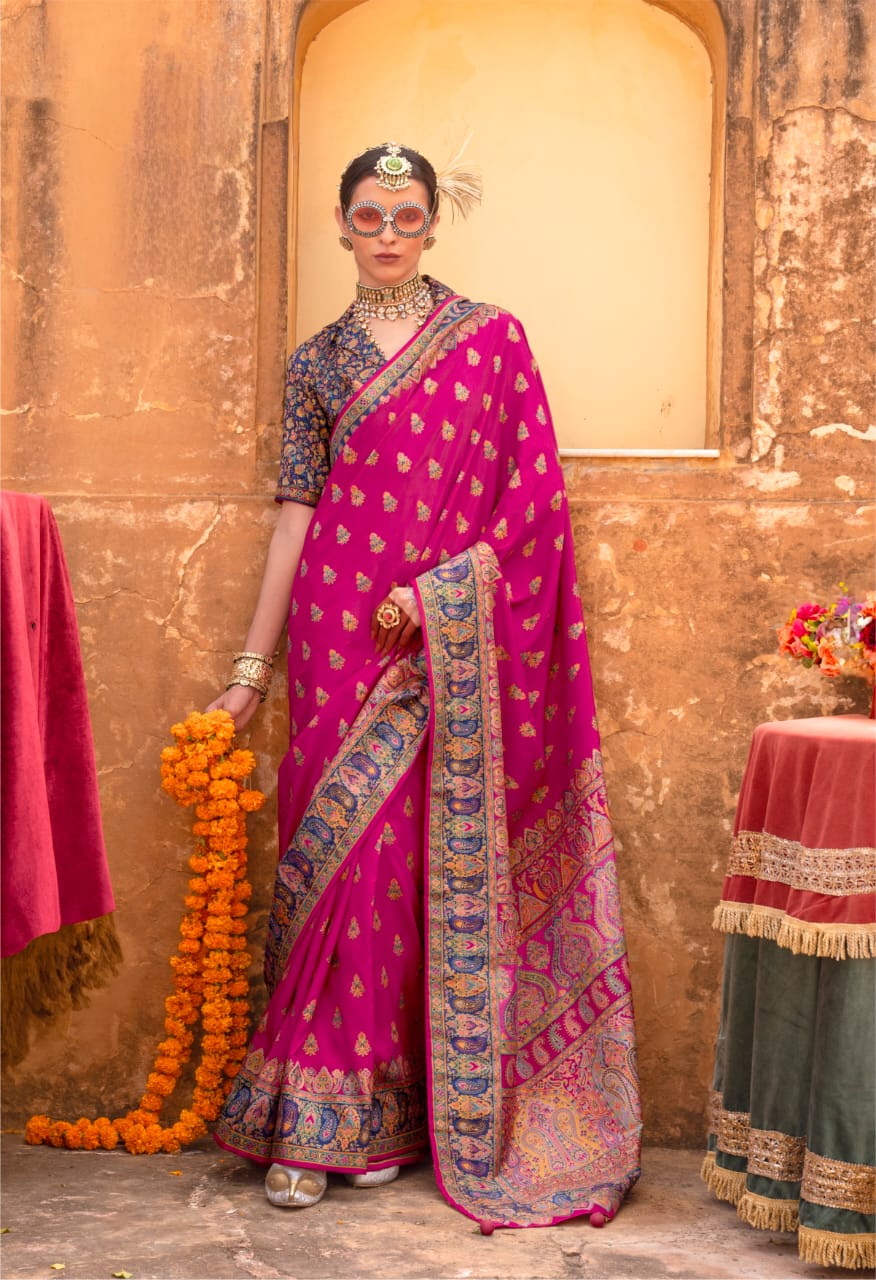
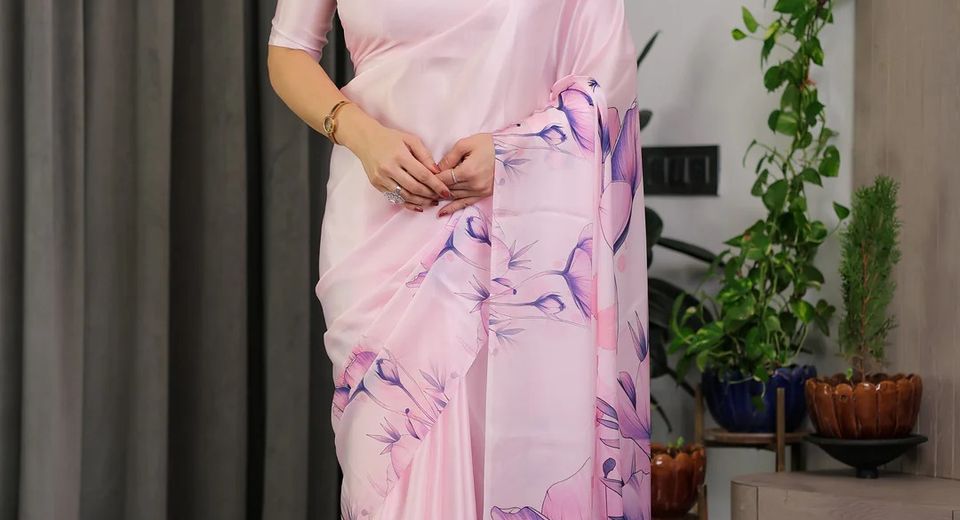
A roka or engagement usually suits a polished suit, saree or lighter lehenga in silk, georgette, satin or tissue. A jaggo is more animated and often takes place in the evening, so a bright Phulkari dupatta, mirror-work detail or embellished blouse can provide enough festive energy without requiring a bridal-style outfit. Pink Georgette Sarees offer an useful direction for choosing a soft, fluid base that accepts colourful jewellery and a contrasting Phulkari stole.
Mehendi and Haldi ceremony
Mehendi and Haldi ceremony events favour breathable, washable and movement-friendly clothing in yellow, green, coral, pink or orange. Cotton silk, linen cotton and lightweight georgette are more practical than layered velvet when guests will sit, walk and participate in rituals. Avoid floor-length hems that drag through turmeric, henna or outdoor dust. A short-sleeved kurta with palazzo trousers, a sharara suit or a saree with a securely pinned pallu gives better mobility than a delicate train.
Anand Karaj
An Anand Karaj calls for a respectful outfit with covered shoulders, a manageable neckline and a dupatta or pallu that can remain in place during the ceremony. A full-length salwar suit, modest lehenga or saree with a well-secured head covering can work well. Guests should carry a lightweight scarf if the venue or family tradition expects the head to be covered inside the gurdwara. Low block heels, juttis or embellished flats are safer than narrow stilettos because guests may remove footwear and walk on smooth floors.
Reception and sangeet
A reception or sangeet permits more shimmer, structured tailoring and dramatic colour because the event is generally more performance-oriented. Satin, tissue, Banarasi silk and sequinned georgette photograph well under evening lighting. A saree with a pre-pleated pallu or a lehenga with a belt can reduce readjustment during dancing. Statement earrings often make more impact than a heavy necklace that competes with embroidery near the face.
Punjabi Wedding Fashion: Phulkari Lehengas, Suits & Sarees for Guests Compared
A Phulkari suit is the easiest option for long celebrations, a lehenga creates the fullest festive silhouette and a saree offers the greatest range of formality. Body comfort, ceremony length and familiarity with draping should guide the decision more than a single trend.
Phulkari lehengas
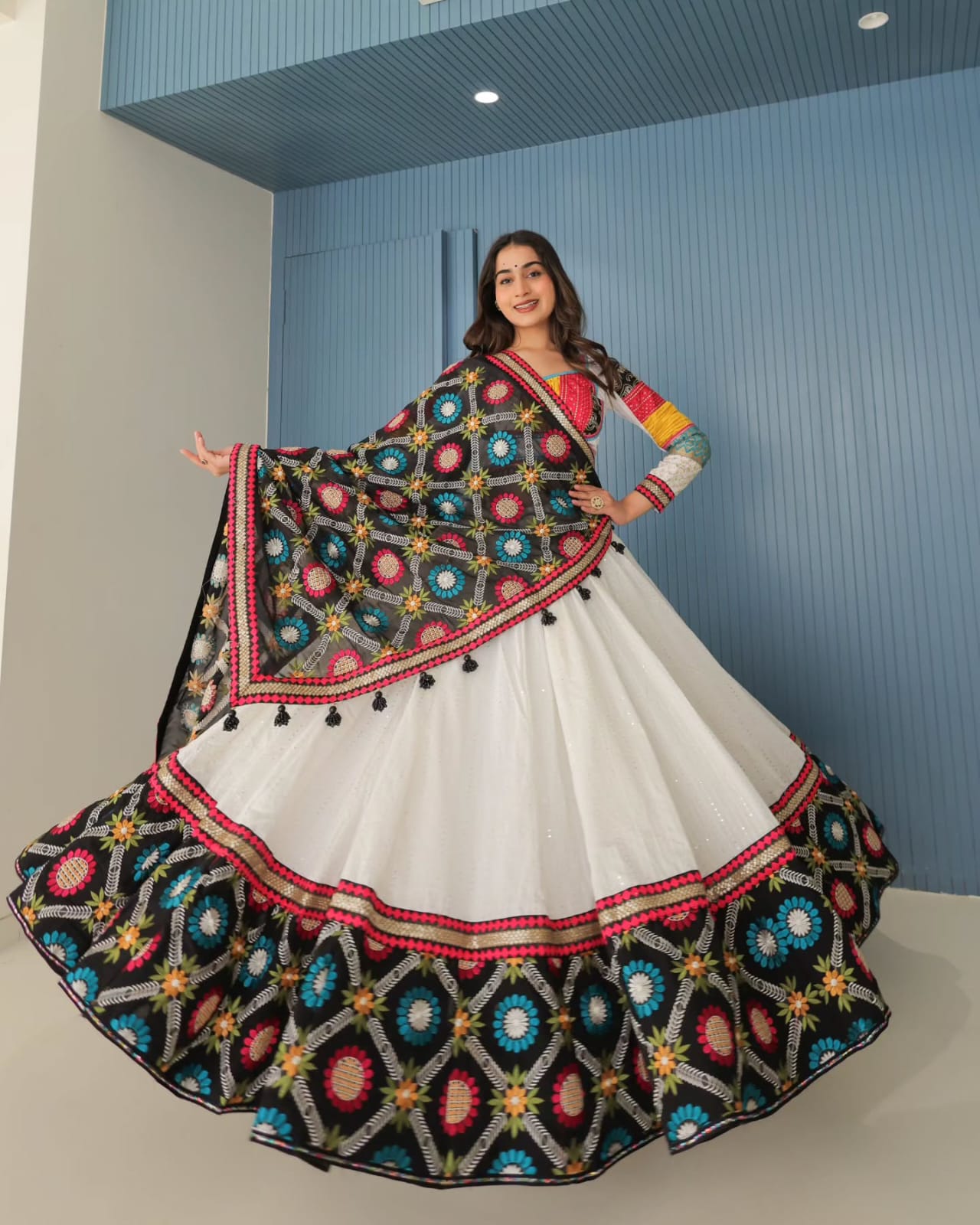
A Phulkari lehenga works especially well for a sangeet, engagement or reception where guests want a defined waist and a broad, festive silhouette. Look for a skirt with a lining that doesn't cling, a waistband that sits securely and a dupatta with a firm border that can be pinned at the shoulder. A skirt circumference of roughly 3 to 4 metres gives movement without the weight of a very wide bridal lehenga. For a daytime wedding, cotton-silk or georgette embroidery is generally cooler than layered velvet.
Phulkari-inspired lehengas often use machine embroidery, printed panels or satin thread rather than heritage hand-counted darning stitches. Those techniques can still create a beautiful wedding outfit, but the word Phulkari doesn't automatically guarantee an heirloom textile. Ask whether the design is embroidered, woven, printed or appliquéd, especially when comparing prices.
Phulkari suits
A Phulkari suit is the most versatile choice for guests attending more than one ceremony. A straight kurta with cigarette pants gives a clean formal line, while a Punjabi salwar or Patiala salwar creates more volume and a recognisably Punjabi proportion. Palazzo trousers work well for guests who want room at the ankle, and a sharara suit brings festive flare without the management required by a full lehenga.
A plain base with an embroidered dupatta is often the most cost-effective way to achieve the look. The dupatta can later be worn with ivory, cream, black or jewel-toned separates, while a fully embroidered three-piece suit has a narrower styling range. A Phulkari border along the dupatta gives visible detail in photographs without adding too much weight around the torso.
Phulkari sarees and sarees with floral character
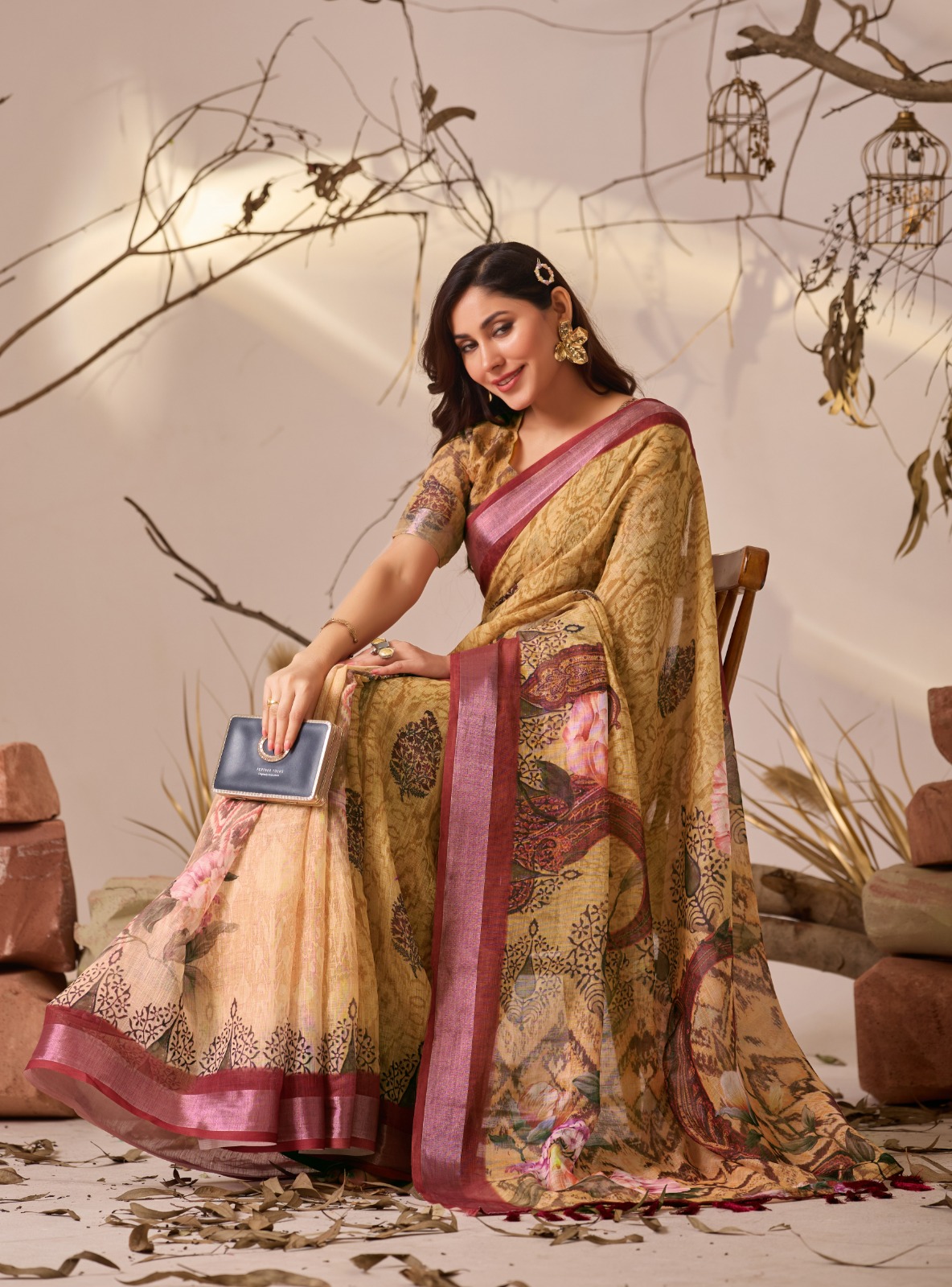
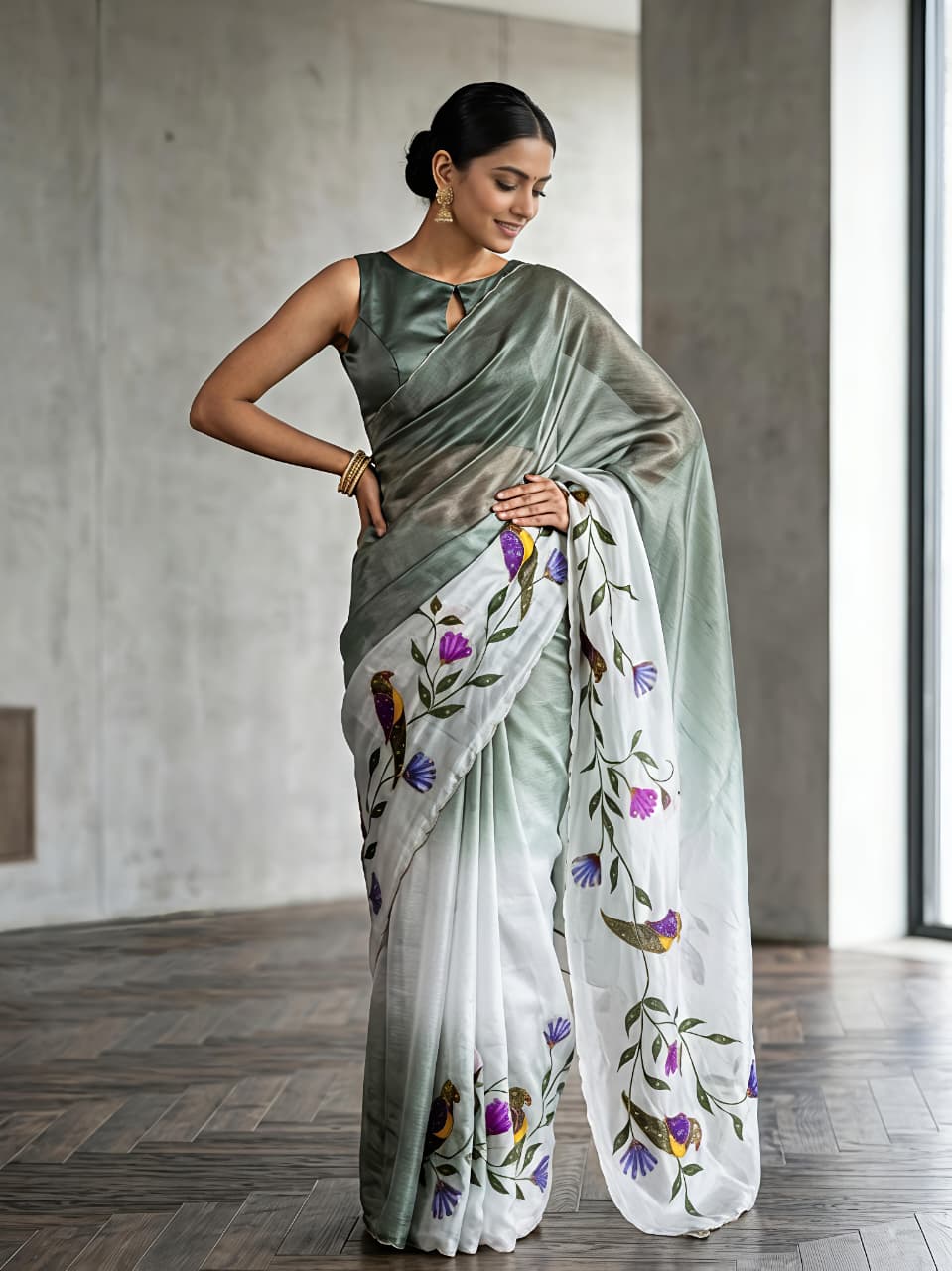
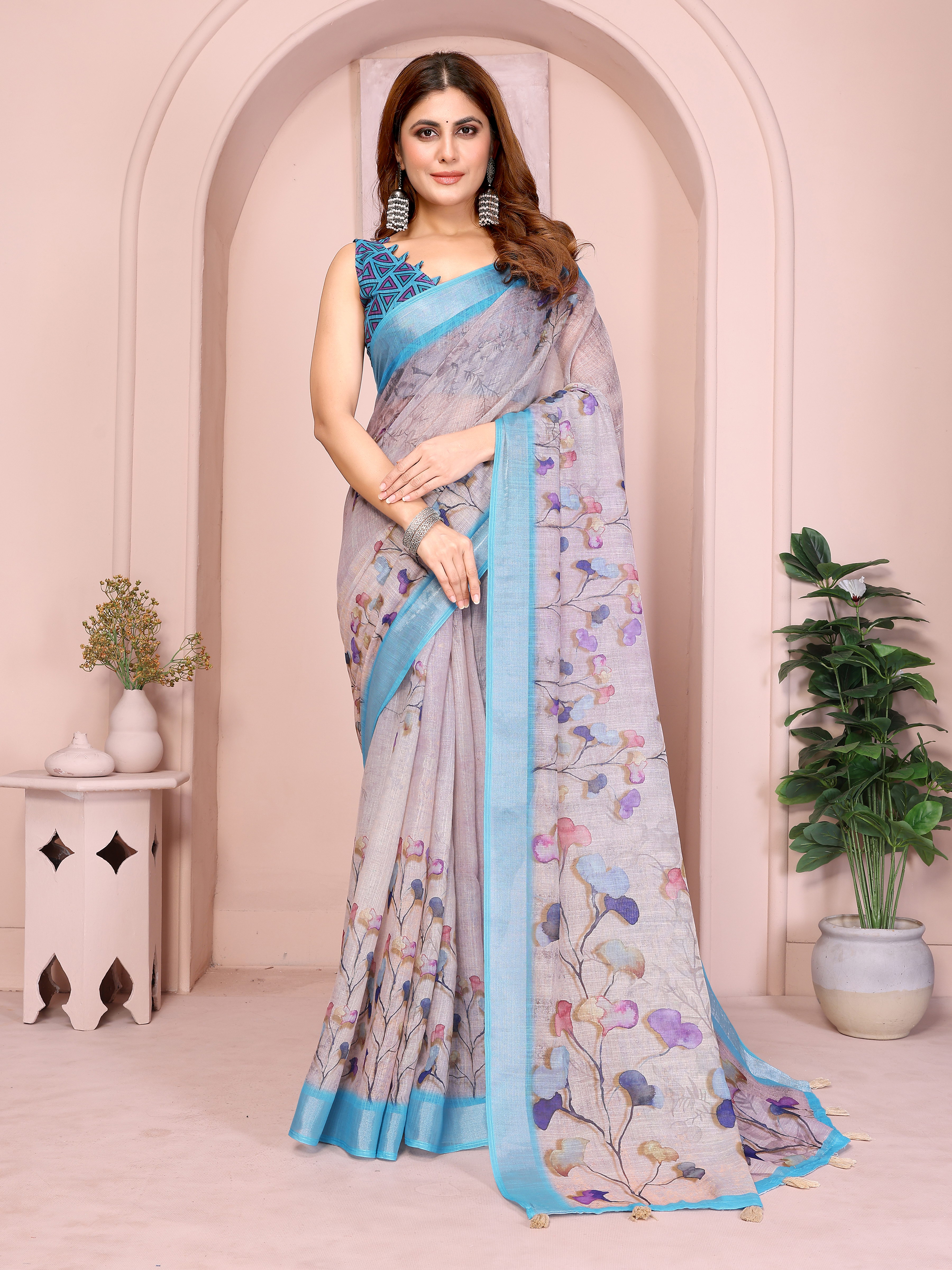
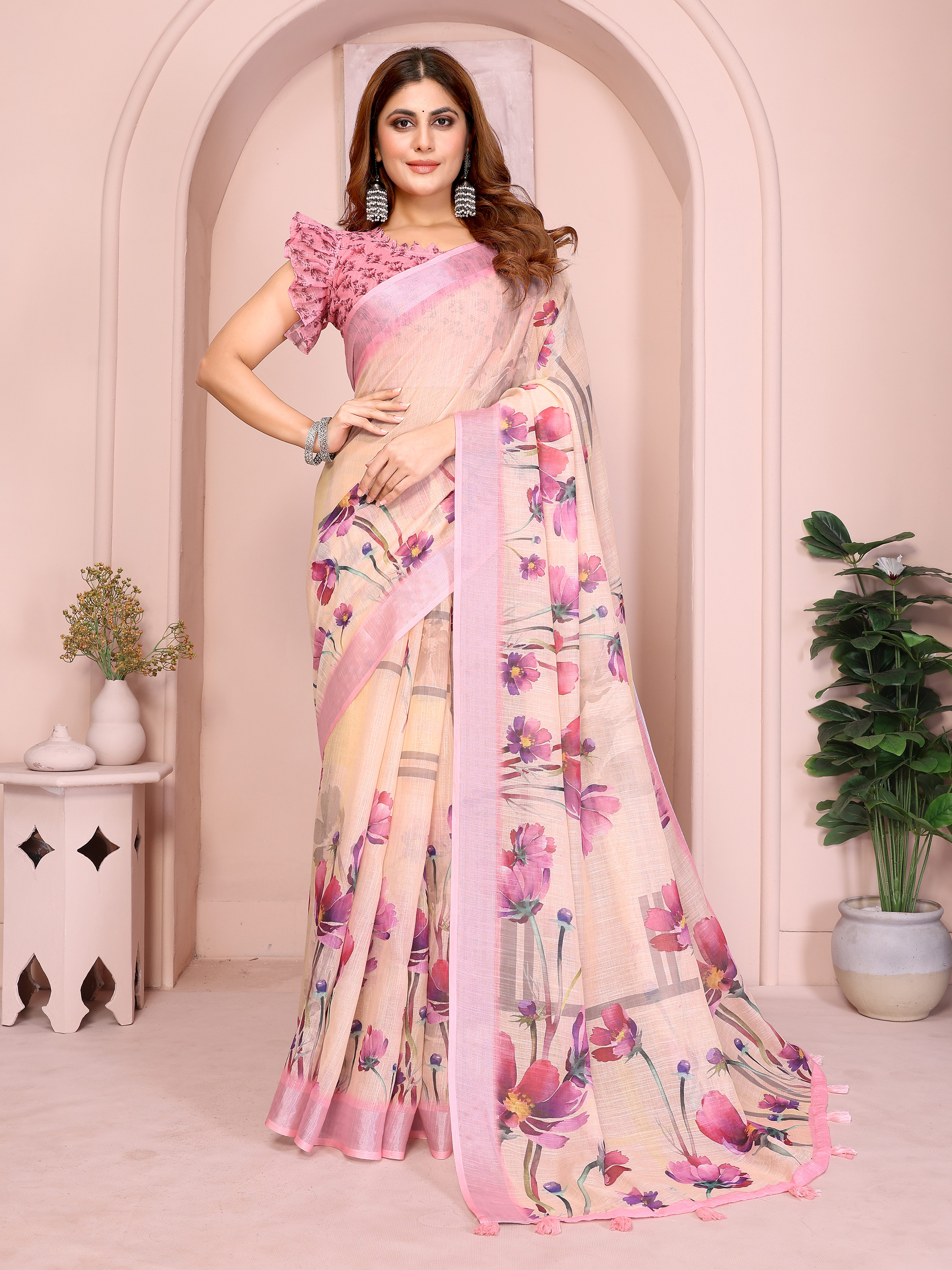
A saree suits guests who already understand pleating or can arrange a trial drape before the wedding. Linen cotton, tissue cotton and satin create noticeably different effects. Pastel Linen Cotton Floral Print Saree with Designer Blouse gives a softer daytime direction, while Red Satin Floral Print Saree with Unstitched Blouse Textile creates more evening drama through its glossy surface and strong colour.
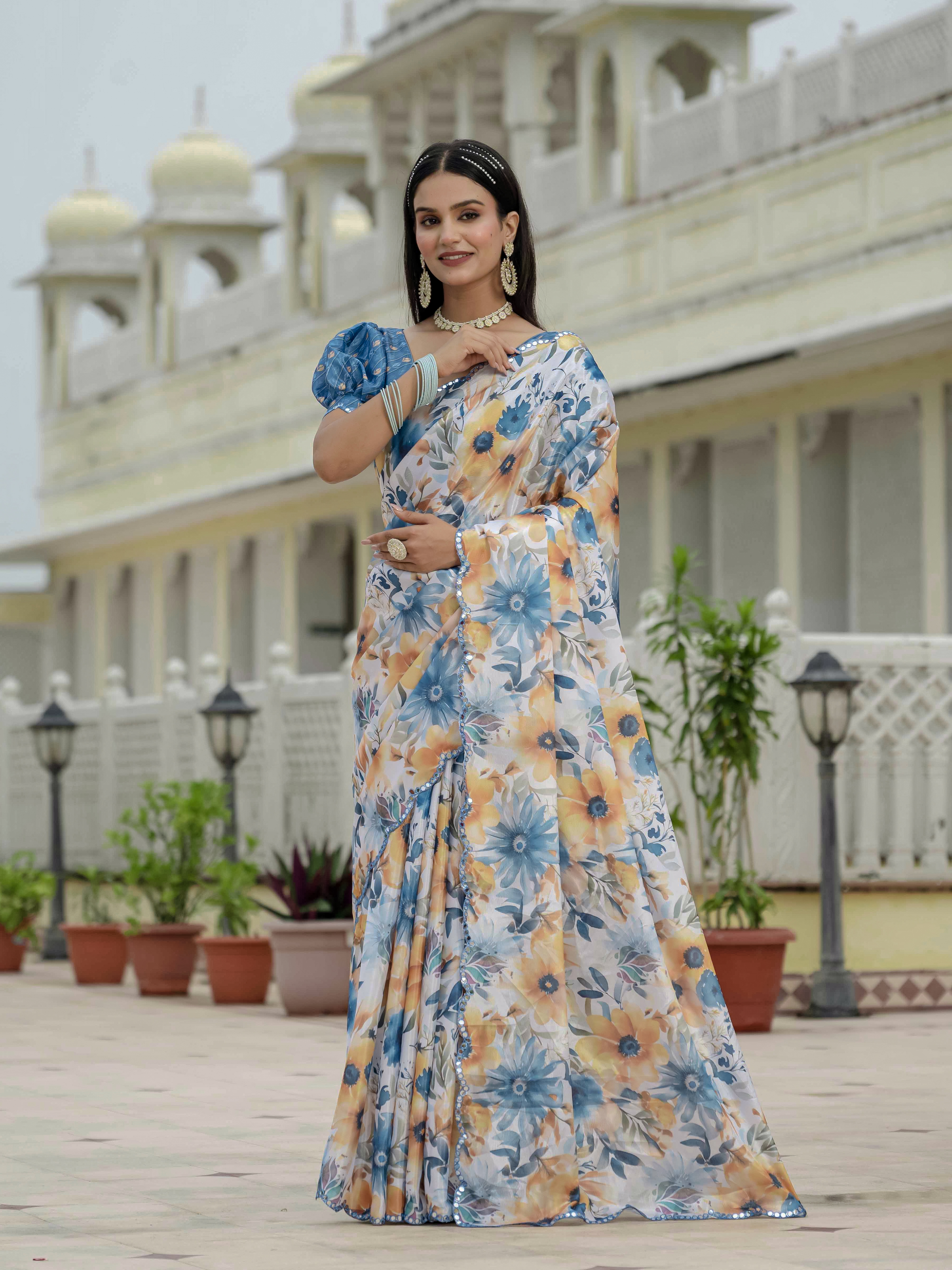
Floral print and Phulkari embroidery are not identical, but both can belong in the same Punjabi wedding wardrobe. Peach Linen Cotton Floral Print Saree with Blouse for Women works for a daytime engagement when paired with a Phulkari-style embroidered potli or contrasting dupatta. Pastel Floral Tissue Handloom Cotton Saree with Zari Weaves brings handloom texture and zari definition to a formal guest look without requiring dense all-over embroidery.
Punjabi Wedding Fashion: Phulkari Lehengas, Suits & Sarees for Guests by Fabric
Lightweight cotton blends, georgette, satin, tissue and silk blends cover most Punjabi wedding settings, while fabric weight and lining determine comfort. A visually light outfit can still become uncomfortable after four hours if the lining is synthetic, the embroidery is abrasive or the blouse restricts the shoulders.
For daytime events, linen cotton, cotton silk, Chanderi and light georgette regulate comfort better than thick brocade. Chanderi has a fine, slightly sheer character, so Chanderi sarees generally need a lining or an opaque blouse. Tissue creates a crisp, luminous surface but can catch on jewellery; a smooth underskirt and carefully finished blouse reduce snagging.
For evening events, Banarasi silk, satin, heavier georgette and zari details provide depth under artificial light. Banarasi silk is effective when a guest wants heritage richness without all-over sequins. Cream Pink Tissue Handloom Cotton Saree with Zari can bridge afternoon and evening because tissue catches light while the pale colour remains relatively gentle.
Satin has a glossy finish that photographs well but shows creasing, water marks and sweat more readily than matte cotton. Linen cotton resists the sticky feeling of humid weather but may develop natural wrinkles during travel. Georgette drapes close to the body and works well for pre-pleated sarees, while structured silk holds broad pleats more firmly.
Punjabi Wedding Fashion: Phulkari Lehengas, Suits & Sarees for Guests in Colour
Colour should follow the time of day, the ritual and the family's preferences rather than a fixed rule about Punjabi dressing. Saturated pink, fuchsia, orange, yellow, green and red are familiar festive choices, while peach, lilac, ivory and powder blue can look refined for daytime functions.
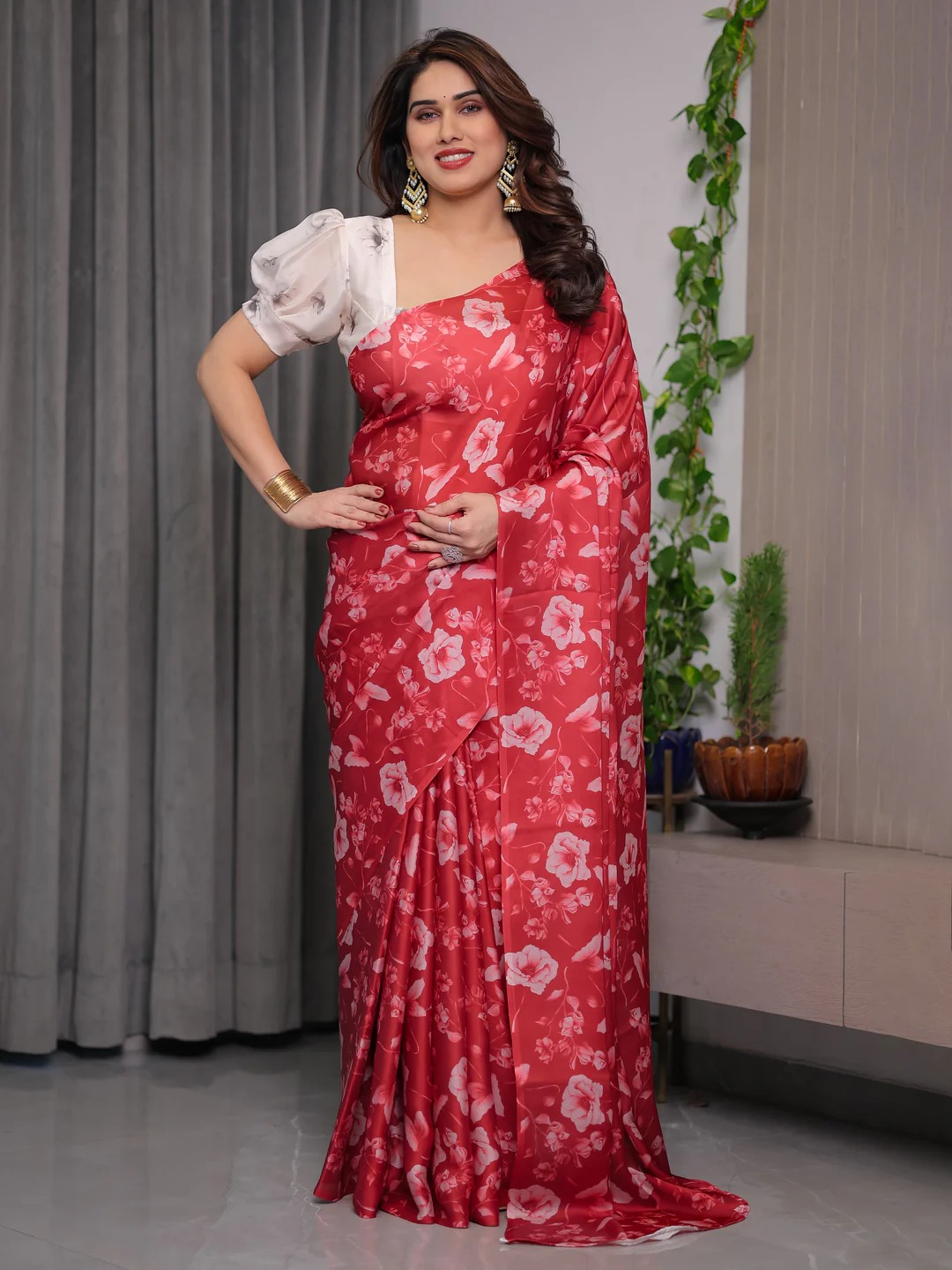
Red is widely associated with bridal wear, although red isn't forbidden for every guest. A safer approach is to use red in a border, blouse, dupatta or print unless the invitation encourages a red theme. Red Banarasi Silk Sarees for Weddings Under 1100 can inspire a rich accent, but guests should check whether the bride has selected an all-red wardrobe before choosing a fully red saree.
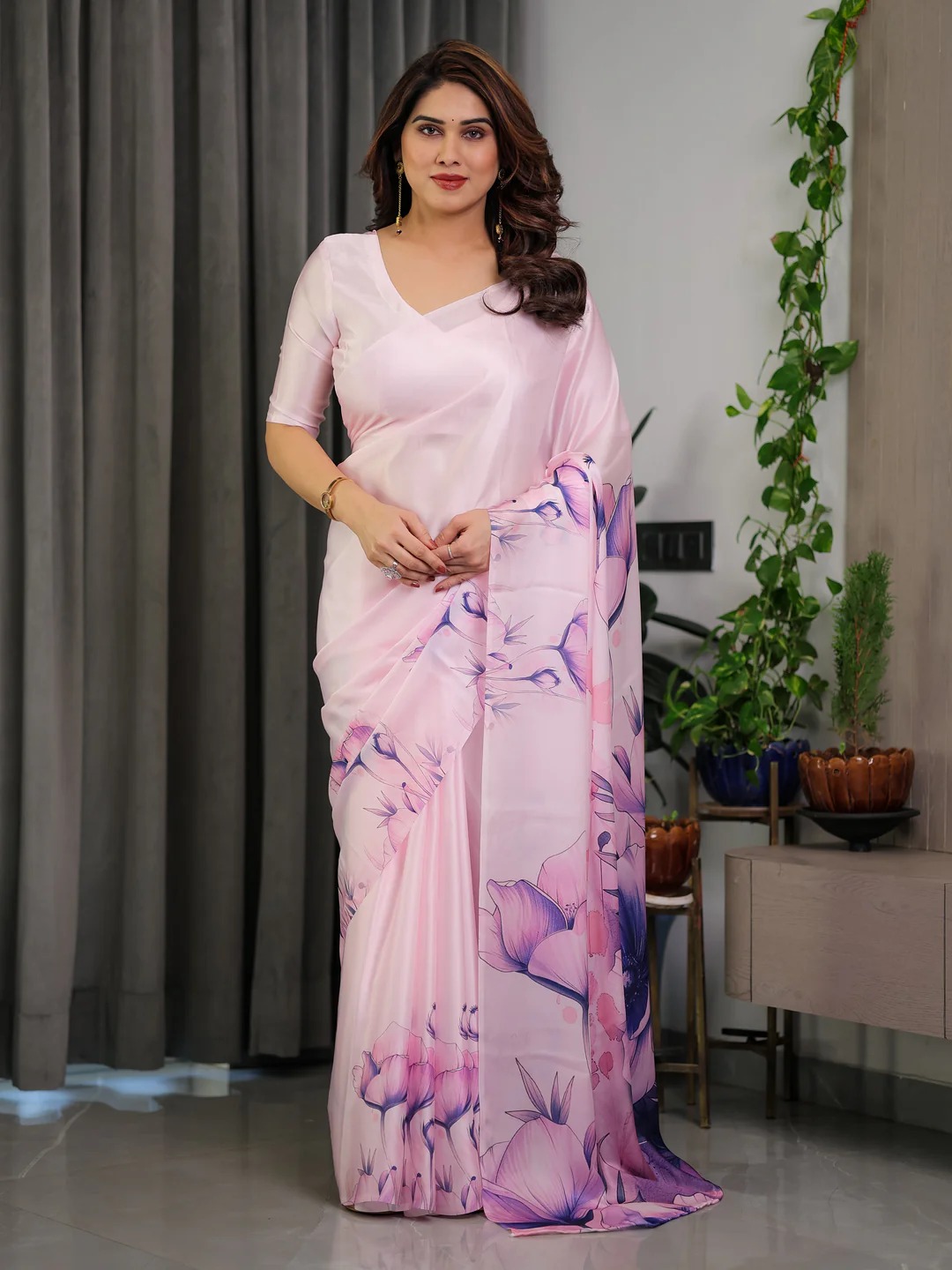
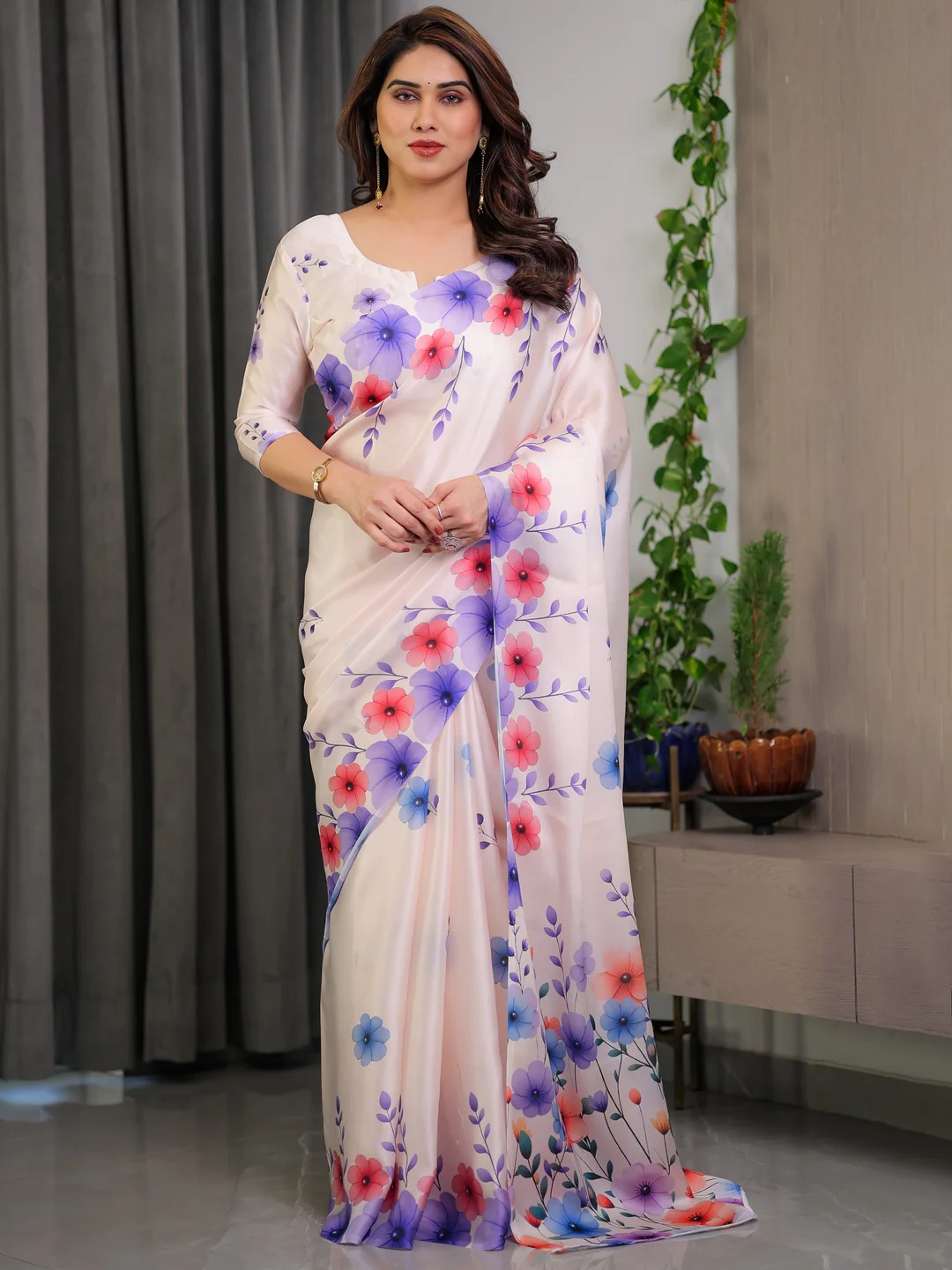
White or ivory may be perfectly appropriate in some contemporary celebrations but can carry mourning associations in certain families. Ivory Satin Floral Print Saree with Unstitched Blouse Piece brings a softer base that can be warmed with pink, gold or green accessories. Light Pink Floral Satin Saree with Unstitched Blouse Fabric provides another pale option with a more visibly festive undertone.
Contrast works particularly well with Phulkari because the embroidery is often designed around strong colour relationships. A mustard dupatta can enliven a magenta suit, a green blouse can sharpen a peach saree and a cobalt accessory can prevent a pastel outfit from looking washed out under bright lights. Keep one colour dominant and repeat the secondary colour in jewellery, footwear or a potli.
Punjabi Wedding Fashion: Phulkari Lehengas, Suits & Sarees for Guests with Accessories
Accessories should echo one or two colours in the outfit while leaving the embroidery visible. Gold jhumkas, kundan earrings, parandas, colourful bangles, embroidered potlis and Punjabi juttis are effective because they add cultural reference without requiring every accessory to be ornate.
A heavy Phulkari dupatta usually needs smaller earrings and a restrained necklace. A plain saree can support a bold rani haar, layered bangles or a substantial passa at a reception. Guests wearing a printed saree should select either a textured blouse or statement jewellery, not several competing focal points.
Footwear needs as much planning as jewellery. Three to five centimetre block heels provide height while remaining stable on grass, marble and crowded dance floors. Juttis are practical for a gurdwara visit, but new leather or embroidered footwear should be broken in at home for at least two short wears. Carrying blister patches and foldable flats can prevent a minor shoe problem from ending the evening early.
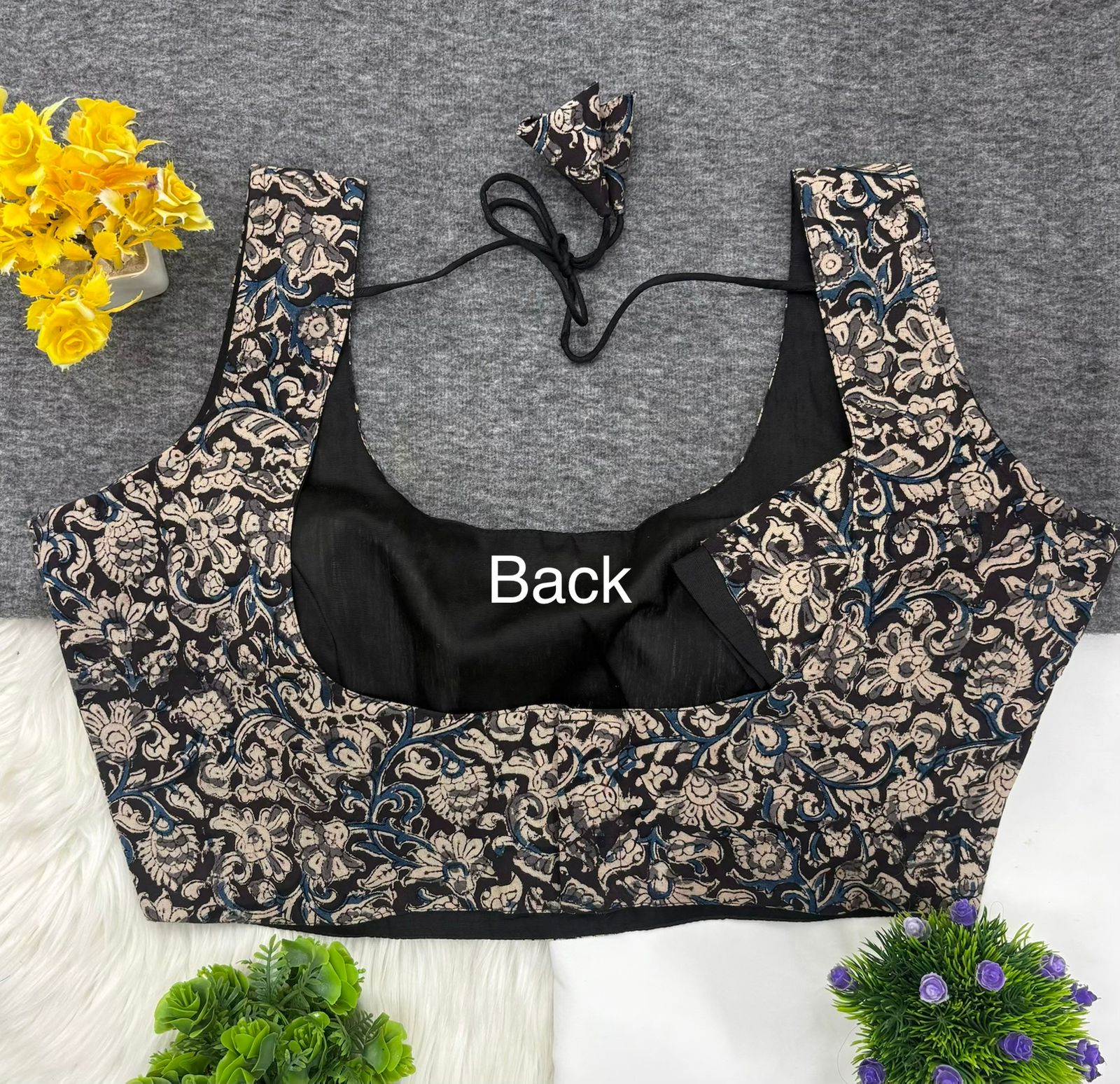
Secure a saree with a petticoat that fits at the waist, six to eight safety pins, and a blouse with enough shoulder movement for lifting the arms. Pin the pallu at the shoulder and, if dancing is likely, add a discreet pin near the waist. A lehenga dupatta can be worn across the chest and pinned at both shoulders for security, or draped over one shoulder with a belt for greater movement.
Hair and makeup should account for the fabric's visual intensity. A low bun with gajra creates a classic finish for a saree, while a braid with a paranda complements Punjabi salwar styling. Humid-weather guests can choose transfer-resistant base makeup and carry blotting paper instead of adding heavy powder throughout the day.
Punjabi Wedding Fashion: Phulkari Lehengas, Suits & Sarees for Guests on a Budget
A polished wedding wardrobe doesn't require every garment to be heavily embroidered. Spend more on the piece that frames the face or photographs most clearly, then balance it with simpler separates and reusable accessories.
Party Wear Sarees can be an useful starting point when one saree must work for several invitations. A guest can change the blouse, belt, earrings and drape to create distinct looks without purchasing a complete outfit each time. Gray Color Sarees Under 1000 may also work as a neutral base when paired with a bright Phulkari dupatta, pink blouse or colourful jewellery.
Silk Sarees Under 3000 With Discount can help guests access a richer texture at a controlled price, but price should not be the only measure of value. Check the fibre composition, blouse-piece length, hem finish, lining and whether zari is metallic, tested or imitation. A low-cost saree that requires urgent alteration may ultimately cost more than a ready-to-wear option.
For a flexible capsule, choose one embroidered or printed saree, one solid suit, one statement dupatta and two blouse colours. The same earrings and juttis can then work across an engagement, mehendi and reception. If buying an unstitched blouse, allow at least 10 to 14 days for tailoring during wedding season and take the saree to the tailor so the blouse colour and border placement can be matched accurately.
Care also protects the investment. Air a saree after wearing it, remove temporary pins, spot-clean only according to the care label and store silk, satin and zari in breathable cotton rather than sealed plastic. Fold zari sarees with tissue paper between layers and refold them every few months to reduce permanent crease lines.
Punjabi Wedding Fashion: Phulkari Lehengas, Suits & Sarees for Guests Checklist
The simplest final check is to wear the complete outfit at home for 20 minutes before the wedding. A trial reveals whether the blouse pulls, the waistband rolls, the dupatta slips, the footwear rubs or the jewellery catches on the embroidery.

- Confirm the ceremony, venue, start time and whether head covering is expected.
- Check whether the outfit allows sitting cross-legged, walking upstairs and raising both arms.
- Secure saree pleats, dupatta corners and lehenga hooks before leaving home.
- Carry safety pins, fashion tape, a small sewing kit, blotting paper and backup flats.
- Keep the most bridal-looking combination, especially all-over red or very heavy gold, for situations where the family has clearly approved it.
- Photograph the complete outfit in both daylight and indoor lighting before finalising accessories.
Punjabi wedding dressing feels considered when visual celebration and physical ease receive equal attention. A guest doesn't need the heaviest embroidery in the room; a well-fitted silhouette, thoughtful colour balance, secure drape and respectful ceremony styling create a more memorable result.
Common Questions About Punjabi Wedding Guest Outfits
What should a guest wear to a Punjabi wedding?
A guest can wear a Phulkari suit, lehenga or saree selected according to the ceremony and time of day. Lightweight fabrics suit mehendi and Haldi ceremony events, while silk, satin, zari and embellished georgette work well for evening receptions. An Anand Karaj generally calls for a modest outfit with a secure dupatta or head covering if the family tradition requires one.
Is Phulkari appropriate for a wedding guest outfit?
Phulkari is appropriate for wedding guests when the embroidery is balanced with the ceremony's formality. A Phulkari dupatta works with a plain suit for daytime, while a more richly embroidered lehenga or blouse suits a sangeet or reception. Guests should avoid copying bridal colours and combinations when the family has indicated a specific bridal palette.
What is the difference between Phulkari embroidery and a floral print?
Phulkari embroidery traditionally uses counted darning stitches and silk floss on a cotton ground, while a floral print places colour on the fabric through printing. Contemporary garments may use machine embroidery, appliqué or printed Phulkari-inspired motifs. Product descriptions and close photographs can help distinguish a genuine embroidered surface from a printed design.
Can I wear a saree to a Punjabi wedding?
A saree is suitable for a Punjabi wedding guest when the drape is secure and the styling suits the ceremony. Linen cotton and light georgette work well for daytime, while satin, tissue, Banarasi silk and zari suit evening functions. Guests attending an Anand Karaj should also ensure that the blouse and pallu provide comfortable coverage and that the head can be covered if required.
Which colours should wedding guests avoid at a Punjabi wedding?
Guests should ask the family about colours that are reserved for the bride or a coordinated theme. Full bridal red, very heavy gold and white or ivory may be unsuitable in some families, although customs vary. Using red or ivory as an accent is often a safer choice than building the entire outfit around one potentially sensitive colour.
How can I keep a Phulkari dupatta or saree in place while dancing?
Secure a Phulkari dupatta at the shoulder and waist with discreet safety pins, or use a light belt over the dupatta. A saree should have firmly stitched pleats, a well-fitted petticoat and a pinned pallu; pre-pleating can make movement easier. Testing the full outfit for 20 minutes before the event helps identify slipping or snagging before the wedding day.