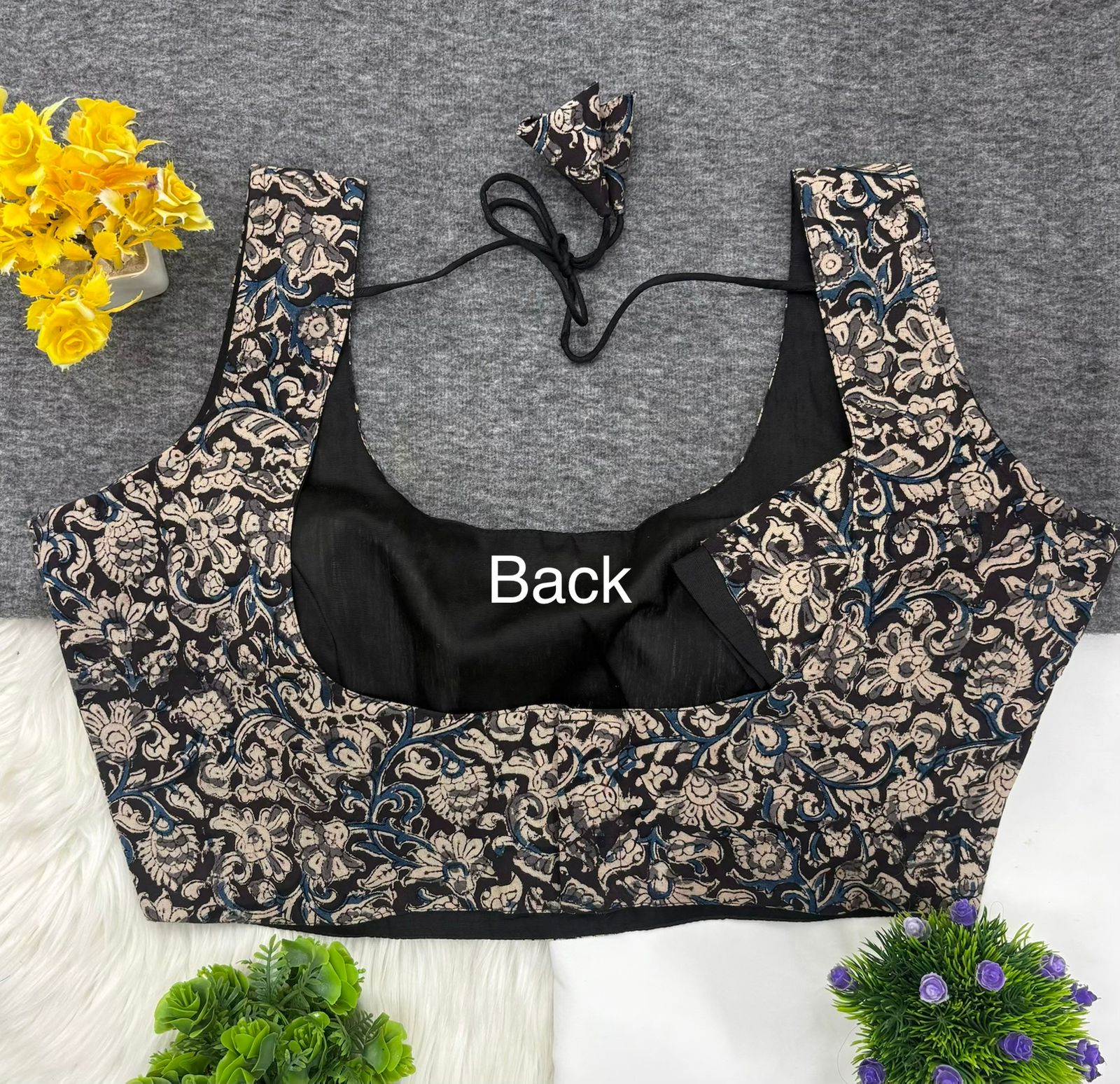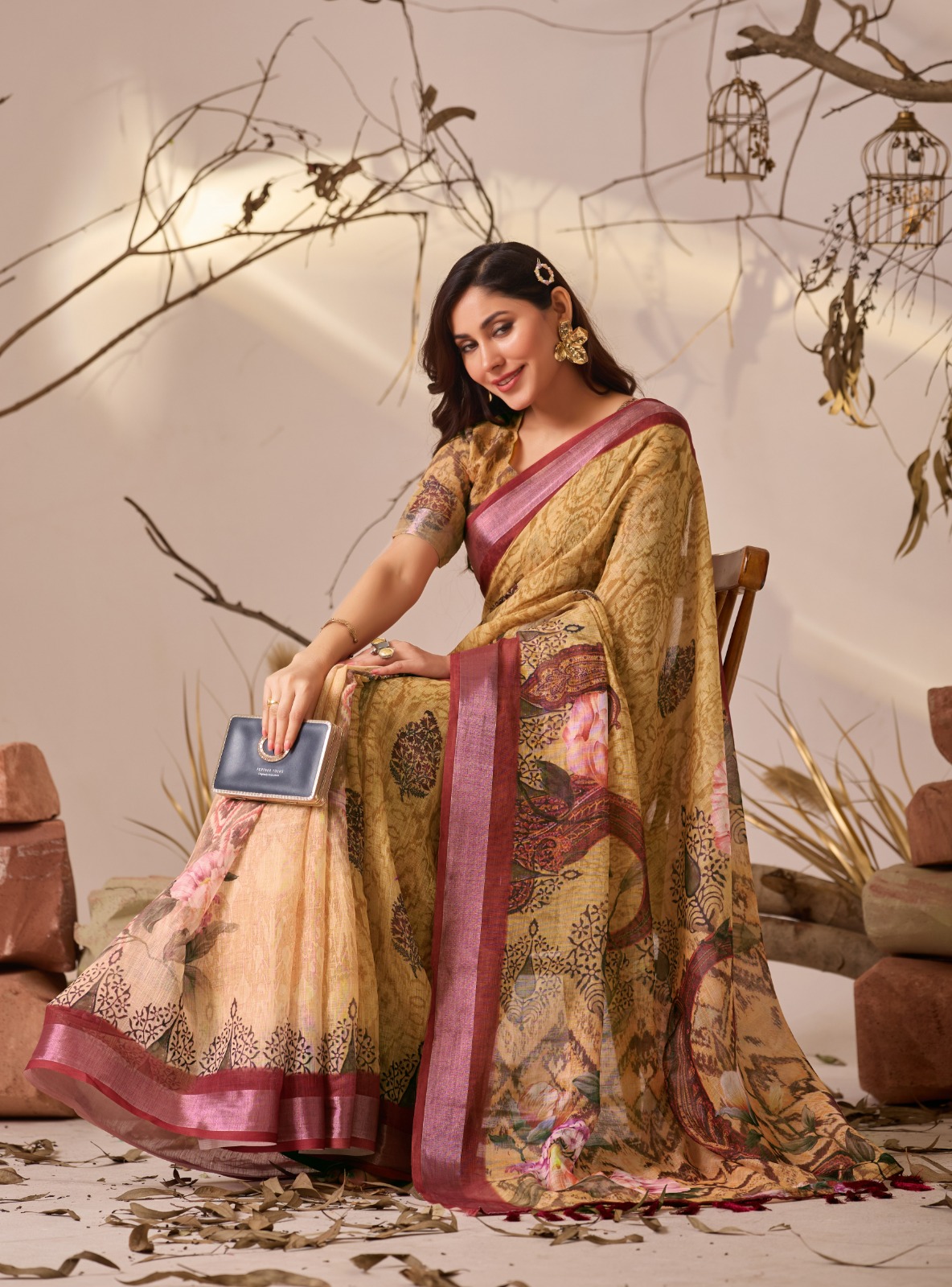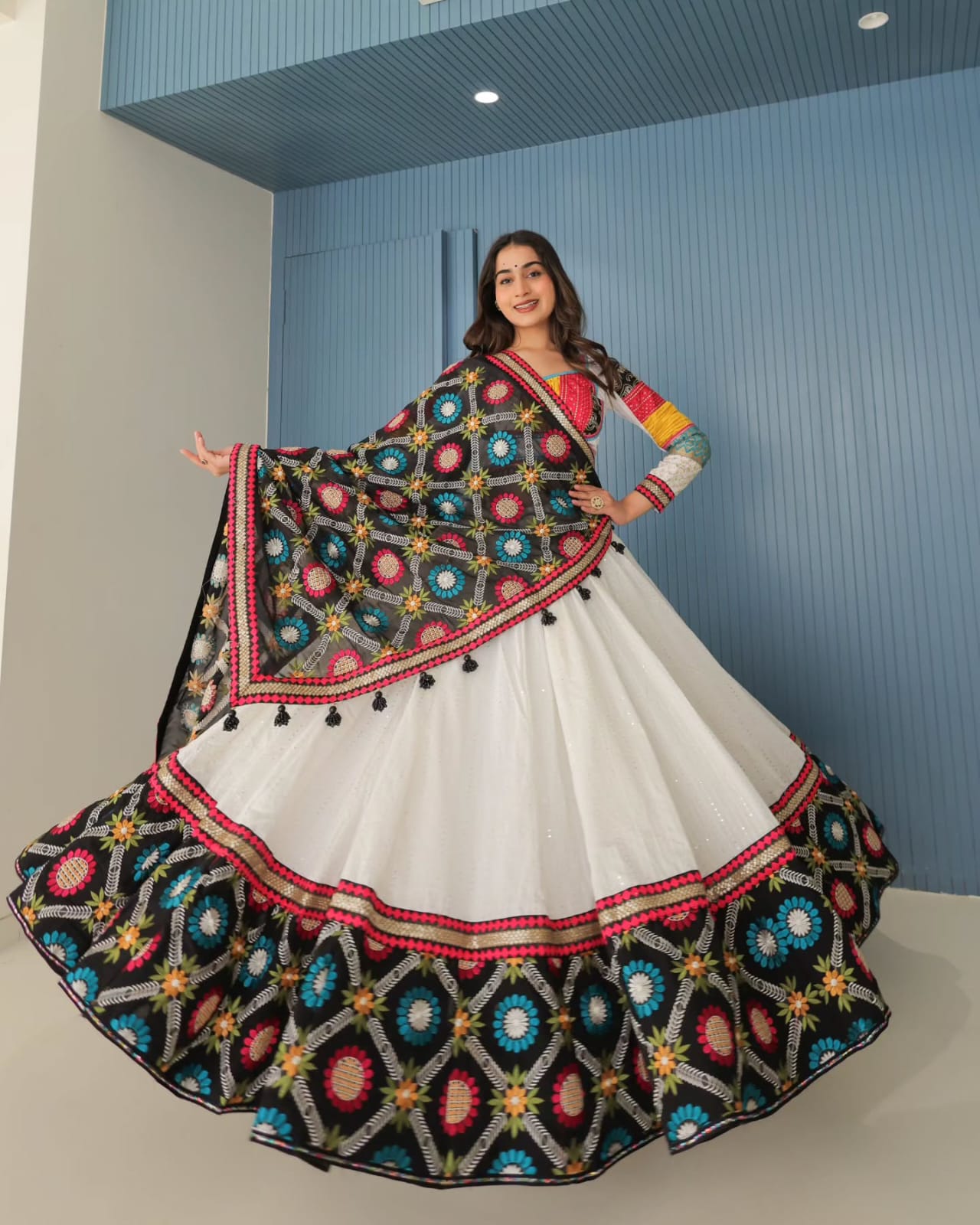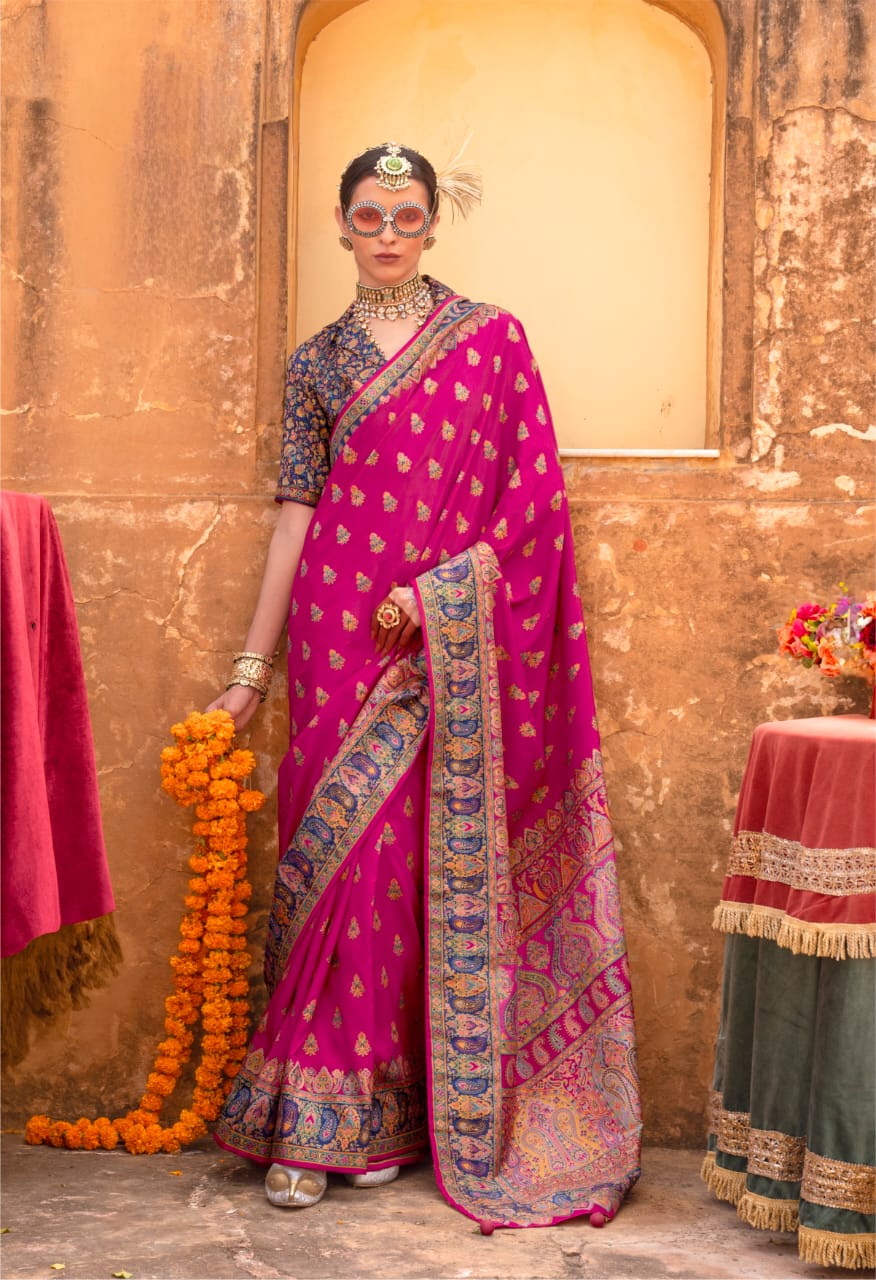
Punjab Festival Fashion Calendar: What to Wear for Every Celebration becomes easier to follow when each outfit is planned around the season, venue and amount of movement involved. Lohri calls for warm layers and jewel tones, Baisakhi welcomes breathable cottons and energetic colour, while Punjabi weddings often require several distinct looks across one weekend.
The most useful approach is to plan by celebration rather than buying one heavily embellished outfit for every invitation. Fabric weight, sleeve length, footwear, dupatta security and venue formality matter as much as colour. A winter bonfire, a spring harvest procession and an indoor wedding reception each need a different balance of comfort and ornament.
Punjab Festival Fashion Calendar: What to Wear for Every Celebration in Any Season
A Punjab Festival Fashion Calendar should begin with three questions: how formal is the event, how much movement will the outfit require and what will the weather feel like at the venue? These questions prevent common mistakes such as wearing a heavy velvet suit to a warm daytime gathering or choosing a trailing dupatta for a crowded outdoor celebration.
Mark the date, location and approximate duration of every event before selecting clothing. Outdoor Punjab celebrations can feel cold after sunset from November to February, while April and May afternoons may make synthetic lining uncomfortable. Cotton, cotton silk, Chanderi, lightweight georgette and breathable silk blends are useful for longer daytime functions.
- Outdoor winter events: choose velvet accents, Banarasi silk, brocade, jacquard or a warm shawl in a coordinated colour.
- Spring daytime events: choose Chanderi, cotton silk, mulmul or lightweight georgette with moderate embroidery.
- High-energy celebrations: choose a kurta pant set, salwar suit or sharara with a manageable hem and secure footwear.
- Formal evening functions: choose zari, satin, sequins, silk or embroidered organza after checking that the garment won't catch on jewellery.
A practical occasion wardrobe includes one comfortable day outfit, one festive evening outfit and one formal wedding-ready look. Repeating a dupatta, blouse or pair of earrings across separate garments makes a small wardrobe more versatile without making every appearance identical.
Punjab Festival Fashion Calendar: What to Wear for Lohri
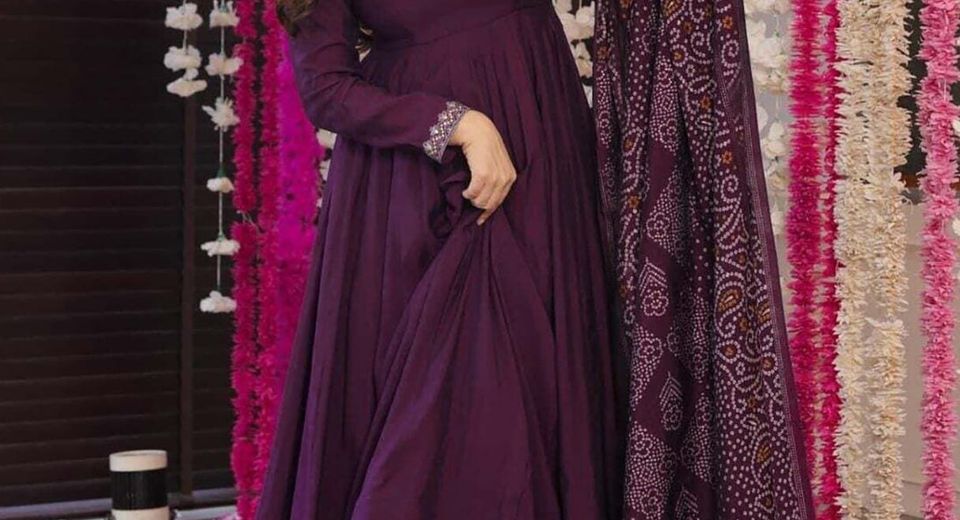
Lohri outfits should provide warmth, easy movement and enough colour to stand out in an outdoor evening setting. A long kurta with straight pants, a Patiala-style salwar or a floor-length Anarkali worn with a warm stole works better than a delicate outfit that needs constant adjustment near a bonfire.
Deep red, rust, magenta, mustard, emerald and purple suit Lohri's firelit atmosphere. Silk Festive Kurta Pant Set with Zari Jacquard Dupatta offers the right visual language for a family Lohri dinner because zari jacquard adds festive texture without requiring a separate heavy lehenga. A long-sleeved kurta can be layered under a wool shawl, provided the shawl is kept away from open flames.
Comfort deserves particular attention at Lohri. Choose closed-toe juttis or low block heels with textured soles, and avoid a dupatta with very long loose tassels near the bonfire. Small jhumkas, a stack of metal bangles and a neat braid or low bun create a finished look without adding pieces that can snag.
For a relaxed household gathering, Elegant Pista Festive Wear Kurta Pant Set provides a softer colour option within the same winter formula. Pista green works well with antique gold earrings, a maroon shawl or a rust-toned potli. A thermal camisole under the kurta is practical when the garment allows enough room at the armhole.
Punjab Festival Fashion Calendar: What to Wear for Basant Panchami
Basant Panchami calls for yellow, marigold, saffron and fresh green clothing in lightweight fabrics that remain comfortable during daytime prayers and meals. A yellow cotton kurta with white pants, a Chanderi suit with a printed dupatta or a simple saree with a contrasting blouse suits the festival better than dense winter brocade.
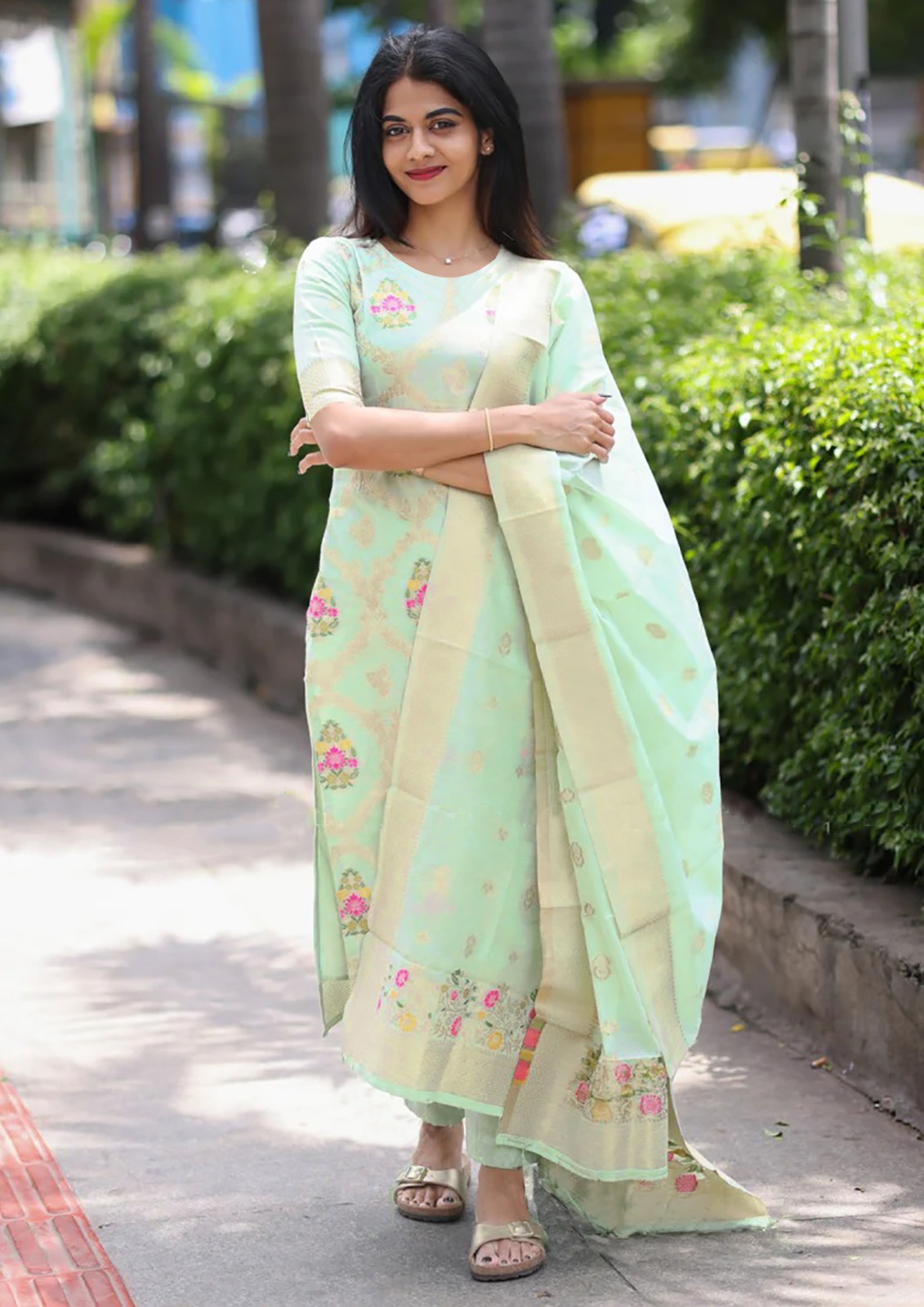
Chanderi is useful for spring because its airy structure gives a polished appearance without the weight of velvet or thick jacquard. Pink Chanderi Cotton Kurti Pant Dupatta Set shows how a three-piece outfit can combine movement, coverage and coordinated colour. The kurti can be worn with small pearl studs for a daytime puja or with gold-toned earrings for a larger family lunch.
Keep embroidery light for Basant Panchami, particularly if the celebration involves sitting on the floor or travelling between homes. Fine thread work, small motifs, gota patti borders and printed textiles are easier to wear for several hours than dense stones. Flat juttis, a lightweight sling bag and a pinned dupatta complete a practical daytime look.
Punjab Festival Fashion Calendar: What to Wear for Baisakhi
Baisakhi outfits should feel bright, breathable and easy to move in because Baisakhi combines religious observance, family visits, community gatherings and, in many settings, energetic folk dancing. Cotton salwar suits, cotton-silk sarees, short kurtas with palazzos and lightweight Anarkalis are dependable choices for April weather.
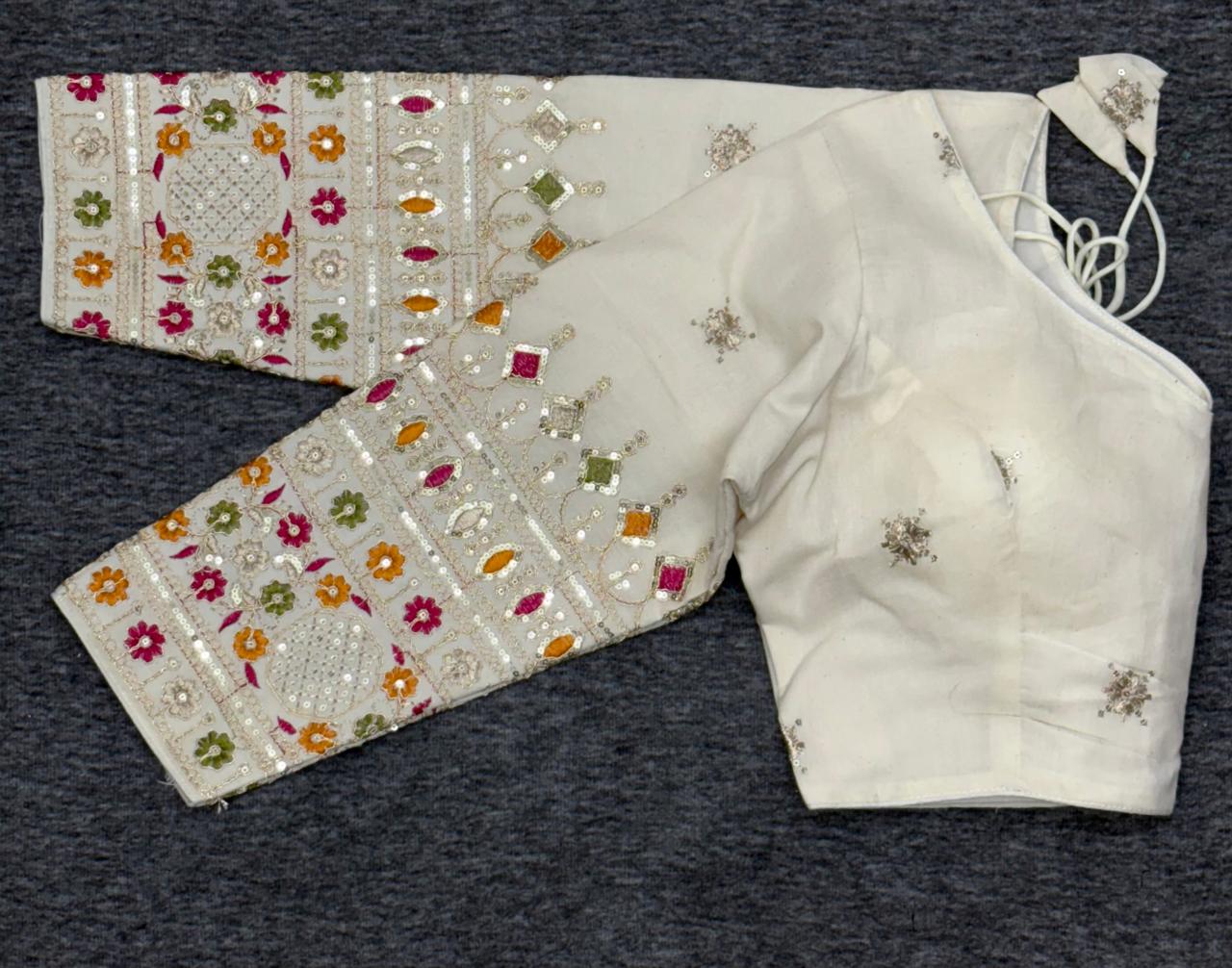
Red, orange, yellow, fuchsia, turquoise and green reflect the celebratory mood, but colour should also suit the time of day. A bright kurta with an ivory dupatta looks fresh for a morning gurdwara visit, while a deeper colour with restrained zari works for an evening dinner. Covering the head inside a gurdwara is important, so carry a clean, lightweight scarf or choose a dupatta large enough to use respectfully.
A Baisakhi outfit should not restrict the knees, ankles or shoulders when walking, sitting and dancing. Straight or gently flared pants are easier to manage than an excessively wide palazzo in crowded venues. Check a kurta's side slits for modest coverage when raising the arms during bhangra or gidda.
Festive Purple Anarkali Suit with Chanderi Dupatta gives an elegant evening interpretation of Baisakhi dressing. The Anarkali silhouette creates movement, while the Chanderi dupatta keeps the outfit visually light. Pair the look with comfortable wedges rather than thin stilettos if the event includes outdoor grounds or uneven paving.
Punjab Festival Fashion Calendar: What to Wear for Gurpurabs
Gurpurab clothing should be modest, comfortable and respectful of gurdwara practices, with the head covered and shoulders and knees adequately covered. A salwar suit, long kurta with pants, modest Anarkali or simple saree can all work when the fit allows easy sitting and walking.
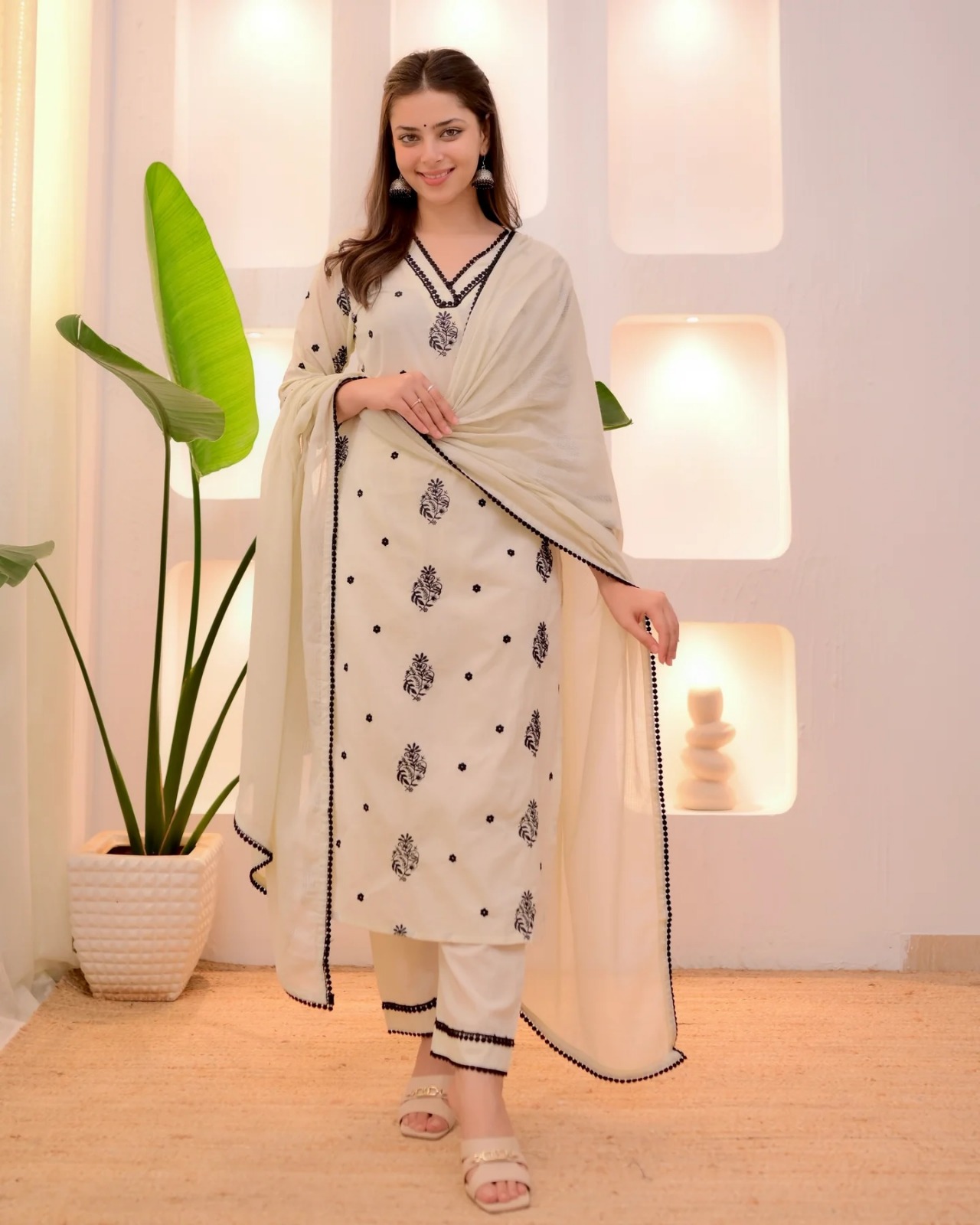
Choose breathable cotton, Chanderi cotton, silk blends or lightweight georgette for langar service and extended prayer programmes. Avoid very short hemlines, deep necklines, transparent panels and embellishments that may scratch when sitting on the floor. A dupatta should be wide enough to cover the head securely without requiring repeated adjustments.
Jewellery can remain understated for a gurdwara visit. Small earrings, a slim bangle and flat footwear are more practical than long chains or high heels. Remove footwear according to the gurdwara's practice, and select shoes that are easy to take off and put back on.
Black Satin Rose Floral Saree with Unstitched Blouse Fabric can be adapted for a family gathering after prayers, but black satin with a dramatic floral print may feel more suited to an evening reception than to a daytime gurdwara visit. For the religious portion, a covered blouse design, lighter styling and minimal jewellery create a more appropriate presentation.
Punjab Festival Fashion Calendar: What to Wear for Teej and Rakhi
Teej and Rakhi outfits should combine festive colour with fabrics that tolerate humidity and repeated movement. Cotton, cotton silk, Chanderi cotton and light georgette are usually more comfortable than heavy velvet or thick layered net during the monsoon season.
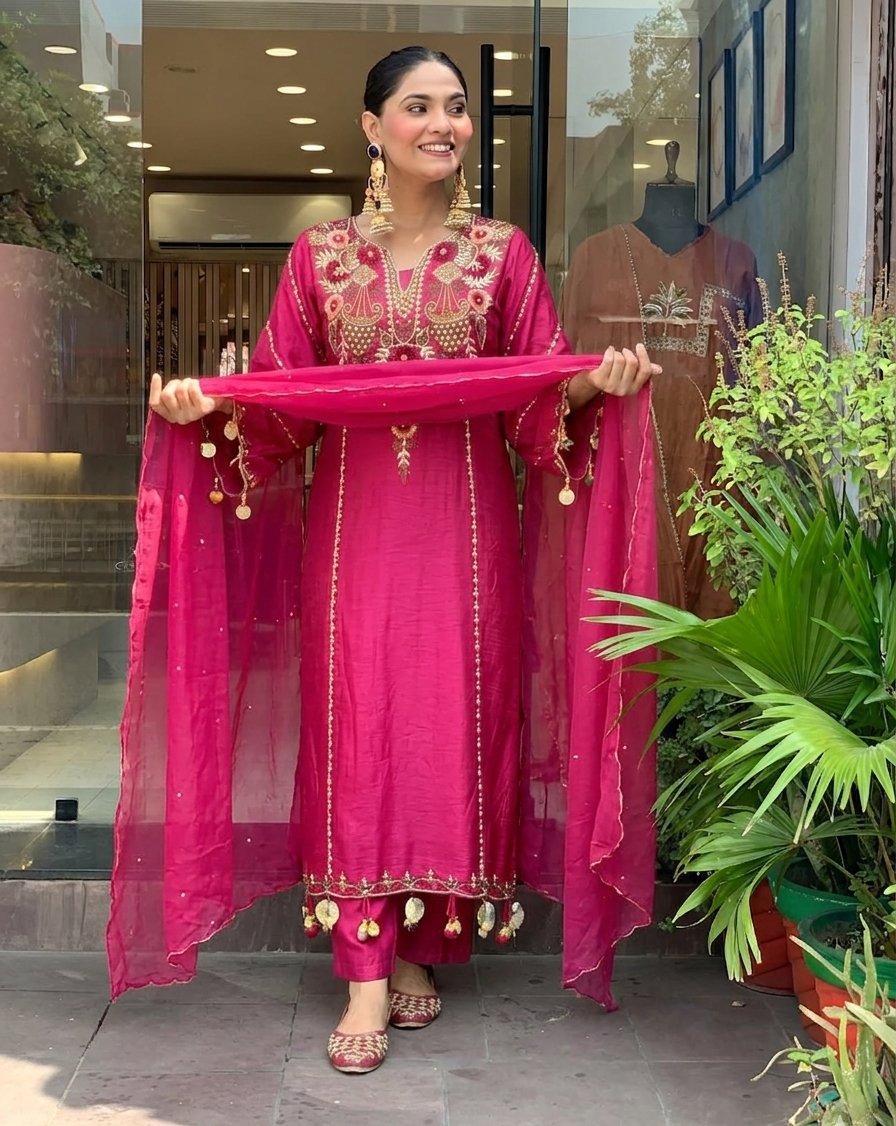
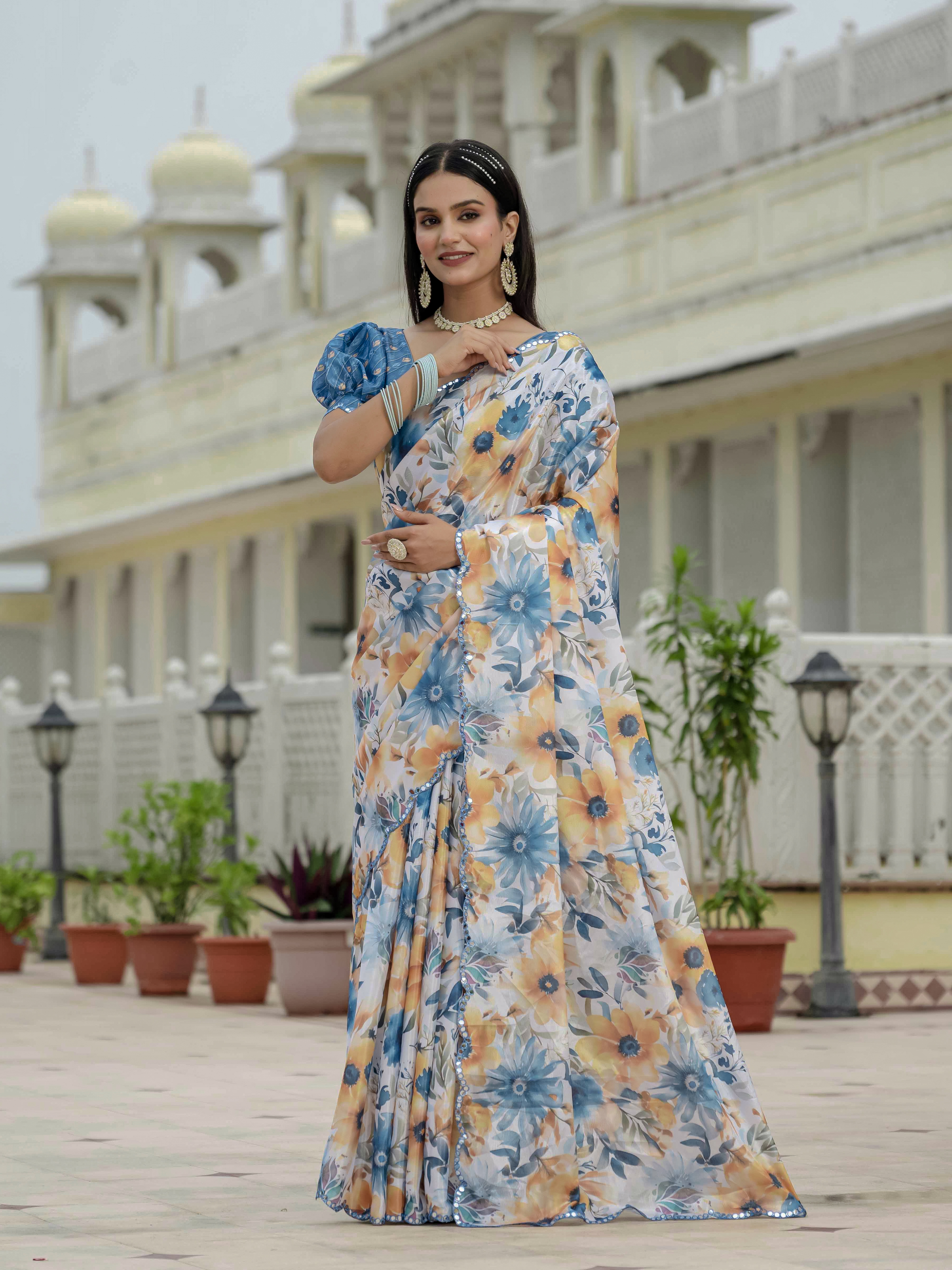
For Teej, green, pink, red and yellow connect naturally with seasonal styling. A printed saree, a kurta with a flared skirt or a three-piece suit allows the wearer to include bangles, mehendi-inspired accessories and floral hair details without looking overworked. Keep hems slightly shorter if rainwater and muddy paths are likely.
Rakhi usually involves a daytime family visit, so a polished kurti-pant set or an easy saree is sufficient. Pink Chanderi Cotton Kurti Pant Dupatta Set can move from a home ceremony to lunch with only a change of earrings and footwear. Choose a washable or easily aired fabric if children, sweets and repeated travel are part of the day.
Monsoon dressing benefits from a small emergency kit. Carry safety pins, a spare hair tie, stain-removal wipes, a transparent shoe bag and a foldable scarf. Avoid dragging a heavily embellished dupatta through wet floors, and dry damp garments in shade rather than placing silk or satin directly under intense sunlight.
Punjab Festival Fashion Calendar: What to Wear for Punjabi Weddings
Punjabi wedding dressing works best when each event has its own level of ornamentation instead of repeating the heaviest outfit at every function. Mehendi and Haldi favour colour and movement, the sangeet allows sparkle, the wedding ceremony calls for respectful elegance, and the reception can support a more structured formal look.
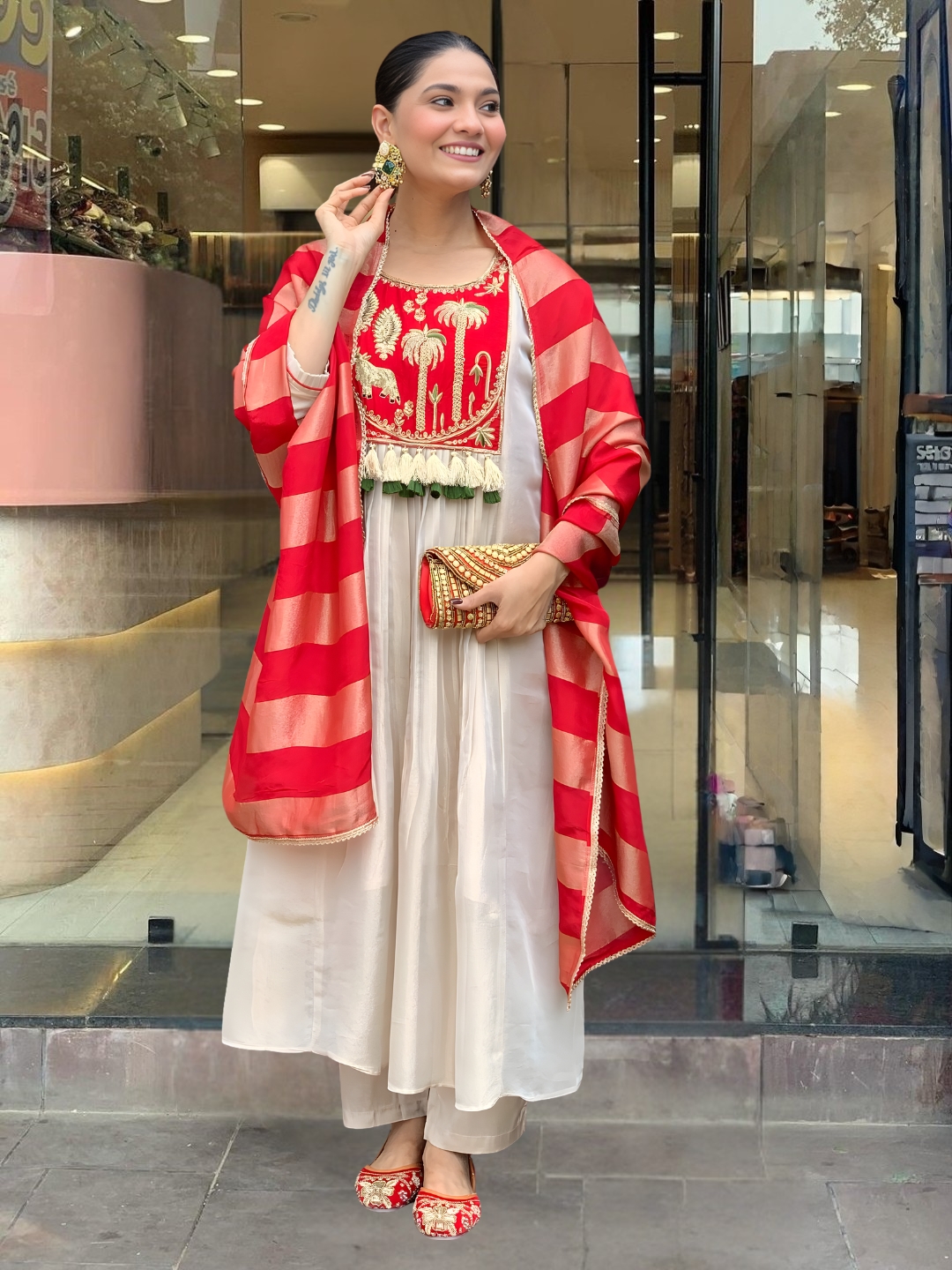
Haldi ceremony
A Haldi ceremony outfit should be washable, comfortable and visibly cheerful because turmeric paste can stain fabric permanently. Yellow, lime, white, peach and orange cotton suits, short Anarkalis or simple shararas are practical choices, while expensive silk and pale unlined fabrics require extra caution.
Use small earrings, flat sandals and a dupatta that can be pinned away from the hands. Avoid floor-length hems if guests will sit on the floor, and choose embroidery that won't scratch when the outfit becomes damp. A cotton kurta pant set is often more practical than a layered lehenga.
Mehendi and sangeet
Mehendi and sangeet outfits should prioritise arm movement, secure sleeves and footwear that remains comfortable after several hours. Bright shararas, ghararas, Anarkalis, palazzo suits and printed sarees work well because they photograph attractively while allowing the wearer to sit and dance.
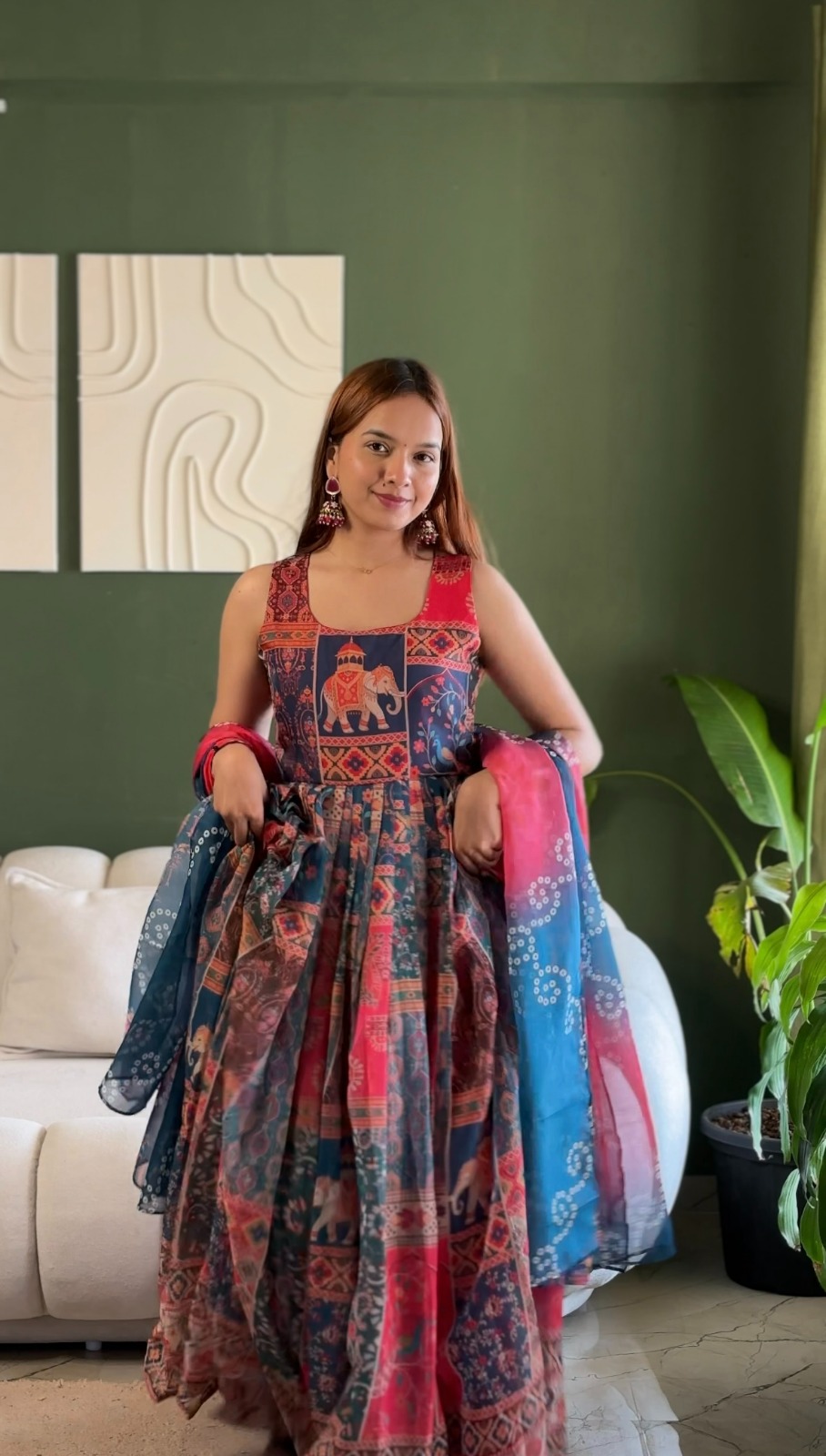
Royal Patola Printed Designer Gown with Elegant Dupatta gives a dramatic sangeet option when the venue is formal and the floor is clear. Keep the dupatta anchored at one shoulder with concealed pins, and choose earrings that balance the gown without competing with its print.
Wedding ceremony
A Punjabi wedding ceremony outfit should combine formal detail with respectful coverage and enough comfort for a long programme. Purple Wedding Wear Embroidered Saree works for an evening ceremony when paired with a well-fitted blouse, a secure petticoat and jewellery that doesn't pull at the neckline.
Silk, Banarasi silk, zari, embroidered georgette and organza can all suit a wedding, but fabric weight should match the season. A saree with dense zari may become tiring after six hours, so test the drape at home and walk, sit and climb stairs before the event.
Reception
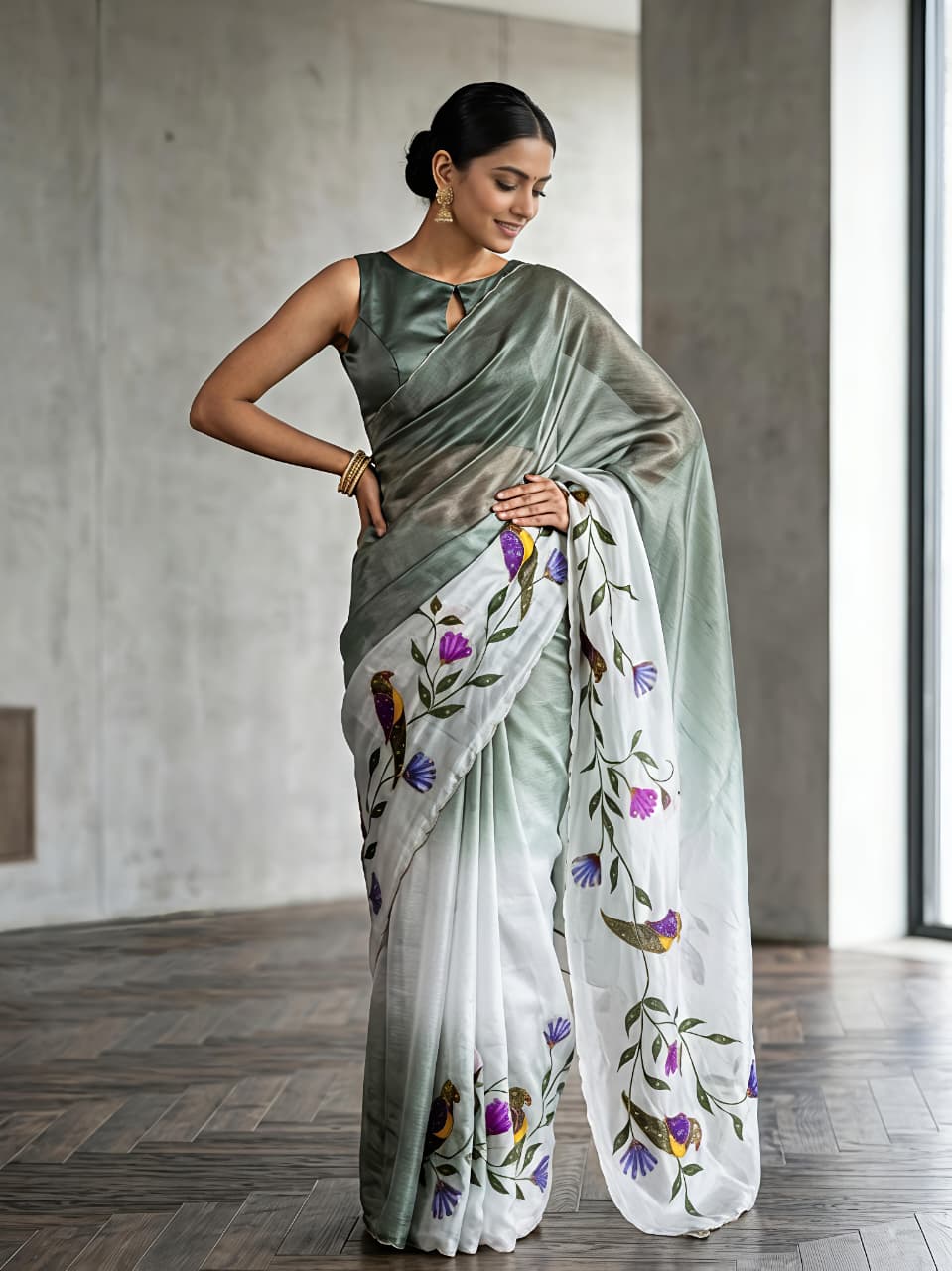
A reception permits stronger glamour because the setting is commonly an evening banquet or hotel hall. Purple Wedding Wear Embroidered Saree can be restyled with a different blouse and metallic clutch, while Red Satin Floral Print Saree with Unstitched Blouse Textile brings a vivid alternative for guests who prefer a fluid saree over a lehenga.
For a more structured silhouette, Royal Patola Printed Designer Gown with Elegant Dupatta creates impact without requiring multiple layers of a traditional skirt. Keep accessories deliberate: one statement necklace or large earrings are usually enough when the garment already includes print, zari or embroidery.
Punjab Festival Fashion Calendar: What to Wear for Final Styling and Care
The most reliable final styling check is a ten-minute movement test performed before the event. Walk, sit cross-legged, raise both arms, turn quickly and use the restroom while wearing the complete outfit, including jewellery and footwear.
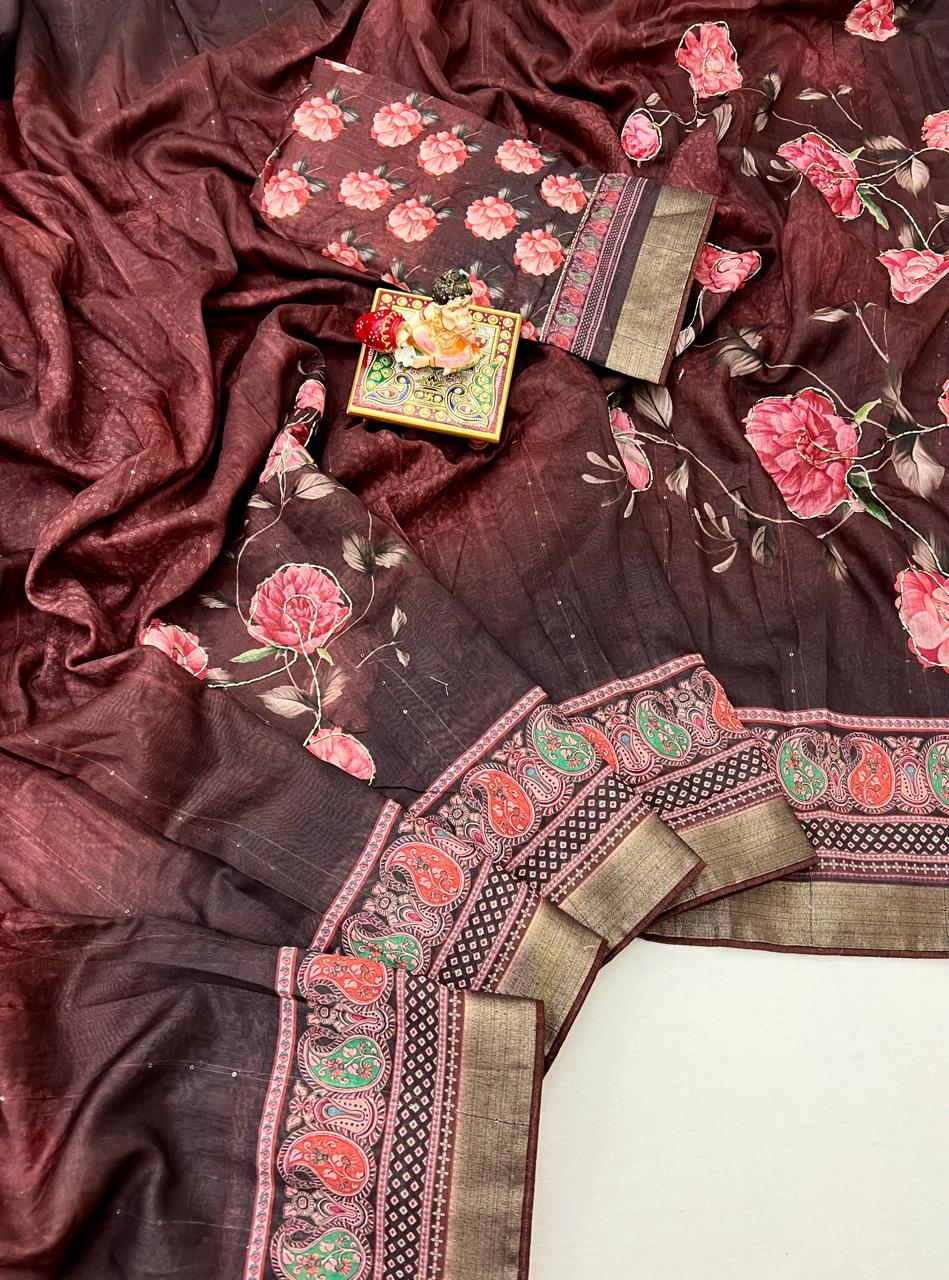
Secure a saree pallu or dupatta with two or three small safety pins placed beneath decorative borders. Test the pins on a hidden seam first, especially on satin, organza and delicate Chanderi. Keep a spare pin, fashion tape and a compact sewing kit in the handbag.
Care instructions depend on fibre and finish. Air silk, Banarasi silk and satin after wearing, remove surface dust with a soft brush and follow the garment's stated dry-cleaning instructions. Cotton can often be hand-washed in cool water, but zari, colour bleeding and lined garments require a care-label check before washing.
Store embellished clothing in a breathable cotton cover rather than sealed plastic. Fold heavy zari garments with acid-free tissue between layers, and avoid hanging knit or heavily beaded pieces for long periods because shoulder seams can stretch. These small habits keep festival clothing wearable across multiple celebrations.
Common Questions About the Punjab Festival Fashion Calendar
What should I wear to Lohri in Punjab?
Wear a warm kurta pant set, Patiala-style suit or long Anarkali in colours such as red, rust, mustard, magenta or purple. Add a shawl and closed-toe juttis, and keep loose dupatta ends away from the bonfire.
What is suitable to wear for Baisakhi?
Choose a breathable cotton suit, cotton-silk saree, lightweight Anarkali or kurta with straight pants in bright colours. Select footwear that supports walking and dancing, and carry a dupatta or scarf for respectful head covering inside a gurdwara.
What should women wear to a Gurpurab at a gurdwara?
A modest salwar suit, long kurta with pants, Anarkali or saree is suitable when the shoulders and knees are covered and the head can be covered with a dupatta or scarf. Flat footwear and restrained jewellery are practical for sitting, walking and removing shoes.
What should I wear to a Punjabi Haldi ceremony?
Choose a washable cotton suit, short Anarkali, sharara or kurta pant set in yellow, orange, peach, lime or white. Avoid expensive silk, pale unlined fabrics and long hems because turmeric paste can stain and outdoor seating may be messy.
Which outfit works for several Punjabi wedding events?
A versatile kurta pant set can work for a daytime family function, while an embroidered saree or formal gown is better for a wedding ceremony or reception. Changing the dupatta, jewellery and footwear can alter the formality without buying an entirely new outfit.
How can I keep a festival dupatta secure while dancing?
Pin the dupatta at the shoulder and, when necessary, at the waist or opposite side seam using concealed safety pins. Test the complete drape by raising both arms and turning before leaving home, and avoid very long loose borders in crowded venues.