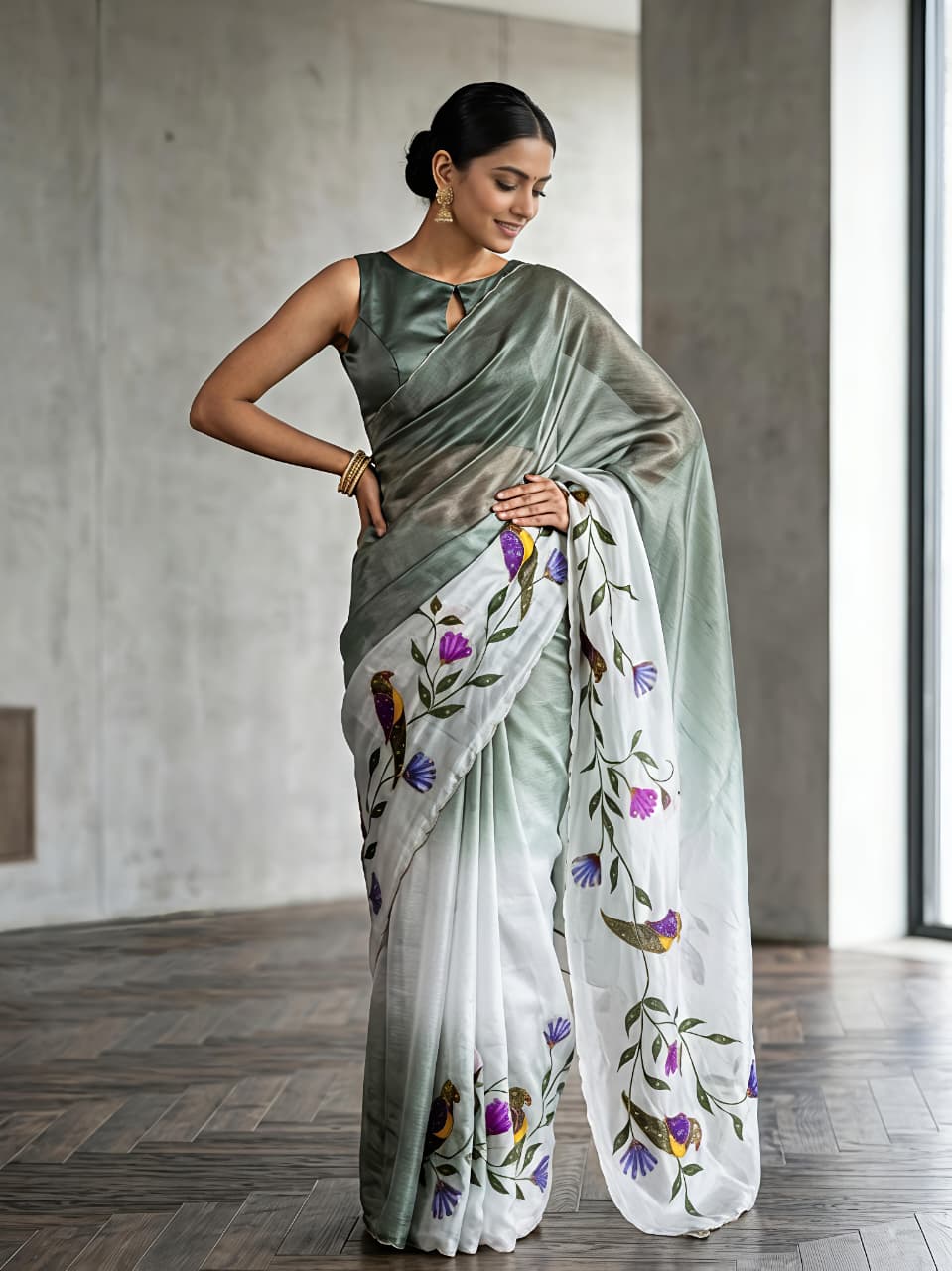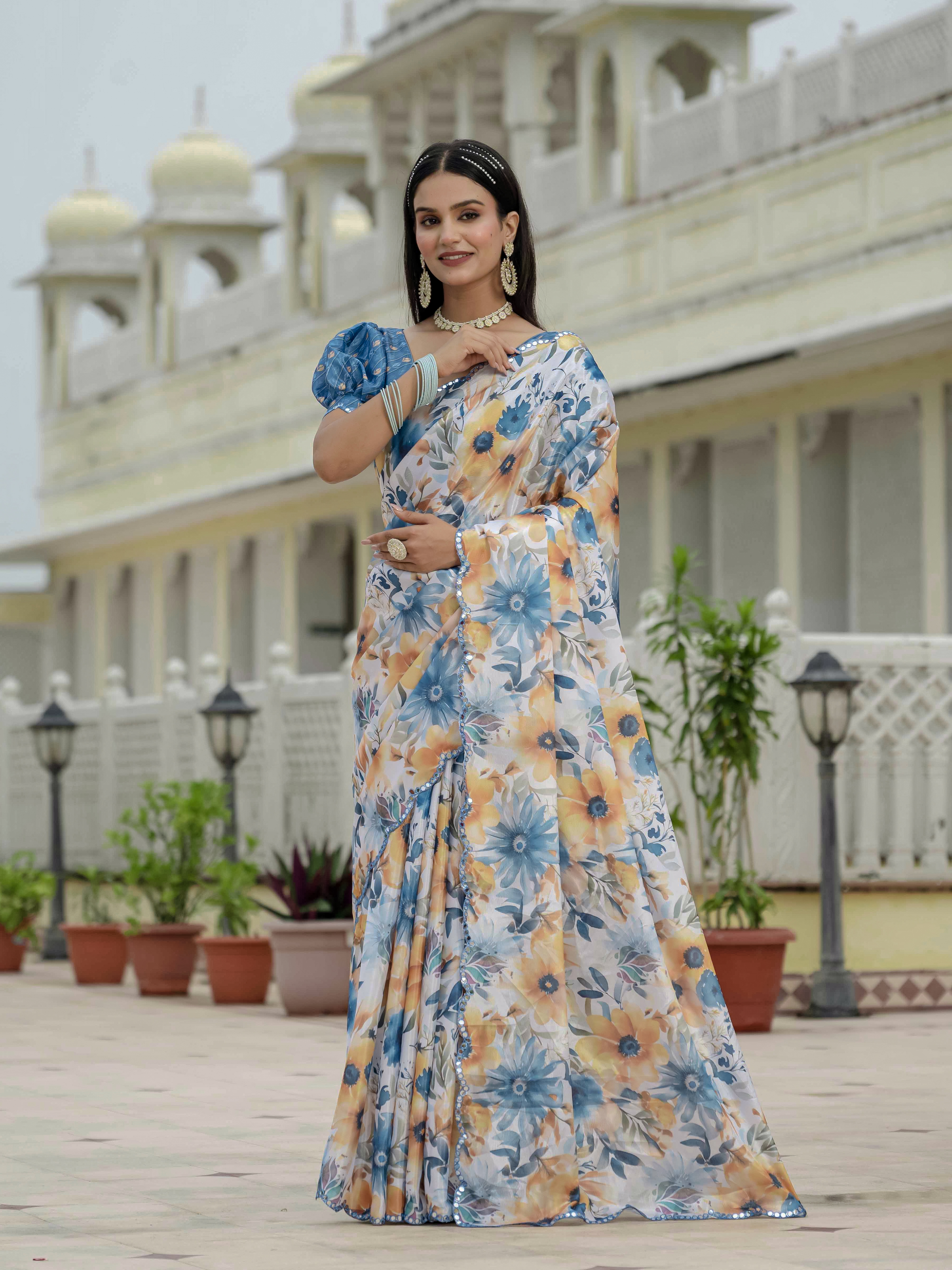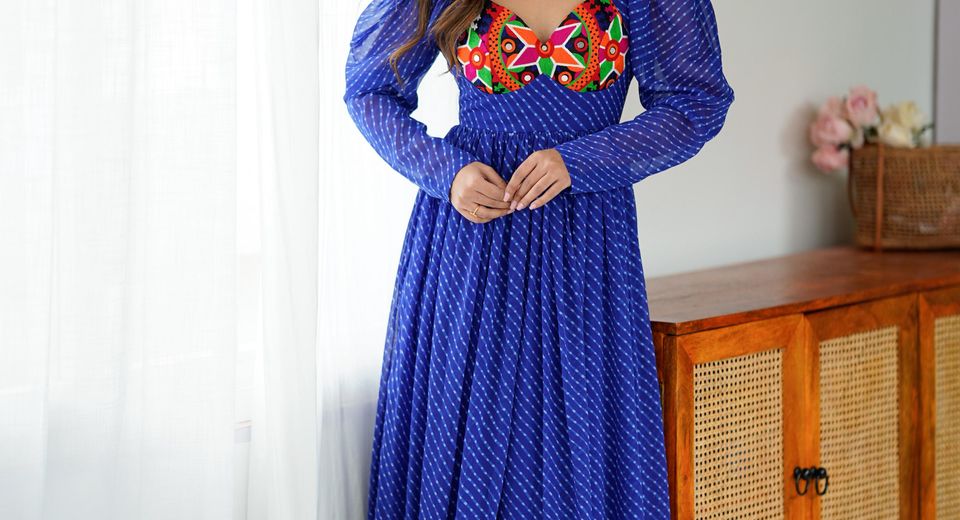
Printed Salwar Suits for Colorful Navratri Days need to handle more than photographs: they must remain comfortable during puja, allow movement during garba, and look festive under changing evening lights. The right choice depends on print scale, fabric weight, trouser shape, sleeve design and dupatta security as much as on colour.
Navratri dressing has an important advantage over heavily embellished clothing. A well-chosen printed kurta set can bring colour, rhythm and regional character to an outfit without adding the weight or scratchiness of dense sequin work. The result is easier movement, simpler maintenance and more scope for repeating pieces across nine nights.
Why Printed Salwar Suits Suit Navratri Celebrations
Printed salwar suits work well for Navratri because they combine visual energy with comparatively light construction. Garba and dandiya involve repeated arm movements, turning, walking and standing, so a wearable outfit should not depend entirely on heavy embroidery or a rigid silhouette to look celebratory.
Prints create movement even when the garment itself is still. Florals, butis, paisleys, geometric motifs and hand-printed patterns can catch attention as the wearer moves around a circle. A print also helps balance accessories: a richly patterned kurta may need only earrings and bangles, while a quieter print can carry a more dramatic dupatta or necklace.
Printed clothing is particularly useful across the nine-day festival because every night can have a different mood. A bright yellow set suits daytime puja, while a jewel-toned design feels appropriate for a late garba event. A soft floral outfit can work for family visits or aarti. Reusing one printed kurta with palazzos, straight pants or a contrasting dupatta creates several distinct combinations without buying nine complete outfits.
Printed Salwar Suits for Colorful Navratri Days Need the Right Print Scale
The best Navratri print depends on the event, your preferred level of visual drama and the scale that suits your frame. Large motifs make a stronger statement, while smaller repeats look more understated and are easier to accessorise.
Large motifs and border prints
Large florals, oversized paisleys and broad geometric motifs give a salwar suit an expressive festive appearance. These prints work especially well on an Anarkali or a long kurta because the design has enough surface area to remain visible below the waist. A border print at the hem can also suggest movement without making the bodice look busy.
A large print is most effective when the rest of the outfit is controlled. Pair a patterned kurta with a solid bottom in one of the print's secondary colours. A blue printed kurta, for example, can be grounded with ivory, navy or muted green trousers instead of another competing pattern.
Small butis, florals and repeated motifs
Small motifs suit shoppers who want a versatile outfit that can move between Navratri, casual festive lunches and family gatherings. Butis and compact florals leave more room for statement earrings, layered necklaces or a contrasting dupatta. Small repeats also tend to photograph evenly because they don't create large areas of visual contrast.
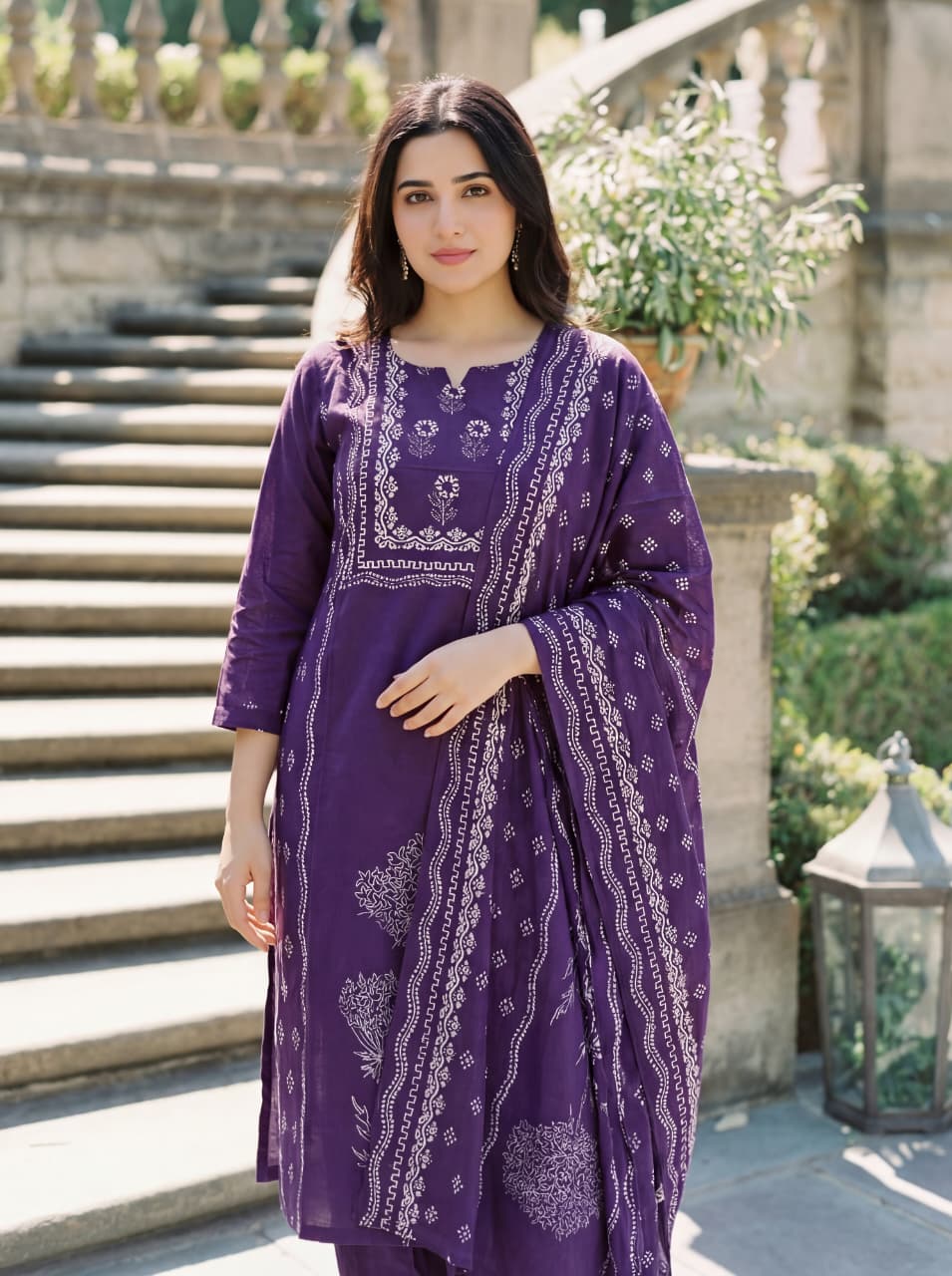
Hand-printed designs can have slight variations in spacing, ink depth or motif alignment. Those variations are normal in many artisanal-looking textiles and should not automatically be treated as defects. Purple Hand Printed Muslin Kurta Set Women | Varnavi Online shows how a tactile, hand-printed surface can provide character without relying on heavy ornamentation.
Fabric Choices for Puja, Garba and Long Festive Evenings
Fabric choice matters because Navratri outfits may be worn for four to eight hours, sometimes in warm weather and crowded venues. Breathability, drape, opacity and drying time should be considered before colour or embellishment.
Georgette for fluid movement
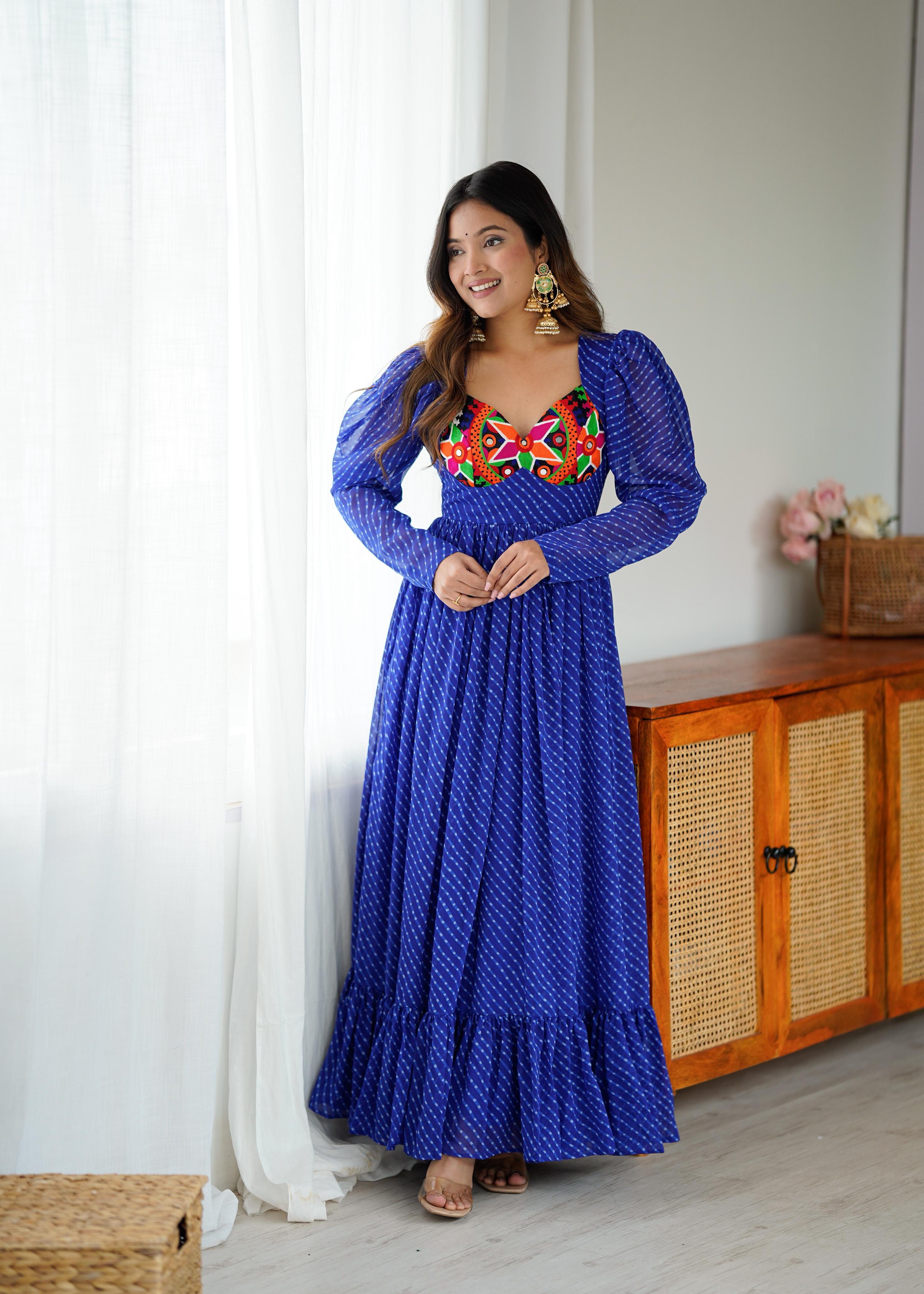
Georgette offers a fluid drape and works well when you want the kurta or gown to move as you walk and turn. Blue Printed Georgette Designer Gown for Women Festive demonstrates why a flowing georgette layer can look animated in photographs. Because georgette can be lightweight and slippery, check whether the neckline, lining and sleeve openings provide enough coverage for active movement.
Muslin and cotton-rich options for comfort
Muslin is a practical choice for a softer, lighter outfit, particularly for daytime puja or outdoor celebrations. Muslin usually feels less restrictive than a structured synthetic fabric, although the exact comfort depends on the weave, lining and finish. Linen-cotton blends can also be useful when you want a more breathable surface with enough structure for a neat kurta set.
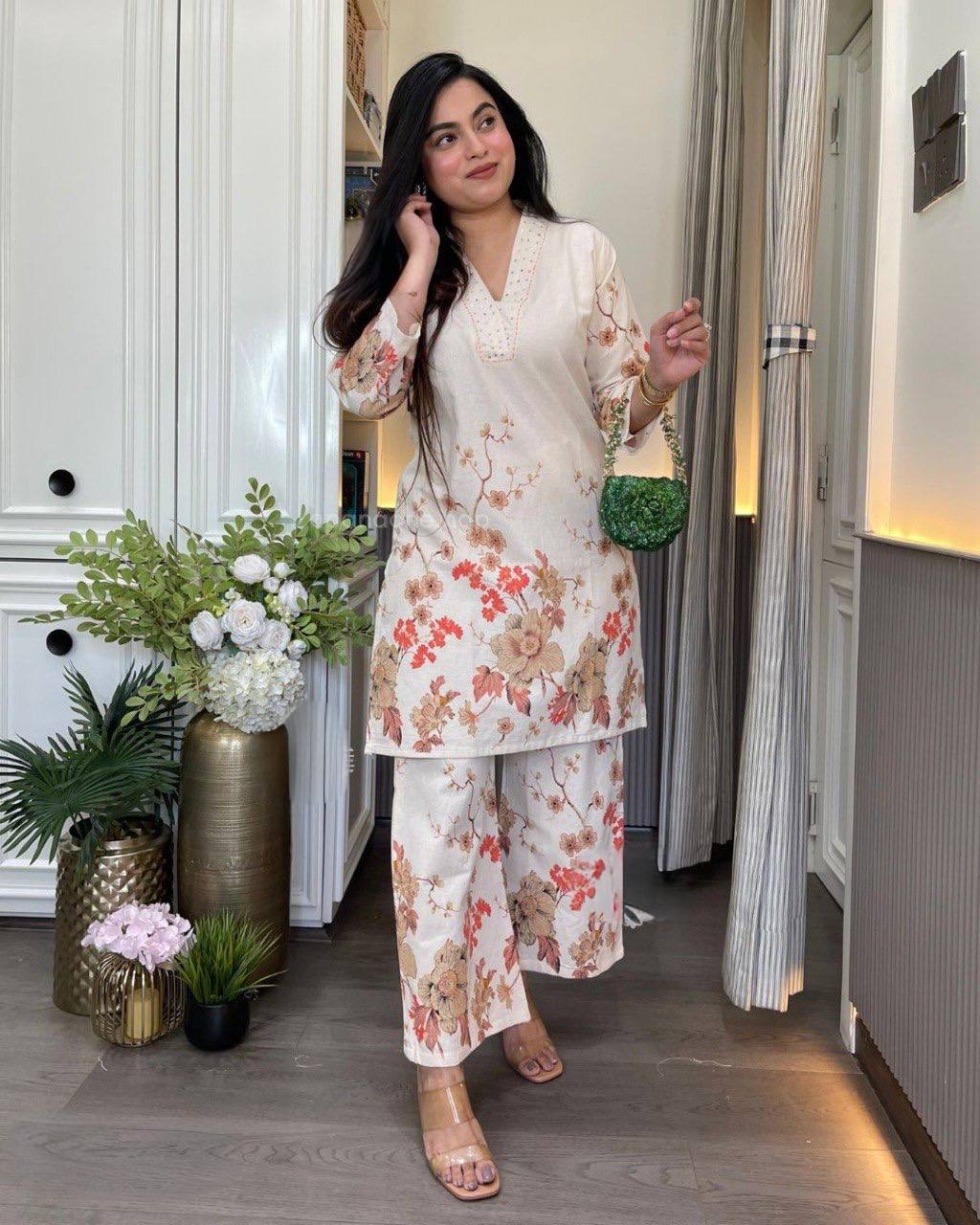
Ivory Floral Linen Cotton Co-Ord Set for Women from Varnavi illustrates how a natural-fibre blend can create a polished festive base. Ivory isn't limited to casual styling: colourful bangles, a bright dupatta and metallic earrings can shift an ivory floral co-ord set into a Navratri-ready outfit.
Silk blends and jacquard for a dressier night
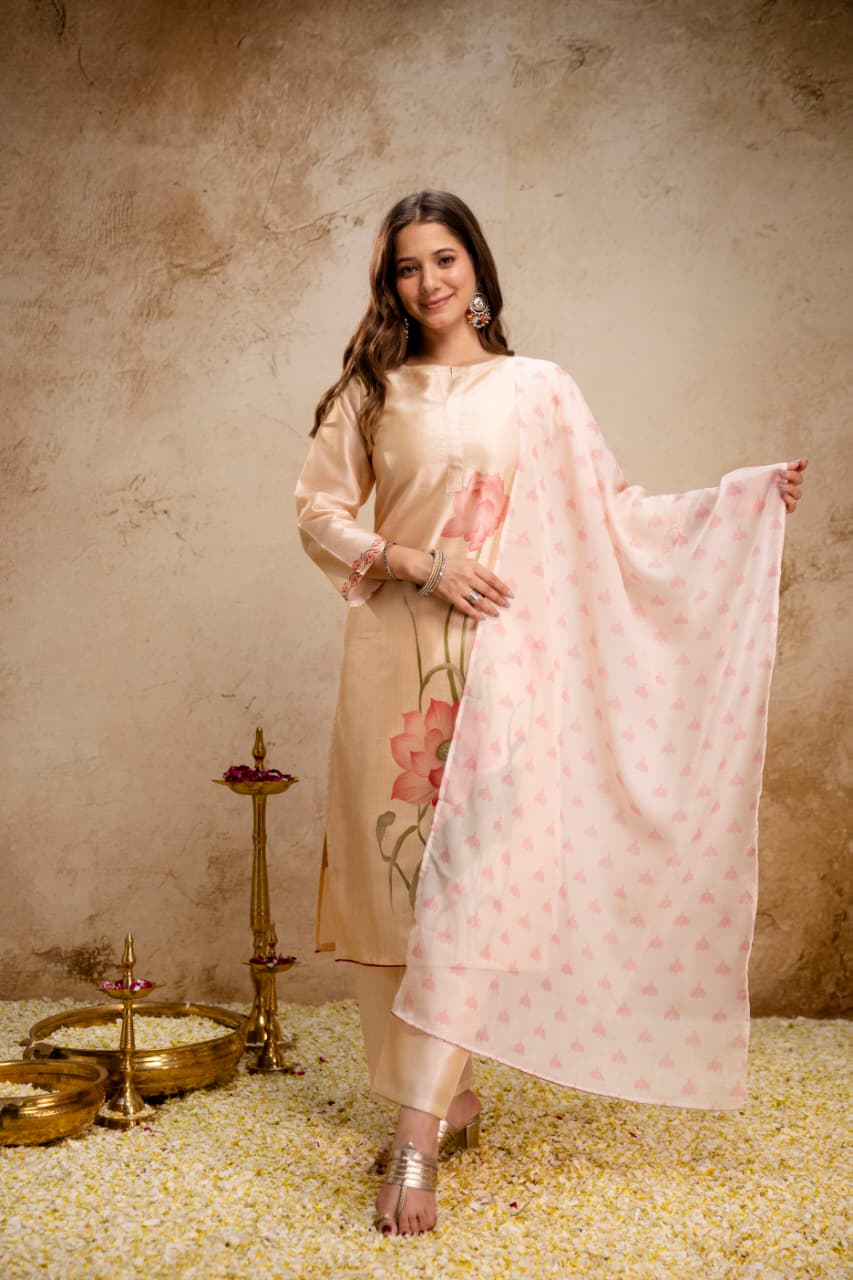
Silk blends and jacquard fabrics bring more body and sheen to evening dressing. Peach Assam Silk Kurta Set with Printed Organza Dupatta combines a richer-looking kurta surface with a lighter, more transparent dupatta effect. Assam silk-inspired textures can feel more substantial than muslin, so the outfit is better suited to a shorter event or a cooler venue than a long outdoor dance session.
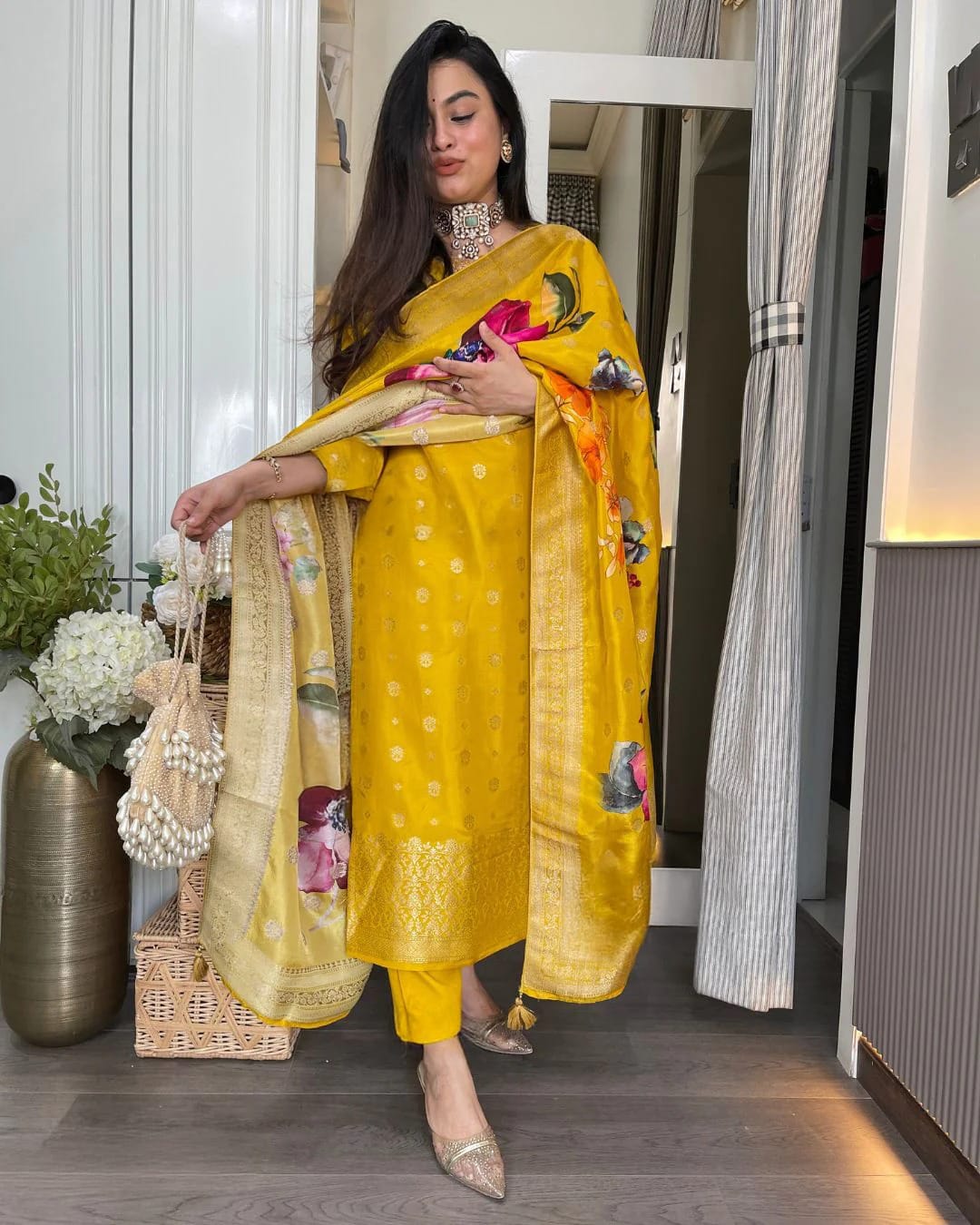
Jacquard has a woven pattern rather than a surface print, which can make it look dressy even when embroidery is restrained. Mustard Yellow Jacquard Kurta Set with Embroidery & Dupatta is a strong example of using texture, colour and selective embellishment together. A jacquard set may need less jewellery than a plain cotton kurta because the weave already supplies visual depth.
Silhouettes That Let You Move During Garba
A comfortable Navratri silhouette should allow a full stride, free arm movement and easy sitting without pulling across the hips or shoulders. The most suitable shape depends on the dance style, the venue and whether you'll travel in the outfit.
Anarkali suits
Anarkali suits provide a graceful flare that becomes noticeable during turns. A moderate flare is easier to manage in a crowded garba circle than an extremely wide hem. Check the length before wearing the outfit with footwear, because a hem that brushes the floor can catch under sandals or become dirty outdoors.
Ladies Dress Anarkali Salwar Suits is a useful collection to consider when you want a longer, more fluid silhouette. Choose an Anarkali with a well-finished lining and enough room at the armhole; tight armholes can make repetitive dance movements uncomfortable even when the skirt portion feels spacious.
Straight kurtas with palazzos or pants
A straight kurta with palazzos or relaxed pants is often the most practical choice for walking, sitting and travelling between venues. The shape gives a clean outline and makes it easy to separate a printed top from a solid bottom. Wide palazzos provide movement, while straight pants take up less space in a crowded setting.
For a first Navratri purchase, a printed straight kurta set in a breathable fabric usually gives more repeat-wear value than a highly specific party silhouette. A set can be worn with flats for daytime errands, juttis for family events or low wedges for a more formal evening.
Sharara-inspired and flared bottoms
Flared bottoms add festive volume, but the flare should not interfere with your steps. Look for a comfortable waistband, secure seams and enough room at the thigh. A shorter kurta can highlight the shape of a sharara, while a longer kurta creates a more covered and streamlined appearance.
How to Plan Colour Without Making the Outfit Look Busy
A simple three-colour rule keeps a colourful Navratri outfit coordinated: select one dominant colour, one supporting shade and one metallic or neutral accent. The rule is flexible, but it prevents the print, dupatta, jewellery and footwear from competing equally for attention.
Mustard yellow works with maroon, green, pink, ivory and antique gold. Purple pairs effectively with lilac, pink, silver, teal and deep blue. Blue prints can be softened with ivory or powder blue, or made more festive with fuchsia, orange or gold. Peach and coral suit warm metallics, while ivory creates a calm base for almost any bright accessory.
Navratri colour traditions vary by region, family and yearly calendars, so a prescribed colour list should be treated as inspiration rather than a strict rule. If your family follows a colour for each day, use the day's shade in the dupatta, bangles or earrings when the main printed suit doesn't match exactly.
Dress Materials is useful when you want to coordinate a custom-stitched red element with an existing printed kurta. Red Dress Materials Under 2000 can also help shoppers build a festive outfit on a defined budget. Dress materials allow greater control over sleeve length, kurta ease and trouser width, although tailoring time should be included in the buying plan.
Dupatta, Jewellery and Footwear That Stay Secure
A secure dupatta should remain in place without constant pinning adjustments. Choose a dupatta with a manageable length, place one concealed pin at the shoulder and use a second pin near the waist or side seam if the fabric shifts during movement.
Organza and other crisp dupattas create a defined outline but can feel less forgiving when dancing. Softer cotton, muslin or blended dupattas generally stay closer to the body. A printed suit with a plain dupatta often looks balanced, while a plain kurta can support a bold printed or woven dupatta.
Jewellery should be selected according to the neckline and the expected movement. Jhumkas or medium-sized chandbalis are less likely to catch in hair than very long earrings. Lightweight bangles can create the sound and colour associated with festive dressing without making the wrists tiring during dandiya. If the kurta has a high neckline or an elaborate print, earrings may be enough; a simpler V-neck can support a short necklace.
Footwear should have a secure strap, a cushioned sole and a heel height that you can manage for several hours. Flat juttis, embroidered sandals and low block heels are generally more practical than narrow stilettos on uneven outdoor ground. Wear new footwear indoors for at least two short sessions before Navratri to identify rubbing points.
Budget Planning and Buying Checks for Navratri Outfits
A useful Navratri buying budget includes the outfit, alterations, footwear, accessories and possible delivery time. A discounted garment isn't necessarily economical if the hem, sleeves or waistband require extensive tailoring.
Salwar Suits with 30% Off and Salwar Suits Flat 40% Off can be useful starting points for comparing festive options, but shoppers should still check fabric composition, measurements, lining and wash instructions. A lower price makes most sense when the outfit can be worn beyond one night of Navratri.
Before ordering, compare your body measurements with the garment chart rather than relying only on a familiar small, medium or large label. Measure the fullest bust, natural waist, hip and preferred kurta length. For palazzos and shararas, check the waistband and thigh measurements separately. Allow enough time for alterations, especially if the event falls during a busy festive delivery period.
Inspect the product description for closure details, lining, sleeve length and dupatta dimensions. A side zip, elastic waist or drawstring can change comfort significantly. A printed fabric may conceal minor marks more easily than a plain pale fabric, but ivory and pastel garments need extra care around food, makeup and outdoor seating.
Care That Keeps Printed Festive Wear Ready for More Than One Night
Printed salwar suits last longer when they're washed according to fibre and finish rather than treated as one category. Check the care label before soaking, ironing or sending a garment for dry cleaning.
Many delicate printed, muslin, silk-blend and organza pieces benefit from gentle hand washing in cool water with a mild detergent. Avoid prolonged soaking because loose dyes can migrate and printed surfaces can lose clarity. Press excess water between clean towels instead of wringing the garment.
Dry coloured garments inside out and away from harsh direct sunlight. Strong sunlight can fade deep purple, blue, red and mustard shades over repeated drying cycles. Use a padded hanger only after the garment is nearly dry if the fabric is prone to stretching; heavier wet garments are safer dried flat on a clean towel.
Iron printed pieces on the reverse side at the temperature suited to the fabric. Use a pressing cloth for organza, silk blends and synthetic surfaces. Store completely dry garments in breathable cotton covers, and avoid pressing heavy jewellery or embellished dupattas against the folded kurta.
Printed Salwar Suits for Colorful Navratri Days become more valuable when they can move from Navratri to Diwali lunches, family gatherings and festive office events. A balanced print, breathable fabric, secure fit and adaptable colour palette will usually serve you better than an outfit chosen only for one photograph.
Common Questions About Choosing Printed Salwar Suits for Navratri
Which fabric is most comfortable for a Navratri salwar suit?
Muslin, cotton-rich blends and lightweight linen-cotton fabrics are usually comfortable for long daytime events because they allow airflow and feel less restrictive. Georgette works well for fluid movement, while jacquard and silk blends are better suited to shorter or cooler evening celebrations.
Are printed salwar suits suitable for garba and dandiya?
Printed salwar suits are suitable for garba and dandiya when the kurta allows arm movement and the bottom has enough room for walking and turning. Secure the dupatta with concealed pins and choose footwear with a cushioned sole and a reliable strap.
How can I style a colourful printed suit without making it look too busy?
Use one dominant colour, one supporting shade and one neutral or metallic accent. Pair a large print with a solid bottom and simpler jewellery, or use statement earrings with a smaller floral or buti print.
What should I check before buying a Navratri salwar suit online?
Check the measurement chart, fabric composition, lining, kurta length, sleeve opening, bottom measurements and dupatta dimensions. Also allow time for alterations and confirm the care instructions before choosing a delicate silk-blend, organza or heavily coloured garment.
How do I stop a dupatta from slipping while dancing?
Place one concealed pin at the shoulder and another near the waist or side seam. A moderately sized dupatta in cotton, muslin or a soft blend generally stays more manageable during dancing than a very slippery or oversized piece.
Can I wear a printed salwar suit after Navratri?
You can wear most printed salwar suits for family lunches, festive office events, Diwali gatherings and casual celebrations after Navratri. Change the styling with a solid dupatta, simpler footwear or minimal jewellery to create a less occasion-specific look.