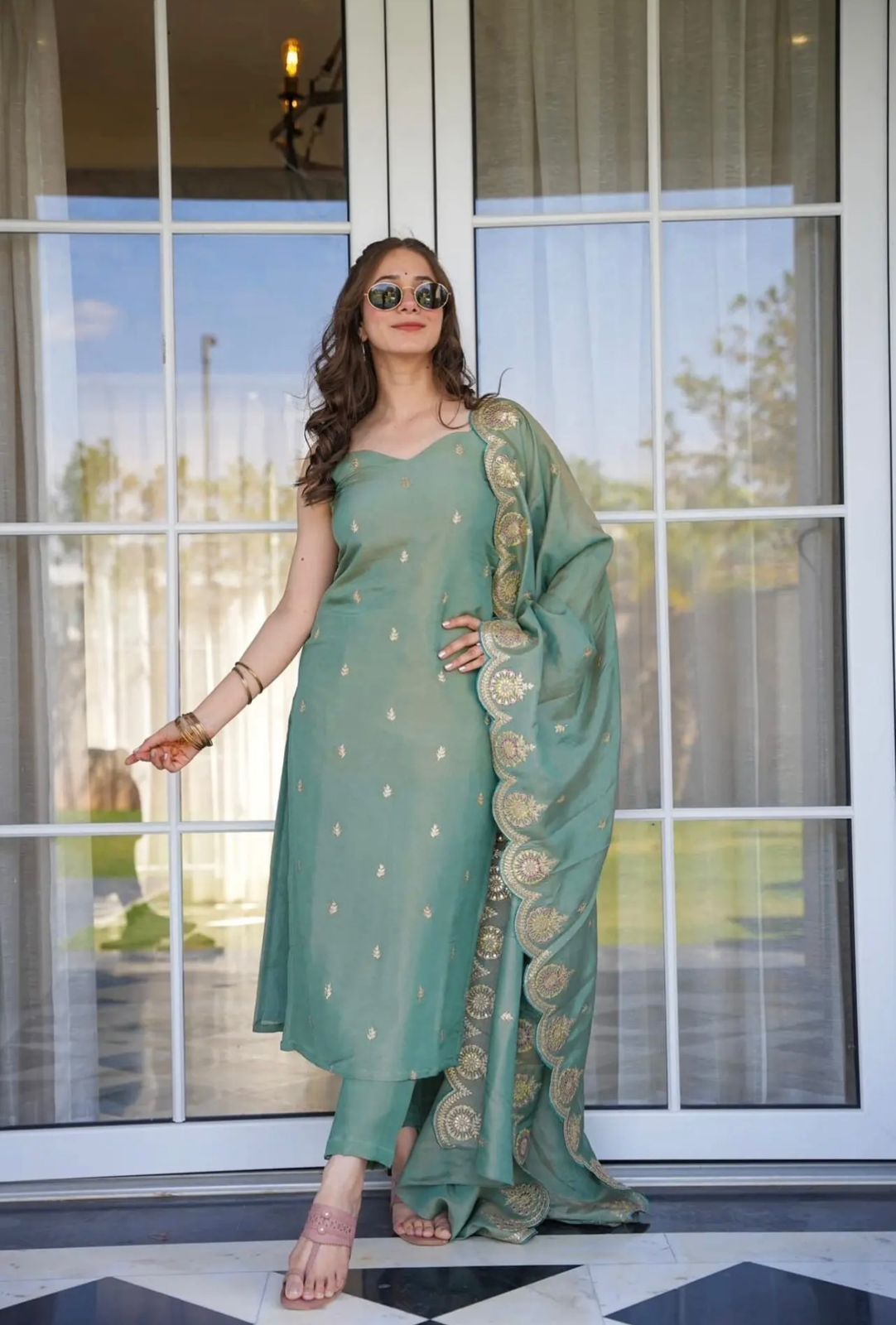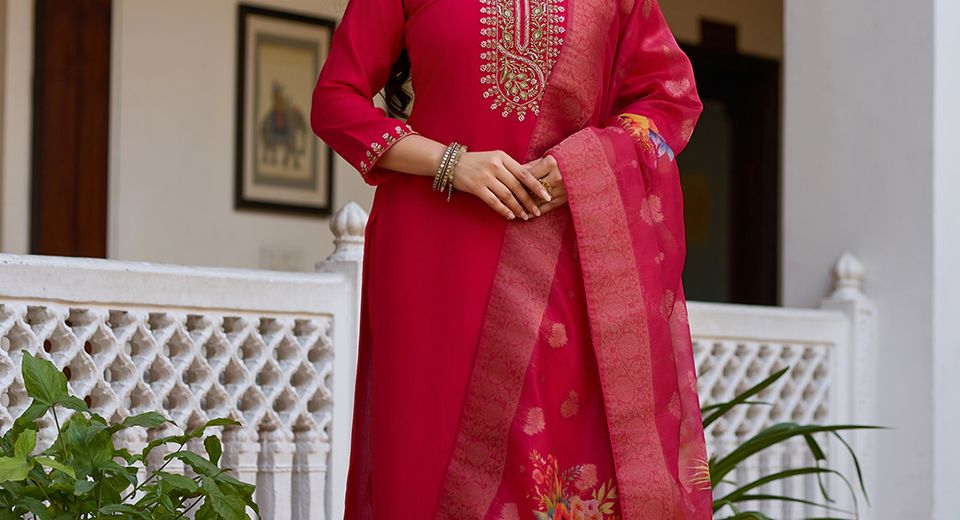
Popular Salwar Suit Styles in India range from easy straight-cut sets to dramatic Anarkalis, relaxed palazzo suits and richly embellished shararas. The right choice depends on more than colour: the kurta silhouette, bottom shape, fabric weight, dupatta and level of embroidery all affect comfort and proportion. Understanding those differences makes online shopping easier and helps you build a wardrobe that works for office hours, family gatherings, festivals and weddings.
A salwar suit usually has three visual components: a kurta or kameez, a lower garment and a dupatta. Modern suit sets may replace the traditional salwar with cigarette pants, palazzos, trousers or sharara bottoms. The same printed or embroidered kurta can therefore create very different outfits depending on the lower silhouette and styling.
How Popular Salwar Suit Styles in India differ
Popular Salwar Suit Styles in India differ mainly through the shape of the kurta and the volume of the bottom. A straight suit falls in a clean vertical line, an Anarkali widens from the waist or yoke, a Punjabi suit uses a shorter kurta with a fuller salwar, and a palazzo suit pairs a kurta with wide-leg trousers.
Silhouette affects both movement and visual balance. A flared Anarkali creates length when the hem begins below the waist, while a short kurta with a voluminous bottom draws attention towards the legs. A straight suit is usually easier to layer under a long jacket or wear with a structured dupatta drape.
Readymade sets also reduce the guesswork involved in coordinating three separate pieces. However, a coordinated set still needs checking for kurta length, sleeve comfort, waist placement, lining and dupatta dimensions. A beautiful neckline can't compensate for a bottom that restricts walking or a fabric that becomes uncomfortable after two hours.
Six silhouettes to know before buying a salwar suit
1. Straight-cut salwar suit
A straight-cut salwar suit is the most adaptable option for daily wear, workwear and small social occasions. The kurta falls almost evenly from the shoulder or chest to the hem, and the bottom is commonly a churidar, cigarette pant or straight trouser.
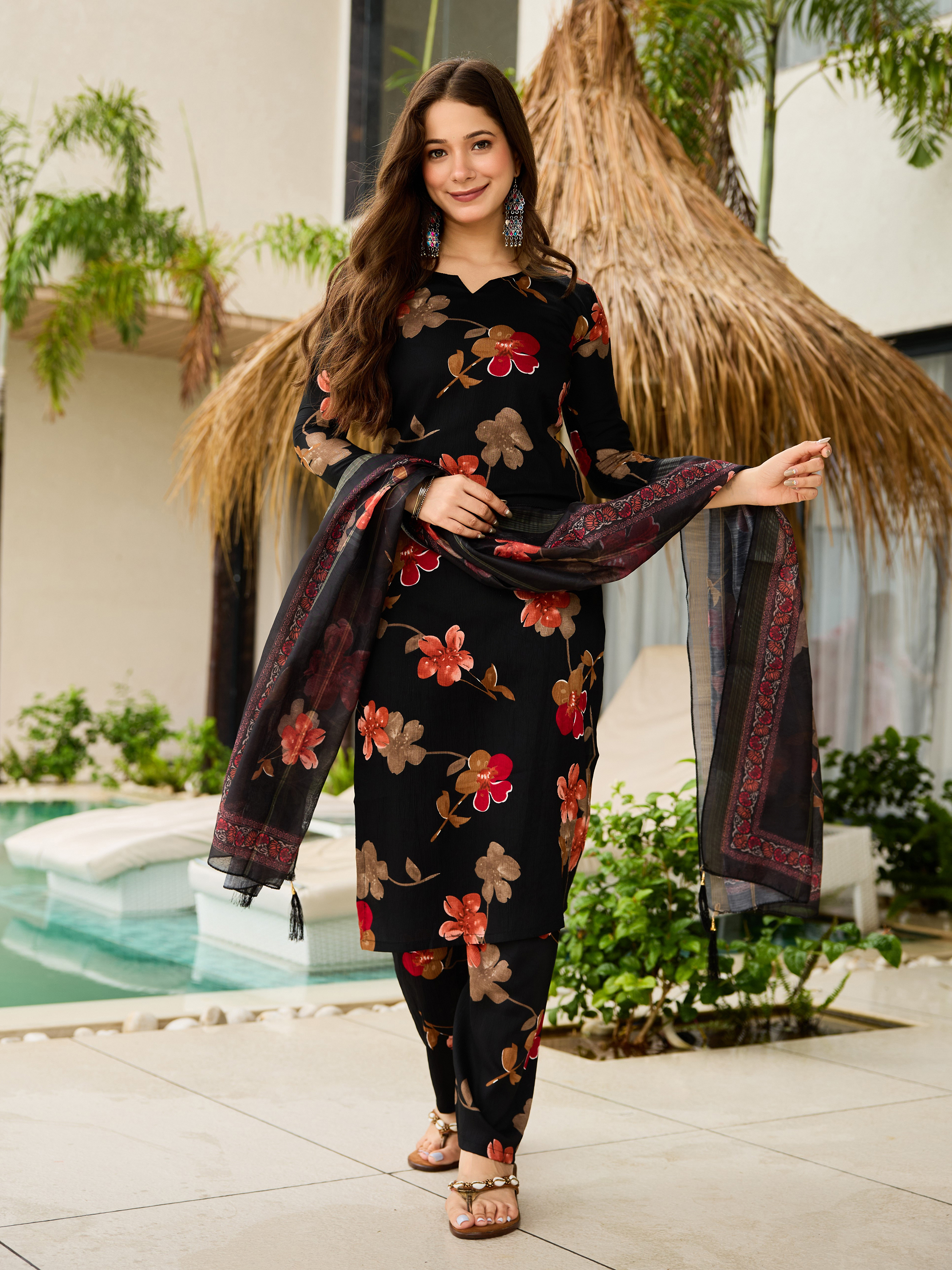
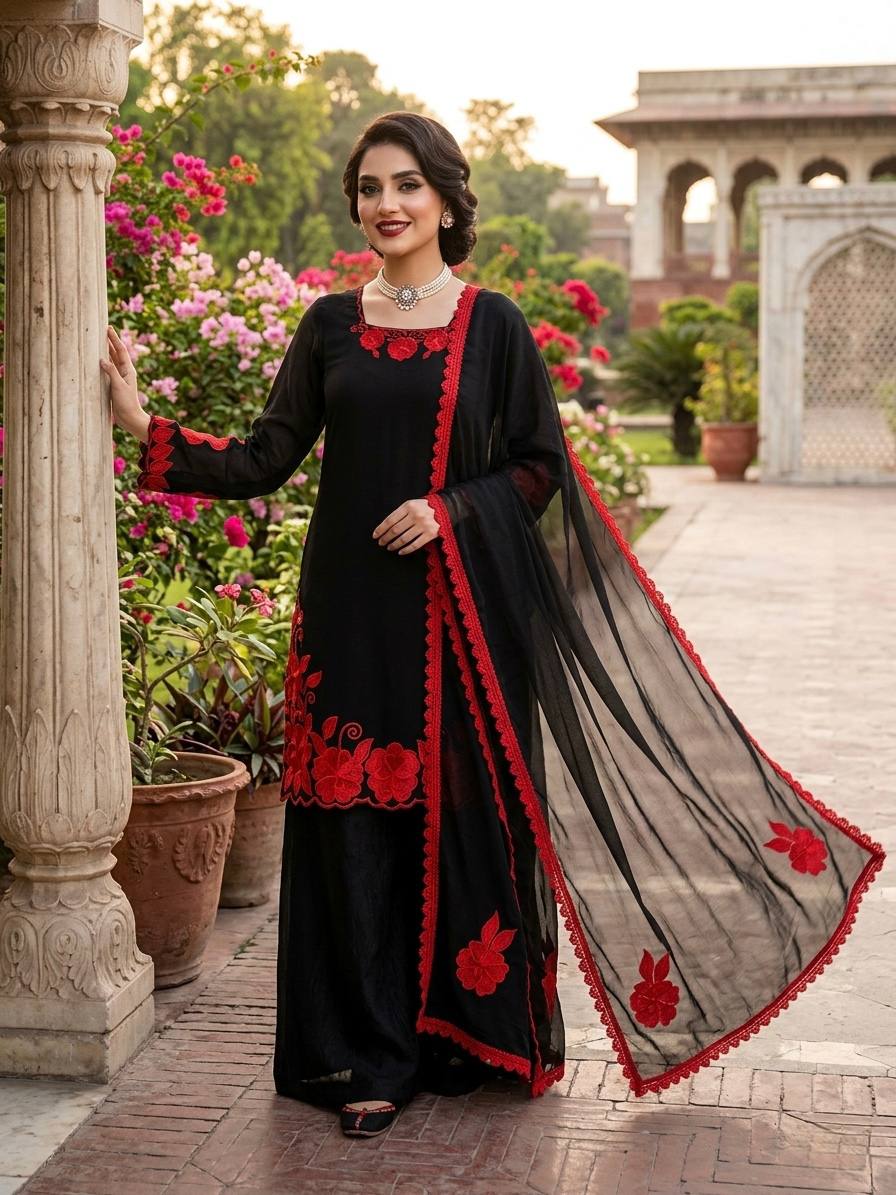
Vertical prints, side slits and a modest neckline make the straight silhouette look polished without requiring heavy accessories. A silk-blend example such as Black Floral Printed Silk Blend Salwar Suit can move from an afternoon gathering to dinner when paired with small earrings and a compact clutch. Straight suits also suit people who prefer a defined, uncluttered outline.
2. Anarkali suit
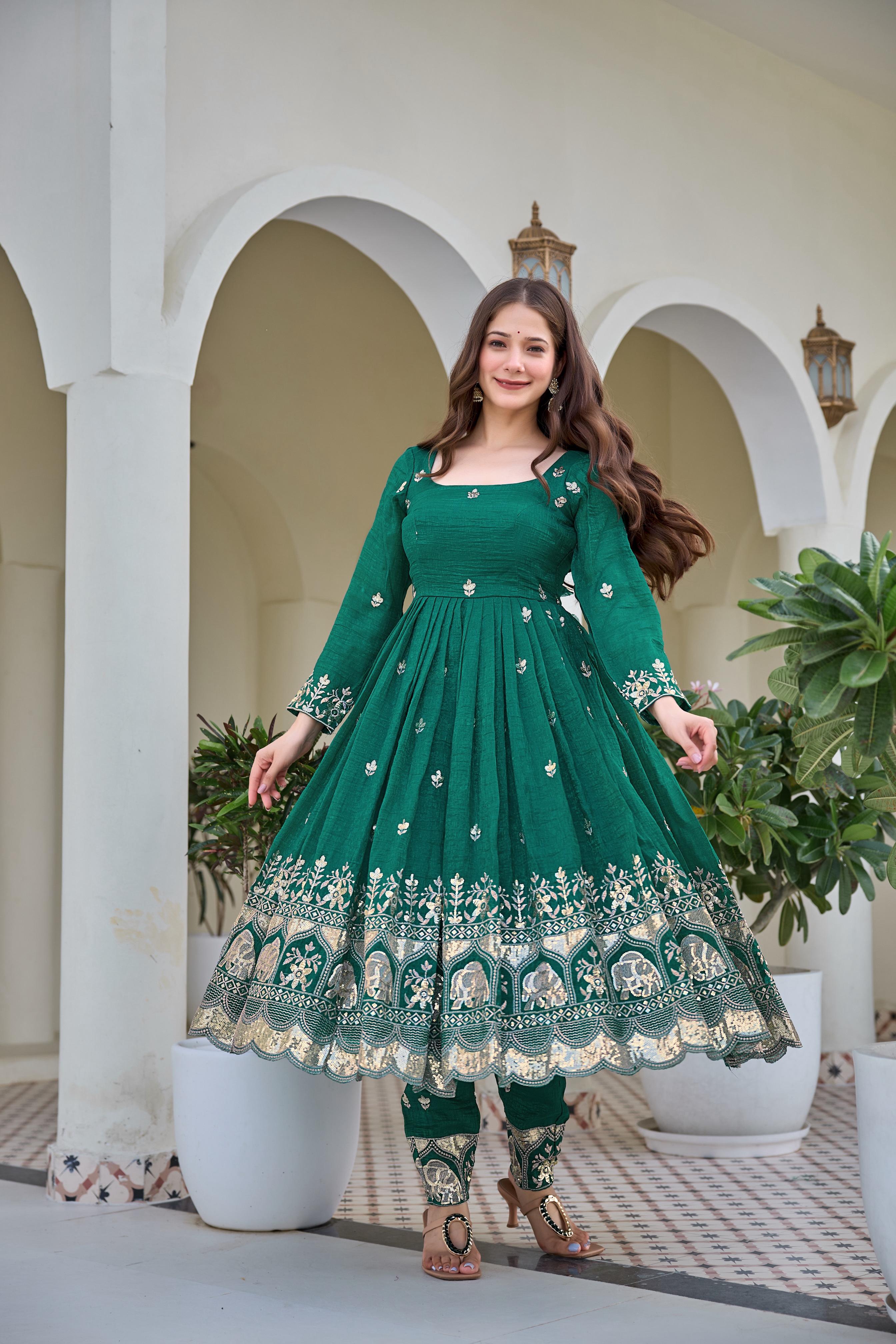
An Anarkali suit has a fitted or shaped upper section and a visibly flared kurta that opens towards the hem. The style works particularly well for festive dinners, sangeet functions, Eid gatherings and wedding-related events.
The amount of flare changes the character of the outfit. A lightly flared Anarkali is easier to sit in and can be worn during longer ceremonies, while a heavily panelled Anarkali creates a grander entrance but needs more room around the legs. Ladies Dress Anarkali Salwar Suits is an useful collection direction for shoppers who want to compare different degrees of volume.
3. Punjabi and Patiala suit
A Punjabi or Patiala suit traditionally combines a shorter kurta with a gathered, roomy salwar and a dupatta. The silhouette gives generous movement and carries a lively regional identity, especially when styled with juttis, paranda-inspired details or a neatly pleated dupatta.
Because the lower garment has significant volume, balance matters. A short or medium-length kurta keeps the outfit recognisably Punjabi, while a very long kurta can hide the folds and make the proportions look heavier. This style is especially practical for daytime celebrations and cultural events where ease of movement matters.
4. Palazzo suit
A palazzo suit pairs a kurta with wide-leg trousers that fall from the waist in a fluid line. The result feels contemporary while retaining the visual ease of a classic three-piece outfit.
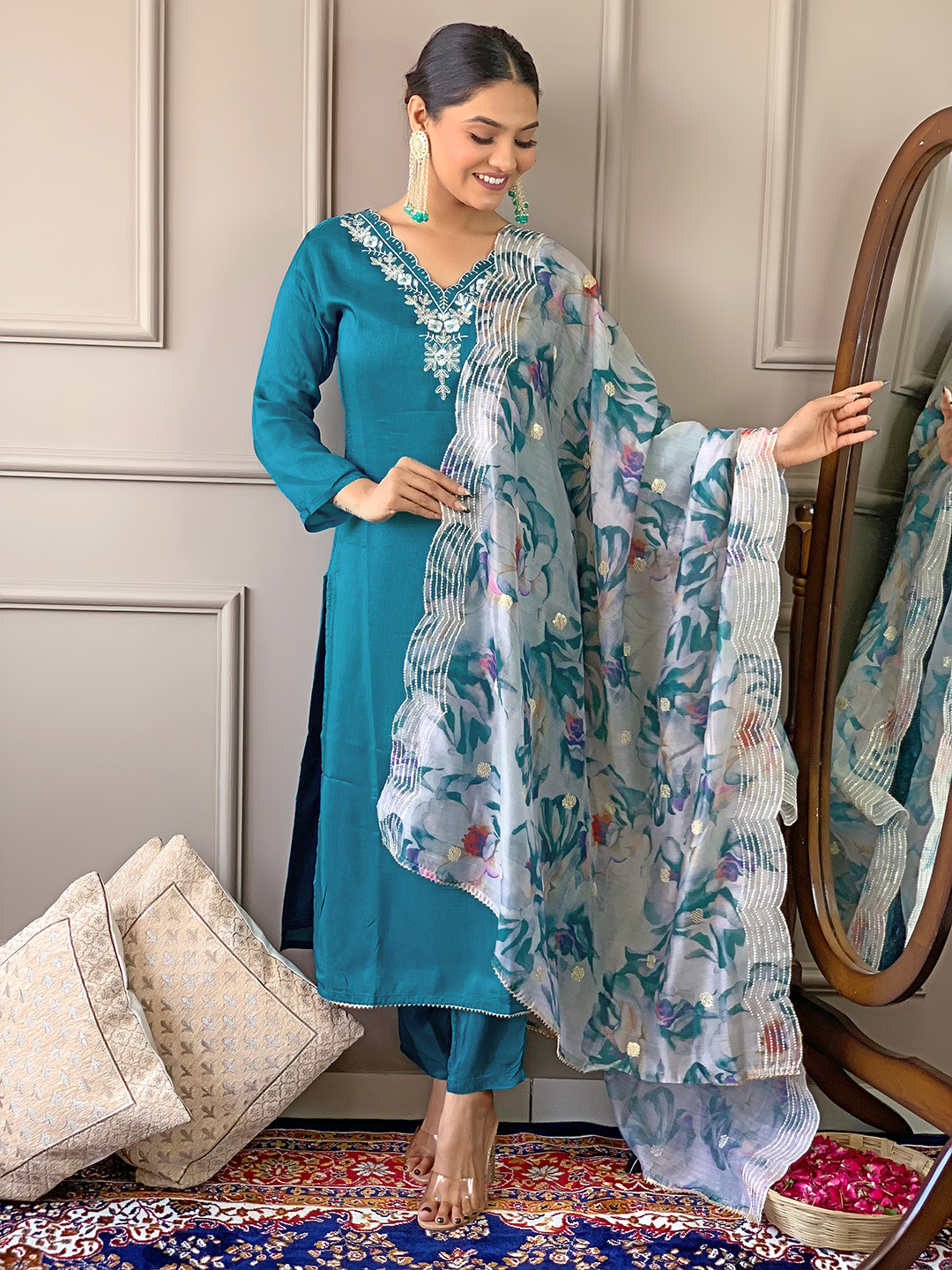
Palazzos work well with straight or slightly flared kurtas because both pieces create length. A long kurta and extremely wide trousers can overwhelm a petite frame unless the outfit has a clear waistline or a lighter fabric. Royal Navy Silk Kurti Pant Set with Zari Dupatta demonstrates how a trouser-based set can look occasion-ready when the dupatta provides the decorative focus.
5. Sharara and gharara suit
A sharara suit features wide, flared bottoms that may fall in a continuous shape from the waist, while a gharara usually has a more defined fitted section above a gathered or flared lower portion. Both silhouettes are strongly associated with festive dressing and wedding wardrobes.
These styles need careful attention to fabric weight and hem construction. Stiff brocade, layered georgette or extensive embellishment can increase volume around the lower body, whereas softer fabrics create a more fluid fall. A shorter kurta or peplum-style upper section often allows the distinctive bottom to remain visible.
6. Churidar and kurti-pant sets
A churidar suit uses a close-fitting lower garment that gathers in small folds near the ankle, while a kurti-pant set usually has a straighter, more tailored trouser. Both options create a neat line under short, medium or long kurtas.
Churidar bottoms offer a time-honoured finish but can feel restrictive when the fabric lacks stretch. Cigarette pants and tailored trousers are often simpler for commuting, office seating and everyday footwear. The Cream Threadwork Viscose Chanderi Readymade Salwar Suit illustrates how a refined fabric and clean lower silhouette can create occasion polish without a wide hem.
Which fabrics suit different Indian occasions?
Cotton and cotton blends are usually the safest choices for hot daytime wear because they absorb moisture and allow air movement. Lightweight viscose can feel soft and drape well, but the garment still needs an appropriate lining and a comfortable fit around the armhole. Chanderi offers a dressier, airy appearance, with a delicate surface that suits festive lunches and daytime ceremonies.
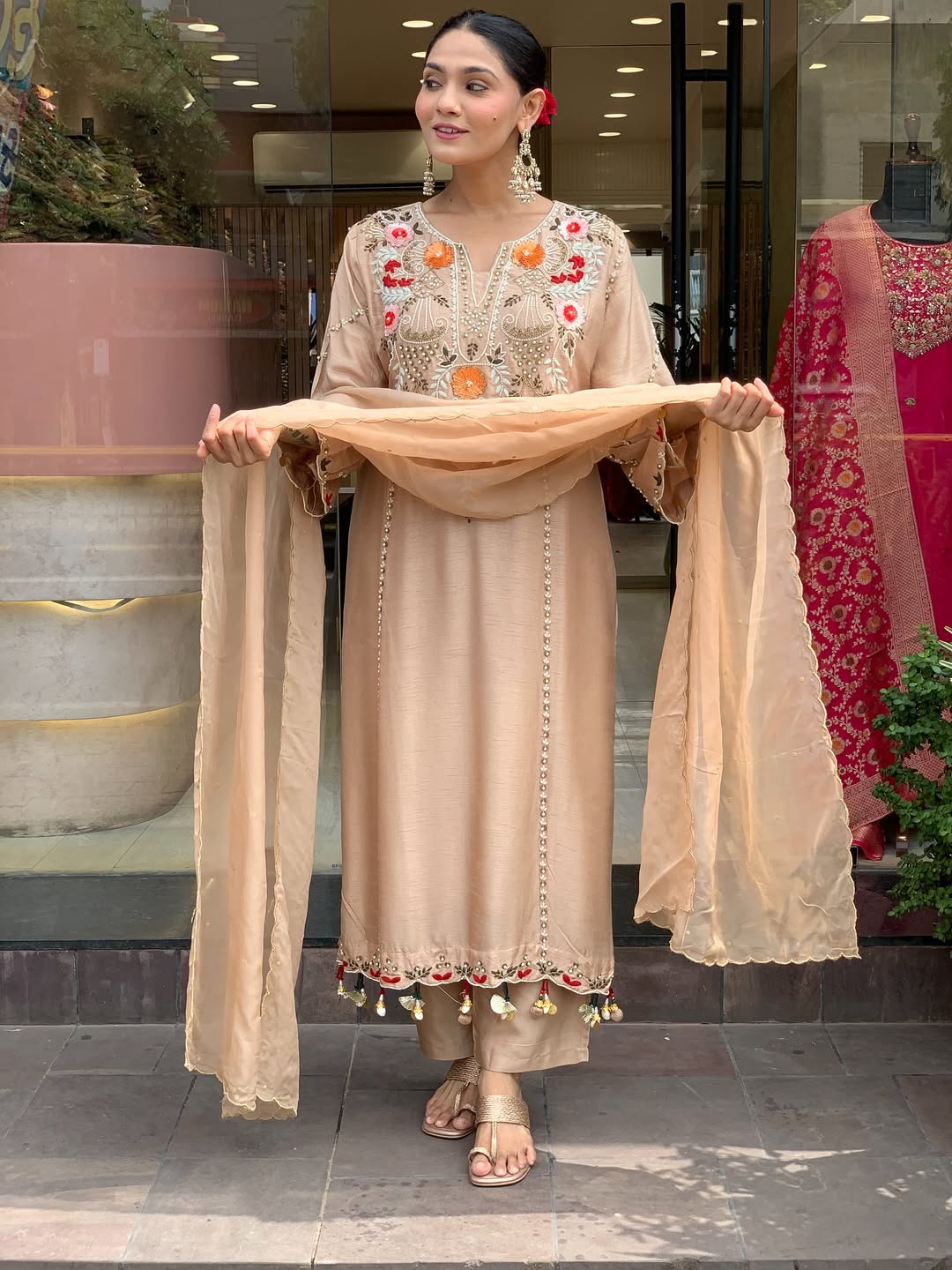
Banarasi silk and silk blends provide lustre and structure for evening events, although heavier weaves can feel warm in crowded indoor venues. Zari adds a metallic decorative element, so a zari dupatta can elevate a relatively simple kurta without requiring dense embroidery across the entire outfit. The Royal Navy Silk Kurti Pant Set with Zari Dupatta uses that principle through a polished, evening-oriented combination.
Chinon and other fluid festive fabrics are useful for dupattas because they drape easily over the shoulder and can support embroidery or borders without becoming as rigid as a heavily woven textile. Viscose Chanderi suits often balance softness, sheen and structure. Shop Purple Viscose Chanderi Threadwork Suit Set with Chinon Dupatta is an example of combining a textured suit base with a lighter, more fluid dupatta.
Fabric choice should also reflect maintenance. Embroidered silk blends may require dry cleaning or gentle professional care, while many everyday cotton garments can be hand-washed if the care label permits. Never assume that a natural-looking fabric is machine-safe; threadwork, zari and colour bleeding require separate attention.
How to match a salwar suit to the occasion
For office wear, choose a straight or gently flared kurta in a breathable fabric with restrained embroidery and a secure neckline. Solid, small-scale floral or geometric prints are easier to repeat through the week than highly occasion-specific motifs. A medium-length kurta with cigarette pants also works well with closed flats or low block heels.
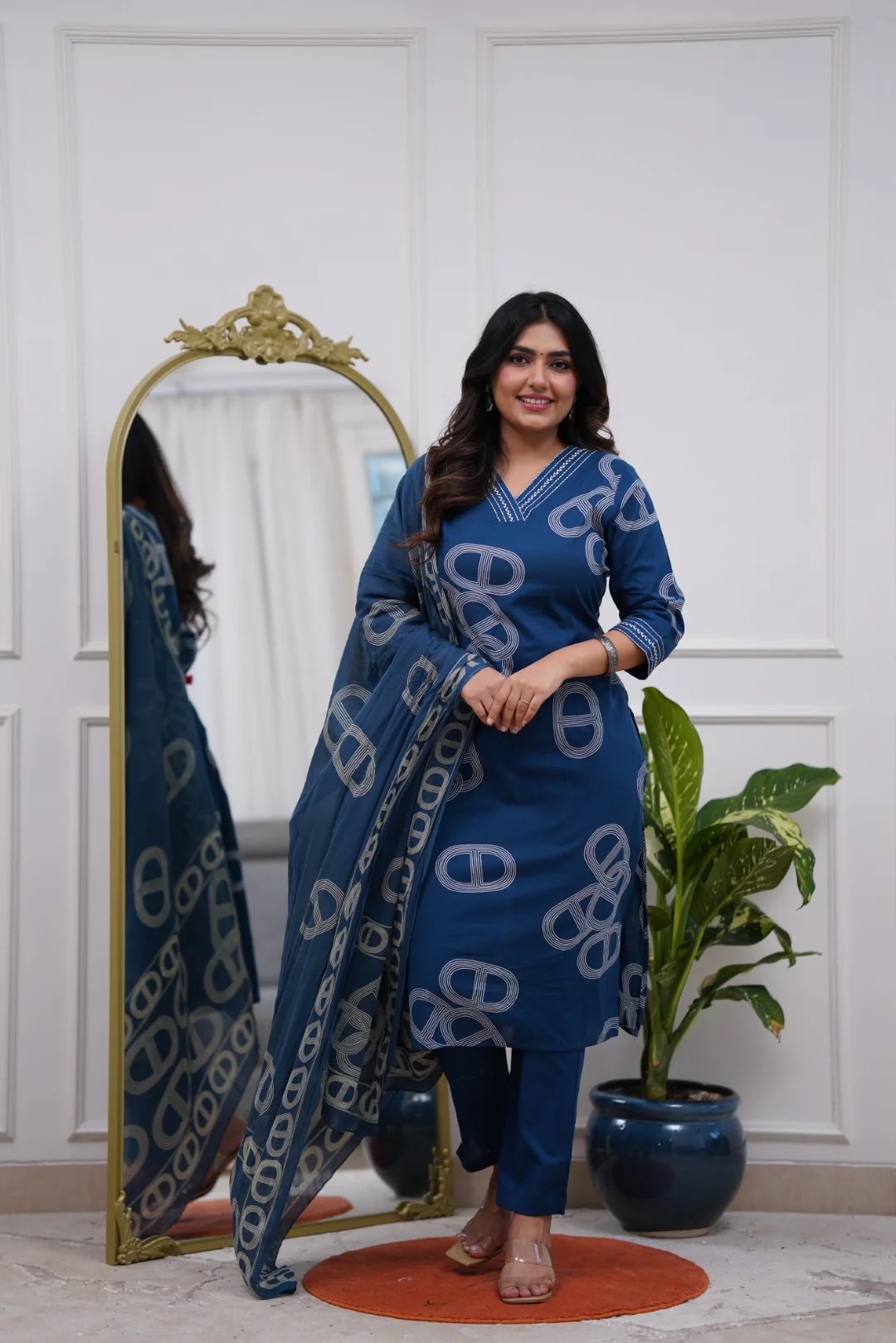
For a daytime puja, family lunch or Haldi ceremony, select lighter colours, breathable textures and a dupatta that won't require constant adjustment. Yellow Threadwork Readymade Salwar Suit gives an useful colour direction for a Haldi ceremony, where cheerful yellow complements the setting while threadwork adds definition.
For a festive evening, silk blends, zari, metallic accents and deeper shades create visual richness under warm lighting. A complete Embroidered Salwar Suit Set for Women can be styled with one statement pair of earrings instead of multiple competing accessories. A clean hairstyle and a carefully pinned dupatta keep embroidered outfits from looking crowded.
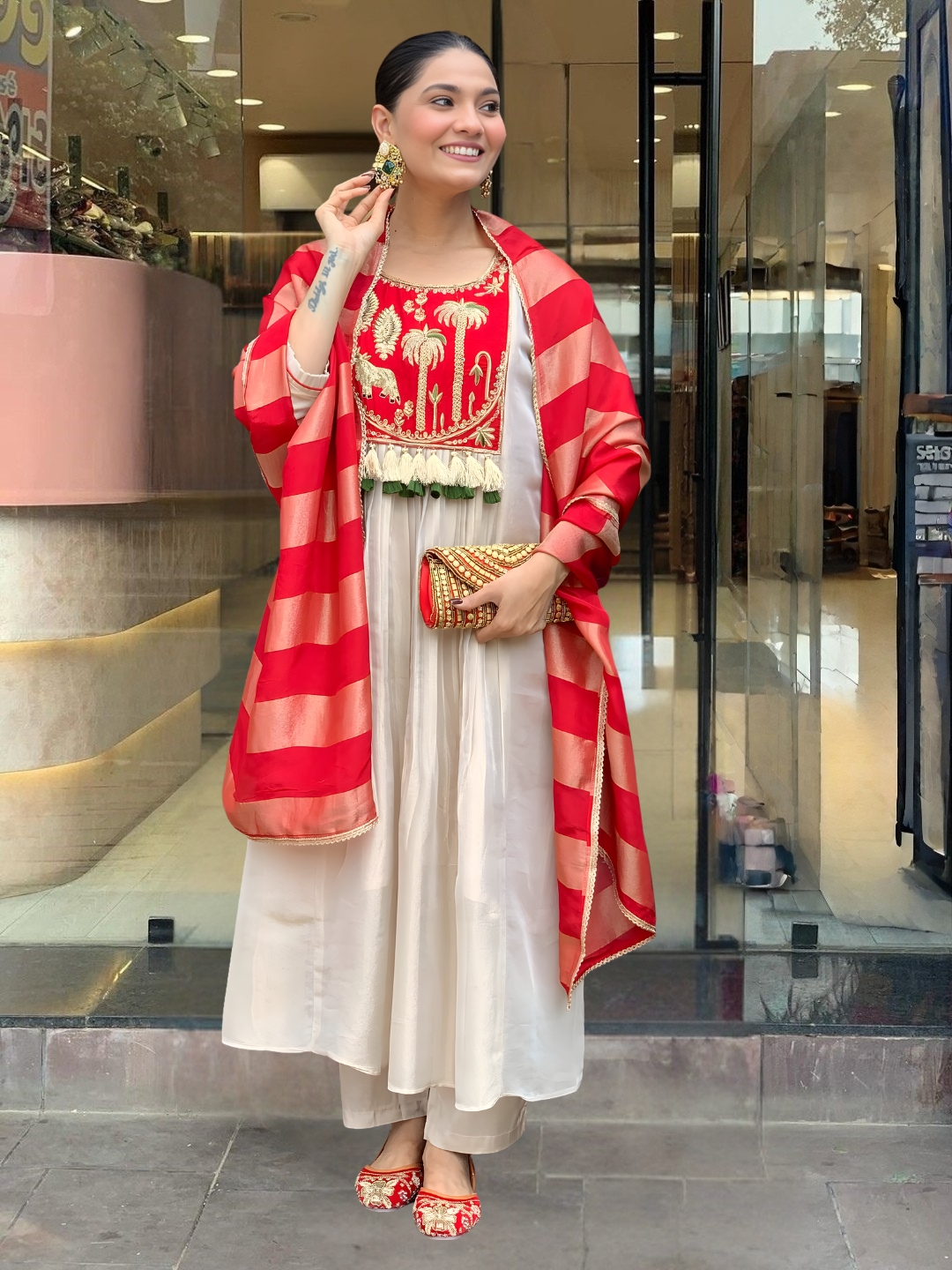
For weddings, Anarkali, sharara, gharara and heavily worked Punjabi suits generally provide more ceremony than a minimal straight set. Elegant White Cording Threadwork Salwar Suit can suit a daytime celebration when paired with silver-toned jewellery, while a richer embroidered set may be better for a reception. The level of work should match the event rather than compete with the bride's attire.
How to choose a flattering fit and proportion
The most reliable fit check is to assess the shoulder, armhole, bust, waist and seat before judging the hemline. A shoulder seam that sits too far down can make any silhouette look oversized, while a tight armhole will remain uncomfortable even if the rest of the garment fits well.
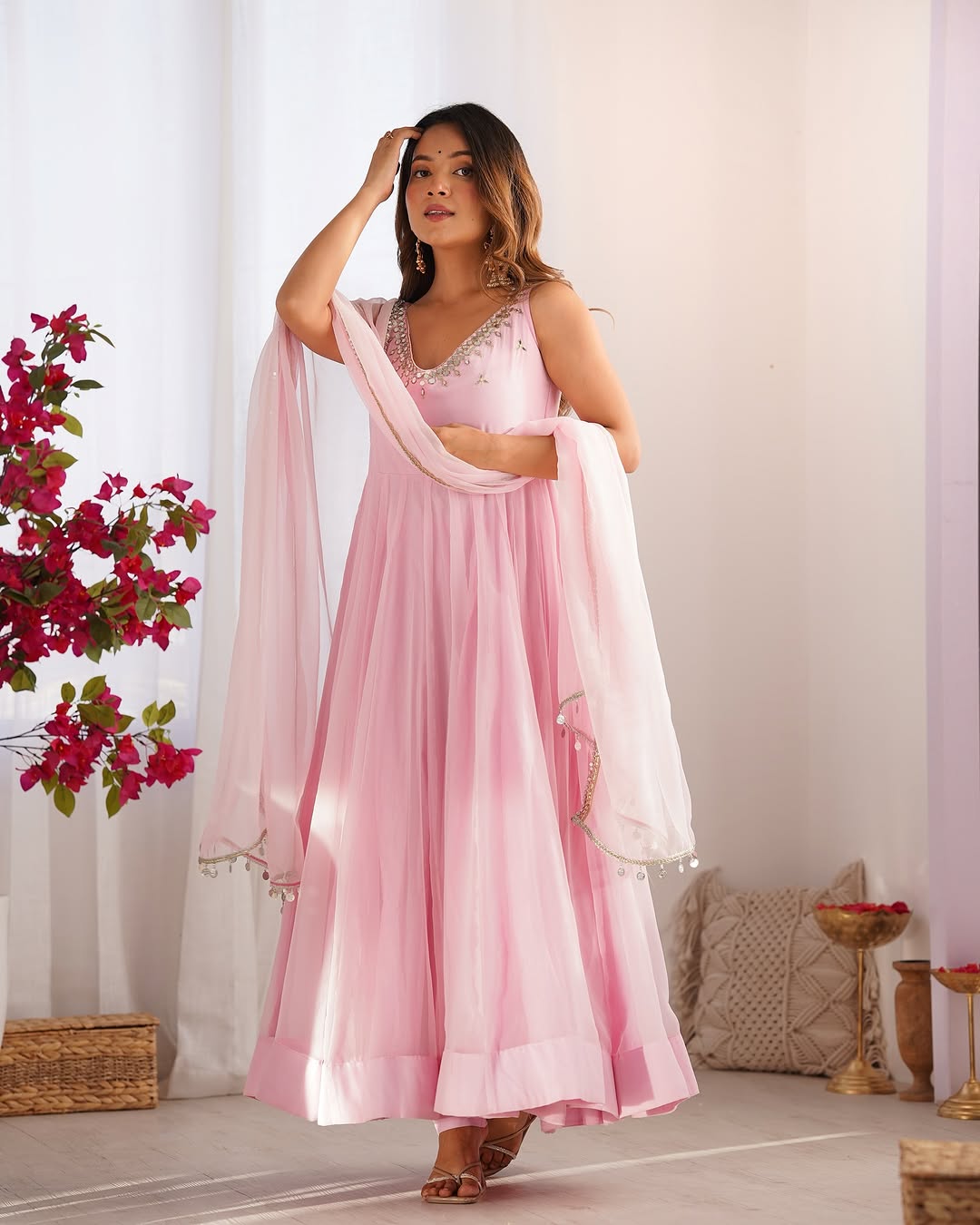
People who prefer a longer visual line can try a straight kurta with narrow trousers, a lightly flared Anarkali with a raised waist seam or a monochromatic three-piece set. People who want more movement can choose a palazzo, Patiala or sharara, but the kurta length should leave enough of the lower silhouette visible.
Height is only one part of proportion. A petite wearer can carry a flared suit successfully when the fabric is light, the print isn't oversized and the flare begins at a flattering point. A taller wearer can use a longer kurta, broader borders or a larger dupatta print without losing balance.
Check the garment measurements rather than relying only on small, medium or large labels. Allow approximately 2 to 4 inches of ease at the bust for comfortable everyday wear, with additional room when the fabric has no stretch or when the kurta is meant to be layered. A tailor can usually adjust side seams and trouser length, but changing a heavily embroidered neckline or shoulder is more difficult.
Dupatta, colour and styling decisions that change the look
A dupatta can make the same kurta appear casual, festive or formal. A simple shoulder drape creates ease, a front pleat gives structure, and an one-shoulder drape highlights a decorated border. Pinning the dupatta at the shoulder and near the waist is practical for commuting, ceremonies and photographs.
Use colour contrast deliberately. A neutral kurta with a vivid dupatta creates one focal point, while a tonal three-piece set looks more elongated and refined. Elegant Camel Shade Salwar Suit Set can be styled with antique gold jewellery for warmth, or with contrasting emerald and burgundy accessories for a more festive result.
Embroidery scale should guide accessory scale. Delicate cording or threadwork pairs well with small studs, pearls or a slim bangle, whereas dense zari can support a larger earring or an embellished potli. Footwear should also echo the mood: juttis and flats suit daytime Punjabi and straight suits, while block heels or embellished sandals can support evening Anarkalis and shararas.
Buying and caring for a salwar suit online
Online buyers should compare garment measurements, fabric composition, lining details, closure type and dupatta dimensions before placing an order. A product described as a set may include a stitched kurta and bottoms, while another listing may contain a semi-stitched or unstitched piece. The difference affects alteration time and final fit.
Read the colour description alongside the photographs because indoor lighting can alter the appearance of navy, camel, cream and purple. Cream Threadwork Viscose Chanderi Readymade Salwar Suit and Shop Purple Viscose Chanderi Threadwork Suit Set with Chinon Dupatta represent shades where screen brightness may change how much contrast the threadwork appears to have.
Compare sale pricing only after checking what is included. Collections such as Dress Materials, Salwar Suits with 30% Off, Salwar Suits Flat 40% Off and Salwar Suits On Sale can contain different construction types, so a lower price doesn't always mean the same fabric, stitching or accessory count. An useful comparison records the kurta length, bottom style, dupatta fabric and care requirement.
Store embellished salwar suits folded with soft tissue between decorated surfaces to reduce snagging. Keep zari away from damp storage, air-dry washed garments in shade when the care label allows, and avoid spraying perfume directly onto silk blends or metallic threadwork. These small habits protect colour, embroidery and fabric shape for repeated wear.
Building a practical salwar suit wardrobe
A balanced wardrobe can begin with one breathable straight suit, one festive Anarkali, one palazzo or trouser set, and one richly detailed outfit for weddings. Adding a Punjabi or Patiala silhouette brings a different proportion and makes the collection feel less repetitive.
Colour planning increases the number of outfits without buying identical styles. A black or navy suit can take silver, gold, jewel-toned or pastel accessories; a camel or cream suit can work with both warm and cool jewellery; and a yellow or purple suit can anchor a festive wardrobe with minimal styling.
Popular Salwar Suit Styles in India remain relevant because they combine regional tradition with adaptable current cuts. Choose the silhouette according to movement, the fabric according to weather and care, and the embellishment according to the event. That method produces better results than choosing only by trend or photograph.
Questions Shoppers Ask About Indian Salwar Suit Styles
Which salwar suit style is best for everyday wear?
A straight-cut salwar suit with cotton, cotton-blend or lightweight viscose fabric is usually best for everyday wear. The clean silhouette is easy to walk in, layer and repeat with different dupattas or footwear.
What is the difference between an Anarkali and a straight suit?
An Anarkali has a fitted or shaped upper section with a flare that widens towards the hem. A straight suit falls in a mostly vertical line, making it generally less voluminous and more suitable for workwear or simple daytime dressing.
Are palazzo suits suitable for short women?
Palazzo suits can suit short women when the trousers are not excessively wide and the kurta creates a clear vertical line. A higher waist, a moderate kurta length and similar colours across the outfit can help maintain proportion.
Which salwar suit is suitable for a Haldi ceremony?
A yellow or other bright, breathable salwar suit with light threadwork is suitable for a Haldi ceremony. Cotton, viscose or lightweight Chanderi can be more comfortable than heavy silk when the ceremony takes place during the day.
How much ease should a readymade salwar suit have?
A comfortable everyday kurta commonly needs about 2 to 4 inches of ease at the bust, depending on the fabric and personal preference. Buyers should also check shoulder, armhole, waist and hip measurements because a standard size label does not guarantee the same fit across garments.
How should embroidered salwar suits be washed and stored?
Embroidered salwar suits should follow the care label, and many silk blends, zari garments and heavily worked sets are safest with professional dry cleaning. Store them folded with soft tissue between embellished surfaces, away from moisture and direct sunlight.