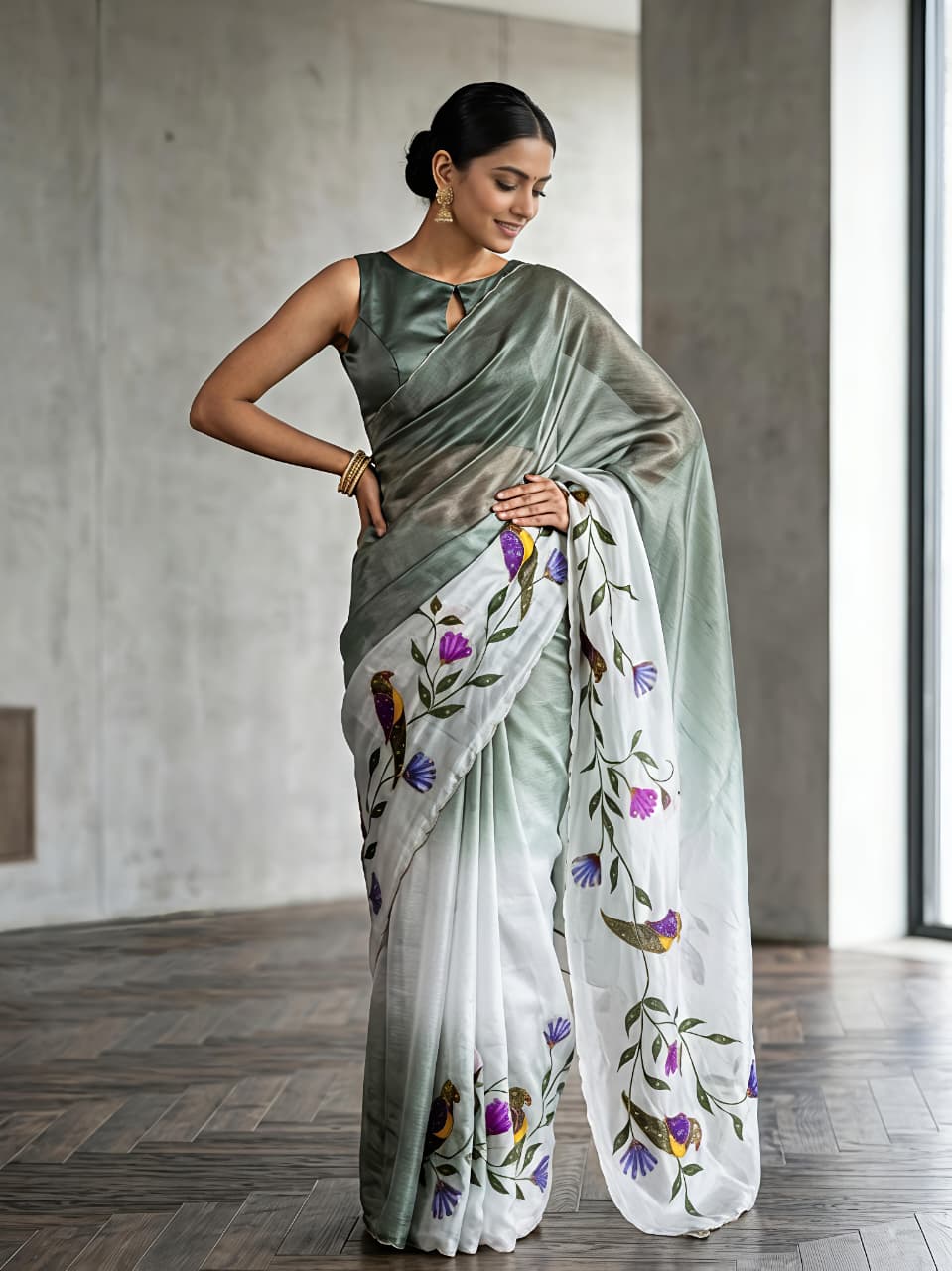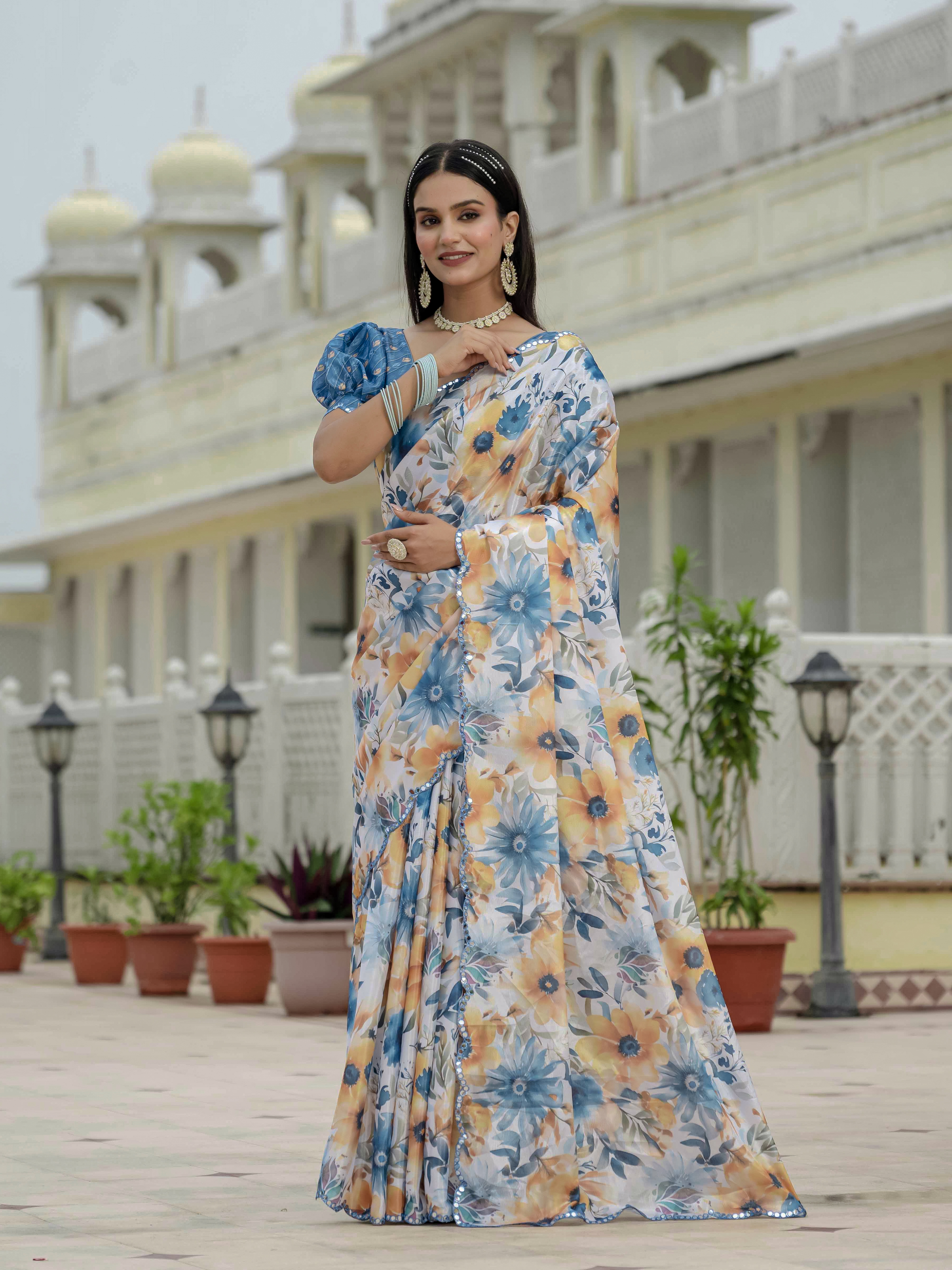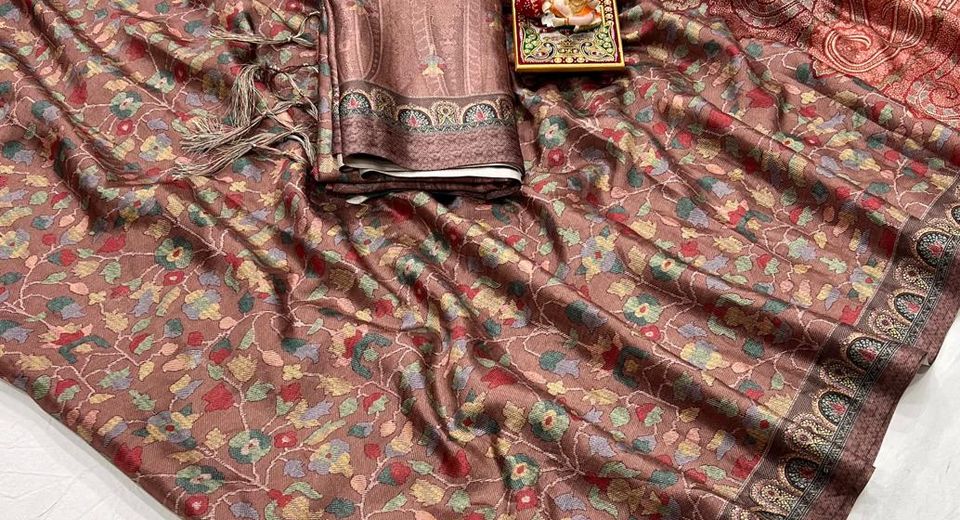
Poila Boishakh Outfit Ideas become much easier when the look begins with Bengali dressing traditions rather than a random festive colour palette. Poila Boishakh, the first day of the Bengali calendar, is associated with fresh beginnings, family visits, cultural programmes, temple visits and Bengali food. A saree with a defined border, a comfortable blouse and a few meaningful accessories can feel more authentic than an overloaded ensemble.
The familiar white saree with a red border, often called a lal paar shada saree, remains a strong reference point, but it's not the only appropriate choice. Taant, garad, tussar, cotton, silk blends, floral prints and contemporary patterned sarees can all work when the drape, fabric and finishing details suit the occasion. The most useful decision is to match the saree's weight and texture to your plans, weather and movement.
Poila Boishakh Outfit Ideas: What makes a Bengali saree look traditional?
A Bengali saree looks traditional for Poila Boishakh when its colours, border, drape or styling details connect with Bengali textile and festive customs. Red and white are the most recognisable combination, while handloom cotton, red borders, woven motifs and traditional jewellery add cultural clarity without making the outfit look like a costume.
The lal paar shada saree carries strong visual associations with Bengali celebrations. A white or ivory ground with a red selvedge creates a clean, graphic look, especially when paired with a red blouse. Garad sarees, traditionally associated with a pale body and red border, offer a softer interpretation. Taant sarees are practical for warm weather because their cotton structure generally feels lighter and more breathable than heavy silk.
Red doesn't have to cover the entire outfit. A white saree with a narrow red border, a red blouse under a neutral saree, red glass bangles or a vermilion-toned handbag can provide the same festive signal with more restraint. White, cream, vermilion, rust, maroon, yellow and green also sit naturally within a Bengali New Year wardrobe.
Textile names should be read carefully when shopping. Banarasi silk, Kanjeevaram, Chanderi and Pashmina silk belong to different weaving and wearing traditions, and none should be casually treated as interchangeable with Bengali taant or garad. A saree can still be styled for Poila Boishakh without being a historically Bengali weave, but the distinction helps you choose and describe the garment honestly.
Poila Boishakh Outfit Ideas for morning celebrations and family visits
The best morning Poila Boishakh outfit uses a breathable fabric, a secure drape and accessories that don't interfere with walking, greeting guests or eating. Cotton, linen-cotton and light silk-cotton sarees are generally more comfortable for a long daytime programme than heavy zari or thick layered fabrics.
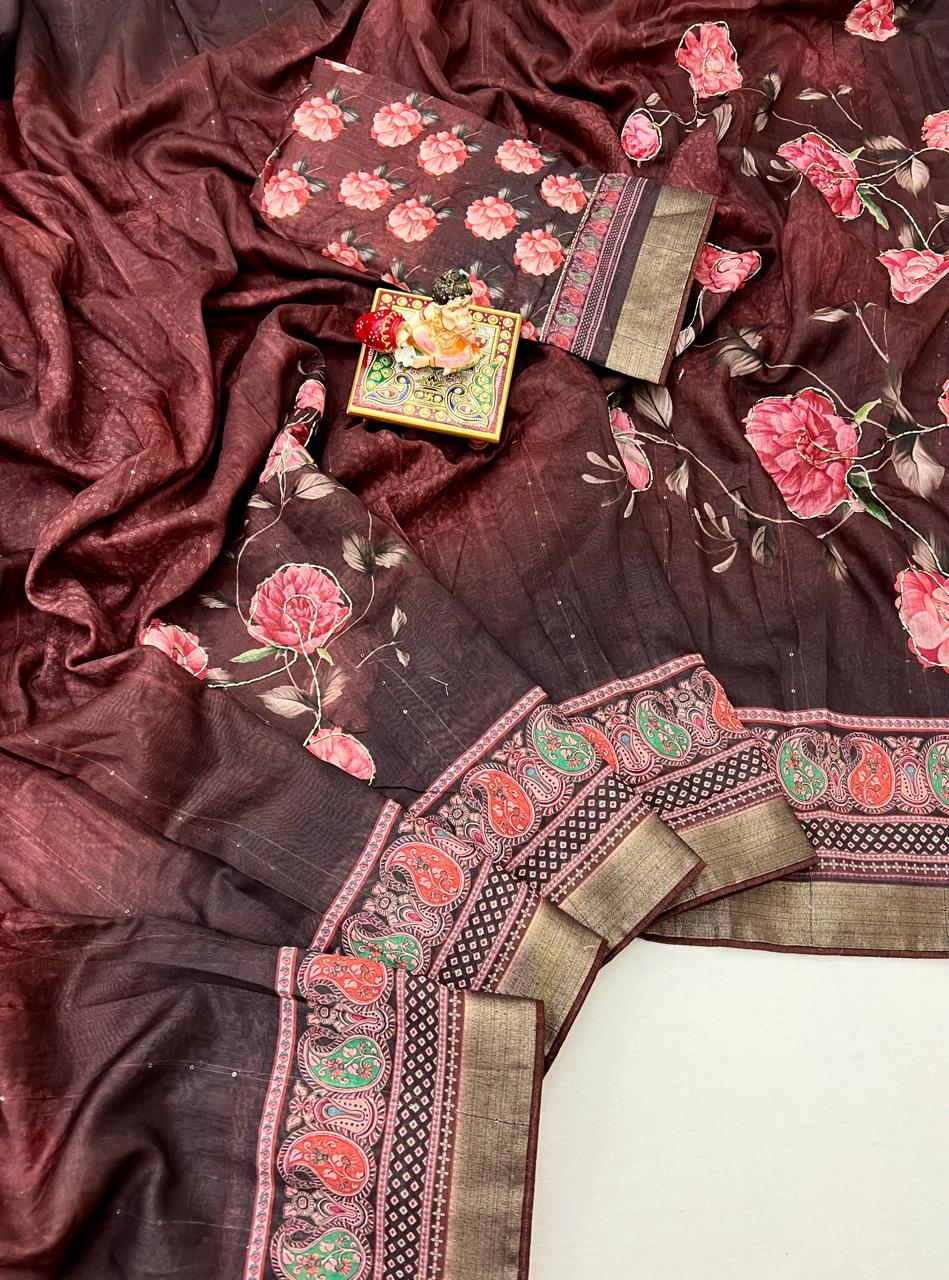
For a cultural programme
A lightweight cotton or linen-cotton saree with a defined border suits a morning cultural programme. Pair a pale saree with a red, rust or deep green blouse, low-heeled sandals and compact earrings so the outfit remains comfortable during standing, walking and public transport.
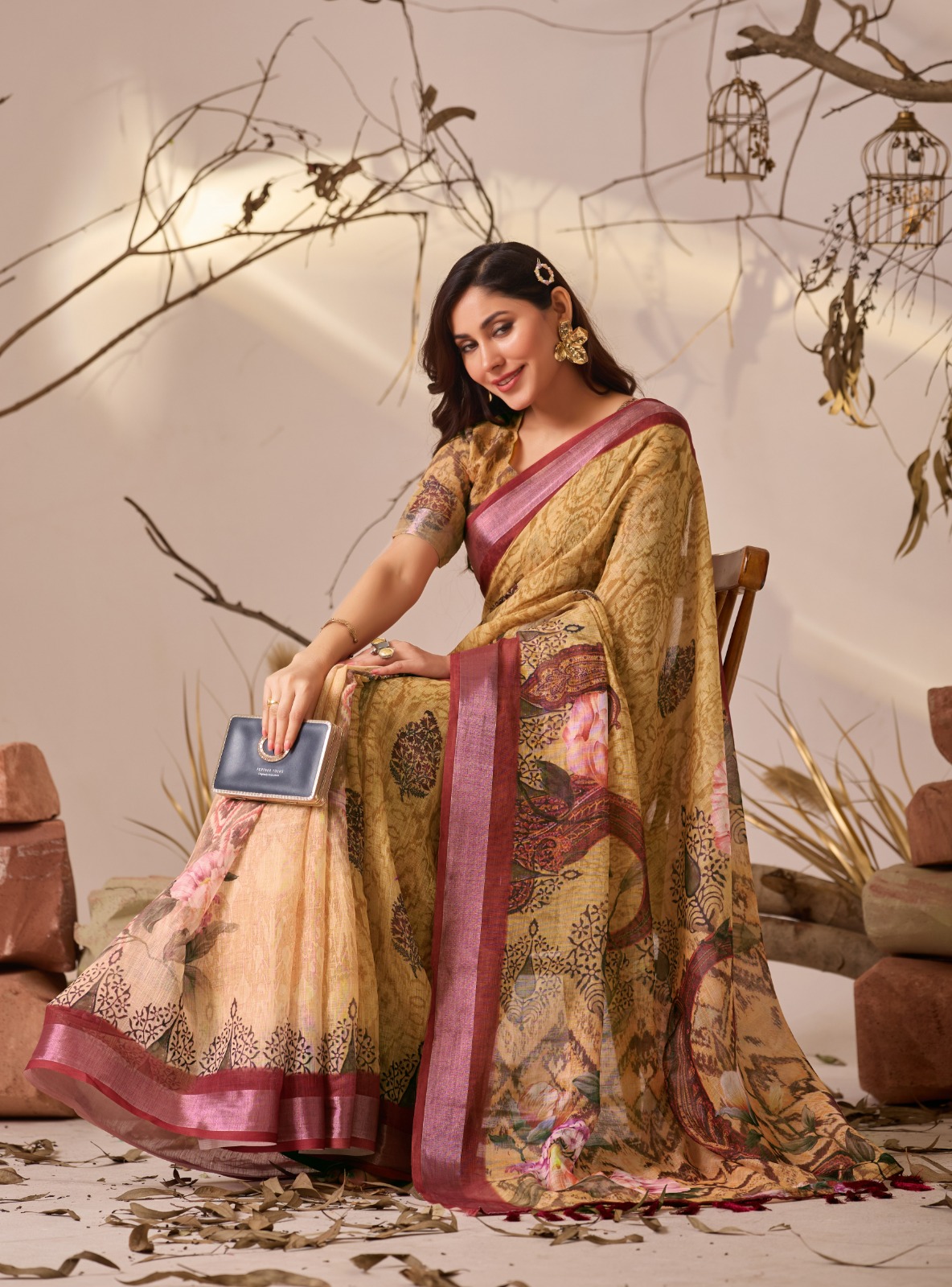
Pastel Linen Cotton Floral Print Saree with Designer Blouse offers a contemporary route for someone who likes Bengali floral softness but doesn't want a strict red-and-white look. Keep the accessories simple with small gold-tone jhumkas, a slim bangle stack and a low bun with a few fresh flowers. Floral prints work particularly well for daytime because they bring colour without the visual weight of dense embroidery.
For visiting relatives
A cotton saree or silk-cotton saree with a neat pleated front suits family visits and a long lunch. Choose a blouse with sleeves that allow easy movement, and pin the pallu at the shoulder if you expect to serve food, travel or greet several guests.
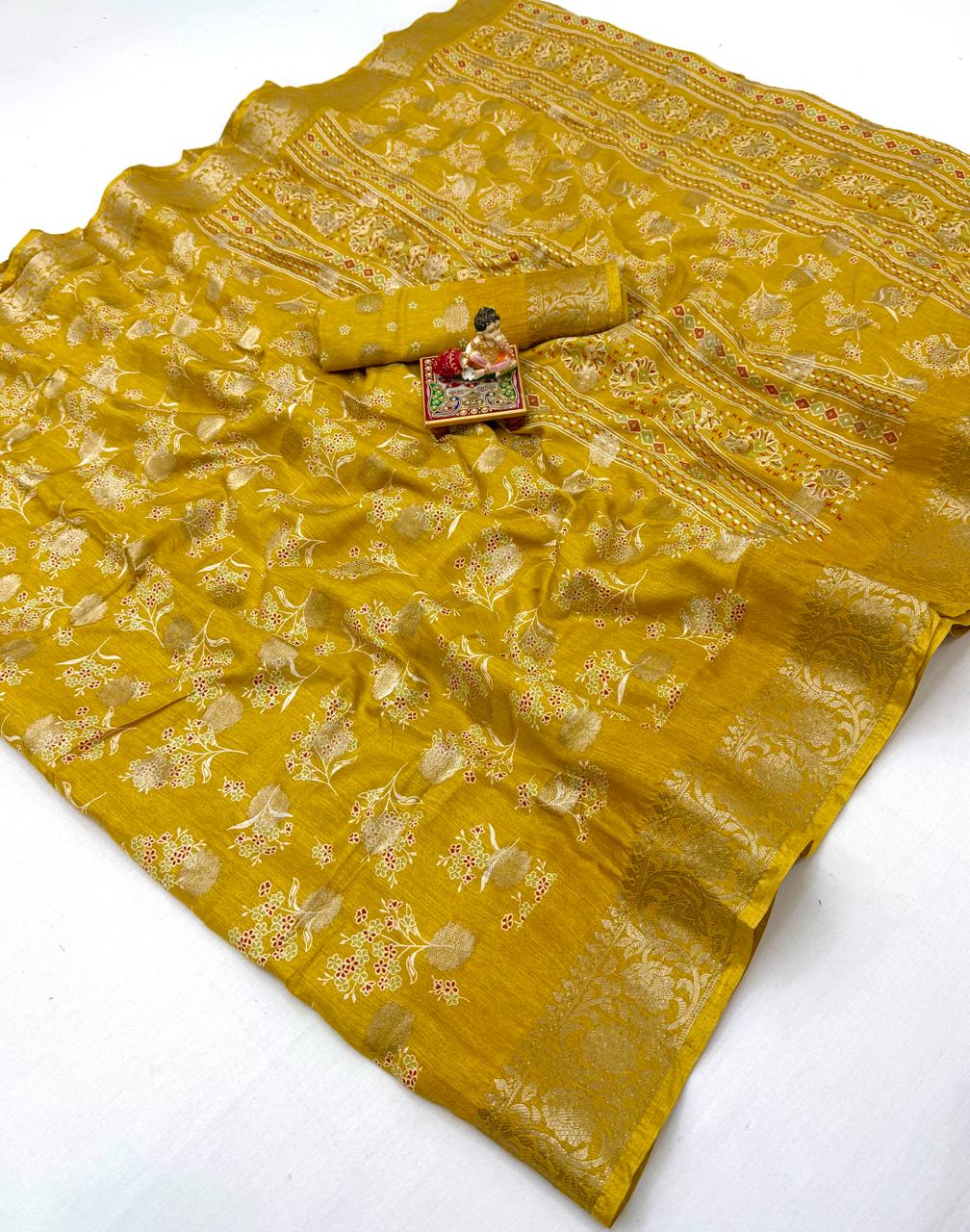
Party Wear Brown Cotton Saree With Designer Blouse can be styled in a more Bengali direction with a red bindi, gold-toned earrings and a red or brick-coloured blouse accent. Brown is less conventional than white, but an earthy base can look elegant with vermilion, ivory and antique-gold accessories. The styling lesson is useful: festive identity often comes from the border, jewellery and drape rather than from a single prescribed body colour.
For a practical budget search, the Sarees from Rs 1000 to Rs 1500 collection can be an useful starting point for a daytime saree. Check the fabric description, blouse details, measurements and care instructions before deciding that a lower price means an easier outfit.
Poila Boishakh Outfit Ideas for an evening cultural event
An evening cultural event allows a deeper colour, a heavier border or a richer silk surface, provided the saree doesn't restrict movement. A structured blouse, a stronger lip colour and a compact clutch can make the same six-yard garment feel evening appropriate.
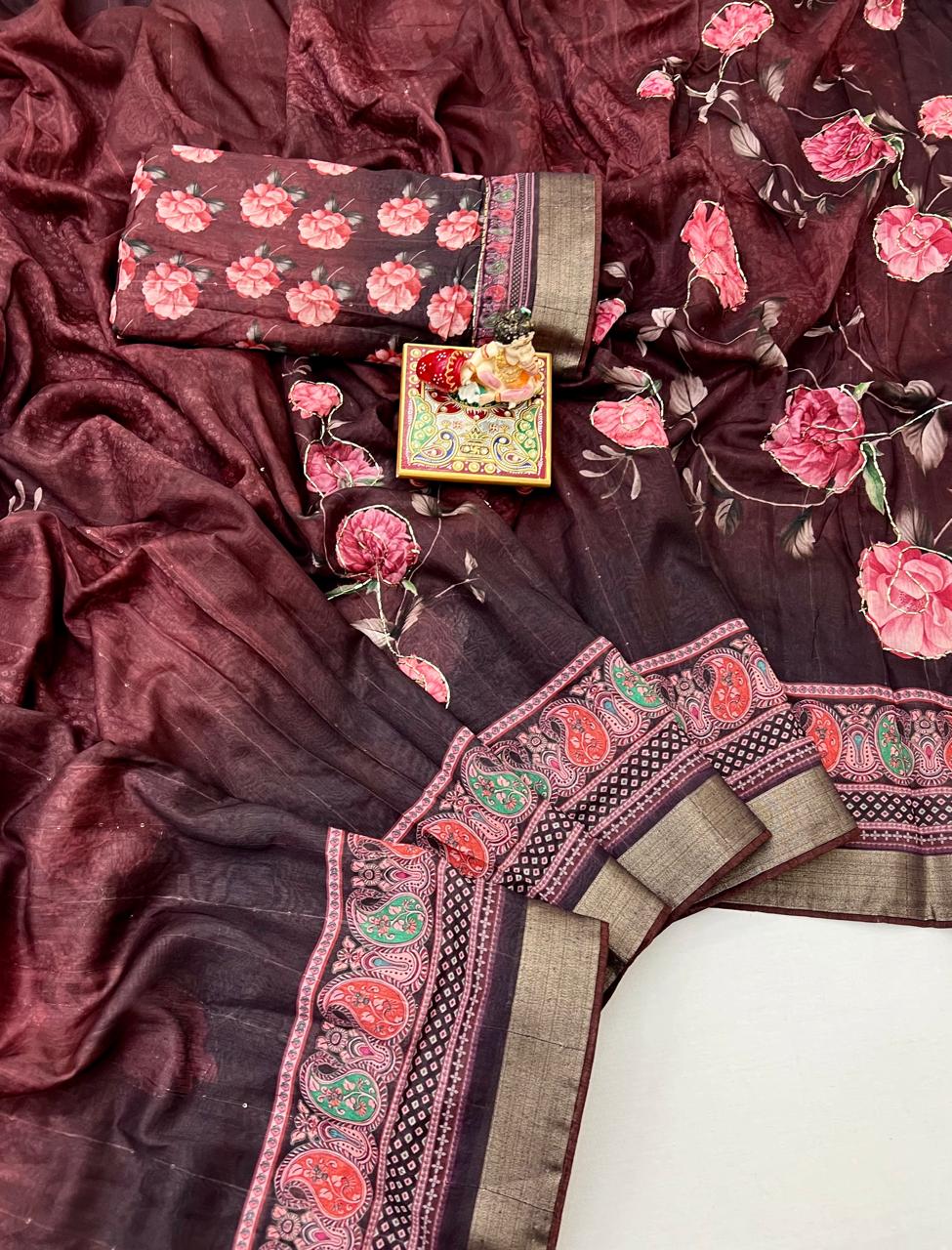
Heritage Peacock Patola Pashmina Silk Saree demonstrates how a patterned surface can replace the usual red-and-white formula. Pair peacock tones with antique gold jewellery rather than adding several competing colours. A plain blouse in deep red, cream or the darkest shade found in the saree will make the pattern easier to see.
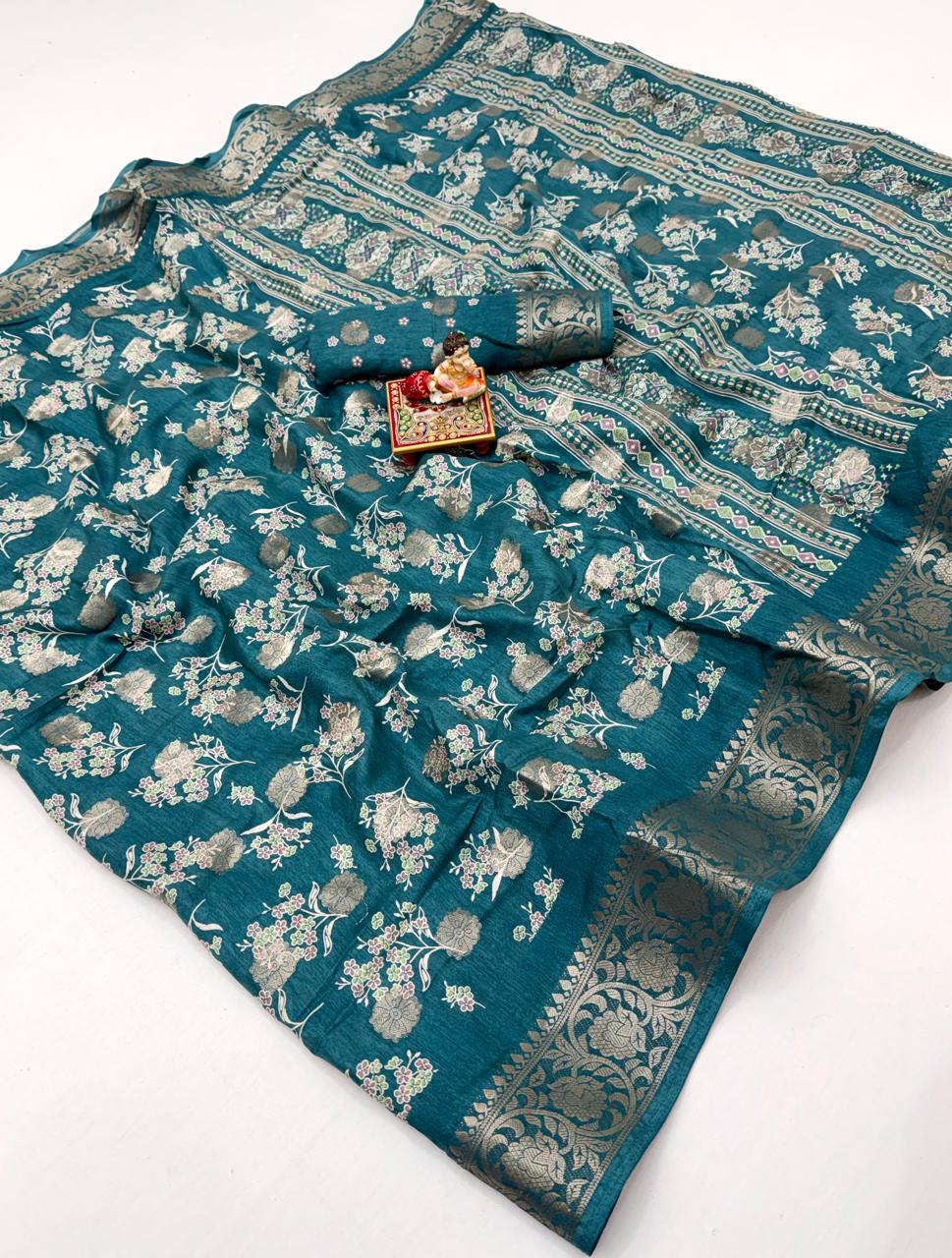
Teal Patola Border Pashmina Silk Saree With Mirror Work creates a more dramatic festive direction. Mirror work already catches light, so keep the necklace delicate and let the earrings or bangles provide the main additional sparkle. A low bun, defined eyes and a brick-red lip will balance teal without making the outfit appear overly coordinated.
Sarees Under 20% Off and Sarees Under 10% Off can be useful sections for comparing festive options when a full-price purchase isn't necessary. Discount percentage should not be the only filter: an occasion saree is a poor choice if the fabric feels uncomfortable, the blouse can't be altered or the border is likely to catch on footwear.
Poila Boishakh Outfit Ideas: Which fabric works in warm weather?
Choose the fabric according to temperature, duration, movement and formality. Cotton and linen-cotton are usually more forgiving for daytime heat, while silk and Pashmina silk create a dressier appearance but may feel warmer or require more careful handling.
Taant and cotton sarees suit a humid Bengali spring day because the fabric can allow airflow and doesn't demand elaborate styling. Linen-cotton gives a slightly crisp, modern texture, although linen blends may crease during travel. A crease isn't automatically a flaw; pressing the saree before wearing and arranging the pleats carefully can make natural texture look intentional.
Banarasi silk and zari-heavy sarees are better reserved for cooler indoor settings or shorter events if you're sensitive to heat. Kanjeevaram is a formal South Indian silk tradition and can certainly be worn for a celebration, but its heavier structure creates a different visual language from a light Bengali cotton saree. Chanderi brings translucency and lightness, while tussar gives a dry, textured surface that pairs well with handcrafted jewellery.
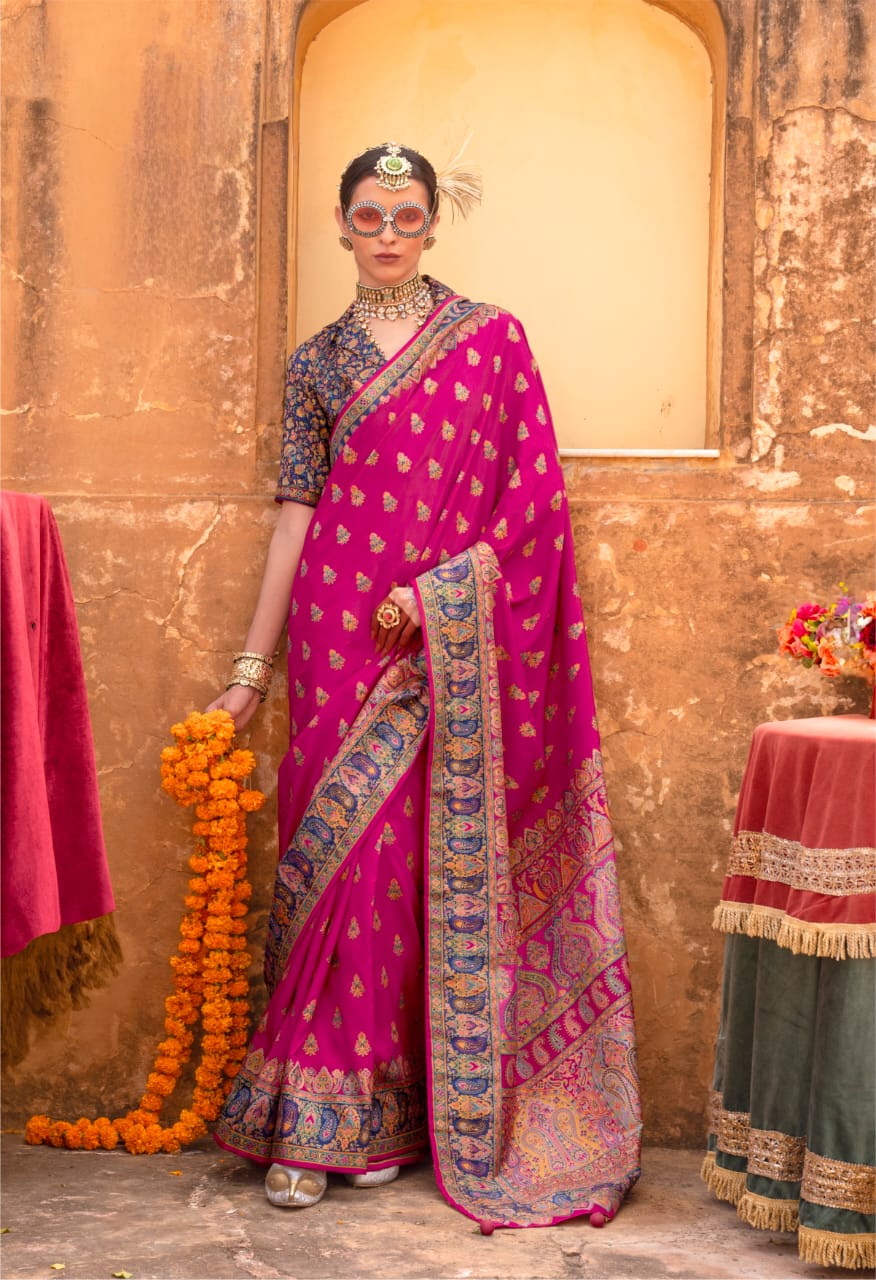
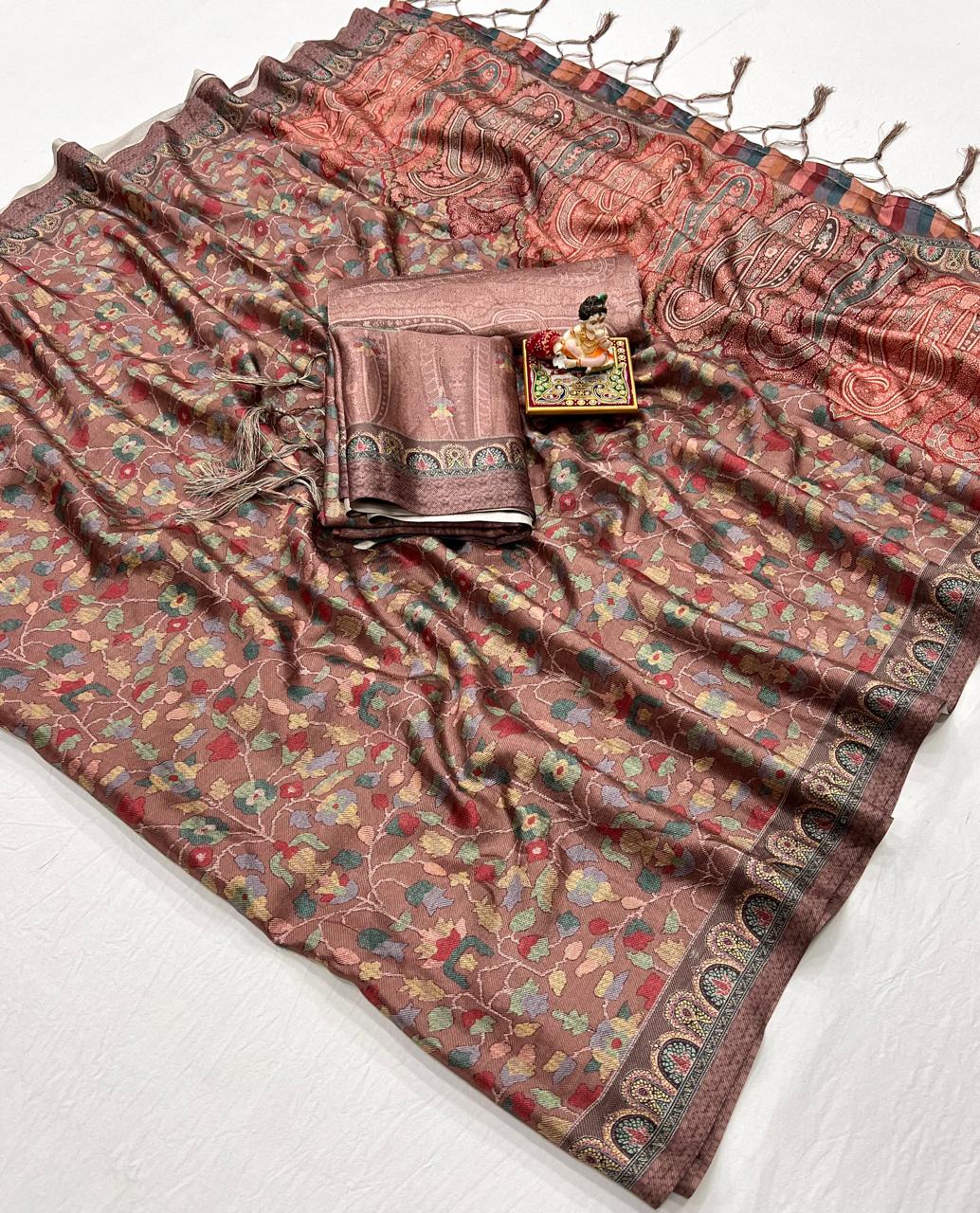
Pashmina should be assessed according to its specific construction and the season rather than assumed to be suitable for every climate. Kashmiri Style Pashmina Saree With Shawl Set is more useful for a cool evening, an air-conditioned venue or a destination celebration than for a humid midday procession. Luxury Pashmina Saree with Paisley Design & Shaw adds a shawl layer that can make the outfit feel finished, but the shawl should be carried loosely rather than wrapped heavily if temperatures rise.
A fabric test at home can prevent discomfort. Wear the saree or drape a fabric sample for 15 minutes, sit down, walk up a staircase and lift one arm. Check whether the blouse pulls, whether the pallu slips and whether the border catches on footwear. These small tests reveal more about occasion suitability than a product photograph.
Poila Boishakh Outfit Ideas: How should the blouse and drape be styled?
A close-fitting blouse with a comfortable neckline, a deliberate sleeve length and a well-secured pallu makes a Bengali-inspired saree outfit look polished. Red, ivory, black, maroon and deep green are versatile blouse colours, while a high round neck or elbow-length sleeve can create a classic silhouette.
The traditional Bengali drape is recognisable for its broad, open pallu and generous pleats, although everyday wearers often adapt it for security and comfort. A standard Nivi drape with a broad pallu can look equally appropriate when the border remains visible. For a Bengali-style drape, keep the front pleats moderately wide, place the pallu over the left shoulder and secure the edge discreetly near the shoulder or waist.
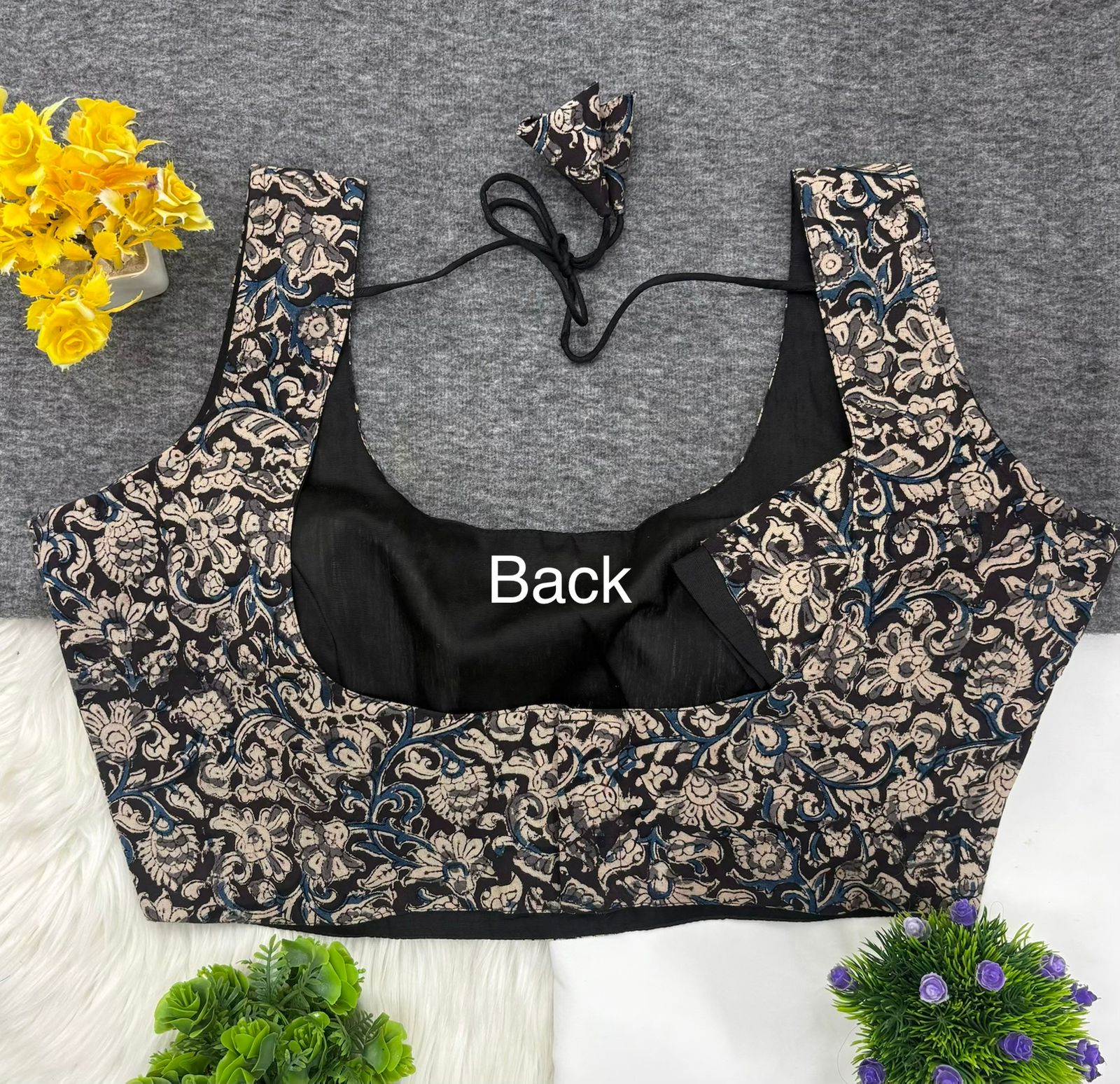
Blouse fit matters more than decorative detail. The armhole should not cut into the underarm, the bust seam should lie flat, and the back closure should not gape when you sit. Try the blouse with the exact saree before Poila Boishakh because a stiff border can change how the blouse sits at the waist and shoulder.
A red blouse with a white or ivory saree is the simplest high-impact combination. A cream blouse with a red-border saree looks gentler, while a three-quarter sleeve blouse gives better coverage for temple visits or family gatherings. Avoid excessive padding, dangling ties or fragile surface work if you expect a full day of movement.
For a more layered cold-weather look, Brown Floral Pashmina Saree With Shawl And Blouse already provides a coordinated base. Let the shawl rest over one shoulder instead of covering the front border, and choose a low-profile shoe so the saree hem remains clear of the ground.
Poila Boishakh Outfit Ideas: Which jewellery and beauty details complete the look?
Gold-tone jewellery, a red bindi, defined eyes and a neat bun create a recognisable Bengali festive finish without requiring a large jewellery set. Choose one focal element, such as statement earrings, a layered necklace or a floral hair arrangement, and keep the remaining pieces lighter.
Traditional Bengali styling often uses a large round bindi, red or terracotta accents, conch-shell-inspired bangles and gold jewellery. Shakha-pola, the white conch-shell and red coral-style bangle combination associated with married Bengali women, should be worn with cultural awareness rather than as a generic costume accessory. If that tradition isn't part of your own practice, red glass bangles or metal kadas can provide colour without imitating a marital symbol.
Fresh jasmine, tuberose or white flowers tucked into a low bun complement a red-and-white saree. A braid is practical for long events, while a low bun holds the pallu and hair accessories more securely. For makeup, a red or brick lip, soft kajal and a warm neutral base photograph well in both daylight and indoor lighting.
Accessories should respond to the saree's surface. Blue Floral Pashmina Saree With Shawl Ethnic Wear already contains colour and a shawl layer, so it needs restrained jewellery. A single pair of gold jhumkas and a narrow bangle stack will usually look more balanced than a heavy necklace, ornate earrings and multiple bangles together.
Teal Patola Border Pashmina Silk Saree With Mirror Work can carry antique gold or oxidised silver, but mixing several metallic finishes may distract from the border. Jewellery scale should also match the blouse neckline: a high neck usually benefits from earrings, while an open round neck can accommodate a short necklace.
Poila Boishakh Outfit Ideas: How can you shop and prepare the saree?
A successful Poila Boishakh purchase should be checked for fabric, measurements, blouse construction, care requirements and delivery time before the final order. Planning at least 10 to 14 days ahead gives enough time for alterations, pressing and a trial drape.
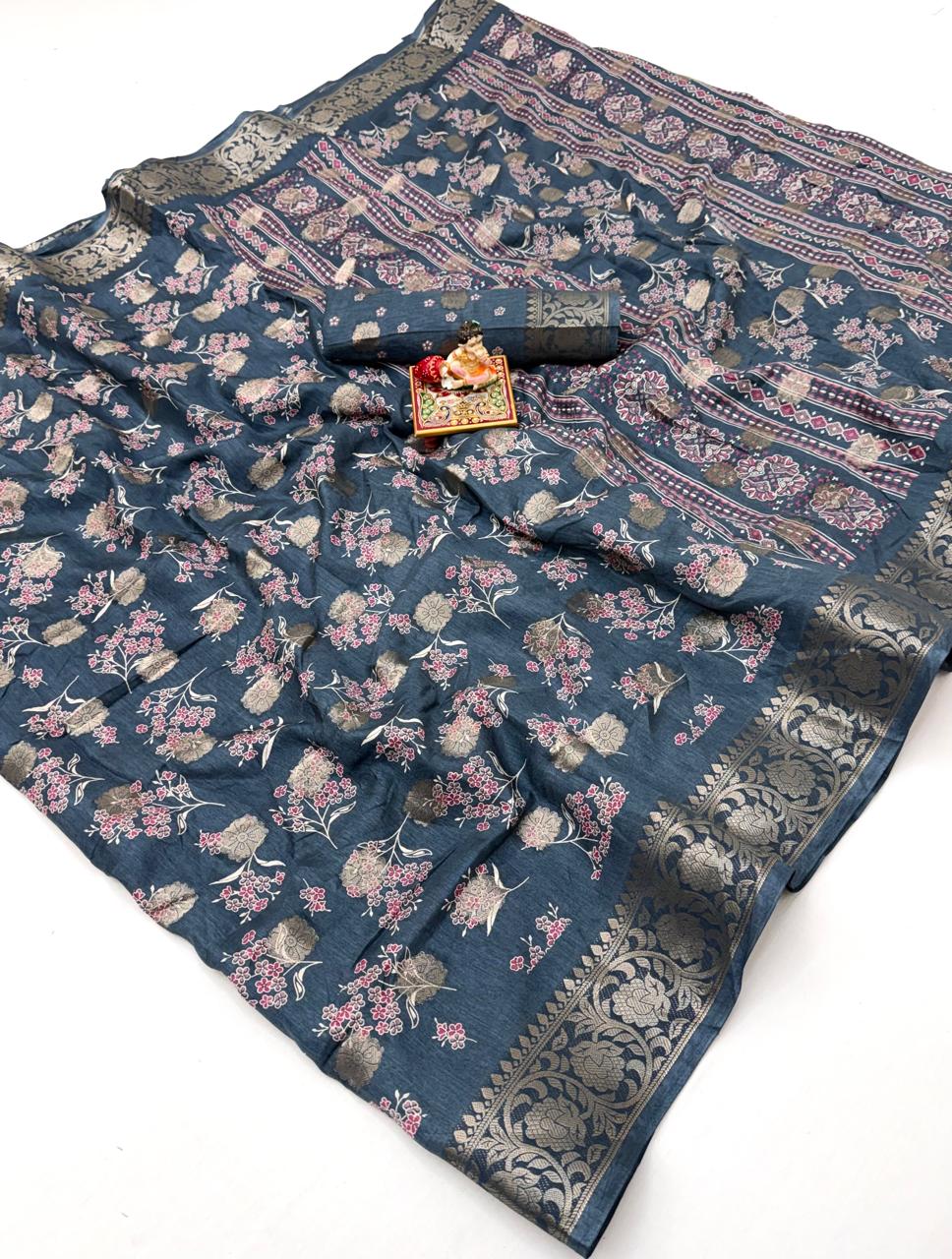
Read whether the blouse is included, stitched, unstitched or only shown for styling. Measure your bust, underbust, shoulder width and preferred blouse length, then compare those measurements with the listing rather than relying only on your usual size. A blouse that fits the bust but cuts into the armhole can make an otherwise beautiful saree difficult to wear for several hours.
Inspect the saree length and fall before the event. A standard saree length may be sufficient for a shorter wearer but require different pleat planning for a taller wearer. A petticoat should match the saree's waist fit and support the drape without creating a visible ridge. Safety pins, a small sewing kit and fashion tape are sensible additions to an emergency pouch.
Collections such as Sarees Flat 60% Off and Sarees Flat 50% Off may help with price comparisons, but large discount labels need careful checking. Confirm the final price, colour description, fabric composition, included accessories and return conditions before ordering. A lower-cost saree can be excellent value when its material and construction suit the event; a high discount doesn't compensate for an unsuitable fabric.
Store the saree according to its fibre. Fold cotton sarees along alternating lines to reduce a permanent central crease, and refold them every few months. Keep silk and zari away from direct sunlight, perfume and damp cupboards. Air a worn saree fully before storing it, and follow the care label rather than assuming that every saree can be machine washed.
The most convincing Poila Boishakh look is one that respects Bengali references while reflecting the wearer's real life. A breathable cotton saree can be more festive than a heavy silk if the drape is secure, the blouse fits and the accessories have been chosen with intention. Red and white remain handsome, but comfort, cultural awareness and thoughtful textile choices make the outfit memorable.
Common Questions About Poila Boishakh Saree Styling
What colour saree should I wear for Poila Boishakh?
White with a red border is the most recognisable Poila Boishakh combination, often called a lal paar shada saree. Red, ivory, cream, rust, maroon, yellow and green also work when the blouse, border and accessories create a festive Bengali connection.
Can I wear a saree other than a Bengali cotton saree for Poila Boishakh?
Yes, you can wear Banarasi silk, Chanderi, tussar, silk blends or a patterned saree for Poila Boishakh. Choose the fabric according to the weather and event, and use the drape, blouse, bindi, jewellery or flowers to retain a culturally considered look.
Which fabric is best for a daytime Poila Boishakh event?
Cotton, Taant and linen-cotton are usually the most comfortable choices for a warm daytime event because they are relatively breathable and easy to move in. Test the saree while sitting and walking before wearing it for several hours.
How can I style a red-and-white saree without looking overdressed?
Use one strong traditional detail and keep the rest restrained. A red bindi, gold jhumkas, a low bun with white flowers and a simple red blouse can complete the look without requiring heavy jewellery or elaborate makeup.
What blouse colour goes with a Bengali saree for Poila Boishakh?
Red is the classic choice for a white or ivory saree, while cream, maroon, black, deep green and rust offer polished alternatives. Select a sleeve length and neckline that allow comfortable movement because fit is more important than decorative detail.
How early should I buy a Poila Boishakh saree?
Buy the saree at least 10 to 14 days before Poila Boishakh when possible. That timeframe allows for delivery, blouse alterations, pressing, a trial drape and replacement planning if the fit or fabric does not work for the event.