Pochampally Ikat Sarees: History, Designs and Styling Guide begins with a distinction that matters when you shop: authentic Ikat is created by resist-dyeing yarn before weaving, while an Ikat-inspired print places a similar pattern onto finished fabric. The difference affects craft value, texture, price and how the design behaves at close range. Pochampally, a town in Telangana's Yadadri Bhuvanagiri district, is strongly associated with this yarn-resist tradition and its sharp geometric vocabulary.
A good Pochampally saree deserves more than a colour-based description. The arrangement of dyed threads, the fabric base, the alignment of motifs, the type of zari and the finishing of the blouse piece all help determine what you're buying. The guide below connects the textile's history with practical choices for weddings, festivals, office wear and regular festive dressing.
Pochampally Ikat Sarees: where did the tradition originate?
Pochampally Ikat developed as a major weaving tradition in and around Bhoodan Pochampally, Telangana, where weaving families refined resist-dyeing methods for cotton and silk yarns. The town is widely known as the Ikat Town of India, and Pochampally Ikat received Geographical Indication registration in 2005. That recognition identifies the regional association of the craft, although a GI reference alone doesn't tell you whether a particular online saree is handwoven, powerloom-made or digitally printed.
Ikat production starts before the loom is set up. Weavers calculate where colour should appear, tie sections of the warp, dip the yarn into dye, dry it, retie selected areas when multiple colours are required, and repeat the process. The dyed warp and weft threads are finally arranged so that their coloured sections meet during weaving. Small feathering or softened edges around a motif can be a natural result of yarn alignment rather than a defect.
Pochampally Ikat Sarees: why are they important to Indian textile history?
Pochampally Ikat is important because it preserves a technically demanding yarn-resist process while making geometric textiles suitable for ceremonial and daily wardrobes. Telangana's Ikat vocabulary sits within a wider Indian and global resist-dyeing history, but Pochampally is recognised for combinations of diamonds, zigzags, checks, stripes and stepped forms. The craft supports specialised skills in planning, dyeing, warping and weaving rather than relying only on surface decoration.
Traditional Ikat is often discussed alongside Odisha's Sambalpuri Ikat and Gujarat's Patola because all three use resist-dyed yarn techniques. The traditions should not be treated as interchangeable. Double Ikat Patola involves resist-dyeing both warp and weft with extremely precise alignment, while many Pochampally sarees use warp Ikat, weft Ikat or particular regional combinations. Asking about the weave and production method gives a more reliable answer than judging authenticity from a pattern alone.
Pochampally Ikat Sarees: how are they made?
A Pochampally Ikat saree is made by tying and dyeing yarn sections before weaving them into a planned pattern. The weaver first prepares the yarn, marks the repeat, binds areas that must resist dye, and applies colour in stages. Once the yarn is arranged on the loom, the warp and weft are woven together so that the intended motif emerges from the intersection of coloured threads.
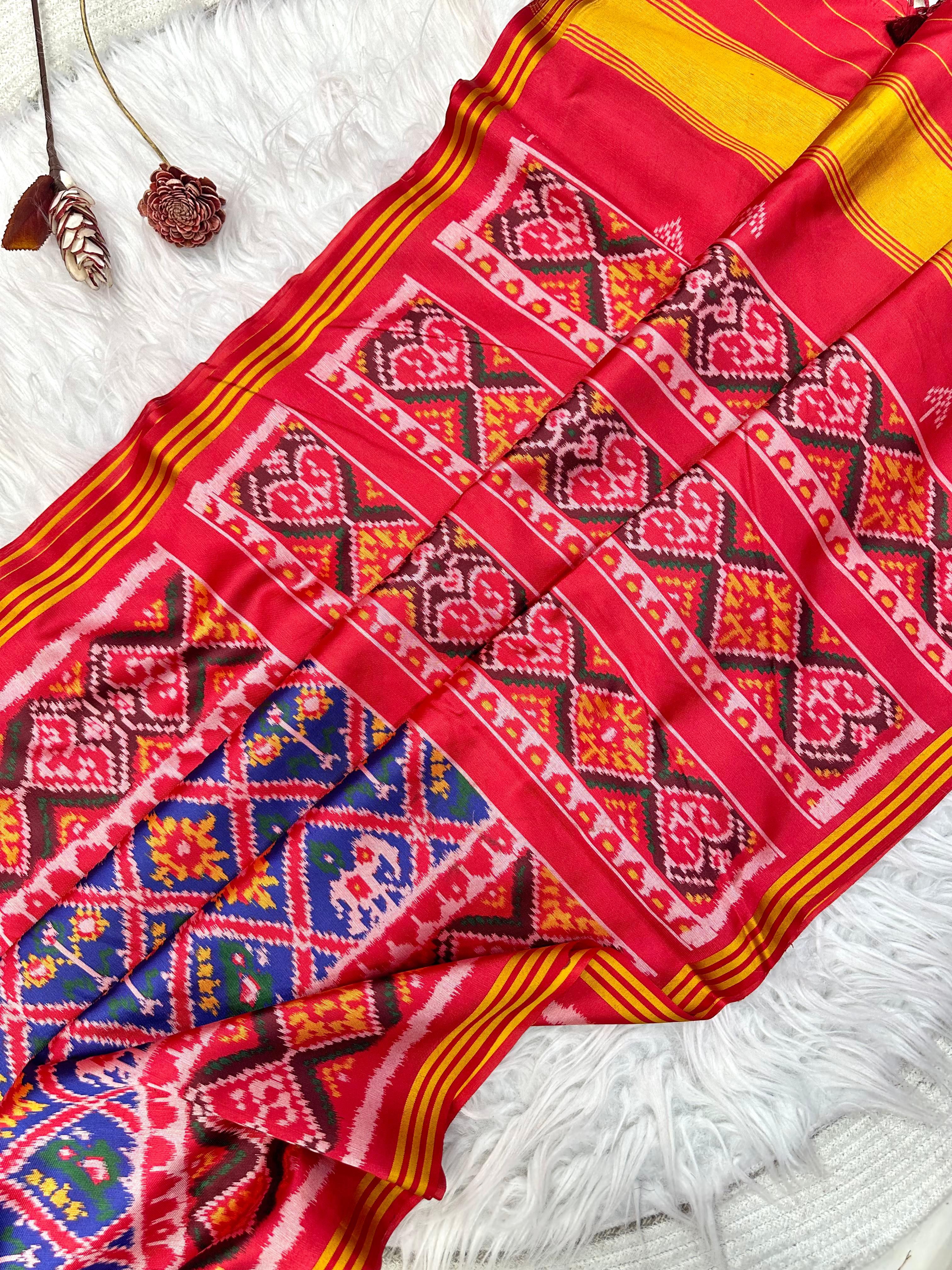
Design planning is especially demanding because the motif is distributed across yarn rather than drawn onto cloth after weaving. A slight shift in thread placement can create a soft, irregular edge. That visual softness is common in handwoven Ikat and differs from the perfectly crisp outline of a screen print or digital print.
Double Ikat requires resist-dyeing and aligning both warp and weft yarns, so preparation and weaving demand greater precision. Many online listings use "Ikat" to describe a printed textile, and that wording can be legitimate if the seller clearly says "Ikat print" or "Ikat-inspired." A printed saree can be attractive and practical, but it should not be presented as equivalent to a handwoven yarn-resist saree.
Pochampally Ikat Sarees: what should buyers inspect?
A buyer should inspect the reverse side, motif alignment, yarn texture, selvedge, blouse piece and product description before purchasing. Handwoven Ikat may show slight irregularities, but the design should appear integrated into the weave rather than sitting as a flat layer on top of the cloth. A close photograph of the pallu and border is more useful than a heavily edited full-length image.
- Read the wording: "Handwoven Ikat," "Ikat weave," "Ikat print" and "Ikat-inspired print" describe different products.
- Confirm the fibre: Check whether the saree is pure silk, Tussar silk, linen, cotton, Mal cotton, silk cotton or a blend.
- Inspect the border: A zari border may be woven, embroidered, printed or made with metallic-look yarn.
- Check measurements: Saree length, blouse-piece length and width affect pleating and pallu styling.
- Expect some variation: Handwoven and naturally dyed textiles can vary slightly between photographs and the delivered saree.
Pochampally Ikat Sarees: which designs and colours stand out?
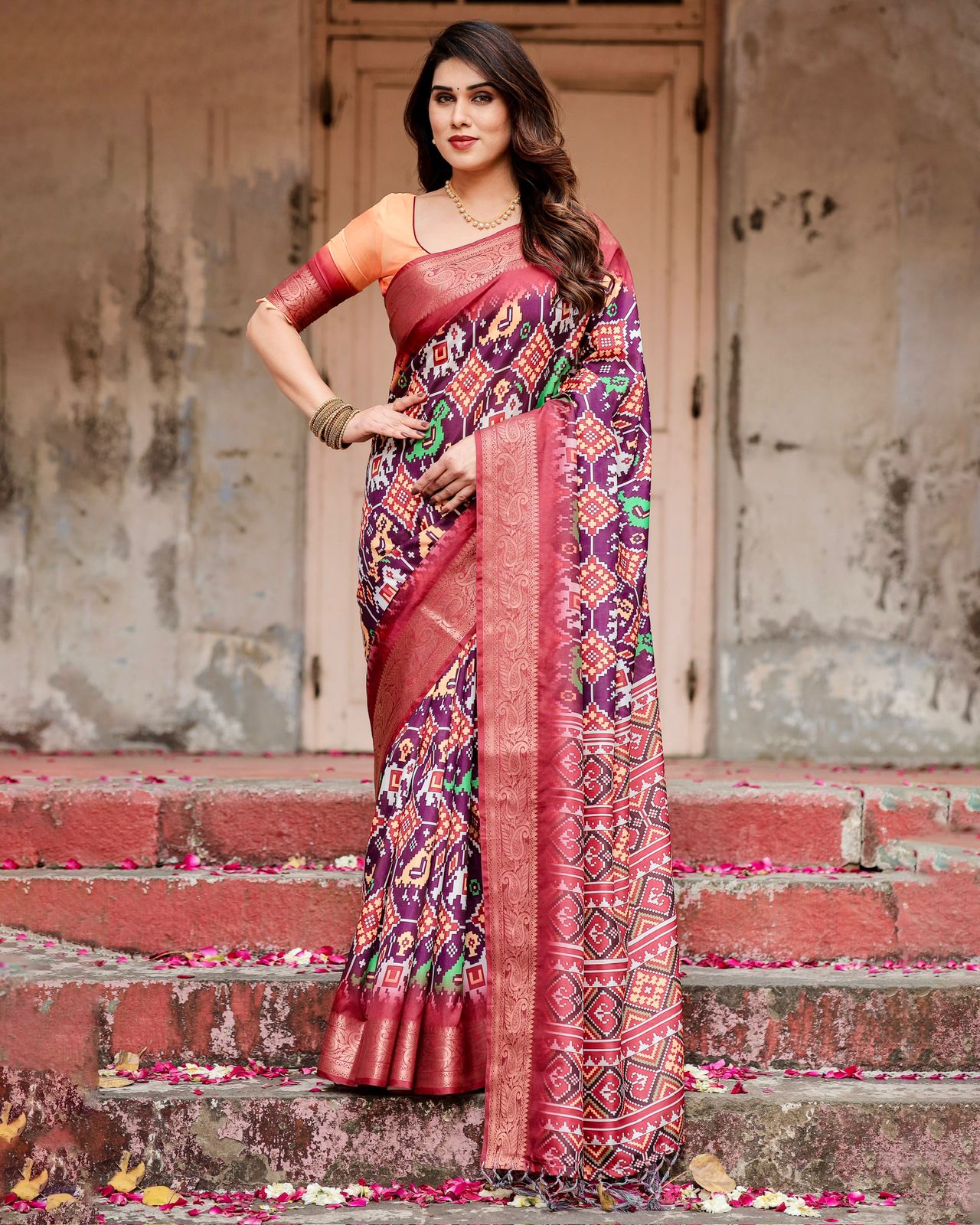
Pochampally Ikat designs are defined by geometry, repeated rhythm and controlled colour contrast. Diamonds, chevrons, stepped triangles, checks, stripes and zigzag bands commonly appear across the body, pallu or border. Compact motifs create a restrained look, while larger repeats make a stronger visual statement in silk sarees.
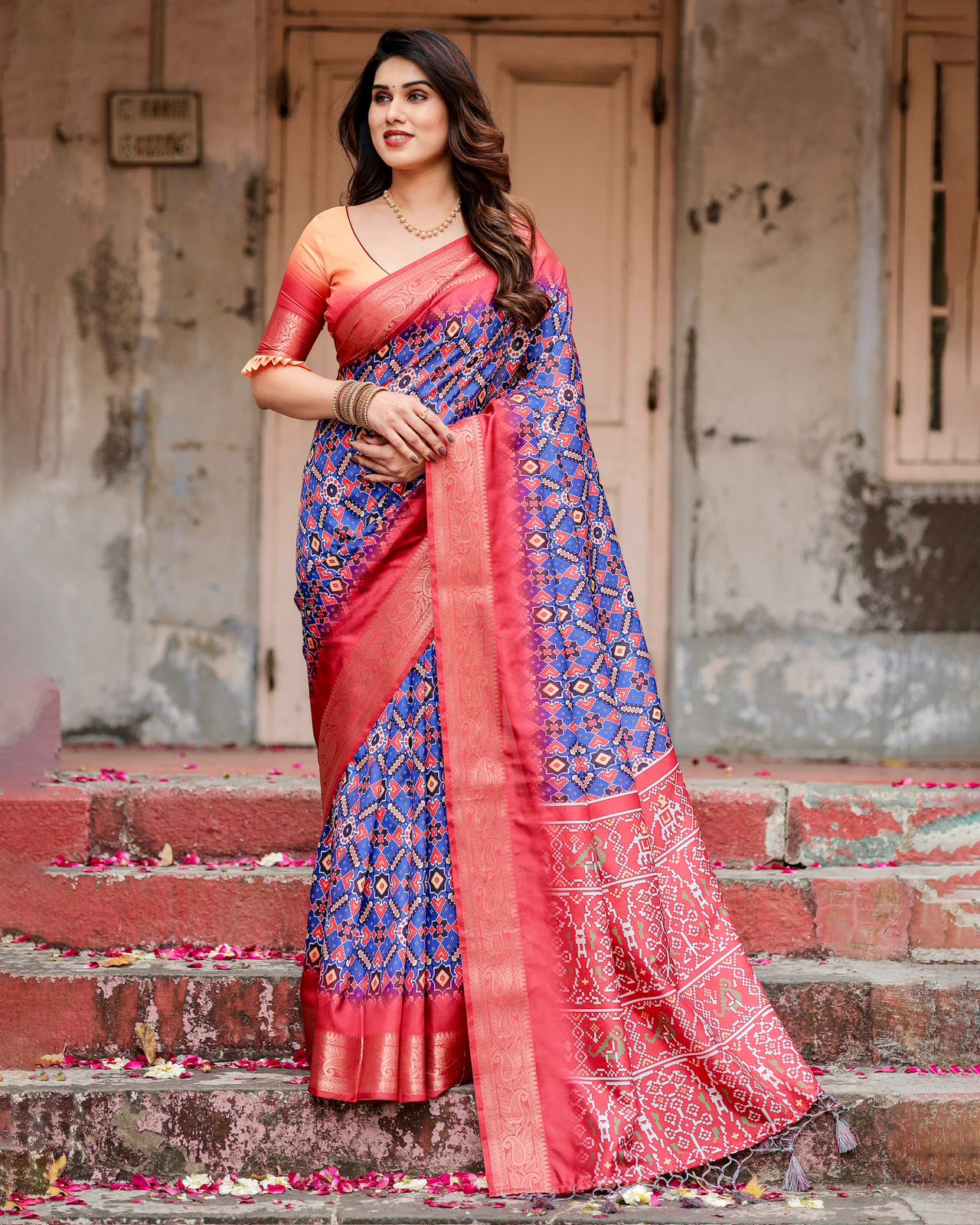
Colour placement changes the visual scale of a saree. A dark body with a bright geometric pallu makes the pallu the focal point, while a multicolour field distributes attention evenly across the drape. Red, royal blue, purple, black, ivory and earthy tones each produce a different relationship with gold zari and blouse colour.
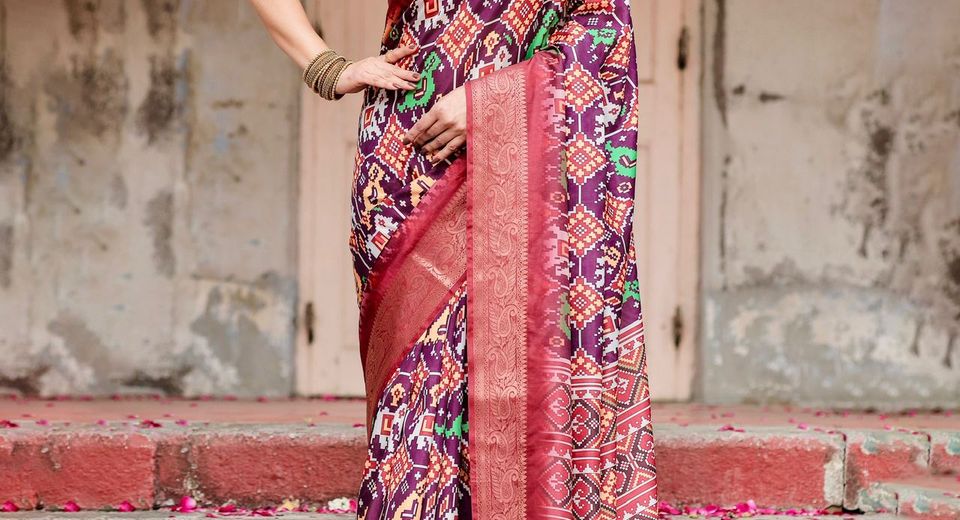
Royal Blue Printed Silk Saree demonstrates why colour and motif scale should be considered together: royal blue provides a strong base, while an Ikat-style pattern adds movement without requiring heavy embellishment. Royal Purple Tussar Silk Saree with Traditional Ikat Print takes a richer, more textured route, making it suitable for an evening event where the saree itself supplies visual depth.
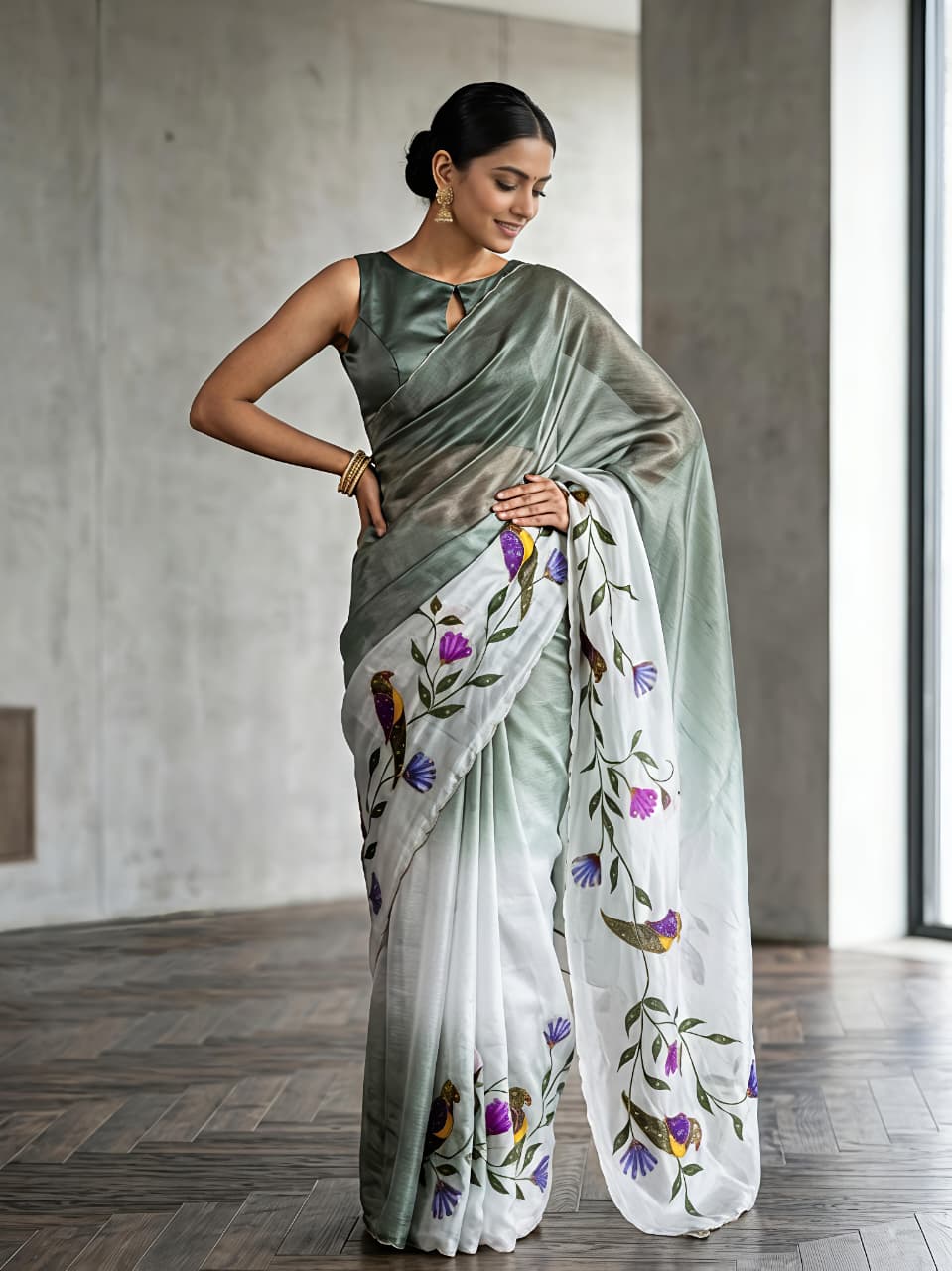
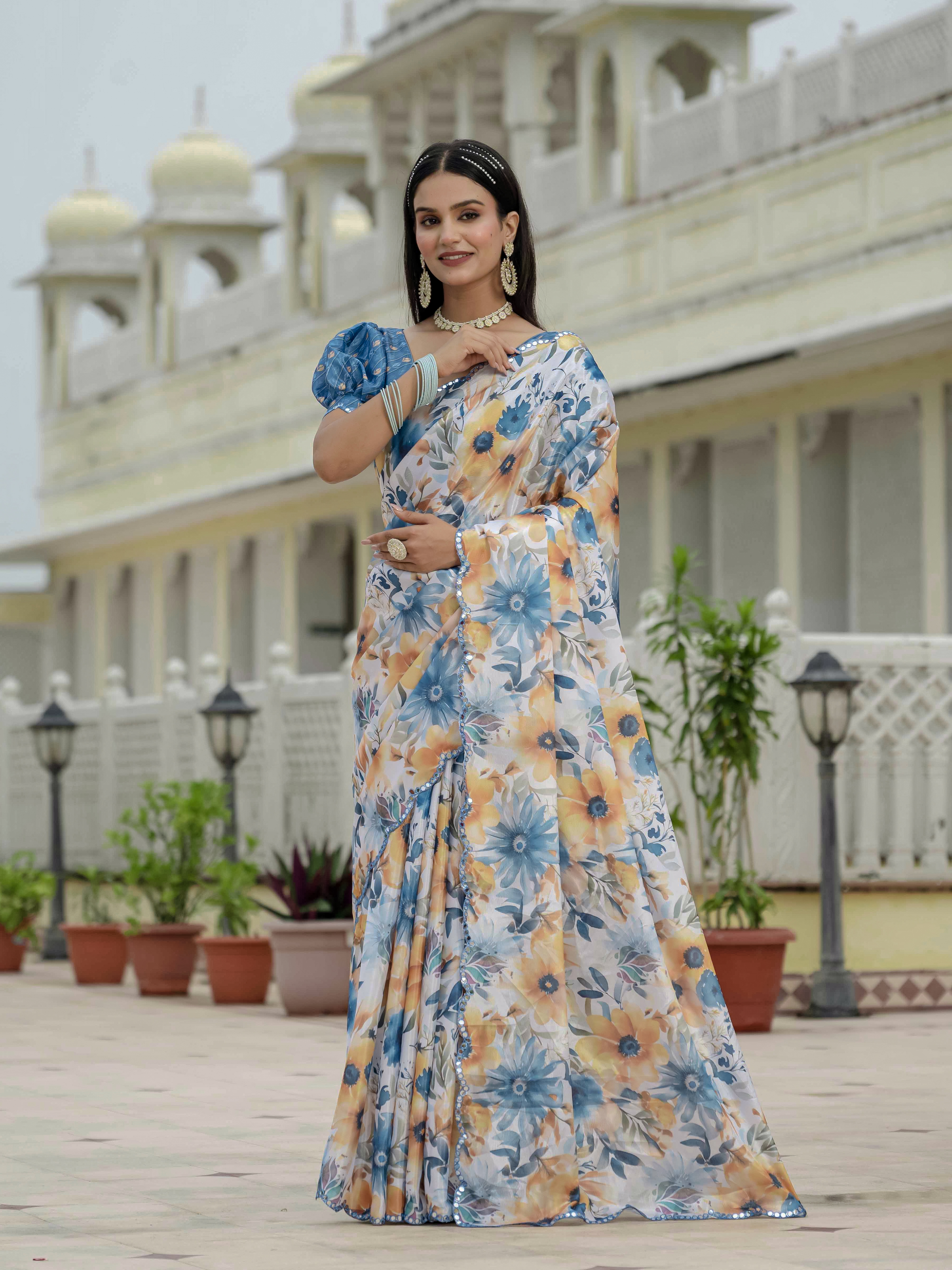
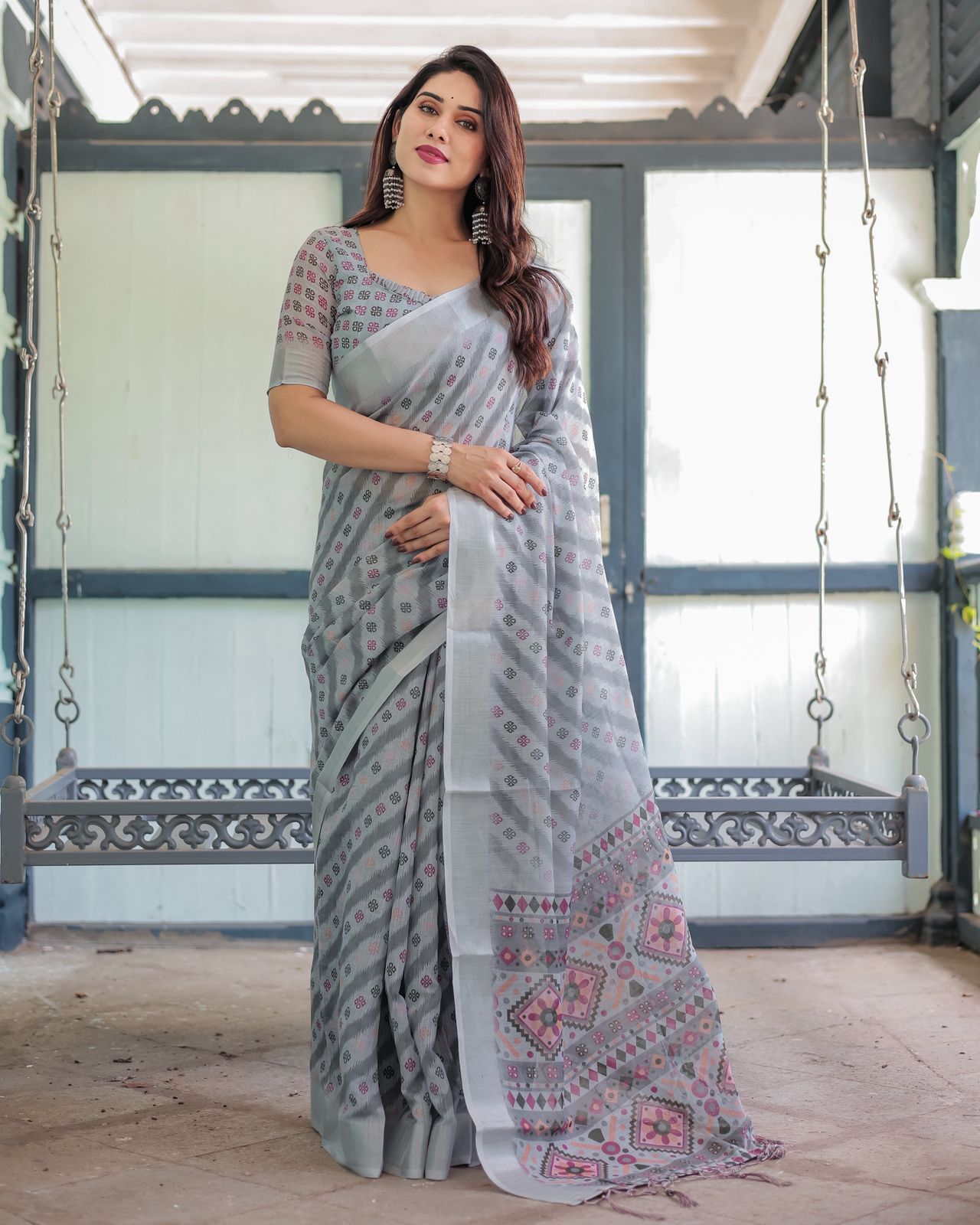
Printed designs can also be useful when you want the Ikat appearance at a lighter price or with easier everyday handling. Grey Ikat Print Linen Saree with Elegant Design and Soft Grey Pure Linen Ikat Printed Saree with Blouse show how neutral grey can soften a geometric print. Such pieces work well for daytime gatherings, work celebrations and understated festive dressing, but product descriptions should be read as printed rather than handwoven Ikat unless the seller states otherwise.
Purple Ikat Print Mal Cotton Saree with Designer Border offers another example of how a border can alter the overall proportion of a saree. A prominent border visually anchors the lower edge, while smaller motifs across the body keep the outfit from appearing too ornate. Vibrant Multicolor Linen Saree with Ikat Inspired Prints uses colour variety as its main design feature and can be styled with a blouse in one of its secondary shades.
Pochampally Ikat Sarees: which fabric suits each occasion?
The best fabric depends on the climate, duration of wear, level of formality and amount of movement required. Silk creates structure and sheen for weddings or evening celebrations, linen gives a crisp and breathable daytime drape, and cotton or Mal cotton generally suits regular wear in warm weather.
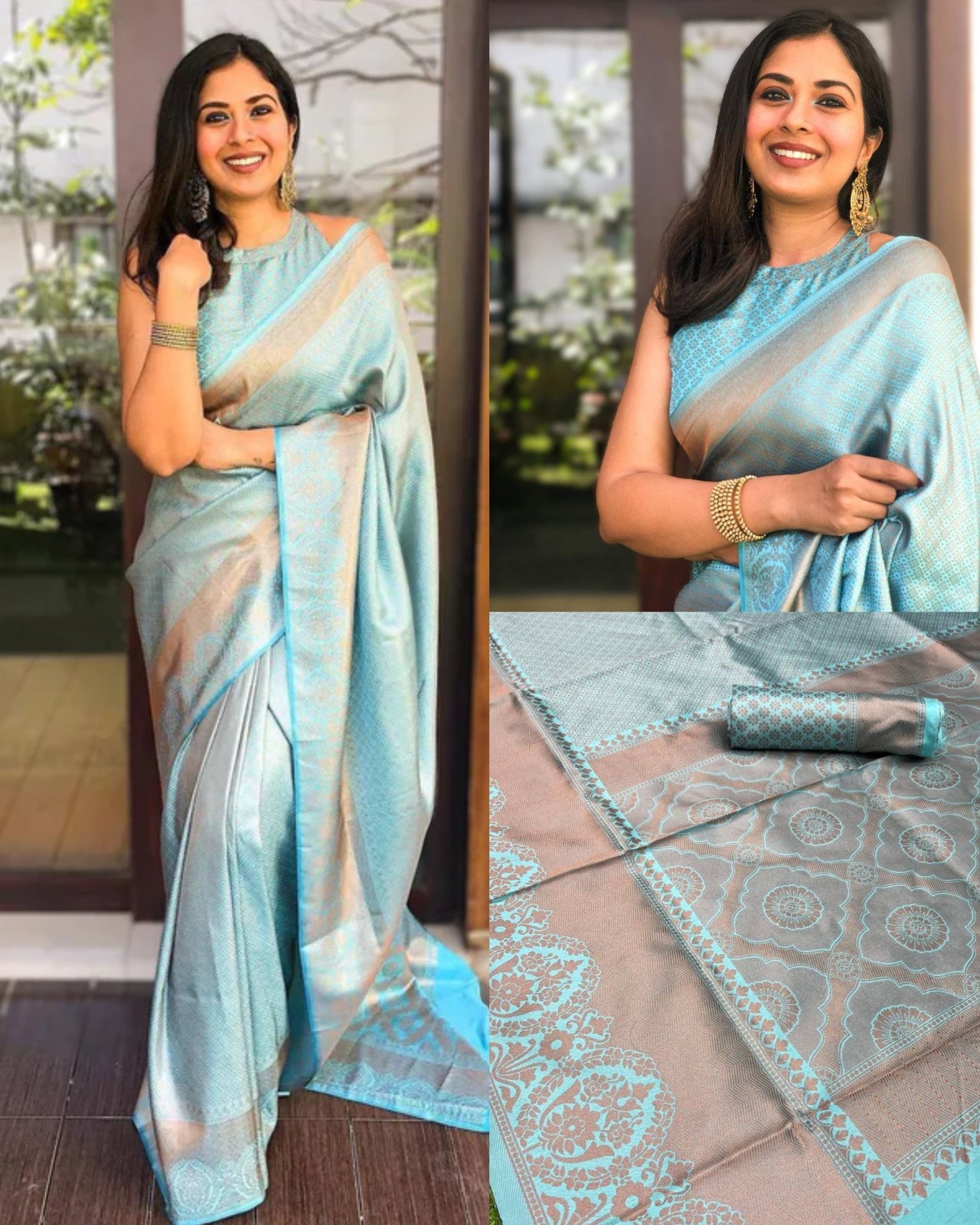
Pochampally Ikat Sarees in silk for ceremonies
Silk Ikat suits ceremonies when you want a defined silhouette, a noticeable pallu and a blouse that can support more jewellery. Purple Ikat Tussar Silk Saree Online | Varnavi illustrates the appeal of Tussar silk because its naturally textured surface can make geometric motifs look less flat than they would on a smooth base. A silk saree benefits from a well-fitted blouse, structured pleats and a secure pallu pin for long events.
Blue Red Ikat Silk Saree Online with Zari | Varnavi pairs a high-contrast colour relationship with zari, so gold jewellery, a red bindi or a plain blouse can complete the look without adding another competing print. Zari may be metallic or metallic-look thread, so the care label and product details remain important before steaming or storing the saree.
Pochampally Ikat Sarees in linen and cotton for daytime wear
Linen and cotton Ikat suit daytime occasions because their lighter hand and breathable construction are generally easier to wear for several hours. Linen can crease more visibly than silk, but controlled creasing looks intentional when the saree is ironed at the correct temperature and draped with even pleats.
Mal cotton works well for casual festive gatherings, regional celebrations and warm-weather lunches. A cotton or linen saree pairs effectively with a compact blouse, flat sandals and lighter jewellery when comfort matters more than a formal silhouette. A plain blouse is usually the safest choice when the saree already contains multiple colours or a large geometric repeat.
Pochampally Ikat Sarees: how can you style them today?
Pochampally Ikat Sarees can be styled successfully by allowing the geometric textile to remain the central visual element. A plain blouse, one dominant metal tone and a deliberate choice of drape usually create a more balanced outfit than several competing prints.
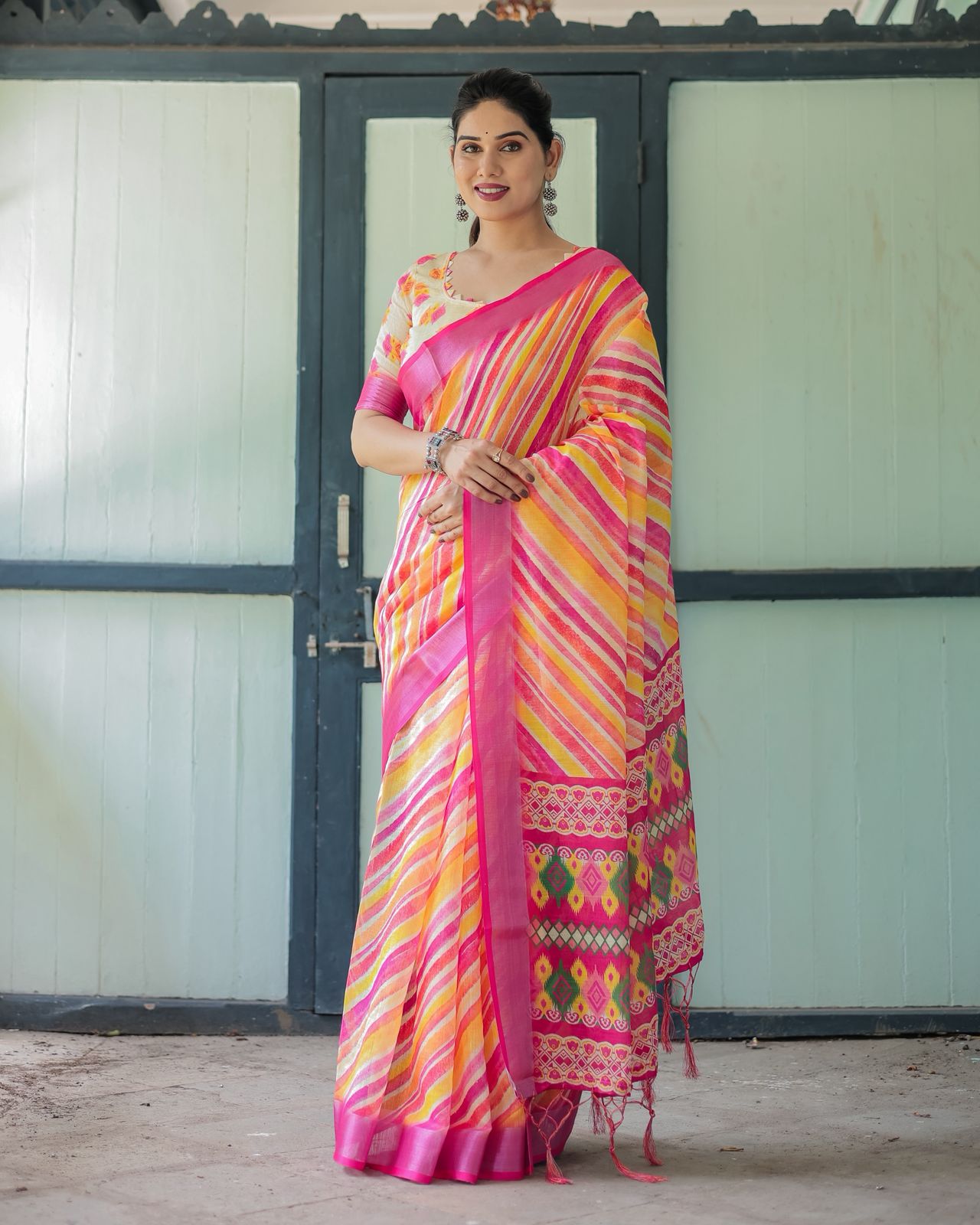
- For a Haldi ceremony: Choose a yellow, purple, red or multicolour blouse only if it repeats a shade already present in the saree. Keep jewellery lightweight because turmeric rituals involve movement and frequent sitting.
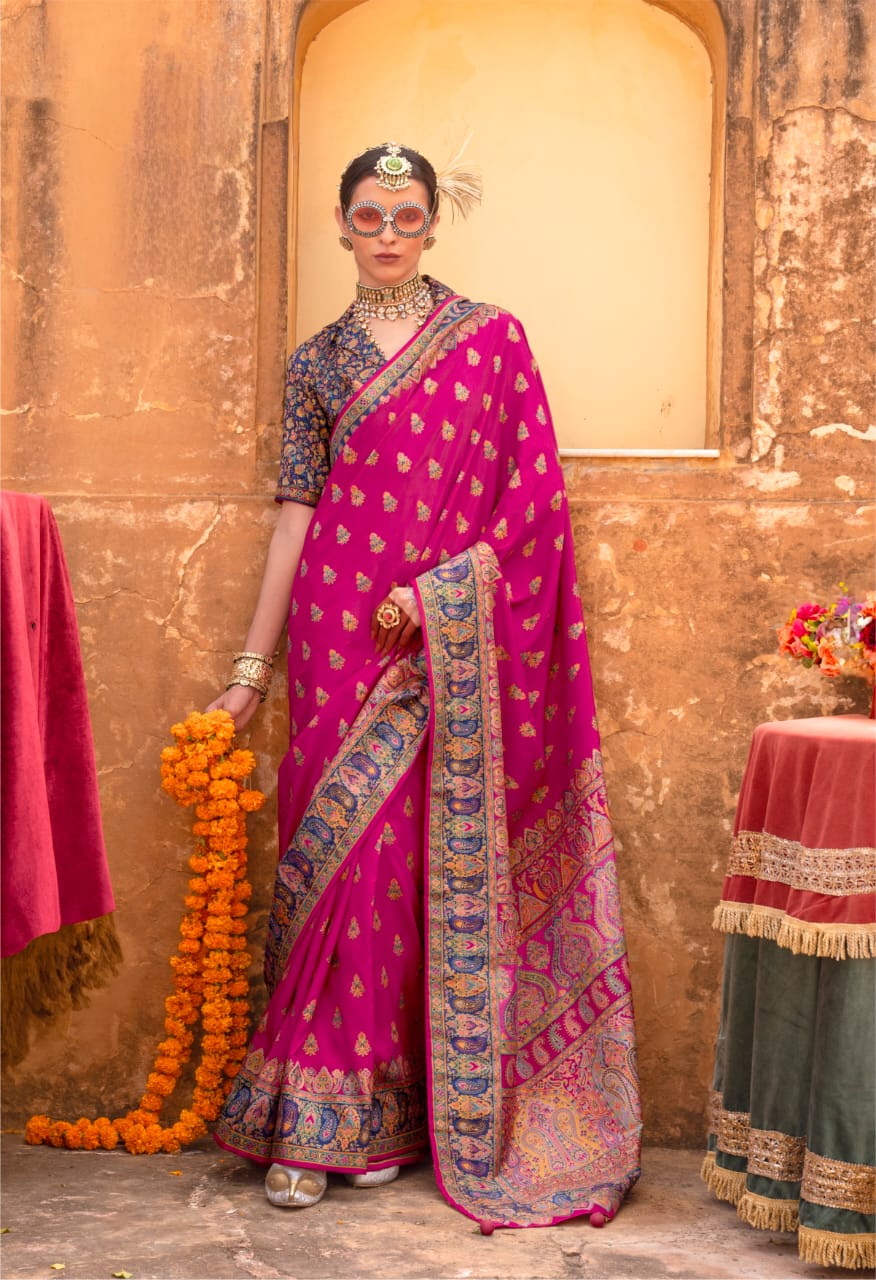
- For a wedding reception: Use silk or Tussar silk with a fitted blouse, medium-sized jhumkas and a defined pallu. Gold zari looks cohesive with gold-toned jewellery, while silver jewellery can sharpen a cooler blue or grey palette.
- For an office celebration: Choose linen or cotton with a three-quarter-sleeve blouse, small earrings and a compact handbag. A front-pleated Nivi drape keeps the geometric border visible without making the outfit feel overly ceremonial.
- For a contemporary look: Try a sleeveless or collared blouse in a solid colour taken from the saree. Keep the accessories structured, such as a watch, geometric earrings or a narrow belt worn carefully over the drape.
- For a traditional presentation: Use a neat Nivi drape with a pinned pallu, a bindi and regional jewellery. Avoid adding a heavily embroidered blouse when the pallu already carries dense Ikat geometry.
Blouse proportion also affects the appearance of the saree. A high-neck blouse can balance a broad border, while a deeper neckline leaves more visual space around the face when the saree has a busy pallu. A blouse in ivory, black, red, purple or gold can work, but the correct choice depends on the dominant and secondary colours rather than the body colour alone.
Pochampally Ikat Sarees: how should they be washed and stored?
Pochampally Ikat sarees should be cleaned according to their fibre, dye and embellishment, with dry cleaning generally safer for silk, zari and uncertain colourfastness. Linen, cotton and Mal cotton may sometimes be gently hand-washed, but the care label should take priority over a general textile rule.
- Test colourfastness: Dab a hidden edge with a white, damp cotton cloth before washing. Colour transfer indicates that home washing could cause bleeding.
- Use low friction: Avoid wringing, hard brushing and long soaking because friction can distort yarn alignment and weaken zari.
- Dry in shade: Direct, strong sunlight can fade red, purple and dark blue dyes. Spread the saree evenly in shade rather than leaving it bunched.
- Iron carefully: Use the fibre-appropriate temperature and place a thin cotton cloth between the iron and the saree when the care label recommends protection.
- Store with ventilation: Fold silk and zari sarees along different crease lines every few months, wrap them in breathable cotton and avoid plastic for long-term storage.
Perfume, deodorant and hair products should be allowed to dry before jewellery or a pallu touches the fabric. Metal jewellery can snag a loose thread, so check bangles, brooches and handbag chains before wearing a delicate Ikat saree. Professional cleaning is the safer option for oil stains, zari borders and multi-coloured silk.
Pochampally Ikat Sarees: what should you know before buying online?
Online buyers should compare fibre, construction, measurements, blouse details, return terms and total price rather than relying on the word "Ikat." A lower-priced saree may be a printed linen or cotton design, while a higher-priced silk piece may reflect fibre, weaving labour, zari and finishing; price alone doesn't prove authenticity.
Budget filters can help organise a search, but they should not replace textile checks. Collections such as Sarees from Rs 1000 to Rs 1500, Sarees Under 20% Off and Sarees Under 10% Off may be useful when setting a spending limit. Sarees Flat 60% Off and Sarees Flat 50% Off can also surface discounted choices, but buyers should verify the original fibre description and available measurements before assuming that a discount represents a handwoven product.
Before placing an order, save the product page and check whether the listing names a blouse piece, saree length, wash method and approximate colour. Ask whether "Ikat" refers to weaving or printing when the description is unclear. A seller that gives close-up photographs, fibre information and care guidance gives you stronger evidence than a listing that relies only on words such as designer, premium or traditional.
The most dependable choice is the saree whose construction matches your expectations. Select handwoven Ikat when yarn-resist craftsmanship and regional textile heritage are the priority. Select an Ikat-inspired print when you want an accessible pattern, lighter maintenance or a wider range of everyday fabrics. Both can be valuable wardrobe choices when the description is accurate and the styling suits the occasion.
Common Questions About Choosing and Styling Pochampally Ikat Sarees
How can I tell whether a saree is genuine Pochampally Ikat?
A genuine yarn-resist Ikat has colour formed within the warp or weft and usually shows slightly softened motif edges caused by thread alignment. Check for a clear handwoven or Ikat-weave description, close-up photographs, fibre details and information about the production method; an "Ikat print" label describes a printed design instead.
Is Pochampally Ikat the same as Patola or Sambalpuri Ikat?
Pochampally Ikat, Patola and Sambalpuri Ikat are related resist-dyeing traditions but are not identical. Double Ikat Patola typically involves highly precise resist-dyeing of both warp and weft, while Pochampally and Sambalpuri textiles have their own regional methods, motifs and fabric traditions.
Which blouse colour works with a Pochampally Ikat saree?
A plain blouse in a dominant or secondary saree colour is usually the most balanced choice. Ivory, black, red, purple, royal blue or gold can work when the selected shade is already present or provides a deliberate contrast without competing with the geometric pallu.
Are Ikat sarees suitable for a Haldi ceremony?
Ikat sarees are suitable for a Haldi ceremony when the fabric is comfortable and the drape is securely pinned. Linen, cotton and Mal cotton are practical for daytime movement, while a washable or easy-care option is preferable because turmeric can stain delicate silk and zari.
How should I wash a Pochampally Ikat silk saree?
A Pochampally Ikat silk saree should generally be dry-cleaned, especially when it has zari, unstable dyes or elaborate finishing. Avoid soaking, wringing and direct sunlight, and store the clean saree in breathable cotton with folds changed periodically.
Can I wear a printed Ikat saree for a formal event?
A printed Ikat saree can work for a formal event when the fabric, finish and styling look polished. Choose a silk or quality linen base, add a well-fitted solid blouse and refined jewellery, while describing the piece accurately as printed rather than handwoven Ikat.