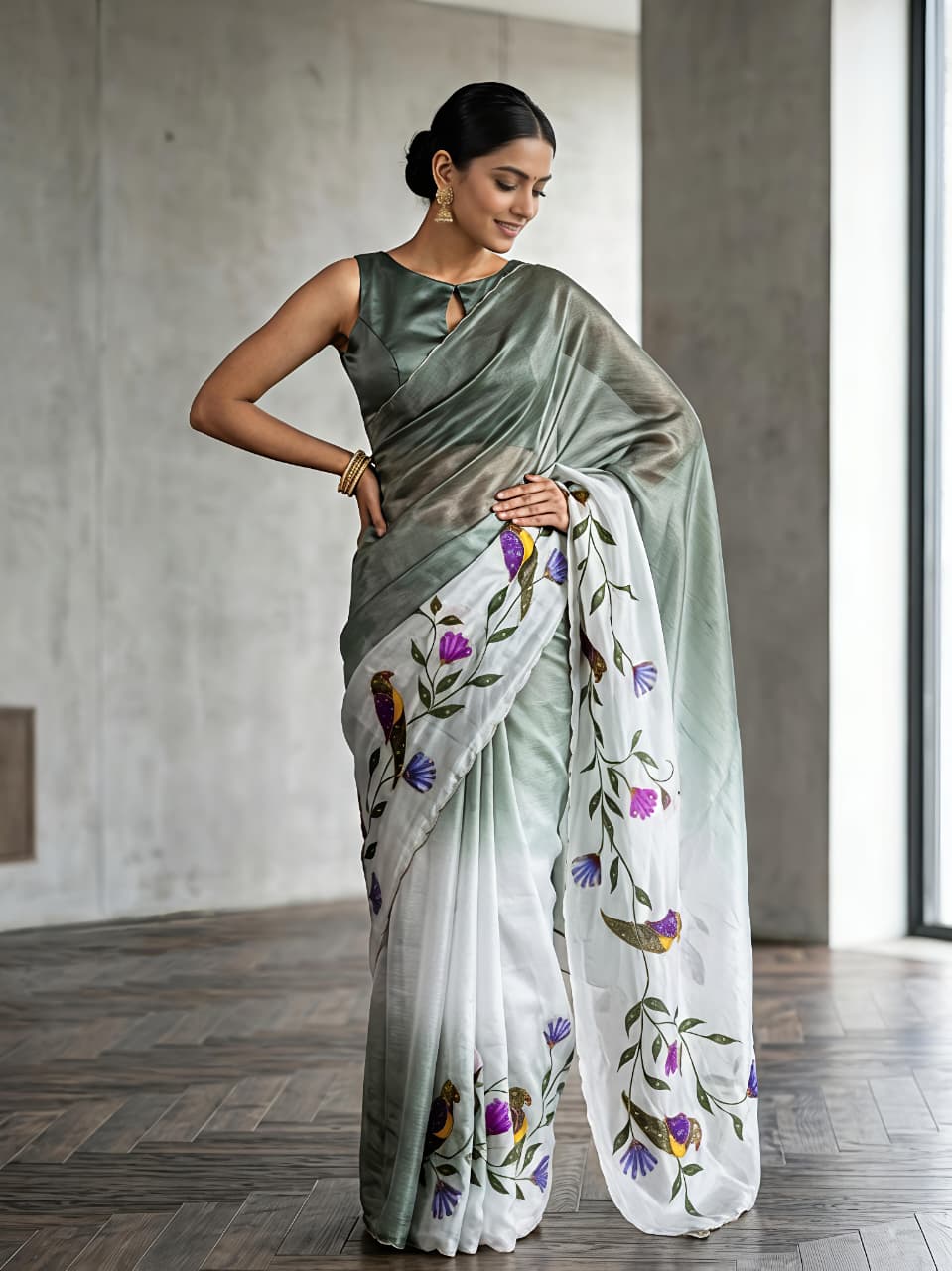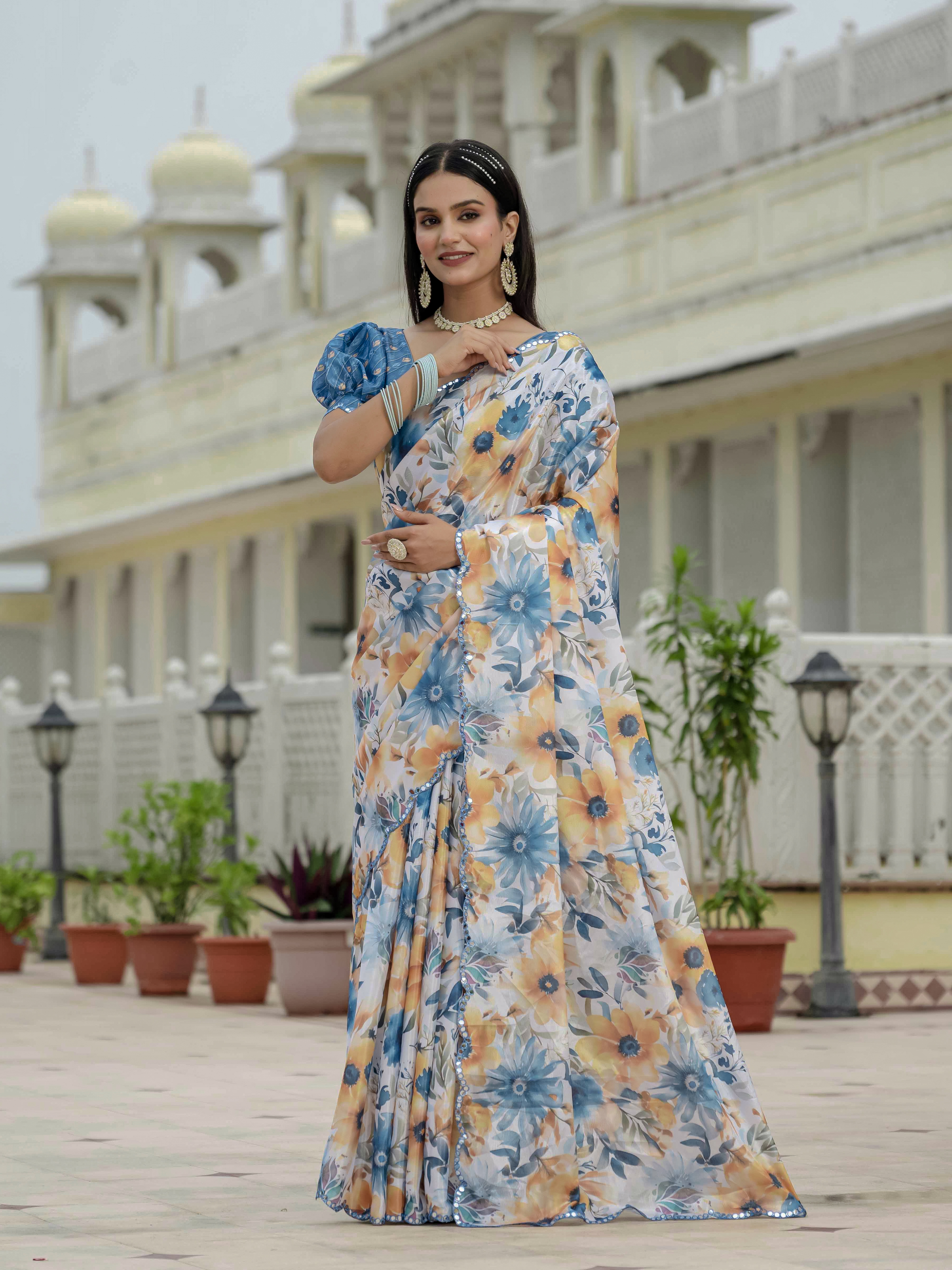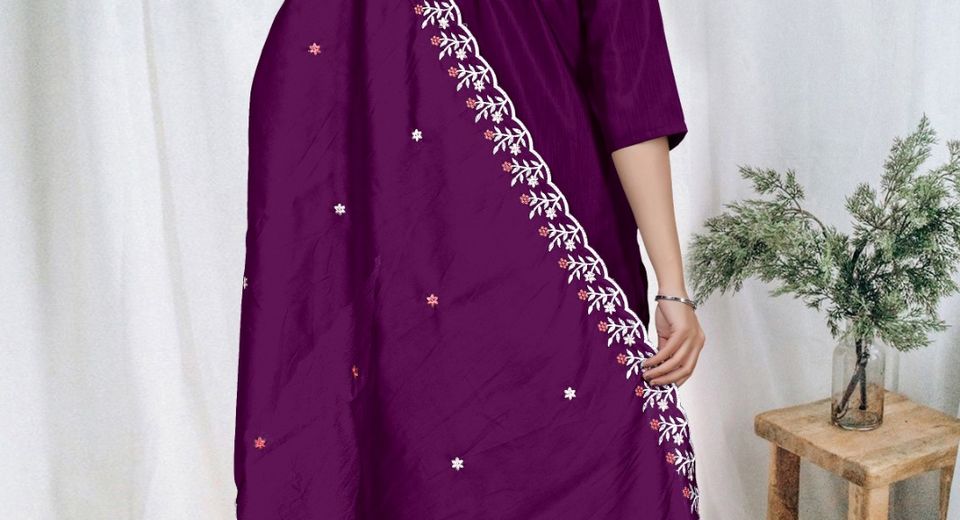
A Phulkari Fashion Guide: Punjabi Sarees, Suits & Dupatta Styling becomes genuinely useful when it explains more than bright embroidery. Punjabi sarees, salwar suits and dupattas look balanced when the embroidery scale, base fabric, silhouette and drape work together. The practical rule is simple: choose one dominant Phulkari element, keep the rest of the outfit quieter, and match the fabric to the weather and formality of the event.
Phulkari can appear on a full dupatta, a kurta yoke, a sleeve border, a saree pallu or a small panel. Each treatment creates a different level of formality. A dense embroidered dupatta can transform a plain kurta, while an embroidered kurta usually needs a quieter bottom and a simpler drape.
Phulkari Fashion Guide: Punjabi Sarees, Suits & Dupatta Styling and its Punjabi identity
Phulkari clothing is recognisably Punjabi because its identity comes from floral embroidery, vivid colour contrasts and the visual importance of the dupatta. Traditional Phulkari was worked with untwisted silk floss called pat, usually on a cotton ground, using counted stitches that create a characteristic surface sheen.
The word Phulkari means flower work, but the design language is broader than scattered flowers. Bagh patterns cover most of the ground with embroidery, while chope traditionally uses a more restrained, often geometric arrangement and carries ceremonial associations. Contemporary Punjabi suits may use machine embroidery, printed interpretations or selected embroidered panels rather than covering the entire garment.
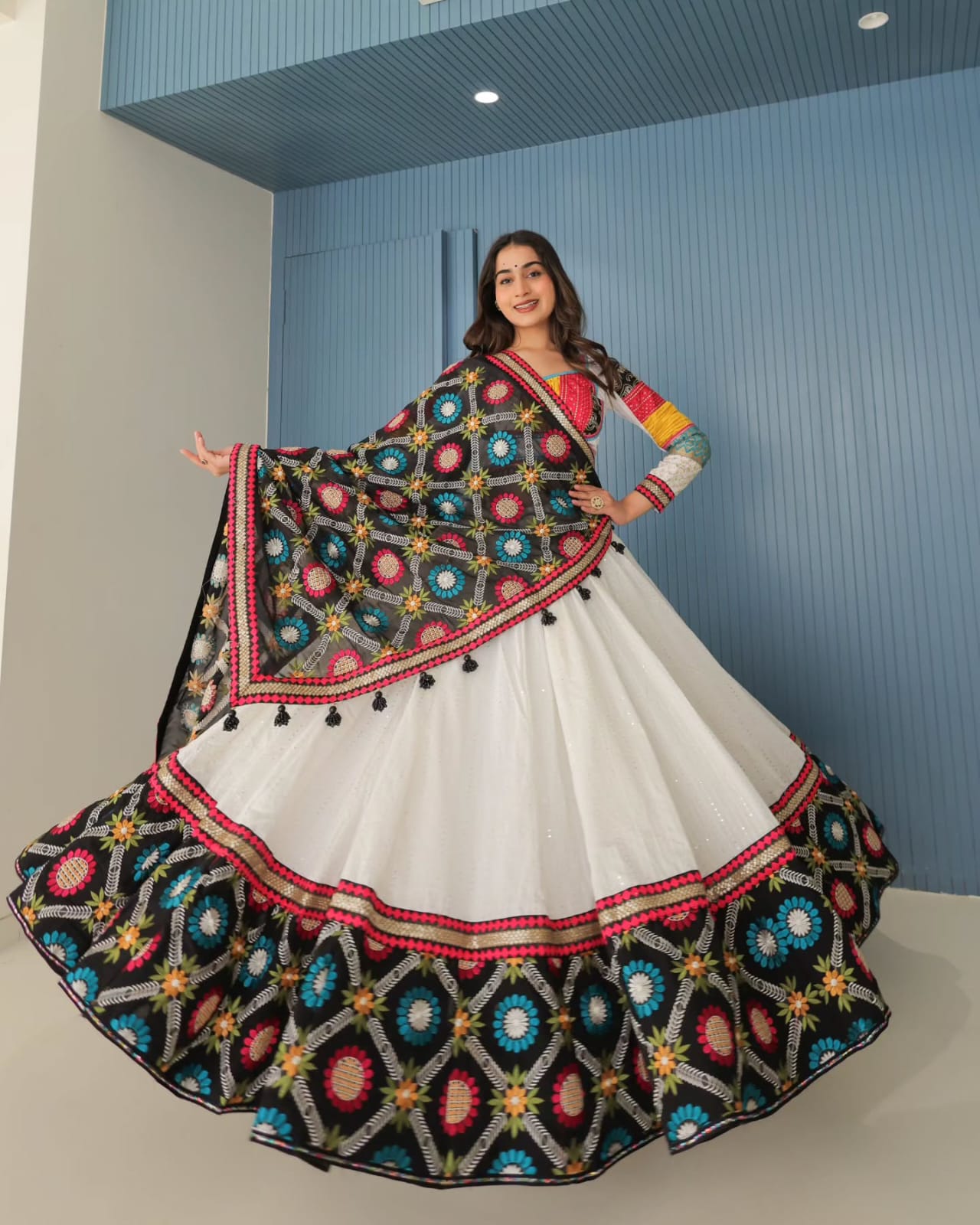
A Phulkari-inspired outfit doesn't need to reproduce a historic Bagh exactly. A kurta with a concentrated embroidered yoke, a border-heavy dupatta or a small floral sleeve detail can carry the same visual spirit. The important clues are rhythmic motifs, warm-to-bright colour placement and a clear connection between the kameez and dupatta.
Punjabi fashion includes more than one silhouette. Patiala salwar suits have generous pleats and a shorter kameez, straight kurta sets create a cleaner vertical line, and palazzo trousers give the embroidered dupatta a more contemporary setting. Punjab Patiala Salwar Suits provide an useful reference when you want volume at the lower half rather than a close-fitting trouser shape.
Phulkari Fashion Guide: Punjabi Sarees, Suits & Dupatta Styling for choosing an outfit
Choose a Phulkari suit or Punjabi saree by deciding the occasion first, then checking embroidery density, fabric weight and the contrast between the base and the embellishment. A festive wedding outfit can support dense zari or threadwork, while a daytime suit usually benefits from lighter embroidery and breathable fabric.
Phulkari Fashion Guide: Punjabi Sarees, Suits & Dupatta Styling by embroidery density
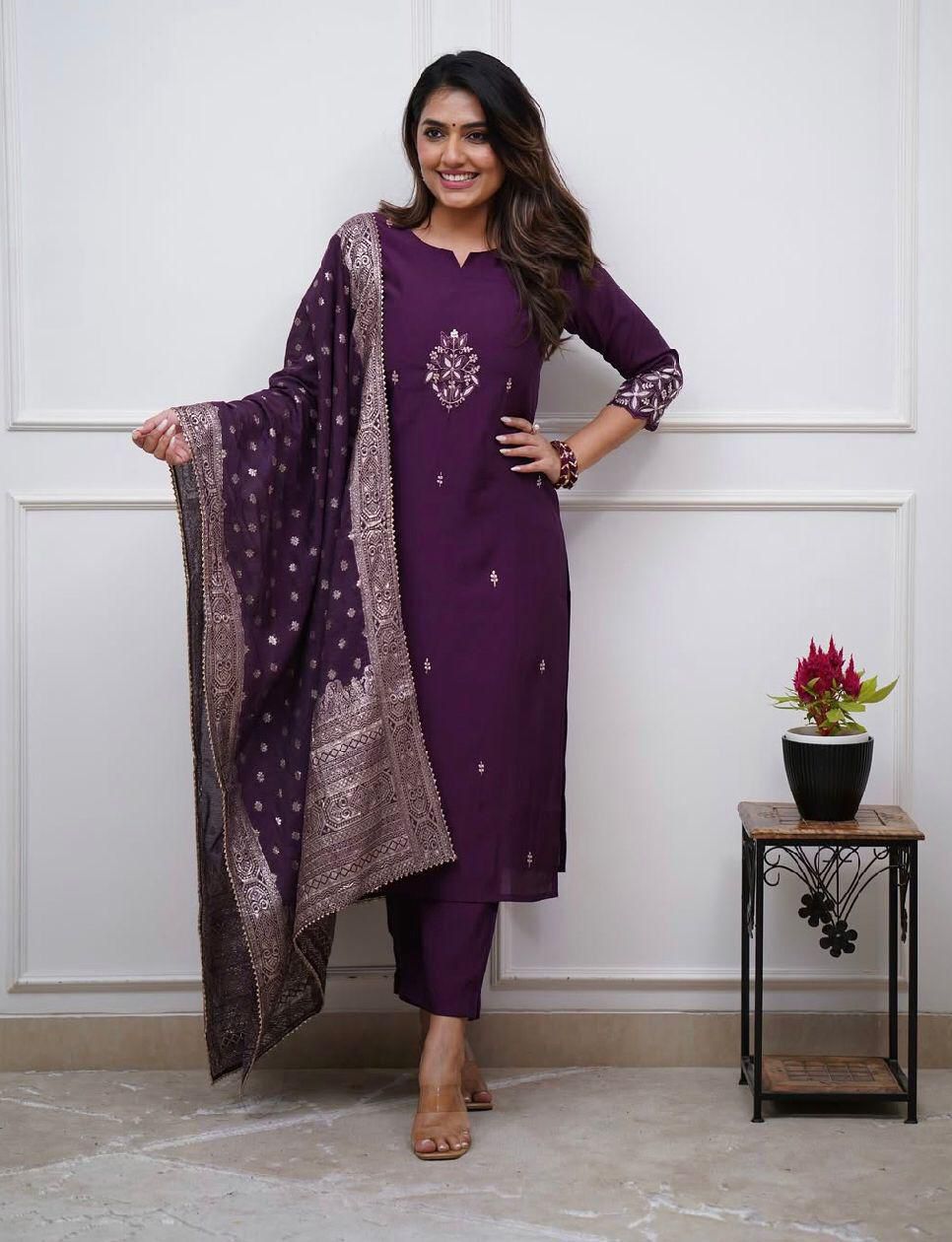
Dense embroidery works well for receptions, sangeet evenings and formal family celebrations because warm indoor lighting reveals the surface detail. A heavily worked dupatta paired with a plain kurta and trousers can look more polished than a fully embroidered three-piece set.
Medium embroidery suits a mehendi, festive lunch or Diwali gathering. Look for a decorated neckline, sleeve border or dupatta edge, with enough plain fabric to make the motifs readable. Sparse embroidery is practical for office celebrations, small pujas and daytime visits because it remains comfortable and needs fewer accessories.
Phulkari Fashion Guide: Punjabi Sarees, Suits & Dupatta Styling by fabric
Chanderi silk offers a light, slightly crisp fall and a subtle sheen, so it suits embroidered kurta sets for daytime weddings and festive lunches. Ivory Floral Embroidered Chanderi Silk Kurta Set Women demonstrates why ivory can make floral work look delicate rather than overly loud.
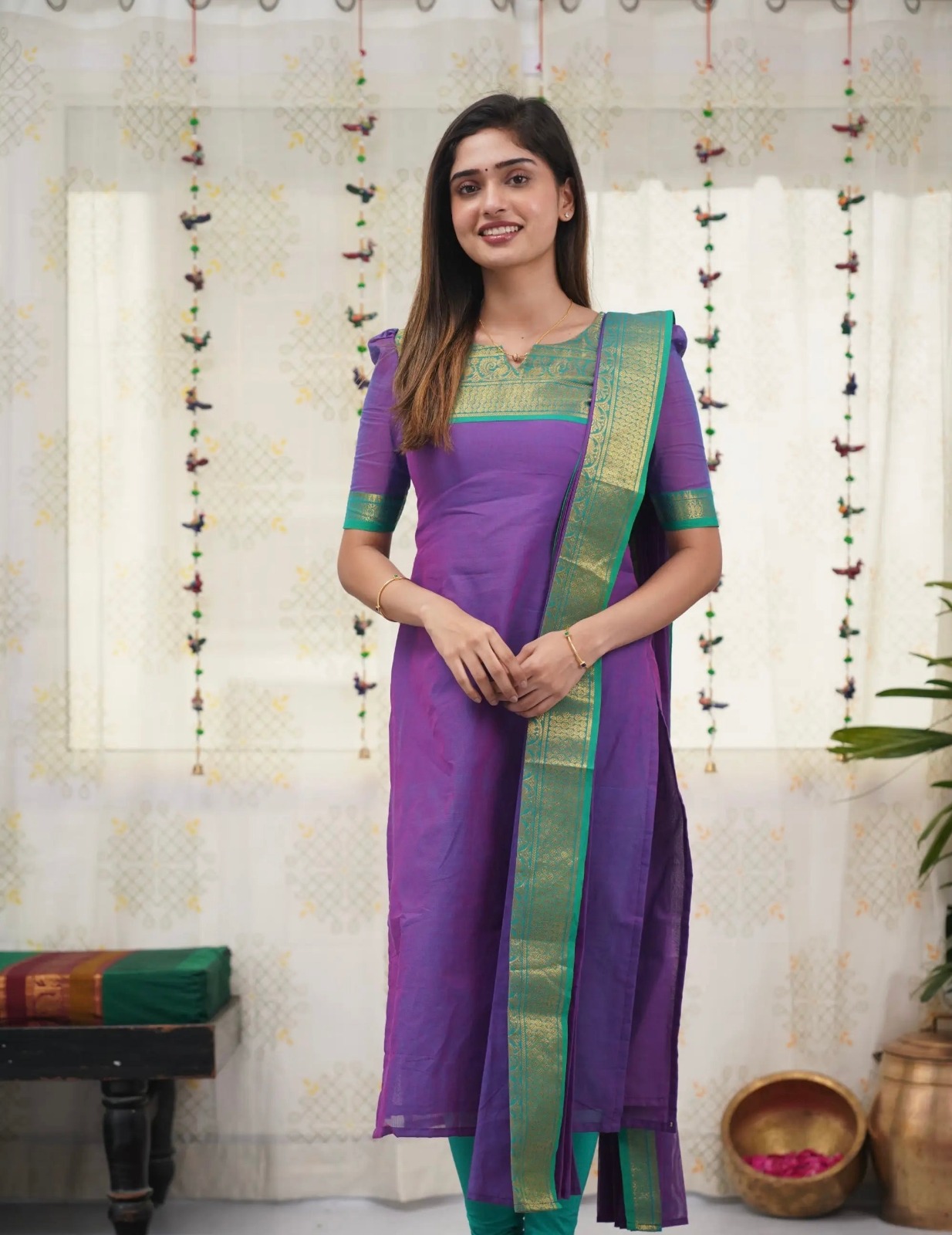
Purple Chanderi Silk Embroidered Kurta Set with Dupatta works when you want the dupatta to float rather than sit heavily on the shoulder. Cotton is more forgiving in humid weather, while silk-blend surfaces generally look dressier but may need more careful storage and cleaning.
For a richer evening impression, a silk kurta with floral detailing can replace a fully embellished saree. Stylish Navy Floral Silk Kurta Pant Dupatta Set shows how a dark base can provide contrast without relying on neon colour. Mustard Embroidered Kurta Pant Dupatta Set for Women pairs naturally with antique-gold jewellery and tan or brown footwear.
Phulkari Fashion Guide: Punjabi Sarees, Suits & Dupatta Styling with a dupatta
A Phulkari dupatta looks balanced when one edge, panel or central field receives attention and the rest of the outfit repeats only one or two colours from the embroidery. The dupatta should remain visible, so avoid covering its main motifs with a large bag or multiple layers of jewellery.
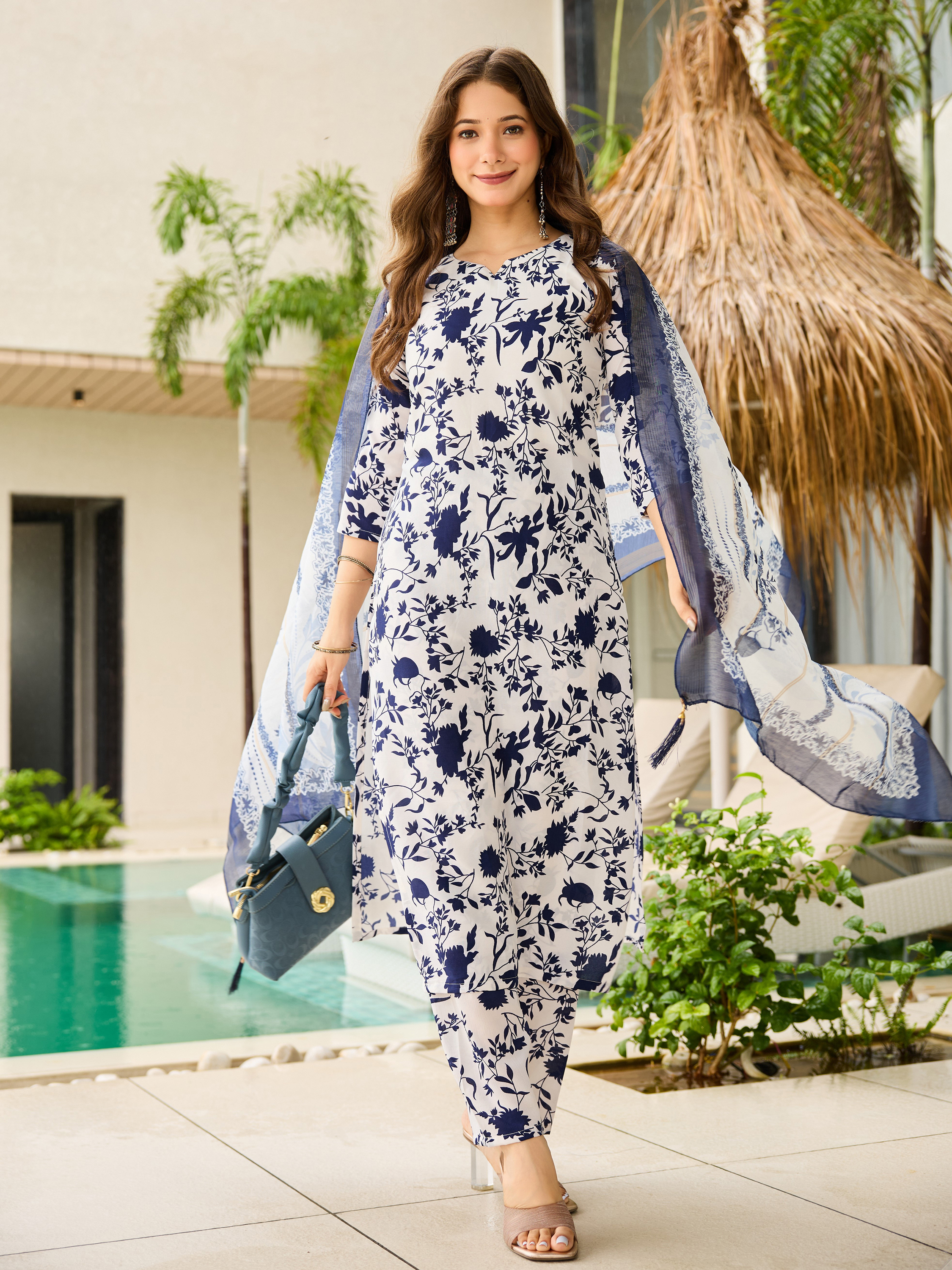
Phulkari Fashion Guide: Punjabi Sarees, Suits & Dupatta Styling through three useful drapes
- Open shoulder drape: Place the dupatta evenly over both shoulders and allow the embroidered border to fall vertically. This works with straight kurta sets and gives the clearest view of the motifs.
- One-shoulder pleat: Make five to seven broad pleats near one shoulder and let the remaining length fall behind. This is secure for walking and works well when the dupatta has a prominent border.
- Front-cowl drape: Place the dupatta around the neck with both ends falling in front. Use this only with a lighter fabric because a heavy embroidered textile can add bulk around the chest.
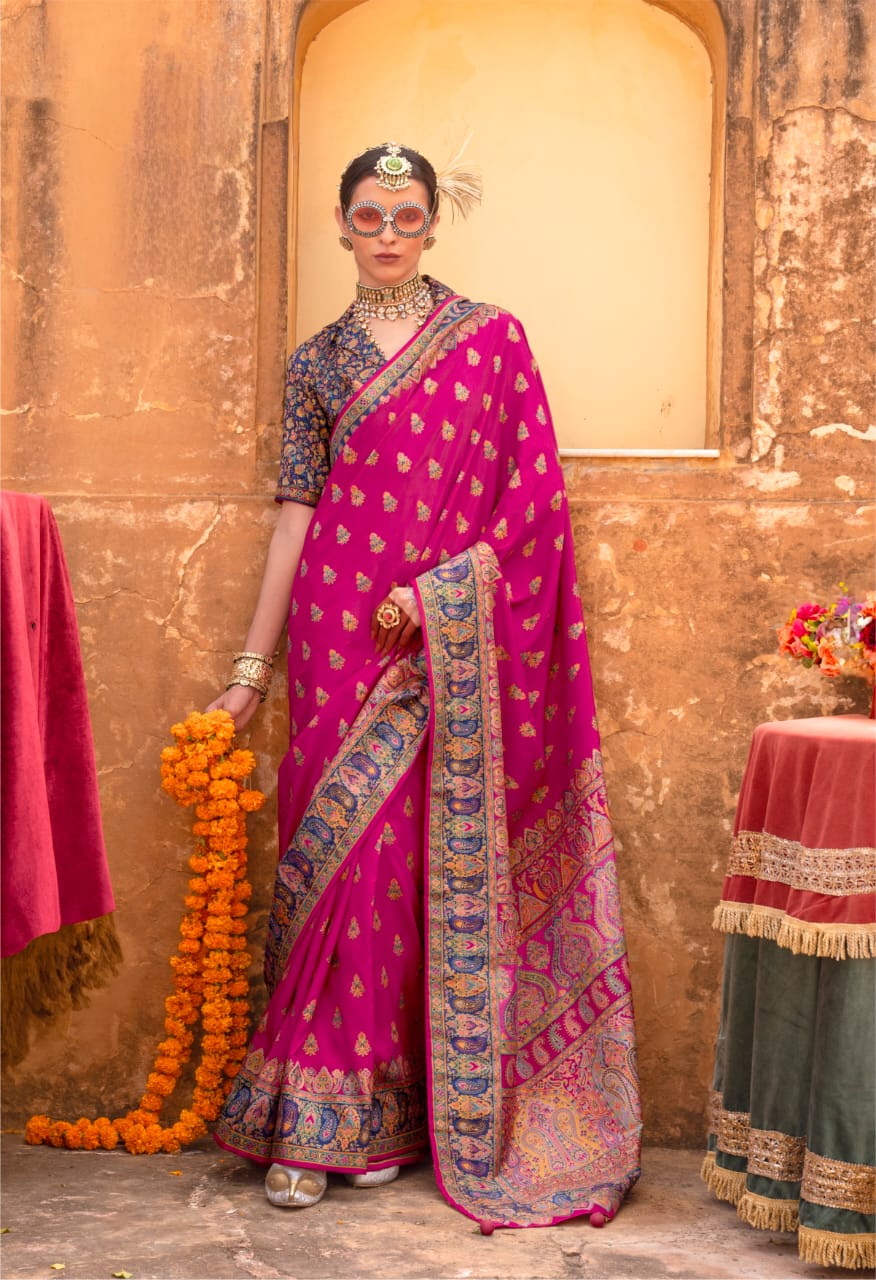
For a saree, use the Phulkari dupatta as a pallu-style shoulder layer only when the saree itself has a restrained border. A busy saree, embroidered blouse and heavily worked dupatta compete for attention. A plain silk saree in navy, ivory, mustard or deep pink gives the embroidered layer enough visual space.
A pinned drape is usually safer for weddings. Place one discreet pin under the shoulder fold rather than through the most visible embroidered motif. A brooch can secure the fabric, but choose a lightweight piece so the pin doesn't pull delicate silk floss or create a permanent puncture.
Phulkari Fashion Guide: Punjabi Sarees, Suits & Dupatta Styling through colour
The strongest Punjabi Phulkari colour combinations pair a saturated embroidery shade with a grounded base such as ivory, navy, black, maroon, mustard or bottle green. The base colour controls whether the final outfit feels traditional, soft or contemporary.
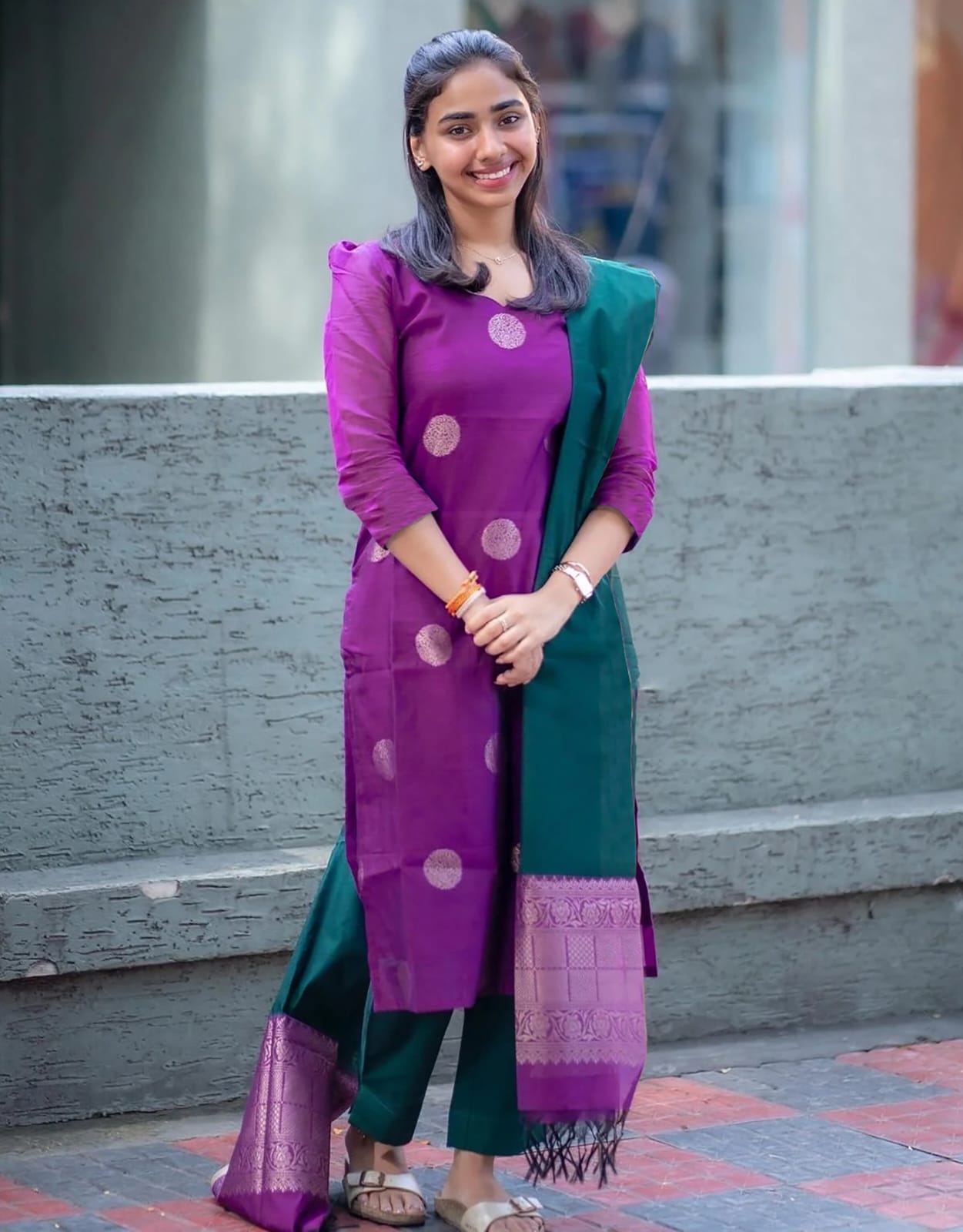
Magenta, orange and yellow embroidery on a deep base creates a high-contrast festive look. Ivory or blush pink makes the same floral vocabulary more suitable for a daytime function. Purple gives Phulkari a modern direction, especially when the embroidery includes pink, rose, silver or muted gold.
Purple Embroidered Kurta Pant Dupatta Set Online can suit a coordinated festive look, while Purple Embroidered Kurti Pant with Dupatta Online brings a more separable wardrobe approach if the kurti and bottom may be worn independently. Purple Embroidered Kurta Pant Dupatta Set Women creates another coordinated option for a celebration where a matching three-piece appearance feels appropriate.
Colour repetition should be intentional. Pick one embroidery colour for earrings, bangles or footwear rather than matching every accessory to every thread. Mustard embroidery can be echoed in juttis, while a navy base can be balanced with oxidised silver instead of adding another bright colour.
Neutral accessories are especially helpful when the dupatta has multicoloured threadwork. Pearl studs, small jhumkas, a plain potli and tan sandals allow the textile to remain the visual focus. Strong contrast jewellery is more appropriate when the garment has a simple embroidered neckline rather than an all-over design.
Phulkari Fashion Guide: Punjabi Sarees, Suits & Dupatta Styling by silhouette
A Punjabi suit is comfortable and flattering when the garment proportions suit the wearer's movement, height and preferred level of volume. The most useful measurements are armhole ease, kurta length, trouser rise, calf width and the finished dupatta length.
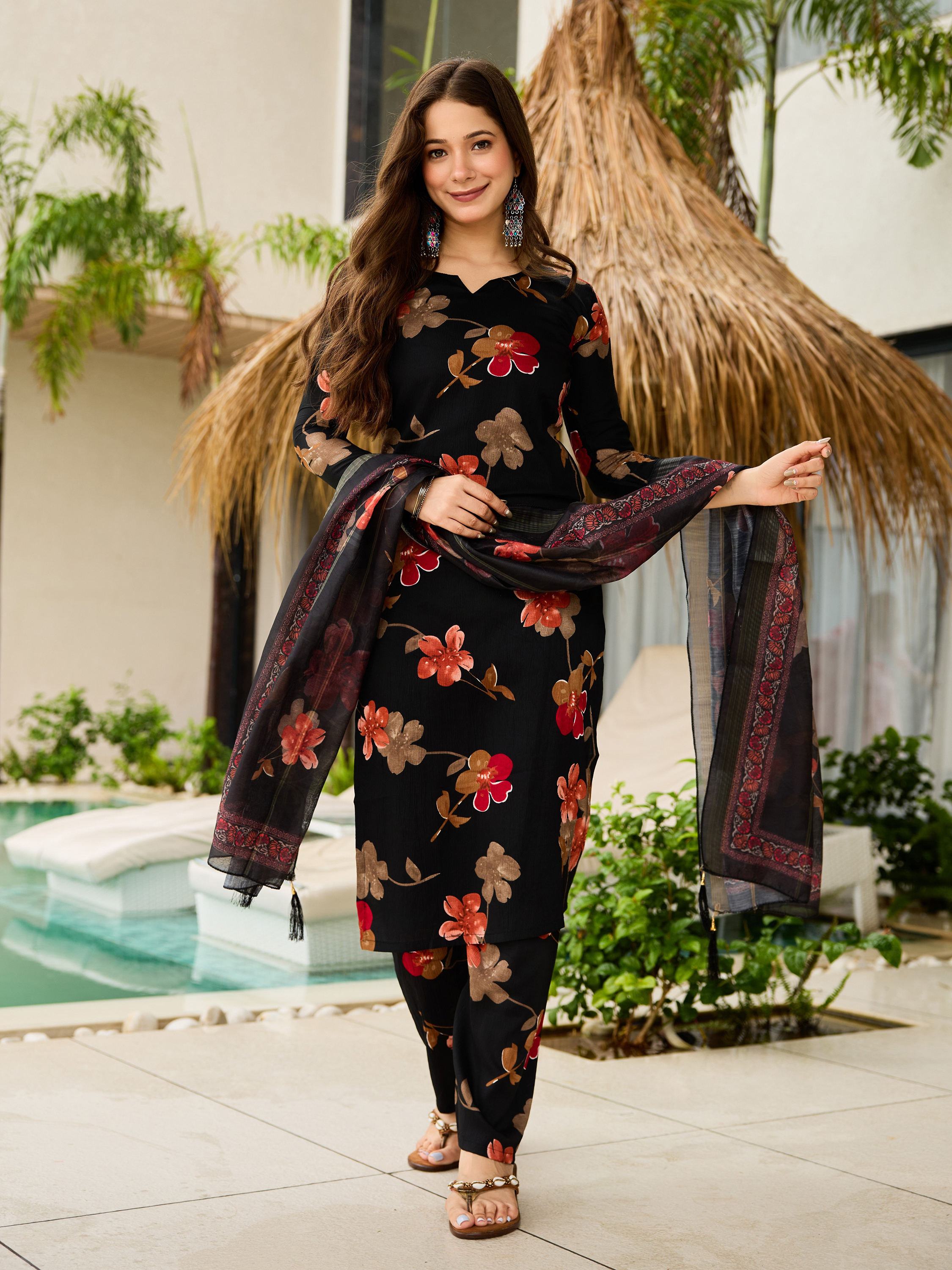
Patiala salwars create volume through multiple pleats, so they pair well with a relatively shorter or moderately fitted kameez. A long, loose kurta over a very full Patiala can hide the pleat structure and feel heavy. Straight pants create a longer uninterrupted line and are easier to style with an open dupatta.
Palazzo bottoms need a kurta with enough visual structure to prevent the outfit from looking shapeless. A defined shoulder, side slit or embroidered hem provides that structure. A narrow cigarette pant works particularly well with a broad Phulkari border because the lower silhouette remains clean.
Three-piece sets are useful when you want coordinated colour, but separates offer more repeat wear. Ivory Floral Embroidered Chanderi Silk Kurta Set Women can be styled with a plain ivory or contrasting dupatta on another occasion. Kanchi Cotton Zari Woven Kurti Set with Traditional Dupatta introduces a different regional textile vocabulary through cotton and zari.
Mixing regional references is attractive when one element remains dominant. A Phulkari-style dupatta can accompany a simple cotton kurta, but pairing several heavily symbolic textiles can make the outfit visually crowded. A shared colour, such as mustard, purple or ivory, creates the link between different textile traditions.
Phulkari Fashion Guide: Punjabi Sarees, Suits & Dupatta Styling for a current wardrobe
You can build a current Punjabi wardrobe around Phulkari by combining one statement set with versatile solids, repeatable dupattas and silhouettes that work beyond a single festival. A small wardrobe doesn't need five heavily embroidered outfits to feel varied.
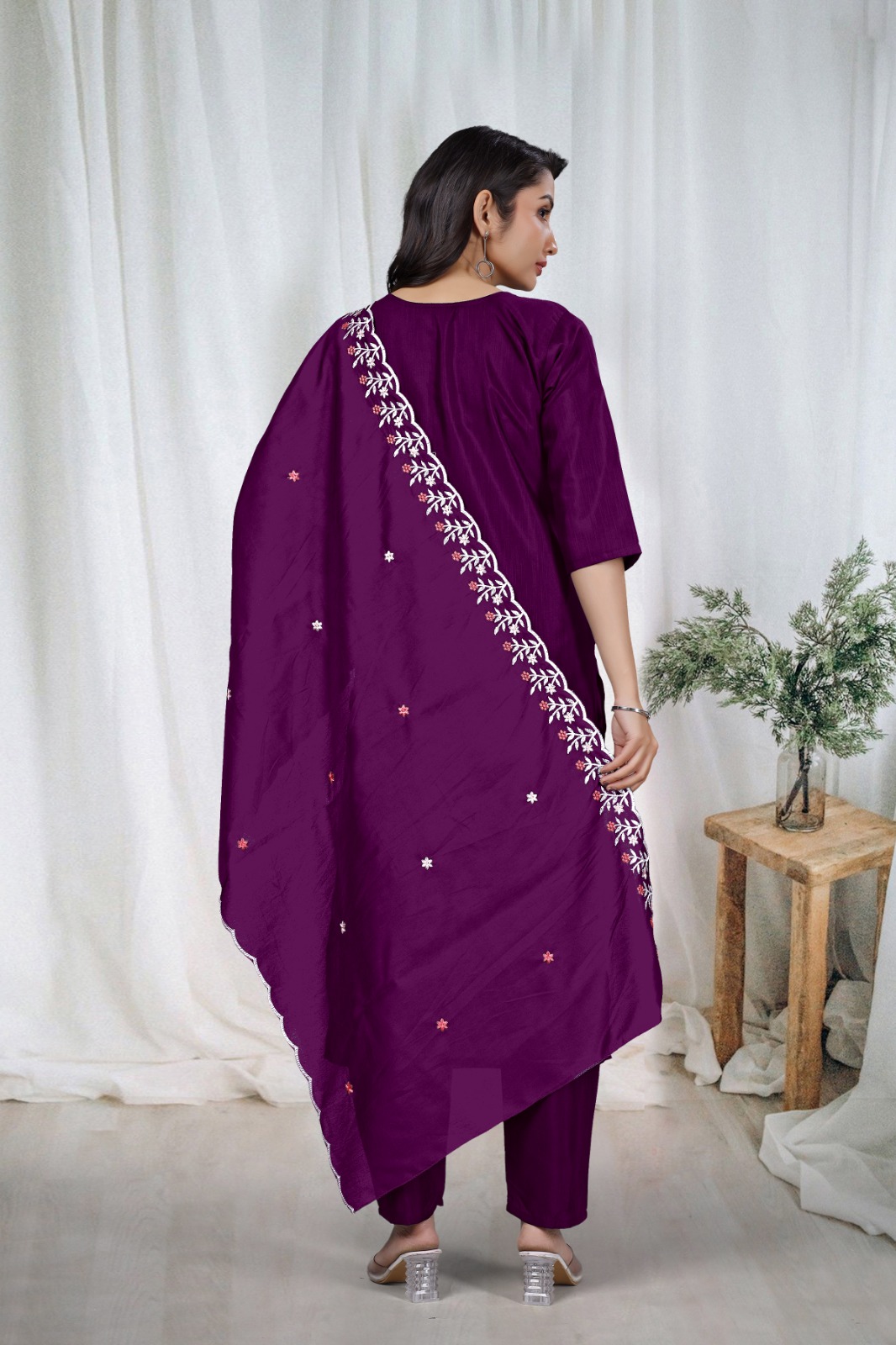
Start with one bright or dark embroidered set for celebrations, one breathable cotton or Chanderi option for daytime use and one plain kurta that can carry a separate Phulkari dupatta. Mustard Embroidered Kurta Pant Dupatta Set for Women can serve a festive wardrobe, while a plain white, ivory or navy kurta can make an embroidered dupatta useful across multiple seasons.
Regional collections help compare styling languages without treating every Punjabi look as identical. Kalamkari Print Salwar Suits introduce narrative botanical or figurative print, Maharashtra Paithani Inspired Salwar Suits bring a more pronounced woven-silk influence, and Gujarat Bandhej Salwar Suits offer a tie-dye direction.
Odisha Sambalpuri Salwar Suits provide another way to use regional pattern, while Punjab Patiala Salwar Suits are especially relevant when you want the pleated Punjabi silhouette. These references can sit in one wardrobe when the garments are separated by occasion and styled with plain accessories.
For travel or long events, check whether the dupatta can be folded without crushing raised embroidery. Carry a broad scarf ring or two small safety pins, and avoid placing a heavy handbag chain across a delicate embroidered border. A five-minute fitting at home can reveal whether the neckline, trouser length and dupatta placement remain comfortable while sitting.
Phulkari Fashion Guide: Punjabi Sarees, Suits & Dupatta Styling and care
Phulkari garments should be cleaned according to the base fabric and embroidery, with dry cleaning usually safer for dense silk-thread work and zari. Always read the garment label before washing, because cotton, Chanderi silk, silk blends and synthetic embroidery can react differently to water and friction.
Keep embroidered garments away from direct sunlight during storage because strong light can fade bright threads and dark bases. Fold a Phulkari dupatta with soft muslin or plain cotton between major folds, and refold it every few months to prevent a permanent crease along the embroidery line.
don't iron directly over raised threadwork, sequins or zari. Place a thin cotton cloth over the reverse side and use low heat, or steam the garment from a safe distance. Store a completely dry garment in a breathable fabric bag rather than sealed plastic, especially in humid monsoon weather.
Small stains should be blotted rather than rubbed. A professional cleaner should handle oil, makeup and food marks on silk or heavily embroidered surfaces. Prompt attention matters because rubbing can spread dye and pull individual Phulkari threads from the ground fabric.
Phulkari Fashion Guide: Punjabi Sarees, Suits & Dupatta Styling questions readers ask
The right Phulkari outfit depends on the balance between embroidery, fabric, silhouette and the formality of the event. These practical answers address common decisions about Punjabi sarees, suits and dupattas.
Phulkari Fashion Guide: Punjabi Sarees, Suits & Dupatta Styling for weddings
A Phulkari dupatta over a plain silk or Chanderi kurta set is a reliable wedding choice because it creates impact without making every garment heavily embellished. Choose dense embroidery for an evening event and lighter threadwork for a daytime ceremony. Keep jewellery moderate if the dupatta has a large central Bagh-style field.
Phulkari Fashion Guide: Punjabi Sarees, Suits & Dupatta Styling for summer
Cotton and lightweight Chanderi are generally more comfortable for summer Punjabi dressing than heavy silk or dense synthetic embroidery. Choose a shorter or medium-length kameez with trousers that allow air movement, and use an open shoulder drape instead of wrapping the dupatta tightly around the neck.
Phulkari Fashion Guide: Punjabi Sarees, Suits & Dupatta Styling with jewellery
Jhumkas, small hoops, pearl studs and slim bangles work well with Phulkari because they echo the handcrafted character without competing with the motifs. Match jewellery to the base and embroidery balance: oxidised silver suits cooler navy or purple combinations, while antique gold complements mustard, orange and maroon.
Phulkari Fashion Guide: Punjabi Sarees, Suits & Dupatta Styling for short height
A shorter wearer can create a longer visual line with a straight kurta, narrow trousers and a dupatta draped vertically from one shoulder. Avoid excessive horizontal borders at several points, because multiple wide bands can visually divide the outfit. A medium-scale motif is often easier to balance than very large floral embroidery.
Phulkari Fashion Guide: Punjabi Sarees, Suits & Dupatta Styling for repeat wear
Choose an embroidered dupatta with at least two colours that already appear in your wardrobe. A single dupatta can refresh an ivory, navy, black or mustard kurta, making it more adaptable than a fully coordinated set that can only be worn together. Plain trousers and simple kurtas also make laundering and packing easier.
Questions About Phulkari Punjabi Sarees, Suits and Dupatta Styling
What is the difference between a Phulkari dupatta and a regular embroidered dupatta?
A Phulkari dupatta is associated with Punjabi floral embroidery, vivid colour contrasts and a distinctive silk-floss surface or its contemporary interpretation. A regular embroidered dupatta may use unrelated motifs, techniques or regional design traditions. The difference is therefore primarily in the embroidery vocabulary and cultural reference, not simply the presence of threadwork.
Which fabric is most comfortable for a Phulkari Punjabi suit in summer?
Cotton is usually the most comfortable choice for hot, humid weather because it breathes well and absorbs moisture. Lightweight Chanderi can also work for festive daytime dressing, although its crisp structure may feel less casual than cotton. Dense silk, heavy lining and tightly wrapped dupattas are less suitable for peak summer.
How should I wear a Phulkari dupatta with a plain suit?
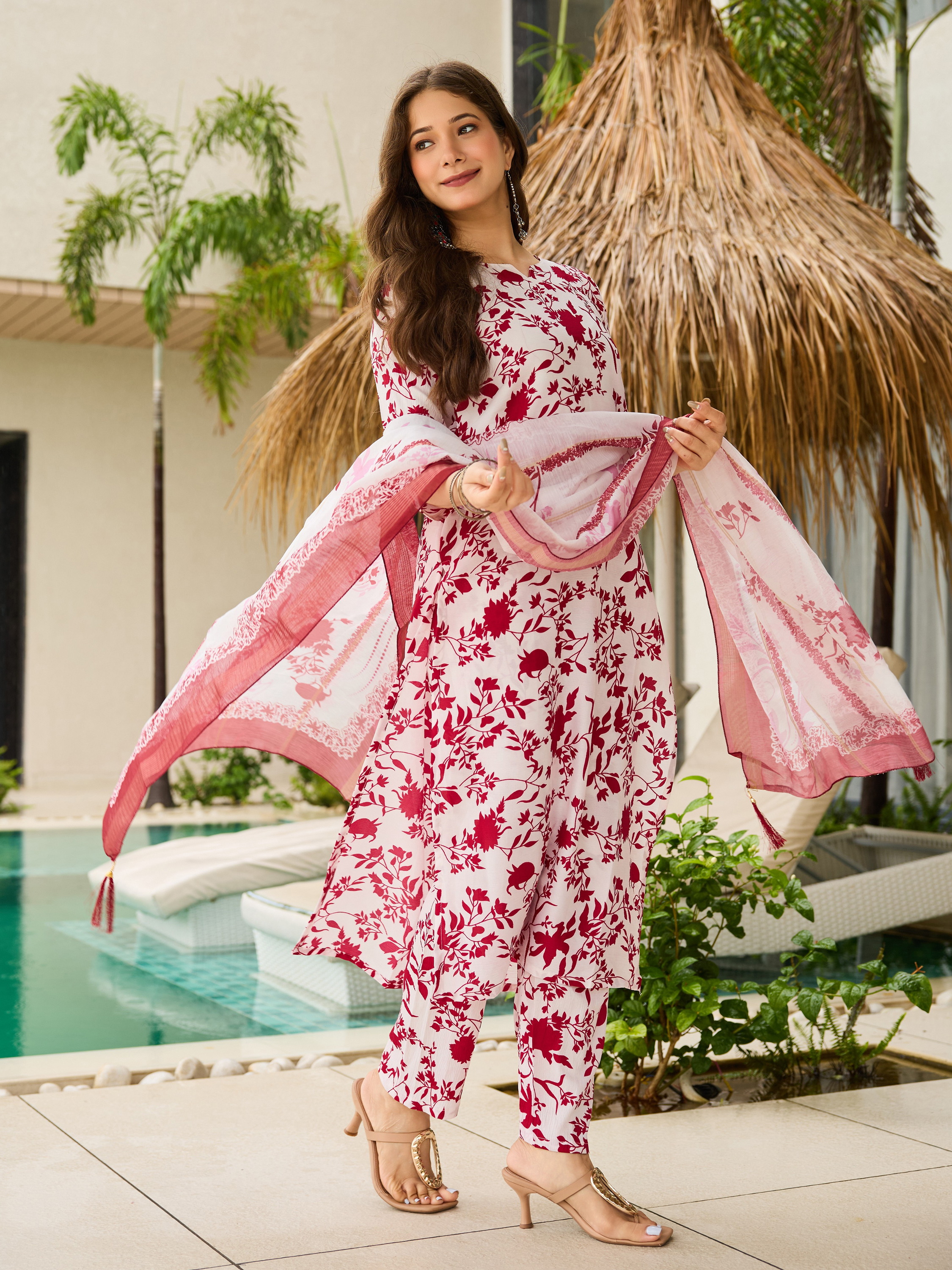
Wear the dupatta over one shoulder with broad pleats or leave it open across both shoulders so the embroidery remains visible. Keep the kurta and trousers in a colour repeated in the dupatta, and use simple jewellery. A plain suit gives a heavily embroidered dupatta enough space to become the outfit's focal point.
Can a Phulkari dupatta be worn with a saree?
A Phulkari dupatta can be worn with a saree when the saree and blouse have restrained borders or minimal embellishment. Place the dupatta over one shoulder like a pallu layer, and avoid covering its central motifs with a large brooch or handbag. Plain silk sarees in ivory, navy, mustard or deep pink are particularly easy to coordinate.
What jewellery goes best with a Punjabi Phulkari suit?
Small jhumkas, oxidised silver earrings, pearl studs and slim bangles work well with a Punjabi Phulkari suit. Choose oxidised silver for cooler purple or navy palettes and antique gold for mustard, orange or maroon combinations. Avoid matching every jewellery piece to every thread colour because the embroidery already supplies visual detail.
How should embroidered Phulkari clothing be stored?
Store embroidered Phulkari clothing clean and completely dry in a breathable cotton or muslin bag, away from direct sunlight. Fold a dupatta with soft fabric between major folds and refold it periodically to reduce permanent creasing. Dry cleaning is generally safer for dense silk-thread work and zari, while the care label should guide treatment for cotton and blended fabrics.