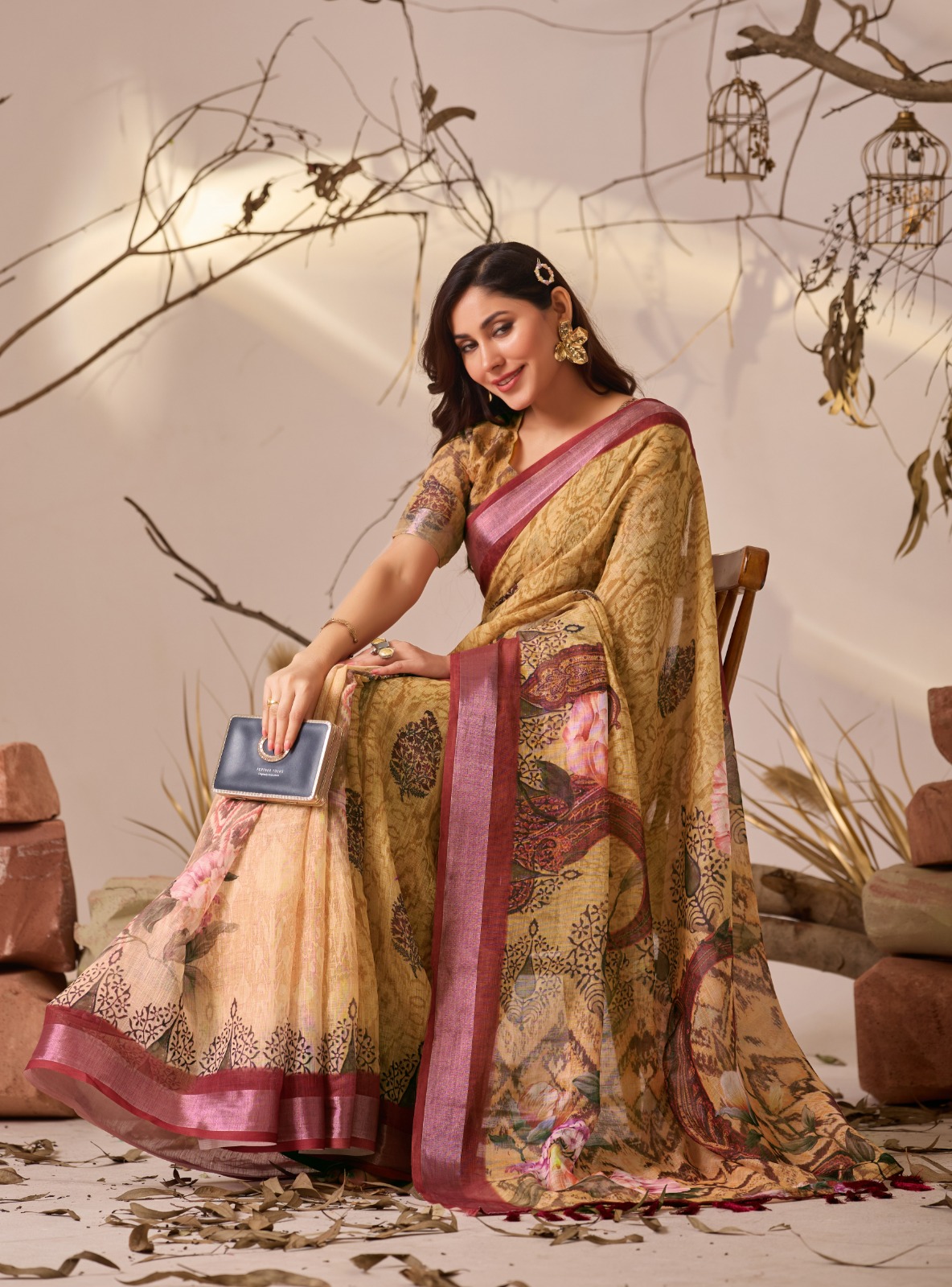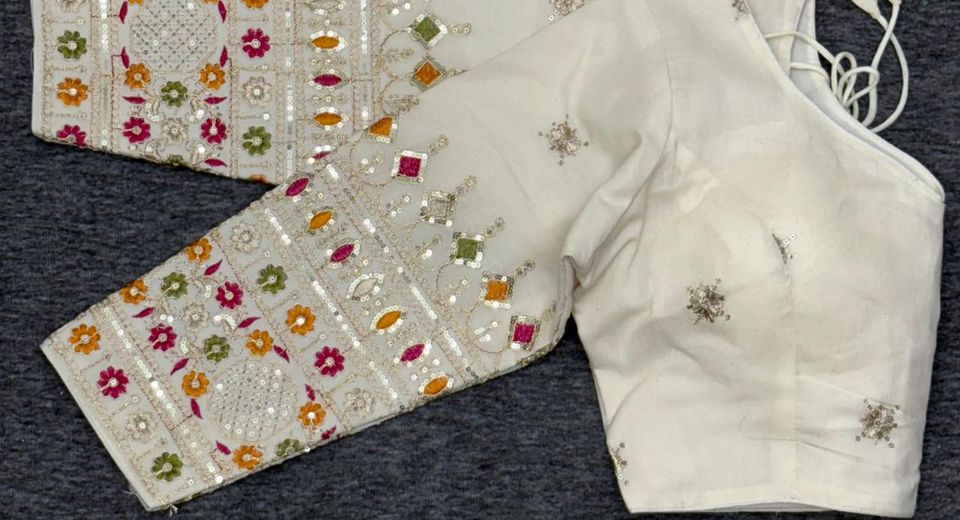
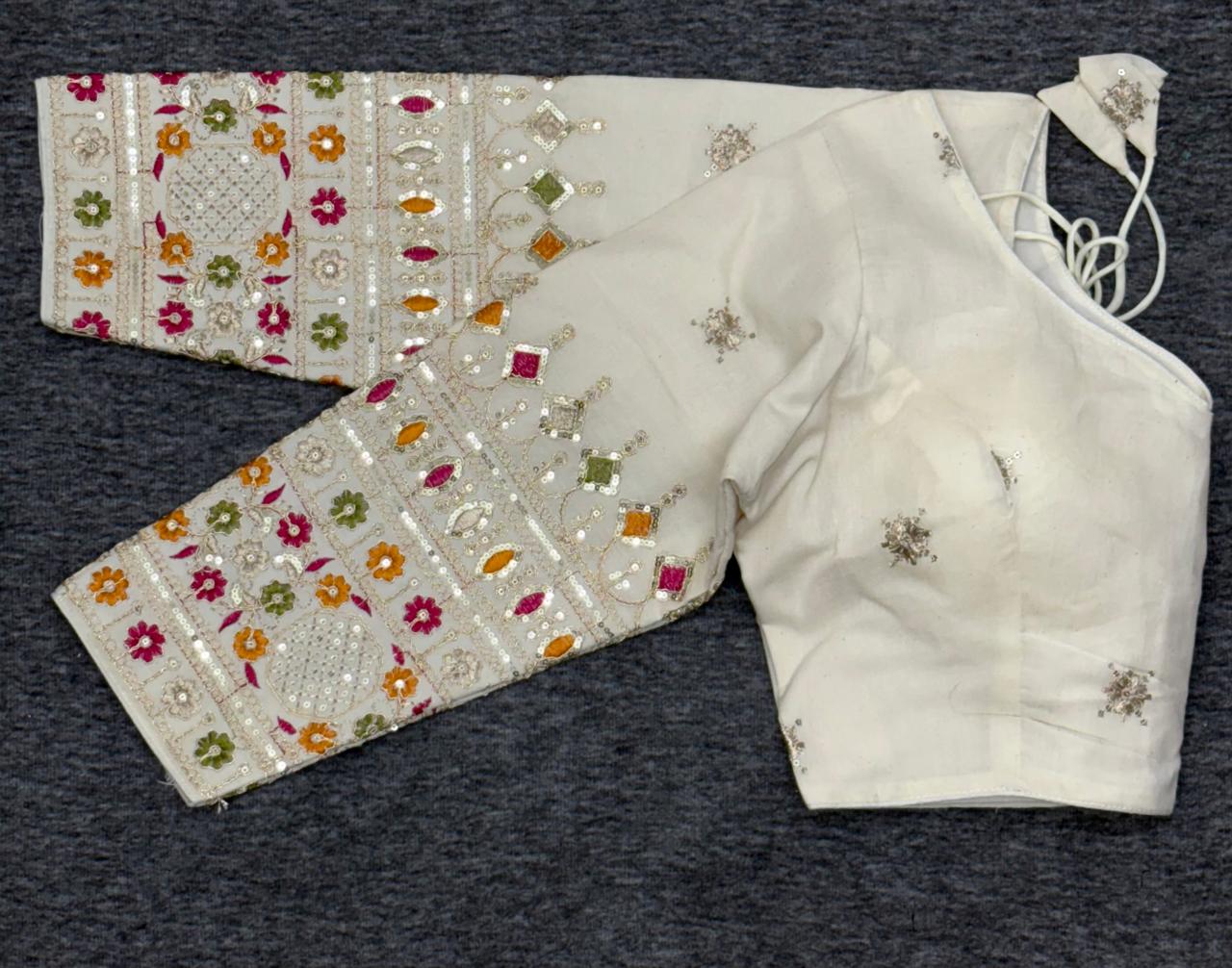
Phulkari Blouse Designs: Punjabi Embroidery Ideas for Sarees can transform a familiar drape into a look with colour, texture and regional character. The distinctive embroidery uses bright silk floss, geometric forms and floral-inspired motifs on a base fabric such as cotton, silk or blended satin. A Phulkari blouse doesn't need to copy a traditional kameez; it can borrow the craft's colour rhythm while using a contemporary cut that suits a saree.
The most successful pairing depends on three decisions: the visual weight of the saree, the density of the embroidery and the placement of colour near the face. A heavily woven Banarasi silk saree usually needs controlled Phulkari detailing, while a plain handloom cotton saree can support larger motifs and stronger contrast. Understanding those relationships helps you choose a blouse that looks intentional rather than merely colourful.
Phulkari Blouse Designs: Punjabi Embroidery Ideas for Sarees and Their Craft Details
Phulkari embroidery suits a saree blouse because its bold colour blocks and directional stitches create a strong upper-body focal point without requiring a heavily embellished saree. Heritage Phulkari often uses untwisted silk floss called pat, worked on a woven ground in counted patterns. The surface catches light differently as the stitch direction changes, giving flowers, diamonds and chevrons a subtle sense of movement.
Unlike zari, which produces a metallic shine, Phulkari relies mainly on thread colour and stitch coverage. That difference makes a Phulkari blouse useful when a saree already contains enough gold or silver. A red Banarasi silk saree with a restrained magenta, orange and green blouse can look more balanced than the same saree paired with another densely zari-covered piece.
Classic Phulkari vocabulary includes motifs such as wheat stalks, marigold-like flowers, peacocks, parrots, diamonds and stylised vines. Designers may simplify those forms for a smaller blouse panel. A narrow floral border on a sleeve, a central motif on the back or a repeated diamond arrangement across the yoke can suggest Punjabi embroidery without making the blouse appear costume-like.
Phulkari should also be distinguished from related regional textile traditions. Bagh embroidery usually has denser, more complete surface coverage, while Phulkari can leave parts of the ground visible and use stitch direction to create pattern. Calling the technique by its proper name helps preserve the difference between Punjabi embroidery, Kalamkari painting and woven Ikat patterning.
Phulkari Blouse Designs: Punjabi Embroidery Ideas for Sarees in Balanced Colour Combinations
Match Phulkari Blouse Designs: Punjabi Embroidery Ideas for Sarees to a drape by balancing colour intensity, fabric texture and ornament scale. Begin with the saree's dominant colour, then select one secondary shade from its border or pallu for the embroidery. Add a third colour only when the saree is plain or contains a broad neutral field.
Plain and lightly textured sarees
Plain cotton, linen, Chanderi and soft silk sarees provide the clearest background for multicoloured embroidery. A mustard saree can take magenta, bottle green and fuchsia Phulkari thread, while an ivory saree can support red, cobalt and orange. The blouse may carry a full front panel because the saree itself doesn't compete for attention.
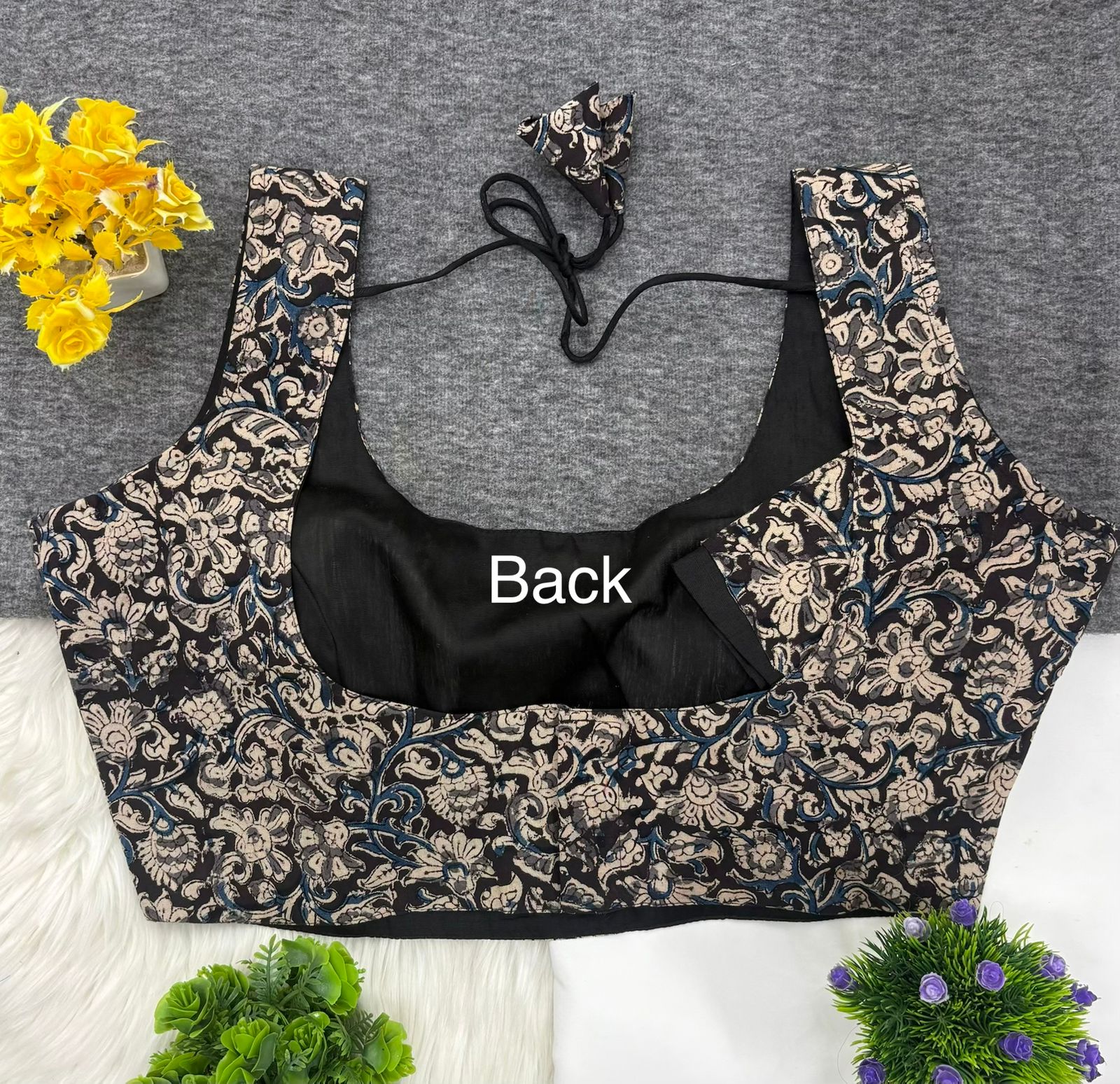
A cotton style such as the Pure Kalamkari Cotton Padded Blouse for Women can help build a craft-focused look when the saree has a printed or handloom character. Kalamkari and Phulkari are different textile traditions, so they should not be treated as interchangeable motifs. Pairing the blouse with a solid saree or a very restrained print allows each regional craft language to remain legible.
Silk and zari sarees
Silk sarees need less embroidery on the blouse than plain cotton sarees because silk, zari and woven borders already create visual richness. Use Phulkari on the sleeves, neckline or back yoke instead of covering every available surface. A jewel-toned blouse with small thread motifs can echo Kanjeevaram borders while keeping the overall outfit refined.
For a gold-bordered saree, choose embroidery in one warm shade such as rust, coral or crimson and add a single cooler accent such as green. A blouse with too many fluorescent colours can fight the reflective surface of zari. A simpler embroidered panel also photographs better under wedding lighting, where metallic details can become visually dominant.
Printed and Ikat sarees
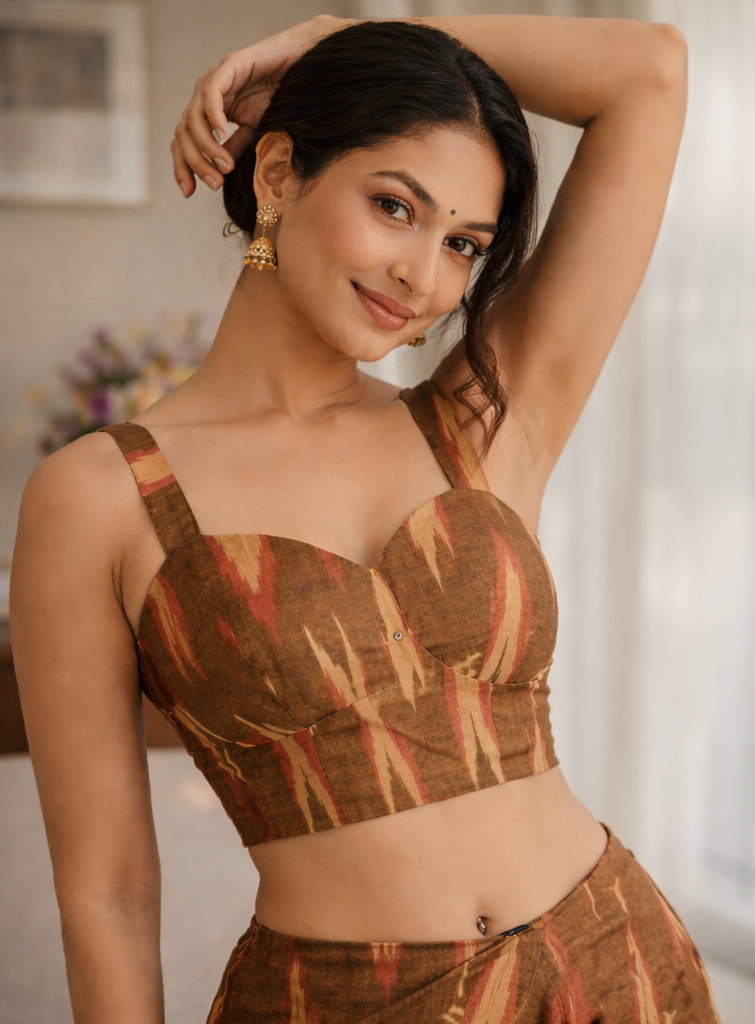
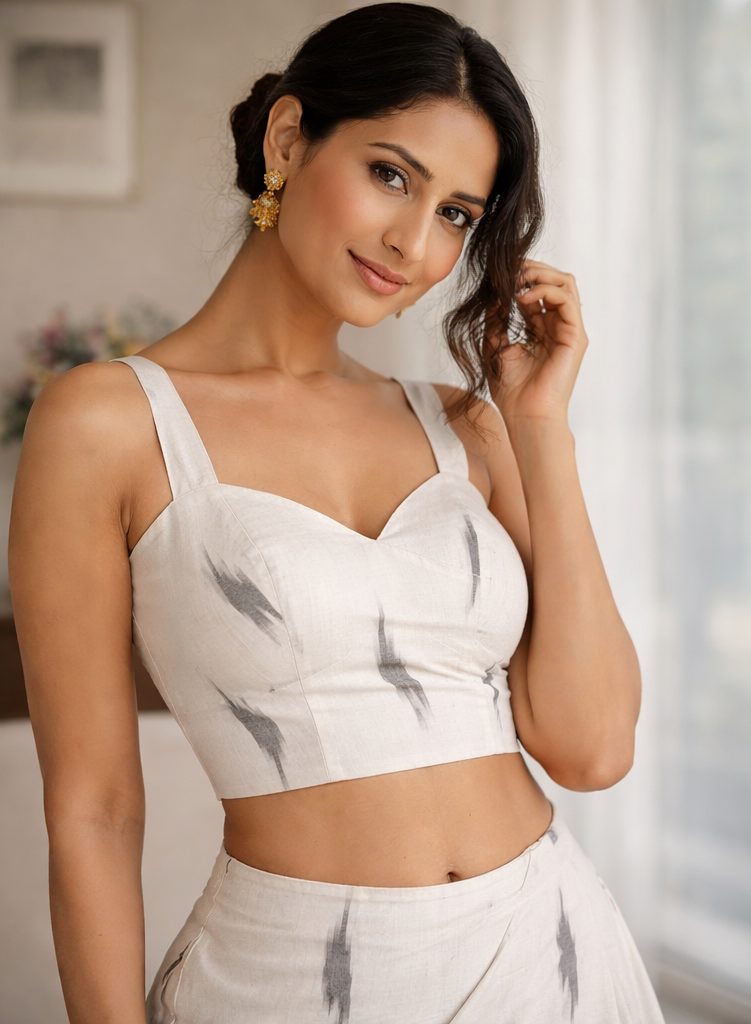
Ikat sarees already contain geometric movement, so a blouse with floral Phulkari should use a controlled motif scale. Brown Ikat Cotton Padded Blouse Sleeveless Stylish demonstrates how an earthy, structured blouse direction can work with a patterned saree without introducing another large print. Cream Ikat Cotton Padded Blouse Sleeveless Trendy offers a lighter alternative for jewel-toned or darker drapes.
When both saree and blouse contain geometry, repeat one colour between them. For example, a cream saree with rust Ikat lines can be paired with a blouse featuring rust, maroon and muted green thread. Colour repetition creates continuity even when the motifs themselves are different.
Phulkari Blouse Designs: Punjabi Embroidery Ideas for Sarees and Modern Necklines
The most effective blouse cut depends on where the embroidery is concentrated; a simple silhouette gives detailed motifs room to read. A structured round neck highlights a front panel, while a square neck frames embroidery placed along the neckline. Sleeves, cuffs and the back yoke are useful locations when the saree or blouse already has a strong front design.
Which neckline works with Phulkari embroidery?
A round neckline works well with a central floral or geometric Phulkari motif because the curved opening leaves visual space around the design. A modest boat neck can carry a horizontal embroidered band across the collarbone. A V-neck should use narrow edging or two symmetrical motifs rather than a crowded panel that points too sharply toward the bust.
Neckline depth should also reflect the saree's formality. A high round neck or jewel neck suits a daytime Haldi ceremony, especially with cotton or Chanderi. A moderately deep square or sweetheart neckline can suit an evening reception when the embroidery is paired with silk, a clean lining and well-finished tailoring.
Which sleeve length shows embroidery clearly?
Three-quarter sleeves provide the largest practical canvas for Punjabi embroidery while preserving a heritage saree proportion. A two-inch embroidered cuff can be enough when the saree has a wide border. Sleeveless cuts show off the shoulder line and work particularly well with lighter drapes, but the armhole must be finished accurately to prevent the blouse from looking unfinished.
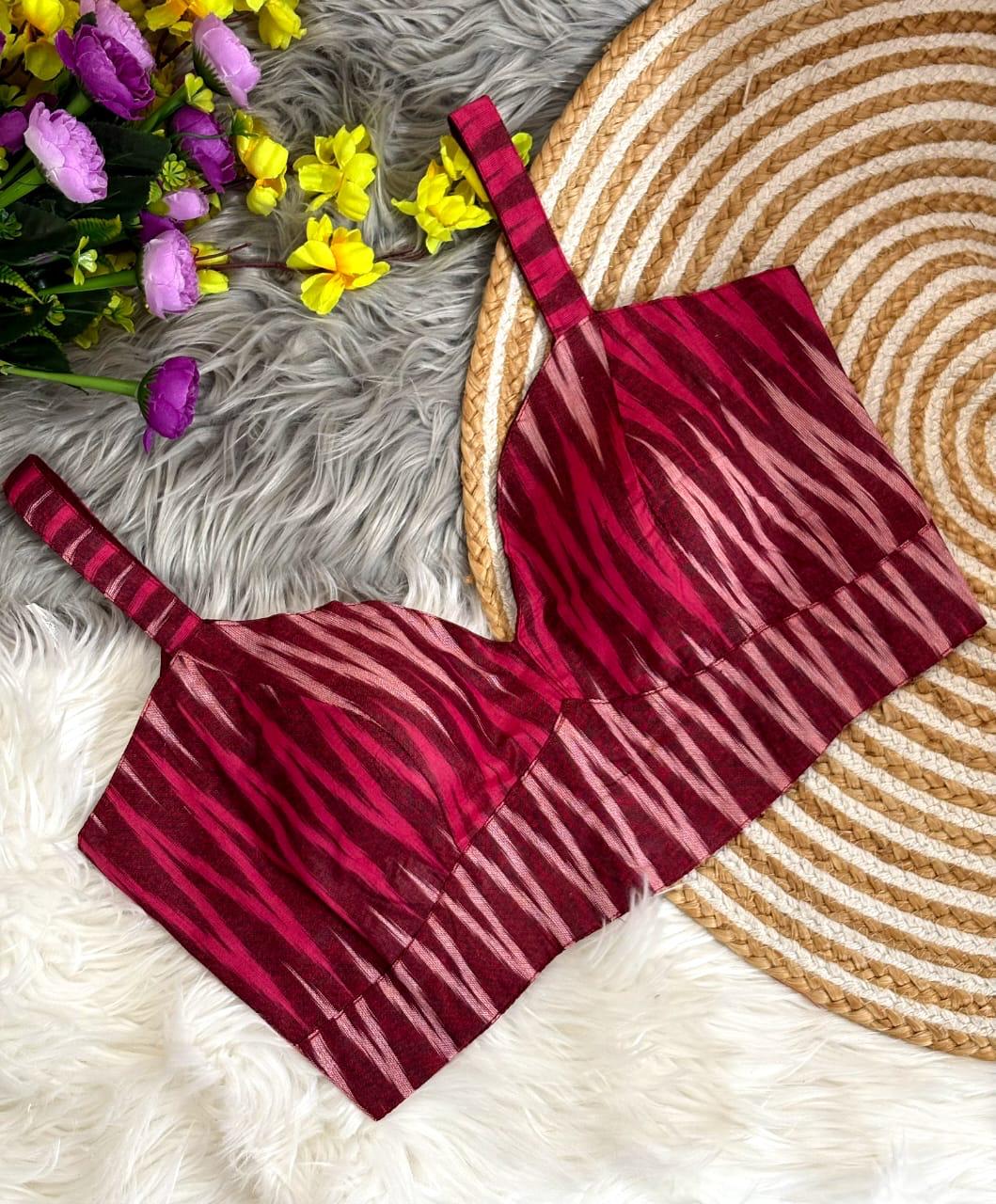
The Ikkat Cotton Padded Blouse for Women Sleeveless can illustrate a modern sleeveless direction when worn with a plain saree and a Phulkari-inspired embroidered pallu or dupatta. If the blouse itself has substantial motifs, keep the jewellery close to the face and avoid stacking multiple broad bangles that compete with the sleeve opening.
How can the back carry a Phulkari motif?
The back is a strong location for a larger Phulkari motif because the pallu can reveal or partially conceal the design as you move. A central peacock, diamond medallion or stylised flower works well on a moderately open back. Tie strings can carry small embroidered tassels, but heavy hanging elements may pull on delicate fabric.
Back embroidery should be stabilised with a suitable lining, especially when the design covers a wide area. Cotton or silk thread can create tension across the base fabric after repeated wear. A skilled tailor should test the embroidery and lining together before finalising darts, hooks and seam allowances.
Phulkari Blouse Designs: Punjabi Embroidery Ideas for Sarees with a Contemporary Finish
Phulkari Blouse Designs: Punjabi Embroidery Ideas for Sarees look contemporary when time-honoured colour and motif references are paired with clean tailoring, measured embroidery and unexpected fabric combinations. Modernisation doesn't require removing every traditional element. It can mean placing a small motif on an otherwise minimal blouse, using a cropped sleeve or restricting the palette to two contrasting colours.
Try a monochrome interpretation in two shades of the same colour for a sophisticated evening outfit. Deep wine thread on a rose base gives a quieter effect than multicoloured embroidery. Alternatively, use a black, ivory or navy blouse with bright magenta, orange and green motifs so the embroidery becomes the only vivid element in the ensemble.
Contemporary Phulkari can also be expressed through motif scale. One oversized flower across the back looks more editorial than a dense field of tiny motifs. A repeated geometric border along the sleeve is another practical option because the design remains visible when the arm is relaxed and doesn't overwhelm the saree pleats.
The Fendy Silk Zigzag Moti Work Readymade Blouse gives an useful styling contrast: bead-based surface work has a different shine from silk-floss embroidery. A Phulkari saree outfit can include a small amount of moti work, but combining two heavily decorated surfaces requires a plain saree and restrained jewellery. One dominant texture should lead the look.
Phulkari Blouse Designs: Punjabi Embroidery Ideas for Sarees and Fabric Construction
Fabric choice affects comfort, embroidery stability and the final silhouette. Cotton is breathable and supports a crisp daytime shape, silk gives a smoother festive finish, and blended fabrics can reduce wrinkling but may need careful needlework. A padded blouse needs a firm outer fabric and a lining that doesn't show through open stitches.
Embroidery should be supported at stress points such as the shoulder seam, armhole and hook line. A tailor can add lightweight interfacing behind densely worked panels, provided the support doesn't make the blouse rigid. Padded cups should be positioned according to the wearer's measurements rather than simply stitched into a standard size.
Ready-to-wear options can save time when the cut is close to your measurements. The Classic Festive Wear Blouse for Stylish Saree Look may work as a base for a festive styling plan, but check bust, shoulder, armhole and blouse length before ordering. Altering the side seams is usually easier than changing a heavily embroidered neckline or shoulder.
Measure the fullest bust, underbust, shoulder width, armhole and desired blouse length while wearing the undergarments intended for the saree. Allow enough movement at the upper arm if the sleeve has dense embroidery or a stiff lining. A blouse that fits across the bust but pulls at the armhole will usually feel uncomfortable throughout a long wedding ceremony.
For a softer daytime interpretation, the Pure Kalamkari Cotton Padded Blouse for Women can be compared with a plain Phulkari panel added to the sleeve or back. For a darker saree, the Ikkat Cotton Padded Blouse for Women Sleeveless and Cream Ikat Cotton Padded Blouse Sleeveless Trendy demonstrate how neutral bases can prevent bright embroidery from becoming visually excessive.
Phulkari Blouse Designs: Punjabi Embroidery Ideas for Sarees, Jewellery and Occasion Styling
Style Phulkari Blouse Designs: Punjabi Embroidery Ideas for Sarees with jewellery that repeats one embroidery colour without copying every motif. If the blouse contains green and magenta thread, choose one green glass bangle set or a pair of magenta stone earrings rather than matching every accessory to the entire palette.
Jhumkas, small chandbalis and a short necklace work well with a round or boat neckline. A heavily embroidered neckline may need only earrings and bangles. A bare or minimally decorated front gives more room for a long necklace, especially when the blouse uses a high neckline and the saree has a simple border.
For a Haldi ceremony, combine yellow, orange, pink and green thread with cotton, Chanderi or a lightweight silk saree. For a wedding reception, use deeper crimson, emerald, cobalt or wine with silk and limited zari. For a daytime cultural event, earthy rust, mustard and ivory can make Phulkari feel grounded rather than overtly bridal.
The final test is movement. Sit, raise both arms, walk several steps and check whether the blouse stays anchored beneath the saree pleats. Embroidery, padding and hooks should remain comfortable for at least four to six hours, because an attractive blouse that restricts movement won't serve well at a real celebration.
Common Questions About Phulkari Blouse Designs for Sarees
What saree works best with a Phulkari blouse?
Plain cotton, linen, Chanderi and lightly textured silk sarees work best because they allow the embroidery to remain visible. Banarasi silk and Kanjeevaram sarees can also work when the Phulkari embroidery is limited to the sleeves, neckline or back yoke.
Can I wear a Phulkari blouse with an Ikat saree?
Yes, a Phulkari blouse can complement an Ikat saree when the colour palette is controlled. Repeat one shade between the geometric Ikat pattern and the embroidered motifs, and avoid using a large print on both garments.
Which Phulkari motifs are suitable for a blouse?
Small flowers, diamonds, wheat stalks, peacocks and stylised vines are suitable for blouse embroidery. Central medallions work well on the back, while narrow floral or geometric borders suit sleeves and necklines.
Are Phulkari blouses suitable for a Haldi ceremony?
Phulkari blouses are suitable for a Haldi ceremony when made in breathable cotton, Chanderi or lightweight silk. Yellow, orange, pink, green and magenta thread create a festive palette without requiring heavy zari or dense beadwork.
How should I care for a Phulkari embroidered blouse?
Store a Phulkari blouse folded with soft, acid-free tissue between embroidered surfaces to reduce snagging. Prefer professional dry cleaning for dense silk-floss work, avoid direct perfume on the embroidery and keep the blouse away from prolonged sunlight.
Can a ready-to-wear blouse be altered for a Phulkari saree look?
A ready-to-wear blouse can usually be altered at the side seams, shoulder and length when the embroidery does not cross the alteration line. Check bust, underbust, armhole and sleeve measurements before purchase because changing a heavily embroidered neckline is more difficult.