A Patola Saree Guide: Gujarati Silk, Designs & Traditional Styling begins with one important distinction: Patola refers to a design language and weaving tradition, not simply a bright printed pattern. The most technically demanding Patola sarees use silk and ikat methods in which yarns are resist-tied and dyed before weaving, allowing motifs to meet across the fabric. That construction affects price, fall, colour depth and care. Whether you're choosing a wedding saree, a festive drape or a lighter Patola-inspired print, understanding the difference helps you buy with clear expectations.
Patola carries a strong connection with Gujarat, especially the weaving traditions associated with Patan. Gujarati textile culture also includes Rajkot Patola, printed imitations and modern adaptations in materials such as Pashmina silk and Lichi Silk. Those categories can look related while behaving very differently when worn. A narrow buyer therefore examines the weave, motif alignment, border, fabric weight and finishing rather than judging authenticity from colour alone.
Patola Saree Guide: Gujarati Silk, Designs & Traditional Styling and what makes Patola distinct
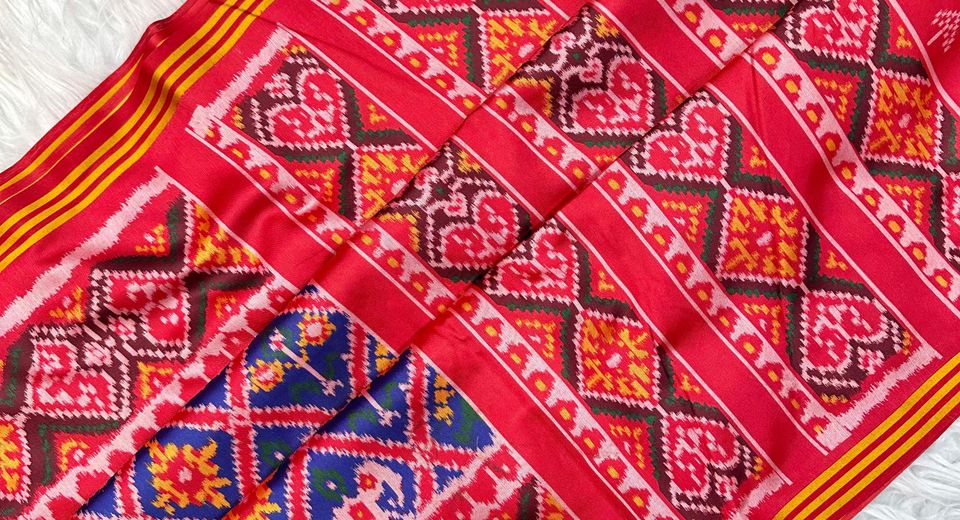
A Patola saree is distinct because its defining visual character comes from resist-dyed yarns and repeated geometric or symbolic motifs, traditionally woven into silk. In true double ikat, both the warp and weft yarns are tied and dyed before they're interlaced. The weaver must align the coloured sections with great precision, so the pattern appears on both sides of the cloth rather than sitting only on the surface.
Single ikat controls either the warp or the weft, while printed Patola designs apply colour after the fabric has been woven. A printed saree can still be attractive, practical and suitable for regular celebrations, but it doesn't require the same production process as double ikat. The distinction matters because construction influences durability, motif sharpness and the price a buyer should reasonably expect.
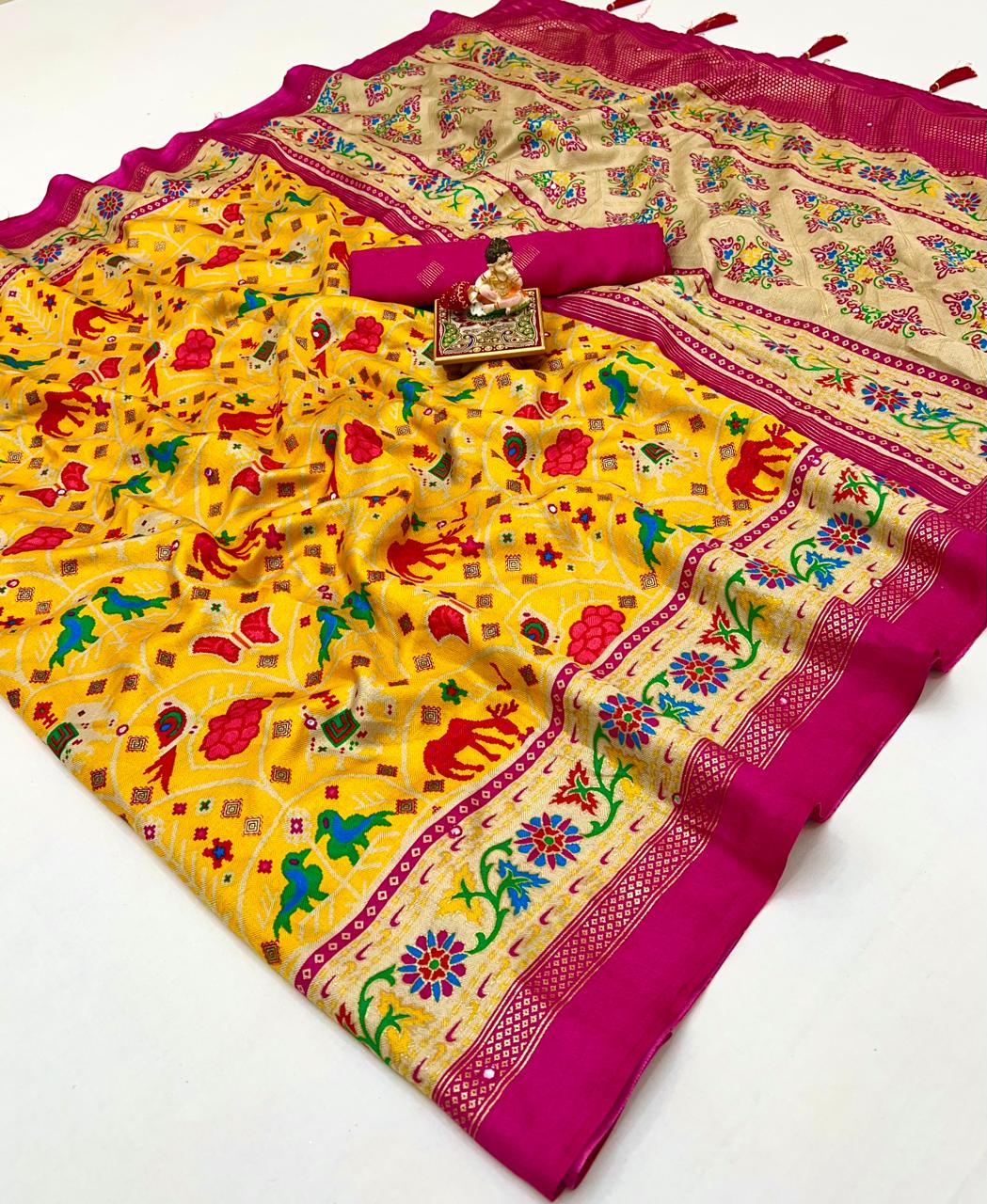
Traditional Patola motifs include parrots, peacocks, elephants, flowers, dancing figures and patterned trellises. These motifs are often arranged in a disciplined grid, with intense contrast between red, green, yellow, white, ivory and blue. A peacock motif may suggest celebration and prosperity, while floral forms create a softer appearance for daytime ceremonies. Motif meaning varies by region and maker, so a design should not be assigned a fixed cultural interpretation without reliable provenance.
Patola Saree Guide: Gujarati Silk, Designs & Traditional Styling across up-to-date fabrics
Gujarati silk Patola traditionally relies on silk yarn, but contemporary saree collections use several fabric descriptions that should not be treated as interchangeable. Pure Patola silk generally feels smooth, structured and moderately lustrous, while Pashmina silk blends or silk-like Pashmina constructions may feel softer and drape with more fluidity. Lichi Silk often has a gently textured, crisp surface that gives printed or woven motifs a distinctive finish.
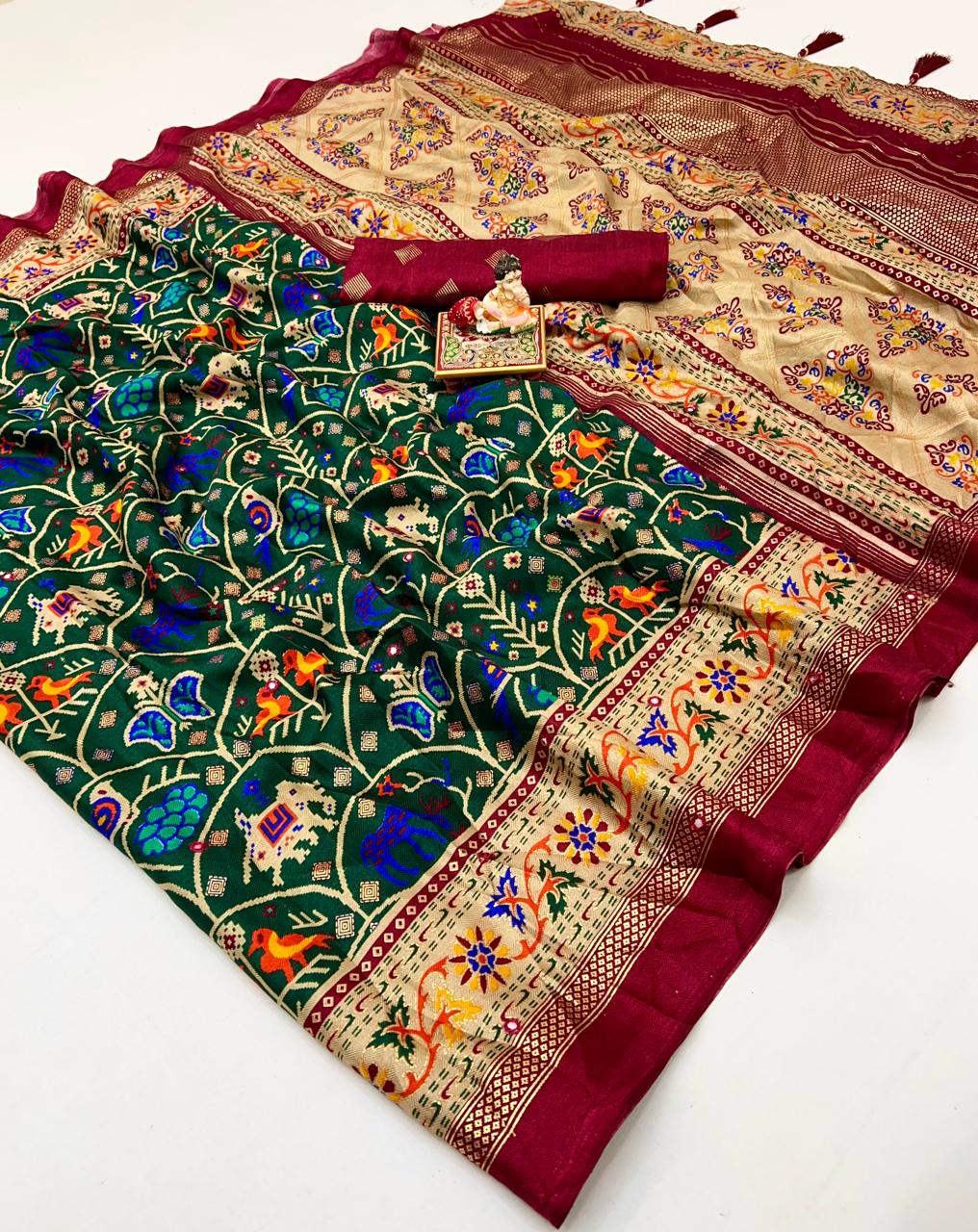
Banarasi silk, Kanjeevaram and Patola silk belong to different textile traditions. Banarasi silk is recognised for brocade structures and zari work from Varanasi, while Kanjeevaram is associated with mulberry silk and contrasting borders from Tamil Nadu. Patola is identified more strongly by its ikat-derived patterning and Gujarati design vocabulary. A saree described as Patola should not automatically be assumed to have the weight or weave of Banarasi silk.
A product description such as "Patola print" normally indicates that the motif is printed rather than created through yarn-resist ikat. "Patola border" may mean that the body is plain or differently patterned while the pallu and edge carry the Patola-inspired design. "Double ikat" is a specific construction claim and deserves closer attention to photographs, fibre details and seller information.
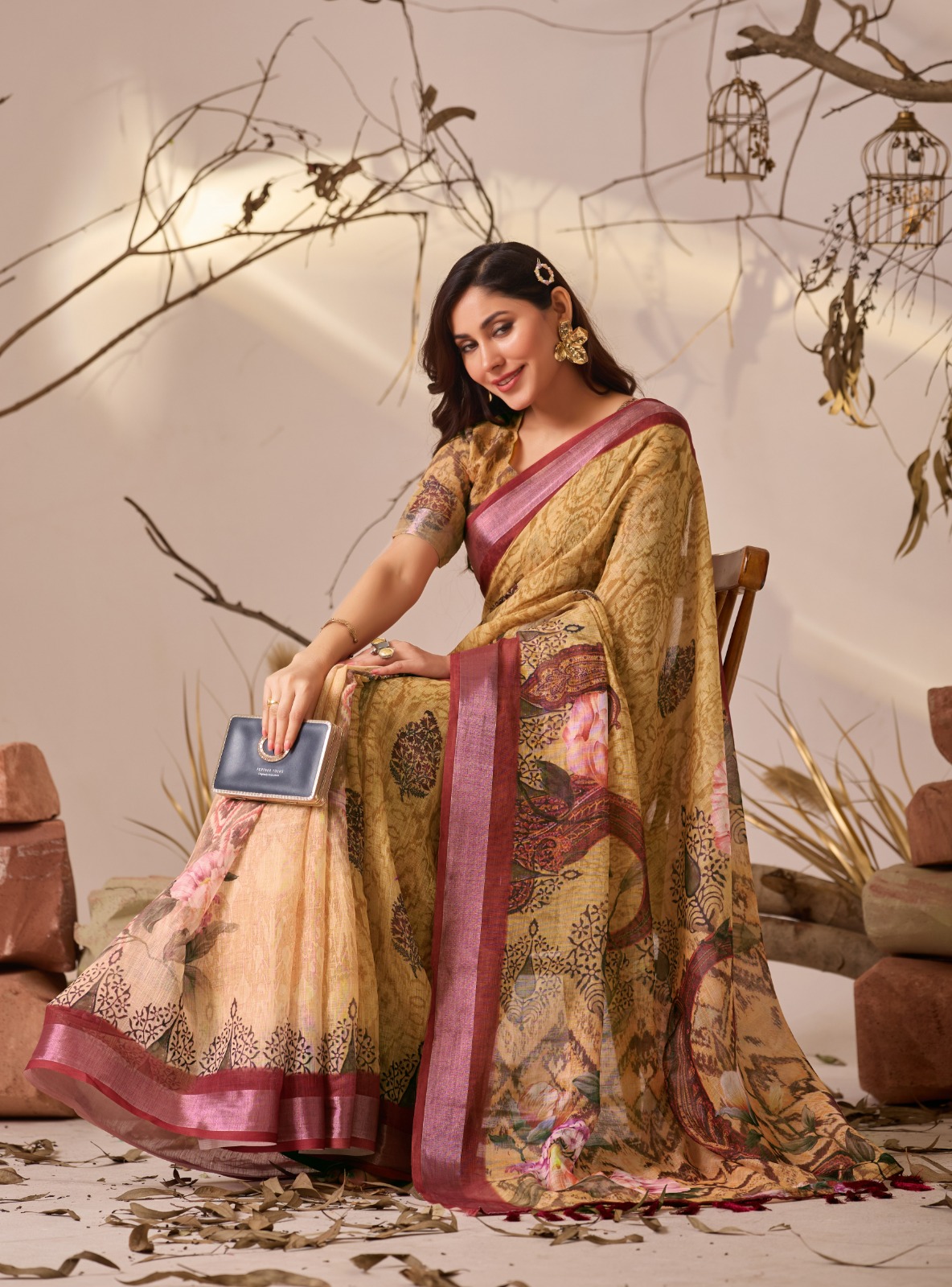
Mustard Yellow Patola Print Soft Pashmina Silk Designer Saree demonstrates why fabric wording matters: the word "print" describes the pattern method, while "soft Pashmina silk" describes the hand-feel and drape. Pure Patola Silk Double Ikkat Saree with Zari Border signals a more elaborate construction and adds zari as a separate decorative element. These two sarees may share a visual family but suit different budgets, wardrobes and levels of maintenance.
Patola Saree Guide: Gujarati Silk, Designs & Traditional Styling through motifs
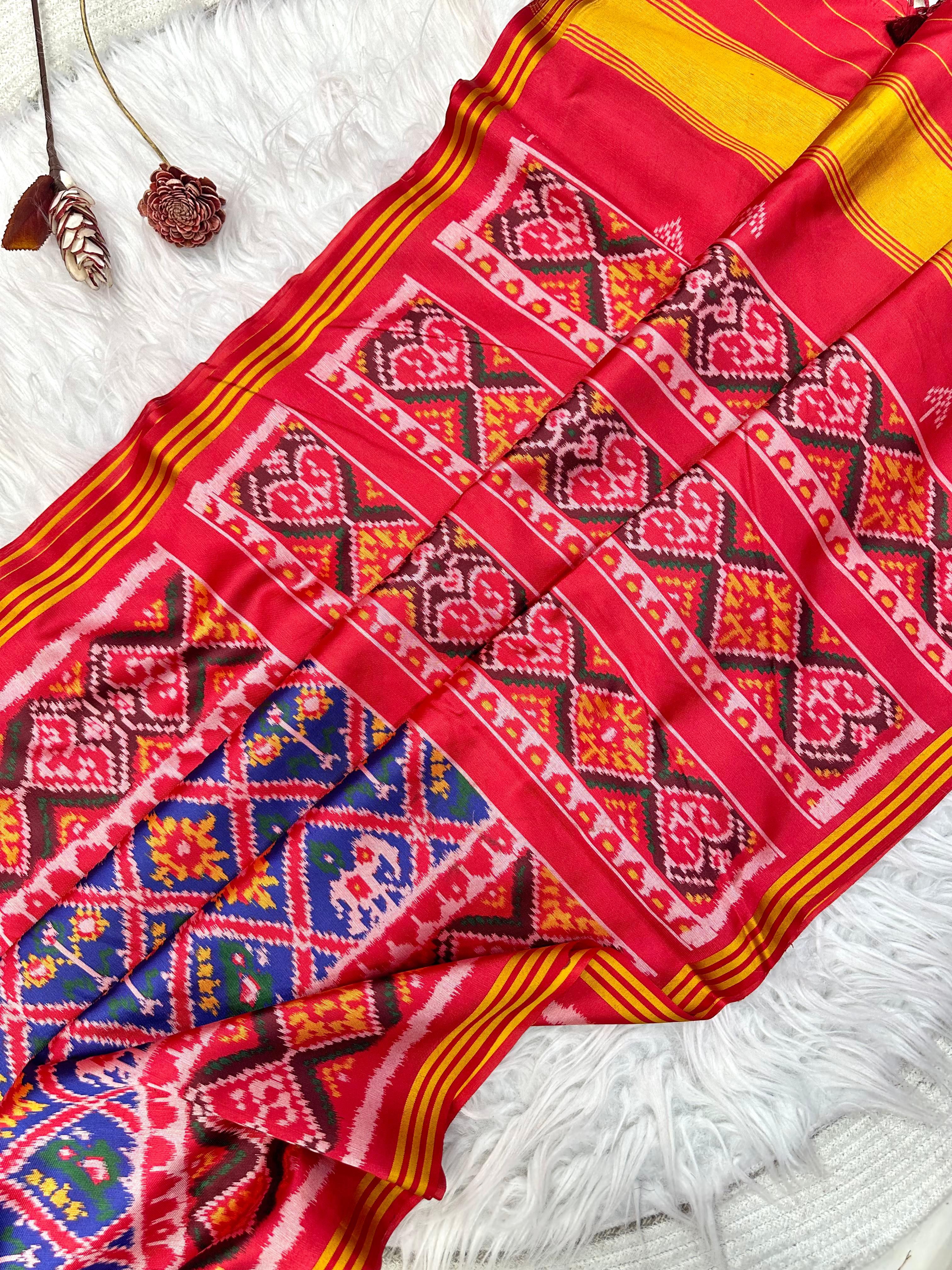
You can read a Patola motif by looking at its repeat, symmetry, scale and relationship to the border and pallu. A well-planned design usually has a deliberate rhythm rather than unrelated motifs scattered across the body. Check whether peacocks, parrots or florals remain proportionate when the saree is folded and whether the pallu changes the visual tempo for the final drape.
How does motif scale affect a Patola saree?
Large peacocks and elephants create a statement effect and photograph clearly at weddings, receptions and evening festivals. Small repeated butis create a more controlled look for daytime puja, office celebrations or intimate family events. A narrow motif can also make a bold colour combination feel less imposing, while large contrasting forms draw attention to the torso and pleats.
How does colour contrast affect Patola styling?
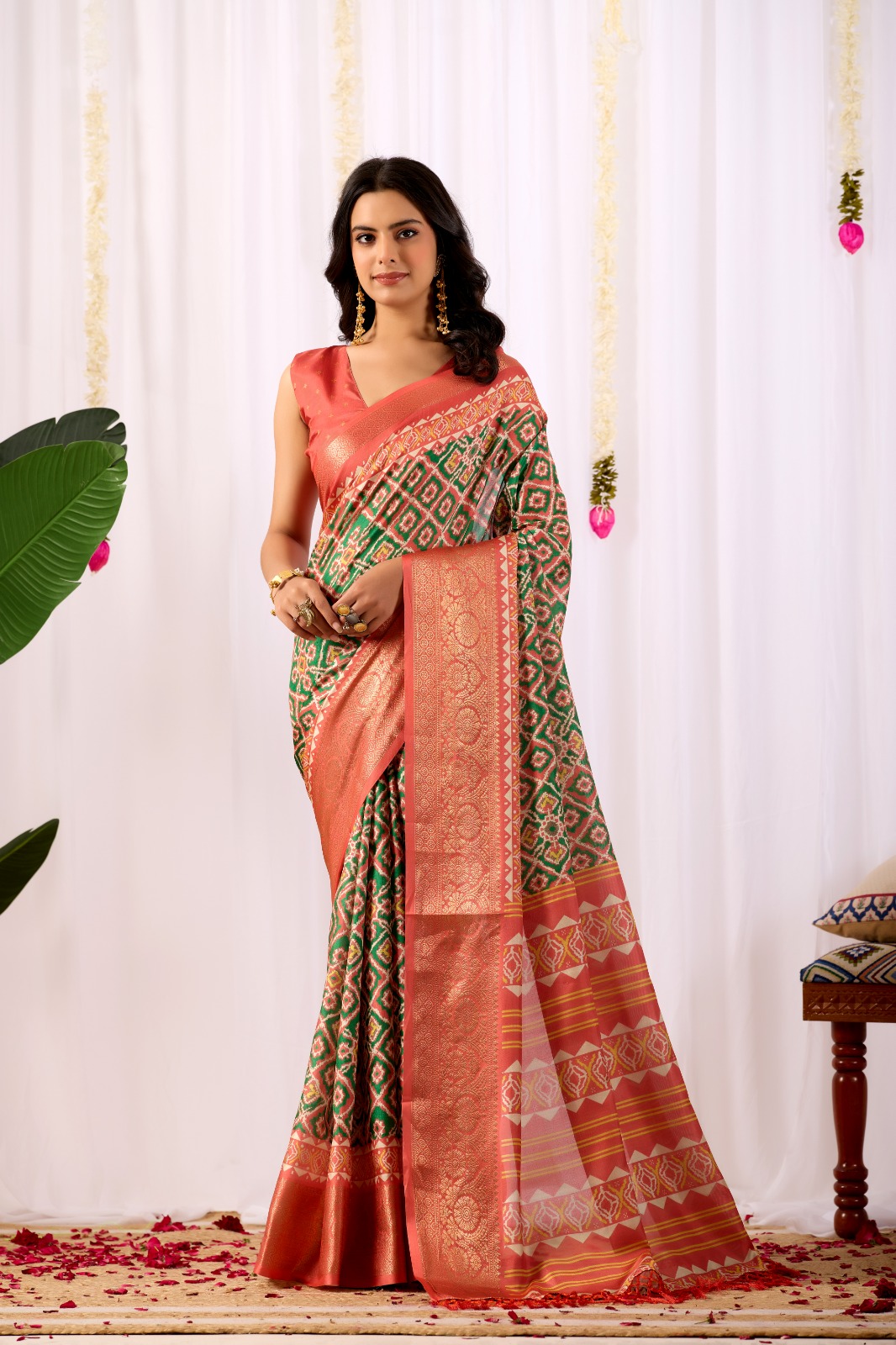
High-contrast combinations such as red with green or yellow with black make the saree the focal point, so a plain blouse and restrained jewellery usually create better balance. Tonal combinations, including coral with green or bottle green with a related dark border, allow larger earrings, a textured blouse or a more elaborate hair accessory.
Coral Green Patola Silk Saree with Zari Border offers an useful example of how a strong border can carry the styling without requiring an equally ornate blouse. Heritage Peacock Patola Pashmina Silk Saree places more emphasis on the central motif, making a solid-colour blouse a practical choice. Traditional Bottle Green Patola Border Silk Saree concentrates the Patola character around the border, so it can work for a quieter festive wardrobe.
Look closely at the reverse side when possible. Woven ikat generally shows related colour activity on both sides, although the reverse may not appear identical to the front. A printed design often looks flatter or less connected at the back. This check can't prove authenticity by itself, but it can help distinguish a woven construction from a surface print.
Patola Saree Guide: Gujarati Silk, Designs & Traditional Styling for buying online
The safest way to buy a Patola saree online is to match the product description, close-up images and price with the construction being offered. Ask whether the saree is pure silk, a silk blend, Pashmina silk, Lichi Silk or another material; whether "Patola" describes the weave or only the print; and whether zari appears on the border, pallu or throughout the body.
- Read the fibre line first. "Pure silk," "silk blend" and "Pashmina silk" indicate different expectations for weight, sheen and care. Do not infer fibre content from the word "designer."
- Inspect the motif close-up. Look for colour edges, alignment and the clarity of small forms. A listing with only distant photographs makes technical evaluation difficult.
- Check measurements. Saree lengths commonly sit around 5.3 to 5.5 metres, but the exact length and blouse-piece measurement vary. A taller wearer or a person who prefers fuller pleats may need to confirm length before ordering.
- Examine the border and pallu. A zari border adds visual weight and may need a more stable underskirt. A narrow printed border usually works with a lighter, more casual drape.
- Compare construction with budget. A printed Pashmina silk saree can offer a Patola look at a more accessible price, while pure double ikat involves more labour and normally commands a higher price.
Red Patola Design Lichi Silk Saree Online - Varnavi suits shoppers who want a vivid Patola-inspired appearance with a Lichi Silk surface. Designer Yellow Patola Border Pashmina Silk Saree For Women is more restrained because the Patola detail is concentrated around the border. Coral Green Patola Print Lichi Silk Saree Online shows how a printed design can preserve the colour rhythm and motif appeal of Patola without making a double-ikat construction claim.
Budget browsing can be organised around Sarees from Rs 1000 to Rs 1500, Sarees Under 20% Off and Sarees Under 10% Off. Discount labels indicate an offer category, not proof of handloom origin, pure silk content or double ikat construction. Check the individual description before treating a lower price as a technical bargain. Sarees Flat 60% Off and Sarees Flat 50% Off can also be useful for comparison, but the original fibre and construction details should remain the deciding factors.
Patola Saree Guide: Gujarati Silk, Designs & Traditional Styling for ceremonies
Traditional Patola styling works best when the saree's motif scale and colour contrast determine the blouse, jewellery and drape. Gujarati styling can include a seedha pallu, in which the pallu comes over the right shoulder and spreads across the front, while the more widely used nivi drape brings the pallu over the left shoulder. The seedha pallu gives the pallu design a prominent role and can feel especially appropriate for Gujarati ceremonies.
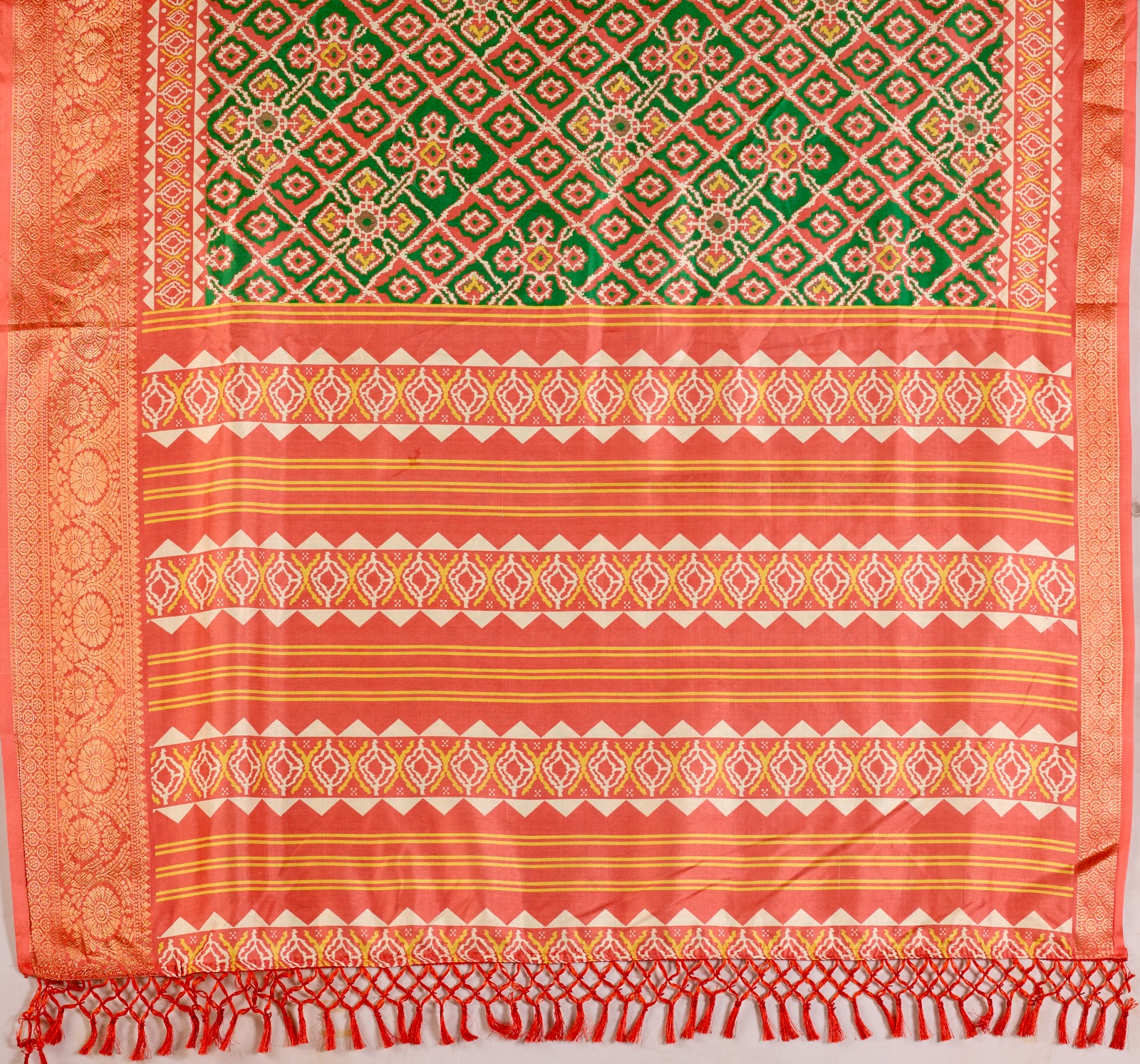
For a seedha pallu, secure the front pleats firmly and pin the pallu near the right shoulder before arranging it across the chest. Choose a blouse with enough back and shoulder support because the pallu will move differently from a nivi drape. A structured elbow-length blouse works well with a grand double ikat saree, while a simpler short-sleeved blouse can keep a printed Patola style fresh.
Red Patola Design Lichi Silk Saree Online - Varnavi suits a traditional festive direction when paired with antique-gold earrings, a low bun and a blouse that repeats one secondary colour rather than competing with the red body. Designer Yellow Patola Border Pashmina Silk Saree For Women can move toward daytime celebration styling with a green, ivory or muted red blouse.
Gujarati wedding styling can include a bandhani-inspired blouse, oxidised silver jewellery, a waist belt or a neatly pinned seedha pallu. A Haldi ceremony usually benefits from breathable styling and secure pleats because turmeric rituals involve movement and possible staining. For a reception, zari borders and deeper colours can be balanced with sleek hair, a compact clutch and fewer competing embellishments.
Patola Saree Guide: Gujarati Silk, Designs & Traditional Styling and care
Patola saree care begins with checking the fibre and avoiding unnecessary moisture, friction and heat. Pure silk, Pashmina silk and Lichi Silk may respond differently to washing, but professional dry cleaning is the safest general choice for valuable silk sarees. A home wash can cause colour bleeding, loss of finish or distortion around zari.
After wearing a silk Patola saree, air it in shade for several hours before folding. Do not leave the saree in direct sunlight, because strong ultraviolet exposure can fade red, green and yellow dyes over time. Fold the saree with the zari turned inward and refold it every two to three months to reduce permanent crease lines.
Wrap the saree in unbleached cotton or muslin rather than sealed plastic. Store it in a dry cupboard away from perfume, cosmetics, damp walls and sharp jewellery. Silica gel packets can help reduce humidity, but they should not touch the fabric directly. Never iron zari on high heat; place a thin cotton cloth between the iron and saree and use the lowest suitable setting only when necessary.
Small stains should be blotted gently with a clean, dry cloth instead of rubbed. Water, detergent and stain removers can spread dye or affect zari, especially on richly coloured Gujarati silk. Professional cleaning is preferable before long-term storage, particularly after a wedding or festival where perspiration, food and fragrance may have contacted the saree.
Patola Saree Guide: Gujarati Silk, Designs & Traditional Styling questions readers ask
Is every Patola saree made from pure silk?
No, every Patola saree isn't made from pure silk. The market includes pure Patola silk, silk blends, Pashmina silk versions, Lichi Silk versions and printed sarees inspired by Patola motifs. The fibre and construction should be confirmed separately from the design name.
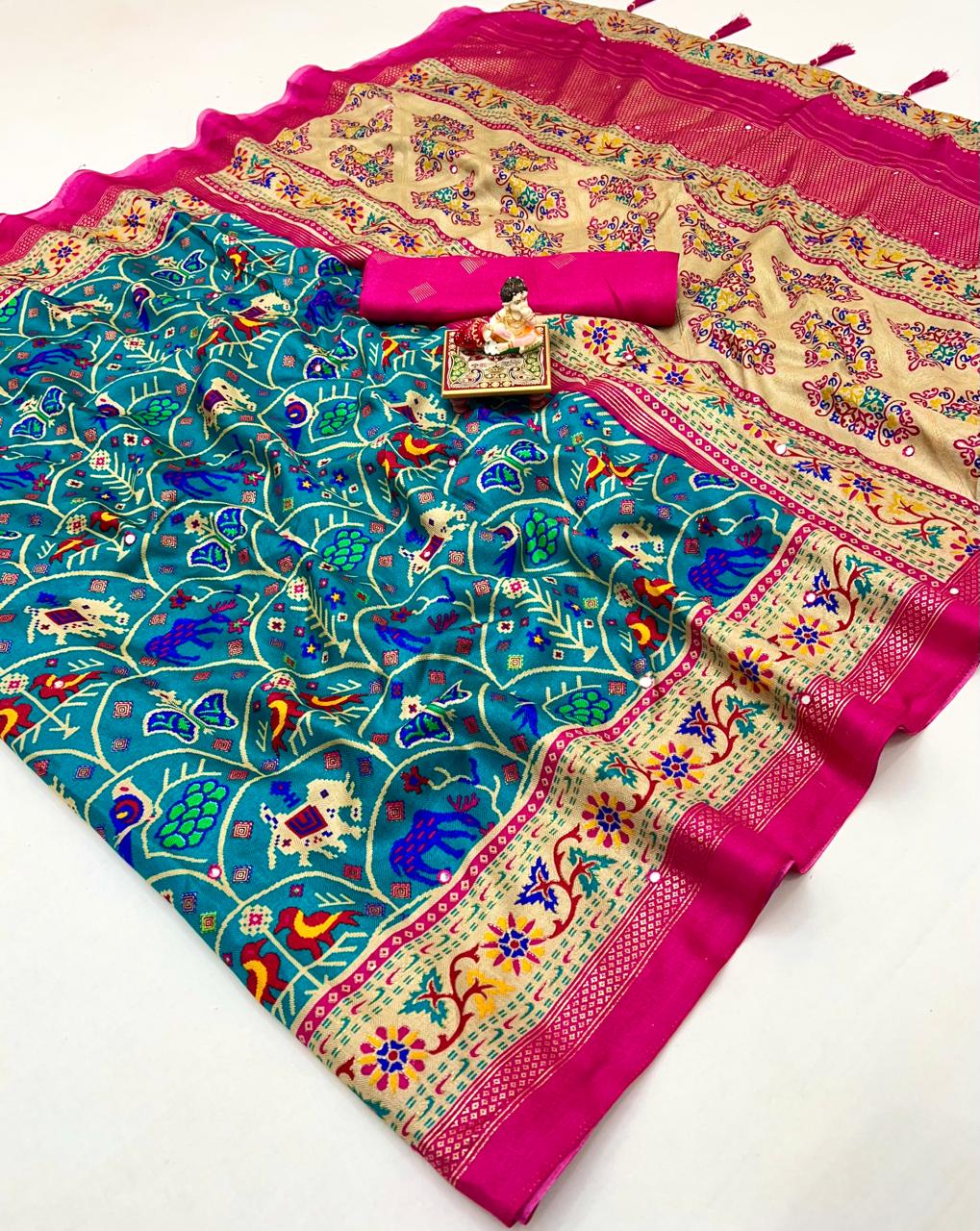
What is the difference between Patola print and double ikat?
Patola print applies the design to fabric after weaving, while double ikat creates the pattern by resist-dyeing both warp and weft yarns before weaving. Double ikat generally requires more complex alignment and skilled labour. A printed Patola saree can still be an attractive and practical choice when the buyer understands the difference.
Which blouse colour works with a Patola saree?
A blouse that repeats one secondary colour from the saree usually creates the most balanced result. Red and green Patola sarees can work with ivory, green, red or antique-gold accents, while yellow Patola sarees can pair with bottle green, rust, maroon or cream. A plain blouse is particularly effective when the body already has large peacock, elephant or floral motifs.
Which drape is traditional for a Gujarati Patola saree?
The seedha pallu is strongly associated with Gujarati saree styling because the pallu crosses from the right shoulder toward the front. The nivi drape is also suitable and may be more familiar for everyday wear. The right choice depends on comfort, blouse construction and whether the pallu design deserves to remain visible.
How should a silk Patola saree be stored?
Store a silk Patola saree folded inside breathable cotton or muslin in a dry cupboard away from sunlight and moisture. Refold the saree every two to three months and keep zari away from direct heat. Dry cleaning is safer than home washing for valuable silk, strong colours and zari borders.
Can a Patola saree be worn for a Haldi ceremony?
A Patola saree can be worn for a Haldi ceremony if the wearer chooses a secure drape, comfortable blouse and a saree that can be cleaned professionally if turmeric reaches the fabric. Lighter Pashmina silk or printed versions may be more practical than a highly valuable double-ikat silk saree. Pinning the pleats and pallu reduces movement during rituals.
Questions About Choosing and Styling a Patola Saree
Is every Patola saree made from pure silk?
No, every Patola saree is not made from pure silk. The market includes pure Patola silk, silk blends, Pashmina silk versions, Lichi Silk versions and printed sarees inspired by Patola motifs. The fibre and construction should be confirmed separately from the design name.
What is the difference between Patola print and double ikat?
Patola print applies the design to fabric after weaving, while double ikat creates the pattern by resist-dyeing both warp and weft yarns before weaving. Double ikat generally requires more complex alignment and skilled labour.
Which blouse colour works with a Patola saree?
A blouse that repeats one secondary colour from the saree usually creates the most balanced result. Red and green Patola sarees can work with ivory, green, red or antique-gold accents, while yellow Patola sarees can pair with bottle green, rust, maroon or cream.
Which drape is traditional for a Gujarati Patola saree?
The seedha pallu is strongly associated with Gujarati saree styling because the pallu crosses from the right shoulder toward the front. The nivi drape is also suitable and may be more familiar for everyday wear.
How should a silk Patola saree be stored?
Store a silk Patola saree folded inside breathable cotton or muslin in a dry cupboard away from sunlight and moisture. Refold the saree every two to three months and keep zari away from direct heat.
Can a Patola saree be worn for a Haldi ceremony?
A Patola saree can be worn for a Haldi ceremony if the wearer chooses a secure drape, comfortable blouse and a saree that can be cleaned professionally if turmeric reaches the fabric. Lighter Pashmina silk or printed versions may be more practical than a highly valuable double-ikat silk saree.