

Palazzo Suit Styles for Navratri Celebrations offer the colour and polish of festive clothing without restricting the long, quick steps of garba or dandiya. The right choice depends on more than embroidery: palazzo width, waistband comfort, fabric weight, dupatta security and the number of hours you expect to wear the outfit all matter. A thoughtful outfit can take you from a family puja to a crowded dance venue without constant adjustment.
Navratri dressing also changes across the nine nights. Some events call for bright colour and energetic prints, while a community gathering or office celebration may suit a quieter kurta-palazzo combination. The sections below explain how to choose a silhouette, assess fabrics, coordinate colour, manage a dupatta and build a practical outfit around your real plans.
Why Palazzo Suits Work Well for Navratri
Palazzo suits work well for Navratri because their wide legs allow easier movement than narrow trousers or heavily layered skirts. A palazzo leg usually falls away from the body from the hip or upper thigh, creating room for walking, turning and sitting cross-legged during a puja.
Movement, however, depends on the cut rather than the word "palazzo" alone. A very wide leg in slippery satin can tangle around the ankles, while a moderately flared rayon or cotton palazzo can remain stable during dancing. A waistband that sits flat at the natural waist also reduces pressure when the outfit is worn for four or five hours.
Palazzo suits party wear usually add one or more festive elements, such as zari borders, gota patti, rich jewel tones, layered hems, textured dupattas or statement sleeves. Those details create occasion value without requiring the full volume of a lehenga. A three-piece set can also give you more styling options after Navratri because the kurta, palazzo and dupatta can be worn separately.
Palazzo Suit Styles for Navratri Celebrations by Silhouette
The most useful way to compare palazzo suit designs is by the shape of the kurta and the amount of volume in the trousers. A straight kurta gives a clean, easy-to-dance-in line, an Anarkali adds flare and drama, and a short kurti makes the palazzo the visual focus.
Anarkali with a flowing palazzo
An Anarkali palazzo set creates a layered, fluid silhouette that suits evening garba and family celebrations. The kurta should ideally end above the widest point of the palazzo so the two flares remain visually distinct rather than merging into one bulky shape.
Designer Rust Anarkali Palazzo Dupatta Set demonstrates how a warm, deeper colour can make an Anarkali silhouette feel festive without relying entirely on heavy embellishment. Festive Purple Anarkali Suit with Chanderi Dupatta takes a more luminous route: Chanderi brings a light, crisp quality to the dupatta while the Anarkali supplies the volume.
Straight kurta with a wide-leg trouser
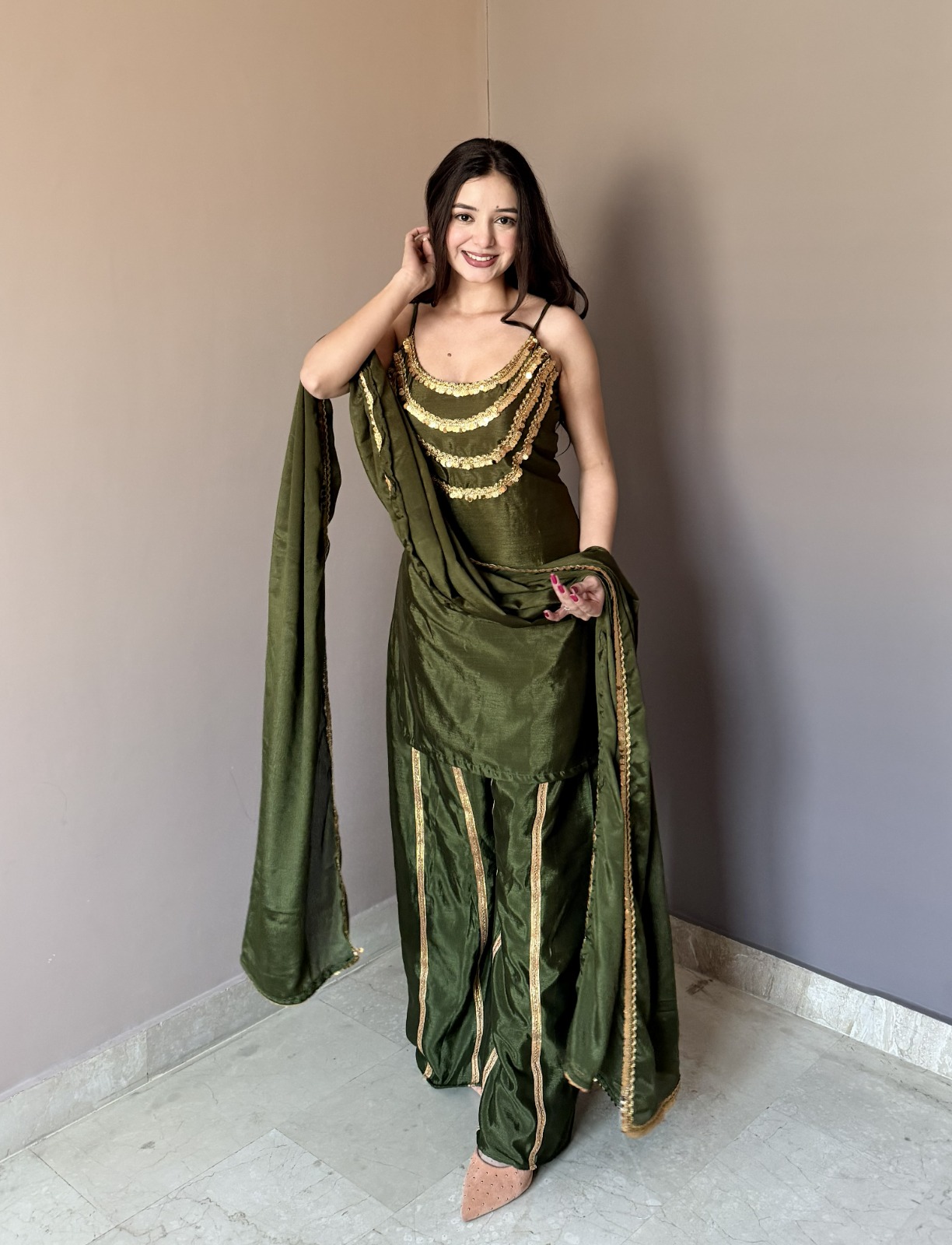
A straight kurta with a wide-leg palazzo is the most versatile silhouette for daytime puja, office Navratri events and moderate dancing. The vertical line of the kurta balances the horizontal volume of the lower half, especially when the kurta falls around the knee or slightly above it.
Luxury Olive Green Designer Kurta Palazzo Set with Dupatta suits this approach with a refined colour direction that can be dressed up through jewellery and footwear. A straight silhouette also works well for petite wearers who want palazzo volume without the extra flare of an Anarkali.
Short kurti and statement palazzo
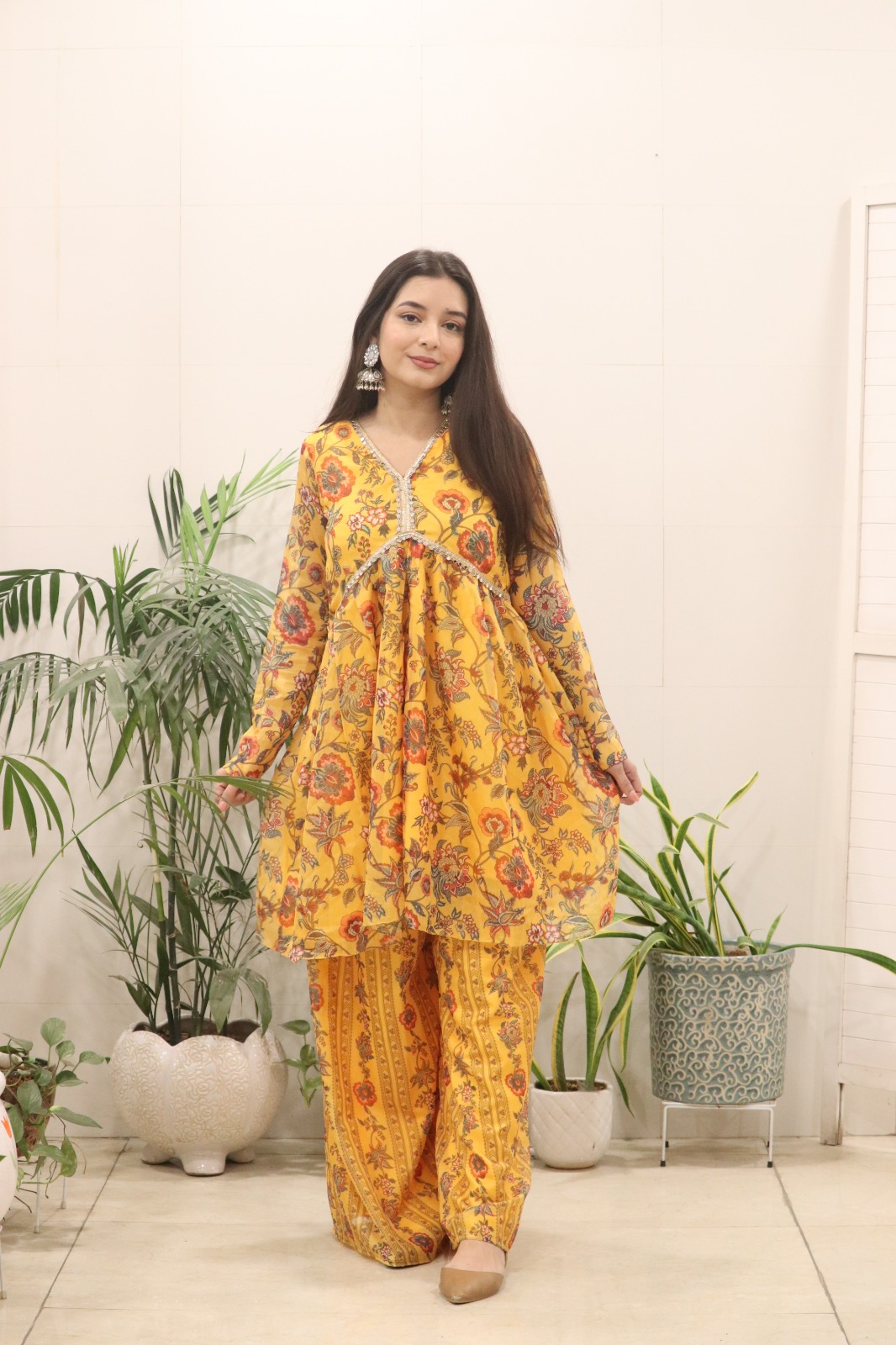
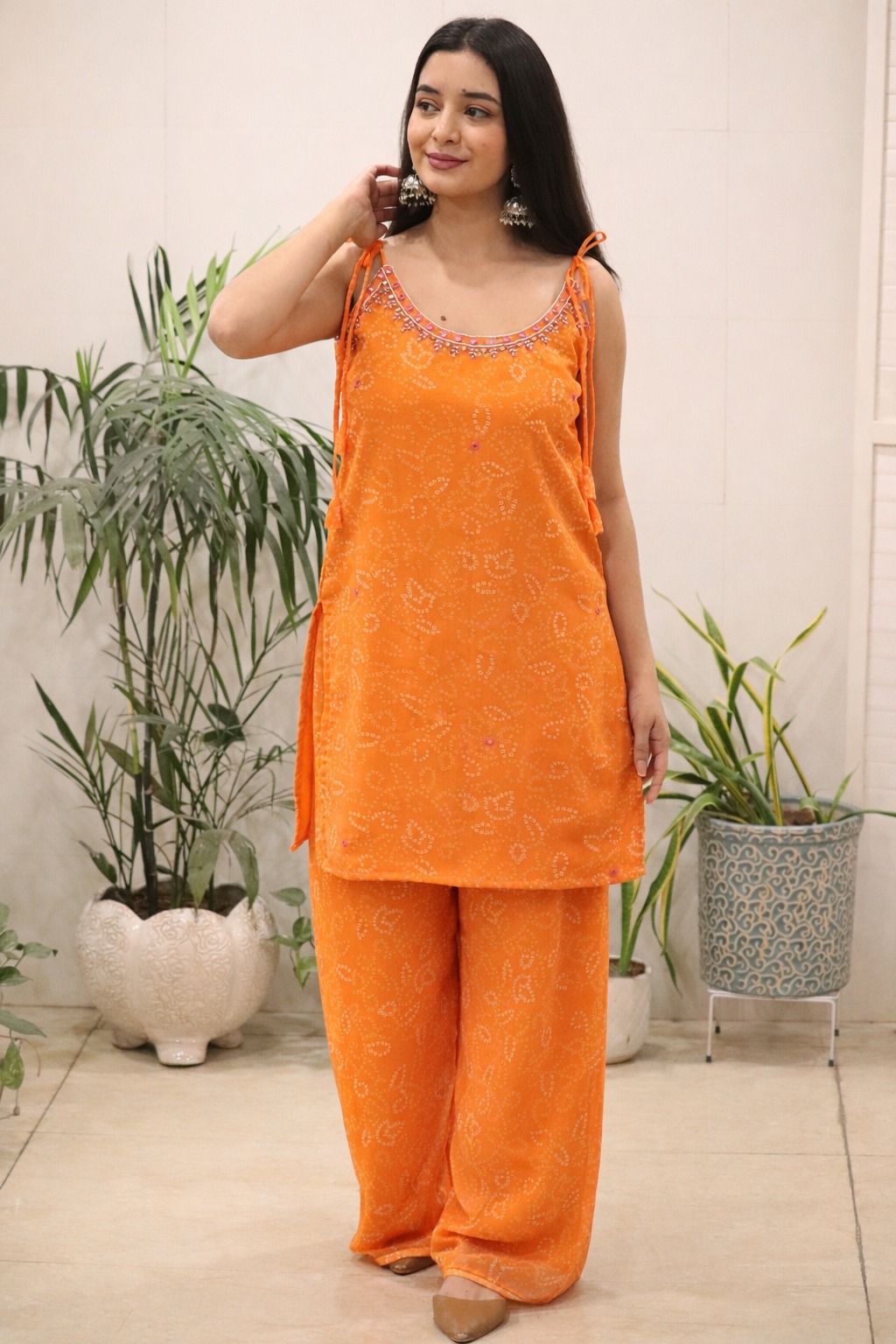
A short kurti makes the palazzo the centre of the outfit and works particularly well with printed rayon, brocade-inspired surfaces or a decorative hem. This style feels youthful and allows the leg shape to remain visible, but the waistband and hip fit need careful checking because the shorter top provides less coverage.
Sunshine Mustard Floral Organza Kurti Palazzo Set uses a bright base and a lighter surface to create a celebratory look suited to an evening gathering. Organza can feel crisp and dressy, so a lining and a comfortable waistband are important when the outfit will be worn for extended dancing.
Choosing Fabric for Garba, Dandiya and Puja
Fabric should be selected according to venue, weather, movement and wearing time. Cotton and breathable rayon are practical for warm outdoor celebrations, while georgette, Chanderi and organza create a more dressed-up effect for evening or indoor events.
Cotton and rayon for long wear
A cotton palazzo suit is usually the safer choice for a long Navratri session because cotton absorbs moisture and feels less clingy in warm weather. Cotton can crease more quickly than synthetic blends, but small creases are often preferable to overheating during several hours of dancing.
Rayon drapes more fluidly than many cotton weaves and can feel soft against the skin. Navy Blue Ajrakh Printed Rayon Top Palazzo Set Women brings a traditional Ajrakh-inspired print direction into a relaxed palazzo format. Sky Blue Printed Rayon Kurta Set with Palazzo offers a cooler visual palette for daytime gatherings and casual festive plans.
Georgette, Chanderi and organza for dressier events
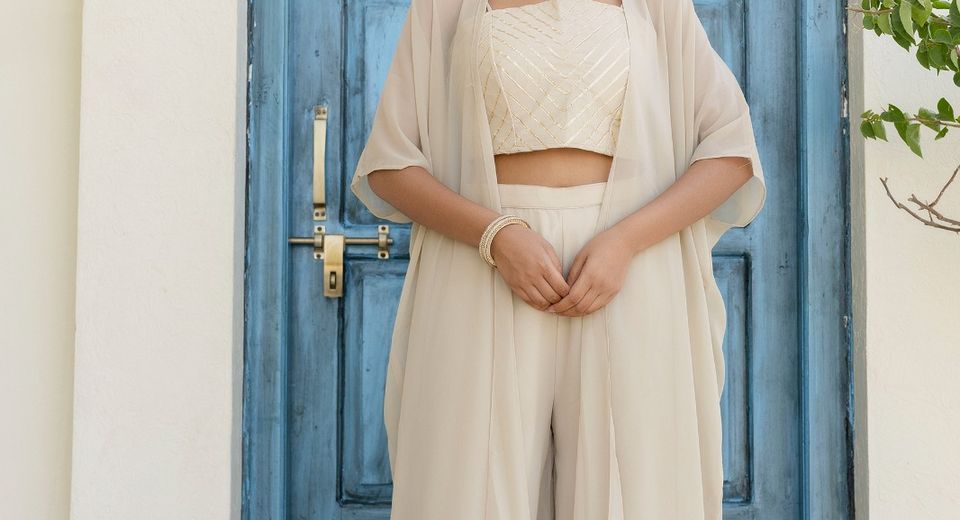
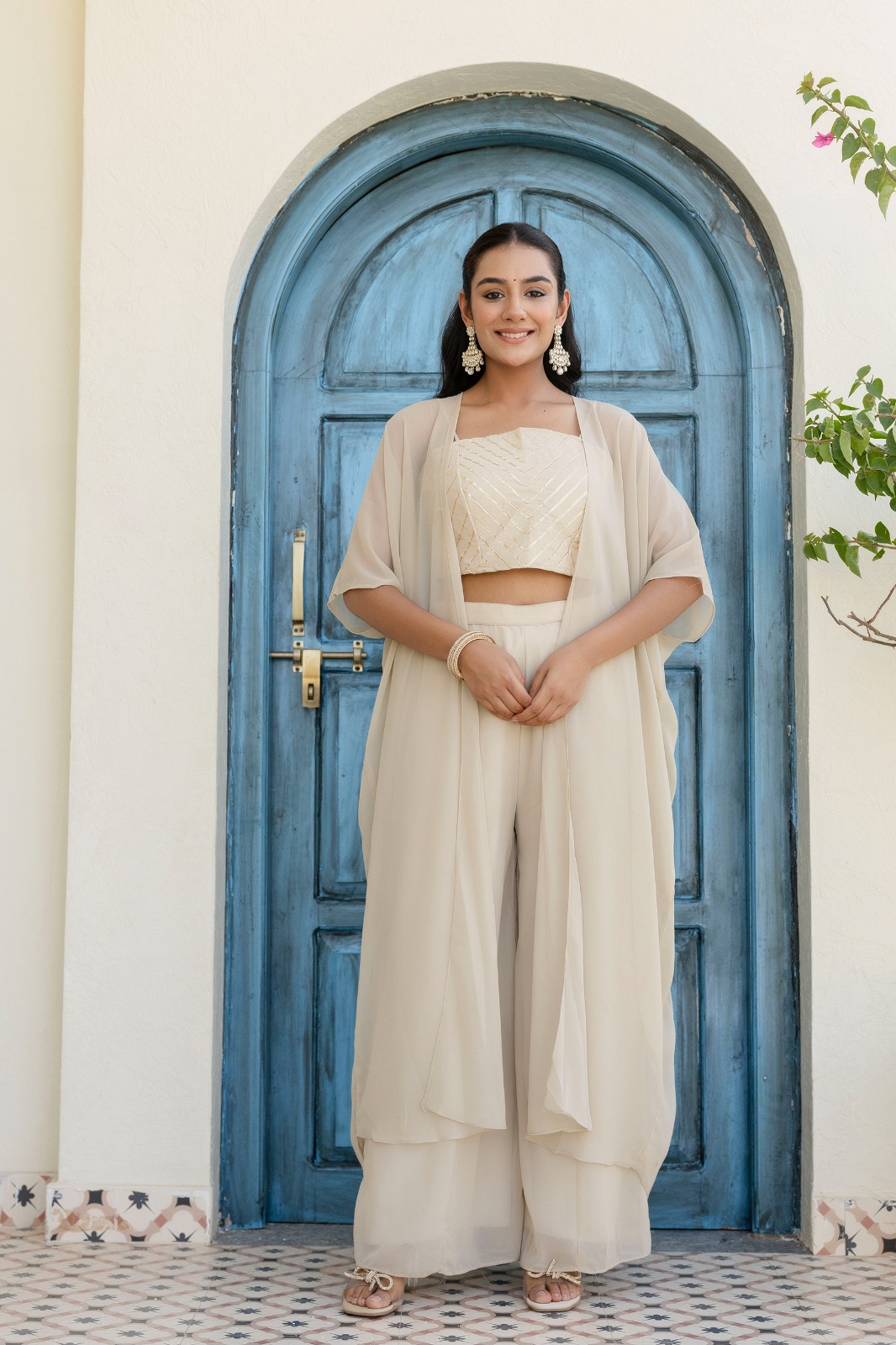
Georgette is lightweight and fluid, which makes it useful for a dupatta or a flowing three-piece set. Off White Georgette Gotta Patti Three Piece Set with Palazzo and Shrug adds gota patti detail and a shrug layer for a more styled evening appearance; an off-white base also allows colourful jewellery to stand out.
Chanderi has a crisp, airy handle and often catches light delicately, making it appropriate for a dupatta that should look festive without becoming excessively heavy. Organza has a firmer, translucent character and holds shape well, but organza garments should be checked for lining and seam comfort before a full night of movement.
Heavier embellishment isn't automatically better for Navratri. Dense zari or attached mirror work can add weight, catch on bangles and become uncomfortable when the wearer is moving continuously. A practical balance is a decorated neckline, border or dupatta paired with an uncomplicated palazzo.
Colour Planning Across the Nine Nights
Colour planning makes Navratri dressing feel intentional, but there's no requirement to own nine completely different outfits. Two or three base sets can create several looks when the dupatta, earrings, blouse-like inner layer or footwear changes.
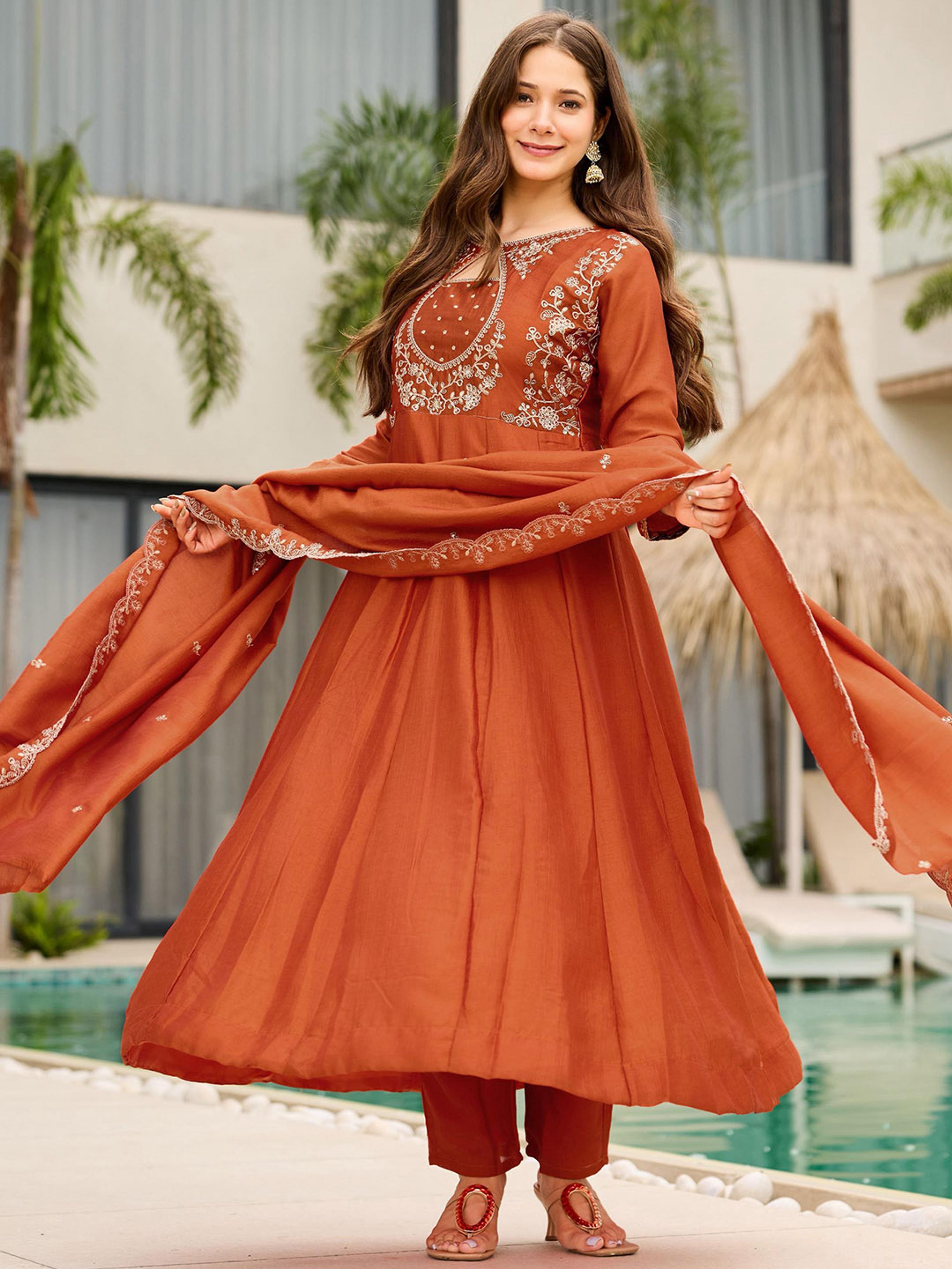
Mustard, rust and purple bring warmth and saturation to evening celebrations. Sunshine Mustard Floral Organza Kurti Palazzo Set is useful when the outfit needs to look bright in photographs, while Designer Rust Anarkali Palazzo Dupatta Set brings a deeper, earthier alternative. Purple works particularly well with antique gold, oxidised silver or contrasting green accessories.
Navy, olive and off-white provide a quieter foundation for daytime or semi-formal events. Navy Blue Ajrakh Printed Rayon Top Palazzo Set Women can be paired with silver-toned jewellery for a cool finish. Luxury Olive Green Designer Kurta Palazzo Set with Dupatta can be warmed with gold, brass or rust accents. Off White Georgette Gotta Patti Three Piece Set with Palazzo and Shrug can carry bright pink, orange or turquoise accessories without appearing visually crowded.
Colour should also be tested under the event's lighting. Fluorescent indoor lighting can flatten pale shades, while warm stage lighting can intensify orange, red and mustard. A contrasting dupatta border or visible jewellery helps the outfit retain definition in photographs.
How to Keep a Dupatta Secure While Dancing
A dupatta stays secure during garba when one shoulder placement is anchored and the front width is controlled. Drape the dupatta over one shoulder, bring enough fabric across the torso for coverage, and secure the shoulder section with a small safety pin hidden beneath the top layer.
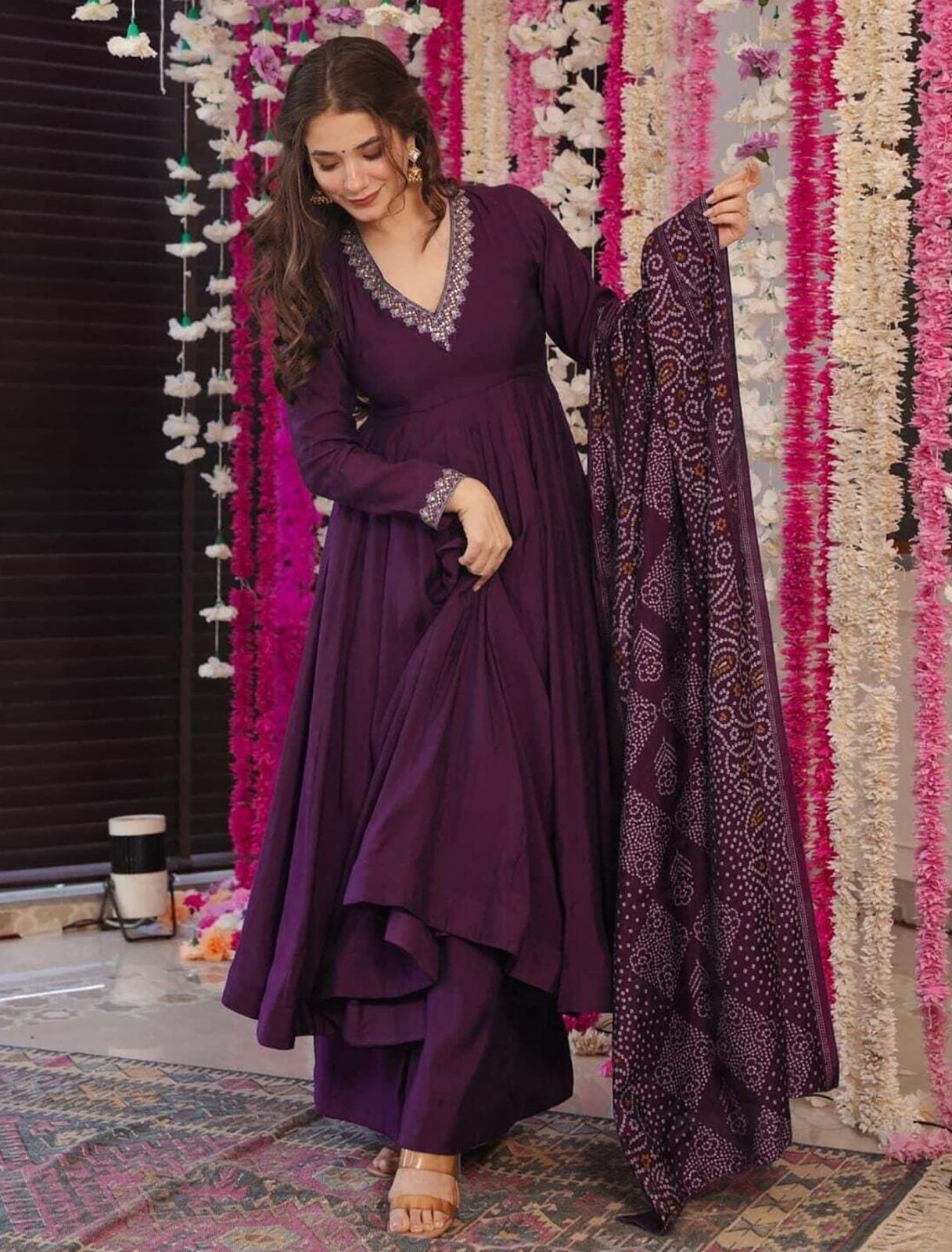
For faster movement, a single-shoulder drape with the opposite end tucked lightly at the waist is usually more practical than leaving both ends loose. A narrow front pleat reduces the chance of the fabric brushing against bangles, lamps or other dancers. A lightweight georgette or Chanderi dupatta is generally easier to manage than a heavily embellished, stiff piece.
Three-piece sets with a shrug offer another solution because the extra layer can create structure around the shoulders. The shrug should not be so long or open that it catches on surrounding clothing. Before leaving home, practise raising both arms, turning quickly and sitting down; a secure drape should remain comfortable through all three movements.
Accessories and Footwear That Support the Outfit
Accessories should complement the palazzo silhouette without adding hazards during movement. Medium-sized jhumkas, a short necklace, stacked bangles on one arm and a small bindi can create a complete Navratri look without overwhelming a printed kurta.
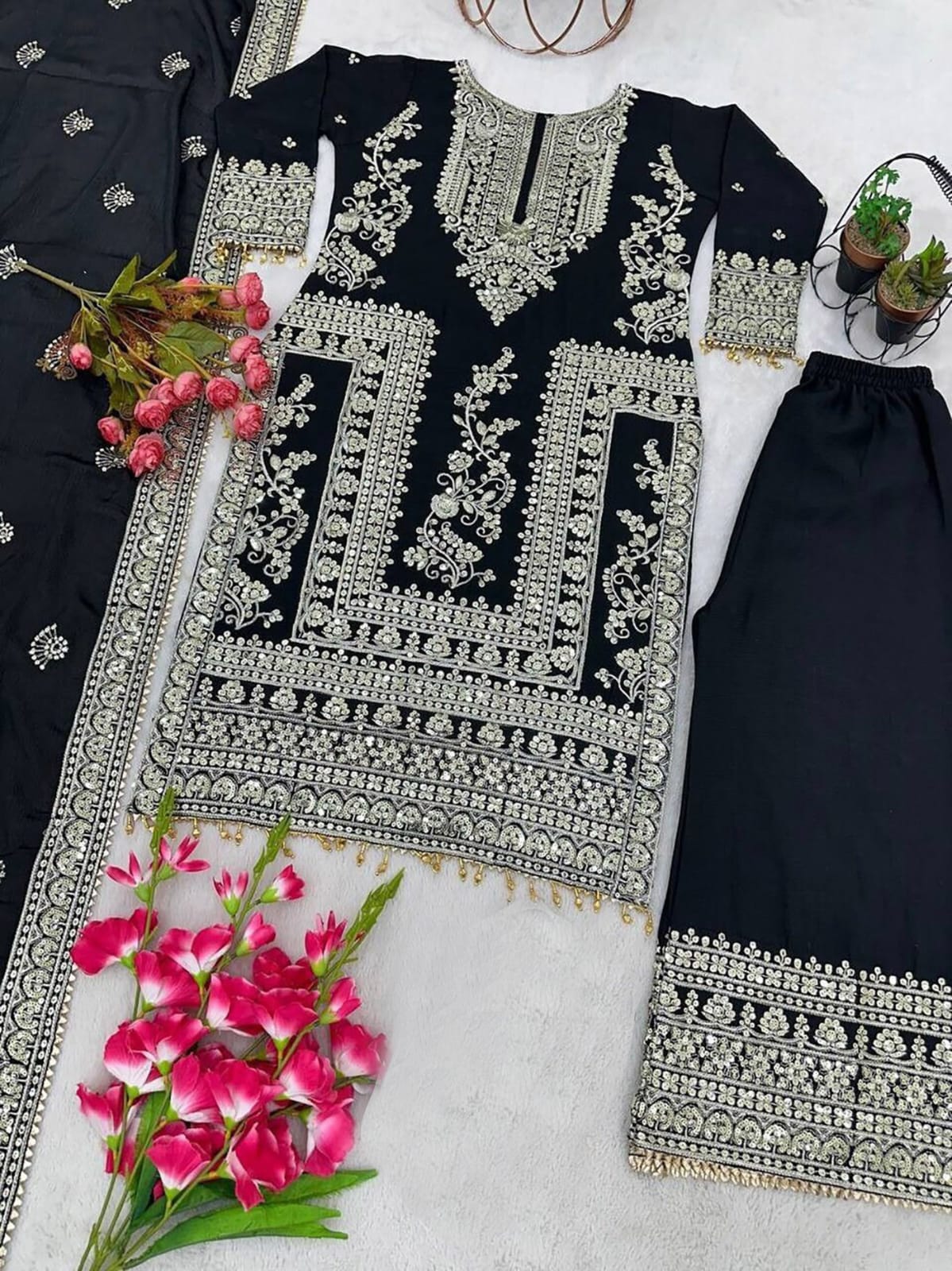
Mirror work, zari and gota patti already provide surface shine, so metallic accessories can be restrained. A heavily decorated black set such as Designer Black Party Wear Palazzo Suit Set can take colour through emerald, ruby or fuchsia earrings, while a printed set may look better with one metal family repeated across earrings, bangles and footwear.
Footwear needs a secure upper and a stable sole. Flat juttis, cushioned kolhapuris and low block heels are generally more practical than narrow stilettos on crowded floors or outdoor grounds. Check that the palazzo hem sits at least a small distance above the ground when footwear is worn; a hem dragging underfoot can become a tripping risk.
A Practical Fit and Buying Checklist
A well-fitting palazzo suit should allow a full seated position, a comfortable arm raise and unrestricted forward steps. Measure the waist and hips according to the seller's chart rather than choosing only by usual size, because palazzo waistbands and kurta cuts vary between garments.
- Waist: Check whether the waistband is elastic, drawstring-based, flat-fronted or side-zipped, and leave enough ease for sitting and eating comfortably.
- Hip and thigh: Confirm that the palazzo doesn't pull across the upper hip when you walk or climb stairs.
- Length: Try the outfit with the footwear planned for Navratri, especially if the trousers have a broad hem.
- Opacity: Hold light-coloured rayon, georgette and organza near a window to assess whether a lining or slip is needed.
- Seams: Inspect the inner waist, armhole and side seams for rough embellishment that could irritate skin during prolonged wear.
- Dupatta: Consider its weight, width and border before deciding whether it can be pinned securely for dancing.
Price should be assessed against construction rather than decoration alone. A set with a lined kurta, finished seams, a stable waistband and an usable dupatta may offer better long-term value than a heavily embellished garment that's difficult to wear. A flexible colour such as navy, olive or off-white can also be reused with a different dupatta after Navratri.
Care After a Navratri Celebration
Care depends on the fibre and decoration, but prompt airing is useful for almost every palazzo suit. Hang the garment in shade for several hours after wearing it, then follow the wash label before storing it; sealing perspiration and moisture in a wardrobe can create odour and weaken fibres.
Cotton and rayon should be washed according to their labels and dried away from harsh direct sun when colour fading is a concern. Georgette, Chanderi, organza and gota patti details may require gentle hand washing or dry cleaning. Avoid rubbing zari, printed surfaces or attached embellishment, and place delicate sets in a breathable garment bag rather than a sealed plastic cover.
Fold palazzo trousers along the creases instead of compressing the wide legs into a small bundle. Store a dupatta separately if its zari or gota border can snag the kurta. These simple steps help a Navratri palazzo outfit remain wearable for weddings, festive lunches and future family celebrations.
Questions to Ask Before Choosing a Navratri Palazzo Suit
Are palazzo suits comfortable for garba and dandiya?
Palazzo suits are comfortable for garba and dandiya when the trousers have enough hip ease, a secure waistband and a hem that does not drag. Rayon and cotton are practical for long sessions, while very slippery or excessively long palazzos can restrict footwork.
Which fabric is best for a cotton palazzo suit for Navratri?
Cotton is a strong choice for warm outdoor Navratri events because it is breathable and absorbs moisture. Choose a cotton palazzo suit with a comfortable waistband and check whether the fabric is lined if the colour is pale or the weave is lightweight.
How should I wear a dupatta with a palazzo suit for dancing?
A single-shoulder drape secured with a hidden pin and a light tuck at the waist is usually the safest option for dancing. Keep the front pleats controlled and avoid a heavy border that can catch on bangles or surrounding dancers.
Can palazzo suits be worn as party wear for Navratri?
Palazzo suits can work as party wear when the set includes details such as gota patti, zari, a dressy dupatta, an elegant print or a well-finished shrug. Balance a decorated kurta with a simpler palazzo so the outfit remains comfortable and visually composed.
What palazzo suit colour should I wear for Navratri?
Mustard, rust, purple, navy, olive and off-white are all useful Navratri colour choices, depending on the event and accessories. Bright mustard or purple creates a high-energy festive look, while navy, olive and off-white offer a more understated base for statement jewellery.
How do I choose the correct palazzo suit length?
Choose a length that clears the floor when you wear the footwear planned for the event. Walk, sit and climb a step during the fitting; the hem should not catch under your toes or sweep across a wet or crowded floor.





