Planning an Onam outfit becomes easier with the Onam Saree Guide: How to Choose the Perfect Kerala Saree, especially when online collections include cottons, silks, printed drapes and richly bordered designs. A suitable Kerala saree should feel comfortable through greetings, a sadya, temple visits and family photographs while still reflecting Onam's connection with harvest, hospitality and regional craft. Fabric weight, border scale, colour, blouse construction, drape length and care requirements matter as much as the first impression on a screen.
Traditional Kerala sarees are commonly associated with an off-white or cream body and a contrasting kasavu border made with zari. Kasavu refers to the metallic gold element used in Kerala textiles, while Kerala saree styling today includes variations in cotton, handloom textures, printed motifs and silk blends. Understanding those differences helps you choose a saree that suits your celebration, climate and personal style rather than buying only by colour.
Onam Saree Guide: How to Choose the Perfect Kerala Saree for the occasion
A Kerala saree suits Onam when its fabric, colour palette and border create a festive appearance without restricting movement. Traditional off-white bodies with gold borders remain the most recognisable choice, but handloom cotton, Tussar silk, Kalamkari prints and restrained floral details can also work for different Onam settings.
The classic Kerala kasavu saree usually has a light base, a defined zari border and a matching or contrast blouse. The light ground reflects Kerala's warm daylight and allows gold jewellery to stand out. A narrow border feels understated for a daytime sadya, whereas a wider zari border creates more visual presence for an evening gathering or cultural programme.
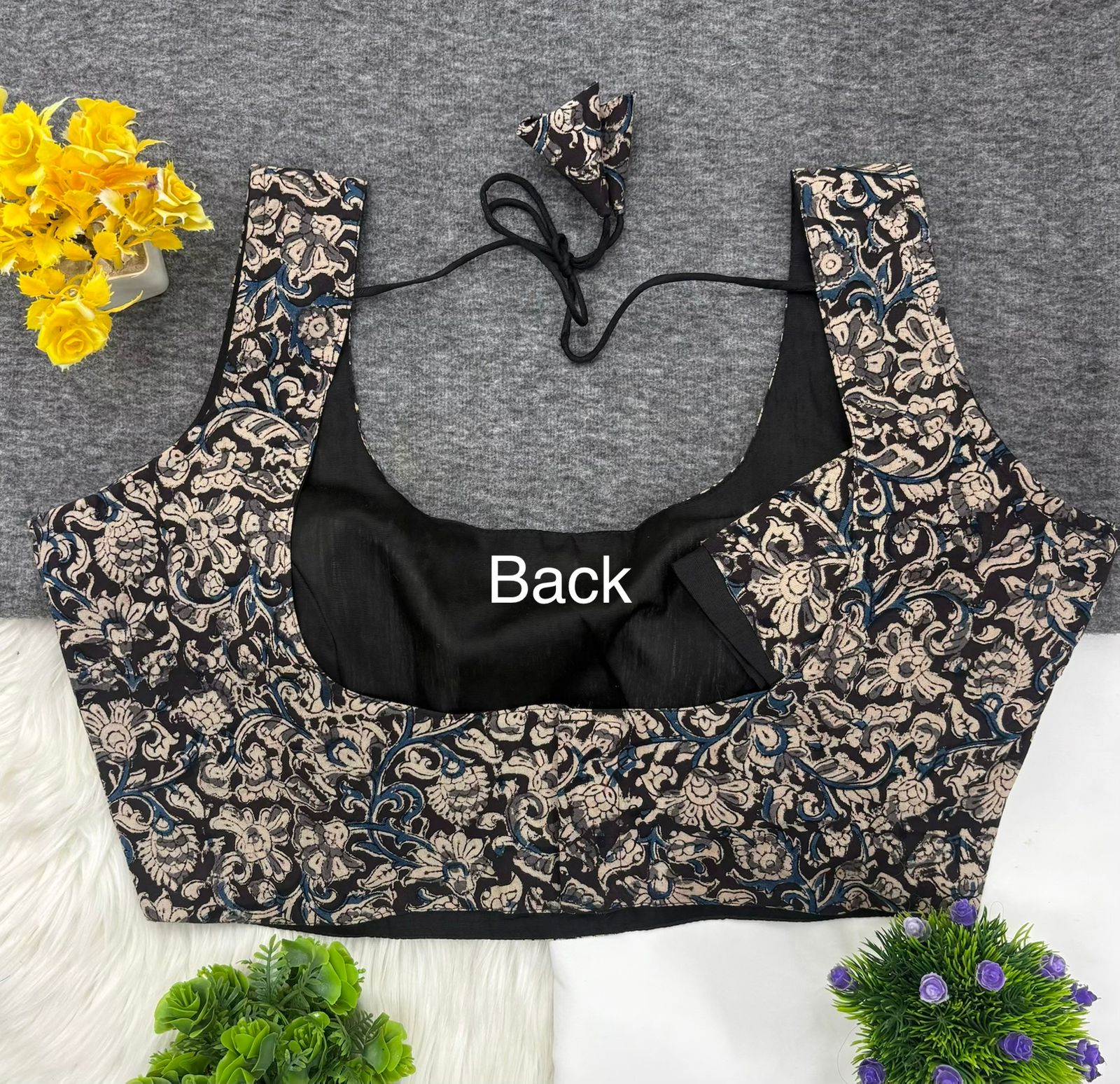
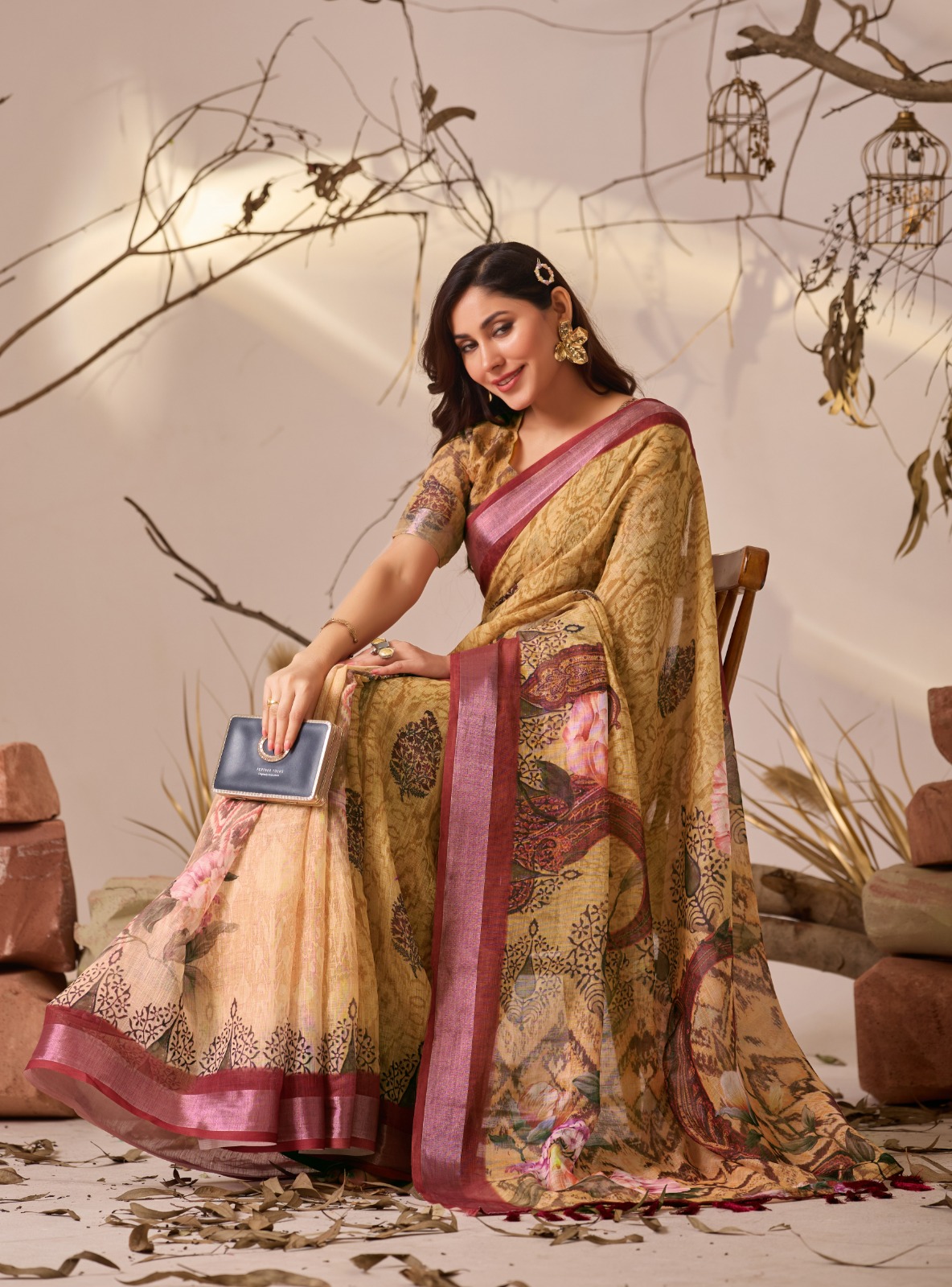
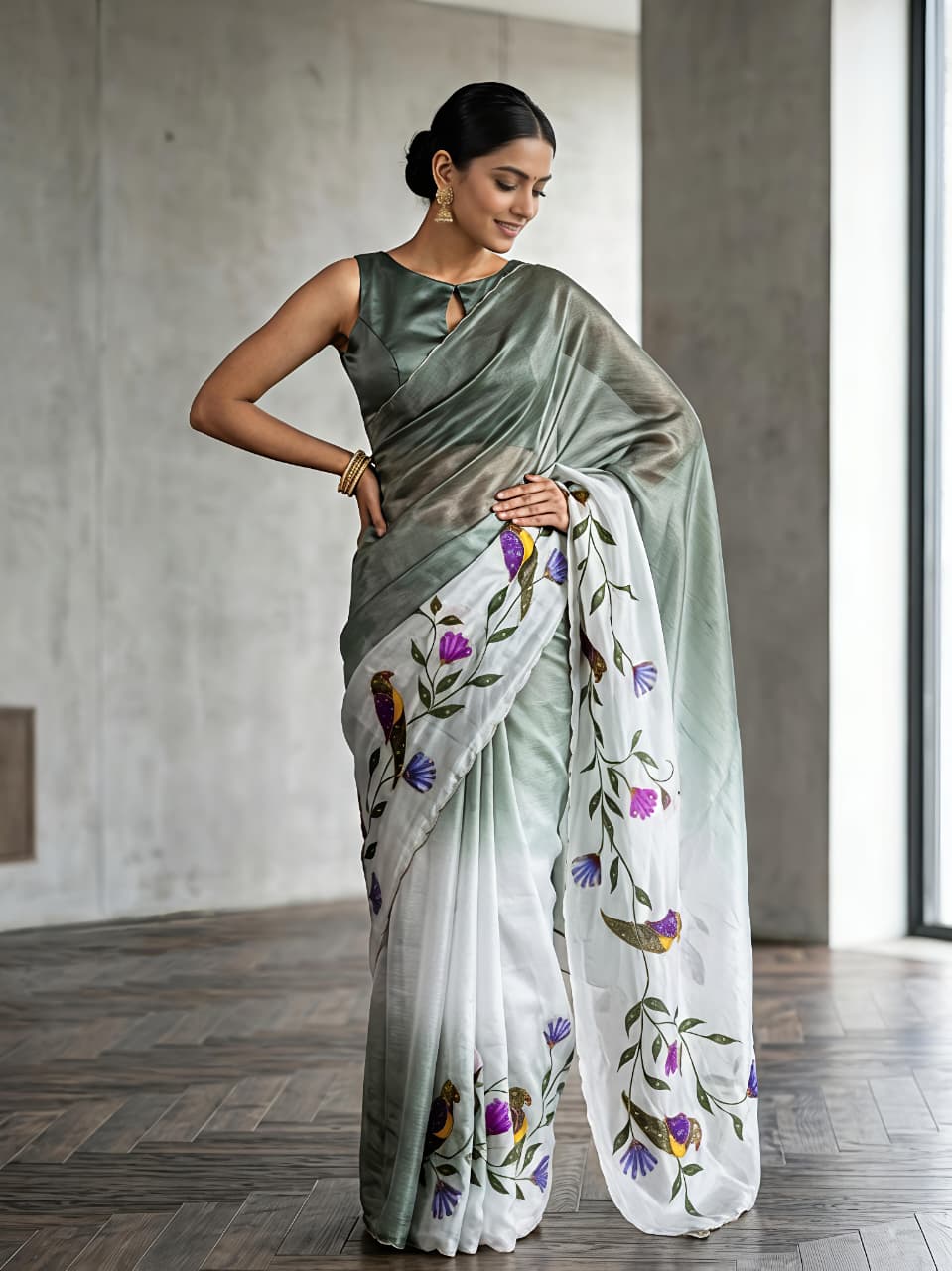
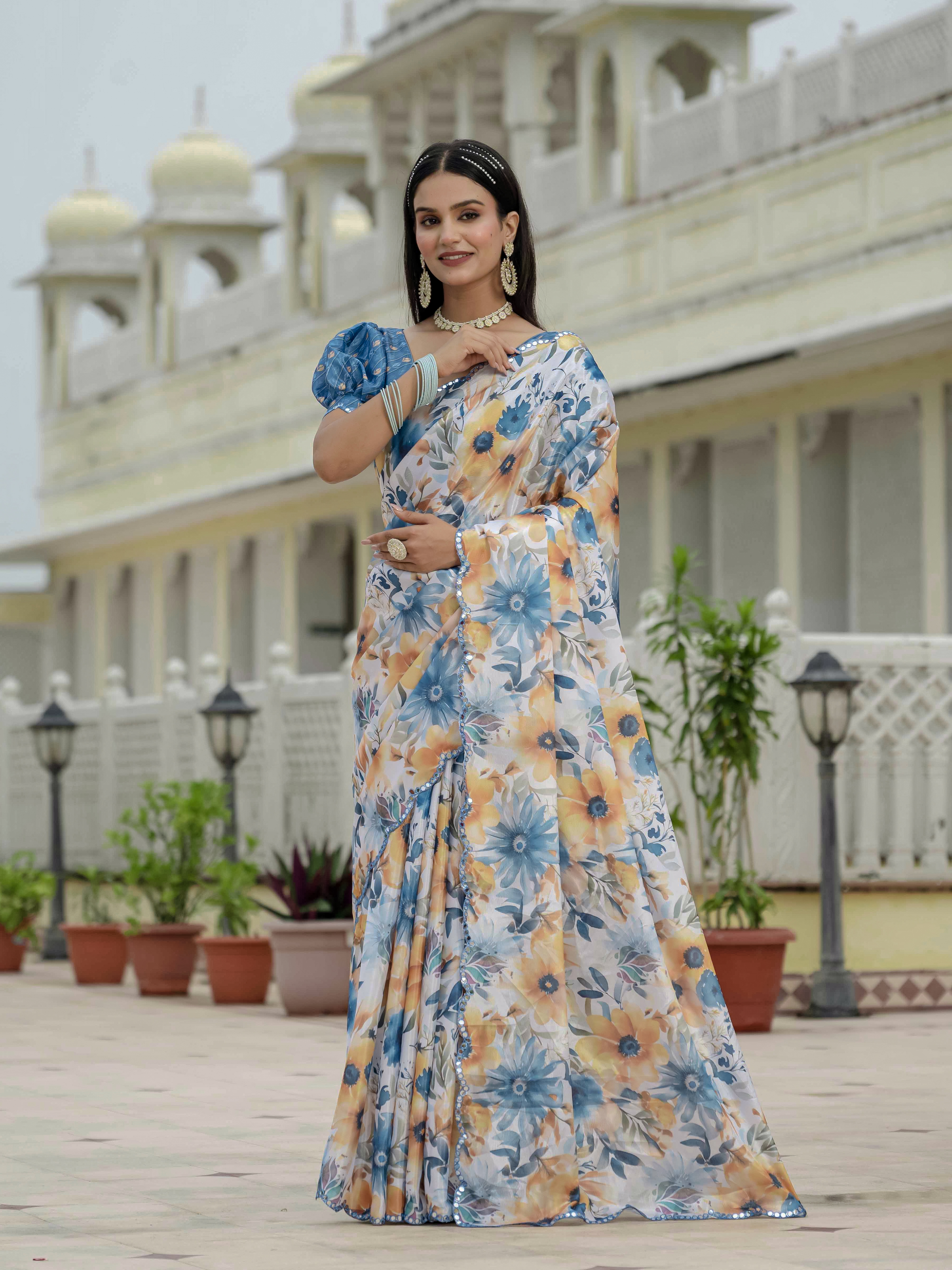
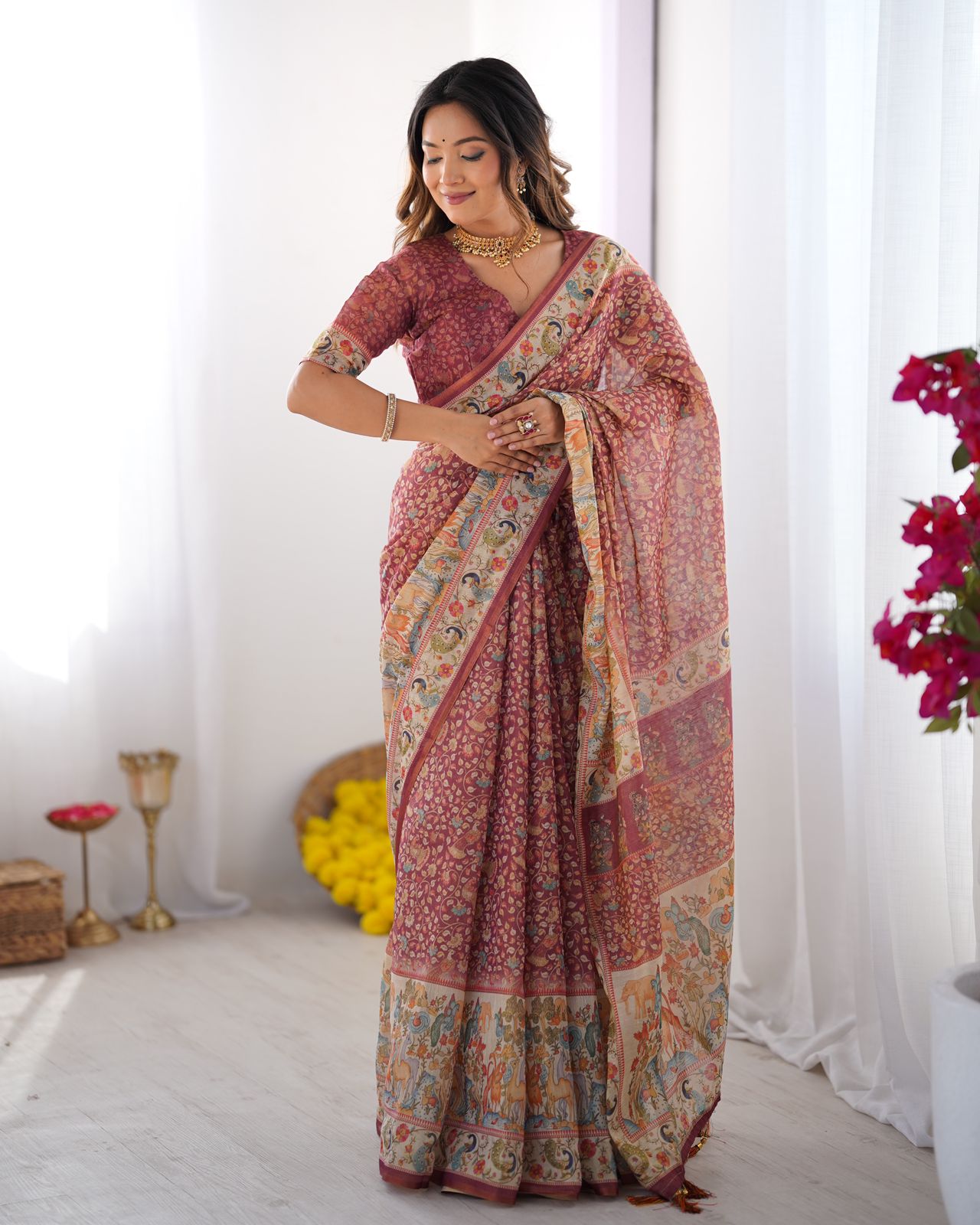
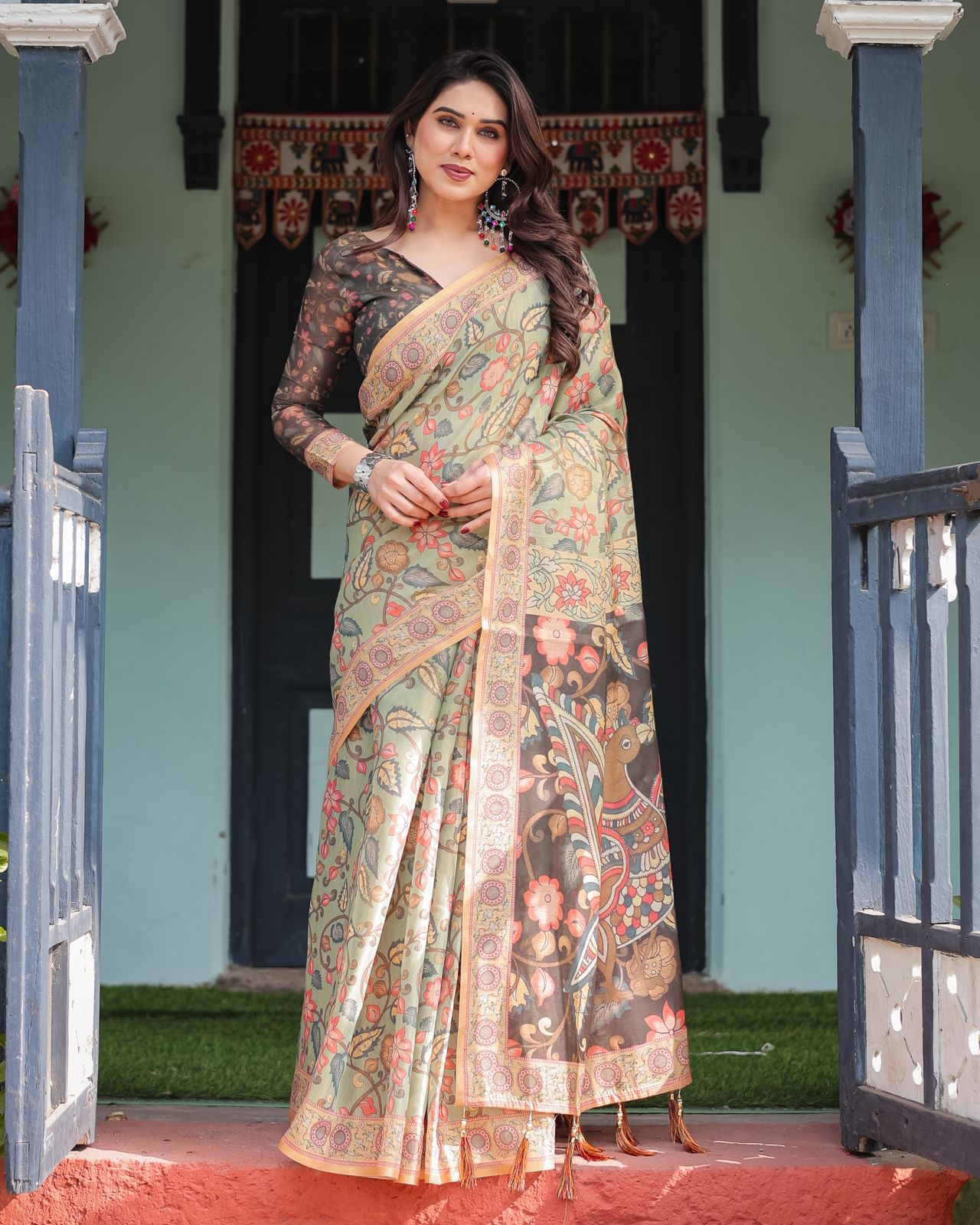
Motifs change the character of the saree. Small checks, stripes or a plain body feel close to traditional handloom dressing. Kalamkari prints add botanical, narrative or temple-inspired detail without requiring heavy embellishment. Floral prints create a softer festive look, while a rich pallu gives the saree more structure in photographs.
The difference between a Kerala saree and a generic festive saree often lies in balance. A heavily sequinned drape may suit a reception, but a breathable cotton or silk saree with a clear border is generally more comfortable for an Onam lunch held during warm, humid weather.
Onam Saree Guide: How to Choose the Perfect Kerala Saree fabric
Choose cotton or linen cotton for maximum breathability, Tussar silk for a textured festive finish, and a richer silk or zari saree when the event is formal or held in the evening.
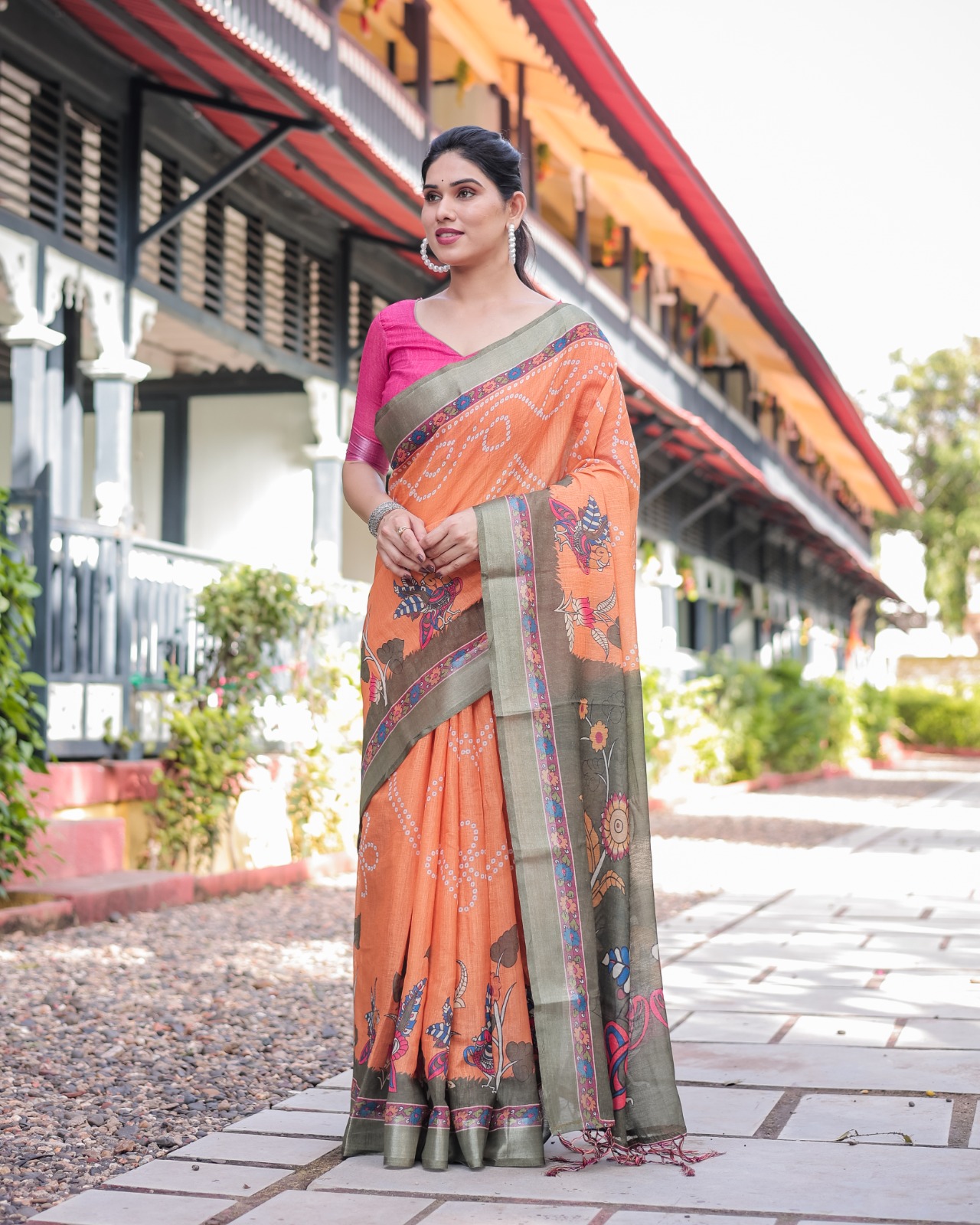
Why is cotton useful for a daytime Onam celebration?
Cotton is useful for a daytime Onam celebration because the fibre permits air circulation and absorbs some moisture. Linen cotton generally feels crisp and light, although the saree may show natural creasing after several hours. Orange Bandhani Kalamkari Linen Cotton Saree combines a breathable base with a patterned surface, making it suitable when you want a Kerala-inspired festive outfit with more colour than a plain kasavu drape.
Cotton sarees are also easy to rewear for office celebrations, cultural programmes and smaller family lunches. A medium-weight weave usually holds pleats more reliably than an extremely soft, thin fabric. Check whether the product description mentions a separate blouse piece, because blouse fabric affects both final cost and styling options.
When should you choose Tussar silk?
Tussar silk works well when you want natural texture, a gently structured drape and a more formal appearance than everyday cotton. Tussar silk can feel warmer than cotton, so it's better for a shorter ceremony, an air-conditioned venue or an evening event than for an outdoor afternoon in peak humidity.
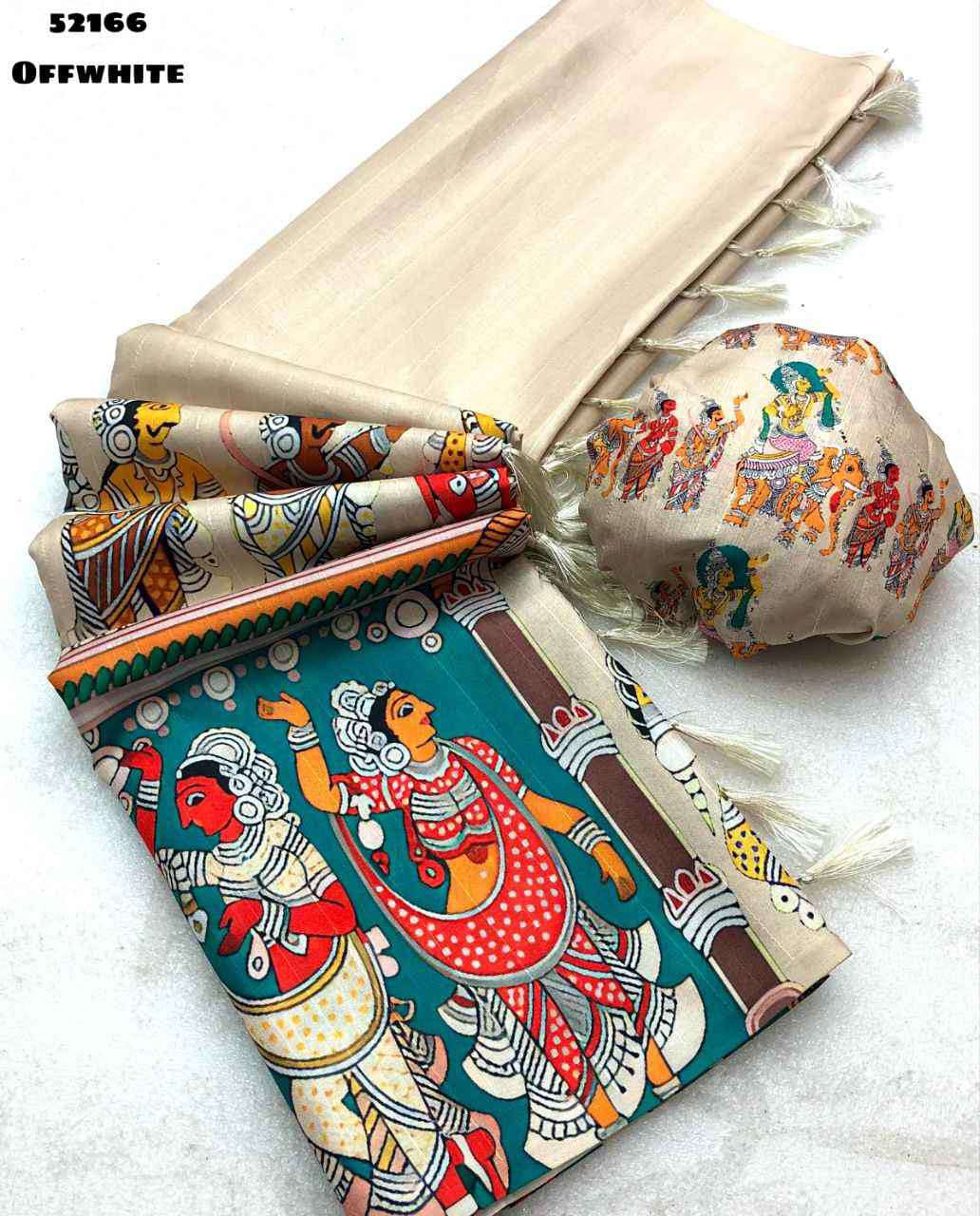
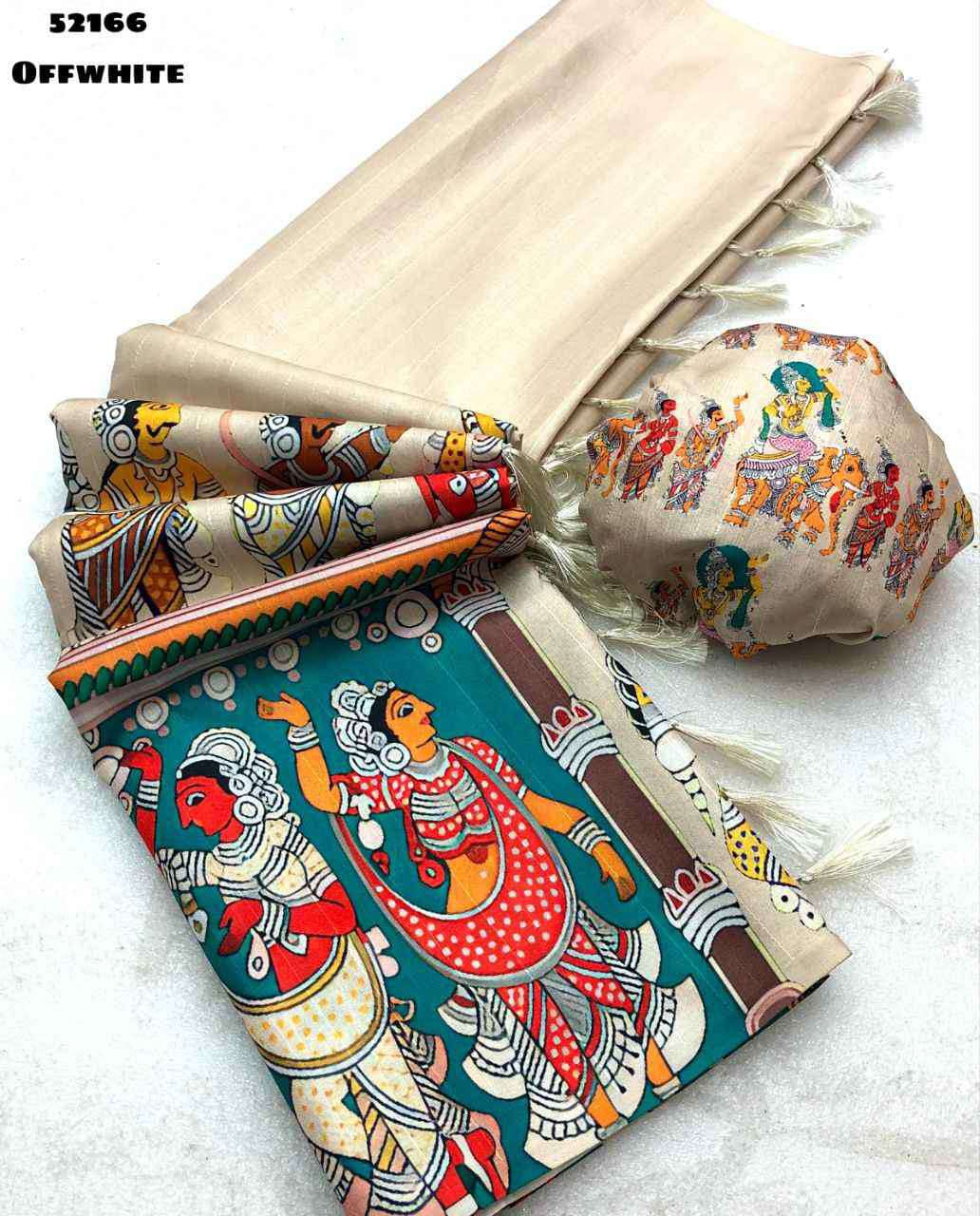
Off White Kalamkari Tussar Silk Saree with Blouse provides an useful starting point for Onam styling because the off-white base respects the traditional palette while the Kalamkari surface introduces visual interest. Designer Off White Tussar Silk Saree with Kalamkari Print creates a similar relationship between a light festive ground and an expressive printed pattern. Choose either style when the saree needs to carry the outfit without depending on elaborate jewellery.
Soft Tussar Silk Floral Saree For Festive Wear suits a guest look that needs colour and movement while remaining more textural than a synthetic party saree. A soft silk saree is a stronger choice for a formal Onam celebration when you want a fluid drape and a polished pallu.
Onam Saree Guide: How to Choose the Perfect Kerala Saree colour and border
Select an off-white or cream base with gold for a traditional Onam look, muted earthy tones for a contemporary handloom mood, or deeper jewel colours when you want the blouse and jewellery to remain simple.
The cream-and-gold combination is versatile because it works with gold earrings, jasmine flowers, green glass bangles and both warm and neutral makeup. A maroon blouse adds contrast without competing with zari. Maroon Cotton Saree with Zari Work for Wedding shows how a deeper body and metallic detail can create a formal festive direction, although daytime Onam styling usually benefits from lighter accessories.
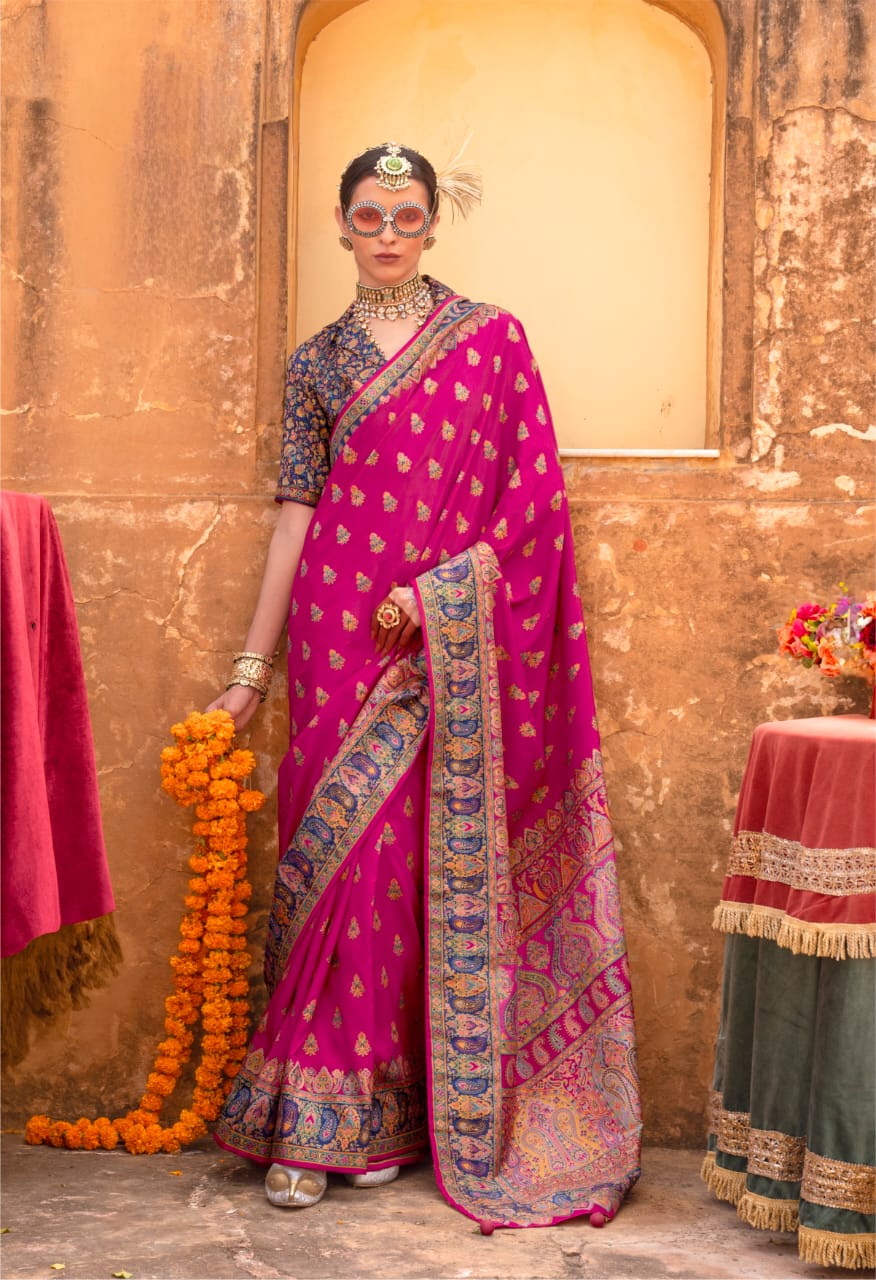
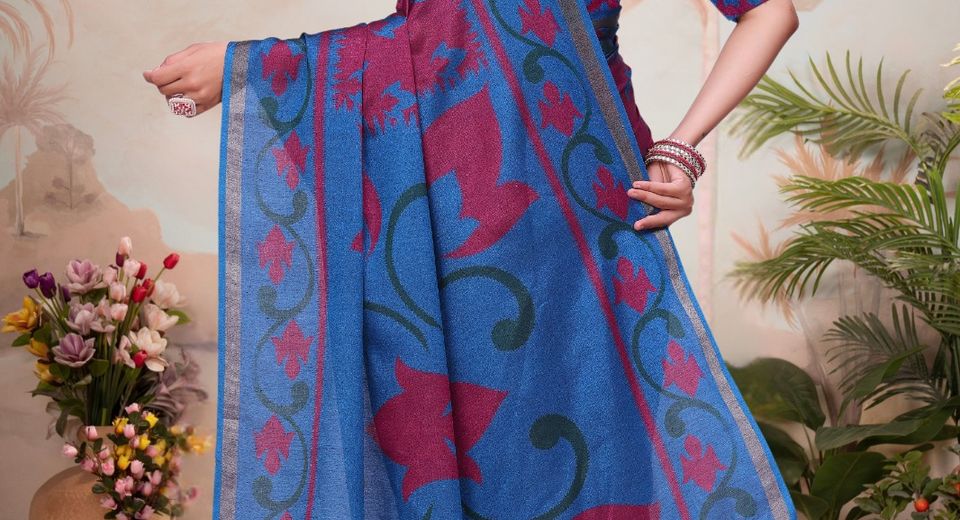
Maroon Designer Mal Cotton Saree with Rich Pallu demonstrates how a strong pallu can become the main focal point. Pair a rich pallu with a plain blouse for a composed appearance. A printed or embroidered blouse is better reserved for a saree with a quieter body.
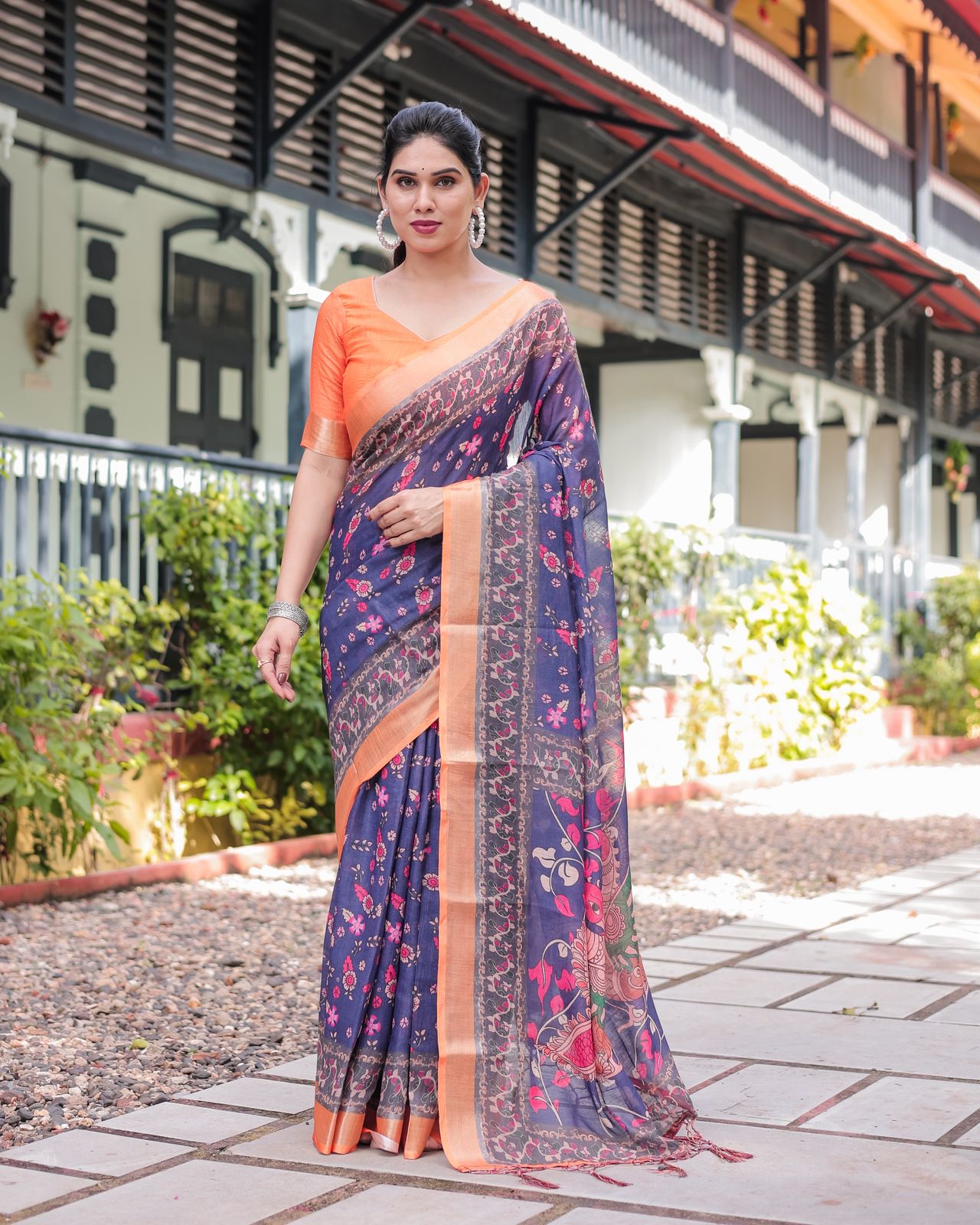
Orange, purple and red bring a more celebratory mood to Onam dressing. Purple Floral Cotton Saree for Women Online India can work for a daytime event when balanced with gold or muted accessories. Orange creates warmth in photographs, while red has greater visual intensity and may suit an evening cultural programme.
Border width deserves as much attention as colour. A narrow border is easier to style with a statement blouse and looks lighter on a petite frame. A broad border creates a stronger vertical line and gives a more ceremonial finish, but it can dominate a very short blouse or a heavily embellished top. When shopping online, compare the listed border width with your blouse length and preferred pleat depth.
Onam Saree Guide: How to Choose the Perfect Kerala Saree blouse
Coordinate the blouse by repeating one saree colour, matching the border's metallic tone, or choosing a controlled contrast that keeps the saree's pallu visible.
A traditional Onam blouse is often short-sleeved, high-necked or modestly cut, but modern variations can include elbow sleeves, puff sleeves, square necklines and textured fabrics. Cotton blouses create a cohesive handloom look, while silk blouses sharpen the finish of a softer saree. A blouse with gold piping can echo zari without requiring all-over embroidery.
For an off-white saree, gold, maroon, bottle green, rust, deep purple and black can all work, but the right choice depends on the border and print. A maroon blouse works especially well with gold jewellery and a cream body. A green blouse connects naturally with banana leaves, floral décor and the harvest associations of Onam.
Movement should influence neckline and sleeve selection. A very tight armhole becomes uncomfortable during repeated sitting and standing at a sadya. A blouse with approximately 1 to 2 centimetres of wearing ease at the bust and a correctly placed shoulder seam usually allows better movement, although final ease should follow personal measurements and the tailor's method.
If the saree already has a Kalamkari print, avoid copying every print colour into the blouse. Choose one background or accent shade instead. Off White Kalamkari Tussar Silk Saree with Blouse can be styled with a solid maroon, rust or antique-gold blouse, allowing the printed saree to remain legible.
Onam Saree Guide: How to Choose the Perfect Kerala Saree for each event
Style the saree according to the event's duration, formality and setting: keep daytime sadya dressing breathable and restrained, and add stronger jewellery or silk texture for an evening celebration.
What should you wear to a family sadya?
Choose cotton, linen cotton or a lightweight handloom saree, then pair it with a neatly fitted blouse and small gold earrings. A low bun or braid decorated with jasmine keeps the neckline and border visible. Secure the pallu with one discreet pin near the shoulder and one at the waist so the saree remains practical while eating and moving between rooms.
Humidity-aware makeup is useful for a long family gathering. A light base, waterproof kajal and a lip colour that doesn't transfer easily can remain comfortable for several hours. Comfortable sandals are more useful than very high heels when the day includes standing, walking and sitting on the floor.
How should you dress for an office Onam celebration?
Choose a saree with a clear print, medium border or rich pallu so it looks distinctive without becoming difficult to manage. Orange Bandhani Kalamkari Linen Cotton Saree can support a lively daytime look with simple gold studs and a solid blouse. A slim belt may define the waist, but it should not compress the pleats or cover an important motif.
For an office setting, keep the blouse neckline moderate and choose a pallu that can be pinned securely. Party Wear Sarees offers broader styling possibilities, but a Kerala-inspired office look usually benefits from fewer sequins and a more breathable fabric.
What works for an evening family celebration?
Choose Tussar silk, a richer pallu or a deeper colour for evening light. Soft Tussar Silk Floral Saree For Festive Wear can be paired with antique-gold earrings, a low bun and a plain blouse. Designer Off White Tussar Silk Saree with Kalamkari Print can create a more artistic look when styled with a solid blouse and restrained jewellery.
Use the venue to guide the finish. An indoor celebration can accommodate silk and heavier earrings, while an outdoor event may call for a lighter drape, secure pleats and jewellery that won't catch on the pallu.
Onam Saree Guide: How to Choose the Perfect Kerala Saree within budget
Set a total outfit budget before buying by including the saree, blouse stitching, fall and edging, accessories, footwear and possible delivery charges.
A lower saree price doesn't always mean a lower final outfit cost. Blouse stitching can vary according to lining, sleeve detail, neckline and embroidery. Fall and edging improve the drape and reduce wear at the lower edge, but they should be included in your calculation. If a saree has an attached blouse piece, check its length and width before assuming it will produce a complete blouse.
Collections such as Silk Sarees Under 3000 With Discount can help when you want a silk-like festive finish within a fixed amount, but read the fabric composition carefully. A saree described as silk may be pure silk, a blend or a silk-finish textile, and each category behaves differently in heat, drape and washing.
Pink Georgette Sarees can provide a lighter, more fluid alternative for a contemporary festive wardrobe, although georgette has a different visual language from a traditional Kerala kasavu saree. Red Banarasi Silk Sarees for Weddings Under 1100 may suit a more ornate celebration, but a Banarasi silk look should not be presented as a conventional Kerala handloom style simply because it has zari.
Gray Color Sarees Under 1000 can be useful for an up-to-date, reusable festive wardrobe. Neutral grey paired with a gold blouse or warm jewellery creates contrast, but it moves further from the classic cream-and-gold Onam palette. Party Wear Sarees may also help compare embellishment levels, but prioritise the event, weather and comfort rather than selecting the most decorated option.
Before ordering online, record your preferred saree length, blouse measurements, delivery deadline and return conditions. A standard saree is often around 5.5 metres with a blouse piece of roughly 0.8 metres, but dimensions vary by product. Confirm the listed measurements instead of assuming every saree has the same usable length.
Onam Saree Guide: How to Choose the Perfect Kerala Saree and care for it
Care for a Kerala saree according to its fibre, dye and zari, because cotton, Tussar silk, printed textiles and metallic borders don't respond identically to washing.
Air the saree in shade after wearing it and remove jewellery before folding it. Perspiration, perfume and body oils can gradually affect silk and metallic borders, so spot-cleaning a small mark promptly is safer than rubbing the entire surface. Do not leave a damp saree in a closed wardrobe.
Wash cotton only according to the care label, because printed Kalamkari surfaces may require gentler handling than plain cotton. Tussar silk generally benefits from professional dry cleaning or a specialist silk-care method. Avoid bleach, harsh detergents, direct midday sunlight and vigorous wringing for zari work.
Fold a saree along different lines every few months to reduce permanent creases. Wrap zari borders in soft, uncoloured cotton or muslin before storage, and keep the saree away from damp walls and strong wood or plastic odours. Silica gel packets can help control moisture in a storage box, but they should not touch the textile directly.
A good final check is simple: confirm that the fabric suits the weather, the border suits your height and blouse, the drape suits the schedule, and the care instructions suit your routine. That checklist produces a more comfortable Onam outfit than choosing by trend alone.
Common Questions About Choosing a Kerala Saree for Onam
What colour saree is traditionally worn for Onam?
Off-white or cream with a gold kasavu or zari border is the most traditional Onam colour combination. Maroon, green, orange, purple and other festive shades can also work when the saree remains comfortable and the styling suits the event.
Which fabric is best for an Onam saree in hot weather?
Cotton and linen cotton are generally the most comfortable choices for hot, humid weather because they are breathable and lighter than silk. Tussar silk offers more texture and formality but is usually better for shorter events, air-conditioned venues or evenings.
How do I choose the correct blouse colour for a Kerala saree?
Repeat one shade from the saree, match the gold border with metallic detailing, or choose a controlled contrast such as maroon, bottle green or rust with an off-white body. Keep the blouse simpler when the saree has a large print or rich pallu.
Can I wear a printed saree for an Onam celebration?
Yes, a printed saree can suit Onam when its fabric is comfortable and its colours complement the festive setting. Kalamkari and floral prints create a contemporary look, while an off-white base and gold accessories keep the outfit connected to Kerala saree traditions.
How much saree length is usually needed for an Onam drape?
Many standard sarees measure approximately 5.5 metres and include a blouse piece of about 0.8 metres, but product dimensions vary. Check the exact listing before ordering, particularly if you prefer deeper pleats, a longer pallu or a plus-size fit.
How should I store a Kerala saree with zari?
Air the saree completely, fold it along changing lines, wrap the zari border in soft cotton or muslin, and store it in a dry place away from direct sunlight. Follow the care label and avoid bleach, harsh detergent, vigorous wringing and prolonged dampness.