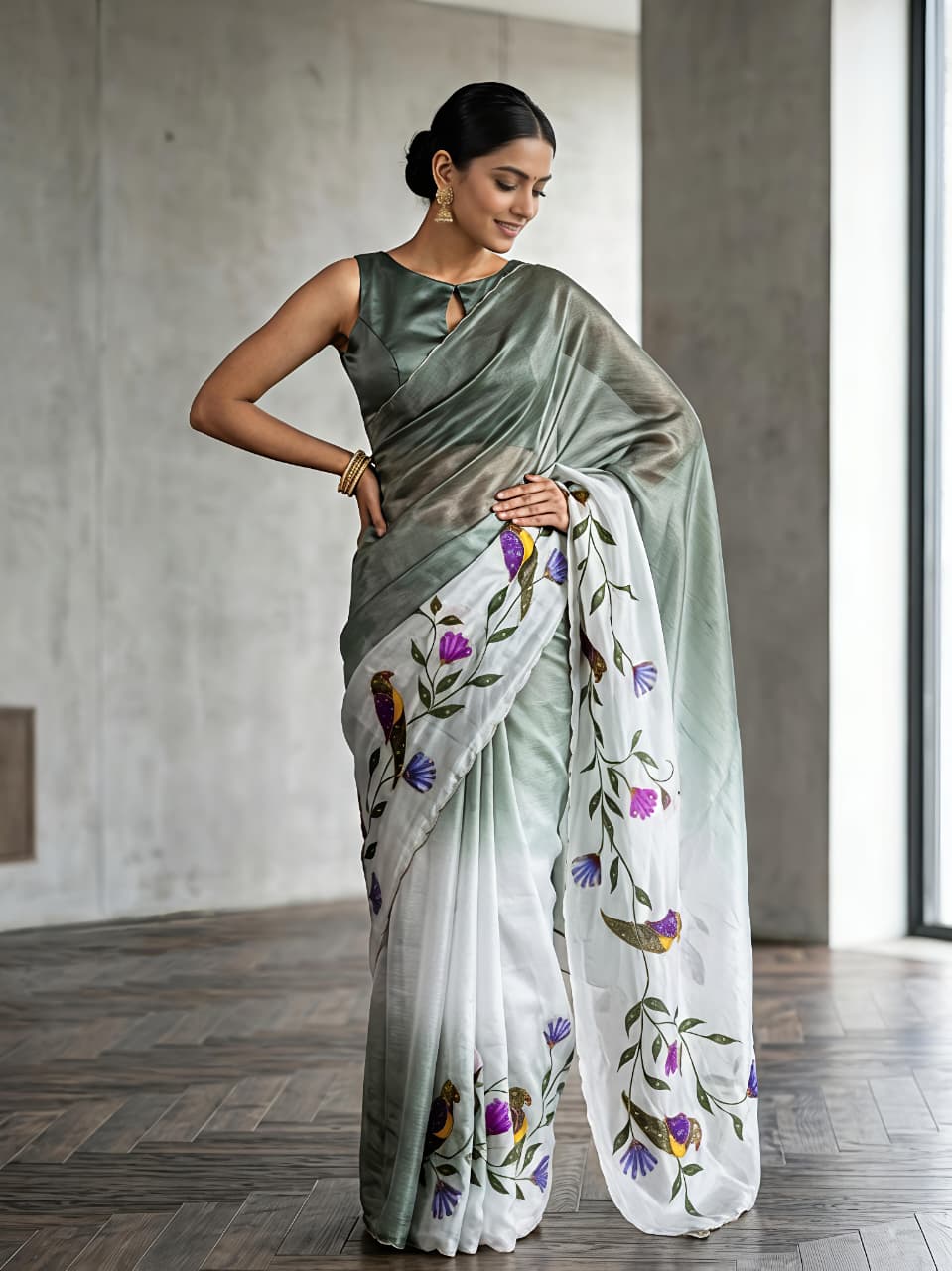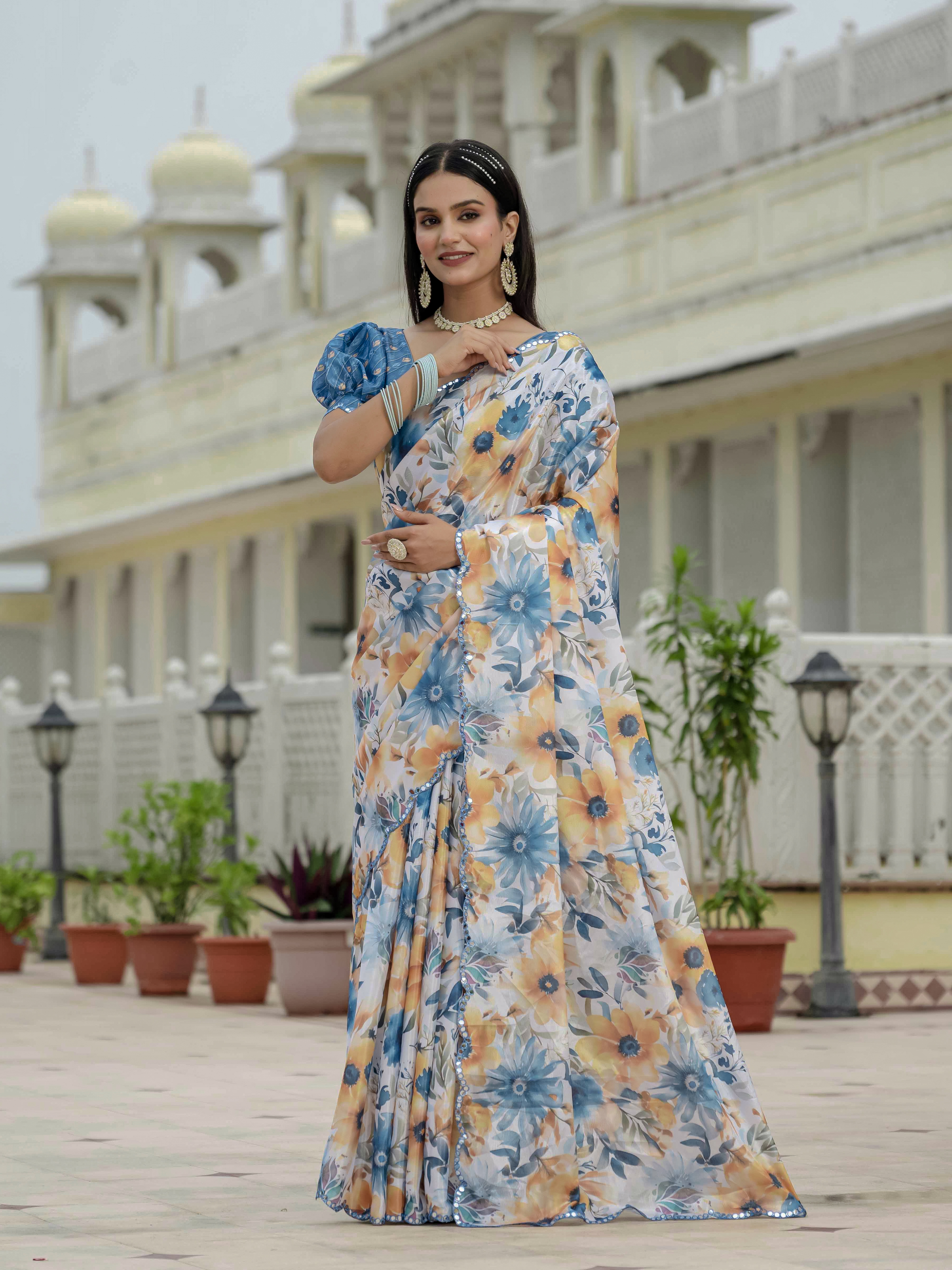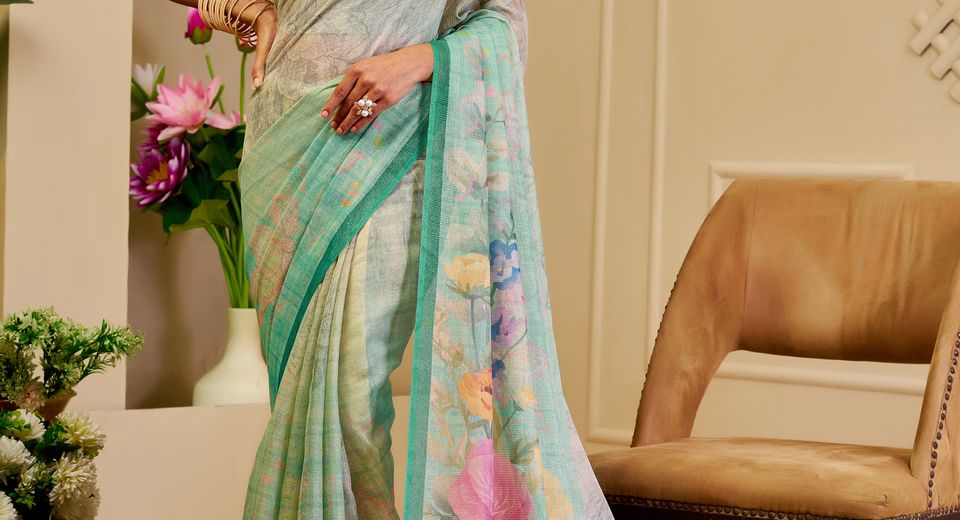
Odisha Traditional Dress for Women begins with the saree, but the story extends beyond a six-yard drape. Sambalpuri ikat, Bomkai, Khandua silk and other Odisha textiles bring together regional techniques, symbolic motifs and distinctive colour combinations. An useful guide should therefore explain how these textiles differ, which saree suits a ceremony, how a blouse changes the balance of an outfit, and what to check before buying a handloom online.
Odisha saree names can be confusing because a name may describe a weaving region, a dyeing technique, a motif tradition or a combination of these features. Understanding that vocabulary makes it easier to choose a traditional saree without relying only on colour or shine. The same knowledge also helps shoppers recognise when a contemporary floral handloom saree complements an Odisha-inspired wardrobe without incorrectly calling it a Sambalpuri or Bomkai textile.
What defines Odisha Traditional Dress for Women?
Odisha Traditional Dress for Women is defined by regional handloom traditions, expressive borders, symbolic motifs and strong relationships between textile production and local culture. Sambalpuri ikat is especially recognised for tie-dyed yarns that are patterned before weaving, while Bomkai sarees are known for richly designed borders and pallu sections.
Khandua silk has a particularly important cultural association with Odisha. Traditional Khandua weaving is linked with Nuapatna and is recognised for silk construction, intricate motifs and connections with Jagannath culture. Berhampuri silk sarees, associated with the Berhampur region, have their own visual identity and are often recognised by their narrow-border construction.
Odisha handlooms commonly feature motifs such as shankha, chakra, flowers, fish, birds, elephants and geometric forms. These motifs are not interchangeable labels. A motif can suggest a regional design vocabulary, but a motif alone can't prove that a saree was handwoven in Odisha.
Colour is equally important. Red, black, white, rust, yellow, green and deep blue appear frequently in traditional Odisha palettes, while contemporary versions introduce cream, blush, pastel and olive tones. A lighter palette can still look culturally grounded when the border, pallu and woven texture retain a handloom character.
How does Odisha Traditional Dress for Women differ by saree type?
Sambalpuri ikat is a strong choice for a family puja, cultural gathering or daytime festive event because its geometric patterning creates visual interest without requiring heavy embellishment. Cotton Sambalpuri sarees are also practical in warm weather and usually easier to wear for several hours than dense silk.

Bomkai sarees suit a more decorative festive mood because their borders and pallus can carry elaborate motifs. A Bomkai saree usually benefits from a plain blouse when the pallu is busy. A patterned blouse works better when the saree body is relatively quiet and the border is narrow.
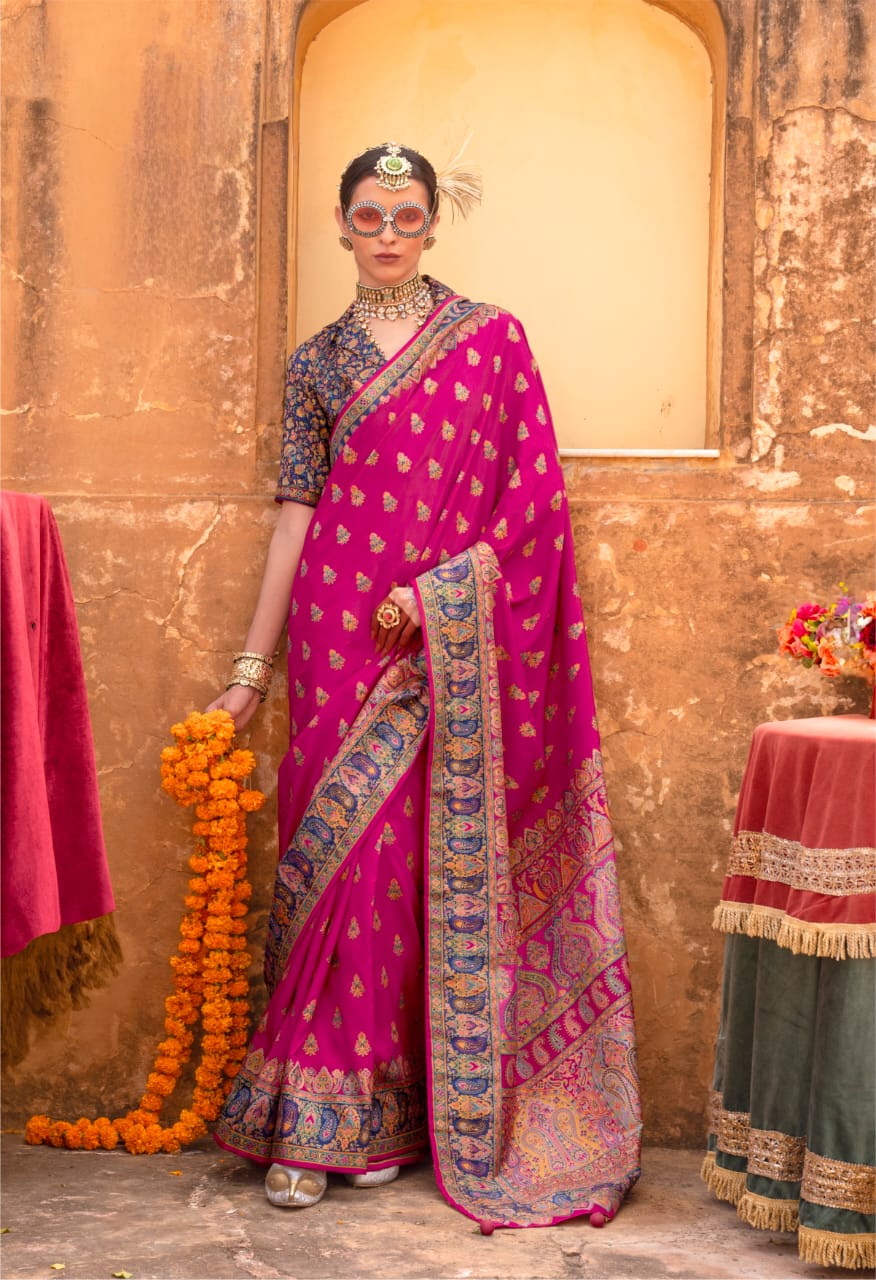
Khandua silk suits a wedding ceremony, formal religious celebration or evening event when a silk finish and structured drape are desirable. Khandua silk should not be confused with every red-and-gold silk saree sold under a general traditional label. Regional identity depends on weaving tradition, construction and documented origin.
Handloom cotton with a delicate zari accent can bridge everyday dressing and festive dressing. Pastel Floral Tissue Handloom Cotton Saree with Zari Weaves shows how a lighter base can retain a ceremonial feeling through metallic detail. Cream Green Tissue Handloom Cotton Saree with Zari Details offers a similarly gentle colour direction for daytime pujas, intimate celebrations and summer functions.
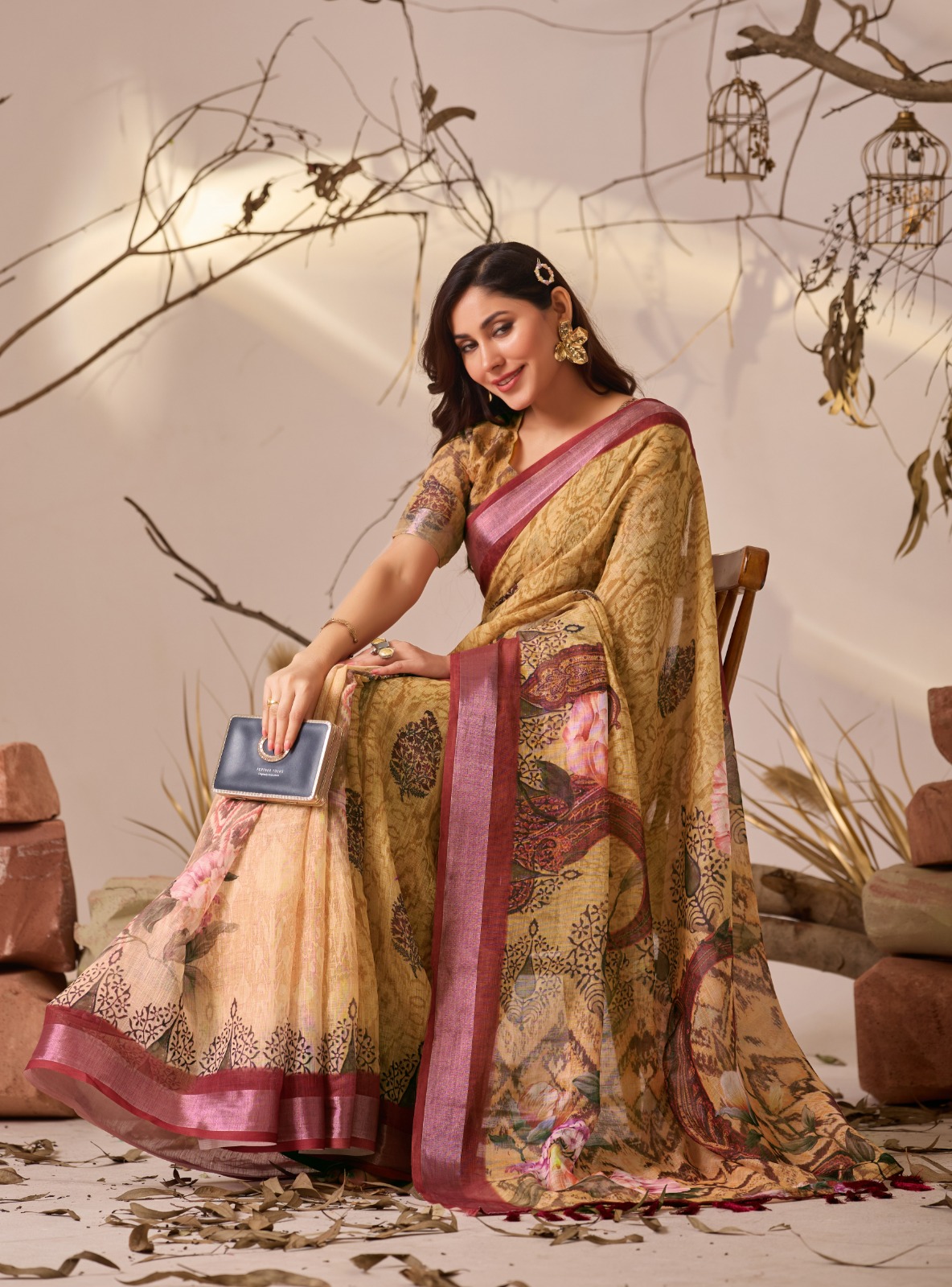
Contemporary floral handloom sarees can sit comfortably beside Odisha textiles in a traditional wardrobe, provided they're described accurately. Cream Floral Tissue Handloom Cotton Saree with Zari Weaving combines a soft ground with floral patterning and metallic detail. Tissue Handloom Cotton Saree with Zari Weave & Floral Print gives another way to achieve a festive handloom appearance without the visual density of a brocade silk saree.
What creates a simple traditional Odisha look?
A simple traditional Odisha look needs one clear focal point, such as an ikat pallu, a strong border, a handloom texture or a small group of gold accessories. Avoid combining a heavily patterned saree, ornate blouse, layered necklace and embellished bag when the desired effect is understated.
A plain short-sleeved blouse, a neat low bun, small gold earrings and a bindi can make a cotton saree feel complete. A defined border and clean front pleats are often more effective than multiple accessories. Olive Green Tissue Handloom Cotton Saree With Floral Prints can support this approach with a plain cream, black or deep green blouse.
Which fabric suits Odisha Traditional Dress for Women?
Cotton suits daytime Odisha Traditional Dress for Women because cotton is breathable, comparatively easy to manage and comfortable in warm weather. Silk brings greater fluidity and a richer fall, but silk pleats can shift if the saree isn't pinned carefully. Tissue constructions may feel lighter and slightly crisp, with a surface that catches light around zari or woven motifs.

Zari is a metallic thread or metallic-looking yarn used for borders, motifs and highlights. Zari can be made with different base materials and finishes, so the word alone doesn't establish whether a saree is pure silk, pure cotton or handwoven. Buyers should read the fibre composition and product description instead of inferring the material from shine.
Tissue handloom cotton can be useful when you want the comfort of cotton with a more luminous surface. Purple Peach Tissue Handloom Cotton Saree with Zari Work combines two soft yet noticeable tones, making a contrasting blouse unnecessary. Cream Pink Tissue Handloom Cotton Saree With Zari Weave brings another gentle colour direction for daytime celebrations and small family functions.
Blue Tissue Handloom Cotton Saree With Zari | Varnavi's brings a blue-and-metallic direction that can be styled with silver-toned jewellery, a plain blouse and a low bun. Fibre composition, weave description and care instructions should still be checked before purchase because colour and surface shine can't identify fabric content.
Traditional silk references can also help shoppers understand formality. Red Banarasi Silk Sarees for Weddings Under 1100 represents the denser shine and ornamental effect often associated with Banarasi silk, although Banarasi silk is a different regional textile from Odisha handloom. Silk Sarees Under 3000 With Discount can be useful for comparing price bands, but a low price should never be treated as proof of authenticity or handloom origin.
How should Odisha Traditional Dress for Women be styled?
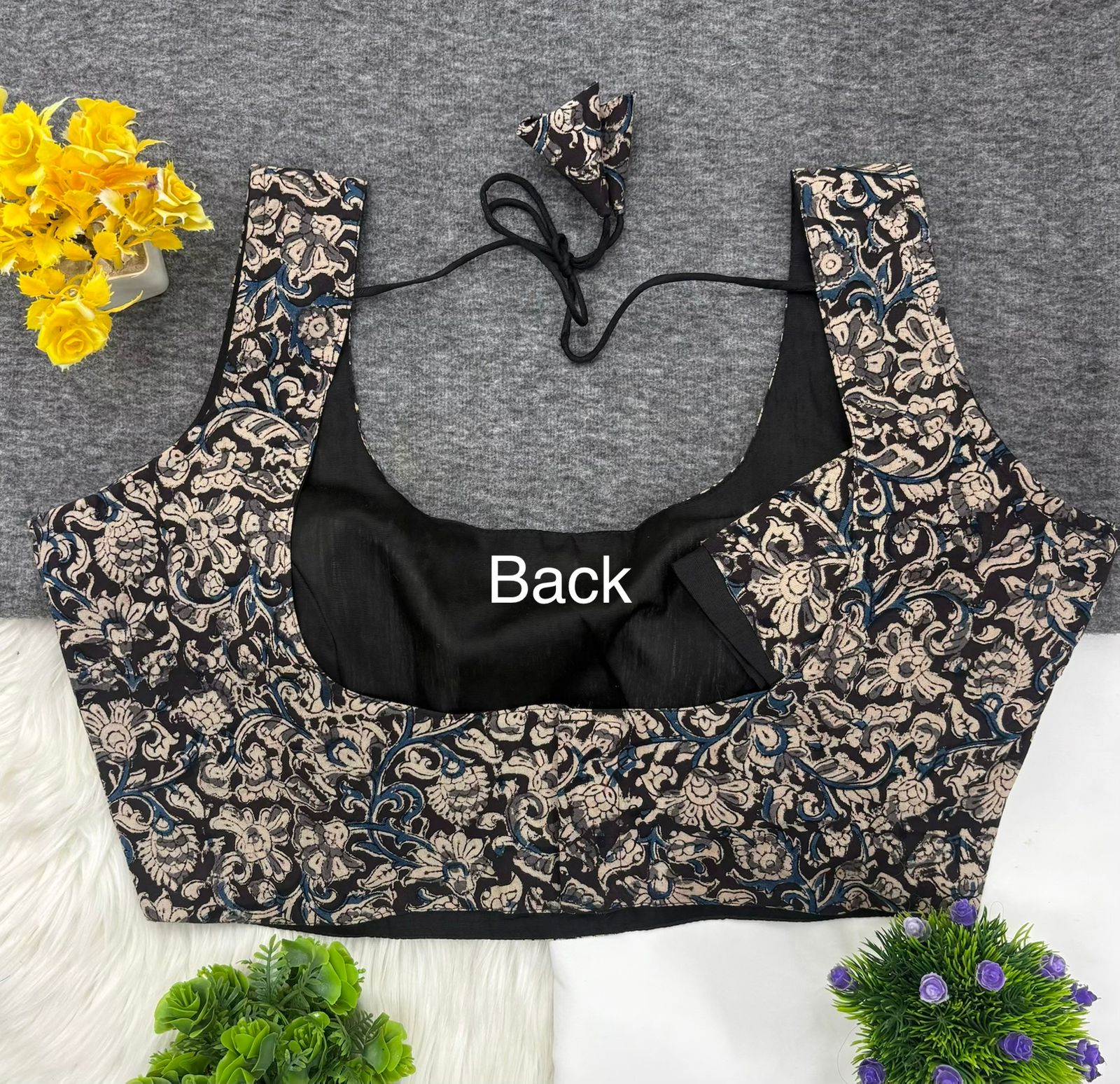
The blouse should repeat one element of the saree, such as its border colour, metallic thread, dominant motif or fabric texture. Repeating one element creates cohesion without making the outfit look mechanically matched.

For Sambalpuri ikat, a solid blouse in black, maroon, off-white, mustard or deep green can clarify the geometric pattern. A blouse with a small woven motif can work too, but a second large print may compete with the ikat. For Khandua silk, a modest round neck, elbow-length sleeve or narrow zari edging keeps the traditional character visible.
A contemporary blouse can support an Odisha-inspired outfit when the saree remains the visual focus. A square neck, high neck or three-quarter sleeve is suitable for family gatherings, cultural programmes and festive lunches. Avoid very slippery satin when the saree is lightweight cotton, because the contrast can make the drape feel visually and physically unstable.
Can traditional Odisha dress be worn without a blouse?
A traditional saree should generally be worn with a blouse or a suitable inner layer in public, ceremonial and formal settings because the blouse provides support, coverage and structure. A fitted blouse, camisole-style layer or modest coordinating top can be used when a conventional tailored blouse is unavailable.
When a saree doesn't include a separate blouse piece, select a ready blouse in a colour drawn from the border or pallu. Cream, black, red, green and gold-toned blouses can work across many Odisha-inspired palettes. A well-fitted blouse matters more than an exact fabric match because poor shoulder fit can pull the pleats out of alignment.
Which occasions suit Odisha Traditional Dress for Women?
For a Haldi ceremony, lightweight cotton or handloom fabric in yellow, green, pink or coral is practical because the saree can be managed more easily around turmeric and oil. Jewellery should be easy to remove, and heavily delicate zari should be kept away from direct staining wherever possible.

For a wedding guest outfit, silk, silk-cotton or a handloom saree with a pronounced zari border gives greater formality. A deep red, purple, royal blue or black blouse can make a patterned saree suitable for an evening ceremony without requiring heavy embellishment.
For a reception or evening party, a slightly luminous saree can be paired with sculptural earrings and a compact clutch. Party Wear Sarees can help compare how drape, shine and embellishment change the formality of an outfit, but an Odisha traditional look doesn't require sequins or dense surface work.
For office festivals, college cultural programmes or daytime family events, breathable cotton and a shorter jewellery set are practical. Pink Georgette Sarees offer a different, more fluid drape reference, while Gray Color Sarees Under 1000 show how a neutral palette can be styled with a colourful blouse or traditional jewellery.
Traditional dressing doesn't need to look identical at every age or occasion. A young wearer may prefer a cropped blouse and small hoops, while someone seeking a more classic appearance may choose elbow sleeves, a pinned pallu and a low bun. The cultural character comes from the saree, drape, motif and styling choices working together.
How can you buy Odisha Traditional Dress for Women online?
Buyers should check fibre composition, weave description, saree dimensions, blouse-piece information, transparency, care instructions and return terms before ordering Odisha Traditional Dress for Women online. Product photography can't establish whether a saree is handwoven or identify its regional origin.

Read whether the listing says cotton, silk, silk-cotton, tissue cotton or synthetic blend. Ask whether zari is woven, printed or added as surface work when the description is unclear. A handloom mark, India Handloom label or traceable artisan information can provide useful evidence, but buyers should still read the full product details.
Photographs can also distort colour. Cream may appear white under bright lighting, olive may look more yellow on one screen, and metallic zari may look more reflective than it does indoors. Check multiple images and, when possible, compare the written colour description with the photograph.
Price requires careful interpretation. A discounted saree may be affordable because of a seasonal sale, a cotton construction, a smaller zari area or a contemporary design rather than because it's inferior. Conversely, a high price doesn't automatically prove pure silk, handloom production or regional authenticity.
Ask four practical questions before checkout: What is the fibre content? Is the blouse piece included? Does the saree require dry cleaning? How will the seller handle colour variation or weaving irregularities? Small irregularities can be natural in handloom textiles, but major differences between the listing and delivered product should be documented immediately.
How should Odisha Traditional Dress for Women be cared for?
Store Odisha Traditional Dress for Women in a clean, dry place away from direct sunlight, and fold the saree along different lines every few months to reduce permanent creasing. Cotton can usually be aired before storage, while silk and zari sarees require more cautious handling.

Dry cleaning is the safer choice for silk, heavy zari and sarees with uncertain colourfastness. For a washable cotton saree, use a mild detergent, cool water and gentle handling only when the care label permits it. Do not scrub woven motifs or twist a delicate tissue surface.
Keep zari away from perfume, deodorant, sweat and moisture because metallic threads can tarnish or lose their finish. Allow perfume and skincare products to dry before draping. Store a valuable saree in breathable cotton or muslin rather than sealed plastic for long periods.
Iron cotton on the reverse side at an appropriate temperature, using a thin cloth between the iron and metallic work. Silk and tissue surfaces can mark easily under high heat. If a saree develops a snag, don't pull the loose thread; place the saree flat and take it to an experienced textile repair professional.
Odisha handloom fashion becomes more meaningful when buyers understand the difference between region, technique, fibre and styling. Sambalpuri ikat, Bomkai, Khandua silk, Berhampuri silk and contemporary tissue handloom cotton each offer a different route into traditional dressing. The most successful outfit is one that respects the textile's identity while fitting the weather, ceremony, comfort level and personal wardrobe.
Common Questions About Odisha Traditional Dress for Women
What are some trending traditional sarees from Odisha?
Sambalpuri ikat, Bomkai and Khandua silk remain strong traditional choices, while lighter tissue handloom cotton sarees are popular for contemporary festive dressing. Floral prints, pastel grounds and restrained zari details make handloom sarees easier to wear for daytime events.
What is the best website to buy a saree online in India?
The best website is one that gives clear fibre composition, accurate measurements, care instructions, product photographs and transparent return terms. Buyers looking for Odisha textiles should also check whether the listing identifies the weave or region instead of using only a broad label such as traditional saree.
Where can I buy ready-to-wear sarees online in India?
Ready-to-wear sarees are available through established ethnic-wear websites and marketplaces that publish drape measurements, fastening details and blouse information. Check whether the garment is pre-pleated, whether the pallu is fixed, and whether the product includes a stitched blouse before ordering.
What is the difference between Sambalpuri and Bomkai sarees?
Sambalpuri sarees are strongly associated with ikat dyeing, in which yarns are tie-dyed before weaving to create patterned designs. Bomkai sarees are recognised for distinctive decorative borders and pallus, although some contemporary sarees can combine regional design influences.
Where can I buy authentic South Indian sarees online?
Authentic South Indian sarees should be purchased from sellers that identify the regional weave, fibre, production location and applicable handloom documentation. Kanjeevaram, Kasavu and other South Indian textiles are different from Odisha sarees, so the product description should name the tradition precisely.
Can I wear an Odisha saree without a separate blouse piece?
Yes, an Odisha saree can be worn with a ready blouse when a separate blouse piece is not included. Choose a colour from the border or pallu, prioritise shoulder and bust fit, and use a lining or inner layer that keeps the lightweight saree secure.