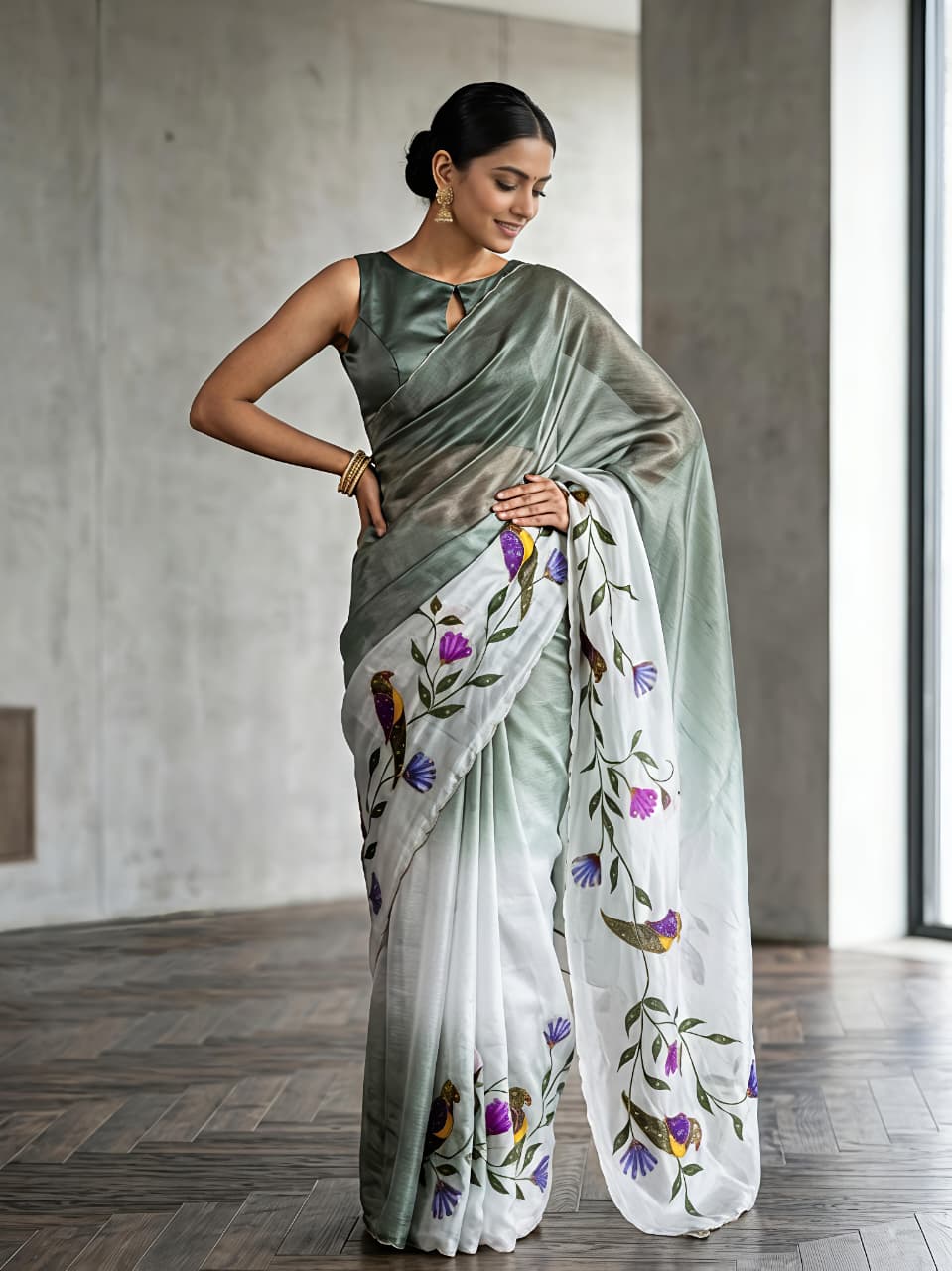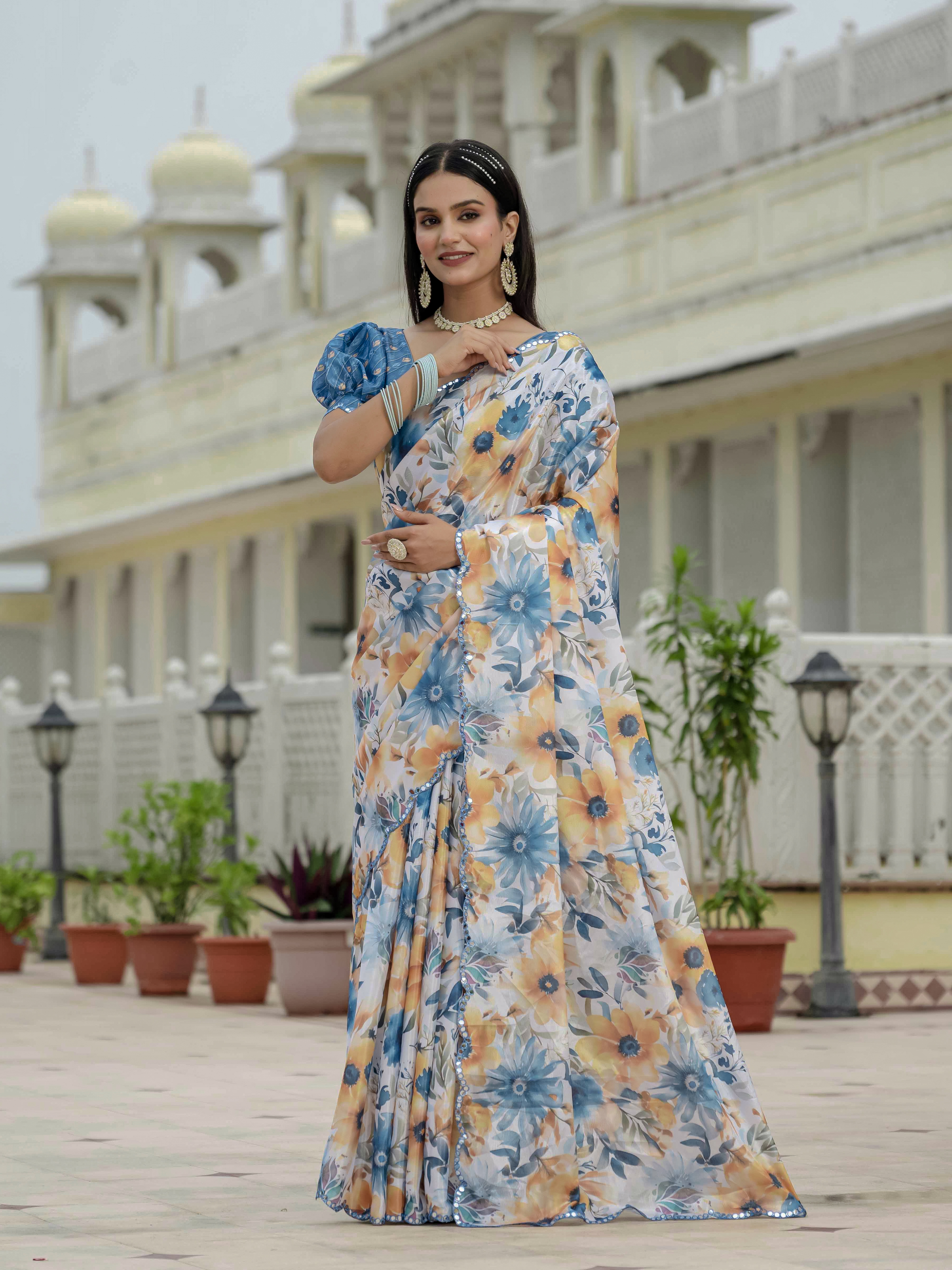
Odisha Handloom Sarees: Sambalpuri, Bomkai & Other Traditional Weaves bring together resist-dyed ikat, symbolic borders and regional weaving knowledge that can't be judged by colour alone. A Sambalpuri saree may be recognised by Bandha ikat, while a Bomkai saree is often remembered for its figurative motifs and richly worked pallu. Khandua, Berhampuri and Kotpad add further variety to Odisha's textile landscape. Understanding these differences helps a shopper choose a saree for a wedding, festival, office celebration or women's party wear without confusing an Odisha handloom with a generic printed saree.
The most useful starting point is technique. A printed motif sits on finished cloth; an ikat motif is planned and resist-dyed on yarn before weaving. That difference affects the reverse side, motif alignment, edge definition and the way the saree ages. The terms below provide a practical vocabulary for evaluating a saree in a shop or while shopping online.
What makes Odisha handloom sarees distinctive?
Odisha handloom sarees are distinctive because their identity comes from regional weaving techniques, especially Bandha ikat, and motifs connected with local art, nature and ritual. The design isn't merely added as surface decoration after the fabric is made.
In Bandha ikat, sections of yarn are tied and protected before dyeing. The yarn is then arranged carefully on the loom so that coloured sections form diamonds, flowers, animals, geometric bands or other planned shapes. Slight feathering at a motif's edge isn't automatically a defect; controlled softness can result from resist-dyeing and yarn alignment.
Odisha's handloom traditions developed across several weaving centres rather than through one single style. Western Odisha is strongly associated with Sambalpuri textiles, while Bomkai weaving is linked to the Sonepur region. Khandua is associated with the Nuapatna area and has a particular relationship with devotional textiles. Berhampuri silk and Kotpad textiles represent other important regional directions.
A genuine handloom discussion should also separate material from technique. "Handloom" describes how fabric is woven, not whether the saree is cotton, silk, tissue or synthetic. A handloom cotton saree and a handloom silk saree can both be authentic handloom products, but they will differ in weight, shine, fall, price and care requirements.
Odisha Handloom Sarees: Sambalpuri, Bomkai & Other Traditional Weaves compared
Sambalpuri, Bomkai, Khandua, Berhampuri and Kotpad sarees differ in technique, regional association, motifs and usual fabric choices. These distinctions are useful guides rather than rigid rules because contemporary weavers and designers adapt traditional vocabulary.

Sambalpuri sarees and Bandha ikat
Sambalpuri sarees are best known for Bandha ikat patterns, strong borders and motifs such as shankha, chakra, flowers, birds and animals. "Shankha" refers to a conch and "chakra" to a wheel, both of which carry long-standing cultural associations in eastern Indian textile design.
Sambalpuri cotton is a dependable choice for warm weather, daytime ceremonies and regular festive wear because it usually feels breathable and has a structured drape. Sambalpuri silk or silk-blend versions create more lustre and a more formal fall. When shopping online, inspect whether the listing names the fibre clearly instead of assuming that every colourful ikat saree is silk.
Bomkai sarees and figurative motifs
Bomkai sarees are recognised for decorative borders and pallu designs that may feature fish, birds, flowers, geometric forms and other stylised imagery. Bomkai weaving often combines an ikat-like sensibility with supplementary or extra-weft ornamentation, giving the motifs a more textured and detailed appearance.
Bomkai cotton works well for daytime pujas and cultural gatherings, while Bomkai silk has a richer surface suited to weddings and formal celebrations. A Bomkai-inspired print can imitate the visual language, but a printed saree doesn't reproduce the yarn-planning process of a handwoven Bandha textile.
Khandua, Berhampuri and Kotpad traditions
Khandua sarees are associated with Nuapatna and are especially known for devotional textile traditions, including woven script and symbolic designs in some examples. Khandua pieces may be made in silk or cotton, and the exact design vocabulary varies between contemporary and traditional versions.
Berhampuri silk is associated with the Berhampur region and is valued for its smooth silk character and distinctive regional identity. Kotpad textiles are traditionally connected with natural-dye practices and earthy colours, particularly red, black and brown tones derived from plant-based dye materials. Colour alone can't authenticate a Kotpad textile; provenance, fibre, dye information and seller documentation matter.
How can you tell an ikat weave from a printed saree?
An ikat weave usually shows pattern formation through dyed yarns, whereas a printed saree places colour on completed fabric. The difference becomes easier to examine when you look at the reverse side, motif edges and border alignment.

- Check the reverse: A woven or yarn-dyed motif generally continues through the fabric, although colour intensity may differ. A surface print may look sharper on one side and noticeably weaker on the other.
- Study the edges: Ikat designs can show tiny irregularities or softly blurred joins where dyed yarn sections meet. Perfectly hard-edged repetition may indicate printing, although modern printing can imitate softness.
- Inspect the pallu and border: Handloom ikat requires careful alignment. Small variations are normal, but a listing should not use "handloom" to excuse broken yarns, severe construction flaws or careless finishing.
- Read the fibre details: Cotton, silk, viscose and polyester behave differently. "Silk finish" doesn't mean silk, and "silk cotton" can describe a blend rather than pure silk.
- Ask for evidence: A reliable seller should provide fibre composition, dimensions, wash instructions, close-up images and, where applicable, handloom or regional certification details.
Online photographs can exaggerate contrast and saturation, especially on mobile screens. A shopper comparing Odisha handloom sarees should request a natural-light image or a close-up of the weave before paying a premium for a claimed heritage textile.
How should you choose the fabric and occasion?
Choose cotton for breathability and repeated daytime use, silk for formal drape and lustre, and lightweight tissue or blended fabric when you want a more contemporary party-ready finish. The right choice depends on climate, event length, blouse structure and how often the saree will be worn.

For a summer wedding or daytime puja, Sambalpuri cotton offers structure without the weight of heavy embellishment. A handwoven cotton saree also pairs naturally with a simple blouse, silver jewellery and a low-maintenance pleat. For an evening reception, silk or silk-blend Bomkai and Khandua styles provide more body and visual depth under artificial lighting.
Not every saree described as handloom is an Odisha weave. Pastel Floral Tissue Handloom Cotton Saree with Zari Weaves and Tissue Handloom Cotton Saree with Zari Weave & Floral Print belong to a contemporary tissue-cotton and zari vocabulary, not automatically to the Sambalpuri or Bomkai tradition. These distinctions matter because a contemporary handloom saree can be beautiful without being labelled as a regional Odisha weave.
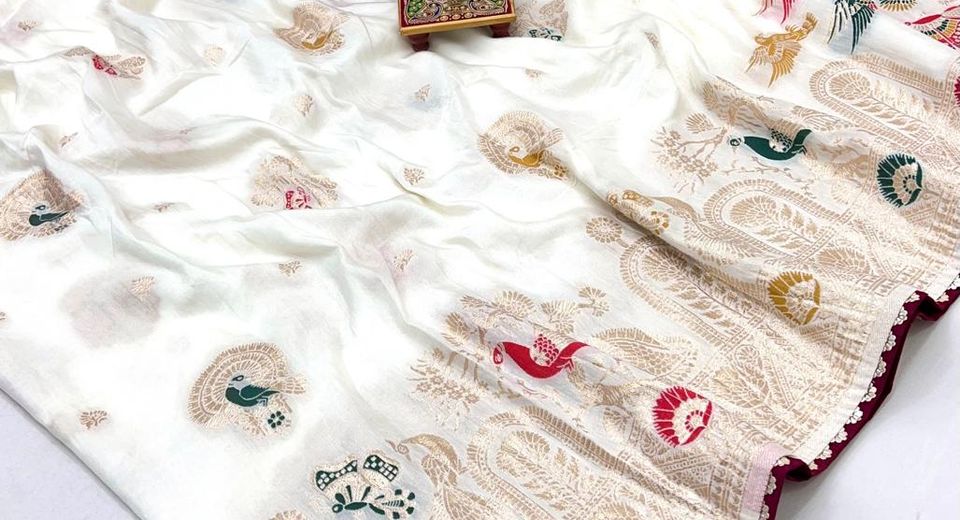
The same principle applies to Maroon Banarasi Soft Silk Zari Weave Saree. Banarasi silk and Odisha ikat are separate textile traditions with different histories and construction methods. A shopper seeking Odisha Handloom Sarees: Sambalpuri, Bomkai & Other Traditional Weaves should not treat zari, silk or a handloom label alone as proof of Odisha origin.
What should you wear with an Odisha handloom saree?
An Odisha handloom saree looks most coherent when the blouse repeats one colour or motif from the border without copying every detail. Controlled contrast keeps the ikat or figurative pallu visible.

Pair a multicoloured Sambalpuri cotton saree with a solid blouse in the deepest border shade. A high-neck or elbow-sleeve blouse gives the geometric pattern a contemporary profile, while a short-sleeved cotton blouse suits a daytime event. Oxidised silver, terracotta jewellery and a compact potli work well with cotton weaves because their matte surfaces don't compete with the yarn pattern.
Bomkai silk can support gold-toned jewellery, a structured blouse and a low bun for a wedding or formal family celebration. Keep the blouse surface relatively quiet if the pallu contains birds, flowers or dense figurative details. A plain blouse in wine, maroon, black, cream or deep green is usually more versatile than a blouse with an unrelated print.
Contemporary tissue sarees can serve women's party wear when you want light-catching zari and a softer, dressier effect. Cream Pink Tissue Handloom Cotton Saree with Zari, Sea Green Tissue Handloom Cotton Saree With Floral Patterns and Wine Tissue Handloom Cotton Saree with Zari & Floral Prints illustrate how pastel, sea-green and wine palettes can be styled without claiming regional Odisha provenance. Choose a sleek blouse, minimal pleating and small earrings when the saree already has floral shine.
For additional colour references, Olive Green Tissue Handloom Cotton Saree With Floral Prints and Cream Floral Tissue Handloom Cotton Saree with Zari Weaving show how muted green and cream can support understated festive dressing. These examples are useful for styling decisions, but colour or zari doesn't establish that a saree belongs to Odisha's traditional weaving communities.
How do you shop for Odisha handloom sarees online?
Online saree shopping becomes safer when you verify fibre, weave, dimensions, origin claims and return conditions before comparing price. A low price can reflect cotton rather than silk, a blend rather than pure fibre, a printed design rather than an ikat weave, or a sale on older stock.

- Read the fibre composition: Look for specific wording such as cotton, tussar silk, mulberry silk, silk blend or viscose. Do not treat "silky," "silk touch" or "silk finish" as proof of silk.
- Separate weave from design: Ask whether the motif is woven, ikat-dyed, embroidered, block-printed or digitally printed. A listing that gives only colour and occasion information leaves out an important buying detail.
- Check measurements: A saree is commonly around 5.3 to 5.5 metres, with an attached blouse piece often close to 0.8 metres, but measurements vary. Confirm the product dimensions before ordering a pre-stitched or unusually narrow saree.
- Compare price intelligently: A cotton handloom, silk handloom and zari-rich Banarasi silk can't be compared on price alone. Sale collections such as Silk Sarees Under 3000 With Discount may offer useful budget options, but inspect fibre and construction rather than assuming every discounted saree is pure silk.
- Look at close-up photography: Border joins, pallu details, zari density and the reverse side reveal more than a full-length studio image. Zoomed photographs are especially valuable for identifying surface prints.
- Check the care label: Handloom cotton may tolerate gentler home washing, while silk, zari and natural dyes often need dry cleaning or specialised care. Follow the seller's instructions instead of applying one washing method to every saree.
Collection names can also signal styling intent without proving regional origin. Pink Georgette Sarees may suit a lightweight evening drape, Party Wear Sarees may prioritise shine and embellishment, and Gray Color Sarees Under 1000 may help with neutral wardrobe building. Product category, regional provenance and weaving technique are separate pieces of information.
When a website claims that a saree is Sambalpuri, Bomkai or Khandua, look for the weaving region, fibre, motif description and product photographs. A trustworthy description should explain what makes the saree belong to that tradition. Vague claims such as "ethnic print," "designer silk" or "traditional look" are not enough to establish provenance.
How should Odisha handloom sarees be stored and maintained?
Odisha handloom sarees last longer when they're cleaned according to fibre, dried away from direct sunlight and refolded periodically. Cotton, silk, zari and natural-dyed textiles should not all receive identical treatment.

Air a saree in shade after wearing it, especially after a humid event. Fold silk and zari sarees with soft cotton or muslin between layers, and change the fold every few months to reduce permanent crease marks. Store sarees in a breathable fabric bag rather than sealing damp cloth in plastic.
Keep perfume, deodorant, hair oil and heavy jewellery away from the fabric surface because alcohol, oils and rough metal can stain or pull yarns. Remove brooches and pins before storage. If a saree has loose zari, natural dyes or uncertain colourfastness, test a hidden area or use professional dry cleaning.
Small irregularities in handwoven cloth can be part of the making process, but stains, torn selvedges and severe weaving gaps should be documented immediately. Photograph the saree when it arrives and contact the seller within the stated return period if the delivered product differs materially from the description.
Why do these weaving traditions still matter?
Odisha's weaving traditions matter because each saree preserves technical knowledge, regional vocabulary and relationships between craft, ritual and everyday clothing. Buying with accurate expectations supports the distinction between an artisan-made textile and a mass-produced imitation.
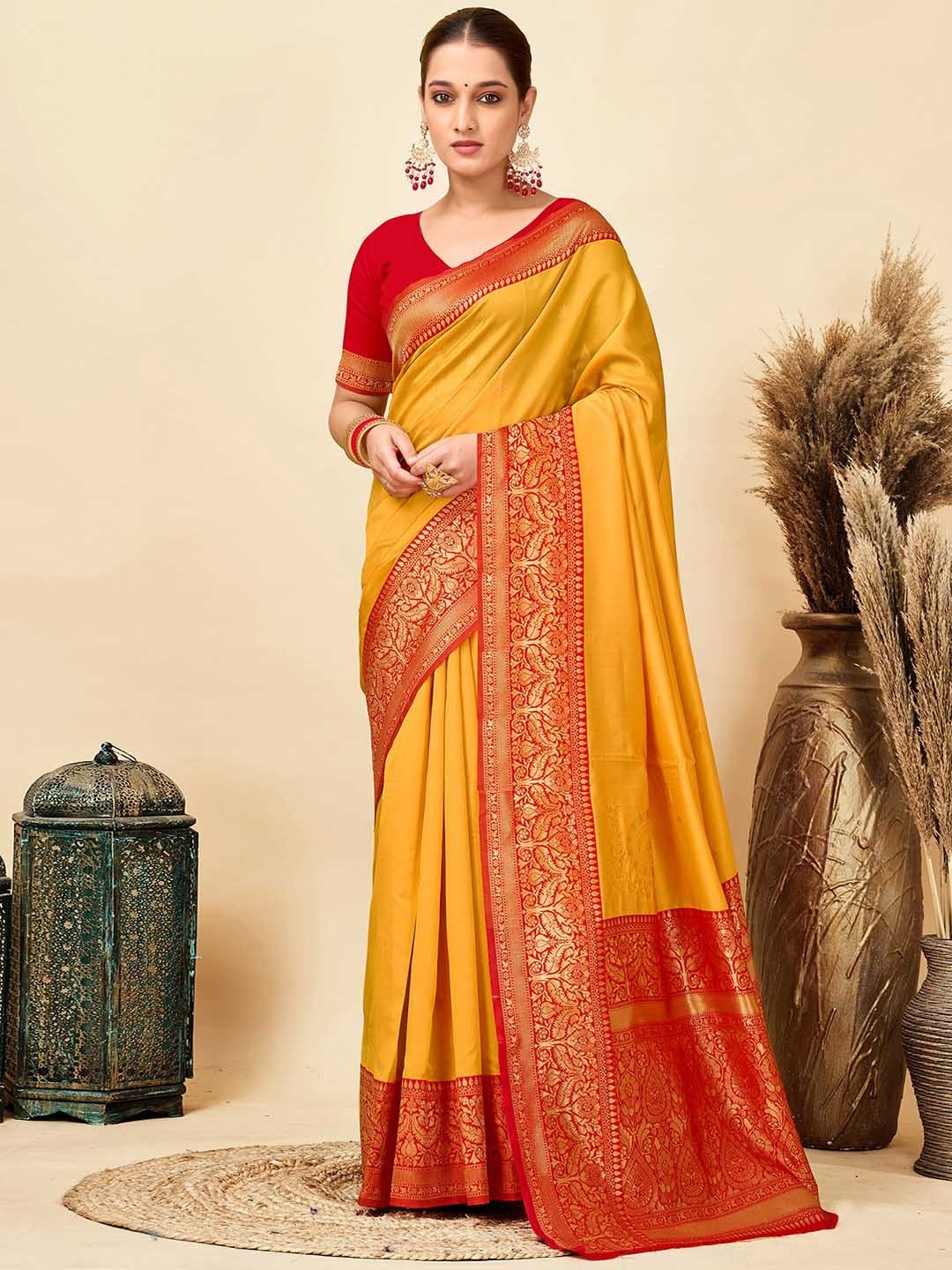
An up-to-date wardrobe doesn't require choosing between heritage and convenience. Sambalpuri cotton can work with a contemporary blouse and sneakers for a cultural event, while Bomkai silk can be styled with a minimal blouse and contemporary jewellery. The important choice is to name the textile accurately, understand its construction and care for it well enough to wear it repeatedly.
The strongest purchase is therefore not always the most expensive saree. It is the saree whose fibre, technique, origin, measurements and care requirements are distinctly described, and whose design suits the way you'll actually wear it. That approach makes Odisha Handloom Sarees: Sambalpuri, Bomkai & Other Traditional Weaves easy to appreciate as living textiles rather than as interchangeable categories on a shopping page.
Common Questions About Sambalpuri, Bomkai and Odisha Handlooms
What is the difference between a Sambalpuri and a Bomkai saree?
A Sambalpuri saree is most strongly associated with Bandha ikat patterns and motifs such as shankha, chakra, flowers, birds and animals. A Bomkai saree is known for detailed figurative motifs and decorative borders, often with a richer supplementary-weft effect. Both traditions include cotton and silk versions.
How can I identify an Odisha handloom saree online?
Check whether the listing clearly states the fibre, weaving technique, regional origin, dimensions and care instructions. Close-up photographs of the reverse side, motif edges, border and pallu are useful for separating yarn-based ikat from printing. A handloom label alone does not prove that a saree comes from Odisha.
Are Sambalpuri sarees made only of cotton?
No, Sambalpuri sarees are available in cotton, silk and blended fibres. Sambalpuri cotton is generally breathable and structured for daytime use, while silk and silk-blend versions have greater lustre and a more formal drape. Always verify the fibre composition in the product description.
Which Odisha saree is suitable for a wedding?
Bomkai silk, Sambalpuri silk and Khandua silk can suit a wedding when their motifs, weight and level of formality match the event. Choose a richer silk or silk blend for an evening function and a lighter cotton or silk-cotton option for a daytime ceremony. A plain blouse in a border colour helps the pallu remain visible.
Can Odisha handloom sarees be worn as party wear?
Yes, Odisha handloom sarees can be styled for party wear with a structured blouse, polished hair and carefully chosen jewellery. Cotton ikat creates a more artistic daytime look, while silk, zari or a contemporary tissue saree gives stronger evening presence. A party-ready appearance does not change the saree's regional identity, so the weave should still be described accurately.
What is the best way to care for a Sambalpuri or Bomkai saree?
Air the saree in shade after use, keep it away from perfume and rough jewellery, and store it folded in breathable muslin or cotton. Silk, zari and natural-dyed sarees often require professional cleaning, while cotton care depends on the seller's instructions. Refold stored sarees every few months to prevent permanent creases.