Odisha Festival Fashion Calendar: Traditional Sarees & Ethnic Wear becomes much easier to follow when clothing choices begin with the festival, the weather and the kind of movement the day requires. Raja Parba calls for breathable cotton and joyful colours, while Diwali and wedding-season celebrations allow richer silk textures, zari and more elaborate jewellery. The right saree isn't only a visual choice; it also needs to work for temple visits, family meals, evening rituals and hours of standing.
Odisha has a remarkably varied textile vocabulary. Sambalpuri ikat, Bomkai, Khandua, Berhampuri patta and handloom cotton each carry a different visual rhythm. Contemporary floral sarees, linen-cotton blends and satin prints can sit comfortably beside those traditions when their colours, drapes and accessories are chosen with care. This guide maps major Odisha festivals to practical saree and ethnic-wear decisions rather than treating every celebration as an occasion for heavy embellishment.
Odisha Festival Fashion Calendar: How the festive year shapes saree choices
The Odisha Festival Fashion Calendar follows a seasonal pattern: light handlooms and cottons suit the hot months, structured traditional weaves work well during monsoon and autumn, and lustrous fabrics become more comfortable for winter celebrations.
Raja Parba normally falls in June, around the onset of the monsoon, and celebrates womanhood, fertility and the earth's pause from agricultural work. Rath Yatra mostly takes place in June or July in Puri, although the date changes with the lunar calendar. Nuakhai, especially important in western Odisha, arrives after the new rice harvest, normally in August or September. Kumar Purnima follows in autumn, while Durga Puja, Lakshmi Puja and Diwali bring a sequence of evening celebrations. Kartik Purnima and Boita Bandana close the major festive stretch in November in many households.
- June to July: Choose cotton, linen-cotton or soft handloom sarees for Raja Parba and Rath Yatra.
- August to September: Select grounded colours and traditional motifs for Nuakhai and harvest gatherings.
- October to November: Bring out zari borders, Banarasi silk, jewel tones and dressier blouses for Durga Puja, Diwali and Kartik Purnima.
- December to February: Layer silk sarees, brocade blouses and shawls for weddings and cooler evening functions.
Odisha Festival Fashion Calendar: What to wear for Raja Parba and Rath Yatra
Lightweight cotton sarees in pink, red, yellow, green or white are the most practical choices for Raja Parba and Rath Yatra because June and July weather in Odisha is commonly hot, humid and affected by sudden rain.

Raja celebrations often involve visiting relatives, swinging, preparing pitha and spending time outdoors. A crisp cotton saree with a manageable six-yard drape is more comfortable than a heavily embellished synthetic saree. A short-sleeved or elbow-sleeved blouse, a secure petticoat and flat sandals make the outfit easier to wear through a full day. Floral prints add a festive mood without requiring sequins or dense embroidery.
Rath Yatra in Puri involves crowds, walking and, in many cases, temple-area visits. A saree with a stable border and a pallu that can be pinned at the shoulder is safer than a slippery, very lightweight fabric. Avoid long trailing pallus and fragile surface embellishment if the itinerary includes public transport or crowded streets.
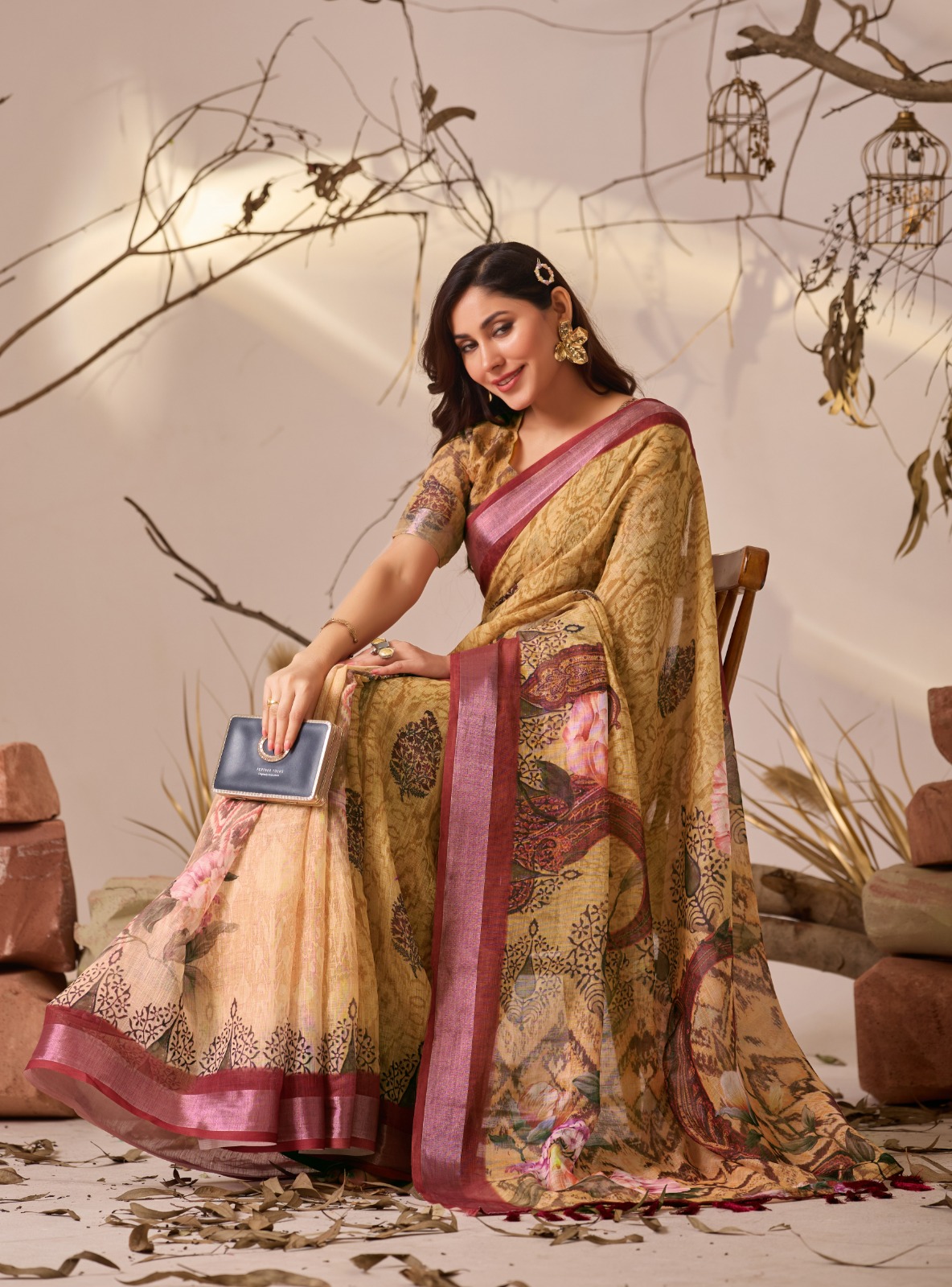
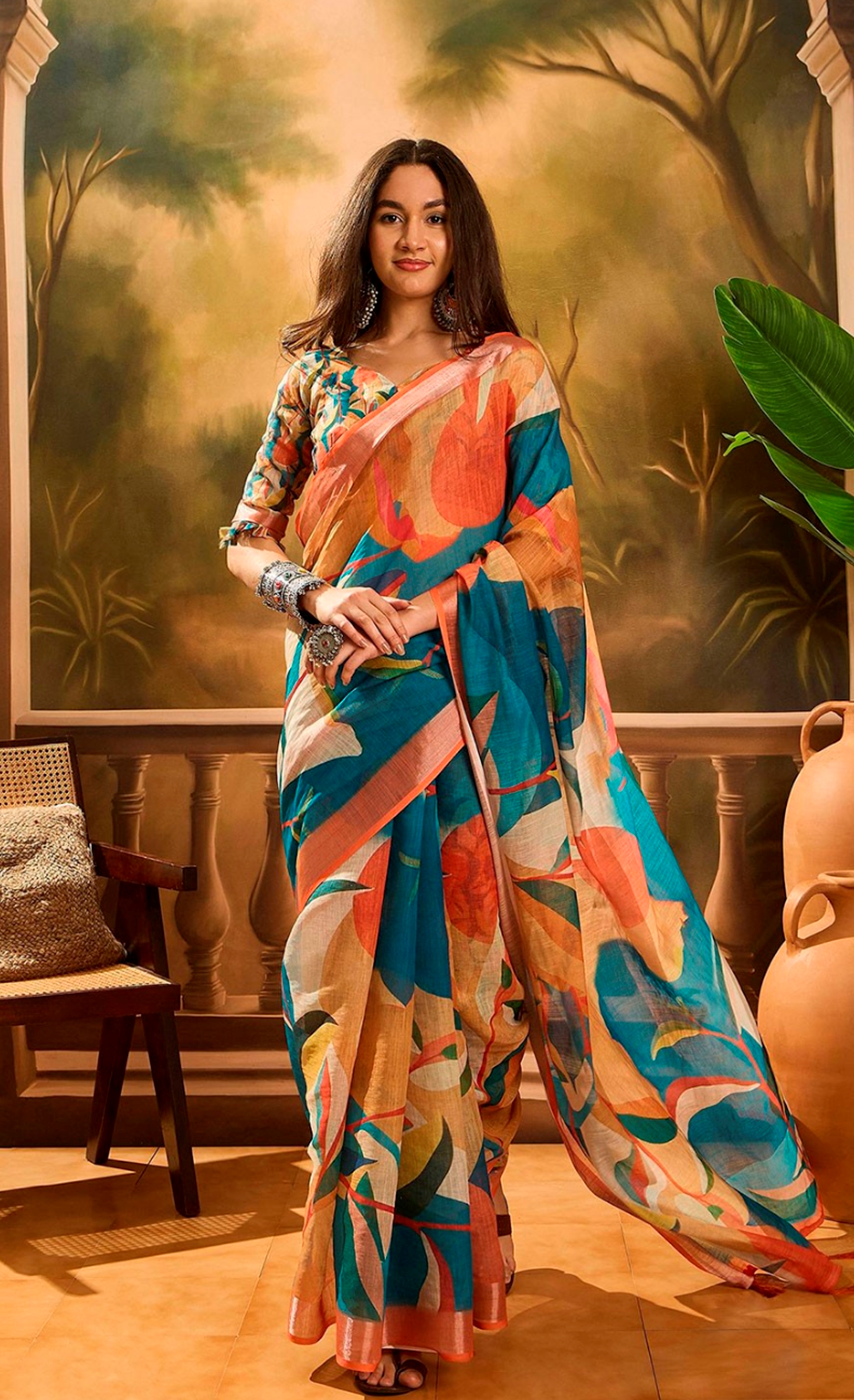
Pastel Floral Tissue Handloom Cotton Saree with Zari Weaves offers a useful balance for a daytime festival: cotton provides breathability, while zari at the border creates enough shine for a celebration. Multicolor Linen Cotton Floral Saree with Blouse Online and Teal Floral Linen Cotton Saree with Elegant Contrast Border are similarly suited to daytime family gatherings because linen-cotton keeps visual texture without the weight of pure silk.
Odisha Festival Fashion Calendar: Which blouse details work in humid weather?
Cotton, cotton lining and breathable sleeve shapes work best in humid weather, especially when a blouse will be worn for more than four hours.
A blouse with a moderate neckline, firm shoulder seams and a properly secured hook line prevents constant adjustment. Backless cuts and heavily padded designs can become uncomfortable in heat. Contrast borders can be repeated on the sleeve edge, while a small fabric-covered button or fabric tie adds interest without increasing weight. Carry a compact safety-pin set and a spare blouse hook card for outdoor festival visits.
Odisha Festival Fashion Calendar: How to dress for Nuakhai
Nuakhai calls for respectful, colour-rich ethnic wear that acknowledges the harvest while remaining comfortable for family rituals and community visits.

Nuakhai is a harvest festival centred on the offering and sharing of new rice. The clothing mood can therefore be more grounded and traditional than a nightclub-style party look. Red, maroon, mustard, rust, green and black-and-red combinations work naturally with the season's agricultural associations. Sambalpuri ikat and Bomkai-inspired patterns are especially meaningful choices when an authentic Odisha textile is available, although a modern floral saree can also be styled with Odisha-influenced jewellery and a handloom blouse.
Maroon Mal Cotton Ethnic Saree With Blouse from VARNAVI demonstrates why mal cotton works well for harvest gatherings: the fabric has a soft handloom character, the maroon shade feels ceremonial and the included blouse reduces coordination work. Pair a saree in this category with silver filigree jewellery, a low bun and a small bindi rather than overloading the outfit with multiple metallic finishes.
For a family lunch, keep the pallu pleated and tucked securely at the waist. For an evening cultural programme, let the pallu fall over the shoulder and add a narrow waist belt only if the saree fabric is stable enough to hold its shape. Men and younger family members can echo the colour story through a cotton kurta, Nehru jacket or handloom stole, creating a coordinated family photograph without identical outfits.
Odisha Festival Fashion Calendar: Sarees for Kumar Purnima, Durga Puja and Diwali
Silk, satin, tissue, zari-bordered cotton and dressier woven sarees suit autumn festivals because these fabrics photograph well in evening light and feel more formal than everyday cotton.

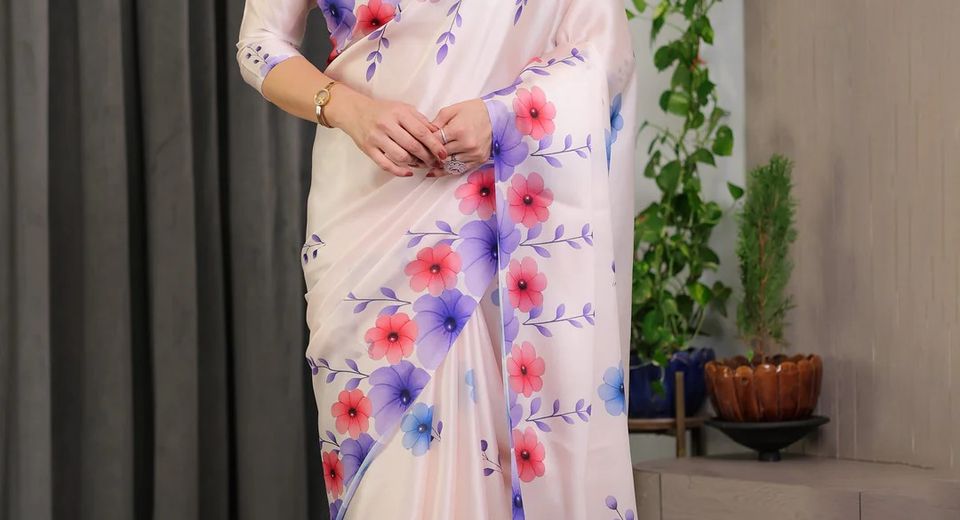
Kumar Purnima is associated with moonlight, young women's festivities and a particularly celebratory autumn atmosphere. Soft pink, white, ivory, silver, lilac and pale blue work well for a moonlit gathering. A light floral saree with a luminous finish can look festive without competing with the face or jewellery.
Durga Puja and Diwali support stronger contrast. Red, deep maroon, emerald, royal blue and black with gold are effective for evening rituals. Zari borders, brocade blouses and silk textures add formality, but a saree doesn't need dense embroidery to appear ceremonial. A well-pressed pleat, a fitted blouse and deliberate jewellery placement often create a more polished result than excessive surface work.
Red Satin Floral Print Saree with Unstitched Blouse Textile suits an evening celebration when paired with a gold-toned blouse finish and controlled jewellery. Black Satin Rose Floral Saree with Unstitched Blouse Fabric creates a more dramatic Diwali look; balance the dark base with ruby, green or antique-gold accents. For a softer Kumar Purnima palette, Light Pink Floral Satin Saree with Unstitched Blouse Fabric gives sheen without the visual weight of a dark colour.
Shopping by budget can also be practical. Silk Sarees Under 3000 With Discount is useful for comparing accessible festive textures, while Red Banarasi Silk Sarees for Weddings Under 1100 can inspire a red-and-gold palette for Diwali or a wedding-linked puja. Price should not be the only filter: check whether the blouse is included, whether the fabric needs a lining and whether the saree can be altered without damaging its border.
Odisha Festival Fashion Calendar: How should a festive saree be styled for a temple visit?
A temple-appropriate festive saree should be secure, modestly styled and easy to move in.
Pin the shoulder pleats at two points, keep the pallu away from lamps and choose a blouse that allows comfortable arm movement. Avoid loose tassels near open flames. Small gold or silver earrings, a bindi and low-heeled footwear are usually more practical than oversized chandelier earrings or very high heels. If the temple requires covered shoulders or specific dress customs, carry a lightweight shawl or choose a blouse with sleeves from the beginning.
Odisha Festival Fashion Calendar: Choosing fabrics for a festival celebration
Fabric choice should be based on temperature, duration, movement, care requirements and the visual formality of the festival.

- Handloom cotton: Handloom cotton is best for daytime Raja Parba, family lunches and humid weather; cotton may crease, so starch lightly and carry pins.
- Linen-cotton: Linen-cotton works well for breathable contemporary styling; the natural texture looks intentional even when a few creases develop.
- Silk: Banarasi silk, Kanjeevaram and other silk sarees suit weddings, Diwali evenings and formal puja; fold silk carefully and avoid storing silk in plastic.
- Satin: Satin brings shine and fluid movement for photographs; use a well-fitted blouse and a non-slip petticoat because satin can shift while walking.
- Tissue: Tissue creates a delicate glow and works well for lighter festive styling; store tissue sarees flat or rolled around a broad tube to reduce sharp creases.
Party Wear Sarees can help when the event is a reception or cultural programme rather than a temple visit. Pink Georgette Sarees may suit a lighter evening look, while Gray Color Sarees Under 1000 can provide a restrained base for coloured jewellery and a more detailed blouse.
Care also affects festival planning. Air a saree after wearing it, remove jewellery before folding, and keep embroidered or zari sarees in unbleached cotton fabric. Dry-clean silk and satin when the care label requires it, but don't repeatedly dry-clean a lightly worn cotton saree. Refold stored sarees every few months so permanent fold lines don't form in the same place.
Odisha Festival Fashion Calendar: Building jewellery, blouse and colour combinations
The most reliable festive combination uses one dominant colour, one supporting colour and one metallic accent rather than mixing every bright shade at once.
A red saree with antique gold jewellery creates a traditional Diwali or wedding mood. A teal saree with silver jewellery feels fresher for a daytime celebration. Maroon with oxidised silver suits Nuakhai-inspired styling, while pastel pink with pearl or polished silver jewellery works for Kumar Purnima. Black satin can be softened with a rose, emerald or ruby accent instead of adding heavy gold everywhere.
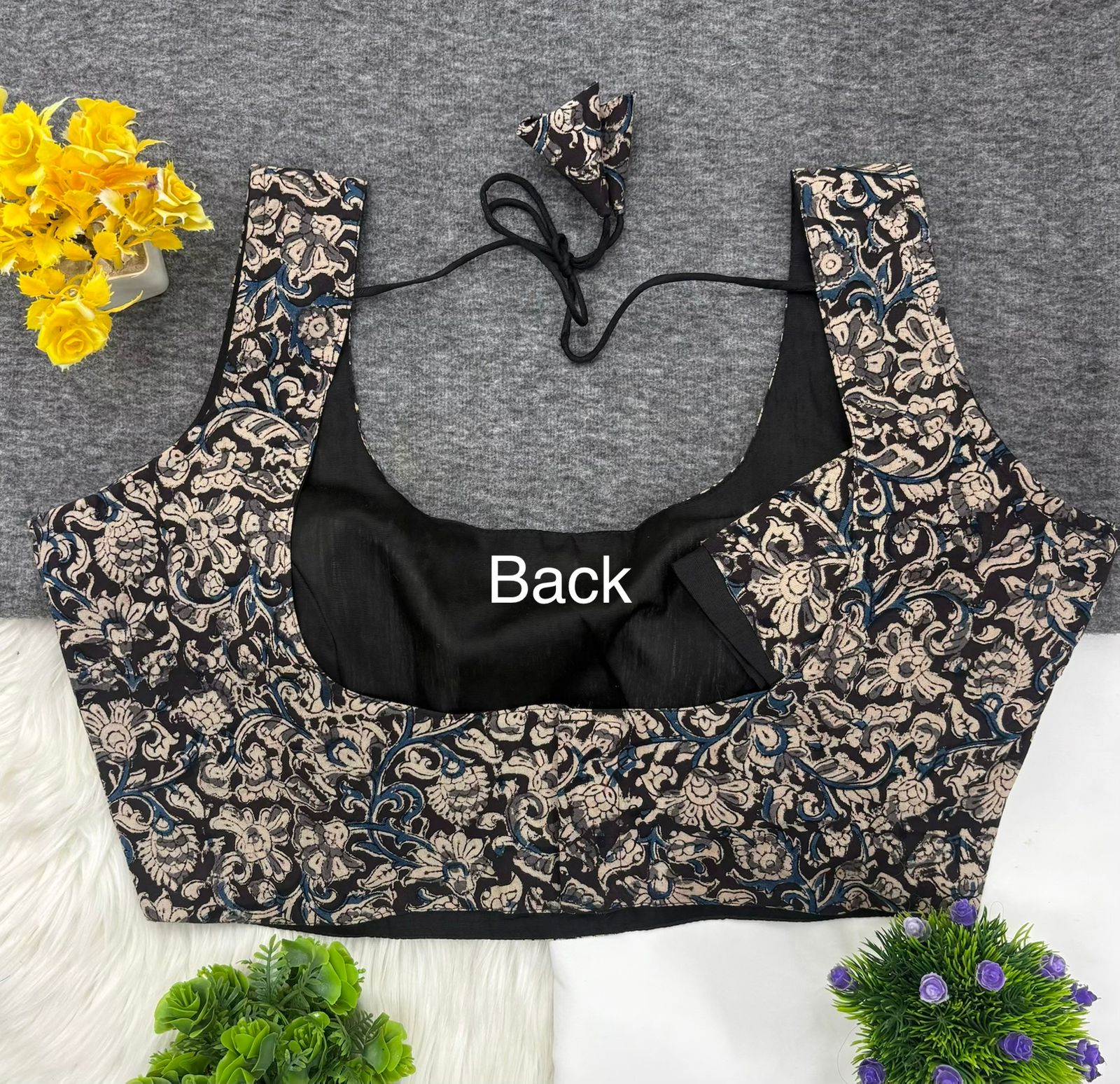
Blouse fabric should either repeat the saree's border or create a deliberate contrast. A zari border can be echoed with a gold blouse, but a printed saree may look cleaner with a solid blouse in one of its minor colours. Unstitched blouse fabric should be measured before tailoring; allow extra margin at the side seams and consider whether the fabric requires lining to prevent transparency or stretching.
Jewellery should match the practical setting. Silver filigree, shell details and small jhumkas suit daytime handloom sarees. Gold-toned earrings, a necklace and bangles can support a silk look for an evening puja. Keep bangles away from delicate zari if the bangles have rough edges, and secure long earrings with back supports when the celebration involves dancing or repeated movement.
Odisha Festival Fashion Calendar: A practical shopping and styling checklist
A successful festival outfit can be planned with five checks: climate, itinerary, fabric, blouse readiness and care.
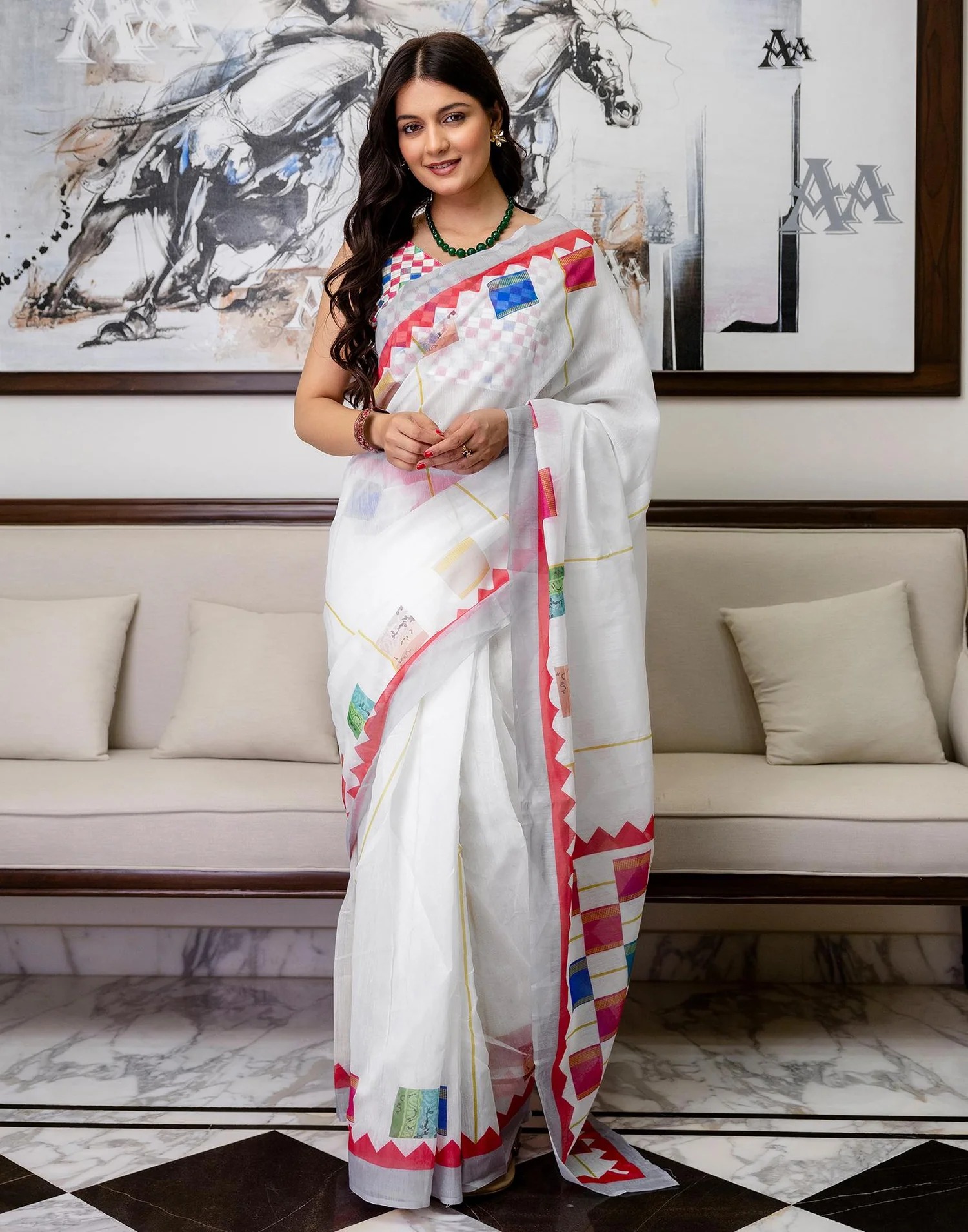
- Check the itinerary: Separate a walking-and-temple outfit from a seated dinner or indoor reception outfit.
- Check the weather: Choose cotton or linen-cotton for humid daytime events and reserve heavier silk for cooler evenings.
- Check the drape: Confirm that the pallu length, pleat width and petticoat fit allow comfortable movement.
- Check the blouse: Tailor an unstitched blouse at least five to seven days before the event so alterations remain possible.
- Check the accessories: Prepare footwear, pins, jewellery, a small emergency sewing kit and a shawl together rather than on the festival morning.
- Check the care plan: Air the saree after use and store silk, zari and satin away from direct sunlight and moisture.
Teal Orange Floral Linen Cotton Saree With Blouse | Varnavi is an example of how a pre-coordinated blouse can simplify a festive wardrobe. A ready blouse reduces last-minute tailoring risk, while a contrast colour gives the outfit enough visual energy for a family celebration. For a more contemporary alternative, Light Pink Floral Satin Saree with Unstitched Blouse Fabric can be paired with a simple solid blouse and minimal jewellery rather than styled with multiple competing prints.
The most meaningful festival wardrobe doesn't need a new saree for every date. Two breathable daytime sarees, one traditional or zari-bordered option, one dressier evening saree and versatile jewellery can cover Raja, Rath Yatra, Nuakhai, Diwali, puja visits and family gatherings. Thoughtful fabric selection allows traditional Odisha references and contemporary ethnic wear to share the same calendar.
Common Questions About the Odisha Festival Fashion Calendar
What saree is best for Raja Parba in Odisha?
A lightweight cotton or linen-cotton saree is best for Raja Parba because June weather is usually warm and humid. Floral prints, pink, red, yellow and green create a festive look while remaining comfortable for visiting relatives and outdoor activities.
What should I wear for Rath Yatra in Puri?
Choose a breathable saree with a secure border, pinned pallu and comfortable footwear for Rath Yatra in Puri. Avoid very slippery fabrics, long trailing pallus and delicate embellishment if the day includes walking through crowded areas.
Which saree colours are suitable for Nuakhai?
Maroon, red, mustard, rust, green and black-and-red combinations suit Nuakhai's harvest setting. Sambalpuri ikat, Bomkai-inspired textiles and handloom cotton can strengthen the connection with Odisha's textile traditions.
Can I wear a silk saree for an Odisha festival?
You can wear a silk saree for evening festivals, weddings, formal puja and Diwali celebrations. Banarasi silk and Kanjeevaram are more suitable for cooler or indoor settings than for a long, humid daytime outing.
How can I make a satin saree easier to wear at a festival?
Use a well-fitted blouse, a non-slip petticoat and two shoulder pins to keep a satin saree stable. Choose secure footwear and avoid excessive jewellery that may catch on the satin surface.
What should I check before buying a festival saree online?
Check the fabric, saree length, blouse inclusion, blouse-piece measurements, border details and care instructions before buying online. Confirm whether an unstitched blouse needs lining and allow at least five to seven days for tailoring before the celebration.